TBSE Class 12 Model Question Paper 2021 History
Finished viewing? Save it for later —
Download TBSE Class 12 Model Question Paper 2021 History (PDF · 4 pages)About TBSE Class 12 Model Question Paper 2021 History
TBSE Class 12 Model Question Paper 2021 History is available here for free download. Published by Tripura Board for Class 12, this sample paper can be viewed online or downloaded as a PDF (4 pages). Candidates preparing for Class 12 can use TBSE Class 12 Model Question Paper 2021 History to understand the exam pattern, the type of questions asked, and the overall difficulty level.
Frequently Asked Questions
How can I download TBSE Class 12 Model Question Paper 2021 History?
Open this page and click the Download button to save TBSE Class 12 Model Question Paper 2021 History as a PDF. It is completely free on AglaSem Docs.
Is TBSE Class 12 Model Question Paper 2021 History free to download?
Yes. TBSE Class 12 Model Question Paper 2021 History can be viewed online and downloaded as a PDF free of cost on AglaSem Docs.
How many pages does TBSE Class 12 Model Question Paper 2021 History have?
TBSE Class 12 Model Question Paper 2021 History contains 4 pages, which you can read online or download together as a single PDF.
Where can I find more Class 12 study material?
You can find more Class 12 question papers, sample papers, syllabus, and answer keys on AglaSem Docs.
TBSE Class 12 Model Question Paper 2021 History – Text
Read the full text of this sample paper below — useful to quickly search, copy and reference the content online without downloading the PDF.
📄 View text version (4 pages)
Page 1
!Ó˲yàÈüÈܲ ≤Ã!ï˛!ê˛ ≤Èϟ¿Ó˚ ÙylÈüÈ1 1 x 20 = 20
I) §!ë˛Ü˛ í˛z_Ó˚!ê˛ ÓySÈy•z ܲˆÏÓ˚ áyï˛yÎ˚ ˆ°ˆÏáy / 1x5
1ä ˲yÓ˚ï˛#Î˚ ≤Ãbï˛_¥ !Ó˲yˆÏàÓ˚ çlܲ •ˆÏ°l û
ܲä xyˆÏ°Ü˛çyu˛yÓ˚ ܲy!lÇ•yÙ åáä òÎ˚yÓ˚yÙ §y•yl# åàä °í≈˛ ܲyç≈l åâä çl Ùy¢≈y°
2ä ˛•!Ó˚ˆÏ£Ïl §Ë˛yܲ!Ó !SȈϰl û
ܲä ã˛wà%Æ ˆÙÔˆÏÎ≈Ó˚ áä !mï˛#Î˚ ã˛wà%ˆÏÆÓ˚ åàä §Ù%oà%ˆÏÆÓ˚ åâä ܲ!îˆÏ‹ÒÓ˚
3ä ˲!=˛ÓyˆÏòÓ˚ ≤Ãã˛yÓ˚ܲ !SȈϰl û
ܲä !lçyÙ%!jl xyí˛z!°Î˚y åáä ܲÓ#Ó˚ åàä ˆ¢á !lçyÙ%!jl åâä !ã˛!hflÏ áylâ–
4ä ÚÚ•y!¡õÛÛ ˆÌˆÏܲ Ú!ÓŸª ˙!ï˛•ƒ fiÌylÛ Ó˚)ˆÏ˛õ ˆây£Ïîy ܲÓ˚y •Î˚ û
ܲä 1800 !áfiê˛yˆÏ∑ åáä 1986 !áfiê˛yˆÏ∑ åàä 1991 !áfiê˛yˆÏ∑ åâä 2012 !áfiê˛yˆÏ∑
5ä Úxô#lï˛yÙ)°Ü˛ !Ùeï˛yÛl#!ï˛ ≤ÃÓï≈˛l ܲˆÏÓ˚!SȈϰl ûó
Ü˛ä °í≈˛ í˛y°ˆÏ•Ô!§ åáä °í≈˛ GˆÏÎ˚ˆÏ°§°# åàä °í≈˛ ܲƒy!lÇ åâä °í≈˛ !ÙˆÏrê˛y
II) !lˆÏã˛Ó˚ ≤ß¿à%!° ~ܲ!ê˛ ˛õ)î≈yAà ÓyˆÏܲƒ í˛z_Ó˚ òyG / 1x15
6ä §¡Àyê˛ xˆÏ¢yܲ ïÑ˛yÓ˚ !¢°y!°!˛õˆÏï˛ !lˆÏçˆÏܲ ܲ# ӈϰ x!˲!•ï˛ ܲˆÏÓ˚l⁄
7ä çl Ùy¢≈y° ˆÜ˛yl §ˆÏl !§rô%§Ë˛ƒï˛y xy!Ó‹ÒyˆÏÓ˚Ó˚ ܲÌy ˆây£Ïîy ܲˆÏÓ˚l⁄
8ä Ú•£Ï≈ã˛!Ó˚ï˛Û Ó•z!ê˛ ˆÜ˛ Ó˚ã˛ly ܲˆÏÓ˚l⁄
9ä §yï˛Óy•l §y¡ÀyˆÏçƒÓ˚ §Ó≈ˆÏ◊¤˛ ¢y§Ü˛ ˆÜ˛ !SȈϰl⁄
10ä àyrôyÓ˚# ˆÜ˛ !SȈϰl⁄
11ä ˛õ%Ó˚#Ó˚ ≤Ãôyl ˆòÓï˛yÓ˚ lyÙ Ü˛#⁄
12ä ï˛y!°ˆÏܲyê˛yÓ˚ Î%Âô ܲyˆÏòÓ˚ ÙˆÏôƒ •ˆÏÎ˚!SÈ°⁄
13ä ÓyÓˆÏÓ˚Ó˚ xydç#Ól#Ù)°Ü˛ @˝ÃrÌ!ê˛Ó˚ lyÙ Ü˛#⁄
14ä ÓyÇ°yÎ˚ Ú!ã˛Ó˚fiÌyÎ˚# ӈϮyÓhflÏÛ ÓƒÓfiÌy ˆÜ˛ ≤ÃÓï≈˛l ܲˆÏÓ˚l⁄
15ä 1857 §yˆÏ°Ó˚ !§˛õy•# !ÓˆÏoy• ≤ÃÌÙ ˆÜ˛yÌyÎ˚ xyÓ˚Ω˛ •ˆÏÎ˚!SÈ°⁄
16ä ˲yÓ˚ˆÏï˛Ó˚ §Ç!ÓôyˆÏlÓ˚ á§Ó˚y ܲ!Ù!ê˛Ó˚ ˆã˛Î˚yÓ˚Ùƒyl ˆÜ˛ !SȈϰl⁄
17ä Ú•!Ó˚çlÛ ˛õ!eܲyÓ˚ §¡õyòܲ ˆÜ˛ !SȈϰl⁄
18ä Ó˚yl# °-#Óy{ ˆÜ˛ !SȈϰl⁄
19ä !ÓçÎ˚làÓ˚ §y¡ÀyˆÏçƒÓ˚ ≤Ã!ï˛¤˛yï˛y ܲyÓ˚y⁄
20ä ܲÓ#ˆÏÓ˚Ó˚ à%Ó˚% ˆÜ˛ !SȈϰl⁄
!Ó˲yàÈüÈá ≤Ã!ï˛!ê˛ ≤Èϟ¿Ó˚ Ùyl -3 3 x 4 = 12
!lˆÏã˛Ó˚ ≤Ã!ï˛!ê˛ ≤Èϟ¿Ó˚ í˛z_Ó˚ 60!ê˛ ¢ˆÏ∑Ó˚ ÙˆÏôƒ ˆ°ˆÏáy–
21ä ܲ#˲yˆÏÓ Ùàô §ÓˆÏã˛ˆÏÎ˚ ¢!=˛¢y°# àîÓ˚yˆÏçƒ ˛õ!Ó˚îï˛ •ˆÏÎ˚!SÈ°⁄
22ä !ÓçÎ˚làÓ˚ §y¡ÀyˆÏçƒÓ˚ !¢“ ~ÓÇ §y!•ˆÏï˛ƒ Ü,˛£÷ψÏòÓ Ó˚yˆÏÎ˚Ó˚ xÓòyl xyˆÏ°yã˛ly ܲÓ˚–
23ä 1855ÈüÈ56 !áfiê˛yˆÏ∑ §ÑyGï˛y°Ó˚y ˆÜ˛l !Ó!ê˛¢ ¢y§ˆÏlÓ˚ !ÓÓ˚%ˆÏÂô !ÓˆÏoy• ܲˆÏÓ˚!SÈ° ï˛yÓ˚ !ï˛l!ê˛ Ü˛yÓ˚î í˛zˆÏÕ‘á ܲÓ˚–
Page 2
24ä 1857 !áfiê˛yˆÏ∑Ó˚ !ÓˆÏoyˆÏ•Ó˚ ÓƒÌ≈ï˛yÓ˚ !ï˛l!ê˛ Ü˛yÓ˚î Óƒyáƒy ܲˆÏÓ˚y–
!Ó˲yàÈüÈà ≤Ã!ï˛!ê˛ ≤Èϟ¿Ó˚ Ùyl - 6 6 x 3 = 18
!lˆÏã˛Ó˚ ≤Ã!ï˛!ê˛ ≤Èϟ¿Ó˚ í˛z_Ó˚ 150!ê˛ ¢ˆÏ∑Ó˚ ÙˆÏôƒ òyG–
25ä •Ó˚Øy §Ë˛ƒï˛yÓ˚ ˛õï˛ˆÏlÓ˚ ܲyÓ˚îà%!° xyˆÏ°yã˛ly ܲÓ˚–
26ä xyÜ˛ÓˆÏÓ˚Ó˚ ôÙ≈l#!ï˛ !ӈϟ’£Ïî ܲˆÏÓ˚y–
Ù%â° §y¡Àyçƒ ≤Ã!ï˛¤˛yÎ˚ ÓyÓˆÏÓ˚Ó˚ xÓòyl ܲ# !SÈ°⁄
27ä §Ç!Óôyl §Ë˛yÓ˚ í˛zˆÏj¢ƒ ≤ÃhflÏyˆÏÓ Ü˛# ܲ# xyò¢≈ Óƒ=˛ ܲÓ˚y •ˆÏÎ˚!SÈ°⁄
!Ó˲yàÈüÈâ ≤Ã!ï˛!ê˛ ≤Èϟ¿Ó˚ Ùyl - 8 8x 3 = 24
!lˆÏã˛Ó˚ ≤Ã!ï˛!ê˛ ≤Èϟ¿Ó˚ í˛z_Ó˚ 250 !ê˛ ¢ˆÏ∑Ó˚ ÙˆÏôƒ òyG–
28ä !ÓÓyˆÏ•Ó˚ Óy·!îƒÜ˛ Ó˚#!ï˛l#!ï˛ Óƒyáƒy ܲˆÏÓ˚y–
xÌÓy
ˆÓÔÂô G ˜çl ôˆÏÙ≈Ó˚ ÙˆÏôƒ !Ù° G ˛õyÌ≈ܲƒ ܲ# ܲ# ⁄ 4+4
29ä ˲!=˛Óyò ܲ#⁄ ˲!=˛ xyˆÏ®y°ˆÏlÓ˚ Ù)° ˜Ó!¢T˛ƒà%!° xyˆÏ°yã˛ly ܲˆÏÓ˚y– 2+4
30ä x§•ˆÏÎyà xyˆÏ®y°ˆÏlÓ˚ ܲÙ≈§)!ã˛ ~ÓÇ í˛zˆÏj¢ƒ xyˆÏ°yã˛ly ܲÓ˚– ~•z xyˆÏ®y°ˆÏlÓ˚ à%Ó˚%c ܲ# !SÈ°⁄
!Ó˲yà ÈüÈ . ≤Ã!ï˛!ê˛ ≤Èϟ¿Ó˚ Ùyl - 6 1x6=6
31ä ≤Ãò_ ˲yÓ˚ˆÏï˛Ó˚ Ùyl!ã˛ˆÏe !l¡¨!°!áï˛ fiÌylà%!° !ã˛!•´ï˛ ~ÓÇ §ly=˛ ܲˆÏÓ˚y /
Ü˛ä ˆ°yÌy° åáä §Ñyã˛# åàä Ùàô åâä xy@˝Ãy å.ä Ù#Ó˚yê˛ åã˛ä xy•ˆÏÙòyÓyò–
D x!ï˛!Ó˚=˛ ≤ß¿yÓ°#
Page 3
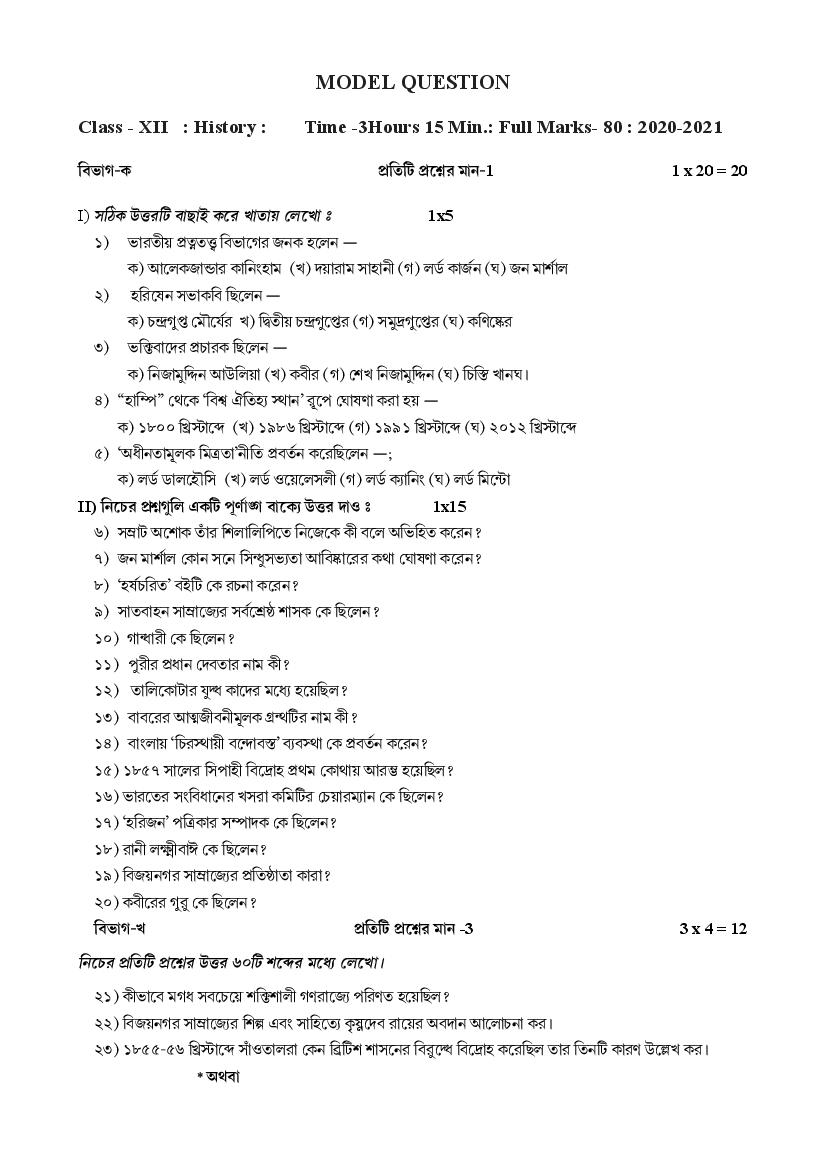
Group-A Each Questions Carries 1 Mark : 1x20=20
A) Choose the correct answer : 1x5
1. The father of Indian Archaeology is –
a) Alexander Cunningham (b) Daya Ram Sahni (c) Lord Curzon (d) John Marshal.
2. Harisena was the court poet of –
a) Chandragupta Maurya (b) Chandrapugta II (c) Samudragupta (c) Kanishka
3. The Preacher of Bhaktism was -
a) Nizamuddin Auliya (b) Kabir (c) Shaikh Nizamuddin (d) Chishti Khangah
4. Hampi was declared as a world Heritage site in -
a) 1800 AD (b) 1986 AD (c) 1991 AD (d) 2012 AD
5. The founder of Subsidiary Alliance was -
a) Lord Dalhousie (b) Lord Wellesley (c) Lord Cunning (d) Lord Minto
B) Answer the following questions in one complete sentence : 1x15
6. What did Ashoka call himself in his Edicts ?
7. In which year John Marshal announced the discovery of Indus valley civilisation ?
8. Who Wrote the book ‘Harshacharita’?
9. Who was the greatest ruler of the Satavahana dynasty ?
10. Who was Gandhari ?
11. What is the name of the principal deity of Puri ?
12. Between whom was the battle of Talikota fought ?
13. What is the name of the biography of Babur ?
14. Who introduced the permanent settlement in Bengal ?
15. Where was the Mutiny of 1857 started first ?
16. Who was the Chairman of the Drafting committee of the Indian Constitution ?
17. Who was the editor of the newspaper ‘Harijon’?
18. Who was Rani Laxmi Bai ?
19. Who were the founders of Vijayanagara Kingdom ?
20. Who was the Guru of Kabir ?
Group-B Each Question Carries 3 Marks 3x4=12
Answer the following questions in not more than 60 words each :
21. How did Magadha become the most Powerful Janapada ?
22. Discuss the contribution made by Krishnadeva Raya in the field of art and literature.
23. Mention any three causes that led the Santhals to revolt against the British rule in
1855-1856.
Page 4
Describe the peoples reactions to the Rowlatt Act of 1919.
24. Explain any three causes for the failure of the revolt of 1857.
Group-C Each Questions Carries 6 Marks 6x3=18
Answer the following questions in not more than 150 words each :
25. Mention the causes of the downfall of the Harappan civilisation.
26. Analyze Akbar’s religious policy.
OR
What was the contribution of Babur in the establishment of the Mughal Empire ?
27. What were the Ideals expressed in the Objectives Resolution of constituent
assmebly?
Group-D Each Questions Carries 8 Marks 8x3=24
28. Explain the Brahmanical norms of marriage.
OR
What were the similarities and differences between Buddhism and Jainism ? 4+4
29. What is Bhakti movement ? Discuss the key features of Bhakti movement. 2+6
30. Discuss the programmes and objectives of the Non-cooperation movement. What
was the importance of the movement ? 5+3
Group-E Map work : 6
31. On the given out line map of India, mark and locate the following :
a) Lothal (b) Sanchi (c) Magadha (d) Agra (e) Meerut (f) Ahmedabad.
* Additional Question