ISC Class 12 Sample Paper Tibetan
Finished viewing? Save it for later —
Download ISC Class 12 Sample Paper Tibetan (PDF · 9 pages)About ISC Class 12 Sample Paper Tibetan
ISC Class 12 Sample Paper Tibetan is available here for free download. Published by CISCE for Class 12, this sample paper can be viewed online or downloaded as a PDF (9 pages). Candidates preparing for Class 12 can use ISC Class 12 Sample Paper Tibetan to understand the exam pattern, the type of questions asked, and the overall difficulty level.
Frequently Asked Questions
How can I download ISC Class 12 Sample Paper Tibetan?
Open this page and click the Download button to save ISC Class 12 Sample Paper Tibetan as a PDF. It is completely free on AglaSem Docs.
Is ISC Class 12 Sample Paper Tibetan free to download?
Yes. ISC Class 12 Sample Paper Tibetan can be viewed online and downloaded as a PDF free of cost on AglaSem Docs.
How many pages does ISC Class 12 Sample Paper Tibetan have?
ISC Class 12 Sample Paper Tibetan contains 9 pages, which you can read online or download together as a single PDF.
Where can I find more Class 12 study material?
You can find more Class 12 question papers, sample papers, syllabus, and answer keys on AglaSem Docs.
ISC Class 12 Sample Paper Tibetan – Text
Read the full text of this sample paper below — useful to quickly search, copy and reference the content online without downloading the PDF.
📄 View text version (9 pages)
Page 1
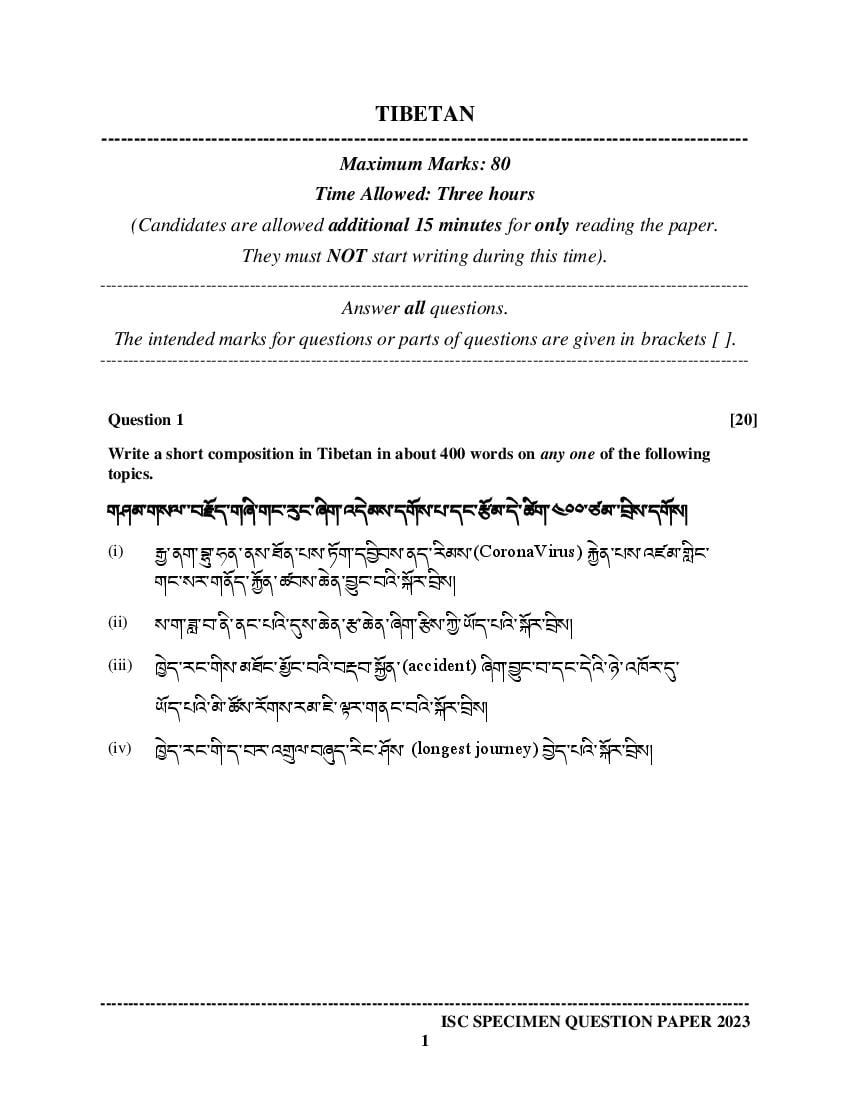
----------------------------------------------------------------------------------------------------
Maximum Marks: 80
Time Allowed: Three hours
(Candidates are allowed additional 15 minutes for only reading the paper.
They must NOT start writing during this time).
Answer all questions.
The intended marks for questions or parts of questions are given in brackets [ ].
Question 1 [20]
Write a short composition in Tibetan in about 400 words on any one of the following
topics.
གཤམ་གསལ་་བརྗོད་གཞི་གང་རུང་ཞིག་འདེམས་དགྗོས་པ་དང་རྗོམ་དེ་ཚིག་༤༠༠་ཙམ་་བིས་དགྗོས།
(i) རྒྱ་ནག་བྷུ་ཧན་ནས་ཐྗོན་པས་ཏྗོག་དབིབས་ནད་རིམས་(CoronaVirus) རེན་པས་འཛམ་གིང་
གང་སར་གནྗོད་རྗོན་ཚབས་ཆེན་བྱུང་བའི་སྗོར་བིས།
(ii) ས་ག་ཟླ་བ་ནི་ནང་པའི་དུས་ཆེན་ར་ཆེན་ཞིག་རིས་ཀི་ཡྗོད་པའི་སྗོར་བིས།
(iii) ཁེད་རང་གིས་མཐྗོང་མྗོང་བའི་བརྡབ་སྗོན་(accident) ཞིག་བྱུང་བ་དང་དེའི་ཉེ་འཁྗོར་དུ་
ཡྗོད་པའི་མི་ཚོས་རྗོགས་རམ་ཇི་ལྟར་གནང་བའི་སྗོར་བིས།
(iv) ཁེད་རང་གི་ད་བར་འགྲུལ་བཞུད་རིང་ཤྗོས་ (longest journey) བེད་པའི་སྗོར་བིས།
1
Page 2
Choose the correct option to translate from Tibetan to English.
གཤམ་གསལ་བྗོད་ཡིག་གི་བརྗོད་པ་རྣམས་གང་གཟས་བཀླག་ཏེ་བིན་ཡིག་ནས་བིས་པའི་བརྗོད་པ་ནས་
འདེམས་ཏེ་བིས།
(i) སེ་དམན་རྣམས་ཀི་བལ་གི་བཟྗོས་པའི་ཕྱུ་པ་ཕུ་ཐུང་མེད་པ་རིང་པྗོ་གྗོན་གི་རེད།
(a) The women wore short sleeveless woollen dresses.
(b) The women wore red sleeveless woollen dresses.
(c) The women wore black sleeveless woollen dresses.
(d) The women wore long sleeveless woollen dresses.
(ii) ང་ལྗོ་དྲུག་སེབས་པའི་སབས་སུ་ཕ་ཡུལ་ནས་ཐྗོན་ཏེ་རྒྱ་གར་སེབས་པ་ཡིན།
(a) At the age of six, I left my birthplace and reached India.
(b) At the age of seven, I left my birthplace and reached India.
(c) At the age of ten, I left my birthplace and reached India.
(d) At the age of five, I left my birthplace and reached India.
(iii) དེར་བ་ཕྱུགས་བདུན་དང་མཛོ་མྗོ་བརྒྱད་ཡྗོད།
(a) There were seven cows and eight dzomos.
(b) There were eight cows and six dzomos.
(c) There were six cows and seven dzomos.
(d) There were eight cows and eight dzomos.
(iv) མདྗོ་ཁམས་ནི་བྗོད་ཀི་ཤར་ཕྗོགས་སུ་ཆགས་ཡྗོད།
(a) Dokham is situated in the Southern part of Tibet.
(b) Dokham is situated the Western part of Tibet.
(c) Dokham is situated the Northern part of Tibet.
(d) Dokham is situated the Eastern part of Tibet.
2
Page 3
(a) The area of the place where I used to stay was about 35 feet square.
(b) The area of the place where I used to stay was about 25 feet square.
(c) The area of the place where I used to stay was about 15 feet square.
(d) The area of the place where I used to stay was about 45 feet square.
(vi) ཤར་རྒྱུད་དུ་གཞུང་གི་ལས་ཁུངས་ཁག་དང་སེར་མྗོ་བའི་དཔྗོན་རིགས་ཀི་སྗོབ་གྲ་ཁང་ཡྗོད་།
(a) In the Eastern region, there were government offices and a school for Monk
officials.
(b) In the Western region, there were government offices and a school for Monk
officials.
(c) In the Southern region, there were government offices and a school for Monk
officials.
(d) In the Northern region, there were government offices and a school for Monk
officials.
(vii) བྗོད་ཀི་ཁད་ཆྗོས་ཆེ་ཤྗོས་ནི་དགྗོན་པ་ཧ་ཅང་མང་ཤྗོས་ཡྗོད།
(a) The most remarkable thing about Tibet was the large number of prayer
wheels.
(b) The most remarkable about Tibet was the large number of stupas.
(c) The most remarkable about Tibet was the large number of monastic schools.
(d) The most remarkable about Tibet was the large number of monasteries.
(viii) ངེད་ཅག་གི་ཡི་གེ་འདི་ཡང་འབྱུང་ཁུངས་རྒྱ་གར་ནས་བྱུང་བ་རེད་།
(a) Indeed, our writing was derived from Mongolia.
(b) Indeed, our writing was derived from India.
(c) Indeed, our writing was derived from China.
(d) Indeed, our writing was derived from Nepal.
3
Page 4
Translate the following passage from Tibetan to English.
གཤམ་གི་ལེ་ཚན་དེ་དབིན་ཡིག་ཐྗོག་ལ་སྒྱུར་ཅིག།
ང་ཚོའི་འཚོ་བ་སེལ་སྟངས་ཀི་གཅྗོ་བྗོ་སྗོ་ནམ་ཡིན་ཀང་། རྟ་དང་། བ་ཕྱུགས་སྗོགས་ཀང་གསྗོ་ཉེར་དང་།
ཚལ་ཞིང་ཡང་འདེབས་ལས་བེད།་་སིར་བཏང་ཞིང་ལས་བེད་མི་ལྔ་ཡྗོད་ཀང་ལས་ཀ་མང་ཆེ་བ་ནང་མི་
རང་གིས་བེད་ཅིང་།སྟིན་དཔིད་ཞིང་འདེབས་པ་དང་། བཙས་མ་རྔ་སབས་ཉིན་ཤས་རིང་ཕི་ནས་མི་༡༥་
ནས་༤༠བར་ལས་མིར་གས་ཏེ་ག་རྔན་སྗོད་ཀི་ཡྗོད། ང་ཚོའི་གྲྗོང་ནང་ཁིམ་ཚང་གཞན་ཞིག་ལ་ལས་ཀ་
ཁག་པྗོ་ཡྗོད་ན་ཕར་ཚུར་རྗོགས་རམ་བེད་རྒྱུའི་ལུགས་སྗོལ་ཡང་ཡྗོད་པ་ཡིན། ངེད་རང་ཆུང་ངུའི་
སབས་ཨ་མ་ལགས་ཀིས་རྒྱབ་ལ་བསྣམས་ཏེ་ཞིང་ལས་སར་ཕེབས་ཏེ་ཞིང་ལས་གནང་སབས། ཞིང་གི་
མཐའ་ལ་རྒྱུག་པ་ཞིག་ཏུ་ཉི་གདུགས་བསྒྲཌ་ཏེ་དེའི་བསིལ་གྲིབ་འྗོག་ལ་གཉིད་འཇུག་གི་ཡྗོད།།
ང་ཚོའི་ཁང་པ་དེ་གྲུ་བཞི་ཐྗོག་་གཅིག་མ་དཀིལ་དུ་རྡྗོ་གཅལ་དང་རིག་རྨང་ལ་རྡྗོ་དང་།
ཐྗོད་ཆར་སྗོ་ཕག་གིས་བརྒྱབ་ཡྗོད། ཐྗོག་ཁའི་མཐའ་ལ་གཡུ་རི་འི་ཁ་བད་དང་རྒྱལ་སྗོ་ལྟེ་བའི་ཁ་ལྗོ་
ངྗོས་སུ་ཨ་མེས་སེ་རིར་བསྟན་ཅིང་། བྗོད་ཀི་ལུགས་སྗོལ་ལྟར་མདུན་སྗོའི་ཐྗོད་དུ་མདུང་དར་དང་།
རྡྗོ་གཅལ་དཀིལ་དུ་དར་ཆེན་རིང་པྗོ་ཞིག་ཀང་ཡྗོད། ཁང་རྒྱབ་ལ་རྟ་ར། བ་ར། སྗོ་ཁར་འདྗོགས་ཁི་ཞིག་
བཏགས་ཡྗོད་ཅིང་། དེ་ནི་ཁང་པའི་ནང་གཞན་དག་གང་བྱུང་མི་ཡྗོང་བའི་ཁད་རེད།།
4
Page 5
Choose the correct option to translate from English to Tibetan.
གཤམ་གསལ་ བིན་ཡིག་གི་བརྗོད་པ་རྣམས་གང་གཟས་བཀླག་ཏེ་བྗོད་ཡིག་ནས་བིས་པའི་བརྗོད་པ་ནས
འདེམས་ཏེ་བིས།
(i) I do not know what has happened to the historical marvels of Potala.
(a) ཕྗོ་བང་པྗོ་ཏཱ་ལ་ནི་ལྗོ་རྒྱུས་ཧ་ཅང་ལེགས་པྗོ་ངྗོ་ཚར་ཅན་ཡིན་པ་ཞིག་ལ་ད་ལྟ་གང་བྱུང་བ་
དེ་ངས་ཧ་གྗོ་ཡྗོད།
(b) ཕྗོ་བང་པྗོ་ཏཱ་ལ་ནི་ལྗོ་རྒྱུས་ཧ་ཅང་ལེགས་པྗོ་ངྗོ་ཚར་ཅན་ཞིག་ཡིན་པ་ལ་ད་ལྟ་གང་བྱུང་བ་
ཚང་མས་ཧ་གྗོ་རེད།
(c) ཕྗོ་བང་པྗོ་ཏཱ་ལ་ནི་ལྗོ་རྒྱུས་ཧ་ཅང་ལེགས་པྗོ་ངྗོ་ཚར་ཅན་ཞིག་ཡིན་པ་ལ་ད་ལྟ་གང་བྱུང་བ་
ཚང་མས་ཧ་གྗོ་མ་རེད།
(d) ཕྗོ་བང་པྗོ་ཏཱ་ལ་ནི་ལྗོ་རྒྱུས་ཧ་ཅང་ལེགང་པྗོ་ངྗོ་ཚར་ཅན་ཞིག་ཡིན་པ་ལ་ད་ལྟ་གང་བྱུང་བ་
དེ་ངས་ཧ་གྗོ་མིན།
(ii) I played on the edge of the lake and nearly drowned myself twice.
(a) ཆུ་རིང་མཚེའུ་ཞིག་ཡྗོད་པ་དེའི་ཁར་རེད་མྗོ་རེ་སབས་ཐེངས་གཉིས་ཙམ་ལྷུང་གྲབས་བྱུང་
མྗོང།
(b) ཆུ་རིང་མཚེའུ་ཞིག་ཡྗོད་པ་དེའི་ཁར་རེད་མྗོ་རེ་སབས་ཐེངས་གསུམ་ཙམ་ལྷུང་གྲབས་བྱུང་
མྗོང།
(c) ཆུ་རིང་མཚེའུ་ཞིག་ཡྗོད་པ་དེའི་ཁར་རེད་མྗོ་རེ་སབས་ཐེངས་བཞི་ཙམ་ལྷུང་གྲབས་བྱུང་
མྗོང།
(d) ཆུ་རིང་མཚེའུ་ཞིག་ཡྗོད་པ་དེའི་ཁར་རེད་མྗོ་རེ་སབས་ཐེངས་གཅིག་ལྷུང་གྲབས་བྱུང་མྗོང།
5
Page 6
(a) ཚེའུ་དེའི་ཉ་དེ་ཚོས་ངེད་རང་གི་རྡྗོག་སྒྲ་མ་ཐྗོས་པ་ཙམ་གི་ཆུ་ཁར་ཐྗོན་ཡྗོང་གི་ཡྗོད།
(b) ཚེའུ་དེའི་ཉ་དེ་ཚོས་ངེད་རང་གི་རྡྗོག་སྒྲ་ཐྗོས་པ་ཙམ་གི་ཆུ་ཁར་ཐྗོན་ཡྗོང་གི་མེད།
(c) ཚེའུ་དེའི་ཉ་དེ་ཚོས་ངེད་རང་གི་རྡྗོག་སྒྲ་ཐྗོས་པ་ཙམ་གི་ཆུ་ཁར་ཐྗོན་ཡྗོང་གི་ཡྗོད།
(d) ཚེའུ་དེའི་སྦལ་པ་དེ་ཚོས་ངེད་རང་གི་རྡྗོག་སྒྲ་མ་ཐྗོས་པ་ཙམ་གི་ཆུ་ཁར་ཐྗོན་ཡྗོང་གི་མེད།
(iv) Between my lessons, I could walk and run among the flowers and orchards.
(a) ངེད་རང་སྗོབ་སྗོང་གི་བར་སེང་ལ་མེ་ཏྗོག་དང་ཤིང་སྗོང་ཡྗོད་སར་ཉལ་བསད་ཀི་ཡྗོད།
(b) ངེད་རང་སྗོབ་སྗོང་གི་བར་སེང་ལ་མེ་ཏྗོག་དང་ཤིང་འབས་སྗོང་པྗོ་ཡྗོད་སར་ལ་ཕར་ཚུར་
རྒྱུགས་ཀི་ཡྗོད།
(c) ངེད་རང་སྗོབ་སྗོང་གི་བར་སེང་ལ་མེ་ཏྗོག་དང་ཤིང་འབས་སྗོང་པྗོ་ཡྗོད་སར་ལ་ཕར་ཚུར་
རྒྱུགས་ཀི་མེད།
(d) ངེད་རང་སྗོབ་སྗོང་བར་སེང་ལ་མི་ཏྗོག་དང་ཤིང་འབས་གྲུག་བསད་ཀི་ཡྗོད།
(v) China, Mongolia, East Turkestan are in the east and north.
(a) ཤར་དང་ནུབ་ལ་རྒྱ་ནག་དང་སྗོག་པྗོ་ཤར་ཏུར་ཀི་སི་ཐན་བཅས་ཡྗོད།
(b) ཤར་དང་བང་ལ་རྒྱ་ནག་དང་སྗོག་པྗོ་ཤར་ཏུར་ཀི་སི་ཐན་བཅས་ཡྗོད།
(c) ཤར་དང་ལྗོ་ལ་རྒྱ་ནག་དང་སྗོག་པྗོ་ཤར་ཏུར་ཀི་སི་ཐན་བཅས་ཡྗོད
(d) ལྗོ་དང་ཉུབ་ལ་རྒྱ་ནག་དང་སྗོག་པྗོ་ཤར་ཏུར་ཀི་སི་ཐན་བཅས་ཡྗོད།
6
Page 7
(a) བང་ཕྗོགས་སུ་པ་ཀི་སི་ཐན་དང་ཨབ་ག་ནི་སི་ཏན་ཨུ་རུ་སུ་བཅས་ཀང་ཐག་ཉེ་ཡྗོད་པ་རེ
ད།
(b) ཤར་ཕྗོགས་སུ་པ་ཀི་སི་ཐན་དང་ཨབ་ག་ནི་སི་ཏན་ཨུ་རུ་སུ་བཅས་ཀང་ཐག་ཉེ་ཡྗོད་པ་རེ
ད།
(c) ལྗོ་ཕྗོགས་སུ་པ་ཀི་སི་ཐན་དང་ཨབ་ག་ནི་སི་ཏན་ཨུ་རུ་སུ་བཅས་ཀང་ཐག་ཉེ་ཡྗོད་པ་རེད།
(d) ནུབ་ཕྗོགས་སུ་པ་ཀི་སི་ཐན་དང་ཨབ་ག་ནི་སི་ཏན་ཨུ་རུ་སུ་བཅས་ཀང་ཐག་ཉེ་ཡྗོད་པ་རེ
ད།
(vii) Tibet has many neighbouring countries.
(a) བྗོད་ཐག་ཉེའི་ཁིམ་མཚེས་རྒྱལ་ཁབ་མང་པྗོ་ཡྗོད།
(b) བྗོད་ཐག་ཉེའི་ཁིམ་མཚེས་རྒྱལ་ཁབ་གཉིས་ཡྗོད།
(c) བྗོད་ཐག་ཉེའི་ཁིམ་མཚེས་རྒྱལ་ཁབ་ལྔ་ཡྗོད།
(d) བྗོད་ཐག་ཉེའི་ཁིམ་མཚེས་རྒྱལ་ཁབ་མང་པྗོ་མེད།
(viii) There is still a resemblance between Persian and Tibetan dress.
(a) པར་ཤ་དང་བྗོད་ཀི་ཆས་གྗོས་རྣམ་པ་འདྲ་བ་ཡྗོད་འདུག།
(b) པར་ཤ་དང་བྗོད་ཀི་ཆས་གྗོས་རྣམ་པ་འདྲ་བ་ཡྗོད་མི་འདུག།
(c) རྒྱ་གར་དང་བྗོད་ཀི་ཆས་གྗོས་རསནམ་པ་འདྲ་བ་ཡྗོད་འདུག།
(d) འབྲུག་དང་བྗོད་ཀི་ཆས་གྗོས་རྣམ་པ་འདྲ་བ་ཡྗོད་འདུག།
7
Page 8
Translate the following passage from English to Tibetan.
གཤམ་གསལ་ བརྗོད་བ་འདི་བྗོད་ཡིག་ཐྗོག་ལ་ཕབ་སྒྱུར་དགྗོས།
It seems to be significant to the search party (གལ་ཆེན་པྗོ་) that some years back, the
Thirteenth Dalai Lama (ཏཱ་ལའི་བླ་མ་) had stayed at the monastery of Karma Rolpa Dorje
(ཀརྨ་རྗོལ་པ་རྡྗོ་རེ་). He was on his way back from China. The Dalai Lama had been welcomed
there by the incarnate lama of the monastery. He had received homage and obeisance
(གུས་འདུད་) from the people of the village. My father was nine years old at that time. The
Dalai Lama had left a pair of his boots or jachhen (ཞབས་ཕགས་འཇའ་ཆེན་) behind the
monastery. He had also visited the house where I was born and remarked that it was a
beautiful place. By all these facts, the search party (ཡང་སིད་འཚོལ་མི་) was fully convinced
(ཡིད་ཆེས་) that the reincarnation (ཡང་སིད་) had been discovered. They had reported all the
details to Lhasa by telegram (ཏར་ལམ་). There was only one telegraph line in Tibet, from
Lhasa to India. Hence, the message had to be sent in code from Silang (ཟི་ལིང་) through
China and India. By the same route an order came back to take me once to the Holy City
(ལ་ས་).
Question 6
Read the passage given below carefully and answer the questions that follow in
Tibetan.
གཤམ་་གི་བརྗོད་པ་འདི་དག་གང་གཟབ་བཀླགས་ཏེ་འྗོག་གི་དྲི་བ་ཁག་གི་ལན་ནྗོར་བ་བིས།
ཁྗོ་བྗོ་ལྗོ་དྲུག་ནས་སྗོབ་སྗོང་འགྗོ་འཛུགས་བས་ཏེ་སྗོབ་སྗོང་བེད་སྟངས་ནི་དུས་རབས་མང་པྗོའི་གྗོང་ནས་
ཡྗོད་པའི་བྗོད་ཀི་གནའ་སྗོལ་དང་མཐུན་པར་བས་ཤིང། དེས་ཁྗོ་བྗོ་ཅག་གི་སྗོད་ཚུལ་བཟངཔྗོ་དང་།
བསམ་པའི་ཆུ་ཚད་མཐྗོན་པྗོར་གནས་ཐུབ་པ་ལ་ད་བར་ཕན་ནུས་ཆེན་པྗོ་བྱུང་ཡྗོད། འྗོན་ཀང་དེང་སང་
འཛམ་གིང་གི་རིག་གནས་གསར་པའི་ཆ་ནས་ཚན་རིག་སྗོགས་ལག་ལེན་མ་བས་པའི་སྗོན་ཕྲན་བུ་ཡྗོད།
དེའི་རྒྱུ་མཚན་ནི་ཉེ་ཆར་མ་གཏྗོགས་བྗོད་རང་ཁེ་གཙང་ཟུར་དུ་བསད་པ་དེའི་རེན་རེད། བྗོད་མི་རྣམས་
ཀི་ར་བའི་བསམ་པའི་འཁེར་སྗོ་ནི་ཡྗོན་ཏན་སྣེ་མང་པྗོའི་ཐྗོག་བླྗོ་རྒྱ་གྗོང་མཐྗོར་གཏྗོང་རྒྱུའི་འདུན་པ་
8
Page 9
སེབ་སྗོར། སྙན་ངག་བཅས་རིག་གནས་ཆུང་བ་ལྔ་ཡྗོད། དེ་རྣམས་སྗོབ་སྗོང་བེད་མཁན་མི་ས་ཁེ་གཅང་
མིན་པར་སེར་མྗོ་བའི་ནང་ནས་ཀང་གྗོང་ཁྗོངས་ནས་ཁག་རེ་གཉིས་སྗོབ་སྗོང་བེད་ཅིང། དེ་ཡང་མང་
ཆེས་སར་རིས་དང་། སྙན་ངག། སེབ་སྗོར་སྗོགས་འདེམས་ཀི་རེད། ཆྗོས་བེད་དགེ་འདུན་ཁྗོངས་ཀིས་
གཙོ་བྗོར་སྗོབ་སྗོང་བེད་པའི་གསྗོ་བ་རིག་པ་དང་། སྒྲ་རིག་པ། གཏན་ཚིགས་རིག་པ། བཟྗོ་རིག་པ།
ནང་རིག་པ་སྟེ་དམ་པའི་ཆྗོས་ཀི་མཚན་ཉིད་བཅས་ལ་མཐྗོ་བའམ། ཆེ་བའི་རིག་གནས་སྗོབ་ཚན་ལྔ་ཟེར།
དེ་ཚོའི་ཁྗོངས་ནས་མཐའ་མ་དེ་གལ་ཆེ་ཤྗོས་ཡིན།།
(i) ཚན་རིག་ལག་ལེན་མ་བས་པའི་རྒྱུ་མཚན་གང་ཡིན་ནམ། [5]
(ii) རིག་གནས་ཆེ་བའི་ལྔ་གང་དང་གང་ཡིན་།་་དེ་དག་ནས་གལ་ཆེ་ཤྗོས་དེ་གང་ཡིན། [5]
(iii) རིག་གནས་ཆུང་བའི་ལྔཡི་ནང་ནས་སྗོབ་སྗོང་བེད་དུ་གང་འདེམས་ཀི་ཡྗོད། [5]
(iv) མི་སའི་སྗོབ་སྗོང་མཐྗོ་རིམ་ཁག་ནང་ནས་གང་དང་གང་ཚུལ་ཡྗོད། [5]
9
Document Details
| Board / Org | CISCE |
| Exam | Class 12 |
| Type | Sample Paper |
| Pages | 9 |
| Updated | 29 Aug 2026 |