TBSE Class 12 Model Question Paper 2021 Psychology
Finished viewing? Save it for later —
Download TBSE Class 12 Model Question Paper 2021 Psychology (PDF · 4 pages)About TBSE Class 12 Model Question Paper 2021 Psychology
TBSE Class 12 Model Question Paper 2021 Psychology is available here for free download. Published by Tripura Board for Class 12, this sample paper can be viewed online or downloaded as a PDF (4 pages). Candidates preparing for Class 12 can use TBSE Class 12 Model Question Paper 2021 Psychology to understand the exam pattern, the type of questions asked, and the overall difficulty level.
Frequently Asked Questions
How can I download TBSE Class 12 Model Question Paper 2021 Psychology?
Open this page and click the Download button to save TBSE Class 12 Model Question Paper 2021 Psychology as a PDF. It is completely free on AglaSem Docs.
Is TBSE Class 12 Model Question Paper 2021 Psychology free to download?
Yes. TBSE Class 12 Model Question Paper 2021 Psychology can be viewed online and downloaded as a PDF free of cost on AglaSem Docs.
How many pages does TBSE Class 12 Model Question Paper 2021 Psychology have?
TBSE Class 12 Model Question Paper 2021 Psychology contains 4 pages, which you can read online or download together as a single PDF.
Where can I find more Class 12 study material?
You can find more Class 12 question papers, sample papers, syllabus, and answer keys on AglaSem Docs.
TBSE Class 12 Model Question Paper 2021 Psychology – Text
Read the full text of this sample paper below — useful to quickly search, copy and reference the content online without downloading the PDF.
📄 View text version (4 pages)
Page 1
!Ó˲yàÈüÈܲ ≤Ã!ï˛!ê˛ ≤Èϟ¿Ó˚ ÙylÈüÈ1 1 x 20 = 20
I) §!ë˛Ü˛ í˛z_Ó˚!ê˛ !ã˛!•´ï˛ ܲÓ˚ / 1x5
1ä Ó%!ÂôˆÜ˛ «˛Ùï˛yÓ˚ §Ù!T˛ !•§yˆÏÓ àîƒ Ü˛ˆÏÓ˚ û
å§y•zˆÏܲyˆÏÙ!ê˛∆ܲ ò,!T˛Ë˛!Aà ‡ ï˛Ìƒ ≤Ã!ܲÎ˚yܲÓ˚î ò,!T˛Ë˛!Aà ‡ ~ܲ í˛z˛õyòyl ï˛_¥ä
2ä Personality ¢∑!ê˛Ó˚ Ó%ƒÍ˛õ!_àï˛ xÌ≈!ê˛ ûûûû ¢∑ ‘persona’ ˆÌˆÏܲ ˆlGÎ˚y •ˆÏÎ˚ˆÏSÈ– å@˝Ã#ܲ‡°ƒy!ê˛l‡çyÙ≈ylä
3ä xydÈüÈ!lˆÏò≈¢ly •ˆÏ°y xyd!lÎ˚sfˆÏîÓ˚ xyˆÏÓ˚ܲ!ê˛ à%Ó˚%c˛õ)î≈ ˆÜ˛Ô¢°– å§ï˛ƒ‡!Ù̃yä
4ä Îál ˆÜ˛yˆÏly Ó› Óy Óƒ!=˛ xyÙyˆÏòÓ˚ ã˛y!•òy Óy ˆ≤ãÏîyˆÏܲ Óyôy ˆòÎ˚ñ ÎyÓ˚ Ê˛ˆÏ° xyÙÓ˚y xyܲy!Cï˛ °«˛ƒ xç≈l
ܲÓ˚ˆÏï˛ ˛õy!Ó˚lyñ ~Ó˚ ˛õ!Ó˚îyÙˆÏܲ•z ӈϰ ûûûûû åm®µ ‡ •ï˛y¢y‡ ˛õ#í˛¸lä–
5ä Óƒ!=˛ ~•z !ÓºˆÏÙ ~•z !ÓŸªy§ ܲˆÏÓ˚ ˆÎ ï˛yˆÏòÓ˚ !ÓÓ˚%ˆÏÂô ˆày˛õl ˆÜ˛yˆÏly Ùï˛°Ó Ü˛Ó˚y •ˆÏFSÈñ ï˛yˆÏòÓ˚ í˛z˛õÓ˚ lçÓ˚òy!Ó˚ ܲÓ˚y
•ˆÏFSÈñ !l!®ï˛ ܲÓ˚y •ˆÏFSÈ G •%Ù!ܲ ˆòGÎ˚y •ˆÏFSÈñ•yÙ°y ܲÓ˚y •ˆÏFSÈ Óy •zFSÈyÜ,˛ï˛ ˲yˆÏÓ ï˛yˆÏܲ !Ó˛õˆÏò ˆÊ˛°y •ˆÏFSÈ~•z
!ÓºÙ!ê˛ •ˆÏ°y Èü Èå˛õ#í˛¸ˆÏlÓ˚ ºyhs˝ !ã˛hs˝y‡§¡õܲ≈ fiÌy˛õˆÏl !ӺهٕˆÏ_¥Ó˚ !ÓºÙä–
II) l#ˆÏã˛Ó˚ ≤ß¿à%!°Ó˚ í˛z_Ó˚ ~ܲ ¢ˆÏ∑‡ÓyˆÏܲƒ òyG / 1x15
6ä ~ˆÏ[˛yÙÓ˚!Ê˛Ü˛ñ ˆÙˆÏ§yÙÓ˚!Ê˛Ü˛ ~ÓÇ ~ˆÏQyÙÓ˚!Ê˛Ü˛ ~•z ê˛y•z˛õà%ˆÏ°y ˆÜ˛ ≤ÃhflÏyÓ Ü˛ˆÏÓ˚l⁄
7ä ˆfiê˛∆l (Strain) !ܲ ⁄
8ä ~Ü í˛z˛õyòyl ï˛ˆÏ_¥Ó˚ ≤ÃÓ=˛y ˆÜ˛⁄
9ä Burn out ܲ#⁄
10ä Deviance å!Óã%˛ƒ!ï˛äñ distress åÎsfîyäñ dysfunction åe%!ê˛˛õ)î≈ !ܲÎ˚yä ~ÓÇ danger å!Ó˛õòä •ˆÏ°y xfl∫y˲y!Óܲï˛yÓ˚
ˆÓ¢#Ó˚˲yà §ÇK˛yÎ˚ ÓƒÓ•,ï˛ •GÎ˚y !ܲS%È !l!ò≈T˛ §yôyÓ˚î ˜Ó!¢T˛ƒ– ~à%ˆÏ°yˆÏܲ ~ܲˆÏe §yôyÓ˚îï˛ Ü˛# Ó°y •Î˚⁄
11ä xÌÓ≈ G xyÎ˚%ˆÏÓ≈!òܲ ˛õ%Ñ!̈Ïï˛ !ï˛l!ê˛ ˆòy£ÏÈüÈ~Ó˚ ܲÌy í˛zˆÏÕ‘á ܲÓ˚y •ˆÏÎ˚ˆÏSÈ ˆ§à%ˆÏ°y ܲ# ܲ# ⁄
12ä ≤ÃÓîï˛y ܲ#⁄
13ä Rational Emotive Therapy- ~Ó˚ ≤ÃÌÙ ôy˛õ!ê˛ Ü˛#⁄
14ä ˆàT˛yŒê˛ ˆÌÓ˚y!˛õÓ˚ í˛zqyÓܲ ˆÜ˛ ⁄
15ä §Ùyç xl%ܲ° xyã˛Ó˚î (Pro-social behaviour) ܲ#⁄
16ä §yÙO§ƒï˛yÓ˚ (Balance) ôyÓ˚îy!ê˛ ˆÜ˛ ≤ÃhflÏyÓ Ü˛ˆÏÓ˚ˆÏSÈl⁄
17ä !flÒÙy (Schema) ܲ#⁄
18ä˛!Ë˛í˛¸ ܲÌyÓ˚ xÌ≈ ܲ#⁄
19ä ˆày¤˛# ˲yÓly ܲyˆÏܲ ӈϰ⁄
20ä Autokinetic Effect- ~Ó˚ ܲÌy ˆÜ˛ ≤ÃhflÏyÓ Ü˛ˆÏÓ˚ˆÏSÈl⁄
!Ó˲yàÈüÈá ≤Ã!ï˛!ê˛ ≤Èϟ¿Ó˚ Ùyl 2 2 x 5 = 10
21ä xydÈüÈ!lˆÏò≈¢lyÓ˚ §ÇK˛y!ê˛ !°á–
22ä Psychoneuroimmunology ~Ó˚ Ù)° xyˆÏ°yã˛ƒ !Ó£ÏÎ˚ !ܲ⁄
23ä Obsessive compulsive Óƒï˛ƒˆÏÎ˚Ó˚ °«˛îà%ˆÏ°y !°á–
24ä Electro Convulsive Therapy- Ó°ˆÏï˛ Ü˛# ˆÓyV˛⁄
25ä ˆày¤˛#Ó˚ ~ܲydï˛y Ó°ˆÏï˛ Ü˛# ˆÓyV˛⁄
!Ó˲yàÈüÈà ≤Ã!ï˛!ê˛ ≤Èϟ¿Ó˚ Ùyl 3 3 x 4 = 12
26ä ˛ÙˆÏly˜ÏÓK˛y!lܲ ˛õ!Ó˚Ùy˛õˆÏlÓ˚ çlƒ ÓƒÓ•,ï˛ ÙˆÏly˜ÏÓK˛y!lܲ x˲#«˛y §¡õˆÏÜ≈˛ !°á–
Page 2
D xÌÓy
ܲƒyˆÏÓ˚l •!î≈Ó˚ ~Ó˚ Óƒ!=˛c §¡õ!Ü≈˛ï˛ ò,!T˛Ë˛!AàÓ˚ ~ܲ!ê˛ §Ç!«˛Æ !ÓÓÓ˚î òyG–
28ä Endler ~ÓÇ Parker ≤Ãò_ !ï˛l!ê˛ ˛õ#í˛¸l ˆÙyܲy!Ó°y ܲÓ˚yÓ˚ ˆÏÜ˛Ô¢° ˆ°á–
D xÌÓy
˛õ#í˛¸l §•ƒÜ˛yÓ˚# Óƒ!=˛ˆÏc Óƒ!=˛ˆÏcÓ˚ §Ç°«˛ˆÏîÓ˚ §•l¢#°ï˛y (hardiness) !lˆÏÎ˚ xyˆÏ°yã˛ly ܲÓ˚–
29ä !Ó!ôÓÂô G x!Ó!ôÓÂô ˆày¤˛#Ó˚ ÙˆÏôƒ ˛õyÌ≈ܲƒ !lÓ˚)˛õî ܲÓ˚–
D xÌÓy
§•ˆÏÎy!àï˛yÓ˚ í˛z˛õܲy!Ó˚ï˛yà%ˆÏ°y ܲ# ܲ# ⁄
!Ó˲yàÈüÈâ ≤Ã!ï˛!ê˛ ≤Èϟ¿Ó˚ Ùyl 4 4 x 4 = 16
30ä ˆÓÔ!Âôܲ ܲyÎ≈ܲ°y˛õ •° !ï˛l!ê˛ xyhs≈˝!lË≈˛Ó˚¢#° fl¨yÎ˚!Óܲ ܲyÎ≈ܲ°y˛õ ÎyˆÏܲ Ù!hflψϋÒÓ˚ !ܲÎ˚yÙ)°Ü˛ ~ܲܲ Ó°y •Î˚ û ~•z
≤çˆÏAà PASS ÙˆÏí˛°!ê˛ Óî≈ly ܲÓ˚–
31ä §,çl¢#°ï˛yÓ˚ §yˆÏÌ Ó%!Âô ܲ#˲yˆÏÓ §¡õ!Ü≈˛ï˛ !°á–
32ä ≤Èϫ˛˛õîÙ)°Ü˛ ˆÜ˛Ô¢°à%ˆÏ°y ܲ#˲yˆÏÓ Óƒ!=˛ˆÏcÓ˚ ˛õ!Ó˚Ùy˛õ ܲˆÏÓ˚ Óî≈ly ܲÓ˚–
33ä !ã˛!ܲͧyÓ˚ Ù%° ˛õÂô!ï˛Ó˚ í˛z˛õÓ˚ !lË≈˛Ó˚ ܲˆÏÓ˚ ÙˆÏly˜ÏÓK˛y!lܲ ˆÌÓ˚y!˛õÓ˚ ˆ◊!î !Ó˲yà Óƒyáƒy ܲÓ˚–
!Ó˲yà ÈüÈ . ≤Ã!ï˛!ê˛ ≤Èϟ¿Ó˚ Ùyl 6 6 x 2 = 12
34ä !§ˆÏçyˆÏÊ˛!lÎ˚y ܲ#⁄ !§ˆÏçyˆÏÊ˛!lÎ˚yÓ˚ •z!ï˛Óyã˛Ü˛ G ˆl!ï˛Óyã˛Ü˛ °«˛îà%ˆÏ°y xyˆÏ°yã˛ly ܲÓ˚–
xÌÓy
fl¨yÎ˚!Óܲ !Óܲy¢Ù)°Ü˛ Óƒï˛ƒÎ˚à%ˆÏ°y Óî≈ly ܲÓ˚–
35ä ÙˆÏly˲yˆÏÓÓ˚ §ÇK˛y òyG– ÙˆÏly˲yˆÏÓÓ˚ í˛z˛õyòylà%ˆÏ°y §¡õˆÏÜ≈˛ xyˆÏ°yã˛ly ܲÓ˚–
xÌÓy
§Ùyç xl%Ü)˛° ˛xyã˛Ó˚ˆÏîÓ˚ ≤Ã˲yÓ !ÓhflÏyÓ˚ܲyÓ˚# í˛z˛õyòyl§Ù)• !ÓÓ,ï˛ Ü˛Ó˚–
D x!ï˛!Ó˚=˛ ≤ß¿yÓ°#
Page 3
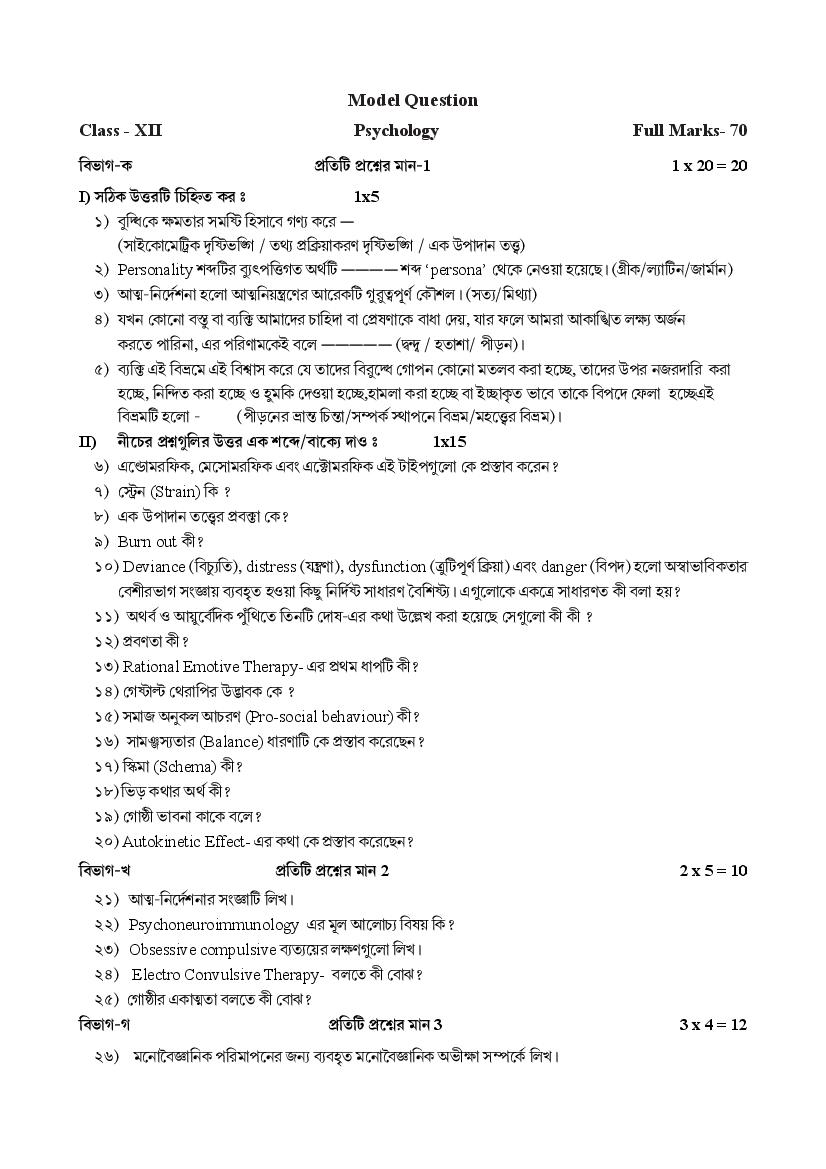
Group-A: Each Questions Carries 1 mark 1 x 20 = 20
a) Tick the correct answer : 1x5
1. “Intelligence an aggregate of abilities considered by ____. (Psychmutrice approach / Information
processing approach / one factor theory)
2. The literal meaning of personality is derived from the _____ word ‘Persona’.
(Greek / Latin / German)
3. Self-Instruction is another important technique of self control. (Yes / No)
4. The blocking of needs and motives by some thing or some one that hinders us from achieving
desired goal is called ____. (conflict / frustration / strees)
5. People with this delession beleive that they are bing plotted against, spied on, slandered,
threatened, attacked or deliberately victimised. This delussion is called – (Delusion of Persecution
/ delusion reference / delusion of grandeur)
b) Answer the following questions in one word/sentence : 1x15
6. What is Burn out ?
7. Deviance, distress, dysfunction and dangers are common features of definition of abnormality–
What they are collectively often called ?
8. What are the ‘three dosha’s mentioned is the Atharva Veda and Ayurveda tests ?
9. Who proposed the Uni or one factor theory of Intelligence ?
10. What is Aptitude ?
11. Who proposed the personality type of endomorphic, mesomorphic, etomorphic ?
12. What is Strain ?
13. What is the first step of Rational Emotive Therapy (RET)?
14. Who are the profuunder of Gestalt Therapy ?
15. What is Social behaviour ?
16. Who presented the concept of balance ?
17. What is Schema ?
18. What is the meaning of Crowd ?
19. What is Group think ?
20. Who proposed the Auto kinetic Effect ?
Group-B Each Question Carries 2 Marks : 2 x 5 = 10
21. Give the definition of self-instruction ?
22. What is the main subject matter of Psycho neuroimmunology ?
23. What do you mean Electro Convulsive Therapy ?
24. Write the symptoms of Obsessive Compulsive disorder ?
25. What do you understand by the word Group Cohessiveness ?
Group-C Each Questions Carries 3 Marks : 3 x 4 = 12
26. Discuss about ‘Psychological Test’ used for psychological assessment.
27. How does the Indian notion of ‘self’ differ from the Western notion.
Gvie a brief outlines of Karen Horney’s approach on personality.
Page 4
Discuss the personality traits of ‘hardiness’ in stress resistant personality.
29. Distinguis between fromal and informal group.
What are the benefits of Cooperation ?
Group-D Each Question Carries 4 Marks : 4 x 4 = 16
30. “Intellectual activity involves the interdependent functioning of three neurological systems called
the functional units of brain” – Explain with reference to PASS model.
31. How is creativity related to intelligence ?
32. Explain how protective techniques assess personality.
33. Explain the classification of psycho therapy on the basis of chief methods of treatment.
Group-E Each Question Carries 6 Marks : 6 x 2 = 12
34. What is Schizophrenia ? Describe the positive and negative symptoms of schizophrenia.
OR
Explain the neuro developmental disorder.
38. Give a definition of attitude. Discuss the elements of attitude.
OR
What are the factors influencing Pro-social behaviour ?
* Extra Questions.