Karnataka 2nd PUC Biology Human Health and Diseases MCQ with Answers
Finished viewing? Save it for later —
Download Karnataka 2nd PUC Biology Human Health and Diseases MCQ with Answers (PDF · 14 pages)About Karnataka 2nd PUC Biology Human Health and Diseases MCQ with Answers
Karnataka 2nd PUC Biology Human Health and Diseases MCQ with Answers is available here for free download. Published by Karnataka Board for Class 12, this question bank can be viewed online or downloaded as a PDF (14 pages). Candidates preparing for Class 12 can use Karnataka 2nd PUC Biology Human Health and Diseases MCQ with Answers to understand the exam pattern, the type of questions asked, and the overall difficulty level.
Frequently Asked Questions
How can I download Karnataka 2nd PUC Biology Human Health and Diseases MCQ with Answers?
Open this page and click the Download button to save Karnataka 2nd PUC Biology Human Health and Diseases MCQ with Answers as a PDF. It is completely free on AglaSem Docs.
Is Karnataka 2nd PUC Biology Human Health and Diseases MCQ with Answers free to download?
Yes. Karnataka 2nd PUC Biology Human Health and Diseases MCQ with Answers can be viewed online and downloaded as a PDF free of cost on AglaSem Docs.
How many pages does Karnataka 2nd PUC Biology Human Health and Diseases MCQ with Answers have?
Karnataka 2nd PUC Biology Human Health and Diseases MCQ with Answers contains 14 pages, which you can read online or download together as a single PDF.
Where can I find more Class 12 study material?
You can find more Class 12 question papers, sample papers, syllabus, and answer keys on AglaSem Docs.
Karnataka 2nd PUC Biology Human Health and Diseases MCQ with Answers – Text
Read the full text of this question bank below — useful to quickly search, copy and reference the content online without downloading the PDF.
📄 View text version (14 pages)
Page 1
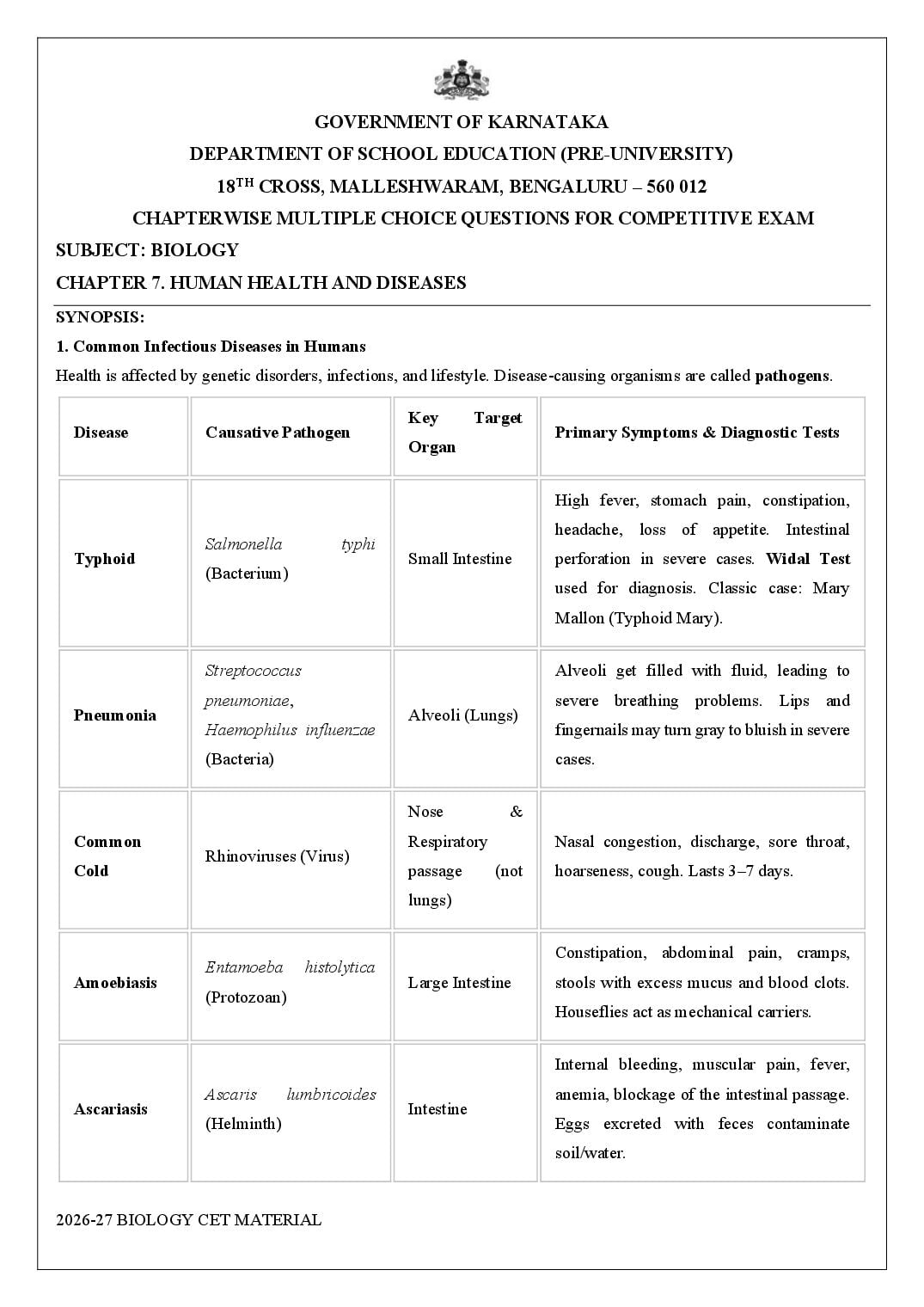
DEPARTMENT OF SCHOOL EDUCATION (PRE-UNIVERSITY)
18TH CROSS, MALLESHWARAM, BENGALURU – 560 012
CHAPTERWISE MULTIPLE CHOICE QUESTIONS FOR COMPETITIVE EXAM
SUBJECT: BIOLOGY
CHAPTER 7. HUMAN HEALTH AND DISEASES
SYNOPSIS:
1. Common Infectious Diseases in Humans
Health is affected by genetic disorders, infections, and lifestyle. Disease-causing organisms are called pathogens.
Key Target
Disease Causative Pathogen Primary Symptoms & Diagnostic Tests
Organ
High fever, stomach pain, constipation,
headache, loss of appetite. Intestinal
Salmonella typhi
Typhoid Small Intestine perforation in severe cases. Widal Test
(Bacterium)
used for diagnosis. Classic case: Mary
Mallon (Typhoid Mary).
Streptococcus Alveoli get filled with fluid, leading to
pneumoniae, severe breathing problems. Lips and
Pneumonia Alveoli (Lungs)
Haemophilus influenzae fingernails may turn gray to bluish in severe
(Bacteria) cases.
Nose &
Common Respiratory Nasal congestion, discharge, sore throat,
Rhinoviruses (Virus)
Cold passage (not hoarseness, cough. Lasts 3–7 days.
lungs)
Constipation, abdominal pain, cramps,
Entamoeba histolytica
Amoebiasis Large Intestine stools with excess mucus and blood clots.
(Protozoan)
Houseflies act as mechanical carriers.
Internal bleeding, muscular pain, fever,
Ascaris lumbricoides anemia, blockage of the intestinal passage.
Ascariasis Intestine
(Helminth) Eggs excreted with feces contaminate
soil/water.
Page 2
Disease Causative Pathogen Primary Symptoms & Diagnostic Tests
Organ
Lymphatic Chronic inflammation of lower limbs and
Wuchereria bancrofti &
Elephantiasis vessels of lower genital organs. Transmitted by female
W. malayi (Helminth)
limbs Culex mosquito vector.
Microsporum, Dry, scaly lesions accompanied by intense
Ringworms Trichophyton, Skin, nails, scalp itching. Heat and moisture help these fungi
Epidermophyton (Fungi) grow.
The Malaria Life Cycle (Plasmodium)
Plasmodium requires two hosts to complete its life cycle: Human and Female Anopheles mosquito (vector).
1. Infection: Mosquito bites a human, injecting sporozoites (infectious stage).
2. Liver Stage: Sporozoites reach the liver via blood and reproduce asexually, bursting liver cells.
3. RBC Stage: Parasites enter RBCs, reproduce asexually, and burst them. This releases a toxic substance called
hemozoin, which is responsible for the characteristic chilling and high fever recurring every 3–4 days.
4. Sexual Stage: Gametocytes develop in human RBCs. A mosquito bites the infected human and takes up
gametocytes.
5. Vector Stage: Fertilization and development occur in the mosquito's gut. Mature infective stages (sporozoites)
escape from the gut and migrate to the mosquito's salivary glands until the next bite.
2. Immunity
Immunity is the overall ability of the host to fight disease-causing organisms.
A. Innate Immunity
Non-specific defense present at the time of birth, comprising four barriers:
1. Physical: Skin and mucus coating of the respiratory, gastrointestinal, and urogenital tracts.
2. Physiological: Acid in stomach, saliva in mouth, tears from eyes.
3. Cellular: Leukocytes like PMNL-neutrophils, monocytes, and Natural Killer cells, along with macrophages.
4. Cytokine: Interferons secreted by virus-infected cells to protect non-infected cells.
B. Acquired Immunity
Pathogen-specific, characterized by memory. The primary response to a first encounter is low intensity. The secondary
(anamnestic) response to the same pathogen is highly intensified.
• Antibody Structure: Each antibody molecule has 4 peptide chains: two light (𝐿) and two heavy (𝐻) chains,
represented as 𝐻2 𝐿2 . Types include IgA, IgM, IgE, and IgG.
• Humoral Immune Response: Mediated by B-lymphocytes that produce a protein army (antibodies) in the
blood plasma.
• Cell-Mediated Immunity (CMI): Mediated by T-lymphocytes. Key function: CMI is responsible for graft
rejection during organ transplants. The body is able to differentiate between self and non-self.
C. Active vs. Passive Immunity
Page 3
long-lasting (e.g., natural infection, vaccination).
• Passive Immunity: Ready-made antibodies are directly given to the body. Fast but temporary (e.g., Colostrum
containing IgA given to infants via breastmilk, or anti-tetanus serum).
D. Autoimmunity & Allergies
• Allergy: Exaggerated response of the immune system to certain antigens present in the environment (allergens
like pollen, dust). Mediated by IgE antibodies and the release of histamine/serotonin from mast cells.
• Autoimmunity: Higher vertebrates lose the ability to distinguish self-cells from foreign cells, causing the
immune system to attack the body's own cells (e.g., Rheumatoid arthritis).
3. Immune System Organs
• Primary Lymphoid Organs: Where immature lymphocytes differentiate into antigen-sensitive lymphocytes
→ Bone Marrow and Thymus.
• Secondary Lymphoid Organs: Where lymphocytes interact with antigens and proliferate into effector cells →
Spleen, lymph nodes, tonsils, Peyer’s patches of small intestine, and appendix.
o Spleen: Large reservoir of erythrocytes; acts as a filter of blood by trapping blood-borne
microorganisms.
o MALT (Mucosal Associated Lymphoid Tissue): Located within the lining of major tracts. It constitutes
about 50% of the lymphoid tissue in the human body.
4. AIDS and Cancer
AIDS (Acquired Immuno Deficiency Syndrome)
• Causative Agent: HIV (Human Immunodeficiency Virus), a retrovirus with an RNA genome enclosed in an
envelope.
• Transmission: Sexual contact, contaminated blood transfusion, sharing infected needles, or placenta from
mother to child.
• Mechanism: HIV enters macrophages (which act as an HIV factory) → viral RNA replicates into viral DNA
via the enzyme reverse transcriptase → viral DNA incorporates into the host genome. HIV then attacks and
destroys Helper T-lymphocytes (𝑇𝐻 cells), leading to a progressive decrease in their count, causing severe
opportunistic infections.
• Diagnosis: ELISA (Enzyme-Linked Immuno-Sorbent Assay). Treatment utilizes Anti-retroviral drugs (only
prolongs life, cannot cure).
Cancer
Breakdown of normal regulatory mechanisms. Normal cells show contact inhibition (stops uncontrolled growth when
in contact with other cells); cancer cells lose this property, forming masses of cells called tumors.
• Benign Tumors: Remain confined to their original location and do not spread.
• Malignant Tumors: Mass of proliferating cells (neoplastic cells) that grow rapidly, invade, and damage
surrounding tissues. They exhibit metastasis—cells slough off, reach distant sites via blood, and start new
tumors. This is the most feared property of malignant tumors.
• Causes (Carcinogens): Physical (UV, X-rays), Chemical (tobacco smoke), and Biological agents (oncogenic
viruses containing viral oncogenes, or activation of cellular oncogenes/proto-oncogenes).
Page 4
that activate the immune system to destroy the tumor).
5. Drugs and Alcohol Abuse
Principal Receptors /
Drug Category Source / Plant Major Effect on Body
Target
Acetylation of Specific opioid receptors
Taken by snorting/injection. It is
Opioids (e.g., morphine extracted in Central Nervous
a depressant and slows down
Heroin / Smack) from latex of Papaver System (CNS) and
body functions.
somniferum (Poppy). gastrointestinal tract.
Inflorescences of Affects the cardiovascular
Cannabinoid receptors in
Cannabinoids Cannabis sativa system of the body. Taken by
the brain.
(Hemp). inhalation or ingestion.
Interferes with the Has a potent stimulating action
Erythroxylum coca
Coca Alkaloids transport of the on CNS, producing euphoria
(native to South
(Cocaine / Crack) neurotransmitter and increased energy. Excessive
America).
Dopamine. dosage causes hallucinations.
• Other Hallucinogens: Plants like Atropa belladonna and Datura. LSD (Lysergic acid diethylamide) is
extracted from a fungus (Claviceps purpurea).
• Tobacco: Contains nicotine (alkaloid). It stimulates the adrenal gland to release adrenaline and nor-adrenaline,
raising blood pressure and heart rate. Associated with cancers of lungs, urinary bladder, and oral cavity.
• Adolescence Problems: Chronic drug/alcohol use leads to dependence and withdrawal syndrome (anxiety,
shakiness, nausea, and sweating when use is abruptly discontinued), which leads to social maladjustment and
severe organ damage (e.g., Liver cirrhosis due to alcohol).
MULTIPLE CHOICE QUESTIONS
1. Greeks like Hippocrates and Indian Ayurveda system considered health as ________.
(a) Imbalance of certain ‘humors’ (b) Absence of certain ‘humors’
(c) Balance of certain ‘humors’ (d) Presence of certain ‘humors’
2. ________ has been practiced since time immemorial to achieve physical and mental health.
(a) Sports (b) Yoga (c) Aerobics (d) Gym
3. Which test is performed to confirm typhoid fever?
(a) ELISA test (b) WIDAL test (c) Biopsy (d) Schick test
4. I was a cook by profession and spread typhoid through the food I used to cook.
(a) Madam Curie (b) Mary Mallon (c) Rosalind Franklin (d) G. J Mendel
5. After the injection of sporozoites in the blood of humans, which organ do they travel initially?
Page 5
6. Entamoeba histolytica causes ________ in humans.
(a) Histolysis (b) Amoebiasis (c) Catharsis (d) Sporogenesis
7. Which factors are necessary for the growth of fungi?
(a) Moisture and sebum (b) Heat and hair (c) Body odour (d) Heat and moisture
8. Every day our body is exposed to many infectious agents. But all are not capable
of causing disease. This is due to
(a) Decreased virulence of pathogen (b) Immunity of an individual
(c) Genotype of an individual (d) Lifestyle of an individual
9. Acquired immunity is
(a) Pathogen specific (b) Pathogen non-specific (c) Congenital (d) Non-effective
10. Which immunity is slow and takes time for full eff ective response?
(a) Active (b) Passive (c) Acquired (d) Innate
11. Which cells actively participate in allergic reaction?
(a) Mast cell (b) Monocytes (c) Lymphocytes (d) macrophages
12. Which of the following is a primary lymphoid organ?
(a) Thymus (b) Spleen (c) Tonsils (d) Lymph nodes
13. Which of the following is a secondary lymphoid organ?
(a) Brunner glands (b) Peyer’s patches
(c) Crypts of Lieberkühn (d) Glisson’s capsule
14. Thymus is responsible for maturation of which cells?
(a) Tendons (b) B-cells (c) T-cells (d) Mast cells
15. Which organ act as filter of the blood by trapping blood borne microorganisms?
(a) Spleen (b) Liver (c) Tonsils (d) Bone marrow
16. A group of symptoms is known as
(a) Infection (b) Syndrome (c) Disease (d) Collection
17. NGO stands for
(a) Non Governing Organization (b) Non Governmental Organization
(c) Non Guaranteed Object (d) Non Granted Organization
18. Metastasis is
(a) Normal equilibrium condition of body. (b) Morphological changes from larva to adult.
(c) Generation of new tumour in different sites of body. (d) Abnormal growth of the body muscles.
19. In which technique 3-D the image of the internals of an objected are generated?
(a) Electron microscopy (b) Radiography
(c) Computed tomography (d) Magnetic Resonance Imaging
20. The common approaches for treatment of cancer are
Page 6
21. Anti-cancer drugs have the following side effects
(a) Hair loss (b) Anaemia (c) Vomiting (d) All of these
22. LSD is
(a) Lauric Acid Dimethyl Amide (b) Lysergic Acid Dimethyl Amide
(c) Lysergic Acid Diethyl Amide (d) Lysergic Acid Diethyl amine
23. Datura is a ________ plant.
(a) Sedative (b) Hallucinogenic (c) Excitatory (d) Health tonic
24. Tobacco has been used by human beings for more than ________ years.
(a) 400 millions (b) 40 millions (c) 4000 millions (d) 400
25. Tobacco contains an alkaloid known as ________.
(a) Morphine (b) Piperine (c) Nicotine (d) Analgesine
26. If regular dose of drugs/alcohol is abruptly discontinued it causes ________.
(a) Hallucinations (b) Withdrawal syndrome
(c) Diversion to criminal activities (d) Severe depression
27. Which one of the following statements is correct with respect to AIDS?
(a) HIV can be transmitted through eating food together with an infected person.
(b) Drug addicts are least susceptible to HIV infection.
(c) AIDS patients are being fully cured 100 per cent with proper care and nutrition.
(d) The causative HIV retrovirus enters helper T-lymphocytes thus reducing their numbers.
28. Which one of the following acts as a physiological barrier to the entry of microorganisms in
human body?
(a) Tears (b) Monocytes (c) Skin (d) Epithelium of urogenital tract
29. Identify the molecules (a) and (b) shown below and select the right option giving their source
and use.
Molecule Source Use
(a) (b) Heroin Cannabis sativa Depressant and slows down body functions
(b) (b) Cannabinoid Atropa belladonna Produces hallucinations
(c) (a) Morphine Papaver somniferum Sedative and pain killer
(d) (a) Cocaine Erythroxylum coca Accelerates the transport of dopamine
30. Cirrhosis of liver is caused by the chronic intake of
(a) Opium (b) Alcohol (c) Tobacco (chewing) (d) Cocaine
Page 7
type of immunity?
Examples Type of immunity
(a) Polymorphonuclear leukocytes and monocytes Cellular barriers
(b) Anti-tetanus and anti-snake bite injections Active immunity
8.28 Human Health and Disease
(c) Saliva in mouth and tears in eyes Physical barriers
(d) Mucus coating of epithelium lining the urinogenital Physiological barriers
tract and the HCl in stomach
32. Infection of Ascaris usually occurs by
(a) Drinking water containing eggs of ascaris (b) Eating imperfectly cooked pork
(c) Tsetse fly (d) Mosquito bite
33. At which stager HIV infection does one usually show symptoms of AIDS?
(a) Within 15 days of sexual contact with an infected person
(b) When the infected retro virus enters host cells
(c) When HIV damages a large number of T- cells
(d) When the viral DNA is produced by reverse transcriptase
34. If you suspect major deficiency of antibodies in a person, to which of the following would you
look for confirmatory evidence?
(a) Serum albumins (b) Haemocytes (c) Serum globulins (d) Fibrinogen in plasma
35. Antivenom injection contains preformed antibodies while polio drops that are administered
into the body contain
(a) Activate pathogens (b) Harvested antibodies
(c) Gamma globulin (d) Attenuated pathogens
36. Which of the following is correct regarding AIDS causative agent HIV?
(a) HIV is enveloped virus that contains two identical molecules of single-stranded RNA and two molecules
of reverse transcriptase
(b) HIV is unenveloped retrovirus
(c) HIV does not escape but attacks the acquired immune response
(d) HIV is enveloped virus containing one molecule of single-stranded RNA and one molecule of reverse
transcriptase
37. Which of the following sets of disease is caused by bacteria?
(a) Typhoid and smallpox (b) Tetanus and mumps
(c) Herpes and influenza (d) Cholera and tetanus
38. Transplantation of tissues/organs to save certain patients often fails due to the rejection of such
tissues/organs by the patient. Which type of immune response is responsible for such rejections?
Page 8
(c) Physiological immune response (d) Cell-mediated immune response
39. Which of the following is a protozoan disease?
(a) Malaria (b) Amoebiasis (c) Sleeping sickness (d) All of these
40. Innate immunity is also called
(a) familiar immunity (b) inborn (c) genetic immunity (d) All of these
41. Note the following words.
I. Skin II. Phagocytes
III. B-cells IV. Neutrophils
V. Antibodies VI. T-cells
VII. Macrophages VIII. NK-cells
Identify the factors involved in second line of defense.
(a) II, IV, VII and VIII (b) II, III, V and VI
(c) IV, VI, VIII and VIII (d) III, V, VII and VIII
42. Eradication of smallpox has been possible due to the following facts except
(a) use of highly effective vaccine
(b) immunisation programmes
(c) elimination of animal reservoir
(d) international cooperation
43. The disease chikungunya is transmitted by
(a) house flies (b) Aedes mosquitoes (c) cockroach (d) female Anopheles
44. At which stage of HIV infection does one usually show symptoms of AIDS?
(a) Within 15 days of sexual contact with an infected person
(b) When the infected retrovirus enters host cells
(c) When HIV damages large number of helper T-lymphocytes
(d) When the viral DNA is produced by reverse transcriptase
45. A patient is suspected of suffering from Acquired Immuno Deficiency Syndrome (AIDS). Which
diagnostic technique would you recommend for its detection?
(a) ELISA (b) MRT (c) Ultrasound (d) WIDAL
46. Identify the pictures A, B and C.
(a) A–Opium poppy, B–Cannabis sativa, C–Datura
Page 9
(c) A–Datura, B–Opium poppy, C–Cannabis sativa
(d) A–Opium poppy, B–Datura, C–Cannabis sativa
47. Which one of the following is a correct matching pair of a drug and its category?
(a) Amphetamines — Stimulant (b) Lysergic acid diethylamide — Narcotic
(c) Heroin — Psychotropic drug (d) Benzodiazepines — Pain killer
48. In heavy smokers, the alveoli of the lungs are enlarged and damaged, which reduces the surface
area for the exchange of respiratory gases. This condition is called
(a) asthma (b) silicosis (c) emphysema (d) insomnia
49. Those who take drugs intravenously develop a risk of
(a) AIDS (b) hepatitis-B (c) Both (a) and (b) (d) malaria
50. Metastasis is the process of-
(a) Excessive cell proliferation
(b) Transformation of benign tumour into a malignant tumour
(c) Transformation of normal cell cancerous cells
(d) Movement of cancerous cells from one organ to another
51. External factors responsible to produce disease is -
(a) virus (b) bacteria (c) parasites (d) all of these
52. Hereditary disease is -
(a) diabetes (b) Haemophilia (c) Cretinism (d) none of these
53. Smoke causes -
(a) diseases of lungs (b) bronchitis (c) asthma (d) all of these
54. Pneumonia is caused by
A. Trichophyton B. contact with infected person
C. Streptococcus pneumoniae D. Epidermophyton
(a) A, B (b) B, C (c) A, C, D (d) A, B, C, D
55. Urge of tobacco smoking can be easily given up by -
A. motivation B. substitution with other activities
C. regular exercise to reduce the stress D. nonvegetarian diet
(a) A, B (b) A, B, C (c) A, C, D (d)A, B, C, D
56. AIDS-day in celebrated on-
(a) 5th June (b) 1st October (c) 2nd July (d) 1st December.
57. A cancerous condition known as Burkitt’s Lymphoma is known to be caused by virus like
(a) Rous Sarcoma virus (b) Herpes simplex virus
(c) Epstein Barr virus (d) Hepatitis B virus
58. Malarial parasite can be obtained from patient
Page 10
(c) After temperature becomes normal (d) Elephantiasis
59. Which of the following immunity is conferred by transfer of immune products like antibodies from
another individual into a non-immune individual?
(a) Adaptive immunity (b) Specific immunity (c) Active immunity (d) Passive immunity
60. Neoplasms are
(a) Nuclei with massive DNA
(b) Cells without covering membranes
(c) Cells capable of unlimited division
(d) Newly produced cells formed through uncontrolled cell proliferation
61. Which of the following is/are the ill-effect(s) of smoking?
(a) psychological stress (b) reduces immunity (c) coronary diseases (d) Both b and c
62. AIDS can be diagnosed by
(a) radio immunoassay (RIA) (b) enzyme linked immuno-sorbent assay (ELISA)
(c) western blotting (Confirm test) (d) All of the above
63. Opioid are popularly called
(a) sedative (b) anti-depressant (c) stimulant (d) pain killers
64. Pneumonia is caused by
(a) Streptococcus pneumoniae (b) Salmonella typhi
(c) Haemophilus influenzas (d) both a and c
65. Metastasis occurs in case of
(a) grown gall tumour (b) benign tumour (c) malignant tumour (d) none of these
66. Women who communed the drug thalidomide for relief from vomiting during early month of
pregnancy gave birth to children with-
(a) No splcer (b) Harelip (c) Extra fingers and toes (d) Under developed limbs
67. The name of 'Mary Mallon1 is associated with the disease ;
(a) Typhoid (b) Leprosy, (c) Tuberculosis (d) Small pox
68. malignant malaria is caused by the following species of Plasmodium
(a) vivax (b) malaria (c) ovale (d) falciparum
69. Infection of Ascaris usually occurs by
(a) Eating imperfectly cooked meat (b) Tse-Tse fly
(c) Mosquito bite (d) Drinking water containing eggs of Ascaris
70. In which one of the following options the two examples are correctly matched with their particular
type of immunity Examples Type of immunity
(a) Polymorphonuclear leukocytes and monocyte Cellular barriers
(b) Anti-tetanus and anti-snake bite injection Active immunity
Page 11
(d) Mucus coating of epithelium lining the urinogenital tract and the HCI in stomach Physiological barriers
71. Kala azar is transmitted by-
(a) Sandfly (b) PseTse fly (c) Housefly (d) Mosquitoes
72. Match Column-I with Column-II and choose the correct option from the codes given below.
Column-I Column-II
(A) Health (1) AIDS
(B) Genetic disorders (2) Physical, mental and social well-being
(C) Infectious disease (3) Cancer
(D) Non-infectious disease (4) Inherited from parents from birth
Codes
A B C D
(a) 2 4 3 1
(b) 2 4 1 3
(c) 3 2 4 1
(d) 1 3 2 4
73. Assertion: Diseases are characterized by the appearance of various signs and symptoms.
Reason: Disease always adversely affects only one organ or system.
(a) Both assertion and reason are true and reason is the correct explanation of assertion.
(b) Both assertion and reason are true but reason is not the correct explanation of assertion.
(c) Assertion is true but reason is false.
(d) Both assertion and reason are false.
74. Assertion: AIDS is an infectious disease.
Reason: AIDS can be easily transmitted from one person to another.
(a) Both assertion and reason are true and reason is the correct explanation of assertion.
(b) Both assertion and reason are true but reason is not the correct explanation of assertion.
(c) Assertion is true but reason is false.
(d) Both assertion and reason are false
75. Which of the following is an incorrect statement?
(a) Plague is caused by Pasteurella pestis.
(b) Trophozoite is the infective stage of malarial parasite in humans.
(c) The larval stage of filarial worm carried by Culex mosquito is microfilaria.
(d) Infection of Ascaris occurs by consuming food or water carrying its eggs.
76. Infection of Ascariasis occurs through
Page 12
(b) Bite of female Anopheles
(c) Drinking water containing eggs of Ascaris
(d) Moving bare feet on grass
77. Which of the following is incorrect w.r.t. amoebiasis?
(a) It is caused by Entamoeba histolytica which is a protozoan parasite of small intestine in humans.
(b) Housefly acts as the mechanical carrier and serve to transmit the parasite from faeces of infected persons
to food and food products.
(c) Symptoms of amoebiasis include constipation, abdominal pain and cramps, stools with excess mucous
and blood clots.
(d) It is also called amoebic dysentery.
78. In which of the following viral disease, the pathogen infects the nose and respiratory passage, but
not the lungs?
(a) Pneumonia (b) Common cold (c) Diphtheria (d) Pertussis
79. Identify the odd one w.r.t. helminthic diseases
(a) Taeniasis (b) Ascariasis (c) Enterobiasis (d) Amoebiasis
80. Among the non-infectious diseases, the major cause of death is
(a) Diabetes (b) Cancer (c) Mumps (d) Hypertension
81. Swelling of body parts like limbs occurs in elephantiasis due to
(a) Deficiency of proteins casing oedema b) Renal failure
(c) Heart failure (d) Blockage of lymphatic circulation by filarial worm
82. Symptoms of AIDS appear when
(a) HIV multiplies in RBC's
(b) Bone marrow depression takes place
(c) Virus attacks helper T-cells causing their depletion resulting in immunodeficiency
(d) Virus attacks B-lymphocytes
83. Which of the following is incorrect regarding Malaria?
(a) Plasmodium vivax causes benign tertian malaria
(b) Plasmodium was discovered by Laveran
(c) Sexual phase of the life cycle of Plasmodium is seen in mosquito
(d) The asexual phase of the life cycle of Plasmodium is called sporogony
84. Common cold is not cured by antibiotics because it is
(a) Caused by protozoan (b) Caused by virus
(c) Caused by Gram (+ve) bacterium (d) Caused by Gram (-ve) bacterium
Page 13
(a) P. vivax (b) P. malaria (c) P. falciparum (d) P. ovale
86. Haemozoin released as a result of
(a) Rupture of RBC (b) Rupture of liver cell
(c) Multiplication of sporozoites (d) All of these
87. Fertilization and development of malarial parasites take place in
(a) RBC of human (b) Liver of human
(c) Stomach of mosquitoes (d) Salivary gland of mosquito
88. Amoebic dysentery is caused by
(a) Ascaris (b) Elephantiasis (c) Microspora (d) Entamoeba histolytica
89. Which of the following is true regarding pathogens?
(a) They cause morphological and functional damage in the host.
(b) They generally enter the small intestine through blood.
(c) In severe cases of pneumonia, the lips and fingernails turns red to bluish in colour.
(d) Rhino viruses only infect the lungs.
90. Which of the following is an autoimmune disease?
(a) Anthracis (b) Bronchitis (c) Rheumatoid arthritis (d) All the above
91. Colostrum provides the infant with
(a) Auto immunity (b) Passive immunity (c) Active immunity (d) Innate immunity
92. Treatment of snake bite by antivenom is providing:
(a) Artificial acquired active immunity (b) Specific natural immunity
(c) Artificial acquired passive immunity (d) Natural acquired passive immunity
93. Injection of anti-toxin in tetanus confers which type of immunisation?
(a) Active immunization (b) Passive immunisation
(c) Auto-immunisation (d) Humoral immunisation
94. The virus that causes acquired immunodeficiency syndrome (AIDS) parasitizes
(a) B cells (b) Cytotoxic T cells (c) Helper 𝑇 cells (d) The membrane of lymph node
95. The substance given to cancer patients in order to activate their immune system and destroy
tumor is
(a) 𝛼 – interferons (b) Interleukins (c) Morphine’s (d) Histamines
96. Alteration of which genes lead to cancer?
(a) Cell proliferation gene (proto-oncogenes) (b) Tumor suppressor gene
(c) Tumor virus gene (d) All of these
97. Carcinogenic agents are
(a) X-ray radiation (b) UV radiation (c) Nicotine (d) All the above
98. Smoking addiction is harmful because it produces polycyclic aromatic hydrocarbons, which causes
Page 14
(c) Cancer (d) Retardation of growth of foetus
99. Which of the following affect central nervous system?
(a) Opioid (b) Cannabinoids (c) Coca alkaloid (d) Cocaine
100. Ingestion of marijuana leads to illusions and alters the thoughts, feelings and perceptions of a
person. Marijuana is a
(a) Narcotic (b) Stimulant (c) Hallucinogen (d) Sedative
ANSWER KEYS:
1. (c) 2. (b) 3. (b) 4. (b) 5. (d) 6. (b) 7. (d)
8. (b) 9. (a) 10. (a) 11. (a) 12. (a) 13. (b) 14. (c)
15. (a) 16. (b) 17. (b) 18. (c) 19. (c) 20. (d) 21. (d)
22. (c) 23. (b) 24. (d) 25. (c) 26. (b) 27. (d) 28. (a)
29. (c) 30. (b) 31. (a) 32. (a) 33. (c) 34. (c) 35. (d)
36. (a) 37. (d) 38. (d) 39. (d) 40. (b) 41. (a) 42. (c)
43. (b) 44. (c) 45. (a) 46. (a) 47. (a) 48. (c) 49. (c)
50. (d) 51. (d) 52. (b) 53. (d) 54. (b) 55. (b) 56. (d)
57. (c) 58. (a) 59. (d) 60. (d) 61. (d) 62. (d) 63. (d)
64. (d) 65. (c) 66. (d) 67. (a) 68. (d) 69. (d) 70. (a)
71. (a) 72. (b) 73. (c) 74. (a) 75. (b) 76. (c) 77. (a)
78. (b) 79. (d) 80. (b) 81. (d) 82. (c) 83. (d) 84. (b)
85. (c) 86. (a) 87. (c) 88. (d) 89. (a) 90. (c) 91. (b)
92. (c) 93. (b) 94. (c) 95. (a) 96. (a) 97. (d) 98. (c)
99. (a) 100. (c)
Document Details
| Board / Org | Karnataka Board |
| Exam | Class 12 |
| Type | Question Bank |
| Pages | 14 |
| Updated | 24 Sep 2026 |