NEET Biology Question Bank - Human Health and Diseases
Finished viewing? Save it for later —
Download NEET Biology Question Bank - Human Health and Diseases (PDF · 30 pages)About NEET Biology Question Bank - Human Health and Diseases
NEET Biology Question Bank - Human Health and Diseases is available here for free download. Published by NTA for National Eligibility cum Entrance Test (Undergraduate), this question bank can be viewed online or downloaded as a PDF (30 pages). Candidates preparing for National Eligibility cum Entrance Test (Undergraduate) can use NEET Biology Question Bank - Human Health and Diseases to understand the exam pattern, the type of questions asked, and the overall difficulty level.
Frequently Asked Questions
How can I download NEET Biology Question Bank - Human Health and Diseases?
Open this page and click the Download button to save NEET Biology Question Bank - Human Health and Diseases as a PDF. It is completely free on AglaSem Docs.
Is NEET Biology Question Bank - Human Health and Diseases free to download?
Yes. NEET Biology Question Bank - Human Health and Diseases can be viewed online and downloaded as a PDF free of cost on AglaSem Docs.
How many pages does NEET Biology Question Bank - Human Health and Diseases have?
NEET Biology Question Bank - Human Health and Diseases contains 30 pages, which you can read online or download together as a single PDF.
Where can I find more National Eligibility cum Entrance Test (Undergraduate) study material?
You can find more National Eligibility cum Entrance Test (Undergraduate) question papers, sample papers, syllabus, and answer keys on AglaSem Docs.
NEET Biology Question Bank - Human Health and Diseases – Text
Read the full text of this question bank below — useful to quickly search, copy and reference the content online without downloading the PDF.
📄 View text version (30 pages)
Page 1
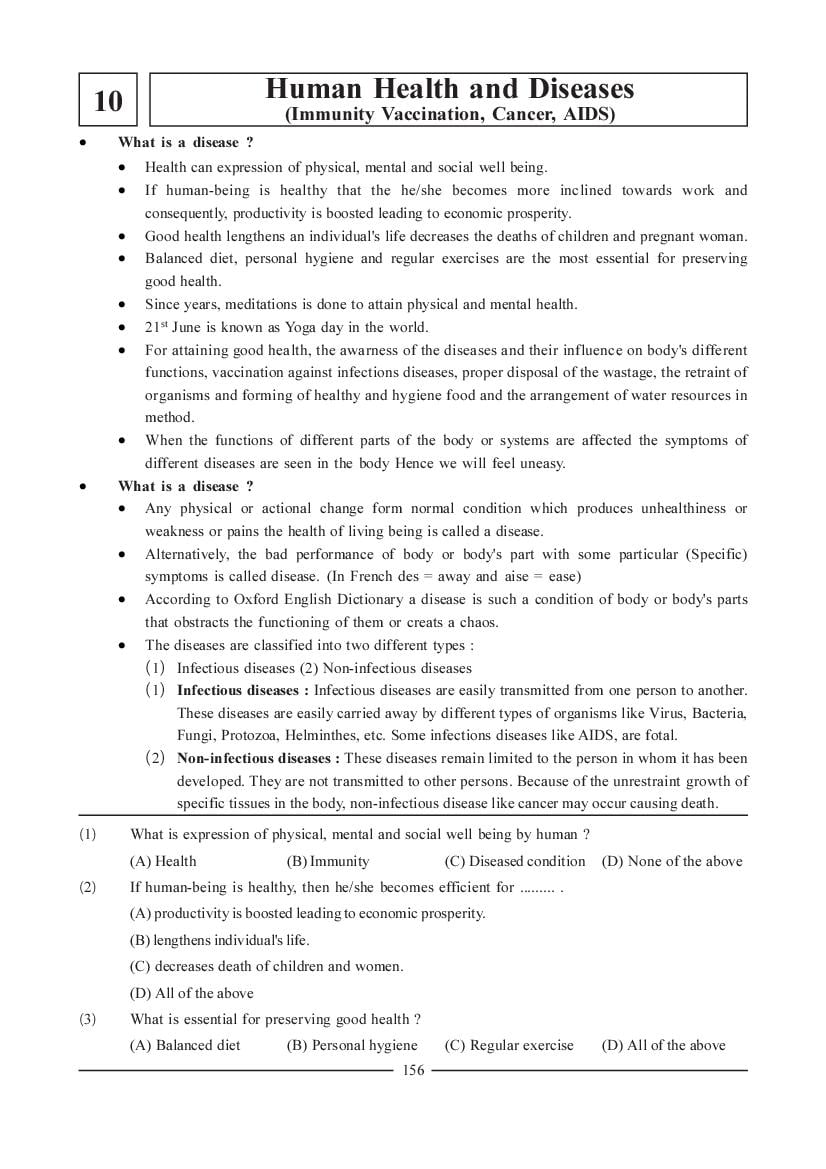
(Immunity Vaccination, Cancer, AIDS)
· What is a disease ?
· Health can expression of physical, mental and social well being.
· If human-being is healthy that the he/she becomes more inclined towards work and
consequently, productivity is boosted leading to economic prosperity.
· Good health lengthens an individual's life decreases the deaths of children and pregnant woman.
· Balanced diet, personal hygiene and regular exercises are the most essential for preserving
good health.
· Since years, meditations is done to attain physical and mental health.
· 21st June is known as Yoga day in the world.
· For attaining good health, the awarness of the diseases and their influence on body's different
functions, vaccination against infections diseases, proper disposal of the wastage, the retraint of
organisms and forming of healthy and hygiene food and the arrangement of water resources in
method.
· When the functions of different parts of the body or systems are affected the symptoms of
different diseases are seen in the body Hence we will feel uneasy.
· What is a disease ?
· Any physical or actional change form normal condition which produces unhealthiness or
weakness or pains the health of living being is called a disease.
· Alternatively, the bad performance of body or body's part with some particular (Specific)
symptoms is called disease. (In French des = away and aise = ease)
· According to Oxford English Dictionary a disease is such a condition of body or body's parts
that obstracts the functioning of them or creats a chaos.
· The diseases are classified into two different types :
(1) Infectious diseases (2) Non-infectious diseases
(1) Infectious diseases : Infectious diseases are easily transmitted from one person to another.
These diseases are easily carried away by different types of organisms like Virus, Bacteria,
Fungi, Protozoa, Helminthes, etc. Some infections diseases like AIDS, are fotal.
(2) Non-infectious diseases : These diseases remain limited to the person in whom it has been
developed. They are not transmitted to other persons. Because of the unrestraint growth of
specific tissues in the body, non-infectious disease like cancer may occur causing death.
(1) What is expression of physical, mental and social well being by human ?
(A) Health (B) Immunity (C) Diseased condition (D) None of the above
(2) If human-being is healthy, then he/she becomes efficient for ......... .
(A) productivity is boosted leading to economic prosperity.
(B) lengthens individual's life.
(C) decreases death of children and women.
(D) All of the above
(3) What is essential for preserving good health ?
(A) Balanced diet (B) Personal hygiene (C) Regular exercise (D) All of the above
156
Page 2
(A) Awareness on the diseases and the influence of it on body's different functions.
(B) Vaccination against infectious diseases, proper disposal of wastage, restraint of organisms who
carries the pathogens.
(C) Make arrangements for healthy and hygienic food and arrangement of water resources.
(D) All of the above
(5) What is disease ?
(A) Any physical or actional change in normal condition which creates unhealthiness and weakness.
(B) Ruins the health of living being.
(C) Any physical or actional change in normal conditions which create health and energy.
(D) (A) and (B)
(6) If French des = x and aise = y .
(A) x = Ease, y = Away (B) x = Away, y = Ease
(C) x = Near, y = Ease (D) x = Near, y = Away
(7) Which pathogens are responsible for infections diseases ?
(A) Virus, Bacteria, Fungi, Nematodes, Arthropods (B) Virus, Bacteria, Fungi, Protozoa, Coelenterata
(C) Virus, Bacteria, Fungi, Protozoa, Mollusca (D) Virus, Bacteria, Nematode, Protozoa, Echinoderms
Answers : (1-A), (2-D), (3-D), (4-D), (5-D), (6-B), (7-A)
Important Common Diseases
· Typhoid :
· Typhoid is a common disease caused by rod like bacteria Salmonella typhi.
· These bacteria in diseased condition are found in the intestine of human beings.
This disease is very common among children belonging to age group 1-15.
· Every year approximately 2.5 million people suffer from this disease.
· Spreading : This disease is transmitted by the water and food contaminated by patient's
feaces.
· House flies carry these organisms from feaces to food, milk and water.
· These organisms enter into the body through mouth and reach intestine from where they are
carried into other parts of the body through blood circulation.
· It produces lesion in the wall of intestine.
· The period of incubation is of one to three weeks, averaging two weeks.
· Symptoms : Common symptoms are fever initially for first and second week that subsides in
the third and fourth week.
· Headache, severe weakness, pain in stomach, constipation and loss of appetite are seen.
· The liver and spleen get enlarged. Typhoid is diagnosed by widal test.
· Control : Antibiotic Treatment
157
Page 3
· Pneumonia is caused in human beings by Streptococcus pneumoniae and Haemophilus influenzae.
· Generally streptococcus pneumonia is called Pneumococcus. Pneumonia is a disease of
respiratory tract.
· The fluid gets collected in alveoli because of which the lungs do not get enough oxygen.
· Spreading : This disease is spreading by coughing and sputum.
· Inhaling the pneumococci, it infects the windpipes.
Burning is felt in alveolal wall which secrets the protein filled fluid. After that it is used as
contagious medium by bacteria and obstructs the windpipes.
· Incubation period is of one to three days. Pneumonia is generally found in aged people.
· Symptoms : The onset of pneumonia is usually sudden chill, followed by fever.
· Pain in inhalation, cough and headache are seen.
· In some cases the lips and finger nails turn blue from grey in colour.
· In pneumonia, sometimes, because of malnutrition, alcohol and side effects of medicines or
infections from some other disease like influenza, the resistance power of the body is lost.
· The sputums are bloody and rusty.
· Common Cold :
· This disease in an important disease among human infections diseases.
· Which is caused by Rhino virus. This virus infect the nose and respiratory passage but not lungs.
· Spreading : The sneezing and coughing of an infectious person or by using, pen, books,
cup computer, key-board or mouse used by the infections being, the healthy person may get
infected.
· Symptoms : The common symptoms of common cold include nasal congestion and secretion,
sore throat, cough, headache, fatigue, etc. It lasts for 3-7 days at least.
· Malaria :
· Microorganism called Plasmodium is responsible for malaria disease.
· Plasmodium vivax and plasmodium falciparum are responsible for various kinds of malaria.
· For severe kind of malaria plasmodium falciparum is responsible and some times it proves to
be fatal.
· Its life cycle found in human being in three stages.
(1) Pre-erythrocytic cycle : The Anopheles female mosquito bites, sends small amount of saliva
into human being o Sporozoites present in saliva are introduced to human blood o
Sporozoite are spindle shaped, enters in the liver cell o Growing over the food from the liver
cells it becomes spherical in shape it called cryptosizont o Asexual reproduction is found o
It called schizogony o Cryptoschizont is converted in cryptomerozoites.
(2) Exo-erythrocytic cycle : Cryptomerozoites enter a new liver cell and grow to achieve
spherical shape o It called metacryptoschizont o By asexual reproduction it is converted
into metacryptomerozoite, breaks the liver cells and comes out enter in blood.
(3) Endoerythrocytic cycle : This cycle is found in RBC. Metacryptomerozoite enter in RBC,
becomes spherical in shape. Which is known as trophozoite o Trophozoite develops many
pseudopodia, this stage is known as amoeboid stage o now parasites become rounded in
158
Page 4
converts into gametocytes. They are two types :
(1) Male gametocyte : Small in size and it has large nucleus.
(2) Female gametocyte : Large in size and it has small nucleus.
Mosquito and its life cycle :
· When female Anopheles mosquito sucks gametocyte containing blood of human being, it enters
in digestive system.
Gametocyte
¯ ¯
Male Gametocyte or Female Gametocyte or
Microgamete Megagamete
After fertilization both converted into zygote, it becomes
¯
Ookinete
¯
Oocyst
¯ Sexual reproduction
Sporozoite
¯
Enter in Saliva
¯
For the more development sporozoite has to enter in blood stream.
¯
When this mosquito bites a human, along with saliva
sporozoite are introduced in human blood.
· The life cycle continues in human being.
Filariasis (Elephantiasis) :
· Elephantiasis is caused by the filarial worms.
· Adult male and female are of 40 mm and 80 mm length respectively.
· Filarial worms are long string like, white bodied and pointed at both the ends.
· The female gives birth to the kidworms which are called microfilaria.
· Human being is its first host. This worm is viviparous.
· Then they are transferred to deep blood-venels. Which are sucked by Culex fatigan mosquito
which is a mediator and carrier. Here within 10 days approximately they developed into larva
and are migrated to mosquito's mouth organs.
· When infected mosquito bites the host human; the larva enter in the skin. They enter in new
host through the hole in skin made up by the mosquito. Through blood they are transferred to
lymphatic vessels and lymphatic glands. Here it gets matured in one year as an adult. An adult
worm lives for 5 to 8 years.
159
Page 5
· In chronic condition, the worm blocks lymphatic vessels. Due to which hands, legs, leg sole,
breast and scrotum, etc. get swollen.
· This happens due to thickening of skin and epithelial tissues. The leg gets deformed and swell
and thus it is given the name elaphantiasis. This disease is not fatal.
· Control : Destroy the mosquito
( 6 ) Ring Worm :
· Fungus is responsible for this disease like Microsporum, Trichophyton and Epidermophyton.
· Symptoms : In common symptoms, there is an appearance of dry scaly lesions on various part
of the body like skin, nails and head.
· By contant itching the lesions get expanded. Heat and moisture support fungus to grow in skin
folds, thigh corners and between toes.
· Spreading : Ring worm disease spreads due to use of towel, cloth and comes from infectious persons.
· For maintaining personal and public hygiene; prevention of the spreading of several infections
diseases is very important. To maintain personal health, one should keep the body clean and
consume clean water, food, vegetables and fruits.
· For maintaining public health, proper disposal of dirty water to clean the water of dams and
barrels periodically and disinfecting them. This is a very important solution for
preventing the disease spread by water and food.
· The preventions mentioned above for pneumonia and common cold, one should not come into
contact with infected people. Malaria and Filariasis spread by mosquitoes and hence the places
where mosquitos lay their eggs should be found and eliminated. The stagnant water pools and
poodles surrounding your residence should be cleaned. The water of air-cooller should be
changed regularly. Mosquito net should be used. Fishes like Gambusia which feed on mosquito
larvae can be reared in water reservoirs. Germicides, should be sprayed in drainage canals, ditches.
· The diseases like Dengue and Chikungunia are spread by Aedes mosquito. Mosquitoes can be
prevented from entering the house by fixing of wire-nets on doors and windows.
· To get protection from polio, diptheria, titanus and pneumonia, vaccination, should be used so
that they can properly controlled.
(8) Which bacteria causes typhoid ?
(A) Salmonella typhi (B) Pneumococcus
(C) Haemophilus influenzae (D) Streptococcus
(9) In which organ, we find bacteria of typhoid ?
(A) Stomach (B) Oesophagus (C) Intestine (D) Respiratory tract
(10) x is very common among children belonging to age group y , Every year approximately z million
people suffer from.
(A) x = Pneumonia, y = 1-15, z = 2.5 million (B) x = Typhoid, y = 1-15, z = 2.5 billion
(C) x = Typhoid, y =1 -15, z = 2.5 million (D) x = Pneumonia, y = 1-20, z = 2.5 billion
(11) x disease is transmitted by the water and food contaminated by patient's feaces.
(A) x = Typhoid (B) x = Cold (C) x = Pneumonia (D) x = Cholera
(12) The incubation period of Salmonella typhi is approximately x weeks averaging y weeks.
(A) x = 1 - 3, y = 3 (B) x = 1 - 3, y = 2 (C) x = 1 - 2, y = 2 (D) x = 1 - 4, y = 2
160
Page 6
(A) Headache, Stomachache, Constipation, burning sensation in intestine and colon.
(B) Headache, Intestinal pain, Constipation burning sensation in stomach and colon.
(C) Severe weakness, Pain in intestine, burning in kidney and large intestine.
(D) Headache, Severe weakness, Pain in intestine and burning in stomach.
(14) Pneumonia is disease of x and the fluid gets collected in y .
(A) x = Respiratory tract, y = Alveoli and Wind pipe
(B) x = Respiratory tract, y = Alveoli and Lungs
(C) x = Digestive tract, y = Alveoli and Wind pipe
(D) x = Digestive tract, y = Alveoli and Lungs
(15) What is responsible for Pneumonia ?
(A) Patient sputum (B) Patient food (C) Patient faeces (D) Patient urine
(16) What is the incubation period of Pneumococcus bacteria ?
(A) 1 - 2 weeks (B) 1 - 3 days (C) 1 - 4 days (D) 1- 3 weeks
(17) Common cold is caused by x which infects y .
(A) x = Rhino virus, y = Nose and Respiratory tract (B) x = Rhino virus, y = Nose and Lungs
(C) x = Retro virus, y = Respiratory tract and Lungs (D) x = Rhino virus, y = Respiratory tract and lungs
(18) In which organ infection does not occur by entry of Rhino virus ?
(A) Nose (B) Respiratory tract (C) Respiratory tube (D) Lungs
(19) y disease occurs by x in human being.
(A) x = Arthropod, y = Typhoid (B) x = Protozoa, y Malaria
(C) x = Protozoa, y = Pneumonia (D) x = Coelenterata, y = Malaria
(20) Which microorganism is responsible for different types of Malaria ?
(A) Plasmodium falciparum (B) Plasmodium vivax
(C) Plasmodium quantum (D) (A) and (B) both
(21) Which host shows lifecycle of Plasmodium ?
(A) Human and Female anopheles mosquito (B) Human being and Male anopheles mosquito
(C) Human being and anopheles mosquito (D) Human being and Female Culex fatigon mosquito
(22) Which is the appropriate pair ?
(A) Pneumonia - Salmonella typhi (B) Common cold - Retro virus
(C) Malaria - Plasmodium vivax and Plasmodium (D) Filariasis - Female Anopheles mosquito
(23) Choose the correct option for Exoerythrocytic cycle of Plasmodium in Human being.
(A) Cryptomerozoites o Enters into new liver cell o
Metacryptoschizont o Metacryptomerozoite o Blood
(B) Cryptomerozoite o Cryptoschizont o Metacryptoschizont o Metacryptomerozoite o Liver
(C) Metacryptomerozoite o Blood o Saliva o Metacryptoschizont o Liver
(D) Cryptomerozoite o Saliva o Blood o Liver o Metacryptoschizont
161
Page 7
(A) Metacryptomerozoite o RBCs o Merozoites o Trophozoite o Schizont o Gametocyte
(B) Metacryptomerozoite o Schizont o Trophozoite o RBCs o Gametocyte o Merozoite
(C) Metacryptomerozoite o RBCs o Trophozoite o Schizont o Merozoite o Gametocyte
(D) RBCs o Metacryptomerozoite o Trophozoite o Schizont o Merozoite o Gametocyte
(25) How is Filarial worm which causes Elephantiasis ?
(A) Short thread like, white bodied and sharp at both the ends.
(B) Long thread like, white bodied and sharp at both the ends.
(C) Long thread like, white bodied and sharp at one end.
(D) Long thread like, pale yellow bodied and sharp at both the ends.
(26) Male filarial worm is x mm and female is y mm in length.
(A) x = 40, y = 60 (B) x = 60, y = 40 (C) x = 40, y = 80 (D) x = 80, y = 40
(27) Zygote of malarial parasite becomes spindle shaped, it is known as ......... .
(A) Ookinete (B) Oocyst (C) Trophozoite (D) Sporozoite
(28) Choose the correct sequence following growth :
(A) Cryptomerozoite o Sporozoite o Cryptoschizont
(B) Cryptoschizont o Cryptomerozoite o Sporozoite
(C) Schizogony o Sporozoite o Cryptoschizont
(D) Sporozoite o Cryptoschizont o Cryptomerozoite
(29) Which disease shows the symptoms ?
(i) Severe fever in first and third week.
(ii) Fever decreases sequencially in 3rd and 4th week.
(iii) Headache.
(iv) Enlargement of spleen and liver.
(A) Common cold (B) Malaria (C) Pneumonia (D) Typhoid
(30) Where does filarial worms reside in human ?
(A) Lymphnodes (B) Lymphvessels (C) (A) and (B) both (D) Lymphatic cell
(31) Which disease shows these symptoms :
(i) Thickening of skin and epithelial tissue.
(ii) Swelling in hands, legs, leg sole, breast and scrotum.
(iii) It blocks lymphatic vessels in chronic condition.
(iv) Fever in acute condition.
(A) Malaria (B) Elephantiasis (C) Typhoid (D) Pneumonia
(32) What is responsible for following symptoms ?
(i) Responsible for elephantiasis.
(ii) Adult worm lives for 5 to 8 years.
(iii) They reside in lymphatic vessels and lymphatic nodes in human.
(A) Female anopheles (B) Salmonella typhi (C) Filarial worm (D) Plasmodium vivax
162
Page 8
(A) Microsporum (B) Trichophyton (C) Epidermophyton (D) All of the above
(34) Which fish eats mosquito larvae ?
(A) Gambusia (B) Catla (C) Hilsa (D) Mrigal
(35) Which mosquito is responsible for Dengue and Chikangunia ?
(A) Aedes (B) Culex fatigan (C) Male anopheles (D) Female anopheles
(36) What should be done to preserve good health ?
(A) Eat fresh vegetables and fruits (B) Take fresh water and food
(C) Keep body hygienic (D) All of the above
Answers : (8-A), (9-C), (10-C), (11-A), (12-B), (13-A), (14-B), (15-A), (16-B), (17-A), (18-D),
(19-B), (20-D), (21-A), (22-B), (23-A), (24-C), (25-B), (26-C), (27-A), (28-D), (29-D), (30-C),
(31-B), (32-C), (33-D), (34-A), (35-A), (36-D)
Immunity :
· The reason for it is our body is able to protect itself form such foreign agents. This ability of
the host to fight against there infections diseases is decided by the system which is called
immune system which providing immunity.
· Immunities are of two types : (1) Innate Immunity (2) Acquired Immunity
(1) Innate Immunity :
· Innate immunity is so called because it is acquired by heriditary, since birth of animal.
· Innate immunity includes four barriers.
(A) Physical barrier : The skin of our body is the main physical barrier which prevents the
entry of microorganisms.
· Mucus coating of the epithelial lining in the respiratory, gastrointestinal and urogenital tracts
also help in trapping microbes entering our body.
(B) Physiological barrier : Acid in the stomach, saliva in the mouth and tears flow from the
eyes to prevent the growth of the microorganisms.
(C) Cellular barrier : Certain types of leucocytes like polymorpho Nuclear leucocytes
(PMNL); Neutrophils and monocytes leucocytes are natural killer cells found in the blood and
macrophage, in tissues can engulf and destroy microbes.
(D) Cytokine barrier : Virus infected cells secrete proteins called interferons which protect
uninfected cells from viral infections.
(2) Acquired Immunity (Pathogen Specific) Ñ
· It bears memory characteristics.
· After birth during the lives, animal develop some immunity is their body to fight the diseases
which is called Acquired Immunity.
· When our body comes in contact with a pathogen for the first time and then its response
which is called 'Primary Response' whose intensity is mild. There after when the same
pathogen comes in the contact for the second time, the secondary response is very intense
which has the memory of the first encounter by our body.
· By two specific kind of lymphocytes i.e. B-lymphocytes and T-lymphocytes residing in our
blood. The primary and secondary immune responses are elicited.
163
Page 9
proteins are called antibodies.
· Each antibody molecule has four peptide chains, two smallest chains are called light chains and
two longer chains are called heavy chains. Hence, antibody is represented as H2L2.
· Different types of antibodies are created in our body which include IgA, IgM, IgE, IgD
and IgG.
(37) The ability of the host to fight against infections agent is called ......... .
(A) Immunity (B) Digestive system (C) Adversibility (D) Aggressiveness
(38) The disease resistance power obtained by birth in animals is called x .
(A) x = Hereditary Immunity (B) x = Innate Immunity
(C) x = Passive Immunity (D) x = Acquired Immunity
(39) x of our body is the main y .
(A) x = Skin, y = Cytokine barrier (B) x = Skin, y = Physical barrier
(C) x = PMNL , y = Cytokine barrier (D) x = eye, y = Physical barrier
(40) Which of the following is in physiological barrier ?
(A) Skin, Respiratory tract, Urinary tract, Saliva in mouth
(B) Acid in stomach, Saliva in mouth, Tears flow from eyes
(C) WBCs, Killer cells, Skin, Tears
(D) Acid in stomach, Respiratory tract, Urinary tract, Skin
(41) What is the full form of PMNL ?
(A) Polymorpho Nucleotide Leucocytes (B) Polymorpho Nucleoside Leucocytes
(C) Polymorpho Nuclear Leucocytes (D) Polymorpho Nuclear Lymphocytes
(42) Which of the following protects uninfected cells from viruses ?
(A) Interferons (B) Interside (C) Leucocytes (D) Immunoglobulin
(43) Which is memory based Immunity ?
(A) Innate Immunity (B) Active Immunity
(C) Acquired Immunity (D) Passive Immunity
(44) Which type of response is intense ?
(A) Secondary (B) Innate (C) Primary (D) Tertiary
(45) Acid in stomach : Physiological barrier, Interferon : ......... .
(A) Physical barrier (B) Physiological barrier (C) Cytokine barrier (D) Cellular barrier
(46) Tears of eyes : Physiological barrier Skin : ......... .
(A) Physical barrier (B) Physiological barrier (C) Cytokine barrier (D) Cellular barrier
(47) How is H2L2 represented in antibody ?
(A) It has two small light chain and two long heavy chains.
(B) It has two small light chain and two short heavy chains.
(C) It has two small short chains and two small heavy chains.
(D) It has two small long chains and two long heavy chains.
164
Page 10
(A) IgA, IgB, IgC, IgD, IgE (B) IgA, IgM, IgE, IgD, IgG
(C) IgA, IgH, IgK, IgD, IgE (D) IgA, IgP, IgQ, IgR, IgG
Answers : (37-A), (38-B), (39-B), (40-B), (41-C), (42-A), (43-C), (44-A), (45-C), (46-A), (47-A), (48-B)
Active and Passive Immunity and Vaccination and Immunisation :
· When a host comes into the contact with antigens, the antibodies are produced in his body.
Antigen is in the form of dead or alive microorganisms or other proteins. This sort of immunity
is called active immunity. Active immunity is slow and takes time to give its full and effective
response.
· This immunity develops when the organisms naturally enters or the antigenic beings are
introduced in the body in adequate amount so it helps to create antibodies in the body. This is
called active immunity.
· When readymade antibodies are directly introduced into body to protect it from foreign agents,
it is called passive immunity.
· The yellowish fluid colostrums is secreted by mother during the initial days of lactation which
contains plenty of (IgA) antibody. It gives protection to the infant.
· The foetus also obtains some antibodies from the mother through the placenta during
pregnancy. These are the examples of passive immunity only.
· The principle of immunisation or vaccination is based on the property of memory.
· In vaccination, the protein of pathogen or the inactivated or weakened pathogens are
introduced in the body. Against this antigen antibody is produced in the body.
· In tetanus, the directly produced antibody and antitoxin is entered.
· In snake biting too the injection which is given to the patients contain performed antibodies
against snake venom. This type of immunisation is called passive immunisation.
· By recombinant DNA technology vaccine can be produced at large scale e.g., Heptitis B
vaccine from yeasts.
(49) Antiallergens : IgE, Colostrum : ......... .
(A) IgG (B) IgD (C) IgA (D) IgM
(50) Which is antibody containing fluid present in mother's milk in initial stages after childbirth ?
(A) Colostrum (B) Cholesterol (C) Clostridium (D) Calcisterol
(51) What is used to prepare Hepatitis B ?
(A) Bacteria (B) Virus (C) Algae (D) Yeast
(52) Vaccination protects individuals from diseases because ......... .
(A) produces antigens. (B) produces antibodies.
(C) increases number of RBCs. (D) helps in digestion process of the body.
(53) On what base principle of immunisation works ?
(A) Memory (B) Self (C) Identification (D) To phage
165
Page 11
(A) Antigen (B) Antioxidant (C) Antitoxin (D) Oxytocin
(55) Which microorganisms are used to prepare vaccine ?
(A) Bacteria and Amoeba (B) Bacteria and Yeast
(C) Yeast and Amoeba (D) Yeast and Euglena
(56) Which part helps to obtain antibodies from mother during pregnancy ?
(A) Umbilical cord (B) Uterus (C) Placenta (D) Amniotic fluid
Answers : (49-C), (50-A), (51-D), (52-B), (53-A), (54-C), (55-B), (56-C)
Allergies, Auto Immunity and Lymphoid Organs :
· Some of are sensitive to certain particles of environment, the excess response of the immune
system to certain antigens present in the environment is called allergy.
· The substances to which such an immune system responses are called allergens.
· IgE types of antibodies are produced against such substances.
· Common example of allergen is dust particles.
· In common examples of symptoms include sneezing, watering eyes, running nose and difficulty
in breathing.
· Allergies like take place due to the release of chemicals like histamine and seretonin from the
mast cells.
· The use of drugs like antihistamine, adrenaline and steroids quickly reduce the symptoms of
allergy immediately.
· Due to modern life style the reduction in immunity and more sensitivity are allergens increased.
· In most of the developed cities of India, more and more children suffer from allergies and asthma.
· Sometimes due to genetic and other unknown reasons, the body attacks self-cells resulting into
damage to the body. This is called auto-immune disease.
· Rheumatoid arthritis is an auto-immune disease common in our society. Other examples are
insuline based diabetes, arthritis, multiple sclerosis, etc.
· The primary lymphoid organs are bone marrow and thymus, in which immature lymphocytes
are differentiated into antigen sensitised lymphocytes.
· After getting matured, the lymphocytes are transfered to secondary lymphoid organ like spleen,
lymph, tonsils and small intestine. The secondary lymphoid organs provides the space for
interaction of lymphocytes with the antigen and produces effective cells after the proliferation.
· The bone marrow is the main lymphoid organ in which all the blood cells along with
lymphocytes are produced.
· The thymus is an lobelike organ and is arranged below the breastbone and near the heart.
· The thymus gland is large at the time of birth but decreases in size as the age passes and at
adulthoold it becomes very small. Thymus and bone marrow both provide micro environments
for the development and maturation of T-lymphocytes.
· The spleen is a large bean shaped organ. Which mostly process lymphocytes and phagocytes.
· Spleen also has large treasure of erythrocytes.
(57) What is the severe response of immune system towards specific antigen of environment known as ?
(A) Allergy (B) Asthma (C) Allergens (D) Primary Allergen
166
Page 12
(i) Running nose (ii) Sneezing
(iii) Tears flowing from eyes (iv) Difficulty in breathing
(A) Pneumonia (B) Typhoid (C) Allergy (D) AIDS
(59) Which medicines are used to reduce symptoms of allergy quickly ?
(A) Antihistamine (B) Adrenalin (C) Steroid (D) All of the above
(60) From which diseases more and more children suffer in most of the cities ?
(A) Asthma (B) Bronchitis (C) Pneumonia (D) Malaria
(61) Due to genetic and other unknown reasons the body attacks self cells, it is known as.
(A) Innate Immunity (B) Auto Immunity (C) Acquired Immunity (D) Immunity
(62) Which are the examples of auto immunity ?
(A) Cancer, Rheumatoid, Joundice, Malaria (B) Rheumatoid, Diabetes, Pneumonia
(C) Rheumatoid, Diabetes, Multiple Sclerosis (D) Diabetes, Typhoid, Elephantiasis, Common cold
(63) ......... . produces all types of blood cells.
(A) Thymus (B) Liver (C) Bone marrow (D) Spleen
(64) Spleen is storehouse of ......... .
(A) Monocytes (B) Erythrocytes (C) Lymphocytes (D) Leucocytes
(65) x and y both provide micro environment for development and maturation of T lymphocytes.
(A) x = Thymus, y = Spleen (B) x = Liver, y = Bone marrow
(C) x = Thymus, y = Bone marrow (D) x = Thymus, y = Liver
Answers : (57-A), (58-C), (59-D), (60-A), (61-B), (62-C), (63-C), (64-B), (65-C)
· AIDS :
· AIDS is a serious, incurable, infections and fatal disease.
· The name AIDS stand for Acquired Immuno Deficiency Syndrome.
· AIDS was first reported in USA in 1981 and in last 21 years it has spread throughout the
world. More that 25 million people have died on account of this disease.
· In India, the AIDS infection was first seen in Tamilnadu in the year 1986.
· AIDS is caused by Human Immuno Deficiency Virus (HIV).
· It is belongs to the group of retrovirus. In HIV genetic material is RNA.
· In macrophages where RNA genome of the virus replicates with help of enzyme reverse
transcriptare to form viral DNA.
· Macrophages continuously produces thus it is acts as a manufacturing unit of HIV.
· Transmission of AIDS :
· Heterosexual or homosexual physical contact with AIDS patient.
167
Page 13
· Organ transplant from infective donor.
· By resulting the needle or syringe used by an AIDS or containing HIV.
· Through AIDS suffering mother to the foetus during pregnancy as well as through feeding
(breast) by a mother to the Child. AIDS is not a contagious disease in common way. It does not
spread through contact with clothes utensils, etc.
· Symptoms of AIDS :
· HIV infected patients are classified into three stages :
(1) The person appears healthy but does not show symptoms of AIDS. But such person as a
vector of HIV.
(2) Some people show a little symptoms of AIDS including fatigue, bodyache lasting over four
weeks, fever, blood in stool, loss of appetite, loss of body weights, etc. This condition is called
AIDS - Related complex (ARC) from this the full blown of AIDS takes place.
(3) AIDS at the final stage : That is the last phase of this disease. The stage is marked by
symptoms.
· Loss of body weight by 10 % without any reasons.
· Continuous fever for one month or more, which is undiognised.
· Dirrhoea develops.
· Get affected by cough, cold, pneumonia, etc.
· Cancer of blood vessels and inflammation of lymph glands.
· Through Enzyme linked Immunosorbent Assay (ELISA) Test and Western Blot Test (WBT)
diagnosis of AIDS can carried on.
· Prevention of AIDS :
· No valid method to discover AIDS has been invented. No vaccine is available AIDS is tottally
an incurable disease.
· In India, the national AIDS Control Organization (NACO) and other Non-Government
Organization (NGOs) are doing a lot to educate people for AIDS. WHO has started numerous
programmes to prevent the spreading of HIV infection.
· Preventing Remedies :
· Don't cross the limit of single marriage life partner for sexual relationship.
· At the time of sexual intercourse condom should be used to avoid the danger of AIDS and
other sexually transmitted diseases.
· Do not take blood from profesional blood donor. If it is needed, blood and blood products
should be used proper investigation.
· Injection should be used after steritizing the needle and syringe in boiling water and disinfected.
The things like tooth-brush, razor, blades which come in direct contact with blood would not be
reused. Once if is used by others.
· The person suffering from AIDS/HIV should be treated properly and must not be boycotted society.
(66) AIDS was first reported in x in y .
(A) x = India, y = 1981 (B) x = U.S.A., y = 1981
(C) x = England, y = 1986 (D) x = U.S.A., y = 1986
168
Page 14
(A) x = 1986, y = Gujarat (B) x = 1986, y = Maharastra
(C) x = 1986, y = Tamilnadu (D) x = 1984, y = Tamilnadu
(68) HIV belongs to ......... .
(A) Retro virus (B) Rhino virus (C) (A) and (B) both (D) All of the above
(69) Which enzyme helps to convert viral RNA into viral DNA ?
(A) Reverse transcriptase (B) RNA transcriptase (C) DNA transcriptase (D) None of the above
(70) Which of the following causes Transmission of AIDS ?
(A) Organ transplant from infective donor.
(B) HIV infected blood transfusion.
(C) Heterosexual or Homosexual physical contact with AIDS patient.
(D) All of the above
(71) Which are the symptoms of fully blown AIDS ?
(A) Diarrhoea develops (B) Common cold, Cough, Pneumonia occurs
(C) Inflammation in lymph glands (D) All of the above
Answers : (66-B), (67-C), (68-A), (69-A), (70-D), (71-D)
· Cancer :
· Cancer is a dreaded disease. In the world the most of the deaths occur due to this disease.
In India, more than million people suffer from cancer.
· In our body, process of cell growth and differentiation is regular and in controlled manner. In
cancer cell, the process of this control break down and the process of cell divisions becomes
uncontrollable. In cancer cell division is continuous, resulting into masses of cells which form
as tumors of cancer.
· Cells are spread to other parts of body through blood or vessels and create the malignant
tumors, it called Metastasis.
· The factor causing the cancer is called carcinogens.
· Cancer causing viruses are called oncogenic viruses. The gene prevailed in it is called viral
oncogenes.
· Three main types of cancer.
(1) Carcinoma : Abnormal growth in epithelial tissue in the body. This cancer is called
carcinoma cancer. Breast cancer, lung cancer, cancer of stomach and pancreas are of this
type. Skin melanoma is also of this type of cancer.
(2) Sarcoma : This tissue develops from mesoderm in the body that divides uncontrolably and
develops cancer which is called Sarcoma. Bones, cartilage, muscle and lymph glands
cancers are of this type.
(3) Leukemia : Leukemia is the cancer of blood. In blood WBC is found, that or; ginates in
bone marrow. The number of leucocytes increase abnormally in this type of cancer. The
number of immature WBC is also very high.
169
Page 15
(1) Clinical Examination (2) Histocytological Tests (3) Radiation Technique (4) Laboratory Tests
· For uterine or uterine mouth cancer a small mass of tissue from that part, is examined. It is
called PAP smear.
· For diagnosing of specific type of cancer antibody is used against cancer specific antigen.
· The common approches for the treatment of cancer are surgery, radiation therapy and
immunotherapy.
· Some anticancer drugs are also used to destroy the cancerous cells.
· Immunity too is useful to destroy the tumor cells e.g., Interferon.
(72) Which factors causes cancer ?
(A) Carcinogen (B) Metastasis (C) Antigen (D) Differentiation
(73) x = rays, Gamma rays and non-ionizing radiations like UV cause DNA damage leading to .........
transformation.
(A) Oncogenes (B) Oncogenic virus (C) Neoplastic (D) Lipoplastic
(74) Which of the following is inappropriate related to carcinoma cancer ?
(A) Cancer of stomach (B) Cancer of skin (C) Cancer of lymphnodes (D) Breast cancer
(75) The tissue develops from x in the body that divides uncontrollably and develops cancer is
called y .
(A) x = Mesoderm, y = Leukemia (B) x = Mesoderm, y = Sarcoma
(C) x = Exoderm, y = Carcinoma (D) x = Endoderm, y = Sarcoma
(76) x is blood cancer found in y .
(A) x = Leukemia, y = RBCs (B) x = Leukemia, y = Blood plasma
(C) x = Leukemia, y = WBCs (D) x = Sarcoma, y = WBCs
(77) Find out inappropriate pair :
(A) Bone cancer (B) Muscle cancer (C) Cartilage cancer (D) Pancreas cancer
(Note : A, B and C are Sarcoma type cancer and D is carcinoma type of cancer.)
(78) Find out inappropriate pair :
(A) Breast cancer (B) Lung cancer (C) Cartilage cancer (D) Pancreas cancer
(79) Which are the diagnostic methods of cancer ?
(A) Clinical examination (B) Histocytological test (C) Radiation technique (D) All of the above
(80) For uterine or uterine mouth cancer a small mass of tissue is examined is called ......... .
(A) PAP smear (B) Tissue culture (C) Tissue transplantation (D) Organ transplantation
(81) In which method of cancer strong magnetic fields and non ionizing radiation are used ?
(A) CT Scan (B) PET (C) MRI (D) UV
(82) What is used to destroy cells of cancer tumor ?
(A) Anticancer drugs (B) Interferon (C) PAP smear (D) (A) and (B) both
170
Page 16
(A) bone (B) pancreas (C) muscle (D) lymphnode
(84) Viruses which causes cancer are known as ......... .
(A) Oncogenic virus (B) Retro virus (C) HIV (D) None of the above
(85) ......... protects uninfected cells from viruses.
(A) PMNL (B) Mast cells (C) T cells (D) Interferons
(86) Which rays are used for computed Tomography ?
(A) Y - rays (B) UV - rays (C) a - rays (D) X - rays
Answers : (72-A), (73-C), (74-C), (75-B), (76-C), (77-D), (78-C), (79-D), (80-A), (81-C), (82-D),
(83-B), (84-A), (85-D), (86-A)
Drugs and Alcohol Abuse :
· The use of drugs and alcohol is seen in the youth.
· Narcotic drugs like opioids, Cannabinoids, Cocaine, Heroin, Marijuana and LSD are extracted
from flowering plants and fungi.
· Opioids are drugs which are bound with specific opioid receptors in our central nervous
system and gastro-intestinal tract.
· Opioids is dry latex which is obtained by making fissure in unriped fruit.
· From opioid pain relieving drugs like morphine and codline are obtained.
· Morphine is a well-known pain reliever drug which generally acts on the nerve cells of small
brain, obstructs pain and relieve the body from pain which functions as a stimulater. Opium
inspires pleasant feelings.
· It draws out anxiety, fear and stress and it leads to the addiction.
· Codeine is another type of alkaloid obtained from opium. That is a pain-reliever medicine.
Sometimes it is used in the cough syrup too it cools down the reactions of cough. Relieve the
stress felt in stomach and intestine.
· Heroin or diacetylmorphine is white crystalline material which is a pain reliever and is pleasure
related drug.
· Smack (brown sugar) is an unclear byproduct of Heroin.
· Cannabinoids are a group of chemical, which gets connected internally to cannabinoid
receptors present in the brain.
· Cannabinoids, Bhang, Ganja are obtained from drived levels and flowers of Cannabis indica
are obtained from the inflorescenes of the plant and dried leaves.
· Marijuana is obtained from canabis sativa. It is obtained from flower tops, leaves and resin of
cannabis plants. The main active element of it is Della - Tetrahydro cannabinol (THC).
· When this medicine is taken, the eye-pupils get didated. Urine is produced more quantity and
the level of sugar in the blood increases.
· Colex alkaloid or cocaine (track) is obtained from dry leaves and branches of coca plants. It
has a potent stimulating action on central nervous system. It obstructs hunger, produces
sleepness hallucinations which harm the mental performances later on the individual is found
to induge in madness.
· The abuse of cocaine leads to severe headache, fit or heart failures or respiratory system
leading to death.
· Other well known plants with halucinogenic properties are atro beladona and Datura
cannabinoid are also being used by some sports person.
171
Page 17
· LSD is basically hallucinogenic chemical helps in changing the mental condition.
· That is produced from lysergic acid found from ergot of mustard seed.
· Amphetamines is a stimulating pill. Mostly use it to keep awake at night.
· Barbiturates is a medicine which makes a person feel comfort and relief. It is generally used
as sleeping pills.
· Tobacco contains a large number of chemical substances including nicotine. Nicotine stimu-
lates adrenal gland to release adrenaline and non adrenaline into blood circulation raising blood
pressure and increase heart beats.
· Smoking leads to increased incidence of cancers of lungs, urinary bladder and throat, trachea,
stomach ulcer, respiratory blockage and emphysema.
· Coronary heart disease can occur.
(87) What is known as pain reliever drug ?
(A) Marijuana (B) Morphine (C) Nicotine (D) LSD
(88) Which substance draws out anxiety, fear and strees and inspires pleasant feeling ?
(A) Opium (B) Codeine (C) Morphine (D) Marijuana
(89) Which medicine is used in cough syrup ?
(A) Morphine (B) LSD (C) Codeine (D) Marijuana
(90) x is an unclear byproduct of Heroine.
(A) x = Morphine (B) x = Codeine (C) x = Opium (D) x = Smack
(91) x group of chemicals gets connected to receptors of y .
(A) x = Heroine, y = Brain (B) x = Cannabinoids, y = Body
(C) x = Cannabinoid, y = Brain (D) x = Morphine, y = Body
(92) Bhang, Ganja and Charas are obtained from x and Marijuana is obtained from y .
(A) x = Cannabis indica, y = Cannabis sativa (B) x = Cannabis indica, y = Erythroxylum coca
(C) x = Cannabis sativa, y = Cannabis indica (D) x = Erythroxylum coca, y = Cannabis indica
(93) From which part we obtain Bhang, Ganja, Charas and Marijuana ? Choose the sequence.
(A) Dry tip flowers, dry leaves and flowers.
(B) Dry leaves, flowers and green leaves of the apex.
(C) Dry leaves, flowers and dry flowers of the apex.
(D) Dry leaves, branches and dry flowers of the apex.
(94) Choose the correct option for the effect of Marijuana :
(i) Eye pupils get dilated (ii) Failure of respiratory system
(iii) More urine quantity (iv) Obstructs hunger
(v) Blood sugar increases
(A) i, ii and v are true, iii and iv wrong
(B) i, iii and v are true, ii and iv wrong
(C) i, ii and iii are true, iv and v wrong
(D) i, v are true, ii, iii and iv wrong
172
Page 18
(A) Cocaine (B) Cock (C) Crack (D) All of the above
(96) x alkaloid is obtained in West America from dry leaves and branches of plants.
(A) x = Marijuana, y = Cannabis sativa
(B) x = Marijuana, y = Cannabis indica
(C) x = Cocaine or Coke or Crack, y = Erythroxylum coca
(D) x = Heroine, y = Erythroxylum coca
(97) Which medicine is used as sleeping pills ?
(A) Amphetamines (B) Barbiturates (C) Marijuana (D) Cannabinoid
(98) Which stimulating pill people use to keep awake at night ?
(A) Amphetamines (B) Cannabinoid (C) Barbiturates (D) Coke
(99) What is increased in blood by frequent smoking ?
(A) O2 (B) CO (C) CO2 (D) H2O
(100) Nicotine stimulates x gland in the body so y hormone mixes in blood.
(A) x = Pancreas, y = Insulin
(B) x = Pancreas, y = Glucagon
(C) x = Adrenal, y = Epinephrine and Non-Epinephrine
(D) x = Adrenal, y = Insulin and Glucagon
(101) What happens in blood by smoking ?
(A) CO2 increases and O2 decreases in Hb (B) CO2 decreases and O2 increases in Hb
(C) CO2 increases and O2 increases in Hb (D) CO2 decreases and O2 increases in Hb
Answers : (87-B), (88-A), (89-C), (90-D), (91-C), (92-A), (93-C), (94-B), (95-D), (96-C), (97-B),
(98-A), (99-B), (100-C), (101-A)
Adolescence and Drug / Alcohol Abuse, Addiction and Dependence and Effects of Drugs,
Prevention and Control :
· The period between 12-18 years of a child is known as adolescene.
· Adolescene is a link between childhood and adulthood.
· In an adolocent, for excitement and adventure, curiosity is needed and through experiments,
common purposes are achieved.
· Some of the adolescents, become addict to it by escaping from facing problems, if fail to
problem better in the examination are drawn to stress and pressure they start consuming drugs
and alcohol.
· To remove these habits, awareness through newspapers, films, internet, television can be
carried out.
· When person taking drugs or alcohol in excess amount, it is called the dependence of addiction.
· Due to dependency mentality is clearly change in any way.
· In certain cases, withdrawal symptoms can be severe and even life threatening and the person
may need medical supervision.
· With the abuse of alcoholic substance and drugs, the person is influences intantly and he
behaves unthoughtfully, rashly and harms things. Because of excessive intake of alcoholic
substances, the respiratory systems fails causing death, unconsciousness and obstructs the
heart beats and thus death occur.
173
Page 19
through of the needle and syringe.
· The excessive and chronic use of drugs and alcohol damages nervous system and it leads to
severe liver diseases like cirrhosis.
· If the alcohol is taken during pregnancy, it affects the foetus severely.
· The sports persons abuse the alcohol to increase muscular strength. They misuse anabolis
steroids and several; hormones for this.
· The use of anabolic steroids in female causes the following effects, the features like males
masaculisication, increased aggressiveness, depression, abnormal menstrual cycles, excessive
growth of hair on face and body, etc.
· While in males increasing of acne increased agressiveness depression, reduction in the size of
testicles, decreased sperm production, liver dysfunction, increasing haldness, etc. side effect
can be seen.
· In adolescent male and female development of acne on face and the growth centres get closed
which result into stagnant growth.
· The habits of smoking, taking drugs or alcohol is common in youth. It is there in adolescene as
well. So by identifying the situation, it is advisable to keep the adolescent away from using
drugs and alcohol.
· The teachers and parents should tackle the situation responsibly.
· Every boy or girl should be grown to his/her personality and choice He/She should not be
forced to follow something which they are not interested in and should not be bound within any
boundary. The should be allowed to perform the activities like studies, sports and others.
· Alert parents and teachers need to identify dangerous signs and discuss them properly. The
friends should also instantly bring the matter to the notice of his parents and teacher.
(102) The period between 12-18 years of child.
(A) Adolescence (B) Childhood (C) Infancy (D) Adulthood
(103) Adolescence is link between x and y .
(A) x = Adolescence, y = Adulthood (B) x = Adolecence, y = Childhood
(C) x = Infancy, y = Childhood (D) x = Adulthood, y = Childhood
(104) Which are the factors for habits of drugs and alcohol in Adolescence ?
(A) Unsupportive family structure
(B) Not getting proper facilities due to poor financial condition of family
(C) Family pressure
(D) All of the above
(105) Which are the symptoms of withdrawal syndrome ?
(A) Anxiety (B) Nausea
(C) Sweating (D) All of the above
(106) Which system is damaged by excessive use of drug and alcohol as a result of Cirrhosis ?
(A) Respiratory system (B) Digestive system (C) Nervous system (D) Reproductive system
(107) Which of the following effects are seen in women by use of steroids ?
(A) Increasing aggressiveness (B) Depression
(C) Irregularity in menstrual cycle (D) All of the above
174
Page 20
(A) Development of acne (B) Reduction of sperm production
(C) Decreasing efficiency of liver (D) All of the above
Answers : (102-A), (103-B), (104-D), (105-D), (106-C), (107-D), (108-D)
· True - False (T - F) type questions :
(109) Which of the following is correct for Typhoid ?
(1) Typhoid is caused by viruses.
(2) Typhoid is caused by Salmonella typhi.
(3) Typhoid is transmitted by water and food contaminated by patient's feaces.
(4) House flies carry organisms from feaces to food, milk and water.
(A) T, F, T, T (B) T, T, F, F (C) F, T, T, T (D) T, T, T, F
(110) Which of the following is correct option for Typhoid ?
(1) Pathogen of Typhoid are seen in intestine of human being.
(2) Incubation period of Typhoid causing bacteria is 1-3 weeks.
(3) Enlargement of liver and spleen occurs in Typhoid.
(4) Typhoid is diagnosed by Western blots.
(A) T, T, F, F (B) T, T, T, F (C) F, F, T, T (D) F, F, F, T
(111) Choose the correct option for True (T) and False (F) for Pneumonia.
(1) Pneumonia is severe disease of Respiratory tract.
(2) Streptococcus pneumoniae is commonly called as pneumococcus.
(3) Incubation period of pneumonia bacteria is 1-3 weeks.
(4) Lips and finger nails turn blue to grey in colour.
(A) T, T, T, T (B) T, T, F, F (C) F, F, T, T (D) T, T, F, T
(112) Which of the following is correct option for True and False ?
(1) A special kind of asexual reproduction is seen in cryptoschizont, known as schizogony.
(2) Endoerythrocytic cycle is seen in blood plasma of human being.
(3) Merozoites produces false legs this stage is known as amoeboid stage.
(4) Size of male gametocyte is small and nucleus is big while size of female gametocyte is big
and nucleus is small.
(A) T, T, F, T (B) T, T, F, F (C) F, F, T, T (D) T, F, T, F
(113) Which of the following is correct for True (T) and False (F) for Elephantiasis ?
(1) Elephantiasis is transmitted by Culex fatigon.
(2) Filarial worm is pathogen for Elephantiasis.
(3) Skin and Epithelial tissue becomes thick in Elephantiasis.
(4) Adult filarial worm lives 5 to 10 years.
(A) T, T, F, F (B) T, T, T, F (C) T, F, T, F (D) F, F, T, T
175
Page 21
(1) Culex fatigon is the causative organism for Dengue and Chikungunya.
(2) Immunity obtained by birth is called acquired Immunity.
(3) Our skin is the main cellular barrier.
(4) Interferons protect unifected cells from viral infections.
(A) T, T, F, F (B) T, F, T, F (C) F, F, T, T (D) F, T, F, T
(115) Choose the correct option for True (T) and False (F).
(1) Colostrum possess abundant Antibody.
(2) Principle of Vaccination is based on memory.
(3) The excess response of the immune system to certain antigens present in environment is
called allergy.
(4) In most of the developed cities of India, more and more children suffer from allergies and asthma.
(A) F, T, F, F (B) F, F, T, T (C) F, F, F, T (D) T, T, F, F
(116) Choose the correct option for True (T) and False (F) :
(1) Insulin based diabetes is example of Autoimmunity.
(2) Spleen is bean shaped organ.
(3) Macrophage behaves like a factory of HIV.
(4) MALT constitutes 50 % of the lymphoid tissue in human body.
(A) T, T, F, F (B) F, F, T, T (C) T, F, T, T (D) T, T, T, F
(117) Choose the correct option for True (T) and False (F) :
(1) Cells are spread to other parts of the body, it is known as Metastasis.
(2) Viruses which causes cancer are called Oncogens.
(3) Leukemia is seen in RBCs of blood.
(4) Strong magnetic field and non-ionizing radiation are used as cancer diagnising methods.
(A) T, T, F, T (B) T, T, F, F (C) F, F, T, T (D) T, F, T, F
Answers : (109-C), (110-B), (111-D), (112-A), (113-B), (114-C), (115-A), (116-C), (117-A)
· A - Assertion, R - Reason.
Choose the correct option :
(A) A and R both correct. R is the correct explanation of A.
(B) A and R both correct. R is not the correct explanation of A.
(C) A - True, R - False.
(D) A - False, R - True.
(118) Assertion A : Typhoid is common disease done by bacteria.
Reason R : Typhoid occurs by Salmonella typhi.
(A) (B) (C) (D)
(119) Assertion A : Pneumonia is severe disease of respiratory tract.
Reason R : Fluid accumulates in alveoli and windpipe which causes deficiency of O2 in lungs.
(A) (B) (C) (D)
176
Page 22
Reason R : Virus of common cold causes infection in nose and respiratory tract.
(A) (B) (C) (D)
(121) Assertion A : Trophozoite stage is known as Amoeboid stage.
Reason R : Trophozoite produces false legs.
(A) (B) (C) (D)
(122) Assertion A : Schizont is converted into merozoite by asexual reproduction.
Reason R : Then merozoites are converted into gametocyte.
(A) (B) (C) (D)
(123) Assertion A : Filarial worm causes Elephantiasis.
Reason R : Filarial worms are viviparous.
(A) (B) (C) (D)
(124) Assertion A : Ring worm is a common infections disease of humans occurs by Fungi.
Reason R : Ring worm occurs due to use of towel, cloth and comb of infections persons.
(A) (B) (C) (D)
(125) Assertion A : Natural killer cells of blood and Macrophages of tissues behave as phagocytes.
Reason R : It kills microorganisms.
(A) (B) (C) (D)
(126) Assertion A : Skin is the main physical barrier of our body.
Reason R : It prevents entry of microbes in our body.
(A) (B) (C) (D)
(127) Assertion A : The yellowish fluid colostrum is secreted by mother during initial days of
lactation which protects infant
Reason R : Colostrum has plenty of IgE.
(A) (B) (C) (D)
(128) Assertion A : When antigen is in contact with host cells, antibodies are formed.
Reason R : Active immunity is low, while it takes time to respond.
(A) (B) (C) (D)
(129) Assertion A : Acquired Immunity has characteristic of memory.
Reason R : Secondary response is intense.
(A) (B) (C) (D)
(130) Assertion A : Things like tooth brush, blades, which come in direct contact with blood should
not be reused, once if it is used by others.
Reason R : It can cause infection of HIV.
(A) (B) (C) (D)
(131) Assertion A : Morphine is well known pain relieving drug.
Reason R : Which generally acts on the nerve cells of small brain, obstructs pain and
relieve body from pain.
(A) (B) (C) (D)
177
Page 23
Reason R : Bhang and Charas is obtained from Erythroxylum coca.
(A) (B) (C) (D)
(133) Assertion A : Amphitamines are stimulating pills which people use to be awake at night.
Reason R : Barbiturates are known as sleeping pills.
(A) (B) (C) (D)
(134) Assertion A : Nicotine stimulates Adrenal gland.
Reason R : Which increases blood pressure and heart beat.
(A) (B) (C) (D)
(135) Assertion A : Adolescence is link between childhood and adulthood.
Reason R : We see many biological and behavioural changes.
(A) (B) (C) (D)
(136) Assertion A : The excessive and chronic use of drugs and alcohol damages nervous system
and leads to severe liver disease like cirrhosis.
Reason R : If the alcohol is taken during pregnancy, it affects the foetus severely.
(A) (B) (C) (D)
Answers : (118-A), (119-A), (120-D), (121-A), (122-B), (123-C), (124-B), (125-A), (126-A),
(127-A), (128-B), (129-A), (130-A), (131-A), (132-C), (133-B), (134-B), (135-B), (136-B)
(137) Choose the correct option :
Column - A Column - B Column - C
(1) Typhoid (P) Rhino virus (i) Sputum of patients
(2) Pneumonia (Q) Salmonella typhi (ii) Cough, sneezing
(3) Common Cold (R) Filarial worm (iii) Culex fatigon
(4) Elephantiasis (S) Streptococcus pneumoniae (iv) Feaces of patients
(A) (1 - Q - iv), (2 - S - i), (3 - P - ii), (4 - R - iii)
(B) (1 - Q - iv), (2 - S - i), (3 - R - iii), (4 - P - ii)
(C) (1 - Q - iv), (2 - R - iii), (3 - S - i), (4 - P - ii)
(D) (1 - S - i), (2 - Q - iv), (3 - R - iii), (4 - P - ii)
(138) Choose the correct option :
Column - I Column - II
(1) Physical barrier (P) WBCs
(2) Physiological barrier (Q) Skin
(3) Cellular barrier (R) Interferons
(4) Cytokine barrier (S) Tears flow from eyes
(A) (1 - P), (2 - S), (3 - R), (4 - Q) (B) (1 - Q), (2 - S), (3 - P), (4 - R)
(C) (1 - Q), (2 - P), (3 - R), (4 - S) (D) (1 - P), (2 - R), (3 - Q), (4 - S)
178
Page 24
Column - I Column - II
(1) Big bean shaped organ (P) Bone marrow
(2) Main lymphoid organ (Q) Spleen
(3) MALT (R) Thymus
(4) Arranged near to heat (S) Amount of Lymphoid tissue is 50 %
(A) (1 - Q), (2 - R), (3 - P), (4 - S) (B) (1 - P), (2 - Q), (3 - R), (4 - S)
(C) (1 - Q), (2 - S), (3 - P), (4 - R) (D) (1 - Q), (2 - P), (3 - S), (4 - R)
(140) Choose the correct option :
Column - I Column - II
(1) Metacryptomerozoite (P) Asexual reproduction
(2) Trophozoite (Q) Becomes spleen shaped
(3) Schizont (R) Produces false appandages
(4) Ookinete (S) Becomes spherical
(A) (1 - Q), (2 - P), (3 - R), (4 - S) (B) (1 - R), (2 - S), (3 - Q), (4 - P)
(C) (1 - S), (2 - R), (3 - P), (4 - Q) (D) (1 - Q), (2 - P), (3 - R), (4 - R)
(141) Choose the correct option :
Column - I Column - II
(1) Dry, scaly lesions on skin, nail and head like parts. (P) AIDS
(2) Uncontrolled cell division. (Q) Allergy
(3) Diseases like common cold, cough and pneumonia. (R) Ring worm
(4) Running nose and difficulty in breathing. (S) Cancer
(A) (1 - P), (2 - S), (3 - R), (4 - Q) (B) (1 - Q), (2 - R), (3 - P), (4 - S)
(C) (1 - R), (2 - S), (3 - Q), (4 - P) (D) (1 - R), (2 - S), (3 - P), (4 - Q)
(142) Choose the correct option :
Column - A Column - B Column - C
(1) Opium Popi (P) LSD (i) Fruit
(2) Cannabis Indica (Q) Marijuana (ii) Unripened fruits, Latex milk
(3) Cannabis Sativa (R) Ganja (iii) Obtained from dry leaves and flowers
(4) Claviceps Purpurea (S) Morphine (iv) Obtained from dry flowers of apex
(A) (1 - S - ii), (2 - R - iii), (3 - Q - iv), (4 - P - i)
(B) (1 - S - ii), (2 - R - iii), (3 - P - i), (4 - Q - iv)
(C) (1 - P - i), (2 - Q - ii), (3 - S - iv), (4 - R - iii)
(D) (1 - Q - ii), (2 - P - i), (3 - R - iii), (4 - S - iv)
Answers : (137-A), (138-B), (139-D), (140-C), (141-D), (142-A)
179
Page 25
Column - I Column - II
(a) Sporozoite (i) g a
(b) Trophozoite (ii) h
(c) Gametocyte (iii) P
(d) Merozoite (iv) c b
h
(e) Ookinete (v) f
(A) (a - v), (b - iii), (c - ii), (d - iv), (e - i) g
(B) (a - ii), (b - i), (c - iv), (d - v), (e - iii)
(C) (a - iii), (b - i), (c - v), (d - ii), (e - iv)
f c
(D) (a - i), (b - iii), (c - ii), (d - iv), (e - v) d
(144) What indicates b, d and e in diagram ? e
(A) b - Gamete, d - Zygote, e - Oocyst (B) b - Oocyst, d - Zygote, e - Gametophyton
(C) b - Gamete, d - Oocyst, e - Zygote (D) b - Oocyst, d - Zygote, e - Gamete
(145) What does the given diagram 2 indicate ?
(A) Retro virus (B) E. Coli (C) Microbe cell (D) Eukaryote cell
(146) Which disease occurs in organism showing in diagram 2 ?
(A) AIDS (B) Cancer (C) Malaria (D) Jaundice
(147) What 'a' and 'b' indicates in the diagram ?
(A) a - Lipid coating, b - RNA core protein
(B) a - Lipid coating, b - Receptor protein
a
(C) a - Capsid, b - RNA core protein b
(D) a - Capsid, b - Receptor binding protein
c
(148) What indicates 'c', 'd' and 'e' in diagram 2 ? d
e
(A) c - Viral, d - RNA protein, e - Lipid coating
(B) c - Lipid fibre, d - Receptor protein, e - Capsid
(C) c - Flagella, d - Receptor protein, e - Lipid coating
(D) c - Viral, d - RNA core protein, e - Capsid
(149) Which is shown in this diagram 3 ?
a
(A) Molecule of Antibody
(B) Structure of Antigen
(C) Structure of DNA
(D) Structure of RNA b
(150) What indicates 'a', 'b' and 'c' in diagram 3 ?
(A) a = Antibody binding site, b = Heavy chain, c = Light chain
c
(B) a = Antibody binding site, b = Light chain, c = Heavy chain
(C) a = Antigen binding site, b = Light chain, c = Heavy chain
(D) a = Antigen binding site, b = Heavy chain, c = Light chain
Answers : (143-C), (144-D), (145-A), (146-(A), (147-B), (148-D), (149-A), (150-C)
180
Page 26
(151) Which of the following is most infectious disease ?
(A) Cold and Cough (B) Malaria (C) AIDS (D) Typhoid
(152) In which of the following barrier saliva in mouth and tears from eyes are included ?
(A) Physical barrier (B) Cellular barrier (C) Physiological barrier (D) Cytokine barrier
(153) Which is the causative agent of Influenza ?
(A) Fungi (B) Bacteria (C) Virus (D) Protista
(154) Which substance is used to prepare medicine for common cold ?
(A) Codeine (B) Cocaine (C) Morphine (D) Heroine
(155) What is the causative agent of typhoid ?
(A) Pseudomonas (B) Salmonella (C) Amoeba (D) Escherichia
(156) What is Interferon ?
(A) Antivirus protein (B) Antibacterial protein
(C) Anticancer protein (D) Complex protein
(157) Which cells are destroyed by HIV in AIDS ?
(A) Leucocytes (B) Thrombocytes
(C) Helper T-lymphocytes (D) B-lymphocytes
(158) Which of following does not cause AIDS infection ?
(A) Breast feeding by infections mother.
(B) Pregnant mother to baby.
(C) Use of clothes of AIDS patients.
(D) Syringe used by AIDS patient.
(159) What is responsible for transmission of AIDS ?
(A) Fungi (B) Virus (C) Bacteria (D) Protozoa
(160) Which plants are used to propare Morphine, Bhang and Tobacco ?
(A) Papaver, Cannabis, Nicotiana (B) Cannabis, Papaver, Nicotiana
(C) Nicotiana, Cannabis, Papaver (D) Papaver, Nicotiana, Cannabis
(161) What is the common name of diacetyl morphine ?
(A) Morphine (B) Cannabis (C) Heroin (D) Cocaine
(162) Which is the infective stage of Plasmodium ?
(A) Sporozoite (B) Trophozoite
(C) Merozoite (D) All of the above
(163) Which organ gets infected by cirrhosis by drinking much alcohol ?
(A) Kidney (B) Liver (C) Heart (D) Lungs
(164) Which hormone causes Allergy ?
(A) Adrenaline (B) Non-adrenaline (C) Glucocorticoids (D) Antihistamine
181
Page 27
(A) Unstable tumor of skin and mucosa. (B) Unstable tumor of colon.
(C) Unstable tumor of connective tissue. (D) Stable tumor of connective tissue.
(166) What is Metastasis ?
(A) Rapid cell division in cancer cells. (B) Regeneration of cancerous cells.
(C) Spreading of cancerous cells. (D) All of the above
(167) What is the treatment known as done by a - rays and g - rays ?
(A) Radiation treatment (B) Operation
(C) Chemotherapy (D) Anticancer drug treatment
(168) In which organs T-lymphocytes are matured ?
(A) Pancreas (B) Spleen (C) Bone marrow (D) Thymus gland
(169) What produces Antibody ?
(A) RBCs (B) Thrombocytes (C) Lymphocytes (D) Monocytes
(170) Which is an autoimmune disorder ?
(A) Cancer (B) Hepatitis (C) Asthma (D) Rheumatoid
(171) Which of the following substance is CNS reliever ?
(A) Caffeine (B) Morphine (C) Cocaine (D) Amphitamines
(172) Antibodies are group of ......... .
(A) Lipo protein (B) Steroid (C) Glyco proteins (D) Nucleo protein
(173) Each Immunoglobulins possess two heavy chains and two light chains. Where does antigen
binding site present ?
(A) Variable region of both heavy and light chains.
(B) Constant regions of both heavy and light chains.
(C) Variable regions of heavy chains.
(D) Variable region of light chain.
(174) Which disease is diagnosed by Western Blot test ?
(A) Cancer (B) AIDS (C) Malaria (D) Pneumonia
(175) Who provides immunity to fight against diseases ?
(A) Immunoglobulin (B) Antigen (C) Histamine (D) HLA protein
(176) Which cells engulf foreign molecules ?
(A) Blood cells (B) Macrophage (C) Mast cells (D) Lymphocytes
Answers : (151-A), (152-C), (153-C), (154-A), (155-B), (156-A), (157-C), (158-C), (159-B),
(160-A), (161-C), (162-A), (163-B), (164-A), (165-A), (166-C), (167-A), (168-D), (169-C), (170-D),
(171-B), (172-C), (173-A), (174-B), (175-A), (176-B)
182
Page 28
Congenital Cancer
- Health defined as a state of - Cancer is a disease of uncontrolled
diseases
complete physical, mental and
These are proliferation of cells without any
social well being and not merely the
inborn diseases differentiation. It is of two types (i) Benign
absence of disease or infirmity.
present from tumour, (ii) Malignant tumour.
- When the functioning of one or
the birth. - Cancer is neither hereditary not a
more organs or systems of the body
is adversely affected, we say that contagious disease Chemical and physical
we are not healthy, i.e., we have a agents that can cause cancer are called
disease. careinogens e.g. X-rays, UV rays,
¯ caffeine, steroid, arsenic air, soot,
diethylstilbestrol (DES), vinyl chloride
Acquired diseases (VC), cadmium oxide.
- These are diseases contracted after birth. - Several genes in the host called cellular
- It is of two types : oncogenes or proto-oncogenes have been
identified which under certain conditions on
¯ ¯
Communicable diseases Non-Communicable diseases
getting activated could lead to oneogenic
- These can pass from one
® transformation of cells.
- These remain confined to the
infected person to a healthy - Tumor suppressor genes normally keep
persons who develop them and do
one. not spread to others. mitosis in check and prevent cancer from
occurring.
¯
¯ ¯ ¯ ¯
Bacterial diseases Viral diseases Protozoan diseases Helminthic disease
® Typhoid - Common cold - African sleeping sickness or - Ascariasis
Caused by Salmonella typhi trypanosomiasis
Caused by Rhino virus
® Pneumonia Caused by Ascaris
- Mumps Caused by Trypanosoma gambiense
lumbricoides
Caused by Streptococcus
Caused by Paramyxo virus - Kala-azar
pneumoniae or - Filariasis or
Diplococcus pneumoniae - Measles Caused by Leishmania donovani
elephantiasis
®Dysentery (Bacillary) Caused by rubella virus - Amoebic dysentery or Amoebiasis
Caused by
Caused by bacteria of the - Dengue fever Caused by Entamoeba histolytica Wuchereria
genus shigella
Caused by arbo virus - Malaria (W.bancrofii &
®Plague W.malayi)
- Chikungunya - Caused by Plasmodium
Caused by Pasteurella/
Yersinea
Caused by alpha virus - There are 4 species of Plasmodium with
- Chicken pox causes 4 types of malaria. These are :
®Diphtheria
Caused by Corynebacterium Caused by Varicellazoster ¯
diphtheriae - Poliomyelitis - Plasmodium
®Chlera Caued by poliovirus - Plasmodium vivax or P. vivax
Caused by Vibrio cholerae (benign tertian malaria)
(enterovirus)
®Tetanus - P. malariae (quartan malaria)
- Viral hepatitis
Caused by Clostridium
tetani - P. falciparum (cerebral malaria or
®Tuberculosis malignant tertian malaria)
Caused by Mycobacterium - P.ovale (mild tertian malaria)
tuberculosis
183
Page 29
It is body's ability to destroy pathogens or other foreign materials
and to prevent further cases of certain infectious diseases.
Types of Immunity
Innate Immunity/Inborn Acquired immunity / Specific defense
mechanism
- Non-specific defence mechanisms. (Third line of defenses)
- Response of immune system to specific
- It is present at the time of pathogens.
birth.
- It is of two types : external
Active immunity
defence and internal defence.
- It is produced due to contact with
External defence first line defense pathogen or its antigen and subsequent
It comprises physical and chemical barriers production of antibodies.
to the entry of pathogens into the body.
Passive immunity
Internal defense second line defense
It occurs when the first line of defenses fail It occurs when readymade antibodies are
to prevent access of pathogens to the
directly given to protect the body against
tissues. The body's internal defenses is
carried out by WBC (neutrophils and foreign agents. Colostrum (Contains abun-
monocytes) macrophages, natural killer dant IgA) and foetus receiving antibodies
(NK) cells, inflammatory reactions, fever, from mother are some examples of passive
interferons and complement system. immunity.
Antigen Presenting Cells
- These are specialized cells which
include macrophages (monocytes as
blood macrophages and histocytes as
tissue macrophages) B-Lymphocytes and
dendrite cells (e.g., Langerhans cells of
epidermis of skin)
Lymphocytes
T-Lymphocytes, T-Cells B-Lymphocytes, B-Cells
- T-Cells are involved in cell mediated - B-cells are involved in antibody mediated or
immune response. humoral immune response.
- They give rise to plasma cells (produce Antibodies)
and memory B-cells on activation by antigen
specific T-cells.
184
Page 30
- Antigens are substances which when introduced into the body, stimulate the
production of antibodies.
- The specific reactivity induced in a host by an antigenic stimulus is known as
immune response. It is of two types - (1) Primary and (2) Secondary immune
response.
- Antibodies (Abs) are glycoproteins, called immunoglobulins, made up of four peptide
chains, two small called light chains and two longer called heavy chains.
- Different types of antibodies such as IgA (heaviest and second most abundant), IgM
(Largest and first reach the site of infection) IgG (Most abundant, only Ab that
crosses placenta), IgD and IgG produced in our body.
Immune System
- It consists of Lymphoid organs, tissues, cells and soluble molecules such as antibody.
- Lymphoid organs are of two types - (1) Primary lyumphoid organ and
I (2) Secondary lymphoid organs. Thymus, bone marrow are primary lymphoid
m organs.
m - Lymph nodes, spleen, tonsils, payer's patches, appendix and MALT (Mucosal
u
Associated Lymphoid Tissue) are Secondary Lymphoid Organs.
n
i
t
y Vaccination & Immunisation
- Vaccination is the process of development of immunisation against a particular
disease by inoculation of harmless antigenic material like attenuated pathogen or its
toxoid in the form of vaccine into a healthy person.
- Vaccine is of 3 types - First generation vaccines, Second generation vaccines and
Third generation vaccines.
Immunological Disorders
Failure of host defense results into immunological
disorders, which falls into 3 different categories.
Immuno Auto Hyper
Deficiency Immunity Sensitivity
·
185
Document Details
| Board / Org | NTA |
| Exam | National Eligibility cum Entrance Test (Undergraduate) |
| Type | Question Bank |
| Pages | 30 |
| Updated | 22 Jul 2026 |