NCERT Book Class 10 Science Chapter 2 Acids, Bases and Salts
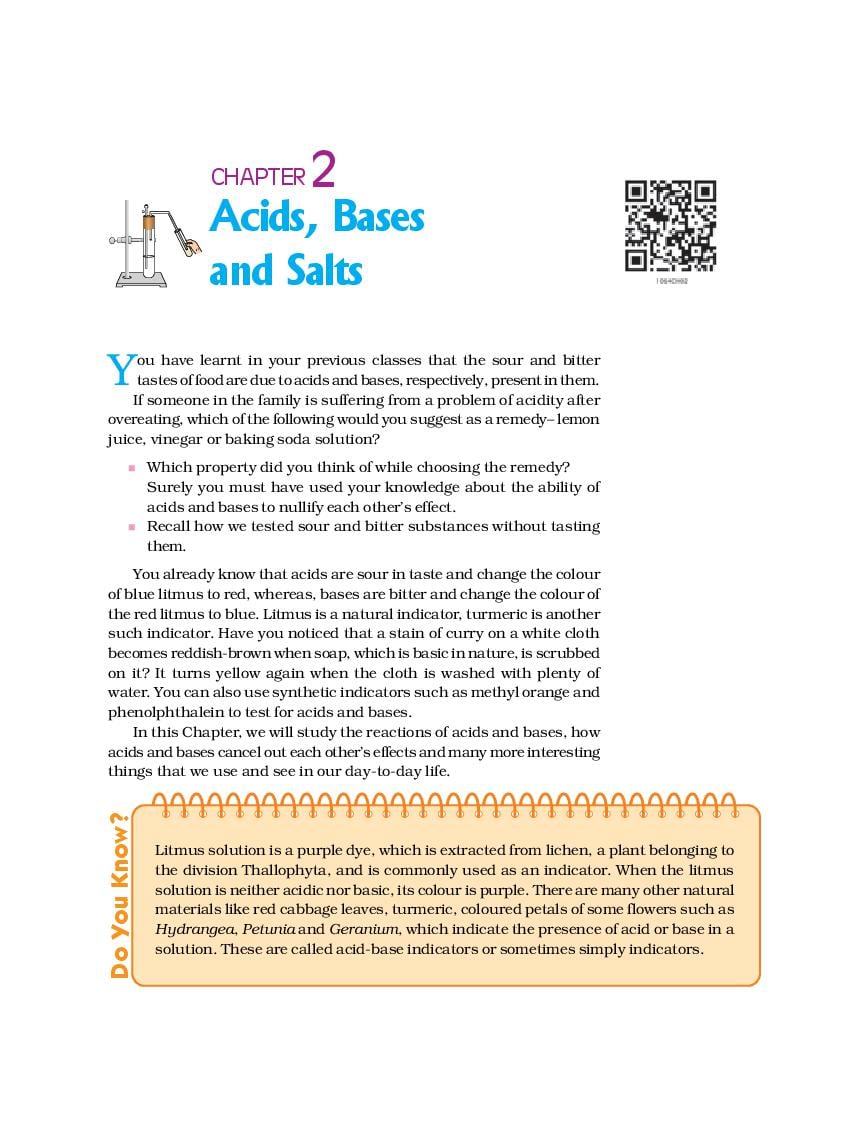
Finished viewing? Save it for later —
Download NCERT Book Class 10 Science Chapter 2 Acids, Bases and Salts (PDF · 20 pages)About NCERT Book Class 10 Science Chapter 2 Acids, Bases and Salts
NCERT Book Class 10 Science Chapter 2 Acids, Bases and Salts is available here for free download. Published by NCERT for Class 10, this books can be viewed online or downloaded as a PDF (20 pages). Candidates preparing for Class 10 can use NCERT Book Class 10 Science Chapter 2 Acids, Bases and Salts to understand the exam pattern, the type of questions asked, and the overall difficulty level.
Frequently Asked Questions
How can I download NCERT Book Class 10 Science Chapter 2 Acids, Bases and Salts?
Open this page and click the Download button to save NCERT Book Class 10 Science Chapter 2 Acids, Bases and Salts as a PDF. It is completely free on AglaSem Docs.
Is NCERT Book Class 10 Science Chapter 2 Acids, Bases and Salts free to download?
Yes. NCERT Book Class 10 Science Chapter 2 Acids, Bases and Salts can be viewed online and downloaded as a PDF free of cost on AglaSem Docs.
How many pages does NCERT Book Class 10 Science Chapter 2 Acids, Bases and Salts have?
NCERT Book Class 10 Science Chapter 2 Acids, Bases and Salts contains 20 pages, which you can read online or download together as a single PDF.
Where can I find more Class 10 study material?
You can find more Class 10 question papers, sample papers, syllabus, and answer keys on AglaSem Docs.
NCERT Book Class 10 Science Chapter 2 Acids, Bases and Salts – Text
Read the full text of this books below — useful to quickly search, copy and reference the content online without downloading the PDF.
📄 View text version (1 page)
Page 1
Acids, Bases
and Salts
Y ou have learnt in your previous classes that the sour and bitter
tastes of food are due to acids and bases, respectively, present in them.
If someone in the family is suffering from a problem of acidity after
overeating, which of the following would you suggest as a remedy– lemon
juice, vinegar or baking soda solution?
n Which property did you think of while choosing the remedy?
Surely you must have used your knowledge about the ability of
acids and bases to nullify each other’s effect.
n Recall how we tested sour and bitter substances without tasting
them.
You already know that acids are sour in taste and change the colour
of blue litmus to red, whereas, bases are bitter and change the colour of
the red litmus to blue. Litmus is a natural indicator, turmeric is another
such indicator. Have you noticed that a stain of curry on a white cloth
becomes reddish-brown when soap, which is basic in nature, is scrubbed
on it? It turns yellow again when the cloth is washed with plenty of
water. You can also use synthetic indicators such as methyl orange and
phenolphthalein to test for acids and bases.
In this Chapter, we will study the reactions of acids and bases, how
acids and bases cancel out each other’s effects and many more interesting
things that we use and see in our day-to-day life.
Do You Know?
Litmus solution is a purple dye, which is extracted from lichen, a plant belonging to
the division Thallophyta, and is commonly used as an indicator. When the litmus
solution is neither acidic nor basic, its colour is purple. There are many other natural
materials like red cabbage leaves, turmeric, coloured petals of some flowers such as
Hydrangea, Petunia and Geranium, which indicate the presence of acid or base in a
solution. These are called acid-base indicators or sometimes simply indicators.
Showing the first page only. Download the PDF above for the complete document.
Document Details
| Board / Org | NCERT |
| Exam | Class 10 |
| Type | Books |
| Pages | 20 |
| Language | english |
| Updated | 29 Aug 2026 |