NCERT Book Class 12 History Chapter 2 Kings, Farmers and Towns
Finished viewing? Save it for later —
Download NCERT Book Class 12 History Chapter 2 Kings, Farmers and Towns (PDF · 25 pages)About NCERT Book Class 12 History Chapter 2 Kings, Farmers and Towns
NCERT Book Class 12 History Chapter 2 Kings, Farmers and Towns is available here for free download. Published by NCERT for Class 12, this books can be viewed online or downloaded as a PDF (25 pages). Candidates preparing for Class 12 can use NCERT Book Class 12 History Chapter 2 Kings, Farmers and Towns to understand the exam pattern, the type of questions asked, and the overall difficulty level.
Frequently Asked Questions
How can I download NCERT Book Class 12 History Chapter 2 Kings, Farmers and Towns?
Open this page and click the Download button to save NCERT Book Class 12 History Chapter 2 Kings, Farmers and Towns as a PDF. It is completely free on AglaSem Docs.
Is NCERT Book Class 12 History Chapter 2 Kings, Farmers and Towns free to download?
Yes. NCERT Book Class 12 History Chapter 2 Kings, Farmers and Towns can be viewed online and downloaded as a PDF free of cost on AglaSem Docs.
How many pages does NCERT Book Class 12 History Chapter 2 Kings, Farmers and Towns have?
NCERT Book Class 12 History Chapter 2 Kings, Farmers and Towns contains 25 pages, which you can read online or download together as a single PDF.
Where can I find more Class 12 study material?
You can find more Class 12 question papers, sample papers, syllabus, and answer keys on AglaSem Docs.
NCERT Book Class 12 History Chapter 2 Kings, Farmers and Towns – Text
Read the full text of this books below — useful to quickly search, copy and reference the content online without downloading the PDF.
📄 View text version (1 page)
Page 1
THEME
THEME TWO Kings, Farmers and Towns
T WO Earl
Ear St
ly S tat es and Economies
ates
(c. 600 BCE - 600 CE)
There were several developments in different parts of the
subcontinent during the long span of 1,500 years following
the end of the Harappan civilisation. This was also the
period during which the Rigveda was composed by people
living along the Indus and its tributaries. Agricultural
settlements emerged in many parts of the
subcontinent, including north India, the
Deccan Plateau, and parts of Karnataka.
Besides, there is evidence of pastoral
populations in the Deccan and further
south. New modes of disposal of the dead,
including the making of elaborate stone
structures known as megaliths, emerged in
central and south India from the first
millennium BCE. In many cases, the dead
were buried with a rich range of iron tools
and weapons.
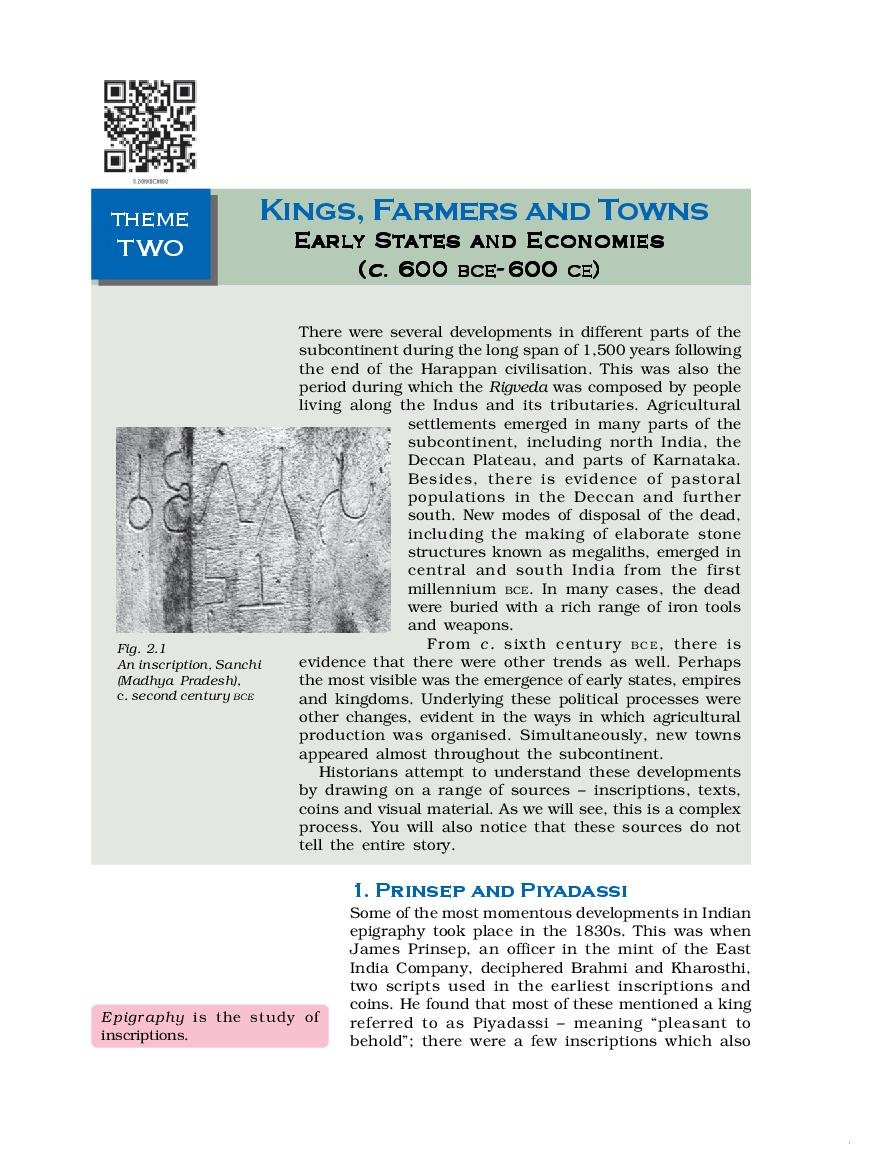
Fig. 2.1 From c . sixth century B C E , there is
An inscription, Sanchi evidence that there were other trends as well. Perhaps
(Madhya Pradesh), the most visible was the emergence of early states, empires
c. second century BCE and kingdoms. Underlying these political processes were
other changes, evident in the ways in which agricultural
production was organised. Simultaneously, new towns
appeared almost throughout the subcontinent.
Historians attempt to understand these developments
by drawing on a range of sources – inscriptions, texts,
coins and visual material. As we will see, this is a complex
process. You will also notice that these sources do not
tell the entire story.
1. Prinsep and Piyadassi
Some of the most momentous developments in Indian
epigraphy took place in the 1830s. This was when
James Prinsep, an officer in the mint of the East
India Company, deciphered Brahmi and Kharosthi,
two scripts used in the earliest inscriptions and
coins. He found that most of these mentioned a king
Epigraphy is the study of referred to as Piyadassi – meaning “pleasant to
inscriptions. behold”; there were a few inscriptions which also
Showing the first page only. Download the PDF above for the complete document.
Document Details
| Board / Org | NCERT |
| Exam | Class 12 |
| Type | Books |
| Pages | 25 |
| Updated | 29 Aug 2026 |