UGC NET 2021 Question Paper Education Shift 2
Finished viewing? Save it for later —
Download UGC NET 2021 Question Paper Education Shift 2 (PDF · 78 pages)About UGC NET 2021 Question Paper Education Shift 2
UGC NET 2021 Question Paper Education Shift 2 is available here for free download. Published by NTA for UGC NET, this question paper can be viewed online or downloaded as a PDF (78 pages). Candidates preparing for UGC NET can use UGC NET 2021 Question Paper Education Shift 2 to understand the exam pattern, the type of questions asked, and the overall difficulty level.
Frequently Asked Questions
How can I download UGC NET 2021 Question Paper Education Shift 2?
Open this page and click the Download button to save UGC NET 2021 Question Paper Education Shift 2 as a PDF. It is completely free on AglaSem Docs.
Is UGC NET 2021 Question Paper Education Shift 2 free to download?
Yes. UGC NET 2021 Question Paper Education Shift 2 can be viewed online and downloaded as a PDF free of cost on AglaSem Docs.
How many pages does UGC NET 2021 Question Paper Education Shift 2 have?
UGC NET 2021 Question Paper Education Shift 2 contains 78 pages, which you can read online or download together as a single PDF.
Where can I find more UGC NET study material?
You can find more UGC NET question papers, sample papers, syllabus, and answer keys on AglaSem Docs.
UGC NET 2021 Question Paper Education Shift 2 – Text
Read the full text of this question paper below — useful to quickly search, copy and reference the content online without downloading the PDF.
📄 View text version (78 pages)
Page 1
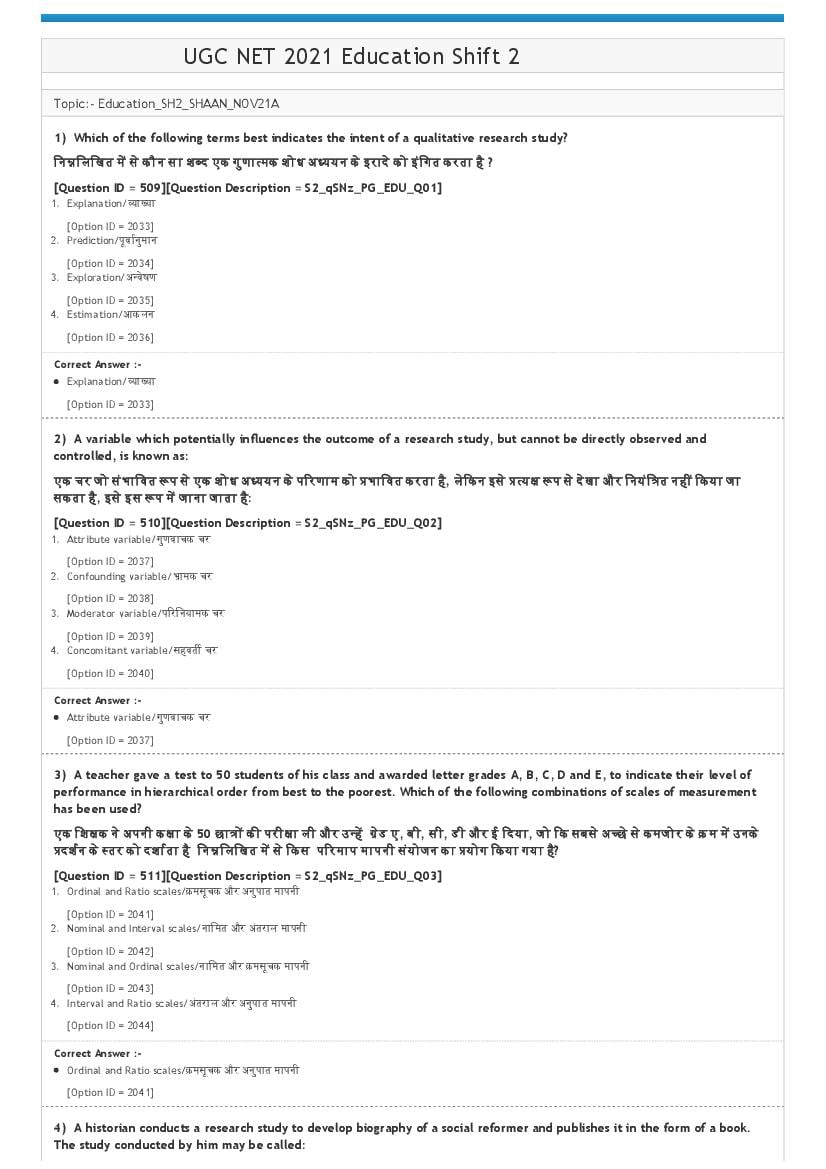
Topic:‐ Education_SH2_SHAAN_NOV21A
1) Which of the following terms best indicates the intent of a qualitative research study?
िन िलिखत म से क ौ न स ा श द ए क गु ण ा मक श ो ध अ ययन के इरादे क ो इं ि गत करता है ?
[Question ID = 509][Question Description = S2_qSNz_PG_EDU_Q01]
1. Explanation/ ा या
[Option ID = 2033]
2. Prediction/पूवानुमान
[Option ID = 2034]
3. Exploration/अ वेषण
[Option ID = 2035]
4. Estimation/आकलन
[Option ID = 2036]
Explanation/ ा या
[Option ID = 2033]
2) A variable which potentially influences the outcome of a research study, but cannot be directly observed and
controlled, is known as:
ए क चर ज ो सं भ ािवत प से ए क श ो ध अ ययन के प रणाम क ो भािवत करता है, ले कन इसे य प से दे ख ा औ र िनयं ि त न ह कया ज ा
स क त ा है, इसे इ स प म जाना जाता है:
[Question ID = 510][Question Description = S2_qSNz_PG_EDU_Q02]
1. Attribute variable/गुणवाचक चर
[Option ID = 2037]
2. Confounding variable/ ामक चर
[Option ID = 2038]
3. Moderator variable/प रिनयामक चर
[Option ID = 2039]
4. Concomitant variable/सहवत चर
[Option ID = 2040]
Attribute variable/गुणवाचक चर
[Option ID = 2037]
3) A teacher gave a test to 50 students of his class and awarded letter grades A, B, C, D and E, to indicate their level of
performance in hierarchical order from best to the poorest. Which of the following combinations of scales of measurement
has been used?
ए क िश क ने अपनी क ा के 50 छ ा क परी ा ल ी औ र उ ह े ड ए, ब ी, स ी, ड ी औ र ई दया, ज ो क सबसे अ छे से कमजोर के म म उनके
दश न के तर क ो दशा ता है िन िलिखत म से क स प रमाप मापनी सं य ोजन क ा योग कया ग य ा है?
[Question ID = 511][Question Description = S2_qSNz_PG_EDU_Q03]
1. Ordinal and Ratio scales/ मसूचक और अनुपात मापनी
[Option ID = 2041]
2. Nominal and Interval scales/नािमत और अंतराल मापनी
[Option ID = 2042]
3. Nominal and Ordinal scales/नािमत और मसूचक मापनी
[Option ID = 2043]
4. Interval and Ratio scales/अंतराल और अनुपात मापनी
[Option ID = 2044]
Ordinal and Ratio scales/ मसूचक और अनुपात मापनी
[Option ID = 2041]
4) A historian conducts a research study to develop biography of a social reformer and publishes it in the form of a book.
The study conducted by him may be called:
Page 2
करता है उनके ारा क ए ग ए अ ययन क ो क ह ा ज ा स क त ा है:
[Question ID = 512][Question Description = S2_qSNz_PG_EDU_Q04]
1. An ethnographic research/एक नृजाितवृ शोध
[Option ID = 2045]
2. A phenomenological study/घटना मक अ ययन
[Option ID = 2046]
3. A grounded theory research/एक ाउंडेड िस ांत शोध
[Option ID = 2047]
4. A narrative study/एक िववरणा मक अ ययन
[Option ID = 2048]
An ethnographic research/एक नृजाितवृ शोध
[Option ID = 2045]
5) The essential element of distinction between the concepts of 'pedagogy' and 'andragogy' is:
ि श ा‐श ा औ र ौढ़ ि श ा णाली क अवधारणा के ब ी च के अं त र क ा आव यक त व है:
[Question ID = 513][Question Description = S2_qSNz_PG_EDU_Q05]
1. Methods and approaches used in teaching/िश ण म यु िविधयाँ और उपागम
[Option ID = 2049]
2. Role of previous life‐experiences in learning/अिधगम म पूव जीवनानुभव क भूिमका
[Option ID = 2050]
3. Socioeconomic background of learners/अिधगमकता क आ थक‐सामािजक पृ भूिम
[Option ID = 2051]
4. Degree of growth and maturation/संवृि और प रप ता का तर
[Option ID = 2052]
Methods and approaches used in teaching/िश ण म यु िविधयाँ और उपागम
[Option ID = 2049]
6) Continuous and Comprehensive Internal Evaluation (CCIE) and feedback mechanism are the essential components of:
स त त एवं ापक आतं रक मू यां क न (CCIE) औ र ितपु ि तं कसके आव यक घ ट क ह ?
[Question ID = 514][Question Description = S2_qSNz_PG_EDU_Q06]
1. Summative Evaluation/संकलना मक मू यांकन
[Option ID = 2053]
2. Diagnostic Testing/नैदािनक परी ण
[Option ID = 2054]
3. Formative Evaluation/रचना मक मू यांकन
[Option ID = 2055]
4. Placement Decisions/िनयुि स ब धी िनणय
[Option ID = 2056]
Summative Evaluation/संकलना मक मू यांकन
[Option ID = 2053]
7) The most important instrument used in the process of competency based evaluation is :
यो यता आधा रत मू यां क न क या म यु सबसे मह वपू ण उपकरण है:
[Question ID = 515][Question Description = S2_qSNz_PG_EDU_Q07]
1. A norm‐referenced interpretation of scores/अंक क एक मानक‐संद भत ा या
[Option ID = 2057]
2. A face‐to face interview with the examinee/परी ाथ के साथ आमने‐सामने सा ा कार
[Option ID = 2058]
3. A Standardized achievement test/एक मानक कृत उपलि ध परी ण
[Option ID = 2059]
4. A criterion‐referenced interpretation of scores/अंक क मानद ड‐संद भत ा या
[Option ID = 2060]
A norm‐referenced interpretation of scores/अंक क एक मानक‐संद भत ा या
Page 3
8) If the lowest score in a distribution is increased by a small quantity and the highest one is decreased by the same
quantity such that their relative rankings are not changed, then, in the new distribution, which of the following measures
will not change?
A. Mean
B. Median
C. Mode
D. Variance
E. Quartile Deviation.
Choose the correct answer from the options given below
य द क स ी िवतरण म यू न तम कोर ए क छ ो ट ी स ी म ा ा से ब ढ़ जाता है औ र उ त म उ स ी छ ो ट ी स ी म ा ा से क म ह ो जाता है ऐसे क उ न क सापे
र कग न ह बदलती है, त ो न ए िवतरण म , िन िलिखत म से क ौ न स ा उपाय न ह बदले ग ा?
A. म ा य
B. माि यका
C. ब लक
D. सरण
E. चतु थ क िवचलन
नीचे द ए ग ए िवक प म से स ह ी उ र चु न :
[Question ID = 516][Question Description = S2_qSNz_PG_EDU_Q08]
1. A, C and E only/केवल A, C और E
[Option ID = 2061]
2. B, D and E only/केवल B, D और E
[Option ID = 2062]
3. A, C and D only/केवल A, C और D
[Option ID = 2063]
4. A, B and E only./केवल A, B और E
[Option ID = 2064]
A, C and E only/केवल A, C और E
[Option ID = 2061]
9) A statistical measure based on the entire population is called parameter. Which of the following are the characteristics of
a parameter?
A. It varies from sample to sample.
B. It can be practically computed for a finite population.
C. It has a fixed value for a given population under given conditions.
D. It changes with the size of population
E. It can be estimated by using sampling variance.
Choose the correct answer from the options given below
सं प ू ण जनसं या पर आधा रत सां ि यक य प रमाप क ो ाचल क ह ा जाता है िन िलिखत म से क ौ न‐क ौ न स ी ए क ाचल क िवशे ष ताय ह ?
A. इसम ए क ितदश से दू स रे ितदश म िभ ता होती है
B. य ह ए क प रिमत जनसं या के िलए ावहा रक प से प रकिलत क ज ा स क त ी है
C. इसम द ी ग ई श त के त ह त ए क िनि त जनसं या के िलए ए क िनि त मू य है
D. य ह जनसं या के आकार के स ा थ बदलता है
E. इ स क ा आकलन नमू न े के िवचरण क ा उपयोग करके लगाया ज ा स क त ा है
नीचे द ए ग ए िवक प म से स ह ी उ र चु न :
[Question ID = 517][Question Description = S2_qSNz_PG_EDU_Q09]
1. B, C and E only/केवल B, C और D
[Option ID = 2065]
Page 4
[Option ID = 2066]
3. B, C and D only/केवल B, C और D
[Option ID = 2067]
4. C, D and E only./केवल C, D और E
[Option ID = 2068]
B, C and E only/केवल B, C और D
[Option ID = 2065]
10) Which of the following statements are true for reliabilty of a measuring instrument?
A. It is fixed for a given instrument.
B. It is correlation of scores on measuring instrument with themselves.
C. It varies from sample to sample.
D. Its value can vary from ‐1 to +1.
E. It is affected by size of the sample used for its determination.
Choose the correct answer from the options given below
िन िलिखत म से क ौ न स ा क थ न ए क प रमाप उपकरण क िव सनीयता के िलए स ह ी है ?
A. य ह द ए ग ए उपकरण के िलए िनि त कया ग य ा है
B. य ह प रमाप उपकरण पर कोर क ा उनके स ा थ सहसं ब ं ध है
C. इसम ए क ितदश से दू स रे ितदश म िभ ता होती है
D. इ स क ा म ा न ‐1 से +1 त क िभ ह ो स क त ा है
E. य ह इसके िनधा रण के िलए योग क ए ग ए ितदश के आकार से भािवत होता है
नीचे द ए ग ए िवक प म से स ह ी उ र चु न :
[Question ID = 518][Question Description = S2_qSNz_PG_EDU_Q10]
1. A, C and D only/केवल A, C और D
[Option ID = 2069]
2. B, C and E only/केवल B, C और E
[Option ID = 2070]
3. B, D and E only/केवल B, D और E
[Option ID = 2071]
4. C, D and E only/केवल C, D और E
[Option ID = 2072]
A, C and D only/केवल A, C और D
[Option ID = 2069]
11) Which of the following are the key processes in designing an experimental research study?
A. Manipulation of changes in the outcome variable
B. Random assignment of subjects to experimental and control groups
C. Exercising control over extraneous variables
D. Observation of changes in the treatment variable
E. Random assignment of treatments to groups.
Choose the correct answer from the options given below
योगा मक श ो ध अ ययन के अिभक प म िन िलिखत म से क ौ न स ी मह वपू ण या है ?
A. प रणाम चर म प रवत न क ा हे र फे र
B. योगा मक औ र िनयं ण समू ह क ो िवषय क ा यादृ ि छक समनु द े श
C. िवषये त र चर पर िनयं ण करना
Page 5
E. समू ह क ो उपचार क ा यादृ ि छक समनु द े श
नीचे द ए ग ए िवक प म से स ह ी उ र चु न :
[Question ID = 519][Question Description = S2_qSNz_PG_EDU_Q11]
1. A, C and E only/केवल A, C और E
[Option ID = 2073]
2. B, C and E only/केवल B, C और E
[Option ID = 2074]
3. A, D and E only/केवल A, D और E
[Option ID = 2075]
4. B, D and E only/केवल B, D और E
[Option ID = 2076]
A, C and E only/केवल A, C और E
[Option ID = 2073]
12) Which of the following statements about adult learners help an instructor while developing his andragogy?
A. Learning process is self‐directed and independent.
B. Previous life experiences have limited role in learning process.
C. Desire of self‐development to cope with changes in lifestyle and work‐environment.
D. What and how to learn is decided by the instructors or other authorities.
E. Motivation to learn is guided by desire to enhance self‐esteem, self‐confidence and recognition.
Choose the correct answer from the options given below
ौढ़ अिधगमकता के बारे म िन िलिखत म से क ौ न स ा क थ न ए क अनु द े श क क ो उसके ौढ़ ि श ा श ा क ो िवकिसत करने म म द द करता है ?
A. अिधगम म व‐िनद िशत औ र वतं है
B. जीवन के प ु व ा नु भ व क अिधगम म म स ी ि म त भू ि मका है
C. जीवनशै ल ी औ र काय ‐प रवे श म प रवत न से िनपटने के िलए आ म‐िवकास क इ छा
D. य ा औ र कै स े सीखना है, अनु द े श क य ा अ य अिधका रय ारा इ स क ा िनण य िलया जाता है
E. सीखने क े र णा आ मस मान, आ मिव ास औ र मा यता क ो बढ़ाने क इ छा ारा िनद िशत है
नीचे द ए ग ए िवक प म से स ह ी उ र चु न :
[Question ID = 520][Question Description = S2_qSNz_PG_EDU_Q12]
1. A, C and E only/केवल A, C और E
[Option ID = 2077]
2. A, B and D only/केवल A, B और D
[Option ID = 2078]
3. B, D and E only/केवल B, D और E
[Option ID = 2079]
4. B, C and D only/केवल B, C और D
[Option ID = 2080]
A, C and E only/केवल A, C और E
[Option ID = 2077]
13) "What is not said may be more meaningful than what is said," is an idea that led to the development of:
"ज ो न ह क ह ा ग य ा है व ह कहे ग ए क तु ल ना म अिधक साथ क ह ो स क त ा है" , य ह ए क िवचार है िजसके कारण िवकास आ:
[Question ID = 521][Question Description = S2_qSNz_PG_EDU_Q13]
1. Flander's Interaction Analysis of teaching behaviour./ लडर क िश ण वहार का अंत: या िव ेषण
[Option ID = 2081]
2. Guilford's Structure of Intellect model of Intelligence./िग फोड क ा क बुि ित प क संरचना
[Option ID = 2082]
3. Galloway's System of Interaction Analysis of communication./गैलोवे के स ष
े ण क अंत: या िव ेषण क णाली
[Option ID = 2083]
4. Piaget's theory of cognitive development./िपयाजे का सं ाना मक िवकास का िस ांत
Page 6
Flander's Interaction Analysis of teaching behaviour./ लडर क िश ण वहार का अंत: या िव ेषण
[Option ID = 2081]
14) Before gathering data for his research, an investigator asks himself the following questions. What should be the right
order of asking/answering these questions?
A. How will data be collected?
B. How will the sample of subjects be selected?
C. What information will be collected?
D. Who will be the subjects to give information?
Choose the correct answer from the options given below.
अपने श ो ध के ि ल ए डे ट ा एक करने स े पहले, ए क अ वे ष क खु द स े िन िलिखत पूछता है इ न क ो पू छ ने / ज व ा ब दे न े क ा स ह ी म य ा ह ो न ा च ा ि ह ए?
A. द कै स े एक क य ा जाएगा ?
B. िवषय क ा ितदश कै स े चु न ा जाएगा ?
C. य ा सू च ना एकि त क जाएगी ?
D. सू च ना दे न े वाले िवषय क ौ न स े ह गे ?
नीचे द ए ग ए ि व क प म स े स ह ी उ र चु ि नए
[Question ID = 522][Question Description = S2_qSNz_PG_EDU_Q14]
1. B, C, A, D
[Option ID = 2085]
2. A, D, B, C
[Option ID = 2086]
3. C, D, B, A
[Option ID = 2087]
4. D, C, B, A
[Option ID = 2088]
B, C, A, D
[Option ID = 2085]
15) The steps involved in the pedagogical analysis of syllabus of a teaching subject are listed below:
A. Formulation of instructional objectives and stating them in behavioural terms
B. Selection of teaching method, classroom activities and needed equipment
C. Content analysis of subject matter in terms of units, sub‐units, concepts and sub‐concepts
D. Choice of appropriate method of evaluation of learning outcomes
Place these steps in a correct order. Choose the correct answer from the options given below:
िश ण िवषय के पा म के ि श ा शा ीय िव े ष ण म शािमल क द म नीचे सू च ीब ह:
A. अनु द े श ा मक उ े य क ा सू िनमा ण औ र उ ह वहा रक तरीके से ब त ा न ा
B. िश ण प ित, क ा क गितिविधय औ र आव यक उपकरण क ा चयन
C. इकाइय , उ प‐इकाइय , अवधारणा औ र उ प‐अवधारणा के सं द भ म िवषय व तु क ा िव े ष ण
D. अिधगम ितफल के मू यां क न क समु प यु ि व ि ध क ा िवक प
इ न चरण क ो स ह ी म म लगाएँ नीचे द ए ग ए िवक प म से स ह ी उ र चु न :
[Question ID = 523][Question Description = S2_qSNz_PG_EDU_Q15]
1. B, A, D, C
[Option ID = 2089]
2. D, B, C, A
[Option ID = 2092]
3. C, A, B, D
Page 7
4. A, C, B, D
[Option ID = 2091]
B, A, D, C
[Option ID = 2089]
16) Match Lists I with List II.
List I List II
A. Purposeful collection of a student's work sample, self‐
I.
assessment statements for assessing his progress in
Triangulation
learning
B. Process of corroborating data from different
II. Rubric
individuals or sources
C. Detailed reconstruction of a person's life stories,
III. Portfolio
experiences and achievements
D. A scoring tool that lists the criteria at various levels of
IV. Vignette
quality for assessing a piece of work
V. Biography
Choose the correct answer from the options given below.
सू च ी ‐I क ो सू च ी ‐II से सु म े ि लत क िजए :
सू च ी ‐I सू च ी ‐II
A. ए क छ ा के क ा म के ितदश क ा उ े यपू ण सं ह, अिधगम म
I. ि भु ज न
उ स क गित क ा आकलन करने के िलए व‐मू यां क न क थ न
B. िविभ ि य या ो त से द क सं प ु ि करने क ा म II. ि क
C. ि के जीवन क कहािनय , अनु भ व औ र उपलि धय क ा III.
िव तृ त पु न नमा ण पोट फोिलयो
D. ए क को रग उपकरण ज ो गु ण व ा के िविभ तर पर काय के IV. िवस रत
आकलन के िलए मानदं ड क ो सू च ीब करता है िच (िवगने ट)
V. जीवनी
नीचे द ए ग ए िवक प म से स ह ी उ र चु ि नए :
[Question ID = 524][Question Description = S2_qSNz_PG_EDU_Q16]
1. A ‐ II, B ‐ V, C ‐ III, D ‐ I
[Option ID = 2093]
2. A ‐ III, B ‐ I, C ‐ V, D ‐ II
[Option ID = 2094]
3. A ‐ I, B ‐ III, C ‐ II, D ‐ IV
[Option ID = 2095]
4. A ‐ V, B ‐ II, C ‐ I, D ‐ III
[Option ID = 2096]
A ‐ II, B ‐ V, C ‐ III, D ‐ I
[Option ID = 2093]
17) Match List I with List II
List I List II
A. Content I. Extent to which the test scores correlate with a
Validity criterion variable after some gap of time
B.
II. Extent to which a test measures some identified
Concurrent
basic psychological trait
Validity
Page 8
Validity material of the curriculum
D. Construct IV.Degree to which a test‐scores correlate with a
Validity presently available criterion
V. Extent to which different measures of the same trait
correlate with one another
Choose the correct answer from the options given below.
सू च ी ‐I क ो सू च ी ‐II से सु म े ि लत क िजए :
सू च ी ‐I सू च ी ‐II
I.ि ज स स ी म ा त क परी ण कोर ऐसे मानदं ड के स ा थ
A.िवषय‐व तु सहस बि धत होता है ज ो कु छ समता ताराल के प ात प रव य
वै ध ता होता है
B.स म व त II.ि ज स स ी म ा त क परी ण कु छ पहचाने ग ए बु ि नयादी
वै ध ता मनोवै ािनक ल ण क ो मापता है
C.पू व कथना मक III.ि ज स स ी म ा त क ए क परी ण पा म क अिधगम स ा म ी क ा
वै ध ता ितदश ले त ा है
IV.ि ज स स ी म ा त क ए क परी ण के कोर िनवत मान उपल ध
D.िनमा ण िनकष के स ा थ सहस बि धत होता है
वै ध ता
V.ए क ह ी गु ण के िविभ उपाय ए क दू स रे के स ा थ सहसं ब ं ध ी ह
नीचे द ए ग ए िवक प म से स ह ी उ र चु ि नए :
[Question ID = 525][Question Description = S2_qSNz_PG_EDU_Q17]
1. A ‐ IV, B ‐ II, C ‐ I, D ‐ III
[Option ID = 2097]
2. A ‐ I, B ‐ III, C ‐ II, D ‐ V
[Option ID = 2098]
3. A ‐ V, B ‐ I, C ‐ III, D ‐ II
[Option ID = 2099]
4. A ‐ III, B ‐ IV, C ‐ I, D ‐ II
[Option ID = 2100]
A ‐ IV, B ‐ II, C ‐ I, D ‐ III
[Option ID = 2097]
18) Given below are two statements, one is labelled as Assertion A and the other is labelled as Reason R
Assertion A : In the case of small samples, use of non‐parametric statistical tests is recommended for analysis of research
data.
Reason R : The sampling errors are large in the case of small samples due to which parametric tests do not give
dependable results.
In light of the above statements, choose the correct answer from the options given below.
नीचे द ो क थ न द ए ग ए ह : ए क क ो अिभकथन (A) औ र दू स रे क ो तक (R) क ह ा ग य ा है
अिभकथन (A) : लघु ितदश के मामले म , श ो ध डे ट ा के िव े ष ण के िलए गै र‐ ाचिलक सां ि यक य परी ण क ा उपयोग करने क सं तु ि त क
जाती है
तक (R) : लघु ितदश के मामले म ितदश स ब धी ु टयां अ यिधक ह , िजसके कारण ाचिलक परी ण भरोसे म ं द प रणाम न ह दे त े ह
उपयु क थ न के आलोक म िन ां कत िवक प म से स ह ी उ र चु न :
[Question ID = 526][Question Description = S2_qSNz_PG_EDU_Q18]
1. Both A and R are ture and R is the correct explanation of A./(A) और (R) दोन सही ह और (R), (A) क सही ा या है
[Option ID = 2101]
2. Both A and R are true, but R is NOT the correct explanation of A./(A) और (R) दोन सही ह पर तु (R), (A) क सही ा या नह है
[Option ID = 2102]
3. A is true but R is false./(A) सही है पर तु (R) सही नह ह
[Option ID = 2103]
4. A is false but R is true./(A) सही नह है पर तु (R) सही ह
[Option ID = 2104]
Both A and R are ture and R is the correct explanation of A./(A) और (R) दोन सही ह और (R), (A) क सही ा या है
Page 9
19) An investigator commits Type II error in his research when he:
ए क अ वे ष क अपने श ो ध म टाइप II ु ट करता है ज ब व ह:
[Question ID = 527][Question Description = S2_qSNz_PG_EDU_Q19]
1. Rejects null hypothesis when it is true./स य होने पर भी जब शू य प रक पना को अ वीकार करता है
[Option ID = 2105]
2. Rejects null hypothesis when it it is false./अस य होने पर भी जब शू य प रक पना को अ वीकार कर देता है
[Option ID = 2106]
3. Accepts null hypothesis when it is false./अस य होने पर भी जब शू य प रक पना को वीकार कर लेता है
[Option ID = 2107]
4. Accepts null hypothesis when it is true./स य होने पर भी जब शू य प रक पना को वीकार कर लेता है
[Option ID = 2108]
Rejects null hypothesis when it is true./स य होने पर भी जब शू य प रक पना को अ वीकार करता है
[Option ID = 2105]
20) In the process of collecting data for a quantitative research the following steps are followed in a certain order. Place them in correct order.
A. Identification of research instruments
B. Administering the research Instrument to sampling units
C. Seeking permission of appropriate authority
D. Selecting a sample by appropriate method
E. Approaching the sampling frame
Choose the correct answer from the options given below:
म ा ा म क श ो ध के ि ल ए द एक करने क या म एक िनि त म म िन िलिखत च र ण क ा प ा ल न क य ा ज ा त ा ह ै उ ह स ह ी म म रख
A. श ो ध उ प क र ण क प ह च ा न
B. ितदश इकाइय के ि ल ए अनु स ं ध ान उ प क र ण क ा उपयोजन
C. उपयु ा ि ध क ा र ी क अनु म ित ले न ा
D. उपयु िविध ा र ा ए क ितदश क ा च य न क र न ा
E. ितचयन ढां च े क ा अअिभयोजन
नीचे द ए ग ए ि व क प म स े स ह ी उ र चु न :
[Question ID = 528][Question Description = S2_qSNz_PG_EDU_Q20]
1. A, D, C, E, B
[Option ID = 2109]
2. A, E, D, C, B
[Option ID = 2110]
3. C, A, B, E, D
[Option ID = 2111]
4. D, C, A, E, B
[Option ID = 2112]
A, D, C, E, B
[Option ID = 2109]
21) Which of the following is a mandatory requirement to receive grants from University Grants Commission?
िव िव ालय अनु द ान आ य ो ग से अनु द ान ा करने के िलए िन िलिखत म से क ौ न स ी ए क अिनवाय आव यकता है ?
[Question ID = 529][Question Description = S2_qSNz_PG_EDU_Q21]
1. Shall be a Grant‐in‐aid institution/एक अनुदान ा सं था होगी
[Option ID = 2113]
2. Established by a central or state Government/क या रा य सरकार ारा थािपत
[Option ID = 2114]
3. Recognized by an international quality control body like ISO/आई एस ओ जैसी अंतररा ीय गुणव ा िनयं ण िनकाय ारा मा यता ा हो
[Option ID = 2115]
Page 10
[Option ID = 2116]
Shall be a Grant‐in‐aid institution/एक अनुदान ा सं था होगी
[Option ID = 2113]
22) What is the score needed by an institution of higher education to get an A+ Grade from NAAC?
NAAC से A + े ड ा करने के िलए उ ि श ा सं था ारा आव यक कोर य ा है ?
[Question ID = 530][Question Description = S2_qSNz_PG_EDU_Q22]
1. 2.56‐3.25
[Option ID = 2117]
2. 3.26‐3.50
[Option ID = 2118]
3. 4.00‐4.50
[Option ID = 2119]
4. 4.51‐5.00
[Option ID = 2120]
2.56‐3.25
[Option ID = 2117]
23) Which of the theories of leadership explains the crucial relationship between productivity and concerns for employees?
ने त ृ व के क ौ न से िस ां त उ पादकता औ र कम चा रय के िलए चता के ब ी च मह वपू ण सं ब ं ध बताते ह ?
[Question ID = 531][Question Description = S2_qSNz_PG_EDU_Q23]
1. Managerial Grid/ बंधक य ि ड
[Option ID = 2121]
2. Field theory/ े परक िस ांत
[Option ID = 2122]
3. Transformational theory/रचना तरणपरक िस ांत
[Option ID = 2123]
4. Transactional theory/सं वहार िस ांत
[Option ID = 2124]
Managerial Grid/ बंधक य ि ड
[Option ID = 2121]
24) Which of the following points states the concept of the Japanese Model of “Just in Time Model”?
िन िलिखत म से कससे "ज ट इ न ट ा इ म म ॉ ड ल" के जापानी ित प क अवधारणा प रलि त होती है ?
[Question ID = 532][Question Description = S2_qSNz_PG_EDU_Q24]
1. Minimize time from within production to supply to customers/ ाहक को उ पादन से आपू त तक म लगने वाले समय को कम करना
[Option ID = 2125]
2. Minimize time to produce good in limited time/सीिमत समय म व तु उ पादन हेतु लगने वाले समय को कम करना
[Option ID = 2126]
3. Procure and supply of materials to citizens for consumption/उपभोग के िलए नाग रक को साम ी क आपू त और ापण
[Option ID = 2127]
4. Prompt service delivered by employees in an organization/ कसी संगठन म कमचा रय ारा दी गई शी सेवा
[Option ID = 2128]
Minimize time from within production to supply to customers/ ाहक को उ पादन से आपू त तक म लगने वाले समय को कम करना
[Option ID = 2125]
25) What is the main disadvantage of Bureaucratic management?
नौकरशाही बं ध न क ा मु ख हािन य ा है ?
[Question ID = 533][Question Description = S2_qSNz_PG_EDU_Q25]
1. Employees get irritated/कमचारी िचढ़ जाते ह
[Option ID = 2129]
Page 11
[Option ID = 2130]
3. It is time taking/यह समयसा य है
[Option ID = 2131]
4. Leader has a lot of risk/नेता को ब त जोिखम होता है
[Option ID = 2132]
Employees get irritated/कमचारी िचढ़ जाते ह
[Option ID = 2129]
26) Among the types of disabilities in our population, which can be found more in terms of its percentage?
हमारी आबादी म िवकलां ग के कार, ज ो इसके ितशत के सं द भ म अिधक पाए ज ा सकते ह ?
[Question ID = 534][Question Description = S2_qSNz_PG_EDU_Q26]
1. Mental disability/मानिसक िनःश ता
[Option ID = 2133]
2. Locomotor disability/चलना मक िनःश ता
[Option ID = 2134]
3. Hearing disability/ वण‐रोध
[Option ID = 2135]
4. Visual disability/दृि बाधा
[Option ID = 2136]
Mental disability/मानिसक िनःश ता
[Option ID = 2133]
27) How many types of disabilities are listed in the PWD Act 2016?
प ी ड लू ड ी अिधिनयम 2016 म कतनी कार क िनःश ता सू च ीब ह ?
[Question ID = 535][Question Description = S2_qSNz_PG_EDU_Q27]
1. Five/पांच
[Option ID = 2137]
2. Fourteen/चौदह
[Option ID = 2138]
3. Sixteen/सोलह
[Option ID = 2139]
4. Twenty‐one/इ स
[Option ID = 2140]
Five/पांच
[Option ID = 2137]
28) How are the normal children affected in inclusive education?
समावे श ी ि श ा म सामा य ब े कै स े भािवत होते ह ?
[Question ID = 536][Question Description = S2_qSNz_PG_EDU_Q28]
1. Proper social and emotional development take place/उनका उिचत सामािजक और भावना मक िवकास होता है
[Option ID = 2141]
2. Their cognitive development get hampered/उनके सं ाना मक िवकास म बाधा आती है
[Option ID = 2142]
3. Developed negative attiude towards the disabled/िवकलांग के ित िवकिसत नकारा मक वहार
[Option ID = 2143]
4. Their interest in study affected negatively/उनक अ ययन म िच नकारा मक प से भािवत ई
[Option ID = 2144]
Proper social and emotional development take place/उनका उिचत सामािजक और भावना मक िवकास होता है
[Option ID = 2141]
29) Which of the following statements represents the meaning of inclusive education?
Page 12
[Question ID = 537][Question Description = S2_qSNz_PG_EDU_Q29]
1. A system of education where the disabled children are given special care/िश ा क एक णाली जहां िनःश ब को िवशेष देखभाल दी जाती है
[Option ID = 2145]
2. A system where the special children are taught by trained professionals/एक णाली जहां िवशेष ब को िशि त पेशव
े र ारा िसखाया जाता है
[Option ID = 2146]
3. A system where normal children and children with special needs are taught together/एक ऐसी णाली जहां सामा य ब और िवशेष ज रत वाले ब को एक साथ
पढ़ाया जाता है
[Option ID = 2147]
4. A system where normal children are asked to teach the special children/एक णाली जहां सामा य ब को िवशेष ब को पढ़ाने के िलए कहा जाता है
[Option ID = 2148]
A system of education where the disabled children are given special care/िश ा क एक णाली जहां िनःश ब को िवशेष देखभाल दी जाती है
[Option ID = 2145]
30) As a Teacher, which of the following act shall be your prime duty to make education inclusive?
ए क िश क के प म , िन िलिखत म से क ौ न स ा काय ि श ा क ो समावे श ी बनाने हे त ु आपका मु ख कत होगा ?
[Question ID = 538][Question Description = S2_qSNz_PG_EDU_Q30]
1. Plan lesson effectively/ भावी ढंग से पाठ क योजना बनाना
[Option ID = 2149]
2. Have positive attitude towards inclusion/समावेशन के ित सकारा मक दृि कोण रखना
[Option ID = 2150]
3. Identify children with special needs and adapt pedagogy accordingly/िवशेष आव यकता वाले ब क पहचानना और उसी के अनुसार िश ण शा को अनुकूिलत करना
[Option ID = 2151]
4. Develop competency to teach in inclusive classroom/समावेशी क ा म पढ़ाने क मता िवकिसत करना
[Option ID = 2152]
Plan lesson effectively/ भावी ढंग से पाठ क योजना बनाना
[Option ID = 2149]
31) Match List I with List II by considering the types of disability and its percentage.
List I List II
Types of disability Percentage of disability in India
A. Mental disability I. 1.0
B. Locomotor disability II. 0.1
C. Visual disability III. 0.2
D. Hearing disability IV. 0.6
Choose the correct answer from the options given below:
सू च ी ‐I क ो सू च ी ‐II से सु म े ि लत क िजए :
सू च ी ‐I सू च ी ‐II
िवकलां ग ता के कार भारत म ितशत
A. मानिसक िनःश ता I. 1.0
B. चलना मक िनःश ता II. 0.1
C. दृ ि बाधा III. 0.2
D. वणरोध IV. 0.6
नीचे द ए ग ए िवक प म से स ह ी उ र चु ि नए :
[Question ID = 539][Question Description = S2_qSNz_PG_EDU_Q31]
1. A ‐ IV, B ‐ II, C ‐ III, D ‐ I
[Option ID = 2153]
2. A ‐ III, B ‐ IV, C ‐ I, D ‐ II
[Option ID = 2154]
3. A ‐ II, B ‐ IV, C ‐ I, D ‐ III
[Option ID = 2155]
4. A ‐ III, B ‐ I, C ‐ IV, D ‐ II
[Option ID = 2156]
Page 13
[Option ID = 2153]
32) Match List I with List II by considering the concepts with its founders.
List I List II
Concepts/theories of management Founder Name
A. Management by objectives (MBO) I. Mac Gregor
B. POSDCORB II. Edward Deming
C. Theory X & Y III. Peter Drucker
D. PDCA IV. Luther Gulick
Choose the correct answer from the options given below:
सू च ी ‐I क ो सू च ी ‐II से सु म े ि लत क िजए :
सू च ी ‐I सू च ी ‐II
िस ां त/ ब धन क अवधारणाएं सं थापक क ा न ा म
A. उ े यपरक बं ध न I. मै क े ग ोर
B. प ी ओ ए स ड ी स ी ओ आ र ब ी II. एडवाड डे मग
C. X औ र Y क ा िस ां त III. पीटर कर
D. प ी ड ी स ी ए IV. लू थ र गु ि लक
नीचे द ए ग ए िवक प म से स ह ी उ र चु ि नए :
[Question ID = 540][Question Description = S2_qSNz_PG_EDU_Q32]
1. A ‐ I, B ‐ III, C ‐ II, D ‐ IV
[Option ID = 2157]
2. A ‐ II, B ‐ III, C ‐ I, D ‐ IV
[Option ID = 2158]
3. A ‐ III, B ‐ IV, C ‐ I, D ‐ II
[Option ID = 2159]
4. A ‐ IV, B ‐ II, C ‐ I, D ‐ III
[Option ID = 2160]
A ‐ I, B ‐ III, C ‐ II, D ‐ IV
[Option ID = 2157]
33) Which criteria can be followed to judge the effectiveness of inclusive education?
A. Identification and enrolment of children with special needs in school
B. Participation of CWSN children in teaching‐learning process
C. Parents get relieved from their responsibility
D. Development of children as per their potentialities
E. Political interference in school activities
Choose the correct answer from the options given below:
समावे श ी ि श ा के भाव क ा िनण य करने के िलए क न मानदं ड क ा पालन कया ज ा स क त ा है ?
A. कू ल म िवशे ष आव यकता वाले ब क पहचान औ र नामां क न
B. िश ण‐अिधगम या म CWSN ब क ा भ ा ग ले न ा
C. म ा त ा िपता अपनी िज मे द ारी से म ु ह ो जाते ह
D. ब क म त ा के अनु स ार उ न क ा िवकास
E. कू ल क गितिविधय म राजनीितक ह त े प
नीचे द ए ग ए िवक प म से स ह ी उ र चु न :
[Question ID = 541][Question Description = S2_qSNz_PG_EDU_Q33]
1. A, B and D only/केवल A, B और D
[Option ID = 2161]
2. A, C and D only/केवल A, C और D
[Option ID = 2162]
3. B, C and E only/केवल B, C और E
[Option ID = 2163]
4. D, C and E only/केवल D, C और E
Page 14
A, B and D only/केवल A, B और D
[Option ID = 2161]
34) What are the basic principles of Total Quality Management (TQM) as a process?
A. Customer satisfaction
B. Total employee involvement
C. Salary to employee
D. Effective Communication
E. Fact‐based decision
Choose the correct answer from the options given below
स पू ण गु ण व ा बं ध न ( T Q M ) क ा म के प म आधारभू त िस ां त य ा ह ?
A. ाहक सं त ु ि
B. कम चारी क सहभािगता
C. कम चारी क ा वे त न
D. भावी स ेषण
E. त याधा रत िनण य
नीचे द ए ग ए िवक प म से स ह ी उ र चु न :
[Question ID = 542][Question Description = S2_qSNz_PG_EDU_Q34]
1. A, B, C and D only/A, B, C और D
[Option ID = 2165]
2. A, C, D and E only/A, C, D और E
[Option ID = 2166]
3. B, C, D and E only/B, C, D और E
[Option ID = 2167]
4. A, B, D and E only/A, B, D और E
[Option ID = 2168]
A, B, C and D only/A, B, C और D
[Option ID = 2165]
35) Given below are two statements, one is labelled as Assertion A and the other is labelled as Reason R
Assertion A: PWD Act, 2016 is based on the principles of respect for inherent dignity, individual autonomy including the
freedom to make one's own choices, and independence of persons.
Reason R: In India, a child has the right to get admission to any school as per his/her choice.
In light of the above statements, choose the correct answer from the options given below
नीचे द ो क थ न द ए ग ए ह : ए क क ो अिभकथन (A) औ र दू स रे क ो तक (R) क ह ा ग य ा है
अिभकथन (A) : पी.ड यू ड ी . अिधिनयम, 2016 अं त न ित ा हे त ु आ द र के िस ां त , वै य ि क वाय ता िजसम क स ी क ो वयं क पसं द
बनाने क वतं ता,औ र ि य क वतं ता शािमल है पर आधा रत है
तक (R) : भारत म , ए क ब े क ो उ स क पसं द के अनु स ार क स ी भ ी कू ल म वे श ले न े क ा अिधकार है
उपयु क थ न के आलोक म िन ां कत िवक प म से स ह ी उ र चु न :
[Question ID = 543][Question Description = S2_qSNz_PG_EDU_Q35]
1. Both A and R are true and R is the correct explanation of A/(A) और (R) दोन सही ह और (R), (A) क सही ा या है
[Option ID = 2169]
2. Both A and R are true but R is NOT the correct explanation of A/(A) और (R) दोन सही ह पर तु (R), (A) क सही ा या नह है
[Option ID = 2170]
3. A is true but R is false/(A) सही है पर तु (R) सही नह है
[Option ID = 2171]
Page 15
[Option ID = 2172]
Both A and R are true and R is the correct explanation of A/(A) और (R) दोन सही ह और (R), (A) क सही ा या है
[Option ID = 2169]
36) Given below are two statements, one is labelled as Assertion A and the other is labelled as Reason R
Assertion A: The main concern of a Manager is to make profit for his/her organization
Reason R: Leader has to work as per peoples' requirements
In light of the above statements, choose the correct answer from the options given below
नीचे द ो क थ न द ए ग ए ह : ए क क ो अिभकथन (A) औ र दू स रे क ो तक (R) क ह ा ग य ा है
अिभकथन (A) : बं ध क क मु य चता अपने सं ग ठन हे त ु लाभ पाना है
तक (R) : ने त ा क ो लोग क आव यकता के अनु स ार काय करना होता है
उपयु क थ न के आलोक म िन ां कत िवक प म से स ह ी उ र चु न :
[Question ID = 544][Question Description = S2_qSNz_PG_EDU_Q36]
1. Both A and R are true and R is the correct explanation of A/(A) और (R) दोन सही ह और (R), (A) क सही ा या है
[Option ID = 2173]
2. Both A and R are true but R is NOT the correct explanation of A/(A) और (R) दोन सही ह पर तु (R), (A) क सही ा या नह है
[Option ID = 2174]
3. A is true but R is false/(A) सही है पर तु (R) सही नह ह
[Option ID = 2175]
4. A is false but R is true/(A) सही नह है पर तु (R) सही ह
[Option ID = 2176]
Both A and R are true and R is the correct explanation of A/(A) और (R) दोन सही ह और (R), (A) क सही ा या है
[Option ID = 2173]
37) What steps are followed logically to recruit people?
A. Advertisement
B. Job‐analysis
C. Interview
D. Orientation/Induction
E. Agreement for work/job
Choose the correct answer from the options given below
लोग क भ त के िलए क न चरण क ा अनु स रण कया जाता है ?
A. िव ापन
B. काय ‐िव े ष ण
C. सा ा कार
D. अिभमु ख ीकरण / आ ग म
E. कम / काय हे त ु करार
नीचे द ए ग ए िवक प म से स ह ी उ र चु न :
[Question ID = 545][Question Description = S2_qSNz_PG_EDU_Q37]
1. A, B, E, D, C
[Option ID = 2177]
2. E, A, D, B, C
[Option ID = 2178]
3. B, A, C, E, D
[Option ID = 2179]
4. D, E, A, B, C
[Option ID = 2180]
A, B, E, D, C
[Option ID = 2177]
Page 16
भारत म क स कार क उ ि श ा सं था म छ ा के नामां क न क ा ितशत सबसे अिधक है ?
[Question ID = 546][Question Description = S2_qSNz_PG_EDU_Q38]
1. Government institution/सरकारी सं था
[Option ID = 2181]
2. Private institution/िनजी सं था
[Option ID = 2182]
3. Public‐private institution/सावजिनक‐िनजी सं था
[Option ID = 2183]
4. Central government institution/क सरकार क सं था
[Option ID = 2184]
Government institution/सरकारी सं था
[Option ID = 2181]
39) Match List I with List II
List I List II
Concept in Management Meaning of Concept
A. Scalar Principle I. Administrator works only as per given rulebook
B. Human Relation ApproachII. Freezing, Moving, Unfreezing
C. Bureaucracy III. A manager can control five/six people effectively
D. Change Model IV. Facility and leisure enhance work
Choose the correct answer from the options given below:
सू च ी ‐I क ो सू च ी ‐II से सु म े ि लत क िजए :
सू च ी ‐I सू च ी ‐II
बं ध न म अवधारणा अवधारणा क ा अथ
I. शासक के व ल िविहत िनयमावली के अनु स ार काय करता
A. अिध म िस ां त
है
B. म ा न व स ब ध
II. ि थरीकरण , ग ि त म ा न , अि थरीकरण
उपागम
III. ए क बं ध क पां च / छ ः लोग क ो भावी ढं ग से िनयं ि त
C. अिधकारी तं
क र स क त ा है
D. प रवत न ित प IV. सु ि वधाएँ औ र फु र सत काय क अिभवृ ि करते ह
नीचे द ए ग ए िवक प म से स ह ी उ र चु ि नए :
[Question ID = 547][Question Description = S2_qSNz_PG_EDU_Q39]
1. A ‐ IV, B ‐ I, C ‐ III, D ‐ II
[Option ID = 2185]
2. A ‐ II, B ‐ III, C ‐ I, D ‐ IV
[Option ID = 2186]
3. A ‐ III, B ‐ IV, C ‐ I, D ‐ II
[Option ID = 2187]
4. A ‐ I, B ‐ III, C ‐ II, D ‐ IV
[Option ID = 2188]
A ‐ IV, B ‐ I, C ‐ III, D ‐ II
[Option ID = 2185]
40) Given below are two statements, one is labelled as Assertion A and the other is labelled as Reason R
Assertion A: Proximity between people enhances communication
Reason R: Face to face communication does not ensure effective communication
In light of the above statements, choose the correct answer from the options given below
नीचे द ो क थ न द ए ग ए ह : ए क क ो अिभकथन (A) औ र दू स रे क ो तक (R) क ह ा ग य ा है
Page 17
तक (R) : य स ेषण भावी स े ष ण सु ि नि त न ह करता है
उपयु क थ न के आलोक म िन ां कत िवक प म से स ह ी उ र चु न :
[Question ID = 548][Question Description = S2_qSNz_PG_EDU_Q40]
1. Both A and R are true and R is the correct explanation of A/(A) और (R) दोन सही ह और (R), (A) क सही ा या है
[Option ID = 2189]
2. Both A and R are true but R is NOT the correct explanation of A/(A) और (R) दोन सही ह पर तु (R), (A) क सही ा या नह है
[Option ID = 2190]
3. A is true but R is false/(A) सही है पर तु (R) सही नह ह
[Option ID = 2191]
4. A is false but R is true/(A) सही नह है पर तु (R) सही ह
[Option ID = 2192]
Both A and R are true and R is the correct explanation of A/(A) और (R) दोन सही ह और (R), (A) क सही ा या है
[Option ID = 2189]
41) Attention, perception, language, thought, memory and learning are part of
अव यान, अवधारणा, भाषा, िवचार, मृ ि त औ र अिधगम भ ा ग ह :
[Question ID = 549][Question Description = S2_qSNz_PG_EDU_Q41]
1. Cognitive processes/सं ाना मक म
[Option ID = 2193]
2. Understanding processes/अवबोधन म
[Option ID = 2194]
3. Developmental processes/िवकासा मक म
[Option ID = 2195]
4. Visualization processes/मानसदशन म
[Option ID = 2196]
Cognitive processes/सं ाना मक म
[Option ID = 2193]
42) Match List I with List II
List I List II
Stage Age Group
A. Sensorimotor stage I. Elementary and early adolescence
B. Pre‐operational stage II. Toddlerhood and early childhood
C. Concrete operational stage III. Infancy
D. Formal operational stage IV. Adolescence and adulthood
Choose the correct answer from the options given below:
सू च ी ‐I क ो सू च ी ‐II से सु म े ि लत क िजए :
सू च ी ‐I सू च ी ‐II
अव था आयु वग
A. सं व े द ी े र क अव था I. आरं ि भक औ र पू व कशोराव था
B. पू व सं या मक अव था II. नौिनहाल व य औ र आरं ि भक बा याव था
C. मू त सं या मक अव था III. शै श वाव था
D. पब सं या मक अव था IV. कशोराव था औ र वय काव था
नीचे द ए ग ए िवक प म से स ह ी उ र चु ि नए :
[Question ID = 550][Question Description = S2_qSNz_PG_EDU_Q42]
1. A ‐ I, B ‐ II, C ‐ III, D ‐ IV
[Option ID = 2197]
2. A ‐ II, B ‐ III, C ‐ IV, D ‐ I
[Option ID = 2198]
3. A ‐ III, B ‐ II, C ‐ I, D ‐ IV
[Option ID = 2199]
4. A ‐ IV, B ‐ I, C ‐ II, D ‐ III
[Option ID = 2200]
Page 18
[Option ID = 2197]
43) Which among the following statements are correct?
A. Mental health is a part of mental hygiene
B. Mental hygiene prevents an individual from psychosis
C. Mental hygiene promotes neurosis in an individual
D. Mental hygiene helps in treating mental disorders
Choose the correct answer from the options given below:
िन िलिखत म से क ौ न से क थ न स ह ी ह ?
A. मानिसक वा य मानिसक व छता क ा ए क िह सा है
B. मानिसक व छता ए क ि क ो मनोिवकृ ि त से बचाती है
C. मानिसक व छता ि म तं ि काताप ( यू र ोिसस) क ो बढ़ावा दे त ी है
D. मानिसक व छता मानिसक िवकार के उपचार म सहायता करती है
नीचे द ए ग ए िवक प म से स ह ी उ र चु न :
[Question ID = 551][Question Description = S2_qSNz_PG_EDU_Q43]
1. A, B and D only/केवल A, B और D
[Option ID = 2201]
2. A, B and C only/केवल A, B और C
[Option ID = 2202]
3. B, C and D only/केवल B, C और D
[Option ID = 2203]
4. C, D and A only/केवल C, D और A
[Option ID = 2204]
A, B and D only/केवल A, B और D
[Option ID = 2201]
44) Among the following which intelligences are associated with Howard Gardner's theory of multiple intelligences?
A. Linguistic intelligence
B. Musical intelligence
C. Spatial intelligence
D. Social intelligence
Choose the correct answer from the options given below:
िन िलिखत म से क ौ न‐स ी बु ि हावड गाड नर के ब बु ि के िस ां त से जु ड़ ी ह ?
A. भाषाई बु ि
B. सं ग ीता मक बु ि
C. थािनक बु ि
D. सामािजक बु ि
नीचे द ए ग ए िवक प म से स ह ी उ र चु न :
[Question ID = 552][Question Description = S2_qSNz_PG_EDU_Q44]
1. A, B and D only/केवल A, B और D
[Option ID = 2205]
2. A, B and C only/केवल A, B और C
[Option ID = 2206]
3. B, C and D only/केवल B, C और D
[Option ID = 2207]
4. A, C and D only/केवल A, C और D
[Option ID = 2208]
A, B and D only/केवल A, B और D
Page 19
45) The term emotional intelligence was created by
भावना मक बु ि प द क ा िनमा ण कसके ारा कया ग य ा थ ा ?
[Question ID = 553][Question Description = S2_qSNz_PG_EDU_Q45]
1. Howard Gardener/हावड गाडनर
[Option ID = 2209]
2. Daniel Goleman/डैिनयल गोलमैन
[Option ID = 2210]
3. Robert Strenberg/रॉबट ेनबग
[Option ID = 2211]
4. Peter Salavoy and John Mayer/पीटर सालवॉय और जॉन मेयर
[Option ID = 2212]
Howard Gardener/हावड गाडनर
[Option ID = 2209]
46) Among the following which activities are a part of the metacognitive strategy?
A. Writing a reflective journal
B. Self‐praising
C. Self‐questioning
D. Awareness of self‐learning style
Choose the correct answer from the options given below:
िन िलिखत म से क ौ न‐स ी गितिविधयाँ अिधसं ाना मक काय नीित क ा ए क िह सा ह ?
A.िवमश जन ल ले ख न
B. आ म‐ ा घ ा
C. आ म‐पृ छा
D. आ म‐अिधगम शै ल ी के बारे म जाग कता
नीचे द ए ग ए िवक प म से स ह ी उ र चु न :
[Question ID = 554][Question Description = S2_qSNz_PG_EDU_Q46]
1. A, B and D only/केवल A, B और D
[Option ID = 2213]
2. B, C and D only/केवल B, C और D
[Option ID = 2214]
3. A, C and D only/केवल A, C और D
[Option ID = 2215]
4. A, B and C only/केवल A, B और C
[Option ID = 2216]
A, B and D only/केवल A, B और D
[Option ID = 2213]
47) Experiential learning theories that situate experience at the core of the learning process are based on :
अिधगम म के मू ल म अनु भ व क ो ि थ त करने वाले ायोिगक अिधगम िस ां त आधा रत ह :
[Question ID = 555][Question Description = S2_qSNz_PG_EDU_Q47]
1. Constructivist theories of learning/अिधगम का रचना मक िस ांत
[Option ID = 2217]
2. Social theories of learning/अिधगम का सामािजक िस ांत
[Option ID = 2218]
3. Cognitive theories of learning/अिधगम का सं ाना मक िस ांत
[Option ID = 2219]
4. Both social and constructivist theories of learning/अिधगम के सामािजक िस ांत और रचना मक िस ांत दोन
[Option ID = 2220]
Page 20
[Option ID = 2217]
48) The process of helping individuals discover and develop their educational, vocational, and psychological potentialities
and thereby to achieve an optimal level of personal happiness and social usefulness is named as
ि य क ो उ न क शै िणक, ावसाियक औ र मनोवै ािनक म त ा क ो खोजने औ र िवकिसत करने म म द द करने क या औ र िजससे
ि ग त स ता औ र सामािजक उपयोिगता क ा ए क इ त म तर ा कया ज ा स क त ा है क सं ा है :
[Question ID = 556][Question Description = S2_qSNz_PG_EDU_Q48]
1. Guidance/मागदशन
[Option ID = 2221]
2. Counselling/परामश
[Option ID = 2222]
3. Counselling and guidance/परामश और मागदशन
[Option ID = 2223]
4. Career counselling/आजीिवका परामश
[Option ID = 2224]
Guidance/मागदशन
[Option ID = 2221]
49) Any counselling theory or practice that incorporates and combines doctrines, findings, and techniques selected from
diverse theoretical systems is termed as
िविभ सै ां ि तक णािलय से चु न े ग ए िस ां त , िन कष औ र तकनीक क ो सि मिलत करने औ र सं य ोिजत करने वाले क स ी भ ी परामश िस ां त
य ा अ यास क ो क ह ा जाता है:
[Question ID = 557][Question Description = S2_qSNz_PG_EDU_Q49]
1. Non‐directive counselling/गैर‐िनदेशा मक परामश
[Option ID = 2225]
2. Directive counselling/िनदेशा मक परामश
[Option ID = 2226]
3. Eclectic counselling/संकलना मक उपबोधन
[Option ID = 2227]
4. Vocational counselling/ ावसाियक परामशन
[Option ID = 2228]
Non‐directive counselling/गैर‐िनदेशा मक परामश
[Option ID = 2225]
50) Match List I with List II
List I List II
Theory Characteristic
A. Psychodynamic I. is used to identify irrational beliefs and
theory of negative thought patterns that may lead to
counselling emotional or behavioral issues.
B. Behaviouristic
II. explains personality in terms of unconscious
theory of
psychological processes
counselling
C. Rational III. focuses on improving present relationships
emotive theory of and circumstances, while avoiding discussion of
counselling past events.
D. Reality theory IV. is used for those with behavioural problems
of counselling or mental health conditions
Choose the correct answer from the options given below:
सू च ी ‐I क ो सू च ी ‐II से सु म े ि लत क िजए :
Page 21
िस ां त िवशे ष ताएँ
A. परामश न
I. इ स क ा उपयोग अता कक मा यता औ र नकारा मक िवचार
का
ित प क पहचान करने के िलए कया जाता है ज ो
मनोगितक
भावना मक य ा ावहा रक मु क ो ज म दे स क त ा है
िस ां त
B. परामश न
का II. ि व क ो अचे त न मनोवै ािनक म के पम ा या
वहारवादी करता है
िस ां त
C. परामश न
III. व मान सं ब ं ध औ र प रि थितय क ो पू व घ ट न ा के
क ा सं व े ग
िवमश से बचाते ए सु ध ार करने पर के ि त करता है
तक िस ां त
D. परामश न
IV. वहार क सम या य ा मानिसक वा य दशा के स ा थ
क ा यथाथ ता
वाले लोग के िलए उपयोग कया जाता है
िस ां त
नीचे द ए ग ए िवक प म से स ह ी उ र चु ि नए :
[Question ID = 558][Question Description = S2_qSNz_PG_EDU_Q50]
1. A ‐ I, B ‐ II, C ‐ III, D ‐ IV
[Option ID = 2229]
2. A ‐ II, B ‐ III, C ‐ IV, D ‐ I
[Option ID = 2230]
3. A ‐ II, B ‐ IV, C ‐ I, D ‐ III
[Option ID = 2231]
4. A ‐ III, B ‐ IV, C ‐ II, D ‐ I
[Option ID = 2232]
A ‐ I, B ‐ II, C ‐ III, D ‐ IV
[Option ID = 2229]
51) Given below are two statements
Statement I: The curriculum principles should reflect the school’s values, context, pedagogy and needs.
Statement II: Schools need to identify the resources required to bring their curriculum to life and ensure its coherence. A
good curriculum needs good quality resources.
In light of the above statements, choose the most appropriate answer from the options given below
नीचे द ो क थ न द ए ग ए ह : ए क क ो अिभकथन (A) औ र दू स रे क ो तक (R) क ह ा ग य ा है
अिभकथन (A) : पा चया िस ां त क ो िव ालय के मू य , प र े य, िश ण ि व ि ध औ र आव यकता क ो ित बिबत करना चािहए
तक (R) : अपनी पा चया क ो जीवं त बनाने औ र इ स क सु स ं ग ित सु ि नि त करने के िलए िव ालय क ो अपे ि त सं स ाधन क पहचान करनी
चािहए.
उपयु क थ न के आलोक म िन ां कत िवक प म से स ह ी उ र चु न :
[Question ID = 559][Question Description = S2_qSNz_PG_EDU_Q51]
1. Both Statement I and Statement II are correct/(A) और (R) दोन सही ह और (R), (A) क सही ा या है
[Option ID = 2233]
2. Both Statement I and Statement II are incorrect/(A) और (R) दोन सही ह पर तु (R), (A) क सही ा या नह है
[Option ID = 2234]
3. Statement I is correct but Statement II is incorrect/(A) सही है पर तु (R) सही नह है
[Option ID = 2235]
4. Statement I is incorrect but Statement II is correct/(A) सही नह है पर तु (R) सही है
[Option ID = 2236]
Both Statement I and Statement II are correct/(A) और (R) दोन सही ह और (R), (A) क सही ा या है
[Option ID = 2233]
52) The National Curriculum Framework 2005 begins with a quotation from an essay titled ‘Civilisation and Progress’. This
essay was written by
रा ीय पा चया े म वक 2005 'िसिवलाइजे श न एं ड ो े स' शीष क िनबं ध से िलए ग ए ए क उ रण के स ा थ शु होता है . इ स िनबं ध के ले ख क ह ‐
Page 22
1. Mahatma Gandhi/महा मा गाँधी
[Option ID = 2237]
2. Gijubhai Badheka/िगजुभाई बधेका
[Option ID = 2238]
3. Rabindranath Tagore/रिब नाथ टैगोर
[Option ID = 2239]
4. Gopal Krishna Gokhale/गोपाल कृ ण गोखले
[Option ID = 2240]
Mahatma Gandhi/महा मा गाँधी
[Option ID = 2237]
53) The following are some steps for curriculum development. Arrange them in a sequential order
A. Produce curriculum product
B. Implement curriculum
C. Test and revise Curriculum
D. Design evaluation strategies
E. Form curriculum development team
Choose the correct answer from the options given below
पा चया िवकास के िन िलिखत चरण क ो मवार सु वि थत कर .
A. पा चया प रणाम ा करना
B. पा चया लागू करना
C. पा चया परी ण औ र सं श ोधन
D. मू यां क न काय नीितय क ा अिभक प तै य ार करना
E. पा चया िवकास द ल ग ठ त करना
नीचे द ए ग ए िवक प म से स ह ी उ र चु न :
[Question ID = 561][Question Description = S2_qSNz_PG_EDU_Q53]
1. A, B, C, D, E
[Option ID = 2241]
2. B, C, D, E, A
[Option ID = 2242]
3. E, A, C, B, D
[Option ID = 2243]
4. C, D, E, A, B
[Option ID = 2244]
A, B, C, D, E
[Option ID = 2241]
54) Given below are two statements
Statement I: Stake’s model of curriculum evaluation is based explicitly on the assumption that the concerns of the
stakeholders—those for whom the evaluation is done—should be paramount in determining the evaluation issues
Statement II: The Eisner model is built on two closely related constructs: connoisseurship and criticism.
In light of the above statements, choose the most appropriate answer from the options given below
नीचे द ो क थ न द ए ग ए ह :
क थ न ‐ I : पा चया मू यां क न क ा टे स म ॉ ड ल प प से इ स अवधारणा पर आधा रत है क मू यां क न सं ब ं ध ी मु के िनधा रण म िहतधारक ‐
िजनके िलए मू यां क न कया जाता है‐ क चताएं सव प र होनी चािहए ए क अ छे पा म के िलए अ छी गु ण व ा वाले सं स ाधन क
आव यकता होती है
Page 23
उपयु क थ न के आलोक म िन िलिखत िवक प म से स ह ी उ र चु न :
[Question ID = 562][Question Description = S2_qSNz_PG_EDU_Q54]
1. Both Statement I and Statement II are correct/कथन I और II दोन सही ह
[Option ID = 2245]
2. Both Statement I and Statement II are incorrect/कथन I और II दोन गलत ह
[Option ID = 2246]
3. Statement I is correct but Statement II is incorrect/कथन I सही है, क तु कथन II सही नह है
[Option ID = 2247]
4. Statement I is incorrect but Statement II is correct/कथन I सही नह है, क तु कथन II सही है
[Option ID = 2248]
Both Statement I and Statement II are correct/कथन I और II दोन सही ह
[Option ID = 2245]
55) Match List I with List II
List I List II
Curriculum Evaluation Model Given By
A. Effectiveness Model I. Kirkpatrick
B. Goal‐Free Model II. Scriven
C. Four‐Level Training Evaluation ModelIII. Tyler
D. Countenance model IV. Stake
V. Bradley
Choose the correct answer from the options given below:
सू च ी ‐I क ो सू च ी ‐II से सु म े ि लत क िजए :
सू च ी ‐I सू च ी ‐II
पा चया मू यां क न म ॉ ड ल दाता
A. भािवता म ॉ ड ल I. कक पै क
B.ल य‐म ु मॉडल II. ि वे न
C.चार‐ तरीय िश ण मू यां क न म ॉ ड ल III. टाइलर
D. अिभ ि मॉडल IV. टे क
V. ै ड ली
नीचे द ए ग ए िवक प म से स ह ी उ र चु ि नए :
[Question ID = 563][Question Description = S2_qSNz_PG_EDU_Q55]
1. A ‐ I, B ‐ II, C ‐ III, D ‐ IV
[Option ID = 2249]
2. A ‐ II, B ‐ IV, C ‐ III, D ‐ V
[Option ID = 2250]
3. A ‐ V, B ‐ II, C ‐ I, D ‐ IV
[Option ID = 2251]
4. A ‐ III, B ‐ I, C ‐ II, D ‐ IV
[Option ID = 2252]
A ‐ I, B ‐ II, C ‐ III, D ‐ IV
[Option ID = 2249]
56) Finding solution of problems by creating proper environment is the main essence of which philosophy?
समु ि चत प रवे श सृ ज न ारा सम या क ा स म ा ध ा न ढू ं ढ ना क स दश न क ा मू ल त व है?
[Question ID = 564][Question Description = S2_qSNz_PG_EDU_Q61]
1. Idealism/आदशवाद
Page 24
2. Naturalism/ कृितवाद
[Option ID = 2254]
3. Biological Pragmatism/जैिवक वहारवाद
[Option ID = 2255]
4. Existentialism/अि त ववाद
[Option ID = 2256]
Idealism/आदशवाद
[Option ID = 2253]
57) “God, the great giver, can open the whole Universe to our gaze in the narrow space of a single land” was said by‐
'ई र, ज ो म ह ा न दाता है, क स ी एकल भू ि म के सं क ण थल हम सं प ू ण ा ड क ा दश न करा स क त ा है .' य ह कसका क थ न है?
[Question ID = 565][Question Description = S2_qSNz_PG_EDU_Q62]
1. Plato/ लेटो [Option ID = 2257]
2. Rabindranath Tagore/रिब नाथ टैगोर [Option ID = 2258]
3. Swami Vivekananda/ वामी िववेकानंद [Option ID = 2259]
4. Mahatma Gandhi/महा मा गाँधी [Option ID = 2260]
Plato/ लेटो [Option ID = 2257]
58) Match the given theme in List I with most suitable School of Philosophy given in List II
List I List II
Theme School of Thought
A. Recognizes ideals and beliefs on the basis of experiments I. Idealism
B. Recognizes truth beauty and goodness of self‐ consciousness II. Existentialism
C. Recognizes no clear‐cut difference between matter and consciousness. III. Pragmatism
D. Recognizes the inner and immediate realization IV. Naturalism
Choose the correct answer from the options given below:
सू च ी ‐I क ो सू च ी ‐II से सु म े ि लत क िजए :
सू च ी ‐I सू च ी ‐II
िवषय िवचारधारा
A. योग के आ ध ा र पर आदश औ र धारणा क ो मा यता दान
I. आदश वाद
करता है
B. आ म‐चे त ना क स ाई, सु दरता औ र अ छाई क ो मा यता II.
दान करता है अि त ववाद
III.
C. पदाथ औ र चे त ना के ब ी च क ो ई प िवभे द न ह म ा न त ा
वहारवाद
IV.
D. आ ि म क औ र त िणक अनु भ ू ि त क ो मा यता दान करता है
कृ ि तवाद
नीचे द ए ग ए िवक प म से स ह ी उ र चु ि नए :
[Question ID = 566][Question Description = S2_qSNz_PG_EDU_Q63]
1. A ‐ I, B ‐ II, C ‐ III, D ‐ IV
[Option ID = 2261]
2. A ‐ III, B ‐ I, C ‐ IV, D ‐ II
[Option ID = 2262]
3. A ‐ III, B ‐ IV, C ‐ II, D ‐ I
[Option ID = 2263]
4. A ‐ I, B ‐ IV, C ‐ II, D ‐ III
[Option ID = 2264]
A ‐ I, B ‐ II, C ‐ III, D ‐ IV
[Option ID = 2261]
59) Which of the following statements are true :
A. According to Sankhya both Spirit and Matter are Infinite and External
B. Upanishad dispels ignorance and takes the person desirous of emancipation near God and frees the bondage of birth and
death
C. Kain is one of the Chief Upanishads
Page 25
E. According to Mahayana a man should strive for his own emancipation
Choose the correct answer from the options given below:
िन िलिखत म से क ौ न से क थ न स ह ी ह ?
A. सां य के अनु स ार पु ष औ र कृ ि त द ो न असीिमत औ र बा ह
B. उपिनषद अ ान क ो दू र करता है औ र मु ि कामी ि क ो ई र के स म ी प ले जाता है त थ ा जीवन‐मृ यु के बं ध न से म ु करता है .
C. कै न मु ख उपिनषद म से ए क है
D. शं क राचाय ने ग ी त ा के भि योग क ा समथ न कया है
E. महायान के अनु स ार ि क ो अपने उ ार के िलए यास करना चािहए.
नीचे द ए ग ए िवक प म से स ह ी उ र चु न :
[Question ID = 567][Question Description = S2_qSNz_PG_EDU_Q64]
1. A, B and D only/केवल A, B और D
[Option ID = 2265]
2. B, C and E only/केवल B, C और E
[Option ID = 2266]
3. A, B and C only/केवल A, B और C
[Option ID = 2267]
4. B, C and D only/केवल B, C और D
[Option ID = 2268]
A, B and D only/केवल A, B और D
[Option ID = 2265]
60) Maharshi Patanjali has spoken about Five kinds of Chiitavriti or Mental Processes. Arrange them sequentially :
A. Enables us to get true knowledge of things
B. Remembrance of the subject retained in memory
C. In dream an object is not present, seems to be present
D. Which depends on words in the absence of the concerned object
E. False knowledge that does not allow one to get true picture of anything or situation
Choose the correct answer from the options given below
म ह ष पतं ज िल ने पां च क ा र क िच वृ ि क ा उ ले ख क य ा है . उ ह म व ा र सु वि थत कर .
A. ह म च ी ज के वा तिवक ान ा करने के य ो य ब न ा त ा ह ै
B. मृ ि त ध ा र त िवषय क ो य ा द क र न ा
C. व म क ो ई व तु उ प ि थ त न ह ह ो त ी ह ै, उ प ि थ त तीत होती है
D. ज ो सं ब ं ि धत व तु क अनु प ि थित म श द प र िनभ र क र त ा ह ै
E. अ स य ान ि क ो क स ी व तु य ा ि थ ि त क स ह ी ज ा न क ा र ी ा न ह करने दे त ा
नीचे द ए ग ए ि व क प म स े स ह ी उ र चु न :
[Question ID = 568][Question Description = S2_qSNz_PG_EDU_Q65]
1. A, B, C, D, E
[Option ID = 2269]
2. A, E, C, D, B
[Option ID = 2270]
3. A, D, E, C, B
[Option ID = 2271]
4. C, D, B, A, E
[Option ID = 2272]
A, B, C, D, E
[Option ID = 2269]
Page 26
List I List II
Respective
Chief‐Tenets
Forum
A. Provides a framework of virtual repository of learning I. Virtual
resources with a single window search facility Labs
B. The training for teachers and students is imparted through
II. Swayam
workshops where participants are taught basics of embedded
Prabha
systems and programming
C. Provides a fully interactive simulation environment to
III. E‐
perform experiments, collect data, and answer questions to
Yantra
assess the understanding of the knowledge acquired
D. An initiative to provide 32 high quality educational IV. National
channels through DTH to deliver e‐education in a most cost Digital
effective & inclusive manner Library
Choose the correct answer from the options given below:
सू च ी ‐I क ो सू च ी ‐II से सु म े ि लत क िजए :
सू च ी ‐I सू च ी ‐II
सं ब ं ि धत
मु य त व
फोरम
A. ए क‐ थािनक खोज सु ि वधा के स ा थ अिधगम सं स ाधन के आभासी क ो ष I. आभासी
क ा तं दान करता है योगशालाएं
B.अ यापक औ र िव ा थय क ो काय शाला के म ा य म से िश ण
II. वयम
दया जाता है िजसम ितभािगय क ो आ ाियत तं औ र ो ा मग क
भा
मौिलक जानकारी द ी जाती है .
C. अ जत ा न क स म झ के मू यां क न हे त ु योग करने, ड ा ट ा सं ह करने
और क ा उ र दे न े के िलए ए क पू ण तः अं त ः या मक अनु पण प रवे श III. ई‐यं
दान करता है
D. अ यिधक लागत भावी औ र समावे श ी ि व ि ध से ई‐ि श ा दान करने IV. रा ीय
के िलए डीटीएच के म ा य म से 32 उ गु ण व ा वाले चै न ल दान करने क िडिजटल
ए क पहल पु तकालय
नीचे द ए ग ए िवक प म से स ह ी उ र चु ि नए :
[Question ID = 569][Question Description = S2_qSNz_PG_EDU_Q71]
1. A ‐ III, B ‐ I, C ‐ IV, D ‐ II
[Option ID = 2273]
2. A ‐ IV, B ‐ III, C ‐ I, D ‐ II
[Option ID = 2274]
3. A ‐ II, B ‐ III, C ‐ I, D ‐ IV
[Option ID = 2275]
4. A ‐ IV, B ‐ III, C ‐ II, D ‐ I
[Option ID = 2276]
A ‐ III, B ‐ I, C ‐ IV, D ‐ II
[Option ID = 2273]
62) Which of the following online learning destination founded by Harvard and MIT in 2012, which offers courses from the
world's best universities and institutions to learners everywhere?
हाव ड औ र एमआईटी ारा 2012 म थािपत िन िलिखत म से क ौ न स ा ऑनलाइन ल नग डे ि टने श न ि व के सव म िव िव ालय औ र
सं थान के पा म अिधगमक ा क ो ये क जगह मु ह ै य ा करता है?
[Question ID = 570][Question Description = S2_qSNz_PG_EDU_Q72]
1. Moodle/मूडल
[Option ID = 2277]
2. edX/ईडीए स
[Option ID = 2278]
3. CEMCA/सीईएमसीए
Page 27
4. Linked in/ ल ड इन
[Option ID = 2280]
Moodle/मूडल
[Option ID = 2277]
63) Match List I with List II
List I List II
Chief Characteristic Learning School
A. Learning happens when a learner obtains new or
I. CONSTRUCTIVISM
changed behaviour as a result of a stimulus
B. learning is about internal cognitive processes or the II. HUMANISTIC
handling of symbols in the mind. THEORY
C. focuses on individuals and the mental structures they
possess, and how those structures and past experiences/
III. CONNECTIVISM
knowledge speak to and influence the construction of
various things
D. students learn best when their natural desires
and inclinations to be creative, to grow, to learn etc. are IV. COGNITIVISM
harnessed rather than changed or suppressed
V. BEHAVIOURISM
Choose the correct answer from the options given below:
सू च ी ‐I क ो सू च ी ‐II से सु म े ि लत क िजए :
सू च ी ‐I सू च ी ‐II
अिधगम
मु य िवशे ष ता
शाखा
A. ज ब क ो ई अिधगमक ा उ ीपन के फल व प न व ी न अथवा प रव तत I.
वहार ा करता है त ो अिधगम घ ट त होता है सं र चनावाद
II.
B. अिधगम क ा सं ब ं ध आतं रक सं ाना मक म अथवा मि त क म सं क े त
मानवतावादी
के सं च ालन से है
िस ां त
C. इ स ब ा त पर सं क े ण क ि औ र उ न क मानिसक सं र चना त थ ा वे
II
सं र चनाये औ र पू व अनु भ व/ ा न क स कार िविभ चीज क ब न ा व ट क ो
सं य ोजनवाद
भािवत करते ह औ र उनसे सं व ाद करते ह
D. य द िव ा थय क ाकृ ि तक इ छाएं औ र झु क ाव‐ रचना मक होना,
IV.
िवकास करना, सीखना, इ या द‐ प रव तत य ा द ि म त करने क जगह
सं ानवाद
ो सािहत क जाती ह त ो उ न क ा सव म अिधगम होता है .
V.
वहारवाद
नीचे द ए ग ए िवक प म से स ह ी उ र चु ि नए :
[Question ID = 571][Question Description = S2_qSNz_PG_EDU_Q73]
1. A ‐ V, B ‐ III, C ‐ I, D ‐ II
[Option ID = 2284]
2. A ‐ II, B ‐ I, C ‐ IV, D ‐ V
[Option ID = 2281]
3. A ‐ V, B ‐ III, C ‐ IV, D ‐ II
[Option ID = 2282]
4. A ‐ V, B ‐ IV, C ‐ I, D ‐ II
[Option ID = 2283]
A ‐ II, B ‐ I, C ‐ IV, D ‐ V
[Option ID = 2281]
64) Arrange the first five instructional strategies used in e‐ learning in sequential order
A. Information presentation: The web pages display textual as well as graphical information for the learners.
Page 28
C. Decision‐making: Computer and web technologies allow learners to take their own decision to follow links provided on the pages.
D. Drill and Practice: As in computer assisted learning, the web also provides drill and practice opportunities. Using formative assessment techniques in the
course content presented in small web pages can lead to optimized learning.
E. Feedback: Learners can receive automated feedback to their assignments, and interaction with formative assessment tools in the web pages.
Choose the correct answer from the options given below
ई‐ल न ग म यु थ म पां च अनु द े श ा मक काय नीितय क ो म व ा र सु वि थत कर
A. सू च ना तु ि त: वे ब पृ अिधगमक ा के ि ल ए प ा ठ य औ र आरे ख ी सू च ना द शत करते ह
B. माग ‐िनद श औ र साझे द ारी: ई‐मे ल औ र ऑनलाइन अ स क ा ि ल क चचा स म ू ह वे ब साझे द ारी क ो सु ग म बनाते ह
C. िनण यन: कं यू ट र औ र वे ब ो ोिग कयाँ अिधगमक ा क ो वयं अ प न ा िनण य ले न े म स म बनाते ह त ा क वे पृ पर द ल क त क ज ा सक
D. ि ल औ र अ य ा स: कं यू ट र स ह ि य त अ ि ध ग म क त र ह वे ब भ ी ि ल औ र अ य ा स अ व स र द ा न क र त ा है . म ा ल वे ब पृ म तु त प ा म िवषय‐व तु म र च न ा म क मू यां क न
त क न ी क के य ो ग स े इ त म अ ि ध ग म ह ो स क त ा है .
E. ितपु ि : अिधगमक ा अपने क ा य क व‐च ा ि ल त ितपु ि ा क र सकते ह औ र वे ब पृ म र च न ा म क मू यां क न के स ा थ अ तः या क र सकते ह
नीचे द ए ग ए ि व क प म स े स ह ी उ र चु न :
[Question ID = 572][Question Description = S2_qSNz_PG_EDU_Q74]
1. A, C, B, D, E
[Option ID = 2286]
2. C, A, B, D, E
[Option ID = 2287]
3. A, C, D, B, E
[Option ID = 2288]
4. A, B, C, D, E
[Option ID = 2285]
A, B, C, D, E
[Option ID = 2285]
65) Which of the following options are correct for synchronous learning?
A. Synchronous learning refers to a learning event in which a group of participants is engaged in learning at the same time
B. Participants can learn in their own time and schedule
C. Real‐time feedback for the instructor
D. Self paced learning
Choose the correct answer from the options given below:
सहकािलक अिधगम के िलए िन िलिखत म से क ौ न स ा िवक प स ह ी ह ?
A. सहकािलक अिधगम क ा ता पय ए क ऐ स ी अिधगम घ ट न ा से है िजसम क ो ई ितभागी समू ह ए क ह ी स म य अिधगम म र त होता है
B. ितभागी अपने वयं के स म य औ र अनु स ू च ी के अनु क ू ल अिधगम करते ह
C. अनु द े श क के िलए वा तिवक स म य ितपु ि
D. व‐ग ि त क अिधगम
नीचे द ए ग ए िवक प म से स ह ी उ र चु न :
[Question ID = 573][Question Description = S2_qSNz_PG_EDU_Q75]
1. A and B only/केवल A और B
[Option ID = 2289]
2. A and C only/केवल A और C
[Option ID = 2290]
3. A, B and C only/केवल A, B और C
[Option ID = 2291]
4. B, C and D only/केवल B, C और D
[Option ID = 2292]
A and B only/केवल A और B
[Option ID = 2289]
Page 29
own connections between seemingly discrete information, using different means (e.g. Twitter, wikis, blogs, open
educational resources)”.
िन िलिखत म से क ौ न स ा िस ां त इ स क थ न क ा समथ न करता है‐ "अ यापक क ो िव ा थय क ो ि व ि व ध स ा ध न के योग ारा (जै स े, ि व ट र,
िव कस, लो स, म ु शै ि क सं स ाधन) क ट प से िवि छ सू च ना के ब ी च वयं अपने सं प क ढू ँ ढ ने के िलए ो सािहत करना चािहए."
[Question ID = 574][Question Description = S2_qSNz_PG_EDU_Q76]
1. Cognitivist/सं ाना मक
[Option ID = 2293]
2. Constructivist/संरचना मक
[Option ID = 2294]
3. Connectivism/संयोजना मक
[Option ID = 2295]
4. Humanistic/मानवपरक
[Option ID = 2296]
Cognitivist/सं ाना मक
[Option ID = 2293]
67) Which of the following are the Asynchronous Learning Platforms?
A. Webex
B. Moodle
C. Canvas
D. Google meet
Choose the correct answer from the options given below:
िन िलिखत म से क ौ न असहकािलक अिधगम ले ट फ़ॉम ह ?
A. वे ब े स
B. मू ड ल
C. कै न वास
D. गू ग ल म ी ट
नीचे द ए ग ए िवक प म से स ह ी उ र चु न :
[Question ID = 575][Question Description = S2_qSNz_PG_EDU_Q77]
1. A and B only/केवल A और B
[Option ID = 2297]
2. B and C only/केवल B और C
[Option ID = 2298]
3. A and C only/केवल A और C
[Option ID = 2299]
4. B and D only/केवल B और D
[Option ID = 2300]
A and B only/केवल A और B
[Option ID = 2297]
68) Match List I with List II
List I List II
Social Theories
Key Features
A. Symbolic interactionism I. Use Symbols, Face to face Interactions
B. Structuralism II. Aspects of society & its functions
C. Functionalism III. Competition for scarce resources
IV. Breaking down mental processes into small
D. Conflict Theory
components
Choose the correct answer from the options given below:
सू च ी ‐I क ो सू च ी ‐II से सु म े ि लत क िजए :
Page 30
सामािजक िस ां त मु य अिभल ण
A. सां क े ि तक अ तः यावाद I. सं क े त क ा योग, आमने सामने अं त ः या
B. सं र चनावाद II. स म ा ज के पहलू औ र इसके काय
C. काय वाद III. दु ल भ सं स ाधन के िलए ितयोिगता
D. सं घ ष िस ां त IV. मानिसक म क ा लघु घ ट क म िवघटन
नीचे द ए ग ए िवक प म से स ह ी उ र चु ि नए :
[Question ID = 576][Question Description = S2_qSNz_PG_EDU_Q78]
1. A ‐ I, B ‐ IV, C ‐ II, D ‐ III
[Option ID = 2301]
2. A ‐ II, B ‐ IV, C ‐ I, D ‐ III
[Option ID = 2302]
3. A ‐ III, B ‐ I, C ‐ II, D ‐ IV
[Option ID = 2303]
4. A ‐ I, B ‐ IV, C ‐ III, D ‐ II
[Option ID = 2304]
A ‐ I, B ‐ IV, C ‐ II, D ‐ III
[Option ID = 2301]
69) Which of the following are key components of Care Model of Nel Noddings?
A. Modeling
B. Dialogue
C. Practice
D. Confirmation
E. Originality
Choose the correct answer from the options given below:
िन े न िलिखत म से क ौ न ने ल नो स के के य र म ॉ ड ल के मु य घ ट क ह ?
A. मॉड लग
B. सं व ाद
C. अ यास
D. पु ि
E. मौिलकता
नीचे द ए ग ए िवक प म से स ह ी उ र चु न :
[Question ID = 577][Question Description = S2_qSNz_PG_EDU_Q79]
1. A, B, C and D only/केवल A,B,C और D
[Option ID = 2305]
2. A, C, D and E only/केवल A,C, D और E
[Option ID = 2306]
3. B, C, D and E only/केवल B, C, D और E
[Option ID = 2307]
4. A, C, D and E only/केवल A, C, D और E
[Option ID = 2308]
A, B, C and D only/केवल A,B,C और D
[Option ID = 2305]
70) Who coined the term ‘Sociological Imagination’?
'सोिशयोलॉिजकल इमै ि जने श न' प द कसने दया?
[Question ID = 578][Question Description = S2_qSNz_PG_EDU_Q80]
1. Giddens/िगडस
[Option ID = 2309]
Page 31
[Option ID = 2310]
3. Nicolas Sarkozy/िनकोलस सरकोजी
[Option ID = 2311]
4. Wright Mills/राईट िम स
[Option ID = 2312]
Giddens/िगडस
[Option ID = 2309]
71) The most difficult part in doing cost benefit analysis is to determine:‐
लागत लाभ िव े ष ण करने म सवा िधक क ठन भ ा ग है: ‐
[Question ID = 579][Question Description = S2_qSNz_PG_EDU_Q81]
1. Tangible benefits and costs/मूत लाभ और लागत
[Option ID = 2313]
2. Intangible benefits and costs/अमूत लाभ और लागत
[Option ID = 2314]
3. Private economic costs/िनजी आ थक लागत
[Option ID = 2315]
4. Total monetary expenditure/कुल मौ क य
[Option ID = 2316]
Tangible benefits and costs/मूत लाभ और लागत
[Option ID = 2313]
72) Yashpal Committee report is titled as:‐
यशपाल स ि म ि त रपोट क ा शीष क है: ‐
[Question ID = 580][Question Description = S2_qSNz_PG_EDU_Q82]
1. ICT in teacher education/अ यापक िश ण म आईसीटी
[Option ID = 2317]
2. Education and national development/िश ा और रा ीय िवकास
[Option ID = 2318]
3. School without walls/दीवार रिहत िव ालय
[Option ID = 2319]
4. Learning without burden/िश ा िबना बोझ के
[Option ID = 2320]
ICT in teacher education/अ यापक िश ण म आईसीटी
[Option ID = 2317]
73) Which one one of the following is not involved in policy making decisions:‐
िन िलिखत म से क ौ न न ी ि त िनधा रण िनण य म शािमल न ह होता?
[Question ID = 581][Question Description = S2_qSNz_PG_EDU_Q83]
1. analysis of the existing policy/िव मान नीित का िव ेषण
[Option ID = 2321]
2. generation of policy options/नीित संबध
ं ी िवक प का सृजन
[Option ID = 2322]
3. policy impact assessments/नीित के भाव का आकलन
[Option ID = 2323]
4. evaluation of policy options/नीित संबध
ं ी िवक प का मू यांकन
[Option ID = 2324]
analysis of the existing policy/िव मान नीित का िव ेषण
[Option ID = 2321]
74) Which one of the following is emphasised in the NEP‐2020
रा ीय ि श ा न ी ि त ‐ 2020 म िन िलिखत म से क स पर ब ल दया ग य ा है?
[Question ID = 582][Question Description = S2_qSNz_PG_EDU_Q84]
Page 32
[Option ID = 2325]
2. when to learn/कब सीखना है
[Option ID = 2326]
3. where to learn/कहाँ सीखना है
[Option ID = 2327]
4. how to learn/कैसे सीखना है
[Option ID = 2328]
what to learn/ या सीखना है
[Option ID = 2325]
75) Deschooling Society is written by
'डी कू लग सोसाइटी' के ले ख क ह ‐
[Question ID = 583][Question Description = S2_qSNz_PG_EDU_Q85]
1. Ivan Illich/इवान इ लीच
[Option ID = 2329]
2. Jerome K Bruner/जेरोम के ूनर
[Option ID = 2330]
3. David Hartley/डेिवड हाटले
[Option ID = 2331]
4. Robert Sherman/रोबट शेरमैन
[Option ID = 2332]
Ivan Illich/इवान इ लीच
[Option ID = 2329]
76) Pedagogcal content knowledge in the field of teacher education was first put forward by:‐
अ यापक िश ण के े म ि श ा शा ीय िवषय‐व तु ा न क ा िवचार कसने दया?
[Question ID = 584][Question Description = S2_qSNz_PG_EDU_Q86]
1. Habermas/हेबरमास
[Option ID = 2333]
2. Le Shulman/ली शु मन
[Option ID = 2334]
3. Deng‐Xio‐Ping/दग ‐िजआओ‐ पग
[Option ID = 2335]
4. Luke/ युक
[Option ID = 2336]
Habermas/हेबरमास
[Option ID = 2333]
77) The centrally sponsored scheme of Samagra Shiksha subsumes which of the following schemes:‐
क ायोिजत स म ि श ा क म म िन िलिखत म से क न क म क ो ि म ल ा दया ग य ा है?
[Question ID = 585][Question Description = S2_qSNz_PG_EDU_Q87]
1. SSA, RMSA and TE schemes/एसएसए, आरएमएसए और टीई क म
[Option ID = 2337]
2. KGBV, Mahila Samakhya and ICT@ Schools/केजीबीवी, मिहला सम या और आईसीटी @ कू स
[Option ID = 2338]
3. MDM, VE and Eklavya Model Schools/एमडीएम, वीई और एकल मॉडल िव ालय
[Option ID = 2339]
4. IEDSS, SPQEM and Setting of model schools at block level/आईईडीएसएस, एसपी यूईएम और खंड तर पर मॉडल िव ालय क थापना
[Option ID = 2340]
SSA, RMSA and TE schemes/एसएसए, आरएमएसए और टीई क म
[Option ID = 2337]
78) Dr. X, a teacher in school always takes time to analyse her classroom process, to identify more than just what went in
Page 33
िव ालय क ए क िशि का, ड ॉ . X क ा म घ ट त ब ा त के भाव क ा आकलन करने के िलए सदै व क ा म के िव े ष ण हे त ु स म य िनकालती ह
क क ा म य ा आ , य ा क म कया औ र य ा न ह कया वे कसका अ यास क र रही ह ?
[Question ID = 586][Question Description = S2_qSNz_PG_EDU_Q88]
1. inquiry oriented teaching/ उ मुख अ यापन
[Option ID = 2341]
2. reflective teaching/ चतनपरक अ यापन
[Option ID = 2342]
3. competency based teaching/स मता आधा रत अ यापन
[Option ID = 2343]
4. expository teaching/ ा या मक अ यापन
[Option ID = 2344]
inquiry oriented teaching/ उ मुख अ यापन
[Option ID = 2341]
79) Match List I with List II
List I List II
Article of the
Subject
Constitution
A. Education of Minorities I. Article 21 A
B. Instruction in Mother tongue at a primary
II. Article 29
stage
C. Right to Education III. Article 30
D. Right of Minorities to establish Educational
IV. Article 46
institutions
V. Article 350 A
Choose the correct answer from the options given below:
सू च ी ‐I क ो सू च ी ‐II से सु म े ि लत क िजए :
सू च ी ‐I सू च ी ‐II
सं ि वधान क ा
िवषय
अनु छे द
A.अ पसं यक क िश ा I. अनु छे द 21A
B. ाथिमक तर पर मातृ भ ाषा म अनु द े श न II.अनु छे द 29
C. ि श ा क ा अिधकार III. अनु छे द 30
D. शै ि क सं थान थािपत करने क ा अ पसं यक क ा
IV. अनु छे द 46
अिधकार
V. अनु छे द 350 A
नीचे द ए ग ए िवक प म से स ह ी उ र चु ि नए :
[Question ID = 587][Question Description = S2_qSNz_PG_EDU_Q89]
1. A ‐ II, B ‐ V, C ‐ IV, D ‐ III
[Option ID = 2345]
2. A ‐ III, B ‐ V, C ‐ I, D ‐ IV
[Option ID = 2346]
3. A ‐ I, B ‐ III, C ‐ II, D ‐ V
[Option ID = 2347]
4. A ‐ II, B ‐ V, C ‐ I, D ‐ III
[Option ID = 2348]
A ‐ II, B ‐ V, C ‐ IV, D ‐ III
[Option ID = 2345]
80) The guiding principles for curriculum development in NCF‐2005 are:‐
Page 34
B. Ensuring that learning shifts from rote methods
C. Nurturing an over‐riding identity informed by caring concerns within the democratic polity of the country
D. Emphasis on examinations
E. Teacher centred education
Choose the correct answer from the options given below:
एनसीएफ‐2005 म पा चया िवकास के िलए माग ‐िनद शी िस ां त ह :‐
A. िव ालय के बाहर ा न क ो जीवन से जोड़ना
B. रटं त प ित से अिधगम क पृ थ कता सु ि नि त करना
C. र ा क लोकताि क व था के भीतर दे ख‐रे ख सं ब ं ध ी मु ारा सं स ू ि चत अ यारोही अि मता क ो सं प ोिषत करना
D. परी ा पर ब ल
E. अ यापक के ि त िश ा
नीचे द ए ग ए िवक प म से स ह ी उ र चु न :
[Question ID = 588][Question Description = S2_qSNz_PG_EDU_Q90]
1. A, B and E only/केवल A, B और E
[Option ID = 2349]
2. B, C and E only/केवल B, C और E
[Option ID = 2350]
3. A, B and D only/केवल A, B और D
[Option ID = 2351]
4. A, B and C only/केवल A, B और C
[Option ID = 2352]
A, B and E only/केवल A, B और E
[Option ID = 2349]
81) An institution wishes to apply for the assessment and accreditation from NAAC. Which of the following performance
indicators it should focus on as per NAAC requirements
A. Teaching learning and evaluation
B. Curricular aspects
C. Election of students union members
D. Infrastructure and learning resources
E. Students support and progression
Choose the correct answer from the options given below:
य द क ो ई सं था ए न ए ए स ी से मू यां क न औ र यायन के िनिम आवे द न करना चाहती है त ो उसे ए न ए ए स ी क अपे ा के अनु स ार
िन िलिखत म से क न दश न सं क े त क यान क त करना चािहए:
A. िश ण अिधगम औ र मू यां क न
B. पा म के पहलू
C. छ ा सं घ सद य क ा चु न ाव
D. अवसं र चना औ र अिधगम सं स ाधन
E. छ ा समथ न औ र आरोहण
नीचे द ए ग ए िवक प म से स ह ी उ र चु न :
[Question ID = 589][Question Description = S2_qSNz_PG_EDU_Q91]
1. A, B, C and D only/केवल A, B, C और D
[Option ID = 2353]
2. A, C, D and E only/केवल A, C, D और E
[Option ID = 2354]
3. A, B, D and E only/केवल A, B, D और E
[Option ID = 2355]
4. B, C, D and E only/केवल B, C, D और E
Page 35
A, B, C and D only/केवल A, B, C और D
[Option ID = 2353]
82) The new pedagogicaland curricular structure envisaged for ECCE in NEP‐2020 is
NEP‐2020 म ECCE के िलए िवचा रत न ई ि श ा शा ीय पा चया सं र चना है:
[Question ID = 590][Question Description = S2_qSNz_PG_EDU_Q92]
1. preparatory/तैयारी का चरण
[Option ID = 2357]
2. foundational/बुिनयादी
[Option ID = 2358]
3. early childhood and care education/ ारि भक बा याव था और देखभाल क िश ा
[Option ID = 2359]
4. middle/मा यिमक
[Option ID = 2360]
preparatory/तैयारी का चरण
[Option ID = 2357]
83) PARAKH is proposed to be set up as :
परख (PARAKH) क ो क स प म थािपत करने क ा ताव है?
[Question ID = 591][Question Description = S2_qSNz_PG_EDU_Q93]
1. National training centre for teachers/िश क के िलए रा ीय िश ण क
[Option ID = 2361]
2. National assessment centre/रा ीय मू यांकन क
[Option ID = 2362]
3. National testing agency/रा ीय परी ा एजसी
[Option ID = 2363]
4. National digital repository/रा ीय िडिजटल िन प
े गार
[Option ID = 2364]
National training centre for teachers/िश क के िलए रा ीय िश ण क
[Option ID = 2361]
84) The sequence of steps taken by policy makers using Rational choice theory is:‐
A. discover all the alternative policies available to accomplish the values.
B. identify all the value preferences currently existing in a society and assign each value a relative weight.
C. involves only small number of persons to allocate values for society and not the masses.
D. know the total cost and consequences of each alternative policy.
E. select the best alternative which is also the most efficient in terms of costs and benefits of social values.
Choose the correct answer from the options given below
न ी ि त िनमा ता ारा तक सं ग त िवक प िस ां त क ा उपयोग करते ए उठाए ग ए क द म क ा म है: ‐
A. मू य क ाि हे त ु उपल ध स भ ी वै क ि पक नीितय क खोज कर
B. वत मान म ए क स म ा ज म मौजू द स भ ी मू य वरीयता क पहचान कर औ र ये क मू य क ो ए क सापे भार दान कर
C. स म ा ज के िलए मू य के आवं ट न म जनसमू ह क ो न ह अिपतु के व ल क म सं या म लोग क ो शािमल कर
D. ये क वै क ि पक न ी ि त क कु ल लागत औ र प रणाम जान
E. सव े िवक प क ा चयन कर ज ो सामािजक मू य क लागत औ र लाभ के सं द भ म सबसे अिधक स म ह ो
नीचे द ए ग ए िवक प म से स ह ी उ र चु न :
[Question ID = 592][Question Description = S2_qSNz_PG_EDU_Q94]
1. B, A, D, E
[Option ID = 2367]
Page 36
[Option ID = 2368]
3. A, B, C, E
[Option ID = 2365]
4. C, A, D, E
[Option ID = 2366]
A, B, C, E
[Option ID = 2365]
85) Arrange the following in the chronological order of formation
A. Wardha or Basic scheme of Education
B. Rammurthy report
C. Mudaliyar commission
D. Kothari Commission
E. University Education Commission
Choose the correct answer from the options given below
िन िलिखत क ो उनके ग ठ न के कालानु िमक मम वि थत कर :
A. वधा य ा ि श ा क बु ि नयादी योजना
B. राममू त रपोट
C. मु द ािलयर कमीशन
D. कोठारी आ य ो ग
E. िव िव ालय ि श ा आ य ो ग
नीचे द ए ग ए िवक प म से स ह ी उ र चु न :
[Question ID = 593][Question Description = S2_qSNz_PG_EDU_Q95]
1. A, B, C, D, E
[Option ID = 2369]
2. A, E, B, D, C
[Option ID = 2370]
3. B, C, E, D, A
[Option ID = 2371]
4. A, E, C, D, B
[Option ID = 2372]
A, B, C, D, E
[Option ID = 2369]
86) Match List I with List II
List I List II
Verticals of HECI Functions
A. NHERC I. Funding
B. NAC II. Regulation
C. HEGC III. Academic standard setting
D. GEC IV. Accreditation
V. Professional development
Choose the correct answer from the options given below:
सू च ी ‐I क ो सू च ी ‐II से सु म े ि लत क िजए :
सू च ी ‐I सू च ी ‐II
ए च इ स ी आ ई के उ वा धर काय
A. ए न ए च ई आ र स ी I. िनिधयन
Page 37
C. ए च ई ज ी स ी III. शै िणक तर व था
D. ज ी ई स ी IV. यायन
V. वसाियक िवकास
नीचे द ए ग ए िवक प म से स ह ी उ र चु ि नए :
[Question ID = 594][Question Description = S2_qSNz_PG_EDU_Q96]
1. A ‐ II, B ‐ IV, C ‐ I, D ‐ III
[Option ID = 2373]
2. A ‐ II, B ‐ IV, C ‐ V, D ‐ I
[Option ID = 2374]
3. A ‐ I, B ‐ II, C ‐ IV, D ‐ V
[Option ID = 2375]
4. A ‐ IV, B ‐ III, C ‐ II, D ‐ I
[Option ID = 2376]
A ‐ II, B ‐ IV, C ‐ I, D ‐ III
[Option ID = 2373]
87) Given below are two statements, one is labelled as Assertion A and the other is labelled as Reason R
Assertion A : The regulatory system of higher education should ensure that the distinct function of regulation,
accreditation, funding and academic standards setting are done by independent bodies.
Reason R : This will help to redistribute workload with ever increasing number of institutions.
In light of the above statements, choose the correct answer from the options given below
नीचे द ो क थ न द ए ग ए ह : ए क क ो अिभकथन (A) औ र दू स रे क ो तक (R) क ह ा ग य ा है
अिभकथन (A) : उ ि श ा क िविनयामक तं क ो य ह सु ि नि त करना चािहए क वतं िनकाय ारा िविनयमन, यायन, िनिधयन औ र
शै िणक म ा न क क थापना क ा िविश काय कया जाए
तक (R) : य ह सं था क स त त वध मान सं या के स ा थ काय भार क ो पु न वत रत करने म सहायक होगा
उपयु क थ न के आलोक म िन ां कत िवक प म से स ह ी उ र चु न :
[Question ID = 595][Question Description = S2_qSNz_PG_EDU_Q97]
1. Both A and R are true and R is the correct explanation of A/(A) और (R) दोन सही ह और (R), (A) क सही ा या है
[Option ID = 2377]
2. Both A and R are true but R is NOT the correct explanation of A/(A) और (R) दोन सही ह पर तु (R), (A) क सही ा या नह है
[Option ID = 2378]
3. A is true but R is false/(A) सही है पर तु (R) सही नह है
[Option ID = 2379]
4. A is false but R is true/(A) सही नह है पर तु (R) सही है
[Option ID = 2380]
Both A and R are true and R is the correct explanation of A/(A) और (R) दोन सही ह और (R), (A) क सही ा या है
[Option ID = 2377]
88) Given below are two statements, one is labelled as Assertion A and the other is labelled as Reason R
Assertion A: The revision and revamping of all aspects of the educational structure, including its regulation and
governance is necessary
Reason R: Education system is facing unprecedented challenges .
In light of the above statements, choose the most appropriate answer from the options given below
नीचे द ो क थ न द ए ग ए ह : ए क क ो अिभकथन (A) औ र दू स रे क ो तक (R) क ह ा ग य ा है
अिभकथन (A) : शै िणक सं र चना के स भ ी प क ा इसके िविनयमन औ र शासन स ि ह त सं श ोधन औ र पु न री ण आव यक है
तक (R) : ि श ा णाली क ो अभू त पू व चु न ौितय क ा स ा म न ा करना प ड़ रहा है
उपयु क थ न के आलोक म िन ां कत िवक प म से स ह ी उ र चु न :
[Question ID = 596][Question Description = S2_qSNz_PG_EDU_Q98]
1. Both A and R are correct and R is the correct explanation of A/(A) और (R) दोन सही ह और (R), (A) क सही ा या है
[Option ID = 2381]
2. Both A and R are correct but R is NOT the correct explanation of A/(A) और (R) दोन सही ह पर तु (R), (A) क सही ा या नह है
[Option ID = 2382]
3. A is correct but R is not correct/(A) सही है पर तु (R) सही नह ह
Page 38
4. A is not correct but R is correct/(A) सही नह है पर तु (R) सही ह
[Option ID = 2384]
Both A and R are correct and R is the correct explanation of A/(A) और (R) दोन सही ह और (R), (A) क सही ा या है
[Option ID = 2381]
89) Given below are two statements
Statement I: The school complex/cluster aimed at greater resource efficiency and more effective functioning,
coordination, leadership, governance, and management of schools in the cluster.
Statement II: The Kothari commission recommendation on school complexes could not be implemented since the school
leaders, teachers, students, supporting staff, parents, and local citizens of different schools grouped in
school complex/cluster objected to it.
In light of the above statements, choose the correct answer from the options given below
नीचे द ो क थ न द ए ग ए ह :
क थ न ‐ I : िव ालय प रसर / गु छ क ा उ े य गु छ म िव ालय क अिधक सं स ाधन द त ा औ र अिधक भावी कामकाज, सम वय,
ने त ृ व, शासन औ र बं ध न है
क थ न ‐ II : िव ालय प रसर पर कोठारी आ य ो ग क िसफा रश क ो लागू न ह कया ज ा स क ा य क िव ालय के ने त ा , िश क ,
छ ा , सहायक कम चा रय , म ा त ा‐िपता, औ र िव ालय प रसर म समू ि हत िविभ िव ालय के थानीय नाग रक ने इ स पर आपि जताई थ ी
उपयु क थ न के आलोक म िन िलिखत िवक प म से स ह ी उ र चु न :
[Question ID = 597][Question Description = S2_qSNz_PG_EDU_Q99]
1. Both Statement I and Statement II are true/कथन I और II दोन सही ह
[Option ID = 2385]
2. Both Statement I and Statement II are false/कथन I और II दोन गलत ह
[Option ID = 2386]
3. Statement I is true but Statement II is false/कथन I सही है, क तु कथन II गलत है
[Option ID = 2387]
4. Statement I is false but Statement II is true/कथन I गलत है, क तु कथन II सही है
[Option ID = 2388]
Both Statement I and Statement II are true/कथन I और II दोन सही ह
[Option ID = 2385]
90) Given below are two statements
Statement I: Covid‐19 has led to potential opportunities for disruptive technologies to offer solutions which, aside from
their long‐term interest, can potentially maintain business continuity, enhance health‐care outcomes and avoid service
disruptions.
Statement II: Disruptive technology will make certain jobs redundant, and hence approaches to skilling and deskilling that
are both efficient and ensure quality will be of increasing importance to create and sustain employment.
In light of the above statements, choose the correct answer from the options given below
नीचे द ो क थ न द ए ग ए ह :
क थ न ‐ I : कोिवद ‐19 ने िव वं श क ौ ोिग कय के स म ा ध ा न के िलए सं भ ािवत अवसर क ा ने त ृ व कया है, ज ो क उनके दीघ कािलक ि ह त से
हटकर, सं भ वतः ापार िनरं त रता बनाए र ख सकते ह , वा य दे ख भाल के प रणाम क ो ब ढ़ ा सकते ह औ र से व ा अवरोध से ब च सकते ह
क थ न ‐ II : िव वं स क ौ ोिग कयाँ कु छ नौक रय क ो िनरथ क ब न ा द गी, औ र इसिलए कु श लन औ र अवकु श लन, द ो न स म ह औ र गु ण व ा
सु ि नि त करते ह , क ा दृ ि कोणरोजगार रचने त थ ा बनाए रखने के िलए उ रो र मह ा वाला होगा
उपयु क थ न के आलोक म िन िलिखत िवक प म से स ह ी उ र चु न :
[Question ID = 598][Question Description = S2_qSNz_PG_EDU_Q100]
1. Both Statement I and Statement II are true/कथन I और II दोन सही ह
[Option ID = 2389]
2. Both Statement I and Statement II are false/कथन I और II दोन गलत ह
[Option ID = 2390]
3. Statement I is true but Statement II is false/कथन I सही है, क तु कथन II गलत है
[Option ID = 2391]
4. Statement I is false but Statement II is true/कथन I गलत है, क तु कथन II सही है
Page 39
Both Statement I and Statement II are true/कथन I और II दोन सही ह
[Option ID = 2389]
Topic:‐ Education_SH2_SHAAN_NOV21B
1) Read the paragraph given below and answer the question that follows
Narration (with the teacher as narrator) leads the students to memorize mechanically the narrated content. Worse yet, it turns them into "containers," into
"receptacles" to be "filled" by the teacher. The more completely she fills the receptacles, the better a teacher she is. The more meekly the receptacles
permit themselves to be filled, the better students they are.
Education thus becomes an act of depositing, in which the students are the depositories and the teacher is the depositor. Instead of communicating, the
teacher issues communiques and makes deposits which the students patiently receive, memorize, and repeat. This is the "banking" concept of education, in
which the scope of action allowed to the students extends only as far as receiving, filing, and storing the deposits. They do, it is true, have the
opportunity to become collectors or cataloguers of the things they store. But in the last analysis, it is the people themselves who are filed away through
the lack of creativity, transformation, and knowledge in this (at best) misguided system. For apart from inquiry, apart from the praxis, individuals cannot
be truly human. Knowledge emerges only through invention and re‐invention, through the restless, impatient, continuing, hopeful inquiry human beings
pursue in the world, with the world, and with each other.
In the banking concept of education, knowledge is a gift bestowed by those who consider themselves knowledgeable upon those whom they consider to
know nothing. Projecting an absolute ignorance onto others, a characteristic of the ideology)of oppression, negates education and knowledge as processes
of inquiry. The teacher presents himself to his students as their necessary opposite; by considering their ignorance absolute, he‐ justifies his own
existence. The students, alienated like the slave in the Hegelian dialectic, accept their ignorance as justifying the teachers existence—but, unlike the
slave, they never discover that they educate the teacher.
िन िलिखत ग ां श क ो प ढ़ क र द ए ग ए क ा उ र द.
आ य ा न (िजसम अ य ा प क आ याता ह ो त ा ह ै) स े ि व ा थ आ याियत िवषय‐व तु क ो यां ि क प स े य ा द क र ले त े ह . इससे भ ी बु र ी ब ा त य ह ह ै क य ह ि व ा थ क ो ए क ‘प ा ’ य ा ‘सं द ू क’ म
बदल दे त ा ह ै, िजसे अ य ा प क ‘भ र त ा’ र ह त ा है . क ो ई अ य ा ि प क ा ि ज त न ी पू ण ता स े उ स सं द ू क क ो भ र त ी ह ै, व ह उ त न ी ह ी अ छ ी िशि का ह ो त ी है . ि ज त न ा िवनयपू व क क ो ई सं द ू क वयं क ो
भरे जाने के ि ल ए तु त क र त ा ह ै, व ह उ त न ा ह ी अ छ ा ि व ा थ ह ो त ा है .
इ स क ा र ि श ा ए क भं ड ारण काय ब न ज ा त ी ह ै िजसम ि व ा थ भं ड ार‐गृ ह औ र अ य ा प क भं ड ारक ह ो त े ह . अ य ा प क सं े ष ण करने क ज ग ह आ ि ध क ा र क िव ि यां ज ा र ी क र त ा ह ै औ र
भं ड ारण क र त ा ह ै िजसे ि व ा थ धै य पू व क ह ण औ र म र ण क र त ा ह ै औ र दु ह राता र ह त ा है . य ह ि श ा क “ब कग” अवधारणा ह ै िजसम ि व ा थ ा र ा क ु छ करने क गु ं ज ाइश िसफ इ त न ी
ह ो त ी ह ै क व ह भं ड ार स ा म ी क ो ह ण करे, वयं क ो उससे भरे औ र उसे सं भ ाल क र रखे . य ह स च ह ै क उनके प ा स भं ड ा रत स ा म ी क ा सं ाहक अ थ व ा सू च ीकार बनने क ा अ व स र ह ो त ा
है . क तु अं ि तम िव े ष ण म , इ स द िमत ण ा ल ी (अपने स व म प म) म ि सृ ज ना मकता, पां त रण औ र ा न के अभाव के म ा य म स े वयं क ो ह ी भं ड ा रत क र दे त ा है . य क
अनु स ं ध ान औ र अ य ा स स े र ि ह त ि स े अ थ म म ा न व न ह ह ो स क त ा . के व ल अ वे ष ण औ र प ु न ः अ वे ष ण त थ ा मनु य ा र ा ज ी व न‐ज ग त म , ज ी व न‐ज ग त औ र ए क दू स रे के स ा थ कये
जाने वाले ाकु ल, अ ध ी र, स त त औ र आ श ा व ा न अ वे ष ण के म ा य म स े ह ी ा न उ भू त ह ो त ा है .
ि श ा क ब कग अवधारणा म ा न वयं क ो ा न ी मानने वाले ि य ारा उन ि य क ो द य ा जाने व ा ल ा ए क उ प ह ा र ह ै िज ह वे अ ा न ी मानते ह . दू स र क ो पू ण तः अ ा न ी
म ा न न ा, ज ो द म न क ि व च ा र ध ा र ा क ा गु ण ह ै, ए क अनु स ं ध ान म के प म िश ण औ र ा न क ो िवफल ब न ा दे त ा है . अ य ा प क ि व ा थ य के स ा म न े वयं क ो उ न क ा आव यक ि त ल ो म
बना क र तु त क र त ा ह ै; उ ह पू ण तः अ ा न ी म ा न क र व ह अपने वयं के अि त व क ा औ ि च य ि स क र त ा है . हे ग े ल क ं द वाद क भ ा ष ा म क ह त ो ि व ा थ ए क िवमु ख द ा स क भां ि त
अ य ा प क के अि त व क ा औ ि च य ि स करते ए अ प न ी अ ा न त ा क ो व ी क ा र क र ले त े ह ‐ क तु, उ स द ा स के ि व प र ी त, उ ह य ह क भ ी प त ा न ह च ल प ा त ा ह ै क वे अ य ा प क क ा िश ण
करते ह .
This passage depicts exiting education systems as :
य ह ग ां श िव मान ि श ा णाली क ो क स पम तु त करता है?
[Question ID = 599][Question Description = S2_qSNz_PG_EDU_Q56]
1. Teacher‐centered/अ यापक‐केि त
[Option ID = 2393]
2. Learner‐centered/अिधगमक ा केि त
[Option ID = 2394]
3. Democratic/लोकताि क
[Option ID = 2395]
4. Laissez‐faire/अह त प
े क नीित
[Option ID = 2396]
Teacher‐centered/अ यापक‐केि त
[Option ID = 2393]
2) Read the paragraph given below and answer the question that follows
Narration (with the teacher as narrator) leads the students to memorize mechanically the narrated content. Worse yet, it
turns them into "containers," into "receptacles" to be "filled" by the teacher. The more completely she fills the receptacles,
the better a teacher she is. The more meekly the receptacles permit themselves to be filled, the better students they are.
Education thus becomes an act of depositing, in which the students are the depositories and the teacher is the depositor.
Instead of communicating, the teacher issues communiques and makes deposits which the students patiently receive,
memorize, and repeat. This is the "banking" concept of education, in which the scope of action allowed to the students
Page 40
collectors or cataloguers of the things they store. But in the last analysis, it is the people themselves who are filed away
through the lack of creativity, transformation, and knowledge in this (at best) misguided system. For apart from inquiry,
apart from the praxis, individuals cannot be truly human. Knowledge emerges only through invention and re‐invention,
through the restless, impatient, continuing, hopeful inquiry human beings pursue in the world, with the world, and with
each other.
In the banking concept of education, knowledge is a gift bestowed by those who consider themselves knowledgeable upon
those whom they consider to know nothing. Projecting an absolute ignorance onto others, a characteristic of the ideology)of
oppression, negates education and knowledge as processes of inquiry. The teacher presents himself to his students as their
necessary opposite; by considering their ignorance absolute, he‐ justifies his own existence. The students, alienated like the
slave in the Hegelian dialectic, accept their ignorance as justifying the teachers existence—but, unlike the slave, they
never discover that they educate the teacher.
िन िलिखत ग ां श क ो प ढ़ क र द ए ग ए का उ र द.
आ य ा न (िजसम अ यापक आ याता होता है) से िव ाथ आ याियत िवषय‐व तु क ो यां ि क प से य ा द क र ले त े ह . इससे भ ी बु र ी ब ा त य ह है क य ह
िव ाथ क ो ए क ‘पा ’ य ा ‘सं द ू क’ म बदल दे त ा है, िजसे अ यापक ‘भरता’ रहता है . क ो ई अ यािपका िजतनी पू ण ता से उ स सं द ू क क ो भरती है, व ह उ त न ी ह ी
अ छी िशि का होती है . िजतना िवनयपू व क क ो ई सं द ू क वयं क ो भरे जाने के िलए तु त करता है, व ह उ त न ा ह ी अ छा िव ाथ होता है .
इ स कार ि श ा ए क भं ड ारण काय ब न जाती है िजसम िव ाथ भं ड ार‐गृ ह औ र अ यापक भं ड ारक होते ह . अ यापक सं े ष ण करने क जगह आिधका रक
िव ि यां जारी करता है औ र भं ड ारण करता है िजसे िव ाथ धै य पू व क हण औ र मरण करता है औ र दु ह राता रहता है . य ह ि श ा क “ब कग” अवधारणा
है िजसम िव ाथ ारा कु छ करने क गु ं ज ाइश िसफ इ त न ी होती है क व ह भं ड ार स ा म ी क ो हण करे, वयं क ो उससे भरे औ र उसे सं भ ाल क र रखे . य ह स च
है क उनके प ा स भं ड ा रत स ा म ी क ा सं ाहक अथवा सू च ीकार बनने क ा अवसर होता है . क तु अं ि तम िव े ष ण म , इ स द िमत णाली (अपने सव म
प म ) म ि सृ ज ना मकता, पां त रण औ र ा न के अभाव के म ा य म से वयं क ो ह ी भं ड ा रत क र दे त ा है . य क अनु स ं ध ान औ र अ यास से रिहत ि
स े अ थ म म ा न व न ह ह ो सकता. के व ल अ वे ष ण औ र पु न ः अ वे ष ण त थ ा मनु य ारा जीवन‐ज ग त म , जीवन‐ज ग त औ र ए क दू स रे के स ा थ कये जाने वाले
ाकु ल, अधीर, स त त औ र आशावान अ वे ष ण के म ा य म से ह ी ा न उ भू त होता है .
ि श ा क ब कग अवधारणा म ा न वयं क ो ा न ी मानने वाले ि य ारा उ न ि य क ो दया जाने वाला ए क उपहार है िज ह वे अ ानी मानते ह .
दू स र क ो पू ण तः अ ानी म ा न न ा, ज ो द म न क िवचारधारा क ा गु ण है, ए क अनु स ं ध ान म के प म िश ण औ र ा न क ो िवफल ब न ा दे त ा है . अ यापक
िव ा थय के सामने वयं क ो उ न क ा आव यक ितलोम ब न ा क र तु त करता है; उ ह पू ण तः अ ानी म ा न क र व ह अपने वयं के अि त व क ा औिच य ि स
करता है . हे ग े ल क ं द वाद क भाषा म कह त ो िव ाथ ए क िवमु ख द ा स क भां ि त अ यापक के अि त व क ा औिच य ि स करते ए अपनी अ ानता क ो
वीकार क र ले त े ह ‐ क तु, उ स द ा स के िवपरीत, उ ह य ह कभी पता न ह च ल पाता है क वे अ यापक क ा िश ण करते ह .
The main characteristic of the banking concept of education is :
ि श ा क ब कग अवधारणा क ा मु य अिभल ण है
[Question ID = 600][Question Description = S2_qSNz_PG_EDU_Q57]
1. The teacher tells and students listen/अ यापक बोलता है और िव ाथ सुनते ह
[Option ID = 2397]
2. Students speak and the teacher listens/िव ाथ बोलते ह और अ यापक सुनता है
[Option ID = 2398]
3. Both teacher and students discuss with each other/अ यापक और िव ाथ दोन एक‐दूसरे के साथ चचा करते ह.
[Option ID = 2399]
4. Students raise questions for answers/िव ाथ उ र के िलए पूछते ह.
[Option ID = 2400]
The teacher tells and students listen/अ यापक बोलता है और िव ाथ सुनते ह
[Option ID = 2397]
3) Read the paragraph given below and answer the question that follows
Narration (with the teacher as narrator) leads the students to memorize mechanically the narrated content. Worse yet, it
turns them into "containers," into "receptacles" to be "filled" by the teacher. The more completely she fills the receptacles,
the better a teacher she is. The more meekly the receptacles permit themselves to be filled, the better students they are.
Education thus becomes an act of depositing, in which the students are the depositories and the teacher is the depositor.
Instead of communicating, the teacher issues communiques and makes deposits which the students patiently receive,
memorize, and repeat. This is the "banking" concept of education, in which the scope of action allowed to the students
extends only as far as receiving, filing, and storing the deposits. They do, it is true, have the opportunity to become
collectors or cataloguers of the things they store. But in the last analysis, it is the people themselves who are filed away
through the lack of creativity, transformation, and knowledge in this (at best) misguided system. For apart from inquiry,
apart from the praxis, individuals cannot be truly human. Knowledge emerges only through invention and re‐invention,
through the restless, impatient, continuing, hopeful inquiry human beings pursue in the world, with the world, and with
each other.
In the banking concept of education, knowledge is a gift bestowed by those who consider themselves knowledgeable upon
those whom they consider to know nothing. Projecting an absolute ignorance onto others, a characteristic of the ideology)of
oppression, negates education and knowledge as processes of inquiry. The teacher presents himself to his students as their
necessary opposite; by considering their ignorance absolute, he‐ justifies his own existence. The students, alienated like the
slave in the Hegelian dialectic, accept their ignorance as justifying the teachers existence—but, unlike the slave, they
Page 41
िन िलिखत ग ां श क ो प ढ़ क र द ए ग ए का उ र द.
आ य ा न (िजसम अ यापक आ याता होता है) से िव ाथ आ याियत िवषय‐व तु क ो यां ि क प से य ा द क र ले त े ह . इससे भ ी बु र ी ब ा त य ह है क य ह
िव ाथ क ो ए क ‘पा ’ य ा ‘सं द ू क’ म बदल दे त ा है, िजसे अ यापक ‘भरता’ रहता है . क ो ई अ यािपका िजतनी पू ण ता से उ स सं द ू क क ो भरती है, व ह उ त न ी ह ी
अ छी िशि का होती है . िजतना िवनयपू व क क ो ई सं द ू क वयं क ो भरे जाने के िलए तु त करता है, व ह उ त न ा ह ी अ छा िव ाथ होता है .
इ स कार ि श ा ए क भं ड ारण काय ब न जाती है िजसम िव ाथ भं ड ार‐गृ ह औ र अ यापक भं ड ारक होते ह . अ यापक सं े ष ण करने क जगह आिधका रक
िव ि यां जारी करता है औ र भं ड ारण करता है िजसे िव ाथ धै य पू व क हण औ र मरण करता है औ र दु ह राता रहता है . य ह ि श ा क “ब कग” अवधारणा
है िजसम िव ाथ ारा कु छ करने क गु ं ज ाइश िसफ इ त न ी होती है क व ह भं ड ार स ा म ी क ो हण करे, वयं क ो उससे भरे औ र उसे सं भ ाल क र रखे . य ह स च
है क उनके प ा स भं ड ा रत स ा म ी क ा सं ाहक अथवा सू च ीकार बनने क ा अवसर होता है . क तु अं ि तम िव े ष ण म , इ स द िमत णाली (अपने सव म
प म ) म ि सृ ज ना मकता, पां त रण औ र ा न के अभाव के म ा य म से वयं क ो ह ी भं ड ा रत क र दे त ा है . य क अनु स ं ध ान औ र अ यास से रिहत ि
स े अ थ म म ा न व न ह ह ो सकता. के व ल अ वे ष ण औ र पु न ः अ वे ष ण त थ ा मनु य ारा जीवन‐ज ग त म , जीवन‐ज ग त औ र ए क दू स रे के स ा थ कये जाने वाले
ाकु ल, अधीर, स त त औ र आशावान अ वे ष ण के म ा य म से ह ी ा न उ भू त होता है .
ि श ा क ब कग अवधारणा म ा न वयं क ो ा न ी मानने वाले ि य ारा उ न ि य क ो दया जाने वाला ए क उपहार है िज ह वे अ ानी मानते ह .
दू स र क ो पू ण तः अ ानी म ा न न ा, ज ो द म न क िवचारधारा क ा गु ण है, ए क अनु स ं ध ान म के प म िश ण औ र ा न क ो िवफल ब न ा दे त ा है . अ यापक
िव ा थय के सामने वयं क ो उ न क ा आव यक ितलोम ब न ा क र तु त करता है; उ ह पू ण तः अ ानी म ा न क र व ह अपने वयं के अि त व क ा औिच य ि स
करता है . हे ग े ल क ं द वाद क भाषा म कह त ो िव ाथ ए क िवमु ख द ा स क भां ि त अ यापक के अि त व क ा औिच य ि स करते ए अपनी अ ानता क ो
वीकार क र ले त े ह ‐ क तु, उ स द ा स के िवपरीत, उ ह य ह कभी पता न ह च ल पाता है क वे अ यापक क ा िश ण करते ह .
Knowledge has to emerge mainly through :
ान का उ व मु यतः कसके म ा य म से होना चािहए?
[Question ID = 601][Question Description = S2_qSNz_PG_EDU_Q58]
1. Listening to teachers/अ यापक को सुनना
[Option ID = 2401]
2. Reading the books/पु तक पढ़ना
[Option ID = 2402]
3. Memorizing the content/िवषय‐व तु को याद करना
[Option ID = 2403]
4. Reflection and action/ चतन और काय
[Option ID = 2404]
Listening to teachers/अ यापक को सुनना
[Option ID = 2401]
4) Read the paragraph given below and answer the question that follows
Narration (with the teacher as narrator) leads the students to memorize mechanically the narrated content. Worse yet, it
turns them into "containers," into "receptacles" to be "filled" by the teacher. The more completely she fills the receptacles,
the better a teacher she is. The more meekly the receptacles permit themselves to be filled, the better students they are.
Education thus becomes an act of depositing, in which the students are the depositories and the teacher is the depositor.
Instead of communicating, the teacher issues communiques and makes deposits which the students patiently receive,
memorize, and repeat. This is the "banking" concept of education, in which the scope of action allowed to the students
extends only as far as receiving, filing, and storing the deposits. They do, it is true, have the opportunity to become
collectors or cataloguers of the things they store. But in the last analysis, it is the people themselves who are filed away
through the lack of creativity, transformation, and knowledge in this (at best) misguided system. For apart from inquiry,
apart from the praxis, individuals cannot be truly human. Knowledge emerges only through invention and re‐invention,
through the restless, impatient, continuing, hopeful inquiry human beings pursue in the world, with the world, and with
each other.
In the banking concept of education, knowledge is a gift bestowed by those who consider themselves knowledgeable upon
those whom they consider to know nothing. Projecting an absolute ignorance onto others, a characteristic of the ideology)of
oppression, negates education and knowledge as processes of inquiry. The teacher presents himself to his students as their
necessary opposite; by considering their ignorance absolute, he‐ justifies his own existence. The students, alienated like the
slave in the Hegelian dialectic, accept their ignorance as justifying the teachers existence—but, unlike the slave, they
never discover that they educate the teacher.
िन िलिखत ग ां श क ो प ढ़ क र द ए ग ए का उ र द.
आ य ा न (िजसम अ यापक आ याता होता है) से िव ाथ आ याियत िवषय‐व तु क ो यां ि क प से य ा द क र ले त े ह . इससे भ ी बु र ी ब ा त य ह है क य ह
िव ाथ क ो ए क ‘पा ’ य ा ‘सं द ू क’ म बदल दे त ा है, िजसे अ यापक ‘भरता’ रहता है . क ो ई अ यािपका िजतनी पू ण ता से उ स सं द ू क क ो भरती है, व ह उ त न ी ह ी
अ छी िशि का होती है . िजतना िवनयपू व क क ो ई सं द ू क वयं क ो भरे जाने के िलए तु त करता है, व ह उ त न ा ह ी अ छा िव ाथ होता है .
इ स कार ि श ा ए क भं ड ारण काय ब न जाती है िजसम िव ाथ भं ड ार‐गृ ह औ र अ यापक भं ड ारक होते ह . अ यापक सं े ष ण करने क जगह आिधका रक
िव ि यां जारी करता है औ र भं ड ारण करता है िजसे िव ाथ धै य पू व क हण औ र मरण करता है औ र दु ह राता रहता है . य ह ि श ा क “ब कग” अवधारणा
है िजसम िव ाथ ारा कु छ करने क गु ं ज ाइश िसफ इ त न ी होती है क व ह भं ड ार स ा म ी क ो हण करे, वयं क ो उससे भरे औ र उसे सं भ ाल क र रखे . य ह स च
है क उनके प ा स भं ड ा रत स ा म ी क ा सं ाहक अथवा सू च ीकार बनने क ा अवसर होता है . क तु अं ि तम िव े ष ण म , इ स द िमत णाली (अपने सव म
प म ) म ि सृ ज ना मकता, पां त रण औ र ा न के अभाव के म ा य म से वयं क ो ह ी भं ड ा रत क र दे त ा है . य क अनु स ं ध ान औ र अ यास से रिहत ि
Page 42
ाकु ल, अधीर, स त त औ र आशावान अ वे ष ण के म ा य म से ह ी ा न उ भू त होता है .
ि श ा क ब कग अवधारणा म ा न वयं क ो ा न ी मानने वाले ि य ारा उ न ि य क ो दया जाने वाला ए क उपहार है िज ह वे अ ानी मानते ह .
दू स र क ो पू ण तः अ ानी म ा न न ा, ज ो द म न क िवचारधारा क ा गु ण है, ए क अनु स ं ध ान म के प म िश ण औ र ा न क ो िवफल ब न ा दे त ा है . अ यापक
िव ा थय के सामने वयं क ो उ न क ा आव यक ितलोम ब न ा क र तु त करता है; उ ह पू ण तः अ ानी म ा न क र व ह अपने वयं के अि त व क ा औिच य ि स
करता है . हे ग े ल क ं द वाद क भाषा म कह त ो िव ाथ ए क िवमु ख द ा स क भां ि त अ यापक के अि त व क ा औिच य ि स करते ए अपनी अ ानता क ो
वीकार क र ले त े ह ‐ क तु, उ स द ा स के िवपरीत, उ ह य ह कभी पता न ह च ल पाता है क वे अ यापक क ा िश ण करते ह .
According to this passage, knowledge must be acquired through :
इ स ग ां श के अनु स ार ा न आव यक प से कै स े अ जत कया जाना चािहए?
[Question ID = 602][Question Description = S2_qSNz_PG_EDU_Q59]
1. Transfer of content by knowledgeable to less knowledgeable/ ानी ि ारा अ ानी को िवषय‐व तु के अंतरण के मा यम से
[Option ID = 2405]
2. A process of inquiry about content/िवषय‐व तु के बारे म एक अनुसध
ं ान म के मा यम से
[Option ID = 2406]
3. Mechanical memorization of the content/िवषय‐व तु को यांि क प से याद करने के मा यम से
[Option ID = 2407]
4. Receiving, memorizing, and storing content/आ हण, मरण और िवषय‐व तु भंडारण के मा यम से
[Option ID = 2408]
Transfer of content by knowledgeable to less knowledgeable/ ानी ि ारा अ ानी को िवषय‐व तु के अंतरण के मा यम से
[Option ID = 2405]
5) Read the paragraph given below and answer the question that follows
Narration (with the teacher as narrator) leads the students to memorize mechanically the narrated content. Worse yet, it
turns them into "containers," into "receptacles" to be "filled" by the teacher. The more completely she fills the receptacles,
the better a teacher she is. The more meekly the receptacles permit themselves to be filled, the better students they are.
Education thus becomes an act of depositing, in which the students are the depositories and the teacher is the depositor.
Instead of communicating, the teacher issues communiques and makes deposits which the students patiently receive,
memorize, and repeat. This is the "banking" concept of education, in which the scope of action allowed to the students
extends only as far as receiving, filing, and storing the deposits. They do, it is true, have the opportunity to become
collectors or cataloguers of the things they store. But in the last analysis, it is the people themselves who are filed away
through the lack of creativity, transformation, and knowledge in this (at best) misguided system. For apart from inquiry,
apart from the praxis, individuals cannot be truly human. Knowledge emerges only through invention and re‐invention,
through the restless, impatient, continuing, hopeful inquiry human beings pursue in the world, with the world, and with
each other.
In the banking concept of education, knowledge is a gift bestowed by those who consider themselves knowledgeable upon
those whom they consider to know nothing. Projecting an absolute ignorance onto others, a characteristic of the ideology)of
oppression, negates education and knowledge as processes of inquiry. The teacher presents himself to his students as their
necessary opposite; by considering their ignorance absolute, he‐ justifies his own existence. The students, alienated like the
slave in the Hegelian dialectic, accept their ignorance as justifying the teachers existence—but, unlike the slave, they
never discover that they educate the teacher.
िन िलिखत ग ां श क ो प ढ़ क र द ए ग ए का उ र द.
आ य ा न (िजसम अ यापक आ याता होता है) से िव ाथ आ याियत िवषय‐व तु क ो यां ि क प से य ा द क र ले त े ह . इससे भ ी बु र ी ब ा त य ह है क य ह
िव ाथ क ो ए क ‘पा ’ य ा ‘सं द ू क’ म बदल दे त ा है, िजसे अ यापक ‘भरता’ रहता है . क ो ई अ यािपका िजतनी पू ण ता से उ स सं द ू क क ो भरती है, व ह उ त न ी ह ी
अ छी िशि का होती है . िजतना िवनयपू व क क ो ई सं द ू क वयं क ो भरे जाने के िलए तु त करता है, व ह उ त न ा ह ी अ छा िव ाथ होता है .
इ स कार ि श ा ए क भं ड ारण काय ब न जाती है िजसम िव ाथ भं ड ार‐गृ ह औ र अ यापक भं ड ारक होते ह . अ यापक सं े ष ण करने क जगह आिधका रक
िव ि यां जारी करता है औ र भं ड ारण करता है िजसे िव ाथ धै य पू व क हण औ र मरण करता है औ र दु ह राता रहता है . य ह ि श ा क “ब कग” अवधारणा
है िजसम िव ाथ ारा कु छ करने क गु ं ज ाइश िसफ इ त न ी होती है क व ह भं ड ार स ा म ी क ो हण करे, वयं क ो उससे भरे औ र उसे सं भ ाल क र रखे . य ह स च
है क उनके प ा स भं ड ा रत स ा म ी क ा सं ाहक अथवा सू च ीकार बनने क ा अवसर होता है . क तु अं ि तम िव े ष ण म , इ स द िमत णाली (अपने सव म
प म ) म ि सृ ज ना मकता, पां त रण औ र ा न के अभाव के म ा य म से वयं क ो ह ी भं ड ा रत क र दे त ा है . य क अनु स ं ध ान औ र अ यास से रिहत ि
स े अ थ म म ा न व न ह ह ो सकता. के व ल अ वे ष ण औ र पु न ः अ वे ष ण त थ ा मनु य ारा जीवन‐ज ग त म , जीवन‐ज ग त औ र ए क दू स रे के स ा थ कये जाने वाले
ाकु ल, अधीर, स त त औ र आशावान अ वे ष ण के म ा य म से ह ी ा न उ भू त होता है .
ि श ा क ब कग अवधारणा म ा न वयं क ो ा न ी मानने वाले ि य ारा उ न ि य क ो दया जाने वाला ए क उपहार है िज ह वे अ ानी मानते ह .
दू स र क ो पू ण तः अ ानी म ा न न ा, ज ो द म न क िवचारधारा क ा गु ण है, ए क अनु स ं ध ान म के प म िश ण औ र ा न क ो िवफल ब न ा दे त ा है . अ यापक
िव ा थय के सामने वयं क ो उ न क ा आव यक ितलोम ब न ा क र तु त करता है; उ ह पू ण तः अ ानी म ा न क र व ह अपने वयं के अि त व क ा औिच य ि स
करता है . हे ग े ल क ं द वाद क भाषा म कह त ो िव ाथ ए क िवमु ख द ा स क भां ि त अ यापक के अि त व क ा औिच य ि स करते ए अपनी अ ानता क ो
वीकार क र ले त े ह ‐ क तु, उ स द ा स के िवपरीत, उ ह य ह कभी पता न ह च ल पाता है क वे अ यापक क ा िश ण करते ह .
The main criticism of the banking system of education is :
ि श ा क ब कग णाली क मु य आलोचना है :
Page 43
1. Emphasis on memorization/ मरण पर बल
[Option ID = 2409]
2. Process of knowledge transfer/ ान अंतरण म
[Option ID = 2410]
3. Not developing individuals as human beings/ ि य को मनु य के प म िवकिसत नह करना
[Option ID = 2411]
4. Treating students as slaves/िव ा थय से दास क तरह वहार करना
[Option ID = 2412]
Emphasis on memorization/ मरण पर बल
[Option ID = 2409]
Topic:‐ Education_SH2_SHAAN_NOV21C
1) Read the paragraph below and answer the question that follows
NEP leads with three radical changes that will bring much‐needed relief from the tunnel vision of restricted student
potential. The first is the exit and re‐entry of students in universities. We all live with uncertainty‐ but this should not be a
reason to lose out on one’s degree. Combined with the ability to transfer credits across universities, this gives true freedom
to students to find their best fit. The second is multi‐disciplinarity, across schools and higher education. Students can choose
any subjects, all subjects are equal, and the concept of streams has been disbanded. This truly frees up students to work to
their talents rather than to an administrator’s diktat. The third is the flexibility given in board exams. Again, more choice,
more chances to get it right. This is to support students to be their best selves in a way that had not been enabled before.
NEP has also recognised the urgency of foundational learning and upgraded it to a mission. There are many other things that
NEP gets right, such as focus on teacher training for schools, the fund for educating girls, and the freedom for university
course length, among others. Creating a framework for teachers to only teach and not co‐opted for other duties is good, as
is the emphasis on supporting the less able. The intent is to breach gaps that have been untended for too long. There is so
much to be said and done here, and it is already too little too late – but every effort mut be appreciated. The challenge is
to get it right.
िन िलिखत ग ां श क ो प ढ़ क र द ए ग ए का उ र द.
ए न ई प ी म त ी न आमू ल प रवत न क ा ताव है ज ो ितबं ि धत छ ा म त ा क सं क ण ‐दृ ि से अ याव यक राहत प ं च ाएगा पहला,
िव िव ालय म छ ा क ा िनकास औ र पु न ः वे श है ह म स भ ी अिनि तता के स ा थ जीते ह ‐ ले कन य ह क स ी क ो उ स क उपािध से वं ि चत करने
क ा कारण न ह होना चािहए िव िव ालय म े ि डट के अं त रण करने क म त ा के स ा थ , य ह छ ा क ो उ न क सबसे अ छी उपयु ता खोजने
क स ी वतं ता दे त ा है दू स रा, स म त िव ालय औ र उ ि श ा हे त ु ब ‐िवषयक व है छ ा क स ी भ ी िवषय क ो चु न सकते ह , स भ ी िवषय
स म ा न ह , औ र धारा क अवधारणा क ो स म ा क र दया ग य ा है य ह स ह ी मायने म छ ा क ो ए क शासक के आदे श ानु स ार काय करने
क बजाय उ न क अपनी ितभानु स ार क ा म करने के िलए म ु करता है तीसरा, बोड परी ा म दया ग य ा लचीलापन है अिधक िवक प, औ र
स ह ी करने के िलए अिधक सं भ ावनाएँ य ह छ ा क ो इ स कार अपना सव कृ ा करने म सहारा दे न ा है जै स े पहले कभी न ह कया ग य ा थ ा
एनईपी ने आधारभू त अिधगम क ता कािलकता क ो भ ी मा यता द ी है औ र इसे ए क ि म श न क ा प दया है क ई अ य चीज ह ज ो ए न ई प ी म स ह ी
िमलती ह , जै स े क अ य चीज के स ा थ ‐स ा थ िव ालय के िलए िश क िश ण पर ब ल , बािलका क ो िशि त करने के िलए ि न ि ध ,औ र
िव िव ालय पा म समयाविध हे त ु वतं ता ऐ स ा ढां च ा तै य ार करना जहां िश क क ो म ा अ यापन क ा काय ह ो औ र उ ह अ य काय म न
लगाया जाए , ए क अ छी ब ा त है औ र ऐ स ी ह ी अ छी ब ा त है अ प स म ि य क म द द पर जोर दे न ा अिभ ाय है उ न खाइय क ो भरना ि ज न
पर ल बे स म य से यान न ह दया ग य ा है यहाँ कहने औ र करने के िलए ब त कु छ है, औ र य ह पहले से ह ी ब त क म औ र ब त दे र से आ है ‐
पर तु ये क यास क शं स ा क जानी चािहए चािहए चु न ौती य ह है क इसे ठ ी क से कया जाए
Which of the following is not under radical changes?
िन िलिखत म से क ौ न स ा आमू ल प रवत न के अं त ग त न ह है ?
[Question ID = 604][Question Description = S2_qSNz_PG_EDU_Q66]
1. Exit and re‐entry of students/छा का िनकास और पुनः वेश
[Option ID = 2413]
2. Multidisciplinarity/ब िवषयक व
[Option ID = 2414]
3. Incentivizing teachers/िश क को ो साहन देना
[Option ID = 2415]
4. Flexibility/लचीलापन
[Option ID = 2416]
Exit and re‐entry of students/छा का िनकास और पुनः वेश
[Option ID = 2413]
2) Read the paragraph below and answer the question that follows
NEP leads with three radical changes that will bring much‐needed relief from the tunnel vision of restricted student
potential. The first is the exit and re‐entry of students in universities. We all live with uncertainty‐ but this should not be a
Page 44
to students to find their best fit. The second is multi‐disciplinarity, across schools and higher education. Students can choose
any subjects, all subjects are equal, and the concept of streams has been disbanded. This truly frees up students to work to
their talents rather than to an administrator’s diktat. The third is the flexibility given in board exams. Again, more choice,
more chances to get it right. This is to support students to be their best selves in a way that had not been enabled before.
NEP has also recognised the urgency of foundational learning and upgraded it to a mission. There are many other things that
NEP gets right, such as focus on teacher training for schools, the fund for educating girls, and the freedom for university
course length, among others. Creating a framework for teachers to only teach and not co‐opted for other duties is good, as
is the emphasis on supporting the less able. The intent is to breach gaps that have been untended for too long. There is so
much to be said and done here, and it is already too little too late – but every effort mut be appreciated. The challenge is
to get it right.
िन िलिखत ग ां श क ो प ढ़ क र द ए ग ए का उ र द.
ए न ई प ी म त ी न आमू ल प रवत न क ा ताव है ज ो ितबं ि धत छ ा म त ा क सं क ण ‐दृ ि से अ याव यक राहत प ं च ाएगा पहला,
िव िव ालय म छ ा क ा िनकास औ र पु न ः वे श है ह म स भ ी अिनि तता के स ा थ जीते ह ‐ ले कन य ह क स ी क ो उ स क उपािध से वं ि चत करने
क ा कारण न ह होना चािहए िव िव ालय म े ि डट के अं त रण करने क म त ा के स ा थ , य ह छ ा क ो उ न क सबसे अ छी उपयु ता खोजने
क स ी वतं ता दे त ा है दू स रा, स म त िव ालय औ र उ ि श ा हे त ु ब ‐िवषयक व है छ ा क स ी भ ी िवषय क ो चु न सकते ह , स भ ी िवषय
स म ा न ह , औ र धारा क अवधारणा क ो स म ा क र दया ग य ा है य ह स ह ी मायने म छ ा क ो ए क शासक के आदे श ानु स ार काय करने
क बजाय उ न क अपनी ितभानु स ार क ा म करने के िलए म ु करता है तीसरा, बोड परी ा म दया ग य ा लचीलापन है अिधक िवक प, औ र
स ह ी करने के िलए अिधक सं भ ावनाएँ य ह छ ा क ो इ स कार अपना सव कृ ा करने म सहारा दे न ा है जै स े पहले कभी न ह कया ग य ा थ ा
एनईपी ने आधारभू त अिधगम क ता कािलकता क ो भ ी मा यता द ी है औ र इसे ए क ि म श न क ा प दया है क ई अ य चीज ह ज ो ए न ई प ी म स ह ी
िमलती ह , जै स े क अ य चीज के स ा थ ‐स ा थ िव ालय के िलए िश क िश ण पर ब ल , बािलका क ो िशि त करने के िलए ि न ि ध ,औ र
िव िव ालय पा म समयाविध हे त ु वतं ता ऐ स ा ढां च ा तै य ार करना जहां िश क क ो म ा अ यापन क ा काय ह ो औ र उ ह अ य काय म न
लगाया जाए , ए क अ छी ब ा त है औ र ऐ स ी ह ी अ छी ब ा त है अ प स म ि य क म द द पर जोर दे न ा अिभ ाय है उ न खाइय क ो भरना ि ज न
पर ल बे स म य से यान न ह दया ग य ा है यहाँ कहने औ र करने के िलए ब त कु छ है, औ र य ह पहले से ह ी ब त क म औ र ब त दे र से आ है ‐
पर तु ये क यास क शं स ा क जानी चािहए चािहए चु न ौती य ह है क इसे ठ ी क से कया जाए
Which of the following is a wrong statement?
िन िलिखत म से क ौ न स ा क थ न ग ल त है?
[Question ID = 605][Question Description = S2_qSNz_PG_EDU_Q67]
1. Credit transfer will give freedom to the students/साख अंतरण से छा को वतं ता िमलेगी
[Option ID = 2417]
2. Students can choose any subject within a discipline/छा कसी भी िवषय को एक संकाय म से चुन सकते ह
[Option ID = 2418]
3. Disciplinary boundaries will be broken/िवषयगत सीमाएं समा हो जाएंगी
[Option ID = 2419]
4. Foundational literacy is an utmost urgency/आधारभूत सा रता अ यंत आव यक है
[Option ID = 2420]
Credit transfer will give freedom to the students/साख अंतरण से छा को वतं ता िमलेगी
[Option ID = 2417]
3) Read the paragraph below and answer the question that follows
NEP leads with three radical changes that will bring much‐needed relief from the tunnel vision of restricted student
potential. The first is the exit and re‐entry of students in universities. We all live with uncertainty‐ but this should not be a
reason to lose out on one’s degree. Combined with the ability to transfer credits across universities, this gives true freedom
to students to find their best fit. The second is multi‐disciplinarity, across schools and higher education. Students can choose
any subjects, all subjects are equal, and the concept of streams has been disbanded. This truly frees up students to work to
their talents rather than to an administrator’s diktat. The third is the flexibility given in board exams. Again, more choice,
more chances to get it right. This is to support students to be their best selves in a way that had not been enabled before.
NEP has also recognised the urgency of foundational learning and upgraded it to a mission. There are many other things that
NEP gets right, such as focus on teacher training for schools, the fund for educating girls, and the freedom for university
course length, among others. Creating a framework for teachers to only teach and not co‐opted for other duties is good, as
is the emphasis on supporting the less able. The intent is to breach gaps that have been untended for too long. There is so
much to be said and done here, and it is already too little too late – but every effort mut be appreciated. The challenge is
to get it right.
िन िलिखत ग ां श क ो प ढ़ क र द ए ग ए का उ र द.
ए न ई प ी म त ी न आमू ल प रवत न क ा ताव है ज ो ितबं ि धत छ ा म त ा क सं क ण ‐दृ ि से अ याव यक राहत प ं च ाएगा पहला,
िव िव ालय म छ ा क ा िनकास औ र पु न ः वे श है ह म स भ ी अिनि तता के स ा थ जीते ह ‐ ले कन य ह क स ी क ो उ स क उपािध से वं ि चत करने
क ा कारण न ह होना चािहए िव िव ालय म े ि डट के अं त रण करने क म त ा के स ा थ , य ह छ ा क ो उ न क सबसे अ छी उपयु ता खोजने
क स ी वतं ता दे त ा है दू स रा, स म त िव ालय औ र उ ि श ा हे त ु ब ‐िवषयक व है छ ा क स ी भ ी िवषय क ो चु न सकते ह , स भ ी िवषय
स म ा न ह , औ र धारा क अवधारणा क ो स म ा क र दया ग य ा है य ह स ह ी मायने म छ ा क ो ए क शासक के आदे श ानु स ार काय करने
क बजाय उ न क अपनी ितभानु स ार क ा म करने के िलए म ु करता है तीसरा, बोड परी ा म दया ग य ा लचीलापन है अिधक िवक प, औ र
स ह ी करने के िलए अिधक सं भ ावनाएँ य ह छ ा क ो इ स कार अपना सव कृ ा करने म सहारा दे न ा है जै स े पहले कभी न ह कया ग य ा थ ा
एनईपी ने आधारभू त अिधगम क ता कािलकता क ो भ ी मा यता द ी है औ र इसे ए क ि म श न क ा प दया है क ई अ य चीज ह ज ो ए न ई प ी म स ह ी
Page 45
िव िव ालय पा म समयाविध हे त ु वतं ता ऐ स ा ढां च ा तै य ार करना जहां िश क क ो म ा अ यापन क ा काय ह ो औ र उ ह अ य काय म न
लगाया जाए , ए क अ छी ब ा त है औ र ऐ स ी ह ी अ छी ब ा त है अ प स म ि य क म द द पर जोर दे न ा अिभ ाय है उ न खाइय क ो भरना ि ज न
पर ल बे स म य से यान न ह दया ग य ा है यहाँ कहने औ र करने के िलए ब त कु छ है, औ र य ह पहले से ह ी ब त क म औ र ब त दे र से आ है ‐
पर तु ये क यास क शं स ा क जानी चािहए चािहए चु न ौती य ह है क इसे ठ ी क से कया जाए
Multi‐disciplinarity will be ensured‐
ब ‐िवषयक व क ो सु ि नि त कया जाएगा‐
[Question ID = 606][Question Description = S2_qSNz_PG_EDU_Q68]
1. Across school education level/सम त िव ालयीय िश ा तर पर
[Option ID = 2421]
2. Across higher education level/सम त उ िश ा तर पर
[Option ID = 2422]
3. Across technical education level/सम त तकनीक िश ा तर पर
[Option ID = 2423]
4. Irrespective of Levels of Education/िश ा के तर का यान रखे बगैर
[Option ID = 2424]
Across school education level/सम त िव ालयीय िश ा तर पर
[Option ID = 2421]
4) Read the paragraph below and answer the question that follows
NEP leads with three radical changes that will bring much‐needed relief from the tunnel vision of restricted student potential. The first is the exit and re‐
entry of students in universities. We all live with uncertainty‐ but this should not be a reason to lose out on one’s degree. Combined with the ability to
transfer credits across universities, this gives true freedom to students to find their best fit. The second is multi‐disciplinarity, across schools and higher
education. Students can choose any subjects, all subjects are equal, and the concept of streams has been disbanded. This truly frees up students to work to
their talents rather than to an administrator’s diktat. The third is the flexibility given in board exams. Again, more choice, more chances to get it right.
This is to support students to be their best selves in a way that had not been enabled before. NEP has also recognised the urgency of foundational learning
and upgraded it to a mission. There are many other things that NEP gets right, such as focus on teacher training for schools, the fund for educating girls,
and the freedom for university course length, among others. Creating a framework for teachers to only teach and not co‐opted for other duties is good, as
is the emphasis on supporting the less able. The intent is to breach gaps that have been untended for too long. There is so much to be said and done here,
and it is already too little too late – but every effort mut be appreciated. The challenge is to get it right.
िन िलिखत ग ां श क ो प ढ़ क र द ए ग ए क ा उ र द.
ए न ई प ी म त ी न आमू ल प रवत न क ा त ा व ह ै ज ो ितबं ि धत छ ा मता क सं क ण ‐दृ ि स े अ याव यक र ा ह त प ं च ाएगा प ह ल ा, िव िव ालय म छ ा क ा िनकास औ र
प ु न ः वे श ह ै ह म स भ ी अिनि तता के स ा थ जीते ह ‐ ले कन य ह क स ी क ो उ स क उ प ा ि ध स े वं ि चत करने क ा क ा र ण न ह ह ो न ा च ा ि ह ए िव िव ालय म े ि डट के अं त रण करने क
म त ा के स ा थ , य ह छ ा क ो उ न क सबसे अ छ ी उपयु ता खोजने क स ी वतं ता दे त ा ह ै दू स रा, स म त िव ालय औ र उ ि श ा हे त ु ब ‐िवषयक व ह ै छ ा कसी भी
िवषय क ो चु न सकते ह , स भ ी िवषय स म ा न ह , औ र ध ा र ा क अवधारणा क ो स म ा क र द य ा ग य ा ह ै य ह स ह ी मायने म छ ा को एक श ा स क के आदे श ानु स ार काय करने
क ब ज ा य उ न क अ प न ी ितभानु स ार क ा म करने के ि ल ए म ु क र त ा ह ै त ी स र ा, बोड प र ी ा म द य ा ग य ा लचीलापन ह ै अ ि ध क ि व क प, औ र स ह ी करने के ि ल ए अ ि ध क
सं भ ावनाएँ य ह छा को इस क ा र अ प न ा सव कृ ा करने म स ह ा र ा दे न ा ह ै जै स े पहले क भ ी न ह क य ा ग य ा थ ा एनईपी ने आधारभू त अ ि ध ग म क ता कािलकता क ो भ ी
म ा य त ा द ी ह ै औ र इसे ए क ि म श न क ा प द य ा ह ै क ई अ य चीज ह ज ो ए न ई प ी म स ह ी ि म ल त ी ह , जै स े क अ य च ी ज के स ा थ ‐स ा थ िव ालय के ि ल ए िश क िश ण प र ब ल
, बािलका क ो िशि त करने के ि ल ए ि न ि ध ,औ र िव िव ालय प ा म स म य ा व ि ध हे त ु वतं ता ऐ स ा ढां च ा तै य ार क र न ा जहां िश क क ो म ा अ य ा प न क ा काय ह ो औ र उ ह
अ य काय म न लगाया जाए , ए क अ छी बात है औ र ऐसी ह ी अ छी बात है अ प स म ि य क म द द प र ज ो र दे न ा अिभ ाय ह ै उ न ख ा इ य क ो भ र न ा ि ज न प र ल बे स म य
से यान न ह द य ा ग य ा ह ै यहाँ कहने औ र करने के ि ल ए ब त क ु छ ह ै, औ र य ह पहले स े ह ी ब त क म औ र ब त दे र स े आ ह ै ‐ पर तु ये क यास क शं स ा क ज ा न ी च ा ि ह ए
च ा ि ह ए चु न ौती य ह ह ै क इसे ठ ी क स े क य ा ज ा ए
Which of the following statements is not wrong?
िन िलिखत म स े क ौ न स ा क थ न ग ल त न ह ह ै ?
[Question ID = 607][Question Description = S2_qSNz_PG_EDU_Q69]
1. Greater possibility for relief from the tunnel vision of restricted student potential/ ितबंिधत छा मता क संक ण दृि से राहत के िलए अिधक संभावना
[Option ID = 2425]
2. Restricted possibility for relief from the tunnel vision of restricted student potential/ ितबंिधत छा मता क संक ण दृि से राहत के िलए ितबंिधत संभावना
[Option ID = 2426]
3. Choice‐based possibility for relief from the tunnel vision of restricted student potential/ ितबंिधत छा मता क संक ण दृि से राहत के िलए िवक प आधा रत
संभावना
[Option ID = 2427]
4. No possibility for relief from the tunnel vision of restricted student potential/ ितबंिधत छा मता क संक ण दृि से राहत के िलए कोई संभावना नह है I
[Option ID = 2428]
Greater possibility for relief from the tunnel vision of restricted student potential/ ितबंिधत छा मता क संक ण दृि से राहत के िलए अिधक संभावना
[Option ID = 2425]
5) Read the paragraph below and answer the question that follows
Page 46
entry of students in universities. We all live with uncertainty‐ but this should not be a reason to lose out on one’s degree. Combined with the ability to
transfer credits across universities, this gives true freedom to students to find their best fit. The second is multi‐disciplinarity, across schools and higher
education. Students can choose any subjects, all subjects are equal, and the concept of streams has been disbanded. This truly frees up students to work to
their talents rather than to an administrator’s diktat. The third is the flexibility given in board exams. Again, more choice, more chances to get it right.
This is to support students to be their best selves in a way that had not been enabled before. NEP has also recognised the urgency of foundational learning
and upgraded it to a mission. There are many other things that NEP gets right, such as focus on teacher training for schools, the fund for educating girls,
and the freedom for university course length, among others. Creating a framework for teachers to only teach and not co‐opted for other duties is good, as
is the emphasis on supporting the less able. The intent is to breach gaps that have been untended for too long. There is so much to be said and done here,
and it is already too little too late – but every effort mut be appreciated. The challenge is to get it right.
िन िलिखत ग ां श क ो प ढ़ क र द ए ग ए क ा उ र द.
ए न ई प ी म त ी न आमू ल प रवत न क ा त ा व ह ै ज ो ितबं ि धत छ ा मता क सं क ण ‐दृ ि स े अ याव यक र ा ह त प ं च ाएगा प ह ल ा, िव िव ालय म छ ा क ा िनकास औ र
प ु न ः वे श ह ै ह म स भ ी अिनि तता के स ा थ जीते ह ‐ ले कन य ह क स ी क ो उ स क उ प ा ि ध स े वं ि चत करने क ा क ा र ण न ह ह ो न ा च ा ि ह ए िव िव ालय म े ि डट के अं त रण करने क
म त ा के स ा थ , य ह छ ा क ो उ न क सबसे अ छ ी उपयु ता खोजने क स ी वतं ता दे त ा ह ै दू स रा, स म त िव ालय औ र उ ि श ा हे त ु ब ‐िवषयक व ह ै छ ा कसी भी
िवषय क ो चु न सकते ह , स भ ी िवषय स म ा न ह , औ र ध ा र ा क अवधारणा क ो स म ा क र द य ा ग य ा ह ै य ह स ह ी मायने म छ ा को एक श ा स क के आदे श ानु स ार काय करने
क ब ज ा य उ न क अ प न ी ितभानु स ार क ा म करने के ि ल ए म ु क र त ा ह ै त ी स र ा, बोड प र ी ा म द य ा ग य ा लचीलापन ह ै अ ि ध क ि व क प, औ र स ह ी करने के ि ल ए अ ि ध क
सं भ ावनाएँ य ह छा को इस क ा र अ प न ा सव कृ ा करने म स ह ा र ा दे न ा ह ै जै स े पहले क भ ी न ह क य ा ग य ा थ ा एनईपी ने आधारभू त अ ि ध ग म क ता कािलकता क ो भ ी
म ा य त ा द ी ह ै औ र इसे ए क ि म श न क ा प द य ा ह ै क ई अ य चीज ह ज ो ए न ई प ी म स ह ी ि म ल त ी ह , जै स े क अ य च ी ज के स ा थ ‐स ा थ िव ालय के ि ल ए िश क िश ण प र ब ल
, बािलका क ो िशि त करने के ि ल ए ि न ि ध ,औ र िव िव ालय प ा म स म य ा व ि ध हे त ु वतं ता ऐ स ा ढां च ा तै य ार क र न ा जहां िश क क ो म ा अ य ा प न क ा काय ह ो औ र उ ह
अ य काय म न लगाया जाए , ए क अ छी बात है औ र ऐसी ह ी अ छी बात है अ प स म ि य क म द द प र ज ो र दे न ा अिभ ाय ह ै उ न ख ा इ य क ो भ र न ा ि ज न प र ल बे स म य
से यान न ह द य ा ग य ा ह ै यहाँ कहने औ र करने के ि ल ए ब त क ु छ ह ै, औ र य ह पहले स े ह ी ब त क म औ र ब त दे र स े आ ह ै ‐ पर तु ये क यास क शं स ा क ज ा न ी च ा ि ह ए
च ा ि ह ए चु न ौती य ह ह ै क इसे ठ ी क स े क य ा ज ा ए
Which of the following statements is not incorrect?
िन िलिखत म स े क ौ न स ा क थ न ग ल त न ह ह ै ?
[Question ID = 608][Question Description = S2_qSNz_PG_EDU_Q70]
1. Credit transfer will be done within Central Universities/क ीय िव िव ालय के अंतग त ेिडट अंतरण कया जाएगा I
[Option ID = 2429]
2. Credit transfer will be done within State Universities/ ेिडट अंतरण रा य िव िव ालय के अंतग त कया जाएगा I
[Option ID = 2430]
3. Credit transfer will be done within Central & State Universities/ ेिडट अंतरण क ीय और रा य िव िव ालय के अंतग त कया जाएगा I
[Option ID = 2431]
4. Credit transfer will be done within Universities & HEIs/ ेिडट अंतरण िव िव ालय और एच ई आई के अंतग त कया जाएगा I
[Option ID = 2432]
Credit transfer will be done within Central Universities/क ीय िव िव ालय के अंतग त ेिडट अंतरण कया जाएगा I
[Option ID = 2429]
Topic:‐ GP_Set8_A
1)
Page 47
1. 1 [Option ID = 10553]
2. 2 [Option ID = 10554]
3. 3 [Option ID = 10555]
4. 4 [Option ID = 10556]
1 [Option ID = 10553]
2)
Page 48
1. 1 [Option ID = 10557]
2. 2 [Option ID = 10558]
3. 3 [Option ID = 10559]
4. 4 [Option ID = 10560]
1 [Option ID = 10557]
3)
[Question ID = 2641][Question Description = Q3_GP_SET8_S1_Shift2]
1. 1 [Option ID = 10561]
Page 49
3. 3 [Option ID = 10563]
4. 4 [Option ID = 10564]
1 [Option ID = 10561]
4)
[Question ID = 2642][Question Description = Q4_GP_SET8_S1_Shift2]
1. 1 [Option ID = 10565]
2. 2 [Option ID = 10566]
3. 3 [Option ID = 10567]
4. 4 [Option ID = 10568]
1 [Option ID = 10565]
5)
Page 50
1. 1 [Option ID = 10569]
2. 2 [Option ID = 10570]
3. 3 [Option ID = 10571]
4. 4 [Option ID = 10572]
1 [Option ID = 10569]
Topic:‐ GP_Set8_B
1)
[Question ID = 2684][Question Description = Q06_GP_Set8_S1_Shift2]
1. 1 [Option ID = 10733]
2. 2 [Option ID = 10734]
3. 3 [Option ID = 10735]
4. 4 [Option ID = 10736]
1 [Option ID = 10733]
Page 51
[Question ID = 2685][Question Description = Q07_GP_Set8_S1_Shift2]
1. 1 [Option ID = 10737]
2. 2 [Option ID = 10738]
3. 3 [Option ID = 10739]
4. 4 [Option ID = 10740]
1 [Option ID = 10737]
3)
[Question ID = 2686][Question Description = Q08_GP_Set8_S1_Shift2]
1. 1 [Option ID = 10741]
2. 2 [Option ID = 10742]
3. 3 [Option ID = 10743]
4. 4 [Option ID = 10744]
1 [Option ID = 10741]
4)
Page 52
1. 1 [Option ID = 10745]
2. 2 [Option ID = 10746]
3. 3 [Option ID = 10747]
4. 4 [Option ID = 10748]
1 [Option ID = 10745]
5)
Page 53
1. 1 [Option ID = 10749]
2. 2 [Option ID = 10750]
3. 3 [Option ID = 10751]
4. 4 [Option ID = 10752]
1 [Option ID = 10749]
6)
[Question ID = 2689][Question Description = Q11_GP_Set8_S1_Shift2]
1. 1 [Option ID = 10753]
2. 2 [Option ID = 10754]
3. 3 [Option ID = 10755]
4. 4 [Option ID = 10756]
1 [Option ID = 10753]
7)
Page 54
1. 1 [Option ID = 10757]
2. 2 [Option ID = 10758]
3. 3 [Option ID = 10759]
4. 4 [Option ID = 10760]
1 [Option ID = 10757]
8)
Page 55
1. 1 [Option ID = 10761]
2. 2 [Option ID = 10762]
3. 3 [Option ID = 10763]
4. 4 [Option ID = 10764]
1 [Option ID = 10761]
9)
[Question ID = 2692][Question Description = Q14_GP_Set8_S1_Shift2]
1. 1 [Option ID = 10765]
2. 2 [Option ID = 10766]
3. 3 [Option ID = 10767]
Page 56
1 [Option ID = 10765]
10)
[Question ID = 2693][Question Description = Q15_GP_Set8_S1_Shift2]
1. 1 [Option ID = 10769]
2. 2 [Option ID = 10770]
3. 3 [Option ID = 10771]
4. 4 [Option ID = 10772]
1 [Option ID = 10769]
11)
[Question ID = 2694][Question Description = Q16_GP_Set8_S1_Shift2]
1. 1 [Option ID = 10773]
2. 2 [Option ID = 10774]
3. 3 [Option ID = 10775]
4. 4 [Option ID = 10776]
1 [Option ID = 10773]
Page 57
[Question ID = 2695][Question Description = Q17_GP_Set8_S1_Shift2]
1. 1 [Option ID = 10777]
2. 2 [Option ID = 10778]
3. 3 [Option ID = 10779]
4. 4 [Option ID = 10780]
1 [Option ID = 10777]
13)
Page 58
1. 1 [Option ID = 10781]
2. 2 [Option ID = 10782]
3. 3 [Option ID = 10783]
4. 4 [Option ID = 10784]
1 [Option ID = 10781]
14)
Page 59
1. 1 [Option ID = 10785]
2. 2 [Option ID = 10786]
3. 3 [Option ID = 10787]
4. 4 [Option ID = 10788]
1 [Option ID = 10785]
15)
Page 60
1. 1 [Option ID = 10789]
2. 2 [Option ID = 10790]
3. 3 [Option ID = 10791]
4. 4 [Option ID = 10792]
1 [Option ID = 10789]
16)
[Question ID = 2699][Question Description = Q21_GP_Set8_S1_Shift2]
1. 1 [Option ID = 10793]
2. 2 [Option ID = 10794]
3. 3 [Option ID = 10795]
4. 4 [Option ID = 10796]
1 [Option ID = 10793]
17)
[Question ID = 2700][Question Description = Q22_GP_Set8_S1_Shift2]
1. 1 [Option ID = 10797]
2. 2 [Option ID = 10798]
3. 3 [Option ID = 10799]
4. 4 [Option ID = 10800]
1 [Option ID = 10797]
18)
Page 61
1. 1 [Option ID = 10801]
2. 2 [Option ID = 10802]
3. 3 [Option ID = 10803]
4. 4 [Option ID = 10804]
1 [Option ID = 10801]
19)
[Question ID = 2702][Question Description = Q24_GP_Set8_S1_Shift2]
1. 1 [Option ID = 10805]
2. 2 [Option ID = 10806]
3. 3 [Option ID = 10807]
4. 4 [Option ID = 10808]
1 [Option ID = 10805]
20)
Page 62
1. 1 [Option ID = 10809]
2. 2 [Option ID = 10810]
3. 3 [Option ID = 10811]
4. 4 [Option ID = 10812]
1 [Option ID = 10809]
21)
Page 63
1. 1 [Option ID = 10813]
2. 2 [Option ID = 10814]
3. 3 [Option ID = 10815]
4. 4 [Option ID = 10816]
1 [Option ID = 10813]
22)
Page 64
1. 1 [Option ID = 10817]
2. 2 [Option ID = 10818]
3. 3 [Option ID = 10819]
4. 4 [Option ID = 10820]
1 [Option ID = 10817]
23)
[Question ID = 2706][Question Description = Q28_GP_Set8_S1_Shift2]
1. 1 [Option ID = 10821]
2. 2 [Option ID = 10822]
3. 3 [Option ID = 10823]
Page 65
1 [Option ID = 10821]
24)
[Question ID = 2707][Question Description = Q29_GP_Set8_S1_Shift2]
1. 1 [Option ID = 10825]
2. 2 [Option ID = 10826]
3. 3 [Option ID = 10827]
4. 4 [Option ID = 10828]
1 [Option ID = 10825]
25)
[Question ID = 2708][Question Description = Q30_GP_Set8_S1_Shift2]
1. 1 [Option ID = 10829]
2. 2 [Option ID = 10830]
3. 3 [Option ID = 10831]
4. 4 [Option ID = 10832]
Page 66
26)
[Question ID = 2709][Question Description = Q31_GP_Set8_S1_Shift2]
1. 1 [Option ID = 10833]
2. 2 [Option ID = 10834]
3. 3 [Option ID = 10835]
4. 4 [Option ID = 10836]
1 [Option ID = 10833]
27)
[Question ID = 2710][Question Description = Q32_GP_Set8_S1_Shift2]
1. 1 [Option ID = 10837]
2. 2 [Option ID = 10838]
3. 3 [Option ID = 10839]
4. 4 [Option ID = 10840]
1 [Option ID = 10837]
28)
Page 67
1. 1 [Option ID = 10841]
2. 2 [Option ID = 10842]
3. 3 [Option ID = 10843]
4. 4 [Option ID = 10844]
1 [Option ID = 10841]
29)
[Question ID = 2712][Question Description = Q34_GP_Set8_S1_Shift2]
1. 1 [Option ID = 10845]
2. 2 [Option ID = 10846]
3. 3 [Option ID = 10847]
4. 4 [Option ID = 10848]
1 [Option ID = 10845]
30)
Page 68
1. 1 [Option ID = 10849]
2. 2 [Option ID = 10850]
3. 3 [Option ID = 10851]
4. 4 [Option ID = 10852]
1 [Option ID = 10849]
31)
[Question ID = 2714][Question Description = Q36_GP_Set8_S1_Shift2]
1. 1 [Option ID = 10853]
2. 2 [Option ID = 10854]
3. 3 [Option ID = 10855]
4. 4 [Option ID = 10856]
1 [Option ID = 10853]
32)
Page 69
1. 1 [Option ID = 10857]
2. 2 [Option ID = 10858]
3. 3 [Option ID = 10859]
4. 4 [Option ID = 10860]
1 [Option ID = 10857]
33)
[Question ID = 2716][Question Description = Q38_GP_Set8_S1_Shift2]
1. 1 [Option ID = 10861]
2. 2 [Option ID = 10862]
3. 3 [Option ID = 10863]
4. 4 [Option ID = 10864]
1 [Option ID = 10861]
34)
[Question ID = 2717][Question Description = Q39_GP_Set8_S1_Shift2]
1. 1 [Option ID = 10865]
2. 2 [Option ID = 10866]
3. 3 [Option ID = 10867]
4. 4 [Option ID = 10868]
1 [Option ID = 10865]
35)
[Question ID = 2718][Question Description = Q40_GP_Set8_S1_Shift2]
1. 1 [Option ID = 10869]
2. 2 [Option ID = 10870]
3. 3 [Option ID = 10871]
4. 4 [Option ID = 10872]
Page 70
36)
[Question ID = 2719][Question Description = Q41_GP_Set8_S1_Shift2]
1. 1 [Option ID = 10873]
2. 2 [Option ID = 10874]
3. 3 [Option ID = 10875]
4. 4 [Option ID = 10876]
1 [Option ID = 10873]
37)
[Question ID = 2720][Question Description = Q42_GP_Set8_S1_Shift2]
1. 1 [Option ID = 10877]
2. 2 [Option ID = 10878]
3. 3 [Option ID = 10879]
4. 4 [Option ID = 10880]
1 [Option ID = 10877]
Page 71
[Question ID = 2721][Question Description = Q43_GP_Set8_S1_Shift2]
1. 1 [Option ID = 10881]
2. 2 [Option ID = 10882]
3. 3 [Option ID = 10883]
4. 4 [Option ID = 10884]
1 [Option ID = 10881]
39)
Page 72
1. 1 [Option ID = 10885]
2. 2 [Option ID = 10886]
3. 3 [Option ID = 10887]
4. 4 [Option ID = 10888]
1 [Option ID = 10885]
40)
Page 73
1. 1 [Option ID = 10889]
2. 2 [Option ID = 10890]
3. 3 [Option ID = 10891]
4. 4 [Option ID = 10892]
1 [Option ID = 10889]
Topic:‐ GP_Set8_C
1)
Page 74
1. 1 [Option ID = 10893]
2. 2 [Option ID = 10894]
3. 3 [Option ID = 10895]
4. 4 [Option ID = 10896]
1 [Option ID = 10893]
2)
Page 75
1. 1 [Option ID = 10897]
2. 2 [Option ID = 10898]
3. 3 [Option ID = 10899]
4. 4 [Option ID = 10900]
1 [Option ID = 10897]
3)
Page 76
1. 1 [Option ID = 10901]
2. 2 [Option ID = 10902]
3. 3 [Option ID = 10903]
4. 4 [Option ID = 10904]
1 [Option ID = 10901]
4)
Page 77
1. 1 [Option ID = 10905]
2. 2 [Option ID = 10906]
3. 3 [Option ID = 10907]
4. 4 [Option ID = 10908]
1 [Option ID = 10905]
5)
Page 78
1. 1 [Option ID = 10909]
2. 2 [Option ID = 10910]
3. 3 [Option ID = 10911]
4. 4 [Option ID = 10912]
1 [Option ID = 10909]
Document Details
| Board / Org | NTA |
| Exam | UGC NET |
| Type | Question Paper |
| Pages | 78 |
| Updated | 22 Jul 2026 |