DU SOL Question Paper 2018 B.Com (Hons.) Financial Management
Course : B.Com (Hons.)
Semester: III
Paper Code: C-304
Subject: Financial Management
More Detail
Finished viewing? Save it for later —
Download DU SOL Question Paper 2018 B.Com (Hons.) Financial Management (PDF · 12 pages)About DU SOL Question Paper 2018 B.Com (Hons.) Financial Management
DU SOL Question Paper 2018 B.Com (Hons.) Financial Management is available here for free download. Published by Default for DU SOL, this question paper can be viewed online or downloaded as a PDF (12 pages). Candidates preparing for DU SOL can use DU SOL Question Paper 2018 B.Com (Hons.) Financial Management to understand the exam pattern, the type of questions asked, and the overall difficulty level.
Frequently Asked Questions
How can I download DU SOL Question Paper 2018 B.Com (Hons.) Financial Management?
Open this page and click the Download button to save DU SOL Question Paper 2018 B.Com (Hons.) Financial Management as a PDF. It is completely free on AglaSem Docs.
Is DU SOL Question Paper 2018 B.Com (Hons.) Financial Management free to download?
Yes. DU SOL Question Paper 2018 B.Com (Hons.) Financial Management can be viewed online and downloaded as a PDF free of cost on AglaSem Docs.
How many pages does DU SOL Question Paper 2018 B.Com (Hons.) Financial Management have?
DU SOL Question Paper 2018 B.Com (Hons.) Financial Management contains 12 pages, which you can read online or download together as a single PDF.
Where can I find more DU SOL study material?
You can find more DU SOL question papers, sample papers, syllabus, and answer keys on AglaSem Docs.
DU SOL Question Paper 2018 B.Com (Hons.) Financial Management – Text
Read the full text of this question paper below — useful to quickly search, copy and reference the content online without downloading the PDF.
📄 View text version (12 pages)
Page 1
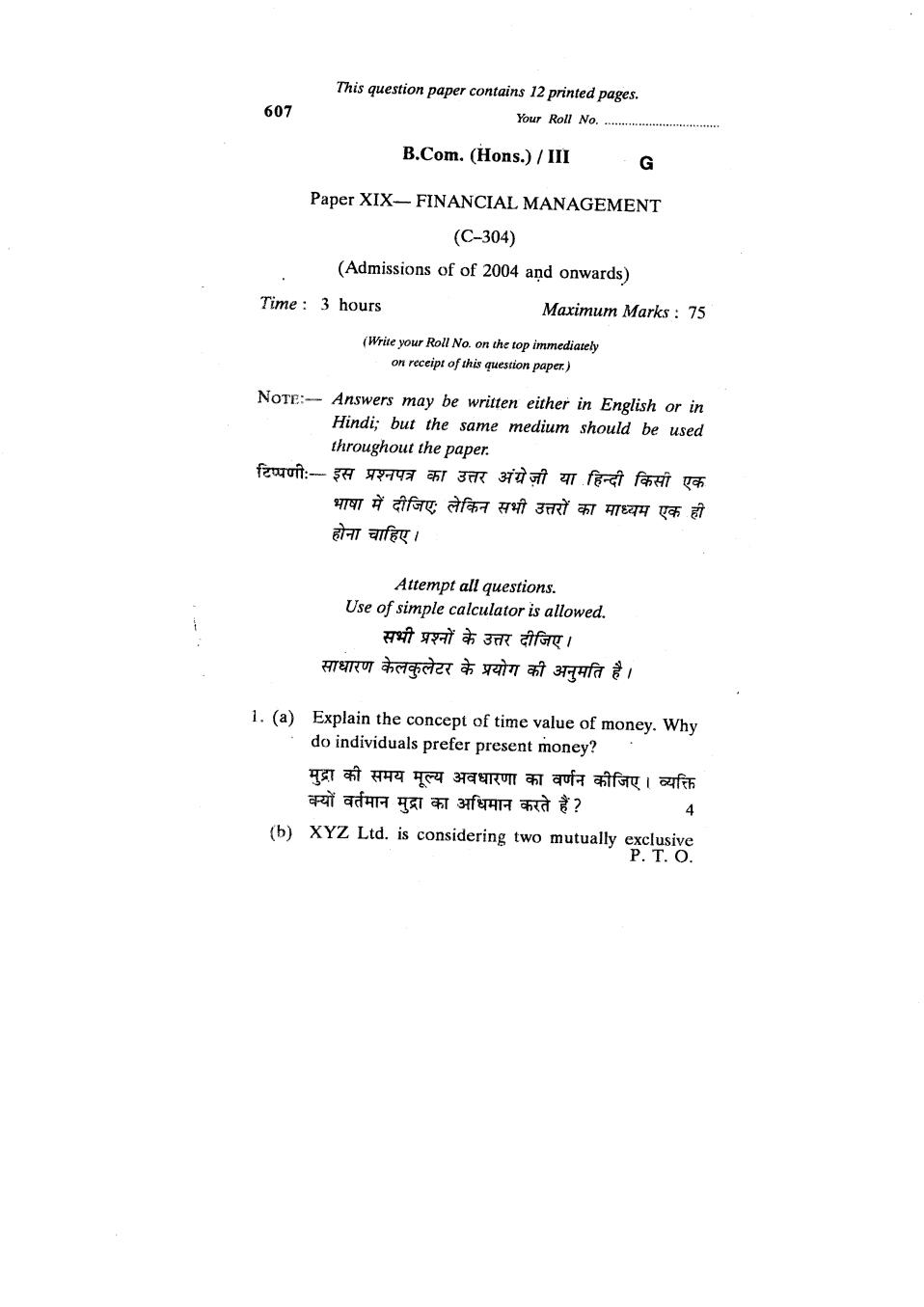
607 Your Roll No.
B.Com. (Hons.) / III
G
PapeT XIX- FINANCIAL MANAGEMENT
(c_304)
, (Admissions of of 2004 and onwards.)
Time: 3 hours Maximum Marks : 75
'*'*::::,y:::;*:;r:::x';;#"*
Norn:* Answers may be written eithei in English or in
Hindi; but the same medium should be. used
thrcsughout the paper
ibwnrfr:-* Fs yWta frr a.trT sr*FA qr fffi rk€t g+
tilYr C #eq *f-*a srr? ffid' efi
wzw qa d
*+ ar&q'r
Attempt all questions.
Use of simple calculator is allowed.
pt# ryit'*-rar ffqcr
srqrw #ir$-ea t rq|'r +? eqefr d I
1. (a) Explain the concept of time value of money"
Why
' do individuals prefer present droney?
grJ si srE {F{ snrirrdurT *.r quf{ +1fqq r Erfu
qqi qfqn gil ffi aTfrrqr+ qlril ?
t q
(h) XYZ Ltd. is considering two mutually exclusive
P. T. O.
Page 2
projects. The cash fiows after taxes (CFAT) for
both the projects are as tollows:
Year Proiect A Project B
0 1.00,000 1,00,000
t 40,000 0
2 40,00t) 0
J 40,000 0
4 40,000 0
5 40,000 2,50,000
The required rate of return on these projects is
10%. Fintl out:
(i) NPV for both the Projects
iii) tRR for both the Projccts
(iii) Whi{rh project would you prefer and why?
XyZ lfro * slTqrit sTrirri qft*q-{eii 6I &'m
4l G € r m rrFilrd qqq EETr€ qHi qR-qtqffiii
e6r l:{qffiT i'
qfiFfrffiT B
0 1,00,000 1,00,000
i 40,000 0
n
L 40,000 0
4
J 40,000 0
4 40,000 0
) 40,000 2,50.1100
qffiqneil w sflr{nf{d qr$s} qt qI Lo%tr
qsrqr *trqq:
Page 3
1ii1 ffi qRdsn3ii t frq mn
liiiy F+v qfuilq{r *1 eTRrcrH sin sft ed 11 I
or (arqqT)
(a) Why do we focus on cash flows rather than on
accounting profit while evaluating capital
budgeting decisions?
[q]rrd qqe F+fd ] sqq trrr rsE qqr6 w edi
ftttdqfs€rdrdTqw? 4
(b) ABC Ltd. has a machine with a book value of Rs"
5,00,000 and a remaining useful life of 5 years. If
sold today, it would, however, realise only Rs.
1,00,000. The company is planning to replace it
with a new machine which is more efficient and
would lead to a savings in cost amounting to Rs.
10,00,000 p.a. The rate of income tax applicable
to the company is 4AVo and it does not make any
investment if the yield is less than 1.2Vo p.a. The
cost of the new machine is Rs. 25,00,000.
Both the machines are subject to SLM method of
depreciation. The old machine shall have a zercr
scrap value at the end of 5 years from now
whereas the new machine shall have ii $crap value
eif 5,00,000.
Advise whether the companv should replace the
machine or not. trgnore capital gain tax.
ABC fro * .qrs qs q{fr{ gF6_ {g{ Tr so
5,oo,ooo s? QTT $il{ sqffi *fi 5 qd *T sn r
P" T. O.
Page 4
qfE sTlEt Aqi EIIq tr gs rR crk 4trf, 5o
1,00,000 dtfr r
qtrfi qs {qT q{ftq * ft erfsq'
t 3*{ fq*rA €o 1'00'000 xfr q{ *t oma
rg1 t
C e-dd dtfr 41 dPrrq{r q{ ffi{R eqqfq
"qo r
e.qfi qr €q qr q1 4{ Aova e 3it{ f,fdtr
q-d
12o7oxR q{ i q'q e} d q.grfi 6}i fqFrmrT
qcfi r Tqi qvfrq *1 ertna d'o 25'00'0oo t r '
fff wfri frs14c +1 sltvt FltT tri eTrqrf{fr t r
qrfrq q,r qcfi qiq q[q
5 q{ + t}tf, vt g{rfr
qeT do 5'00'000 dm
nen Tfr q{frq e;r qfffT
t
q{frq 4i €€rT.rqr
scrc qiFq P6 6wti d Tql
6cfi *ft- zn rd"r qd eTTq 6-{ d 3rfrrq
t1
Hf{q,
12Vo debentures
2. (a) A company issues Rs' 10'00'0OO'
of Rs. L00 each at a premium of lOVo'
The
par after the expiry
debentures are redeernable at
bracket'
of 7 years" The company is in 35Vo tax
Calculate the cost of debt"
q6 4-t{fi } t'o 10'00,000 * tzEo *Trq:{ qgfr
qt
so 1oo toEo qin{qq w t xq-qi
* *t ffi
i 6ffi qi 35% tr-{
frqq 7 q{ + 3id fr qrqr 1
t
siqT I sd 61 drrrd
qt rrnrq{ qfifsq t 4
(b) Bronze Ltd" hgs the following capital structure:
Equity share capital (10'000 shares
of Rs" 100
each) 10,00,000
-
9e/o Preference caPital- 3'00'000
Page 5
lOVo Term loan- 10,00,000
The equity shares are currently having a market
price of Rs. 200 and the company declared a
dividend of Rs. 20 per share for the next year'
The dividend growth rate is 5Vo p'a' Tax rate
applicable to the com.pany is 50Vo' Calculate
WACC using book value weights'
aTg fro el ifr
aiqr FrefaFsc *:
qrdr siTr 1fr {to,ooo dT{r @ Rs. 100 s*s)
10,00,000
97o sfrFTFT 1*- 3,00,000
12Eo *rqI-T{f,- 7,00,000
1g7, FTqrfr q-d-1o,oo,ooo
Trrdr iltqil qr qdqn qrqn TiT d'o 200 t 3I1T
sqfi i sr,r& q{ + Pqq ,qlqtqr do 20 *ftr
frqr i I ailqf{r { 3d\r{k 4\ 5vo qfr qd t r
ffi{i qfi qq *1 <t sovo t |
5trfi {€ qR +
r*tr aru wAcc *t rrumr +tffi r 11
or(swrEr)
(a) "Market value weights are superior to book value
weighs while calculating WACC"' Comment,
with suitable reasons.
"qrqR {FT tt{ 5ws {g qn t *E fi t" s{gm
qRUr qFad fttqufr +lffi t 4
(b) Gold Ltd. has assets worth Rs' 40,00,000 that
have been financed by Rs' 20'00'Q00 of equity
shares (of 100 each), retained earninU;"oi.T.
Page 6
10.00,000 and the balance by 8%
debt' For the
year endin g 31-3.?f1'6 the company's EBIT
was
bracket'
Rs. 10,00,000. Gold Ltd" is in SOVo tax
The market value of equity is however Rs'
230'
weights and
Calculate WACC using rnarket value
book value weights'
-fre fto * qrg to 4o,oo,ooo si qgrfflqi t
dfs ffi?r+ € 2o,oo,ooo (q*s $o 1oo),
qfdqrF(a $rrt (Retained Earning) Fo tr0'00'000
sn{ fuyvo 6d eRT | 31'3'2016 sr{rqil q{
d t
ffi fr 6q-S si EBIT ell do
313.2a1'6
to,oo,ooo I rk Ro 5aVo
qr *em i t r gumt
s.t Ercm {S €o Zgo t r
qlEm qrq qR 3Tk sws {eq qR * rfrq ara
WACC *1 tror* *tffi r
11
J. (a) Distinguish between operating leverage and
financial leverage'
Frcfi effiq 3i{ ffiq ffiq fr er<t *1ffi rq
(b) XYZ Ltd. is evaluating two financing plans' A
andB.EBITis25voofinvestment.Corporatetax
be chosen if
is 404o. Which financial plan should
the firm wants to maximise the rate of
return on
bclth the
equity capital? The relevaret data about
plans are:
Page 7
(i) Determine at what level of EBIT the
company would be indifferent bet\ryeen these
two plans.
(ii) What would be the EPS under both these
plans if the company is expecting an EBIT of
Rs. 10,00,000 and is subject ta 40Va corporate
tax?
xyz fto fr ffiq fr-d{rcif A sih B EFt
{etq{ qr qtl t r EBIT t zsEo frffiq * '
flrm
qt BTnrffirq q.t{I qrt fr *t-flqi ffiq *r+r ql
qfi EFtrn qrf6a ? *S fr-r{reif t qrtiFqq 3if-6-a
fqq r*n €i
*qqr n ?TFTqT B
T$trq:t 8,00,000 @ L0% 4,00,000 @ L2vo
4,000 @) 100
157, 31ft1rpa ei{r 2,ooo @ tr00
srdr siqr 10,000 @ 100 12,000 @ 100
(i) EBIT t fus {trt q{ m.w-* *fr *q-+refi Tt
sffSq G'fr I
(ii) qR *,urql EBIT to 10,00,0CI0 q1 erlYlT st
fr gq qtfr +trffil} * EPs {FqI' '{*,"{i qft
ffiq s"{ 6t qt +rize * ? tl
Or(wrff)
(a) What are the various factCIrs relevant in eieter-
mining the capital structure?
p" 1". o.
Page 8
{ufi Gfi * f{qt{ur
+ fdirq qr{fiffi sqrEr{ ?FrT
ia4
(b) Calculate the degree of operating degree of
leverage'
and the
degree of financiai leverage
three firms' Also
combined leverage for all the
comment on the result'
5,00,000
tput (units)
,00,000
Variable cost Per unit
ing price Per unlt
Interest cha
75,000 5,00,000
,00,000 75,000
gsri q€ ffrrd
rxr{ r+fi q€
policy as per
4.(a) What is an optimum dividend
Walter's model?
qf€{ qfsm t er{gn gsilq drqtqr ffi st t i +
Page 9
and B, which are identical in all respects except
that company B is levered:
CompanyA Company B
I1BIT 3,00,000 3,00.000
Market value of debt @ 12.5% Nil 12,00,000
Rate of return on equity K. ISVo 'l6o/a
Explain using MM approach how an investor
holding 10% equity in company B will be better
off by switching to company A.
q,q$ A slh B d-+r + dt Frq ssT{ t t r ffi
e;qF{qi srfi frEd t qfirqn t mqrq g{Tt m
sqqiBff€l
a,ErS A q,trrfr B
EBIT 3,00,000 3,00,000
ry$ @rz .Sva 6r qIcTR {sq {d 12,oo,ooo
1pfifi rR q6.qt q{ Ke 15Va I.6Va
MM fqfu isT strftr ffit gA 6rilqA fs w
fqfi+trs ffi TTRT *,qfi B isT lovo vrrdT
F{rfoq € qa d;il $q* A fr i}iilrur t *6-fi *
qr(zn | 11
or (e[grfrr)
(a,) How does Gordon's model differ from Walter"s
model?
rri€q sl qfsd qfffi * qfss e d;fr {'''q-q t ? *
(t,) POR Ltd. belongs to a risk class for ,"vhich the
appropriate capitalization is ZOo/a.lt curru:ntly has
P" T. O.
Page 10
50,000 equity shares selling at Rs. 100 each. The
firm is contemplating the declaration erf a
dividend of Rs. 10 per share at the end of the
current financial year. Using MM model find out
the price of the company's share at the end of the
year:
.
(i) when dividend is declared
(ii) when dividend is not declared.
Also find out the number of equity shares to be
issued to meet an investment of 10,00,000
assuming a net income of 5,00,000 and also
assuming that the dividend is paid.
PeR fro q* *fuq 6q{T t EEr EsTr t fdrst
ffi srgis lui-*wr A zaqo | $s* qrq {fqrr t
50,000 s{dr gi{r €' to too res r
qd ffiq qd
t sid fr to 10 aTqi{r *1 *qqT eri qrd' t r
MM {TKT + grfr'T egr qd t gtfr t 6T{fr *
rf{r + {€ si rrurqr qiffi:
(i) qq ilqiqr st *wn 6i'qTn 3*{
(ii) qq qrqi{r qi q}wrr q 41 qr} r
10,00,000 t fcffiq + ffi sFEtrfr $ qq-dT 3t{il
EFTrrdT Hrn{a, T6 qfit EA Fs {€ sTrq 5,00,000
i sft dlqfqr * t f{qr rrqT t 11
5. (a) Define safety stock. Discuss its role in
determination of re-order Point'
g{ff (safety) €is * qRqrfuer 6iffi | 54:
Page 11
sTreri f4€ + f{qf{ur fr {sd qF*r 6I fr quh
siHr 4
(b) Following are the details related to PQR Ltd.:
Sales 30,000 units
Selling price per unit 4A
Variable cost per unit . 25
'Itrtal cost per unit 35
Credit period allowed 1. month
Desired rate of return on investment 25To
The company plans to liberalise its credit policy
by increasing the eredit period from one month to
two months. It is estimated that due to the new
policy the sales would increase by l$Vo. Advise
whether the new policy be implemented or not"
PeR fho fr sqq Frrff,fua afrq t'
ffi 30,000 qqil{qi
f{4q $.T xf!1 {q;ri 40
qET dTj'rd qfr wri 25
rrfd' {sT$ 35
5-,'m dl-Irfr
qs 3aqiq {qts,rd qc6 qIE
frFrdq qt envnFqa qrr{fr q{ 257a
e;rrfr 3Tqfr €rq q1fr frr 3-drfi-6{qr sTrds{ qrnft
E qrGI srqTq qa.5 cr6 {t EI rTrd ?rs {616F-{ | zf-6
er{qH €TTm qrdr rs ;r4 qlrd t t
?rRur R-x1
toa/o qa qrffi | RTrE E?ffi fs rql *fd d
s-rdfqd fd;qT qri qr qS r
11
P" T. O.
Page 12
or (ilTe[ErT)
{a} XYZ. Ltd. requires 20,000 units of a certain itsm
every year. The purchase price per unit is 100.
The carrying cost is 25ola and nrdering cost is Rs.
100 per order" Find out EOQ and total inventory
r;ost at EOQ"
qd-6 d g* q-E *l e{rrtrq 40,00CI ssTsd ffii
XyZ f'ts di arrqr+*"ct t r qft fqr$ m-e W
100 t r enqfr erwd zs% * sTk entqr *t mrrrm
qR BTrevr so 1oo * | Eoe arh noO q{ *H
Ffi--q drrl(f 6f rpla s?ffi i 5
(b) ABC t td. expects its cost of goods sold for
2AL5-16 to be 6,CI0,000. The expected operating
cycle is 90 days" The campany wants tc have a
minimurn cash balance of 50,00ti at all times.
What is the expected working capital
requirement? Assume a year of 360 days"
ABC fuo qd zors-ro t fst sTHn fidd? t lffi
ffi'W qr-d mt Hrrrf, 6,00,000 Gd r {qrFdr{
FilTFT qr6 90 rfi t r qiIlr{l {Tfr Hq-df q{ q{ilq
*FE *q €o 50,000 {s{r lrrf,fr t r dxTrFd qq
Tq1 GilErvqirdl Ri Ettfr u ffi;{ fe q* er{ fr
360 k{ ti *t €'r s
(c) Distinguish between perrnaqent anrl ternporary
working capital"
elT* sft silFn{ eq {e1 { sr;m *?ffi r
5300
Document Details
| Board / Org | Default |
| Exam | DU SOL |
| Type | Question Paper |
| Pages | 12 |
| Updated | 30 Apr 2026 |