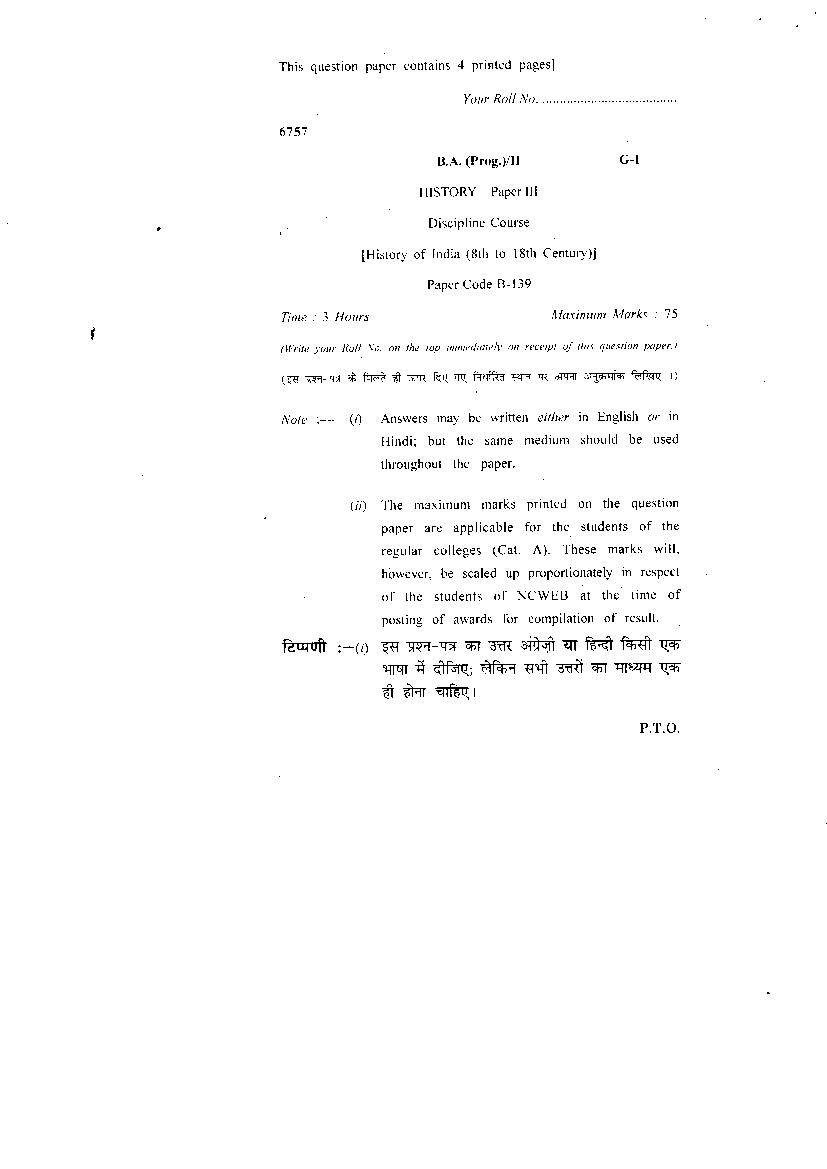
DU SOL BA Programme 2nd Year History Question Paper 2018 B-139 G-I
Finished viewing? Save it for later —
Download DU SOL BA Programme 2nd Year History Question Paper 2018 B-139 G-I (PDF · 4 pages)About DU SOL BA Programme 2nd Year History Question Paper 2018 B-139 G-I
DU SOL BA Programme 2nd Year History Question Paper 2018 B-139 G-I is available here for free download. Published by University of Delhi for DU SOL, this question paper can be viewed online or downloaded as a PDF (4 pages). Candidates preparing for DU SOL can use DU SOL BA Programme 2nd Year History Question Paper 2018 B-139 G-I to understand the exam pattern, the type of questions asked, and the overall difficulty level.
Frequently Asked Questions
How can I download DU SOL BA Programme 2nd Year History Question Paper 2018 B-139 G-I?
Open this page and click the Download button to save DU SOL BA Programme 2nd Year History Question Paper 2018 B-139 G-I as a PDF. It is completely free on AglaSem Docs.
Is DU SOL BA Programme 2nd Year History Question Paper 2018 B-139 G-I free to download?
Yes. DU SOL BA Programme 2nd Year History Question Paper 2018 B-139 G-I can be viewed online and downloaded as a PDF free of cost on AglaSem Docs.
How many pages does DU SOL BA Programme 2nd Year History Question Paper 2018 B-139 G-I have?
DU SOL BA Programme 2nd Year History Question Paper 2018 B-139 G-I contains 4 pages, which you can read online or download together as a single PDF.
Where can I find more DU SOL study material?
You can find more DU SOL question papers, sample papers, syllabus, and answer keys on AglaSem Docs.
DU SOL BA Programme 2nd Year History Question Paper 2018 B-139 G-I – Text
Read the full text of this question paper below — useful to quickly search, copy and reference the content online without downloading the PDF.
📄 View text version (4 pages)
Page 1
Your Roll No.
67 51
B.A. (Prog.)/ll G-l
HISTORY-PaPer III
Discipline Course
[History of lndia (8th to l8th Centtrry')l
Paoer Code B-139
Tinte : 3 llours Nlaximum lVlarks : 75
(lL'rite;our Roll .\to. on the top intnediately on receipl oJ this question paper')
(Fs c[r-{t + fiTiTa t1 scr RC TIq ftsrifR rel|r {{ eq{r 3rd*,'ci4' lefuq t)
Nctte :- (/) Answers rnay be written either in English or in
Hindi; but the same mediurn should be used
throughout the paper.
(ii) The tnaximum marks printed on the question
paper are applicable for the students of the
regular colleges (Cat. A). These marks will.
however, be scaled up proportionately in respect
' of the students of NCWEB at the time of
posting of awards for compilation of result.
ffi :-(i) q€ e*I-wt q-t vtrt eiiql qr ffi tsql qfr
qrsT it {teq; Af*r q$ Tf,d ql qrLqq !tr^
Ei d-{T qrRq r
Page 2
(ii) sn-wi qr slt*-d Wrfm. fiffifu-d slAqT
( M .a') s. Mrj"ii + frq :rgn<t"+
t r
nqrfr i eiq' xcweB * ffii?ii * #q ti
Bq* qftnTrc * ris--ff * tdq frgffi eTfi{Fpiq
+ qqq rr, sr* qqqrfd-€ sq ii erfq-q. €ti r
Attenlpt -/ir.,e questions in all.
One question from each unit is conrpulsory.
l// questions carry equal marks.
Ee qta erfi + sff qifuq r
v-efr FsT-$ n gm sFT q-€r ern-qFj t r
€fr s*ii * sifi qqn *r
Unit I
1g*r$ r)
l. Can the period from AD 750 to AD 1200 be called feudal ?
Discuss.
FTr 7s0-1200 ffi ncF- * s-fm s;T qr.idi E'ET qT
Es-f,T t ? fe-{fiT *ifqq r
')
What are different theories r-egarding the origin of the RajpLrts ?
Trffi"fi
" 'N"
q.l Tdtr-i * qt d Flr fdfin rin t ?
J. \\'li'' 'iid tlie Ar;rbs invatJe lndia'.) g,,,ltat \vas lts inrpacr ?
eF* i l;,rTd c{ E=s $rm-+q fffiq,' ? ETi-.s WIT qq|q
ffi )
Page 3
4. Describe Nagara, Dravida and Vesara styles of tetnple architectlrre
in India.
i111frii dffi ffiuT Ffrt q1 qTIT{, qftg 3t{ ARI
frftrfi sl q"h eifeq r
Unit ll
(gm'r$ rr)
-5. Discuss Balban's theory of Kingship. Did it lead to the fall
oI the llbaris ?
qtrl;t * {r'irct + f€-etRr ql ffi-qil q1fs\ | FIT
€qi F€-{rfr EiqT * s?t=t sT qt-,f qqfw frilI ?
6. Discuss the econornic refot'tns of Alatrddin Khalii.
3ftTrsfr{ qd-qi * eiTiQfm gqRt H-t qrtq qifqq r
7. Examine the working of the Iqta systern in the l3th and 14th
centuries. How did it lead to the political and economic
decentralization ?
13di qq r+ei {TdTf<"ii ii g.ni yqtci + sT'J E r rrfiqTlrr
qifqq I q6 fs"q rqrq n-q-*fr'fr' 3r!, er,ftifr- fqdiqiffiT'i
d" fiTq BT{cT-rt1 efr ?
8. Discuss tlrc iilc and teachinqs of, any ll'o Sutl saints of r.-iri:rlrli
\ii.illttl!.
t-r,T] fH€-dt + fqr€t d qni ,fr+ t tli-sq *i
. fqrerreii $T E-rh qiiqq r
Page 4
Unit lll
(g*r$ nr)
9. Akbar's policy of creating a composite nobility was part ot
consolidating Mughal power. Discttss with special reference
to the induction of Rajputs and Indian Muslims in the
nobility.
eicrrn qi {itrf,€ swr qrf ETri 41 ffi gr-6 qrT
41 q-q-{d e-G q"r trwr qi I BqtT q'f t {rqTii d{
qT{frq g€-dcT'it + ffi {iEsi ii Rfir qifrqt
10. Discuss various architectural trends from Akbar to Shah iahan.
ef,m-6n q q'1-6wti' ilfi 5@ frrq*-clt sqftt=ii Hr euir
6-rrqq I
ll. Clitically evaluate Aut'angzeb's religious policy.
sffiE st crTF{6 ffi er eiid-fiKqm 1wreT qitqqr
12. Trace the rnain issues of the debate concerning the l8th century
in lndian H istory.
qT{dlq Ff€r€ ii rgd wdl-d t €fuT rqi srd qrq-Fqrq
*.\\. qgq 5-fr ftl M*-d elkq t
6157 63000
Document Details
| Board / Org | University of Delhi |
| Exam | DU SOL |
| Type | Question Paper |
| Pages | 4 |
| Updated | 23 Oct 2026 |