AHSEC HS 2nd Year Question Paper 2019 History
Finished viewing? Save it for later —
Download AHSEC HS 2nd Year Question Paper 2019 History (PDF · 16 pages)About AHSEC HS 2nd Year Question Paper 2019 History
AHSEC HS 2nd Year Question Paper 2019 History is available here for free download. Published by Assam Board for Class 12, this question paper can be viewed online or downloaded as a PDF (16 pages). Candidates preparing for Class 12 can use AHSEC HS 2nd Year Question Paper 2019 History to understand the exam pattern, the type of questions asked, and the overall difficulty level.
Frequently Asked Questions
How can I download AHSEC HS 2nd Year Question Paper 2019 History?
Open this page and click the Download button to save AHSEC HS 2nd Year Question Paper 2019 History as a PDF. It is completely free on AglaSem Docs.
Is AHSEC HS 2nd Year Question Paper 2019 History free to download?
Yes. AHSEC HS 2nd Year Question Paper 2019 History can be viewed online and downloaded as a PDF free of cost on AglaSem Docs.
How many pages does AHSEC HS 2nd Year Question Paper 2019 History have?
AHSEC HS 2nd Year Question Paper 2019 History contains 16 pages, which you can read online or download together as a single PDF.
Where can I find more Class 12 study material?
You can find more Class 12 question papers, sample papers, syllabus, and answer keys on AglaSem Docs.
AHSEC HS 2nd Year Question Paper 2019 History – Text
Read the full text of this question paper below — useful to quickly search, copy and reference the content online without downloading the PDF.
📄 View text version (16 pages)
Page 1
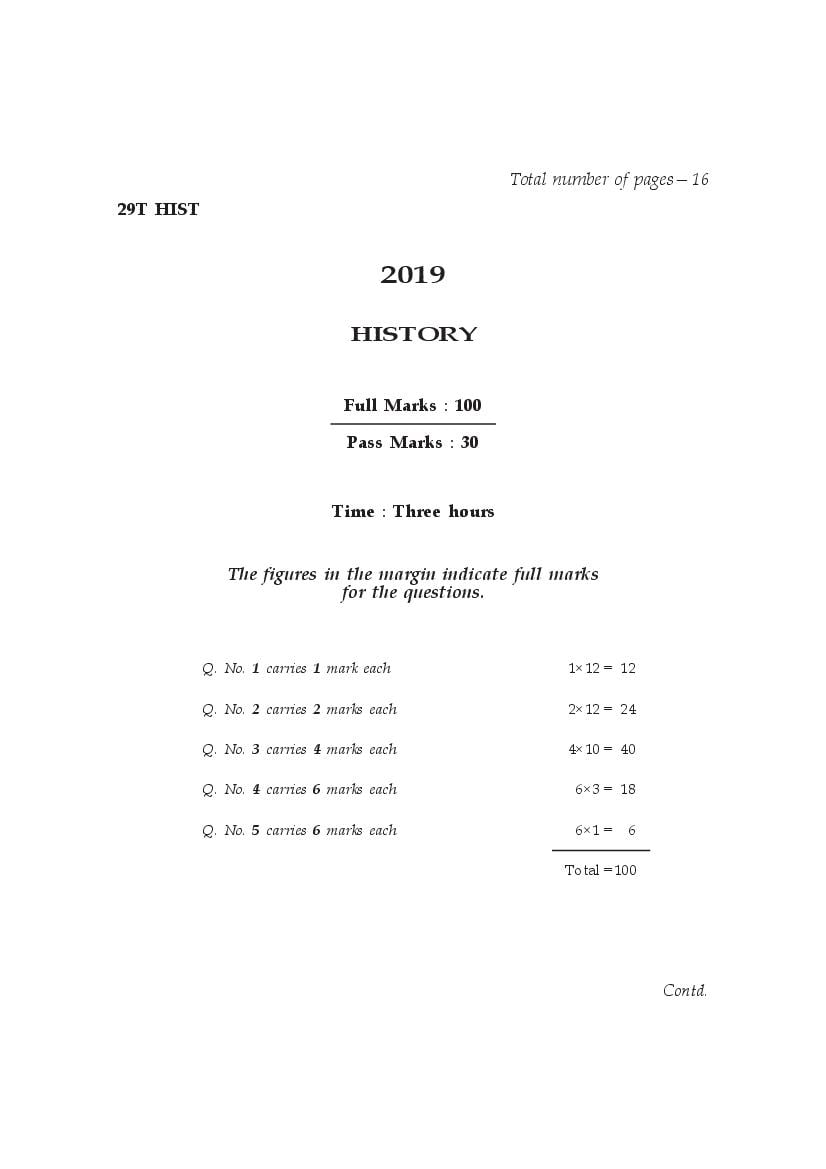
29T HIST
2019
HISTORY
Full Marks : 100
Pass Marks : 30
Time : Three hours
The figures in the margin indicate full marks
for the questions.
Q. No. 1 carries 1 mark each 1×12 = 12
Q. No. 2 carries 2 marks each 2×12 = 24
Q. No. 3 carries 4 marks each 4×10 = 40
Q. No. 4 carries 6 marks each 6×3 = 18
Q. No. 5 carries 6 marks each 6×1 = 6
Total =100
Contd.
Page 2
øÚ•ßø˘ø‡Ó¬ √õ∂ùü¸˜”˝1 ά◊M1 ø˘‡± :
(i) Who was Alexander Cunningham ? 1
’±À˘fl¬ÀÊ`¬±1 fl¬±øÚ—˝±˜ Œfl¬±Ú ’±øÂ√˘ ∑
(ii) Name the most powerful mahajandapada in India between the sixth
and the fourth centuries BCE. 1
‡Ëœ©Ü¬Û”¬ı« ¯∏ᬠ’±1n∏ ‰¬Ó≈¬Ô« ˙øÓ¬fl¬±1 øˆ¬Ó¬1Ó¬ Ôfl¬± ˆ¬±1Ó¬1 ¸fl¬À˘±Ó¬Õfl¬ ˙øMê˙±˘œ
˜˝±ÊÚ¬Û‡Ú1 Ú±˜ ø˘‡±º
(iii) Who was the best known ruler of the Satavahana dynasty ? 1
¸±Ó¬¬ı±˝Ú 1±Ê¬ı—˙1 Œ|ᬠ¬ı≈ø˘ ÊڱʱӬ ˙±¸fl¬fl¬Ó«¬±ÊÚ Œfl¬±Ú ’±øÂ√ ˘ ∑
(iv) Name any one of the Tipitaka. 1
øÓ¬ø¬ÛȬfl¬1 ø˚Àfl¬±ÀÚ± ¤‡Ú1 Ú±˜ ø˘‡±º
(v) Who was the first British Commissioner of Assam ? 1
’¸˜1 √õ∂Ô˜ÊÚ ¬ı‘øȬÂ√ ’±˚˛≈Mê [fl¬ø˜‰¬Ú±1] Œfl¬±Ú ’±øÂ√˘ ∑
(vi) Name the Sultan of Delhi when Ibn Battuta visited India ? 1
˝◊ ¬ıÚ ¬ıÈ≈¬È¬±1 ˆ¬±1Ó¬ w˜Ì1 ¸˜˚˛Ó¬ ø~œ1 ‰≈¬˘Ó¬±Ú Œfl¬±Ú ’±øÂ√˘ ø˘‡±º
(vii) Who was called ‘Muquaddam’ ? 1
ë˜≈fl¬±V±˜í ¬ı≈ø˘ fl¬±fl¬ Œfl¬±ª± Δ˝øÂ√˘ ∑
29T HIST [2]
Page 3
ë¬ı±ù´±˝ Ú±˜±í1 ø˘‡fl¬ÊÚ1 Ú±˜ ø˘‡±º
(ix) Which revenue system was introduced by the East India Company in
the Bombay Deccan ? 1
˝◊©Ü ˝◊ø`¬˚˛± Œfl¬±•Û±øÚÀ˚˛ Œ¬ı±•§±˝◊ ±øé¬Ì±Ó¬…Ó¬ Œfl¬±ÚÀȬ± 1±Ê˝ ¬ı…ª¶ö± √õ∂ªÓ«¬Ú fl¬ø1øÂ√˘ ∑
(x) Where did Konwar Singh lead the rebels during the revolt of 1857 ? 1
1857 ‰¬Ú1 ø¬ıÀ^±˝1 ¸˜˚˛Ó¬ Œfl¬±“ª1 ø¸À„ ø¬ıÀ^±˝œ¸fl¬˘fl¬ fl¬íÓ¬ ŒÚÓ‘¬Q √õ∂±Ú fl¬ø1øÂ√˘ ∑
(xi) Which was the third major movement against the British rule
launched by Mahatma Gandhi ? 1
˜˝±R± ·±gœÀ˚˛ ¬ı‘øȬÂ√ ˙±¸Ú1 ø¬ı1n∏ÀX ‰¬À˘±ª± Ó‘¬Ó¬œ˚˛ÀȬ± ¬ı‘˝» ’±Àμ±˘Ú øfl¬ ’±øÂ√˘ ∑
(xii) By which name Khan Abdul Ghaffar Khan was known ? 1
‡±Ú ’±s≈˘ ·Ù¬1 ‡±Ú øfl¬ Ú±À˜À1 ÊڱʱӬ Δ˝øÂ√ ˘ ∑
2. Answer the following questions in brief : 2×12=24
øÚ•ßø˘ø‡Ó¬ √õ∂ùü¸˜”˝ 1 ¸—øé¬5 ά◊M 1 ø˘‡±º
(i) How is the lower town different from the citadel in the towns of the
Indus Valley Civilisation ? 2
ø¸g≈ ά◊¬ÛÓ¬…fl¬±1 ¸ˆ¬…Ó¬±1 Ú·1¸˜”˝Ó¬ ≈·« Ú·1 Ú±˜øÚ1 Ú·1Ó¬∏Õfl¬ Œfl¬ÀÚÀ1 ¬Û‘Ôfl¬
’±øÂ√˘ ∑
29T HIST [3] Contd.
Page 4
ë’¢∂˝±1í øfl¬ ’±øÂ√ ˘ ∑
(iii) Name the two dynasties who were immediate successors to the
Mauryas. ? 2
Œ˜Ã˚«¸fl¬˘1 ø¬ÛÂ√ÀÓ¬ 鬘Ӭ±øÒøá¬Ó¬ Œ˝±ª± 1±Ê¬ı—˙ ≈Ȭ±1 Ú±˜ ø˘‡±º
(iv) Mention two peasants uprising of Assam in the nineteenth century. 2
ÿÚø¬ı—˙ ˙øÓ¬fl¬±Ó¬ ’¸˜Ó¬ ¸—‚øȬӬ ≈Ȭ± fl‘¬¯∏fl¬ ø¬ıÀ^±˝1 Ú±˜ ά◊À~‡ fl¬1±º
(v) Name any two Sufi saints of Medieval India. 2
˜Ò…˚≈·1 ˆ¬±1Ó¬1 ø˚Àfl¬±ÀÚ± ≈ÊÚ ‰≈¬Ù¬œ ¸ôL√¬Û≈1n∏¯∏1 Ú±˜ ø˘‡±º
(vi) What do you understand by ‘Jama’ and ’Hasil’ ? 2
ëʘ±í ’±1n∏ ë˝±øÂ√ ˘í ˜±ÀÚ øfl¬ ¬ı≈ʱ ∑
(vii) Mention two artisanal tasks which were dependent on female labour
in India in the sixteenth-seventeenth centuries. 2
¯∏á¬˙-¸5˙ ˙øÓ¬fl¬±Ó¬ ˆ¬±1Ó¬Ó¬ ˜ø˝˘±1 |˜1 ›¬Û1Ó¬ øÚˆ«¬1˙œ˘ ≈Ȭ± ˝ô¶∏ø˙ä1 Ú±˜
ά◊À~‡ fl¬1±º
(viii) Name two capital cities developed by the Mughal emperors. 2
Œ˜±·˘ ¸•⁄±È¬¸fl¬À˘ ·øϬˇ ŒÓ¬±˘± ≈‡Ú 1±ÊÒ±Úœ Ú·11 Ú±˜ ø˘‡±º
(ix) What was the ‘Fifth report’ ? 2
ë¬Û=˜ √õ∂øÓ¬À¬ıÚí øfl¬ ’±øÂ√˘ ∑
29T HIST [4]
Page 5
¬’¸˝À˚±· ’±Àμ±˘Ú1 ø˚Àfl¬±ÀÚ± ≈Ȭ± fl¬±˚«¸”‰¬œ ø˘‡±º
(xi) Who called for ‘Direct Action’ and which day was chosen for it ?
2
Œfl¬±ÀÚ ë√õ∂Ó¬…é¬ ¸—¢∂±˜í1 ’±˝3±Ú ʱڱ˝◊øÂ√ ˘ ’±1n∏ ˝◊˚˛±1 ¬ı±À¬ı Œfl¬±ÚÀȬ± øÚ ¬ı±øÂ√ Œ˘±ª±
Δ˝øÂ√ ˘ ∑
(xii) Name any two representatives of Indian National Congress who
played particularly important role in the Constitutent Assembly of
India. 2
ˆ¬±1Ó¬1 ¸—ø¬ıÒ±Ú ¸ˆ¬±Ó¬ &1n∏Q¬Û”Ì« ˆ”¬ø˜fl¬± ¬Û±˘Ú fl¬1± ˆ¬±1Ó¬œ˚˛ ʱӬœ˚˛ fl¬—À¢∂Â√1 ø˚Àfl¬±ÀÚ±
≈ÊÚ ¸¸…1 Ú±˜ ø˘‡±º
3. Answer the following questions : (any ten) 4×10=40
øÚ•ßø˘ø‡Ó¬ √õ∂ùü¸˜”˝1 ά◊M1 ø˘‡± : [ø˚Àfl¡±ÀÚ± ˝È¬±]
(i) What were the basic features of the Great Bath found in
Mohenjodaro ? 4
˜À˝À?±±À1±Ó¬ ά◊X±1 Œ˝±ª± ¬ı‘˝» ¶ß±Ú±·±1ÀȬ±1 ˜”˘ Δ¬ıø˙©Ü…¸˜”˝ øfl¬ øfl¬ ’±øÂ√ ˘ ∑
(ii) Explain the limitations of the inscriptional evidences. 4
ø˘ø¬Û¸˜”˝1 ¸±é¬…1 ¸œ˜±¬ıXÓ¬± ¸•ÛÀfl«¬ ¬ı…±‡…± fl¬1±º
(iii) What were the ideal occupations suggested by the Dharmasutras and
Dharmashastras for the four varnas ? 4
Ò˜«˙±¶a ’±1n∏ Ò˜«¸”S¸˜”À˝ ø¬ıÒ±Ú ø˚˛± ‰¬±ø1›È¬± ¬ıÌ«1 ’±˙« ¬ı‘øM¸˜”˝ øfl¬ øfl¬ ’±øÂ√ ˘ ∑
29T HIST [5] Contd.
Page 6
’¸˜1 √õ∂±‰¬œÚfl¬±˘1 ˜øμ1¸˜”˝1 ’ªø˙©ÜÀ¬ı±11 ø¬ı¯∏À˚˛ ‰¬˜≈Õfl¬ ø˘‡±º
(v) What did Bernier state regarding land ownership in India ? 4
ˆ¬±1Ó¬Ó¬ ˜±øȬ1 ˜±ø˘fl¬œ¶§Q1 ø¬ı¯∏À˚˛ ¬ı±øÚ«˚˛±À1 øfl¬ ˜Ó¬ √õ∂fl¬±˙ fl¬ø1øÂ√ ˘ ∑
(vi) Who was Baba Guru Nanak ? What were his basic religious
principles ? 1+3=4
&1n∏ Ú±Úfl¬ Œfl¬±Ú ’±øÂ√ ˘ ∑ ŒÓ¬›“1 ˜”˘ Ò˜œ«˚˛ ÚœøÓ¬¸˜”˝ øfl¬ øfl¬ ’±øÂ√˘ ∑
(vii) How did the Paharias use the forests for their livelihood ? 4
¬Û±˝±1œ˚˛±¸fl¬À˘ Êœøªfl¬± øÚ¬ı«±˝1 ¬ı±À¬ı Œfl¬ÀÚÕfl¬ ’1Ì…À¬ı±1 ¬ı…ª˝±1 fl¬ø1øÂ√˘ ∑
(viii) How did the annexation of Oudh to the British Empire affect the
Taluqdars there ? 4
’À˚±Ò…± 1±Ê…‡Ú ¬ı‘øȬÂ√ ¸±•⁄±Ê…Ó¬ ‰¬±ø˜˘fl¬1ÀÌ Ó¬±1 Ó¬±˘≈fl¬±1¸fl¬˘fl¬ Œfl¬ÀÚÕfl¬ é¬øÓ¬¢∂ô¶∏
fl¬ø1øÂ√ ˘ ∑
(ix) Who was Lord Irwin ? What were the terms of the Gandhi-Irwin
Pact ? 1+3=4
˘Î«¬ ’±1ά◊˝◊Ú Œfl¬±Ú ’±øÂ√ ˘ ∑ ·±gœ-’±1ά◊˝◊Ú ‰≈¬øMê1 ‰¬Ó«¬À¬ı±1 øfl¬ øfl¬ ’±øÂ√˘ ∑
(x) In which year was the Survey of India established ? How did the
maps prepared during the colonial times reflect the bias of the British
rulers ? 1+3=4
ˆ¬±1Ó¬1 Ê1œ¬Û ø¬ıˆ¬±· [‰¬±Àˆ«¬ ’ª ˝◊ø`¬˚˛±] Œfl¬±Ú ‰¬ÚÓ¬ ¶ö±¬ÛÚ fl¬1± Δ˝øÂ√ ˘ ∑ fi¬ÛøÚÀ¬ıø˙fl¬
fl¬±˘Ó¬ √õ∂dÓ¬ fl¬1± ˜±Úø‰¬S¸˜”À˝ ¬ı‘øȬÂ√ ˙±¸fl¬¬ı·«1 ¬Û鬬۱øÓ¬Q Œfl¬ÀÚÀ1 √õ∂øÓ¬Ù¬ø˘Ó¬
fl¬ø1øÂ√ ˘ ∑
29T HIST [6]
Page 7
¬ı≈1?œÀ¬ı±11 &1n∏Q ¬ı…±‡…± fl¬1±º
(xii) Who introduced Jharoka Darshan ? How was it performed ? 1+3=4
ëÁ¬À1±fl¬± ˙«Úí Œfl¬±ÀÚ ’±1y√√ fl¬ø1øÂ√ ˘ ∑ ˝◊˚˛±fl¬ Œfl¬ÀÚÕfl¬ ¬Û±˘Ú fl¬1± Δ˝øÂ√ ˘ ∑
(xiii) What arguments were put forward by the members of the
Constituent Assembly in favour of a strong Central Government ?
¸—ø¬ıÒ±Ú ¸ˆ¬±1 ¸¸…¸fl¬À˘ ¤‡Ú ˙øMê˙±˘œ Œfl¬fœ˚˛ ‰¬1fl¬±11 ¸¬ÛÀé¬ øfl¬ øfl¬ ˚≈øMê ±ø„
Òø1øÂ√ ˘ ∑ 4
4. Read the given passages carefully and answer the questions that follow :
(Answer any three) 6×3=18
Ó¬˘Ó¬ ø˚˛± ά◊X‘øÓ¬ ‡G¸˜”˝ ˜ÀÚ±À˚±À·À1 ¬ÛøϬˇ √õ∂ùüÀ¬ı±11 ά◊M 1 ø˘‡± .
[ø˚Àfl¬±ÀÚ± øÓ¬øÚȬ± ‡G1 ά◊M1 ø˚˛± ]
(a) “The most important idea in Jainism is that the entire world is
animated : even stones, rocks and water have life. Non-injury to
living beings, especially to humans, animals, plants and insects is
central to Jaina philosophy. In fact the principle of ahimsa,
emphasized within Jainism, has left its mark on Indian thinking as a
whole. According to Jaina teachings, the cycle of birth and rebirth is
shaped through karma. Asceticism and penance are required to free
oneself from the cycle of karma. This can be achieved only by
renouncing the world ; therefore, monastic existence is a necessary
condition of salvation. Jaina monks and nuns took five vows: to
abstain from killing , stealing and lying, to observe celibacy ; and to
abstain from possessing property.”
(i) What is central to Jaina philosophy ? 1
29T HIST [7] Contd.
Page 8
(iii) How karma and salvation are related to each other ? 3
ëëΔÊÚ Ò˜«1 ˜”˘ Ò±1̱ ˝í˘ Œ˚, ¸˜¢∂ ø¬ıù´‡ÀÚ˝◊ ÊœªôL√, ’±Úøfl¬ ø˙˘, ¬Û±Ô1, ¬Û±Úœñ
’±È¬±˝◊À1 √õ∂±Ì ’±ÀÂ√ ’±1n∏ ˜±Ú≈˝ , ¬Ûq, ά◊øæ, Œ¬Û±fl¬ ¬Û1n∏ª±Àfl¬ ’±ø fl¬ø1 ¸fl¬À˘± √õ∂±Ìœfl¬
’±‚±Ó¬ fl¬1±1 ¬Û1± ø¬ı1Ó¬ Ôfl¬±ÀȬ±À˝ ˝í˘ ΔÊÚÒ˜«1 ˜”˘˜Laº ¬ı±ô¶∏øªfl¬ÀÓ¬, ΔÊÚ Ò˜«1
’ôL√·«Ó¬ ’ø˝—¸± ÚœøÓ¬1 øÚÀ«˙ ¸˜”À˝ ¸±˜ø¢∂fl¬ˆ¬±À¬ı ˆ¬±1Ó¬œ˚˛ ø‰¬ôL√±Ò±1±1 ›¬Û1Ó¬ ¤È¬±
·ˆ¬œ1 √õ∂ˆ¬±ª ø¬ıô¶∏±1 fl¬ø1ÀÂ√º ΔÊÚ œé¬±˜ÀÓ¬, fl¬˜«˝◊ Êiú ’±1n∏ ¬Û≈Ú1 Êiú1 fl¬±˘‰¬Sê1
øÚ˚˛LaÌ fl¬À1º fl¬˜«1 ‰¬Sꪻ ’±ªÓ«¬Ú1 ¬Û1± ˜≈øMê ¬Û±¬ıÕ˘ ˝íÀ˘ Δ¬ı1±·… ’±1n∏ fl‘¬4¸±ÒÚ1
√õ∂À˚˛±ÊÚ ˝˚˛º ¤˝◊À¬ı±1 fl¬ø1¬ıÕ˘ ˝íÀ˘ ¸—¸±1 Ó¬…±· fl¬ø1¬ı ˘±ø·¬ıº ¤ÀÚÀ1 øÚ¬ı«±Ì ˘±ˆ¬
fl¬ø1¬ıÕ˘ ˝íÀ˘ ά◊±¸œÚ ¸iß…±¸œ ÊœªÚ ˚±¬ÛÚ1 ’Ó¬œ¬ı ’±ª˙…fl¬º ΔÊÚ øˆ¬é≈¬ ’±1n∏
øˆ¬é≈¬Ìœ¸fl¬À˘ ø˚ ¬Û“±‰¬È¬± ’—·œfl¬±1 fl¬À1, Œ¸˝◊Àfl¬˝◊Ȭ± ˝í˘ñÊœª˝Ó¬…±1 ¬Û1± ’“±Ó¬ø1 Ôfl¬±,
‰≈¬1 Úfl¬1±, ø˜Â√± fl¬Ô± ŒÚ±Àfl¬±ª±, ¬ıËp¬‰¬˚« ¬Û±˘Ú fl¬1± ’±1n∏ ¸•ÛøM 1‡±1 ¬Û1± øÚÊÀfl¬ ø¬ı1Ó¬
1‡±ºíí
(i) ΔÊÚ ˙«Ú1 ˜”˘˜La øfl¬ ∑ 1
(ii) ΔÊÚ øˆ¬é≈¬ ’±1n∏ øˆ¬é≈¬Ìœ¸fl¬À˘ ¢∂˝Ì fl¬1± ≈Ȭ± ’—·œfl¬±1 ά◊À~‡ fl¬1±º 2
(iii) fl¬˜« ’±1n∏ øÚ¬ı«±Ì ˘±ˆ¬ fl¬±˚« Œfl¬ÀÚÕfl¬ ¬Û±1¶Ûø1fl¬ ¸•Ûfl«¬˚≈Mê ∑ 3
(b) “By the first century CE, there is evidence of changes in Buddhist
ideas and practices. Early Buddhist teachings have given importance
to self-effort in achieving nibbana. Besides, the Buddha was regarded
as a human being who attained enlightenment and nibbana through
his own efforts. However, gradually the idea of a savior emerged. It
was believed that he was one of who could ensure salvation.
Simultaneously, the concept of Bodhisatta also developed.
Bodhisattas were perceived as deeply compassionate beings who
accumulated merit through their efforts but used this not to attain
nibbana and thereby abandon the world, but to help others. The
worship of the images of the Buddha and Bodhisattas became an
important part of this tradition”
29T HIST [8]
Page 9
(ii) Who were the Bodhisattas ? 2
(iii) What changes did take place in Buddhism ? 3
ëë‡Ëœ©Üœ˚˛ √õ∂Ô˜ ˙øÓ¬fl¬±Õ˘Àfl¬ Œ¬ıÃX Ò˜«1 Ò±1̱ ’±1n∏ øSê˚˛±fl¬±`¬1 ˆ¬±À˘˜±Ú ¬Ûø1ªÓ«¬Ú ‚Ȭ±1
√õ∂˜±Ì Œ¬Û±ª± ˚±˚˛º √õ∂±1øy√√fl¬ fl¬±˘1 Œ¬ıÃX Ò˜œ«˚˛ ø˙鬱˝◊ øÚ¬ı«±Ì ˘±ˆ¬1 Œé¬SÓ¬ øÚÊ1
√õ∂À‰¬©Ü±1 ›¬Û1Ó¬ &1n∏Q ’±À1±¬Û fl¬ø1øÂ√˘º Ó¬≈¬Ûø1, ¬ı≈XÀfl¬± ¤ÊÚ ¬ı…øMê ø˝‰¬±À¬Û Òø1 ŒÓ¬›“
¶§fl¬œ˚˛ √õ∂À‰¬©Ü±Ó¬ :±Ú ’±1n∏ øÚ¬ı«±Ì ˘±ˆ¬ fl¬ø1øÂ√˘ ¬ı≈ø˘ ø¬ıù´±¸ fl¬1± Δ˝øÂ√ ˘º ’ªÀ˙…, ˘±À˝
˘±À˝, ¤ÊÚ S±Ìfl¬Ó«¬±1 Ò±1̱ ¤È¬±1 ά◊æª ˝í˘º ŒÓ¬Àª“ ˝◊ ˜≈øMê˘±ˆ¬ øÚøù‰¬Ó¬ fl¬ø11 ¬Û±À1 ¬ı≈ø˘
ø¬ıù´±¸ fl¬ø1¬ıÕ˘ Œ˘±ª± ˝í˘º ¤Àfl¬ ¸˜˚˛ÀÓ¬ Œ¬ı±øÒ¸M31 Ò±1̱ÀȬ±› ·øϬˇ ά◊øͬ˘º ’øÓ¬˙˚˛
˚˛±˘≈ ¬ı≈ø˘ ¬Ûø1ø‰¬Ó¬ Œ¬ı±øÒ¸M3¸fl¬À˘ øÚÊ √õ∂À‰¬©Ü±Ó¬ ¬ıUÀÓ¬± ¸»&Ì1 ’øÒfl¬±1œ Δ˝øÂ√˘º øfl¬c
¬Û≈?œˆ”¬Ó¬ ¸»&̸˜”˝1 ¬Z±1± øÚ¬ı«±Ì ˘±ˆ¬ fl¬ø1 ¬Û‘øÔªœ ¤ø1 Œ˚±ª±Ó¬Õfl¬ ˝◊˚˛±fl¬ ŒÓ¬›“À˘±Àfl¬
’±Úfl¬ ¸˝±˚˛ fl¬1±Ó¬À˝ ¬ı…˚˛ fl¬1± ά◊ø‰¬Ó¬ ¬ı≈ø˘ Œ¬ı±Ò fl¬ø1øÂ√˘ñ¸˜˚˛Ó¬ ¬ı≈X ’±1n∏ Œ¬ı±øÒ¸M31
˜”øÓ«¬ ¬Û”ʱ Ú¬ı… Œ¬ıÃX Ò˜«1 ¤È¬± ’±ª˙…fl¬œ˚˛ ¬Û1•Û1±Ó¬ ¬Ûø1ÌÓ¬ Δ˝øÂ√˘Õ·ºíí
(i) Œ¬ıÃXÒ˜«Ó¬ Œfl¬øÓ¬˚˛± ¬Ûø1ªÓ«¬Ú ¸—‚øȬӬ Δ˝øÂ√˘ ∑ 1
(ii) Œ¬ı±øÒ¸M3¸fl¬˘ Œfl¬±Ú ’±øÂ√ ˘ ∑ 2
(iii) Œ¬ıÃXÒ˜«Ó¬ Œfl¬ÀÚ Ò1Ì1 ¬Ûø1ªÓ«¬Ú ¸—‚øȬӬ Δ˝øÂ√˘ ∑ 3
(c) “Krishnadeva Raya‘s rule was characterized by expansion and
consolidation. This was the time when the land between the
Tungabhadra and the Krishna rivers (the Raichur doab) was
acquired (1512), the rulers of Orissa were subdued (1514) and severe
defeats were inflicted on the Sultan of Bijapur (1520). Although the
kingdom remained in a constant state of military preparedness, it
flourished under conditions of unparalleled peace and prosperity.
Krishnadeva Raya is credited with building some fine temples and
adding impressive gopurams to many important south Indian
temples. He also founded a suburban township near Vijaynagara
called Nagalapuram after his mother. Some of the most detailed
descriptions of Vijaynagara came from his time or just after.”
(i) Where was the Raichur doab ? 1
29T HIST [9] Contd.
Page 10
(iii) How did the king expand his empire ? 3
ë븱•⁄±Ê… ø¬ıô¶∏±1 ’±1n∏ ¸”‘Ϭˇfl¬1Ì fl‘¬¯ûÀª 1±˚˛1 ˙±¸Ú1 Δ¬ıø˙©Ü… ’±øÂ√˘º ¤˝◊¸˜˚˛ÀÓ¬
Ó≈¬—·ˆ¬^± ’±1n∏ fl‘¬¯û± Úœ1 ˜±Ê1 ˆ”¬‡G [1±˚˛‰”¬Î¬ˇ Œ±ª±¬ı] ’øÒfl¬±1 fl¬1± Δ˝øÂ√˘ [1512],
ά◊ø1¯∏…±1 ˙±¸Úfl¬Ó«¬± ¸fl¬˘Àfl¬± ¬ı˙ fl¬1± Δ˝øÂ√˘ [1514] ’±1n∏ Œfl¬˝◊¬ı±¬ı±À1± ø¬ıʱ¬Û≈11
‰≈¬˘Ó¬±Úfl¬ Œ˙±‰¬Úœ˚˛ˆ¬±Àª ¬Û1±øÊÓ¬ fl¬1± Δ˝øÂ√˘ [1520]º 1±Ê…‡Ú ¸±˜ø1fl¬ˆ¬±Àª ¸±
¸©Ü˜ Δ˝ ’±øÂ√˘ ˚ø› ¤fl¬ ’Ó≈¬˘Úœ˚˛ ˙±øôL√ ’±1n∏ ¸˜‘øX˙±˘œ ’ª¶ö±À1 ˝◊˚˛±1 Ê˚˛Ê˚˛
˜˚˛˜˚˛ Δ˝øÂ√˘º fl‘¬¯ûÀª 1±˚˛fl¬ øfl¬Â√≈˜±Ú ¸≈μ1 ˜øμ1 øÚ˜«±Ì fl¬1±1 ˘·ÀÓ¬ ¬Û”¬ı«1 ¬ıU øé¬Ì
ˆ¬±1Ó¬œ˚˛ ˜øμ1Ó¬ ’±fl¬¯«∏Ìœ˚˛ ·¬Û≈1˜ ΔÓ¬˚˛±1 fl¬1±1 ¬ı±À¬ı fl‘¬øÓ¬Q √õ∂±Ú fl¬1± ˝˚˛º ŒÓ¬›“
ŒÓ¬›“1 ˜±Ó‘¬1 Ú±˜±Ú≈¸±À1 ø¬ıÊ˚˛Ú·11 ¸˜œ¬ÛÀÓ¬ Ú±·±˘±¬Û≈1˜ Ú±À˜ ¤‡Ú ά◊¬Ûfl¬Fœ˚˛ Ú·1
øÚ˜«±Ì fl¬1±˝◊øÂ√˘º ø¬ıÊ˚˛Ú·1 ¸•Ûfl¬œ«˚˛ ¬ıU ø¬ıô¶∏‘Ó¬ ø¬ıª1Ì ŒÓ¬›“1 1±ÊQfl¬±˘1 ¬Û1± ’Ô¬ı±
Ó¬±1 øͬfl¬ ¬Û1ªÓ¬œ«fl¬±˘1 ¬Û1± Œ¬Û±ª± ˚±˚˛ºíí
(i) ¬1±˚˛‰”¬Î¬ˇ Œ±ª±¬ı fl¬íÓ¬ ’±øÂ√˘ ∑ 1
(ii) fl‘¬¯ûÀª 1±À˚˛ ŒÓ¬›“1 ¸±•⁄±Ê…Ó¬ øfl¬ øfl¬ øÚ˜«±Ì fl¬1±˝◊øÂ√˘ ∑ 2
(iii) 1ʱÊÀÚ Œfl¬ÀÚÀ1 ŒÓ¬›“1 ¸±•⁄±Ê… ø¬ıô¶∏±1 fl¬ø1øÂ√˘ ∑ 3
(d) “Temple building in the region had a long history going back to
dynasties such as the Pallavas, Chalukyas, Hoyasalas and Cholas.
Rulers very often encouraged temple building as a means of
associating themselves with the divine – often the deity was
explicitly or implicitly identified with the king. Temples also
functioned as centres of learning. Besides, rulers and others often
granted land and other resources for the maintenance of temples.
Consequently, temples developed as significant religious, social,
29T HIST [ 10 ]
Page 11
constructing, repairing and maintaining temples were important
means of winning support and recognition for their power, wealth
and property.”
(i) In which region did the dynasties such as the Pallavas, Cholas
etc. rule ? 1
(ii) Why did the rulers build temples ? 2
(iii) What was the importance of the temples ? 3
ëë¬Û~ª, ‰¬±˘≈fl¬…, ˝˚˛À‰¬±˘ ’±1n∏ Œ‰¬±˘ 1±Ê¬ı—˙1 øÚ1 ¬Û1± ’±1y√√ fl¬ø1 ¤˝◊ ’=˘Ó¬ ˜øμ1
øÚ˜«±Ì1 ¤fl¬ œ‚« ˝◊øÓ¬˝±¸ ’±øÂ√˘º ‹ù´ø1fl¬ ˙øMê1 ˘·Ó¬ øÚÊÀfl¬ ÊøάˇÓ¬ fl¬ø1 1‡±1 ¤fl¬
ά◊¬Û±˚˛ ø˝‰¬±À¬Û ˙±¸fl¬¬ı·«˝◊ ‡≈¬ı ¸‚ÀÚ ˜øμ1 øÚ˜«±Ì1 √õ∂øÓ¬ ά◊»¸±˝ Œ˚±·±˝◊øÂ√˘º ’±1±Ò…
ŒªÓ¬±ÊÚfl¬ √õ∂±À˚˛ √õ∂fl¬±À˙… ’Ô¬ı± √õ∂Ó¬œfl¬œ1+¬ÛÓ¬ 1ʱÊÚ1 1+¬ÛÓ¬ ø‰¬ø˝êÓ¬ fl¬1± Δ˝øÂ√˘º
˜øμ1À¬ı±À1 Δ˙øé¬fl¬ Œfl¬f1+À¬Û› fl¬±˜ fl¬ø1øÂ√˘º Ó¬≈¬Ûø1 √õ∂±À˚˛ ˙±¸fl¬¬ı·« ’±1n∏
’Ú…±Ú…¸fl¬À˘ ˜øμ1À¬ı±11 ¬Û±˘Ú Œ¬Û±¯∏Ì1 ¬ı±À¬ı ˆ”¬ø˜ ’±1n∏ ’Ú…±Ú… ¸±-¸•ÛøM ±Ú
fl¬ø1øÂ√˘º Ù¬˘¶§1+À¬Û ˜øμ1À¬ı±1 &1n∏Q¬Û”Ì« Ò˜œ«˚˛, ¸±˜±øÊfl¬, ¸±—¶‘®øÓ¬fl¬ ’±1n∏ ’Ô«ÕÚøÓ¬fl¬
Œfl¬f1+À¬Û ·Ï¬ˇ Δ˘ ά◊øͬøÂ√˘º ˙±¸fl¬¸fl¬˘1 ‘ø©ÜÀfl¬±Ì1 ¬Û1± ˜øμ1À¬ı±11 øÚ˜«±Ì, Œ˜1±˜øÓ¬
’±1n∏ Œ¸˝◊À¬ı±11 Ó¬M3±ªÒ±Ú fl¬1±ÀȬ± ŒÓ¬›“À˘±fl¬1 ¬ı±À¬ı ÊÚ ¸˜Ô«Ú ˘±ˆ¬ ’±1n∏ 鬘Ӭ±,
¸•Û ’±1n∏ ¸±-¸•ÛøM1 ¶§œfl‘¬øÓ¬ ’Ê«Ú1 ά◊¬ÛÀ˚±·œ ˜±Ò…˜ ’±øÂ√˘ºíí
(i) ¬Û~ª, Œ‰¬±˘ ’±ø 1±Ê¬ı—˙ ¸˜”À˝ Œfl¬±Ú ’=˘Ó¬ ˙±¸Ú fl¬ø1øÂ√˘ ∑ 1
(ii) ˙±¸fl¬¬ı·«˝◊ øfl¬˚˛ ˜øμ1À¬ı±1 øÚ˜«±Ì fl¬ø1øÂ√˘ ∑ 2
(iii) ˜øμ1À¬ı±11 Œfl¬ÀÚÒ1Ì1 &1n∏Q ’±øÂ√˘ ∑ 3
(e) “Bombay was initially seven islands. As the population grew,
the islands were joined to create more space and they gradually
fused into one big city. Bombay was the commercial capital of
29T HIST [ 11 ] Contd.
Page 12
the centre of international trade. By the end of the nineteenth
century, half the imports and exports of India passed through
Bombay. One important item of this trade was opium that the
East India Company exported to China. Indian merchants and
middlemen supplied and participated in this trade and they
helped integrate Bombay's economy directly to Malwa,
Rajasthan and Sind where opium was grown. This collaboration
with the Company was profitable and led to the growth of an
Indian capitalist class. Bombay's capitalists came from diverse
communities such as Parsi, Marwari, Konkani Muslim, Gujrati
Bania, Bohra, Jew and Armenian.”
(i) Name an important trade item that was exported to China
from India by the East India Company. 1
(ii) Which communities formed the capitalist class of
Bombay ? 2
(iii) Explain the importance of Bombay Port. 3
ëë√õ∂±1øy√√fl¬ ’ª¶ö±Ó¬ Œ¬ı±•§±˝◊ ¸±Ó¬È¬± ¬Zœ¬Û1 ¸˜ø©Ü ’±øÂ√˘º ÊÚ¸—‡…± ¬ı‘øX1 ¬ı±À¬ı √õ∂À˚˛±ÊÚœ˚˛
¬ıøÒ«Ó¬ ¶ö±Ú1 ŒÊ±1± ˜±ø1¬ıÕ˘ ˝◊˝“Ó¬fl¬ ¤fl¬øSÓ¬ fl¬ø1 ¤‡Ú ¬ı‘˝» ˜˝±Ú·1Ó¬ ¬Ûø1ÌÓ¬ fl¬1±
˝í˘º Œ¬ı±•§±˝◊ fi¬ÛøÚÀªø˙fl¬ ˆ¬±1Ó¬1 ¬ı±øÌøÊ…fl¬ 1±ÊÒ±Úœ ’±øÂ√˘º ¬Ûøù‰¬˜ ά◊¬Ûfl”¬˘1 √õ∂Ò±Ú
¬ıμ1 1+À¬Û ˝◊ ’±ôL√–1±©Üòœ˚˛ Œ¬ı˝±-Œ¬ı¬Û±11 Œfl¬f¶ö˘ ’±øÂ√˘º ÿÚø¬ı—˙ ˙øÓ¬fl¬±1 Œ˙˝Õ˘
ˆ¬±1Ó¬1 ’±˜±±øÚ-15±øÚ ¬ı±øÌÊ…1 ’ÀÒ«fl¬ Œ¬ı±•§±˝◊1 ˜±ÀÊÀ1 ¬Û±1 Δ˝øÂ√˘º ¤˝◊ Œ¬ı˝±-
Œ¬ı¬Û±11 ¤fl¬ &1n∏Q¬Û”Ì« ¬ÛÌ…^¬ı… ’±øÂ√˘ ˝◊©Ü ˝◊ø`¬˚˛± Œfl¬±•Û±ÚœÀ˚˛ ‰¬œÚÀ˙Õ˘ 15±øÚ fl¬1±
29T HIST [ 12 ]
Page 13
fl¬±øÚ Œ˚±·±Ú Òø1øÂ√˘º ŒÓ¬›“À˘±Àfl¬ fl¬±øÚ Î¬◊»¬Û±Úfl¬±1œ ˜±˘ª±, ø¸g≈ ’±1n∏ 1±Ê¶ö±Ú1
˘·Ó¬ Œ¬ı±•§±˝◊1 ’Ô«ÚœøÓ¬1 ¤fl¬ √õ∂Ó¬…é¬ ¸—À˚±· ¸±ÒÚ fl¬ø1øÂ√˘º Œfl¬±•Û±Úœ1 ˘·Ó¬ ¤˝◊
¸˝À˚±ø·Ó¬± ˘±ˆ¬ÊÚfl¬ ¬ı≈ø˘ ¬Ûø1·øÌÓ¬ ¬Û≈“øʬÛøÓ¬ Œ|Ìœ ·øϬˇ ŒÓ¬±˘±Ó¬ ’ø1˝Ì± Œ˚±·±˝◊øÂ√˘º
Œ¬ı±•§±˝◊1 ¬Û≈“øʬÛøÓ¬ Œ|ÌœÀȬ± ¬Û±Â√œ«, ˜±À1±ª±1œ, Œfl¬±—fl¬Úœ ˜≈Â√˘˜±Ú, &Ê1±È¬œ ¬ıøÚ˚˛±, ¬ıí˝ò±,
˝◊Uœ ’±1n∏ ’±À˜«Úœ˚˛1 À1 ø¬ıøˆ¬iß ¸•x±˚˛1 ˜±Ú≈˝ Δ˘ ·øͬӬ Δ˝øÂ√˘ºíí
(i) ˝◊©Ü ˝◊øG˚˛± Œfl¬±•Û±ÚœÀ˚˛ ‰¬œÚÀ˙Õ˘ ˆ¬±1Ó¬1 ¬Û1± 15±øÚ fl¬1± ¤ø¬ıÒ &1n∏Q¬Û”Ì«
¬¬ÛÌ…^¬ı…1 Ú±˜ ø˘‡±º 1
(ii) Œfl¬±ÚÀ¬ı±1 ¸•x±˚˛1 Œ˘±Àfl¬ Œ¬ı±•§±˝◊1 ¬Û≈“øʬÛøÓ¬ Œ|ÌœÀȬ± ·Í¬Ú fl¬ø1øÂ√˘ ∑ 2
(iii) Œ¬ı±•§±˝◊ ¬ıμ11 &1n∏Q ¸•ÛÀfl«¬ ¬ı…±‡…± fl¬1±º 3
(f) “From the mid eighteenth century, there was a new phase of change.
Commercial centres such as Surat, Masulipatanam and Dhaka, which
had grown in the seventeenth century, declined when trade shifted
to other places. As the British gradually acquired political control
after the Battle of Plassey in 1757, and the trade of the English East
India Company expanded, colonial port cities such as Madras,
Calcutta and Bombay rapidly emerged as the new economic capitals.
They also became centres of colonial administration and military
power. New buildings and institutions developed, and urban spaces
were ordered in new ways. New occupations developed and people
flocked to these colonial cities. By about 1800, they were the biggest
cities in India in terms of population.”
29T HIST [ 13 ] Contd.
Page 14
seventeenth century ? 1
(ii) What were the causes of the emergence of the new economic
capitals ? 2
(iii) What were the characters of the newly emerged cities ? 3
ë뒩ܱ˙ ˙øÓ¬fl¬±1 ˜±Êˆ¬±·1 ¬Û1± ¬Ûø1ªÓ«¬Ú1 ’±Ú ¤fl¬ ¬Û˚«±˚˛ ’±1y√√ ˝˚˛º ¬ı…ª¸±˚˛
¬ı±øÌÊ… Œ˚øÓ¬˚˛± ’±Ú ¶ö±ÚÀ¬ı±1Õ˘ ¶ö±Ú±ôL√ø1Ó¬ ˝í˘ , ‰≈¬1±È¬, ˜Â√≈ø˘¬ÛȬژ ’±1n∏ Ϭ±fl¬±1 À1
¸5˙ ˙øÓ¬fl¬±Ó¬ ·øϬˇ ά◊ͬ± ¬ı±øÌøÊ…fl¬ Œfl¬fÀ¬ı±11 ’ªÚøÓ¬ ‚øȬ˘º 1757 ‰¬Ú1 ¬Û˘±Â√œ1
˚≈X1 ø¬ÛÂ√Ó¬ ¬ı‘øȬÂ√¸fl¬À˘ ˘±À˝ ˘±À˝ ’±˝1Ì fl¬1± 1±ÊÕÚøÓ¬fl¬ øÚ˚˛LaÌ ’±1n∏ ˝◊©Ü ˝◊ø`¬˚˛±
Œfl¬±•Û±Úœ1 ¬ı±øÌøÊ…fl¬ ¸•x¸±1Ì1 ¬ı±À¬ı ÚÓ≈¬Ú ’Ô«ÕÚøÓ¬fl¬ 1±ÊÒ±Úœ1 1+¬ÛÓ¬ ˜±^±Ê,
fl¬ø˘fl¬Ó¬± ’±1n∏ Œ¬ı±•§±˝◊1 À1 fi¬ÛøÚÀªø˙fl¬ ¬ıμ1 ˜˝±Ú·1À¬ı±11 ^≈Ó¬ ά◊O±Ú ‚øȬ˘º
¤˝◊À¬ı±1 fi¬ÛøÚÀªø˙fl¬ √õ∂˙±¸Ú ÚÓ≈¬Ú ’±1n∏ ¸±˜ø1fl¬ ˙øMêÀ1± Œfl¬f¶ö˘ Δ˝ ¬Ûø1øÂ√˘º Ú Ú
‚1 ≈ª±1 ’±1n∏ ’Ú≈ᬱÚ-√õ∂øÓ¬á¬±Ú ·øϬˇ ŒÓ¬±˘± ˝í˘ ’±1n∏ Ú·1œ˚˛± ¶ö±Ú¸˜”˝ ÚÓ≈¬Ú Ò1ÀÌ
˙‘—‡ø˘Ó¬ 1+¬ÛÓ¬ ¸Ê±˝◊ ŒÓ¬±˘± ˝í˘º ÚÓ≈¬Ú ÚÓ≈¬Ú ¬ı‘øM ’±1y√√ ˝í˘ ’±1n∏ ¤˝◊ fi¬ÛøÚÀªø˙fl¬
˜˝±Ú·1À¬ı±1Õ˘ ˜±Ú≈˝1 ’±·˜Ú ‚øȬ˘º 1800 ‰¬Ú ˜±ÚÕ˘ ÊÚ¸—‡…±1 ø˝‰¬±¬ÛÓ¬ ¤˝◊À¬ı±1
ˆ¬±1Ó¬1 ¬ı‘˝M˜ ˜˝±Ú·1Ó¬ ¬Ûø1ÌÓ¬ ˝í˘ºíí
(i) ¸5˙ ˙øÓ¬fl¬±Ó¬ ·øϬˇ ά◊ͬ± ¬ı±øÌøÊ…fl¬ Œfl¬f¶ö˘À¬ı±11 øfl¬˚˛ ’ªÚøÓ¬ ‚øȬøÂ√˘ ∑
1
(ii) ÚÓ≈¬Ú ’Ô«ÕÚøÓ¬fl¬ 1±ÊÒ±ÚœÀ¬ı±11 ά◊O±Ú ‚Ȭ±1 fl¬±1̸˜”˝ øfl¬ øfl¬ ’±øÂ√˘ ∑ 2
(iii) Úª ά◊øOÓ¬ ˜˝±Ú·1À¬ı±11 Δ¬ıø˙©Ü…¸˜”˝ øfl¬ øfl¬ ’±øÂ√˘ ∑ 3
29T HIST [ 14 ]
Page 15
øÚ•ßø˘ø‡Ó¬ √õ∂ùüÀȬ±1 ά◊M1 ø˘‡±º
(a) Draw a map of India and identify the locations of the following
ancient towns : Pataliputra, Kanauj, Mathura, Kaushambi, Ujjayini
and Pragjyotishpura. 3+3=6
ˆ¬±1Ó¬1 ¤‡Ú ˜±Úø‰¬S ’—fl¬Ú fl¬ø1 øÚ•ßø˘ø‡Ó¬ √õ∂±‰¬œÚ Ú·1¸˜”˝ 1 Œˆ¬ÃÀ·±ø˘fl¬ ’ª¶ö±Ú
øÚ1+¬ÛÌ fl¬1± – ¬Û±È¬ø˘¬Û≈S, fl¬ÀÚÃÊ, ˜Ô≈1±, Œfl¬Ã˙±•§œ, ά◊7¬¬¬ø˚˛Úœ ’±1n∏ √õ∂±·ÀÊ…±øÓ¬¯∏¬Û≈1º
Or / ’Ô¬ı±
(b) Name three places of Pakistan and Afghanistan where Major rock
Edicts of Asoka are found. Name the states of India to which Girnar,
Sopara and Jaugada belong where Major rock Edicts of Asoka are
found. 3+3=6
’À˙±fl¬1 ¬¬ı‘˝» ø˙˘±Ú≈˙±¸Ú [Œ˜Ê1 ¬1ífl¬ ¤øά"] ά◊X±1 Œ˝±ª± ¬Û±øfl¬ô¶∏±Ú ’±1n∏
’±Ù¬·±øÚô¶∏±Ú1 øÓ¬øÚ‡Ú Í¬±˝◊1 Ú±˜ ø˘‡±º ¤Àfl¬ÊÚ ˙±¸fl¬À1 ¤ÀÚ ø˙˘±Ú≈˙±¸Ú ά◊X±1 Œ˝±ª±
ø·1Ú±1, Â√í¬Û±1± ’±1n∏ ŒÊ÷± ˆ¬±1Ó¬1 Œfl¬±ÚÀfl¬˝◊‡Ú 1±Ê…1 ’ôL√·«Ó¬ ø˘‡±º
———— ×————
29T HIST [ 15 ] Contd.
Page 16
Document Details
| Board / Org | Assam Board |
| Exam | Class 12 |
| Type | Question Paper |
| Pages | 16 |
| Updated | 09 Jun 2026 |