Page 1
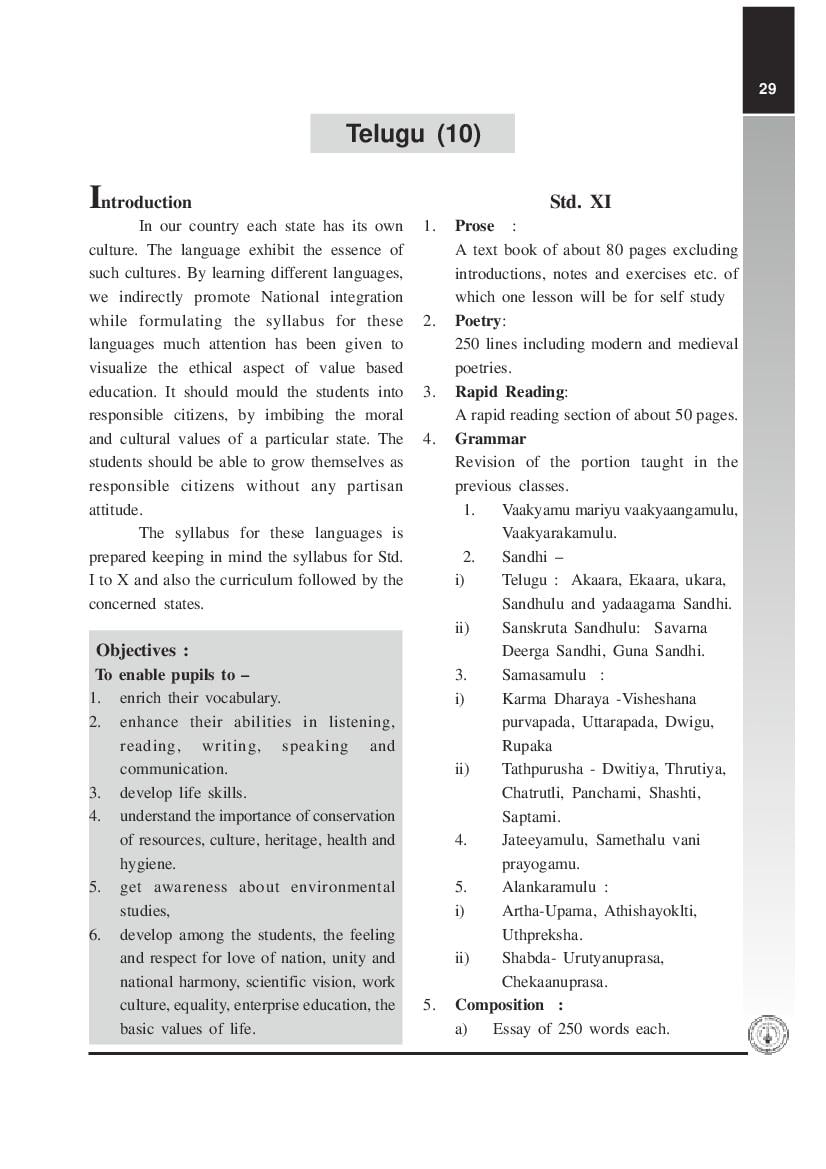
29 Telugu (10) Introduction Std. XI In our country each state has its own 1. Prose : culture. The language exhibit the essence of A text book of about 80 pages excluding such cultures. By learning different languages, introductions, notes and exercises etc. of we indirectly promote National integration which one lesson will be for self study while formulating the syllabus for these 2. Poetry: languages much attention has been given to 250 lines including modern and medieval visualize the ethical aspect of value based poetries. education. It should mould the students into 3. Rapid Reading: responsible citizens, by imbibing the moral A rapid reading section of about 50 pages. and cultural values of a particular state. The 4. Grammar students should be able to grow themselves as Revision of the portion taught in the responsible citizens without any partisan previous classes. attitude. 1. Vaakyamu mariyu vaakyaangamulu, The syllabus for these languages is Vaakyarakamulu. prepared keeping in mind the syllabus for Std. 2. Sandhi – I to X and also the curriculum followed by the i) Telugu : Akaara, Ekaara, ukara, concerned states. Sandhulu and yadaagama Sandhi. ii) Sanskruta Sandhulu: Savarna Objectives : Deerga Sandhi, Guna Sandhi. To enable pupils to – 3. Samasamulu : 1. enrich their vocabulary. i) Karma Dharaya -Visheshana 2. enhance their abilities in listening, purvapada, Uttarapada, Dwigu, reading, writing, speaking and Rupaka communication. ii) Tathpurusha - Dwitiya, Thrutiya, 3. develop life skills. Chatrutli, Panchami, Shashti, 4. understand the importance of conservation Saptami. of resources, culture, heritage, health and 4. Jateeyamulu, Samethalu vani hygiene. prayogamu. 5. get awareness about environmental 5. Alankaramulu : studies, i) Artha-Upama, Athishayoklti, 6. develop among the students, the feeling Uthpreksha. and respect for love of nation, unity and ii) Shabda- Urutyanuprasa, national harmony, scientific vision, work Chekaanuprasa. culture, equality, enterprise education, the 5. Composition : basic values of life. a) Essay of 250 words each.
Page 2
30 creative, autobiographical, 3. Samasamulu : Dwandwa, Bahurvihi, narrative, descriptive. Nangtatpurusha, Avyayeebhava. b) Précis – writing (Prose passage 4. Chandassu : Jathalu, Upajathulu. around 150 words) 5. Alankaramulu : Swabhavokti, c) Comprehension of an unseen prose Rupaka, Dhrushtantha, (150 words) or poetry (20 lines) Lataanuprasa. 6. Communication skill 5. Composition: a) Letter writing a) Essay of about 250 words. b) Preparation of invitation cards Creative, Reflective, Narrative, c) Report writing Autobiographical. d) Programme planning b) Précis – writing (150 words) 7. Communication Skills (Oral) c) Comprehension of an unseen prose passage around 150 words or poetry Std. XII around 20 lines. 1. Prose : 6. Communication skill (writing). A text book of about 80 pages (excluding a) Letter writing. introductions, notes and exercises etc.) b) Advertisement preparation. 2. Poetry : c) Report writing. 250 lines (80 lines from ancient and d) Programme planning. medieval poetry and the rest from modern 7. Communication Skills (Oral). poetry) Oral Skills 3. Rapid Reading : Listening activities : develop the sub-skills of A rapid reading section of about 50 pages. listening, provide practice in ear-training. 4. Grammar: Loud-reading : following the features of loud Revision of the portion taught in the reading, provide practice in loud-reading. previous classes. Speaking : creating confidence in speaking. 1. Vaakya Bhedamulu : Samanya, Using narration and description. Samslista, Samyukta. Conversation : ability to converse confidently 2. Telugu Sandhi : \ and effectively, provide practice in conversation. i) Thrika Sandhi, Sarla Desha Formal testing in oral skills will be Sandhi, administered. ii) Samskruta Sandhi : Yanaa Desha, Vruddi, Anunaasika. ��� Introduction