aglasem.com
Schools Admission Mock Test Playground
ClassChoose class
StateSelect state

AP ECET 2022 Syllabus for Biotechnology
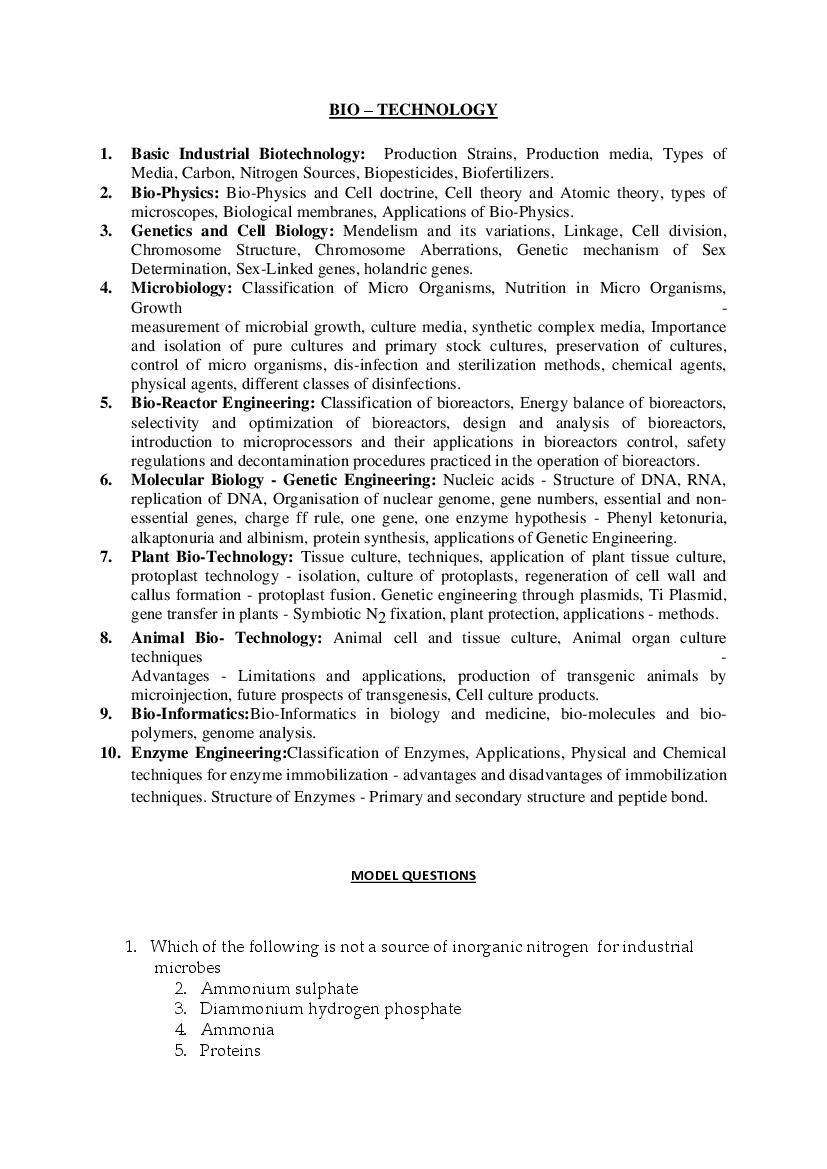
Download the AP ECET 2022 Syllabus for Biotechnology PDF for free at AglaSem. This official AP ECET syllabus lists the complete course structure, unit-wise topics and weightage, marking scheme and prescribed books, so you can plan your preparation and focus on high-scoring topics. More Detail
AP ECET 2022 Syllabus for Biotechnology - Page 1 of 2

Finished viewing? Save it for later —

Download AP ECET 2022 Syllabus for Biotechnology (PDF · 2 pages)
Downloaded 8 times

About AP ECET 2022 Syllabus for Biotechnology

AP ECET 2022 Syllabus for Biotechnology is available here for free download. Published by APSCHE for Andhra Pradesh Engineering Common Entrance Test, this syllabus can be viewed online or downloaded as a PDF (2 pages). Candidates preparing for Andhra Pradesh Engineering Common Entrance Test can use AP ECET 2022 Syllabus for Biotechnology to understand the exam pattern, the type of questions asked, and the overall difficulty level.

Frequently Asked Questions

How can I download AP ECET 2022 Syllabus for Biotechnology?

Open this page and click the Download button to save AP ECET 2022 Syllabus for Biotechnology as a PDF. It is completely free on AglaSem Docs.

Is AP ECET 2022 Syllabus for Biotechnology free to download?

Yes. AP ECET 2022 Syllabus for Biotechnology can be viewed online and downloaded as a PDF free of cost on AglaSem Docs.

How many pages does AP ECET 2022 Syllabus for Biotechnology have?

AP ECET 2022 Syllabus for Biotechnology contains 2 pages, which you can read online or download together as a single PDF.

Where can I find more Andhra Pradesh Engineering Common Entrance Test study material?

You can find more Andhra Pradesh Engineering Common Entrance Test question papers, sample papers, syllabus, and answer keys on AglaSem Docs.

AP ECET 2022 Syllabus for Biotechnology – Text

Read the full text of this syllabus below — useful to quickly search, copy and reference the content online without downloading the PDF.

📄 View text version (2 pages)

Page 1

BIO – TECHNOLOGY 1. Basic Industrial Biotechnology: Production Strains, Production media, Types of Media, Carbon, Nitrogen Sources, Biopesticides, Biofertilizers. 2. Bio-Physics: Bio-Physics and Cell doctrine, Cell theory and Atomic theory, types of microscopes, Biological membranes, Applications of Bio-Physics. 3. Genetics and Cell Biology: Mendelism and its variations, Linkage, Cell division, Chromosome Structure, Chromosome Aberrations, Genetic mechanism of Sex Determination, Sex-Linked genes, holandric genes. 4. Microbiology: Classification of Micro Organisms, Nutrition in Micro Organisms, Growth - measurement of microbial growth, culture media, synthetic complex media, Importance and isolation of pure cultures and primary stock cultures, preservation of cultures, control of micro organisms, dis-infection and sterilization methods, chemical agents, physical agents, different classes of disinfections. 5. Bio-Reactor Engineering: Classification of bioreactors, Energy balance of bioreactors, selectivity and optimization of bioreactors, design and analysis of bioreactors, introduction to microprocessors and their applications in bioreactors control, safety regulations and decontamination procedures practiced in the operation of bioreactors. 6. Molecular Biology - Genetic Engineering: Nucleic acids - Structure of DNA, RNA, replication of DNA, Organisation of nuclear genome, gene numbers, essential and non- essential genes, charge ff rule, one gene, one enzyme hypothesis - Phenyl ketonuria, alkaptonuria and albinism, protein synthesis, applications of Genetic Engineering. 7. Plant Bio-Technology: Tissue culture, techniques, application of plant tissue culture, protoplast technology - isolation, culture of protoplasts, regeneration of cell wall and callus formation - protoplast fusion. Genetic engineering through plasmids, Ti Plasmid, gene transfer in plants - Symbiotic N2 fixation, plant protection, applications - methods. 8. Animal Bio- Technology: Animal cell and tissue culture, Animal organ culture techniques - Advantages - Limitations and applications, production of transgenic animals by microinjection, future prospects of transgenesis, Cell culture products. 9. Bio-Informatics:Bio-Informatics in biology and medicine, bio-molecules and bio- polymers, genome analysis. 10. Enzyme Engineering:Classification of Enzymes, Applications, Physical and Chemical techniques for enzyme immobilization - advantages and disadvantages of immobilization techniques. Structure of Enzymes - Primary and secondary structure and peptide bond. MODEL QUESTIONS 1. Which of the following is not a source of inorganic nitrogen for industrial microbes 2. Ammonium sulphate 3. Diammonium hydrogen phosphate 4. Ammonia 5. Proteins

Page 2

2. Sulphite waste liquor is a by-product of 1. Sugar industry 2. Dairy industry 3. Leather industry 4. Paper industry 3. Which of the following is used as an antifoaming agent in fermenters 1. Methanol 2. Silicone compounds 3. Ethanol 4. PEG 4. Which among the following is not a part of fermentation process 1. Propagation step 2. Downstream processing 3. Pilot scale fermentation 4. Main production fermentation 5. Which among the following is the cheapest source of carbon for industrial fermentations 1. Sucrose 2. Molasses 3. Glucose 4. Fructose 6. Peptones are prepared by acid or enzyme hydrolysis of 1. High lipid material 2. High carbohydrate material 3. High sugar material 4. High protein material

Document Details

Board / OrgAPSCHE
ExamAndhra Pradesh Engineering Common Entrance Test
TypeSyllabus
Pages2
Updated22 Jul 2026