AP Class 10 Model Paper 2026 Science
Finished viewing? Save it for later —
Download AP Class 10 Model Paper 2026 Science (PDF · 17 pages)About AP Class 10 Model Paper 2026 Science
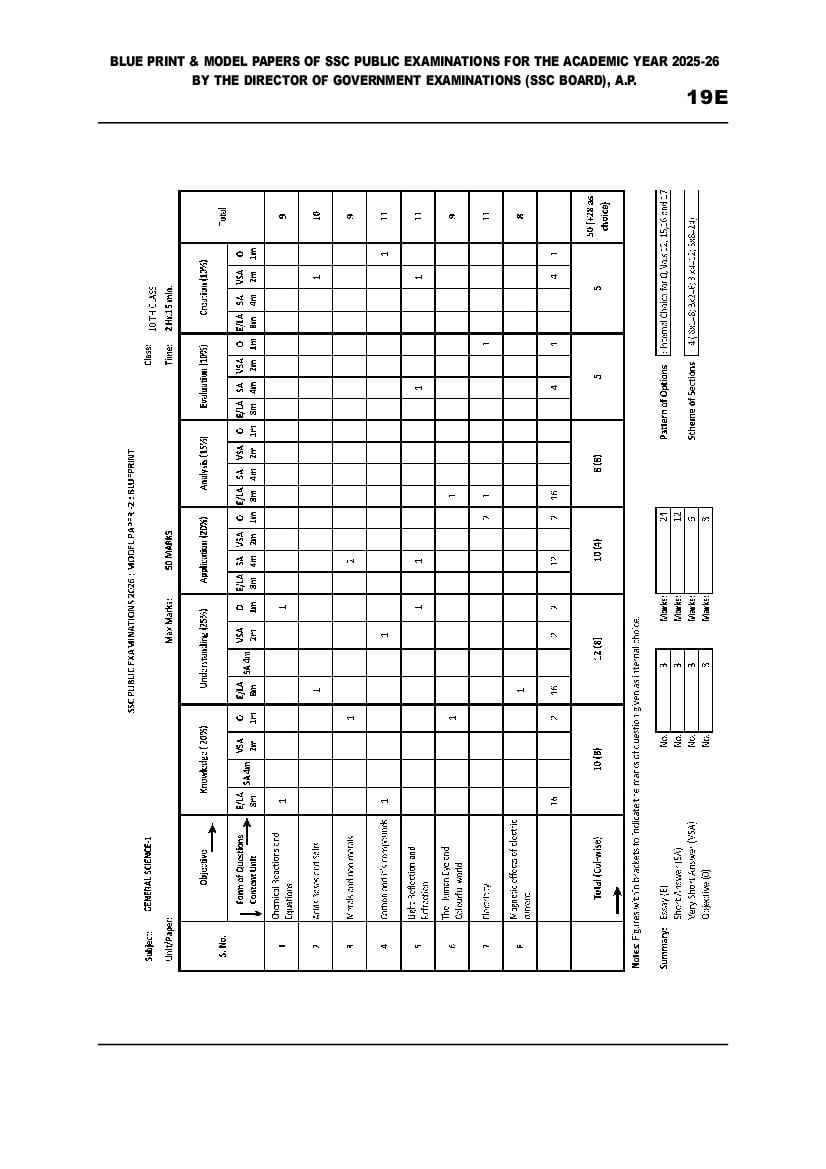
AP Class 10 Model Paper 2026 Science is available here for free download. Published by Andhra Pradesh Board for Class 10, this sample paper can be viewed online or downloaded as a PDF (17 pages). Candidates preparing for Class 10 can use AP Class 10 Model Paper 2026 Science to understand the exam pattern, the type of questions asked, and the overall difficulty level.
Frequently Asked Questions
How can I download AP Class 10 Model Paper 2026 Science?
Open this page and click the Download button to save AP Class 10 Model Paper 2026 Science as a PDF. It is completely free on AglaSem Docs.
Is AP Class 10 Model Paper 2026 Science free to download?
Yes. AP Class 10 Model Paper 2026 Science can be viewed online and downloaded as a PDF free of cost on AglaSem Docs.
How many pages does AP Class 10 Model Paper 2026 Science have?
AP Class 10 Model Paper 2026 Science contains 17 pages, which you can read online or download together as a single PDF.
Where can I find more Class 10 study material?
You can find more Class 10 question papers, sample papers, syllabus, and answer keys on AglaSem Docs.
AP Class 10 Model Paper 2026 Science – Text
Read the full text of this sample paper below — useful to quickly search, copy and reference the content online without downloading the PDF.
📄 View text version (17 pages)
Page 1
BY THE DIRECTOR OF GOVERNMENT EXAMINATIONS (SSC BOARD), A.P.
19E
Page 2
120 min
Page 3
BLUE APERS OF SSC PUBLIC EXAMIN
PAPERS ATIONS FOR THE ACADEMIC YEAR 2025-26
EXAMINA
BY THE DIRECTOR OF GO
DIRECTOR VERNMENT EXAMIN
GOVERNMENT ATIONS (SSC BO
EXAMINA ARD), A.P
BOARD), A.P..
19E
SSC PUBLIC EXAMATIN
EXAMATINATIONS 2025 - 26
TINA
GENERAL SCIENCE - P APER-I
PAPER-I
PHYSICAL SCIENCE (MODEL PAPER - 2)
PHYSICAL
(ENGLISH VERSION)
Time : 2 Hours Max. Marks : 50
Instructions :
1. Question paper consists of 4 sections and 17 Questions.
2. Internal Choice is there only for Q.No. 12 in Section-III and for all the Questions in Section-IV.
3. In the duration of 2 hours, 15 minutes of time is allotted to read the Question paper.
4. All answers should be written in the answer booklet only.
5. Answer should be written neatly and legibly.
SECTION-I
Note : 1) Answer all the Questions.
2) Each question carries 1 mark. (8 × 1 = 8 M)
1. Suggest one method to prevent corrosion.
2. Which one of the following is a non metal?
A) Magnesium B) Gold C) Sulphur D) Silver
3. Write the formula of first member of the homologous series to which C5H10 belongs.
4. Find the Power of a Convex lens having a focal length of 50cm.
5. The least distance of distinct vision for a young adult with normal vision is about _______.
6. Draw the symbol of Ammeter.
7. Which device is used to protect electric appliances from overloading in the household circuits?
8. If two resistors of 6Ω and 12Ω were given to you, then How do you connect them to get 4Ω as
resultant resistance.
SECTION-II
Note : 1) Answer all the Questions.
2) Each question carries 2 marks. (3 × 2 = 6 M)
9. What happens if Curd or sour substances kept in brass or copper vessels?
10. Explain combustion with an example.
11. Predict and write about the world without lenses.
Page 4
SECTION-III
Note : 1) Answer all the Questions.
2) Each question carries 4 marks. (3 × 4 = 12 M)
12 Draw any one of the following diagrams:
(A) Draw a neat ray diagram of formation of image when the object is placed in front of a
convex lens in the following positions :
i) At F2 ii) beyond 2F2
(OR)
(B) Draw a neat diagram to show the electrolytic refining of copper.
13. Write any four uses of metals.
14. Following diagrams show refraction of light in two cases. Answer the questions given below based
on the diagrams given.
Case-1 Case-2
i) Which medium is optically rarer among A,B and C?
ii) Which medium is optically denser among A,B and C?
iii) Arrange A,B and C in ascending order with respect to speed of light.
iv) Arrange A,B and C in ascending order of their refractive indices.
SECTION-IV
Note : 1) Answer all the Questions.
2) Each question carries 8 marks.
3) Each question has an internal choice. (3 × 8 = 24 M)
15. A) Teja is not able to see the letters clearly far from her. Identify the eye defect she has been
suffering from and how can you rectify it? Explain.
(or)
B) Derive the expression for resultant resistance when three resistors are connected in series.
Page 5
16. A) State and explain four types of chemical reactions with an example each.
(or)
B) State and Explain cleaning action of soap.
17. A) Describe an activity to show that the magnetic field produced around a current carrying straight
conductor.
(or)
B) Write an activity to show that the reaction of acids with metals.
Page 6
BLUE APERS OF SSC PUBLIC EXAMIN
PAPERS ATIONS FOR THE ACADEMIC YEAR 2025-26
EXAMINA
BY THE DIRECTOR OF GO
DIRECTOR VERNMENT EXAMIN
GOVERNMENT ATIONS (SSC BO
EXAMINA ARD), A.P
BOARD), A.P..
19T
Page 7
120 min
Page 8
BLUE APERS OF SSC PUBLIC EXAMIN
PAPERS ATIONS FOR THE ACADEMIC YEAR 2025-26
EXAMINA
BY THE DIRECTOR OF GO
DIRECTOR VERNMENT EXAMIN
GOVERNMENT ATIONS (SSC BO
EXAMINA ARD), A.P
BOARD), A.P..
19T
SSC PUBLIC EXAMATIN
EXAMATINATIONS
TINA
GENERAL SCIENCE -P APER-I
-PAPER-I
PHYSICAL SCIENCE (MODEL PAPER - 2)
PHYSICAL
(TELUGU VERSION)
Time : 2 Hours Max. Marks : 50
Instructions :
1. ç|X æ|çÔ+á ýË 4 $uó²>±\T eT]jáTT 17 ç|X ø \T +&TqT.
2. III e $uó²>·+ýË 12e ç|X ø Å£ eÖçÔyá Tû eT]jáTT IV $uó²>·+ q+<T >·\ n ç|X ø \Å£ n+ÔásZÁ m+|¾¿£ ¿£\<T.
3. 2 >·+³\ deTjáT+ýË, 15 $TweTT\ deTjáT+ ç|X æ|çÔ+á #á<T eÚ³¿Â Õ ¿¹ {²sTT+|&q~.
4. n deÖ<óqeTT\T MT¿ìeÇ&q deÖ<óq|çÔ+ á ýËHû sjáTeýÉqT.
5. n deÖ<óqeTT\T dÎw+ ¼ >±qT, Xøçu+ó >±qT sjáTeýÉqT.
SECTION-I
Note : 1) n ç|X ø \Å£ deÖ<óqeTT\T sjáTTeTT.
2) ç|r ç|X ø Å£ 1 eÖsÁTØ. (8 × 1 = 8 M)
1. ýËV²¿£j Tá eTTqT y]+#áT³Å£ ÿ¿£ |<ÜÆ dÖº+#áTeTT.
2. ç¿+ì ~yýË nýËV²eTT @~ ?
A) yîT^w¾jáT+ B) +>±sÁ+ C) d\ÎÛsY D) yî+&
3. C H @ deTC²ÔáçXD
5 10
â ¿ì ì #î+~q<à çXDâ ýì Ë yîTT<{ì dyTû Þøq+ jîTT¿£Ø bÍsÁTý² çyjáT+&.
4. 50 d+.MT.\ Huó« +Ôás+ Á ¿£*Ðq Å£+u󲿱sÁ ¿£³¿£+ jîTT¿£Ø ¿£³¿£ kÍeTsÁ« eTTqT ¿£qT>=qTeTT.
5. kÍ<ósÁD <w¾¼ q jáTTeÅ£&¿ì dÎw¼ <w¾¼ ¿£úd <ÖsÁ+ dTeÖsÁT>± ......
6. nMT³sÁT jîTT¿£Ø ºV²eTTqT ^jáTTeTT.
7. >·V²d++<ó e\jáÖ\ýË $<T«ÔY |]¿£s\qT n~ó¿£ $<T«ÔY ç|y Vä\ qT+& ¿±bÍ&T³Å£ y&T |]¿£s+Á @~?
8. 6 zyT\T eT]jáTT 12 zyT\T sÃ<ó+ ¿£*Ðq s +&T sÃ<ó¿ ±\T úÅ£ eÇ&q$. 4 zyT\ |* Ôá sÃ<ó+
bõ+<T³Å£ y{ì mý² d+<óq+ #ûkÍïeÚ?
SECTION-II
Note : 1) n ç|X ø \Å£ deÖ<óqeTT\T sjáTTeTT.
2) ç|r ç|X ø Å£ 2 eÖsÁTØ\T. (3 × 2 = 6 M)
9. |sÁT>·T ýñ< |Ú\¢ |<s\qT Ôá&ï ýñ< sÐ bÍçÔ\á ýË +ºÔû @$T ÈsÁT>·TÔáT+~ ?
10. <V² qeTTqT ÿ¿£ <V²sÁDÔÃ $e]+|ÚeTT.
11. ¿£³¿±\T ýñ ç|| + # }V¾²+º çyjáT+&.
SECTION-III
Note : 1) n ç|X ø \Å£ deÖ<óqeTT\T sjáTTeTT.
2) ç|Ü
ç|X ø Å£ 4 eÖsÁTØ\T. (3 × 4 = 12 M)
Page 9
12 ç¿+ì ~ y{ìýË @<îHÕ ÿ¿£ |³+ ^jáT+&.
A) ÿ¿£ Å£+u󲿱sÁ ¿£³¿£eTTqÅ£ eTT+<T edTe ï ÚqT ç¿+ì ~ kÍH\ýË +ºq|Ú&T , @sÁÎ&T ç|Ü _++ jîTT¿£Ø
#á¿Ø£ ¿ìsDÁ s¹ U²ºçÔeá TTqT ^jáTTeTT.
i) F e<Ý
2 ii) 2F Å£ neÔá\
2
B) sÐ jîTT¿£Ø $<T«ÔY XË<óq qT #áÖ|Ú #á¿Ø£ |³eTTqT ^jáTTeTT.
13. ýËVä\ jîTT¿£Ø @yîH Õ H\T>·T |jÖî >±\qT çyjáTTeTT.
14. ç¿+
ì ~ |{²\T s +&T d+<sÒÛ\ýË ¿±+Ü eç¿u¡ eó q+qT #áÖ|ÚÔsTT. |{²\ <ósÁ+>± ç¿+ì ~ ç|X ø \Å£
deÖ<óqeTT\T çyjáTTeTT.
d+<sÁÒÛ+ ` 1 d+<sÁÒÛ+ ` 2
i) A, B, C \ýË ÔáÅ£ Øe <¿ùkÍ+ç<Ô á >·\ jáÖq¿£+ @~ ?
ii) A, B, C \ýË mÅ£Øe <¿ùkÍ+ç<Ô á >·\ jáÖq¿£+ @~ ?
iii) A, B, C \qT y{ìýË ¿±+Üyû>+ · <ósÁ+>± sÃV²D ç¿e£ T+ýË neTsÁTÌeTT.
iv) A, B, C \qT y{ìýË eç¿u ¡ eó q >·TD¿±\ <ósÁ+>± sÃV²D ç¿e£ T+ýË neTsÁTÌeTT.
SECTION-IV
Note : 1) n ç|X ø \Å£ deÖ<óqeTT\T sjáT+&.
2) ç|Ü ç|X ø Å£ 8 eÖsÁTØ\T.
3) ç|Ü ç|X ø Å£ n+ÔásÔZÁ á m+|¾¿£ ¿£\<T. (3 × 8 = 24 M)
15. ÔûÈ ÔáqÅ£ <ÖsÁ+>± q n¿£s \qT d]>± #áÖ&ý¿ñ b£ þÔÃ+~. yîTÅ£ >·\ <w¾¼ <ÃcÍ >·T]ï+º < úeÚ mý²
d]#ûkÍïyà $e]+#áTeTT ?
(ýñ<)
eTÖ&T sÃ<ó¿ ±\qT çXDâ ¡ d+<óq+ýË ¿£*|¾q|Ú&T |* Ôá sÃ<ó¿ì dMT¿£sDÁ eTTqT ÔÎ~+#áTeTT ?
16. H\T>·T sÁ¿±\ sÁkÍjáTq #ás«Á \qT Ôî*|¾ ç|r < ÿ¿£ <V²sÁDÔà $e]+#áTeTT.
(ýñ<)
dTÒ Xøçu|ó s #Á Tá #ás«Á qT $e]+#áTeTT.
17. $<T«ÔY ç|y V²+ >·\ Üq yV²¿£+ e\q @sÁÎ&û njáTkÍØ+Ôá ¿¹ ç Ôeá TTqT #áÖ| ¿£Ôá«eTTqT $e]+#áTeTT.
(ýñ<)
ýËVä\Ôà eÖ¢\T È]| #ás«Á qT #áÖ|ڳţ ÿ¿£ ¿£Ôá«+qT çyjáT+&.
Page 10
BY THE DIRECTOR OF GOVT.EXAMINATIONS (SSC BOARD), A.P
MODEL PAPER - 2
Subject: General Science Paper - II (Biological Science)
Unit/Paper: 20 E/T
Class: X
Time: 2 hrs
Marks: 50
Weightage to Objective
Objective Knowledge Understanding Application Analysis Evaluation Creation Total
% of Marks 20 25 20 15 10 10 100
Marks 10 12 10 8 5 5 50
Weightage to Form of Question
O (MCQ)
Forms of Questions E/LA SA VSA Total
- 1 Mark Qns
No. of Questions 2 5 4 6 17
Marks Allotted 16 20 8 6 50
Estimated Time 30 min 40 min 20 min 15 min 105 min
Weightage to Chapters
S. No. Unit/Sub-Units Marks
1 Life Processes 14(8)
2 Control & Co-ordination 6(8)
3 How do organisms reproduce 10(4)
4 Heridity 10
5 Our Environment 10
Total 50 (20)
Note: 1. Total marks for Objectives and Chapters are constant as per weightage table.
2. Competencies/ objectives are not fixed for chapters. They may vary from paper to paper.
3. Type of question or choice is not fixed for any chapter.
Weightage to Major Content Areas
Schemes of Sections 4/ Sec-I (6 x 1M); Sec-II (4 x 2M); Sec-III (5 x 4M); Sec-IV (2 x 8M)
Pattern of Options Q.No 12 in Sec-III and Q.No 16 and 17 in Sec-IV only have internal choice
Difficult 20 % Marks
Estimated
Average 40 % Marks
Difficulty Level
Easy 40 % Marks
Index of Abbreviations
(E/LA: Essay/Long Answer; SA: Short Answer; VSA: Very Short Answer; O: Objective)
Page 11
BY THE DIRECTOR OF GOVT.EXAMINATIONS (SSC BOARD), A.P
MODEL PAPER -2
General Science paper -II BLUEPRINT
Subject: Class: X
(Biological Science)
Unit/Paper: 20E/ T Max Marks: 50 M Time: 2 Hrs
Objective
Knowledge Understanding Application Analysis Evaluation Creation
Total (Row-
S. No. Form of Questions wise)
Content Unit / Sub Unit E/LA SA VSA O E/LA SA VSA O E/LA SA VSA O E/LA SA VSA O E/LA SA VSA O E/LA SA VSA O
1 Life Processes (1) 4 (1)*8 (1) 2 (1) 4 (1) 4 14 (8)
2 Control & Co-ordination (2) 2 (1) 2 (1)2 (1)*8 6 (8)
3 How do organisms (1) 1 (1) 8 (1)*4 (1)1 10 (4)
4 Heridity (1) 1 (1) 8 (1) 1 10
5 Our Environment (1) 2 (1) 4 (1) 4 10
Sub Total (1) 4 (1) 2 (4) 4 (1) 8 (2) 4 (2) 8 (1) 2 (1) 8 (1) 4 (1) 1 (1) 4 (1) 1
Total (Col-wise)
10 12(8) 10(4) 8(8) 5 5
50(20)
(Marks Total) (Marks Total) (Marks Total) (Marks Total) (Marks Total) (Marks Total)
Notes: Figures within brackets to indicate the number of questions and figures outside the brackets to indicate marks.
Denotes that marks have been combined to form one question.
Summary: Essay (E) No. 2 Marks: 16 Pattern of Options Internal choice
Short Answer (SA) No. 5 Marks: 20
Very Short Answer (VSA) No. 4 Marks: 8 Scheme of Sections IV
Objective (0) No. 6 Marks: 6
Steps: a, b, c, d, e, f, g, h, i, j
Page 12
BY THE DIRECTOR OF GOVT.EXAMINATIONS (SSC BOARD), A.P
MODEL PAPER - 2 20E
SSC PUBLIC EXAMINATIONS 2025 - 26
GENERAL SCIENCE -PAPER-II
BIOLOGICAL SCIENCE
(ENGLISH VERSION)
Time : 2 Hours Max. Marks : 50
Instructions :
1. Question paper consists of 4 sections and 17 Questions.
2. Internal Choice is available only for Q.No. 12 in Section-III and for all the Questions
in Section-IV.
3. In the duration of 2 hours, 15 minutes of time is allotted to read the Question
paper.
4. All answers should be written in the answer booklet only.
5. Answer should be written neatly and legibly.
SECTION-I
Note : 1) Answer all the Questions.
2) Each question carries 1 mark. (6 × 1 = 6 M)
1. Name the hormone responsible for phototropism in plants.
2. Write a slogan to stop female foeticide.
3. Transfer of characters from parents to progeny is known as ………
4. Olfactory receptors detect ( )
A) touch B) taste C) smell D) light
5. Identify the type of asexual reproduction in the given picture.
6. Two species, A and B, live in the same environment.
• Species A shows a wide range of variations among its individuals.
• Species B has individuals with very similar traits.
Which species is more likely to survive if the environment changes suddenly?
Page 13
Note: 1. Each question carry two marks.
2. Answer all the questions (4 × 2 = 8 M)
7. Explain the digestion of fats in the human beings.
8. Read the following table and answer the questions.
S.No. Hormone Endocrine gland Function
1 Thyroxine Thyroid gland Regulate metabolism for body
growth
2 Estrogen Ovaries Development of female sex
organs, regulates menstrual
cycle
A. Which gland secretions associated with the changes that occurs during puberty
in females?
B. What is the function of the thyroxin hormone?
9. What precautions do you follow to protect yourself from the diabetes?
10. Define the trophic level and mention the different trophic levels in a food chain.
SECTION-III
Note : 1) Answer all the Questions.
2) Each question carries 4 marks.
3) Ther is an internal choice in only the question number 12. (5 × 4 = 20 M)
11. What are the components of the transport system in human beings? What are the
functions of these components?
12. Draw a neat labelled diagram of the following
A) Nephron
(or)
B) Process of fertilization in the flower.
13. People in your locality are throwing plastic bags into the nearby water streams.
What environmental problems may arise with this practice? How will you create
awareness among the people about this issue?
14. Give some suggestions to control high blood pressure and to maintain healthy
heart.
15. Which is the better method in waste disposal - ‘burning’ or ‘composting’? Justify
your answer with proper reasons.
Page 14
Note : 1) Answer all the Questions.
2) Each question carries 8 marks.
3) Each question has an internal choice. (2 × 8 = 16 M)
16. A) Explain the lab activity to prove that carbon dioxide is necessary for
photosynthesis
(OR)
B) Explain Lab activity what you followed in your school to observe spore
formation in Rhizopus.
17. A) Compare and contrast nervous and hormonal mechanisms for control and
coordination in animals.
(OR)
B) “The father is responsible for determining the sex of the baby, not the
mother”- How would you analyse this statement?
★★★
Page 15
BY THE DIRECTOR OF GOVT.EXAMINATIONS (SSC BOARD), A.P
MODEL PAPER -2 20T
SSC PUBLIC EXAMINATIONS 2025 - 26
GENERAL SCIENCE -PAPER-II
BIOLOGICAL SCIENCE
(TELUGU VERSION)
సమయం : 2 గంటలు గరిష్ట మార్కులు : 50
సూచనలు :
1. ఈ ప్రశ్నపత్రంలో 4 విభాగాలు మరియు 17 ప్రశ్నలు ఉండును.
2. IIIవ విభాగంలోని 12వ ప్రశ్నకు మాత్రమే మరియు IVవ విభాగం నందు గల అనిన ప్రశ్నలకు అంతర్గత ఎంపిక కలదు.
3. 2 గంటల సమయంలో, 15 నిమిషాల సమయం ప్రశ్ననపత్రం చదువుటకై కేటాయంపబడినది.
4. అనిన సమాధానములు మీకివవబడిన సమాధానపత్రంలోనే రాయవలెను.
5. అనిన సమాధానములు చకుగా మరియు సపష్టంగా వ్రాయవలెను.
విభాగం -I
గమనిక : 1) అనిన ప్రశ్నలకు సమాధానములు రాయుము.
2) ప్రతి ప్రశ్నకు 1 మార్కు. (6 × 1 = 6 M)
1. మొకులలో కంతి అనువర్తనానికి కర్ణమైన హార్మోన్ ను పేర్కునండి.
2. బాలికల బ్రూణ హతయలను ఆపడానికి ఒక నినాదం రాయండి. .
3. తల్లిదండ్రుల నండి సంతానానికి లక్షణాల బదిలీని ......... అంటారు
4. ఘ్రాణ గ్రాహకాలు గురితంచునది ( )
A) సపర్శ B) ర్కచి C) వాసన D) కంతి
5. ఇవ్వబడ్డ చిత్రంలో అలంగిక ప్రత్యయతపతిత రకానిి గుర్తంచండి.
6. A మర్యు B అనే రండు జాతులు ఒకే వాతావ్రణంలో నివ్సిస్తతయి.
• జాతి -A దాని జీవులలో విసతృత శ్రేణి వైవిధాయలను చూపుత్యంది.
• జాతి - B చాలా సారూపయ లక్షణాలు ఉనన జీవులను కలిగిఉంది.
పరాయవర్ణం అకసాోత్యతగా మారితే ఏ జాతి మనుగడ సాగించే అవకశ్ం ఉంది?
Page 16
గమనిక : 1) అనిన ప్రశ్నలకు సమాధానములు రాయుము.
2) ప్రతి ప్రశ్నకు 2 మార్కులు. (4 × 2 = 8 M)
7. మానవులలో కొవువల జీరణక్రియన వివ్ర్ంచండి.
8. కింది పట్టికన చదవి, ప్రశ్ిలకు సమాధానాలు ఇవ్వండి.
క్ర. సం హార్మోన్ అంతః స్రావి గ్రంథి పని
1 థైరాకిిన్ థైరాయిడ్ గ్రంథి శ్రీర ఎదుగుదలకు జీవ్క్రియలన
నియంత్రిస్తంది.
2 ఈస్ట్రోజెన్ స్త్రీ బీజకోశ్నలు స్త్రీ లంగిక అవయవాల అభివృదిి, ఋత్యచక్రం
మొదలన వాటిని నియంత్రిస్తంది.
A. ఏ గ్రంథి యొకు స్రావాలు స్త్రీ లలో యుకతవయస్లో వచేే మార్కపలతో సంబందం కలిగి ఉంటాయ?
B. థైరాకిిన్ హార్మోన్ యొకక పని ఏమిట్ట?
9. మధుమేహం నండి మిమోల్లి మీరు రక్షంచుకోవ్డానికి మీరు ఎటువ్ంట్ట జాగ్రతతలు పాట్టస్తతరు?
10. పోష్క స్తాయిని నిరవచించండి. ఆహార గొలుసులోని వివిధ పోష్క స్తాయిలన పేర్కకనండి.
విభాగం -III
గమనిక : 1) అనిన ప్రశ్నలకు సమాధానములు రాయుము.
2) ప్రతి ప్రశ్నకు 4 మార్కులు.
3) 12వ ప్రశ్నకు మాత్రమే అంతర్గత ఎంపిక కలదు. (5 × 4 = 20 M)
11. మానవులలో రవాణా వ్యవ్సా యొకక భాగాలు ఏమిట్ట? ఆ భాగాల యొకక విధులు ఏమిట్ట?
12. ఈ క్రిందివాట్ట యొకక చకకట్ట పటం గీసి భాగాలు గురితంచండి.
A) నెఫ్రాన్ (మూత్ర నాళిక)
(లేదా)
B) పుష్పంలో ఫలదీకరణ ప్రక్రియ.
13. మీ ప్రంతంలోని ప్రజలు ప్లాసిటక్ సంచులను సమీపంలోని నీటి కలువలోాకి విసిరేస్తనానర్క. ఈ పదితి వలా ఎలాంటి
పరాయవర్ణ సమసయలు తలెతతవచుే? ఈ సమసయ గురించి మీర్క ప్రజలోా అవగాహన ఎలా కలిగిసాతర్క?
14. అధిక రకతపోటున నియంత్రించడానికి మర్యు ఆర్మగ్యకరమైన గుండెన నిరవహంచడానికి కొనిి సూచనలు
ఇవ్వండి.
15. వయరాాలను ప్లర్వేయడంలో ఏది మంచి పదితి - 'తగలపెటటడం' లేదా 'కంపోసిటంగ్'? మీ సమాధానానిన సరైన
కర్ణాలతో సమరిాంచండి.
Page 17
గమనిక : 1) అనిన ప్రశ్నలకు సమాధానములు రాయుము.
2) ప్రతి ప్రశ్నకు 4 మార్కులు.
3) ప్రతి ప్రశ్నకు అంతర్గత ఎంపిక కలదు. (2 × 8 = 16 M)
16. A) కిరణజనయ సంయోగ్క్రియకు కారబన్ డ్యాక్సిడ్ అవ్సరమని రుజువు చేసే ప్రయోగ్శాల కృత్యయనిన వివ్ర్ంచండి.
(లేదా)
B) రైజోపస్ లో సిదిబీజాలు ఏరపడ్టానిి పరిశీలించడం కొరకు మీ ప్లఠశ్నలలో మీరు అనసర్ంచిన ప్రయోగశ్నల
కృత్యయనిన వివ్ర్ంచండి.
17. A) జంతువులలో నియంత్రణ, సమనవయం జర్పడంలో నాడీ మర్యు హార్మోని యంత్రంగం నిర్వహంచే
కృత్యయలలో గల పోలికలు, భేదాలను రాయండి.
(లేదా)
B) “శిశువు లింగ నిరాిర్ణకు బాధుయడు తండ్రియే కనీ తలిా కదు” - ఈ ప్రకటనను నీవు ఎలా
విశ్లాషిసాతవు?
★★★
Document Details
| Board / Org | Andhra Pradesh Board |
| Exam | Class 10 |
| Type | Sample Paper |
| Pages | 17 |
| Updated | 24 Sep 2026 |