AP Class 10 Model Paper 2026 Social Science
Finished viewing? Save it for later —
Download AP Class 10 Model Paper 2026 Social Science (PDF · 18 pages)About AP Class 10 Model Paper 2026 Social Science
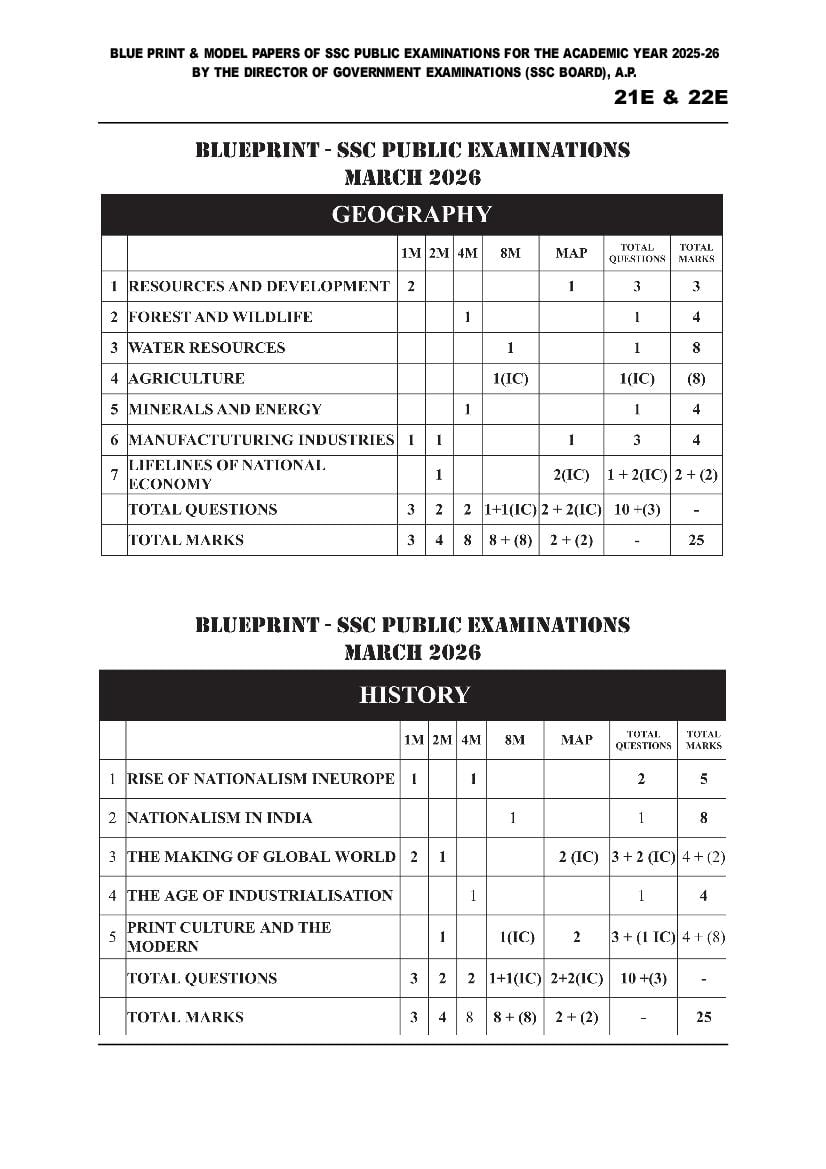
AP Class 10 Model Paper 2026 Social Science is available here for free download. Published by Andhra Pradesh Board for Class 10, this sample paper can be viewed online or downloaded as a PDF (18 pages). Candidates preparing for Class 10 can use AP Class 10 Model Paper 2026 Social Science to understand the exam pattern, the type of questions asked, and the overall difficulty level.
Frequently Asked Questions
How can I download AP Class 10 Model Paper 2026 Social Science?
Open this page and click the Download button to save AP Class 10 Model Paper 2026 Social Science as a PDF. It is completely free on AglaSem Docs.
Is AP Class 10 Model Paper 2026 Social Science free to download?
Yes. AP Class 10 Model Paper 2026 Social Science can be viewed online and downloaded as a PDF free of cost on AglaSem Docs.
How many pages does AP Class 10 Model Paper 2026 Social Science have?
AP Class 10 Model Paper 2026 Social Science contains 18 pages, which you can read online or download together as a single PDF.
Where can I find more Class 10 study material?
You can find more Class 10 question papers, sample papers, syllabus, and answer keys on AglaSem Docs.
AP Class 10 Model Paper 2026 Social Science – Text
Read the full text of this sample paper below — useful to quickly search, copy and reference the content online without downloading the PDF.
📄 View text version (18 pages)
Page 1
BY THE DIRECTOR OF GOVERNMENT EXAMINATIONS (SSC BOARD), A.P.
21E & 22E
Page 2
Page 3
Page 4
Page 5
Page 6
BY THE DIRECTOR OF GOVERNMENT EXAMINATIONS (SSC BOARD), A.P.
21E & 22E
SSC PUBLIC EXAMATIN
EXAMATINATIONS 2025 - 26
TINA
SOCIAL STUDIES
(ENGLISH VERSION)
Time : 3 Hours 15 Minutes Max. Marks : 100
Instructions :
1) In the duration of 3 hours 15 minutes. 15 minutes of time is allotted to read the question paper.
2) All answers shall be written in the answer booklet only
3) Question paper consists of 4 sections and 33 questions.
4) Internal choice is available in section IV only.
5) All answers shall be written neatly and legibly.
SECTION I (12 × 1 =12)
Note : 1) Answer all the questions.
2) Each question carries 1 mark.
1. Which type of soil is ideal for growing cotton?
2. Find the odd one out.
A. Wind B. Water C. Solar Energy D. Metal
3. Which industry uses bauxite as a raw material ?
4. Who hosted the congress of Vienna in 1815 ?
5. Expand IMF.
6. What is El Dorado in South America famous for ?
7. Find out the mismatched pair :
Tata Motors - Automobiles
Ranbaxy - IT
Asian paints - Paints
8. What is the oldest political party in India ?
9. Who presides over the meetings of a Municipal Corporation ?
10. Not an Indian MNC :
A. Apple
B. Ranbaxy
C. Sundaram Fasteners
D. Infosys
11. Based on the first pair fill the second pair. Coming together federations : USA Holding together
federations:
12. Rewrite the following countries from West to east based on their location.
Japan, Mexico, France, China.
Page 7
SECTION - II (8 × 2 = 16)
Note : 1) Answer all the questions.
2) Each question carries 2 marks.
13. What are basic industries ? Give any two examples.
14. State any two merits of roadways.
15. Mention the movements or flows within international economic exchange.
16. What was the contribution of printing press in spreading knowledge in Europe ?
17. List the subjects included in the state list and the union list.
18. Caste alone cannot determine election results in India. Justify.
19.
Analyse the picture in the context of globalisation.
20. Prepare any 2 slogans to alert consumers.
SECTION -III (4 × 8 = 32)
Note : 1) Answer all the questions.
2) Each question carries 4 marks.
21. How have human activities affected the depletion of flora and fauna ? Explain.
22. Describe the distribution of coal in India.
23. The ideals of the French Revolution are still relevant in present-day India. Explain how.
24. Analyse the living conditions of the workers during the industrialisation.
25. Mention different aspects of life in which women are discriminated or disadvantaged in India.
26. Industrialised countries can afford democracy but the poor need dictatorship to become rich. Give
arguments to support or oppose this assertion.
27. Design a development model for a poor nation in the context of economic development.
28. Mention a few factors which causes exploitation of consumers.
Page 8
SECTION IV (5 X 8 = 24)
Note : 1) Answer all the questions.
2) Each question carries 8 marks.
3) Each question has internal choice.
4) In question No.33 both A and B (India map and world map) should be answered separately.
29. A) Illustrate how rain water harvesting in semi arid regions of Rajasthan is carried out.
(OR)
B) Explain the geographical conditions required for the growth of rice.
30. A) The salt March was an effective symbol of resistance against colonisation Justify.
(OR)
B) Some people fear the effect of easily available printed books. Examine the statement.
31. A) Analyse the graph given below.
(OR)
Page 9
B) Study the pie charts and write your observations.
Of all the loans taken by urban households, what percentage
was formal and what percentage was informal ?
27% 17%
38%
46%
54%
62%
73%
83%
poor households well-off rich
households with few assests households households
Per cent of loans from the FORMAL sector
Per cent of loans from the INFORMAL sector
32. A) State one prudential reason and one moral reason for power sharing with an example from the
Indian context.
(OR)
B) Suggest some reforms to strengthen parties so that perform their functions well ?
33. A) Locate the following in the given outline map of India:
1) Punjab 2) Jamshedpur 3) Bangladesh 4) Mumbai
(OR)
5) Kolkata 6) Manipur 7) Kerala 8) Narmada river
B) Locate the following in the given outline map of world :
1) London 2) Italy 3) China 4) South Africa
(OR)
5) Sicily 6) Red Sea 7) USA 8) Sri Lanka
Page 10
BY THE DIRECTOR OF GOVERNMENT EXAMINATIONS (SSC BOARD), A.P.
21T & 22T
Page 11
Page 12
Page 13
Page 14
Page 15
BY THE DIRECTOR OF GOVERNMENT EXAMINATIONS (SSC BOARD), A.P.
21T & 22T
SSC PUBLIC EXAMATIN
EXAMATINATIONS 2025 - 26
TINA
SOCIAL STUDIES
(TELUGU VERSION)
Time : 3 Hours 15 Minutes Max. Marks : 100
dÖ#áq\T :
1. 3 >·+öö 15 $TcÍ\ýË 15 $TcÍ\T ç|Xæ|çÔáeTTqT #á<T eÚ³Â¿Õ ¿¹ {²sTT+#á&q~.
2. n deÖ<óqeTT\T MT¿ìeÇ&q deÖ<óq |çÔáeTTýËHû sjáTeýÉqT.
3. ç|Xæ |çÔá+ýË yîTTÔá+ï 4 $uó²>±\T eT]jáTT 33 ç|Xø \T +&TqT.
4. H\T>·e $uó²>·+ýË ç|Xø \Å£ eÖçÔáyTû n+ÔásÁZÔá m+|¾¿Å£ £ ne¿±Xø+ ¿£\<T.
5. n deÖ<óqeTT\T dÎw+¼ >±qT, #á¿Ø£ >±qT çyjáTeýÉqT.
SECTION I (12 × 1 =12)
dÖ#áq\T : 1) n ç|Xø \Å£ deÖ<óqeTT\T sjáT+&.
2) ç|Ü ç|Xø Å£ 1 eÖsÁTØ
1. ç|Üï |+³ kÍ>·TÅ£ nqTyîq
Õ Hû\ @~ ?
2. _óqyîTq
® < >·T]ï+#á+&.
>±*, úsÁT, kåsÁX¿ø ,ïì ýËV²eTT
3. u²Â¿àí {ÙqT eTT&eqsÁT>± |jÖ î Ð+#û |]çXøeT @~ ?
4. 1815 $jáTH ¿±+çÂ>dtÅ£ n<ó« ¿£Ô
á eV¾²+ºq~ mesÁT ?
5. IMF qT $d]
ï +#á+&.
6. <¿D
ì nyîT]¿±ýË »»mýÙ &Ãs&õµ .............. Å£ ç|d~
¾ .Æ
7. d]>±Z ÈÔá|s #
Á
á &~ ¿£qT¿ÃØ+&
{²{² yîÖ{²sYà ` {ËyîTTuÉý
Õ Ùà
sHu²¿¡à ` ×.{ì.
@w¾jTá H |sTT+{Ùà ` sÁ+>·T\T
8. uó²sÁÔ<
á X
û +ø ýË nÔá«+Ôá çbÍNqyîTq
® sÈ¿¡jTá bͯ¼ @~ ?
9. eTTà|ýÙ ¿±sÃιswH deÖyûXæ\Å£ mesÁT n<ó« ¿£Ô á eV¾²kÍïsTÁ ?
10. ç¿ì+~ y{ìýË uó²sÁrjáT VQÞø C²Ü d+d ¿±~
m) |¾ýÙ ¿£+|ú
_) sHu²¿¡à
d¾) dT+<s+Á bÍd¼qsYà
&) HÃÎÛd¾dt
11. yîTT<{ì ÈÔá <ósÁ+>± s  +&e ÈÔáqT |P]+#á+&.
¿£$T+>´ ³TÂ><sY deÖK« (<>sZ· ÅÁ £ #ûs&
Á + ) ` nyîT]¿±
¬*¦+>´ ³TÂ><sY deÖK« (|{¼ì +#û) ` ................ ?
12. ç¿ì+~ <ûXæ\qT y{ì kÍq+ <ósÁ+>± |&e TsÁ qT+& ÔáÖsÁTÎÅ£ Ü]Ð çyjáT+&.
ÈbÍH, yîT¿ìà¿Ã, çbÍHà, #îH
Õ
Page 16
SECTION - II (8 × 2 = 16)
dÖ#áq\T : 1) n ç|Xø \Å£ deÖ<óqeTT\T sjáT+&.
2) ç|Ü ç|Xø Å£ 2 eÖsÁTØ\T.
13. eTò[¿£ |]çXøeT\T n+fñ @$T{ì ? @yîH
Õ 2 <V²sÁD\T eÇ+&.
14. sÃ&T¦ eÖsZ\ jîTT¿£Ø @yîH
Õ 2 ý²uó²\qT Ôî\|+&.
15. n+Ôás¨rjáT ]¿£ eÖsÁ¿+£ ýË ç|yVä\ >·T]+º $e]+#á+&.
16. ×sÃbÍýË $C²ãq y«|¾¿ï ì eTTç<D² jáT+çÔá+ mý² <ÃV²<|&
T ÔáT+~ ?
17. sh C²_Ô eT]jáTT ¿¹ +ç< C²_ÔýýË n+Xæ\qT |s=Øq+&.
18. »»uó²sÁÔ<
á X
û +ø ýË m¿£\ |*
Ô\qT Å£\+ eÖçÔáyTû sÁs TT+#á<T µµ. deT]+#á+&.
19. ç||+ N¿£sD
Á d+<sÒÁ +Û ýË ºçÔ $Xâw
¢ +¾ #á+&.
yîTsÁTÂ>Õq
mÅ£Øe
|]d¾Ô Tá \T
yûÔáH\T
yûTeTT bÍ«¿£¯¼ yûs¹ <ûXæ¿ì
eÖsÁTkÍïeTT.~ ¿£Ø&
K¯<îqÕ ~>± eÖ]+~ !
20. $jîÖ>·<sÁT\qT C²>·Ôá+ #ûjTá &¿ì @yîH
Õ 2 H<\T sjáT+&.
SECTION -III (8 × 4 = 32)
dÖ#áq\T : 1) n ç|Xø \Å£ deÖ<óqeTT\T sjáT+&.
2) ç|Ü ç|Xø Å£ 4 eÖsÁTØ\T.
21. eÖqe ¿±sÁ«¿£ý²bÍ\T e¿£C
²\+ eT]jáTT È+ÔáTC²\ ¿¡D
ÔáqT mý² ç|u²ó $Ôá+ #ûXæsTT ? $e]+#á+&.
22. uó²sÁÔ<
á X
û +ø ýË u¤>·TZ |+|¾D
¡ $e]+#á+&.
23. ç|+º $|e
¢ <sô\T uó²sÁÔ<
á X
û +ø ýË |Î{ì¿¡ d+<sÃÒÛºÔá+>± HjáT. mý²>Ã $e]+#á+&.
24. bÍ]çXæ$T¿¡¿s£ D
Á deTjáT+ýË ¿±]Å£\T Jeq |]d¾Ô
Tá \qT $Xâw
¢ +¾ #á+& ?
25. uó²sÁÔ<
á X
û +ø ýË $e¿£Ô
Åá £ (ýñ<) ç|ÜÅ£L\ÔáÅ£ >·TsÁeÚÔáTq eTV¾²Þø\ J$Ôá+ýË $$<ó n+Xæ\qT |s=Øq+& ?
26. bÍ]çXæMT¿£¿s£ D
Á #î+~q <ûXæ\T ç|C²kÍÇeÖ« uó]
+#á>\
· eÚ. ¿±ú |<\T <óq
e+ÔáT\T ¿±e&¿ì jáT+ÔáÔáÇ+
neds+Á . B deT]dÖ
ï ýñ< e«Ü¹sÏdÖï MT y<q\T Ôî*jáTCñjTá +&.
27. ]¿±_óe~Æ d+<sÒÁ +Û ýË ÿ¿£ |< <ûXæ¿ì n_óe~Æ qeTÖHqT sÁÖbõ+~+#á+&.
28. $jîÖ>·<sÁT\T <Ã|¾&¿ ì ¿±sÁDeTjûT« ¿= n+Xæ\qT |s=Øq+&.
Page 17
SECTION IV (5 X 8 = 40)
Note : 1) n ç|Xø \Å£ deÖ<óqeTT\T sjáT+&.
2) ç|Ü ç|Xø Å£ 8 eÖsÁTØ\T.
3) ç|Ü ç|Xø Å£ n+ÔásÔ
ZÁ á m+|¾¿£ ¿£\<T.
4) 33e ç|Xø ýË A eT]jáTT B (uó²sÁÔ<
á Xû ø |³eTT eT]jáTT ç||+ #á |³eTT) s +&+{ì¿¡ $&$&>± ÈyT
eÇeýÉqT.
29. A) sÈkÍHý
Ë nsÁX
Æ ø wØ çbÍ+Ô\ýË esÁü|Ú ú{ì d+<s¿Á D
£ qT mý² sÁÇV¾²kÍïsTÁ ? $e]+#á+&.
(ýñ<)
B) e] |sÁT>·T<\Å£ nedse
Á TjûT« uó >Ã[¿£ |]d¾Ô
Tá \qT $e]+#á+&.
30. A) »»e\d y<¿ì e«Ü¹s¿£+>± ç|Ü|T ³qÅ£ |ð dÔ«ç>·V² + ÿ¿£ ç|u²ó ee+ÔáyTî q
® d+Ôá¿+£ .µµ ` deT]+#á+&.
(ýñ<)
B) »»#ê¿£>± \_ó+#û eTTç~Ôá |Úd¿
ï ±\ ç|u²ó e+ >·T]+º ¿=+<sTÁ e«Å£\
ï T uój
Tá |&¦sTÁ .µµ ` ç|¿³
£ qqT |]o*+#á+&.
31. A) ç¿ì+< eÇ&q ç>±|q
t T $Xâw
¢ +¾ #á+&.
çbÍ<¸$T¿£, ~ÇrjáT eT]jáTT
ÔárjáT sÁ+>±\ y¯>± dÖ\ <ûojîÖÔáÎÜï
çbÍ<¸$ T¿£ ~ÇrjáT ÔárjáT
Page 18
(ýñ<)
B) ç¿ì+~ »|Õ #sÁT\
¼ qT #á~$ MT |]o\q\qT sjáT+&.
|³¼DÅ£³T+u²\T rdTÅ£q n sÁTD²\ýË,
m+Ôá XæÔá+ jáTÔá sÁTD²\T eT]jáTT m+Ôá XæÔá+ njáTÔá sÁTD²\T ?
27% 17%
38%
46%
54%
62%
73%
83%
|< Å£³T+u²\T ¿=+Ôá d¾ï q u²>± q <ó¿£ Å£³T+u²\T
Å£³T+u²\T Å£³T+u²\T
jáTÔá sÁ+>·+ qT+& bõ+~q sÁTD²\ XæÔá+
njáTÔá sÁ+>·+ qT+& bõ+~q sÁTD²\ XæÔá+
32. A) uó²sÁÔ<
á X
û æ <w¾ý
¼ Ë +#áT¿= n~ó¿±sÁ $uóÈ
qÅ£ d++~ó+ºq ÿ¿£ deTTºÔá ¿±sÁD², ÿ¿£ HîÜ
Õ ¿£ ¿±sÁD²
|s=Ø ç|Ü<¿ì ÿ¿£ <V²sÁD eÇ+&.
(ýñ<)
B) bͯ¼\T ÔáeT $<óT \qT yîTsÁT>±Z sÁÇV¾²+#ûý² y{ì ýË|Ôá+ #ûjTá &¿ì ¿= d+dØsÁD\qT dÖº+#á+&.
33. A) ç¿ì+~ çbÍ+Ô\qT eÇ&q neÚ{ÙýH
ÕÉ eÖ«|týË >·T]ï+#á+&.
1) |+C²uÙ 2) CÉ+w&|PsY
3) +>±¢<X
û Ù 4) eTT+u²sTT
(ýñ<)
5) ¿ÃýÙ¿£³ 6) eTDì|PsY 7) ¹¿sÁÞø 8) qsÁ< q~
B) ç¿ì+~ çbÍ+Ô\qT eÇ&q ç||+ #á |³+ýË >·T]ï+#á+&.
1) \+&H 2) ³© 3) #îH
Õ 4) <¿D
ì ²ç|¿¾ ±
(ýñ<)
5) d¾d¾© 6) mçsÁ deTTç<+
7) nyîT]¿± 8) l\+¿£
Document Details
| Board / Org | Andhra Pradesh Board |
| Exam | Class 10 |
| Type | Sample Paper |
| Pages | 18 |
| Updated | 24 Sep 2026 |