CBSE Class 10 Question Paper 2022 Solution Arabic
Finished viewing? Save it for later —
Download CBSE Class 10 Question Paper 2022 Solution Arabic (PDF · 8 pages)About CBSE Class 10 Question Paper 2022 Solution Arabic
CBSE Class 10 Question Paper 2022 Solution Arabic is available here for free download. Published by CBSE for Class 10, this solution can be viewed online or downloaded as a PDF (8 pages). Candidates preparing for Class 10 can use CBSE Class 10 Question Paper 2022 Solution Arabic to understand the exam pattern, the type of questions asked, and the overall difficulty level.
Frequently Asked Questions
How can I download CBSE Class 10 Question Paper 2022 Solution Arabic?
Open this page and click the Download button to save CBSE Class 10 Question Paper 2022 Solution Arabic as a PDF. It is completely free on AglaSem Docs.
Is CBSE Class 10 Question Paper 2022 Solution Arabic free to download?
Yes. CBSE Class 10 Question Paper 2022 Solution Arabic can be viewed online and downloaded as a PDF free of cost on AglaSem Docs.
How many pages does CBSE Class 10 Question Paper 2022 Solution Arabic have?
CBSE Class 10 Question Paper 2022 Solution Arabic contains 8 pages, which you can read online or download together as a single PDF.
Where can I find more Class 10 study material?
You can find more Class 10 question papers, sample papers, syllabus, and answer keys on AglaSem Docs.
CBSE Class 10 Question Paper 2022 Solution Arabic – Text
Read the full text of this solution below — useful to quickly search, copy and reference the content online without downloading the PDF.
📄 View text version (8 pages)
Page 1
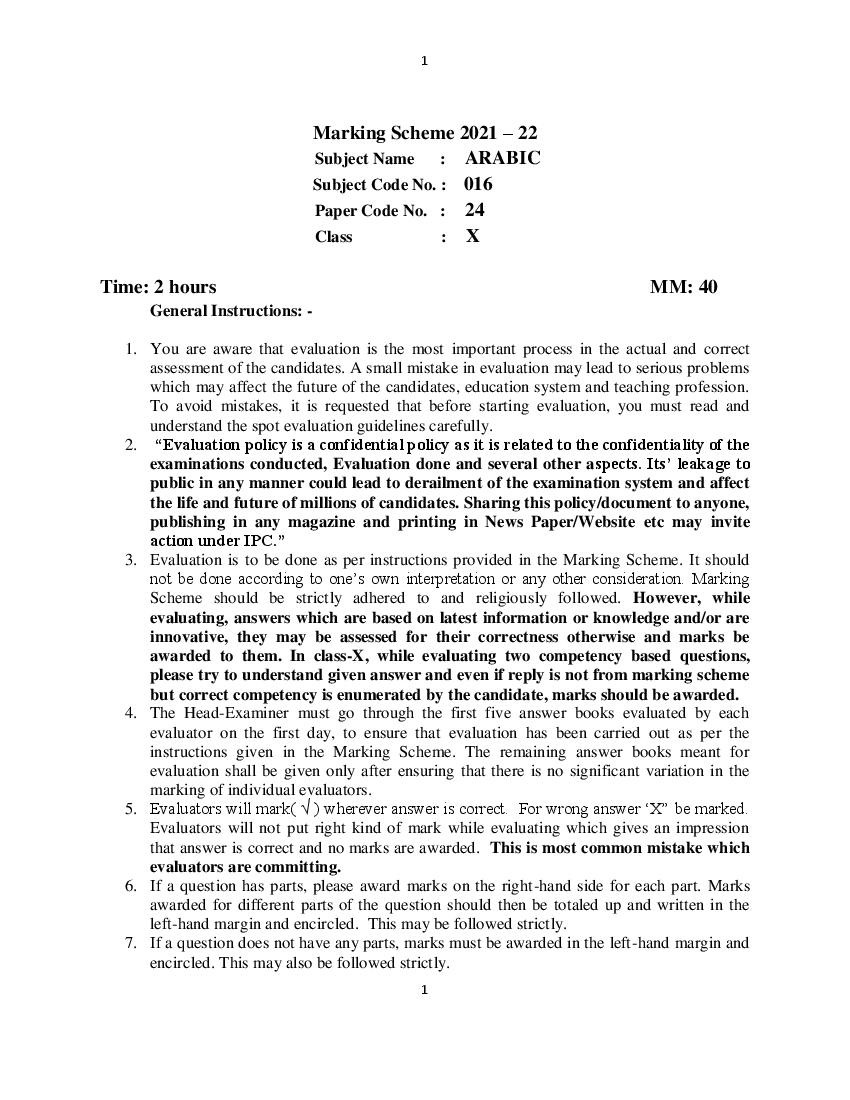
Marking Scheme 2021 – 22
Subject Name : ARABIC
Subject Code No. : 016
Paper Code No. : 24
Class : X
Time: 2 hours MM: 40
General Instructions: -
1. You are aware that evaluation is the most important process in the actual and correct
assessment of the candidates. A small mistake in evaluation may lead to serious problems
which may affect the future of the candidates, education system and teaching profession.
To avoid mistakes, it is requested that before starting evaluation, you must read and
understand the spot evaluation guidelines carefully.
2. “Evaluation policy is a confidential policy as it is related to the confidentiality of the
examinations conducted, Evaluation done and several other aspects. Its’ leakage to
public in any manner could lead to derailment of the examination system and affect
the life and future of millions of candidates. Sharing this policy/document to anyone,
publishing in any magazine and printing in News Paper/Website etc may invite
action under IPC.”
3. Evaluation is to be done as per instructions provided in the Marking Scheme. It should
not be done according to one’s own interpretation or any other consideration. Marking
Scheme should be strictly adhered to and religiously followed. However, while
evaluating, answers which are based on latest information or knowledge and/or are
innovative, they may be assessed for their correctness otherwise and marks be
awarded to them. In class-X, while evaluating two competency based questions,
please try to understand given answer and even if reply is not from marking scheme
but correct competency is enumerated by the candidate, marks should be awarded.
4. The Head-Examiner must go through the first five answer books evaluated by each
evaluator on the first day, to ensure that evaluation has been carried out as per the
instructions given in the Marking Scheme. The remaining answer books meant for
evaluation shall be given only after ensuring that there is no significant variation in the
marking of individual evaluators.
5. Evaluators will mark( √ ) wherever answer is correct. For wrong answer ‘X” be marked.
Evaluators will not put right kind of mark while evaluating which gives an impression
that answer is correct and no marks are awarded. This is most common mistake which
evaluators are committing.
6. If a question has parts, please award marks on the right-hand side for each part. Marks
awarded for different parts of the question should then be totaled up and written in the
left-hand margin and encircled. This may be followed strictly.
7. If a question does not have any parts, marks must be awarded in the left-hand margin and
encircled. This may also be followed strictly.
1
Page 2
8. If a student has attempted an extra question, answer of the question deserving more
marks should be retained and the other answer scored out.
9. No marks to be deducted for the cumulative effect of an error. It should be penalized only
once.
10. A full scale of marks i.e. 0-40 as given in Question Paper has to be used. Please do not
hesitate to award full marks if the answer deserves it.
11. Every examiner has to necessarily do evaluation work for full working hours i.e. 8 hours
every day and evaluate 30 answer books per day in main subjects and 35 answer books
per day in other subjects (Details are given in Spot Guidelines).This is in view of the
reduced syllabus and number of questions in question paper.
12. Ensure that you do not make the following common types of errors committed by the
Examiner in the past:-
Leaving answer or part thereof unassessed in an answer book.
Giving more marks for an answer than assigned to it.
Wrong totaling of marks awarded on a reply.
Wrong transfer of marks from the inside pages of the answer book to the title page.
Wrong question wise totaling on the title page.
Wrong totaling of marks of the two columns on the title page.
Wrong grand total.
Marks in words and figures not tallying.
Wrong transfer of marks from the answer book to online award list.
Answers marked as correct, but marks not awarded. (Ensure that the right tick mark is
correctly and clearly indicated. It should merely be a line. Same is with the X for
incorrect answer.)
Half or a part of answer marked correct and the rest as wrong, but no marks awarded.
13. While evaluating the answer books if the answer is found to be totally incorrect, it should
be marked as cross (X) and awarded zero (0)Marks.
14. Any unassessed portion, non-carrying over of marks to the title page, or totaling error
detected by the candidate shall damage the prestige of all the personnel engaged in the
evaluation work as also of the Board. Hence, in order to uphold the prestige of all
concerned, it is again reiterated that the instructions be followed meticulously and
judiciously.
15. The Examiners should acquaint themselves with the guidelines given in the Guidelines
for spot Evaluation before starting the actual evaluation.
16. Every Examiner shall also ensure that all the answers are evaluated, marks carried over to
the title page, correctly totaled and written in figures and words.
17. The Board permits candidates to obtain photocopy of the Answer Book on request in an
RTI application and also separately as a part of the re-evaluation process on payment of
the processing charges.
2
Page 3
Expected Answers / Value Points
)Section – A (05 Marks
Reading Skills
Q. No. Distribution
of Marks
1. Answer the following questions from given unseen 1x5=05
)passage. (any five
Distribution of Marks: One mark for each.
Expected Answers:
.1عمااا قديمة مااا ي/يعمااا قديمة مااا ية ق لتااا /ي ااا جيمحاااميعمااا قديمة مااا ي
ة ق لت .
.2فييآكرهي/يفييمة ن يآكرهي/ي قعي جيمحميفاييمة نا يآكارهي/ي قاعي ا جي
محميفييمة ن يآكرهيعلىيبعةيثالثيم ئ يكتلويم ريمنيد هي.
.3ش هيجه ن/ي إلمبر طوقي مغاو ييشا هيجها ني/يبنا هي إلمبر طاوقي مغاو يي
ش هيجه ن.
.4بن هيش هيجه نيةذك ق ي زوج ا ي/يبنا هيةاذك ق ي زوج ا ي/يةاذك ق ي زوج ا ي/ي
ةذك ق ي زوج ي محبوب ي"مم زمحم".
.5بناايي اا جيمحااميمااني مرمااري ابااتري/يمااني مرمااري ابااتر/ي مرمااري
ابتر.
.6بشكميالمع/ي ظهري جيمحميبشكميالمعيفيي تل يمقمرد.
.7عشرونيأ فيع مميفييعشر نيسن ي/يبنا هيعشاروينيأ افيع ماميفاييعشار ني
سن .
)Section – B (10 Marks
Writing Skills
2. Fill in the blanks with correct words from the brackets. 1x5=05
Distribution of Marks: Each answer carries one mark only.
)B( -1ي/ج س تي
)C( -2ي/جة ةد
)D( -3ي/ذهبو
)A( -4ي كب ق
)A( -5ي فّ ح
)C( -6يك بتي
)D( -7يةبقى ي
3
Page 4
3. Correction of the following sentences (any five). Each 1x5=05
answer carries one mark only.
.1بنتي جمتل يمج هةد.
.2اس ذيك بي ةقسيعلىي سبوقد.ي/ي اس ذديك بتي ةقسيعلىي
سبوقد.
.3ازه قي جمتل يثمتن .
.4فيي مةقس يمك ب يكبترد.ي/يفيي مةقس يمك بيكبتر.ي
.5ومي احةيعطل يقسمت .
.6عنةييثالث يأمالم.ي/يعنةييم ئ ي/يأ في...يملم.ي
.7بن تي ص ح تي ذهبنيإ ىي مةقس .ي
)Section – C (10 Marks
Grammar and Translation
4 Definition of Jama’ Mukassar and its illustration. (3 Marks 3+2=05
for definition and 2 Marks for examples).
Expected Answers:
جمع مكسر وه جمع ہے جس میں اس کے واحد کا وزن برقرار نہ
رہے۔ جیسے :و ةي سےأوالدي (حالت رفعي ميں)،يأوالدي (حالت نصبي
ميں) اوريأوالدي (حالت جري میں).
5 Translation of any three sentences from the mentioned 1x3=03
sentences. (one mark for each).
Expected Translation:
ةقس.
َ -1قرأي و ةي
The boy is reading the lesson / The boy reads the lesson /
The boy will read the lesson.
لڑکا سبق پڑھ رہا ہے /پڑھتا ہے /پڑھے گا۔
-2أ نيملمكي احمر؟
تمہارا الل قلم کہاں ہے؟ Where is your red pen? /
-3أشربي لبنيكمّي وم.
میں ہر دن دودھ پیتا ہوں /پیتی ہوں ۔ I drink milk every day. /
-4م هذ ؟
یہ کیا ہے؟ /یہ ہے کیا؟ /یہ کون سی چیز ہے؟ What is this? /
4
Page 5
.يكرسي
ٌّ هذ-5
This is a chair. / یہ کرسی ہے۔
منيهو؟-6
Who is he? / وہ کون ہے؟
6 Translation of any two from the mentioned sentences into 1x2= 02
Arabic (one mark for each).
Expected Translation:
1. What is your name?
يم ي سمكنّي؟/يم ي سمكم؟ي/يم ي سمكم ؟ي/سمك؟ي
ِ يم ي/م ي سمكَ ؟ي
2. This is a door.
ي.هذ يب ب
3. Sita is your sister.
يست يأخاتي/يست يأخ كنّ ي/يست يأخ كمي/يست يأخ كم ي/يست يأخ ِكي/ست يأخ كَ ي
ي.يست يأختي كن/يست يأختي كمي/يست يأختي كم ي/يست يأختي ِكي/كَ ي
4. Read this book.
ي.ي مرأنيهذ ي ك ب/ي مرؤ ي/ي مرء ي/ي مرئيي/مرأي
Section D (15 Marks)
Literature : Prose & Poetry
7. Prose 2x5=10
Translation of any one text book passage of Arabic into
English / Urdu / Hindi e.g.:
References:
( )الفLesson No. 16 Pages No. 46-47
()ب Lesson No. 17 Page No. 62
Distribution of Marks: يEach passage should be divided
into five equal portions and each portion carries two
marks. Marks should be given on the basis of accuracy of
translation, partial /incomplete translation may also be
considered for marking.
Expected Translation:
)) ف
This senior secondary school is for girls. It is situated
5
Page 6
near Tees Hazari Court. This school is spacious/big and
beautiful. It has two big and beautiful gates. There are
about/around fifty 50 rooms inside to run the classes. / It
has about/around fifty 50 class-rooms. It has classes from
1st to 12th. Only girls study there. / It is only for girls/
Their number is/reaches to more than thousand.
یہ سینئر سیکنڈری اسکول لڑکیوں کے لئے ہے۔ یہہ یہیس ہہیاری کہور
عدالت کے قریب واقع ہے۔یہ اسکول وسہیع اور ووبصہورہ ہہے۔ اس کہے وو/
ہہہیں۔ کہہکس کہہے ل ہہئے اس عالی ہہان اور ووبصہہورہ ورواز/ بہہڑ
ہہیں۔ اسہکول مہیں یعمہیہ پ مہا جماعہت سہے کمہر۵۰/میں یقریبا پچاس
ہہہویا ہہہے۔ اس مہہیں فہہرک لڑکیہہاں یعمہہیہ حاف ہ کریہہا بہہارہویں جماعہہت ی ہ
ہیار سے زائد ہے۔ ہیں۔ ان کا یعداو ای
))ب
On the day of travel / journey, Nabeel reached the
railway station with his family members before an hour
or so from the scheduled departure time of the train. The
platform was packed/crowded with/full of male and
female travelers/passengers from the old and young-ages.
Some male and female travelers sat on the iron seats,
while some of them sat on the floor of platform/on the
platform.
نبی ہ اور اس کہہا فیممہہا کہہے افہہراو ہہری کہہا روانگہہا،س ہ ر کہہے ون
اسٹی ہ ہ گھنٹ ہہہ پ م ہہے ریم ہہو ک ہہے مق ہہرر وق ہہت س ہہے یقریب ہہا ایہ ہ
پ ہہنچے۔ پمیہہف فہہار مہہرو و وہہوایی مسہہافروں (ج ہ مہہیں بہہوے ے اور
کچ ہ مہہرو و وہہوایی،بچہہے بھہہا یھہہے) سہہے کھچہہا کھ ہ بھہہرا ہہہوا یھہہا
پہر بیہٹھے مسافر لوہے کا ن ستوں پر یو کچ پمیف فار کے فہر
ہوئے یھے۔
8 Poetry 3+2=05
Explanation of any three verses with reference to the
context.
Reference:
Lesson No. 18 Pages No. 64-65
6
Page 7
مق بسيمنيمصتةد:ي"عتةي س قاللي هنة"ي ـيعلىيعبةي ظ هريحستن ي
Distribution of Marks: 3 marks for explanation or
translation and 2 marks for reference to the context.
Expected Explanation:
مذکور اشعار ،عما عبدالظاہرحسی کا نظہ "عتاةي سا قاللي هناة"ي
سہہہے مہہہاوو ،ہہ ہہے ،اس مہہہیں شہہہاعر آزاوئ ہنہ ہہد کہہہا جہہہدو ج ہ ہہد اور
کامی ہہابیوں ک ہہا واسہہہتان ک ہہا ،کہہہر ک ہہریے ہ ہہوئے عظہہہیہ لی ہہڈر م ایمہہہا
گاند ا کو مخاطب کر کےک تا ہے:
-1زنہہدگا کہہا را مہہیں قہہد قہہد بکئہہیں ہہہیں ،ہہہر طہہرک م ہہککہ کہہا
س ہہامنا ہ ہہے ل ہہیک ی ہہہ ن ہہے اپ ہہنے پخت ہہہ ع ہہی و حوف ہہمہ اور ف ہہبر و
اسہہتقکل کہہے سہہای لگایہہار جہہد و ج ہہد اور کاوشہہیں جہہاری رکھہہیں
اور اس راسہتہ مہیں جہو بھہا پری ہانیاں اور یکمی ہیں پہیں آئہہیں
ان کا وند پی انا سے سامناکیا۔ /
آپ نے عی و استقکل اور فبرو ثباہ کے سای بڑی محنت کہا اور
م ککہ کا مسکرایے ہوئے سامنا کیا۔
-2یم ہہاری محنہہت وکوشہہں اور جہہدو ج ہہد کہہا نتی ہہہ ہہہے کہہہ فہہت
قہہد بہہوس ہہہوئا ،جکمہہا کہہا زن یہہریں کہہف وکہہامرانا یم ہہار
گئہہیں اور یم ہہیں عہہیہ و شہ ہ رہ ،نہہاموری اور بمنہہدی نص ہہییب
ہوئا ۔ /
و ک ہہامراں ،پ ہہوری آزاوی اور ع ہہیہ و احت ہہرا ک ہہے س ہہای آپ کامی ہہا
لو ے ،عظیہ المریبت بمند مقا ہوکر ۔
عظیہ یاریخ اور شاندار ماضہا کہا وراثہت کہا ای -3یم ارا مم
حام ہے ،اس کا ی ذیب ب ت پرانا ہہے ،اس کہا سہماجا نظہا
عظہہیہ ال ہہان کہہا ایہہ فہہدیوں سہہے قہہائہ ہہہے۔ /آپ کہہے ممہہ
یاریخ رہا ہے جہو قہدیہ ی ہذیب و ثقافہت اور وسہتور کہا عممبہروار
ہے۔
نے ونیا کہو عمہہ و ہنہر اور فکہر و فمسہ ہ کہا ورس ویہا ، -4اس مم
7
Page 8
/ عہہالہ کہہا یہہاریکا کہہو وور کرویہہا۔ ی ہہاں کہہا روشہہنا نہہے پہہور
عالہ کہو اپہنے عمہہ و فمسہ ے سہے فہیا پ نچایہا جس نے سار
اور اس کا روشنا نے یما یاریکیوں کو مٹا ویا ۔
رانہ عقیہدہ
ٔ یو ہہ اپنے ول کا گ رائییوں سے ہر سال یم یں نذ-5
ہہہ یہہ و ل سہے آپ کہا وہدمت مہیں ہہر سہہال/ پہیں کہریے ہہیں۔
وراج عقیدہ پیں کریے رہیں گے
The above verses are derived taken from the poem
"Eid Istiqlal-al-Hind" by Ali Abdul Zahir Hussain. The
poet narrates the story of Mahatma Gandhi’s struggle for
the freedom of India. The poet says addressing the great
freedom fighter, an eminent leader and father of the
nation Mahatam Gamdhi:
1- You have struggled with great patience and
determination and you faced the difficulties with
smile.
2- And you came back victorious free, highly
respected with dignity and great status.
3- Your country has glorious history, ancient
civilization and deep rooted culture and system.
4- Enlightened the whole world with wisdom and
philosophy, removing the veils of darkness.
5- We extend our gratitude/profound tribute from the
depth of our heart every year.
Prescribed Text Book: “Minhaj al-Ta’lim al-Thanawi” (Class X)
CBSE, Shiksha Kendra
2, Community Centre
Preet Vihar, Delhi – 110092
8
Document Details
| Board / Org | CBSE |
| Exam | Class 10 |
| Type | Solution |
| Pages | 8 |
| Updated | 22 Jul 2026 |