Karnataka 1st PUC Model Question Paper 2023 for Psychology
Finished viewing? Save it for later —
Download Karnataka 1st PUC Model Question Paper 2023 for Psychology (PDF · 7 pages)About Karnataka 1st PUC Model Question Paper 2023 for Psychology
Karnataka 1st PUC Model Question Paper 2023 for Psychology is available here for free download. Published by Karnataka Board for Class 11, this sample paper can be viewed online or downloaded as a PDF (7 pages). Candidates preparing for Class 11 can use Karnataka 1st PUC Model Question Paper 2023 for Psychology to understand the exam pattern, the type of questions asked, and the overall difficulty level.
Frequently Asked Questions
How can I download Karnataka 1st PUC Model Question Paper 2023 for Psychology?
Open this page and click the Download button to save Karnataka 1st PUC Model Question Paper 2023 for Psychology as a PDF. It is completely free on AglaSem Docs.
Is Karnataka 1st PUC Model Question Paper 2023 for Psychology free to download?
Yes. Karnataka 1st PUC Model Question Paper 2023 for Psychology can be viewed online and downloaded as a PDF free of cost on AglaSem Docs.
How many pages does Karnataka 1st PUC Model Question Paper 2023 for Psychology have?
Karnataka 1st PUC Model Question Paper 2023 for Psychology contains 7 pages, which you can read online or download together as a single PDF.
Where can I find more Class 11 study material?
You can find more Class 11 question papers, sample papers, syllabus, and answer keys on AglaSem Docs.
Karnataka 1st PUC Model Question Paper 2023 for Psychology – Text
Read the full text of this sample paper below — useful to quickly search, copy and reference the content online without downloading the PDF.
📄 View text version (7 pages)
Page 1
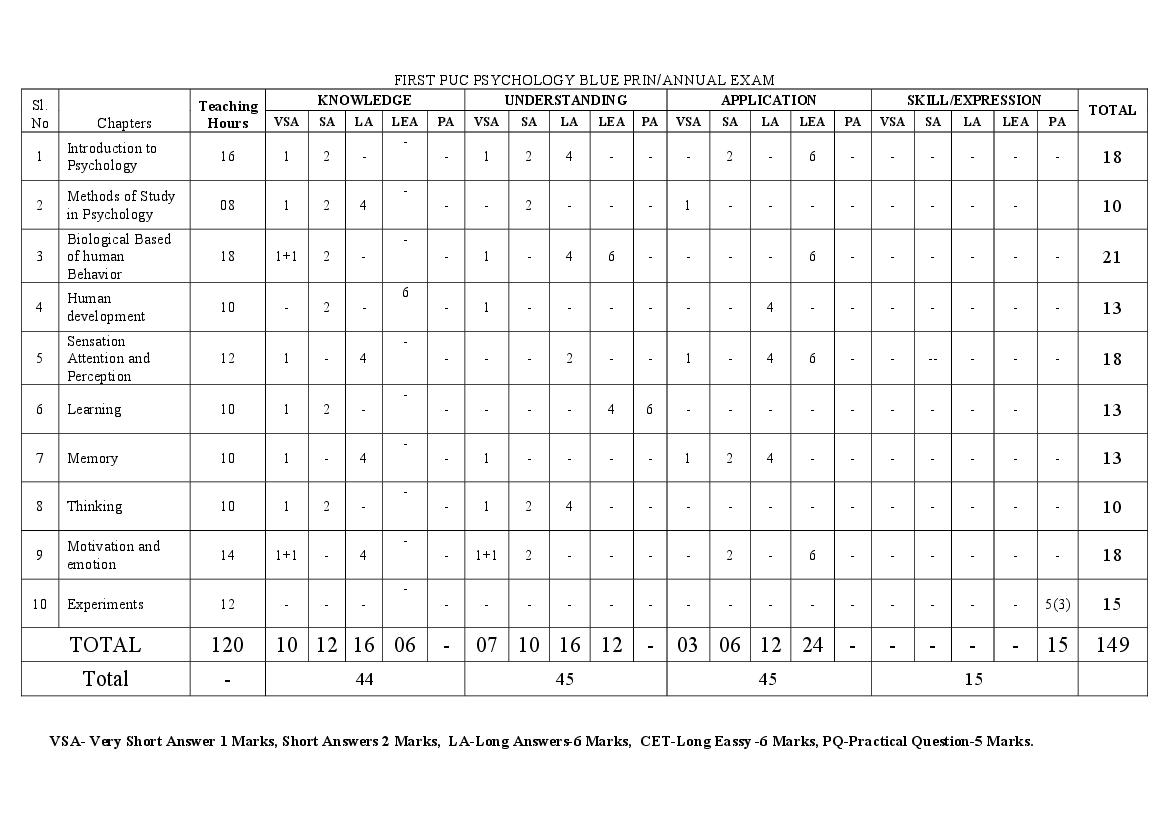
Sl. Teaching KNOWLEDGE UNDERSTANDING APPLICATION SKILL/EXPRESSION
TOTAL
No Chapters Hours VSA SA LA LEA PA VSA SA LA LEA PA VSA SA LA LEA PA VSA SA LA LEA PA
Introduction to -
1
Psychology
16 1 2 - - 1 2 4 - - - 2 - 6 - - - - - - 18
Methods of Study -
2
in Psychology
08 1 2 4 - - 2 - - - 1 - - - - - - - - 10
Biological Based -
3 of human 18 1+1 2 - - 1 - 4 6 - - - - 6 - - - - - - 21
Behavior
Human 6
4
development
10 - 2 - - 1 - - - - - - 4 - - - - - - - 13
Sensation -
5 Attention and 12 1 - 4 - - - 2 - - 1 - 4 6 - - -- - - - 18
Perception
-
6 Learning 10 1 2 - - - - - 4 6 - - - - - - - - - 13
-
7 Memory 10 1 - 4 - 1 - - - - 1 2 4 - - - - - - - 13
-
8 Thinking 10 1 2 - - 1 2 4 - - - - - - - - - - - - 10
Motivation and -
9
emotion
14 1+1 - 4 - 1+1 2 - - - - 2 - 6 - - - - - - 18
-
10 Experiments 12 - - - - - - - - - - - - - - - - - - 5(3) 15
TOTAL 120 10 12 16 06 - 07 10 16 12 - 03 06 12 24 - - - - - 15 149
Total - 44 45 45 15
VSA- Very Short Answer 1 Marks, Short Answers 2 Marks, LA-Long Answers-6 Marks, CET-Long Eassy -6 Marks, PQ-Practical Question-5 Marks.
Page 2
¥ÀæxÀªÀÄ ¦.AiÀÄÄ.¹ ªÀiÁzÀj ¥Àæ±ÉߥÀwæPÉ 2023
KANNADA VERSION
¸ÀªÀÄAiÀÄ : 3 UÀAmÉ 15 ¤«ÄµÀ UÀjµÀÖ CAPÀUÀ¼ÀÄ : 100
¸ÀÆZÀ£ÉUÀ¼ÀÄ :
1. ¥Àæ±ÉߥÀæwPÉAiÀÄÄ J,©.¹.r, F JA§ LzÀÄ ¨sÁUÀUÀ¼À£ÀÄß M¼ÀUÉÆArzÉ ªÀÄvÀÄÛ I, II, III, IV, V, VI, VII, VIII
«¨sÁUÀUÀ¼À£ÀÄß ºÉÆA¢zÉ.
2. J¯Áè ¨sÁUÀUÀ¼ÀÄ PÀqÁØAiÀĪÁVgÀÄvÀÛzÉ.
3. GvÀÛgÀªÀ£ÀÄß ¸ÀA¥ÀÆtðªÁV EAVèõï CxÀªÁ PÀ£ÀßqÀzÀ°è §gÉAiÀĨÉÃPÀÄ.
¨sÁUÀ-J
I. ¸ÀjAiÀiÁzÀ GvÀÛgÀªÀ£ÀÄß Dj¹ §gɬÄj. 5 X 1=5
1. AiÀiÁªÀ ¥ÀæZÉÆÃzÀ£U É ÀÆ M¼ÀUÁUÀzÀ UÀÄA¥ÀÄ ……………………………………………
J) ¥ÁæAiÉÆÃVPÀ UÀÄA¥ÀÄ ©) ¤AiÀÄAwævÀ UÀÄA¥ÀÄ
¹) ¥ÁæxÀ«ÄPÀ UÀÄA¥ÀÄ r) C£ÀĵÀAVPÀ UÀÄA¥ÀÄ
2. ªÀiÁ£ÀªÀ£À°è ªÀtðvÀAvÀÄUÀ¼À ¸ÀASÉå…………………………
J) 21 eÉÆvÉ ©) 22 eÉÆvÉ
¹) 23 eÉÆvÉ r) 24 eÉÆvÉ
3. AiÀiÁªÀÅzÉÆà ¨ÁºÀå CA±À §®ªÀAvÀªÁV UÀªÀÄ£À ¸É¼ÉAiÀÄĪÀÅzÀÄ …………………………………………….
J) C¨sÁå¸ÀªÀzsÁ£À ©) EZÁÒªÀzsÁ£À
¹) CªÀzsÁ£À ZÁAZÀ®å r) ¤j¥ÁÖªÀzsÁ£À
4. C«±ÁæAvÀªÁV PÀ°vÀÄ ªÀÄÄV¸ÀĪÀÅzÀPÉÌ ………………………………………«zsÁ£À
J) ¸ÀAPÀ°vÀ ©) RAqÀ«zsÁ£À
¹) ¥ÀÆtð«zsÁ£À r) «vÀgÀuÁ «zsÁ£À
5. fëAiÀÄ G¢æPÀÛ ¹ÜwAiÀÄ£ÀÄß ……………………………………………J£ÀÄßvÁÛgÉ.
J) ¥ÉæÃgÀuÉ ©) PÀ°PÉ
¹) ¸ÀAªÉÃUÀ r) D¯ÉÆÃZÀ£É
II. DªÀgÀtzÀ°è PÉÆnÖgÀĪÀ ¥ÀzÀUÀ½AzÀ ¸ÀÆPÀÛªÁzÀ ¥ÀzÀUÀ¼£
À ÀÄß Dj¸ÀĪÀ ªÀÄÆ®PÀ SÁ° eÁUÀUÀ¼£
À ÀÄß ¨sÀwð ªÀiÁr.
5 X 1=5
(ªÀiÁvÀÈvÀé, «°AiÀĪÀÇAmï, xÁgÀßqÉÊPï, ¥Àæ§ÄzÀÞ£ÁUÀÄ, ¦lÄålj)
6. CAvÀgÁªÀ¯ÉÆÃPÀ£À «zsÁ£À gÀƦ¹zÀªÀgÀÄ……………………………………
7. £ÁAiÀÄPÀ UÀæAy…………………………………………………
8. C¢üªÀAiÀĹì£À CxÀð………………………………………
9. ¥ÀæAiÀÄvÀß zÉÆõÀ PÀ°PÉAiÀÄ ¥Àæw¥ÁzÀPÀgÀÄ………………………………………
10. vÁ¬Ä ªÀÄUÀÄ«£À DgÉÊPÉ ªÀÄvÀÄÛ ¥ÀÆgÉÊPÉ ªÀiÁqÀĪÀ ¥ÉæÃgÀuÉ ……………………………
III. ºÉÆA¢¹ §gɬÄj. 5 X 1=5
11. 1) ¸ÁªÀiÁ£ÀåjVAvÀ ©ü£Àß ªÀvÀð£É J) «¨sÀæªÉÄ
2) ¥ÀæZÉÆÃzÀ£É E®è¢zÀÝgÀÆ UÀ滸ÀĪÀÅzÀÄ ©) ¥ÀjºÁgÀ PÀAqÀÄ»rAiÀÄĪÀÅzÀÄ
3) C£ÀÄ¥ÀAiÉÆÃUÀ¢AzÀ QëÃt¸ÀĪÀÅzÀÄ ¹) ¸ÀÈd£À aAvÀ£É
4) ¸ÀªÀĸÉå ¥ÀjºÁgÀ r) ¨sÀæªÉÄ
5) ¸ÀévÀB ¤zsÁðgÀ vÉUÉzÀÄPÉƼÀÄîªÀÅzÀÄ E) C¥À¸ÁªÀiÁ£Àå
Page 3
12. ¤ªÀiÁí£ïì AiÀiÁªÁUÀ ¸ÁÜ¥À£ÉAiÀiÁ¬ÄvÀÄ ?
13. PÀ±ÉÃgÀÄ £ÀgÀUÀ¼À ¸ÀASÉå JµÀÄÖ ?
14. J¸ï.n.JA «¸ÀÛj¹ §gɬÄj
15. ¨ÁAiÀiÁjPÉ ºÉÃUÉ GAmÁUÀÄvÀÛzÉ ?
16. C»vÀPÀ ¸ÀAªÉÃUÀPÌÉ MAzÀÄ GzÁºÀgÀuÉ PÉÆr.
¨sÁUÀ-©
V. F PɼÀV£À AiÀiÁªÀÅzÁzÀgÀÆ 8 ¥Àæ±ÉßUÀ½UÉ ¥ÀæwAiÉÆAzÀPÀÆÌ 2-3 ªÁPÀåUÀ¼À°è GvÀÛj¹. 9 X 2=18
17. ¥ÀæxÀªÀÄ ªÀÄ£ÉÆëeÁÕ£À ¥ÀæAiÉÆÃUÀ ±Á¯É J°è, AiÀiÁªÁUÀ ¥ÁægÀA¨sÀªÁ¬ÄvÀÄ ?
18. ¸ÉÊQà ªÀÄvÀÄÛ ¯ÉÆÃUÉÆøï JA§ VæÃPï ¥ÀzÀzÀ CxÀðªÉãÀÄ ?
19. PÉÊUÁjPÁ ªÀÄ£ÉÆëeÁÕ£À JAzÀgÉãÀÄ ?
20. CªÀ¯ÉÆÃPÀ£Á «zsÁ£À JAzÀgÉãÀÄ ?
21. ¸ÀAzÀ±Àð£ÀzÀ «zsÀUÀ¼À£ÀÄß §gɬÄj.
22. CªÀ½UÀ¼À «zsÀUÀ¼À£ÀÄß ºÉ¸Àj¹.
23. ªÀA±ÀªÀ½ ªÀÄvÀÄÛ gÀÆ¥ÀªÀ½ £ÀqÀÄ«£À ªÀåvÁå¸ÀªÉÃvÀ£ÀÄ ?
24. ¸ÀAªÉÃzÀ£ÉAiÀÄ JgÀqÀÄ UÀÄt®PÀëtUÀ¼ÁªÀŪÀÅ.
25. C£ÀÄPÀgÀt PÀ°PÉ JAzÀgÉãÀÄ ?
26. C¥ÀPæ ÀnvÀ «µÀAiÀÄUÀ¼À ¸Àäøw §UÉÎ §gɬÄj.
27. ¥ÀjPÀ®à£É JAzÀgÉãÀÄ ?
28. «ªÉÃZÀ£ÉAiÀÄ «zsÀUÀ¼À£ÄÀ ß ºÉ¸Àj¹.
29. ¥ÉæÃgÀuÉAiÀÄ «zsÀUÀ¼£
À ÀÄß w½¹.
30. G¢éUÀßvÉ JAzÀgÉãÀÄ ?
¨sÁUÀ-¹
VI. PɼÀV£À AiÀiÁªÀÅzÁzÀgÀÆ 5 ¥Àæ±ÉßUÀ½UÉ ¥ÀæwAiÉÆAzÀPÀÆÌ 10 jAzÀ 12 ªÁPÀåUÀ¼À°è GvÀÛj¹. 7 X 4=28
31. ±ÉÊPÀëtÂPÀ ªÀÄ£ÉÆëeÁÕ£ÀzÀ §UÉÎ «ªÀj¹.
32. ªÀåQÛ ªÀÈvÁÛAvÀ «zsÁ£ÀªÀ£ÀÄß Ew-«ÄwUÀ¼ÉÆqÀ£É «ªÀj¹.
33. ¸À«ÄÃPÁë «zsÁ£ÀzÀ §UÉÎ ¸ÀAQë¥ÀÛªÁV §gɬÄj.
34. ªÀÄĶۥÀÌzÀ £Á®ÄÌ ¥Á°UÀ¼À ¥ÁæªÀÄÄRåvÉ w½¹.
35. d£À£À ¥ÀƪÀð ºÀAvÀUÀ¼À §UÉÎ «ªÀj¹.
36. ªÀÄÄ®ègÀ¯ÉÊgï ¨sÀæªÉÄAiÀÄ §UÉÎ §gɬÄj.
37. CªÀzsÁ£ÀzÀ «zsÀUÀ¼À£ÄÀ ß ZÀað¹.
38. CAvÀgÀ zÀ馅 PÀ°PÁ «zsÁ£ÀzÀ §UÉÎ «ªÀj¹.
39. ¸ÁzsÀPÀ C£ÀħAzsÀ PÀ°PÉAiÀÄ §UÉÎ n¥Ààt §gɬÄj.
40. ªÀiÁ£À¹PÀ ©A§ JAzÀgÉãÀÄ ? «ªÀj¹.
41. ¸ÁzsÀ£Á ¥ÉæÃgÀuÉAiÀÄ£ÀÄß «ªÀgÀ¹.
¨sÁUÀ-r
VII. F PɼÀV£À AiÀiÁªÀÅzÁzÀgÀÆ 4 ¥Àæ±ÉßUÀ½UÉ ¥ÀæwAiÉÆAzÀPÀÆÌ 20 jAzÀ 25 ªÁPÀåUÀ°è GvÀÛj¹. 4 X 6=24
42. ªÀÄ£ÉÆëeÁÕ£À JAzÀgÉãÀÄ? ªÀÄ£ÉÆëeÁÕ£ÀzÀ ¤gÀÆ¥ÀuÉUÀ¼À£ÀÄß «ªÀj¹.
43. CªÀ¯ÉÆÃPÀ£Á «zsÁ£ÀªÀ£ÀÄß Ew-«ÄwUÀ¼ÉÆqÀ£É ªÀtÂð¹.
44. £ÀgÀvÀAvÀÄ«£À CAzÀªÁzÀ avÀæ §gÉzÀÄ ¨sÁUÀUÀ¼À£ÀÄß UÀÄgÀÄw¹.
45. xÉÊgÁ¬Äqï UÀæAyAiÀÄ ¥ÁæªÀÄÄRåvÉAiÀÄ£ÀÄß «ªÀj¹.
46. ªÀÈzÁÞ¥ÀåzÀ°è PÀAqÀÄ §gÀĪÀ ¸ÀªÀĸÉåUÀ¼À §UÉÎ «ªÀj¹.
47. ««zsÀ jÃwAiÀÄ PÀ°PÁ £ÀÆå£ÀvÉUÀ¼À §UÉÎ «ªÀj¹.
48. PÉÆÃ¥ÀªÀ£ÀÄß ºÉÃUÉ ¤AiÀÄAwæ¸ÀÄ«j ? «ªÀj¹.
Page 4
VII. F PɼÀV£À AiÀiÁªÀÅzÁzÀgÀÆ 2 ¥Àæ±ÉßUÀ½UÉ GvÀÛj¹. 2 X 5=10
49. ¸ÀºÀZA À iÉÄðAiÀÄ ªÉÃUÀzÀ ªÉÄÃ¯É ¸ÀAªÉÃUÀzÀ ¥ÀjuÁªÀĪÀ£ÀÄß ©r «zsÁ£À¢AzÀ ¤zsÀðj¸ÀĪÀ PÀæªÀÄUÀ¼À£ÄÀ ß
§gɬÄj.
50. ªÀgÀ¢AiÀÄ RavÀvÉAiÀÄ ªÉÄÃ¯É ¤zÉÃð²vÀ CªÀ¯ÉÆÃPÀ£z À À ¥ÀjuÁªÀĪÀ£ÄÀ ß ¤zsÀðj¸ÀĪÀ ¥ÀæAiÉÆÃUÀzÀ°è
¤ÃªÀÅ C£ÀĸÀj¹zÀ AiÉÆÃd£É ªÀÄvÀÄÛ ¥ÀæAiÉÆÃUÀ «zsÁ£ÀªÀ£ÀÄß «ªÀj¹.
51. JgÀqÀÄ ¸ÁßAiÀÄÄ QæAiÉÄUÀ¼À £ÀqÀÄªÉ GAmÁUÀĪÀ CªÀzsÁ£À «¨sÀd£ÉAiÀÄ£ÀÄß CzsÀåAiÀÄ£À ªÀiÁqÀĪÀ
¥ÀæAiÉÆÃUÀzÀ°è ¤ÃªÀÅ C£ÀĸÀj¹zÀ AiÉÆÃd£É ªÀÄvÀÄÛ ¥ÀæAiÉÆÃUÀ «zsÁ£ÀªÀ£ÄÀ ß «ªÀj¹.
*-*-*
Page 5
I PUC PSYCHOLOGY MODEL QUESTION PAPER -2023
ENGLISH VERSION
Time : 3 Hours 15 Minutes Maxi Marks 100
Instruction :
1. The Question paper contains 5 parts A, B, C, D, E. Consists of Section I, II, III, IV, V,
VI, VII, VIII.
2. All the parts are Compulsory.
3. The answer should be written completely either in English or Kannada.
PART-A
I. Select the correct alternative from the choices given/Answer the following questions by
choosing the correct answer. (5 X1=5)
1. The observation of behaviors in natural setting…………………..
a) Case history b) Naturalistity
c) Experimental d) Survey.
2. Number of Chromosomes in human beings …………………
a) 21 pairs b) 22 pairs
c) 23 pairs d) 24 pairs
3. Any external factor will forcefully attention ……………..
a) Habifieal Attention b) Voluntery attention
c) Fluctuation of Attention d) Involuntion Attention
4. Reading the material as a whole …………………
a) Massed Method b) Part Method
c) Whole Method d) Spaced Method
5. State of motivational arousuel that is produced by a need………………
a) Drive b) Learning
c) Emotion d) Thinking
II. Fill in the blank by choosing the appropriate words from those given in the brackets. 5 X 1= 5
[Maternal, Withelm, Wundt, Thorndike, Grow into maturity, Pitutery]
6. The Introspection method was developed by……………….
7. ……………… gland as called as the Meter gland.
8. The meaning of the word Adoleseere …………….
9. The Proponent of Trail and error learning …………….
10. The motive that involves the care and protection of the offspring by the female is
called………………….
III. Match the following 5 X 1=5
11. 1) The behavior which is away from normal a) Hallucination
2) Mis-interpretation of a stimulents b) Finding solution
3) Inability to retrieve information c) Creative thinking
4) Problem solving d) Illusion
5) Taking their own decision e) Abnormal
IV. Answer the following question in a word or a sentence. 5 X 1=5
12. When was NIMHANS established ?
13. How many hemisphere are there in the brain?
14. Expand STM
15. Who proposed needs hierarchy theory ?
16. Give an example for unpleasant emotion.
Page 6
V. Answer any nine of the following questions in 2 to 3 sentences each. 9 X 2= 18
17. When and where was first psychological laboratory started?
18. Write the meaning of ‘Psyche’ and ‘Logus’
19. What is meant by Industrial Psychology ?
20. What is observation method ?
21. Write the types of Interview?
22. Mention the types of Twins?
23. Write the difference between Genotype and phenotypes?
24. Write any two characteristics of Sensation.
25. What is meant by imitations learning?
26. Write a note on Implieit memory?
27. What is meant by Concept?
28. Mention the types of reasoning?
29. Write the types of motives.
30. What is Anxiety?
PART-C
VI. Answer any seven of the following questions in 10-12 sentences each. 7 X 4= 28
31. Explain education psychology.
32. Explain case history method with its merits and demerits.
33. Explain briefly about survey method.
34. What are the importance of lobes of the brain?
35. Describe pre-natel stages.
36. Write a note on muller-lyer illusion.
37. Discuss the types of Attention.
38. Describe Insightful learning.
39. Write a note on operant conditioning.
40. What is mental imege ? Explain.
41. Explain briefly achievement motive.
PART-D
VII. Answer any four of the following question in 20-25 sentences each. 4 X 6= 24
42. What is meant by psychology? Explain the Definitions of psychology.
43. Describe observational method with its merits and demerits.
44. Draw a neat diagram of a neuron and lable parts.
45. Explain the importance of thyroid gland.
46. Explain the problems of old age.
47. Describe different types of learning disabilities.
48. How to Contral anger? Explain.
PART-E (PRACTICALS PART)
VIII. Answer any two of the following. 2 X 5=10
49. Write the plan and procedure you have adopted to study the effect of emotion on free
association ?
50. Write the plan and procedure you have adopted to study the effect of the directed observation
on the accurancy of report.
51. Write the plan and procedure you have adopted to study the effect of divisions of attention on
two muscular tasks.
*-*-*
Page 7
Document Details
| Board / Org | Karnataka Board |
| Exam | Class 11 |
| Type | Sample Paper |
| Pages | 7 |
| Updated | 30 Apr 2026 |