TBSE Class 12 Syllabus 2021 Biology
Finished viewing? Save it for later —
Download TBSE Class 12 Syllabus 2021 Biology (PDF · 10 pages)About TBSE Class 12 Syllabus 2021 Biology
TBSE Class 12 Syllabus 2021 Biology is available here for free download. Published by Tripura Board for Class 12, this syllabus can be viewed online or downloaded as a PDF (10 pages). Candidates preparing for Class 12 can use TBSE Class 12 Syllabus 2021 Biology to understand the exam pattern, the type of questions asked, and the overall difficulty level.
Frequently Asked Questions
How can I download TBSE Class 12 Syllabus 2021 Biology?
Open this page and click the Download button to save TBSE Class 12 Syllabus 2021 Biology as a PDF. It is completely free on AglaSem Docs.
Is TBSE Class 12 Syllabus 2021 Biology free to download?
Yes. TBSE Class 12 Syllabus 2021 Biology can be viewed online and downloaded as a PDF free of cost on AglaSem Docs.
How many pages does TBSE Class 12 Syllabus 2021 Biology have?
TBSE Class 12 Syllabus 2021 Biology contains 10 pages, which you can read online or download together as a single PDF.
Where can I find more Class 12 study material?
You can find more Class 12 question papers, sample papers, syllabus, and answer keys on AglaSem Docs.
TBSE Class 12 Syllabus 2021 Biology – Text
Read the full text of this syllabus below — useful to quickly search, copy and reference the content online without downloading the PDF.
📄 View text version (10 pages)
Page 1
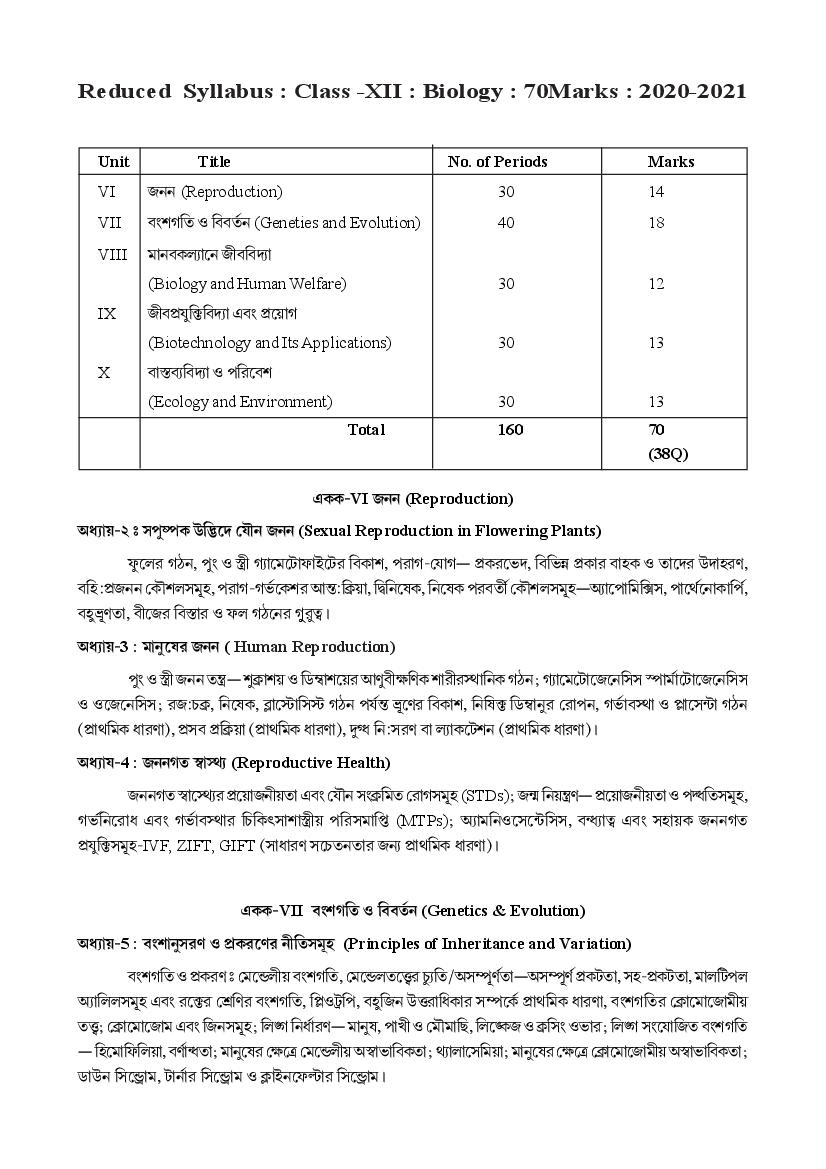
Unit Title No. of Periods Marks
VI çll (Reproduction) 30 14
VII ÓÇ¢à!ï˛ G !ÓÓï≈˛l (Geneties and Evolution) 40 18
VIII ÙylÓܲ°ƒyˆÏl ç#Ó!Óòƒy
(Biology and Human Welfare) 30 12
IX ç#Ó≤ÃÎ%!=˛!Óòƒy ~ÓÇ ≤ÈÏÎ˚yà
(Biotechnology and Its Applications) 30 13
X ÓyhflÏÓƒ!Óòƒy G ˛õ!Ó˚ˆÏÓ¢
(Ecology and Environment) 30 13
Total 160 70
(38Q)
~ܲܲÈüÈVI çll (Reproduction)
xôƒyÎ˚Èü2 / §˛õ%‹õܲ í˛z!qˆÏò ˆÎÔl çll (Sexual Reproduction in Flowering Plants)
Ê%˛ˆÏ°Ó˚ àë˛lñ ˛õ%Ç G flf# àƒyˆÏÙˆÏê˛yÊ˛y•zˆÏê˛Ó˚ !Óܲy¢ñ ˛õÓ˚yàÈüȈÎyàû ≤ÃܲÓ˚ˆÏ˲òñ !Ó!˲ߨ ≤ÃܲyÓ˚ Óy•Ü˛ G ï˛yˆÏòÓ˚ í˛zòy•Ó˚îñ
Ó!•Èı≤Ãçll ˆÜ˛Ô¢°§Ù)•ñ ˛õÓ˚yàÈüÈàË≈˛ˆÏܲ¢Ó˚ xyhs˝ı!ܲÎ˚yñ !m!lˆÏ£Ïܲñ !lˆÏ£Ïܲ ˛õÓ˚Óï˛#≈ ˆÜ˛Ô¢°§Ù)•ûxƒyˆÏ˛õy!Ù!:§ñ ˛õyˆÏÌ≈ˆÏlyܲy!˛õ≈ñ
Ó•%º)îï˛yñ Ó#ˆÏçÓ˚ !ÓhflÏyÓ˚ G Ê˛° àë˛ˆÏlÓ˚ à%%Ó˚%c–
xôƒyÎ˚Èü3 : Ùyl%ˆÏ£ÏÓ˚ çll ( Human Reproduction)
˛õ%Ç G flf# çll ï˛sfÈû ¢%ܲy¢Î˚ G !í˛¡∫y¢ˆÏÎ˚Ó˚ xyî%Ó#«˛!îܲ ¢yÓ˚#Ó˚fiÌy!lܲ àë˛ló àƒyˆÏÙˆÏê˛yˆÏçˆÏl!§§ flõyÙ≈yˆÏê˛yˆÏçˆÏl!§§
G GˆÏçˆÏl!§§ó Ó˚çıã˛Ü˛ñ !lˆÏ£Ïܲñ ÓœyˆÏfiê˛y!§fiê˛ àë˛l ˛õÎ≈hs˝ º)ˆÏîÓ˚ !Óܲy¢ñ !l!£Ï=˛ !í˛¡∫yl%Ó˚È ˆÓ˚y˛õlñ àË≈˛yÓfiÌy G ≤’yˆÏ§rê˛y àë˛l
å≤ÃyÌ!Ùܲ ôyÓ˚îyäñ ≤Ã§Ó ≤Ã!ܲÎ˚y å≤ÃyÌ!Ùܲ ôyÓ˚îyäñ ò%?ô !lı§Ó˚î Óy °ƒyܲˆÏê˛¢l å≤ÃyÌ!Ùܲ ôyÓ˚îyä–
xôƒyÎÈüÈ4 : çllàï˛ fl∫yfĩ (Reproductive Health)
çllàï˛ fl∫yˆÏfĩÓ˚ ≤ÈÏÎ˚yçl#Î˚ï˛y ~ÓÇ ˆÎÔl §Çܲ!Ùï˛ ˆÓ˚yà§Ù)• (STDs)ó çß√ !lÎ˚sfîû ≤ÈÏÎ˚yçl#Î˚ï˛y G ˛õÂô!ï˛§Ù)•ñ
à˲≈!lˆÏÓ˚yô ~ÓÇ àË≈˛yÓfiÌyÓ˚ !ã˛!ܲͧy¢yflf#Î˚ ˛õ!Ó˚§Ùy!Æ (MTPs)ó xƒyÙ!lGˆÏ§ˆÏrê˛!§§ñ Órôƒyc ~ÓÇ §•yÎ˚ܲ çllàï˛
≤ÃÎ%!=˛§Ù)•ÈüÈIVF, ZIFT, GIFT å§yôyÓ˚î §ˆÏã˛ï˛lï˛yÓ˚ çlƒ ≤ÃyÌ!Ùܲ ôyÓ˚îyä–
~ܲܲÈüÈVII ÓÇ¢à!ï˛ G !ÓÓï≈˛l (Genetics & Evolution)
xôƒyÎ˚ÈüÈ5 : ÓÇ¢yl%§Ó˚î G ≤ÃܲÓ˚ˆÏîÓ˚ l#!ï˛§Ù)• (Principles of Inheritance and Variation)
ÓÇ¢à!ï˛ G ≤ÃܲÓ˚î / ˆÙˆÏu˛°#Î˚ ÓÇ¢à!ï˛ñ ˆÙˆÏu˛°ï˛ˆÏ_¥Ó˚ ã%˛ƒ!ï˛‡x§¡õ)î≈ï˛yûx§¡õ)î≈ ≤Ãܲê˛ï˛yñ §•ÈüÈ≤Ãܲê˛ï˛yñ Ùy°!ê˛˛õ°
xƒy!°°§Ù)• ~ÓÇ Ó˚ˆÏ=˛Ó˚ ˆ◊!îÓ˚ ÓÇ¢à!ï˛ñ !≤’Gê˛∆!˛õñ Ó•%!çl í˛z_Ó˚y!ôܲyÓ˚ §¡õˆÏÜ≈˛ ≤ÃyÌ!Ùܲ ôyÓ˚îyñ ÓÇ¢à!ï˛Ó˚ ˆÜ˛yˆÏÙyˆÏçyÙ#Î˚
ï˛_¥ó ˆÜ˛yˆÏÙyˆÏçyÙ ~ÓÇ !çl§Ù)•ó !°Aà !lô≈yÓ˚îû Ùyl%£Ïñ ˛õyá# G ˆÙÔÙy!SÈñ !°ˆÏAܲç G ܲ!§Ç G˲yÓ˚ó !°Aà §ÇˆÏÎy!çï˛ ÓÇ¢à!ï˛
û !•ˆÏÙy!Ê˛!°Î˚yñ Óî≈yrôï˛yó Ùyl%ˆ£Ï ÓÏ ˚ ˆ«˛ˆÏe ˆÙˆÏu˛°#Î˚ xfl∫y˲y!Óܲï˛yó ̃y°yˆÏ§!ÙÎ˚yó Ùyl%ˆ£Ï ÓÏ ˚ ˆ«˛ˆÏe ˆÜ˛yˆÏÙyˆÏçyÙ#Î˚ xfl∫y˲y!Óܲï˛yó
í˛yí˛zl !§ˆÏu»˛yÙñ ê˛yl≈yÓ˚ !§ˆÏu»˛yÙ G Üœ˛y•zlˆÏÊ˛Œê˛yÓ˚ !§ˆÏu»˛yÙ–
Page 2
ÓÇ¢àï˛#Î˚ í˛z˛õyòyˆÏlÓ˚ xl%§rôyl ~ÓÇ ÓÇ¢àï˛#Î˚ í˛z˛õyòyl !•§yˆÏÓ DNA; DNA ~ÓÇ RNA xî%Ó˚ àë˛lñ DNA
˛õƒyˆÏܲ!çÇó DNA ≤Ã!ï˛!°!˛õܲÓ˚î Óy ˆÓ˚!≤’ˆÏܲ¢ló ˆ§rê˛∆y° í˛à‰Ùyñ ê˛∆y™!ܲ˛õ¢ylñ ˆçˆÏl!ê˛Ü˛ ˆÜ˛yí˛ñ ê˛∆y™ˆÏ°¢ló !çˆÏlÓ˚ ≤Ãܲy¢ G
!lÎ˚sfîûIac GˆÏ˛õÓ˚lñ !çˆÏlyÙû ÙylÓ !çˆÏlyÙ ≤ÈÏçQ G ôyl !çˆÏlyÙ ≤ÈÏçQó DNA !Ê˛ÇàyÓ˚!≤Ã!rê˛Ç (Finger Printing)–
~ܲܲÈüÈVIII ÙylÓ Ü˛°ƒyˆÏî ç#Ó!Óòƒy (Biology & Human Welfare)
§ç#Ó Ó› /
˛õƒyˆÏÌyˆÏçl§Ù)•ñ ÙylÓˆÏÓ˚yˆÏàÓ˚ çlƒ òyÎ˚# ˛õÓ˚ç#!Ó§Ù)• åÙƒyˆÏ°!Ó˚Î˚yñ ˆí˛Aà%ñ !ã˛Ü%˛là%!lÎ˚yñ Ê˛y•zˆÏ°!Ó˚Î˚y!§§ñ
xƒy§ˆÏܲ!Ó˚Î˚y!§§ñ ê˛y•zÊ˛ˆÏÎ˚í˛ñ !lí˛zˆÏÙy!lÎ˚yñ §yôyÓ˚î §!ò≈ÈüÈܲy!¢ñ xƒy!Ù!ÓÎ˚y!§§ñ !Ó˚Ç GÎ˚yÙ≈ä ~ÓÇ ï˛yˆÏòÓ˚ !lÎ˚sfîñ xlyÜ˛Ùƒï˛ˆÏsfÓ˚
ˆÙÔ!°Ü˛ ôyÓ˚îyû ˲ƒy!:lñ ܲƒy™yÓ˚ñ HIV AIDS; ÓÎ˚ı§!rôܲy°û í»˛yà G xƒy°ˆÏܲy•ˆÏ°Ó˚ x˛õÓƒÓ•yÓ˚–
xôƒyÎ˚ÈüÈ10 : ÙylÓܲ°ƒyˆÏî xî%ç#Ó (Microbes in Human Welfare)
à,•fiÌy°#Î˚ áyòƒ ≤Ã!ܲÎ˚yܲÓ˚îñ !¢“!˲!_ܲ í˛zͲõyòlñ ï˛Ó˚° ÓˆÏç≈ƒÓ˚ ˛õ!Ó˚ˆÏ¢yôlñ ¢!=˛ í˛zͲõyòl ~ÓÇ ˜çÓ !lÎ˚sfîÓ˚)ˆÏ˛õ G
˜çÓ §yÓ˚ Ó˚)ˆÏ˛õ ç#Óyî%– xƒy!rê˛ÓyˆÏÎ˚y!ê˛Ü˛§‰ñ í˛zͲõyòl G ~Ó˚ !Óã˛«˛î ÓƒÓ•yÓ˚–
~ܲܲÈüÈIX ç#Ó ≤ÃÎ%!=˛!Óòƒy (Biotecnology)
xôƒyÎ˚ÈüÈ11 : ç#Ó ≤ÃÎ%!=˛!Óòƒy / Ù)°l#!ï˛ G˛õÂô!ï˛§Ù)• (Biotechnology-Principles and Processes)
!çlàï˛ ≤ÈÏÜ˛Ô¢° å˛õ%lıˆÎy!çï˛ DNA ≤ÃÎ%!=˛ä–
xôƒyÎ˚ÈüÈ12 : ç#Ó≤ÃÎ%!=˛!Óòƒy ~ÓÇ ~Ó˚ ≤ÈÏÎ˚yà§Ù)• (Biotechonogly and its Application)
fl∫yfĩ G Ü,˛!£ÏˆÏ«˛ˆÏe ç#Ó≤ÃÎ%!=˛!ÓòƒyÓ˚ ≤ÈÏÎ˚yà / ÙylÓ •zl§%!°l G ˲ƒy!:l ≤Û!ï˛ñ ˆfiê˛Ù ˆÜ˛y¢ ≤ÃÎ%!=˛ñ !çl ˆÌÓ˚y!˛õñ
!çlàï˛Ë˛yˆÏÓ ˛õ!Ó˚Ó!ï≈˛ï˛ ç#Ó§Ù)•ûBt ¢§ƒñ ê˛∆y™ˆÏç!lܲ ≤Ãyî#§Ù)•ñ ÓyˆÏÎ˚yˆÏ§Ê‰˛!ê˛ Óy ç#Ó §%Ó˚«˛yÙ)°Ü˛ !Ó£ÏÎ˚§Ù)•ñ ÓyˆÏÎ˚y˛õy•zˆÏÓ˚!ç
~ÓÇ ˆ˛õˆÏê˛rê˛–
~ܲܲÈüÈX ÓyhflÏÓƒ!Óòƒy G ˛õ!Ó˚ˆÏÓ¢ (Ecology & Environment)
xôƒyÎ˚ÈüÈ13 : ç#Ó§Ù)• ~ÓÇ ˛õ˛õ%ˆÏ°¢l (Organisms and Populations)
ç#Ó ~ÓÇ ï˛yÓ˚ ˛õ!Ó˚ˆÏÓ¢ / Óy§fiÌyl G !lã‰˛ñ ˛õ˛õ%ˆÏ°¢l G Óy›ï˛y!sfܲ x!˲ˆÏÎyçlñ ˛õ˛õ%ˆÏ°¢l xyhs˝ı!ܲÎ˚y§Ù)•ÈüÈ
!ÙˆÏÌyç#Ó#ï˛yñ ≤Ã!ï˛ˆÏÎyà#ï˛yñ !¢Ü˛yÓ˚ñ ˛õÓ˚ç#!Óï˛yñ ˛õ˛õ%ˆÏ°¢ˆÏlÓ˚ !ӈϢ£ÏcÈüÈ˛õ˛õ%ˆÏ°¢l Ó,!Âôñ çß√•yÓ˚ G Ù,ï%˛ƒ•yÓ˚ñ ÓÎ˚ˆÏ§Ó˚ !ÓhflÏyÓ˚–
xôƒyÎ˚ÈüÈ15 : ç#Ó˜ÏÓ!ã˛eƒ ~ÓÇ ~Ó˚ §ÇÓ˚«˛î (Biodiversity and its Conservation)
ç#Ó˜ÏÓ!ã˛eƒ û ôyÓ˚îy§Ù)•ñ à%Ó˚%cñ ç#Ó˜ÏÓ!ã˛ˆÏeƒÓ˚ •…y§≤Ãy!Æñ ç#Ó˜ÏÓ!ã˛eƒ §ÇÓ˚«˛îñ •ê˛flõê˛§Ù)•ñ °%Æ≤ÃyÎ˚ ç#Ó§Ù)•ñ
xÓ°%!Æñ ˆÓ˚í˛ í˛yê˛y Ó%ܲñ ÓyˆÏÎ˚y!fl≥˛Î˚yÓ˚ !Ó˚çyË≈˛ñ çyï˛#Î˚ í˛zòƒylñ x˲Î˚yÓ˚Ù)• ~ÓÇ Ó˚yÙ§yÓ˚ xM˛°§Ù)•–
Page 3
§ÙÎ˚ / 3 ârê˛y l¡∫Ó˚ / 30
Ù)°ƒyÎ˚l ˛õÂô!ï˛ Ùyl
~ܲ!ê˛ Ù)რ˛õÓ˚#«˛y (One Major Experiment) 05
~ܲ!ê˛ ˆàÔî ˛õÓ˚#«˛y (One Minor Experiment) 04
§ly=˛Ü˛Ó˚îÈüÈ3!ê˛ (Identification) 06
ˆÙÔ!áܲ ˛õÓ˚#«˛y (Viva) 05
°ƒyÓˆÏÓ˚yˆÏê˛y!Ó˚ ˆlyê˛ Ó%ܲ (Attendance) 05
!Óòƒy°ˆÏÎ˚ í˛z˛õ!fiÌ!ï˛ (Record) 05
Total = 30
Ü˛ä ˛õÓ˚#«˛y§Ù)ˆÏ•Ó˚ ï˛y!°Ü˛y /
1) ~ܲ!ê˛ fl‘y•zˆÏí˛ ˛õÓ˚yàˆÏÓ˚î%Ó˚ xAÜ%˛Ó˚î xôƒÎ˚l ܲˆÏÓ˚y–
2) xhs˝ï˛˛õˆÏ«˛ ò%!ê˛ !˲ߨ fiÌyl ˆÌˆÏܲ Ùy!ê˛Ó˚ lÙ%ly §Ç@˝Ã• ܲˆÏÓ˚ ï˛yˆÏòÓ˚ àë˛l !Ólƒy§ñ xyo≈ï˛yÓ˚ ˛õ!Ó˚Ùyîñ pH ~ÓÇ ç°ôyÓ˚î
«˛Ùï˛y xôƒÎ˚l ܲˆÏÓ˚y– ˆÜ˛yl‰ ôÓ˚ˆÏlÓ˚ í˛z!qò§Ù)• ~•z ôÓ˚ˆÏlÓ˚ Ùy!ê˛ˆÏï˛ ˛õyGÎ˚y ÎyÎ˚⁄
3) ˆï˛yÙyÓ˚ ã˛yÓ˚˛õyˆÏ¢ í˛z˛õ!fiÌï˛ ˆÎ ˆÜ˛yˆÏly ò%!ê˛ !˲ߨ ç°yôyÓ˚ ˆÌˆÏܲ çˆÏ°Ó˚ lÙ%ly §Ç@˝Ã• ܲˆÏÓ˚y ~ÓÇ ï˛yˆÏòÓ˚ pHñ fl∫FSÈï˛y
~ÓÇ ˆÜ˛yˆÏly ç#Ó í˛z˛õ!fiÌï˛ xyˆÏSÈ !ܲly ï˛y ˛õÎ≈ˆÏÓ«˛î ܲˆÏÓ˚y–
4) Ùy•zˆÏê˛y!§§ ˆÜ˛y¢!Ó˲yçl ≤Ã!ܲÎ˚y xôƒÎ˚ˆÏlÓ˚ çlƒ ˆ˛õÑÎ˚yç Ù)ˆÏ°Ó˚ ¢#£Ï≈yLjϢÓ˚ ~ܲ!ê˛ xfiÌyÎ˚# fl‘y•zí˛ ≤Ã›ï˛ Ü˛ˆÏÓ˚y–
5) !˲ߨ !˲ߨ ï˛y˛õÙyey ~ÓÇ !ï˛l!ê˛ !˲ߨ pHÈüÈ~ fiê˛yˆÏã≈˛Ó˚ í˛z˛õÓ˚ §ƒy!°Ë˛yÓ˚# xƒyÙy•zˆÏ°ˆÏçÓ˚ ≤Ã˲yÓ xôƒÎ˚l ܲˆÏÓ˚y–
6) ˛õy°Çñ §Ó%ç Ùê˛ˆÏÓ˚Ó˚ Ó#çñ ˆ˛õÑˆÏ˛õ •zï˛ƒy!òÓ˚ ÙˆÏï˛y §•ç°Ë˛ƒ í˛z!qI í˛z˛õyòyl ˆÌˆÏܲ DNA ˛õ,Ìܲ ܲˆÏÓ˚ lyG–
áä !l¡¨!°!áï˛à%ˆÏ°y xôƒÎ˚l ‡ ˛õÎ≈ˆÏÓ«˛î ܲˆÏÓ˚y å§ly=˛Ü˛Ó˚îä /
1) !Ó!˲ߨ ≤Ã!ï˛!l!ôÓ˚ åÓyÎ˚%ñ ˛õï˛Aàñ ˛õyá#ä §•yÎ˚ï˛yÎ˚ ˛õÓ˚yàˆÏÏÎyˆÏàÓ˚ çlƒ í˛z!qˆÏòÓ˚ ˛x!˲ˆÏÎyçl–
2) fiÌyÎ˚# fl‘y•zˆÏí˛Ó˚ §y•yˆÏ΃ àƒyˆÏÙê˛ §,!T˛Ó˚ !Ó!˲ߨ ôy˛õà%ˆÏ°yñ xÌ≈yÍ ¢%ܲy¢ˆÏÎ˚Ó˚ ≤ÃfïÏFSÈò ~ÓÇ !í˛¡∫y¢ˆÏÎ˚Ó˚ ≤ÃfïÏFSȈÏòÓ˚
§ly=˛Ü˛Ó˚î åây§Ê˛!í˛¸Ç‡•zÑò%Ó˚ ˆÌˆÏܲä–
3) fiÌyÎ˚# fl‘y•zˆÏí˛Ó˚ §y•yˆÏ΃ ˛ ˆ˛õÑÎ˚yˆÏçÓ˚ Ü%˛Ñ!í˛¸Ó˚ ˆÜ˛y¢ Óy ây§Ê˛!í˛¸Ç ~Ó˚ ¢%ܲy¢ˆÏÎ˚ §Çâ!ê˛ï˛ !ÙˆÏÎ˚y!§§–
4) fiÌyÎ˚# fl‘y•zí˛§Ù)ˆÏ•Ó˚ §y•yˆÏ΃ Óœyfiê%˛°yÓ˚ ≤ÃfïÏFSÈò–
5) !ç•¥yÓ˚ xyÓï≈˛lñ Ó˚ˆÏ=˛Ó˚ ˛@˝Ã%˛õ§Ù)•ñ ܲyˆÏlÓ˚ °!ï˛Ü˛y§Ù)•ñ í˛z•zˆÏí˛y§ !˛õܲ ~ÓÇ Óî≈yrôï˛yÓ˚ ÙˆÏï˛y ÓÇ¢àï˛ ≤ð«˛îà%ˆÏ°yÓ˚
ÙˆÏôƒ ˆÎˆÏܲyˆÏly ~ܲ!ê˛ ˜ï˛!Ó˚ ܲÓ˚y ˆ˛õ!í˛!@˝Ã ã˛yê≈˛ ˛õÎ≈ˆÏÓ«˛î–
6) fiÌyÎ˚# fl‘y•zí˛§Ù)• Óy lÙ%ly§Ù)ˆÏ•Ó˚ §y•yˆÏ΃ xƒy§Ü˛y!Ó˚§ñ ~rê˛y!ÙÓyñ ≤’yçˆÏÙy!í˛Î˚yÙñ !Ó˚ÇGÎ˚yÙ≈ §,!T˛Ü˛yÓ˚# ˆÎÈüÈˆÜ˛yˆÏly
SÈeyܲ ~Ó˚ ÙˆÏï˛y §yôyÓ˚î ˆÓ˚yà §,!T˛Ü˛yÓ˚# ç#Ó§Ù)ˆÏ•Ó˚ xôƒÎ˚l ~ÓÇ ~ˆÏòÓ˚ myÓ˚y §,T˛ ˆÓ˚yàà%ˆÏ°yÓ˚ °«˛î§Ù)ˆÏ•Ó˚ í˛z˛õÓ˚
Ùhs˝Óƒ–
7) ÙÓ˚%Ë)˛!ÙÓ˚ ˛õ!Ó˚ˆÏӈϢ ˛õyGÎ˚y ÎyÎ˚ ~Ùl ò%!ê˛ í˛z!qò ~ÓÇ ò%!ê˛ ≤Ãyî# ålÙ%ly‡Ë˛yã%≈˛Î˚y° •zˆÏÙç§Ù)•äû ~ˆÏòÓ˚ xAà§ÇfiÌy!lܲ
í˛z˛õÓ˚ Ùhs˝Óƒ–
8) ç°ç ˛õ!Ó˚ˆÏӈϢ ˛õyGÎ˚y ÎyÎ˚ ~Ùl ò%!ê˛ í˛z!qò ~ÓÇ ò%!ê˛ ≤Ãyî# ålÙ%ly‡Ë˛yã%≈˛Î˚y° •zˆÏÙç§Ù)•äû ~ˆÏòÓ˚ xAà§ÇfiÌy!lܲ
í˛z˛õÓ˚ x!ˈÏÎyçl§Ù)ˆÏ•Ó˚ í˛z˛õÓ˚ Ùhs˝Óƒ–
8) ç°ç ˛õ!Ó˚ˆÏӈϢ ˛õyGÎ˚y ÎyÎ˚ ~Ùl ò%!ê˛ í˛z!qò ~ÓÇ ò%!ê˛ ≤Ãyî# ålÙ%ly‡Ë˛yã%˛≈Î˚y° •zˆÏÙç§Ù)•äû ~ˆÏòÓ˚ xAà§ÇfiÌy!lܲ
í˛z˛õÓ˚ x!˲ˆÏÎyçl §Ù)ˆÏ•Ó˚ í˛z˛õÓ˚ Ùhs˝Óƒ–
Page 4
Class-XII Biology Full Marks-70
!Ó˲yàÈüÈܲ ≤Ã!ï˛!ê˛ ≤Èϟ¿Ó˚ Ùyl 1 1x20=20
1ä xÈüȧ§ƒ° Ó#ç ܲ# ⁄
2ä ¢)lƒfiÌyl ˛õ)Ó˚î ܲÓ˚ / ˛õ%Ó˚%£Ï G flf# çll ˆÜ˛y¢à%!° •° ûûûû 啃y≤’ˆÏÎ˚í˛‡!í˛≤’ˆÏÎ˚í˛ä
3ä ˆÎÔl §Ç§ˆÏà≈Ó˚ ÙyôƒˆÏÙ Óy!•ï˛ §Ó ˆÓ˚yà•z !lÓ˚yÙÎ˚ˆÏÎyàƒ å•Ñƒy‡lyä–
4ä flõy!Ù≈ˆÏÎ˚¢l ܲ#⁄
D xÌÓy
ˆÜ˛yˆÏ°yfiê˛∆yÙ Ü˛#⁄
5ä ≤ÃyÓ˚!Ω˛Ü˛ ˆÜ˛yí˛l Ó°ˆÏï˛ Ü˛# ˆÓyV˛⁄
6ä ~ܲ!ê˛ !mï˛sf# DNAˆï˛ Î!ò 562!ê˛ §y•zˆÏê˛y!§l ÌyˆÏܲ ï˛ˆÏÓ DNA ï˛sf#!ê˛ˆÏï˛ à%Î˚y!ll ~Ó˚ §Çáƒy !lî≈Î˚ ܲÓ˚–
7ä ≤Ãò_ ܲ§à%!°Ó˚ ÙˆÏôƒ ˆÜ˛yl!ê˛ ˆê˛fiê˛ÈüÈܲ§⁄ å§!ë˛Ü˛ í˛z_Ó˚!ê˛ ˆ°ˆÏáyä
ܲä WW X ww áä Ww X Ww àä Ww X ww âä ww X ww
D xÌÓy
!lˆÏ¡¨y=˛à%!°Ó˚ ÙˆÏôƒ ˆÜ˛yl!ê˛ !°Çà§ÇˆÏÎy!çï˛ ≤ÃFSÈߨ !çlâ!ê˛ï˛ ÓÇ¢àï˛ ˆÓ˚yà⁄ å§!ë˛Ü˛!ê˛ ˆ°ˆÏáyä
ܲä !•ˆÏÙy!Ê˛!°Î˚y åáä ̃y°yˆÏ§!ÙÎ˚y åàä !§Ü˛° ˆ§° xƒy!l!ÙÎ˚y åâä !Ê˛ly!° !ܲˆÏê˛y°%!Ó˚Î˚y–
8ä ôyˆÏlÓ˚ ç!ÙˆÏï˛ í˛z˛õ!fiÌï˛ §yÎ˚yˆÏly Óƒy܉˛!ê˛!Ó˚Î˚y §y•yˆÏ΃ ܲˆÏÓ˚ ûûûû ~Ó˚ §ÇÓrôˆÏl–
å§!ë˛Ü˛!ê˛ ÓySÈy•z ܲˆÏÓ˚ ¢)lƒfiÌyl ˛õ)Ó˚î ܲÓ˚– ܲä Cu áä Zn àä N2˛ âä Mg
9ä PCR ˛õÂô!ï˛ˆÏï˛ !lˆÏ¡¨y=˛à%!°Ó˚ ˆÜ˛yl‰!ê˛ §ÇˆÏŸ’!£Ïï˛ •Î˚⁄ å§!ë˛Ü˛ í˛z_Ó˚!ê˛ ˆ°ˆÏáyä
ܲä DNA áä ˆ≤Ãy!ê˛l àä ܲyˆÏÓ≈y •y•zˆÏí»˛ê˛ âä RNA
10ä ç#Óyî%§yÓ˚ ~Ó˚ §ÇK˛y òyG–
11ä xAà ≤Ã!ï˛fiÌy˛õˆÏlÓ˚ ˆ«˛ˆÏe ê˛∆y•zˆÏܲyí˛yÙ≈yÓ˚ ÓƒÓ•yÓ˚ í˛zˆÏÕ‘á ܲÓ˚–
12ä A ~ÓÇ B ò%!ê˛ çˆÏ°Ó˚ lÙ%lyÎ˚ BOD ÎÌyܲˆÏÙ 120mg/L ~ÓÇ 400mg/L •ˆÏ° ˆÜ˛yl‰ lÙ%ly!ê˛ x!ôܲ ò)!£Ïï˛ ˆ°ˆÏáy–
13ä fløƒyܲ (Smack) ~Ó˚ í˛zͧ í˛zˆÏÕ‘á ܲÓ˚–
14ä xyî!Óܲ ÜÑ˛y!ã˛Ó˚ lyÙ ˆ°ˆÏáy–
15ä Taq-˛õ!°ÙyˆÏÓ˚ç ˆÜ˛yl‰ Óƒy܉˛ˆÏê˛!Ó˚Î˚y ˆÌˆÏܲ §Ç@˝Ã• ܲÓ˚y •Î˚⁄
16ä ˆçˆÏl!ê˛Ü˛ •z!O!lÎ˚y!Ó˚Ç Ü˛# ⁄
17ä ALISA ~Ó˚ ˛õ%ˆÏÓ˚y lyÙ ˆ°ˆÏáy–
18ä !lÙ!Iï˛ ˛õeÓ˚rô ˆÜ˛yl í˛z!qˆÏò ˆòáy ÎyÎ˚⁄
19ä §¡õò í˛zͧ x˛õ!Ó˚§#Ù •ˆÏ° ˛õ˛õ%ˆÏ°¢l Ó,!ÂôÓ˚ Ó˚)˛õ !ܲ •ˆÏÓ⁄
20ä ˆã˛y£Ïܲ ÙySÈ G •y.ˆÏÓ˚Ó˚ §•yÓfiÌyl ç!lï˛ !ÙÌ!fl;Î˚yÓ˚ lyÙ ˆ°ˆÏáy–
!Ó˲yàÈüÈá ≤Ã!ï˛!ê˛ ≤Èϟ¿Ó˚ ÙylÈüÈ2 2x8=16
21ä !°ÇˆÏܲç G !Ó˚ܲ!¡∫ˆÏl¢ˆÏlÓ˚ §ÇK˛y ˆ°ˆÏáy–
22ä DNAÈüÈ ≤Ã!ï˛!°!˛õܲÓ˚î xô≈§ÇÓ˚«˛î¢#° Ó°ˆÏï˛ Ü˛# ˆÓyV˛⁄
23ä §§ƒ ܲ# ⁄ ly!Ó˚ˆÏܲˆÏ°Ó˚ ç° ˆÜ˛yl‰ ôÓ˚ˆÏlÓ˚ ¢§ƒ–
D xÌÓy
•zÙ‰ˆÏ≤’rê˛§ (Implants) ܲ#⁄ ZIFT ~Ó˚ ˛õ%ˆÏÓ˚y lyÙ ˆ°ˆÏáy–
24ä Withdrawal Syndrome- Ó°ˆÏï˛ Ü˛# ˆÏÓyV˛⁄
25ä §!ܲÎ˚ ~ÓÇ !l!‹;˛Î˚ xîyÜ˛Ùƒï˛yÓ˚ 2!ê˛ ˛õyÌ≈ܲƒ !°á–
26ä pBR322 Ó°ˆÏï˛ Ü˛# ˆÓyV˛⁄
27ä •zlÈüÈ!§ê%˛ÈüȧÇÓ˚«˛î ~ÓÇ ~:ÈüÈ!§ê%˛ÈüȧÇÓ˚«˛î ~Ó˚ ò%!ê˛ ˛õyÌ≈ܲƒ ˆ°ˆÏáy–
Page 5
çß√•yÓ˚ !lî≈Î˚ ܲˆÏÓ˚y–
!Ó˲yàÈüÈà ≤Ã!ï˛!ê˛ ≤Èϟ¿Ó˚ Ùyl 3 3x8=24
!l¡¨!°!áï˛ ≤ß¿à%!°Ó˚ í˛z_Ó˚ òyG /
29ä •zÙƒy§Ü%˛ˆÏ°¢l ܲ#⁄ xyˆÏ˛õ°ˆÏܲ x≤ÃÜ,˛ï˛ Ê˛° Ó°y •Î˚ ˆÜ˛l⁄ 1+2
D xÌÓy
§yÓ˚ˆÏê˛y!° ˆÜ˛y¢ ܲ# ⁄ ~Ó˚ ܲyçà%!° !ܲ !ܲ ⁄
30ä !Ùí˛zˆÏê˛¢l ܲ#⁄ !í˛!°¢l G˛ ˛õˆÏÎ˚rê˛ !Ùí˛zˆÏê˛¢l Ó°ˆÏï˛ !ܲ ˆÓyV˛⁄ 1x3
31ä ~!rê˛Ó!í˛Ó˚ àë˛l ˆ°ˆÏáy–
D xÌÓy
≤’yçˆÏÙy!í˛Î˚yÙ ˆÜ˛yl‰ ò¢yÎ˚ Ùyl%ˆÏ£ÏÓ˚ ¢Ó˚#ˆÏÓ˚ ≤ÈÏÓ¢ ܲˆÏÓ˚⁄ §Çܲy!Ùï˛ Óƒ!=˛Ó˚ ˆòˆÏ• ˛õÓ˚ç#Ó#!ê˛Ó˚ ç#Ólã˛ˆÏܲÓ˚ ò¢yà%!°
ˆÜ˛Ó° Ùye ≤ÃÓy•ÈüÈ!ã˛ˆÏe ˆòáyG– 1+2
32ä ÓyˆÏÎ˚yàƒy§ ܲ#⁄ •z•y !ܲ˲yˆÏÓ í˛zͲõߨ ܲÓ˚y •Î˚⁄ 1+2
33ä ç#Ó ˜Ó!ã˛ˆÏeÓ˚ Ü˛Ù•…yˆÏ§Ó˚ ܲyÓ˚îà%!° ܲ# ܲ# ⁄
34ä xƒy!°° ܲ# ⁄ ~ܲ §ÇܲÓ˚ çll ~ÓÇ !m§ÇܲÓ˚ çlˆÏlÓ˚ ò%!ê˛ ˛õyÌ≈ܲƒ ˆ°ˆÏáy– 1+2
35ä Cry- ˆ≤Ãy!ê˛l ܲ#⁄ ~Ó˚ à%Ó˚%c ˆ°ˆÏáy– 1+2
36ä !ã˛e §• °!ç!T˛Ü˛ ˛õ˛õ%ˆÏ°¢l ˆ@˝ÃyˆÏÌÓ˚ ˆ°á!ã˛e Óî≈ly ܲÓ˚–
!Ó˲yàÈüÈâ ≤Ã!ï˛!ê˛ ≤Èϟ¿Ó˚ Ùyl 5 5x2=10
37ä ÙylÓˆÏòˆÏ• !lˆÏ£Ïܲ!ܲÎ˚y !ܲ˲yˆÏÓ âˆÏê˛⁄ !Üœ˛ˆÏ˲ç ܲ#⁄ ò%?ô«˛Ó˚î ܲ#˲yˆÏÓ âˆÏê˛⁄ 2+1+2
xÌÓy
˛ õÓ˚yàˆÏÓ˚î% G àË≈˛Ù%ˆÏu˛Ó˚ xyhs˝ı!ܲÎ˚y ˆ°ˆÏáy ~ÓÇ flf#!°AàôÓ˚ àë˛ˆÏlÓ˚ ˛õÎ≈yÎ˚à%!° ˆ°ˆÏáy– 2+3
39ä ˆÙˆÏu˛ˆÏ°Ó˚ fl∫yô#l §M˛yÓ˚î §)e!ê˛ !ÓÓ,ï˛ Ü˛ˆÏÓ˚y– ˆã˛Ü˛yÓ˚ ˆÓyˆÏí≈˛Ó˚ §y•yˆÏ΃ !mÈüȧÇܲÓ˚ çll ˆÌˆÏܲ §)e!ê˛ Óƒyáƒy ܲˆÏÓ˚y–
2+3
xÌÓy
ˆçˆÏl!ê˛Ü˛ ˆÜ˛yˆÏí˛Ó˚ !ï˛l!ê˛ ˜Ó!¢T˛ƒ ˆ°ˆÏáy– DNA !Ê˛ÇàyÓ˚ !≤Ã!rê˛ÇÈüÈ~Ó˚ ÓƒÓ•y!Ó˚ܲ ≤ÈÏÎ˚yà ˆ°ˆÏáy– 3+2
D x!ï˛!Ó˚=˛ ≤ß¿
Page 6
Class - XII Biology Full Marks- 80
Unit-VI Reproduction
Chapter-2 : Sexual Reproduction in flowering Plants
Flower structure, development of male and female gametophytes, Pollination- types, agencies
and examples, outbreeding devices; pollen-pistil interaction; double fertilization; post fertilization events-
development of endosperm and embryo, development of seed and formation of fruit, special
modesapomixis, parthenocarpy, polyembraony, significance of seed dispersal and fruit formation.
Chatper -3 : Human Reproduction
Male and female reprocuctive systems, microscopic anatomy of testis and ovary, gametogenesis-
spermatogenesis and oogenesis, menstrual cycle, fertilisation, embryo development upto blastocyst
formation, implantation, pregnancy and placenta formation (elementary idea), parturition (elementary
idea), lactation(elementary idea).
Chapter-4 :Reproductive Health
Need for reproductive health and prevention of Sexually Transmitted Diseases (STDs), birth
control-need and methods, contraception and medical termination of pregnancy (MTP), amniocentesis,
infertility and assisted reproductive technologies-IVF, ZIFT, GIFT (elementary idea for general awarness).
Unit-VII Genetics and Evolution
Chapter-5 : Principles of Inheritance and Variation
Heredity and variation : Mendelian inheritance, deviations from Mendelism- incomplete
dominance, co-dominance, multiple alleles and inheritance of blood groups, pleiotropy, elementary
idea of polygenic inheritance, chromosome theory of inheritance, chromosomes and genes, Sex
determination-in human, birds, and honey bee; linkage and crossing over, sex linked inheritance-
haemophilia, colour blindness, Mendelian disorders in human- thalassemia, chromosomal disorders in
human, Down’s syndrome, Turner’s and Klinefelter’s syndroms.
Chapter-6 : Molecular Basis of Inheritance
Search for genetic material and DNA as genetic material, Structure of DNA and RNA, DNA
packaging, DNA replication, Central dogma, transcription, genetic code translation, gene expression
and regulation-lac operon, genome and human and rice genome projects, DNA fingerprinting.
Unit-VIII Biology and Human Welfare
Chapter -8 :Human Health and Diseases åÙylÓ fl∫yfĩ G ˆÓ˚yà§Ù)•ä
Pathogens, Parasites causing human diseases (malaria, dengue, chickengunia, filariasis, ascariasis,
typhoid, pneumonia, common cold, amoebiosis, ring worm) and their control, Basic concepts of
immunology-vaccines, cancer, HIV and AIDS, Adolescence-drug and alcohol abuse.
Chapter -10 : Microbes in Human Welfare åÙylÓ Ü˛°ƒyˆÏî xî%ç#Óä
In household food processing, industrial production, sewage treatment, energy generation and
microbes as bio-control agents and bio-fertilizers, Antibioties, production and judicious use.
Unit-IX Biotechnology and Its Applications
Chapter-11 : Biotechnology-Principles and Processes å˜çÓ≤ÃÎ%!=˛ !Óòƒy / l#!ï˛ G ˛õÂô!ï˛§Ù)•ä
Genetic Engineering (Recombinant DNA Technology)
Page 7
Application of Bbiotechnology in health and agriculture : Human insulin and vaccine production,
stem cell technology, gene therpy, genetically modified organisms-Bt crops, transgenic animals, biosafety
issues, bio piracy and patents.
Unit-X : Ecology and Environment åÓyhflÏÓ!Óòƒy G ˛õ!Ó˚ˆÏÓ¢ä
Chapter-13 : Organisms and Populations åç#Ó§Ù)• ~ÓÇ ˛õ˛õ%ˆÏ°¢lä
Organisms and environment : Habitat and niche, population and ecological adaptations, population
interactions-mutualism, competition, predation, parasitism, population attributes-growth, birth rate and
death rate, age distribution.
Chapter-15 : Biodiversity and its Conservation åç#Ó˜ÏÓ!ã˛eƒ ~ÓÇ §ÇÓ˚«˛îä
Biodiversity -Concept, patterns, importance, loss of biodiversity, biodiversity conservations,
hotspots, endangered organisms, extinction, Red Data Book, biosphere reserves, national parks,
sanctuaries and Ramsar sites.
Class -XII Blue Print of Questions Biology
Chapter Name VSA SA -1 SA-II & LA Total
SA-III
1 Marks 2Marks 2Marks 5 Marks
Unit-VI :
Reproduction 04 01 01 01 14
Unit-VII :
Genetics 03 02 02 01 18
Unit-VIII:
Biology and Human Welfare 05 02 01 -- 12
Unit-IX :
Biotechnology and Its Applications 05 01 02 -- 13
Unit-X :
Ecology and Environment 03 02 02 -- 13
Total 20 16 24 10 70
Page 8
A. List of Experiment
1. Study pollen germination of a slide.
2. Collect and study soil from at least two different sites and study them for texture, moisture
content, pH and water holding capacity. Correlate with the kind of plants found in them.
3. Collect water from two different water bodies around you and study them for pH, clarity
4. Prepare a temporary mount of onion root tip to study mitosis.
5. Study the effect of different temperatures and three different pH on the activity of salivary
amylase on strach.
6. Isolate DNA from available plant material such as spinach, green pea seeds, papaya etc.
B. Study/Observation of the following (spotting)
1. Flower adapted to pollination by different agencies (wind, insects, birds).
2. Identification of stages of gamete development, i.c., T.S. of testis and T.S. of ovary through
permanent slides (from grasshopper/mice)
3. Meiosis onion bud cell or grasshopper testis through permanent slides.
4. T.S. of blastula through permanent slides (Mammaliam)
5. Prepared pedigree charts and any one of the genetic traits such as rolling of tongue, blood
groups, ear lobes, widow’s peak and colourblindness.
6. Common disease causing organisms like Ascaris, Entamoeba, Plasmodium, any fungus causing
ringworm through permanent slides or specimens. Comment on symptoms of diseases that they
cause.
7. Two plants and two animals (models/virtual images) found in xeric condition. Comment upto
their morphological adaptations.
8. Two plants and two animals (models/virtual images) found in aquatic condition. Comment upto
their morphological adaptations.
Page 9
Class-XII Biology Full Marks-70
Section-A Each Question carries 1 mark 1x20=20
Answer the following questions
1. What is exalbuminous seed ?
2. Fill up the blank : male and female gametes are ____. (haplaid/diplaid)
3. All sexually transmitted diseases are curable (yes/not).
4. What is spermiation?
* OR
What is colostrum ?
5. What do you mean by initiation codon ?
6. If a double stranded DNA has 562 nos. of cytosine, calculate the number of Guanine in
the DNA.
7. Among the given gasses, which one is a Test-cross? (Write the correct answer)
(a) WW x ww (b) Ww x Wx (c) Ww x ww (d) ww x ww
* OR
Which one of the fallowing is a sexlinked recessive genetic disorder ? write the correct
one.
(a) Heamophilia (b) Thalassemia (c) Sickle cell anemia (d) Phenylketonuria.
8. Cyanobacteria present in paddy field help in fixation of ___. (Choose the correct one to
fill in the blanks) :
(a) Cu (b) Zn (c) N2 d) Mg,
9. Which one of the following is synthesized by the process of PCR ? Write the correct
answer.
a) DNA (b) Protein (c) Carbohydrate (d) RNA
10. Define biofertilizer.
11. State the use of trichoderma with respect to organ transplant.
12. BOD of two samples of water A and B were120 mg/L and 400mg/L respectively, which
sample is more polluted ?
13. Mention the source of smack.
14. Give the name of molecular seissors.
15. From which Bacterium Taq-polymerase is collected?
16. What is genetic engineering ?
17. Give the full form of ELISA.
18. In which plant sunken stomata is found ?
19. What would be the growth pattern, when the resources are unlimited.
20. Name the interaction between sueker fish and shark.
Page 10
21. Write the definition of linkage and recombination.
22. What do you mean by semi conservative DNA duplication ?
23. What is endosperm ? What type of endosperm is found is coconut milk ?
* OR
What is implant ? Write the full form of ZIFT.
24. What do you mean by withdrawal syndrome ?
25. Write two differences between Active and Passive immunity.
26. What do you mean by pBR322 ?
27. Write two differences between in-situ conservation and ex-situ conservation.
28. In a pond and there are 20 lotus plants. Through reproduction 8 new lotus plants were
added in a year. calculate the birth rate of the population.
Section-C Each questions carries 3 Marks 3x8=24
29. What is emasculation ? Why apple is called a false fruit ?
* OR
What is Sertdi Cell? What are its functions.
30. What is mutation ? What do you understand by deletion mutation and point mutation ?
31. Write the structure of antibody.
* OR
At what stage does plasmodium enter into a human body ? Show the stage in the life
cycle of the parasite in the infected person, with the help of flow-chart only. 1+2
32. What is biogas ? How it is produced ? 1+2
33. Write the causes of gradual decrease or loss of biodiversity.
34. What is allele ? Write 3(three) differences between Monohybrid cross and dihybreed
crosses.
35. What is Cry protein? Write its importance.
36. Describe the logistic population growth curve with suitable diagram. 2+1
Section-D Each Questions carries 5 Marks : 5x2=10
37. How fertilization occurs in human being ? What is cleavage ? How lactation occures ?
2+1+2
OR
Write the interactions between pollen grain and stigma and steps of development of
female gematophyte. 2+3
38. State the law of independent assertment of Mendel. Explain the law from a dihybrid
cross using checker board. 2+3
OR
Write three salient features of genetic code. Write practical application of DNA finger
printing. 3+2