Karnataka 2nd PUC Model Question Paper 2027 for Logic (Paper 4)
Finished viewing? Save it for later —
Download Karnataka 2nd PUC Model Question Paper 2027 for Logic (Paper 4) (PDF · 4 pages)About Karnataka 2nd PUC Model Question Paper 2027 for Logic (Paper 4)
Karnataka 2nd PUC Model Question Paper 2027 for Logic (Paper 4) is available here for free download. Published by Karnataka Board for Class 12, this sample paper can be viewed online or downloaded as a PDF (4 pages). Candidates preparing for Class 12 can use Karnataka 2nd PUC Model Question Paper 2027 for Logic (Paper 4) to understand the exam pattern, the type of questions asked, and the overall difficulty level.
Frequently Asked Questions
How can I download Karnataka 2nd PUC Model Question Paper 2027 for Logic (Paper 4)?
Open this page and click the Download button to save Karnataka 2nd PUC Model Question Paper 2027 for Logic (Paper 4) as a PDF. It is completely free on AglaSem Docs.
Is Karnataka 2nd PUC Model Question Paper 2027 for Logic (Paper 4) free to download?
Yes. Karnataka 2nd PUC Model Question Paper 2027 for Logic (Paper 4) can be viewed online and downloaded as a PDF free of cost on AglaSem Docs.
How many pages does Karnataka 2nd PUC Model Question Paper 2027 for Logic (Paper 4) have?
Karnataka 2nd PUC Model Question Paper 2027 for Logic (Paper 4) contains 4 pages, which you can read online or download together as a single PDF.
Where can I find more Class 12 study material?
You can find more Class 12 question papers, sample papers, syllabus, and answer keys on AglaSem Docs.
Karnataka 2nd PUC Model Question Paper 2027 for Logic (Paper 4) – Text
Read the full text of this sample paper below — useful to quickly search, copy and reference the content online without downloading the PDF.
📄 View text version (5 pages)
Page 1
Karnataka 2nd PUC
Model Question Paper
2027 for Logic (Paper
4)
EXAM YEAR TYPE SUBJECT
Karnataka Class 12 2027 Sample Paper Logic
Notes · Sample Papers · Previous Year Papers · Mock Tests
Page 2
m .co
m .co s e m
se l a
ಕ್ಸಾಟಕಸ್᥅ಾರ ag
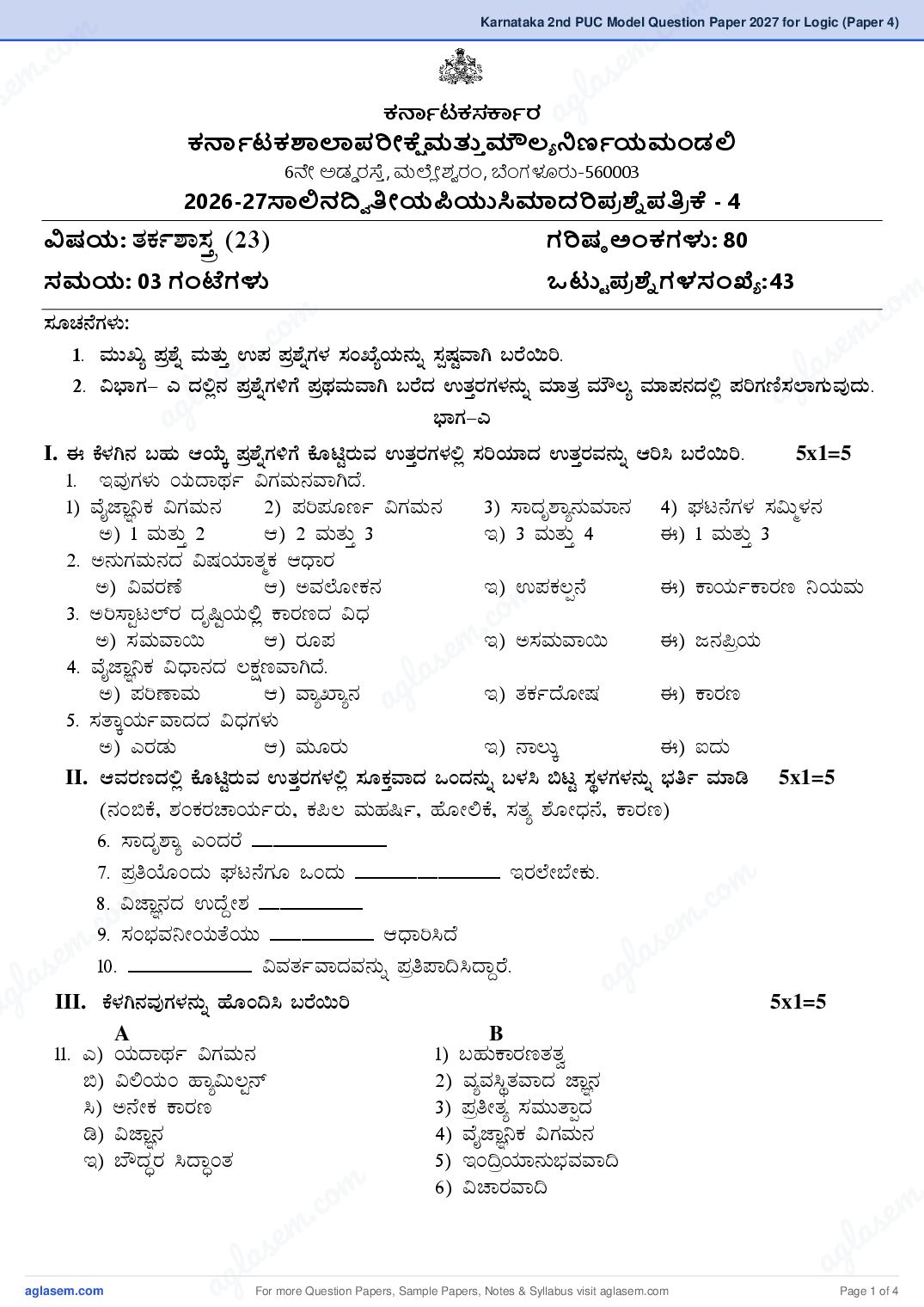
ಕ್ಸಾಟಕಶಾಲಾಪರೀ್᥌ೆ ಮ್᥈ು ಮೌಲ್ಯ ನಿರ್ಾಯಮಂಡಲಿ
6ನೇ ಅಡ್ಡ ರ್ᥜೆ , ಮಲ್ಲ ೇಶ್ವ ರಂ, ಬಂಗಳೂರು-560003
2026-27ಸಾಲಿನ್ᥛಿ ತೀಯಪಿಯುಸಿಮಾದರಪರ ್ᥞೆ ಪತರ ್᥌ - 4
ವಿಷಯ: vÀPð
À ±Á¸ÀÛç (23) ಗರಷಠ ಅಂಕಗಳು: 80
ಸಮಯ: 03 ಗಂಟೆಗಳು ಒ್ು ಪರ ್ᥞೆ ಗಳಸಂ್᥅ಯ : 43
m
m .co
.co m
¸ÀÆZÀ£ÉUÀ¼ÀÄ:
m s e
1. ªÀÄÄRå ¥Àæ±Éß ªÀÄvÀÄÛ G¥À ¥Àæ±ÉßUÀ¼À ¸ÀASÉåAiÀÄ£ÀÄß ¸ÀàµÀÖªÁV §gɬÄj.
s e l a
l a ag
2. «¨sÁUÀ- J zÀ°è£À ¥Àæ±ÉßUÀ½UÉ ¥ÀæxÀªÀĪÁV §gÉzÀ GvÀÛgÀUÀ¼À£ÀÄß ªÀiÁvÀæ ªÀiË®å ªÀiÁ¥À£ÀzÀ°è ¥ÀjUÀt¸À¯ÁUÀĪÀÅzÀÄ.
g
a ¨sÁUÀ-J
I. F PɼÀV£À §ºÀÄ DAiÉÄÌ ¥Àæ±ÉßUÀ½UÉ PÉÆnÖgÀĪÀ GvÀÛgÀUÀ¼À°è ¸ÀjAiÀiÁzÀ GvÀÛgÀªÀ£ÀÄß Dj¹ §gɬÄj. 5x1=5
1. EªÀÅUÀ¼ÀÄ AiÀÄzÁxÀð «UÀªÀÄ£ÀªÁVzÉ.
1) ªÉÊeÁÕ¤PÀ «UÀªÄÀ £À 2) ¥Àj¥ÀÆtð «UÀªÄÀ £À 3) ¸ÁzÀȱÁå£ÀĪÀiÁ£À 4) WÀl£ÉU¼ À À ¸À«Ää¼À£À
C) 1 ªÀÄvÀÄÛ 2 D) 2 ªÀÄvÀÄÛ 3 E) 3 ªÀÄvÀÄÛ 4 F) 1 ªÀÄvÀÄÛ 3
2. C£ÀÄUÀªÀÄ£ÀzÀ «µÀAiÀiÁvÀäPÀ DzsÁgÀ
C) «ªÀgÀuÉ D) CªÀ¯ÉÆÃPÀ£À E) G¥ÀP®
m
À à£É F) PÁAiÀÄðPÁgÀt ¤AiÀĪÀÄ
3. Cj¸ÁÖl¯ïgÀ zÀȶÖAiÀÄ°è PÁgÀtzÀ «zsÀ
m .co
C) ¸ÀªÀĪÁ¬Ä D) gÀÆ¥À
s e E) C¸ÀªÄÀ ªÁ¬Ä F) d£À¦A æ iÀÄ
4. ªÉÊeÁÕ¤PÀ «zsÁ£ÀzÀ ®PÀëtªÁVzÉ.
g la
C) ¥ÀjuÁªÀÄ D) ªÁåSÁå£À
5. ¸ÀvÁÌAiÀÄðªÁzÀzÀ «zsÀUÀ¼ÀÄ
a E) vÀPð À zÉÆõÀ F) PÁgÀt
C) JgÀqÄÀ D) ªÀÄÆgÀÄ E) £Á®ÄÌ F) LzÀÄ
II. DªÀgÀtzÀ°è PÉÆnÖgÀĪÀ GvÀÛgÀUÀ¼À°è ¸ÀÆPÀªÛ ÁzÀ MAzÀ£ÀÄß §¼À¹ ©lÖ ¸ÀܼÀUÀ¼À£ÀÄß ¨sÀwð ªÀiÁr 5x1=5
(£ÀA©PÉ, ±ÀAPÀgÀZÁAiÀÄðgÀÄ, PÀ¦® ªÀĺÀ¶ð, ºÉÆðPÉ, ¸ÀvåÀ ±ÉÆÃzsÀ£É, PÁgÀt)
6. ¸ÁzÀȱÁå JAzÀgÉ _____________
7. ¥ÀæwAiÉÆAzÀÄ WÀl£ÉUÆ À MAzÀÄ ______________ EgÀ¯ÉèÉÃPÀÄ.
m
m .co
.co
8. «eÁÕ£ÀzÀ GzÉÝñÀ __________
e m
em
9. ¸ÀA¨sÀªÀ¤ÃAiÀÄvÉAiÀÄÄ __________ DzsÁj¹zÉ
l as
s
la III. PɼÀV£ÀªÀÅUÀ¼À£ÀÄß ºÉÆA¢¹ §gɬÄj
10. ____________ «ªÀvÀðªÁzÀªÀ£ÄÀ ß ¥Àæw¥Á¢¹zÁÝgÉ.
ag
ag 5x1=5
A B
11. J) AiÀÄzÁxÀð «UÀªÀÄ£À 1) §ºÀÄPÁgÀtvÀvÀé
©) «°AiÀÄA ºÁå«Ä®Ö£ï 2) ªÀåªÀ¹ÜvÀªÁzÀ eÁÕ£À
¹) C£ÉÃPÀ PÁgÀt 3) ¥ÀæwÃvÀå ¸ÀªÄÀ ÄvÁàzÀ
r) «eÁÕ£À 4) ªÉÊeÁÕ¤PÀ «UÀªÄÀ £À
E) ¨ËzÀÞgÀ ¹zÁÞAvÀ 5) EA¢æAiÀiÁ£ÀĨsª À ÀªÁ¢
m .
.co
6) «ZÁgÀªÁ¢
e m
em l as
las ag
ag For more Question Papers, Sample Papers, Notes & Syllabus visit Page 1 of 4
Page 3
12. CªÀ¯ÉÆÃPÀ£À JAzÀgÉãÀÄ?
13. PÁgÀtUÀ¼À ¸ÀAAiÉÆÃUÀ JAzÀgÉãÀÄ?
14. ªÀdåð ¸ÀÆvÀæ JAzÀgÉãÀÄ?
15. DzsÁgÀ PÀ®à£É JAzÀgÉãÀÄ?
16. ¸ÁªÀiÁ£Àå «ªÀgu À É JAzÀgÉãÀÄ?
:: ¨sÁUÀ-© ::
V.PɼÀV£À AiÀiÁªÀÅzÁzÀgÀÆ ºÀvÄÀ Û ¥Àæ±ÉßUÀ½UÉ GvÀÛj¹ 10x2=20
17. WÀl£ÉU¼ À À ¸À«Ää¼À£ÀzÀ «zsÁ£À JAzÀgÉãÀÄ?
18. EA¢æAiÀiÁ£ÀĨsª À ÀªÁzÀzÀ vÀvéÀeÁÕ¤UÀ¼À£ÄÀ ß ºÉ¸Àj¹
19. Cj¸ÁÖl¯ïgÀÄ ¤ÃrzÀ £Á®ÄÌ PÁgÀtUÀ¼À£ÀÄß ºÉ¸Àj¹
20. PÁgÀuÁA±À/ G¥Á¢üU¼ À À£ÄÀ ß ºÉ¸Àj¹
21. PÁgÀtzÀ ¥ÀjªÀiÁuÁvÀäPÀ zÀȶÖPÉÆãÀª£ À ÀÄß w½¹
22. ªÀfð¸ÀĪÀ ¥ÀæQæAiÉÄAiÀÄ JgÀqÄÀ vÀvÀéU¼ À À£ÄÀ ß §gɬÄj
23. ¸ÀºÀ ¥ÀjªÀvð À £Á «zsÁ£ÀzÀ ¸ÁAPÉÃwPÀ GzÁºÀgu À ÉAiÀÄ£ÀÄß PÉÆr
24. ¸ÁªÀiÁ£Àå eÁÕ£À ªÀÄvÀÄÛ ªÉÊeÁÕ¤PÀ eÁÕ£ÀPÆ À Ì EgÀĪÀ JgÀqÀÄ ªÀåvÁå¸ÀUÀ¼À£ÀÄß §gɬÄj
25. DzsÁgÀPÀ®à£É ªÀÄÆ® w½¹
26. DzsÁgÀPÀ®à£ÉAiÀÄ ¥Àj²Ã®£É «zsÀUÀ¼À£ÀÄß w½¹
27. ¸ÀA¨sÀªÀ¤ÃAiÀÄvÉAiÀÄ DzsÁgÀUÀ¼À£ÀÄß w½¹
28. ¸ÀA¨sÀªÀ¤ÃAiÀÄvÉ ªÀÄvÀÄÛ «UÀªÀÄ£ÀQÌgÀĪÀ ¸ÀA§AzsÀªÀ£ÄÀ ß w½¹
29. ªÉÊeÁÕ¤PÀ «ªÀgÀuÉAiÀÄ «zsÀUÀ¼À£ÀÄß §gɬÄj
30. ªÉÊeÁÕ¤PÀ «ªÀgÀuÉAiÀÄ «ÄwUÀ¼À£ÄÀ ß w½¹
31. ¥ÀjuÁªÀĪÁzÀz° À è£À «zsU À ¼À À£ÄÀ ß ºÉ¸Àj¹.
:: ¨sÁUÀ-¹ ::
VI. PɼÀV£À AiÀiÁªÀÅzÁzÀgÀÆ £Á®ÄÌ ªÁzÀUÀ¼À ¸ÀªÀÄAd¸ÀvAÉ iÀÄ£ÀÄß ¥Àj²Ã°¹ ªÀÄvÀÄÛ «ªÀj¹ 4x5=20
32. £Á£ÀÄ £À£ßÀ UÀÄgÀÄUÀ¼À£ÄÀ ß JvÀÛgÀ, vÀÆPÀ ªÀÄvÀÄÛ §tÚzÀ°è ºÉÆîÄvÉÛãÉ. £À£ßÀ UÀÄgÀÄUÀ¼ÀÄ M§â DzÀ±ð À
²PÀëPÀgÁVzÀÝgÄÀ , DzÀÝjAzÀ £Á£ÀÄ PÀÆqÀ DzÀ±ð À ²PÀëPÀ£ÁUÀ§¯Éè
33. AiÀiÁgÀÄ CªÀÄgÀg® À è KPÉAzÀgÉ J®ègÀÆ ¸ÁAiÀÄÄvÁÛgÉ.
34. ¨É¼ÀV£À eÁªÀzÀ PÀ£À¸ÀÄUÀ¼ÀÄ £À£À¸ÁUÀÄvÀÛzÉ.
35. ¢Ã¥ÀzÀ PÀA§ªÀ£ÄÀ ß zɪéÀªÉAzÀÄ ¨Á«¸ÀĪÀÅzÀÄ.
36. ¥ÀÆdå ¸Áé«ÄÃfUÀ¼À DUÀªÀÄ£ÀzÀ £ÀAvÀgÀ §¼Áîj f¯ÉèAiÀÄ°è C¢üPÀ ªÀļÉAiÀiÁ¬ÄvÀÄ. DzÀÝjAzÀ §¼Áîj
f¯ÉèAiÀÄ°è C¢üPÀ ªÀļÉAiÀiÁUÀ®Ä ¥ÀÆdågÀ DUÀªÄÀ £ÀªÉà PÁgÀt
37. ¤Ã£Éà ¸ÀļÀÄî ºÉüÀĪÀÅzÀ£ÄÀ ß ©nÖâÝÃAiÀiÁ?
:: ¨sÁUÀ-r ::
VII. PɼÀV£À AiÀiÁªÀÅzÁzÀgÀÆ JgÀqÀÄ ¥Àæ±ÉßUÀ½UÉ GvÀÛj¹ 2x5=10
38. ¸ÁªÀiÁ£Àå zÀæ¶ÖAiÀÄ°è PÁgÀtªÀ£ÄÀ ß «ªÀj¹
39. QæAiÀiÁPÁj G¥ÀP® À à£É JAzÀgÉãÀÄ? GzÁºÀgu À ÉAiÉÆA¢UÉ «ªÀj¹
40. ªÀAzÀå / §AeÉ G¥ÀPÀ®à£É JAzÀgÉãÀÄ? GzÁºÀgu À ÉAiÉÆA¢UÉ «ªÀj¹
41. ZÁªÁðPÀgÀ zÀȶÖAiÀÄ°è PÁgÀtªÀ£ÄÀ ß «ªÀj¹
:: ¨sÁUÀ-E ::
VIII. PɼÀV£À AiÀiÁªÀÅzÁzÀgÀÆ MAzÀÄ ¥Àæ±ÉßUÉ GvÀÛj¹ 1x10=10
42. DAiÀÄzÁxÀð «UÀªÀÄ£ÀªÀ£ÀÄß «ªÀj¹.
43. eÉ.J¸ï «Ä¯ïgÀ ªÀåvÁå¸ÀzÀ «zsÁ£Àª£ À ÀÄß «ªÀj¹.
For more Question Papers, Sample Papers, Notes & Syllabus visit Page 2 of 4
Page 4
m .co
m .co s em
se g la
a
GOVERNMENT OF KARNATAKA
KARNATAKA SCHOOL EXAMINATION AND ASSESSMENT BOARD
6TH CROSS, MALLESHWARAM, BENGALURU – 560 003
2026 -27II PUC MODEL QUESTION PAPER – 4
SUBJECT: LOGIC (23) MAXIMUM MARKS: 80
TIME: 03 HOURS NUMBER OF QUESTIONS: 43
Instructions: m
m .co
.co
1. Write the main and Sub- question number clearly
2. For PART-A. questions only the answer written first will be considered for evaluation e m
e m l as
l a s PART-A
Multiple-choice questions by choosing the correct answer. 5x1=5 ag
ag induction
I. Answer the following
1. These are proper
1. Scientific Induction 2. Perfect Induction 3. Analogy 4. Colligations of facts
a) 1 and 2 b) 2 and 3 c) 3 and 4 d) 1 and 3
2. Material ground of induction.
a) Explanation b) observation c) Hypothesis d) theory of causation
3. Type of Aristotle view of cause
a) samavayi b) Formal c) Asamavayi d) Popular
m
.co
4. Characteristic of Scientific method
m
a) Parinama b) definition c) Fallacy d) cause
5. Types of satkaryavada
s e
a) Two b) Three
g lac) Four d) Five
a
II. Fill in the blanks using the appropriate one given in the bracket 5x1=5
(Belief, Shankaracharya, Kapila Maharshi, Resemblance, Discovery of truth, cause)
6. Analogy means_________________
7. Every event have a__________________
8. _______________ is the aim of science.
9. Probability is based on_____________
10. Vivarthavada advocated by__________
m
.co
III. Match the following 5x1=5
m
.co m
A B
m
11. A) proper induction 1. plural cause
s e
s e g l a
la
B) William Hamiltion 2. Systematic Knowledge
g C) Many cause. 3. Pratithya Samuth Pada a
a D) Science. 4. an scientific induction
E) Buddha's theory 5. Empiricist
6.Rationalist
IV. Answer all the Following questions 5x1=5
12. What is observation.
13.What is conjunction of causes
14. What is Elimination
m .
.co m
15. What is probability
s e
em a
16. What is popular Explanation.
s l
g la ag
a For more Question Papers, Sample Papers, Notes & Syllabus visit Page 3 of 4
Page 5
V. Answer questions any Ten of the following 10x2=20
17. What is colligation of facts
18. Name the thinkers of Empiricism
19. Name the four causes given by Aristotle.
20. Mention the types of condition.
21. Mention the quantitative theory of causation.
22. Write two principles of elimination
23.Give Symbolic example for the method of concomitant variation.
24. Write the two differences between ordinary knowledge and Scientific knowledge
25. Mention the principle ways of Hypothesis
26. Mention the types of Hypothesis verification
27. Mention the grounds of probability
28. Mention the relationship between Probability and induction
29. Write the kinds of scientific Explanation
30. Mention the limitations of scientific explanation.
31. Name the types of Parinamavada.
PART-C
VI. Test and Explain the validity of any four of the following arguments 4x5=20
32. I resemble my teacher in height, weight, and colour, my teacher is a one of the model teachers,
therefore I can also be a model teacher.
33. No Men are immortal because everybody dies
34. Dreams fall in the early to morning come true
35. To Assume Electric Poll has a ghost.
36. After the visit of Swamiji, Bellary district got heavy rain, therefore the Visiting of Swamiji is the
cause of heavy rain in Bellary district
37. When did you stop telling lies?
PART-D
VII. Answer any Two of the following questions 2x5=20
38. Explain the popular view of Causation.
39. What is working hypothesis? Explain with an example?
40. What is Barren hypothesis? Explain with an example?
41. Explain the view of cause in Charvaka
PART-E
VIII. Answer any one of the following questions 1x10=10
42. Explain the Kinds of improper induction.
43. Explain J.S. Mill's method of difference.
For more Question Papers, Sample Papers, Notes & Syllabus visit Page 4 of 4
Document Details
| Board / Org | Karnataka Board |
| Exam | Class 12 |
| Type | Sample Paper |
| Pages | 4 |
| Language | english |
| Updated | 03 Nov 2026 |