Finished viewing? Save it for later —
Download ISC Class 12 Syllabus 2028 Biology (PDF · 13 pages)About ISC Class 12 Syllabus 2028 Biology
ISC Class 12 Syllabus 2028 Biology is available here for free download. Published by CISCE for Class 12, this syllabus can be viewed online or downloaded as a PDF (13 pages). Candidates preparing for Class 12 can use ISC Class 12 Syllabus 2028 Biology to understand the exam pattern, the type of questions asked, and the overall difficulty level.
Frequently Asked Questions
How can I download ISC Class 12 Syllabus 2028 Biology?
Open this page and click the Download button to save ISC Class 12 Syllabus 2028 Biology as a PDF. It is completely free on AglaSem Docs.
Is ISC Class 12 Syllabus 2028 Biology free to download?
Yes. ISC Class 12 Syllabus 2028 Biology can be viewed online and downloaded as a PDF free of cost on AglaSem Docs.
How many pages does ISC Class 12 Syllabus 2028 Biology have?
ISC Class 12 Syllabus 2028 Biology contains 13 pages, which you can read online or download together as a single PDF.
Where can I find more Class 12 study material?
You can find more Class 12 question papers, sample papers, syllabus, and answer keys on AglaSem Docs.
ISC Class 12 Syllabus 2028 Biology – Text
Read the full text of this syllabus below — useful to quickly search, copy and reference the content online without downloading the PDF.
📄 View text version (13 pages)
Page 1
INDIAN SCHOOL CERTIFICATE
EXAMINATION
YEAR 2028
BIOLOGY
(863)
Page 2
Research, Development and Curriculum Division (RDCD)
CISCE
January 2026
____________________________________________________________________________________________
© Copyright, Council for the Indian School Certificate Examinations
All rights reserved. The copyright to this publication and any part thereof solely vests in the Council for the Indian
School Certificate Examinations. This publication and no part thereof may be reproduced, transmitted, distributed or
stored in any manner whatsoever, without the prior written approval of the Council for the Indian School Certificate
Examinations.
Page 3
MISSION STATEMENT
The Council for the Indian School Certificate
Examinations is committed to serving the nation's
children, through high quality educational
endeavours, empowering them to contribute towards
a humane, just and pluralistic society, promoting
introspective living, by creating exciting learning
opportunities, with a commitment to excellence.
ETHOS OF CISCE
Trust and fair play.
Minimum monitoring.
Allowing schools to evolve their own niche.
Catering to the needs of the children.
Giving freedom to experiment with new ideas
and practices.
Diversity and plurality - the basic strength for
evolution of ideas.
Schools to motivate pupils towards the
cultivation of:
Excellence - The Indian and Global
experience.
Values - Spiritual and cultural - to be the bedrock
of the educational experience.
Schools to have an 'Indian Ethos', strong roots in
the national psyche and be sensitive to national
aspirations.
Page 4
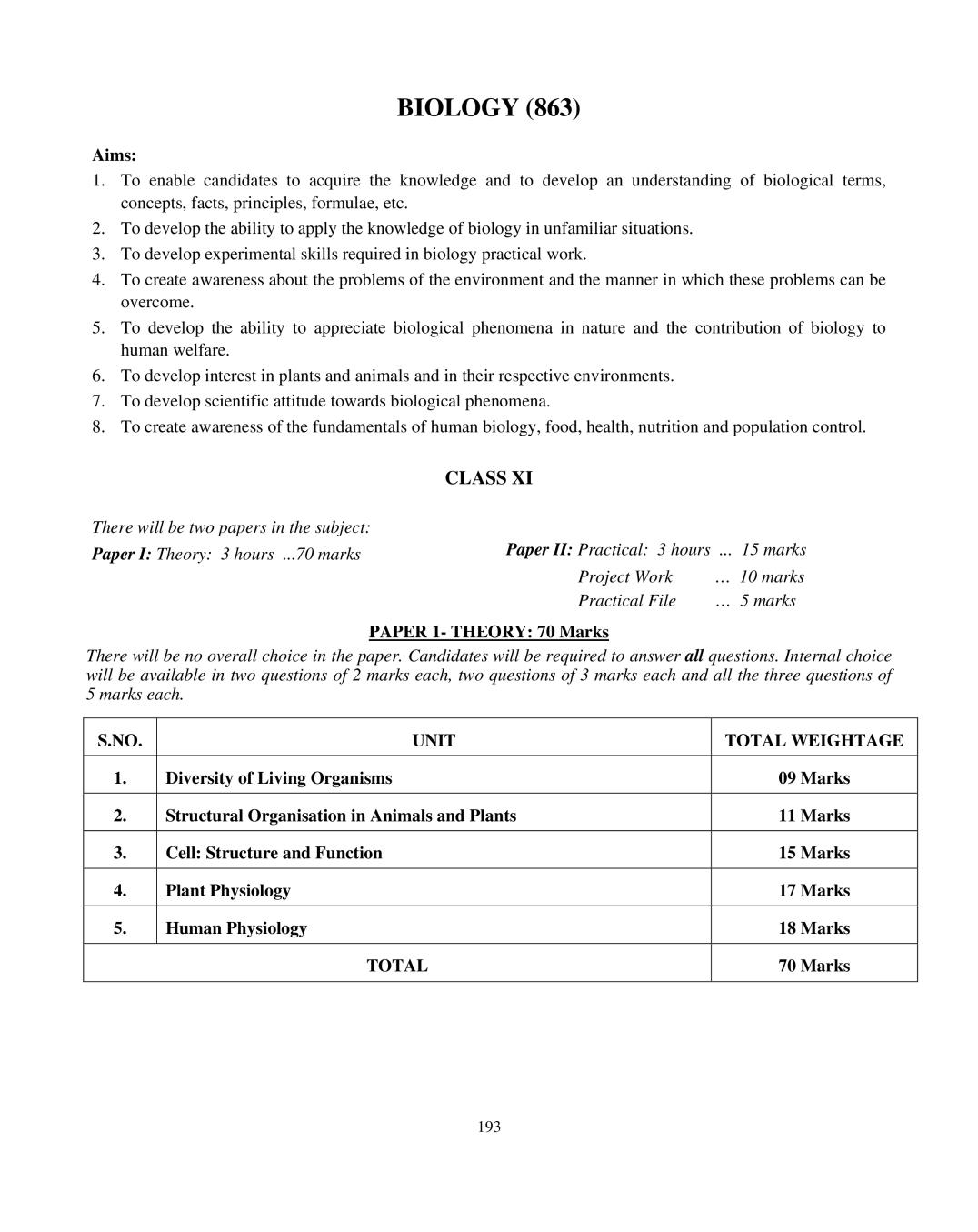
There will be two papers in the subject:
Paper I: Theory: 3 hours ... 70 marks
Paper II: Practical: 3 hours ... 15 marks
Project Work … 10 marks
Practical File … 5 marks
PAPER I (THEORY) : 70 Marks
S. No. UNIT TOTAL WEIGHTAGE
1. Reproduction 16 Marks
2. Genetics and Evolution 15 Marks
3. Biology and Human Welfare 14 Marks
4. Biotechnology and its Applications 10 Marks
5. Ecology and Environment 15 Marks
TOTAL 70 Marks
PAPER I (THEORY) : 70 Marks
All structures (internal and external) are required to be taught along with diagrams.
1. Reproduction
(i) Sexual reproduction in flowering plants
Flower structure; development of male and female gametophytes; pollination - types, agencies
and examples; outbreeding devices; pollen-pistil interaction; artificial hybridisation, double
fertilization; post fertilization events - development of endosperm and embryo, development of seed
and formation of fruit; special modes - apomixis, parthenocarpy, polyembryony; Significance of
seed dispersal and fruit formation.
Pre-fertilisation structures and events.
Structure of microsporangium, T.S. of anther microsporogenesis, structure and development of
pollen grain, viability of pollen grain, economic importance of pollen grain. Pistil – structure of
megasporangium (L.S. of anatropous ovule), megasporogenesis, structure and development of
female gametophyte.
Types of pollination (autogamy, chasmogamy, cleistogamy, geitonogamy, xenogamy), adaptations
in flowers pollinated by wind, water and insects. Advantages of self and cross-pollination.
Contrivances for prevention of self-pollination. Pollen-pistil interaction in terms of
incompatibility/compatibility, events leading to fertilisation, artificial hybridisation: procedure
(emasculation and bagging), and its significance in plant breeding); definition of triple fusion and
double fertilisation, significance of double fertilisation, changes in the ovary and ovule for seed and
fruit formation; apomixis, polyembryony, parthenocarpy to be explained briefly. Fruits to be
classified into true and false, structure (L.S) of a typical fruit (mango and coconut); Internal
structure of dicot (bean) and monocot (maize) seeds; definition, differences and examples of
albuminous and non-albuminous seeds. Significance of seed and fruit formation. Significance of
dispersal of seeds.
Post-fertilisation events - embryo formation (monocot and dicot); types of endosperm (cellular,
nuclear and helobial); definition of perisperm.
11
Page 5
Male and female reproductive systems; microscopic anatomy of testis and ovary; gametogenesis -
spermatogenesis and oogenesis; menstrual cycle; fertilisation, embryo development upto blastocyst
formation, implantation; pregnancy and placenta formation (elementary idea); parturition (elementary
idea); lactation (elementary idea).
Organs of male and female reproductive system and their functions; internal structure of testis and
ovary to be taught with the help of diagrams; gametogenesis- spermatogenesis (including
spermiogenesis and spermiation) oogenesis; hormonal control of gametogenesis, structure of sperm
and mature ovum, menstrual cycle - different phases and hormone action, differences between
oestrous and menstrual cycle, menarche and menopause, physico-chemical events during fertilisation,
implantation, embryonic development up to blastocyst formation, important features of human
embryonic development (formation of heart, limbs, digits, appearance of hair on head, eyelashes,
separation of eye lids, external genital organs and first movement of foetus with reference to time
period) placenta and its functions (structure and the types of placenta not required). Parturition;
lactation – hormonal control and importance.
(iii) Reproductive Health
Need for reproductive health and prevention of Sexually Transmitted Diseases (STDs); birth control
- need and methods, contraception and medical termination of pregnancy (MTP); amniocentesis;
infertility and assisted reproductive technologies (elementary idea for general awareness).
Definition of reproductive health, programs of reproductive health (family planning, RCH),
population explosion - role of government in controlling the population, contraceptives methods and
their methods of action (natural-periodic abstinence, withdrawal or coitus interruptus, lactational
amenorrhea; artificial – barriers, IUDs, oral pills, spermicidal agents, implants and surgical
methods, definition of medical termination of pregnancy (MTP) and reasons for it; causes of
infertility. Amniocentesis and its role in detecting genetic defects. Assisted reproductive technologies:
IVF, IUT, ZIFT, ICSI, GIFT, AI, IUI. - definition and application only. Causes, symptoms and methods
of prevention of sexually transmitted diseases (genital warts, genital herpes, hepatitis- B, AIDS
gonorrhoea, syphilis, chlamydiasis, trichomoniasis).
2. Genetics and Evolution
(i) Principles of inheritance and variation
Heredity and variation: Mendelian inheritance; deviations from Mendelism - incomplete dominance,
co-dominance, multiple alleles and inheritance of blood groups, pleiotropy; elementary idea of
polygenic inheritance; chromosomal theory of inheritance; sex determination; linkage and crossing
over; mutation; sex linked inheritance; Mendelian disorders in humans; chromosomal disorders in
humans.
Explanation of the terms heredity and variation; Mendel's Principles of inheritance; reasons for
Mendel's success; Biological importance of Mendelism; definition of homologous chromosomes,
autosomes and sex chromosomes; alleles – dominant and recessive; phenotype; genotype;
homozygous; heterozygous, monohybrid and dihybrid crosses; back cross and test cross, definitions
to be taught with simple examples using Punnett square. Incomplete dominance with examples from
plants (snapdragon - Antirrhinum). Co-dominance and multiple allelism – (pattern of inheritance of
ABO blood group in humans), polygenic inheritance with an example of inheritance of skin colour in
humans (students should be taught examples from human genetics through pedigree charts. They
should be able to create a pedigree chart and interpret the patterns of inheritance by analysis of
pedigree chart). Pleiotropy with reference to the example of Phenylketonuria (PKU) in human beings
and starch synthesis in pea seeds. Chromosomal theory of inheritance; sex determination in humans,
birds, honey bees and grasshopper, sex-linked inheritance - with reference to Drosophila (colour of
body-yellow and brown; and colour of eyes-red and white), and man (haemophilia and colour
blindness), definition and significance of linkage and crossing over. Mutation: spontaneous, induced,
gene (point – transition, transversion and frame-shift); human genetic disorders: phenylketonuria,
thalassaemia, colour blindness, sickle cell anaemia; chromosomal disorders: Down’s syndrome,
Klinefelter’s syndrome, Turner’s syndrome.
12
Page 6
Search for genetic material; structure of DNA and RNA; DNA packaging; DNA replication; central
dogma; transcription, genetic code, translation; r eg ul at i on of gene expression- lac operon; human
genome project; DNA fingerprinting.
Structure of eukaryotic chromosomes with reference to nucleosome; properties of ideal genetic
material such as ability to replicate, chemical stability, mutability and inheritability. Search for DNA
as genetic material - Griffith’s experiment, Hershey and Chase’s experiment, Avery, McLeod and
McCarty’s experiment; double helical model of DNA (contributions of Miescher, Watson and Crick,
Wilkins, Franklin and Chargaff); Differences between DNA and RNA; types of RNA (tRNA, mRNA
and rRNA, snRNA, hnRNA); central dogma; reverse transcription (basic idea only), replication of
DNA (role of enzymes, namely DNA polymerase and ligase), Meselson and Stahl’s experiment, and
Taylor’s experiment. Transcription, post-transcriptional processing in eukaryotes (splicing, capping
and tailing). Intron, exon, cistron, recon, muton, monocistronic and polycistronic transcription unit
(definitions only). Discovery and essential features of genetic code. Definition of codon. Protein
synthesis – translation in prokaryotes. Gene expression; lac operon in E. coli.
Human Genome Project: goal; methodologies [Expressed Sequence Tags (EST), Sequence
Annotation], salient features and applications. DNA finger printing – technique, application and
ethical issues to be discussed briefly.
(iii) Evolution
Origin of life; biological evolution and evidences for biological evolution (palaeontology,
comparative anatomy, embryology and molecular evidences); Darwin's contribution, modern
synthetic theory of evolution; mechanism of evolution - variation and natural selection with
examples, types of natural selection; gene flow and genetic drift; Hardy - Weinberg's principle;
adaptive radiation; human evolution.
Origin of life - abiogenesis and biogenesis, effect of oxygen on origin of life to show that reducing
atmosphere is essential for abiotic synthesis. Important views on the origin of life (panspermia,
spontaneous generation), modern concept of origin of life, Oparin Haldane theory (definition of
protobionts, coacervates); Miller and Urey experiment. Evidences of evolution: morphological
evidences, definition and differences between homologous and analogous organs (two examples each
from plants and animals), convergent evolution and divergent evolution, vestigial organs;
Embryological evidences – theory of recapitulation, definition and differences between ontogeny and
phylogeny. Palaeontological evidence – definition of fossils and radioactive carbon-dating.
Geological time scale (with reference to dominant flora and fauna) Biogeographical evidence –
definition of biogeography, molecular (genetic) evidences -for example genome similarity, universal
genetic code; Darwin's finches and marsupials (adaptive radiation).
Darwinism: salient features of Darwinism, contribution of Malthus. Examples of natural selection –
Long neck of giraffe, industrial melanism, resistance of mosquitoes to DDT and resistance of bacteria
to antibiotics, Lederberg’s replica plating experiment, criticism of Darwinism. Neo-Darwinism
(Modern Synthetic Theory); gene migration or gene flow, genetic drift (Founder’s effect, bottle-neck
effect), mutation, genetic recombination and natural selection, Hugo de Vries theory of mutation -
role of mutation in evolution; Hardy Weinberg’s principle, factors affecting Hardy Weinberg
equilibrium (numericals on Hardy Weinberg equilibrium), Variation - causes of variation (mutation
and recombination), types of natural selection (directional, disruptive and stabilizing). Evolution of
man - three features (for example cranial capacity, height, posture, dentition, social behaviour, etc.)
of each of the ancestors Dryopithecus, Ramapithecus, Australopithecus, Homo habilis, Homo erectus,
Homo neanderthalensis, Cro-magnon man leading to man of today (Homo sapiens sapiens).
13
Page 7
(i) Human Health and Diseases
Pathogens; parasites causing human diseases (viruses, bacteria, protozoans, helminths, and
fungi);Basic concepts of immunology - vaccines; cancer, HIV and AIDS; Adolescence - drug and
alcohol abuse.
Communicable diseases; modes of transmission, causative agents, symptoms and prevention; viral
diseases (common cold, chikungunya and dengue), bacterial diseases (typhoid- diagnosed by Widal
test, pneumonia, diphtheria and plague), protozoal diseases (amoebiasis, and malaria, graphic
outline of life cycle of Plasmodium), helmintic diseases (ascariasis, and filariasis); fungal
(ringworms); cancer - types of tumour (benign, malignant), causes, diagnosis and treatment (surgery,
immunotherapy, and radiotherapy), characteristics of cancer cells (loss of contact inhibition and
metastasis); allergies and allergens – definition and general symptoms of allergies.
Immunity (definition and types – innate immunity - role of physical barriers, physiological barriers,
cellular barriers, and cytokine barriers; and acquired, active and passive, humoral and cell-
mediated), Interferons – definition, source and function; structure of a typical antibody molecule,
types of antibodies - IgG, IgA, IgM, IgD and IgE (function and occurrence, e,g. in serum, saliva,
colostrum); vaccination and immunisation; autoimmunity, primary and secondary lymphoid organs
and tissues, brief idea of AIDS – causative agent (HIV), modes of transmission, diagnosis (ELISA),
symptoms, replication of retrovirus in the infected human cell (including diagram) and prevention.
Alcoholism and smoking - effects on health.
Drugs: effects and sources of opioids, cannabinoids, cocaine and barbiturates.
Reasons for addiction; prevention and control of alcohol and drug abuse.
(ii) Microbes in Human Welfare
In household food processing, industrial production, sewage treatment, energy generation and
microbes as biocontrol agents and biofertilisers. Antibiotics.
Use of microbes in: (i) Household products: Lactobacillus (curd), Saccharomyces (bread),
Propionibacterium (Swiss cheese); (ii) Industrial products: beverages (with and without distillation),
antibiotics (Penicillin – discovery and use); sources (microbes) and uses of organic acids, alcohols
and enzymes (lipase, pectinase, protease, streptokinase) in industry, sources (microbes) and
applications of Cyclosporin-A, Statins. (iii) Sewage treatment – primary and secondary treatment;
(iv) Production of biogas (methanogens, biogas plant, composition of biogas and process of
production); (v)Biocontrol agents (ladybird, dragonfly, Bacillus thuringiensis Trichoderma,
Nucleopolyhedrovirus (Baculovirus), and (vi) Microbes as biofertilisers (Rhizobium, Azospirillum,
Azotobacter, Glomus, Mycorrhiza, Cyanobacteria), IPM, harmful effects of chemical pesticides.
4. Biotechnology and its Applications
(i) Biotechnology - Principles and processes
Genetic Engineering (recombinant DNA technology).
Definition and principles of biotechnology; isolation of genomic (chromosomal) DNA (from
bacteria/plant cell/animal cell, by cell lysis), isolation of gene of interest (by electrophoresis), steps
of formation of recombinant DNA, discovery, nomenclature, features and role of restriction enzymes
(EcoRI, HindII) and role of ligase; cloning vectors (features of a good cloning vector, examples of
cloning vectors like pBR322, Agrobacterium, retroviruses, bacterial artificial chromosome (BAC),
yeast artificial chromosome (YAC)), methods of transfer of rDNA into a competent host, e.g. by direct-
method (temperature shock), microinjection, gene gun, methods of selection of recombinants
(antibiotic resistance, insertional inactivation/blue-white selection), cloning of recombinants, i.e.,
gene amplification (by in vivo or in vitro method - using PCR technique), bioreactor (basic features
and uses of stirred tank and sparged tank bioreactors), downstream processing.
14
Page 8
Applications of biotechnology in health and agriculture: human insulin and vaccine production,
stem cell technology, gene therapy; genetically modified organisms Bt crops; transgenic animals;
biosafety issues, biopiracy and bio patents.
In agriculture: Micropropagation and somatic hybridisation techniques for production of GM crops
tolerant to abiotic stresses (cold, drought, salt, heat); pest-resistant crops (Bt-crops, RNAi with
reference to Meloidogyne incognita); crops with enhanced nutritional value (golden rice).
In medicine: insulin, vaccine production, definition of stem cells and application of stem cell
technology; gene therapy - with reference to treatment of SCID, molecular diagnosis by PCR, ELISA
(the details of the technique of ELISA are not required), and use of DNA/RNA probes.
Transgenic animals for bioactive products like alpha-1-antitrypsin for emphysema, alpha-
lactalbumin; vaccine safety testing, chemical safety testing; study of diseases.
Role of GEAC, definition and two examples of biopiracy (for example Basmati rice and turmeric),
biopatent; ethical issues.
5. Ecology and Environment
(i) Organisms and Populations
Population; population interactions - population attributes - growth, birth rate and death rate, age
distribution.
Definition of population; population attributes: sex ratio, types of age distribution pyramids for
human population; definition of population density, natality, mortality, emigration, immigration,
carrying capacity. Ways to measure population density. Calculation of natality and mortality.
Population growth: factors affecting population growth and population growth models: exponential
growth and logistic growth models along with equations, graph and examples of the same; life history
variations: definition of reproductive fitness and examples.
Population interactions – definition of mutualism, competition (interspecific, interference, competitive
release and Gause’s Principle of Competitive Exclusion), predation (adaptations in organisms to
avoid predation), parasitism (ecto-, endo-, and brood parasites), commensalism, amensalism.
(ii) Ecosystem
Ecosystems: patterns, components; productivity and decomposition; energy flow; pyramids of
number, biomass, energy.
Definition and types of ecosystems; structure of ecosystem (brief idea about biotic and abiotic
components).
Structure and function of pond ecosystem; ecosystem functions: (i) Productivity – gross primary
productivity (GPP), net primary productivity (NPP) and secondary productivity (ii) Decomposition
(fragmentation, leaching, catabolism, humification and mineralization), factors affecting rate of
decomposition (iii) Energy flow. Various types of food chains – grazing and detritus, food webs, trophic
levels, ecological pyramids – energy, number and biomass.
Definition of PAR, 10% Law, standing crop and standing state.
(iii) Biodiversity and its Conservation
Concept of biodiversity; patterns of biodiversity; importance of biodiversity; loss of biodiversity;
biodiversity conservation; hotspots, endangered organisms, extinction, Red Data Book, biosphere
reserves, national parks, sanctuaries and Ramsar sites
Definition of biodiversity, few examples of each type of biodiversity - species, ecosystem and genetic.
Global biodiversity and proportionate number of species of major taxa of plants, invertebrates and
vertebrates; patterns of biodiversity (latitudinal gradients, species-area relationship – graph and
equation), “rivet popper hypothesis”, importance of species diversity to the ecosystem (narrowly
utilitarian, broadly utilitarian, ethical terms).
15
Page 9
three sub-species of tiger – Bali, Caspian and Javan), causes of loss of biodiversity (habitat loss and
fragmentation, over-exploitation, alien species invasion, co-extinction).
Biodiversity conservation: In-situ methods - protected areas: biosphere reserves, national parks,
wildlife sanctuaries, sacred groves; ex-situ methods - captive breeding, zoo, botanical gardens,
cryopreservation, wild life safari, seed banks, tissue culture. Definitions and examples of each of the
above. Hotspots, Ramsar sites and Red Data Book.
The place, year and main agenda of historic conventions on biological diversity (the Earth Summit
and the World Summit).
Note: Topics having numerical problems to be taught with illustrative examples.
PAPER II (PRACTICAL WORK) : 15 Marks
1. Taxonomy
Study floral characteristics through dissection of flowers, drawing floral formula and diagrams of
following families:
(i) Malvaceae: type – China rose / Hollyhock.
(ii) Leguminosae: subfamily – Papilionaceae – type – Sweet pea/ Pea/ Bean/ Sesbania/ Clitoria (single
flower).
(iii) Solanaceae: type – Petunia / Datura / Brinjal Flower / Solanum nigrum.
(iv) Liliaceae: type – Onion or Amaryllidaceae –type – Lily/Spider lily/ Tiger lily/ Tube rose/ Gladiolus.
(v) Cruciferae: type – mustard, candytuft (Iberis sp)
(vi) Compositae (Asteraceae): type sunflower, Chrysanthemum, Cosmos, Dahlia, Marigold.
(vii) Gramineae (Poaceae): type – wheat, corn, rice
Floral characteristics should be explained by dissection of flowers. Students should be taught how to cut
vertical section of the flower and draw accurately labelled diagrams. The technique of drawing floral
diagrams with the mother axis in the right position is necessary. Floral formula should be correctly
written. Identification of the correct family giving reasons, technique of cutting T.S. and L.S of ovary
should be explained and accordingly correct labelled-diagram should be drawn.
Students should know the examples of plants (belonging to each family) which are of economic
importance. The examples of common names of plants must be supported with correct scientific names
as well.
NOTE: In the examination, candidates will be tested on any one of the above families.
2. Simple biochemical and physiological experiments
(i) Study of arrangement/distribution of stomata in dicot and monocot leaves.
(ii) Study of soils from two different sites.
Collect soil samples from two different areas and make a comparative study of their texture, moisture
content, humus content, water holding capacity and pH.
Guidelines for collection of soil samples:
• Texture - loamy, sandy and clayey soil.
• Moisture content – Soil samples are to be collected from a dry place and a wet place.
Alternatively, samples of soil can be dried to different degrees in oven/by keeping in sun.
• Humus Content – Collect one sample from roadside/barren land and one sample from
garden/cultivated field.
• Water holding capacity – Pour given amount of water in known weight of soil sample and record
the volume of water retained by the soil sample.
• pH – Add distilled water to the soil sample and test with pH paper.
16
Page 10
setup, record their observations methodically and give conclusions. This will give a clear idea of
the physiological processes. Questions can be asked based on the above physiological processes
studied.
(iii) To study the effect of enzyme action at three different temperatures and pH on starch solution.
Effect of enzyme (amylase/ diastase) action at three different temperatures (low- below 10oC, optimum
- 37oC and high – above 70oC) and pH (acidic, neutral and basic) on starch solution.
(iv) To isolate DNA from available plant material.
Isolation of DNA from spinach leaves, green pea seeds, pulp of banana and papaya.
Take half a ripe and peeled banana into a beaker and add 50 ml of extraction fluid (1.5gm table salt
+10 ml liquid detergent +90 ml distilled water). Place the beaker in a water bath set at 60 °C for 15
minutes. Stir gently with a glass rod. Filter 5ml of cooled content into a clean test tube and add 5ml
of cold 90% ethanol. DNA molecules separate out and appear as white fibres.
3. Slide preparation
(i) Germination of pollen grain in a nutrient medium.
(ii) T.S. of ovary of any locally available flower, to show marginal / axile placentation.
(iii) T.S. of a hydrophyte stem.
(iv) T.S. of a xerophytic leaf (Nerium).
(v) L.S. of monocot and dicot seed (soaked seeds of maize/wheat, pea/ bean.)
The technique of staining and mounting neatly should be explained. Students should also know how
to make labelled outline diagrams. They should also be taught to identify the mount under low/ high
power of microscope. Two identifying features of the above need to be mentioned.
4. Spotting: (three minutes to be given for each spot which includes identification, drawing a labelled
diagram and writing at least two identifying characteristics)
NOTE: Spotting must be done on a separate answer sheet during examination, which should be
handed over to the Examiner immediately after spotting.
(i) Identify and comment on the following:
(a) T.S. of ovary of mammal (chart/slide).
(b) T.S. of testis of mammal (chart/slide).
(c) Germinating pollen grain (slide/chart).
(d) T.S. of ovary to show the type of placentation (marginal, axile, basal (LS), parietal).
(e) T.S. of blastula / blastocyst of a mammal (chart/ slide).
(f) Whole mount of Plasmodium sporozoite (slide /chart).
(g) Whole mount of Entamoeba histolytica trophozoite (slide/chart).
(h) Preserved specimen/ chart/ model of Ascaris.
(ii) Comment upon ecological adaptations of plants and animals.
Models/ virtual images/ charts of one plant and one animal found in xeric and aquatic habitats.
Examples: Hydrilla, cactus, fish and camel.
(iii) Flowers adapted to pollination by different agencies – insect, water and wind.
Students should be able to identify the type of pollination of the given flower, draw the diagram of the
flower and give two reasons for the type of pollination. Example: Hibiscus and grass.
Students should be taught how to identify, draw, label and give significantly visible characteristics as
observed, of each spot, in a given time of three minutes. ‘T.S.’, ‘model’, ‘whole mount’, ‘chart’,
‘image’ of the specimen should be mentioned as a part of identification.
17
Page 11
Project Work – 10 Marks
The project work is to be assessed by a Visiting Examiner appointed locally and approved by CISCE.
The candidate is to creatively execute one project/assignment on an aspect of biology. Preference is to be
given to handwritten original investigatory projects, no plagiarism allowed. Candidates are required to submit
a hard copy of their computer-generated projects duly signed by the Internal Examiner (and the Head of the
Institution) for physical verification and assessment. Teachers may assign or students may choose any one
project of their choice. Students can choose any other project besides the ones indicated in the list. Following
is only a suggestive list of topics:
(i) Genetic disorders
(ii) Gene therapy
(iii) Human Genome Project
(iv) DNA fingerprinting
(v) Bio-piracy
(vi) Cancer.
(vii) AIDS/Hepatitis.
(viii) Drug addiction and community.
(ix) Role of micro-organisms in industry.
(x) Human population.
(xi) Mendelian Inheritance
(xii) Environmental resistance.
(xiii) Traditional and modern methods: Study of a few traditional methods of pest deterrence vis-a-vis modern
methods of pest control - viability of traditional methods in today's scenario and limitations and dangers
of modern methods.
(xiv) Role of agrochemicals in increasing food production.
Suggested Evaluation Criteria for Project Work:
Format of the Project:
– Content
– Introduction
– Presentation (graphs, tables, charts, newspaper cuttings, diagrams, photographs, statistical analysis if
relevant)
– Conclusion/ Summary
– Bibliography
Practical File – 5 Marks
The Visiting Examiner is required to assess students on the basis of the Biology Practical file maintained by
them during the academic year.
The practical file should cover all the practical exercises outlined in the syllabus. Each practical done during
the year, needs to be recorded date wise by the student in the Practical file and the same must be checked,
signed and dated by the teacher.
SCIENTISTS AND THEIR CONTRIBUTIONS:
1. Oparin: Coacervates, Conditions on primitive earth were favourable for chemical evolution
2. Stanley Miller & Harold Urey: Conducted experiment to validate Oparin’s theory.
3. Ernst Haeckel: Proposed the recapitulation theory
4. Charles Darwin: Natural Selection
5. Hugo de Vries: Mutation
6. T. R. Malthus: Theory of Human Population Growth/ Essays on population
18
Page 12
8. Temin and Baltimore: Reverse transcription.
9. Jacob, Monod and Lwoff: proposed Lac operon.
10. Watson and Crick: Structure of DNA
11. Nirenberg and Khorana: Genetic code
12. Benzer: Cistron, recon, muton
13. Gregor Mendel: Father of genetics
14. Sutton and Boveri: Chromosomal theory of inheritance
15. Hugo de Vries, Correns and Tschermack: Rediscovered Mendelism
16. T H Morgan: Linkage
17. P Maheshwari: Plant tissue culture
18. Henking: Discovered X-chromosome
19. F. Miescher: Isolated nucleic acid from pus cells, called Nuclein
20. Chargaff: Rule of equivalence in DNA structure
21. F. Griffith: Transformation in bacteria
22. Avery, MacLeod and McCarty: DNA is the genetic material
23. Hershey and Chase: DNA is the genetic material
24. Meselson and Stahl: Semi-conservative replication of DNA
25. G. Gamow: Triplet nature of codons
26. S Ochoa: Discovered polynucleotide phosphorylase
27. Wallace: Divided the Earth into biogeographical regions
28. M. S. Swaminathan: Green revolution in India
29. H. Boyer: Discovered Restriction Enzyme
30. S. Cohen: Developed the method to transfer plasmid DNA in host cells
31. R. Mishra: Father of Indian Ecology
32. E. Wilson: Coined the term Biodiversity
33. P Ehrlich: Rivet Popper Hypothesis
34. Sanger: DNA/Protein sequencing
35. Ernest Chain and Howard Florey – Use of Penicillin as a lifesaving antibiotic
LIST OF ABBREVIATIONS TO BE STUDIED
1. ADA- Adenosine Deaminase
2. CMI- Cell Mediated Immunity
3. DFC- Detritus Food Chain
4. EFB- European Federation of Biotechnology
5. EST- Expressed Sequence Tags
6. ET- Embryo Transfer
7. GFC- Grazing Food Chain
8. GMO- Genetically Modified Organism
9. GPP- Gross Primary Productivity
10. hnRNA - Heterogeneous Nuclear Ribo Nucleic Acid
11. IARI- Indian Agricultural Research Institute
12. IMR- Infant Mortality Rate
13. IRRI- International Rice Research Institute
14. ICSI - Intra Cytoplasmic Sperm Injection
15. IUCD/IUD – Intra uterine contraceptive device
16. IUCN- International Union for Conservation of Nature and Natural Resources
19
Page 13
18. IUT- Intra Uterine Transfer
19. KVIC- Khadi and Village Industries Commission
20. LAB- Lactic Acid Bacteria
21. MALT- Mucosa Associated Lymphoid Tissue
22. MMR- Maternal Mortality Rate
23. NACO- National AIDS Control Organisation
24. NPP- Net Primary Productivity
25. PID- Pelvic Inflammatory Diseases
26. PKU- Phenyl ketonuria
27. RCH- Reproductive and Child Health Care Programmes
28. SCID – Severe Combined Immuno Deficiency
29. SNPs - Single Nucleotide Polymorphisms
30. snRNA- Small Nuclear Ribo Nucleic Acid
31. sRNA - Soluble Ribo Nucleic Acid
32. SSBP – Single Strand Binding Protein
33. UTR - Untranslated Region
34. VNTRs - Variable Number of Tandem Repeats
20
Document Details
| Board / Org | CISCE |
| Exam | Class 12 |
| Type | Syllabus |
| Pages | 13 |
| Updated | 04 Aug 2026 |