Karnataka 1st PUC Model Question Paper 2022 for Economics
Finished viewing? Save it for later —
Download Karnataka 1st PUC Model Question Paper 2022 for Economics (PDF · 10 pages)About Karnataka 1st PUC Model Question Paper 2022 for Economics
Karnataka 1st PUC Model Question Paper 2022 for Economics is available here for free download. Published by Karnataka Board for Class 11, this sample paper can be viewed online or downloaded as a PDF (10 pages). Candidates preparing for Class 11 can use Karnataka 1st PUC Model Question Paper 2022 for Economics to understand the exam pattern, the type of questions asked, and the overall difficulty level.
Frequently Asked Questions
How can I download Karnataka 1st PUC Model Question Paper 2022 for Economics?
Open this page and click the Download button to save Karnataka 1st PUC Model Question Paper 2022 for Economics as a PDF. It is completely free on AglaSem Docs.
Is Karnataka 1st PUC Model Question Paper 2022 for Economics free to download?
Yes. Karnataka 1st PUC Model Question Paper 2022 for Economics can be viewed online and downloaded as a PDF free of cost on AglaSem Docs.
How many pages does Karnataka 1st PUC Model Question Paper 2022 for Economics have?
Karnataka 1st PUC Model Question Paper 2022 for Economics contains 10 pages, which you can read online or download together as a single PDF.
Where can I find more Class 11 study material?
You can find more Class 11 question papers, sample papers, syllabus, and answer keys on AglaSem Docs.
Karnataka 1st PUC Model Question Paper 2022 for Economics – Text
Read the full text of this sample paper below — useful to quickly search, copy and reference the content online without downloading the PDF.
📄 View text version (10 pages)
Page 1
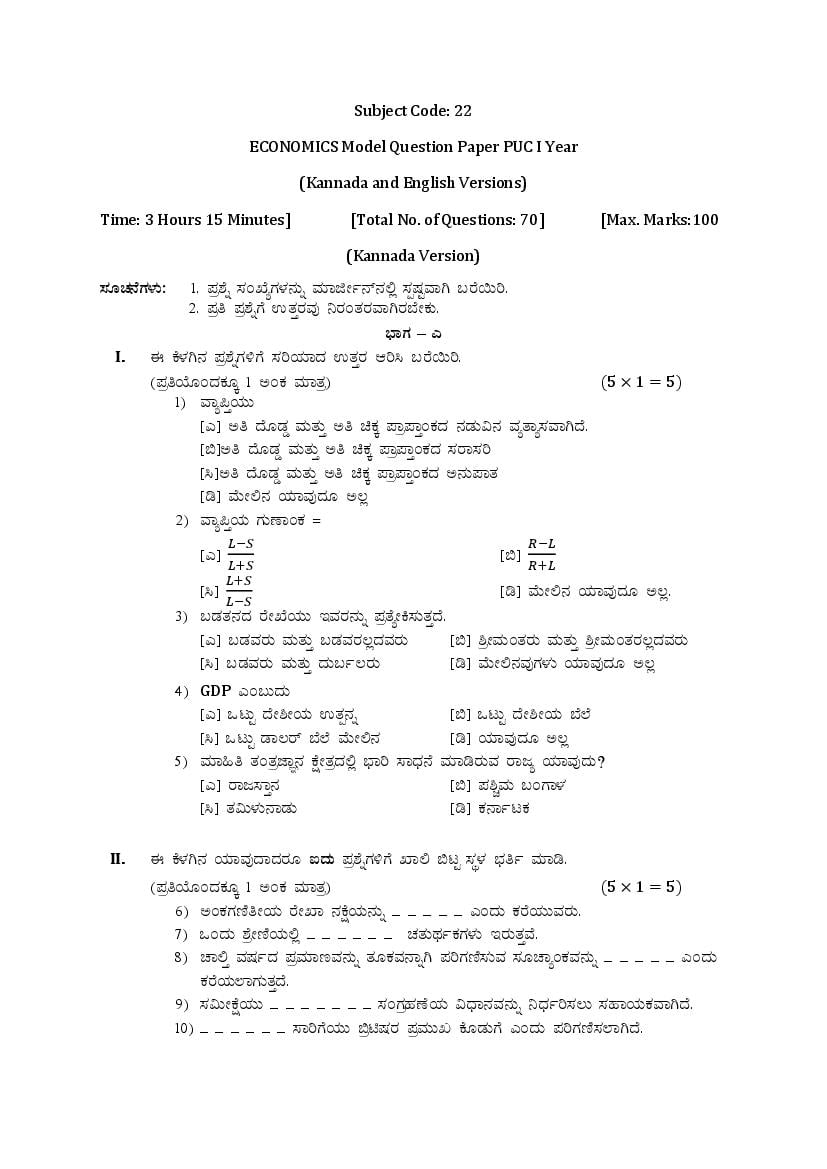
ECONOMICS Model Question Paper PUC I Year
(Kannada and English Versions)
Time: 3 Hours 15 Minutes] [Total No. of Questions: 70] [Max. Marks:100
(Kannada Version)
¸ÀÆZÀ£ÉUÀ¼ÀÄ: 1. ¥Àæ±Éß ¸ÀASÉåUÀ¼À£ÄÀ ß ªÀiÁfÃð£ï£À°è ¸ÀàµÀÖªÁV §gɬÄj.
2. ¥Àæw ¥Àæ±ÉßUÉ GvÀÛgÀªÀÅ ¤gÀAvÀgÀªÁVgÀ¨ÉÃPÀÄ.
¨sÁUÀ – J
I. F PɼÀV£À ¥Àæ±ÉßUÀ½UÉ ¸ÀjAiÀiÁzÀ GvÀÛgÀ Dj¹ §gɬÄj.
(¥ÀæwAiÉÆAzÀPÀÆÌ 1 CAPÀ ªÀiÁvÀæ) (5 × 1 = 5)
1) ªÁå¦ÛAiÀÄÄ
[J] Cw zÉÆqÀØ ªÀÄvÀÄÛ Cw aPÀÌ ¥Áæ¥ÁÛAPÀzÀ £ÀqÀÄ«£À ªÀåvÁå¸ÀªÁVzÉ.
[©]Cw zÉÆqÀØ ªÀÄvÀÄÛ Cw aPÀÌ ¥Áæ¥ÁÛAPÀzÀ ¸ÀgÁ¸Àj
[¹]Cw zÉÆqÀØ ªÀÄvÀÄÛ Cw aPÀÌ ¥Áæ¥ÁÛAPÀzÀ C£ÀÄ¥ÁvÀ
[r] ªÉÄð£À AiÀiÁªÀÅzÀÆ C®è
2) ªÁå¦ÛAiÀÄ UÀÄuÁAPÀ =
[J] [©]
[¹] [r] ªÉÄð£À AiÀiÁªÀÅzÀÆ C®è.
3) §qÀvÀ£ÀzÀ gÉÃSÉAiÀÄÄ EªÀgÀ£ÀÄß ¥ÀævÉåÃQ¸ÀÄvÀÛzÉ.
[J] §qÀªÀgÀÄ ªÀÄvÀÄÛ §qÀªÀgÀ®èzÀªÀgÀÄ [©] ²æêÀÄAvÀgÀÄ ªÀÄvÀÄÛ ²æêÀÄAvÀgÀ®èzÀªÀgÀÄ
[¹] §qÀªÀgÀÄ ªÀÄvÀÄÛ zÀħð®gÀÄ [r] ªÉÄð£ÀªÀÅUÀ¼ÀÄ AiÀiÁªÀÅzÀÆ C®è
4) GDP JA§ÄzÀÄ
[J] MlÄÖ zÉòÃAiÀÄ GvÀà£ßÀ [©] MlÄÖ zÉòÃAiÀÄ ¨É¯É
[¹] MlÄÖ qÁ®gï ¨É¯É ªÉÄð£À [r] AiÀiÁªÀÅzÀÆ C®è
5) ªÀiÁ»w vÀAvÀæeÁÕ£À PÉëÃvÀæzÀ°è ¨sÁj ¸ÁzsÀ£É ªÀiÁrgÀĪÀ gÁdå AiÀiÁªÀÅzÀÄ?
[J] gÁd¸ÁÛ£À [©] ¥À²ÑªÀÄ §AUÁ¼À
[¹] vÀ«Ä¼ÀÄ£ÁqÀÄ [r] PÀ£ÁðlPÀ
II. F PɼÀV£À AiÀiÁªÀÅzÁzÀgÀÆ LzÀÄ ¥Àæ±ÉßUÀ½UÉ SÁ° ©lÖ ¸ÀܼÀ ¨sÀwð ªÀiÁr.
(¥ÀæwAiÉÆAzÀPÀÆÌ 1 CAPÀ ªÀiÁvÀæ) (5 × 1 = 5)
6) CAPÀUÀtÂwÃAiÀÄ gÉÃSÁ £ÀPëA
É iÀÄ£ÀÄß _ _ _ _ _ JAzÀÄ PÀgÉAiÀÄĪÀgÀÄ.
7) MAzÀÄ ±ÉæÃtÂAiÀÄ°è _ _ _ _ _ _ ZÀvÀÄxÀðPÀUÀ¼ÀÄ EgÀÄvÀÛªÉ.
8) ZÁ°Û ªÀµÀðzÀ ¥ÀæªÀiÁtªÀ£ÄÀ ß vÀÆPÀªÀ£ÁßV ¥ÀjUÀt¸ÀĪÀ ¸ÀÆZÁåAPÀªÀ£ÀÄß _ _ _ _ _ JAzÀÄ
PÀgA
É iÀįÁUÀÄvÀÛzÉ.
9) ¸À«ÄÃPÉëAiÀÄÄ _ _ _ _ _ _ _ ¸ÀAUÀæºÀuÉAiÀÄ «zsÁ£ÀªÀ£ÄÀ ß ¤zsÀðj¸À®Ä ¸ÀºÁAiÀÄPÀªÁVzÉ.
10) _ _ _ _ _ _ ¸ÁjUÉAiÀÄÄ ©ænµÀgÀ ¥ÀæªÀÄÄR PÉÆqÀÄUÉ JAzÀÄ ¥ÀjUÀt¸¯ À ÁVzÉ.
Page 2
12) ¸ÀPÁðgÀ _ _ _ _ _ ªÀÄÆ®PÀ PÁ«ÄðPÀgÀ ºÀPÄÀ ÌUÀ¼À£ÀÄß gÀQë¸ÀÄvÀÛzÉ.
13) _ _ _ _ _ _ _ _ zÉñÀzÀ°è ºÉaÑ£À ¥ÀæªÀiÁtzÀ ±ÀæªÀħ®ªÀÅ PÀȶAiÀÄ°è vÉÆqÀVzÉ.
III. ºÉÆA¢¹ §gɬÄj.
(¥ÀæwAiÉÆAzÀPÀÆÌ 1 CAPÀ ªÀiÁvÀæ) (5 × 1 = 5)
14) A B
1. ¥ÉÊ®mï ¸À«ÄÃPÉë J) DºÁgÉÆÃvÀà£ßÀ
2. ∑𝑁 ©) ¸ÀgÀPÀÄUÀ¼À£ÄÀ ß DªÀÄzÀÄ ªÀiÁrPÉƼÀÄîªÀ ¥ÀæªÀiÁt
3. PÉÆÃmÁ ¹) ¸ÁPÀëgÀvÁ zÀgÀ
4. ±ÉÊPÀëtÂPÀ ¸ÁzsÀ£É r) ¥Áæ¥ÁÛAPÀUÀ¼À MlÄÖ ¸ÀASÉå
5. ºÀ¹gÀÄ PÁæAw E) ¥ÀǪÀð¨sÁ« ¥Àæ±ÁߪÀ½
IV. PɼÀV£À AiÀiÁªÀÅzÁzÀgÀÆ LzÀÄ ¥Àæ±ÉßUÀ½UÉ MAzÀÄ ªÁPÀå CxÀªÁ MAzÀÄ ¥ÀzÀzÀ°è GvÀÛj¹.
(¥ÀæwAiÉÆAzÀPÀÆÌ 1 CAPÀ ªÀiÁvÀæ) (5 × 1 = 5)
15) gÁ¶ÖçÃAiÀÄ DzÁAiÀĪÀ£ÀÄß PÀÆ°, ¯Á¨sÀ, UÉÃt ªÀÄvÀÄÛ §rØUÀ¼ÉAzÀÄ ¨sÁUÀ ªÀiÁqÀĪÀÅzÀ£ÄÀ ß
K£ÉAzÀÄ PÀgÉAiÀÄÄvÉÛêÉ?
16) PÉÆõÀÖPÀ JAzÀgÉãÀÄ?
17) ªÀiÁ£ÀPÀ «ZÀ®£ÉAiÀÄ CxÀð w½¹.
18) GATT C£ÀÄß «¸ÀÛj¹.
19) d£ÀgÀ ªÀ®¸ÉUÉ PÁgÀt w½¹.
20) IÄvÀĪÀiÁ£ÀzÀ ¤gÀÄzÉÆåÃUÀ JAzÀgÉãÀÄ?
21) £À«ÃPÀj¸À¯ÁUÀzÀ ¸ÀA¥À£ÀÆä®UÀ¼À CxÀð ¤Ãr.
22) ±Àæ«ÄPÀ ªÀUÀðzÀ ¸ÁA¸ÀÌöÈwPÀ ªÀĺÁPÁæAwAiÀÄ£ÀÄß AiÀiÁgÀÄ ¥ÀjZÀ¬Ä¹zÀgÀÄ?
¨sÁUÀ - ©
V. F PɼÀV£À AiÀiÁªÀÅzÁzÀgÀÆ £Á®ÄÌ ¥Àæ±ÉßUÀ½UÉ ¥ÀæwAiÉÆAzÀPÀÆÌ £Á®ÄÌ ªÁPÀåUÀ¼À°è GvÀÛj¹.
(¥ÀæwAiÉÆAzÀPÀÆÌ 2 CAPÀ ªÀiÁvÀæ) (4 × 2 = 8)
23) ¤ÃªÀÅ ¤vÀå fêÀ£ÀzÀ°è PÁtĪÀ JgÀqÀÄ PÉÆgÀvÉUÀ¼À£ÀÄß w½¹.
24) d£ÀUÀtw ªÀÄvÀÄÛ ªÀiÁzÀj ¸À«ÄÃPÉëAiÀÄ ªÀåvÁå¸À §gɬÄj.
25) ªÀÄzsÀå©AzÀĪÀ£ÀÄß PÀAqÀÄ»rAiÀÄĪÀ ¸ÀÆvÀæ w½¹.
26) ¸ÀÛA¨sÀ gÉÃSÁavÀæzÀ «zsÀUÀ¼ÁªÀŪÀÅ?
27) F PɼÀV£À ªÀiÁ»wUÉ CAPÀUÀtÂvÀ ¸ÀgÁ¸ÀjAiÀÄ£ÀÄß PÀAqÀÄ»r¬Äj.
10 d£À «zÁåyðUÀ¼ÀÄ ¥ÀqÉ¢gÀĪÀ CAPÀUÀ¼ÀÄ: 30, 62, 47, 25, 52, 39, 56, 66, 12, 24
28) zsÀ£ÁvÀäPÀ ¸ÀºÀ¸ÀA§AzsÀ JAzÀgÉãÀÄ? MAzÀÄ GzÁºÀgÀuÉ PÉÆr.
29) ¥ÀæªÀÄÄR ¸ÀÆZÁåAPÀUÀ¼À£ÀÄß ºÉ¸Àj¹.
30) AiÀiÁªÀÅzÁzÁgÀÆ £Á®ÄÌ ¸ÀASÁåvÀäPÀ ¸ÁzsÀ£ÀUÀ¼À£ÀÄß ºÉ¸Àj¹.
Page 3
(¥ÀæwAiÉÆAzÀPÀÆÌ 2 CAPÀ ªÀiÁvÀæ) (5 × 2 = 10)
31) ªÀ¸ÀºÀvÀıÁ» ¸ÀPÁðgÀªÀÅ ¨sÁgÀvÀzÀ°è C£ÀĸÀj¹zÀ DyðPÀ ¤ÃwUÀ¼À GzÉÝñÀªÉãÀÄ?
32) ¸ÀtÚ ¥ÀæªÀiÁtzÀ PÉÊUÁjPÉUÀ¼À JgÀqÀÄ ¥ÀæAiÉÆÃd£ÀUÀ¼À£ÀÄß §gɬÄj.
33) ºÉÆgÀUÄÀ wÛUÉAiÀÄ ¸ÉêÉUÀ¼ÁªÀŪÀÅ?
34) §qÀªÀgÀ DºÁgÀ ªÀÄvÀÄÛ ¥Ë¶ÖPÀvÉAiÀÄ ªÀÄlÖªÀ£ÀÄß ¸ÀÄzsÁj¸ÀĪÀ GzÉÝñÀªÀ£ÄÀ ß ºÉÆA¢gÀĪÀ
PÁAiÀÄðPÀæªÀÄUÀ¼À£ÀÄß ¥ÀnÖ ªÀiÁr.
35) MAzÀÄ zÉñÀzÀ ±ÉÊPÀëtÂPÀ ¸ÁzsÀ£ÉAiÀÄ ¸ÀÆZÀPU
À À¼ÁªÀŪÀÅ?
36) ¸ÁªÀAiÀĪÀ ¨ÉøÁAiÀÄzÀ JgÀqÀÄ ¯Á¨sÀUÀ¼À£ÄÀ ß w½¹.
37) O¥ÀZÁjPÀ ªÀÄvÀÄÛ C£Ë¥ÀZÁjPÀ ªÀ®AiÀÄzÀ PÁ«ÄðPÀgÀ £ÀqÀÄ«£À ªÀåvÁå¸ÀUÀ¼ÉãÀÄ?
38) DgÉÆÃUÀå ¸ÀÆZÀPU À À¼ÁªÀŪÀÅ?
39) ¥Àj¸ÀgÀzÀ £Á®ÄÌ PÁAiÀÄðUÀ¼À£ÀÄß ºÉ¸Àj¹.
40) aãÁ C¼ÀªÀr¹PÉÆArgÀĪÀ KPÀ ªÀÄUÀÄ ¤ÃwAiÀÄ JgÀqÀÄ ¥ÀæªÀÄÄR ¥ÀjuÁªÀÄUÀ¼ÉãÀÄ?
¨sÁUÀ - ¹
VII. F PɼÀV£À AiÀiÁªÀÅzÁzÀgÀÆ ªÀÄÆgÀÄ ¥Àæ±ÉßUÀ½UÉ ¥ÀæwAiÉÆAzÀPÀÆÌ ºÀ£ÉßgÀqÀÄ ªÁPÀåUÀ¼À°è GvÀÛj¹.
(¥ÀæwAiÉÆAzÀPÀÆÌ 4 CAPÀUÀ¼ÀÄ) (3 × 4 = 12)
41) PÉÆgÀvÉAiÀÄÄ J¯Áè DyðPÀ ¸ÀªÀĸÉåUÀ½UÉ ªÀÄÆ® PÁgÀtªÁVzÉ. F ºÉýPÉAiÀÄ£ÀÄß «ªÀj¹.
42) AiÀiÁzÀÈaÒPÀ ªÀiÁzÀj JAzÀgÉãÀÄ? ¸ÀAQë¥ÀÛªÁV «ªÀj¹.
43) zÀvÁÛA±ÀUÀ¼À ªÀVÃðPÀgÀtzÀ PÀÄjvÀÄ n¥Ààt §gɬÄj.
44) PɼÀV£À zÀvÁÛA±ÀzÀ ¸ÀºÁAiÀÄ¢AzÀ ¸ÀÛA¨sÀ gÉÃSÁ avÀæ gÀa¹.
««zsÀ ªÀµÀðUÀ¼À°è MAzÀÄ PÀA¥À¤AiÀÄ PÁgÀÄUÀ¼À GvÁàzÀ£É
ªÀµÀð PÁgÀÄUÀ¼À ¸ÀASÉå
2017 150
2018 250
2019 180
2020 90
2021 300
2022 350
45) F PɼÀV£À «ªÀgÀuÉUÉ CAPÀUÀtÂvÀ ¸ÀgÁ¸Àj¬ÄAzÀ ¸ÀgÁ¸Àj «ZÀ®£ÉAiÀÄ£ÀÄß PÀAqÀÄ»r¬Äj.
JvÀÛgÀ 60 61 62 63 64 65 66 67 68
(EAZÀÄUÀ¼À°è)
d£ÀgÀ ¸ÀASÉå 2 1 14 29 25 12 10 4 2
46) ZÀzÀÄjPÉAiÀÄ avÀæ ©r¹j ªÀÄvÀÄÛ ¸Àº¸
À ÀA§AzsÀªÀ£ÀÄß ¤tð¬Ä¹.
X 10 20 30 40 50 60 70 80
Y 25 20 25 35 40 35 50 45
Page 4
(¥ÀæwAiÉÆAzÀPÀÆÌ 4 CAPÀUÀ¼ÀÄ) (4 × 4 = 16)
47) “©ænµÀgÀ D½éPÉAiÀÄ°è ¨sÁgÀvÀzÀ PÀgÀPÀıÀ® PÉÊUÁjPÉUÀ¼ÀÄ £Á±ÀªÁzÀªÀÅ” F ºÉýPÉAiÀÄ£ÀÄß
¸ÀªÀÄyð¹.
48) ºÀ¹gÀÄ PÁæAwAiÀÄ §UÉÎ MAzÀÄ ®WÀÄ n¥Ààt §gɬÄj.
49) ¨sÁgÀvÀzÀ DyðPÀ ¸ÀÄzsÁgÀuÉUÀ¼À »£É߯ÉAiÀÄ£ÀÄß ¸ÀAQë¥ÀÛªÁV «ªÀj¹.
50) ºÀtPÁ¸ÀÄ ªÀ®AiÀÄzÀ ¸ÀÄzsÁgÀuÉUÀ¼À£ÄÀ ß ¸ÀAQë¥ÀÛªÁV §gɬÄj.
51) PÀȶ ªÀiÁgÀÄPÀmÉÖAiÀÄ zÉÆõÀUÀ¼À£ÀÄß w½¹.
52) ¤gÀÄzÉÆåÃUÀzÀ «zsÀUÀ¼À£ÀÄß «ªÀj¹.
53) UÁæ«ÄÃt ¨sÁgÀvÀzÀ ªÀÄÆ®¸ËPÀAiÀÄðUÀ¼À ¹ÜwUÀwUÀ¼À£ÀÄß ¸ÀAQë¥ÀÛªÁV «ªÀj¹.
54) ªÀiÁ£ÀªÀ C©üªÀÈ¢ÞAiÀÄ ««zsÀ ¸ÀÆZÀPÀUÀ¼À §UÉÎ §gɬÄj.
¨sÁUÀ - r
IX. F PɼÀV£À AiÀiÁªÀÅzÁzÀgÀÆ JgÀqÀÄ ¥Àæ±ÉßUÀ½UÉ ¥ÀæwAiÉÆAzÀPÀÆÌ E¥ÀàvÀÄÛ ªÁPÀåUÀ¼À°è GvÀÛj¹.
(¥ÀæwAiÉÆAzÀPÀÆÌ 6 CAPÀUÀ¼ÀÄ) (2 × 6 = 12)
55) PÉÆõÀÖPÀzÀ ¨sÁUÀUÀ¼À£ÀÄß «ªÀj¹.
56) F PɼÀV£À zÀvÁÛA±ÀUÀ½UÉ ªÀÄzsÁåAPÀªÀ£ÄÀ ß PÀAqÀÄ »r¬Äj.
PÀÆ° 60-70 50-60 40-50 30-40 20-30
(gÀÆ.UÀ¼À°è)
ªÀåQÛUÀ¼À ¸ÀASÉå 7 21 11 6 5
57) F PɼÀV£À «vÀgÀuÉUÉ ªÀiÁ£ÀPÀ «ZÀ®£ÉAiÀÄ£ÀÄß ¯ÉPÀÌ÷ ªÀiÁr
ªÀUÀðUÀ¼ÀÄ DªÀÈwÛUÀ¼ÀÄ
0-20 9
20-40 12
40-60 20
60-80 6
80-100 3
58) F PɼÀV£À zÀvÁÛA±ÀUÀ½UÉ ¸ÀÆZÁåAPÀUÀ¼À£ÄÀ ß PÀAqÀÄ»r¬Äj.
J) ¯Á¸ÉàÃAiÀÄgï «zsÁ£À ©) ¥Á±ÉÑ «zsÁ£À
2015 2020
¸ÀgÀPÀÄUÀ¼ÀÄ
¨É¯É ¥ÀæªÀiÁt ¨É¯É ¥ÀæªÀiÁt
A 20 15 30 20
B 15 10 20 15
C 30 20 25 10
D 10 5 12 10
Page 5
(¥ÀæwAiÉÆAzÀPÀÆÌ 6 CAPÀUÀ¼ÀÄ) (2 × 6 = 12)
59) PÀȶ PÉëÃvÀæzÀ ªÉÄïÁzÀ ¸ÀÄzsÁgÀuÉUÀ¼À ¥ÀjuÁªÀÄUÀ¼À£ÀÄß «ªÀj¹.
60) ªÀiÁ£ÀªÀ §AqÀªÁ¼À ¤ªÀiÁðtzÀ ªÀÄÆ®UÀ¼ÁV PɼÀV£ÀªÀÅUÀ¼À£ÄÀ ß ZÀað¹.
[1] DgÉÆÃUÀå ªÀÄÆ® ¸ËPÀAiÀÄð [2] ªÀ®¸É ªÉÄð£À ªÉZÀÑ
61) ªÀiÁ£ÀªÀ §AqÀªÁ¼À ªÀÄvÀÄÛ DyðPÀ ¨É¼ÀªÀtÂUÉ £ÀqÀÄ«£À ¸ÀA§AzsÀªÀ£ÀÄß UÀÄwð¹.
62) ªÀÄ»¼Á DgÉÆÃUÀåzÀ §UÉÎ n¥Ààt §gɬÄj.
¨sÁUÀ - E
XI. F PɼÀV£À AiÀiÁªÀÅzÁzÀgÀÆ JgÀqÀÄ PÁAiÀÄð¨sÁgÀ ªÀÄvÀÄÛ ¤AiÉÆÃd£É DzsÁjvÀ ¥Àæ±ÉßUÀ½UÉ GvÀÛj¹.
(¥ÀæwAiÉÆAzÀPÀÆÌ 2 CAPÀ ªÀiÁvÀæ) (2 × 5 = 10)
63) ¤ÃªÀÅ M§â ¸ÀA±ÉÆÃzsÀ£Á «zÁåyðAiÀiÁVzÀÄÝ, ¤ÃªÀÅ ±Á¯ÉUÀ¼À°è ©¹AiÀÄÆlzÀ ªÀiÁzÀj
¸À«ÄÃPÉë ªÀiÁqÀ¨ÉÃPÁVzÉ JAzÀÄPÉƽî. ¤ªÀÄä ¸À«ÄÃPÉëUÉ ¸ÀjºÉÆAzÀĪÀ GvÀÛªÀĪÁzÀ
¥Àæ±ÁߪÀ½AiÀÄ£ÀÄß vÀAiÀiÁj¹.
64) ¤ªÀÄä ¥ÀæzÉñÀzÀ°è F PɼÀUÉ £ÀªÀÄÆ¢¹zÀ GzÉÆåÃUÀ ¸ÀÛgÀzÀ°è ¨sÁVAiÀiÁVgÀĪÀ ªÀÄ»¼ÉAiÀÄgÀ §UÉÎ
¤ÃªÀÅ ¸ÀAUÀ滹gÀĪÀ zÀvÁÛA±ÀzÀ DzsÁgÀzÀ ªÉÄÃ¯É MAzÀÄ ¥ÉÊ avÀæªÀ£ÄÀ ß vÀAiÀiÁj¹.
¸ÁÜ£ÀªÀiÁ£À d£À¸ÀASÉå
C) ¹ÃªÀiÁAvÀ PÉ®¸ÀUÁgÀ 12
§) ªÀÄÄRå PÉ®¸ÀUÁgÀ 36
PÀ) PÉ®¸À ªÀiÁqÀzÀªÀgÀÄ 73
65) §qÀvÀ£À gÉÃSÉAiÀÄ ¥ÀlªÀ£ÀÄß §gɬÄj.
66) F PɼV À £À ¥ÀnÖAiÀÄ°è O¥ÀZÁjPÀ ªÀÄvÀÄÛ C£Ë¥ÀZÁjPÀ PÉ®¸ÀUÁgÀgÀ£ÄÀ ß UÀÄgÀÄw¹.
1. ¥ÉnÖUÉ CAUÀr ªÀiÁ°PÀ
2. PÉʪÀÄUÀÎzÀ £ÉÃPÁgÀ
3. J¸ï©L PÁå²AiÀÄgï
4. gÀ¸ÉÛ §¢AiÀÄ ªÀiÁgÁlUÁgÀ
5. ¸ÀPÁðj D¸ÀàvÉæAiÀÄ°è£À £À¸ïð
6. ¸ÀPÁðj ¥ÁæxÀ«ÄPÀ ±Á¯ÉAiÀÄ ²PÀëPÀ
7. ¹A¦UÉ (zÀfð)
8. PÀAzÁAiÀÄ ¤jÃPÀëPÀgÀÄ
9. DgÀPÀëPgÀ ÀÄ
10. PÀȶ PÁ«ÄðPÀgÀÄ
Page 6
(English Version)
Instructions: 1. Write the question numbers legibly in the margin
2. Answer for the question should be continuous.
PART – A
I. Answer the following questions by choosing the correct answer.
(Each question carries 1 mark) (5 x 1 = 5)
1) Range is the
[a] Difference between the largest and smallest values of a variable
[b] Average of the largest and smallest observation
[c] Ratio of the largest to the smallest values of a variable
[d] None of the above
2) Co-efficient of range equals
[a] [b]
[c] [d] None of the above
3) Poverty line seperates
[a] Poor and non poor [b] Rich and non rich
[c] Poor and weak [d] None of the above
4) GDP stands for
[a] Gross Domestic Product [b] Gross Domestic Price
[c] Gross Dollar Price [c] None of the above
5) Which state has achieved Excellency in Information Technology
[a] Rajastan [b] West Bengal
[c] Tamil Nadu [d] Karnataka
II. Answer any Five of the following questions by fill in the blanks.
(Each question carries 1 mark) (5 x 1 = 5)
6) Arithmetic line graph is also called _ _ _ _ _ _ _ _ _.
7) There are _ _ _ _ _ _ _ _ _ _ _ Quartiles in a series.
8) Using current year quantities as weights is known as _ _ _ _ _ _ _ _ _ _ _.
9) Survey helps to determine the method of collection of _ _ _ _ _ _ _ _ _ _ _ .
10)_ _ _ _ _ _ _ _ _ _ _ _ transport is considered as the most important contribution
on British Rule.
11)RBI regulates _ _ _ _ _ _ _ _ _ _ _ sector.
12)The Government protects the rights of the workers through _ _ _ _ _ _ _ _ _ _.
13)_ _ _ _ _ _ _ _ _ _ _ _ country has the largest workforce in agriculture.
Page 7
(Each question carries 1 mark) (5 x 1 = 5)
14) A B
1. Pilot Survey a) Food Production
2. ∑ 𝑁 b) Quantity of imported
3. Quota c) Literacy Rate
4. Educational Achievements d) Total number of observations
5. Green Revolution e) Pre-testing of questionnaire
IV. Answer any Five of the following questions in a word or a sentence.
(Each question carries 1 mark) (5 x 1 = 5)
15)The National Income divided into Wages, Profit, Rent and Interest. What it is
called?
16)What is Table?
17)Give the meaning of standard deviation.
18)Expand GATT.
19)State the reasons for migration.
20)What is seasonal unemployment?
21)Give the meaning of non-renewable resources.
22)Who introduced the Great Proletarian Cultural Revolution?
PART – B
V. Answer any Four of the following question in four sentence each.
(Each question carries 2 mark) (4 x 2 = 8)
23)Mention any two scarcities in your daily life.
24)Write differences between census and sample survey.
25)Give the formula to find out midpoint.
26)What are the types of Bar Diagram?
27)Calculate arithmetic mean from the following data.
Marks obtained by 10 students: 30, 62, 47, 25, 52, 39,56, 66, 12, 24
28)What is positive correlation? Give an example.
29)Mention some important index numbers.
30)Mention the names of any four statistical tools.
VI. Answer any Five of the following question in four sentence each.
(Each question carries 2 mark) (5 x 2 = 10)
31)What was the objectives of the economic policies pursued by the colonial
govt. in India?
32)Write the two advantages of small scale industries.
33)What are the services of outsourcing?
34)List the programs that aims at improving the food and nutritional status of
the poor.
35)What are the indicators of educational achievements in a country?
Page 8
37)Distinguish between formal and informal sector labourers.
38)Which are the health indicators?
39)Mention any four functions of environment.
40)Write two implications of the one child norm in China.
PART – C
VII. Answer any Three of the following questions in twelve sentences each.
(Each question carries 4 marks) (3 x 4 = 12)
41)‘Scarcity is root of all economic problems’ – Explain the Statement.
42)What is random sampling? Explain briefly.
43)Write a note on classification of data.
44)Draw a bar diagram with the help of following data.
Production of cars of a company in different years
Year Number of Cars
2017 150
2018 250
2019 180
2020 90
2021 300
2022 350
45)Find mean deviation from mean for the following distribution.
Height (in
60 61 62 63 64 65 66 67 68
Inches)
No. of
2 1 14 29 25 12 10 4 2
Persons
46)Draw a scatter diagram and conclude about correlation.
X 10 20 30 40 50 60 70 80
Y 25 20 25 35 40 35 50 45
VIII. Answer any Four of the following questions in twelve sentences each.
(Each question carries 4 marks) (4 x 4 = 16)
47)“The Traditional Handicrafts Industries were ruined under British Rule”.
Justify this statement.
48)Write a short note on green revolution.
49)Briefly explain the background of economic reforms in India.
50)Briefly explain the effects of reforms on agricultural sector.
51)Explain the drawbacks of agricultural markets.
52)Explain types of unemployment.
53)Briefly explain the state of infrastructure in rural India.
54)What are the various indicators of human development?
Page 9
IX. Answer any Two of the following questions in twenty sentences each.
(Each question carries 6 marks) (2 x 6 = 12)
55)Explain the components of the table.
56)Find median of the following data.
Wages (in Rupees) 60-70 50-60 40-50 30-40 20-30
No. of Workers 7 21 11 6 5
57)Calculate the standard deviation for the following distribution.
Classes Frequencies
0-20 9
20-40 12
40-60 20
60-80 6
80-100 3
58)Calculate Price Index Number by
a) Laspeyer’s Method b) Paasche’s Method
2015 2020
Commodity
Price Quantity Price Quantity
A 20 15 30 20
B 15 10 20 15
C 30 20 25 10
D 10 5 12 10
X. Answer any Two of the following questions in twenty sentences each.
(Each question carries 6 marks) (2 x 6 = 12)
59)Briefly explain the effects of reforms on agricultural sector.
60)Discuss the following as a source of human capital formation [i] health
infrastructure [ii] expenditure on migration.
61)Trace the relationship between human capital and economic growth.
62)Write a note on women health.
Page 10
XI. Answer any Two of the following project and assignment oriented questions.
(Each question caries 5 marks) (2 x 5 = 10)
63)Suppose you are a research student and you are asked to conduct a sample
survey about the mid-day meals programs in schools. Prepare a good
questionnaire to support your survey.
64)On the basis of data you have collected regarding participation of women in
your locality in the below mentioned categories. Construct a pie chart.
Status Population
a) Marginal worker 12
b) Main worker 36
c) Non worker 73
65) Write a chart of poverty line.
66)Identify formal and informal workers in the following list.
1. A petty shop owner
2. Handloom weaver
3. SBI Cashier
4. A street vendor
5. A government hospital nurse
6. Government primary school teacher
7. Tailor
8. Revenue Inspector
9. Police
10. Agriculture labourers
Document Details
| Board / Org | Karnataka Board |
| Exam | Class 11 |
| Type | Sample Paper |
| Pages | 10 |
| Updated | 22 Jul 2026 |