TBSE Class 11 Syllabus 2021 Biology
Finished viewing? Save it for later —
Download TBSE Class 11 Syllabus 2021 Biology (PDF · 10 pages)About TBSE Class 11 Syllabus 2021 Biology
TBSE Class 11 Syllabus 2021 Biology is available here for free download. Published by Tripura Board for Class 11, this syllabus can be viewed online or downloaded as a PDF (10 pages). Candidates preparing for Class 11 can use TBSE Class 11 Syllabus 2021 Biology to understand the exam pattern, the type of questions asked, and the overall difficulty level.
Frequently Asked Questions
How can I download TBSE Class 11 Syllabus 2021 Biology?
Open this page and click the Download button to save TBSE Class 11 Syllabus 2021 Biology as a PDF. It is completely free on AglaSem Docs.
Is TBSE Class 11 Syllabus 2021 Biology free to download?
Yes. TBSE Class 11 Syllabus 2021 Biology can be viewed online and downloaded as a PDF free of cost on AglaSem Docs.
How many pages does TBSE Class 11 Syllabus 2021 Biology have?
TBSE Class 11 Syllabus 2021 Biology contains 10 pages, which you can read online or download together as a single PDF.
Where can I find more Class 11 study material?
You can find more Class 11 question papers, sample papers, syllabus, and answer keys on AglaSem Docs.
TBSE Class 11 Syllabus 2021 Biology – Text
Read the full text of this syllabus below — useful to quickly search, copy and reference the content online without downloading the PDF.
📄 View text version (10 pages)
Page 1
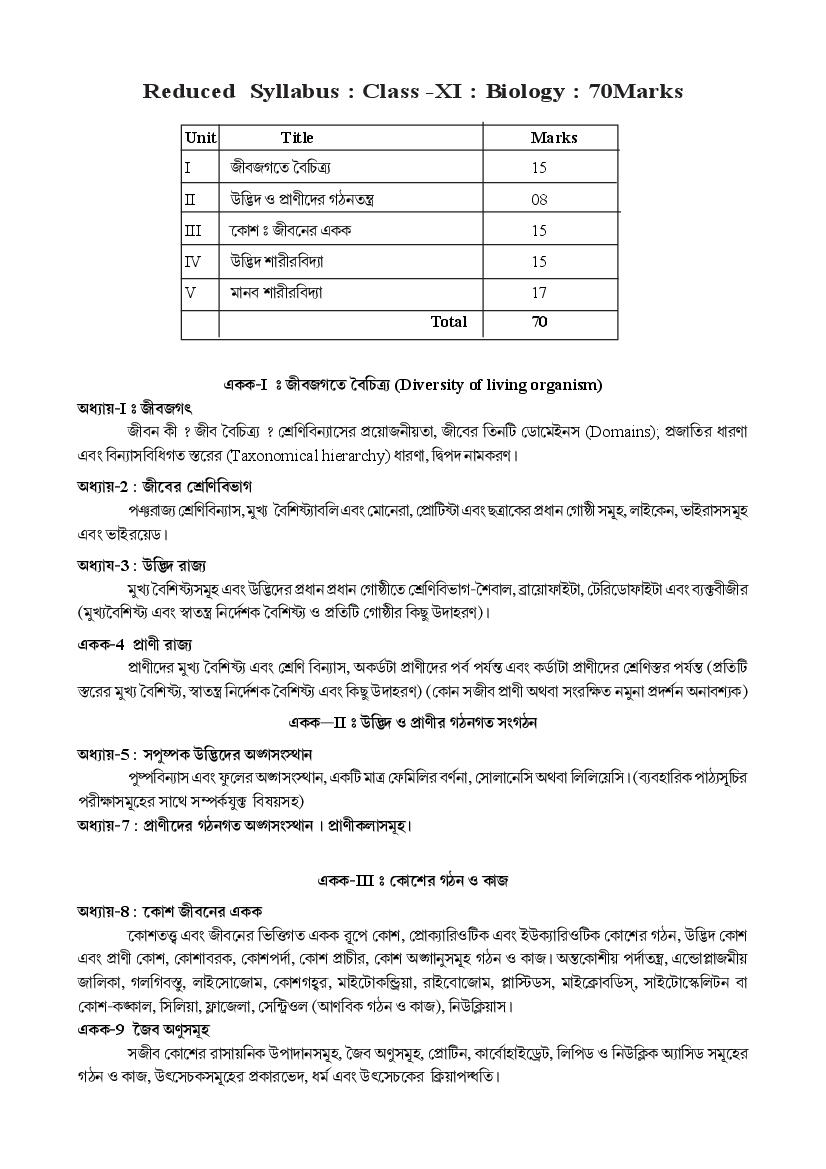
Unit Title Marks
I ç#ÓçàˆÏï˛ ˜Ó!ã˛eƒ 15
II í˛z!qò G ≤Ãyî#ˆÏòÓ˚ àë˛lï˛sf 08
III ˆÏܲy¢ / ç#ÓˆÏlÓ˚ ~ܲܲ 15
IV í˛z!qò ¢yÓ˚#Ó˚!Óòƒy 15
V ÙylÓ ¢yÓ˚#Ó˚!Óòƒy 17
Total 70
~ܲܲÈüÈI / ç#ÓçàˆÏï˛ ˜Ó!ã˛eƒ (Diversity of living organism)
xôƒyÎ˚ÈüI / ç#ÓçàÍ
ç#Ól ܲ# ⁄ ç#Ó ˜Ó!ã˛eƒ ⁄ ˆ◊!î!ÓlƒyˆÏ§Ó˚ ≤ÈÏÎ˚yçl#Î˚ï˛yñ ç#ˆÏÓÓ˚ !ï˛l!ê˛ ˆí˛yˆÏÙ•zl§ (Domains); ≤Ãçy!ï˛Ó˚ ôyÓ˚îy
~ÓÇ !Ólƒy§!Ó!ôàï˛ hflψÏÓ˚Ó˚ (Taxonomical hierarchy) ôyÓ˚îyñ !m˛õò lyÙܲÓ˚î–
xôƒyÎ˚Èü2 : ç#ˆÏÓÓ˚ ˆ◊!î!Ó˲yà
˛õM˛Ó˚yçƒ ˆ◊!î!Ólƒy§ñ Ù%რ˜Ó!¢T˛ƒyÓ!° ~ÓÇ ˆÙyˆÏlÓ˚yñ ˆ≤Ãy!ê˛T˛y ~ÓÇ SÈeyˆÏܲÓ˚ ≤Ãôyl ˆày¤˛# §Ù)•ñ °y•zˆÜÏ ˛lñ ˲y•zÓy˚ §§Ù)•
~ÓÇ Ë˛y•zÓ˚ˆÏÎ˚í˛–
xôƒyÎÈüÈ3 : í˛z!qò Ó˚yçƒ
Ù%რ˜Ó!¢T˛ƒ§Ù)• ~ÓÇ í˛z!qˆÏòÓ˚ ≤Ãôyl ≤Ãôyl ˆày¤˛#ˆÏï˛ ˆ◊!î!Ó˲yàÈüȘ¢Óy°ñ ÓyˆÏÎ˚yÊ˛y•zê˛yñ ˆê˛!Ó˚ˆÏí˛yÊ˛y•zê˛y ~ÓÇ Óƒ=˛Ó#ç#Ó˚
åÙ%იÏÓ!¢T˛ƒ ~ÓÇ fl∫yï˛sf !lˆÏò≈¢Ü˛ ˜Ó!¢T˛ƒ G ≤Ã!ï˛!ê˛ ˆày¤˛#Ó˚ !ܲS%È í˛zòy•Ó˚îä–
~ܲܲÈüÈ4 ≤Ãyî# Ó˚yçƒ
≤Ãyî#ˆÏòÓ˚ Ù%რ˜Ó!¢T˛ƒ ~ÓÇ ˆ◊!î !Ólƒy§ñ xܲí≈˛ê˛y ≤Ãyî#ˆÏòÓ˚ ˛õÓ≈ ˛õÎ≈hs˝ ~ÓÇ Ü˛í≈˛yê˛y ≤Ãyî#ˆÏòÓ˚ ˆ◊!îhflÏÓ˚ ˛õÎ≈hs˝ å≤Ã!ï˛!ê˛
hflψÏÓ˚Ó˚ Ù%რ˜Ó!¢T˛ƒñ fl∫yï˛sf !lˆÏò≈¢Ü˛ ˜Ó!¢T˛ƒ ~ÓÇ !ܲS%È í˛zòy•Ó˚îä åˆÜ˛yl §ç#Ó ≤Ãyî# xÌÓy §ÇÓ˚!«˛ï˛ lÙ%ly ≤Ãò¢≈l xlyÓ¢ƒÜ˛ä
~ܲܲûII / í˛z!qò G ≤Ãyî#Ó˚ àë˛làï˛ §Çàë˛l
xôƒyÎ˚ÈüÈ5 : §˛õ%‹õܲ í˛z!qˆÏòÓ˚ xAà§ÇfiÌyl
˛õ%‹õ!Ólƒy§ ~ÓÇ Ê%˛ˆÏ°Ó˚ xAà§ÇfiÌylñ ~ܲ!ê˛ Ùye ˆÊ˛!Ù!°Ó˚ Óî≈lyñ ˆ§y°yˆÏl!§ xÌÓy !°!°ˆÏÎ˚!§– åÓƒÓ•y!Ó˚ܲ ˛õyë˛ƒ§)!ã˛Ó˚
˛õÓ˚#«˛y§Ù)ˆÏ•Ó˚ §yˆÏÌ §¡õÜ≈˛Î%=˛˛ !Ó£ÏÎ˚§•ä
xôƒyÎ˚ÈüÈ7 : ≤Ãyî#ˆÏòÓ˚ àë˛làï˛ xAà§ÇfiÌyl – ≤Ãyî#ܲ°y§Ù)•–
~ܲܲÈüÈIII / ˆÜ˛yˆÏ¢Ó˚ àë˛l G ܲyç
xôƒyÎ˚ÈüÈ8 : ˆÏܲy¢ ç#ÓˆÏlÓ˚ ~ܲܲ
ˆÏܲy¢ï˛_¥ ~ÓÇ ç#ÓˆÏlÓ˚ !˲!_àï˛ ~ܲܲ Ó˚)ˆÏ˛õ ˆÜ˛y¢ñ ˆ≤Ãyܲƒy!Ó˚G!ê˛Ü˛ ~ÓÇ •zí˛zܲƒy!Ó˚G!ê˛Ü˛ ˆÜ˛yˆÏ¢Ó˚ àë˛lñ í˛z!qò ˆÜ˛y¢
~ÓÇ ≤Ãyî# ˆÜ˛y¢ñ ˆÜ˛y¢yÓÓ˚ܲñ ˆÜ˛y¢˛õò≈yñ ˆÜ˛y¢ ≤Ãyã˛#Ó˚ñ ˆÜ˛y¢ xAàyl%§Ù)• àë˛l G ܲyç– xhs˝ˆÏܲy¢#Î˚ ˛õò≈yï˛sfñ ~ˆÏu˛y≤’yçÙ#Î˚
çy!°Ü˛yñ à°!àÓ›ñ °y•zˆÏ§yˆÏçyÙñ ˆÜ˛y¢à•¥Ó˚ñ Ùy•zˆÏê˛yܲ!u»˛Î˚yñ Ó˚y•zˆÏÓyˆÏçyÙñ ≤’y!fiê˛í˛§ñ Ùy•zˆÏܲyÓ!í˛§‰ñ §y•zˆÏê˛yˆÏflÒ!°ê˛l Óy
ˆÜ˛y¢ÈüÈܲAܲy°ñ !§!°Î˚yñ Êœ˛yˆÏç°yñ ˆ§!rê˛∆G° åxyî!Óܲ àë˛l G ܲyçäñ !lí˛z!Üœ˛Î˚y§–
~ܲܲÈüÈ9 ˜ÏçÓ xî%§Ù)•
§ç#Ó ˆÜ˛yˆÏ¢Ó˚ Ó˚y§yÎ˚!lܲ í˛z˛õyòyl§Ù)•ñ ˜çÓ xî%§Ù)•ñ ˆ≤Ãy!ê˛lñ ܲyˆÏÓ≈y•y•zˆÏí»˛ê˛ñ !°!˛õí˛ G !lí˛z!Üœ˛Ü˛ xƒy!§í˛ §Ù)ˆÏ•Ó˚
àë˛l G ܲyçñ í˛z͈ϧã˛Ü˛§Ù)ˆÏ•Ó˚ ≤ÃܲyÓ˚ˆÏ˲òñ ôÙ≈ ~ÓÇ í˛zÍˆÏ§ã˛ˆÏܲÓ˚ ˛!ܲÎ˚y˛õÂô!ï˛–
Page 2
ˆÜ˛y¢ã˛Ü˛ñ Ùy•zˆÏê˛y!§§ G !ÙˆÏÎ˚y!§§ ~ÓÇ ï˛yˆÏòÓ˚ ï˛yͲõÎ≈–
~ܲܲÈüÈIV í˛z!qò ¢yÓ˚#Ó˚!Óòƒy
xôƒyÎ˚ÈüÈ13 : í˛zß¨ï˛ ˆ◊!îÓ˚ í˛z!qò §yˆÏ°yܲ§ÇˆÏŸ’£Ï–
§yˆÏ°yܲ §ÇˆÏŸ’£Ï fl∫ˆÏ˲yç# ˛õ%!T˛Ó˚ ~ܲ!ê˛ í˛z˛õyÎ˚ñ §yˆÏ°yܲ §ÇˆÏŸ’ˆÏ£ÏÓ˚ fiÌylñ §yˆÏ°yܲ §ÇˆÏŸ’ˆÏ£ÏÎ%=˛ Ó˚Oܲ å≤ÃyÌ!Ùܲ ôyÓ˚îyäñ
xyˆÏ°y Ó˚y§yÎ˚!lܲ G ˜çÓ §ÇˆÏŸ’£Ï ò¢yñ xyÓï≈˛yܲyÓ˚ G xlyÓï≈˛yܲyÓ˚ xyˆÏ°yܲ Ê˛§ˆÏÊ˛yÓ˚# ˲Óló Ó˚y§yÎ˚!lܲ x!˲flÀyÓî ≤Ãܲ“ñ
xyˆÏ°yܲ Ÿª§lñ C3 ~ÓÇ C4 ˛õÌñ §yˆÏ°yܲ§ÇˆÏŸ’£Ï ≤Ã˲yÓܲyÓ˚# ¢ï≈˛§Ù)•–
xôƒyÎ˚ÈüÈ14 : í˛z!qˆÏò Ÿª§l
àƒy§#Î˚ ˛õòyˆÏÌ≈Ó˚ !Ó!lÙÎ˚ó ˆÜ˛y¢#Î˚ Ÿª§lñ @’y•zˆÏܲy°y•z!§§ñ §rôyl åxÓyï˛äñ TCAÈüÈã˛Ü˛ ~ÓÇ •zˆÏ°Ü‰˛ê˛∆l ˛õ!Ó˚Ó•l ï˛sf
å§Óyï˛äñ ¢!=˛ §¡õÜ≈˛ÈüÈí˛zͲõߨ ATP xî%Ó˚ §Çáƒyó í˛z˲Ù%á# !Ó˛õyܲ ˛õÌñ Ÿª§l xl%˛õyï˛–
~ܲܲÈüÈ V : ÙylÓ ¢yÓ˚#Ó˚!Óòƒyó
xôƒyÎ˚ÈüÈ17 / Ÿªy§Ü˛yÎ≈ G àƒy§#Î˚ Ó›Ó˚ xyòylÈüÈ≤Ãòyl
≤Ãyî#Ó˚ Ÿªy§ÈüÈxAà§Ù)• å˛õ%lÓ˚yˆÏ°yã˛ly Ùyeäñ Ùyl%ˆÏ£ÏÓ˚ Ÿªy§ï˛sfñ Ÿªy§!ܲÎ˚y ˛õÂô!ï˛ ~ÓÇ Ùyl%ˆÏ£Ï ï˛yÓ˚ !lÎ˚sfîÈüÈàƒy§#Î˚
!Ó!lÙÎ˚ñ àƒyˆÏ§Ó˚ ˛õ!Ó˚Ó•l ~ÓÇ Ÿª§l !lÎ˚sfîñ Ÿªy§Ü˛yˆÏÎ≈Ó˚ xyÎ˚ï˛lñ Ÿªy§!ܲÎ˚yç!lï˛ ˆày°yˆÏÎyàÈüÈ•yÑ˛õy!lñ •zÙÊ˛y!§Ùyñ ˆ˛õ¢yàï˛
Ÿªy§!ܲÎ˚yç!lï˛ ˆày°ˆÏÎyà§Ù)•–
xôƒyÎ˚ÈüÈ18 / ˆò•ï˛Ó˚° G §ÇÓ•l
Ó˚ˆÏ=˛Ó˚ í˛z˛õyòylñ Ó˚ˆÏ=˛Ó˚ @˝Ã%˛õ Óy ˆ◊!î!Ó˲yàñ Ó˚=˛ï˛M˛lñ °!§Ü˛yÓ˚ í˛z˛õyòyl ~ÓÇ Ü˛yçñ Ùyl%ˆÏ£ÏÓ˚ §ÇÓ•lï˛sfÈüÈ Ùyl%ˆÏ£ÏÓ˚
•,Í!˛õˆÏ[˛Ó˚ ~ÓÇ Ó˚=˛ÓyˆÏ•Ó˚ àë˛lñ •,òã˛Ü˛ñ •yò≈ í˛zͲõyòñ ECGñ !mã˛Ü˛# §ÇÓ•lñ •,Í!˛õˆÏ[˛Ó˚ ܲyÎ≈yÓ!° !lÎ˚sfîñ §ÇÓ•lï˛sf ç!lï˛
ˆày°ˆÏÎyà§Ù)•Èû í˛zFã˛ Ó˚=˛ã˛y˛õ å•y•z˛õyÓ˚ˆÏê˛l¢läñ ܲˆÏÓ˚ylyÓ˚# ôÙl# ˆÓ˚yàñ ~lçy•zly ˆ˛õˆÏQy!Ó˚§ñ •yê≈˛ˆÏÊ˛!°GÓ˚–
xôƒyÎ˚ ÈüÈ 19 / ˆÓ˚ã˛l˛õòyÌ≈§Ù)• ~ÓÇ ~ˆÏòÓ˚ !l‹Òy¢l–
ˆÓ˚ã˛ˆÏlÓ˚ Ó˚#!ï˛ÈüÈ xƒyˆÏÙyˆÏlyˆÏê˛!°çÙñ •zí˛z!Ó˚GˆÏê˛!°çÙñ •zí˛z!Ó˚ˆÏܲyˆÏê˛!°çÙ– Ùyl%ˆÏ£ÏÓ˚ ˆÓ˚ã˛l ï˛sfÈüȈÓ˚ã˛lï˛ˆÏsfÓ˚ àë˛l ~ÓÇ Ü˛yçñ Ù)e
í˛zͲõyòlñ x§ˆÏÙyˆÏÓ˚à%ˆÏ°¢lñ Ó,ˆÏE˛Ó˚ ܲyç !lÎ˚sfîÈüȈÓ˚!ll G ~l!çGˆÏê˛l!§lñ xƒy!ê˛∆Î˚y° ly•zˆÏê˛∆y•zí˛zˆÏÓ˚!ê˛Ü˛ Ê˛ƒyܲê˛Ó˚ñ ADH ~ÓÇ
í˛yÎ˚yˆÏÓ!ê˛§ •zl!§!˛õí˛y§ñ ˆÓ˚ã˛ˆÏl xlƒylƒ xˆÏAàÓ˚ Ë)˛!Ùܲyñ ˆÓ˚ã˛l ï˛ˆÏsÓf ˚ ˆày°ˆÏÎyàÈüÈ•íz ˛zˆÓÏ !˚ ÙÎ˚yñ ˆÓ˚ly°ˆÏÊ˛!°GÓ˚ñ ˆÓ˚ly° ܲƒy°!ܲí˛z!°ñ
ˆlÊ˛y•z!ê˛§ñ í˛yÎ˚y°y•z!§§ G Ü,˛!eÙ Ó,E˛ñ Ó,E˛˛≤Ã!ï˛fiÌy˛õl–
xôƒyÎ˚ÈüÈ20 / ã˛°l G àÙl
ܲAܲy° ˆ˛õ¢#ÈüÈ §ÇˆÏܲyã˛# ˆ≤Ãy!ê˛l§Ù)• ~ÓÇ ˆ˛õ¢# §ÇˆÏܲyã˛l ˛õÂô!ï˛–
xôƒyÎ˚ÈüÈ21 / fl¨yÎ˚!Óܲ !lÎ˚sfî ~ÓÇ §Ùß∫Î˚ §yôl–
!lí˛zÓ˚î ~ÓÇ fl¨yÎ˚%ñ Ùyl%ˆÏ£ÏÓ˚ fl¨yÎ˚%ï˛sfû ˆÜ˛w#Î˚ fl¨yÎ˚%ï˛sfñ ≤Ãyhs˝fiÌ fl¨yÎ˚%ï˛sf ~ÓÇ xyhs˝Ó˚Îsf#Î˚ fl¨yÎ˚%ï˛sfñ fl¨yÎ˚%flõ®ˆÏlÓ˚
í˛zͲõ!_ G ≤ÃÓy•–
xôƒyÎ˚ÈüÈ22 / Ó˚y§yÎ˚!lܲ §Ùß∫Î˚ ~ÓÇ ~ܲe#ܲÓ˚î–
xhs˝«˛Ó˚y @˝Ã!rÌ ~ÓÇ •Ó˚ˆÙÏ yl§Ù)•ñ Ùyl%ˆ£Ï ÓÏ ˚ xhs˝«˛Ó˚y ï˛sfû•y•zˆ˛Ï õỹy°yÙy§ñ !˛õê%˛•zê˛y!Ó˚ñ !˛õ!lÎ˚y° @˝Ã!rÌñ Ìy•zÓˆ˚ ÎÏ í˚ ˛ñ ˛õƒyÓ˚yÌy•zÓˆ˚ ÎÏ í˚ ˛ñ
~!í»˛ly°ñ ˛õƒyÇ!ܲÎ˚y§ñ ˆàylyí˛§ó •Ó˚ˆÏÙyˆÏlÓ˚ ܲyÎ≈˛õÂô!ï˛ å≤ÃyÌ!Ùܲ ôyÓ˚îyäñ Óyï≈˛yÓy•Ü˛ G !lÎ˚sfܲ Ó˚)ˆÏ˛õ •Ó˚ˆÏÙyˆÏlÓ˚ Ë)˛!Ùܲyñ
xôı«˛Ó˚î G x!ô«˛Ó˚î ç!lï˛ !ܲÎ˚y ~ÓÇ ˆày°ˆÏÎyà §Ù)• û ÓyÙlcñ xƒyˆÏܲyÙƒyà!°ñ ˆÜ˛!ê˛!lçÙñ àÎ˚ê˛yÓ˚ñ xƒy:˛õ‰Ìƒy°!Ùܲ
àÎ˚ê˛yÓ˚ñ í˛yÎ˚yˆÏÓ!ê˛§ñ ~!í˛§l ˆÓ˚yà–
!Ó/o/ÈüÈ Ùyl%ˆÏ£ÏÓ˚ §Ü˛° ¢yÓ˚#Ó˚Ó,_#Î˚ ï˛ˆÏsfÓ˚ ˆày°ˆÏÎyà§Ù)ˆÏ•Ó˚ §Ç!«˛Æ xyˆÏ°yã˛ly–
Practical Syllabus for (2020-2021) as in English version of the syllabus.
Page 3
Unit Title Marks
I Diversity of Living Organisms 15
II Structural Organization in Plants and Animals 08
III Cell : Structure and Function 15
IV Plant Physiology 15
V Human Physiology 17
Total = 70
Blue Print of Questions : Class XI : Biology
Unit VSA SA-I SA-II LA Marks
I (15marks) 1x5=5 2x2=4 3x2=6 -- 15
II (8marks) 1x1=1 2x2=4 3x1=3 -- 08
III (15marks) 1x4=4 2x1=2 3x3=9 -- 15
IV (15marks) 1x5=5 2x1=2 3x1=3 5x1=5 15
V (17marks) 1x5=5 2x2=4 3x1=3 5x1=5 17
70
(38Q)
Page 4
Unit-I Diversity of Living Organisms
Chapter-I : The Living World
What is living ? Biodiversity, Need for classification, three domains of life; concept of species and
taxonomical hierarchy, binomial nomenclature.
Chapter-2 : Biological Classification
Five kingdom classification- Salient features and classification of Monera, Protista and Fungi into ma-
jor groups, Lichens, Viruses and Viroids.
Chapter-3 : Plant Kingdom
Salient features and classification of plants into major groups- Algae, Bryophyta, Pteridophyta and
Gymnospermae. (Salient and distinguishing feature sand a few examples of each category).
Chapter-4 : Animal Kingdom
Salient features and classification of animals, non-chordates up to phyla level and chordates up to class
level (salient features and distinguishing features of a few examples of each category). (No. live animals
or specimen should be displayed.)
Unit-II Structural Organization in Animals and Plants
Chapter-5 : Morphology of flowering plants.
Morphology of inflorescence and flower, Description of 01 family : Solanaceae or Liliaceae (to be dealt
along with the relevant experiment of the practical syllabus).
Chapter-7 : Structural Organisation in Animals
Animal tissues.
Unti -III Cell : Structure and Function
Chapter-8 : Cell- The Unit of Life
Cell theory and cell as the basic unit of life, structure of prokaryotic and eukaryotic cells, Plant cell and
animal cell, cell envelope, cell membrane, cell wall, cell organelles-structure and function, endomembrane
system, endoplasmic reticulum, golgi bodies, lysosomes, vacuoles, mitochondria, ribosomes, plastids,
microbodies, cytoskeleton, cilia, flagella, centrioles (ultrastructure and function), nucleus.
Chapter-9 : Biomolecules
Chemical constituents of living cels: Biomolecules, structure and function of proteins, carbohydratss,
lipids , nucleic acids, Enzymes-types, properties, enzyme action.
Chapter-10 : Cell Cycle and Cell Division
Cell cycle, mitosis, meiosis and their significance.
Page 5
Chapter-13 : Photosynthesis in Higher Plants.
Photosynthesis as a means of autotrophic nutrition, site of photosynthesis, pigments involved in photo-
synthesis (elementary idea), photochemical and biosynthetic phases of photosynthesis cyclic and non-
cyclic photophosphorylation, chemiosmotic hypothesis, photorespiration; C3 and C4 pathways, factors
affecting photosynthesis.
Chapter-14 : Respiration in Plants.
Exchage of gases, cellular respiration- glycolysis, fermentation (anaerobic), TCA cycle and electron
transport system (aerobic), energy relations- number of ATP molecules generated, amphibolic pathwways,
respiratory quotient.
Chapter-15 : Palnt- Growth and Development
Growth regulators- auxin, gibberellin, cytokinin, ethylene, ABA.
Unit-V Human Physiology
Chapter -17 : Breathig and Exchange of Gases
Respiratory organs in animals (recall only), Respiratory system in human, mechanism of breathing and
its regulation in human-exchage of gases, transport of gases and regulation of respiration , respiratory
volume, disorders related to respiration-asthma, emphysema, occupational respiratory disorders.
Chapter-18 : Body Fluids and Circulation
Composition of blood, blood groups, coagulation of blood, composition of lymph and its function,
human circulatory system-Structure of human heart and blood vessel; cardiac cycle, cardiac output,
ECG, double circulation, regulation of cardiac activity, disorders of circulatory system-hypertension,
coronary artery disease, angina pectoris, heart failure.
Chapter-19 : Excretory Products and their Elimination
Modes of excretion- ammonotelism, ureotelism, uricotelism, human excretory system- structure and
function; urine formation, osmoregularion; regulation of kidney function - renin-angiotensin, atrial
natriuretic factor, ADH and diabetes insipidus, role of other organs in excretion; disorderuremia, renal
failure, renal calculi, nephritis, dialysis and aftifical kidney, kidney transplant.
Chapter-20 : Locomotion and Movement
Skeletal muscle, contractile proteins and muscle contraction.
Chapter-21 : Neural Control and Coordination
Neuron and nerves; Nervous system in human - central nervous system, peripheral nervous system and
visceral nervous system; generation and conduction of verve impulse.
Chapter-22 : Chemical Coordination and Integration
Endocrine glands and hormones; human endocrine system - hypothalamus, pituitary, pineal, thyroid,
Page 6
an messengers and regulatiors; hypo- and hyperactivity and related disorders– dwarfism, acromegaly,
cretinism, goiter, exophthalmic goiter, diabetes, Addison’s disease.
Note : Diseases related to all the human physiological systems to be taught in brief.
PRACTICAL BIOLOGY
Time : 3 h Marks : 30
Evaluation Scheme Marks
Our major Experiment Part A (Experiment No-1,3) 5
Our minor Experiment Part A (Experiment No-4,5,6) 4
Identification 6
Viva 5
Practical Record 5
Attendence 5
Total 30
A : List of Experiments
1. Study and describe a locally available common flowering plant, from any one family : Solan
aceae or liliaceae (Poaceae, Asteraceae or Brassicaceae can be substituted incase of particular
geographical location) including dissection and display of floral whorls, anther and ovary to
show number of chambers (floral formulae and floral diagrams).
2. Study of distribution of stomata in the upper and lower surface of leaves.
3. Separation of plant pigments through paper chromatography.
4. Study of the rate of respiration in flower buds/leaf tissue and germinating seeds.
5. Test for presence of sugar urine.
6. Test for presence of albumin in urine.
B. Study/Oveserve of the following (spotting)
1. Parts of a compound microscope.
2. Specimens/slides/models and identification with reasons - Bacteria, Oscillatoria, Spirogyra,
Rhizopus, mushroom, yeast, liverwort, moss, fern, pine, one monocotyledonous plant, one
dicotyledonous plant and one lichen.
3. Virtual specimens/slides /models and identifying features of -Amoeba, Hydra, liverfluke, Ascaris,
leech, earthworm, prawn, silkworm, honeybee, snail, starfish, shark, rohu, frog, lizard, pigeon
and rabbit.
4. Tissues and diversity in shape and size of animal cells (squamous epithelium, smooth, skeletal
and cardiac muscle fibers and mammalian blood smear) through temporary/permanent slides.
5. Mitosis in onion root tip cells and animal cells (grasshopper) form permanent slides.
N.B No. Practical is sussested in class XI during 2020-2021
Page 7
Class - XI Biology Full Marks- 70
Group-A Each Question Carries 1 mark : 1x 20 = 20
I) §!ë˛Ü˛ í˛z_Ó˚!ê˛ !ã˛!•´ï˛ ܲÓ˚ 1 x 5 =5
1.Which of the follwing is an acellular organism ?
a) Rhizobium (b) Fungun (c) CORONA Virus (d) Plasmodium
!lˆÏ¡¨Ó˚ ˆÜ˛yl ç#Ó!ê˛ ~ܲ!ê˛ xˆÏܲy£Ï#Î˚ ç#Ó ⁄
ܲä Ó˚y•zˆÏçy!ÓÎ˚yÙ åáä SÈeyܲ åàä ܲˆÏÓ˚yîy ˲y•zÓ˚y§ åâä ≤’yçˆÏÙy!í˛Î˚yÙ
2) Which type of WBC is found in maximum amount in human blood ?
a) Basophil (b) Eosinophil (c) Neutrophil (d) Lymphocyte.
ˆÜ˛yl ôÓ˚ˆÏlÓ˚ WBC ÙylÓ Ó˚ˆÏ=˛ §ÓˆÏã˛ˆÏÎ˚ ˆÓ!¢ ˛õ!Ó˚ÙyˆÏî ˛õyGÎ˚y ÎyÎ˚⁄
Ü˛ä ˆÓˆÏ§y!Ê˛° åáä •zG!§ˆÏly!Ê˛° åàä !lí˛zˆÏê˛∆y!Ê˛° åâä !°ˆÏ¡≥˛y§y•zê˛
3) Lower Km value indicates – (a) Less affinity for substrate (b) more affinity for substrate
(c) enzyme concentration (d) number of active site
Km ~Ó˚ fl∫“ Ùyl !ܲ !lˆÏò≈¢ ܲˆÏÓ˚⁄
åÜ˛ä ˆÎÔàˆÏܲÓ˚ Ü˛Ù ã˛y!•òy åáä ˆÎÔàˆÏܲÓ˚ ˆÓ!¢ ã˛y!•òy åàä í˛zÍˆÏ§ã˛ˆÏܲÓ˚ âlc åâä §!ܲÎ˚ܲ fiÌyˆÏlÓ˚ §Çáƒy–
4) Kreb’s cycle occurs in which cell organelle ?
(a) Ribosome (b) Mitochondria (c) Plastid (d) Lysosome.
ˆÜ˛yl ˆÜ˛y£Ï#Î˚ xAàyl%ˆÏï˛ ˆÜ˛Ó§ã˛Ü˛ §Çà!ë˛ï˛ •Î˚⁄
ܲä Ó˚y•zˆÏÓyˆÏçyÙ åáä Ùy•zˆÏê˛yܲl!í»˛Î˚y åàä ≤’y!fiê˛í˛ åâä °y•zˆÏ§yˆÏçyÙ
5) Colchicin plant belongs to which family ?
a) Liliaceae (b) Asteraceae (c) Brassicaceae (d) Poaceae
ܲ°!§!ã˛l í˛z!qò!ê˛ ˆÜ˛yl í˛z!qòˆÏày¤˛#Ó˚ xhs˝Ë%≈˛=˛ ⁄
ܲä !°!°ˆÏÎ˚§# åáä xƒyfiê˛yˆÏÓ˚§# åàä Óy!§ˆÏܲ§# åâä ˆ˛õyˆÏÎ˚§#
II) l#ˆÏã˛Ó˚ ≤ß¿à%ˆÏ°yÓ˚ ~ܲ ¢ˆÏ∑‡ÓyˆÏܲƒ í˛z_Ó˚ òyG 1x15
6) What is taxon?
ê˛ƒy:l !ܲ⁄
7) What is the name of the largest animal phylum ?
§ÓˆÏã˛ˆÏÎ˚ Óí˛¸ ≤Ãyî# ˛õÓ≈!ê˛Ó˚ lyÙ !ܲ ⁄
8) Give an example of cyanobacteria ?
~ܲ!ê˛ §yÎ˚yˆÏlyÈüÈÓƒyܲ!ê˛!Ó˚Î˚yÓ˚ í˛zòy•Ó˚î òyG–
9) Which cell organelle is called the suicidal bag of cell.
ˆÜ˛yˆÏ£ÏÓ˚ ˆÜ˛yl xAàyl%ˆÏܲ xydâyï˛# Ì!° Ó°y•Î˚⁄
Page 8
ˆÜ˛yl ≤Ãyî# Ó˚yˆÏçƒ ˆÜ˛yÎ˚yˆÏly§y•zê˛ ˆÜ˛y£Ï ˆòáy ÎyÎ˚⁄
11) Give two examples of essential amino acids ?
ò%!ê˛ xï˛ƒyÓ¢ƒÜ˛#Î˚ xƒyÙy•zˆÏly xƒy!§ˆÏí˛Ó˚ í˛zòy•Ó˚î òyG–
12) Which type of sugar is present in DNA?
DNA ~Ó˚ ÙˆÏôƒ ܲ# ôÓ˚ˆÏlÓ˚ ¢Ü≈˛Ó˚y ÌyˆÏܲ⁄
13) What is the value of RQ of glucose (in aerobic respiration) ?
@’%ˆÏܲyˆÏçÓ˚ RQ-~Ó˚ Ùyl Ü˛ï˛ å§Óyï˛ Ÿª§ˆÏlÓ˚ ˆ«˛ˆÏeä⁄
14) Where does glycolysis occur in a cell ?
@’y•zˆÏܲy°y•z!§§ ˆÜ˛yˆÏ£ÏÓ˚ ˆÜ˛yÌyÎ˚ âˆÏê˛⁄
15) What is the full form of RuBP?
RuBP ~Ó˚ §¡õ)î≈ lyÙ !°á–
16) What is interphase ?
•zrê˛yÓ˚ˆÏÊ˛ç ܲ#⁄
17) What is pericardium ?
ˆ˛õ!Ó˚ܲy!í≈˛Î˚yÙ Ü˛yˆÏܲ ӈϰ⁄
18) What is electrocardiograph ?
•zˆÏ°Ü˛ˆÏê˛∆yܲy!í≈˛G@˝ÃyÊ˛ ܲ#⁄
19) Name the hormone which is associated with the reabsorption of water in kidney ?
Ó,ˆÏE˛Ó˚ ÙˆÏôƒ çˆÏ°Ó˚ ˛õ%lıˆ¢y£ÏˆÏîÓ˚ §yˆÏÌ Î%=˛ •Ó˚ˆÏÙyl!ê˛Ó˚ lyÙ !ܲ⁄
20) What is the normal Systolic Pressure value of human blood ?
Ùyl%ˆÏ£ÏÓ˚ fl∫y˲y!Óܲ !§ˆÏfiê˛y!°Ü˛ Ó˚=˛ã˛y˛õ Ü˛ï˛ ⁄
Section-B ≤Ã!ï˛!ê˛ ≤Èϟ¿Ó˚ ÙylÈüÈ2 2x8=16
21) Give two difference between archaebacteria & eubacteria.
xy!Ü≈˛Óƒyܲ!ê˛!Ó˚Î˚y G •zí˛zÓƒy!Q!Ó˚Î˚yÓ˚ ÙˆÏôƒ ò%!ê˛ ˛õyÌ≈ܲƒ í˛zˆÏÕ‘á ܲÓ˚–
22) Explain the symbiotic association of lichens.
°y•zˆÏܲˆÏl §Çà!ë˛ï˛ !ÙˆÏÌyç#!Óï˛y Óƒyáƒy ܲÓ˚–
23) Draw the floral diagram of Solanum nigram (makoi) flower.
Solanum nigram åܲyܲÙy!SÈä í˛z!qˆÏòÓ˚ ˛õ%‹õ!ã˛e xAܲl ܲÓ˚–
24) What is plasmodesmata? Write its function.
≤’yçˆÏÙyˆÏí˛çÙyê˛y ܲ#⁄ ~Ó˚ ܲyç !°á–
25) Why C4 plants can do more photosynthesis than C3 plants.
C4 í˛z!qˆÏòÓ˚y C3 í˛z!qò xˆÏ˛õ«˛y ˆÓ!¢ ˛õ!Ó˚ÙyˆÏî §yˆÏ°yܲ§ÇˆÏŸ’£Ï ܲÓ˚ˆÏï˛ ˛õyˆÏÓ˚ ˆÜ˛l⁄
26) What is crossing over ? When does it occur ?
ܲ!§ÇG˲yÓ˚ ܲ#⁄ ~!ê˛ Ü˛ál §Çà!ë˛ï˛ •Î˚ ?
Page 9
ˆÜ˛yl ˆlyí˛y° ܲ°yˆÏܲ ÙylÓ •,Í!˛õˆÏ[˛Ó˚ ˆ˛õ§ˆÏÙܲyÓ˚ Ó°y •Î˚ ~ÓÇ ˆÜ˛l⁄
28) What is diaphragm ? Write its function.
í˛yÎ˚yÊ˛yÙ Ü˛#⁄ ~Ó˚ ܲyç í˛zˆÏÕ‘á ܲÓ˚–
* OR
Name the hormone which is released form heart & write its function.
•,Í!˛õ[˛ ˆÌˆÏܲ !lÈ/§,ï˛ •Ó˚ˆÏÙyˆÏlÓ˚ lyÙ G ܲyç !°á–
Group-C ≤Ã!ï˛!ê˛ ≤Èϟ¿Ó˚ Ùyl 3 3x8=24
29) Why bryophyta are called amphibians of the plant kingdom ? Mention the function of hold fast in
brown algae. Why the algae of class Rhodophyceae are red in colour?
í˛z!qò Ó˚yˆÏçƒ ÓyˆÏÎ˚yÊ˛y•zê˛yˆÏòÓ˚ í˛z˲Î˚ã˛Ó˚ ӈϰ ˆÜ˛l⁄ ÓyòyÙ# ˜¢ÓyˆÏ° ˆ•y”˛Ê˛yˆÏfiê˛Ó˚ ܲyç !°á⁄ Ó˚ˆÏí˛yÊ˛y•z§# ˆ◊!îÓ˚
xhs˝à≈ï˛ ˜¢ÓyˆÏ°Ó˚y °y° •Î˚ ˆÏܲl⁄ 1+1+1
30) Name the phylum of animals where the following structures are found – a) Radula (b) proboscis
“All vertebrates are chordates, but all chordates are not vertebrates”- Why ?
!l¡¨!°!áï˛ xÇ¢à%ˆÏ°y ˆÜ˛yl ˆÜ˛yl ≤Ãyî#˛õˆÏÓ≈ ˆòáy ÎyÎ˚ û ܲä Ó˚ƒyí%˛°y åáä ≤ÈÏÓy!§§
1 1
Úڧܲ° ˆÙÓ˚%ò[˛# ≤Ãyî#•z ܲí≈˛yê˛y ˛õÓ≈Ë%˛=˛ñ !ܲv §Ü˛° ܲí≈˛yê˛y ˛õÓ≈Ë%˛=˛ ≤Ãyî#Ó˚y•z ˆÙÓ˚%ò[˛# lÎ˚ÈÛÛ û ˆÜ˛l⁄ +
2 2
+2
31) What is aestivation of flower ? With the help of diagrams show the different types of aestivation in
corolla of flower.
˛õ%‹õ˛õe!Ólƒy§ ܲyˆÏܲ ӈϰ⁄ !ã˛e ≤Ãò¢≈l ܲˆÏÓ˚ !Ó!˲ߨ ≤ÃܲyÓ˚ ò°Ù[˛ˆÏ°Ó˚ ˛õ%‹õ!ÓlƒyˆÏ§Ó˚ ôÓ˚l ˆòáyG– 1+2
32) Name one semi-autonomous organelle of cell. Why it is called so? Name the main lipid component
present in the cell membrame.
ˆÜ˛yˆÏ£Ï í˛z˛õ!fiÌï˛ ˆÎˆÏܲyl ~ܲ!ê xô≈ÈüÈfl∫!lË≈˛Ó˚ xAàyl%Ó˚ lyÙ !°á– ~ˆÏܲ ~Ó˚)˛õ Ó°y •Î˚ ˆÜ˛l⁄ ˆÜ˛y£Ï˛õò≈yÎ˚ í˛z˛õ!fiÌï˛
1 1
≤Ãôyl !°!˛õí˛ í˛z˛õyòyl!ê˛Ó˚ lyÙ !°á– +2+
2 2
33) What do you mean by secondary metabolites ? Give two examples. Show the structure of cholesterol.
ˆàÔî !Ó˛õyܲçyï˛ Ó›§Ù)• Ó°ˆÏï˛ Ü˛# ˆÓyV˛⁄ ~ˆÏòÓ˚ ò%!ê˛ í˛zòy•Ó˚î òyG– ˆÜ˛yˆÏ°ˆÏfiê˛Ó˚ˆÏ°Ó˚ àë˛l !ã˛e!ê˛ xAܲl ܲÓ˚–1+1+1
34) Mention the significance of meiosis. What is chiasmata ?
!ÙˆÏÎ˚y!§ˆÏ§Ó˚ ï˛yͲõÎ≈ í˛zˆÏÕ‘á ܲÓ˚– ܲyÎ˚çÙyê˛y ܲyˆÏܲ ӈϰ⁄ 2+1=3
OR,
Describe fluid mosaic model of plasmamembrane with a diagram. 2+1
ˆÜ˛y£Ï˛õò≈yÓ˚ Êœ%˛•zí˛ÈüȈÙyˆÏç•zܲ åï˛Ó˚° ˆÙyˆÏç•zܲä l:y!ê˛ !ã˛e§• Óƒyáƒy ܲÓ˚–
35) What is Plycolysis ? Write the sequential reaction of glycolysis in a flow-chart.
@’y•zˆÏܲy°y•z!§§ ܲ#⁄ @’y•zˆÏܲy°y•z!§ˆÏ§ §Çà!ë˛ï˛ !Ó!ܲÎ˚y§Ù)•ˆÏܲ ~ܲ!ê˛ ¢∑ÈüÈ!ã˛ˆÏeÓ˚ §y•yˆÏ΃ ˆòáyG– 1+2
Page 10
foetalis ?
Ó˚ˆÏ=˛Ó˚ ˆÜ˛yl @˝Ã%˛õˆÏܲ §y!Ó≈ܲòyï˛y ӈϰ ~ÓÇ ˆÜ˛l⁄ ~!Ó˚ˆÏÌyÓœyˆÏfiê˛y!§§ !Ê˛ê˛y!°§ ܲyˆÏܲ ӈϰ⁄ 2+1
Group-D ≤Ã!ï˛!ê˛ ≤Èϟ¿Ó˚ Ùyl 5 5x2=10
37) Explain the mechanism of breathing in human. Mention the name of the factors which are associated
with oxygen dissociation curve. What is emphysema ?
ÙylÓ ˆòˆÏ• Ÿªy§!ܲÎ˚yÓ˚ ˛õÂô!ï˛ Óƒyáƒy ܲÓ˚– x!:ˆÏçl !í˛ˆÏ§y!§ˆÏÎ˚¢yl ˆ°á!ã˛ˆÏeÓ˚ §yˆÏÌ Î%=˛ Ê˛ƒyQÓ˚à%!°Ó˚ lyÙ !°á⁄
•zÙÊ˛y•z!§Ùy Ó°ˆÏï˛ Ü˛# ˆÓyV˛⁄ 3+1+1
OR
Explain the stager of calvin cycle with a flow chart. Write down two differencs between cycle & non-
cyclic photophosphorylation. 3+2
~ܲ!ê˛ Êœ%˛ !ã˛ˆÏeÓ˚ §y•yˆÏ΃ ˆÜ˛°!˲l ã˛Ü˛!ê˛ Óƒyáƒy ܲÓ˚– ã˛Ü˛yܲyÓ˚ G xã˛Ü˛yܲyÓ˚ Ê˛§ˆÏÊ˛yÓ˚#Ë˛ÓˆÏlÓ˚ ÙˆÏôƒ ò%!ê˛˛õyÌ≈ܲƒ !°á–
38) Why lungs are considered as excretory organ ? Explain renin-angiotensin systom in short. What is
glomerulonephritis ? 1+3+1
Ê%˛§Ê%˛§ˆÏܲ ˆÜ˛l ˆÓ˚ã˛l xAà Ó°y •Î˚⁄ §ÇˆÏ«˛ˆÏ˛õ ˆÓ˚!ll xƒy!OGˆÏê˛l!§l ï˛sf!ê˛ Óƒyáƒy ܲÓ˚– ˆ@’yˆÏÙ!Ó˚GˆÏ°yˆÏlÊ˛y•z!ê˛§!ܲ⁄
OR
What is lenticel & how it is associated with plant respiration– explain ? Show the main pathways of
ancerobic respiration.What is RQ. 2+2+1
ˆ°!rê˛ˆÏ§° !ܲ ~ÓÇ •z•y !ܲ˲yˆÏÓ í˛z!qˆÏòÓ˚ Ÿª§ˆÏlÓ˚ §yˆÏÌ Î%=˛ÈüÈÓƒyáƒy ܲÓ˚– xÓyï˛ Ÿª§ˆÏlÓ˚ Ù)რ˛õ̧Ù)•ˆÏܲ SȈÏܲÓ˚
§y•yˆÏ΃ ˆòáyƒ– RQ !ܲ⁄