Karnataka 2nd PUC Model Question Paper 2027 for Logic (Paper 3)
Finished viewing? Save it for later —
Download Karnataka 2nd PUC Model Question Paper 2027 for Logic (Paper 3) (PDF · 6 pages)About Karnataka 2nd PUC Model Question Paper 2027 for Logic (Paper 3)
Karnataka 2nd PUC Model Question Paper 2027 for Logic (Paper 3) is available here for free download. Published by Karnataka Board for Class 12, this sample paper can be viewed online or downloaded as a PDF (6 pages). Candidates preparing for Class 12 can use Karnataka 2nd PUC Model Question Paper 2027 for Logic (Paper 3) to understand the exam pattern, the type of questions asked, and the overall difficulty level.
Frequently Asked Questions
How can I download Karnataka 2nd PUC Model Question Paper 2027 for Logic (Paper 3)?
Open this page and click the Download button to save Karnataka 2nd PUC Model Question Paper 2027 for Logic (Paper 3) as a PDF. It is completely free on AglaSem Docs.
Is Karnataka 2nd PUC Model Question Paper 2027 for Logic (Paper 3) free to download?
Yes. Karnataka 2nd PUC Model Question Paper 2027 for Logic (Paper 3) can be viewed online and downloaded as a PDF free of cost on AglaSem Docs.
How many pages does Karnataka 2nd PUC Model Question Paper 2027 for Logic (Paper 3) have?
Karnataka 2nd PUC Model Question Paper 2027 for Logic (Paper 3) contains 6 pages, which you can read online or download together as a single PDF.
Where can I find more Class 12 study material?
You can find more Class 12 question papers, sample papers, syllabus, and answer keys on AglaSem Docs.
Karnataka 2nd PUC Model Question Paper 2027 for Logic (Paper 3) – Text
Read the full text of this sample paper below — useful to quickly search, copy and reference the content online without downloading the PDF.
📄 View text version (7 pages)
Page 1
Karnataka 2nd PUC
Model Question Paper
2027 for Logic (Paper 3)
EXAM YEAR TYPE SUBJECT
Karnataka Class 12 2027 Sample Paper Logic
Notes · Sample Papers · Previous Year Papers · Mock Tests
Page 2
. s e
em l a
as PÀ£ÁðlPÀ ¸ÀPÁðgÀ
a
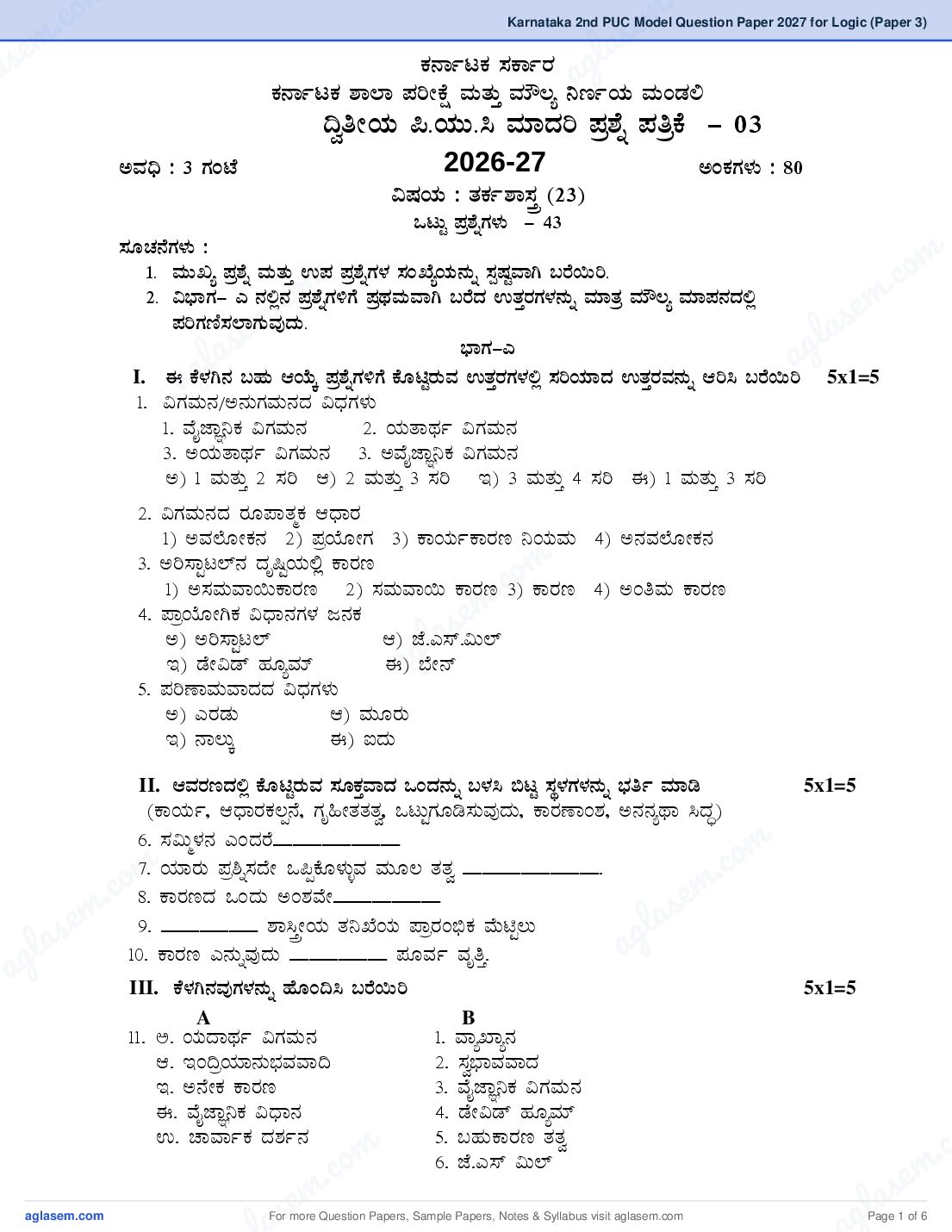
PÀ£ÁðlPÀ ±Á¯Á ¥ÀjÃPÉë ªÀÄvÀÄÛ ªÀiË®å ¤tðAiÀÄ ªÀÄAqÀ°
g
2025-26 ¢éwÃAiÀÄ ¦.AiÀÄÄ.¹ ªÀiÁzÀj ¥Àæ±Éß ¥ÀwæPÉ - 03
CªÀ¢ü : 3 UÀAmÉ 2026-27 CAPÀUÀ¼ÀÄ : 80
«µÀAiÀÄ : vÀPÀð±Á¸ÀÛç (23)
MlÄÖ ¥Àæ±ÉßUÀ¼ÀÄ - 43
m
co
¸ÀÆZÀ£ÉUÀ¼ÀÄ :
c om m .
1. ªÀÄÄRå ¥Àæ±Éß ªÀÄvÀÄÛ G¥À ¥Àæ±ÉßUÀ¼À ¸ÀASÉåAiÀÄ£ÀÄß ¸ÀàµÀÖªÁV §gɬÄj.
m .
2. «¨sÁUÀ- J £À°è£À ¥Àæ±ÉßUÀ½UÉ ¥ÀæxÀªÀĪÁV §gÉzÀ GvÀÛgÀUÀ¼À£ÀÄß ªÀiÁvÀæ ªÀiË®å ªÀiÁ¥À£ÀzÀ°è
se
s e
¥ÀjUÀt¸À¯ÁUÀĪÀÅzÀÄ.
g l a
l a a 5x1=5
ag
¨sÁUÀ-J
I. F PɼÀV£À §ºÀÄ DAiÉÄÌ ¥Àæ±ÉßUÀ½UÉ PÉÆnÖgÀĪÀ GvÀÛgÀUÀ¼À°è ¸ÀjAiÀiÁzÀ GvÀÛgÀªÀ£ÀÄß Dj¹ §gɬÄj
1. «UÀªÀÄ£À/C£ÀÄUÀªÀÄ£ÀzÀ «zsÀUÀ¼ÀÄ
1. ªÉÊeÁÕ¤PÀ «UÀªÀÄ£À 2. AiÀÄvÁxÀð «UÀªÀÄ£À
3. CAiÀÄvÁxÀð «UÀªÀÄ£À 3. CªÉÊeÁÕ¤PÀ «UÀªÀÄ£À
C) 1 ªÀÄvÀÄÛ 2 ¸Àj D) 2 ªÀÄvÀÄÛ 3 ¸Àj E) 3 ªÀÄvÀÄÛ 4 ¸Àj F) 1 ªÀÄvÀÄÛ 3 ¸Àj
2. «UÀªÀÄ£ÀzÀ gÀÆ¥ÁvÀäPÀ DzsÁgÀ
m
1) CªÀ¯ÉÆÃPÀ£À 2) ¥ÀæAiÉÆÃUÀ 3) PÁAiÀÄðPÁgÀt ¤AiÀĪÀÄ 4) C£ÀªÀ¯ÉÆÃPÀ£À
. co
3. Cj¸ÁÖl¯ï£À zÀȶÖAiÀÄ°è PÁgÀt
em
1) C¸ÀªÀĪÁ¬ÄPÁgÀt 2) ¸ÀªÀĪÁ¬Ä PÁgÀt 3) PÁgÀt 4) CAwªÀÄ PÁgÀt
4. ¥ÁæAiÉÆÃVPÀ «zsÁ£ÀUÀ¼À d£ÀPÀ
l a s
a g
C) Cj¸ÁÖl¯ï D) eÉ.J¸ï.«Ä¯ï
E) qÉëqï ºÀÆåªÀiï F) ¨Éãï
5. ¥ÀjuÁªÀĪÁzÀzÀ «zsÀUÀ¼ÀÄ
C) JgÀqÀÄ D) ªÀÄÆgÀÄ
E) £Á®ÄÌ F) LzÀÄ
II. DªÀgÀtzÀ°è PÉÆnÖgÀĪÀ ¸ÀÆPÀÛªÁzÀ MAzÀ£ÀÄß §¼À¹ ©lÖ ¸ÀܼÀUÀ¼À£ÀÄß ¨sÀwð ªÀiÁr 5x1=5
(PÁAiÀÄð, DzsÁgÀPÀ®à£É, UÀÈ»ÃvÀvÀvÀé, MlÄÖUÀÆr¸ÀĪÀÅzÀÄ, PÁgÀuÁA±À, C£À£ÀåxÁ ¹zÀÞ)
m
c. o
6. ¸À«Ää¼À£À JAzÀgÉ_____________
m
c. o e m
7. AiÀiÁgÀÄ ¥Àæ²ß¸ÀzÉà M¦àPÉƼÀÄîªÀ ªÀÄÆ® vÀvÀé ______________.
em
8. PÁgÀtzÀ MAzÀÄ CA±ÀªÉÃ___________
la s
las 9. __________ ±Á¹ÛçÃAiÀÄ vÀ¤SÉAiÀÄ ¥ÁægÀA©üPÀ ªÉÄnÖ®Ä
ag
ag 10. PÁgÀt J£ÀÄߪÀÅzÀÄ __________ ¥ÀƪÀð ªÀÈwÛ.
III. PɼÀV£ÀªÀÅUÀ¼À£ÀÄß ºÉÆA¢¹ §gɬÄj 5x1=5
A B
11. C. AiÀÄzÁxÀð «UÀªÀÄ£À 1. ªÁåSÁå£À
D. EA¢æAiÀiÁ£ÀĨsÀªÀªÁ¢ 2. ¸Àé¨sÁªÀªÁzÀ
E. C£ÉÃPÀ PÁgÀt 3. ªÉÊeÁÕ¤PÀ «UÀªÀÄ£À
F. ªÉÊeÁÕ¤PÀ «zsÁ£À 4. qÉëqï ºÀÆåªÀiï
m . c
c. o
G. ZÁªÁðPÀ zÀ±Àð£À 5. §ºÀÄPÁgÀt vÀvÀé
e m
s
6. eÉ.J¸ï «Ä¯ï
m a
se
For more Question Papers, Sample Papers, Notes & Syllabus visit
g l Page 1 of 6
Page 3
12. PÁAiÀÄðPÁgÀt ¤AiÀĪÀÄ JAzÀgÉãÀÄ?
13. ªÉÊeÁÕ¤PÀ «zsÁ£ÀzÀ ¥ÀæxÀªÀÄ ºÀAvÀ AiÀiÁªÀÅzÀÄ?
14. G¥ÀPÀ®à£É JAzÀgÉãÀÄ?
15. ¸ÀA¨sÀªÀ¤ÃAiÀÄvÉ JAzÀgÉãÀÄ?
16. ¸ÁªÀiÁ£Àå «ªÀgÀuÉ JAzÀgÉãÀÄ?
:: ¨sÁUÀ-© ::
V.PɼÀV£À AiÀiÁªÀÅzÁzÀgÀÆ DgÀÄ ¥Àæ±ÉßUÀ½UÉ GvÀÛj¹ 10x2=20
17. ¸ÀgÀ¼À JtÂPÉAiÀÄ «UÀªÀÄ£À JAzÀgÉãÀÄ?
18. CªÀ¯ÉÆÃPÀ£ÀzÀ ¹ÜwUÀwUÀ¼ÀÄ/ ¤§AzsÀ£ÉUÀ¼À£ÀÄß w½¹
19. ¥ÀjuÁªÀÄUÀ¼À CAvÀgï ¸À«Ää±Àæt «zsÀUÀ¼À£ÀÄß ºÉ¸Àj¹
20. ¸ÀªÀÄgÀÆ¥ÀzÀ/ ¸ÀeÁwÃAiÀÄ ¥ÀjuÁªÀÄUÀ¼À CAvÀgï ¸À«Ää±Àæt JAzÀgÉãÀÄ?
21. «©ü£ÀßgÀÆ¥ÀzÀ/ «eÁwÃAiÀÄ ¥ÀjuÁªÀÄUÀ¼À CAvÀgï ¸À«Ää±Àæt JAzÀgÉãÀÄ?
22. ªÀåvÁå¸À «zsÁ£ÀzÀ ¸ÁAPÉÃwPÀ GzÁºÀgÀuÉ PÉÆr
23. ¸ÀºÀ¥ÀjªÀvÀð£Á «zsÁ£ÀzÀ ªÀdåð ¸ÀÆvÀæªÀ£ÀÄß w½¹
24. ªÉÊeÁÕ¤PÀ «zsÁ£ÀzÀ JgÀqÀÄ ®PÀëtUÀ¼À£ÀÄß §gɬÄj
25. DzsÁgÀ PÀ®à£ÉAiÀÄ JgÀqÀÄ ªÁåSÉåUÀ¼À£ÀÄß w½¹
26. §gÀqÀÄ/§AeÉ G¥ÀPÀ®à£É JAzÀgÉãÀÄ?
27. ¸ÀA¨sÀªÀ¤ÃAiÀÄvÉAiÀÄ DzsÁgÀUÀ¼À£ÀÄß w½¹
28. ¸ÀA¨sÀªÀ¤ÃAiÀÄvÉ ªÀÄvÀÄÛ «UÀªÀÄ£ÀQÌgÀĪÀ ¸ÀA§AzsÀªÀ£ÀÄß w½¹
29. ªÉÊeÁÕ¤PÀ «ªÀgÀuÉAiÀÄ «zsÀUÀ¼À£ÀÄß w½¹
30. ªÉÊeÁÕ¤PÀ «ªÀgÀuÉAiÀÄ «ÄwUÀ¼À£ÀÄß w½¹
31. ¸ÀvÁÌAiÀÄðªÁzÀzÀ «zsÀUÀ¼ÀÄ AiÀiÁªÀŪÀÅ?
:: ¨sÁUÀ-¹ ::
VI. PɼÀV£À AiÀiÁªÀÅzÁzÀgÀÆ DgÀÄ ªÁzÀUÀ¼À ¸ÀªÀÄAd¸ÀvÉAiÀÄ£ÀÄß ¥Àj²Ã°¹ ªÀÄvÀÄÛ «ªÀj¹ 4x5=20
32. £Á£ÀÄ £À£Àß vÀAzÉAiÀÄ£ÀÄß JvÀÛgÀ, vÀÆPÀ ªÀÄvÀÄÛ §tÚzÀ°è ºÉÆîÄvÉÛãÉ, £À£Àß vÀAzÉAiÀĪÀgÀÄ M¼ÉîAiÀÄ
ªÉÊzÀågÁVzÁÝgÉ. DzÀÝjAzÀ £Á£ÀÄ ¸ÀºÀ M¼ÉîAiÀÄ ªÉÊzÀå£ÁUÀ§¯Éè.
33. D¦üêÀÄÄ ¤zÉæAiÀÄ£ÀÄßAlÄ ªÀiÁqÀÄvÀÛzÉ. KPÉAzÀgÉ ¤zÉæAiÀÄ£ÀÄßAlÄ ªÀiÁqÀĪÀ UÀÄt CzÀgÀ°è EzÉ.
34. PÀ¥Éà a¦à£À°è ¨É½îAiÀÄ£ÀÄß PÁtĪÀÅzÀÄ
35. zÀÆgÀzÀ°è ¢UÀAvÀªÀ£ÀÄß £ÉÆÃr DPÁ±À ¨sÀÆ«ÄAiÀÄ£ÀÄß ªÀÄÄlÄÖvÀÛzÉ.
36. zsÀƪÀÄPÉÃvÀÄ«£À UÉÆÃZÀgÀªÀÅ gÁd£À ¸Á«UÉ PÁgÀt
37. DvÀäªÀÅ CªÀÄgÀªÁVzÉ KPÉAzÀgÉ ºÁUÉAzÀÄ ¥ÉÆèÃmÉÆ ºÉýzÁÝgÉ.
:: ¨sÁUÀ-r ::
VII. PɼÀV£À AiÀiÁªÀÅzÁzÀgÀÆ JgÀqÀÄ ¥Àæ±ÉßUÀ½UÉ GvÀÛj¹ 2x5=10
38. Cj¸ÁÖl¯ï zÀȶÖAiÀÄ°è PÁgÀtªÀ£ÀÄß «ªÀj¹
39. ¸ÀªÀÄAd¸À DzsÁgÀ PÀ®à£ÉAiÀÄ ®PÀëtUÀ¼À£ÀÄß «ªÀj¹
40. DzsÁgÀ PÀ®à£ÉAiÀÄ gÀZÀ£É / ¨É¼ÀªÀtÂUÉAiÀÄ ºÀAvÀUÀ¼À£ÀÄß «ªÀj¹
41. ¨sËzÀÞgÀ zÀȶÖAiÀÄ°è PÁgÀtªÀ£ÀÄß «ªÀj¹
For more Question Papers, Sample Papers, Notes & Syllabus visit Page 2 of 6
Page 4
. s e
em l a
as :: ¨sÁUÀ-E ::
a g
VII. PɼÀV£À AiÀiÁªÀÅzÁzÀgÀÆ MAzÀÄ ¥Àæ±ÉßUÉ GvÀÛj¹ 1x10=10
42 CAiÀÄvÁzsÀð «UÀªÀÄ£ÀzÀ «zsÀUÀ¼À£ÀÄß «ªÀj¹
43. eÉ.J¸ï «Ä¯ïgÀ ºÉÆAzÁtÂPÉ «zsÁ£ÀªÀ£ÀÄß GzÁºÀgÀuÉAiÉÆA¢UÉ «ªÀj¹.
m
om . co
.c e m
e m l a s
l a s ag
ag
m
. co
s em
g l a
a
m
m c. o
c. o s e m
s em la
gla ag
a
m . c
c. o s e m
m a
se
For more Question Papers, Sample Papers, Notes & Syllabus visit
g l Page 3 of 6
Page 5
KARNATAKA SCHOOL EXAMINATION AND ASSESSMENT BOARD
2026-27 2ND PUC MODEL QUESTION PAPER - 03
SUBJECT - LOGIC (23)
TIMINGS-3 HOURS TOTAL QUESTIONS-43 MAX MARKS-80
Instructions:
1. Write the main and Sub- question number clearly
2. For PART-A. questions only the answer written first will be considered for
evaluation
PART-A
I. Answer the following Multiple choice questions by choosing the correct
Answer 5x1=5
1. Kinds of induction
1. Scientific induction 2. Proper Induction
3. Improper induction 4. Unscientific Induction
a) 1 and 2 correct b) 2 and 3 Correct c) 3 and 4 correct. d) 1 and 4 correct
2. Formal ground of induction
a) observation b) Experiment c) the law of causation d) Non – Observation
3. Aristotle view of cause
a) Asamavayi cause b) Samavayi cause c) Cause d) Final Cause
4. Formulated Experimental methods
a) Aristotle b) J.S Mill c) David Hume d) Bean
5. Kinds of Parinamavada
a) two b) three c) Four d) Five
II. Fill in the blanks using the appropriate one given in the bracket 5x1=5
(Effect, Hypothesis, Postulates, Blind or joint, condition, Ananyatha Sidda)
6. Colligation means _________________
7. A principle accepted without question is _________________
8. _______________ means any factor of a cause
9. ______________ is the first stage of scientific method
10. cause is the antecedent of ______________________
III. Match the following 5x1=5
A B
11. a) Proper induction i. definition
b) Empiricist ii. Swabhavada
c) Many Cause iii. scientific induction
d) Scientific Method iv. David Hume
e) Charvaka darshana v. Plural cause
vi. J S Mill
For more Question Papers, Sample Papers, Notes & Syllabus visit Page 4 of 6
Page 6
. s e
em l a
as IV. Answer all the Following questions
12. What is the law of causation? a g 5x1=5
13. Which is the first stage of scientific method?
14. What is Hypothesis?
15. What is Probability?
16. What is Popular Explanation?
PART-B
m
om . co
c m
V.Answer questions any Five of the following 10x2=20
m .
17. What is Induction Per Simple Enumeration.
s e
se
18. Mention the conditions of observation
g l a
l a a
ag
19. Mention the kinds of inter-mixture of effect.
20. What is Homogeneous inter - mixture of effects.
21. What is Heterogeneous inter-mixtion Of effect.
22. Give an Symbolic example for the method of Difference.
23. Mention the Canon of the method of concomitant variation,
24. Write two characteristics of Scientific method.
25. Mention the two definitions of Hypothesis.
26. What is Barren Hypothesis
27. Mention the grounds of probability
m
co
28. Mention the Relation between. probability and induction
.
em
29. Mention the kinds of scientific explanation
s
30. Mention the limitations of scientific Explanation
31. Which are the kinds of Satkaryavada
g l a
a PART-C
VI. Test and explain the validity of any four of the following arguments 4x5=20
32. I resemble my father in height, weight and colour, My father is a good doctor,
there fore, i will also become a good doctor),
33. Opium Produces Sleep because it as Sophistic property
34. Searching in a shell for Silver
m
c. o
35. Seeing the horizon in the distance the Sky touching the earth.
m
c. o m
36. The appearance of a comet, is the cause of the death a king.
s e
em
37. the Soul is immortal because Plato Says
s la
l a ag
ag
PART-D
VII. Answer questions any two of the following. 2x5=10
38. Explain the view of Aristotle Causation theory,
39. Explain the characteristics of valid Hypothesis.
40. Explain the stages in the formation or Development of Hypothesis.
41. Explain the view of cause in Buddha
m . c
c. o s e m
m a
se
For more Question Papers, Sample Papers, Notes & Syllabus visit
g l
Page 5 of 6
Page 7
VIII. Answer questions any one of the following. 1x10=10
42. Explain the kinds of improper induction,
43. Explain J.S Mill's Method of Agreement with an example
For more Question Papers, Sample Papers, Notes & Syllabus visit Page 6 of 6
Document Details
| Board / Org | Karnataka Board |
| Exam | Class 12 |
| Type | Sample Paper |
| Pages | 6 |
| Language | english |
| Updated | 03 Nov 2026 |