NIOS Class 10 Question Paper 2022 (Apr) Music Carnatic
Finished viewing? Save it for later —
Download NIOS Class 10 Question Paper 2022 (Apr) Music Carnatic (PDF · 7 pages)About NIOS Class 10 Question Paper 2022 (Apr) Music Carnatic
NIOS Class 10 Question Paper 2022 (Apr) Music Carnatic is available here for free download. Published by NIOS for National Institute of Open Schooling Class 10, this question paper can be viewed online or downloaded as a PDF (7 pages). Candidates preparing for National Institute of Open Schooling Class 10 can use NIOS Class 10 Question Paper 2022 (Apr) Music Carnatic to understand the exam pattern, the type of questions asked, and the overall difficulty level.
Frequently Asked Questions
How can I download NIOS Class 10 Question Paper 2022 (Apr) Music Carnatic?
Open this page and click the Download button to save NIOS Class 10 Question Paper 2022 (Apr) Music Carnatic as a PDF. It is completely free on AglaSem Docs.
Is NIOS Class 10 Question Paper 2022 (Apr) Music Carnatic free to download?
Yes. NIOS Class 10 Question Paper 2022 (Apr) Music Carnatic can be viewed online and downloaded as a PDF free of cost on AglaSem Docs.
How many pages does NIOS Class 10 Question Paper 2022 (Apr) Music Carnatic have?
NIOS Class 10 Question Paper 2022 (Apr) Music Carnatic contains 7 pages, which you can read online or download together as a single PDF.
Where can I find more National Institute of Open Schooling Class 10 study material?
You can find more National Institute of Open Schooling Class 10 question papers, sample papers, syllabus, and answer keys on AglaSem Docs.
NIOS Class 10 Question Paper 2022 (Apr) Music Carnatic – Text
Read the full text of this question paper below — useful to quickly search, copy and reference the content online without downloading the PDF.
📄 View text version (7 pages)
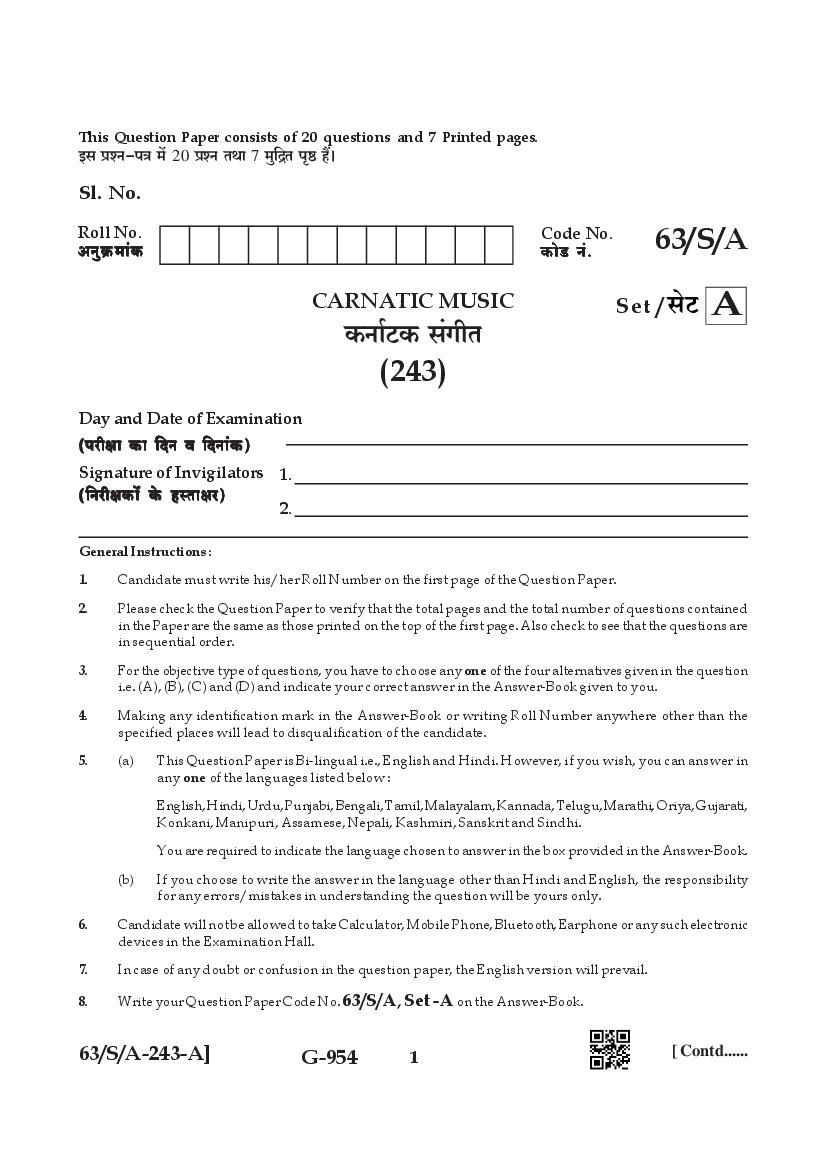
Page 1
Bg àíZ-nÌ _| 20 àíZ VWm 7 ‘w{ÐV n¥ð> h¢&
Sl. No.
Roll No.
AZw H « $ _m§ H $
Code No.
H$mo S > Z§ . 63/S/A
CARNATIC MUSIC Set / go Q > A
H$Zm©Q>H$ g§JrV
(243)
Day and Date of Examination
(narjm H$m {XZ d {XZm§ H $)
Signature of Invigilators 1.
({ZarjH$m| Ho $ hñVmja)
2.
General Instructions :
1. Candidate must write his/her Roll Number on the first page of the Question Paper.
2. Please check the Question Paper to verify that the total pages and the total number of questions contained
in the Paper are the same as those printed on the top of the first page. Also check to see that the questions are
in sequential order.
3. For the objective type of questions, you have to choose any one of the four alternatives given in the question
i.e. (A), (B), (C) and (D) and indicate your correct answer in the Answer-Book given to you.
4. Making any identification mark in the Answer-Book or writing Roll Number anywhere other than the
specified places will lead to disqualification of the candidate.
5. (a) This Question Paper is Bi-lingual i.e., English and Hindi. However, if you wish, you can answer in
any one of the languages listed below :
English, Hindi, Urdu, Punjabi, Bengali, Tamil, Malayalam, Kannada, Telugu, Marathi, Oriya, Gujarati,
Konkani, Manipuri, Assamese, Nepali, Kashmiri, Sanskrit and Sindhi.
You are required to indicate the language chosen to answer in the box provided in the Answer-Book.
(b) If you choose to write the answer in the language other than Hindi and English, the responsibility
for any errors/mistakes in understanding the question will be yours only.
6. Candidate will not be allowed to take Calculator, Mobile Phone, Bluetooth, Earphone or any such electronic
devices in the Examination Hall.
7. In case of any doubt or confusion in the question paper, the English version will prevail.
8. Write your Question Paper Code No. 63/S/A, Set -A on the Answer-Book.
63/S/A-243-A] G-954 1 [ Contd......
Page 2
1. narjmWu àíZnÌ Ho$ nhbo n¥ð> na AnZm AZwH«$‘m§H$ Adí¶ {bI|&
2. H¥$n¶m àíZnÌ H$mo Om±M b| {H$ àíZ-nÌ Ho$ Hw$b n¥ð>m| VWm àíZm| H$s CVZr hr g§»¶m h¡ {OVZr àW‘ n¥ð> Ho$ g~go D$na N>nr h¡& Bg ~mV
H$s Om±M ^r H$a b| {H$ àíZ H«${‘H$ ê$n ‘| h¢&
3. dñVw{Zð> àíZm| _| AmnH$mo Mma {dH$ënm| (A), (B), (C) Am¡a (D) _| go H$moB© EH$ CÎma MwZZm h¡ VWm Xr JB© CÎma-nwpñVH$m
_| Amn ghr CÎma {b{IE &
4. CÎma-nwpñVH$m ‘| nhMmZ-{M• ~ZmZo AWdm {Z{X©ï> ñWmZm| Ho$ A{V[aº$ H$ht ^r AZwH«$‘m§H$ {bIZo na narjmWu H$mo A¶mo½¶
R>ham¶m Om¶oJm&
5. (H$) `h àíZ-nÌ Xmo ^mfmAm| _| h¢ AWm©V A§J«oOr Ed§ qhXr h¡ & {’$a ^r, ¶{X Amn Mmh| Vmo ZrMo Xr JB© {H$gr EH$ ^mfm ‘| CÎma
Xo gH$Vo h¢ :
A§JOo« r, qhXr, CXÿ,© n§Om~r, ~§Jbm, V{‘b, ‘b¶mb‘, H$ÝZ‹S>, VobJw ,w ‘amR>r, C{‹S>¶m, JwOamVr, H$m|H$Ur, ‘{Unwar, Ag{‘¶m,
Zonmbr, H$í‘rar, g§ñH¥$V Am¡a qgYr&
H¥$n¶m CÎma-nwpñVH$m ‘| {XE JE ~m°³g ‘| {bI| {H$ Amn {H$g ^mfm ‘| CÎma {bI aho h¢&
(I) ¶{X Amn qhXr Ed§ A§JO o« r Ho$ A{V[a³V {H$gr Aݶ ^mfm ‘| CÎma {bIVo h¢ Vmo àíZm| H$mo g‘PZo ‘| hmoZo dmbr Ìw{Q>¶m|/Jb{V¶m|
H$s {Oå‘oXmar Ho$db AmnH$s hmoJr&
6. narjmWu H$mo narjm hm°b _| H¡$ëHw$boQ>a, _mo~mBb \$moZ, ãbwQ>y W, B`a\$moZ O¡go {H$gr ^r BboŠQ´>m{° ZH$ CnH$aU H$mo bo OmZo H$s AZw_{V
Zht h¡&
7. àíZnÌ _| {H$gr ^r àH$ma Ho$ g§Xoh AWdm Xþ{dYm H$s pñW{V _| A§J«oOr AZwdmX hr _mÝ` hmoJm &
8. AnZr CÎma-nwpñVH$m na àíZ-nÌ H$s H$moS> g§»¶m 63/S/A, goQ> - A {bI|&
63/S/A-243-A] G-954 2 [ Contd......
Page 3
H$Zm©Q>H$ g§JrV
(243)
Time : 2 Hours] [Maximum Marks : 40
g_` : 2 KÊQ>o] [nyUmªH$ : 40
Note : (i) All questions are compulsory and carry marks as indicated against each
question.
(ii) Question Nos. 1 to 4 are Multiple Choice Questions (MCQs). For these
questions, you have to choose the most appropriate answer from amongst
the four choices given as (A), (B), (C) and (D) and write your answer in the
Answer-Book. Each question carries 1 mark.
(iii) Question Nos. 5 to 9 are Very Short Answer (VSA) type questions carrying
1 mark each. Answer each question in about 10 words.
(iv) Question Nos. 10 to 17 are Short Answer (SA) type questions carrying
2 marks each. Answer each question in about 20 words.
(v) Question Nos. 18 to 20 are Long Answer (LA) type questions carrying
5 marks each. Answer each question in about 50 words.
{ZX}e : (i) g^r àíZ A{Zdm`© h¢ Am¡a àË`oH$ àíZ Ho$ A§H$ CgHo$ gm_Zo {X`o JE h¢ &
(ii) àíZ g§»`m 1 go 4 VH$ ~hþ{dH$ënr` àíZ h¢ & ~hþ{dH$ënr` àH$ma Ho$ àíZm| Ho$ {bE CnbãY Mma
{dH$ënm| (A), (B), (C) Am¡a (D) _| go gdm©{YH$ Cn`wŠV CÎma MwZH$a CÎma-nwpñVH$m _| {b{IE &
àË`oH$ àíZ Ho$ {bE 1 A§H$ {ZYm©[aV h¡ &
(iii) àíZ g§»`m 5 go 9 VH$ A{V bKw CÎmar` àíZ h¢ & àË`oH$ àíZ H$m CÎma bJ^J 10 eãXm| _| {b{IE &
àË`oH$ àíZ Ho$ {bE 1 A§H$ {ZYm©[aV h¡ &
(iv) àíZ g§»`m 10 go 17 VH$ bKw CÎmar` àíZ h¢ & àË`oH$ àíZ H$m CÎma bJ^J 20 eãXm| _| {b{IE &
àË`oH$ àíZ Ho$ {bE 2 A§H$ {ZYm©[aV h¡ &
(v) àíZ g§»`m 18 go 20 VH$ XrK© CÎmar` àíZ h¢ & àË`oH$ àíZ H$m CÎma bJ^J 50 eãXm| _| {b{IE &
àË`oH$ àíZ Ho$ {bE 5 A§H$ {ZYm©[aV h¡ &
63/S/A-243-A] G-954 3 [ Contd......
Page 4
(A) Tyagaraja (B) Dikshitar
(C) Swati Tirunal (D) Shyama Shastri
{dbmo_m Mmny Ho$ gmW nhbr ~ma AmE g§JrVH$ma &
(A) Ë`mJamO (B) Xr{jVma
(C) ñdm{V {VéZb (D) í`m_m emór
2. The aksharakala of anga Drutam. [1]
(A) 1 (B) 2
(C) 4 (D) 8
A§J ÐþV_ H$s AjaH$bm &
(A) 1 (B) 2
(C) 4 (D) 8
3. The treatise written by Vidyaranya. [1]
(A) Sangita Sara (B) Natya Shastra
(C) Swaramelakalanidhi (D) Chathurdandi Prakasika
{dX²`maÊ` X²dmam {b{IV J«§W &
(A) g§JrVm gmam (B) ZmQ²>` emó…
(C) ñda_obH$bm{Z{Y (D) MVwXªS>r àH$m{eH$
4. The instrument associated with Goddess Saraswati. [1]
(A) Sitar (B) Veena
(C) Tanpura (D) Violin
Xodr gañdVr go Ow‹S>m `§Ì &
(A) {gVma (B) drUm
(C) VmZnwam (D) dm`{bZ
63/S/A-243-A] G-954 4 [ Contd......
Page 5
[1]
A§H$Z {bIVo g_` N>moQ>o Am¡a ~‹S>o Ajam| _| A§Va ~VmBE &
6. Name the six angas of thala. [1]
Wmb Ho$ N>h A§Jm| Ho$ Zm_ {b{IE &
7. Define Nishadantya Raga. [1]
{ZfmX§Ë` amJ H$mo n[a^m{fV H$s{OE &
8. Define the term Janta Varisai. [1]
OZVm dm[agmB© eãX H$mo n[a^m{fV H$s{OE &
9. Write the Swarasthanas of Mayamalavagowla. [1]
_m`m_mbdJm¡bm Ho$ ñdañWmZ {b{IE &
10. Explain briefly the ancient period in the history of Indian Music. [2]
^maVr` g§JrV Ho$ B{Vhmg _| àmMrZ H$mb H$s g§jon _| ì`m»`m H$s{OE &
11. Define Sruti. Mention the three types of Sruti. [2]
lw{V H$mo n[a^m{fV H$s{OE & lw{V Ho$ VrZ àH$mam| H$m C„oI H$s{OE &
63/S/A-243-A] G-954 5 [ Contd......
Page 6
Am¡‹S>d Am¡a fm‹S>d amJm| H$mo n[a^m{fV H$s{OE &
13. Write short note on any one of the following : [2]
(a) Chaturdandi Prakasika
(b) Natya Sashtra
(c) Narada Parivrajaka Upanishad
{ZåZ{b{IV _| go {H$gr EH$ na g§{já {Q>ßnUr {b{IE &
(a) MVwXªS>r àH$m{eH$
(b) ZmQ²>` emó…
(c) ZmaX n[ad«mOH$ Cn{ZfX
14. Explain the parts 'Kudam' and 'Naagapaasam' in a Tanpura. [2]
EH$ VmZnwam _| "Hw$X_' Am¡a "ZmJnmg_' ^mJm| H$s ì`m»`m H$a| &
15. Mention four group Krit is composed by Dikshitar. [2]
Xr{jVma X²dmam a{MV Mma g_yh H¥$V H$m C„oI H$s{OE &
16. Define the term 'Swara'. [2]
"ñda' eãX H$s n[a^mfm Xr{OE &
17. Name the mela paddathi followed by the present day musicians. Who brought
this mela paddathi into vogue? [2]
dV©_mZ g_` Ho$ g§JrVH$mam| Ho$ ~mX _obm nXWr H$m Zm_ ~VmBE& Bg _obm nXWr H$mo àMbZ _| {H$gZo bm`m?
63/S/A-243-A] G-954 6 [ Contd......
Page 7
H$Zm©Q>H$ g§JrV Ho$ joÌ _| ñdm{V {VéZb Ho$ `moJXmZ H$m g§jon _| dU©Z H$a| &
19. Explain the classification of musical instruments. [5]
dmX²` `§Ìm| Ho$ dJuH$aU H$s ì`m»`m H$s{OE &
20. Explain the musical forms Padam, Javali and Tillana in detail. [5]
nX_, Omdbr Am¡a {VbmZm Ho$ g§JrV ê$nm| H$mo {dñVma go g_PmBE &
OR /`m
Briefly explain the concept of 'Tala' in Carnatic Music.
H$Zm©Q>H$ g§JrV _| "Vmb' H$s AdYmaUm H$mo g§jon _| g_PmBE &
63/S/A-243-A] G-954 7
Document Details
| Board / Org | NIOS |
| Exam | National Institute of Open Schooling Class 10 |
| Type | Question Paper |
| Pages | 7 |
| Updated | 22 Jul 2026 |