JEMAS PG 2021 Question Paper M.Phil RMTS
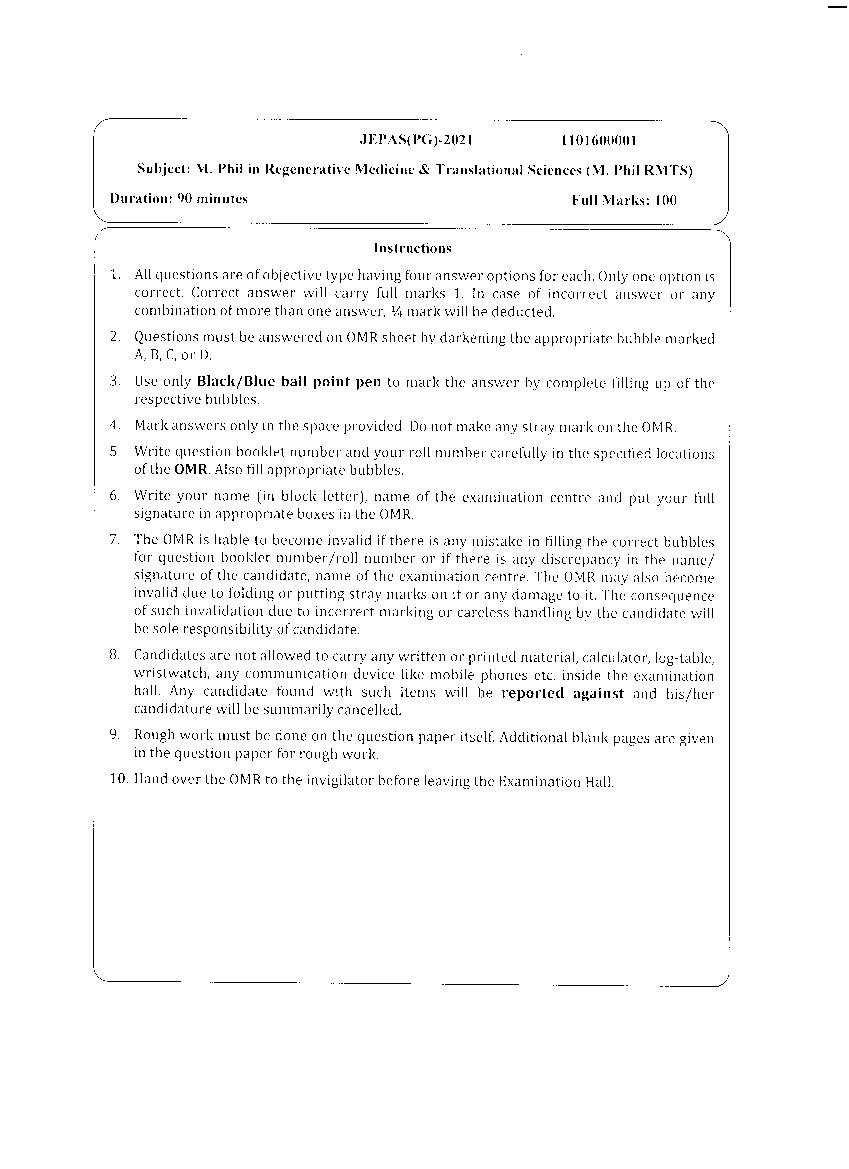
Finished viewing? Save it for later —
Download JEMAS PG 2021 Question Paper M.Phil RMTS (PDF · 15 pages)About JEMAS PG 2021 Question Paper M.Phil RMTS
JEMAS PG 2021 Question Paper M.Phil RMTS is available here for free download. Published by WBJEEB for WB JEMAS PG, this question paper can be viewed online or downloaded as a PDF (15 pages). Candidates preparing for WB JEMAS PG can use JEMAS PG 2021 Question Paper M.Phil RMTS to understand the exam pattern, the type of questions asked, and the overall difficulty level.
Frequently Asked Questions
How can I download JEMAS PG 2021 Question Paper M.Phil RMTS?
Open this page and click the Download button to save JEMAS PG 2021 Question Paper M.Phil RMTS as a PDF. It is completely free on AglaSem Docs.
Is JEMAS PG 2021 Question Paper M.Phil RMTS free to download?
Yes. JEMAS PG 2021 Question Paper M.Phil RMTS can be viewed online and downloaded as a PDF free of cost on AglaSem Docs.
How many pages does JEMAS PG 2021 Question Paper M.Phil RMTS have?
JEMAS PG 2021 Question Paper M.Phil RMTS contains 15 pages, which you can read online or download together as a single PDF.
Where can I find more WB JEMAS PG study material?
You can find more WB JEMAS PG question papers, sample papers, syllabus, and answer keys on AglaSem Docs.
JEMAS PG 2021 Question Paper M.Phil RMTS – Text
Read the full text of this question paper below — useful to quickly search, copy and reference the content online without downloading the PDF.
📄 View text version (14 pages)
Page 2
1. What is hematopoeisis?
a) Formation of red blood cells.
b) Formation of the lymphoid system only.
c) Formation of White blood cells and red blood cells.
d) Formation of the lymphoid and myeloid system.
2. Label which stain is used to mark the nucleus of a stem cell during imaging in Fluorescence microscope
a) TRITC.
b) FITC.
c) F-ACTIN.
d) DAPI.
3. C-reactive protein an important marker for inflammation is produced in which organ?
a) It is produced in the kidney.
b) It is produced in the liver.
c) It is produced in the thymus.
d) It is produced in the lungs.
4. Why in tissue engineering decellularized organs or membranes are used?
a) Decellularized organs or membranes act as scaffolds with extracellular matrix where cells can be
seeded.
b) Decellularized organs or membranes are used in cell culture expansion protocols.
c) Decellularized organs or membranes have cells that can help in regeneration of a tissue.
d) Decellularized organs or membranes can be used as explant culture.
5. What is an explant culture?
a) The culture of small pieces of tissue surgically removed from animal tissue or organ.
b) The process by which individual cells are surgically removed from animal tissue or organ.
c) The process by which one or more cells are surgically removed from animal tissue or organ.
d) Co culture of two types of cells is also known as explant culture.
6. BRCA1 & 2 gene mutation are often susceptible to breast cancer. What are these two genes?
a) BRCA1 and 2 are oncogenes.
b) BRCA1 & 2 are tumour suprressor genes.
c) BRCA1 & 2 are hallmark of breast cancer stem cells.
d) Deletion of BRCA1 and 2 causes cancer.
7. Where are plasma B cells produced in the body?
a) Thymus.
b) Liver.
c) Bone Marrow.
d) Lymph nodes.
Page 3
a) CDSCO.
b) DCGI.
c) ICMR.
d) Clinical Research Ethics Committee.
9. What is hemoptysis?
a) Expectoration of blood, alone or mixed with mucus, from the lower respiratory tract.
b) Expectoration of blood, alone or mixed with mucus, from the upper respiratory tract.
c) Blood in the urine.
d) Blood in stool.
10. Mark the correct start codon required for initiating translation on mRNA?
a) UAA.
b) UGG.
c) UAG.
d) AUG.
11. What can be an alternative substitute of DMSO in cryopreservation of stem cells?
a) Knockout Serum.
b) Glycerol.
c) Beta Mercaptoethanol.
d) Methanol.
12. The adipose tissue from sub cutaneous fat is rich in which type of stem cells?
a) Hematopoietic stem cells.
b) Embryonic stem cells.
c) Mesenchymal stem cells.
d) Induced pluripotent stem cells.
13. Pdx1 expressing pluripotent stem cells are the earliest markers for pancreatic differentiating cells and
can develop into mature pancreatic cells. They help in the secretion, survival and maintenance of what
type of pancreatic cells?
a) Alpha cell producing the hormone glucagon.
b) Delta cells producing the hormone somatostatin.
c) Beta cells producing insulin.
d) PP cells which produces the pancreatic polypeptide.
14. How would you characterize and check the potency of hematopoitic stem cells in vitro?
a) By the ability of forming various types of colony forming units or CFU.
b) By the ability to differentiate into ectoderm, endoderm and mesoderm.
c) By the ability to differentiate into adipocytes, osteocytes and chondrocytes.
d) By the ability to form teratomas.
15. Gamma Amino Butyric Acid or commonly called as GABA is a
a) Neuroinhibitor.
b) Neurotransmitter.
c) Contact inhibitor.
d) Contact excitor.
Page 4
a) Abrasion.
b) Caries.
c) Attrition.
d) Erosion.
17. In animal research, apart from institutional ethics committee, it is also monitored by another
organization also known as?
a) CPCSEA.
b) ICMR.
c) DCGI.
d) CDCSO.
18. Which of the following are not glial cells of the brain?
a) Neuron.
b) Astrocyte.
c) Microglia.
d) Oligodendrocyte.
19. What type of stem cells does the amnion of the amniotic membrane contains?
a) Mesenchymal stem cells.
b) Hematopoietic stem cells.
c) Adipose derived stem cells.
d) Endothelial progenitor cells.
20. Where are keratinocytes present?
a) Dermis.
b) Hypodermis.
c) Epidermis.
d) Basement membrane.
21. What result from an experiment can be conlcuded if p value is < 0.05?
a) The result has no effect on the outcome of the experiment.
b) The result could not be interpreted.
c) The result is insignificant.
d) The result is significant.
22. What does fibroblast secrete during the time of wound healing at the site of injury? Mark the best
answer
a) Growth factors.
b) Cytokines.
c) Chemokines.
d) Collagen.
23. In stem cell biology, the word "blast" is often used. What does blast refer to?
a) Blast refers to a group of matured, differentiated cells.
b) Blast refers to a group of precursor, immatured, undifferentiated cells.
c) Blast refers to a group of uncontrolled cell division resulting in tumour formation.
d) Blast refers to a group of cells that have resulted in necrosis due to excessive proliferation.
Page 5
a) These are identical immunoglobulins, generated from a single B-cell clone.
b) These are different immunoglobulins, generated from a multiple B-cell clone.
c) These are non-identical immunoglobulins, generated from a single B-cell clone.
d) These are identical immunoglobulins, generated from a single T-cell clone.
25. To identify a specific protein from a group of protein which technique you would use?
a) Southern Blotting.
b) SDS PAGE.
c) Western Blotting.
d) Northern Blotting.
26. Who was awarded the Nobel Prize in 1993 in Chemistry for inventing PCR?
a) Kary Mullins.
b) Barbara Mc Clintock.
c) Alec Jeffreys.
d) Eva Engvall and Peter Perlman.
27. Label the correct type of blood cell that arises from the myeloid progentor cells
a) Platelets and lymphocytes.
b) Leukocytes and lymphocytes.
c) Platelets and granulocytes.
d) Platelets and leukocytes.
28. The HLA is inherited as a set of three HLA groups also known as haplotypes, with each haplotypes
coming from the mother and father? What are these three HLA groups
a) HLA-A, B & C.
b) HLA-A, B, & E.
c) HLA-A, B, DRB1.
d) HLA-A, B G.
29. Apart from hematopoietic stem cells, what is the other predominant type of stem cell the bone marrow
contains?
a) Very small embryonic like stem cells.
b) Induced pluripotent stem cells.
c) Mesenchymal stem cells.
d) Embryonic stem cells.
30. What are the CD markers of Mesenchymal stem cells by which you can identify them from a group of
other cells
a) CD 105, 106, 29.
b) CD34, 38, 166.
c) CD45, STRO-1, CD105.
d) CD105, 106 & SSEA-1.
31. Which are the most abundant NK cells that are circulating in an adult peripheral blood?
a) CD56 dim & CD16 bright which represents 90% of all peripheral blood cells.
b) CD56 negative & CD16 bright positive which represents 90% of all peripheral blood cells.
c) CD56 dim & CD16 negative which represents 90% of all peripheral blood cells.
d) Only CD25 bright cells represent 90% of all peripheral blood cells.
Page 6
stem cells
a) Piggy Bac.
b) Lentivirus.
c) Plasmid.
d) Adenovirus.
33. Chose the correct answer which best defines the process of neurulation.
a) The process of formation of the spinal cord.
b) The process of transforming the flat neural plate into a neural “tube”.
c) The process of transforming the flat neural plate into the neruoepithelial tissue segment.
d) The process of transforming the ectoderm into a notocohord.
34. Why ethanol is used in DNA and RNA isolation?
a) Nucleic acids are soluble in ethanol and therefore they will precipitate as pellets.
b) Nucleic acids are insoluble in ethanol and therefore they will precipitate as pellets.
c) Nucleic acids easily dissolve in ethanol and separate out as small strands.
d) Nucleic acids do not dissolve in ethanol and therefore they will separate out as small strands
immediately.
35. What is photobleaching in fluorescence microscopy?
a) The phenomenon when a fluorophore loses its fluorescence due to damage induced by light.
b) The phenomenon when a fluorophore loses its fluorescence due to cellular damage.
c) The phenomenon when a fluorophore loses its fluorescence due to its non specific binding.
d) The phenomenon when a fluorophore is not viewed in the correct band pass filters.
36. What are some of the limitations that induced pluripotent stem cells have compared to embryonic stem
cells?
a) Risk of insertional mutagenesis and very low efficiency of reprogramming.
b) Risk of ethical and religious issues as this is also a class of pluriotent stem cells.
c) High risk of immune rejection compared to embryonic stem cells.
d) Not an efficient model for disease modelling, high throughput screening and toxicity studies unlike
embryonic stem cells.
37. What is transdifferentiation of stem cells?
a) Conversion of stem cells from one cell/tissue lineage to another completely new cell/tissue lineage.
b) Conversion of stem cells from an immature to a matured state.
c) Differentiation of stem cells into transit amplifying cells.
d) The inability of stem cells to differentiate into adult cells of the same tissue/organ.
38. Very small like embryonic stem cells are also found in?
a) Cord blood.
b) Sub ventricular zone.
c) Bone marrow.
d) Adipose tissue.
Page 7
a) Hydrolytic enzymes.
b) Proteolytic enzymes.
c) Amylase enzymes.
d) Lipase enzymes.
40. Embryonic stem cells are separated from the inner cell mass of the blastocyst embryo. The most
common technique that is applied to derive these human embryonic stem cells are?
a) Single cell balstomere technology.
b) Immunosurgery.
c) Mechanical dissolution method.
d) Enzymatic dissolution method.
41. From where mesenchymal stem cells can be collected?
a) The sub ventricular and sub gyral zone of the brain.
b) From the crypts of Liberkuhn in the gut.
c) Cord blood.
d) From the epidermal layer of the skin.
42. What are the core pluripotent networks?
a) OCT4, SOX2 and NANOG.
b) Lin28, SOX2 and NANOG.
c) Klf-4, c-Myc, Oct4.
d) Nanog, Sox2, c-Myc.
43. How cancer stem cells are different from cancer cells?
a) Cancer stem cells are less aggressive than cancer cells and are easy to treat.
b) Cancer stem cells are rare and more aggressive than cancer cells and are very difficult to treat.
c) Cancer stem cells can be detected early than cancer cells.
d) Cancer stem cells are mainly derived from stem cell mutations and cancer cells from somatic cell
mutations.
44. Cord blood is predominantly rich what type of cells?
a) Mesenchymal stem cells.
b) Hematopoietic stem cells.
c) Induced pluripotent stem cells.
d) Embryonic stem cells.
45. Human embryonic stem cells are obtained from?
a) Inner cell mass of the blastocyst.
b) From the primitive streak.
c) Morula stage.
d) From the bilaminar disc.
46. What are the three different types of pluripotent stem cells that are discovered yet?
a) Induced pluripotent stem cells, mesenchymal stem cells, embryonic stem cells.
b) Very small embryonic like stem cells, induced pluripotent stem cells, hematopoietic stem cells.
c) Embryonic stem cells, induced pluripotent stem cells, very small embryonic like stem cells.
d) Fetal stem cells, embryonic stem cells and very small like embryonic stem cells.
Page 8
a) Lin28, SOX2, OCT4 , NANOG.
b) KLf-4, SOX2, OCT4, NANOG.
c) C-myc, Sox2, Oct-4, Nanog.
d) Klf-4, c-Myc, Nanog, Sox2.
48. What are naïve pluripotent stem cells?
a) Are representatives of the pre implanted blastocysts that has an unlimited self renewal capacity.
b) Are derived from the post implanted blastocysts and has an unlimited self renewal capacity.
c) Derived from the inner cell mass and has limited self renewal capacity.
d) Although these are derived from the pre implanted blastocysts they are primed or destined to form
only certain lineages.
49. What is Somatic Cell Nuclear Transfer?
a) Two nucleuses of the donor and the recipient are fused together to form 2N nucleus.
b) The nucleus of the egg cell is fused with the enucleated somatic cell.
c) The enucleated egg cell is fused with nucleus of the somatic cell.
d) Enucleated somatic and egg cell are fused together.
50. How burn injuries are classified?
a) Superficial and full thickness burn.
b) Partial and full thickness burn.
c) Superficial and partial burn.
d) Superficial, partial and full thickness burn.
51. In embryonic stem cell characterization, teratoma assay is performed. What is this assay?
a) Formation of a benign tumor that represents all the three germ layers of ectoderm, endoderm and
mesoderm.
b) Formation of a malignant tumour that represents all the three germ layers of ectoderm, endoderm
and mesoderm.
c) Formation of a benign tumour that is not well defined.
d) Formation of a malignant tumour that is not well defined.
52. What is meant by multipotent stem cells?
a) Can differentiate into all the three germ layers.
b) Can differentiate into a specific lineage only.
c) Can differentiate into all the lineages of a specific organ or tissue.
d) Can give rise to all the three germ layers and the extra embryonic layer.
53. In a cord blood bank, which part of the cord blood is stored? Mark the best answer
a) Whole cord blood.
b) Buffy coat.
c) Platelet rich plasma.
d) Mono-nuclear cell.
54. What is the important role played by the alpha and beta globulin in blood plasma
a) Helps in clotting.
b) Helps in immunity by producing different immunoglobulins.
c) Helps in preventing the leakage of the extracellular fluid and maintaining the oncotic pressure.
d) These are mainly transport proteins which help in the transport of vitamins, iron, and lipids.
Page 9
a) MSCs are cultured on feeder layers in the presence of LIF.
b) MSCs are adult stem cells that attach or adhere to plastic surfaces very well and tend to grow and
self-renew well under in vitro conditions.
c) MSCs express SSEA-1,3, and 4 which can be used to identify MSCs and purify them for cell
therapy purposes.
d) MSCs cant self renew and tend to stop growing after some passages.
56. Mark the correct hallmark pathology of Parkinson's Disease?
a) Formation of amyloid plaques and and cerebral amyloid angiopathy.
b) Inflammation and multiple focal loss of myelin within the CNS resulting in lesions or plaques.
c) Loss of dopaminergic neurons from the substantia nigra and associated with Lewy body formations.
d) Edema, altered fluid homoestasis and latered permeability of the blood brain barrier.
57. What is hematopoeitic stem cell transplantation?
a) A process where CD29, CD90 positive stem cells are transplanted to reconstitute the bone marrow
system of the patient.
b) A process where a mixture of CD29 positive and CD34 cells are transplanted to the patient for
reconstitution of the bone marrow system of the patient.
c) I A process where SSEA-4 positive and CD34 positive cells are used to reconstitute the bone
marrow of a patient.
d) A process where predminantly CD34 positive rich cells are transplanted to the patient for bone
marrow reconstituition.
58. Why phenol red is added to DMEM before stem cell culture?
a) It is a pH indicator and any change in colour of the media frompink red will indicate whether the
media has become alkaline or acidic.
b) It is used a substitute to serum in media.
c) It is added to supplement the cells with nutrition and essential amino acids.
d) Phenol red can be used a substitute for anti biotics and anti fungals in stem cell culture media.
59. What is the role of decidual NK cells during pregnancy?
a) These are CD56+ dim, CD16 - and therefore less hostile than peripheral NK cells and helps in
placentation process by remodelling the ECM, angiogenesis, secreting growth factors and
trophoblast invasion.
b) These are CD56+ bright, CD16 - and therefore less hostile than peripheral NK cells and helps in
placentation process by remodelling the ECM, angiogenesis, secreting growth factors and
trophoblast invasion.
c) These are CD56+, CD16 + and helps in placentation process by remodelling the ECM, angiogenesis,
secreting growth factors and trophoblast invasion.
d) These are CD56+ dim, CD16 + and helps in safeguarding the uterine environment by stopping the
entry of any foreign pathogens.
60. What would be the effect on the PCR reaction if any of the following circumstances arose: 1) there are
no primers in the reaction, 2) there are no dNTPs in the reaction, 3) there is no Taq polymerase in the
reaction?
a) PCR would proceed normally.
b) Non-specific PCR of random templates will occur.
c) The reaction will cease after a few cycles.
d) The PCR reaction will not commence.
Page 10
a) Is a major hallmark in cancer and especially in cancer cell progression as it faciliiates the cancer
cells to metastasize and is highly upregulated in cancer cells.
b) Plays a major role in suppressing tumours by regulating DNA repair and cell division.
c) Do not have a role in cancer.
d) Destroys cancer cells by secreting perforins and granzymes.
62. Side scatter in Flow cytometry is used for analysing which property of stem cells?
a) To determine the size of the stem cells.
b) To determine the complexity and granularity of the stem cells.
c) To determine a specific cell surface marker of a stem cell in question.
d) Side scatter specifically determines the number of viable and dead stem cells in the sample
population of stem cells.
63. What causes background noise in flourescence microscopy while analyzing a specific type of stem cell?
a) Depends on the nature of the fluorochrome used and its wavelength.
b) Too much of specific binding of the fluorophores to the stem cells.
c) Unbound or non specific binding of the dye resulting in autofluorescence.
d) It happens when an appropriate dye is not used specific to the stem cell in the sample.
64. What is a dizygotic twin?
a) Formed from two eggs fertilized by two different spermatazoa.
b) Formed from two eggs fertilized by a single spermatazoa.
c) Formed from one egg fertilized by a single sperm.
d) Formed from one egg fertilized by the same spermatazoa.
65. What type of antibiotic is gentamicin?
a) Cephalosoprins.
b) Penicillins.
c) Tetracyclines.
d) Aminoglycosides.
66. What is auto transplantation of islet beta cells in diabetes type I patient:
a) Cells from porcine are transplanted with immunsuppression.
b) Cells from a donor are transplanted with immunosuppression.
c) Cells from the patient itself is transplanted with immunsuppression regimen.
d) Cells from the patient is transplanted without any immunosuppression.
67. Multiple myeloma is a cancerous diseases of?
a) When excessive white blood cells are produced.
b) When excessive plasma cells are produced.
c) When excessive plasma cells are produced.
d) When excessive plasma cells are produced.
68. Which is the best answer that fits the Th1 immune profile?
a) Humoral mediated.
b) Cell mediated.
c) Immunosuppression and homeostasis.
d) Cytotoxic T lymphocyte mediated.
Page 11
a) Transplantation between two twins having non-identical genotype.
b) Transplantation between two individuals having identical genotype.
c) Transplantation between two individuals having no identical genotype.
d) Transplantation between two twins having identical genotype.
70. What is cord blood transfusion?
a) Transfer of nucleated cells from one system to another.
b) Transfer of non-nucleated cells from one system to another.
c) Transfer of mononuclear cells from one system to another.
d) Transfer of total nucleated cells from one system to another.
71. Mark the correct nuclear transcriptional marker for embryonic stem cells.
a) TRA 1-60.
b) TRA 1-80.
c) SOX2.
d) SSEA-4.
72. What type of lipid makes the bi lipid layer of a cell?
a) Hydrophobic.
b) Hydrophillic.
c) Amphiphilic.
d) Zwitter ion.
73. In Huntington Chorea disease the molecular pathology for the cause of chorea is?
a) It is caused by a dominantly inherited CAG repeat expansion in exon 1 of the huntingtin gene
(HTT).
b) It is caused by a repeated expansion in exon 1 of the huntingtin gene (HTT) only.
c) Is caused by a dominantly inherited GAG repeat expansion in exon 1 of the huntingtin gene (HTT).
d) Is caused by a dominantly inherited GAaA repeat expansion in exon 1 of the huntingtin gene
(HTT).
74. Hypoxia inducible factor 1 helps stem cells in what way?
a) Undifferentiated and remain pluripotent in hypoxc conditions.
b) Spontaneoulsy differentiate under hypoxic conditions.
c) Results in malignant transformation of pluripotent stem cells.
d) Upregulated the caspase pathway in stem cells and therrofore results in programmed cell death of
stem cells.
75. Role of fibroblast in tissue regeneration and healing
a) Helps in the synthesis of progenitor cells specific to the tissue or organ.
b) Helps in the synthesis of tissue specific stem cells.
c) Helps in migration of stem cells to the site of injury and formation of stroma.
d) Helps in the synthesis of extra cellular matrix, stroma and more importantly collagen.
76. What is the role of matrix metalloproteinases in cancer metastasis?
a) Helps in the promotion of fibroblasts.
b) Helps in the promotion of mesenchymal stem cells.
c) Helps in the activation of apoptopic pathways.
d) Helps in the degradation of both matrix and non matrix proteins.
Page 12
DNA?
a) Electroporation, liposome mediated and viral transfection.
b) Viral transfection, SDS-PAGE and Western blotting.
c) Viral transfection, liposome mediated transfection and Southern Blotting.
d) Viral transfection, electroporation and qPCR.
78. What is opsonization?
a) Process by which viruses get coated with special antibodies called opsonins so as to make them
more attractive to phagocytic cells.
b) Process by which bacterias get coated with special antibodies called opsonins so as to make them
more attractive to phagocytic cells.
c) Process by which protozoans get coated with special antibodies called opsonins so as to make them
more attractive to phagocytic cells.
d) Process by which fungi get coated with special antibodies called opsonins so as to make them more
attractive to phagocytic cells.
79. Human cord blood is a predomiant source for which type of stem cells?
a) Very small embryonic like stem cells.
b) Hematopoeitic stem cells.
c) Mesenchymnal stem cells.
d) Endothelial progenitor cells.
80. What is the potency of very small embryonic like stem cells?
a) Unipotent.
b) Multipotent.
c) Pluripotent.
d) Totipotent.
81. Animal handling and animal research is strictly monitored by an organization apart from local
institutional ethics body. The name of the organization is:
a) NAC-SCRT.
b) IC-SCRT.
c) IAEC.
d) CPCSEA.
82. Why is quantitative PCR used?
a) To measure the number of copies of transgenic DNA and its quantification.
b) To measure the number of copies of RNA.
c) To measure the number of copies of transgenic RNA.
d) Used to measure the frequency of the number of copies of RNA and DNA.
83. What is the role of Sodium Dodecyl Sulphate in SDS PAGE?
a) It helps the proteins to run easily.
b) It helps in the separation of the protein.
c) Helps in unfolding of the teritary structure of the protein and coats the protein with an uniform
negative charge.
d) Helps in unfolding of the teritary structure of the protein and coats the protein with an uniform
positive charge.
Page 13
pluripotent stem (iPS) cells from mouse skin fibroblasts?
a) SSEA-1.
b) Sox2.
c) Oct-3/4.
d) Lin28.
85. What is Pharmacokinetics?
a) It is defined as to what the body does to a drug.
b) It is defined as to what the drug does to a body.
c) It is related to adverse drug interaction.
d) It is related to the efficiency of the drug.
86. Northern Blotting is used to detect?
a) DNA.
b) Protein.
c) RNA.
d) Virus.
87. Which is the primary hemoglobin that is present only during the embryonic life?
a) Gower II.
b) Gower I.
c) Portland I.
d) Portland II.
88. What are the challenges of artificially reconstructed teeth?
a) Production of dentin.
b) Production of enamel.
c) Production of pulp.
d) Production of both enamel and dentin.
89. Mark the best answer for the disease erythroblastosis fetalis.
a) Hemolytic anemia of the fetus or newborn caused due to maternal immune system and blood group
incompatibility.
b) Hemolytic anemia of the fetus or neonate caused due to compromise in the placental barrier.
c) Hemolytic anemia of the fetus or neonate caused due to low hemoglobin of the mother.
d) Hemolytic anemia of the fetus or neonate caused due to the failure to form a functional
hematopoietic system during the process of fetal development.
90. To identify pluripotent stem cells, apart from CD and transcriptional marker analysis and teratoma
assay, name another method for identifying human pluripotent stem cells
a) Western Blotting.
b) Alkaline Phosphatase test.
c) SDS PAGE.
d) Southern blotting.
Page 14
perform in lab to identify these cells?
a) Assess their ability to differentiate into osteocytes by osteogenic differentiation media and using
alizarin red stain S.
b) Assess their ability to differentiate into chondrocytes by using chondrogenic differentiation media
using alcian blue stain.
c) Assess their ability to differentiate into neurons by using neurogenic differentiation media and Oil
Red O stain.
d) Assess their ability to differentiate into adipocytes, osteocytes and chondrocytes using specific
stains.
92. The Cre lox recombination system is an important gene editing tool in genetic enginnering. Which of
the following best defines it?
a) It helps in homologous recombination between two chromosomes.
b) Site specific recombination between two lox Psites leading to addition, insertion or deletion of the
DNA.
c) Non specific recombination between any two loxP sites leading to addition, insertion or deletion of
the DNA.
d) Multiple recombination at multiple loxP sites usually more than two leading to addition, insertion or
deletion of the DNA.
93. What is insertional mutagenesis in induced pluripotent stem cells (iPSC)?
a) A mutation that happens due to the deletion of one or more base pairs in the host genome.
b) A mutation that happens due to the addition of one or more base pairs in the host genome.
c) A mutation that happens due to the translocation of one or more base pairs in the host genome.
d) A mutation that happens due to the inversion of one or more base pairs in the host genome.
94. Alkaline phosphatase is used as a marker for which type of stem cells?
a) It is an enzyme that is highly upregulated in pluripotent stem cells only and therefore a pluripotent
marker.
b) It is an enzyme that is highly upregulated in fetal stem cells only and is therefore a marker of fetal
stem cells.
c) It is an enzyme that is highly upregulated in mesenchymal stem cells only and therefore a bio
marker for mesenchymal stem cells.
d) It is an enzyme that is highly upregulated in hematopoeitic stem cells only and therefore a marker
for hematopoietic stem cells.
95. Whartons Jelly is a rich source for?
a) Very small embryonic like stem cells.
b) Induced pluripotent stem cells.
c) Mesenchymal stem cells.
d) Endothelial progenitor cells.
Page 15
a) Mesenchymal stem cells are multipotent stem cells and are characterized by CD markers CD34,
CD45 and CD11b.
b) Mesenchymal stem cells are pluripotent stem cells and are characterized by CD markers CD38,
CD44 and CD11b.
c) Mesenchymal stem cells are multipotent stem cells and are characterized by CD markers CD29,
CD90 and CD73.
d) Mesenchymal stem cells are mesenchymal stem cells and are characterized by CD markers CD25,
CD56 and CD11b.
97. What is the difference between cell replacement and stem cell therapy?
a) Cell replacement only inlcudes stem cell therapy.
b) Cell replacement includes fetal stem cells, genetically modified cells, or any somatic cell therapy
whereas stem cell therapy includes only different types of stem cells.
c) Cell replacement therapy does nto includes any form of stem cell therapy.
d) Stem cell therapy is where stem cells are used and cell replacement therapy is restricted to the use of
fetal cells only.
98. What is the difference between Western Blotting and SDS PAGE?
a) Both are used to separate proteins and are the same method with different names.
b) Western Blotting is used to separate DNA and SDS PAGE is used for separation of proteins only.
c) Western Blotting is used to separate protein by mass whereas SDS PAGE is an analytical technique
used to separate the different proteins within a complex mixture of other proteins.
d) SDS PAGE is used to separate protein by mass whereas Western Blotting is an analytical technique
used to separate the different proteins within a complex mixture of other proteins.
99. What are the effects of long term steroid use?
a) Steroid is a life saving drug so it is safe and has minimal side effects that includes mild symptoms of
vomiting and nausea.
b) Steroid although is a life saving drug used for anti-inflammation, and if it is not used judiciously in
the long term can result in immune suppression resulting in opportunistic infections.
c) Steroid has no side effect and is safe for use even in long term and emergency purposes.
d) Steroid shots can lead to site morbidity and tissue injury if used for long time.
100. Which of the following statements explain Chimeria the best?
a) Contains a single set of DNA that is different from the host.
b) Contains two different types of DNA or cells in a single organism that can produce more than one
distinct genotype in the organism with subtle changes in the phenotypic expression also.
c) Contains two different types of DNA or cells in a single organism and produces only one genotype
and no changes in the phenotype.
d) Contains more than two different types of DNA but the genotype and the phenotype remains the
same.
Document Details
| Board / Org | WBJEEB |
| Exam | WB JEMAS PG |
| Type | Question Paper |
| Pages | 15 |
| Updated | 22 Jul 2026 |