NIOS Class 10 April 2024 Question Paper Economics
Finished viewing? Save it for later —
Download NIOS Class 10 April 2024 Question Paper Economics (PDF · 15 pages)About NIOS Class 10 April 2024 Question Paper Economics
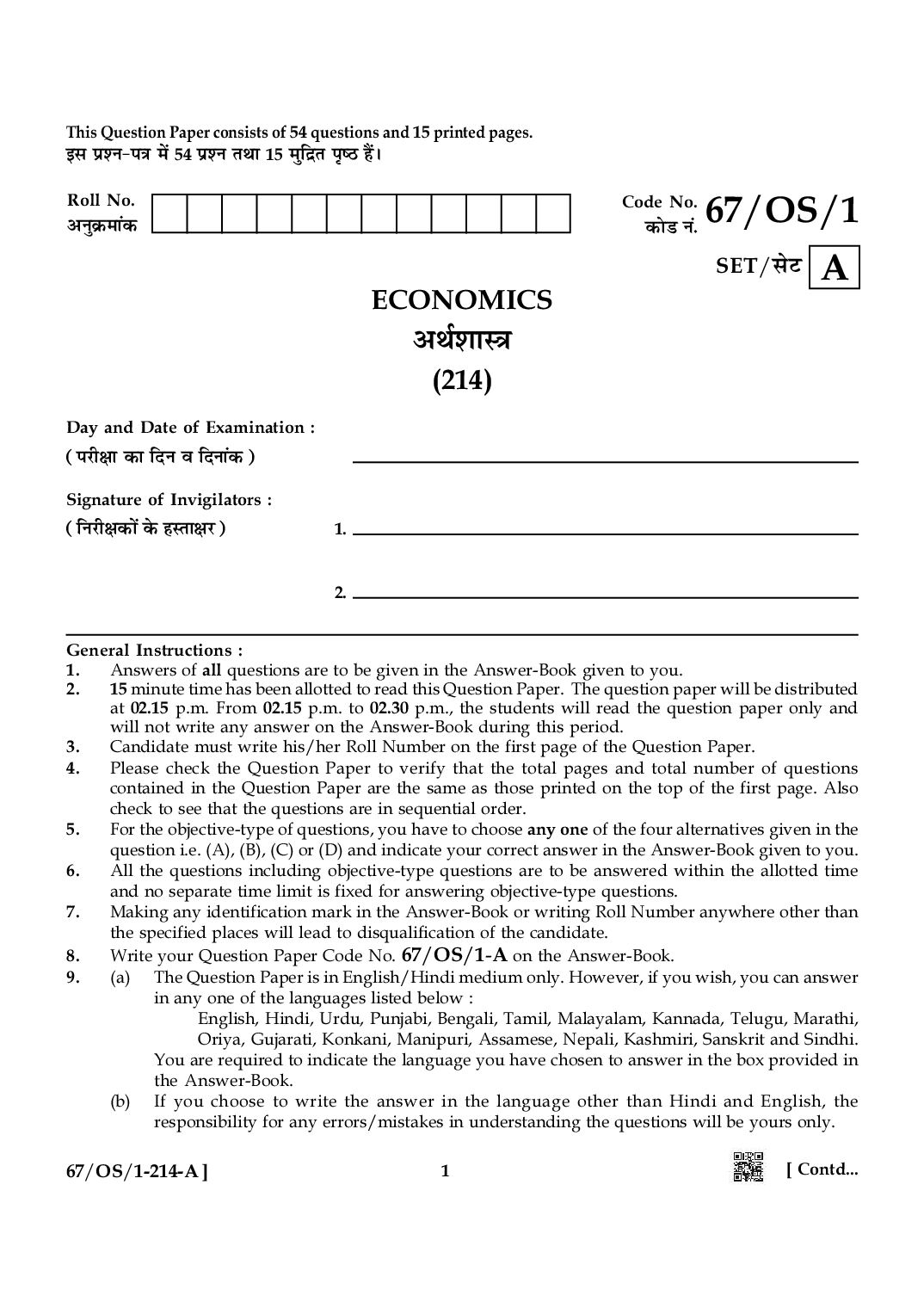
NIOS Class 10 April 2024 Question Paper Economics is available here for free download. Published by NIOS for National Institute of Open Schooling Class 10, this question paper can be viewed online or downloaded as a PDF (15 pages). Candidates preparing for National Institute of Open Schooling Class 10 can use NIOS Class 10 April 2024 Question Paper Economics to understand the exam pattern, the type of questions asked, and the overall difficulty level.
Frequently Asked Questions
How can I download NIOS Class 10 April 2024 Question Paper Economics?
Open this page and click the Download button to save NIOS Class 10 April 2024 Question Paper Economics as a PDF. It is completely free on AglaSem Docs.
Is NIOS Class 10 April 2024 Question Paper Economics free to download?
Yes. NIOS Class 10 April 2024 Question Paper Economics can be viewed online and downloaded as a PDF free of cost on AglaSem Docs.
How many pages does NIOS Class 10 April 2024 Question Paper Economics have?
NIOS Class 10 April 2024 Question Paper Economics contains 15 pages, which you can read online or download together as a single PDF.
Where can I find more National Institute of Open Schooling Class 10 study material?
You can find more National Institute of Open Schooling Class 10 question papers, sample papers, syllabus, and answer keys on AglaSem Docs.
NIOS Class 10 April 2024 Question Paper Economics – Text
Read the full text of this question paper below — useful to quickly search, copy and reference the content online without downloading the PDF.
📄 View text version (15 pages)
Page 1
ß‚ ¬˝‡Ÿ-¬òÊ ◊¥ 54 ¬˝‡Ÿ ÃÕÊ 15 ◊ÈÁŒ˝Ã ¬Îc∆U „Ò¥–
Roll No. Code No.
•ŸÈ∑˝§◊Ê¥∑§ ∑§Ê«U Ÿ¥.
67/OS/1
SET/‚ ≈ A
ECONOMICS
•Õ¸‡ÊÊSòÊ
(214)
Day and Date of Examination :
(¬⁄UˡÊÊ ∑§Ê ÁŒŸ fl ÁŒŸÊ¥∑§)
Signature of Invigilators :
(ÁŸ⁄UˡÊ∑§Ê¥ ∑§ „SÃÊˇÊ⁄U) 1.
2.
General Instructions :
1. Answers of all questions are to be given in the Answer-Book given to you.
2. 15 minute time has been allotted to read this Question Paper. The question paper will be distributed
at 02.15 p.m. From 02.15 p.m. to 02.30 p.m., the students will read the question paper only and
will not write any answer on the Answer-Book during this period.
3. Candidate must write his/her Roll Number on the first page of the Question Paper.
4. Please check the Question Paper to verify that the total pages and total number of questions
contained in the Question Paper are the same as those printed on the top of the first page. Also
check to see that the questions are in sequential order.
5. For the objective-type of questions, you have to choose any one of the four alternatives given in the
question i.e. (A), (B), (C) or (D) and indicate your correct answer in the Answer-Book given to you.
6. All the questions including objective-type questions are to be answered within the allotted time
and no separate time limit is fixed for answering objective-type questions.
7. Making any identification mark in the Answer-Book or writing Roll Number anywhere other than
the specified places will lead to disqualification of the candidate.
8. Write your Question Paper Code No. 67/OS/1-A on the Answer-Book.
9. (a) The Question Paper is in English/Hindi medium only. However, if you wish, you can answer
in any one of the languages listed below :
English, Hindi, Urdu, Punjabi, Bengali, Tamil, Malayalam, Kannada, Telugu, Marathi,
Oriya, Gujarati, Konkani, Manipuri, Assamese, Nepali, Kashmiri, Sanskrit and Sindhi.
You are required to indicate the language you have chosen to answer in the box provided in
the Answer-Book.
(b) If you choose to write the answer in the language other than Hindi and English, the
responsibility for any errors/mistakes in understanding the questions will be yours only.
67/OS/1-214-A ] 1 [ Contd...
Page 2
1. ‚÷Ë ¬˝‡ŸÊ¥ ∑§ ©ûÊ⁄U •Ê¬∑§Ê ŒË ªÿË ©ûÊ⁄U-¬ÈÁSÃ∑§Ê ◊¥ „Ë Á‹π¥–
2. ß‚ ¬˝‡Ÿ-¬òÊ ∑§Ê ¬…∏Ÿ ∑§ Á‹∞ 15 Á◊Ÿ≈U ∑§Ê ‚◊ÿ ÁŒÿÊ ªÿÊ „Ò– ¬˝‡Ÿ-¬òÊ ∑§Ê ÁflÃ⁄UáÊ ŒÊ¬„⁄U ◊¥ 02.15 ’¡ Á∑§ÿÊ ¡Ê∞ªÊ–
02.15 ’¡ ‚ 02.30 ’¡ Ã∑§ ¿UÊòÊ ∑§fl‹ ¬˝‡Ÿ-¬òÊ ∑§Ê ¬…∏¥ª •ÊÒ⁄U ß‚ •flÁœ ∑§ ŒÊÒ⁄UÊŸ fl ©ûÊ⁄U-¬ÈÁSÃ∑§Ê ¬⁄U ∑§Ê߸ ©ûÊ⁄U Ÿ„Ë¥
Á‹π¥ª–
3. ¬⁄UˡÊÊÕ˸ ¬˝‡Ÿ-¬òÊ ∑§ ¬„‹ ¬Îc∆U ¬⁄U •¬ŸÊ •ŸÈ∑˝§◊Ê¥∑§ •fl‡ÿU Á‹π¥–
4. ∑Χ¬ÿÊ ¬˝‡Ÿ-¬òÊ ∑§Ê ¡ÊÚ°ø ‹¥ Á∑§ ¬˝‡Ÿ-¬òÊ ∑§ ∑ȧ‹ ¬Îc∆UÊ¥ ÃÕÊ ¬˝‡ŸÊ¥ ∑§Ë ©ÃŸË „Ë ‚¥ÅUÿÊ „Ò Á¡ÃŸË ¬˝Õ◊ ¬Îc∆ ∑ §‚’‚ ™§¬⁄U
¿U¬Ë „Ò– ß‚ ’Êà ∑§Ë ¡ÊÚ°ø ÷Ë ∑§⁄U ‹¥ Á∑§ ¬˝‡Ÿ ∑˝ Á◊∑§ UM§¬ ◊¥ „Ò¥–
5. flSÃÈÁŸc∆U ¬˝‡ŸÊ¥ ◊¥ •Ê¬∑§Ê øÊ⁄U Áfl∑§À¬Ê¥ (A), (B), (C) •ÕflÊ (D) ◊¥ ‚ ∑§Ê߸ ∞∑§ ©ûÊ⁄U øÈŸŸÊ „Ò ÃÕÊ ŒË ªß¸ ©ûÊ⁄U-¬ÈÁSÃ∑§Ê
◊¥ ‚„Ë ©ûÊ⁄U Á‹πŸÊ „Ò–
6. flSÃÈÁŸc∆U ¬˝‡ŸÊ¥ ∑§ ‚ÊÕ-‚ÊÕ ‚÷Ë ¬˝‡ŸÊ¥ ∑§ ©ûÊ⁄U ÁŸœÊ¸Á⁄Uà •flÁœ ∑§ ÷ËÃ⁄U „Ë ŒŸ „Ò¥– flSÃÈÁŸc∆U ¬˝‡ŸÊ¥ ∑§ Á‹∞ •‹ª ‚
‚◊ÿ Ÿ„Ë¥ ÁŒÿÊ ¡Ê∞ªÊ–
7. § ©ûÊ⁄U-¬ÈÁSUÃ∑§Ê ◊¥ ¬„øÊŸ-Áøq ’ŸÊŸ •ÕflÊ ÁŸÁŒ¸c≈U SÕÊŸÊ¥ ∑§§•ÁÃÁ⁄UÄà ∑§„Ë¥ ÷Ë •ŸÈ∑˝§◊Ê¥∑§ Á‹πŸ ¬⁄U ¬⁄UˡÊÊÕ˸ ∑§Ê •ÿÊÇÿ
∆U„⁄UÊÿÊ ¡ÊÿªÊ–
8. •¬ŸË ©ûÊ⁄U-¬ÈÁSUÃ∑§Ê ¬⁄U ¬˝‡Ÿ-¬òÊ ∑§Ê ∑§Ê«U Ÿ¥. 67/OS/1-A Á‹π¥–
9. (∑§) ¬˝‡Ÿ-¬òÊ ∑§fl‹ •¥ª˝¡Ë/Á„¥ŒË ◊¥ „Ò– Á»§⁄U ÷Ë, ÿÁŒ •Ê¬ øÊ„¥ ÃÊ ŸËø ŒË ªß¸ Á∑§‚Ë ∞∑§ ÷Ê·Ê ◊¥ ©ûÊ⁄ Œ ‚∑§Ã „Ò¥ —
•¥ª˝¡Ë, Á„¥ŒË, ©ŒÍ¸, ¬¥¡Ê’Ë, ’°ª‹Ê, ÃÁ◊‹, ◊‹ÿÊ‹◊, ∑§ãŸ«∏, ËȪÍ, ◊⁄UÊ∆UË, ©Á«∏ÿÊ, ªÈ¡⁄UÊÃË, ∑§Ê¥∑§áÊË,
◊ÁáʬÈ⁄UË, •‚Á◊ÿÊ, Ÿ¬Ê‹Ë, ∑§‡◊Ë⁄UË, ‚¥S∑Χç•ÊÒ⁄U Á‚¥œË–
∑Χ¬ÿÊ ©ûÊ⁄U-¬ÈÁSÃ∑§Ê ◊¥ ÁŒ∞ ª∞ ’ÊÚÄ‚ ◊¥ Á‹π¥ Á∑§ •Ê¬ Á∑§‚ ÷Ê·Ê ◊¥ ©ûÊ⁄U Á‹π ⁄U„ „Ò¥–
(π) ÿÁŒ •Ê¬ Á„¥ŒË ∞fl¥ •¥ª˝¡Ë ∑§ •ÁÃÁ⁄UÄà Á∑§‚Ë •ãÿ ÷Ê·Ê ◊¥ ©ûÊ⁄U Á‹πà „Ò¥, ÃÊ ¬˝‡ŸÊ¥ ∑§Ê ‚◊¤ÊŸ ◊¥ „ÊŸ flÊ‹Ë
òÊÈÁ≈UÿÊ¥/ª‹ÁÃÿÊ¥ ∑§Ë Á¡ê◊UŒÊ⁄Ë ∑ fl‹ •Ê¬∑§Ë „ʪ˖
67/OS/1-214-A ] 2 [ Contd...
Page 3
•Õ¸‡ÊÊSòÊ
(214)
Time : 3 Hours ] [ Maximum Marks : 100
‚◊ÿ — 3 ÉÊá≈U ] [ ¬ÍáÊÊZ∑§ — 100
Note :
(i) This question paper consists of 54 questions in all.
(ii) All questions are compulsory.
(iii) Marks are given against each question.
(iv) Section - A consists of :
(a) Q.No. 1 to 20 - Multiple Choice type questions (MCQs) carrying 1 mark each. Select and
write the most appropriate option out of the four options given in each of these questions.
An internal choice has been provided in some of these questions. You have to attempt
only one of the given choices in such questions.
(b) Q.No. 21 to 35 - Objective type questions carrying 2 marks each (with 2 sub-parts of 1 mark
each). Attempt these questions as per the instructions given for each of the questions
21 to 35.
(v) Section - B consists of :
(a) Q.No. 36 to 46 - Very Short Answer type questions carrying 2 marks each to be answered in
the range of 30 to 50 words.
(b) Q.No. 47 to 52 - Short Answer type questions carrying 3 marks each to be answered in the
range of 50 to 80 words.
(c) Q.No. 53 and 54 - Long Answer type questions carrying 5 marks each to be answered in the
range of 80 to 120 words.
ÁŸŒ¸‡Ê —
(i) ß‚ ¬˝‡Ÿ-¬òÊ ◊¥ ∑ȧ‹ 54 ¬˝‡Ÿ „Ò¥–
(ii) ‚÷Ë ¬˝‡Ÿ •ÁŸflÊÿ¸ „Ò¥–
(iii) ¬˝àÿ∑§ ¬˝‡Ÿ ∑§ ‚Ê◊Ÿ ©‚∑§ •¥∑§ ÁŒ∞ ª∞ „Ò¥–
(iv) πá«U - ∑§ ◊¥ ‡ÊÊÁ◊‹ „Ò¥ —
(a) ¬˝‡Ÿ ‚¥ÅÿÊ 1 ‚ 20 Ã∑§ ’„ÈÁfl∑§À¬Ëÿ ¬˝∑§Ê⁄U ∑§ ¬˝‡Ÿ „Ò¥ •ÊÒ⁄U ¬˝àÿ∑§ ¬˝‡Ÿ 1 •¥∑§ ∑§Ê „Ò– ߟ◊¥ ‚ ¬˝àÿ∑§ ¬˝‡Ÿ ◊¥
ÁŒ∞ ª∞ øÊ⁄U Áfl∑§À¬Ê¥ ◊¥ ‚ ‚’‚ ©¬ÿÈÄà Áfl∑§À¬ ∑§Ê øÿŸ ∑§⁄U Á‹πŸÊ „Ò– ߟ◊¥ ‚ ∑ȧ¿U ¬˝‡ŸÊ¥ ◊¥ •Ê¥ÃÁ⁄U∑§ Áfl∑§À¬
ÁŒ∞ ª∞ „Ò¥– •Ê¬∑§Ê ∞‚ ¬˝‡ŸÊ¥ ◊¥ ÁŒ∞ ª∞ Áfl∑§À¬Ê¥ ◊¥ ‚ ∑§fl‹ ∞∑§ Áfl∑§À¬ ∑§Ê „Ë ©ûÊ⁄U Á‹πŸÊ „ʪʖ
(b) ¬˝‡Ÿ ‚¥ÅÿÊ 21 ‚ 35 Ã∑§ flSÃÈÁŸc∆U ¬˝∑§Ê⁄U ∑§ ¬˝‡Ÿ „Ò¥ •ÊÒ⁄U ¬˝àÿ∑§ ¬˝‡Ÿ 2 •¥∑§ ∑§Ê „Ò (¬˝àÿ∑§ ∑§ 2 ‹ÉÊÈ ÷ʪ
∞∑§-∞∑§ •¥∑§ ∑§ „Ò¥)– ߟ 21 ‚ 35 Ã∑§ ∑§ ¬˝‡ŸÊ¥ ∑§Ê ©Ÿ∑§ Á‹∞ ÁŒ∞ ª∞ ÁŸŒ¸‡ÊÊ¥ ∑§ •ŸÈ‚Ê⁄U „‹ ∑§ËÁ¡∞–
(v) πá«U - π§ ◊¥ ‡ÊÊÁ◊‹ „Ò¥ —
(a) ¬˝‡Ÿ ‚¥ÅÿÊ 36 ‚ 46 Ã∑§ •Áà ‹ÉÊÈ-©ûÊ⁄UËÿ ¬˝∑§Ê⁄U ∑§ ŒÊ-ŒÊ •¥∑§Ê¥ ∑§ ¬˝‡Ÿ „Ò¥ Á¡Ÿ∑§Ê ©ûÊ⁄U 30 ‚ 50 ‡ÊéŒÊ¥ ◊¥ ÁŒÿÊ
¡ÊŸÊ „Ò–
(b) ¬˝‡Ÿ ‚¥ÅÿÊ 47 ‚ 52 Ã∑§ ‹ÉÊÈ-©ûÊ⁄UËÿ ¬˝∑§Ê⁄U ∑§ ÃËŸ-ÃËŸ •¥∑§Ê¥ ∑§ ¬˝‡Ÿ „Ò¥ Á¡Ÿ∑§Ê ©ûÊ⁄U 50 ‚ 80 ‡ÊéŒÊ¥ ◊¥ ÁŒÿÊ
¡ÊŸÊ „Ò–
(c) ¬˝‡Ÿ ‚¥ÅÿÊ 53 •ÊÒ⁄U 54 ŒËÉʸ-©ûÊ⁄UËÿ ¬˝∑§Ê⁄U ∑§ ¬Ê°ø-¬Ê°ø •¥∑§Ê¥ ∑§ ¬˝‡Ÿ „Ò¥ Á¡Ÿ∑§Ê ©ûÊ⁄U 80 ‚ 120 ‡ÊéŒÊ¥ ◊¥ ÁŒÿÊ
¡ÊŸÊ „Ò–
67/OS/1-214-A ] 3 [ Contd...
Page 4
1. Which one of the following statements is correct ? 1
(A) Human wants are unlimited.
(B) Human wants are insatiable.
(C) Human wants are unlimited and insatiable.
(D) None of the above.
ÁŸêŸÁ‹Áπà ∑§ÕŸÊ¥ ◊¥ ∑§ÊÒŸ ‚„Ë „Ò?
(A) ◊ÊŸflËÿ •Êfl‡ÿ∑§ÃÊ∞° •‚ËÁ◊à „ÊÃË „Ò¥–
(B) ◊ÊŸflËÿ •Êfl‡ÿ∑§ÃÊ•Ê¥ ∑§Ë ∑§÷Ë ¬Íáʸ ÃÎÁåà Ÿ„Ë¥ „ÊÃË „Ò–
(C) ◊ÊŸflËÿ •Êfl‡ÿ∑§ÃÊ∞° •‚ËÁ◊à „ÊÃË „Ò¥ •ÊÒ⁄U ©Ÿ∑§Ë ¬Íáʸ ÃÎÁåà ∑§÷Ë Ÿ„Ë¥ „ÊÃË „Ò–
(D) ©¬⁄UÊÄà ◊¥ ∑§Ê߸ Ÿ„Ë¥
Food items are produced in :
(A) Rural areas (B) Urban areas
(C) Rural and urban areas (D) None of these
πÊl ◊ŒÊ¥ ∑§Ê ©à¬ÊŒŸ Á∑§ÿÊ ¡ÊÃÊ „Ò —
(A) ª˝Ê◊ËáÊ ˇÊòÊÊ¥ ◊¥ (B) ‡Ê„⁄UË ˇÊòÊÊ¥ ◊¥
(C) ª˝Ê◊ËáÊ ÃÕÊ ‡Ê„⁄UË ˇÊòÊÊ¥ ◊¥ (D) ߟ◊¥ ∑§Ê߸ Ÿ„Ë¥
2. (i) For their productive services the factors are paid : 1
(A) rent and wages
(B) rent, wages and interest
(C) rent, wages, interest and profit
(D) rent and profit
‚ÊœŸÊ¥ ∑§Ê ©Ÿ∑§Ë ©à¬ÊŒ∑§ ‚flÊ•Ê¥ ∑§ Á‹∞ ÷ȪÃÊŸ Á∑§ÿÊ ¡ÊÃÊ „Ò —
(A) ‹ªÊŸ ÃÕÊ ◊¡ŒÍ⁄UË
(B) ‹ªÊŸ, ◊¡ŒÍ⁄UË ÃÕÊ éÿÊ¡
(C) ‹ªÊŸ, ◊¡ŒÍ⁄UË, éÿÊ¡ ÃÕÊ ‹Ê÷
(D) ‹ªÊŸ ÃÕÊ ‹Ê÷
(ii) Goods and services are produced to satisfy :
(A) Social wants
(B) Human wants
(C) Human and social wants
(D) None of these
flSÃÈ•Ê¥ •ÊÒ⁄U ‚flÊ•Ê¥ ∑§Ê ©à¬ÊŒŸ ߟ∑§Ë ‚ãÃÈÁc≈U ∑§ Á‹∞ Á∑§ÿÊ ¡ÊÃÊ „Ò —
(A) ‚Ê◊ÊÁ¡∑§ •Êfl‡ÿ∑§ÃÊ∞°
(B) ◊ÊŸflËÿ •Êfl‡ÿ∑§ÃÊ∞°
(C) ◊ÊŸflËÿ ÃÕÊ ‚Ê◊ÊÁ¡∑§ •Êfl‡ÿ∑§ÃÊ∞°
(D) ߟ◊¥ ∑§Ê߸ Ÿ„Ë¥
67/OS/1-214-A ] 4 [ Contd...
Page 5
(A) Development (B) Output
(C) Inputs (D) None of the above
©à¬ÊŒŸ ∑§ •ÊªÃÊ¥ ∑§Ê ß‚◊¥ ¬Á⁄UflÁøà ∑§⁄UŸ ∑§ M§¬ ◊¥ ¬Á⁄U÷ÊÁ·Ã Á∑§ÿÊ ¡ÊÃÊ „Ò —
(A) Áfl∑§Ê‚ (B) ÁŸª¸Ã
(C) •ÊªÃ (D) ©¬⁄UÊÄà ◊¥ ∑§Ê߸ Ÿ„Ë¥
(ii) When we are hungry we take :
(A) water (B) rest
(C) food (D) all the above
÷Í𠋪Ÿ ¬⁄U „◊ ß‚ ‹Ã „Ò¥ —
(A) ¡‹ (B) ÁflüÊÊ◊
(C) πÊŸÊ (D) ©¬⁄UÊÄà ‚÷Ë
4. (i) Before purchasing any good the first step is to : 1
(A) make a choice (B) arrange money
(C) go to the shop (D) all the above
Á∑§‚Ë flSÃÈ ∑§Ê π⁄UËŒŸ ‚ ¬„‹ „◊¥ ¬„‹Ê ∑§Œ◊ ÿ„ ©∆UÊŸÊ ¬«∏ÃÊ „Ò —
(A) flSÃÈ ∑§Ê øÿŸ (B) œŸ ∑§Ë √ÿflSÕÊ
(C) ŒÈ∑§ÊŸ ¬⁄U ¡ÊŸÊ (D) ©¬⁄UÊÄà ‚÷Ë
(ii) Non-food items are produced in :
(A) Towns and cities (B) Farms
(C) Factories (D) None of these
ªÒ⁄U-πÊl ◊ŒÊ¥ ∑§Ê ©à¬ÊŒŸ ÿ„Ê° Á∑§ÿÊ ¡ÊÃÊ „Ò —
(A) ∑§S’Ê¥ ÃÕÊ ‡Ê„⁄UÊ¥ (B) πÃÊ¥
(C) ∑§Ê⁄UπÊŸÊ¥ (D) ߟ◊¥ ∑§Ê߸ Ÿ„Ë¥
5. (i) In barter system there was no involvement of : 1
(A) men (B) machines
(C) measurement (D) money
flSÃÈ ÁflÁŸ◊ÿ ¬˝áÊÊ‹Ë ◊¥ ߟ∑§Ê ∑§Ê߸ ÿʪŒÊŸ Ÿ„Ë¥ ÕÊ —
(A) ◊ŸÈcÿ (B) ◊‡ÊËŸ
(C) ◊ʬÃÊ‹ (D) ◊ÈŒ˝Ê
67/OS/1-214-A ] 5 [ Contd...
Page 6
(A) Developed (B) Used up
(C) Distributed (D) None of these
¡Ò‚-¡Ò‚ •Áœ∑§ flSÃÈ•Ê¥ ∑§Ê ©à¬ÊŒŸ „ÊÃÊ „Ò, •Áœ∑§ ‚¥‚ÊœŸ —
(A) Áfl∑§Á‚à „Êà „Ò¥ (B) πø¸ „Êà „Ò¥
(C) ÁflÃÁ⁄Uà „Êà „Ò¥ (D) ߟ◊¥ ‚ ∑§Ê߸ Ÿ„Ë¥
6. (i) We consume various kinds of : 1
(A) Goods and services both (B) Only Goods
(C) Only services (D) None of the above
„◊Ê⁄U ÁflÁ÷㟠¬˝∑§Ê⁄U ∑§ ©¬÷ʪ ÿ „Ò¥ —
(A) flSÃÈ∞° ÃÕÊ ‚flÊ∞° ŒÊŸÊ¥ (B) ∑§fl‹ flSÃÈ∞°
(C) ∑§fl‹ ‚flÊ∞° (D) ©¬⁄UÊÄà ◊¥ ∑§Ê߸ Ÿ„Ë¥
(ii) Which one of the following statements is correct ?
(A) Services are tangible
(B) Services can be stored
(C) Services cannot be stored
(D) None of the above
ÁŸêŸÁ‹Áπà ◊¥ ∑§ÊÒŸ-‚Ê ∑§ÕŸ ‚àÿ „Ò?
(A) ‚flÊ∞° ŒÎ‡ÿ „ÊÃË „Ò¥–
(B) ‚flÊ•Ê¥ ∑§Ê ‚¥ª˝„ „Ê ‚∑§ÃÊ „Ò–
(C) ‚flÊ•Ê¥ ∑§Ê ‚¥ª˝„ Ÿ„Ë¥ „Ê ‚∑§ÃÊ „Ò–
(D) ©¬⁄UÊÄà ◊¥ ∑§Ê߸ Ÿ„Ë¥
7. (i) The production of various goods and services requires : 1
(A) Man made resources
(B) Natural resources
(C) Both man made and natural resources
(D) All the above
ÁflÁ÷㟠flSÃÈ•Ê¥ •ÊÒ⁄U ‚flÊ•Ê¥ ∑§ ©à¬ÊŒŸ ◊¥ ÁŸêŸÁ‹Áπà ∑§Ë •Êfl‡ÿ∑§ÃÊ ¬«∏ÃË „Ò —
(A) ◊ÊŸfl ÁŸÁ◊¸Ã ‚¥‚ÊœŸ
(B) ¬˝Ê∑ΧÁÃ∑§ ‚¥‚ÊœŸ
(C) ŒÊŸÊ¥ ◊ÊŸfl ÁŸÁ◊¸Ã ÃÕÊ ¬˝Ê∑ΧÁÃ∑§ ‚¥‚ÊœŸ
(D) ©¬⁄UÊÄà ‚÷Ë
67/OS/1-214-A ] 6 [ Contd...
Page 7
(A) resources (B) labour
(C) capital (D) all the above
flSÃÈ•Ê¥ •ÊÒ⁄U ‚flÊ•Ê¥ ∑§Ë ◊Ê°ª ◊¥ flÎÁh ÁŸêŸÁ‹Áπà ∑§Ë ◊Ê°ª ◊¥ flÎÁh ∑§⁄UÃË „Ò —
(A) ‚¥‚ÊœŸ (B) üÊ◊
(C) ¬°Í¡Ë (D) ©¬⁄UÊÄà ‚÷Ë
8. (i) In our daily life we come across a variety of : 1
(A) Goods (B) Services
(C) Goods and services (D) None of these
•¬Ÿ ŒÒÁŸ∑§ ¡ËflŸ ◊¥ „◊Ê⁄UÊ ßŸ‚ ‚Ê◊ŸÊ „ÊÃÊ „Ò —
(A) flSÃÈ•Ê¥ (B) ‚flÊ•Ê¥
(C) flSÃÈ•Ê¥ •ÊÒ⁄U ‚flÊ•Ê¥ (D) ߟ◊¥ ∑§Ê߸ Ÿ„Ë¥
(ii) The larger is the surplus, the larger is the productive capacity of the :
(A) People (B) Economy
(C) Investor (D) None of these
•ÁÃ⁄U∑§ Á¡ÃŸÊ •Áœ∑§ „ÊªÊ ÁŸêŸÁ‹Áπà ∑§Ë ©à¬ÊŒŸ ˇÊ◊ÃÊ ©ÃŸË „Ë •Áœ∑§ ’…∏ ¡Ê∞ªË —
(A) ‹Êª (B) •Õ¸√ÿflSÕÊ
(C) ÁflÁŸÿÊÄÃÊ (D) ߟ◊¥ ∑§Ê߸ Ÿ„Ë¥
9. (i) The quantity of the good purchased at a given price at given time is called : 1
(A) supply (B) demand
(C) production (D) none of these
flSÃÈ ∑§Ë fl„ ◊ÊòÊÊ ¡Ê ∞∑§ ŒË ªß¸ ∑§Ë◊à ¬⁄U ÁŒ∞ ª∞ ‚◊ÿ ◊¥ π⁄UËŒË ¡ÊÃË „Ò, ∑§„‹ÊÃË „Ò —
(A) •Ê¬ÍÁø (B) ◊Ê°ª
(C) ©à¬ÊŒŸ (D) ߟ◊¥ ∑§Ê߸ Ÿ„Ë¥
(ii) Demand for a commodity can be represented by :
(A) demand schedule
(B) demand curve
(C) demand schedule and demand curve
(D) supply schedule
flSÃÈ ∑§Ë ◊Ê°ª ∑§Ê fláʸŸ ß‚ ¬˝∑§Ê⁄U Á∑§ÿÊ ¡Ê ‚∑§ÃÊ „Ò —
(A) ◊Ê°ª ‚Ê⁄UáÊË
(B) ◊Ê°ª fl∑˝§
(C) ◊Ê°ª ‚Ê⁄UáÊË ÃÕÊ ◊Ê°ª fl∑˝§
(D) •Ê¬ÍÁø ‚Ê⁄UáÊË
67/OS/1-214-A ] 7 [ Contd...
Page 8
(A) Demand and desire are two different terms
(B) Demand and desire are same terms
(C) Demand determines price
(D) None of these
ÁŸêŸÁ‹Áπà ∑§ÕŸÊ¥ ◊¥ ∑§ÊÒŸ ‚„Ë „Ò?
(A) ◊Ê°ª •ÊÒ⁄U ßë¿UÊ ŒÊ Á÷㟠‡ÊéŒ „Ò¥–
(B) ◊Ê°ª •ÊÒ⁄U ßë¿UÊ ∞∑§ „Ë ‡ÊéŒ „Ò–
(C) ◊Ê°ª ∑§Ë◊à ÁŸœÊ¸Á⁄Uà ∑§⁄UÃË „Ò–
(D) ߟ◊¥ ∑§Ê߸ Ÿ„Ë¥
(ii) By related goods is meant :
(A) Necessary goods (B) Substitute goods
(C) Complementary goods (D) Substitute and Complementary goods
‚ê’ÁãœÃ flSÃÈ•Ê¥ ∑§Ê ÿ„ •Õ¸ „Ò —
(A) •Êfl‡ÿ∑§ flSÃÈ∞° (B) SÕʟʬ㟠flSÃÈ∞°
(C) ¬Í⁄U∑§ flSÃÈ∞° (D) SÕʟʬ㟠ÃÕÊ ¬Í⁄U∑§ flSÃÈ∞°
11. The quantity of a commodity that a seller offers for sale at a given price at a given time is 1
called :
(A) demand (B) production (C) profit (D) supply
Á∑§‚Ë flSÃÈ ∑§Ë fl„ ◊ÊòÊÊ Á¡‚ ∞∑§ Áfl∑˝§ÃÊ ÁŸÁ‡øà ∑§Ë◊à ¬⁄U ¬˝Áà ß∑§Ê߸ ‚◊ÿ ◊¥ ’øŸ ∑§Ê ÃÒÿÊ⁄U „Ò, ∑§„‹ÊÃË „Ò —
(A) ◊Ê°ª (B) ©à¬ÊŒŸ (C) ‹Ê÷ (D) •Ê¬ÍÁø
12. Information in nature is : 1
(A) qualitative
(B) quantitative
(C) both qualitative and quantitative
(D) none of these
‚ÍøŸÊ Sfl÷Êfl ‚ ß‚ ¬˝∑§Ê⁄U ∑§Ë „ÊÃË „Ò —
(A) ªÈáÊÊà◊∑§
(B) ‚¥ÅÿÊà◊∑§
(C) ªÈáÊÊà◊∑§ ÃÕÊ ‚¥ÅÿÊà◊∑§ ŒÊŸÊ¥ ¬˝∑§Ê⁄U ∑§Ë
(D) ߟ◊¥ ∑§Ê߸ Ÿ„Ë¥
67/OS/1-214-A ] 8 [ Contd...
Page 9
(A) Food items
(B) Non-food items
(C) Food items and Non-food items
(D) None of these
„◊ ß‚ ¬˝∑§Ê⁄U ∑§Ë flSÃÈ•Ê¥ ∑§Ê ©¬÷ʪ ∑§⁄Uà „Ò¥ —
(A) πÊl ◊Œ¥
(B) ªÒ⁄U-πÊl ◊Œ¥
(C) πÊl ◊Œ¥ ÃÕÊ ªÒ⁄U-πÊl ◊Œ¥
(D) ߟ◊¥ ∑§Ê߸ Ÿ„Ë¥
14. Destruction of nature adversely affecting : 1
(A) Human life (B) Social life (C) Political life (D) all the above
¬˝∑ΧÁà ∑§Ê ÁflŸÊ‡Ê ß‚ ’È⁄UË Ã⁄U„ ‚ ¬˝÷ÊÁflà ∑§⁄U ⁄U„Ê „Ò —
(A) ◊ÊŸfl ¡ËflŸ (B) ‚Ê◊ÊÁ¡∑§ ¡ËflŸ (C) ⁄UÊ¡ŸËÁÃ∑§ ¡ËflŸ (D) ©¬⁄UÊÄà ‚÷Ë
15. Pollution is caused by : 1
(A) smoke (B) dust (C) gas (D) all the above
¬˝ŒÍ·áÊ ∑§Ê ∑§Ê⁄UáÊ ÿ„ „Ò —
(A) œ°È•Ê (B) œÍ‹ (C) ªÒ‚ (D) ©¬⁄UÊÄà ‚÷Ë
16. Water pollution affects : 1
(A) colour of water (B) taste of water
(C) chemistry of water (D) source of water
¡‹ ¬˝ŒÍ·áÊ ß‚ ¬˝÷ÊÁflà ∑§⁄UÃÊ „Ò —
(A) ¡‹ ∑§Ê ⁄¥Uª (B) ¡‹ ∑§Ê SflÊŒ
(C) ¡‹ ∑§ ⁄UÊ‚ÊÿÁŸ∑§ ªÈáÊ (D) ¡‹ ∑§Ê dÊÃ
17. Production is defined as creation of : 1
(A) Only goods (B) Only services
(C) Goods and services both (D) Utility
©à¬ÊŒŸ ∑§Ê ß‚∑§ ‚ΡŸ ∑§ M§¬ ◊¥ ¬Á⁄U÷ÊÁ·Ã Á∑§ÿÊ ¡ÊÃÊ „Ò —
(A) ∑§fl‹ flSÃÈ•Ê¥ (B) ∑§fl‹ ‚flÊ•Ê¥
(C) flSÃÈ•Ê¥ •ÊÒ⁄U ‚flÊ•Ê¥ ŒÊŸÊ¥ (D) ©¬ÿÊÁªÃÊ
67/OS/1-214-A ] 9 [ Contd...
Page 10
(A) Market supply (B) Production
(C) Individual supply (D) None of the above
Á∑§‚Ë flSÃÈ ∑§Ë ∞∑§ »§◊¸ mÊ⁄UÊ •Ê¬ÍÁø ∑§Ê ÿ„ ∑§„Ê ¡ÊÃÊ „Ò —
(A) ’Ê¡Ê⁄U •Ê¬ÍÁø (B) ©à¬ÊŒŸ
(C) √ÿÁÄêà •Ê¬ÍÁø (D) ©¬⁄UÊÄà ◊¥ ‚ ∑§Ê߸ Ÿ„Ë¥
19. Barter system is a sign of : 1
(A) modern civilization (B) ancient civilization
(C) historical development (D) monetary development
flSÃÈ ÁflÁŸ◊ÿ ¬˝áÊÊ‹Ë ß‚∑§Ë ÁŸ‡ÊÊŸË „Ò —
(A) •ÊœÈÁŸ∑§ ‚èÿÃÊ (B) ¬˝ÊøËŸ ‚èÿÃÊ
(C) ∞ÁÄÊÁ‚∑§ Áfl∑§Ê‚ (D) ◊ÊÒÁŒ˝∑§ Áfl∑§Ê‚
20. A consumer is the buyer of : 1
(A) Goods and services both (B) Only goods
(C) Only services (D) None of the above
©¬÷ÊÄÃÊ ßŸ∑§Ê ∑˝§ÃÊ „ÊÃÊ „Ò —
(A) flSÃÈ•Ê¥ •ÊÒ⁄U ‚flÊ•Ê¥ ŒÊŸÊ¥ (B) ∑§fl‹ flSÃÈ•Ê¥
(C) ∑§fl‹ ‚flÊ•Ê¥ (D) ©¬⁄UÊÄà ◊¥ ‚ ∑§Ê߸ Ÿ„Ë¥
21. State whether these statements are true/false : 1+1=2
(i) To satisfy our wants we buy goods and services from the market.
(ii) Now-a-days the market is not flooded with many type of goods.
ÁŸêŸ ∑§ÕŸ ‚àÿ „Ò¥ ÿÊ •‚àÿ —
(i) •¬ŸË •Êfl‡ÿ∑§ÃÊ•Ê¥ ∑§Ë ‚¥ÃÈÁc≈U ∑§⁄UŸ ∑§ Á‹∞ „◊ ’Ê¡Ê⁄U ‚ flSÃÈ•Ê¥ ∞fl¥ ‚flÊ•Ê¥ ∑§Ê ∑˝§ÿ ∑§⁄Uà „Ò¥–
(ii) •Ê¡∑§‹ ’Ê¡Ê⁄U •Ÿ∑§ ¬˝∑§Ê⁄U ∑§Ë flSÃÈ•Ê¥ ‚ ÷⁄UÊ Ÿ„Ë¥ „Ò–
22. Fill in the blanks : 2
Á⁄UÄà SÕÊŸ ÷Á⁄U∞ —
(i) Agricultural crops cultivate __________ and __________ items.
∑ΧÁ· »§‚‹¥ __________ ÃÕÊ __________ ◊Œ¥ ©ªÊÃË „Ò¥–
(ii) International trade is ___________ and __________ of goods and services.
flSÃÈ•Ê¥ ÃÕÊ ‚flÊ•Ê¥ ∑§Ê ___________ ÃÕÊ __________ •ãÃ⁄Uʸc≈˛UËÿ √ÿʬÊ⁄U „Ò–
67/OS/1-214-A ] 10 [ Contd...
Page 11
Á⁄UÄà SÕÊŸ ÷Á⁄U∞ —
(i) Production activities involve making of __________ and __________.
©à¬ÊŒŸ ªÁà ÁflÁœÿÊ¥ ◊¥ __________ •ÊÒ⁄U __________ ∑§ ’ŸÊŸ ∑§Ê ‚Áê◊Á‹Ã Á∑§ÿÊ ¡ÊÃÊ „Ò–
(ii) The payments received by labour and capital for their productive-services are called
___________ and __________ respectively.
üÊ◊ ÃÕÊ ¬°Í¡Ë mÊ⁄UÊ •¬ŸË ©à¬ÊŒŸ ‚flÊ•Ê¥ ∑§ Á‹∞ ¬˝Êåà Á∑§∞ ª∞ ÷ȪÃÊŸ ∑˝§◊‡Ê— ___________ ÃÕÊ
__________ ∑§„‹Êà „Ò¥–
24. (i) The resources used in production are called __________ and the goods and services 2
produced are called __________.
©à¬ÊŒŸ ◊¥ ¬˝ÿÈÄà ‚¥‚ÊœŸ __________ ∑§„‹Êà „Ò¥ ÃÕÊ ©à¬ÊÁŒÃ flSÃÈ∞° ÃÕÊ ‚flÊ∞° __________
∑§„‹ÊÃË „Ò¥–
(ii) The two technologies of production are called __________ technology and __________
technology.
©à¬ÊŒŸ ∑§Ë ŒÊ Ã∑§ŸË∑§Ë __________ Ã∑§ŸË∑§Ë ÃÕÊ __________ Ã∑§ŸË∑§Ë ∑§„‹ÊÃË „Ò¥–
25. (i) State whether following statements are true/false : 2
(A) Demand curve slopes downwards from left to right.
(B) Supply curve slopes upwards as per law of supply.
ÁŸêŸÁ‹Áπà ∑§ÕŸ ‚àÿ „Ò¥ ÿÊ •‚àÿ —
(A) ◊Ê°ª fl∑˝§ ’Ê°ÿ ‚ ŒÊ°ÿ ŸËø ∑§Ë •Ê⁄U …UÊ‹Í „ÊÃÊ „Ò–
(B) •Ê¬ÍÁø ∑§ ÁŸÿ◊ ∑§ •ŸÈ‚Êà •Ê¬ÍÁø fl∑˝§ ™§¬⁄U ∑§Ë •Ê⁄U …UÊ‹Í „ÊÃÊ „Ò–
(ii) Fill in the blanks :
Á⁄UÄà SÕÊŸ ÷Á⁄U∞ —
All the factors which influence __________ supply of a commodity also influence its
__________ supply.
fl ‚÷Ë ∑§Ê⁄U∑§ ¡Ê Á∑§‚Ë flSÃÈ ∑§Ë __________ •Ê¬ÍÁø ∑§Ê ¬˝÷ÊÁflà ∑§⁄Uà „Ò¥ ©‚∑§Ë __________ •Ê¬ÍÁø
∑§Ê ÷Ë ¬˝÷ÊÁflà ∑§⁄Uà „Ò¥–
26. (i) The currency of U.S.A. is called __________ and the European currency is called 2
__________.
ÿÍ.∞‚.∞. ∑§Ë ∑§⁄¥U‚Ë __________ ÃÕÊ ÿÍ⁄Uʬ ∑§Ë ∑§⁄¥U‚Ë __________ ∑§„‹ÊÃË „Ò–
(ii) A bank is an institution which accepts money from public as __________ and gives
__________ to them.
’Ò¥∑§ ∞∑§ ‚¥SÕÊ „Ò, ¡Ê ¡ŸÃÊ ‚ __________ ∑§ M§¬ ◊¥ ◊ÈŒ˝Ê SflË∑§Ê⁄U ∑§⁄UÃË „Ò •ÊÒ⁄U ©ã„¥ __________ ŒÃË
„Ò–
67/OS/1-214-A ] 11 [ Contd...
Page 12
•Õ¸‡ÊÊSòÊ ∑§ •äÿÿŸ ◊¥ __________ ∑§ Á‹∞ ◊ÈÅÿ M§¬ ‚ __________ ‚ÍøŸÊ∞° ¬˝ÿʪ ∑§Ë ¡ÊÃË „Ò¥–
(ii) When we use the data which have already been __________ by others, the data are
called __________ data.
¡’ „◊ ©Ÿ •Ê°∑§«∏Ê¥ ∑§Ê ¬˝ÿʪ ∑§⁄Uà „Ò¥ Á¡Ÿ∑§Ê ¬„‹ „Ë ŒÍ‚⁄UÊ¥ ∑§ mÊ⁄UÊ __________ Á∑§ÿÊ ¡Ê øÈ∑§Ê „Ò, ÃÊ fl
•Ê°∑§«∏ __________ •Ê°∑§«∏ ∑§„‹Êà „Ò¥–
28. (i) In terms of wages and salaries, __________ sector pays more than that of __________ 2
sector.
◊¡ŒÍ⁄UË •ÊÒ⁄U flß ∑§ ‚ê’㜠◊¥, __________ ˇÊòÊ∑§ __________ ˇÊòÊ∑§ ∑§Ë •¬ˇÊÊ •Áœ∑§ ÷ȪÃÊŸ
∑§⁄UÃÊ „Ò–
(ii) As a result of economic relationship with many countries India __________ many
commodities to foreign countries and __________ many commodities from foreign
countries.
∑§ß¸ Œ‡ÊÊ¥ ‚ •ÊÁÕ¸∑§ ‚ê’ãœÊ¥ ∑§ ¬Á⁄UáÊÊ◊ SflM§¬ ÷Ê⁄Uà ÁflŒ‡ÊÊ¥ ∑§Ê ∑§ß¸ flSÃÈ•Ê¥ ∑§Ê __________ ∑§⁄UÃÊ „Ò
•ÊÒ⁄U ÁflŒ‡ÊÊ¥ ‚ ∑§ß¸ flSÃÈ•Ê¥ ∑§Ê __________ ∑§⁄UÃÊ „Ò–
29. The environment includes all the __________ and __________ factors that influence each 2
other in nature.
¬ÿʸfl⁄UáÊ ◊¥ ‚÷Ë __________ ÃÕÊ __________ ∑§Ê⁄U∑§Ê¥ ∑§Ê ‚Áê◊Á‹Ã Á∑§ÿÊ ¡ÊÃÊ „Ò ¡Ê ¬˝∑ΧÁà ◊¥ ∞∑§ ŒÍ‚⁄U ∑§Ê
¬˝÷ÊÁflà ∑§⁄Uà „Ò¥–
30. There is a direct relationship between the amount of __________ and the amount of 2
__________ produced.
__________ ∑§Ë ◊ÊòÊÊ ÃÕÊ ©à¬ÊÁŒÃ __________ ∑§Ë ◊ÊòÊÊ ◊¥ ¬˝àÿˇÊ ‚ê’㜠„Ò–
31. State whether these statements are true/false : 2
(i) Demand for a commodity by a single buyer is called individual demand.
(ii) A and B purchased 2 kg and 3 kg mangoes respectively. Market demand will be 6 kg.
ÁŸêŸÁ‹Áπà ∑§ÕŸ ‚„Ë „Ò¥ ÿÊ ª‹Ã —
(i) ∞∑§ ∑˝§ÃÊ mÊ⁄UÊ Á∑§‚Ë flSÃÈ ∑§Ë ◊Ê°ª ∑§Ê √ÿÁÄêà ◊Ê°ª ∑§„Ê ¡ÊÃÊ „Ò–
(ii) A ÃÕÊ B Ÿ ∑˝§◊‡Ê— 2 kg ÃÕÊ 3 kg •Ê◊ π⁄UËŒ– ’Ê¡Ê⁄U ◊Ê°ª 6 kg „ʪ˖
32. The symbol of Rupee is __________ and one rupee notes are issued by __________. 2
L§¬ÿ ∑§Ê Áøã„ __________ „Ò ÃÕÊ ∞∑§ L§¬ÿ ∑§ ŸÊ≈U __________ mÊ⁄UÊ ¡Ê⁄UË Á∑§∞ ¡Êà „Ò¥–
33. Need for money arose due to __________ of __________. 2
__________ ¬˝áÊÊ‹Ë ∑§ __________ „ÊŸ ∑§ ∑§Ê⁄UáÊ ◊ÈŒ˝Ê ∑§Ë •Êfl‡ÿ∑§ÃÊ ©à¬ãŸ „È߸–
67/OS/1-214-A ] 12 [ Contd...
Page 13
‚Ê¥ÁÅÿ∑§Ë ◊¥ 100% ¬Á⁄U‡ÊÈhÃÊ Ÿ ÃÊ __________ „Ò •ÊÒ⁄U Ÿ „Ë __________ „Ò–
35. In our economy agriculture is included in __________ sector and manufacturing is included 2
in __________ sector.
„◊Ê⁄UË •Õ¸U √ÿflSÕÊ ◊¥ ∑ΧÁ· ∑§Ê __________ ˇÊòÊ∑§ ◊¥ ÃÕÊ __________ ∑§Ê ÁmÃËÿ∑§ ˇÊòÊ∑§ ◊¥ ‚Áê◊Á‹Ã Á∑§ÿÊ
ªÿÊ „Ò–
SECTION - B / πá«U - π
36. (i) What does production function tell us ? 2
©à¬ÊŒŸ »§‹Ÿ „◊¥ ÄÿÊ ’ÃÊÃÊ „Ò?
(ii) What are the factors of production ?
©à¬ÊŒŸ ∑§ ‚ÊœŸ ÄÿÊ „Ò¥?
37. (i) Differentiate between demand and desire. 2
◊Ê°ª •ÊÒ⁄U ßë¿UÊ ◊¥ ÷Œ ∑§ËÁ¡∞–
(ii) How does climatic condition affect demand ?
◊ÊÒ‚◊ Á∑§‚ ¬˝∑§Ê⁄U ◊Ê°ª ∑§Ê ¬˝÷ÊÁflà ∑§⁄UÃÊ „Ò?
38. (i) Differentiate between Bank and Banking. 2
’Ò¥∑§ ÃÕÊ ’Ò¥Á∑¥§ª ◊¥ ÷Œ ∑§ËÁ¡∞–
(ii) How does the Bank keep valuables of people in safe custody ?
’Ò¥∑§ ‹ÊªÊ¥ ∑§Ê ∑§Ë◊ÃË ‚Ê◊ÊŸ Á∑§‚ ¬˝∑§Ê⁄U ‚È⁄UÁˇÊà ⁄UπÃÊ „Ò?
39. (i) How do people in rural areas earn their livelihood ? 2
‹Êª ªÊ°flÊ¥ ◊¥ Á∑§‚ ¬˝∑§Ê⁄U ¡ËÁfl∑§Ê •Á¡¸Ã ∑§⁄Uà „Ò¥?
(ii) What do forest products include ?
flŸ ©à¬ÊŒÊ¥ ◊¥ Á∑§ã„¥ ‚Áê◊Á‹Ã Á∑§ÿÊ ¡ÊÃÊ „Ò?
67/OS/1-214-A ] 13 [ Contd...
Page 14
ÁŸ¡Ë flSÃÈ∞° ÄÿÊ „ÊÃË „Ò¥? ©ŒÊ„⁄UáÊ ŒËÁ¡∞–
(ii) Explain producer goods.
©à¬ÊŒ∑§ flSÃÈ•Ê¥ ∑§Ê ‚◊¤ÊÊß∞–
41. What are factor payments ? 2
‚ÊœŸ ÷ȪÃÊŸ ÄÿÊ „Êà „Ò¥?
42. What is meant by data ? 2
•Ê°∑§«∏ Á∑§‚ ∑§„à „Ò¥?
43. What are the characteristics of a small scale industry ? 2
‹ÉÊÈ ©lʪ ∑§Ë Áfl‡Ê·ÃÊ∞° ÄÿÊ „ÊÃË „Ò¥?
44. What is meant by water pollution ? 2
¡‹ ¬˝ŒÍ·áÊ ∑§Ê ÄÿÊ •Õ¸ „Ò?
45. In what ways is production disposed of ? 2
©à¬ÊŒŸ ∑§Ê Á∑§Ÿ M§¬Ê¥ ◊¥ ’Ê°≈UÊ ¡ÊÃÊ „Ò?
46. What is meant by demand curve ? 2
◊Ê°ª fl∑˝§ Á∑§‚ ∑§„à „Ò¥?
47. Differentiate between free services and economic services. Give example. 3
ÁŸ—‡ÊÈÀ∑§ ‚flÊ•Ê¥ ÃÕÊ •ÊÁÕ¸∑§ ‚flÊ•Ê¥ ◊¥ ÷Œ ∑§ËÁ¡∞– ©ŒÊ„⁄UáÊ ŒËÁ¡∞–
48. Explain the importance of primary sector in providing raw material to industries. 3
©lʪʥ ∑§Ê ∑§ìÊÊ ◊Ê‹ ¬˝ŒÊŸ ∑§⁄UŸ ◊¥ ¬˝ÊÕÁ◊∑§ ˇÊòÊ∑§ ∑§Ê ◊„àfl ‚◊¤ÊÊß∞–
49. What is meant by labour intensive technology of production ? 3
©à¬ÊŒŸ ∑§Ë üÊ◊ ª„Ÿ Ã∑§ŸË∑§Ë ∑§Ê ÄÿÊ •Õ¸ „Ò?
50. (i) Explain the method of collecting primary data through correspondent. 3
¬˝ÊÕÁ◊∑§ •Ê°∑§«∏Ê¥ ∑§Ê ‚¥flÊŒ ŒÊÃÊ mÊ⁄UÊ ‚¥∑§‹Ÿ ∑§⁄UŸ ∑§Ë ÁflÁœ ‚◊¤ÊÊß∞–
(ii) Explain the meaning of total product.
∑ȧ‹ ©à¬ÊŒ ∑§Ê •Õ¸ ‚◊¤ÊÊß∞–
67/OS/1-214-A ] 14 [ Contd...
Page 15
flÊÿÈ ¬˝ŒÍ·áÊ ∑§ ÄÿÊ ∑§Ê⁄UáÊ „Ò¥?
(ii) Differentiate between renewable and non-renewable sources of environment.
¬ÿʸfl⁄UáÊ ∑§ ŸflË∑§⁄UáÊËÿ ÃÕÊ ªÒ⁄U-ŸflË∑§⁄UáÊËÿ ‚¥‚ÊœŸÊ¥ ◊¥ ÷Œ ∑§ËÁ¡∞–
52. (i) Explain consumers’ right to be heard. 3
©¬÷ÊÄÃÊ•Ê¥ ∑§ ‚ÈŸ ¡ÊŸ ∑§ •Áœ∑§Ê⁄U ∑§Ê ‚◊¤ÊÊß∞–
(ii) What does soil degradation refer to ?
÷ÍÁ◊ ÁŸêŸË∑§⁄UáÊ ‚ ÄÿÊ •Á÷¬˝Êÿ „Ò?
53. Data are basis of Government policies. Explain. 5
•Ê°∑§«∏ ‚⁄U∑§Ê⁄UË ŸËÁÃÿÊ¥ ∑§Ê •ÊœÊ⁄U „Êà „Ò¥– ‚◊¤ÊÊß∞–
54. (i) Explain the production activities included in the secondary sector of our economy. 5
„◊Ê⁄UË •Õ¸ √ÿflSÕÊ ∑§ ÁmÃËÿ∑§ ˇÊòÊ∑§ ◊¥ ‚Áê◊Á‹Ã ©à¬ÊŒŸ ªÁà ÁflÁœÿÊ¥ ∑§Ê ‚◊¤ÊÊß∞–
(ii) Different countries of the world seem to be coming together. Explain.
Áfl‡fl ∑§ ÁflÁ÷㟠Œ‡Ê ∞∑§ ŒÍ‚⁄U ∑§ ¬Ê‚ •Êà „È∞ ¬˝ÃËà „Êà „Ò¥– ‚◊¤ÊÊß∞–
-o0o-
67/OS/1-214-A ] 15 [ Contd...
Document Details
| Board / Org | NIOS |
| Exam | National Institute of Open Schooling Class 10 |
| Type | Question Paper |
| Pages | 15 |
| Language | english |
| Updated | 24 Sep 2026 |