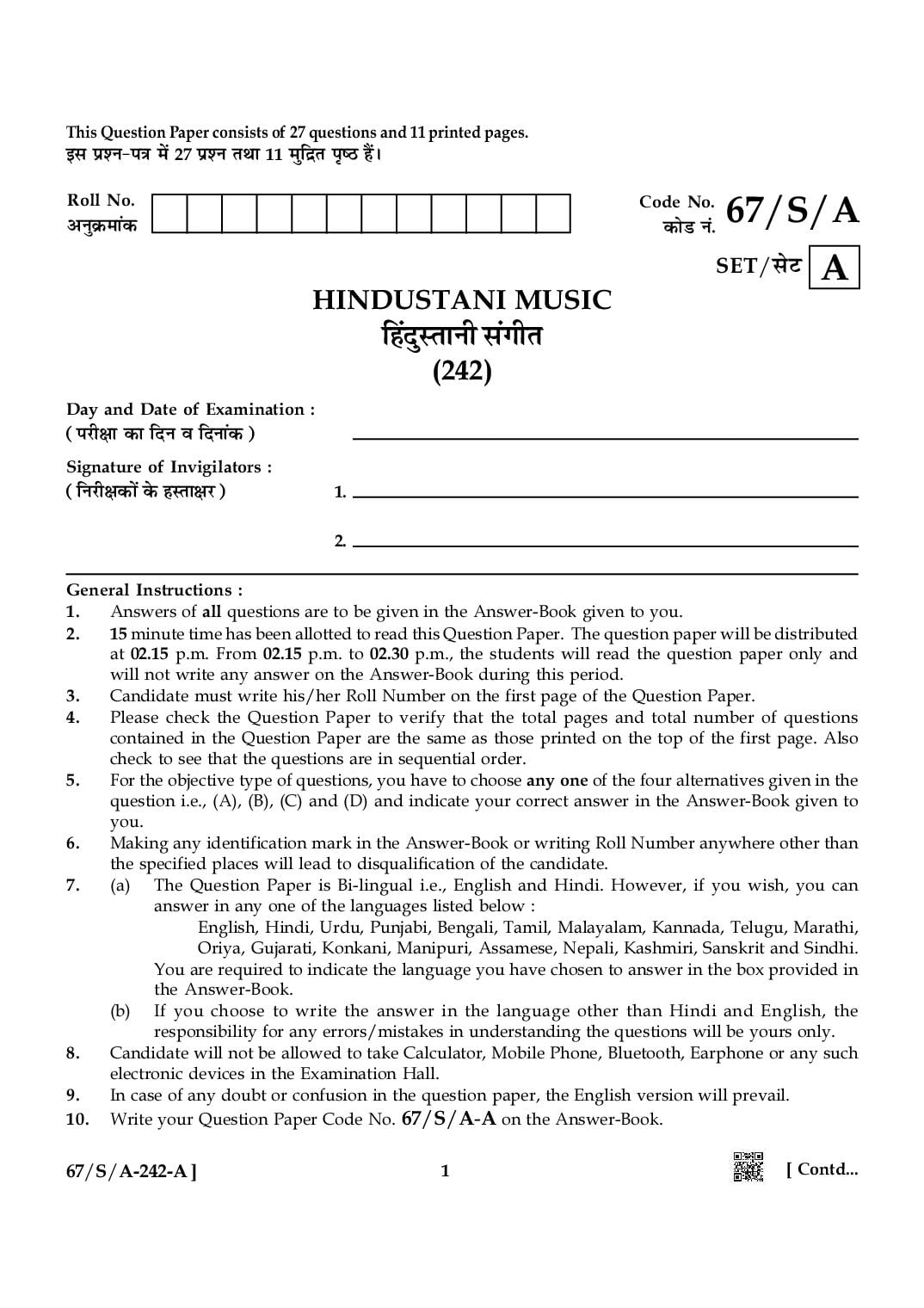
NIOS Class 10 April 2024 Question Paper Hindustani Music
Finished viewing? Save it for later —
Download NIOS Class 10 April 2024 Question Paper Hindustani Music (PDF · 11 pages)About NIOS Class 10 April 2024 Question Paper Hindustani Music
NIOS Class 10 April 2024 Question Paper Hindustani Music is available here for free download. Published by NIOS for National Institute of Open Schooling Class 10, this question paper can be viewed online or downloaded as a PDF (11 pages). Candidates preparing for National Institute of Open Schooling Class 10 can use NIOS Class 10 April 2024 Question Paper Hindustani Music to understand the exam pattern, the type of questions asked, and the overall difficulty level.
Frequently Asked Questions
How can I download NIOS Class 10 April 2024 Question Paper Hindustani Music?
Open this page and click the Download button to save NIOS Class 10 April 2024 Question Paper Hindustani Music as a PDF. It is completely free on AglaSem Docs.
Is NIOS Class 10 April 2024 Question Paper Hindustani Music free to download?
Yes. NIOS Class 10 April 2024 Question Paper Hindustani Music can be viewed online and downloaded as a PDF free of cost on AglaSem Docs.
How many pages does NIOS Class 10 April 2024 Question Paper Hindustani Music have?
NIOS Class 10 April 2024 Question Paper Hindustani Music contains 11 pages, which you can read online or download together as a single PDF.
Where can I find more National Institute of Open Schooling Class 10 study material?
You can find more National Institute of Open Schooling Class 10 question papers, sample papers, syllabus, and answer keys on AglaSem Docs.
NIOS Class 10 April 2024 Question Paper Hindustani Music – Text
Read the full text of this question paper below — useful to quickly search, copy and reference the content online without downloading the PDF.
📄 View text version (11 pages)
Page 1
ß‚ ¬˝‡Ÿ-¬òÊ ◊¥ 27 ¬˝‡Ÿ ÃÕÊ 11 ◊ÈÁŒ˝Ã ¬Îc∆U „Ò¥–
Roll No. Code No.
•ŸÈ∑˝§◊Ê¥∑§ ∑§Ê«U Ÿ¥.
67/S/A
SET/‚ ≈ A
HINDUSTANI MUSIC
Á„¥ŒÈSÃÊŸË ‚¥ªËÃ
(242)
Day and Date of Examination :
(¬⁄UˡÊÊ ∑§Ê ÁŒŸ fl ÁŒŸÊ¥∑§)
Signature of Invigilators :
(ÁŸ⁄UˡÊ∑§Ê¥ ∑§ „SÃÊˇÊ⁄U) 1.
2.
General Instructions :
1. Answers of all questions are to be given in the Answer-Book given to you.
2. 15 minute time has been allotted to read this Question Paper. The question paper will be distributed
at 02.15 p.m. From 02.15 p.m. to 02.30 p.m., the students will read the question paper only and
will not write any answer on the Answer-Book during this period.
3. Candidate must write his/her Roll Number on the first page of the Question Paper.
4. Please check the Question Paper to verify that the total pages and total number of questions
contained in the Question Paper are the same as those printed on the top of the first page. Also
check to see that the questions are in sequential order.
5. For the objective type of questions, you have to choose any one of the four alternatives given in the
question i.e., (A), (B), (C) and (D) and indicate your correct answer in the Answer-Book given to
you.
6. Making any identification mark in the Answer-Book or writing Roll Number anywhere other than
the specified places will lead to disqualification of the candidate.
7. (a) The Question Paper is Bi-lingual i.e., English and Hindi. However, if you wish, you can
answer in any one of the languages listed below :
English, Hindi, Urdu, Punjabi, Bengali, Tamil, Malayalam, Kannada, Telugu, Marathi,
Oriya, Gujarati, Konkani, Manipuri, Assamese, Nepali, Kashmiri, Sanskrit and Sindhi.
You are required to indicate the language you have chosen to answer in the box provided in
the Answer-Book.
(b) If you choose to write the answer in the language other than Hindi and English, the
responsibility for any errors/mistakes in understanding the questions will be yours only.
8. Candidate will not be allowed to take Calculator, Mobile Phone, Bluetooth, Earphone or any such
electronic devices in the Examination Hall.
9. In case of any doubt or confusion in the question paper, the English version will prevail.
10. Write your Question Paper Code No. 67/S/A-A on the Answer-Book.
67/S/A-242-A ] 1 [ Contd...
Page 2
1. ‚÷Ë ¬˝‡ŸÊ¥ ∑§ ©ûÊ⁄U •Ê¬∑§Ê ŒË ªÿË ©ûÊ⁄U-¬ÈÁSÃ∑§Ê ◊¥ „Ë Á‹π¥–
2. ß‚ ¬˝‡Ÿ-¬òÊ ∑§Ê ¬…∏Ÿ ∑§ Á‹∞ 15 Á◊Ÿ≈U ∑§Ê ‚◊ÿ ÁŒÿÊ ªÿÊ „Ò– ¬˝‡Ÿ-¬òÊ ∑§Ê ÁflÃ⁄UáÊ ŒÊ¬„⁄U ◊¥ 02.15 ’¡ Á∑§ÿÊ ¡Ê∞ªÊ–
02.15 ’¡ ‚ 02.30 ’¡ Ã∑§ ¿UÊòÊ ∑§fl‹ ¬˝‡Ÿ-¬òÊ ∑§Ê ¬…∏¥ª •ÊÒ⁄U ß‚ •flÁœ ∑§ ŒÊÒ⁄UÊŸ fl ©ûÊ⁄U-¬ÈÁSÃ∑§Ê ¬⁄U ∑§Ê߸ ©ûÊ⁄U Ÿ„Ë¥
Á‹π¥ª–
3. ¬⁄UˡÊÊÕ˸ ¬˝‡Ÿ-¬òÊ ∑§ ¬„‹ ¬Îc∆U ¬⁄U •¬ŸÊ •ŸÈ∑˝§◊Ê¥∑§ •fl‡ÿU Á‹π¥–
4. ∑Χ¬ÿÊ ¬˝‡Ÿ-¬òÊ ∑§Ê ¡ÊÚ°ø ‹¥ Á∑§ ¬˝‡Ÿ-¬òÊ ∑§ ∑ȧ‹ ¬Îc∆UÊ¥ ÃÕÊ ¬˝‡ŸÊ¥ ∑§Ë ©ÃŸË „Ë ‚¥ÅUÿÊ „Ò Á¡ÃŸË ¬˝Õ◊ ¬Îc∆ ∑ §‚’‚ ™§¬⁄U
¿U¬Ë „Ò– ß‚ ’Êà ∑§Ë ¡ÊÚ°ø ÷Ë ∑§⁄U ‹¥ Á∑§ ¬˝‡Ÿ ∑˝ Á◊∑§ UM§¬ ◊¥ „Ò¥–
5. flSÃÈÁŸc∆U ¬˝‡ŸÊ¥ ◊¥ •Ê¬∑§Ê øÊ⁄U Áfl∑§À¬Ê¥ (A), (B), (C) ÃÕÊ (D) ◊¥ ‚ ∑§Ê߸ ∞∑§ ©ûÊ⁄U øÈŸŸÊ „Ò ÃÕÊ ŒË ªß¸ ©ûÊ⁄U-¬ÈÁSÃ∑§Ê ◊¥
©‚ ‚„Ë ©ûÊ⁄U ∑§Ê Á‹πŸÊ „Ò–
6. § ©ûÊ⁄U-¬ÈÁSUÃ∑§Ê ◊¥ ¬„øÊŸ-Áøq ’ŸÊŸ •ÕflÊ ÁŸÁŒ¸c≈U SÕÊŸÊ¥ ∑§§•ÁÃÁ⁄UÄà ∑§„Ë¥ ÷Ë •ŸÈ∑˝§◊Ê¥∑§ Á‹πŸ ¬⁄U ¬⁄UˡÊÊÕ˸ ∑§Ê •ÿÊÇÿ
∆U„⁄UÊÿÊ ¡ÊÿªÊ–
7. (∑§) ÿ„ ¬˝‡Ÿ-¬òÊ ŒÊ ÷Ê·Ê•Ê¥ ◊¥ „Ò •Õʸà •¥ª˝¡Ë ∞fl¥ Á„¥ŒË– Á»§⁄U ÷Ë, ÿÁŒ •Ê¬ øÊ„¥ ÃÊ ŸËø ŒË ªß¸ Á∑§‚Ë ∞∑§ ÷Ê·Ê ◊¥
©ûÊ⁄ Œ ‚∑§Ã „Ò¥ —
•¥ª˝¡Ë, Á„¥ŒË, ©ŒÍ¸, ¬¥¡Ê’Ë, ’°ª‹Ê, ÃÁ◊‹, ◊‹ÿÊ‹◊, ∑§ãŸ«∏, ËȪÍ, ◊⁄UÊ∆UË, ©Á«∏ÿÊ, ªÈ¡⁄UÊÃË, ∑§Ê¥∑§áÊË,
◊ÁáʬÈ⁄UË, •‚Á◊ÿÊ, Ÿ¬Ê‹Ë, ∑§‡◊Ë⁄UË, ‚¥S∑Χç•ÊÒ⁄U Á‚¥œË–
∑Χ¬ÿÊ ©ûÊ⁄U-¬ÈÁSÃ∑§Ê ◊¥ ÁŒ∞ ª∞ ’ÊÚÄ‚ ◊¥ Á‹π¥ Á∑§ •Ê¬ Á∑§‚ ÷Ê·Ê ◊¥ ©ûÊ⁄U Á‹π ⁄U„ „Ò¥–
(π) ÿÁŒ •Ê¬ Á„¥ŒË ∞fl¥ •¥ª˝¡Ë ∑§ •ÁÃÁ⁄UÄà Á∑§‚Ë •ãÿ ÷Ê·Ê ◊¥ ©ûÊ⁄U Á‹πà „Ò¥, ÃÊ ¬˝‡ŸÊ¥ ∑§Ê ‚◊¤ÊŸ ◊¥ „ÊŸ flÊ‹Ë
òÊÈÁ≈UÿÊ¥/ª‹ÁÃÿÊ¥ ∑§Ë Á¡ê◊UŒÊ⁄Ë ∑ fl‹ •Ê¬∑§Ë „ʪ˖
8. ¬⁄UˡÊÊÕ˸ ∑§Ê ¬⁄UˡÊÊ „ÊÚ‹ ◊¥ ∑Ò§À∑ȧ‹≈U⁄U, ◊Ê’Êß‹ »§ÊŸ, é‹Í≈ÍUÕ, ßÿ⁄U»§ÊŸ, ¡Ò‚ Á∑§‚Ë ÷Ë ß‹Ä≈˛UÊÚÁŸ∑§ ©¬∑§⁄UáÊ ∑§Ê ‹ ¡ÊŸ ∑§Ë
•ŸÈ◊Áà Ÿ„Ë¥ „Ò–
9. ¬˝‡Ÿ-¬òÊ ◊¥ Á∑§‚Ë ÷Ë ¬˝∑§Ê⁄U ∑§ ‚¥Œ„ •ÕflÊ ŒÈÁflœÊ ∑§Ë ÁSÕÁà ◊¥ •¥ª˝¡Ë •ŸÈflÊŒ „Ë ◊Êãÿ „ʪʖ
10. •¬ŸË ©ûÊ⁄U-¬ÈÁSUÃ∑§Ê ¬⁄U ¬˝‡Ÿ-¬òÊ ∑§Ê ∑§Ê«U Ÿ¥. 67/S/A-A Á‹π¥–
67/S/A-242-A ] 2 [ Contd...
Page 3
(Á„¥ŒÈSÃÊŸË ‚¥ªËÃ)
(242)
Time : 1½ Hours ] [ Maximum Marks : 40
‚◊ÿ — 1½ ÉÊá≈U ] [ ¬ÍáÊÊZ∑§ — 40
Note :
(i) This question paper consists of 27 questions in all.
(ii) All questions are compulsory.
(iii) Marks are given against each question.
(iv) Section - A consists of
Q.No. 1 to 8 - Multiple Choice type questions (MCQs) carrying 1 mark each. Select and write the
most appropriate option out of the four options given in each of these questions. An internal
choice has been provided in some of these questions. You have to attempt only one of the given
choices in such questions.
(v) Section - B consists of Objective type questions :
(a) Q.No. 9 to 12 - Read the passage carefully then fill in the blanks carrying 1 mark each. An
internal choice has been provided in some of these questions.
(b) Q.No. 13 to 16 - Read the passage carefully and write true or false carrying 1 mark each. An
internal choice has been provided in some of these questions.
(c) Q.No. 17 to 20 - Answer the following questions carrying 1 mark each to be answered in the
range of 15 to 25 words. An internal choice has been provided in some of these questions.
(vi) Section - C consists of Subjective type questions :
(a) Q.No. 21 to 25 - Short Answer type questions carrying 2 marks each to be answered in the
range of 30 to 40 words.
(b) Q.No. 26 and 27 - Long Answer type questions carrying 5 marks each to be answered in the
range of 100 to 120 words.
ÁŸŒ¸‡Ê —
(i) ß‚ ¬˝‡Ÿ-¬òÊ ◊¥ ∑ȧ‹ 27 ¬˝‡Ÿ „Ò¥–
(ii) ‚÷Ë ¬˝‡Ÿ •ÁŸflÊÿ¸ „Ò¥–
(iii) ¬˝àÿ∑§ ¬˝‡Ÿ ∑§ ‚Ê◊Ÿ ©‚∑§ •¥∑§ ÁŒ∞ ª∞ „Ò¥–
(iv) πá«U - ∑§ ◊¥ ‡ÊÊÁ◊‹ „Ò¥ —
¬˝‡Ÿ ‚¥ÅÿÊ 1 ‚ 8 Ã∑§ ’„ÈÁfl∑§À¬Ëÿ ¬˝∑§Ê⁄U ∑§ ¬˝‡Ÿ „Ò¥ •ÊÒ⁄U ¬˝àÿ∑§ 1 •¥∑§ ∑§Ê „Ò– ߟ◊¥ ‚ ¬˝àÿ∑§ ¬˝‡Ÿ ◊¥ ÁŒ∞ ª∞ øÊ⁄U
Áfl∑§À¬Ê¥ ◊¥ ‚ ‚’‚ ©¬ÿÈÄà Áfl∑§À¬ ∑§Ê øÿŸ ∑§⁄U Á‹πŸÊ „Ò– ߟ◊¥ ‚ ∑ȧ¿U ¬˝‡ŸÊ¥ ◊¥ •Ê¥ÃÁ⁄U∑§ Áfl∑§À¬ ÁŒ∞ ª∞ „Ò¥– •Ê¬∑§Ê
∞‚ ¬˝‡ŸÊ¥ ◊¥ ÁŒ∞ ª∞ Áfl∑§À¬Ê¥ ◊¥ ‚ ∑§fl‹ ∞∑§ Áfl∑§À¬ ∑§Ê „Ë ©ûÊ⁄U Á‹πŸÊ „ʪʖ
67/S/A-242-A ] 3 [ Contd...
Page 4
(a) ¬˝‡Ÿ ‚¥ÅÿÊ 9 ‚ 12 - ÁŒ∞ ª∞ •ŸÈë¿UŒ ∑§Ê äÿÊŸ¬Ífl¸∑§ ¬…∏∑§⁄U Á⁄UÄà SÕÊŸ ∑§Ê ÷Á⁄U∞– ¬˝àÿ∑§ 1 •¥∑§ ∑§Ê „Ò– ߟ◊¥
‚ ∑ȧ¿U ¬˝‡ŸÊ¥ ◊¥ •Ê¥ÃÁ⁄U∑§ Áfl∑§À¬ ÁŒ∞ ª∞ „Ò¥–
(b) ¬˝‡Ÿ ‚¥ÅÿÊ 13 ‚ 16 - ÁŒ∞ ª∞ •ŸÈë¿UŒ ∑§Ê äÿÊŸ¬Ífl¸∑§ ¬…∏∑§⁄U ‚àÿ ÿÊ •‚àÿ Á‹Áπ∞– ¬˝àÿ∑§ 1 •¥∑§ ∑§Ê „Ò–
ߟ◊¥ ‚ ∑ȧ¿U ¬˝‡ŸÊ¥ ◊¥ •Ê¥ÃÁ⁄U∑§ Áfl∑§À¬ ÁŒ∞ ª∞ „Ò¥–
(c) ¬˝‡Ÿ ‚¥ÅÿÊ 17 ‚ 20 - ÁŒ∞ ª∞ ¬˝‡ŸÊ¥ ∑§ ©ûÊ⁄U ŒËÁ¡∞– ¬˝àÿ∑§ 1 •¥∑§ ∑§Ê „Ò– ߟ ¬˝‡ŸÊ¥ ∑§ ©ûÊ⁄U 15 ‚ 25 ‡ÊéŒÊ¥
◊¥ ÁŒ∞ ¡ÊŸ øÊÁ„∞– ߟ◊¥ ‚ ∑ȧ¿U ¬˝‡ŸÊ¥ ◊¥ •Ê¥ÃÁ⁄U∑§ Áfl∑§À¬ ÁŒ∞ ª∞ „Ò¥–
(vi) πá«U - ª§ ◊¥ Áfl·ÿÁŸc∆U ¬˝∑§Ê⁄U ∑§ ¬˝‡Ÿ ‡ÊÊÁ◊‹ „Ò¥ —
(a) ¬˝‡Ÿ ‚¥ÅÿÊ 21 ‚ 25 - ‹ÉÊÈ-©ûÊ⁄UËÿ ¬˝∑§Ê⁄U ∑§ ŒÊ-ŒÊ •¥∑§Ê¥ ∑§ ¬˝‡Ÿ „Ò¥– ߟ ¬˝‡ŸÊ¥ ∑§ ©ûÊ⁄U 30 ‚ 40 ‡ÊéŒÊ¥ ◊¥ ÁŒ∞
¡ÊŸ øÊÁ„∞–
(b) ¬˝‡Ÿ ‚¥ÅÿÊ 26 •ÊÒ⁄U 27 - ŒËÉʸ ©ûÊ⁄UËÿ ¬˝∑§Ê⁄U ∑§ ¬Ê°ø-¬Ê°ø •¥∑§Ê¥ ∑§ ¬˝‡Ÿ „Ò¥– ߟ ¬˝‡ŸÊ¥ ∑§ ©ûÊ⁄U 100 ‚ 120 ‡ÊéŒÊ¥
◊¥ ÁŒ∞ ¡ÊŸ øÊÁ„∞–
SECTION - A / πá«U - ∑§ 8x1=8
1. Which of the following is not merely a musical scale ? 1
(A) Thata (B) Raga
(C) Murchhana (D) Aroh-Avaroh
ÁŸêŸ ◊¥ ‚ ∑§ÊÒŸ ‚Ê ∑§fl‹ ∞∑§ ‚Ê¥ªËÁÃ∑§ ¬Ò◊ÊŸÊ (scale) Ÿ„Ë¥ „Ò?
(A) ÕÊ≈U (B) ⁄Uʪ
(C) ◊Í뿸UŸÊ (D) •Ê⁄UÊ„-•fl⁄UÊ„
2. A set of ascending notes in a raga is called : 1
(A) Avaroh (B) Aroh
(C) Pakad (D) Jati
⁄Uʪ ◊¥ Sfl⁄UÊ¥ ∑§ ’…∏à ∑˝§◊ ∑§Ê ∑§„à „Ò¥ —
(A) •fl⁄UÊ„ (B) •Ê⁄UÊ„
(C) ¬∑§«∏ (D) ¡ÊÁÃ
OR / •ÕflÊ
How old the concept of raga is ?
(A) 3000 years (B) 1000 years
(C) 2000 years (D) 5000 years
⁄Uʪ ∑§Ë •flœÊ⁄UáÊÊ Á∑§ÃŸË ¬˝ÊøËŸ „Ò?
(A) 3000 fl·¸ (B) 1000 fl·¸
(C) 2000 fl·¸ (D) 5000 fl·¸
67/S/A-242-A ] 4 [ Contd...
Page 5
(A) Shadav-Audav Jati (B) Audav-Shadav Jati
(C) Audav-Audav Jati (D) Shadav-Sampurna Jati
•Ê⁄UÊ„ ◊¥ ¿U— Sfl⁄U fl •fl⁄UÊ„ ◊¥ ¬Ê°ø Sfl⁄UÊ¥ ‚ ÿÈÄà ¡ÊÁà „Ò —
(A) ·Ê«∏fl-•ÊÒ«∏fl ¡ÊÁà (B) •ÊÒ«∏fl-·Ê«∏fl ¡ÊÁÃ
(C) •ÊÒ«∏fl-•ÊÒ«∏fl ¡ÊÁà (D) ·Ê«∏fl-‚ê¬Íáʸ ¡ÊÁÃ
4. The total number of parts (Prahar) of the day and night divided from the view point of the 1
time theory of ragas is :
(A) 10 (B) 8 (C) 6 (D) 7
⁄Uʪʥ ∑§ ‚◊ÿ Á‚hʥà ∑§ •ÊœÊ⁄U ¬⁄U ÁŒŸ-⁄UÊÁòÊ ∑§ Áfl÷ÊÁ¡Ã ÷ʪʥ (¬˝„⁄UÊ¥) ∑§Ë ∑ȧ‹ ‚¥ÅÿÊ „Ò —
(A) 10 (B) 8 (C) 6 (D) 7
5. The Achal note is : 1
(A) Pancham (B) Madhyam
(C) Dhaivat (D) Nishad
•ø‹ Sfl⁄U „Ò —
(A) ¬¥ø◊ (B) ◊äÿ◊
(C) œÒflà (D) ÁŸ·ÊŒ
6. The tala played with Dhrupad is : 1
(A) Ektala (B) Teentala
(C) Jhaptala (D) Sooltala
œ˝È¬Œ ∑§ ‚ÊÕ ’¡Ê߸ ¡ÊŸ flÊ‹Ë ÃÊ‹ „Ò —
(A) ∞∑§ÃÊ‹ (B) ÃËŸÃÊ‹
(C) ¤Ê¬ÃÊ‹ (D) ‚Í‹ÃÊ‹
OR / •ÕflÊ
67/S/A-242-A ] 5 [ Contd...
Page 6
(A) Jhaptal (B) Chautal
(C) Teental (D) Keharwa
ŒÊ ÃÊ‹Ë ‚ ÿÈÄà ÃÊ‹ „Ò —
(A) ¤Ê¬ÃÊ‹ (B) øÊÒÃÊ‹
(C) ÃËŸÃÊ‹ (D) ∑§„⁄UflÊ
7. Solo use of single Richa in Sama Gana was known as : 1
(A) Poorvarchik (B) Uttararchik
(C) Archik (D) Gathik
‚Ê◊ ªÊŸ ◊¥ ∞∑§ ´Î§øÊ ∑§Ê ∞∑§‹ ªÊÿŸ ∑§„‹ÊÃÊ ÕÊ —
(A) ¬ÍflʸÁø¸∑§ (B) ©ûÊ⁄UÊÁø¸∑§
(C) •ÊÁø¸∑§ (D) ªÊÁÕ∑§
8. Contribution of Pt. V.N. Bhatkhande to Hindustani Music was : 1
(A) Classification of ragas into 10 thats
(B) Re-invention of compositions to include Bhakti
(C) Popularity of Dhrupad
(D) Placement of Swaras on the wire length of Veena
÷Ê⁄UÃËÿ ‚¥ªËà ∑§ ¬˝Áà ¬¥. Áfl.ŸÊ. ÷ÊÃπá«U ∑§Ê ÿʪŒÊŸ ÕÊ —
(A) Œ‚ ÕÊ≈UÊ¥ ◊¥ ⁄Uʪ flªË¸∑§⁄UáÊ
(B) ÷ÁÄà ∑§Ê ‚Áê◊Á‹Ã ∑§⁄UŸ ∑§ Á‹∞ ’Á㌇ÊÊ¥ ∑§Ë ¬ÈŸÁŸ¸Á◊¸ÁÃ
(C) œ˝È¬Œ ∑§Ê ¬˝øÊ⁄U
(D) flËáÊÊ ∑§ ÃÊ⁄U ∑§Ë ‹ê’Ê߸ ¬⁄U Sfl⁄UÊ¥ ∑§Ë SÕʬŸÊ
67/S/A-242-A ] 6 [ Contd...
Page 7
Read the passage carefully and fill in the blanks :
“In the beginning only three swaras were used for Sama Gana viz - Udatta, Anudatta
and Swarit. Udatta denoted high, Anudatta low and Swarit was medium, in which there
was a combination of high and low. To indicate these three swaras the numbers
1, 2 and 3 were used for Udatta, Anudatta and Swarit respectively above syllables of Mantras.
The usage of Udatta, Anudatta and Swarit swaras gave rise to three fold structure of
Samaveda - Archik Gana, Gathik Gana and Samik Gana. When only one note was used, it
constituted Archik, when two notes were used it constituted Gathik and when three notes
were used it constituted Samik. According to “Tattariya Pratishakhya” slowly from these
three notes, seven Samavedic swaras developed”.
ÁŸêŸÁ‹Áπà •ŸÈë¿UŒ ∑§Ê äÿÊŸ¬Ífl¸∑§ ¬Á…∏∞ fl Á⁄UÄà SÕÊŸ ÷Á⁄U∞ —
““¬˝Ê⁄Uê÷ ◊¥ ‚Ê◊ ªÊŸ ∑§ Á‹∞ ∑§fl‹ ÃËŸ Sfl⁄UÊ¥ ∑§Ê ¬˝ÿʪ Á∑§ÿÊ ¡ÊÃÊ ÕÊ - ©ŒÊûÊ, •ŸÈŒÊûÊ •ÊÒ⁄U SflÁ⁄UÖ ©ŒÊûÊ
©ëø ∑§Ê •ŸÈŒÊûÊ ŸËøË äflÁŸ ∑§Ê •ÊÒ⁄U SflÁ⁄Uà ◊äÿ ∑§Ê lÊÃ∑§ ÕÊ Á¡‚◊¥ ™°§øË fl ŸËøË äflÁŸ ∑§Ê ‚◊ãflÿ ÕÊ– ߟ ÃËŸ
Sfl⁄UÊ¥ ∑§Ê ÁŸÁŒ¸c≈U ∑§⁄UŸ ∑§ Á‹∞ ‚¥ÅÿÊ 1, 2 fl 3 ∑§Ê ¬˝ÿʪ ∑˝§◊‡Ê— ©ŒÊûÊ, •ŸÈŒÊûÊ fl SflÁ⁄Uà Œ‡ÊʸŸ ∑§ Á‹∞ ◊ãòÊÊ¥ ∑§
•ˇÊ⁄UÊ¥ ∑§ ™§¬⁄U •¥¥Á∑§Ã Á∑§ÿÊ ¡ÊÃÊ ÕÊ– ©ŒÊûÊ, •ŸÈŒÊûÊ fl SflÁ⁄Uà Sfl⁄UÊ¥ ∑§ ¬˝ÿʪ ◊¥ ‚Ê◊flŒ ∑§Ë ÁòÊÁfl∑§ M§¬⁄UπÊ ∑§Ê
©Œÿ „È•Ê - •ÊÁø¸∑§ ªÊŸ, ªÊÁÕ∑§ ªÊŸ •ÊÒ⁄U ‚ÊÁ◊∑§ ªÊŸ– ¡’ ∑§fl‹ ∞∑§ Sfl⁄U ∑§Ê ¬˝ÿʪ „ÊÃÊ ÕÊ ÃÊ fl„ •ÊÁø¸∑§, ŒÊ
Sfl⁄UÊ¥ ∑§Ê ¬˝ÿʪ „ÊŸ ¬⁄U fl„ ªÊÁÕ∑§ •ÊÒ⁄ ÃËŸ Sfl⁄UÊ¥ ∑§Ê ¬˝ÿʪ „ÊŸ ¬⁄U ‚ÊÁ◊∑§ ∑§Ë ⁄UøŸÊ „Ê ¡ÊÃË ÕË– ““ÃÒÁûÊ⁄UËÿ
¬˝ÁÇÊÊÅÿ”” ∑§ •ŸÈ‚Ê⁄U œË⁄U œË⁄U ÃËŸ Sfl⁄UÊ¥ ‚ ‚Êà ‚Ê◊flÒÁŒ∑§ Sfl⁄UÊ¥ ∑§Ê Áfl∑§Ê‚ „Ê ªÿÊ””–
9. The three swaras used in Sama Gana were __________, __________ and __________. 1
‚Ê◊ ªÊŸ ◊¥ ¬˝ÿÈÄà ÃËŸ Sfl⁄U Õ __________, __________ •ÊÒ⁄U __________–
10. The numbers used for Udatta, Anudatta and Swarit were __________, __________ and 1
__________.
©ŒÊûÊ, •ŸÈŒÊûÊ fl SflÁ⁄Uà Sfl⁄UÊ¥ ∑§ Á‹∞ ¬˝ÿÈÄà ‚¥ÅÿÊ∞° ÕË¥ __________, __________ •ÊÒ⁄U __________–
11. Sama Gana sung with one note was called __________. 1
∞∑§ Sfl⁄U ‚ ªÊÿÊ ªÿÊ ‚Ê◊ ªÊŸ ∑§„‹ÊÃÊ ÕÊ __________–
67/S/A-242-A ] 7 [ Contd...
Page 8
ÃËŸ Sfl⁄UÊ¥ ∑§ ¬˝ÿʪ ‚ ÿÈÄà ‚Ê◊ ªÊŸ ∑§„‹ÊÃÊ ÕÊ __________–
OR / •ÕflÊ
As per __________ Seven Samavedic Swaras were evolved from basic three Swaras.
__________ ª˝ãÕ ∑§ •ŸÈ‚Ê⁄U ÃËŸ ◊Í‹ Sfl⁄UÊ¥ ‚ ‚Êà ‚Ê◊flÒÁŒ∑§ Sfl⁄UÊ¥ ∑§Ê Áfl∑§Ê‚ „È•Ê ÕÊ–
Read the passage carefully and answer the questions as True/False.
“Dhrupad and Dhamar both have a distinct style of rendition. In the beginning the
raga executed with the help of mnemonic syllables viz. Nom, Tom, Dere, Na etc. This
portion of singing is known as Alap and is without and rhythmic accompaniment. The Alap
culminates into fast rhythmic singing of mnemonics in the “Jod” pattern of
Instrumental music. This is followed by composition. The composition is sung with
various improvisations taking phrases of lyrics; this part is known as “Upaj” which is unique
to Dhrupad singing. The improvisations are done by doubling, tripling or quadrupling the
actual tempo before returning to original tempo. Dhamar is also rendered in a similar manner”.
ÁŸêŸ •ŸÈë¿UŒ ∑§Ê äÿÊŸ¬Ífl¸∑§ ¬Á…∏∞ •ÊÒ⁄U ‚àÿ/•‚àÿ ¬⁄U Áøq ‹ªÊ∑§⁄U ¬˝‡Ÿ ∑§Ê ©ûÊ⁄U ŒËÁ¡∞–
““œ˝È¬Œ fl œ◊Ê⁄U ŒÊŸÊ¥ ∑§Ë ¬˝SÃÈÁà ∑§Ê ∞∑§ ÁflÁ‡Êc≈U Ã⁄UË∑§Ê „Ò– ¬˝Ê⁄Uê÷ ◊¥ ⁄Uʪ ∑§Ë •flÃÊ⁄UáÊÊ Á∑§ã„Ë¥ S◊ÎÁà ÁøqÊ¥
(mnemonics) ∑§ M§¬ ◊¥ ŸÊ◊˜, ÃÊ◊˜, Œ⁄U ÃÕÊ ŸÊ •ÊÁŒ ∑§Ë ‚„ÊÿÃÊ ‚ ∑§Ë ¡ÊÃË „Ò– ß‚ ÷ʪ ∑§Ê •Ê‹Ê¬ ∑§„Ê ¡ÊÃÊ
„Ò ¡Ê Á∑§ Á∑§‚Ë ‹ÿÊà◊∑§ ‚¥ªÃ ∑§ Á’ŸÊ „ÊÃÊ „Ò– ßã„Ë¥ S◊ÎÁà ÁøqÊ¥ ∑§Ê flÊl ‚¥ªËà ∑§ ““¡Ê«∏”” ÷ʪ ∑§Ë ÷Ê°Áà Œ˝ÈÃ
‹ÿÊà◊∑§ ªÊŸ ∑§ M§¬ ◊¥ ªÊà „È∞ ß‚∑§Ê ‚◊ʬŸ Á∑§ÿÊ ¡ÊÃÊ „Ò •ÊÒ⁄U ß‚∑§ ’ÊŒ ’ÁãŒ‡Ê ¬˝Ê⁄Uê÷ „ÊÃË „Ò– ’ÁãŒ‡Ê ∑§ ¬Œ
‚◊ÈŒÊÿÊ¥ ∑§Ê ‹∑§⁄U ’ÁãŒ‡Ê ∑§Ê ∑§À¬ŸÊà◊∑§ ÁflSÃÊ⁄U ∑§⁄Uà „È∞ ©‚ ªÊÿÊ ¡ÊÃÊ „Ò; ß‚ ÷ʪ ∑§Ê ““©¬¡”” ∑§„Ê ¡ÊÃÊ „Ò ¡Ê
Á∑§ œ˝È¬Œ ªÊÿŸ ∑§Ê flÒÁ‡Êc≈˜Uÿ „ÊÃÊ „Ò– ÿ„ ∑§À¬ŸÊà◊∑§ ÁflSÃÊ⁄U ◊Í‹ ‹ÿ ∑§Ë ŒÈªÈŸ, Áêȟ ÿÊ øÊҪȟ ∑§⁄Uà „È∞ ¬ÈŸ— ◊Í‹
‹ÿ ¬⁄U •ÊŸ ‚ ¬Ífl¸ Á∑§ÿÊ ¡ÊÃÊ „Ò– œ◊Ê⁄U ∑§Ë ¬˝SÃÈÁà ÷Ë ß‚Ë ¬˝∑§Ê⁄U ∑§Ë ¡ÊÃË „Ò””–
13. In Dhrupad and Dhamar Raga is executed with the help of syllables like Nom, Tom, Dere 1
etc. (True/False)
œ˝È¬Œ fl œ◊Ê⁄U ◊¥ ⁄Uʪ ∑§Ë •flÃÊ⁄UáÊÊ ŸÊ◊˜, ÃÊ◊˜, Œ⁄U •ÊÁŒ •ˇÊ⁄UÊ¥ ∑§Ë ‚„ÊÿÃÊ ‚ ∑§Ë ¡ÊÃË „Ò– (‚àÿ/•‚àÿ)
14. The portion of the execution of Raga through Alap in Dhrupad and Dhamar is accompanied 1
with rhythmic accompaniment. (True/False)
œ˝È¬Œ fl œ◊Ê⁄U ◊¥ •Ê‹Ê¬ ∑§ ◊Êäÿ◊ ‚ ⁄Uʪ ∑§Ë •flÃÊ⁄UáÊÊ ◊¥ ‹ÿ ∑§Ë ‚¥ªÃ ⁄U„ÃË „Ò– (‚àÿ/•‚àÿ)
67/S/A-242-A ] 8 [ Contd...
Page 9
œ˝È¬Œ ◊¥ ¬ŒÊ¥ ∑§ ÁflSÃÊ⁄U ∑§Ê ““©¬¡”” ∑§„Ê ¡ÊÃÊ „Ò– (‚àÿ/•‚àÿ)
16. Double, Triple and quadruple of actual tempo are not used in improvisation of Dhrupad 1
singing. (True/False)
œ˝È¬Œ ªÊÿŸ ∑§ ÁflSÃÊ⁄U ◊¥ ◊Í‹ ‹ÿ ∑§Ë ŒÈªÈŸ, Áêȟ ÿÊ øÊҪȟ ∑§Ê ¬˝ÿʪ Ÿ„Ë¥ Á∑§ÿÊ ¡ÊÃÊ– (‚àÿ/•‚àÿ)
OR/•ÕflÊ
The execution of Raga in fast rhythmic singing of the mnemonics (Nom, Tom etc.) resembles
the “Jod” pattern of Instrumental music. (True/False)
S◊ÎÁà ÁøqÊ¥ (ŸÊ◊˜, ÃÊ◊˜ •ÊÁŒ) ∑§ ◊Êäÿ◊ ‚ Œ˝Èà ‹ÿÊà◊∑§ ⁄Uʪ ÁflSÃÊ⁄U flÊl ‚¥ªËà ∑§ ““¡Ê«∏”” ÷ʪ ∑§ ‚◊ÊŸ „ÊÃÊ „Ò–
(‚àÿ/•‚àÿ)
Answer the following questions :
ÁŸêŸÁ‹Áπà ¬˝‡ŸÊ¥ ∑§ ©ûÊ⁄U ŒËÁ¡∞ —
17. Write the names of the two types of Sangeet as mentioned in Sangeet Ratnakar with their 1
short introduction.
‚¥ªËà ⁄UàŸÊ∑§⁄U ◊¥ flÁáʸà ‚¥ªËà ∑§ ŒÊ ¬˝∑§Ê⁄UÊ¥ ∑§ ŸÊ◊ ‚¥ÁˇÊåà Áflfl⁄UáÊ ‚Á„à Á‹Áπ∞–
18. According to Sangeet Parijat write the names of the three Gramas and the number of 1
Murchhanas evolved from them.
‚¥ªËà ¬ÊÁ⁄U¡Êà ∑§ •ŸÈ‚Ê⁄U ÃËŸ ª˝Ê◊Ê¥ ∑§ ŸÊ◊ ÃÕÊ ©Ÿ◊¥ ©à¬ãŸ ◊Í뿸UŸÊ•Ê¥ ∑§Ë ‚¥ÅÿÊ Á‹Áπ∞–
19. Describe the qualities of an excellent singer and composer as explained by Mansingh Tomar 1
in Manakutuhala. Also mention his period of ruling Gwalior.
◊ÊŸÁ‚¥„ ÃÊ◊⁄U mÊ⁄UÊ ◊ÊŸ∑ȧÃÍ„‹ ◊¥ ÁŸÁŒ¸c≈U üÊc∆U ªÊÿ∑§ fl ⁄UøŸÊ∑§Ê⁄U ∑§ ªÈáÊÊ¥ ∑§Ê fláʸŸ ∑§ËÁ¡∞ •ÊÒ⁄U ÇflÊÁ‹ÿ⁄U ¬⁄U ©‚∑§
‡ÊÊ‚Ÿ ∑§Ê‹ ∑§Ê ‚¥∑§Ã ÷Ë ∑§ËÁ¡∞–
67/S/A-242-A ] 9 [ Contd...
Page 10
description.
‡ÊÊSòÊËÿ ‚¥ªËà ◊¥ ¬˝ÿÈÄà „ÊŸ flÊ‹ øÊ⁄U fláÊÊZ ∑§ ŸÊ◊ ÃÕÊ ©Ÿ∑§Ê ‚¥ÁˇÊåà Áflfl⁄UáÊ ÷Ë Á‹Áπ∞–
OR/•ÕflÊ
“Impact of the efforts of Pt. V.N. Bhatkhande and Pt. V.D. Paluskar on present day Hindustani
Music.” Write a short note.
““•ÊœÈŸÊ∑§Ê‹ËŸ Á„ãŒÈSÃÊŸË ‚¥ªËà ¬⁄U ¬¥. ÁflcáÊÈŸÊ⁄UÊÿáÊ ÷ÊÃπ¥«U ÃÕÊ Áfl.ÁŒ. ¬‹ÈS∑§⁄U ∑§ ‚à¬˝ÿàŸÊ¥ ∑§Ê ¬˝÷Êfl”” ß‚
Áfl·ÿ ¬⁄U ‚¥ÁˇÊåà Á≈Uå¬áÊË Á‹Áπ∞–
SECTION - C / πá«U - ª§
Answer the following questions : 5x2=10
ÁŸêŸÁ‹Áπà ¬˝‡ŸÊ¥ ∑§ ©ûÊ⁄U ŒËÁ¡∞ —
21. Write a note on the meaning and concept of Notation. 2
Sfl⁄UÁ‹Á¬ ∑§Ë •flœÊ⁄UáÊÊ fl •Õ¸ ¬⁄U ∞∑§ Á≈Uå¬áÊË Á‹Áπ∞–
22. Describe in short the contents of “Ragagitavichar Khand” of Sangeet Parijat. 2
‚¥ªËà ¬ÊÁ⁄U¡Êà ∑§ ““⁄UʪªËÃÁfløÊ⁄U πá«U”” ∑§Ê ‚¥ÁˇÊåà ¬Á⁄Uøÿ ŒËÁ¡∞–
23. What is the contribution of Pt. V.D. Paluskar to Hindustani Music ? Explain. 2
Á„ãŒÈSÃÊŸË ‚¥ªËà ∑§ ¬˝Áà ¬¥. Áfl.ÁŒ. ¬‹ÈS∑§⁄U ∑§Ê ÄÿÊ ÿʪŒÊŸ „Ò? fláʸŸ ∑§ËÁ¡∞–
24. Give a short description of Vadyadhyaya’ of Sangeet Ratnakar. 2
‚¥ªËà ⁄UàŸÊ∑§⁄U ∑§ flÊlÊäÿÊÿ ∑§Ê ‚¥ÁˇÊåà Áflfl⁄UáÊ ŒËÁ¡∞–
25. Write the definition of tala and its importance in Hindustani Music. 2
ÃÊ‹ ∑§Ë ¬Á⁄U÷Ê·Ê fl Á„ãŒÈSÃÊŸË ‚¥ªËà ◊¥ ©‚∑§ ◊„àfl ∑§ ’Ê⁄U ◊¥ Á‹Áπ∞–
OR / •ÕflÊ
Write the theka of Ektal or Keharwa marking the symbols of Bhatkhande notation system.
÷ÊÃπá«U Sfl⁄UÁ‹Á¬ ¬hÁà ∑§ ÁøqÊ¥ ∑§Ê •¥Á∑§Ã ∑§⁄Uà „È∞ ∞∑§ÃÊ‹ •ÕflÊ ∑§„⁄UflÊ ÃÊ‹ ∑§Ê ∆U∑§Ê Á‹Áπ∞–
67/S/A-242-A ] 10 [ Contd...
Page 11
ÁŸêŸÁ‹Áπà ¬˝‡ŸÊ¥ ∑§ ©ûÊ⁄U ŒËÁ¡∞ —
26. Give a detailed description of the different parts of Ganasamhita of Samaveda. 5
‚Ê◊flŒ ∑§Ë ªÊŸ‚¥Á„ÃÊ ∑§ ÁflÁ÷㟠÷ʪʥ ∑§Ê ÁflSÃÎà fláʸŸ ∑§ËÁ¡∞–
OR/•ÕflÊ
Write a note on Prabandhadhyaya of Sangeet Ratnakar.
‚¥ªËà ⁄UàŸÊ∑§⁄U ∑§ ¬˝’ãœÊäÿÊÿ ¬⁄U ∞∑§ Á≈Uå¬áÊË Á‹Áπ∞–
27. Write the definitions of Vadi, Samvadi, Anuvadi and Vivadi Swaras and their importance in 5
Raga.
flÊŒË, ‚êflÊŒË, •ŸÈflÊŒË ÃÕÊ ÁflflÊŒË Sfl⁄UÊ¥ ∑§Ë ¬Á⁄U÷Ê·Ê∞° ÃÕÊ ⁄Uʪ ◊¥ ©Ÿ∑§ ◊„àfl ∑§ ’Ê⁄U ◊¥ Á‹Áπ∞–
OR/•ÕflÊ
Describe the contents of Nartanadhyaya of Sangeet Ratnakar.
‚¥ªËà ⁄UàŸÊ∑§⁄U ◊¥ ŸÃ¸ŸÊäÿÊÿ ∑§Ë Áfl·ÿflSÃÈ ∑§ ’Ê⁄U ◊¥ Á‹Áπ∞–
-oOo-
67/S/A-242-A ] 11 [ Contd...
Document Details
| Board / Org | NIOS |
| Exam | National Institute of Open Schooling Class 10 |
| Type | Question Paper |
| Pages | 11 |
| Language | english |
| Updated | 24 Sep 2026 |