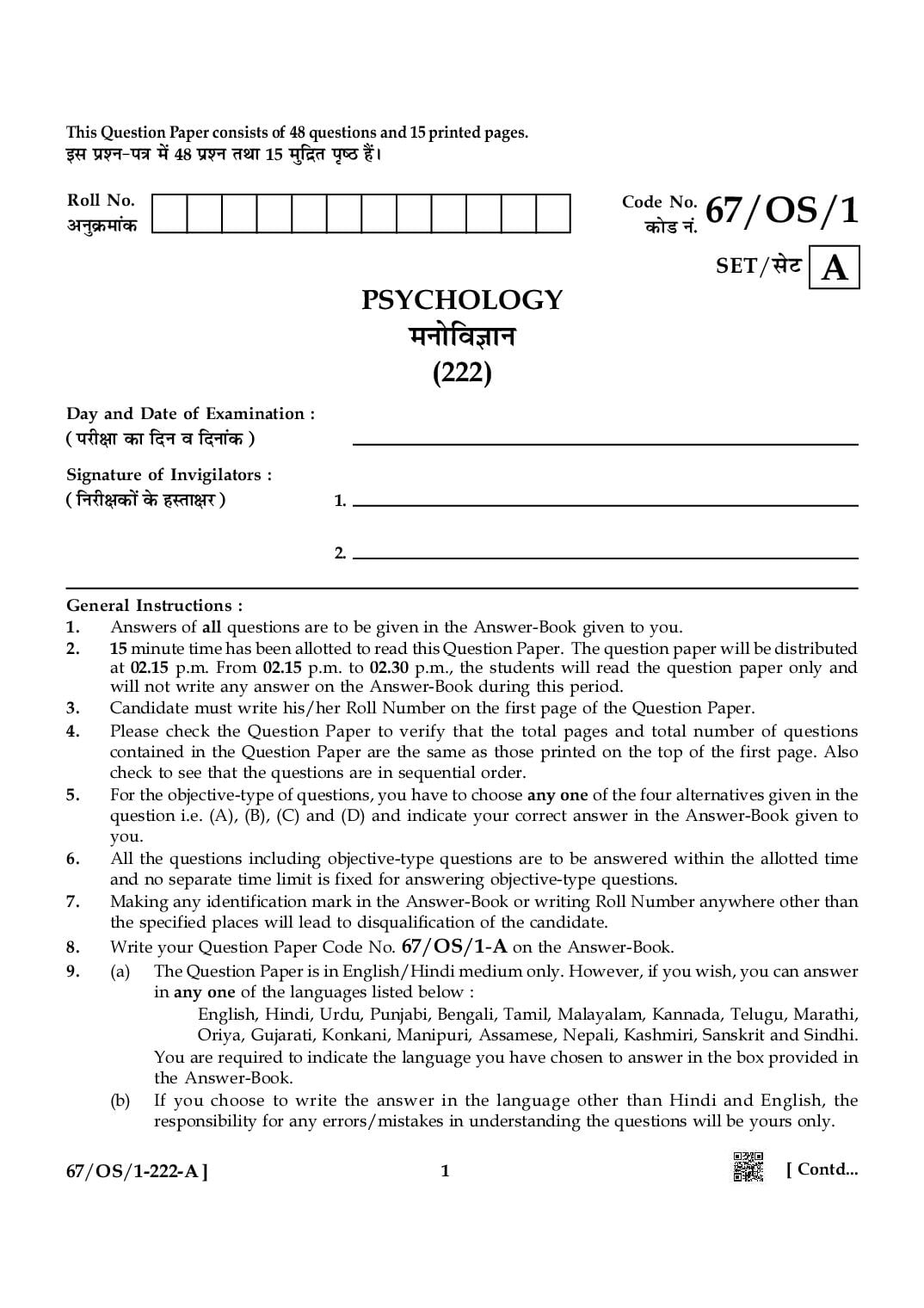
NIOS Class 10 April 2024 Question Paper Psychology
Finished viewing? Save it for later —
Download NIOS Class 10 April 2024 Question Paper Psychology (PDF · 15 pages)About NIOS Class 10 April 2024 Question Paper Psychology
NIOS Class 10 April 2024 Question Paper Psychology is available here for free download. Published by NIOS for National Institute of Open Schooling Class 10, this question paper can be viewed online or downloaded as a PDF (15 pages). Candidates preparing for National Institute of Open Schooling Class 10 can use NIOS Class 10 April 2024 Question Paper Psychology to understand the exam pattern, the type of questions asked, and the overall difficulty level.
Frequently Asked Questions
How can I download NIOS Class 10 April 2024 Question Paper Psychology?
Open this page and click the Download button to save NIOS Class 10 April 2024 Question Paper Psychology as a PDF. It is completely free on AglaSem Docs.
Is NIOS Class 10 April 2024 Question Paper Psychology free to download?
Yes. NIOS Class 10 April 2024 Question Paper Psychology can be viewed online and downloaded as a PDF free of cost on AglaSem Docs.
How many pages does NIOS Class 10 April 2024 Question Paper Psychology have?
NIOS Class 10 April 2024 Question Paper Psychology contains 15 pages, which you can read online or download together as a single PDF.
Where can I find more National Institute of Open Schooling Class 10 study material?
You can find more National Institute of Open Schooling Class 10 question papers, sample papers, syllabus, and answer keys on AglaSem Docs.
NIOS Class 10 April 2024 Question Paper Psychology – Text
Read the full text of this question paper below — useful to quickly search, copy and reference the content online without downloading the PDF.
📄 View text version (15 pages)
Page 1
ß‚ ¬˝‡Ÿ-¬òÊ ◊¥ 48 ¬˝‡Ÿ ÃÕÊ 15 ◊ÈÁŒ˝Ã ¬Îc∆U „Ò¥–
Roll No. Code No.
•ŸÈ∑˝§◊Ê¥∑§ ∑§Ê«U Ÿ¥.
67/OS/1
SET/‚ ≈ A
PSYCHOLOGY
◊ŸÊÁflôÊÊŸ
(222)
Day and Date of Examination :
(¬⁄UˡÊÊ ∑§Ê ÁŒŸ fl ÁŒŸÊ¥∑§)
Signature of Invigilators :
(ÁŸ⁄UˡÊ∑§Ê¥ ∑§ „SÃÊˇÊ⁄U) 1.
2.
General Instructions :
1. Answers of all questions are to be given in the Answer-Book given to you.
2. 15 minute time has been allotted to read this Question Paper. The question paper will be distributed
at 02.15 p.m. From 02.15 p.m. to 02.30 p.m., the students will read the question paper only and
will not write any answer on the Answer-Book during this period.
3. Candidate must write his/her Roll Number on the first page of the Question Paper.
4. Please check the Question Paper to verify that the total pages and total number of questions
contained in the Question Paper are the same as those printed on the top of the first page. Also
check to see that the questions are in sequential order.
5. For the objective-type of questions, you have to choose any one of the four alternatives given in the
question i.e. (A), (B), (C) and (D) and indicate your correct answer in the Answer-Book given to
you.
6. All the questions including objective-type questions are to be answered within the allotted time
and no separate time limit is fixed for answering objective-type questions.
7. Making any identification mark in the Answer-Book or writing Roll Number anywhere other than
the specified places will lead to disqualification of the candidate.
8. Write your Question Paper Code No. 67/OS/1-A on the Answer-Book.
9. (a) The Question Paper is in English/Hindi medium only. However, if you wish, you can answer
in any one of the languages listed below :
English, Hindi, Urdu, Punjabi, Bengali, Tamil, Malayalam, Kannada, Telugu, Marathi,
Oriya, Gujarati, Konkani, Manipuri, Assamese, Nepali, Kashmiri, Sanskrit and Sindhi.
You are required to indicate the language you have chosen to answer in the box provided in
the Answer-Book.
(b) If you choose to write the answer in the language other than Hindi and English, the
responsibility for any errors/mistakes in understanding the questions will be yours only.
67/OS/1-222-A ] 1 [ Contd...
Page 2
1. ‚÷Ë ¬˝‡ŸÊ¥ ∑§ ©ûÊ⁄U •Ê¬∑§Ê ŒË ªÿË ©ûÊ⁄U-¬ÈÁSÃ∑§Ê ◊¥ „Ë Á‹π¥–
2. ß‚ ¬˝‡Ÿ-¬òÊ ∑§Ê ¬…∏Ÿ ∑§ Á‹∞ 15 Á◊Ÿ≈U ∑§Ê ‚◊ÿ ÁŒÿÊ ªÿÊ „Ò– ¬˝‡Ÿ-¬òÊ ∑§Ê ÁflÃ⁄UáÊ ŒÊ¬„⁄U ◊¥ 02.15 ’¡ Á∑§ÿÊ ¡Ê∞ªÊ–
02.15 ’¡ ‚ 02.30 ’¡ Ã∑§ ¿UÊòÊ ∑§fl‹ ¬˝‡Ÿ-¬òÊ ∑§Ê ¬…∏¥ª •ÊÒ⁄U ß‚ •flÁœ ∑§ ŒÊÒ⁄UÊŸ fl ©ûÊ⁄U-¬ÈÁSÃ∑§Ê ¬⁄U ∑§Ê߸ ©ûÊ⁄U Ÿ„Ë¥
Á‹π¥ª–
3. ¬⁄UˡÊÊÕ˸ ¬˝‡Ÿ-¬òÊ ∑§ §¬„‹ ¬Îc∆U ¬⁄U •¬ŸÊ •ŸÈ∑˝§◊Ê¥∑§ •fl‡ÿU Á‹π¥–
4. ∑Χ¬ÿÊ ¬˝‡Ÿ-¬òÊ ∑§Ê ¡ÊÚ°ø ‹¥ Á∑§ ¬˝‡Ÿ-¬òÊ ∑§ ∑ȧ‹ ¬Îc∆UÊ¥ ÃÕÊ ¬˝‡ŸÊ¥ ∑§Ë ©ÃŸË „Ë ‚¥ÅUÿÊ „Ò Á¡ÃŸË ¬˝Õ◊ ¬Îc∆ ∑ §‚’‚ ™§¬⁄U
¿U¬Ë „Ò– ß‚ ’Êà ∑§Ë ¡ÊÚ°ø ÷Ë ∑§⁄U ‹¥ Á∑§ ¬˝‡Ÿ ∑˝ Á◊∑§ UM§¬ ◊¥ „Ò¥–
5. flSÃÈÁŸc∆U ¬˝‡ŸÊ¥ ◊¥ •Ê¬∑§Ê øÊ⁄U Áfl∑§À¬Ê¥ (A), (B), (C) ÃÕÊ (D) ◊¥ ‚ ∑§Ê߸ ∞∑§ ©ûÊ⁄U øÈŸŸÊ „Ò ÃÕÊ ŒË ªß¸ ©ûÊ⁄U-¬ÈÁSÃ∑§Ê ◊¥
‚„Ë ©ûÊ⁄U Á‹πŸÊ „Ò–
6. flSÃÈÁŸc∆U ¬˝‡ŸÊ¥ ∑§ ‚ÊÕ-‚ÊÕ ‚÷Ë ¬˝‡ŸÊ¥ ∑§ ©ûÊ⁄U ÁŸœÊ¸Á⁄Uà •flÁœ ∑§ ÷ËÃ⁄U „Ë ŒŸ „Ò¥– flSÃÈÁŸc∆U ¬˝‡ŸÊ¥ ∑§ Á‹∞ •‹ª ‚
‚◊ÿ Ÿ„Ë¥ ÁŒÿÊ ¡Ê∞ªÊ–
7. § ©ûÊ⁄U-¬ÈÁSUÃ∑§Ê ◊¥ ¬„øÊŸ-Áøq ’ŸÊŸ •ÕflÊ ÁŸÁŒ¸c≈U SÕÊŸÊ¥ ∑§§•ÁÃÁ⁄UÄà ∑§„Ë¥ ÷Ë •ŸÈ∑˝§◊Ê¥∑§ Á‹πŸ ¬⁄U ¬⁄UˡÊÊÕ˸ ∑§Ê •ÿÊÇÿ
∆U„⁄UÊÿÊ ¡ÊÿªÊ–
8. •¬ŸË ©ûÊ⁄U-¬ÈÁSUÃ∑§Ê ¬⁄U ¬˝‡Ÿ-¬òÊ ∑§Ê ∑§Ê«U Ÿ¥. 67/OS/1-A Á‹π¥–
9. (∑§) ¬˝‡Ÿ-¬òÊ ∑§fl‹ •¥ª˝¡Ë/Á„¥ŒË ◊¥ „Ò– Á»§⁄U ÷Ë, ÿÁŒ •Ê¬ øÊ„¥ ÃÊ ŸËø ŒË ªß¸ Á∑§‚Ë ∞∑§ ÷Ê·Ê ◊¥ ©ûÊ⁄ Œ ‚∑§Ã „Ò¥ —
•¥ª˝¡Ë, Á„¥ŒË, ©ŒÍ¸, ¬¥¡Ê’Ë, ’°ª‹Ê, ÃÁ◊‹, ◊‹ÿÊ‹◊, ∑§ãŸ«∏, ËȪÍ, ◊⁄UÊ∆UË, ©Á«∏ÿÊ, ªÈ¡⁄UÊÃË, ∑§Ê¥∑§áÊË,
◊ÁáʬÈ⁄UË, •‚Á◊ÿÊ, Ÿ¬Ê‹Ë, ∑§‡◊Ë⁄UË, ‚¥S∑Χç•ÊÒ⁄U Á‚¥œË–
∑Χ¬ÿÊ ©ûÊ⁄U-¬ÈÁSÃ∑§Ê ◊¥ ÁŒ∞ ª∞ ’ÊÚÄ‚ ◊¥ Á‹π¥ Á∑§ •Ê¬ Á∑§‚ ÷Ê·Ê ◊¥ ©ûÊ⁄U Á‹π ⁄U„ „Ò¥–
(π) ÿÁŒ •Ê¬ Á„¥ŒË ∞fl¥ •¥ª˝¡Ë ∑§ •ÁÃÁ⁄UÄà Á∑§‚Ë •ãÿ ÷Ê·Ê ◊¥ ©ûÊ⁄U Á‹πà „Ò¥, ÃÊ ¬˝‡ŸÊ¥ ∑§Ê ‚◊¤ÊŸ ◊¥ „ÊŸ flÊ‹Ë
òÊÈÁ≈UÿÊ¥/ª‹ÁÃÿÊ¥ ∑§Ë Á¡ê◊UŒÊ⁄Ë ∑ fl‹ •Ê¬∑§Ë „ʪ˖
67/OS/1-222-A ] 2 [ Contd...
Page 3
◊ŸÊÁflôÊÊŸ
(222)
Time : 3 Hours ] [ Maximum Marks : 100
‚◊ÿ — 3 ÉÊá≈U ] [ ¬ÍáÊÊZ∑§ — 100
Note :
(i) This question paper consists of 48 questions in all.
(ii) All questions are compulsory.
(iii) Marks are given against each question.
(iv) Section - A consists of :
(a) Q.No. 1 to 20 - Multiple Choice type Questions (MCQs) carrying 1 mark each. Select and
write the most appropriate option out of the four options given in each of these questions.
An internal choice has been provided in some of these questions. You have to attempt
only one of the given choices in such questions.
(b) Q.No. 21 to 32 - Objective type questions. Q.No. 21 to 29 carry 2 marks each (with 2 sub-
parts of 1 mark each). and Q.No. 30 to 32 carries 4 marks each (with 4 sub-parts of 1 mark
each) Attempt these questions as per the instructions given for each of the questions 21 - 32.
(v) Section - B consists of :
(a) Q.No. 33 to 38 - Very Short Answer type questions carrying 2 marks each to be answered in
the range of 30 to 50 words.
(b) Q.No. 39 to 44 - Short Answer type questions carrying 3 marks each to be answered in the
range of 50 to 80 words.
(c) Q.No. 45 to 48 - Long Answer type questions carrying 5 marks each to be answered in the
range of 80 to 120 words.
ÁŸŒ¸‡Ê —
(i) ß‚ ¬˝‡Ÿ-¬òÊ ◊¥ ∑ȧ‹ 48 ¬˝‡Ÿ „Ò¥–
(ii) ‚÷Ë ¬˝‡Ÿ •ÁŸflÊÿ¸ „Ò¥–
(iii) ¬˝àÿ∑§ ¬˝‡Ÿ ∑§ ‚Ê◊Ÿ ©‚∑§ •¥∑§ ÁŒ∞ ª∞ „Ò¥–
(iv) πá«U - ∑§ ◊¥ ‡ÊÊÁ◊‹ „Ò¥ —
(a) ¬˝‡Ÿ ‚¥ÅÿÊ 1 ‚ 20 Ã∑§ ’„ÈÁfl∑§À¬Ëÿ ¬˝∑§Ê⁄U ∑§ ¬˝‡Ÿ „Ò¥ •ÊÒ⁄U ¬˝àÿ∑§ 1 •¥∑§ ∑§Ê „Ò– ߟ◊¥ ‚ ¬˝àÿ∑§ ¬˝‡Ÿ ◊¥ ÁŒ∞ ª∞
øÊ⁄U Áfl∑§À¬Ê¥ ◊¥ ‚ ‚’‚ ©¬ÿÈÄà Áfl∑§À¬ ∑§Ê øÿŸ ∑§⁄U Á‹πŸÊ „Ò– ߟ◊¥ ‚ ∑ȧ¿U ¬˝‡ŸÊ¥ ◊¥ •Ê¥ÃÁ⁄U∑§ Áfl∑§À¬ ÁŒ∞ ª∞
„Ò¥– •Ê¬∑§Ê ∞‚ ¬˝‡ŸÊ¥ ◊¥ ÁŒ∞ ª∞ Áfl∑§À¬Ê¥ ◊¥ ‚ ∑§fl‹ ∞∑§ Áfl∑§À¬ ∑§Ê „Ë ©ûÊ⁄U Á‹πŸÊ „ʪʖ
(b) ¬˝‡Ÿ ‚¥ÅÿÊ 21 ‚ 32 Ã∑§ flSÃÈÁŸc∆U ¬˝∑§Ê⁄U ∑§ ¬˝‡Ÿ „Ò¥– ¬˝‡Ÿ ‚¥ÅÿÊ 21 ‚ 29 Ã∑§ ¬˝àÿ∑§ ¬˝‡Ÿ 2 •¥∑§ ∑§ „Ò¥
(¬˝àÿ∑§ 1 •¥∑§ ∑§ 2 ©¬-÷ʪʥ ∑§ ‚ÊÕ) •ÊÒ⁄U ¬˝‡Ÿ ‚¥ÅÿÊ 30 ‚ 32 Ã∑§ ¬˝àÿ∑§ ¬˝‡Ÿ 4 •¥∑§ ∑§ „Ò¥ (¬˝àÿ∑§ 1 •¥∑§
∑§ 4 ©¬-÷ʪʥ ∑§ ‚ÊÕ)– ¬˝àÿ∑§ ¬˝‡Ÿ 21 ‚ 32 ∑§ Á‹∞ ÁŒ∞ ª∞ ÁŸŒ¸‡ÊÊ¥ ∑§ •ŸÈ‚Ê⁄U ߟ ¬˝‡ŸÊ¥ ∑§ ©ûÊ⁄U Á‹π¥–
(v) πá«U - π§ ◊¥ ‡ÊÊÁ◊‹ „Ò¥ —
(a) ¬˝‡Ÿ ‚¥ÅÿÊ 33 ‚ 38 Ã∑§ •Áà ‹ÉÊÈ-©ûÊ⁄UËÿ ¬˝∑§Ê⁄U ∑§ ŒÊ-ŒÊ •¥∑§Ê¥ ∑§ ¬˝‡Ÿ „Ò¥– ߟ ¬˝‡ŸÊ¥ ∑§ ©ûÊ⁄U 30 ‚ 50 ‡ÊéŒÊ¥
◊¥ ÁŒ∞ ¡ÊŸ øÊÁ„∞–
(b) ¬˝‡Ÿ ‚¥ÅÿÊ 39 ‚ 44 Ã∑§ ‹ÉÊÈ-©ûÊ⁄UËÿ ¬˝∑§Ê⁄U ∑§ ÃËŸ-ÃËŸ •¥∑§Ê¥ ∑§ ¬˝‡Ÿ „Ò¥– ߟ ¬˝‡ŸÊ¥ ∑§ ©ûÊ⁄U 50 ‚ 80 ‡ÊéŒÊ¥
◊¥ ÁŒ∞ ¡ÊŸ øÊÁ„∞–
(c) ¬˝‡Ÿ ‚¥ÅÿÊ 45 ‚ 48 Ã∑§ ŒËÉʸ-©ûÊ⁄UËÿ ¬˝∑§Ê⁄U ∑§ ¬Ê°ø-¬Ê°ø •¥∑§Ê¥ ∑§ ¬˝‡Ÿ „Ò¥– ߟ ¬˝‡ŸÊ¥ ∑§ ©ûÊ⁄U 80 ‚ 120 ‡ÊéŒÊ¥
◊¥ ÁŒ∞ ¡ÊŸ øÊÁ„∞–
67/OS/1-222-A ] 3 [ Contd...
Page 4
1. (i) These kinds of health hazards such as epilepsy, memory disturbance, visual and auditory 1
impairments are due to :
(A) Crowding (B) Noise Pollution
(C) Water Pollution (D) Air Pollution
ÁflÁ÷㟠¬˝∑§Ê⁄U ∑§Ë SflÊSâÿ ‚◊SÿÊÿ¥ ¡Ò‚ Á◊ªË¸, S◊ÎÁà ’Ê¥œÊÿ, ŒÎÁc≈U ∞fl¥ üÊfláÊ ‚¥’¥œË Áfl∑§Ê⁄U __________
∑§ ∑§Ê⁄UáÊ „Êà „Ò–
(A) ÷Ë«∏ (B) äflÁŸ ¬˝ŒÍ·áÊ
(C) ¡‹ ¬˝ŒÍ·áÊ (D) flÊÿÈ ¬˝ŒÍ·áÊ
OR / •ÕflÊ
(ii) Diseases like diarrhoea, intestinal worms and hepatitis are caused by :
(A) Crowding (B) Noise Pollution
(C) Water Pollution (D) Air Pollution
ŒSÃ, •Ê°ÃÊ ◊¥ ∑§Ë«∏ ∞fl¥ „¬≈UÊß≈U‚ ’Ë◊ÊÁ⁄UÿÊ¥ ∑§Ê ∑§Ê⁄UáÊ „Ò —
(A) ÷Ë«∏ (B) äflÁŸ ¬˝ŒÍ·áÊ
(C) ¡‹ ¬˝ŒÍ·áÊ (D) flÊÿÈ ¬˝ŒÍ·áÊ
2. (i) This conflict has been referred as “mixed-blessing” conflicts because of the involvement 1
of multiple alternatives :
(A) Approach - approach (B) Avoidance - avoidance
(C) Approach - avoidance (D) Frustration
’„È‚¥Åÿ∑§ Áfl∑§À¬Ê¥ ∑§ ∑§Ê⁄UáÊ ß‚ m¥m ∑§Ê “Á◊ÁüÊà - •ŸÈª˝„” m¥mÊ¥ ∑§ ‚¥Œ÷¸ ◊¥ ÷Ë ŒπÊ ¡ÊÃÊ „Ò —
(A) ¬˝SÃÊfl - ¬˝SÃÊfl (B) ¬Á⁄U„Ê⁄U - ¬Á⁄U„Ê⁄U
(C) ¬˝SÃÊfl - ¬Á⁄U„Ê⁄U (D) ∑È¥§∆UÊ
OR / •ÕflÊ
(ii) This is an experiential state which may result from blocking of needs and motives :
(A) Approach - approach (B) Avoidance - avoidance
(C) Approach - avoidance (D) Frustration
ÿ„ ∞∑§ ¬˝ÿʪÊà◊∑§ •flSÕÊ „Ò ¡Ê ‹ˇÿÊ¥ ∞fl¥ •Êfl‡ÿ∑§ÃÊ•Ê¥ ∑§Ë ¬ÍÁø Ÿ „ÊŸ ∑§ ¬Á⁄UáÊÊ◊SflM§¬ ©à¬ãŸ „ÊÃË „Ò¥ —
(A) ¬˝SÃÊfl - ¬˝SÃÊfl (B) ¬Á⁄U„Ê⁄U - ¬Á⁄U„Ê⁄U
(C) ¬˝SÃÊfl - ¬Á⁄U„Ê⁄U (D) ∑È¥§∆UÊ
3. Language usage is influenced by : 1
(A) age (B) gender
(C) cultural background (D) all
÷Ê·Ê ∑§ ¬˝ÿʪ ¬⁄U ¬˝÷Êfl „ÊÃÊ „Ò —
(A) ©◊˝ ∑§Ê (B) Á‹¥ª ∑§Ê
(C) ‚Ê¥S∑ΧÁÃ∑§ ¬Îc∆U÷ÍÁ◊ ∑§Ê (D) ©¬⁄UÊÄà ‚÷Ë ∑§Ê
67/OS/1-222-A ] 4 [ Contd...
Page 5
planned and philosophies of life are molded :
(A) Infancy (B) Adolescence (C) Adulthood (D) Childhood
©‚ •flSÕÊ ∑§Ê ¬„øÊÁŸ∞ ¡’ ‚¥ÃÊ·¡Ÿ∑§ Áfl·◊Á‹¥ªË ‚◊ÊÿÊ¡Ÿ ‚È‚Êäÿ ÿÊ ’ÊÁœÃ „Êà „Ò, ¡’ ¡ËÁfl∑§Ê ∑§Ë
ÿÊ¡ŸÊ ’ŸÊ߸ ¡ÊÃË „Ò •ÊÒ⁄U ¡ËflŸ-Œ‡Ê¸Ÿ ∑§Ê ÁŸ◊ʸáÊ „ÊÃÊ „Ò —
(A) ‡ÊÒ‡ÊflÊflSÕÊ (B) Á∑§‡ÊÊ⁄UÊflSÕÊ (C) ¬˝ÊÒ…∏ÊflSÕÊ (D) ’ÊÀÿflSÕÊ
OR / •ÕflÊ
(ii) Transition from Adolescence to adulthood depends upon :
(A) Individual characteristics (B) Environmental aids
(C) Individual’s experiences (D) All
Á∑§‡ÊÊ⁄U ∑§ Á‹∞ ¬˝ÊÒ…∏ÊflSÕÊ ◊¥ ¬˝fl‡Ê ∑§⁄UŸÊ Á∑§ÃŸÊ •Ê‚ÊŸ „Ò ÿ„ ÁŸ÷¸⁄U ∑§⁄UÃÊ „Ò —
(A) √ÿÁÄêà ªÈáÊÊ¥ ¬⁄U (B) ¬Á⁄Ufl‡Ê ‚ ¬˝Êåà ‚„ÊÿÃÊ ¬⁄U
(C) √ÿÁÄêà •ŸÈ÷flÊ¥ ¬⁄U (D) ©¬⁄UÊÄà ‚÷Ë ¬⁄U
5. (i) Identify the process in which an internal representation of an object is formed : 1
(A) Sensation (B) Attention
(C) Perception (D) Recognition
©‚ ¬˝Á∑˝§ÿÊ ∑§Ê ¬„øÊÁŸ∞ Á¡‚∑§ mÊ⁄UÊ ∞∑§ flSÃÈ ∑§Ê •Ê¥ÃÁ⁄U∑§ ¬˝ÁÃÁŸÁœàfl ’ŸÃÊ „Ò —
(A) ‚¥flŒŸÊ (B) •flœÊŸ
(C) ¬˝àÿˇÊË∑§⁄UáÊ (D) •Á÷ôÊÊŸ
OR / •ÕflÊ
(ii) Out of the following which is the ability to see three-dimensional space and to accurately
judge distances ?
(A) Perceptual grouping (B) Perceptual constancy
(C) Depth perception (D) Illusions
ÁŸêŸÁ‹Áπà ◊¥ ‚ ∑§ÊÒŸ ŒÍ⁄UË ∑§ ÁŸáʸÿ •ÊÒ⁄U ÁòÊÁfl◊Ëÿ SÕÊŸ ∑§Ê ŒπŸ ∑§Ë ÿÊÇÿÃÊ „ÊÃË „Ò?
(A) ¬˝àÿˇÊáÊÊà◊∑§ ‚◊Í„Ë∑§⁄UáÊ (B) ¬˝àÿˇÊáÊÊà◊∑§ ÁSÕ⁄UÃÊ
(C) ª„⁄UÊ߸ ¬˝àÿˇÊáÊ (D) ÷˝◊
6. (i) This is referred as dynamic organization within the individual of those psychophysical 1
systems that determine his/her unique adjustment to the environment :
(A) Intelligence (B) Personality
(C) Interest (D) Aptitude
ß‚∑§Ê ‚¥’¥œ √ÿÁÄà ∑§Ë ©Ÿ ◊ŸÊŒÒÁ„∑§ ¬˝áÊÊÁ‹ÿÊ¥ ∑§ ªÁÇÊË‹ ‚¥ª∆UŸ ‚ „Ò¥ ¡Ê flÊÃÊfl⁄UáÊ ‚ ©‚∑§ •ŸÊπ
‚◊ÊÿÊ¡Ÿ ∑§Ê ÁŸœÊ¸Á⁄Uà ∑§⁄UÃÊ „Ò —
(A) ’ÈÁh (B) √ÿÁÄÃàfl
(C) L§Áø (D) •Á÷flÎÁûÊ
OR / •ÕflÊ
67/OS/1-222-A ] 5 [ Contd...
Page 6
(A) Genetics (B) Environment
(C) Both (A) and (B) (D) Only media
flÒÿÁÄÃ∑§ ÁflÁ÷ãŸÃÊÿ¥ __________ ∑§ ∑§Ê⁄UáÊ ÉÊÁ≈Uà „ÊÃË „Ò–
(A) •ŸÈflÊ¥Á‡Ê∑§Ë (B) ¬Á⁄Ufl‡Ê
(C) ŒÊŸÊ¥ (A) ∞fl¥ (B) (D) ∑§fl‹ ◊ËÁ«UÿÊ
7. Anger, apathy, social withdrawal and learned helplessness are the most likely responses of : 1
(A) Crowding (B) Air Pollution
(C) Noise Pollution (D) Water Pollution
∑˝§Êœ, ©ŒÊ‚ËŸÃÊ, ‚Ê◊ÊÁ¡∑§ ¬‹ÊÿŸ •ÊÒ⁄U ‚ËπË „È߸ ‹ÊøÊ⁄UË ◊ÈÅÿ× ¬˝÷Êfl „Ò —
(A) ÷Ë«∏ ∑§Ê (B) flÊÿÈ ¬˝ŒÍ·áÊ ∑§Ê
(C) äflÁŸ ¬˝ŒÍ·áÊ ∑§Ê (D) ¡‹ ¬˝ŒÍ·áÊ ∑§Ê
8. Features of effective communication includes : 1
(A) Ethical standards (B) Mutual interest
(C) National integration (D) Obligation
¬˝÷ÊflË ‚¥¬˝·áÊ ∑§Ë Áfl‡Ê·ÃÊ „Ò —
(A) ŸÒÁÃ∑§ ◊ÊŸ∑§ (B) ‚◊ÊŸ L§Áø
(C) ⁄UÊc≈˛UËÿ ∞∑§Ë∑§⁄UáÊ (D) ŒÊÁÿàfl
9. Acceleration of growth during adolescent period is closely linked to the increased hormonal 1
output of :
(A) Sweat glands (B) Sebaceous gland
(C) Pituitary glands (D) Liver
Á∑§‡ÊÊ⁄UÊflSÕÊ ◊¥ Áfl∑§Ê‚ ∑§Ë ÃËfl˝ÃÊ ‚ ÁŸ∑§‹Ÿ flÊ‹ „Ê◊ʸŸ ∑§Ë ’…∏ÊûÊ⁄UË ‚ ¡È«∏Ê „ÊÃÊ „Ò —
(A) ¬‚ËŸ ∑§Ë ª˝¥ÁÕ (B) fl‚Ê◊ÿ ª˝¥ÁÕ
(C) ¬Ë≈KÍ≈U⁄UË ª˝¥ÁÕ (D) ‹Ëfl⁄U
10. (i) The minimum amount of physical energy needed to produce a sensory experience is 1
called :
(A) Absolute threshold (B) Differential threshold
(C) Frequency (D) Pitch
‡ÊÊ⁄UËÁ⁄U∑§ ™§¡Ê¸ ∑§Ë ÁŸêŸÃ◊ ◊ÊòÊÊ ¡Ê ∞∑§ ‚¥flŒË •ŸÈ÷fl ∑§Ê ©à¬ãŸ ∑§⁄UŸ ◊¥ ‹ªÃË „Ò– fl„ „Ò —
(A) ¬Íáʸ •fl‚Ë◊Ê (B) •¥Ã⁄U ◊ʬŒá«U
(C) •ÊflÎÁûÊ (D) Sfl⁄U◊ÊŸ
OR / •ÕflÊ
67/OS/1-222-A ] 6 [ Contd...
Page 7
(A) Absolute threshold (B) Differential threshold
(C) Frequency (D) Pitch
ß‚∑§Ê ‚¥Œ÷¸ ÁŒ∞ ª∞ ‚◊ÿ ◊¥ ∞∑§ Ã⁄¥Uª ◊¥ ø∑˝§Ê¥ ∑§Ë ‚¥ÅÿÊ ‚ „Ò —
(A) ¬Íáʸ •fl‚Ë◊Ê (B) Áfl÷ŒŸ •fl‚Ë◊Ê
(C) •ÊflÎÁûÊ (D) Sfl⁄U◊ÊŸ
11. This refers to the potential ability of an individual to perform a task, which consists of a 1
combination of abilities :
(A) Intelligence (B) Personality
(C) Interest (D) Aptitude
ÿ„ √ÿÁÄà ∑§Ë ∑§Êÿ¸ ∑§⁄UŸ ∑§Ë ‚¥÷Ê√ÿ ÿÊÇÿÃÊ „Ò ¡Ê ‚Ê◊Êãÿ× ÿÊÇÿÃÊ•Ê¥ ∑§ ‚¥ÿÊ¡Ÿ ‚ ’ŸÃË „Ò¥ —
(A) ’ÈÁh (B) √ÿÁÄÃàfl
(C) L§Áø (D) •Á÷flÎÁûÊ
12. This process of organization includes human resources, capital, technology, material and 1
information :
(A) Inputs (B) Outputs
(C) Environments (D) Socialization
‚¥ª∆UŸ ∑§Ë ÿ„ ¬˝Á∑˝§ÿÊ ◊ÊŸflËÿ ‚¥‚ÊœŸ, ¬°Í¡Ë, Ã∑§ŸË∑§, ‚Ê◊ª˝Ë •ÊÒ⁄U ‚ÍøŸÊ•Ê¥ ∑§ M§¬ ◊¥ „Ê ‚∑§ÃË „Ò¥ —
(A) ÁŸfl‡Ê (B) ©¬¡
(C) ¬ÿʸfl⁄UáÊ (D) ‚Ê◊Ê¡Ë∑§⁄UáÊ
13. Identify the channels which involves the use of social distance between people : 1
(A) Kinesics (B) Gaze
(C) Proxemics (D) Haptics
ß‚ ◊ʪ¸ ∑§Ë ¬„øÊŸ ∑§ËÁ¡∞ Á¡‚◊¥ ‹ÊªÊ¥ ∑§ ◊äÿ ‚Ê◊ÊÁ¡∑§ ŒÍÁ⁄UÿÊ¥ ∑§Ê ¬˝ÿʪ „ÊÃÊ „Ò —
(A) ‡ÊÊ⁄UËÁ⁄U∑§ ªÁÃÁflÁœÿÊ° (B) „Êfl ÷Êfl
(C) ‚ÁãŸ∑§≈UÃÊ (D) S¬‡Ê¸
14. (i) Gender identity is established at : 1
(A) 3 to 4 years (B) 5 to 6 years
(C) 7 to 8 years (D) 9 to 10 years
Á‹¥ª ¬„øÊŸ SÕÊÁ¬Ã „ÊÃË „Ò —
(A) 3 ‚ 4 ‚Ê‹ ◊¥ (B) 5 ‚ 6 ‚Ê‹ ◊¥
(C) 7 ‚ 8 ‚Ê‹ ◊¥ (D) 9 ‚ 10 ‚Ê‹ ◊¥
OR / •ÕflÊ
67/OS/1-222-A ] 7 [ Contd...
Page 8
(A) 3 to 4 years (B) 5 to 6 years
(C) 7 to 8 years (D) 9 to 10 years
“Á‹¥ª ÁSÕ⁄UÃÊ” SÕÊÁ¬Ã „ÊÃË „Ò —
(A) 3 ‚ 4 ‚Ê‹ ◊¥ (B) 5 ‚ 6 ‚Ê‹ ◊¥
(C) 7 ‚ 8 ‚Ê‹ ◊¥ (D) 9 ‚ 10 ‚Ê‹ ◊¥
15. (i) This sub-system of organisation refers to the use of knowledge, facilities, equipment 1
etc. :
(A) Psychological (B) Structural
(C) Managerial (D) Technical
‚¥ª∆UŸ ∑§Ë ÿ„ ©¬√ÿflSÕÊ ôÊÊŸ, ‚ÈÁflœÊ•Ê¥, ©¬∑§⁄UáÊÊ¥ ßàÿÊÁŒ ∑§ ¬˝ÿʪ ∑§Ë •Ê⁄U ߇ÊÊ⁄UÊ ∑§⁄UÃË „Ò —
(A) ◊ŸÊflÒôÊÊÁŸ∑§ (B) ‚¥⁄UøŸÊà◊∑§
(C) ¬˝’ãœ∑§Ëÿ (D) Ã∑§ŸË∑§Ë
OR / •ÕflÊ
(ii) This sub-system of organisation refers to the well defined tasks and integrated activities
in different units :
(A) Psychological (B) Structural
(C) Managerial (D) Technical
‚¥ª∆UŸ ∑§Ë ÿ„ ©¬√ÿflSÕÊ ÁflÁ÷㟠ß∑§ÊßÿÊ¥ ◊¥ •ë¿UË Ã⁄U„ ‚ ¬Á⁄U÷ÊÁ·Ã ∑§ÊÿÊZ •ÊÒ⁄U ∞∑§Ë∑Χà ªÁÃÁflÁœÿÊ¥ ∑§Ë
•Ê⁄U ߇ÊÊ⁄UÊ ∑§⁄UÃË „Ò —
(A) ◊ŸÊflÒôÊÊÁŸ∑§ (B) ‚¥⁄UøŸÊà◊∑§
(C) ¬˝’ãœ∑§Ëÿ (D) Ã∑§ŸË∑§Ë
16. (i) Which of the following statement is not correct ? 1
(A) Communication is a continuous process.
(B) We can communicate through words.
(C) We can communicate through gestures.
(D) We cannot express through tones and expressions.
ߟ◊¥ ‚ ∑§ÊÒŸ ‚Ê ∑§ÕŸ ‚„Ë Ÿ„Ë¥ „Ò?
(A) ‚¥¬˝·áÊ ∞∑§ ÁŸ⁄¥UÃ⁄U ¬˝Á∑˝§ÿÊ „Ò–
(B) „◊ ‡ÊéŒÊ¥ ∑§ mÊ⁄UÊ ‚¥¬˝·áÊ ∑§⁄Uà „Ò–
(C) „◊ ‡ÊÊ⁄UËÁ⁄U∑§ øc≈UÊ•Ê¥ ∑§ mÊ⁄UÊ ‚¥¬˝·áÊ ∑§⁄Uà „Ò¥–
(D) „◊ Sfl⁄U ‡ÊÒ‹Ë fl ‡ÊÊ⁄UËÁ⁄U∑§ ◊ÈŒ˝Ê•Ê¥ mÊ⁄UÊ ‚¥¬˝·áÊ Ÿ„Ë¥ ∑§⁄U ‚∑§Ã–
OR / •ÕflÊ
67/OS/1-222-A ] 8 [ Contd...
Page 9
is formed through :
(A) Direct contact (B) Direct instruction
(C) Interaction with others (D) Observational learning
◊ÊÃÊ-Á¬ÃÊ •¬Ÿ ’ìÊÊ¥ ∑§Ê ’ÃÊà „Ò Á∑§ œÍ◊˝¬ÊŸ •ÊÒ⁄U ◊l¬ÊŸ „ÊÁŸ∑§Ê⁄U∑§ „Ò– ß‚ •Á÷flÎÁûÊ ∑§Ê ÁŸ◊ʸáÊ
__________ ∑§ mÊ⁄UÊ „ÊÃÊ „Ò–
(A) ‚ËœÊ ‚¥¬∑¸§ (B) ‚ËœÊ ÁŸŒ¸‡Ê
(C) ŒÍ‚⁄UÊ¥ ∑§ ‚ÊÕ •¥Ã—Á∑˝§ÿÊ (D) ¬˝ˇÊáÊÊà◊∑§ •Áœª◊
17. Identify the factor of organizational climate which serves as the basis of interpersonal 1
relationship between supervisors, subordinates and co-workers :
(A) Organizational Structure (B) Technology
(C) External Environment (D) Management Policies and Practices
‚¥ª∆UŸ ∑§ flÊÃÊfl⁄UáÊ ∑§ ÁŸœÊ¸⁄U∑§ ∑§Ê ¬„øÊÁŸ∞ ¡Ê ß‚∑§ ¬ÿ¸flˇÊ∑§, •ÁœŸSÕ •ÊÒ⁄U ‚„∑§Á◊¸ÿÊ¥ ∑§ ◊äÿ •Ê¬‚Ë ‚¥’¥œÊ¥
∑§Ê •ÊœÊ⁄U ’ŸÃÊ „Ò —
(A) ‚¥ª∆UŸÊà◊∑§ ‚¥⁄UøŸÊ (B) Ã∑§ŸË∑§
(C) ’Ês ¬ÿʸfl⁄UáÊ (D) ¬˝’¥œ∑§Ëÿ ŸËÁÃÿÊ° •ÊÒ⁄U ∑§Êÿ¸ ¬˝áÊÊ‹Ë
18. (i) In an organisation when management uses threats and punishment to enforce orders. 1
Identify the leadership style here :
(A) Participative (B) Consultative
(C) Paternalistic (D) Authoritarian
‚¥ª∆UŸ ◊¥ ¡’ ¬˝’¥œŸ •ÊŒ‡ÊÊ¥ ∑§Ê ¬Í⁄UÊ ∑§⁄UŸ ∑§ Á‹∞ œ◊∑§Ë •ÊÒ⁄U ‚¡Ê ∑§Ê ¬˝ÿʪ ∑§⁄UÃÊ „Ò– ß‚ ŸÃÎàfl ‡ÊÒ‹Ë ∑§Ê
¬„øÊÁŸ∞–
(A) ‚„÷ÊªË (B) ◊¥òÊáÊÊà◊∑§
(C) Á¬Ã΂ȋ÷ (D) ‚ûÊÊflÊŒË
OR / •ÕflÊ
(ii) This leadership style involves two way communication between boss and subordinates :
(A) Participative (B) Consultative
(C) Paternalistic (D) Authoritarian
ÿ„ ŸÃÎàfl ‡ÊÒ‹Ë •Áœ∑§Ê⁄UË •ÊÒ⁄U ∑§◊¸øÊ⁄UË ∑§ ◊äÿ Ám◊ʪ˸ÿ flÊÃʸ‹Ê¬ ∑§Ê ‚◊ÊÁ„à ∑§⁄UÃÊ „Ò —
(A) ‚„÷ÊªË (B) ◊¥òÊáÊÊà◊∑§
(C) Á¬Ã΂ȋ÷ (D) ‚ûÊÊflÊŒË
67/OS/1-222-A ] 9 [ Contd...
Page 10
within the organisation :
(A) Superior - subordinate relationship
(B) Relationship with co-workers
(C) Organisational socialization
(D) Communication
ß‚ ¬˝Á∑˝§ÿÊ ∑§ mÊ⁄UÊ ∞∑§ ∑§◊¸øÊ⁄UË ‚¥SÕÊ ∑§ •¥Œ⁄U ¡ª„ ’ŸÊŸ ∑§ Á‹∞ •Êfl‡ÿ∑§ ôÊÊŸ •ÊÒ⁄U ∑§Ê҇ʋʥ ∑§Ê ª˝„áÊ ∑§⁄UÃÊ „Ò —
(A) •Áœ∑§Ê⁄UË - •œËŸSÕ ‚¥’¥œ
(B) ‚„∑§Á◊¸ÿÊ¥ ∑§ ‚ÊÕ ‚¥’¥œ
(C) ‚¥ª∆UŸÊà◊∑§ ‚Ê◊Ê¡Ë∑§⁄UáÊ
(D) ‚¥¬˝·áÊ
20. This refers to preservation of the stocks of resources including environmental and exhaustible 1
resources :
(A) Sustainable development (B) Global warming
(C) Green house effect (D) Consumption
ß‚∑§Ê ÃÊà¬ÿ¸ ‚¥‚ÊœŸÊ¥ ∑§ ÷á«UÊ⁄U ∑§Ë ‚È⁄UˇÊÊ Á¡‚◊¥ ¬ÿʸfláÊ˸ÿ ‚¥‚ÊœŸ •ÊÒ⁄U ¬Íáʸ× ¬˝ÿʪ Á∑§ÿ ¡ÊŸ flÊ‹ ‚¥‚ÊœŸ
‡ÊÊÁ◊‹ „Ò —
(A) SÕÊÿË Áfl∑§Ê‚ (B) ÷Í◊¥«U‹Ëÿ Ãʬ
(C) ª˝ËŸ „Ê©‚ ¬˝÷Êfl (D) ©¬÷ʪ
21. Answer any two of the following : 1+1
(i) Sukriti keeps organizing her cupboard whole day. Even the thought of somebody
missing it, keeps her anxious. Identify the disorder of Sukriti.
(ii) Tanya is not able to remember anything from the past. This occurred after the sudden
demise of her husband in an accident. Identify the disorder in the case of Tanya.
(iii) Give any two behavioural responses of stress.
(iv) Write any two emotional responses of stress.
Á∑§ã„Ë¥ ŒÊ ∑§Ê ©ûÊ⁄U ŒËÁ¡∞ —
(i) ‚È∑ΧÁà „◊‡ÊÊ •¬ŸË •‹◊Ë⁄UÊ ∑§Ë flSÃÈ•Ê¥ ∑§Ê √ÿflÁSÕà ∑§⁄UÃË ⁄U„ÃË „Ò– ∑§Ê߸ √ÿÁÄà ©‚∑§Ë flSÃÈ•Ê¥ ∑§Ê πÊ
ŒªÊ ß‚ ’Êà ∑§Ê ÅÿÊ‹ ©‚ Áø¥ÁÃà ∑§⁄UÃÊ „Ò– ‚È∑ΧÁà ∑§ ◊ŸÊÁfl∑§Ê⁄U ∑§Ë ¬„øÊŸ ∑§ËÁ¡∞–
(ii) ÃÊãÿÊ •¬Ÿ ¬Ífl¸ ∑§Ë ÉÊ≈UŸÊ•Ê¥ ∑§Ê ÿÊŒ ∑§⁄UŸ ◊¥ •‚◊Õ¸ „Ò– ÿ„ ÁSÕÁà ©‚∑§ ¬Áà ∑§ ∞∑§ ŒÈÉʸ≈UŸÊ ◊¥ ÁŸœŸ ∑§
’ÊŒ ©à¬ãŸ „È߸ „Ò– ÃÊãÿÊ ∑§ ∑§‚ ◊¥ ◊ŸÊÁfl∑§Ê⁄U ∑§Ë ¬„øÊŸ ∑§ËÁ¡∞–
(iii) ßÊfl ∑§Ë Á∑§ã„Ë¥ ŒÊ √ÿfl„ÊÁ⁄U∑§ ¬˝ÁÃÁ∑˝§ÿÊ•Ê¥ ∑§Ê Á‹Áπ∞–
(iv) ßÊfl ∑§Ë Á∑§ã„Ë¥ ŒÊ ÷ÊflŸÊà◊∑§ ¬˝ÁÃÁ∑˝§ÿÊ•Ê¥ ∑§Ê Á‹Áπ∞–
67/OS/1-222-A ] 10 [ Contd...
Page 11
(ii) Give one example of interest test.
(i) “L§Áø” ∑§Ê ¬Á⁄U÷ÊÁ·Ã ∑§ËÁ¡∞–
(ii) L§Áø ◊ʬ∑§ ∑§Ê ∑§Ê߸ ∞∑§ ©ŒÊ„⁄UáÊ ŒËÁ¡∞–
23. Answer any two of the following : 2
(i) Non-verbal communication helps to allow self-presentation. True/False
(ii) Haptics refers to __________ and is a function of culture.
(iii) Effective communication can be achieved by talking fast. True/False
(iv) Advertisers make use of __________ to make people buy certain products.
Á∑§ã„Ë¥ ŒÊ ∑§Ê ©ûÊ⁄U ŒËÁ¡∞ —
(i) •◊ÊÒÁπ∑§ ‚¥¬˝·áÊ •Êà◊ ¬˝SÃÈÁÃ∑§⁄UáÊ ◊¥ ‚„Êÿ∑§ „Ò– ‚àÿ/•‚àÿ
(ii) „ÒÁå≈UÄ‚ __________ ∞fl¥ ‚¥S∑ΧÁà ∑§ ∑§Êÿ¸ ∑§Ê ©À‹Áπà ∑§⁄UÃÊ „Ò–
(iii) ¡ÀŒË-¡ÀŒË ’Ê‹∑§⁄U ‚¥¬˝·áÊ ∑§Ê ¬˝÷ÊflË ’ŸÊÿÊ ¡Ê ‚∑§ÃÊ „Ò– ‚àÿ/•‚àÿ
(iv) ÁflôÊʬŸ ŒÊÃÊ __________ ∑§Ê ¬˝ÿʪ •¬ŸË flSÃÈ•Ê¥ ∑§Ê ’øŸ ∑§ Á‹∞ ∑§⁄Uà „Ò–
24. Answer any two of the following : 2
(i) What is cognitive development ?
(ii) Identify the sub-stage of cognitive development when children can create mental images
of objects.
(iii) According to Piaget inability to see the world from someone else’s point is called
__________.
(iv) Centration means __________.
Á∑§ã„Ë¥ ŒÊ ∑§Ê ©ûÊ⁄U ŒËÁ¡∞ —
(i) ‚¥ôÊÊŸÊà◊∑§ Áfl∑§Ê‚ ÄÿÊ „Ò?
(ii) ‚¥ôÊÊŸÊà◊∑§ Áfl∑§Ê‚U ∑§Ë ©‚ ©¬-•flSÕÊ ∑§Ê ¬„øÊÁŸ∞ Á¡‚◊¥ ’ìÊ flSÃÈ•Ê¥ ∑§Ê ◊ÊŸÁ‚∑§ ¬˝ÁÃÁ’¥’ ’ŸÊ ‹Ã „Ò¥–
(iii) Á¬ÿÊ¡ ∑§ •ŸÈ‚Ê⁄UU Áfl‡fl ∑§Ê Á∑§‚Ë ŒÍ‚⁄U Ã⁄UË∑§ ‚ ŒπŸ ∑§Ë •ˇÊ◊ÃÊ __________ ∑§„‹ÊÃË „Ò–
(iv) ∞∑§Êª˝ÃÊ ∑§Ê •Õ¸ „Ò __________–
25. (i) The process of learning language is __________. (verbal learning/concept learning) 2
(ii) __________ refers to the process of using earlier learning in a new situation.
(i) ÷Ê·Ê ∑§Ê ‚ËπŸ ∑§Ë ¬˝Á∑˝§ÿÊ __________ ∑§„‹ÊÃË „Ò– (‡ÊÊÁéŒ∑§ ‚ËπŸÊ/•‡ÊÊÁéŒ∑§ ‚ËπŸÊ)
(ii) __________ ©‚ ¬˝Á∑˝§ÿÊ ∑§Ê ߥÁªÃ ∑§⁄UÃÊ „Ò Á¡‚◊¥ ¬„‹ ‚Ëπ ª∞ √ÿfl„Ê⁄U ∑§Ê Ÿß¸ ¬Á⁄UÁSÕÁà ◊¥ ¬˝ÿʪ Á∑§ÿÊ
¡ÊÃÊ „Ò–
26. (i) This property of psychological test ensures uniformity and objectivity. Identify the 2
property.
(ii) Ability test measures capacity as potential. Suggest one ability test.
(i) ◊ŸÊflÒôÊÊÁŸ∑§ ¬⁄UˡÊáÊ ∑§Ê ÿ„ ªÈáÊ ‚◊M§¬ÃÊ ∞fl¥ flSÃÈÁŸc∆UÃÊ ∑§Ê •Ê‡flSà ∑§⁄UÃÊ „Ò– ß‚ ªÈáÊ ∑§Ê ¬„øÊÁŸ∞–
(ii) ÿÊÇÿÃÊ ∑§ ¬⁄UˡÊáÊ ÁŸÁ„à ‡ÊÁÄà ∑§Ê ◊ʬŸ ∑§⁄Uà „Ò– ∑§Ê߸ ∞∑§ ÿÊÇÿÃÊ ¬⁄UˡÊáÊ ‚ȤÊÊß∞–
67/OS/1-222-A ] 11 [ Contd...
Page 12
(ii) What is the outcome of right career decision ?
(i) ∑§Êÿ¸ Áflfl⁄UáÊ ∑§Ê ∑§Ê߸ ∞∑§ ©g‡ÿ ’ÃÊß∞–
(ii) ‚„Ë ∑Ò§Á⁄Uÿ⁄U ∑§ ÁŸáʸÿ ∑§ Á∑§‚Ë ∞∑§ ¬Á⁄UáÊÊ◊ ∑§Ê ’ÃÊß∞–
28. Answer any two of the following : 2
(i) What is the average IQ level ?
(ii) Concept of IQ is not meaningful beyond the age of 18 years. True/False
(iii) Write one positive influence of media on society.
(iv) People have unlimited capacity to receive and process information. True/False
Á∑§ã„Ë¥ ŒÊ ∑§Ê ©ûÊ⁄U ŒËÁ¡∞ —
(i) •ÊÒ‚Ã ’ÈÁh ‹Áéœ Á∑§ÃŸË „ÊÃË „Ò?
(ii) ’ÈÁh ‹Áéœ ∑§Ê ÁfløÊ⁄UU 18 fl·¸ ∑§ ™§¬⁄U ∑§ ‹ÊªÊ¥ ∑§ Á‹∞ ∑§Ê߸ •Áœ∑§ ◊„àfl Ÿ„Ë¥ ⁄UπÃÊ „Ò– ‚àÿ/•‚àÿ
(iii) ‚¥øÊ⁄U ◊Êäÿ◊Ê¥ ∑§ Á∑§‚Ë ∞∑§ ‚∑§Ê⁄UÊà◊∑§ ¬˝÷Êfl ∑§Ê ’ÃÊß∞–
(iv) ‹ÊªÊ¥ ◊¥ ‚¥Œ‡Ê ª˝„áÊ ∑§⁄UŸ ∑§Ë ˇÊ◊ÃÊ •‚ËÁ◊à „ÊÃË „Ò– ‚àÿ/•‚àÿ
29. Identify the parenting style when it is : 2
(i) demanding, controlling, insensitive
(ii) indulgent, non-demanding
¬Ê‹Ÿ ∑§ Ã⁄UË∑§ ∑§Ê ¬„øÊÁŸ∞ ¡’ —
(i) ◊Ê°ª ∑§⁄UŸÊ, ÁŸÿòÊ¥áÊ ∑§⁄UŸÊ, ª„Ÿ ¬Ê‹Ÿ ∑§⁄UŸÊ–
(ii) ÃÈc≈U „ÊŸÊ, Á’ŸÊ Á∑§‚Ë ◊Ê°ª ∑§ ¬Ê‹Ÿ ∑§⁄UŸÊ–
30. Classical conditioning is also known as Pavlovian conditioning. He studied stimulus - response 4
relationship. He did his experiments on dog. Based on description answer the following
questions.
(i) Identify US in Pavlovian experiment
(ii) Identify UR
(iii) Identify CS
(iv) What is acquisition in this experiment ?
‡ÊÊSòÊËÿ •ŸÈ’¥œŸ ∑§Ê ¬ÊÚfl‹Êfl ∑§Ê Á‚hʥà ÷Ë ∑§„Ê ¡ÊÃÊ „Ò– ©‚Ÿ ©gˬŸ •ÊÒ⁄U •ŸÈÁ∑˝§ÿÊ ∑§ ‚¥’¥œÊ¥ ∑§Ê •äÿÿŸ
Á∑§ÿÊ– ©ã„Ê¥Ÿ ∑ȧûÊÊ¥ ¬⁄U •äÿÿŸ Á∑§ÿ– Áflfl⁄UáÊ ∑§ •ÊœÊ⁄U ¬⁄U ÁŸêŸÁ‹Áπà ¬˝‡ŸÊ¥ ∑§ ©ûÊ⁄U ŒËÁ¡∞–
(i) ¬ÊÚfl‹Êfl •äÿÿŸ ◊¥ •Ÿ•ŸÈ’¥ÁœÃ ©ûÊ¡ŸÊ (US) ∑§Ê ¬„øÊÁŸ∞–
(ii) •Ÿ•ŸÈ’¥ÁœÃ •ŸÈÁ∑˝§ÿÊ (UR) ¬„øÊÁŸ∞–
(iii) •ŸÈ’¥ÁœÃ ©ûÊ¡ŸÊ (CS) ∑§Ê ¬„øÊÁŸ∞–
(iv) ß‚ ¬˝ÿʪ ◊¥ ©¬Ê¡¸Ÿ ÄÿÊ „Ò?
67/OS/1-222-A ] 12 [ Contd...
Page 13
(i) Sarah suddenly leaves her home and starts living in another city with a new identity
and with no memory from her past. Identify the disorder.
(ii) Ankit is extremely rigid when it comes to wearing shirts. He is withdrawn, does not
smile and has delayed language development. Identify the disorder of Ankit.
(iii) Kumar would often be seen talking to himself. On questioning he would say that these
were people whom he could see and hear. Identify the disorder.
(iv) Arnav is 8 year old boy. His parents are worried about his lack of paying attention in
class. He is always distracted during lesson. Identify the disorder of Arnav.
(v) Building good and working relation with client in psychotherapy is known as
__________.
(vi) Step comes when sessions have yielded the desired outcome is known as __________.
ÁŸêŸ ◊¥ ‚ Á∑§ã„Ë¥ øÊ⁄U ∑§Ê ©ûÊ⁄U ŒËÁ¡∞ —
(i) ‚Ê⁄UÊ •øÊŸ∑§ •¬ŸÊ ÉÊ⁄U ¿UÊ«∏∑§⁄U ŒÍ‚⁄U ‡Ê„⁄U ◊¥ ⁄U„ŸÊ ‡ÊÈM§ ∑§⁄UÃË „Ò– fl„ ∞∑§ Ÿß¸ ¬„øÊŸ ’ŸÊÃË „Ò Á¡‚◊¥ ¬Ífl¸
∑§Ë ∑§Ê߸ S◊ÎÁà Ÿ„Ë¥ „Ò– ◊ŸÊÁfl∑§Ê⁄U ∑§Ë ¬„øÊŸ ∑§ËÁ¡∞–
(ii) ‡Ê≈¸U ¬„ŸÃ ‚◊ÿ •¥Á∑§Ã ’„Èà ‚Åà √ÿfl„Ê⁄U ⁄UπÃÊ „Ò– fl„ ∞∑§ ‡Ê◊˸‹Ê/∞∑§Ê¥ÃÁ¬˝ÿ/•‚◊ÊÁ¡∑§ „Ò ¡Ê Á’À∑ȧ‹
Ÿ„Ë¥ ◊ÈS∑ȧ⁄UÊÃÊ ∞fl¥ Œ⁄U ‚ ÷Ê·Ê ‚ËπÃÊ „Ò– •¥Á∑§Ã ∑§ ◊ŸÊÁfl∑§Ê⁄U ∑§Ê ¬„øÊÁŸ∞–
(iii) ∑ȧ◊Ê⁄U ∑§Ê •Ä‚⁄U •¬Ÿ •Ê¬ ‚ ’Êà ∑§⁄Uà „Èÿ ŒπÊ ¡ÊÃÊ „Ò– ¬Í¿UŸ ¬⁄U ∑ȧ◊Ê⁄U ∑§„ÃÊ „Ò Á∑§ fl„ ©‚∑§
•Ê‚-¬Ê‚ π«∏ ‹ÊªÊ¥ ∑§Ê Œπ-‚ÈŸ ‚∑§ÃÊ „Ò– ◊ŸÊÁfl∑§Ê⁄ ∑§Ê ¬„øÊÁŸ∞–
(iv) •⁄UŸfl ∞∑§ •Ê∆U ‚Ê‹ ∑§Ê ‹«∏∑§Ê „Ò– ©‚∑§ ◊ÊÃÊ-Á¬ÃÊ ©‚∑§ ∑§ˇÊÊ ◊¥ äÿÊŸ Ÿ„Ë¥ ŒŸ ∑§ ∑§Ê⁄UáÊ Áø¥ÁÃà ⁄U„Ã
„Ò– ¬…∏à ‚◊ÿ „◊‡ÊÊ ©‚∑§Ê äÿÊŸ ÷≈U∑§ÃÊ „Ò– •⁄UŸfl Á∑§‚ ◊ŸÊÁfl∑§Ê⁄U ‚ ¬ËÁ«∏à „Ò?
(v) ◊ŸÊÁøÁ∑§à‚Ê ◊¥ ‚flÊÁÕ¸ÿÊ¥ ‚ •ë¿U •ÊÒ⁄U Á∑˝§ÿʇÊË‹ ‚¥’¥œ ’ŸÊŸÊ __________ ∑§„‹ÊÃÊ „Ò–
(vi) ¬«∏Êfl ¡Ê flÊ¥Á¿Uà ¬Á⁄UáÊÊ◊Ê¥ ∑§Ë ¬˝ÊÁåà ∑§ ’ÊŒ •ÊÃÊ „Ò– ∑§„‹ÊÃÊ „Ò __________–
32. Answer any four of the following : 4
(i) Give one example of self report measure of personality.
(ii) In this type of measure of personality has unstructured or ambiguous stimuli.
(iii) This measure of personality came into light during second world war.
(iv) Vocational interest Test are Pen and Paper Test. True/False
(v) Which perspective identifies personality as extraversion and introversion ?
(vi) Which perspective of personality was given by Sigmund Freud ?
Á∑§ã„Ë¥ øÊ⁄U ∑§Ê ©ûÊ⁄U ŒËÁ¡∞ —
(i) √ÿÁÄÃàfl ∑§ Sflÿ¥flÁáʸà ◊ʬ∑§ ∑§Ê ∑§Ê߸ ∞∑§ ©ŒÊ„⁄UáÊ ŒËÁ¡∞–
(ii) ß‚ ¬˝∑§Ê⁄U ∑§ √ÿÁÄÃàfl ¬⁄UˡÊáÊ ◊¥ •‚¥⁄UÁøà ÿÊ •S¬c≈U ©gˬ∑§ ∑§Ê ¬˝ÿʪ Á∑§ÿÊ ¡ÊÃÊ „Ò–
(iii) √ÿÁÄÃàfl ∑§ ÿ„ ◊ʬ∑§ ÁmÃËÿ Áfl‡fl ÿÈh ∑§ ‚◊ÿ ¬˝∑§Ê‡Ê ◊¥ •Êÿ–
(iv) √ÿÊfl‚ÊÁÿ∑§ L§Áø ¬⁄UˡÊáÊ ∑§Êª¡-∑§‹◊ (¬¥Á‚‹) ¬⁄UˡÊáÊ „Êà „Ò¥– ‚àÿ/•‚àÿ
(v) ∑§ÊÒŸ-‚Ê ¬Á⁄U¬ˇÿ √ÿÁÄÃàfl ∑§Ê •¥Ã◊¸ÈπË •ÊÒ⁄U ’Ês◊ÈπË ∑§ ∑§áÊ ◊¥ ¬„øÊŸÃÊ „Ò?
(vi) √ÿÁÄÃàfl ∑§Ê ∑§ÊÒŸ-‚Ê ¬Á⁄U¬ˇÿ Á‚ª◊¥«U »˝§Êÿ«U Ÿ ÁŒÿÊ ÕÊ?
67/OS/1-222-A ] 13 [ Contd...
Page 14
33. Explain behavioural approach to understand psychological processes. 2
◊ÊŸÁ‚∑§ ¬˝Á∑˝§ÿÊ•Ê¥ ∑§Ê ‚◊¤ÊŸ ∑§Ë √ÿfl„Ê⁄UflÊŒË ©¬Êª◊ ∑§Ë √ÿÊÅÿÊ ∑§ËÁ¡∞–
34. What is Udana - The faculty of thinking ? 2
©ŒÊŸ (Áø¥ÃŸ ˇÊ◊ÃÊ) Á∑§‚ ∑§„à „Ò?
35. Define social cognition. 2
‚Ê◊ÊÁ¡∑§ ‚¥ôÊÊŸ ∑§Ë ¬Á⁄U÷Ê·Ê ŒËÁ¡∞–
36. Explain the concept of ‘Attention’. 2
“•flœÊŸ” ∑§Ë ‚¥∑§À¬ŸÊ ∑§Ë √ÿÊÅÿÊ ∑§ËÁ¡∞–
37. List any two functions of an attitude. 2
•Á÷flÎUÁûÊ (attitude) ∑§ Á∑§ã„Ë¥ ŒÊ ∑§ÊÿÊZ ∑§Ê Á‹Áπ∞–
38. What are field experiments ? 2
ˇÊòÊ ¬˝ÿʪ ÄÿÊ „Ò?
39. (i) Each and every person is a combination of three gunas. Justify the statement. 3
„⁄U √ÿÁÄà ÃËŸÊ¥ ªÈáÊÊ¥ ∑§Ê ‚¥ÿÊ¡Ÿ „Ò– ∑§ÕŸ ∑§Ê •ÊÒÁøàÿ Á‚h ∑§ËÁ¡∞–
OR / •ÕflÊ
(ii) Explain levels of consciousness according to Sri Aurobindo.
üÊË •⁄UÁ’ãŒÊ¥ ∑§ •ŸÈ‚Ê⁄U, øÃŸÊ ∑§Ê SÃ⁄U √ÿÊÅÿÊÁãflà ∑§ËÁ¡∞–
40. Describe the relevant variable under experimental method. 3
¬˝ÿʪÊà◊∑§ •äÿÿŸÊ¥ ◊¥ ‚È‚¥ªÃ ø⁄UÊ¥ ∑§Ë fláʸŸ ∑§ËÁ¡∞–
41. Describe the characteristics of middle adulthood. 3
¬˝ÊÒ…∏ÊflSÕÊ ∑§ ‹ˇÊáÊÊ¥ ∑§Ê fláʸŸ ∑§ËÁ¡∞–
42. Identify some indicators of poor mental health. 3
∑§◊¡Ê⁄U ◊ÊŸÁ‚∑§ SflÊSâÿ ∑§ ‹ˇÊáÊ ’ÃÊß∞–
43. (i) Describe the three component of an attitude. 3
•Á÷flÎÁûÊ (attitude) ∑§ ÃËŸÊ¥ ¬„‹Í•Ê¥ ∑§Ê fláʸŸ ∑§ËÁ¡∞–
OR / •ÕflÊ
(ii) Explain the three important factors that help to bring about attitude change.
•Á÷flÎÁûÊ ¬Á⁄UfløŸ ∑§ Á∑§ã„Ë¥ ÃËŸ ◊„àfl¬Íáʸ ∑§Ê⁄U∑§Ê¥ ∑§Ë √ÿÊÅÿÊ ∑§ËÁ¡∞–
67/OS/1-222-A ] 14 [ Contd...
Page 15
“¬˝∑ΧÁà ∑§ •œËŸ ◊ÊŸfl”– ◊ÊŸfl-¬Á⁄Ufl‡Ê ∑§ ‚¥’¥œÊ¥ ∑§Ê ‚◊¤ÊŸ flÊ‹ ß‚ ŒÎÁc≈U∑§ÊáÊ ∑§Ë √ÿÊÅÿÊ ∑§ËÁ¡∞–
OR / •ÕflÊ
(ii) Explain the symbiotic relationship between human and Nature.
¬˝∑ΧÁà •ÊÒ⁄U ◊ÊŸfl ∑§ ’Ëø ‚„¡ËflË-‚¥’¥œ ÄÿÊ „Ò?
45. (i) Describe Vijnanmaya Kosh - The intellectual sheath. 5
ÁflôÊÊŸ◊ÿ ∑§Ê‡Ê - ’ÊÒÁh∑§ •Êfl⁄UáÊ ∑§Ê fláʸŸ ∑§ËÁ¡∞–
OR / •ÕflÊ
(ii) Explain Aurobindo perspective on level of consciousness.
•⁄UÁ’¥ŒÊ¥ ∑§ •ŸÈ‚Ê⁄U øÃŸÊ ∑§ SÃ⁄UÊ¥ ∑§Ë √ÿÊÅÿÊ ∑§ËÁ¡∞–
46. (i) Suggest some strategies to maintain good mental health and hygiene. 5
•ë¿U ◊ÊŸÁ‚∑§ SflÊSâÿ •ÊÒ⁄U Sflë¿UÃÊ ∑§Ê ’ŸÊ∞ ⁄UπŸ ∑§ Á‹∞ ∑ȧø ∑ȧ≈UŸËÁÃÿÊ° ‚ȤÊÊß∞–
OR / •ÕflÊ
(ii) What do you understand by the term health ? Differentiate between mental ill-health
and mental illness.
SflÊSâÿ ‡ÊéŒ ‚ •Ê¬ ÄÿÊ ‚◊¤Êà „Ò? ◊ÊŸÁ‚∑§ •SflSÕÃÊ •ÊÒ⁄U ◊ÊŸÁ‚∑§ ⁄Uʪ ◊¥ ÄÿÊ •¥Ã⁄U „ÊÃÊ „Ò?
47. How one can remain healthy during old age ? Discuss. 5
flÎhÊflSÕÊ ◊¥ SflSÕ ∑Ò§‚ ⁄U„Ê ¡Ê ‚∑§ÃÊ „Ò? øøʸ ∑§ËÁ¡∞–
48. Describe Maslow’s hierarchy of Needs. 5
◊ÊS‹Ê mÊ⁄UÊ ¬˝ÁìÊÁŒÃ •Êfl‡ÿ∑§ÃÊ•Ê¥ ∑§ ¬ŒÊŸÈ∑˝§◊ ∑§Ê fláʸŸ ∑§ËÁ¡∞–
-o0o-
67/OS/1-222-A ] 15 [ Contd...
Document Details
| Board / Org | NIOS |
| Exam | National Institute of Open Schooling Class 10 |
| Type | Question Paper |
| Pages | 15 |
| Language | english |
| Updated | 24 Sep 2026 |