NIOS Class 10 April 2024 Question Paper Sanskrit Sahitya
Finished viewing? Save it for later —
Download NIOS Class 10 April 2024 Question Paper Sanskrit Sahitya (PDF · 24 pages)About NIOS Class 10 April 2024 Question Paper Sanskrit Sahitya
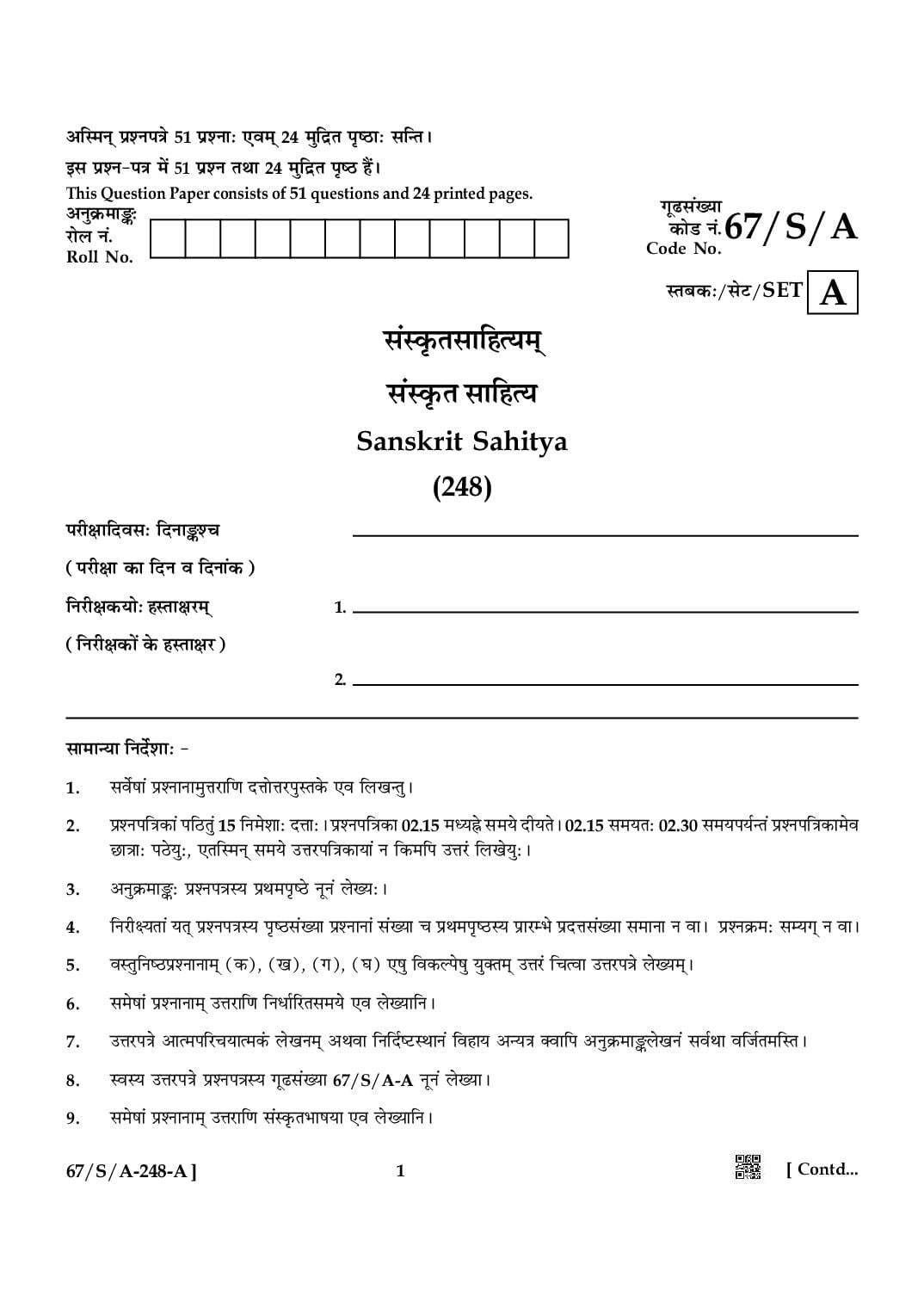
NIOS Class 10 April 2024 Question Paper Sanskrit Sahitya is available here for free download. Published by NIOS for National Institute of Open Schooling Class 10, this question paper can be viewed online or downloaded as a PDF (24 pages). Candidates preparing for National Institute of Open Schooling Class 10 can use NIOS Class 10 April 2024 Question Paper Sanskrit Sahitya to understand the exam pattern, the type of questions asked, and the overall difficulty level.
Frequently Asked Questions
How can I download NIOS Class 10 April 2024 Question Paper Sanskrit Sahitya?
Open this page and click the Download button to save NIOS Class 10 April 2024 Question Paper Sanskrit Sahitya as a PDF. It is completely free on AglaSem Docs.
Is NIOS Class 10 April 2024 Question Paper Sanskrit Sahitya free to download?
Yes. NIOS Class 10 April 2024 Question Paper Sanskrit Sahitya can be viewed online and downloaded as a PDF free of cost on AglaSem Docs.
How many pages does NIOS Class 10 April 2024 Question Paper Sanskrit Sahitya have?
NIOS Class 10 April 2024 Question Paper Sanskrit Sahitya contains 24 pages, which you can read online or download together as a single PDF.
Where can I find more National Institute of Open Schooling Class 10 study material?
You can find more National Institute of Open Schooling Class 10 question papers, sample papers, syllabus, and answer keys on AglaSem Docs.
NIOS Class 10 April 2024 Question Paper Sanskrit Sahitya – Text
Read the full text of this question paper below — useful to quickly search, copy and reference the content online without downloading the PDF.
📄 View text version (24 pages)
Page 1
ß‚ ¬˝‡Ÿ-¬òÊ ◊¥ 51 ¬˝‡Ÿ ÃÕÊ 24 ◊ÈÁŒ˝Ã ¬Îc∆U „Ò¥–
This Question Paper consists of 51 questions and 24 printed pages.
•ŸÈ∑˝§◊ÊV— ªÍ…U‚¥ÅÿÊ
⁄UÊ‹ Ÿ¥. ∑§Ê«U Ÿ¥.
Code No.
67/S/A
Roll No.
SÃ’∑§—/‚≈U/SET A
‚¥S∑ΧÂÊÁ„àÿ◊˜
‚¥S∑Χà ‚ÊÁ„àÿ
Sanskrit Sahitya
(248)
¬⁄UˡÊÊÁŒfl‚— ÁŒŸÊV‡ø
(¬⁄UˡÊÊ ∑§Ê ÁŒŸ fl ÁŒŸÊ¥∑§)
ÁŸ⁄UˡÊ∑§ÿÊ— „SÃÊˇÊ⁄U◊˜ 1.
(ÁŸ⁄UˡÊ∑§Ê¥ ∑§ „SÃÊˇÊ⁄U)
2.
‚Ê◊ÊãÿÊ ÁŸŒ¸‡ÊÊ— -
1. ‚fl¸·Ê¥ ¬˝‡ŸÊŸÊ◊ÈûÊ⁄UÊÁáÊ ŒûÊÊûÊ⁄U¬ÈSÃ∑§ ∞fl Á‹πãÃÈ–
2. ¬˝‡Ÿ¬ÁòÊ∑§Ê¥ ¬Á∆UÃÈ¥ 15 ÁŸ◊‡ÊÊ— ŒûÊÊ—– ¬˝‡Ÿ¬ÁòÊ∑§Ê 02.15 ◊äÿq ‚◊ÿ ŒËÿÖ 02.15 ‚◊ÿ× 02.30 ‚◊ÿ¬ÿ¸ãÃ¥ ¬˝‡Ÿ¬ÁòÊ∑§Ê◊fl
¿UÊòÊÊ— ¬∆UÿÈ—, ∞ÃÁS◊Ÿ˜ ‚◊ÿ ©ûÊ⁄U¬ÁòÊ∑§ÊÿÊ¥ Ÿ Á∑§◊Á¬ ©ûÊ⁄¥U Á‹πÿÈ—–
3. •ŸÈ∑˝§◊ÊV— ¬˝‡Ÿ¬òÊSÿ ¬˝Õ◊¬Îc∆U ŸÍŸ¥ ‹Åÿ—–
4. ÁŸ⁄UˡÿÃÊ¥ ÿØ ¬˝‡Ÿ¬òÊSÿ ¬Îc∆U‚¥ÅÿÊ ¬˝‡ŸÊŸÊ¥ ‚¥ÅÿÊ ø ¬˝Õ◊¬Îc∆USÿ ¬˝Ê⁄Uê÷ ¬˝ŒûÊ‚¥ÅÿÊ ‚◊ÊŸÊ Ÿ flÊ– ¬˝‡Ÿ∑˝§◊— ‚êÿª˜ Ÿ flÊ–
5. flSÃÈÁŸc∆U¬˝‡ŸÊŸÊ◊˜ (∑§), (π), (ª), (ÉÊ) ∞·È Áfl∑§À¬·È ÿÈÄÃ◊˜ ©ûÊ⁄¥U ÁøàflÊ ©ûÊ⁄U¬òÊ ‹Åÿ◊˜–
6. ‚◊·Ê¥ ¬˝‡ŸÊŸÊ◊˜ ©ûÊ⁄UÊÁáÊ ÁŸœÊ¸Á⁄UÂ◊ÿ ∞fl ‹ÅÿÊÁŸ–
7. ©ûÊ⁄U¬òÊ •Êà◊¬Á⁄UøÿÊà◊∑¥§ ‹πŸ◊˜ •ÕflÊ ÁŸÁŒ¸c≈USÕÊŸ¥ Áfl„Êÿ •ãÿòÊ ÄflÊÁ¬ •ŸÈ∑˝§◊ÊV‹πŸ¥ ‚fl¸ÕÊ flÁ¡¸Ã◊ÁSÖ
8. SflSÿ ©ûÊ⁄U¬òÊ ¬˝‡Ÿ¬òÊSÿ ªÍ…U‚¥ÅÿÊ 67/S/A-A ŸÍŸ¥ ‹ÅÿÊ–
9. ‚◊·Ê¥ ¬˝‡ŸÊŸÊ◊˜ ©ûÊ⁄UÊÁáÊ ‚¥S∑ΧÃ÷Ê·ÿÊ ∞fl ‹ÅÿÊÁŸ–
67/S/A-248-A ] 1 [ Contd...
Page 2
1. ‚÷Ë ¬˝‡ŸÊ¥ ∑§ ©ûÊ⁄U •Ê¬∑§Ê ŒË ªÿË ©ûÊ⁄U-¬ÈÁSÃ∑§Ê ◊¥ „Ë Á‹π¥–
2. ß‚ ¬˝‡Ÿ-¬òÊ ∑§Ê ¬…∏Ÿ ∑§ Á‹∞ 15 Á◊Ÿ≈U ∑§Ê ‚◊ÿ ÁŒÿÊ ªÿÊ „Ò– ¬˝‡Ÿ-¬òÊ ∑§Ê ÁflÃ⁄UáÊ ŒÊ¬„⁄U ◊¥ 02.15 ’¡ Á∑§ÿÊ ¡Ê∞ªÊ–
02.15 ’¡ ‚ 02.30 ’¡ Ã∑§ ¿UÊòÊ ∑§fl‹ ¬˝‡Ÿ-¬òÊ ∑§Ê ¬…∏¥ª •ÊÒ⁄U ß‚ •flÁœ ∑§ ŒÊÒ⁄UÊŸ fl ©ûÊ⁄U-¬ÈÁSÃ∑§Ê ¬⁄U ∑§Ê߸ ©ûÊ⁄U Ÿ„Ë¥
Á‹π¥ª–
3. ¬˝‡Ÿ-¬òÊ ∑§ ¬„‹ ¬Îc∆U ¬⁄U •¬ŸÊ •ŸÈ∑˝§◊Ê¥∑§ •fl‡ÿ Á‹π¥–
4. ¬˝‡Ÿ-¬òÊ ∑§Ê ¡Ê°ø ‹¥ Á∑§ ¬˝‡Ÿ-¬òÊ ∑§ ∑ȧ‹ ¬Îc∆UÊ¥ ÃÕÊ ¬˝‡ŸÊ¥ ∑§Ë ©ÃŸË „Ë ‚¥ÅÿÊ „Ò Á¡ÃŸË ¬˝Õ◊ ¬Îc∆U ∑§ ¬˝Ê⁄Uê÷ ◊¥ ¿U¬Ë „Ò •ÊÒ⁄U
¬˝‡Ÿ ∑˝§Á◊∑§ M§¬ ◊¥ „Ò¥–
5. flSÃÈÁŸc∆U ¬˝‡ŸÊ¥ ◊¥ øÊ⁄U Áfl∑§À¬Ê¥ (∑§), (π), (ª) ÃÕÊ (ÉÊ) ◊¥ ‚ ‚„Ë ©ûÊ⁄U øÈŸ∑§⁄U ©ûÊ⁄U-¬òÊ ◊¥ Á‹πŸÊ „Ò–
6. ‚÷Ë ¬˝‡ŸÊ¥ ∑§ ©ûÊ⁄U ÁŸœÊ¸Á⁄Uà ‚◊ÿ ◊¥ „Ë Á‹πŸÊ „Ò–
7. ©ûÊ⁄U-¬òÊ ◊¥ ¬„øÊŸ-Áøq ’ŸÊŸ •ÕflÊ ÁŸÁŒ¸c≈U SÕÊŸÊ¥ ∑§ •ÁÃÁ⁄UÄà ∑§„Ë¥ ÷Ë •ŸÈ∑˝§◊Ê¥∑§ Á‹πŸÊ ‚fl¸ÕÊ flÁ¡¸Ã „Ò–
8. •¬Ÿ ©ûÊ⁄-U¬òÊ ◊¥ ¬˝‡Ÿ-¬òÊ ∑§Ê ∑§Ê«U Ÿ¥. 67/S/A-A •fl‡ÿ Á‹π¥–
9. ‚÷Ë ¬˝‡ŸÊ¥ ∑§ ©ûÊ⁄U ‚¥S∑Χà ÷Ê·Ê ◊¥ „Ë Á‹π¥–
General Instructions :
1. Answers of all questions are to be given in the Answer-Book given to you.
2. 15 minute time has been allotted to read this Question Paper. The question paper will be distributed
at 02.15 p.m. From 02.15 p.m. to 02.30 p.m., the students will read the question paper only and
will not write any answer on the Answer-Book during this period.
3. Write your Roll Number on the first page of the Question Paper.
4. Check the total pages of Question Paper and number of questions as printed on the first page of
the question paper and the questions are in correct serial numbers.
5. In the objective type questions out of the 4 given options (A), (B), (C) and (D) you have to select
and write the appropriate answer.
6. All the questions are to be answered in the allotted time.
7. Writing any self identification mark or writing your roll numbers any where else other than the
indicated place is prohibited.
8. Write your Code No. 67/S/A-A of the question paper in your answer sheet.
9. Write the answer of all question in Sanskrit.
67/S/A-248-A ] 2 [ Contd...
Page 3
‚¥S∑Χà ‚ÊÁ„àÿ
Sanskrit Sahitya
(248)
¬⁄UˡÊÊ‚◊ÿÊflÁœ— (Time) — „Ê⁄UÊòÊÿ◊˜U (3 Hrs.) ] [ ¬ÍáÊʸVÊ— (Full Marks) — 100
ÁŸŒ¸‡ÊÊ— (i) •ÁS◊Ÿ˜ ¬˝‡Ÿ¬òÊ [A] ÷ʪ 20, [B] ÷ʪ 15, [C] ÷ʪ 6, [D] ÷ʪ 6, [E] ÷ʪ 4, ßÁà •Ê„àÿ 51 ¬˝‡ŸÊ—
‚ÁãÖ
(ii) ‚◊ ¬˝‡ŸÊ— •ÁŸflÊÿʸ—– ÃòÊ flÒ∑§ÁÀ¬∑§÷ʪ·È ∞∑§— ∞fl ‚◊Êœÿ—–
(iii) ¬˝àÿ∑¥§ ¬˝‡ŸSÿ ŒÁˇÊáÊ ¬ÊE¸ ‚¥ÅÿÊ‚È (•æ˜§∑§Ê— x ¬˝‡ŸÊ— = ¬ÍáÊʸ昧∑§Ê—) ßÁà •æ˜ ∑§Ê— ŒËÿãÖ
(iv) A ÷ʪ ¬˝.‚¥. 1 × 20 ¬ÿ¸ãÃ¥ - ’„ÈÁfl∑§À¬¬˝∑§Ê⁄USÿ ¬˝‡ŸÊ— (MCQs) ÿ·È ¬˝àÿ∑¥§ ∞∑§— •¥∑§— ÷flÁÖ ∞÷È
¬˝àÿ∑§ÁS◊Ÿ˜ ¬˝‡Ÿ ŒûÊøÃÈáÊÊZ Áfl∑§À¬ÊŸÊ¥ ◊äÿ ‚flʸÁœ∑¥§ ©¬ÿÈÄÃ¥ Áfl∑§À¬¥ ÁøàflÊ Á‹πãÃÈ– ∞Ã·È ∑§·ÈÁøØ ¬˝‡Ÿ·È
•ÊãÃÁ⁄U∑§— Áfl∑§À¬— ¬˝ŒûÊ— •ÁSÖ ∞ÃÊŒÎ‡Ê·È ¬˝‡Ÿ·È ŒûÊÁfl∑§À¬·È ∞∑§Sÿ ∞fl ¬˝ÿÊ‚— ∑§⁄UáÊËÿ—–
(v) B ÷ʪ ¬˝.‚¥. 21 × 35 ¬ÿ¸ãÃ◊˜ - flSÃÈÁŸc∆U¬˝‡ŸÊ— ¬˝àÿ∑¥§ ¬˝‡Ÿ— •¥∑§mÿÊà◊∑§— •ÁSÖ à ÿÕÊÁŸŒ¸‡Ê¥
‚◊ÊœÿÊ—–
(vi) C ÷ʪ ¬˝.‚¥. 36 × 41 ¬ÿ¸ãÃ◊˜ •ÁËÉÊÍûÊ⁄UËÿÊ— ¬˝‡ŸÊ— ¬˝àÿ∑§◊˜ •¥∑§mÿÊà◊∑§Ê— ‚ÁãÖ à ÿÕÊÁŸŒ¸‡Ê¥
‚◊ÊœÿÊ—–
(vii) D ÷ʪ ¬˝.‚¥. 42 × 47 ¬ÿ¸ãÃ◊˜ •ŸÁÃŒËÉÊʸûÊ⁄UËÿÊ— ¬˝‡ŸÊ— ¬˝àÿ∑§◊˜ •¥∑§òÊÿÊà◊∑§Ê— ‚ÁãÖ à ÿÕÊÁŸŒ¸‡Ê¥
50 × 80 ‡ÊéŒÊŸÊ¥ ¬Á⁄UÁœ◊äÿ ‚◊ÊœÿÊ—–
(viii) E ÷ʪ ¬˝.‚¥. 48 × 51 ¬ÿ¸ãÃ◊˜ ŒËÉÊʸûÊ⁄UËÿÊ— ¬˝‡ŸÊ— ¬˝àÿ∑§◊˜ ¬Üø •¥∑§Êà◊∑§Ê— ‚ÁãÖ à ÿÕÊÁŸŒ¸‡Ê¥
80 × 100 ‡ÊéŒÊŸÊ¥ ¬Á⁄UÁœ◊äÿ ‚◊ÊœÿÊ—–
(ix) ‚◊·Ê¥ ¬˝‡ŸÊŸÊ◊˜ ©ûÊ⁄UÊÁáÊ ‚¥S∑ΧÃ÷Ê·ÿÊ ∞fl ‹ÅÿÊÁŸ–
(x) SflSÿ ©ûÊ⁄U¬òÊ ¬˝‡Ÿ¬òÊSÿ ªÍ…U‚¥ÅÿÊ ŸÍŸ¥ ‹ÅÿÊ–
(xi) ©ûÊ⁄U¬òÊ •Êà◊¬Á⁄UøÿÊà◊∑¥§ ‹πŸ◊˜ •ÕflÊ ÁŸÁŒ¸c≈USÕÊŸ¥ Áfl„Êÿ •ãÿòÊ ÄflÊÁ¬ •ŸÈ∑˝§◊Ê昧∑§‹πŸ¥ ‚fl¸ÕÊ
flÁ¡¸Ã◊ÁSÖ
(xii) ‚◊·Ê¥ ¬˝‡ŸÊŸÊ◊˜ ©ûÊ⁄UÊÁáÊ ÁŸœÊ¸Á⁄UÂ◊ÿ ∞fl ‹ÅÿÊÁŸ–
(xiii) ÁŸ⁄UˡÿÃÊ◊˜ ÿØ ¬˝‡Ÿ¬òÊSÿ ¬È≈U‚¥ÅÿÊ ¬˝‡ŸÊŸÊ¥ ø ‚¥ÅÿÊ ¬˝Õ◊¬È≈USÿ ¬˝Ê⁄Uê÷ ¬˝ŒûÊ‚¥ÅÿÊ ‚◊ÊŸÊ Ÿ flÊ– ¬˝‡Ÿ∑˝§◊—
‚êÿª˜ Ÿ flÊ–
(xiv) •ŸÈ∑˝§◊Ê昧∑§— ¬˝‡Ÿ¬òÊSÿ ¬˝Õ◊¬È≈U ŸÍŸ¥ ‹Åÿ—–
ÁŸŒ¸‡Ê — (i) ß‚ ¬˝‡Ÿ¬òÊ ◊¥ [A] Áfl÷ʪ ◊¥ 20, [B] Áfl÷ʪ ◊¥ 15, [C] Áfl÷ʪ ◊¥ 6, [D] Áfl÷ʪ ◊¥ 6, [E] Áfl÷ʪ ◊¥ 4,
∑ȧ‹ Á◊‹Ê∑§⁄U 51 ¬˝‡Ÿ „Ò¥–
(ii) ‚÷Ë ¬˝‡ŸÊ¥ ∑§ ©ûÊ⁄U Á‹πŸÊ •ÁŸflÊÿ¸ „Ò– Áfl∑§À¬ ©ûÊ⁄UÊ¥ ◊¥ ‚ ∞∑§ „Ë ©ûÊ⁄U Á‹πŸÊ „Ò–
(iii) „⁄U ∞∑§ ¬˝‡Ÿ ∑§ ŒÊÿ¥ ÷ʪ ◊¥ •VÊ¥ ◊¥ (•V x ¬˝‡Ÿ = ¬ÍáÊÊZ∑§) ¬ÍáÊÊZVÊ¥ ∑§Ê ÁŒπÊÃÊ „Ò–
(iv) [A] Áfl÷ʪ ◊¥ ¬˝‡Ÿ ‚¥ÅÿÊ 1 ‚ 20 Ã∑§ ’„ÈÁfl∑§À¬ ¬˝∑§Ê⁄U ∑§ (MCQs) ¬˝‡Ÿ „Ò¥– ¬˝àÿ∑§ ¬˝‡Ÿ ∑§ Á‹∞ ∞∑§
•V ÁŸœÊ¸Á⁄Uà „Ò– ߟ◊¥ ‚ øÊ⁄UÊ¥ flÒ∑§ÁÀ¬∑§ ©ûÊ⁄UÊ¥ ◊¥ ‚ ‚flʸÁœ∑§ ©¬ÿÈÄà ©ûÊ⁄U ∑§Ê øÈŸ ∑§ Á‹πŸÊ øÊÁ„∞– ∑ȧ¿U
¬˝‡ŸÊ¥ ∑§ •ÊãÃÁ⁄U∑§ Áfl∑§À¬ ÁŒÿ „Ò¥– ß‚ Ã⁄U„ ∑§ ¬˝‡ŸÊ¥ ◊¥ ∞∑§ „Ë ¬˝‡Ÿ ∑§Ê ©ûÊ⁄U Á‹πŸÊ „Ò–
67/S/A-248-A ] 3 [ Contd...
Page 4
ÁŸŒ¸‡ÊÊŸÈ‚Ê⁄U ©ûÊ⁄U ŒŸÊ „Ò–
(vi) [C] Áfl÷ʪ ◊¥ ¬˝‡Ÿ ‚¥ÅÿÊ 36 ‚ 41 Ã∑§ •ÁËÉÊÈ©ûÊ⁄UËÿ ¬˝‡Ÿ „Ò¥– ¬˝àÿ∑§ ¬˝‡Ÿ ∑§ Á‹∞ 2 •V ÁŸœÊ¸Á⁄Uà „Ò–
ÁŸŒ¸‡ÊÊŸÈ‚Ê⁄U ©ûÊ⁄U ŒŸÊ „Ò– 30 ‚ 50 ‡ÊéŒÊ¥ ∑§Ë ‚Ë◊Ê ◊¥ ©ûÊ⁄U Á‹πŸÊ „Ò–
(vii) [D] Áfl÷ʪ ◊¥ ¬˝‡Ÿ ‚¥ÅÿÊ 42 ‚ 47 Ã∑§ ‹ÉÊÈ©ûÊ⁄UËÿ ¬˝‡Ÿ „¥Ò– ¬˝àÿ∑§ ¬˝‡Ÿ 3 •VÊ¥ ∑§ „¥Ò– ÁŸŒ¸‡ÊÊŸÈ‚Ê⁄U 50
‚ 80 ‡ÊéŒÊ¥ ∑§Ë ‚Ë◊Ê ◊¥ ©ûÊ⁄U Á‹πŸÊ „Ò–
(viii) [E] Áfl÷ʪ ◊¥ ¬˝‡Ÿ ‚¥ÅÿÊ 48 ‚ 51 Ã∑§ ŒËÉÊʸûÊ⁄U ¬˝‡Ÿ „Ò¥– ¬˝àÿ∑§ ¬˝‡Ÿ 5 •¥VÊ¥ ∑§ „Ò¥– ÁŸŒ¸‡ÊÊŸÈ‚Ê⁄U 80 ‚
100 ‡ÊéŒÊ¥ ∑§ •ãŒ⁄U ©ûÊ⁄U Á‹πŸÊ „Ò–
(ix) ‚÷Ë ¬˝‡ŸÊ¥ ∑§Ê ©ûÊ⁄U ‚¥S∑Χà ◊¥ „Ë Á‹πŸÊ „Ò–
(x) •¬Ÿ ©ûÊ⁄U-¬òÊ ◊¥ ¬˝‡Ÿ¬òÊ ∑§Ê ªÍ…∏U‚¥ÅÿÊ •fl‡ÿ Á‹πŸÊ „Ò–
(xi) ©ûÊ⁄U ¬ÁòÊ∑§Ê ◊¥ •Êà◊¬Á⁄UøÿÊà◊∑§ Áøq, ÁŸÁŒ¸c≈U SÕÊŸ ∑§Ê ¿UÊ«∏∑§⁄U •ãÿòÊ ∑§„Ë¥ ÷Ë •ŸÈ∑˝§◊ÊVÊÁŒ Á‹πŸÊ
‚fl¸ÕÊ ÁŸÁ·h „Ò–
(xii) ‚÷Ë ¬˝‡ŸÊ¥ ∑§ ©ûÊ⁄U ÁŸœÊ¸Á⁄Uà ‚◊ÿ ◊¥ „Ë Á‹πŸÊ „Ò–
(xiii) äÿÊŸ ‚ ŒπÊ •ÊÒ⁄U ‚◊¤ÊÊ Á∑§ ¬˝‡Ÿ-¬òÊ ∑§ ¬Îc∆UU ‚¥ÅÿÊ, ¬˝‡Ÿ ‚¥ÅÿÊ, ¬˝Õ◊ ¬Îc∆UU ∑§ •Ê⁄Uê÷ ◊¥ ÁŒÿ ªÿ ‚¥ÅÿÊ
‚◊ÊŸ „Ò ÿÊ Ÿ„Ë¥– ¬˝‡ŸÊ¥ ∑§ ∑˝§◊ ‚¥ÅÿÊ ‚„Ë „Ò ÿÊ Ÿ„Ë¥–
(xiv) ¬˝‡Ÿ-¬òÊ ∑§ ““∑˝§◊ ‚¥ÅÿÊ”” ¬˝Õ◊ ¬Îc∆U ◊¥ •fl‡ÿ Á‹πŸÊ „Ò–
Note : (i) This question paper consists of four parts (A), (B), (C) and (D). Part (A) contains 20,
Part (B) 15, Part (C) 6, Part (D) 6 and Part (E) 4 questions. There are 51 questions in all.
(ii) All questions are compulsory. Out of choices questions only one is to be answered.
(iii) Marks are indicated in the right hand side of each question.
(iv) Part (A), question numbers 1 - 20 are Multiple Choice (MCQs) type questions. Each
question carries 1 mark. Select and write most appropriate option out of the given 4
options. Some of the question carry internal choice. You have to answer only one in
such type of questions.
(v) Part (B) question numbers 21 - 35 are objective type questions. Each question carries 2
marks. Answer them as per the given instruction.
(vi) Part (C) question numbers 36 - 41 are very short answer type questions. Each question
carries 2 marks. These are to be answered within the limit of 30 - 50 words.
(vii) Part (D) question numbers 42 - 47 are short answer type questions. Each question
carries 3 marks. As per the given instruction these question are to be answered within
the limit of 50 - 80 words.
(viii) Part (E) question numbers 48 - 51 are long answer type questions. Each question carries
5 marks. As per the given instruction each question is to be answered within the limit
of 80 - 100 words.
(ix) All questions are to be answered in Sanskrit.
(x) Write the code number of the questions paper in your answer sheet.
(xi) Writing your self-identification mark or writing you roll number any where else in the
answer sheet other than the place indicated is prohibited.
(xii) Write your answer within the limit of allotted time.
(xiii) Look and understand that the page numbers, question numbers are the same or not as
given in the cover page. Also check whether the question serial numbers are correct or not.
(xiv) Write the serial number of the question paper on the first page of the answer sheet.
67/S/A-248-A ] 4 [ Contd...
Page 5
¬˝‡Ÿ‚¥ÅÿÊ 1 - 20 Ã∑§ ’„ÈÁfl∑§À¬Ë ¬˝‡Ÿ „Ò¥– Á¡Ÿ∑§ 20 •¥∑§ •Ê’¥Á≈Uà Á∑§∞ ª∞ „Ò¥–
Question number 1 - 20 are multiple choice questions for which 20 marks are allotted :
1. •œÊÁ‹ÁπÃ·È ¬˝‡Ÿ·È ∑§SÿÊÁ¬ ∞∑§Sÿ ©ûÊ⁄¥U ŒŒÊÃÈ– 1
ÁŸêŸÁ‹Áπà ¬˝‡ŸÊ¥ ◊¥ ‚ Á∑§‚Ë ∞∑§ ∑§Ê ©ûÊ⁄U ŒËÁ¡∞–
Answer any one of the following questions.
(•) ªÎ„◊˜ •ÊªÃ •⁄UÊÒ Á∑¥§ ∑§ÊÿZ Áflœÿ◊˜–
(∑§) ÁÃ⁄US∑§Ê⁄U— (π) „ŸŸ◊˜
(ª) ÃÊ«UŸ◊˜ (ÉÊ) •ÊÁÃâÿ◊˜
ÉÊ⁄U •Ê∞ ‡ÊòÊÈ ∑§ ‚ÊÕ ÄÿÊ ∑§⁄UŸÊ øÊÁ„∞?
(∑§) ÁÃ⁄US∑§Ê⁄U (π) „àÿÊ
(ª) ¬Ë≈UŸÊ (ÉÊ) •ÊÁÃâÿ‚à∑§Ê⁄U
What should one do with an enemy who has come home ?
(A) contempt (B) murder
(C) hammer/thrash (D) hospitality
(’) “„ÈÃ÷È∑˜§” ßÁà ‡ÊéŒSÿ ∑§— •Õ¸—–
(∑§) ‚Íÿ¸— (π) •ÁÇŸ—
(ª) œÍ◊— (ÉÊ) ⁄UÊ„È—
“„ÈÃ÷È∑§” ß‚ ‡ÊéŒ ∑§Ê •Õ¸ „Ò -
(∑§) ‚Íÿ¸ (π) •ÁÇŸ
(ª) œÈ•Ê° (ÉÊ) ⁄UÊ„È
The meaning of this work ‘Hutbhuk’ is :
(A) Surya (B) Agni
(C) Dhuan (smoke) (D) Rahu
67/S/A-248-A ] 5 [ Contd...
Page 6
ÁŸêŸÁ‹Áπà ¬˝‡ŸÊ¥ ◊¥ ‚ Á∑§‚Ë ∞∑§ ∑§Ê ©ûÊ⁄U ŒËÁ¡∞–
Answer any one of the following questions.
(•) “∆U∆¥U∆U∆¥U∆¥U ∆U∆U∆¥U∆U∆¥U∆U—” ßÁà ‡Ê錗 ∑§Sÿ?
(∑§) Sfláʸ∑§‹‡ÊSÿ (π) ∑¥§‚∑§‹‡ÊSÿ
(ª) ◊Îà∑§‹‡ÊSÿ (ÉÊ) ø·∑§Sÿ
“∆U∆¥U∆U∆¥U∆¥U ∆U∆U∆¥U∆U∆¥U∆U” ÿ„ ‡ÊéŒ Á∑§‚∑§Ê „Ò?
(∑§) ‡ÊéŒ∑§‹‡Ê ∑§Ê (π) ∑¥§‚∑§‹‡Ê ∑§Ê
(ª) ◊Îà∑§‹‡Ê ∑§Ê (ÉÊ) øcÊ∑§ ∑§Ê
“∆U∆¥U∆U∆¥U∆¥U ∆U∆U∆¥U∆U∆¥U∆U” this word is this :
(A) Shabdkalash (B) Kanskalash
(C) Mritkalash (D) Chashak
(’) “ÁmÁ¡uÊ” ŸÊ◊ ∑§Ê?
(∑§) ◊ʡʸ⁄UË (π) ‡ÊÎªÊ‹Ë (ª) ‚Á¬¸áÊË (ÉÊ) ‚Ê⁄U◊ÿË
“ÁmÁ¡uÊ” Á∑§‚∑§Ê ŸÊ◊ „Ò?
(∑§) ◊Ê¡¸⁄UË (π) ‡ÊÎªÊ‹Ë (ª) ‚Á¬¸áÊË (ÉÊ) ‚Ê⁄U◊ÿË
Whose name is ‘Dwijihva’ ?
(A) Marjari (B) Shrigali (C) Sarpini (D) Sarmeyi
3. •œÊÁ‹ÁπÃ·È ¬˝‡Ÿ·È ∑§SÿÊÁ¬ ∞∑§Sÿ ©ûÊ⁄¥U ŒŒÊÃÈ– 1
ÁŸêŸÁ‹Áπà ¬˝‡ŸÊ¥ ◊¥ ‚ Á∑§‚Ë ∞∑§ ∑§Ê ©ûÊ⁄U ŒËÁ¡∞–
Answer any one of the following questions.
(•) “Áfl‹ÊÄÿ” ßàÿòÊ ∑§Ê œÊÃÈ—–
(∑§) ‹Ê∑˜§-œÊÃÈ— (π) ‹È∑˜§-œÊÃÈ—
(ª) ‹ÊÄÿ˜-œÊÃÈ— (ÉÊ) ‹S¡˜-œÊÃÈ—
“Áfl‹ÊÄÿ” ÿ„Ê° ∑§ÊÒŸ ‚Ë œÊÃÈ „Ò?
(∑§) ‹Ê∑˜§-œÊÃÈ (π) ‹È∑§-œÊÃÈ
(ª) ‹ÊÄÿ-œÊÃÈ (ÉÊ) ‹S¡-œÊÃÈ
‘Vilokya’ which dhatu (conjugation) :
(A) Lok dhatu (B) Luk dhatu
(C) Lokya dhatu (D) Lasja dhatu
67/S/A-248-A ] 6 [ Contd...
Page 7
(∑§) m (π) òÊËÁáÊ (ª) øàflÊÁ⁄U (ÉÊ) ¬Üø
“•S◊Ëàÿ÷flŒÁ‹åÃ◊˜” ÿ„Ê° Á∑§ÃŸ ¬Œ „Ò¥?
(∑§) ŒÊ (π) ÃËŸ (ª) øÊ⁄U (ÉÊ) ¬Ê°ø
How many pad (shabd) are there - ““•S◊Ëàÿ÷flŒÁ‹åàÊ◊””
(A) Two (B) Three (C) Four (D) Five
4. •œÊÁ‹ÁπÃ·È ¬˝‡Ÿ·È ∑§SÿÊÁ¬ ∞∑§Sÿ ©ûÊ⁄¥U ŒŒÊÃÈ– 1
ÁŸêŸÁ‹Áπà ¬˝‡ŸÊ¥ ◊¥ ‚ Á∑§‚Ë ∞∑§ ∑§Ê ©ûÊ⁄U ŒËÁ¡∞–
Answer any one of the following questions.
(•) ““‚fl¸SÿÊÒ·œ◊ÁSà ‡ÊÊSòÊÁflÁ„Ã¥ ◊Íπ¸Sÿ ŸÊSàÿÊÒ·œ◊˜”” - ßàÿòÊ Á∑¥§ ¿U㌗–
(∑§) ◊ÊÁ‹ŸË (π) dÇœ⁄UÊ
(ª) Œ˝ÈÃÁfl‹Áê’Ã◊˜ (ÉÊ) ‡Êʌ͸‹Áfl∑˝§ËÁ«UÃ◊˜
““‚fl¸SÿÊÒ·œ◊ÁSà ‡ÊÊSòÊÁflÁ„Ã¥ ◊Íπ¸Sÿ ŸÊSàÿÊÒ·œ◊˜”” - ÿ„Ê° ∑§ÊÒŸ-‚Ê ¿¥UŒ „Ò?
(∑§) ◊ÊÁ‹ŸË (π) dÇœ⁄UÊ
(ª) Œ˝ÈÃÁfl‹Áê’à (ÉÊ) ‡Êʌ͸‹Áfl∑˝§ËÁ«UÃ
“‚fl¸SÿÊÒ·œ◊ÁSà ‡ÊÊSòÊÁflÁ„Ã¥ ◊Íπ¸Sÿ ŸÊSàÿÊÒ·œ◊” which verse is here ?
(A) Malini (B) Sragdhara
(C) Drutvilambit (D) Shardulvikridit
(’) “©l◊‚◊—” - ßàÿòÊ ∑§— ‚◊Ê‚—–
(∑§) ÃÎÃËÿÊÃà¬ÈL§·‚◊Ê‚—
(π) øÃÈÕ˸Ãà¬ÈL§·‚◊Ê‚—
(ª) ¬Üø◊ËÃà¬ÈL§·‚◊Ê‚—
(ÉÊ) cÊc∆UËÃà¬ÈL§·‚◊Ê‚—
“©l◊‚◊—” - ÿ„Ê° ∑§ÊÒŸ-‚Ê ‚◊Ê‚ „Ò?
(∑§) ÃÎÃËÿÊÃà¬ÈL§· ‚◊Ê‚
(π) øÃÈÕ˸Ãà¬ÈL§· ‚◊Ê‚
(ª) ¬Üø◊ËÃà¬ÈL§· ‚◊Ê‚
(ÉÊ) cÊc∆UËÃà¬ÈL§· ‚◊Ê‚
“©l◊” - which samas is there ?
(A) Tritiya Tatpurush Samas
(B) Chaturthi Tatpursh Samas
(C) Panchami Tatpurush Samas
(D) Shashthi Tatpurush Samas
67/S/A-248-A ] 7 [ Contd...
Page 8
ÁŸêŸÁ‹Áπà ¬˝‡ŸÊ¥ ◊¥ ‚ Á∑§‚Ë ∞∑§ ∑§Ê ©ûÊ⁄U ŒËÁ¡∞–
Answer any one of the following questions.
(•) “ÁŸflŒÿ” ßÁà M§¬¥ ∑§ÁS◊Ÿ˜ ‹∑§Ê⁄U–
(∑§) ‹Áæ§ (π) ‹ÊÁ≈U (ª) ÁflÁœÁ‹Áæ§ (ÉÊ) Á‹Á≈U
“ÁŸflŒÿ” ß‚ M§¬ ◊¥ ∑§ÊÒŸ-‚Ê ‹∑§Ê⁄U „Ò?
(∑§) ‹Áæ§ (π) ‹ÊÁ≈U (ª) ÁflÁœÁ‹Áæ§ (ÉÊ) Á‹Á≈U
“ÁŸflŒÿ” which lakar is in this form ?
(A) Langi (B) Loti (C) Vidhilingi (D) Liti
(’) ““•◊Èπ— S»È§≈UflÄÃÊ ø ÿÊ ¡ÊŸÊÁà ‚ ¬Áá«U×–”” - ““•◊Èπ— S»È§≈UflÄÃÊ”” ßàÿŸŸ Á∑§ ’ÊäÿÃ?
(∑§) äflÁŸÿãòÊ◊˜ (π) ‚¥ªáÊ∑§—
(ª) ¬òÊ◊˜ (ÉÊ) ‹πŸË
““•◊Èπ— S»È§≈UflÄÃÊ ø ÿÊ ¡ÊŸÊÁà ‚ ¬Áá«U×–”” - ““•◊Èπ— S»È§≈UflÄÃÊ”” ß‚‚ Á∑§‚∑§Ê ’Êœ
(¡ÊŸ∑§Ê⁄UË) „ÊÃÊ „Ò?
(∑§) äflÁŸÿ¥òÊ (π) ‚¥ªáÊ∑§
(ª) ¬òÊ (ÉÊ) ‹πŸË
“•◊Èπ— S»È§≈UflÄÃÊ ø ÿÊ ¡ÊŸÊÁà ‚ ¬Áá«U×–” - “•◊Èπ— S»È§≈UflÄÃÊ” whose information
(understanding) is by this ?
(A) Sound machine (B) Computer
(C) Patram (D) Pen
6. •œÊÁ‹ÁπÃ·È ¬˝‡Ÿ·È ∑§SÿÊÁ¬ ∞∑§Sÿ ©ûÊ⁄¥U ŒŒÊÃÈ– 1
ÁŸêŸÁ‹Áπà ¬˝‡ŸÊ¥ ◊¥ ‚ Á∑§‚Ë ∞∑§ ∑§Ê ©ûÊ⁄U ŒËÁ¡∞–
Answer any one of the following questions.
(•) ““‡fl‡ÊÈ⁄UÁ◊ÿ◊ÊÁ‹XÁà ‚ÃË”” - ßàÿòÊ ‚ÃË ∑§Ê?
(∑§) ¬Êfl¸ÃË (π) ‚ËÃÊ (ª) ‚ÊÁflòÊË (ÉÊ) Œ˝ÊÒ¬ŒË
““‡fl‡ÊÈ⁄UÁ◊ÿ◊ÊÁ‹XÁà ‚ÃË”” - ÿ„Ê° ‚ÃË ∑§ÊÒŸ „Ò?
(∑§) ¬Êfl¸ÃË (π) ‚ËÃÊ (ª) ‚ÊÁflòÊË (ÉÊ) Œ˝ÊÒ¬ŒË
“‡fl‡ÊÈ⁄UÁ◊ÿ◊ÊÁ‹XÁà ‚ÃË” who is ‘Sati’ here ?
(A) Parvati (B) Sita (C) Savitri (D) Draupadi
67/S/A-248-A ] 8 [ Contd...
Page 9
(∑§) ’„Èfl˝ËÁ„— (π) ÁmªÈ— (ª) •√ÿÿË÷Êfl— (ÉÊ) ∑§◊¸œÊ⁄Uÿ—
“‡ÊÃøãŒ˝◊˜” ÿ„Ê° ∑§ÊÒŸ-‚Ê ‚◊Ê‚ „Ò?
(∑§) ’„Èfl˝ËÁ„ (π) ÁmªÈ (ª) •√ÿÿË÷Êfl (ÉÊ) ∑§◊¸œÊ⁄Uÿ
“‡ÊÃøãŒ˝◊” which samas is here ?
(A) Bahuvrihi (B) Dwigu (C) Avyayibhava (D) Karmdharya
7. •œÊÁ‹ÁπÃ·È ¬˝‡Ÿ·È ∑§SÿÊÁ¬ ∞∑§Sÿ ©ûÊ⁄¥U ŒŒÊÃÈ– 1
ÁŸêŸÁ‹Áπà ¬˝‡ŸÊ¥ ◊¥ ‚ Á∑§‚Ë ∞∑§ ∑§Ê ©ûÊ⁄U ŒËÁ¡∞–
Answer any one of the following questions.
(•) “•ª˝„Ê⁄U—” ßÁà ‡ÊéŒSÿ ∑§Ê˘Õ¸—?
(∑§) Œ‡Ê— (π) ¬ÎÁÕflË
(ª) ª˝Ê◊— (ÉÊ) ªÎ„◊˜
“•ª˝„Ê⁄U—” ß‚ ‡ÊéŒ ∑§Ê ÄÿÊ •Õ¸ „Ò?
(∑§) Œ‡Ê (π) ¬ÎÁÕflË
(ª) ª˝Ê◊ (ÉÊ) ÉÊ⁄U
“•ª˝„Ê⁄U—” what is the meaning of this word ?
(A) Desh (Country) (B) Prithivi (Earth)
(C) Gram (Village) (D) Ghar (House)
(’) ““flÁÜøÃÊ˘„¥ œÍàʸ⁄UÊ¡Ÿ”” ßÁà ∑§Sÿ fløŸ◊˜?
(∑§) ‚ÈŒ‡Ê¸Ÿ⁄UÊôÊ— (π) flÁáÊ¡— Áfl◊‹Sÿ
(ª) ∑ȧÁ≈U‹ŸÊ◊∑§Sÿ ¡ŸSÿ (ÉÊ) mÊ⁄U¬Ê‹Sÿ
““flÁÜøÃÊ˘„¥ œÍàʸ⁄UÊ¡Ÿ”” ÿ„ Á∑§‚∑§Ê fløŸ „Ò?
(∑§) ‚ÈŒ‡Ê¸Ÿ⁄UÊ¡ ∑§Ê (π) flÁáÊ¡ Áfl◊‹ ∑§Ê
(ª) ∑ȧÁ≈U‹ŸÊ◊∑§ ¡Ÿ ∑§Ê (ÉÊ) mÊ⁄U¬Ê‹ ∑§Ê
“flÁÜøÃÊ˘„¥ œÍàʸ⁄UÊ¡Ÿ” whose statement is this ?
(A) Sudarshanraj (B) Vanij Vimal
(C) Kutilnamak Jan (D) Dwarpal
67/S/A-248-A ] 9 [ Contd...
Page 10
ÁŸêŸÁ‹Áπà ¬˝‡ŸÊ¥ ◊¥ ‚ Á∑§‚Ë ∞∑§ ∑§Ê ©ûÊ⁄U ŒËÁ¡∞–
Answer any one of the following questions.
(•) ∑ΧcáÊÿ¡Èfl¸ŒSÿ ∑§Áà ‡ÊÊπÊ— ©¬‹èÿãÃ?
(∑§) m (π) ÁÃd— (ª) øÃd— (ÉÊ) ¬Üø
∑ΧcáÊÿ¡Èfl¸Œ ∑§Ë Á∑§ÃŸË ‡ÊÊπÊ ©¬‹éœ „Ò¥?
(∑§) ŒÊ (π) ÃËŸ (ª) øÊ⁄U (ÉÊ) ¬Ê°ø
How many branches (Shakha) are available of ∑ΧcáÊÿ¡Èfl¸Œ (Krishna Yajurveda) ?
(A) Two (B) Three (C) Four (D) Five
(’) ¬È⁄UÊáÊ‹ˇÊáÊ·È ŸÊÁSà Á∑§◊˜?
(∑§) ‚ª¸— (π) ¬˝Áª¸— (ª) fl¥‡Ê— (ÉÊ) ∑§À¬—
¬È⁄UÊáÊ ∑§Ê ‹ˇÊáÊ ÄÿÊ Ÿ„Ë¥ „Ò?
(∑§) ‚ª¸ (π) ¬˝Áª¸ (ª) fl¥‡Ê (ÉÊ) ∑§À¬
Which is not the traits of ‘Purana’ ?
(A) Sarga (B) Pratisarga (C) Vansh (D) Kalpa
9. •œÊÁ‹ÁπÃ·È ¬˝‡Ÿ·È ∑§SÿÊÁ¬ ∞∑§Sÿ ©ûÊ⁄¥U ŒŒÊÃÈ– 1
ÁŸêŸÁ‹Áπà ¬˝‡ŸÊ¥ ◊¥ ‚ Á∑§‚Ë ∞∑§ ∑§Ê ©ûÊ⁄U ŒËÁ¡∞–
Answer any one of the following questions.
(•) ““•¬Ê⁄U ∑§Ê√ÿ‚¥‚Ê⁄U ∑§Áfl⁄U∑§— ¬˝¡Ê¬Á×”” - ßÁà ∑§Sÿ fløŸ◊˜?
(∑§) •Á÷ŸflªÈåÃSÿ (π) ÷⁄UÃ◊ÈŸ—
(ª) •ÊŸãŒflœ¸ŸSÿ (ÉÊ) ŒÁá«UŸ—
““•¬Ê⁄ ∑§Ê√ÿ‚¥‚Ê⁄U ∑§Áfl⁄U∑§— ¬˝¡Ê¬Á×”” - ÿ„ Á∑§‚∑§Ê fløŸ „Ò?U
(∑§) •Á÷ŸflªÈåà ∑§Ê (π) ÷⁄UÃ◊ÈÁŸ ∑§Ê
(ª) •ÊŸãŒflœ¸Ÿ ∑§Ê (ÉÊ) Œá«UË ∑§Ê
“•¬Ê⁄U ∑§Ê√ÿ ‚¥‚Ê⁄U ∑§Áfl⁄U∑§— ¬˝¡Ê¬Á×” whose statement is this ?
(A) Abhinava Gupta (B) Bharat Muni
(C) Aanand Vardhana (D) Dangi
(’) ◊ê◊≈UÊøÊÿ¸Sÿ ◊à ∑§Áà ∑§Ê√ÿ∑§Ê⁄UáÊÊÁŸ?
(∑§) m (π) òÊËÁáÊ (ª) øàflÊÁ⁄U (ÉÊ) ¬Üø
◊ê◊≈UÊøÊÿ¸ ∑§ ◊ÃÊŸÈ‚Ê⁄U ∑§Ê√ÿ ∑§ Á∑§ÃŸ ∑§Ê⁄UáÊ „Ò¥?
(∑§) ŒÊ (π) ÃËŸ (ª) øÊ⁄U (ÉÊ) ¬Ê°ø
How many reason are Kavya (Poetry) according to Mammtacharya ?
(A) Two (B) Three (C) Four (D) Five
67/S/A-248-A ] 10 [ Contd...
Page 11
ÁŸêŸÁ‹Áπà ¬˝‡ŸÊ¥ ◊¥ ‚ Á∑§‚Ë ∞∑§ ∑§Ê ©ûÊ⁄U ŒËÁ¡∞–
Answer any one of the following question.
(•) ‚ÊÁ„àÿŒ¬¸áÊÁŒ‡ÊÊ ⁄UËÃÿ— ∑§ÁÃÁflœÊ—?
(∑§) ÁmÁflœÊ (π) ÁòÊÁflœÊ (ª) øÃÈÁfl¸œÊ (ÉÊ) ¬ÜøÁflœÊ
‚ÊÁ„àÿŒ¬¸áÊ ÁŒ‡ÊÊ ⁄UËÁà ∑§Ê Á∑§ÃŸË ÁflœÊ∞° „Ò?
(∑§) ŒÊ ÁflœÊ (π) ÃËŸ ÁflœÊ (ª) øÊ⁄U ÁflœÊ (ÉÊ) ¬Ê°ø ÁflœÊ
How many Vidhayain are there in “‚ÊÁ„àÿ Œ¬¸áÊ ÁŒ‡ÊÊ ⁄UËÁÔ (Sahitya Darpan Disha
Reeti) ?
(A) Two (B) Three (C) Four (D) Five
(’) ‹ÉÊÈ◊äÿ— ªáÊ— ∑§Ê ÷flÁÃ?
(∑§) ⁄UªáÊ— (π) ŸªáÊ— (ª) ¡ªáÊ— (ÉÊ) ÷ªáÊ—
‹ÉÊÈ◊äÿ ªáÊ ∑§ÊÒŸ-‚Ê „ÊÃÊ „Ò?
(∑§) ⁄UªáÊ (π) ŸªáÊ (ª) ¡ªáÊ (ÉÊ) ÷ªáÊ
Which is Laghumadhya Gana ?
(A) Ragan (B) Nagan (C) Jagan (D) Bhagan
11. •œÊÁ‹ÁπÃ·È ¬˝‡Ÿ·È ∑§SÿÊÁ¬ ∞∑§Sÿ ©ûÊ⁄¥U ŒŒÊÃÈ– 1
ÁŸêŸÁ‹Áπà ¬˝‡ŸÊ¥ ◊¥ ‚ Á∑§‚Ë ∞∑§ ∑§Ê ©ûÊ⁄U ŒËÁ¡∞–
Answer any one of the following questions.
(•) “⁄UÊ◊øÁ⁄UÃ◊˜” ßÁà ª˝ãÕSÿ ⁄UøÁÿÃÊ ∑§—?
(∑§) „⁄UŒûÊ‚ÈÁ⁄U— (π) ‚ãäÿÊ∑§⁄UŸãŒË
(ª) flV≈UÊäfl⁄UË (ÉÊ) œŸÜ¡ÿ—
“⁄UÊ◊øÁ⁄UÃ◊˜” ß‚ ª˝ãÕ ∑§Ê ⁄UøÁÿÃÊ ∑§ÊÒŸ „Ò?
(∑§) „Á⁄UŒûÊ‚ÈÁ⁄U (π) ‚ãäÿÊ∑§⁄UŸãŒË
(ª) flV≈UÊäfl⁄UË (ÉÊ) œŸÜ¡ÿ—
Who is the author of ‘Ramcharityam’ ?
(A) Haridattsuri (B) Sandhyakarnandi
(C) Venkatadhvari (D) Dhananjay
(’) ∑§Áà ©¬M§¬∑§ÊÁáÊ?
(∑§) òÊÿÊŒ‡Ê (π) ¬ÜøŒ‡Ê (ª) ‚åÃŒ‡Ê (ÉÊ) •c≈UÊŒ‡Ê
©¬M§¬∑§ÊÁáÊ Á∑§ÃŸ „Ò¥?
(∑§) Ã⁄U„ (π) ¬¥Œ˝„ (ª) ‚ûÊ⁄UÊ„ (ÉÊ) •nÊ⁄U„
How many Uproopkani’s are ?
(A) Thirteen (B) Fifteen (C) Seventeen (D) Eighteen
67/S/A-248-A ] 11 [ Contd...
Page 12
(∑§) ÿÈÄÃ◊˜ (π) ÁŸÿÁãòÊÃ◊˜ (ª) ‚ŒÎ‡Ê◊˜ (ÉÊ) •Á÷◊Ã◊˜
“Á◊òÊ‚Áê◊Ã◊˜” ÿ„Ê° ‚Áê◊Ã◊˜ ‡ÊéŒ ∑§Ê •Õ¸ „Ò?
(∑§) ÿÈÄÃ◊˜ (π) ÁŸÿÁãòÊà (ª) ‚ŒÎ‡Ê (ÉÊ) •Á÷◊Ã
“Á◊òÊ‚Áê◊Ã◊˜” what is the meaning of “‚Áê◊Ã◊˜” here ?
(A) Yuktam (B) Niyantrita (C) Sadrisha (D) Abhimata
13. “•‹VÊ⁄U—” ßàÿòÊ ∑§ÁS◊Ÿ˜ •Õ¸ ∑§— ¬˝àÿÿ—? 1
(∑§) ÷Êfl ÉÊܬ˝àÿÿ— (π) ∑§⁄UáÊ ÉÊܬ˝àÿÿ—
(ª) •Áœ∑§⁄UáÊ ÉÊܬ˝àÿÿ— (ÉÊ) (∑§), (π) ©÷ÊÒ
“•‹¥∑§Ê⁄U” ÿ„Ê° Á∑§‚ •Õ¸ ◊¥ ∑§ÊÒŸ-‚Ê ¬˝àÿÿ „Ò?
(∑§) ÷Êfl ◊¥ ÉÊܬ˝àÿÿ (π) ∑§⁄UáÊ ◊¥ ÉÊܬ˝àÿÿ
(ª) •Áœ∑§⁄UáÊ ◊¥ ÉÊܬ˝àÿÿ (ÉÊ) (∑§), (π) ŒÊŸÊ¥
‘Alankar’ here in which sense which suffix is used ?
(A) Bhav main Ghan Suffix (B) Karan main Ghan Suffix
(C) Adhikaran main Ghan Suffix (D) Both (A) and (B)
14. ““ôÊÊŸ ◊ÊÒŸ¥ ˇÊ◊Ê ‡ÊÄÃÊÒ”” ßàÿòÊ ∑§— •‹VÊ⁄U—? 1
(∑§) ©¬◊Ê (π) ©à¬˝ˇÊÊ (ª) M§¬∑§◊˜ (ÉÊ) ŒÎc≈UÊã×
““ôÊÊŸ ◊ÊÒŸ¥ ˇÊ◊Ê ‡ÊÄÃÊÒ”” ÿ„Ê° ∑§ÊÒŸ-‚Ê •‹¥∑§Ê⁄U „Ò?
(∑§) ©¬◊Ê (π) ©à¬˝ˇÊÊ (ª) M§¬∑§ (ÉÊ) ŒÎc≈UÊ¥Ã
Which is the figure of speech (Alankar) in “ôÊÊŸ ◊ÊÒŸ¥ ˇÊ◊Ê ‡ÊÄÃÊÒ” ?
(A) Upama (B) Utpreksha (C) Rupak (D) Drishtanta
15. “‚◊ÈŒ˝◊ÕŸ◊˜” ßÁà ∑§Sÿ ©ŒÊ„⁄UáÊ◊˜? 1
(∑§) ¬˝∑§⁄UáÊSÿ (π) ÷ÊáÊSÿ (ª) ߸„Ê◊ΪSÿ (ÉÊ) ‚◊fl∑§Ê⁄USÿ
“‚◊ÈŒ˝◊ÕŸ◊˜” ÿ„ Á∑§‚∑§Ê ©ŒÊ„⁄UáÊ „Ò?
(∑§) ¬˝∑§⁄UáÊ ∑§Ê (π) ÷ÊáÊ ∑§Ê (ª) ߸„Ê◊Ϊ ∑§Ê (ÉÊ) ‚◊fl∑§Ê⁄U ∑§Ê
“‚◊ÈŒ˝◊ÕŸ◊˜” is an example of what ?
(A) Prakrana (B) Bhana (C) Ehamriga (D) Samvakar
67/S/A-248-A ] 12 [ Contd...
Page 13
(∑§) ‹ÈÁæ§ ¬˝Õ◊¬ÈL§·’„ÈfløŸ
(π) •Ê‡ÊËÁ‹¸Áæ§ ¬˝Õ◊¬ÈL§cÊ’„ÈfløŸ
(ª) Á‹Á≈U ¬˝Õ◊¬ÈL§·’„ÈfløŸ
(ÉÊ) ÁflÁœÁ‹Áæ§ ¬˝Õ◊¬ÈL§cÊ’„ÈfløŸ
SÕÈ— ß‚ M§¬ ◊¥ ∑§ÊÒŸ-‚Ê ‹∑§Ê⁄U •ÊÒ⁄U ∑§ÊÒŸ-‚Ê fløŸ „Ò?
(∑§) ‹ÈÁæ§ ¬˝Õ◊¬ÈL§·’„ÈfløŸ
(π) •Ê‡ÊËÁ‹¸Áæ§ ¬˝Õ◊¬ÈL§cÊ’„ÈfløŸ
(ª) Á‹Á≈U ¬˝Õ◊¬ÈL§·’„ÈfløŸ
(ÉÊ) ÁflÁœÁ‹Áæ§ ¬˝Õ◊¬ÈL§cÊ’„ÈfløŸ
“ÃSÕÈ—”, which lakar and which vachan is in this word ?
(A) Lungi Pratham Purusha Bahuvachana
(B) Aashirlingi Pratham Purusha Bahuvachana
(C) Liti Pratham Purusha Bahuvachana
(D) Vidhilingi Pratham Purusha Bahuvachana
17. ““Á‚äÿÁãà Á„ ∑§Õ¥ ÃSÿ ∑§ÊÿʸáÊÊ¥ ªÃÿÊ˘ŸÉÊ”” - •òÊ “•ŸÉÊ” ßàÿŸŸ ∑§Sÿ ’Êœ—? 1
(∑§) „ŸÈ◊× (π) ⁄UÊ◊Sÿ (ª) ‹ˇ◊áÊSÿ (ÉÊ) ‚Ȫ˝ËflSÿ
““Á‚äÿÁãà Á„ ∑§Õ¥ ÃSÿ ∑§ÊÿʸáÊÊ¥ ªÃÿÊ˘ŸÉÊ”” - ÿ„Ê° “•ŸÉÊ” ‚ Á∑§‚ ‚¥’ÊÁœÃ Á∑§ÿÊ ªÿÊ „Ò?
(∑§) „ŸÈ◊à ∑§Ê (π) ⁄UÊ◊ ∑§Ê (ª) ‹ˇ◊áÊ ∑§Ê (ÉÊ) ‚Ȫ˝Ëfl ∑§Ê
“Á‚äÿÁãà Á„ ∑§Õ¥ ÃSÿ ∑§ÊÿʸáÊÊ¥ ªÃÿÊ˘ŸÉÊ” here who has been addressed with “•ŸÉÊ” (Anagh) ?
(A) Hanumana (B) Rama (C) Lakshamana (D) Sugreeva
18. ““ÃûÊSÿ flÊÄÿ¥ ÁŸ¬ÈáÊ¥ ÁŸ‡Êêÿ.....”” ßàÿÊÁŒ‡‹Ê∑§ Á∑¥§ ¿U㌗? 1
(∑§) ©¬¡ÊÁ× (π) ◊ÊÁ‹ŸË (ª) ©¬ãŒ˝fl¡˝Ê (ÉÊ) ßãŒ˝fl¡˝Ê
““ÃûÊSÿ flÊÄÿ¥ ÁŸ¬ÈáÊ¥ ÁŸ‡Êêÿ.....”” ß‚ ‡‹Ê∑§ ◊¥ ∑§ÊÒŸ-‚Ê ¿¥UŒ „Ò?
(∑§) ©¬¡ÊÁà (π) ◊ÊÁ‹ŸË (ª) ©¬ãŒ˝fl¡˝Ê (ÉÊ) ßãŒ˝fl¡˝Ê
Which verse (chand) is in “ÃÃSÿ flÊÄÿ¥ ÁŸ¬ÈáÊ¥ ÁŸ‡Êêÿ .....” ?
(A) Upajati (B) Malini (C) Upendervajra (D) Indervajra
67/S/A-248-A ] 13 [ Contd...
Page 14
(∑§) •¡È¸ŸSÿ (π) flŸø⁄USÿ (ª) ÿÈÁœÁc∆U⁄USÿ (ÉÊ) ŒÈÿʸœŸSÿ
““ÃÕÊÁ¬ Á¡rÊ—.....”” ÿ„Ê° “Á¡rÊ” ‡ÊéŒ ‚ Á∑§‚∑§Ê ’Êœ (¡ÊŸ∑§Ê⁄UË) „ÊÃÊ „Ò?
(∑§) •¡È¸Ÿ ∑§Ê (π) flŸø⁄U ∑§Ê (ª) ÿÈÁœÁc∆U⁄U ∑§Ê (ÉÊ) ŒÈÿʸœŸ ∑§Ê
Which information (understanding) is by this “Á¡rÊ—” from “ÃÕÊÁ¬ Á¡rÊ— .....” here ?
(A) Arjuna (B) Venechara (C) Uthishthira (D) Duryodhana
20. “∑Χ·Ëfl‹—” ßàÿòÊ ∑§— ¬˝àÿÿ—? 1
(∑§) fl‹ø˜-¬˝àÿÿ— (π) fl‹æ˜§-¬˝àÿÿ— (ª) fl‹≈˜U-¬˝àÿÿ— (ÉÊ) flÁ‹¬˝àÿÿ—
“∑Χ·Ëfl‹—” ÿ„Ê° ∑§ÊÒŸ-‚Ê ¬˝àÿÿ „Ò?
(∑§) fl‹ø˜-¬˝àÿÿ (π) fl‹æ˜§-¬˝àÿÿ (ª) fl‹≈˜U-¬˝àÿÿ (ÉÊ) flÁ‹¬˝àÿÿ
Which suffix is in “∑Χ·Ëfl‹—” ?
(A) Valach Suffix (B) Valang Suffix (C) Valat Suffix (D) Vali Suffix
[B] ¬˝‡Ÿ‚¥ÅÿÊ 21 - 35 flSÃÈÁŸc∆U¬˝‡ŸÊ— ‚ÁãÖ ÿ·Ê¥ ∑Χà 30 •VÊ— •ÊflÁá≈UÃÊ— ÷flÁãÖ 2x15=30
¬˝‡Ÿ‚¥ÅÿÊ 21 - 35 flSÃÈÁŸc∆U ¬˝‡Ÿ „Ò¥– ߟ∑§ Á‹∞ 30 •¥∑§ •Ê’¥Á≈Uà „¥Ò–
Question number 21 - 35 are multiple choice questions. There are 30 marks allotted for
them.
21. •œÊÁ‹ÁπÃ·È flÊÄÿ·È ∑§SÿÊÁ¬ mÿÊ— ‚àÿ◊˜ •‚àÿ¥ ø flÊÄÿ¥ ÁøŸÊÃÈ– 2
(•) “•⁄UÊflåÿÈÁøÃ◊˜” ßàÿSÿ ‚ÁãœÁflë¿UŒÊ ÷flÁà •Á⁄U + •Á¬ + ©ÁøÃ◊˜ ßÁÖ (‚àÿ◊˜ / •‚àÿ◊˜)
(’) ““‡ÊÄÿÊ flÊ⁄U Á ÿÃÈ ¥ ¡‹ Ÿ „È Ã ÷È ∑ ˜ § ¿U ò Ê á Ê ‚Í ÿ ʸ à ¬Ê ” ” ßàÿòÊ ‡ÊÊŒÍ ¸ ‹ Áfl∑˝ § ËÁ«U à ¥ ¿U ã Œ— •ÁSÖ
(‚àÿ◊ / •‚àÿ◊)
(‚) ¬˝ÊáʇÊ錗 ÁŸàÿ’„ÈfløŸÊã×– (‚àÿ◊˜ / •‚àÿ◊˜)
ÁŸêŸÁ‹Áπà flÊÄÿÊ¥ ◊¥ ‚ Á∑§ã„Ë¥ ŒÊ ∑§ ‚àÿ •ÊÒ⁄U •‚àÿ flÊÄÿ øÈÁŸ∞–
(•) “•⁄UÊflåÿÈÁøÃ◊˜” ß‚∑§Ê ‚¥ÁœÁflë¿UŒ „ÊªÊ •Á⁄U + •Á¬ + ©ÁøÃ◊˜– (‚àÿ / •‚àÿ)
(’) ““‡ÊÄÿÊ flÊ⁄UÁÿÃÈ¥ ¡‹Ÿ „ÈÃÕÈ∑˜§ ¿UòÊáÊ ‚Íÿʸìʔ” ÿ„Ê° ‡Êʌ͸‹Áfl∑˝§ËÁ«Uà ¿¥UŒ „Ò– (‚àÿ / •‚àÿ)
(‚) ¬˝ÊáʇÊéŒ ÁŸàÿ ’„ÈfløŸ •ãà „Ò– (‚àÿ / •‚àÿ)
Choose the true and false statement of any two of the following sentences.
(a) “•⁄UÊflåÿÈÁøÃ◊˜” its sandhivicheda will be •Á⁄U + •Á¬ + ©ÁøÃ◊˜ (True/False)
(b) “‡ÊÄÿÊflÊ⁄UÁÿÃÈ¥ ¡‹Ÿ „ÈÃ÷È∑§ ¿UòÊáÊ ‚Íÿʸìʔ here Shardulvikridit verse is. (True/False)
(c) ‘Prana’ word is Nitya Plural anta. (True/False)
67/S/A-248-A ] 14 [ Contd...
Page 15
(•) “•ª◊Ø” ßÁà ª◊˜-œÊÃÊ— ‹Áæ§ M§¬◊˜– (‚àÿ◊˜ / •‚àÿ◊˜)
(’) ““∑§Àÿ ÷Ê¡ŸÊŸãÃ⁄¥U ‚¥flÎûÊ— ‚◊ʪ◊—”” ßÁà flÊÄÿ ∑§Àÿ‡ÊéŒSÿ •Õ¸— ¬˝÷ÊÃ∑§Ê‹—– (‚àÿ◊˜ / •‚àÿ◊˜)
ÁŸêŸÁ‹Áπà flÊÄÿÊ¥ ◊¥ ‚àÿ •ÊÒ⁄U •‚àÿ flÊÄÿ øÈÁŸ∞–
(•) “•ª◊Ø” ÿ„Ê° ª◊˜ œÊÃÈ ‹Áæ§ M§¬ „Ò– (‚àÿ / •‚àÿ)
(’) ““∑§Àÿ ÷Ê¡ŸÊŸãÃ⁄¥U ‚¥flÎ× ‚◊ʪ◊—”” ß‚ flÊÄÿ ◊¥ ∑§Àÿ ‡ÊéŒ ∑§Ê •Õ¸ ¬˝÷ÊÃ∑§Ê‹ „Ò–
(‚àÿ / •‚àÿ)
Choose the true and false sentences in the following sentences.
(a) “•ª◊Ø” here ª◊˜ dhatu langi Roop is. (True/False)
(b) “∑§Àÿ ÷Ê¡ŸÊŸãÃ⁄¥U ‚¥flÎ× ‚◊ʪ◊—” in this sentence meaning of “∑§Àÿ” is morning time.
(True/False)
23. •œÊÁ‹ÁπÃ·È flÊÄÿ·È ‚àÿ◊˜ •‚àÿ¥ ø flÊÄÿ¥ ÁøŸÊÃÈ– 2
(•) ∑§Ê√ÿÊ‹VÊ⁄U∑§Ê⁄U◊à ‚ÊœÈ∑§Ê√ÿÊäÿÿŸ¥ ◊ÊˇÊ·È flÒøˇÊáÿ¥ Ÿ ¡ŸÿÁÖ (‚àÿ◊˜ / •‚àÿ◊˜)
(’) ““Ÿfl¬‹Ê‡Ê¬‹Ê‡ÊflŸ¥ ¬È⁄U—”” ßÁà ‡‹Ê∑§ ÿ◊∑§Ê‹VÊ⁄U— •ÁSÖ (‚àÿ◊˜ / •‚àÿ◊˜)
ÁŸêŸÁ‹Áπà flÊÄÿÊ¥ ◊¥ ‚àÿ •ÊÒ⁄U •‚àÿ flÊÄÿ øÈÁŸ∞–
(•) ∑§Ê√ÿ •‹¥∑§Ê⁄U ◊à ∑§ •ŸÈ‚Ê⁄U ∑§Ê√ÿ •äÿÿŸ mÊ⁄UÊ ◊ÊˇÊ ∑§Ë ¬˝ÊÁåà ŸË⁄U‚ÃÊ ‚ Ÿ„Ë¥ „ÊÃË– (‚àÿ / •‚àÿ)
(’) ““Ÿfl¬‹Ê‡Ê¬‹Ê‡ÊflŸ¥ ¬È⁄U—”” ß‚ ‡‹Ê∑§ ◊¥ ÿ◊∑§ •‹¥∑§Ê⁄U „Ò– (‚àÿ / •‚àÿ)
Choose the true and false sentences in the following sentences.
(a) According to Kavya Alankar opinion, Moksh is not attained through study of
poetry by monotony. (True/False)
(b) “Ÿfl¬‹Ê‡Ê¬‹Ê‡ÊflŸ¥ ¬È⁄U—” Yamak alankar is there in this poetry. (True/False)
24. •œÊÁ‹ÁπÃ·È flÊÄÿ·È ‚àÿ◊˜ •‚àÿ¥ ø flÊÄÿ¥ ÁøŸÊÃÈ– 2
(•) ““‡flÃÊ œÊflÁÔ” ßÁà ©¬ÊŒÊŸ‹ˇÊáÊÊÿÊ— ©ŒÊ„⁄UáÊ◊˜– (‚àÿ◊˜ / •‚àÿ◊˜)
(’) ߸„Ê◊Ϊ òÊÿ— •VÊ—, ¬˝∑§⁄UáÊ ø ¬Üø •VÊ— ‚ÁãÖ (‚àÿ◊˜ / •‚àÿ◊˜)
ÁŸêŸÁ‹Áπà flÊÄÿÊ¥ ◊¥ ‚àÿ •ÊÒ⁄U •‚àÿ flÊÄÿ øÈÁŸ∞–
(•) ““‡flÃÊ œÊflÁÔ” ÿ„ ©¬ÊŒÊŸ‹ˇÊáÊÊ ∑§Ê ©ŒÊ„⁄UáÊ „Ò– (‚àÿ / •‚àÿ)
(’) ߸„Ê◊Ϊ ◊¥ ÃËŸ •¥∑§ •ÊÒ⁄U ¬˝∑§⁄UáÊ ◊¥ ¬Ê°ø •¥∑§ „Êà „Ò¥– (‚àÿ / •‚àÿ)
Choose the true and false sentences in the following sentences.
(a) “‡flÃÊ œÊflÁÔ It is the example of Upadan Lakshana. (True/False)
(b) “߸„Ê◊Ϊ” in this three anka and five Prakran (True/False)
67/S/A-248-A ] 15 [ Contd...
Page 16
(•) ““∞fl¥ ªÈáʪáÊÒÿȸÄÃÊ ÿSÿ SÿÈ— ∑§Êÿ¸‚Êœ∑§Ê—”” ßàÿŸŸ _________ ’Êœ—–
(⁄UÊ◊Sÿ, ‹ˇ◊áÊSÿ, „ŸÈ◊×, ‚Ȫ˝ËflSÿ)
(’) ““ÃûÊâÊÊ Á„ ∑§Á⁄UcÿÊflÊ fløŸÊûÊfl ‚ûÊ◊”” - •òÊ ‚ûÊ◊ ßàÿŸŸ _________ ‚ê’ÊäÿÖ
(⁄UÊ◊—, ‹ˇ◊áÊ—, „ŸÈ◊ÊŸ˜, ‚Ȫ˝Ëfl—)
ÁŸêŸÁ‹Áπà Á⁄UÄà SÕÊŸÊ¥ ◊¥ ◊¥¡Í·Ê ‚ øÈŸ∑§⁄U ©ûÊ⁄U ŒËÁ¡∞–
(•) ““∞fl¥ ªÈáʪáÊÒÿȸÄÃÊ ÿSÿ SÿÈ— ∑§Êÿ¸‚Êœ∑§Ê—”” ß‚‚ _________ ’Êœ „ÊÃÊ „Ò–
(⁄UÊ◊ ∑§Ê, ‹ˇ◊áÊ ∑§Ê, „ŸÈ◊à ∑§Ê, ‚Ȫ˝Ëfl ∑§Ê)
(’) ““ÃûÊâÊÊ Á„ ∑§Á⁄UcÿÊflÊ fløŸÊûÊfl ‚ûÊ◊”” - ÿ„Ê° ‚ûÊ◊ ß‚‚ _________ ‚¥’ÊÁœÃ Á∑§ÿÊ ªÿÊ „Ò–
(⁄UÊ◊, ‹ˇ◊áÊ, „ŸÈ◊ÊŸ, ‚Ȫ˝Ëfl)
Choose the answer in the following blanks from the box given (Manjusha).
(a) “∞fl¥ ªÈáʪáÊÒÿȸÄÃÊ ÿSÿ SÿÈ— ∑§Êÿ¸ ‚Êœ∑§Ê—” This gives information (understanding) of
__________.
(Rama, Lakshamana, Hanuman, Sugreeva)
(b) “ÃûÊâÊÊ Á„ ∑§Á⁄UcÿÊflÊ fløŸÊûÊfl ‚ûÊ◊”- here “‚ûÊ◊” is addressed to __________.
(Rama, Lakshamana, Hanuman, Sugreeva)
26. •œÊÁ‹ÁπÃ·È Á⁄UÄÃSÕÊŸ·È ◊TÍ·ÊÿÊ¥ ÁøàflÊ ∑§SÿÊÁ¬ mÿÊ— ©ûÊ⁄¥U ŒŒÊÃÈ– 2
(•) “¬˝Nc≈UflŒŸ—” ßàÿòÊ _________ ‚◊Ê‚—– (∑§◊¸œÊ⁄Uÿ—, ’„Èfl˝ËÁ„—, mãm—, •√ÿÿË÷Êfl—)
(’) •ŸÉÊ ‡ÊéŒSÿ •Õ¸— ÷flÁà _________ – (¬Ê¬Ë, Á„‚˝—, ¬Ê¬⁄UÁ„×, ©ã◊ûÊ—)
(‚) ©ŒÊûÊfláʸSÿ ©ëøÊ⁄UáÊ¥ _________ ÷flÁÖ (Á‡Ê⁄UÁ‚, ©⁄UÁ‚, ∑§á∆U, ŸÊÁ÷¬˝Œ‡Ê)
ÁŸêŸÁ‹Áπà Á⁄UÄà SÕÊŸÊ¥ ◊¥ ◊¥¡Í·Ê ‚ øÈŸ∑§⁄U Á∑§ã„Ë¥ ŒÊ ∑§ ©ûÊ⁄U ŒËÁ¡∞–
(•) “¬˝Nc≈UflŒŸ—” ÿ„Ê° _________ ‚◊Ê‚ „Ò– (∑§◊¸œÊ⁄Uÿ, ’„Èfl˝ËÁ„, mãm, •√ÿÿË÷Êfl)
(’) •ŸÉÊ ‡ÊéŒ ∑§Ê •Õ¸ „ÊÃÊ „Ò _________ – (¬Ê¬Ë, Á„¥d, ¬Ê¬⁄UÁ„Ã, ©ã◊ûÊ)
(‚) ©ŒÊûÊ fláʸ ∑§Ê ©ëøÊ⁄UáÊ _________ „ÊÃÊ „Ò– (Á‡Ê⁄U ‚, ©⁄U ‚, ∑§á∆U ‚, ŸÊÁ÷¬˝Œ‡Ê ‚)
Choose the answer in the following blanks from the given box. (Manjusha). Answer
any two.
(a) “¬˝Nc≈UflŒŸ—” here __________ samas is.
(Karamdharya, Bahuvrihi, Dvandva, Aavyavibhava)
(b) Meaning of “•ŸÉÊ” is __________. (Sinful, Voilent, Sinless, insane)
(c) ©ŒÊûÊfláʸ is pronounced from __________.
(from Head, from Heart, from Throat (Kanth), from Navel)
67/S/A-248-A ] 16 [ Contd...
Page 17
(•) ŸÊÒ ßÁà •S◊ë¿UéŒSÿ cÊc∆UË’„ÈfløŸ M§¬◊˜– (‚àÿ◊˜ / •‚àÿ◊˜)
(’) ÁŸ‡Êêÿ = ÁŸ-‡Ê◊˜ + Àÿ¬˜– (‚àÿ◊˜ / •‚àÿ◊˜)
ÁŸêŸÁ‹Áπà flÊÄÿÊ¥ ◊¥ ‚àÿ •ÊÒ⁄U •‚àÿ flÊÄÿ øÈÁŸ∞–
(•) “ŸÊÒ” ÿ„ •S◊Œ˜ ‡ÊéŒ ∑§Ê ·c∆UË’„ÈfløŸ M§¬ „Ò– (‚àÿ / •‚àÿ)
(’) ÁŸ‡Êêÿ = ÁŸ-‡Ê◊˜ + Àÿ¬˜– (‚àÿ / •‚àÿ)
Choose true and false sentences in the following sentences.
(a) “ŸÊÒ” is the Shashsthi Bahuvachan Roop of •S◊Œ word. (True/False)
(b) ÁŸ‡Êêÿ = ÁŸ + ‡Ê◊˜ + Àÿ¬˜– (True/False)
28. •œÊÁ‹ÁπÃ·È ÁòÊ·È Á⁄UÄÃSÕÊŸ·È ∑§SÿÊÁ¬ mÿÊ— ©ûÊ⁄¥U ŒŒÊÃÈ– 2
(•) ¬Ê∆KÊ¥‡ÊÊŸÈ‚Ê⁄¥U Á∑§⁄UÊÇÊéŒSÿ ¬˝ÁÇÊéŒÊ ÷flÁà _________–
(’) ‚¬%‡ÊéŒSÿ •Õʸ ÷flÁà _________–
(‚) “ÃflÊŸÈ÷ÊflÊÿ◊flÁŒ” ßàÿòÊ ‚ÁãœÁflë¿UŒÊ ÷flÁà _________–
ÁŸêŸÁ‹Áπà ÃËŸ Á⁄UÄà SÕÊŸÊ¥ ◊¥ ‚ Á∑§ã„Ë¥ ŒÊ Á⁄UÄà SÕÊŸÊ¥ ∑§ ©ûÊ⁄U ŒËÁ¡∞–
(•) ¬Ê∆U ∑§ •¥‡Ê ∑§ •ŸÈ‚Ê⁄U Á∑§⁄UÊà ‡ÊéŒ ∑§Ê ¬˝ÁÇÊéŒ (Áfl¬⁄UËÃ) ‡ÊéŒ „Ò _________ –
(’) “‚¬%” ‡ÊéŒ ∑§Ê •Õ¸ „ÊÃÊ „Ò _________–
(‚) “ÃflÊŸÈ÷ÊflÊÿ◊flÁŒ” ß‚∑§Ê ‚¥Áœ Áflë¿UŒ „ÊªÊ _________–
Answer any two of the following three blanks.
(a) According to the text part the Partishabd (opposite) word of Kirat is __________.
(b) Meaning of “‚¬%¥” is __________.
(c) Sandhivicheda of ÃflÊŸÈ÷ÊflÊÿ◊flÁŒ will be __________.
67/S/A-248-A ] 17 [ Contd...
Page 18
(•) “ŒÈ⁄UÊŒ⁄Uë¿UkÁ¡ÃÊ◊˜” ßÁà ¬Œ◊˜ _________ - ßàÿÃSÿ ‡ÊéŒSÿ Áfl‡Ê·áÊ¥ ÷flÁÖ
(’) ÁŸ„Áãà ßàÿòÊ _________ œÊÃÈ— _________ ¬˝àÿÿp •ÁSÖ
(‚) ŒÈÿʸœŸSÿ ªÈáÊÊŸÈ⁄UʪÊØ ‚Åÿ◊ËÁÿflÊÁãŸfl _________ ¬⁄US¬⁄¥U Ÿ ’ʜÖ
ÁŸêŸÁ‹Áπà ÃËŸ Á⁄UÄà SÕÊŸÊ¥ ◊¥ ‚ Á∑§ã„Ë¥ ŒÊ ∑§ ©ûÊ⁄U ŒËÁ¡∞–
(•) “ŒÈ⁄UÊŒ⁄Uë¿UkÁ¡ÃÊ◊˜” ÿ„ ¬Œ _________ ÿ„Ê° ß‚ ‡ÊéŒ ∑§Ê Áfl‡Ê·áÊ „ʪʖ
(’) “ÁŸ„ÁãÔ ◊¥ _________ œÊÃÈ •ÊÒ⁄U _________ ¬˝àÿÿ „Ò–
(‚) ŒÈÿʸœŸ ∑§Ê _________ ªÈáÊÊ¥ ∑§ ¬˝Áà •ŸÈ⁄Uʪ „ÊŸ ‚ Á◊òÊÃÊ ∑§Ê ¬˝Êåà „È•Ê, ∞∑§ ŒÍ‚⁄U ∑§Ê ¬ËÁ«∏à Ÿ„Ë¥
∑§⁄UÖ
Answer any two of the following three blanks.
(a) “ŒÈ⁄UÊŒ⁄Uë¿UkÁ¡ÃÊ◊˜” will be __________ here this is an adjective of this word.
(b) In “ÁŸ„ÁãÔ __________ dhatu and __________ suffix is.
(c) Duryodhana __________ achieved friendship by having affection for the qualities,
not hurting each other.
30. •œÊÁ‹ÁπÃ·È ÁòÊcÊÈ Á⁄UÄÃSÕÊŸ·È ∑§SÿÊÁ¬ mÿÊ— ©ûÊ⁄¥U ŒŒÊÃÈ– 2
(•) “ø∑§Ê‚ÁÔ ßàÿòÊ _________ œÊÃÈ— _________ ¬˝àÿÿp •ÁSÖ
(’) ““ªÈáÊÊŸÈ⁄UʪáÊ Á‡Ê⁄UÊÁ÷L§sà Ÿ⁄UÊÁœ¬Ò◊ʸÀÿÁ◊flÊSÿ ‡ÊÊ‚Ÿ◊˜”” ßàÿòÊ _________ •‹VÊ⁄U— •ÁSÖ
(‚) “Á„⁄Uáÿ⁄UÃÊ—” ßàÿSÿ •Õʸ ÷flÁà _________–
ÁŸêŸÁ‹Áπà ÃËŸ Á⁄UÄà SÕÊŸÊ¥ ◊¥ ‚ Á∑§ã„Ë¥ ŒÊ ∑§ ©ûÊ⁄U ŒËÁ¡∞–
(•) “ø∑§Ê‚ÁÔ ÿ„Ê° _________ œÊÃÈ •ÊÒ⁄U _________ ¬˝àÿÿ „Ò–
(’) ““ªÈáÊÊŸÈ⁄UʪáÊ Á‡Ê⁄UÊÁ÷L§sà Ÿ⁄UÊÁœ¬Ò◊ʸÀÿÁ◊flÊSÿ ‡ÊÊ‚Ÿ◊˜”” ÿ„Ê° _________ •‹¥∑§Ê⁄U „Ò–
(‚) “Á„⁄Uáÿ⁄UÃÊ—” ß‚∑§Ê •Õ¸ „ÊÃÊ „Ò _________ –
Answer any two of the following three blanks.
(a) “ø∑§Ê‚ÊÁÔ here __________ dhatu and suffix is __________.
(b) In “ªÈáÊÊŸÈ⁄UʪáÊ Á‡Ê⁄UÊÁ÷L§sà Ÿ⁄UÊÁœ¬Ò◊ʸÀÿÁ◊flÊSÿ ‡ÊÊ‚Ÿ◊˜” here is __________ alankar.
(c) Meaning of “Á„⁄Uáÿ⁄UÃÊ—” is __________.
67/S/A-248-A ] 18 [ Contd...
Page 19
(•) “•ŸÈS◊ÎÃÊπá«U‹‚ÍŸÈÁfl∑˝§◊—” ßàÿòÊ •Êπá«U‹‚ÍŸÈ— ÷flÁà _________–
(’) ““¬˝flÎÁûÊ‚Ê⁄UÊ— π‹È ◊ʌ·ÊÊ¥ Áª⁄U—”” ßÁà ©ÁÄ× ÷flÁà _________–
(‚) “߸⁄UÁÿàflÊ” ßàÿòÊ √ÿÈà¬ÁûÊ— ÷flÁà _________–
ÁŸêŸÁ‹Áπà ÃËŸ Á⁄UÄà SÕÊŸÊ¥ ◊¥ ‚ Á∑§ã„Ë¥ ŒÊ ∑§ ©ûÊ⁄U ŒËÁ¡∞–
(•) “•ŸÈS◊ÎÃÊπá«U‹‚ÍŸÈÁfl∑˝§◊—” ÿ„Ê° •Êπá«U‹‚ÍŸÈ „Ò _________ –
(’) ““¬˝flÎÁûÊ‚Ê⁄UÊ— π‹È ◊ʌ·ÊÊ¥ Áª⁄U—”” ÿ„ ©ÁÄà „Ò _________–
(‚) “߸⁄UÁÿàflÊ” ß‚∑§Ë ©à¬ÁûÊ „ÊÃË „Ò _________–
Answer any two of the following three blanks.
(a) “•ŸÈS◊ÎÃÊπá«U‹‚ÍŸÈÁfl∑˝§◊—” here “•Êπá«U‹‚ÍŸÈ” is __________.
(b) ““¬˝flÎÁûÊ‚Ê⁄UÊ— π‹È ◊ʌ·ÊÊ¥ Áª⁄U—”” this statement is __________.
(c) “߸⁄UÁÿàflÊ” its originate __________.
32. •œÊÁ‹ÁπÃ·È ÁòÊ·È Á⁄UÄÃSÕÊŸcÊÈ ∑§SÿÊÁ¬ mÿÊ— ©ûÊ⁄¥U ŒŒÊÃÈ– 2
(•) ÿÈÁœÁc∆U⁄¥U mÒÃflŸ flŸø⁄U— ßàÿòÊ _________ •‹VÊ⁄U— •ÁSÖ
(’) ““∑Χì˝áÊÊ◊Sÿ ◊„Ë¥ ◊„Ë÷È¡ Á¡ÃÊ◊˜”” ßÁà ‡‹Ê∑§ _________ •‹VÊ⁄U— •ÁSÖ
(‚) ““Á∑˝§ÿÊ‚È ÿÈÄàÊÒŸ¸Î¬ øÊ⁄UøˇÊÈ·Ê”” ßÁà ‡‹Ê∑§ _________ ¿U㌗ •ÁSÖ
ÁŸêŸÁ‹Áπà ÃËŸ Á⁄UÄàÊ SÕÊŸÊ¥ ◊¥ ‚ Á∑§ã„Ë¥ ŒÊ ∑§ ©ûÊ⁄U ŒËÁ¡∞–
(•) “ÿÈÁœÁc∆U⁄¥U mÒÃflŸ flŸø⁄U—” ÿ„Ê° _________ •‹¥∑§Ê⁄U „Ò–
(’) ““∑Χì˝áÊÊ◊Sÿ ◊„Ë¥ ◊„Ë÷È¡ Á¡ÃÊ◊˜”” - ß‚ ‡‹Ê∑§ ◊¥ _________ •‹¥∑§Ê⁄U „Ò–
(‚) ““Á∑˝§ÿÊ‚È ÿÈÄÃÒŸ¸Î¬ øÊ⁄UøˇÊÈ·ÊÒ” ß‚ ‡‹Ê∑§ ◊¥ _________ ¿¥UŒ „Ò–
Answer any two of the following three blanks.
(a) In ““ÿÈÁœÁc∆U⁄¥U mÒÃflŸ flŸø⁄U—”” alankar is __________.
(b) In ““∑Χì˝áÊÊ◊Sÿ ◊„Ë¥ ◊„Ë÷È¡ Á¡ÃÊ◊˜”” alankar is __________.
(c) In ““Á∑˝§ÿÊ‚È ÿÈÄàÊÒŸ¸Î¬ øÊ⁄UøˇÊÈ·ÊÒ”” verse is __________.
67/S/A-248-A ] 19 [ Contd...
Page 20
(•) “∑ΧÃÊÁ⁄U·«˜Uflª¸¡ÿŸ” ßÁà ¬Œ ’„Èfl˝ËÁ„‚◊Ê‚— •ÁSÖ (‚àÿ◊˜ / •‚àÿ◊˜)
(’) ““ÁŸ⁄Uàÿÿ¥ ‚Ê◊ Ÿ ŒÊŸflÁ¡¸Ã◊˜”” ßÁà ‡‹Ê∑§ ©¬◊Ê‹VÊ⁄UÊ fløÖ (‚àÿ◊˜ / •‚àÿ◊˜)
ÁŸêŸÁ‹Áπà flÊÄÿÊ¥ ◊¥ ‚àÿ •ÊÒ⁄U •‚àÿ flÊÄÿ øÈÁŸ∞–
(•) “∑ΧÃÊÁ⁄U·«˜flª¸¡ÿŸ” ß‚ ¬Œ ◊¥ ’„Èfl˝ËÁ„ ‚◊Ê‚ „Ò– (‚àÿ / •‚àÿ)
(’) ““ÁŸ⁄Uàÿÿ¥ ‚Ê◊ Ÿ ŒÊŸflÁ¡¸Ã◊˜” ß‚ ‡‹Ê∑§ ◊¥ ©¬◊Ê •‹¥∑§Ê⁄U „Ò– (‚àÿ / •‚àÿ)
Choose true and false in the following sentences.
(a) In this “∑ΧÃÊÁ⁄U·«˜Uflª¸¡ÿŸ” Pad Bahuvrihi Samas is. (True/False)
(b) In ““ÁŸ⁄Uàÿÿ¥ ‚Ê◊ Ÿ ŒÊŸflÁ¡¸Ã◊˜”” Upama Alankar is. (True/False)
34. •œÊÁ‹ÁπÃ·È flÊÄÿ·È ‚àÿ◊˜ •‚àÿ¥ ø flÊÄÿ¥ ÁøŸÊÃÈ– 2
(•) “œŸÊÁø¸ÃÊ—” ßàÿòÊ ’„Èfl˝ËÁ„‚◊Ê‚— •ÁSÖ (‚àÿ◊˜ / •‚àÿ◊˜)
(’) Ÿ⁄UÊÁœ¬Ò— •Sÿ ‡ÊÊ‚Ÿ¥ ◊ÊÀÿÁ◊fl Á‡Ê⁄UÊÁ÷— ©sà ßàÿSÿ ∑§◊¸ÁáÊ ¬˝ÿʪ— ÃÊflØ Ÿ⁄UÊÁœ¬Ê— •Sÿ ‡ÊÊ‚Ÿ¥
◊ÊÀÿÁ◊fl Á‡Ê⁄UÊÁ÷— fl„ÁÖ (‚àÿ◊˜ / •‚àÿ◊˜)
ÁŸêŸÁ‹Áπà flÊÄÿÊ¥ ◊¥ ‚àÿ •ÊÒ⁄U •‚àÿ flÊÄÿ øÈÁŸ∞–
(•) “œŸÊÁø¸ÃÊ—” ÿ„Ê° ’„Èfl˝ËÁ„‚◊Ê‚ „Ò– (‚àÿ / •‚àÿ)
(’) Ÿ⁄UÊÁœ¬Ò— •Sÿ ‡ÊÊ‚Ÿ¥ ◊ÊÀÿÁ◊fl Á‡Ê⁄UÊÁ÷— ©sÖ ß‚∑§Ê ∑§◊¸ÁáÊ ¬˝ÿʪ „Ò - ÃÊflØ Ÿ⁄UÊÁœ¬Ê— •Sÿ
‡ÊÊ‚Ÿ¥ ◊ÊÀÿÁ◊fl Á‡Ê⁄UÊÁ÷— fl„ÁÖ (‚àÿ / •‚àÿ)
Choose true and false in the following sentences.
(a) “œŸÊÁø¸ÃÊ” here Bahuvrihi Samas is. (True/False)
(b) Ÿ⁄UÊÁœ¬Ò— •Sÿ ‡ÊÊ‚Ÿ¥ ◊ÊÀÿÁ◊fl Á‡Ê⁄UÊÁ÷— ©sÖ Its passive voice is - ÃÊflØ Ÿ⁄UÊÁœ¬Ê— •Sÿ ‡ÊÊ‚Ÿ¥
◊ÊÀÿÁ◊fl Á‡Ê⁄UÊÁ÷— fl„ÁÖ (True/False)
35. •œÊÁ‹ÁπÃcÊÈ flÊÄÿ·È ‚àÿ◊˜ •‚àÿ¥ ø flÊÄÿ¥ ÁøŸÊÃÈ– 2
(•) ““’˝ÊrÊË ÃÈ ÷Ê⁄UÃË ÷ÊcÊÊ ªËflʸÇflÊáÊË ‚⁄USflÃË”” ßÁà ◊ÁŒŸË∑§Ê‡Ê—– (‚àÿ◊˜ / •‚àÿ◊˜)
(’) “d∑˜§” ßÁà ¬Œ¥ SòÊËÁ‹X fløÖ (‚àÿ◊˜ / •‚àÿ◊˜)
ÁŸêŸÁ‹Áπà flÊÄÿÊ¥ ◊¥ ‚àÿ •ÊÒ⁄U •‚àÿ flÊÄÿ øÈÁŸ∞–
(•) ““’˝ÊrÊË ÃÈ ÷Ê⁄UÃË ÷ÊcÊÊ ªËflʸÇflÊáÊË ‚⁄USflÃË”” ÿ„ ◊ÁŒŸË ∑§Ê‡Ê ∑§ •ŸÈ‚Ê⁄U „Ò– (‚àÿ / •‚àÿ)
(’) “‚˝∑˜§” ÿ„ ¬Œ SòÊËÁ‹¥ª „Ò– (‚àÿ / •‚àÿ)
Choose true and false in the following sentences.
(a) ““’˝ÊrÊË ÃÈ ÷Ê⁄UÃË ÷ÊcÊÊ ªËflʸÇflÊáÊË ‚⁄USflÃË”” It is according to Medinikosh. (True/False)
(b) “d∑˜§” is a feminine gender pada. (True/False)
67/S/A-248-A ] 20 [ Contd...
Page 21
ÁŸŒ¸‡ÊÊŸÈ‚Ê⁄U ¿U„ ¬˝‡ŸÊ¥ ∑§ ©ûÊ⁄U Á‹Áπ∞–
According to instructions, answer six questions.
36. ∑§¬ËãŒ˝— ∑§—? “•èÿ÷Ê·” ßÁà ∑§Sÿ œÊÃÊ— ∑§ÁS◊Ÿ˜ ‹∑§Ê⁄U M§¬◊˜? 2
∑§¬ËãŒ˝ ∑§ÊÒŸ ÕÊ? “•èÿ÷Ê·” ÿ„Ê° ∑§ÊÒŸ ‚Ë œÊÃÈ, ∑§ÊÒŸ ‚Ê ‹∑§Ê⁄U M§¬ „Ò?
Who was Kapindara ? “•èÿ÷Ê·” which dhatu and which Lakar is here ?
•ÕflÊ / OR
„ŸÈ◊ÊŸ˜ flÒÿÊ∑§⁄UáÊ— ßÁà ∑§Õ¥ ôÊÊÃ¥ ⁄UÊ◊øãŒ˝áÊ?
„ŸÈ◊ÊŸ flÒÿÊ∑§⁄UáÊ (ÁflŒ˜) Õ, ⁄UÊ◊ø¥Œ˝ ∑§Ê ∑Ò§‚ ôÊÊà „È•Ê?
Hanuman was a grammarian how did Ramchandra came to know ?
37. “‚ÊÒÁ◊ÁòÊ—” ßÁà ‡ÊéŒSÿ ∑§— •Õ¸—? •òÊ ∑§— ÃÁhì˝àÿÿ—? 2
“‚ÊÒÁ◊ÁòÊ—” ß‚ ‡ÊéŒ ∑§Ê ÄÿÊ •Õ¸ „Ò? ÿ„Ê° ÃÁhì˝àÿÿ ÄÿÊ „Ò?
What is the meaning of “‚ÊÒÁ◊ÁòÊ—” ? Here which suffix is ?
38. “flÁáʸÁ‹XË” ßàÿSÿ ∑§— •Õ¸—? flÁáʸÁ‹XË ∑§—? 2
“flÁáʸÁ‹XË” ß‚∑§Ê ÄÿÊ •Õ¸ „Ò? flÁáʸÁ‹XË ∑§ÊÒŸ „Ò/ÕÊ?
What is the meaning of “flÁáʸÁ‹XË” ? Who is Varnilingi ?
39. “ªÃS◊ÿ—” ∑§—? S◊ÿ ‡ÊéŒSÿ ∑§— •Õ¸—? 2
“ªÃS◊ÿ—” ∑§ÊÒŸ „Ò? S◊ÿ ‡ÊéŒ ∑§Ê ÄÿÊ •Õ¸ „Ò?
Who is ªÃS◊ÿ— ? What is the meaning of S◊ÿ word ?
•ÕflÊ / OR
∑§— ∑§Ÿ ¬˝∑§Ê⁄UáÊ ¬ÊÒL§·¥ ÁflßÊÁÃ?
∑§ÊÒŸ, Á∑§‚ ¬˝∑§Ê⁄U ¬ÊÒL§· ’Ê°≈UÃÊ „Ò?
Who and how distributes the manhood ?
67/S/A-248-A ] 21 [ Contd...
Page 22
“⁄U„Á‚” ß‚ ‡ÊéŒ ∑§Ê ÄÿÊ •Õ¸ „Ò? flŸø⁄U Ÿ Á∑§‚ ¬˝∑§Ê⁄U ∑§ fløŸ ∑§„?
What is the meaning of “⁄U„Á‚” ? What kind words did Vanechar say ?
•ÕflÊ / OR
““◊ÃX¡Ÿ dÁªflʬflÁ¡¸ÃÊ”” - •òÊ ◊ÃX¡Ÿ ‚„, d¡Ê ø ‚„ ∑§Sÿ ∑§Sÿ ÃÈ‹ŸÊ Á∑˝§ÿÃ?
““◊ÃX¡Ÿ dÁªflʬflÁ¡¸ÃÊ”” - ÿ„Ê° ◊ÃX¡Ÿ ∑§ ‚ÊÕ •ÊÒ⁄U d¡Ê ∑§ ‚ÊÕ Á∑§‚∑§Ë ÃÈ‹ŸÊ ∑§Ë ªß¸ „Ò?
“◊ÃX¡Ÿ dÁªflʬflÁ¡¸ÃÊ” here what is compared with Matangajen and with punishment ?
41. “ßh‡ÊÊ‚Ÿ—” ßÁà ∑§Sÿ Áfl‡Ê·áÊ◊˜? •òÊ ‚◊Ê‚— ∑§—? 2
“ßh‡ÊÊ‚Ÿ—” ÿ„ Á∑§‚∑§Ê/Á∑§‚∑§ Á‹∞ Áfl‡Ê·áÊ „Ò? ÿ„Ê° ∑§ÊÒŸ-‚Ê ‚◊Ê‚ „Ò?
“ßh‡ÊÊ‚Ÿ—” whoose/for whom is this an adjective ? What samasa is here ?
[D] ·≈˜U •ŸÁÃŒËÉÊʸûÊ⁄ÒU— ‚◊ÊœûÊ– 3x6=18
¿U„ ¬˝‡ŸÊ¥ ∑§ ŒËÉʸ ©ûÊ⁄U ŒËÁ¡∞–
Give long answers to six questons.
42. ¬ÈL§·áÊ ∑§ ∑§ ŒÊ·Ê „ÊÃ√ÿÊ ßÁà ‚È÷ÊÁ·Ã‡‹Ê∑§ÊœÊ⁄UáÊ Á‹πÖ 3
¬ÈL§· ∑§Ê ∑§ÊÒŸ-∑§ÊÒŸ ‚ ŒÊ· ¿Ê«∏ ŒŸ øÊÁ„∞, ‡‹Ê∑§ ∑§ •ÊœÊ⁄U ¬⁄U Á‹Áπ∞–
Which faults should a man give up ? Write on the basis of poem (Shalok).
43. ““¬˝¡Ê¬Ë«UŸ‚ãÃʬÊØ”” ßÁà ‡‹Ê∑¥§ ““⁄UÄÃÊ— ¬Îë¿UÁãà ªÈáÊÊŸ˜”” ßÁà ‡‹Ê∑¥§ flÊ ¬Í⁄UÁÿàflÊ √ÿÊÅÿÊÖ 3
““¬˝¡Ê¬Ë«UŸ‚ãÃʬÊØ”” ÿÊ ““⁄UÄÃÊ— ¬Îë¿UÁãà ªÈáÊÊŸ˜”” ‡‹Ê∑§ ∑§Ê ¬Í⁄UÊ Á‹π∑§⁄U, ©‚∑§Ë √ÿÊÅÿÊ ∑§⁄¥U–
““¬˝¡Ê¬Ë«UU‚ãÃʬÊØ”” or ““⁄UÄÃÊ— ¬Îë¿UÁãà ªÈáÊÊŸ˜”” complete the verse and explain it.
44. ©à¬˝ˇÊÊ‹VÊ⁄UÁfl·ÿ ©¬ãŒ˝fl¡˝Ê¿UãŒÊÁfl·ÿ flÊ ‹ÉÊÈÁ≈Uå¬áÊË ‹πŸËÿÊ– 3
©à¬˝ˇÊÊ •‹¥∑§Ê⁄U •ÕflÊ ©¬ãŒ˝fl¡˝Ê ¿¥UŒ ∑§ Áfl·ÿ ◊¥ ‹ÉÊÈ Á≈Uå¬áÊË Á‹Áπ∞–
Write a short note on Utprksha alankar or Upendervajra verse.
67/S/A-248-A ] 22 [ Contd...
Page 23
““∞fl¥ÁflœÊ ÿSÿ ŒÍÃÊ”” ÿ„ ‡‹Ê∑§ ¬Í⁄UÊ Á‹π∑§⁄U, √ÿÊÅÿÊ ∑§⁄¥U–
“∞fl¥ ÁflœÊÿSÿ ŒÍÃÊ” complete this verse and explain it.
46. „ŸÈ◊× flŒôÊÊŸÁfl·ÿ ⁄UÊ◊øãŒ˝Sÿ fløŸ¥ Sfl÷Ê·ÿÊ fláʸÿÖ 3
„ŸÈ◊ÊŸ ∑§ flŒôÊÊŸ ∑§ Áfl·ÿ ◊¥ ⁄UÊ◊ø¥Œ˝ ∑§ fløŸÊ¥ ∑§Ê •¬ŸË ÷Ê·Ê ◊¥ fláʸŸ ∑§⁄¥U–
Describe in your language the words of Ramchandra regarding the Hanumana’s
knowledge of Vedas.
47. øÊ⁄UøˇÊÈ·Ê— ∑§? à ∑Ò§— Ÿ flÜøŸËÿÊ— ßÁà ¬Ê∆KÊ¥‡ÊÊœÊ⁄UáÊ Á‹πÖ 3
øÊ⁄UøˇÊÈ ∑§ÊÒŸ Õ? ©ã„Ê¥Ÿ Á∑§Ÿ∑§ ‚ÊÕ flÜøŸÊ (¿U‹) Ÿ„Ë¥ ∑§Ë, ¬Ê∆U ∑§ •¥‡Ê ∑§ •ÊœÊ⁄U ¬⁄U Á‹Áπ∞–
Who was charchakshu ? With whom did he not cheat ? Write according to Text.
•ÕflÊ / OR
ŒÈÿʸœŸSÿ ⁄UÊíÿ ∑ΧÁ·∑§Êÿ¸√ÿflSÕÊ¥ ‚‡‹Ê∑¥§ Á‹πÖ
ŒÈÿʸœŸ ∑§ ⁄UÊíÿ ∑§Ë ∑ΧÁ· √ÿflSÕÊ ‡‹Ê∑§ ‚Á„à Á‹Áπ∞–
Write agriculture system of Duryodhan’s Kingdom with verse.
[E] øàflÊ⁄U— ŒËÉÊʸûÊ⁄ÒU— ‚◊ÊœÿÊ—– 5x4=20
øÊ⁄U ¬˝‡ŸÊ¥ ∑§ ŒËÉʸ ©ûÊ⁄U ŒËÁ¡∞–
Answer four questions in detail.
48. ““©l◊Ÿ Á„ Á‚hKÁãÔ” ßÁà ‡‹Ê∑¥§ ‚ê¬ÍáÊZ ÁflÁ‹Åÿ √ÿÊÅÿÊÖ 5
““©l◊Ÿ Á„ Á‚hKÁãÔ” ÿ„ ‡‹Ê∑§ ¬Í⁄UÊ Á‹π∑§⁄U √ÿÊÅÿÊ ∑§⁄¥U–
Write this verse in full and explain - ““©l◊Ÿ Á„ Á‚hÊÁãÔ”
•ÕflÊ / OR
““◊ΪÊØ Á‚„— ¬‹ÊÿÔ” ßÁà ‚◊SÿÊÿÊ— ‚◊ʜʟ¥ ∑ȧL§Ã–
““◊ΪÊØ Á‚„— ¬‹ÊÿÔ” ß‚ ‚◊SÿÊ ∑§Ê ‚◊ʜʟ ∑§⁄¥U–
““◊ΪÊØ Á‚„— ¬‹ÊÿÔ” solve this problem.
67/S/A-248-A ] 23 [ Contd...
Page 24
∑§Ê√ÿ ∑§Ê ¬˝ÿÊ¡Ÿ •ÕflÊ ⁄U‚ ∑§ SflM§¬ ¬⁄U •ÊœÊÁ⁄Uà ∞∑§ ÁŸ’¥œ Á‹Áπ∞–
Write an essay based on Kavya ∑§Ê Prayojan or Ras Swaroop.
50. ∑§Ê√ÿ‡ÊÊSòÊÊŸÈ‚Ê⁄¥U ⁄UËÁÃSflM§¬◊˜ •Ê‹ÊøŸËÿ◊˜– 5
∑§Ê√ÿ‡ÊÊSòÊ ∑§ •ŸÈ‚Ê⁄U ⁄UËÁà ∑§ SflM§¬ ∑§Ë •Ê‹ÊøŸÊ ∑§ËÁ¡∞–
Explain the nature of Riti according to Kavyashastra.
51. Á∑§⁄UÊÃʡȸŸËÿ¬Ê∆KÊ¥‡ÊÊŸÈ‚Ê⁄¥U flŸø⁄USÿ ¬Üø øÊ⁄UªÈáÊÊŸ˜ Á‹πÖ 5
Á∑§⁄UÊÃʡȸŸËÿ ¬Ê∆U ∑§ •¥‡Ê ∑§ •ŸÈ‚Ê⁄U flŸø⁄U ∑§ ¬Ê°ø ªÈáÊÊ¥ ∑§Ê fláʸŸ ∑§ËÁ¡∞–
Describe the five qualities of Vanechar from text based on ‘Kirat Arjuniya’ chapter.
-o0o-
67/S/A-248-A ] 24 [ Contd...
Document Details
| Board / Org | NIOS |
| Exam | National Institute of Open Schooling Class 10 |
| Type | Question Paper |
| Pages | 24 |
| Language | sanskrit |
| Updated | 24 Sep 2026 |