TBSE Class 11 Model Question Paper for 2021 Education
Finished viewing? Save it for later —
Download TBSE Class 11 Model Question Paper for 2021 Education (PDF · 4 pages)About TBSE Class 11 Model Question Paper for 2021 Education
TBSE Class 11 Model Question Paper for 2021 Education is available here for free download. Published by Tripura Board for Class 11, this sample paper can be viewed online or downloaded as a PDF (4 pages). Candidates preparing for Class 11 can use TBSE Class 11 Model Question Paper for 2021 Education to understand the exam pattern, the type of questions asked, and the overall difficulty level.
Frequently Asked Questions
How can I download TBSE Class 11 Model Question Paper for 2021 Education?
Open this page and click the Download button to save TBSE Class 11 Model Question Paper for 2021 Education as a PDF. It is completely free on AglaSem Docs.
Is TBSE Class 11 Model Question Paper for 2021 Education free to download?
Yes. TBSE Class 11 Model Question Paper for 2021 Education can be viewed online and downloaded as a PDF free of cost on AglaSem Docs.
How many pages does TBSE Class 11 Model Question Paper for 2021 Education have?
TBSE Class 11 Model Question Paper for 2021 Education contains 4 pages, which you can read online or download together as a single PDF.
Where can I find more Class 11 study material?
You can find more Class 11 question papers, sample papers, syllabus, and answer keys on AglaSem Docs.
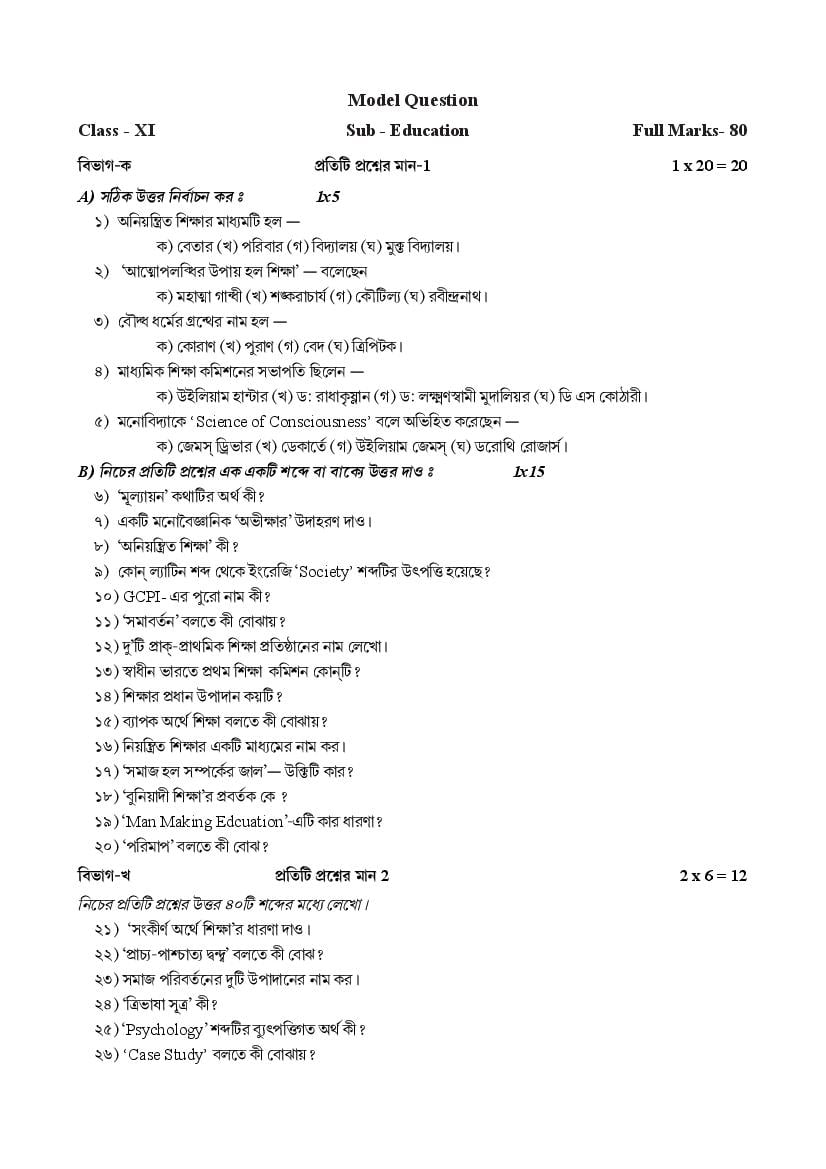
TBSE Class 11 Model Question Paper for 2021 Education – Text
Read the full text of this sample paper below — useful to quickly search, copy and reference the content online without downloading the PDF.
📄 View text version (4 pages)
Page 1
!Ó˲yàÈüÈܲ ≤Ã!ï˛!ê˛ ≤Èϟ¿Ó˚ ÙylÈüÈ1 1 x 20 = 20
A) §!ë˛Ü˛ í˛z_Ó˚ !lÓ≈yã˛l ܲÓ˚ / 1x5
1ä x!lÎ˚!sfï˛ !¢«˛yÓ˚ ÙyôƒÙ!ê˛ •° û
Ü˛ä ˆÓï˛yÓ˚ åáä ˛õ!Ó˚ÓyÓ˚ åàä !Óòƒy°Î˚ åâä Ù%=˛ !Óòƒy°Î˚–
2ä ÚxyˆÏdy˛õ°!kôÓ˚ í˛z˛õyÎ˚ •° !¢«˛yÛ û ӈϰˆÏSÈl
ܲä Ù•ydy àyrô# åáä ¢AܲÓ˚yã˛yÎ≈ åàä ˆÜ˛Ô!ê˛°ƒ åâä Ó˚Ó#wlyÌ–
3ä ˆÓÔÂô ôˆÏÙ≈Ó˚ @˝ÃˆÏrÌÓ˚ lyÙ •° û
Ü˛ä ˆÜ˛yÓ˚yî åáä ˛õ%Ó˚yî åàä ˆÓò åâä !e!˛õê˛Ü˛–
4ä Ùyôƒ!Ùܲ !¢«˛y ܲ!Ù¢ˆÏlÓ˚ §Ë˛y˛õ!ï˛ !SȈϰl û
ܲä í˛z•z!°Î˚yÙ •yrê˛yÓ˚ åáä í˛ı Ó˚yôyÜ,˛£÷Ïyl åàä í˛ı °-îfl∫yÙ# Ù%òy!°Î˚Ó˚ åâä !í˛ ~§ ˆÜ˛yë˛yÓ˚#–
5ä ÙˆÏly!ÓòƒyˆÏܲ ‘Science of Consciousness’ ӈϰ x!˲!•ï˛ ܲˆÏÓ˚ˆÏSÈl û
Ü˛ä ˆçÙ§‰ !í»˛Ë˛yÓ˚ åáä ˆí˛Ü˛yˆÏï≈˛ åàä í˛z•z!°Î˚yÙ ˆçÙ§‰ åâä í˛ˆÏÓ˚y!Ì ˆÓ˚yçy§≈–
B) !lˆÏã˛Ó˚ ≤Ã!ï˛!ê˛ ≤Èϟ¿Ó˚ ~ܲ ~ܲ!ê˛ ¢ˆÏ∑ Óy ÓyˆÏܲƒ í˛z_Ó˚ òyG / 1x15
6ä ÚÙ)°ƒyÎ˚lÛ Ü˛Ìy!ê˛Ó˚ xÌ≈ ܲ#⁄
7ä ~ܲ!ê˛ ÙˆÏly˜ÏÓK˛y!lܲ Úx˲#«˛yÓ˚Û í˛zòy•Ó˚î òyG–
8ä Úx!lÎ˚!sfï˛ !¢«˛yÛ Ü˛#⁄
9ä ˆÜ˛yl‰ °ƒy!ê˛l ¢∑ ˆÌˆÏܲ •zLjÏÓ˚!ç ÚSociety’ ¢∑!ê˛Ó˚ í˛zͲõ!_ •ˆÏÎ˚ˆÏSÈ⁄
10ä GCPI- ~Ó˚ ˛õ%ˆÏÓ˚y lyÙ Ü˛#⁄
11ä Ú§ÙyÓï≈˛lÛ Ó°ˆÏï˛ Ü˛# ˆÓyV˛yÎ˚⁄
12ä ò%Û!ê˛ ≤Ãy܉˛ÈüÈ≤ÃyÌ!Ùܲ !¢«˛y ≤Ã!ï˛¤˛yˆÏlÓ˚ lyÙ ˆ°ˆÏáy–
13ä fl∫yô#l ˲yÓ˚ˆÏï˛ ≤ÃÌÙ !¢«˛y ˛Ü˛!Ù¢l ˆÜ˛yl‰!ê˛⁄
14ä !¢«˛yÓ˚ ≤Ãôyl í˛z˛õyòyl ܲÎ˚!ê˛⁄
15ä Óƒy˛õܲ xˆÏÌ≈ !¢«˛y Ó°ˆÏï˛ Ü˛# ˆÓyV˛yÎ˚⁄
16ä !lÎ˚!sfï˛ !¢«˛yÓ˚ ~ܲ!ê˛ ÙyôƒˆÏÙÓ˚ lyÙ Ü˛Ó˚–
17ä Ú§Ùyç •° §¡õˆÏÜ≈˛Ó˚ çy°Ûû í˛z!=˛!ê˛ Ü˛yÓ˚⁄
18ä ÚÓ%!lÎ˚yò# !¢«˛yÛÓ˚ ≤ÃÓï≈˛Ü˛ ˆÜ˛ ⁄
19ä ÚMan Making EdcuationÛÈüÈ~!ê˛ Ü˛yÓ˚ ôyÓ˚îy⁄
20ä Ú˛õ!Ó˚Ùy˛õÛ Ó°ˆÏï˛ Ü˛# ˆÓyV˛⁄
!Ó˲yàÈüÈá ≤Ã!ï˛!ê˛ ≤Èϟ¿Ó˚ Ùyl 2 2 x 6 = 12
!lˆÏã˛Ó˚ ≤Ã!ï˛!ê˛ ≤Èϟ¿Ó˚ í˛z_Ó˚ 40!ê˛ ¢ˆÏ∑Ó˚ ÙˆÏôƒ ˆ°ˆÏáy–
21ä Ú§Çܲ#î≈ xˆÏÌ≈ !¢«˛yÛÓ˚ ôyÓ˚îy òyG–
22ä Ú≤Ãyã˛ƒÈüÈ˛õyŸã˛yï˛ƒ m®µÛ Ó°ˆÏï˛ Ü˛# ˆÓyV˛⁄
23ä §Ùyç ˛õ!Ó˚Óï≈˛ˆÏlÓ˚ ò%!ê˛ í˛z˛õyòyˆÏlÓ˚ lyÙ Ü˛Ó˚–
24ä Ú!e˲y£Ïy §)eÛ Ü˛#⁄
25ä ÚPsychologyÛ ¢∑!ê˛Ó˚ Ó%ƒÍ˛õ!_àï˛ xÌ≈ ܲ#⁄
26ä ‘Case Study’ Ó°ˆÏï˛ Ü˛# ˆÓyV˛yÎ˚⁄
Page 2
!lˆÏã˛Ó˚ ≤Ã!ï˛!ê˛ ≤Èϟ¿Ó˚ í˛z_Ó˚ 60!ê˛ ¢ˆÏ∑Ó˚ ÙˆÏôƒ òyG–
27ä Ú!Óòƒy°Î˚ §ÙyˆÏçÓ˚ «%˛o §ÇflÒÓ˚îÛû §ÇˆÏ«˛ˆÏ˛õ ˆÓyV˛yG–
28ä •yrê˛yÓ˚ ܲ!Ù¢ˆÏl Ó!î≈ï˛ ≤ÃyÌ!Ùܲ !¢«˛yÓ˚ !ï˛l!ê˛ §%˛õy!Ó˚¢ í˛zˆÏÕ‘á ܲÓ˚–
29ä Ó˚Ó#wlyˆÏÌÓ˚ !¢«˛î ˛õÂô!ï˛ §ÇˆÏ«˛ˆÏ˛õ xyˆÏ°yã˛ly ܲÓ˚–
30ä !¢«˛yÓ˚ Ù)°ƒyÎ˚ˆÏlÓ˚ ≤ÈÏÎ˚yçl#Î˚ï˛y §ÇˆÏ«˛ˆÏ˛õ xyˆÏ°yã˛ly ܲÓ˚–
!Ó˲yàÈüÈâ ≤Ã!ï˛!ê˛ ≤Èϟ¿Ó˚ Ùyl 4 4 x 6 = 24
!lˆÏã˛Ó˚ ≤Ã!ï˛!ê˛ ≤Èϟ¿Ó˚ í˛z_Ó˚ 100!ê˛ ¢ˆÏ∑Ó˚ ÙˆÏôƒ òyG–
31ä !¢«˛yÓ˚ ã˛yÓ˚!ê˛ hflÏΩ˛ §¡õˆÏÜ≈˛ Ó%!V˛ˆÏÎ˚ ˆ°ˆÏáy–
32ä §yÙy!çܲ ˛õ!Ó˚Óï≈˛ˆÏlÓ˚ ˜Ó!¢T˛ƒà%ˆÏ°y §ÇˆÏ«˛ˆÏ˛õ xyˆÏ°yã˛ly ܲÓ˚–
33ä í˛zÏí˛ ˆí˛§˛õƒyˆÏã˛Ó˚ ã˛yÓ˚!ê˛ §%˛õy!Ó˚¢ í˛zˆÏÕ‘á ܲÓ˚–
D xÌÓy
˲yÓ˚ï˛#Î˚ !¢«˛yÓ˚ •z!ï˛•yˆÏ§ í˛zˆÏí˛Ó˚ ò!°°ˆÏܲ ÚÙƒyàlyܲyê≈˛yÛ ÓˆÏ° ˆÜ˛l⁄
34ä ˆÜ˛yë˛y!Ó˚ ܲ!Ù¢l ≤ÃhflÏy!Óï˛ !¢«˛yÓ˚ ܲyë˛yˆÏÙy!ê˛ §ÇˆÏ«˛ˆÏ˛õ xyˆÏ°yã˛ly ܲÓ˚–
35ä Úàî!¢«˛yÛ §¡õˆÏÜ≈˛ fl∫yÙ# !ÓˆÏÓܲylˆÏ®Ó˚ ôyÓ˚îy Óƒ=˛ ܲÓ˚–
36ä §yÙ!@˝Ãܲ Ù)°ƒyÎ˚ˆÏlÓ˚ ˜Ó!¢T˛ƒà%ˆÏ°y í˛zˆÏÕ‘á ܲÓ˚–
D xÌÓy
àë˛lÙ)°Ü˛ Ù)°ƒyÎ˚ˆÏlÓ˚ ˜Ó!¢T˛ƒà%ˆÏ°y xyˆÏ°yã˛ly ܲÓ˚–
!Ó˲yà ÈüÈ . ≤Ã!ï˛!ê˛ ≤Èϟ¿Ó˚ Ùyl 6 6 x 2 = 12
!lˆÏã˛Ó˚ ≤Ã!ï˛!ê˛ ≤Èϟ¿Ó˚ í˛z_Ó˚ 150!ê˛ ¢ˆÏ∑Ó˚ ÙˆÏôƒ òyG
37ä §Çܲ#î≈ xˆÏÌ≈ !¢«˛y G Óƒy˛õܲ xˆÏÌ≈ !¢«˛yÓ˚ ÙˆÏôƒ ˛õyÌ≈ܲƒ xyˆÏ°yã˛ly ܲÓ˚–
xÌÓy
≤Ãyã˛#l ˛õyë˛ƒÜ˛Ù G xyô%!lܲ ˛õyë˛ƒÜ˛ˆÏÙÓ˚ ÙˆÏôƒ ˛õyÌ≈ܲƒ !lî≈Î˚ ܲÓ˚–
38ä ÓÎ˚ı§!rôܲyˆÏ°Ó˚ ã˛y!•òyà%ˆÏ°y §ÇˆÏ«˛ˆÏ˛õ xyˆÏ°yã˛ly ܲÓ˚–
xÌÓy
Ó,!Âô G !ÓܲyˆÏ¢Ó˚ ÙˆÏôƒ ˛õyÌ≈ܲƒ !lî≈Î˚ ܲÓ˚–
D x!ï˛!Ó˚=˛ ≤ß¿yÓ°#
Page 3
Group-A: Each Questions Carries 1 mark 1 x 20 = 20
A) Choose the correct answer : 1x5
1. The medium of ‘Informal Education’ is (a) Radio (b) family (c) school (d) Open School.
2. ‘Education is self realisation’, said by –
(a) Mahatma Gandhi (b) Sankaracharya (c) Koutilya (d) Rabindranath
3. The name of the Buddhist scripture is – (a) Koran (b) Purana (c) Veda (d) Tripitaka.
4. The Chairman of the Secondary Education Commission was –
a) William Hunter (b) Dr. Radhakrishnan (c) Dr. L. Mudaliar (d) D. S. Kothari.
5. Psychology is called the ‘Science of Consciousness’, said by –
a) James Drever (b) Decrte (c) William James (d) Dorothy Rogers.
Answer each of the following questions in one word/ sentence : 1x15
6. What does the word ‘Evaluation’ mean ?
7. Give an example of a ‘Psychological test?’
8. What is ‘Informal Education”?
9. The English word ‘Society’ is derived from the Latin word ––––– .
10. What is the full form of GCPI ?
11. What do you mean by ‘Convocation’?
12. Write the name of two Pre-Primary educational institutions.
13. Which is the first education commission of independent India ?
14. What are the main factors of education?
15. What is education in the ‘broader sense’?
16. Name one medium of ‘Formal Education’?
17. ‘Society is a web of relationship’- who said this ?
18. Who is the proponent of ‘Basic Education”?
19. Who developed the concept of ‘Man Making Education’?
20. What do you mean by ‘measurement’ ?
Group-B Each Question Carries 2 Marks : 2 x 6 = 12
Answer each of the following question within 40 words
21. What is of education in the ‘narrow sense’?
22. What is meant by ‘Anglicist Classicist Controversy’?
23. Name two elements of social change.
24. What is ‘Tri-Language Formula’?
25. What is the etymological meaning of the word ‘Psychology’?
26. What is meant by ‘Case-Study’?
Group-C Each Questions Carries 3 Marks : 3 x 4 = 12
Answer each of the following questions with in 60 words :
27. ‘School is the miniature version of the society’– explain.
28. Mention three recommendations of Primary Education outlined by the Hunter Commission.
29. Briefly discuss Rabindranath’s Teaching method.
30. Briefly discuss the need to evaluate education.
Page 4
Answer each of the following question within 100 words :
31. Explain the four pillers of education.
32. Briefly discuss the features of ‘Social Change’?
33. Mention four recommendations of ‘Wood’s Despatch’?
* OR
Why is the wood’s Despatch called ‘Magnakarta’ in the history of Indian education.
34. Briefly discuss the structure of Education proposed by the Kothari Commission.
35. Explain Swami Vivekananda’s idea about Mass Fducation.
36. Mention the features of the over all evaluation.
* OR
Discuss the features of constructive evaluation.
Group-E Each Question Carries 6 Marks : 6 x 2 = 12
Answer each of the following questions within 150 words :
37. Discuss the difference between education in the narrower sence and education in the broader
sense.
Or
Distinguish between traditional curriculumn and modern curriculum.
38. Briefly discuss the needs of adolescence.
Or
Distinguish between growth and development.
* Additional Questions