TBSE Class 11 Model Question Paper for 2021 Philosophy
Finished viewing? Save it for later —
Download TBSE Class 11 Model Question Paper for 2021 Philosophy (PDF · 4 pages)About TBSE Class 11 Model Question Paper for 2021 Philosophy
TBSE Class 11 Model Question Paper for 2021 Philosophy is available here for free download. Published by Tripura Board for Class 11, this sample paper can be viewed online or downloaded as a PDF (4 pages). Candidates preparing for Class 11 can use TBSE Class 11 Model Question Paper for 2021 Philosophy to understand the exam pattern, the type of questions asked, and the overall difficulty level.
Frequently Asked Questions
How can I download TBSE Class 11 Model Question Paper for 2021 Philosophy?
Open this page and click the Download button to save TBSE Class 11 Model Question Paper for 2021 Philosophy as a PDF. It is completely free on AglaSem Docs.
Is TBSE Class 11 Model Question Paper for 2021 Philosophy free to download?
Yes. TBSE Class 11 Model Question Paper for 2021 Philosophy can be viewed online and downloaded as a PDF free of cost on AglaSem Docs.
How many pages does TBSE Class 11 Model Question Paper for 2021 Philosophy have?
TBSE Class 11 Model Question Paper for 2021 Philosophy contains 4 pages, which you can read online or download together as a single PDF.
Where can I find more Class 11 study material?
You can find more Class 11 question papers, sample papers, syllabus, and answer keys on AglaSem Docs.
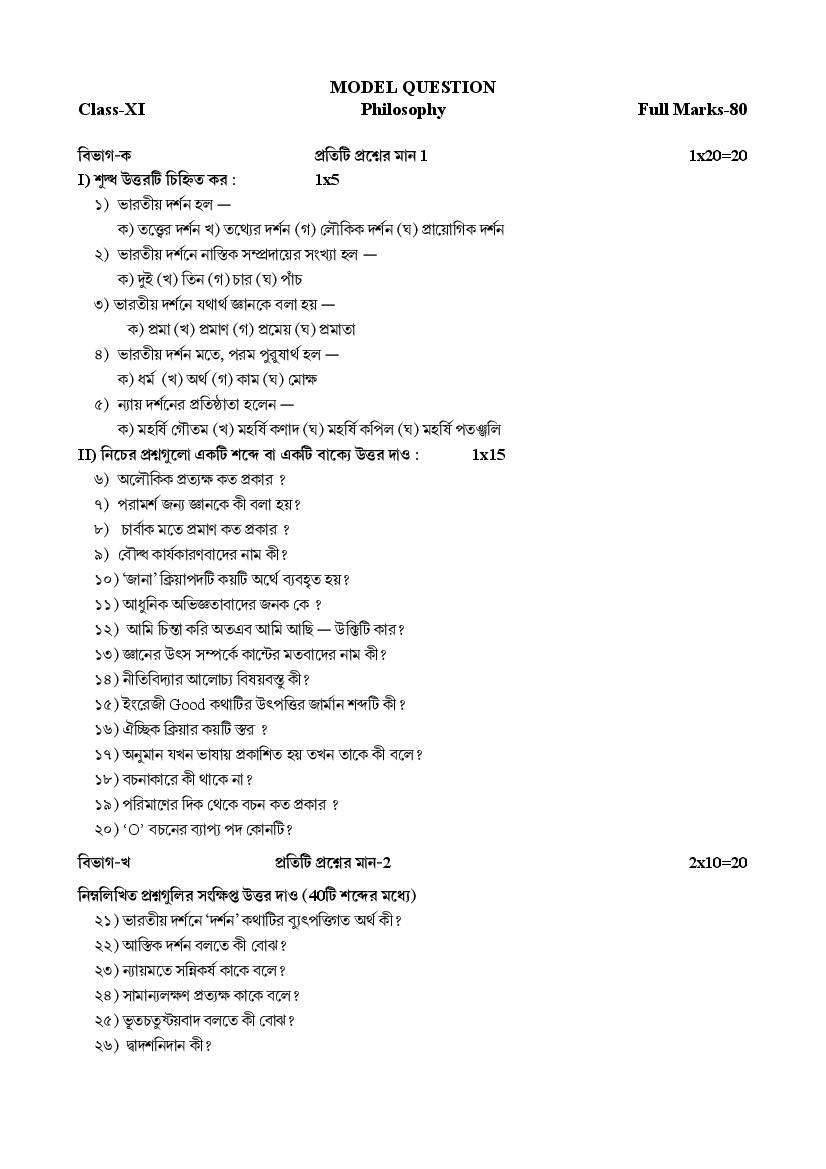
TBSE Class 11 Model Question Paper for 2021 Philosophy – Text
Read the full text of this sample paper below — useful to quickly search, copy and reference the content online without downloading the PDF.
📄 View text version (4 pages)
Page 1
!Ó˲yàÈüÈܲ ≤Ã!ï˛!ê˛ ≤Èϟ¿Ó˚ Ùyl 1 1x20=20
I) ¢%Âô í˛z_Ó˚!ê˛ !ã˛!•´ï˛ ܲÓ˚ : 1x5
1ä ˲yÓ˚ï˛#Î˚ ò¢≈l •° û
ܲä ï˛ˆÏ_¥Ó˚ ò¢≈l áä ï˛ˆÏ̃Ó˚ ò¢≈l åàä ˆ°Ô!ܲܲ ò¢≈l åâä ≤ÃyˆÏÎ˚y!àܲ ò¢≈l
2ä ˲yÓ˚ï˛#Î˚ ò¢≈ˆÏl ly!hflÏܲ §¡±òyˆÏÎ˚Ó˚ §Çáƒy •° û
ܲä ò%•z åáä !ï˛l åàä ã˛yÓ˚ åâä ˛õÑyã˛
3ä ˲yÓ˚ï˛#Î˚ ò¢≈ˆÏl ÎÌyÌ≈ K˛ylˆÏܲ Ó°y •Î˚ û
ܲä ≤ÃÙy åáä ≤ÃÙyî åàä ≤ÈÏÙÎ˚ åâä ≤ÃÙyï˛y
4ä ˲yÓ˚ï˛#Î˚ ò¢≈l ÙˆÏï˛ñ ˛õÓ˚Ù ˛õ%Ó˚%£ÏyÌ≈ •° û
ܲä ôÙ≈ åáä xÌ≈ åàä ܲyÙ åâä ˆÙy«˛
5ä lƒyÎ˚ ò¢≈ˆÏlÓ˚ ≤Ã!ï˛¤˛yï˛y •ˆÏ°l û
ܲä Ù•!£Ï≈ ˆàÔï˛Ù åáä Ù•!£Ï≈ ܲîyò åâä Ù•!£Ï≈ ܲ!˛õ° åâä Ù•!£Ï≈ ˛õï˛O!°
II) !lˆÏã˛Ó˚ ≤ß¿à%ˆÏ°y ~ܲ!ê˛ ¢ˆÏ∑ Óy ~ܲ!ê˛ ÓyˆÏܲƒ í˛z_Ó˚ òyG : 1x15
6ä xˆÏ°Ô!ܲܲ ≤Ãï˛ƒ«˛ Ü˛ï˛ ≤ÃܲyÓ˚ ⁄
7ä ˛õÓ˚yÙ¢≈ çlƒ K˛ylˆÏܲ ܲ# Ó°y •Î˚⁄
8ä ã˛yÓ≈yܲ ÙˆÏï˛ ≤ÃÙyî Ü˛ï˛ ≤ÃܲyÓ˚ ⁄
9ä ˆÓÔÂô ܲyÎ≈ܲyÓ˚îÓyˆÏòÓ˚ lyÙ Ü˛#⁄
10ä ÚçylyÛ !ܲÎ˚y˛õò!ê˛ Ü˛Î˚!ê˛ xˆÏÌ≈ ÓƒÓ•,ï˛ •Î˚⁄
11ä xyô%!lܲ x!˲K˛ï˛yÓyˆÏòÓ˚ çlܲ ˆÜ˛ ⁄
12ä xy!Ù !ã˛hs˝y ܲ!Ó˚ xï˛~Ó xy!Ù xy!SÈ û í˛z!=˛!ê˛ Ü˛yÓ˚⁄
13ä K˛yˆÏlÓ˚ í˛zͧ §¡õˆÏÜ≈˛ ܲyˆÏrê˛Ó˚ Ùï˛ÓyˆÏòÓ˚ lyÙ Ü˛#⁄
14ä l#!ï˛!ÓòƒyÓ˚ xyˆÏ°yã˛ƒ !Ó£ÏÎ˚Ó› ܲ#⁄
15ä •zLjÏÓ˚ç# Good ܲÌy!ê˛Ó˚ í˛zͲõ!_Ó˚ çyÙ≈yl ¢∑!ê˛ Ü˛#⁄
16ä ˙!FSÈܲ !ܲÎ˚yÓ˚ ܲÎ˚!ê˛ hflÏÓ˚ ⁄
17ä xl%Ùyl Îál ˲y£ÏyÎ˚ ≤Ãܲy!¢ï˛ •Î˚ ï˛ál ï˛yˆÏܲ ܲ# ӈϰ⁄
18ä Óã˛lyܲyˆÏÓ˚ ܲ# ÌyˆÏܲ ly⁄
19ä ˛õ!Ó˚ÙyˆÏîÓ˚ !òܲ ˆÌˆÏܲ Óã˛l Ü˛ï˛ ≤ÃܲyÓ˚ ⁄
20ä ‘O’ Óã˛ˆÏlÓ˚ Óƒy˛õƒ ˛õò ˆÜ˛yl!ê˛⁄
!Ó˲yàÈüÈá ≤Ã!ï˛!ê˛ ≤Èϟ¿Ó˚ ÙylÈüÈ2 2x10=20
!l¡¨!°!áï˛ ≤ß¿à%!°Ó˚ §Ç!«˛Æ í˛z_Ó˚ òyG å40!ê˛ ¢ˆÏ∑Ó˚ ÙˆÏôƒä
21ä ˲yÓ˚ï˛#Î˚ ò¢≈ˆÏl Úò¢≈lÛ Ü˛Ìy!ê˛Ó˚ Ó%ƒÍ˛õ!_àï˛ xÌ≈ ܲ#⁄
22ä xy!hflÏܲ ò¢≈l Ó°ˆÏï˛ Ü˛# ˆÓyV˛⁄
23ä lƒyÎ˚ÙˆÏï˛ §!ߨܲ£Ï≈ ܲyˆÏܲ ӈϰ⁄
24ä §yÙylƒ°«˛î ≤Ãï˛ƒ«˛ ܲyˆÏܲ ӈϰ⁄
25ä Ë)˛ï˛ã˛ï%˛T˛Î˚Óyò Ó°ˆÏï˛ Ü˛# ˆÓyV˛⁄
26ä myò¢!lòyl ܲ#⁄
Page 2
28ä ˜l!ï˛Ü˛ G x˜Ïl!ï˛Ü˛ !ܲÎ˚yÓ˚ ÙˆÏôƒ ò%!ê˛ ˛õyÌ≈ܲƒ !°á–
29ä !l¡¨!°!áï˛ !ܲÎ˚yà%!° l#!ï˛§¡øï˛ ly l#!ï˛ Ó!•Ë)≈˛ï˛ ï˛y !lî≈Î˚ ܲÓ˚– 1+1
Ü˛ä ˛õyàˆÏ°Ó˚ xyã˛Ó˚î–
áä Óƒ!=˛Ó˚ ≤Ã!ï˛Óï≈˛ !ܲÎ˚y–
30ä !l¡¨!°!áï˛ Óyܲƒà%!°ˆÏܲ ï˛Ü≈˛!ÓK˛yl§¡øï˛ Óã˛ˆÏl Ó˚)˛õyhs˝Ó˚ ܲÓ˚– 1+1
ܲä í˛zê˛˛õy!á ܲálG í˛zí˛¸ˆÏï˛ ˛õyˆÏÓ˚ ly–
áä ˆÜ˛Ó°Ùye ≤ÃyÆÓÎ˚flÒˆÏòÓ˚•z ˆË˛yê˛òyˆÏlÓ˚ x!ôܲyÓ˚ xyˆÏSÈ–
!Ó˲yàÈüÈà ≤Ã!ï˛!ê˛ ≤Èϟ¿Ó˚ Ùyl 4 4x4=16
≤Ã!ï˛!ê˛ ≤Èϟ¿Ó˚ í˛z_Ó˚ 100 ¢ˆÏ∑Ó˚ ÙˆÏôƒ òyG /
31ä Óƒy!Æ Ü˛yˆÏܲ ӈϰ⁄ Óƒy!Æ Ü˛ï˛ ≤ÃܲyÓ˚ G !ܲ !ܲ ⁄ í˛zòy•Ó˚ Óƒyáƒy ܲÓ˚– 1+1+2
32ä ˆÓÔÂô ≤Ãï˛#ï˛ƒ§Ù%ͲõyòÓyò Óƒyáƒy ܲÓ˚–
D xÌÓy
ˆÓÔÂô ò¢≈ˆÏl xT˛y!Aàܲ Ùyà≈ §ÇˆÏ«˛ˆÏ˛õ xyˆÏ°yã˛ly ܲÓ˚–
33ä ÚÓyã˛!lܲ K˛ylÛ Ü˛yˆÏܲ ӈϰ⁄ Óyã˛!lܲ K˛yˆÏlÓ˚ xyÓ!¢ƒÜ˛ ¢ï≈˛à%!° ܲ# ܲ# ⁄ xyˆÏ°yã˛ly ܲÓ˚–
34ä à%î G ˛õ!Ó˚ÙyˆÏîÓ˚ §ÇÎ%=˛ !˲!_ˆÏï˛ Óã˛l Ü˛ï˛ ≤ÃܲyÓ˚ G !ܲ !ܲ ⁄ í˛zòy•Ó˚ Óƒyáƒy ܲÓ˚– 2+2
D xÌÓy
˛õˆÏòÓ˚ Óƒy˛õƒï˛y Ó°ˆÏï˛ Ü˛# ˆÓyV˛⁄ A, E,I G O Óã˛ˆÏl ˆÜ˛yl‰ ˆÜ˛yl‰ ˛õò Óƒy˛õƒ G xÓƒy˛õƒñ ï˛y í˛zòy•Ó˚ Óƒyáƒy ܲÓ˚–1+3
!Ó˲yàÈüÈâ ≤Ã!ï˛!ê˛ ≤Èϟ¿Ó˚ Ùyl 6 6x4=24
≤Ã!ï˛!ê˛ ≤Èϟ¿Ó˚ í˛z_Ó˚ 150 ¢ˆÏ∑Ó˚ ÙˆÏôƒ òyG /
35ä ˛õ%Ó˚%£ÏyÌ≈ Ó°ˆÏï˛ Ü˛# ˆÓyV˛yÎ˚⁄ ˲yÓ˚ï˛#Î˚ ò¢≈ˆÏl ˆÏÙy«˛ˆÏܲ ˛õÓ˚Ù˛õ%Ó˚%£ÏyÌ≈ Ó°y •Î˚ ˆÜ˛l⁄ xyˆÏ°yã˛ly ܲÓ˚– 1+5
36ä lƒyÎ˚ÙˆÏï˛ ≤Ãï˛ƒˆÏ«˛Ó˚ §ÇK˛y òyG– !l!Ó≈ܲ“ܲ G §!Óܲ“ܲ ≤Ãï˛ƒˆÏ«˛Ó˚ ÙˆÏôƒ ˛õyÌ≈ܲƒ í˛zˆÏÕ‘á ܲÓ˚– 2+4
xÌÓy
ˆ°Ô!ܲܲ §!ߨܲˆÏ£Ï≈Ó˚ ≤ÃܲyÓ˚ˆÏ˲ò ò,T˛yhs˝§• xyˆÏ°yã˛ly ܲÓ˚–
37ä ÚÚ≤Ãï˛ƒ«˛•z ~ܲÙye ≤ÃÙyîÛÛ û ~•z ã˛yÓ≈yܲ Ùï˛!ê˛ §!Óã˛yÓ˚ Óƒyáƒy ܲÓ˚–
38ä K˛yˆÏlyͲõ!_ §¡õˆÏÜ≈˛ x!˲K˛ï˛yÓyˆÏòÓ˚ Ù)° Ó=˛Óƒ §ÈüÈ!Óã˛yÓ˚ xyˆÏ°yã˛ly ܲÓ˚–
xÌÓy
K˛yˆÏlyͲõ!_ §¡õˆÏÜ≈˛ ܲyˆÏrê˛Ó˚ !Óã˛yÓ˚ÓyˆÏòÓ˚ Ù)°Ó=˛Óƒ Óƒyáƒy G !Óã˛yÓ˚ ܲÓ˚– 4+2
D x!ï˛!Ó˚=˛ ≤ß¿
Page 3
Group-A Each Question carries 1 mark : 1x20
A) Choose the correct answer : 1x5
1. Indian Philosophy is –
a) Philosophy of ultimate reality. (b) Informative philosophy (c) Laukik (ordinary)
philosophy (d) Applied philosophy.
2. In Indian Philosophy, Number of Nastika schools are -
a) Two (b) Three (c) Four (d) Five
3. In Indian Philosophy, valid cognition is called -
a) Prama (b) Pramana (c) Prameya (d) Pramata
4. According to Indian Philosophy, the highest state of Purusartha is -
a) Dharma (b) Artha (c) Kama (d) Koksa
5. The Founder of Nyaya Philosophy is -
a) Maharshi Gautama (b) Maharshi Kanada (c) Maharshi Kapila (d) Maharshi Patanjali
B) Answer the Questions in one word or one sentence : 1x15
6. What kinds of Extra ordinary perception ?
7. Which is called ‘Paramarsha Janya Gyanan ?
8. According to ‘Charvaka’ many kinds of ‘Pramana’ ?
9. What is the name of ‘the Causal Theory of Buddism ?
10. How many meanings does the verb of ‘Know’ have ?
11. Name the father of ‘Modern Empiricism’.
12. ‘I think therefore, I exist’ - Who said this ?
13. What is the name of kant’s theory of knowledge ?
14. What is the subject matter (Province or scope) of ‘Ethics’?
15. The English word ‘Good’ derived from which German word ?
16. How many stages of voluntary actions ?
17. What is called, When an inference is expressed through language ?
18. What are the absentees of proposition from composed ?
19. How many kinds of proposition accroding to ‘quantity’?
20. Which term is undistributed in ‘O’ proposition.
Group-B Each Question Carries 1 Mark : 2x8=16
Answer the following questions in 40 words :
21. What is the etymological meaning of the term ‘Darshana’ ?
22. What do you mean by orthodox ( A− stika ) Philosophy ?
23. What is Sannikarsa according to Ny a− ya ?
24. What is Universal preception (Samanyalaksana pratyaksa) ?
Page 4
26. What is twelve links of causation (Dvadasridan) ?
27. What are the main tenets of Rationalism ?
28. Indicate two points of difference between Moral action and Non-moral action.
29. Determine whether the following actions are moral or non-moral.
a) Conduct of Insane person.
b) Reflex action of man.
30. Translate the following sentences into logical proposition.
a) Ostrich can never fly. (b) Only adults have right to vote.
Group-C Each Questions Carries 4 Marks 4x4=16
Answer each questions within 100 words :
31. What is invariable concomitance (vyapti) ? How many kinds of vyapti are there ? Name
them and explain them with example . 1+1+2
32. Explain the Buddha doctrine of dependent origination (Pratityasamutpada).
* OR
Discuss in short the noble eight-fold path of Bauddha Philosophy (Astangikmarga).
33. What is propositional knowledge ? What are the necessary conditions of propositional
knowledge ? Discuss. 1+3
34. How many kinds of propositions according to the joint principle of quality and quantity?
Name them and explain them with example. 2+2
* OR
What is meant by distribution of terms in a proposition ? Indicate with example the terms
distributed and undistributed in A, E, I and O proposition. 1+3
Group-D Each Question Carries 6 Marks : 6x4=24
Answer the questions within 150 words :
35. What is meant by purusartha (values of human life)? Why liberation (Moksa) is called the
highest state of purusartha ? Discuss. 1+5
36. Give the definitation of perception (pratyaksa) according to Nyaya. Distinguish between
Indeterminate (Ninikalpaka) and Determinate (Savikalpaka) perception.
OR
Discuss with Example the different types of ordinary (Laukika) sannikarsa.
37. ‘Reception is the only means of valid cognition (Pramana)’ - Explain this Carvaka’s view
with examination.
38. Discuss the main tenets of Empiricism about the origin of knowledge & Examine it.
OR
Explain and Examine the main tenets of Kant’s critism about the origin of knowledge.
* Additional Question