TBSE Class 11 Model Question Paper for 2021 Phycology
Finished viewing? Save it for later —
Download TBSE Class 11 Model Question Paper for 2021 Phycology (PDF · 4 pages)About TBSE Class 11 Model Question Paper for 2021 Phycology
TBSE Class 11 Model Question Paper for 2021 Phycology is available here for free download. Published by Tripura Board for Class 11, this sample paper can be viewed online or downloaded as a PDF (4 pages). Candidates preparing for Class 11 can use TBSE Class 11 Model Question Paper for 2021 Phycology to understand the exam pattern, the type of questions asked, and the overall difficulty level.
Frequently Asked Questions
How can I download TBSE Class 11 Model Question Paper for 2021 Phycology?
Open this page and click the Download button to save TBSE Class 11 Model Question Paper for 2021 Phycology as a PDF. It is completely free on AglaSem Docs.
Is TBSE Class 11 Model Question Paper for 2021 Phycology free to download?
Yes. TBSE Class 11 Model Question Paper for 2021 Phycology can be viewed online and downloaded as a PDF free of cost on AglaSem Docs.
How many pages does TBSE Class 11 Model Question Paper for 2021 Phycology have?
TBSE Class 11 Model Question Paper for 2021 Phycology contains 4 pages, which you can read online or download together as a single PDF.
Where can I find more Class 11 study material?
You can find more Class 11 question papers, sample papers, syllabus, and answer keys on AglaSem Docs.
TBSE Class 11 Model Question Paper for 2021 Phycology – Text
Read the full text of this sample paper below — useful to quickly search, copy and reference the content online without downloading the PDF.
📄 View text version (4 pages)
Page 1
!Ó˲yàÈüÈܲ ≤Ã!ï˛!ê˛ ≤Èϟ¿Ó˚ ÙylÈüÈ1 1 x 20 = 20
I) §!ë˛Ü˛ í˛z_Ó˚!ê˛ !°á ı 1x5
1ä B = F (P,E) ~•z !Óáƒyï˛ §Ù#ܲÓ˚î!ê˛ ˆÜ˛ !òˆÏÎ˚ˆÏSÈl⁄ û (Decartes / Kurt Lewin / Freud)
2ä xyÙyˆÏòÓ˚ fl¨yÎ˚%ï˛ˆÏsf ≤ÃyÎ˚ ûûûû !lí˛zˆÏÓ˚yl xyˆÏSÈ– å11 !Ó!°Î˚l‡12 !Ó!°Î˚l‡20 !Ó!°Î˚lä
3ä Ù%°!çlàï˛ í˛z˛õܲÓ˚îà%ˆÏ°yˆÏܲ xÌÓy Óƒ!=˛Ó˚ ÓÇ¢yl%ܲ!Ùܲ ˙!ï˛•ƒˆÏܲ ûûûû Ó°y •Î˚–
åˆçˆÏlyê˛y•z˛õ‡ˆÊ˛ˆÏlyê˛y•z˛õ‡xy!ܲê˛y•z˛õä
4ä ÙˆÏlyˆÏÎyˆÏàÓ˚ ˛õ!Ó˚flÀyÓl xl%ܲÓ˚î ï˛ˆÏ_¥Ó˚ ≤ÃÓï≈˛Ü˛ •ˆÏ°l û (Broadbent / Heinz/Triesman)
5ä ≤Ãyã˛#l xl%Óï≈˛l ≤Ã̈ÏÙ Ivan. P. Pavlov myÓ˚y xˆÏß∫!£Ïï˛ •ˆÏÎ˚!SÈ°⁄ å§ï˛ƒ ‡!Ù̃yä
II) l#ˆÏã˛Ó˚ ≤ß¿à%!° ~ܲ ¢ˆÏ∑ ‡ ÓyˆÏܲƒ í˛z_Ó˚ òyG ı 1x15
6ä ‘Psychology’ ¢∑!ê˛ ˆÜ˛yl‰ ò%!ê˛ @˝Ã#ܲ ¢∑ ˆÌˆÏܲ ~ˆÏ§ˆÏSÈ !°á–
7ä 1922 §yˆÏ° ˆÜ˛ Indian Psychological Association fiÌy˛õl ܲˆÏÓ˚l⁄
8ä ≤Ãy§!Aàܲ ã˛° Ü˛ï˛ ≤ÃܲyÓ˚ G ܲ# ܲ# ⁄
9ä ≤ß¿ï˛y!°Ü˛yÎ˚ ܲ# ܲ# ôÓ˚ˆÏlÓ˚ ≤ß¿ ÓƒÓ•yÓ˚ ܲÓ˚y •Î˚⁄
10ä TSHÈüÈ ~Ó˚ §¡õ)î≈ lyÙ !°á–
11ä ˆòˆÏ•Ó˚ ÓÇ¢à!ï˛Ó˚ í˛z˛õyòyl!ê˛ !ܲ⁄
12ä Anorexsia Nervosa ܲ# ôÓ˚ˆÏlÓ˚ Óƒï˛ƒÎ˚⁄
13ä ˲yÓ˚ˆÏï˛Ó˚ ˆÜ˛yÌyÎ˚ ڈϧy§y•z!ê˛ Ê˛Ó˚ !̈ÏÎ˚ê˛yÓ˚ •zl ~í%˛ˆÏܲ¢l ˆ≤Ãy@˝ÃyÙ lyÙܲ ÙyòܲoÓƒ !ÓˆÏÓ˚yô# ~ܲ!ê˛ §Ê˛° ܲyÎ≈Ü˛Ù ã˛°ˆÏSÈ⁄
14ä ò¢≈làï˛ í˛z˛õˆÏÎyçl (Accomodation) ˆÜ˛yl‰ ˆÜ˛yˆÏ¢Ó˚ myÓ˚y !lÎ˚!sfï˛ •Î˚⁄
15ä Óƒ!=˛àï˛ xôƒy§ ܲ#⁄
16ä ܲƒyê˛yà!Ó˚ Üœ˛yfiê˛y!Ó˚Ç (Category Clustering) ܲ#⁄
17ä !¢ál x«˛Ùï˛yÓ˚ ˆÎˆÏܲyˆÏly ò%!ê˛ Ü˛yÓ˚î !°á–
18ä ˛õ%îÓ˚%ˆÏoܲ flø,!ï˛Ó˚ ˆÜ˛yl ôy˛õ⁄
19ä xÓò!Ùï˛ flø,!ï˛Ó˚ ܲÌy ˆÜ˛ í˛zˆÏÕ‘á ܲˆÏÓ˚ˆÏSÈl⁄
20ä !ÓfløÓ˚ˆÏî Ü˛ï˛ ≤ÃܲyˆÏÓ˚Ó˚ •hflψϫ˛˛õ Ó˚ˆÏÎ˚ˆÏSÈ⁄
!Ó˲yàÈüÈá ≤Ã!ï˛!ê˛ ≤Èϟ¿Ó˚ Ùyl 2 2 x 5 = 10
21ä §Ùyç ÙˆÏly!Óòƒy Ó°ˆÏï˛ Ü˛# ˆÓyV˛⁄
22ä xl%Ùyl åHypothesis) ܲ# ⁄
23ä âê˛lyÙu˛° (Chronosystem) Ó°ˆÏï˛ Ü˛# ˆÓyV˛⁄
24ä ÙˆÏlyˆÏÎyà ܲ#⁄
25ä ≤Ãyã˛#l xl%Óï≈˛l G §!ܲÎ˚ xl%Óï≈˛ˆÏlÓ˚ ÙˆÏôƒ ˛õyÌ≈ܲƒ !°á–
!Ó˲yàÈüÈà ≤Ã!ï˛!ê˛ ≤Èϟ¿Ó˚ Ùyl 3 3 x 4 = 12
26ä õÓ˚yÙ¢≈òyï˛y G !lòy!lܲ ÙˆÏly!ÓòˆÏòÓ˚ ÙˆÏôƒ !ï˛l!ê˛ ˛õyÌ≈ܲƒ í˛zˆÏÕ‘á ܲÓ˚–
27ä §y«˛yÍܲyÓ˚ ˛õÂô!ï˛Ó˚ à%îà%!° !ܲ !ܲ ⁄
˛õÓ˚#«˛îÙ)°Ü˛ G !lÎ˚!sfï˛ òˆÏ°Ó˚ ÙˆÏôƒ !ï˛l!ê˛ ˛õyÌ≈ܲƒ !°á–
28ä !lí˛zˆÏÓ˚yl ܲ#˲yˆÏÓ ï˛Ìƒ ˆ≤ÃÓ˚î ܲˆÏÓ˚ ï˛y §ÇˆÏ«˛ˆÏ˛õ ˆ°á–
Page 2
29ä ܲ#˲yˆÏÓ ï˛Ìƒ §ÇˆÏÓòlàï˛ «˛îfiÌyÎ˚# ~ÓÇ ò#â≈fiÌyÎ˚# flø,!ï˛ ˛õÂô!ï˛Ó˚ ÙyôƒˆÏÙ ≤Ã!ܲÎ˚y ܲÓ˚y •Î˚⁄
!ã˛•´«˛ˆÏÎ˚Ó˚ ܲyÓ˚ˆÏî !ÓfløÓ˚î ≤Ã!ܲÎ˚y §¡õˆÏÜ≈˛ Óƒyáƒy ܲÓ˚–
!Ó˲yàÈüÈâ ≤Ã!ï˛!ê˛ ≤Èϟ¿Ó˚ Ùyl 4 4 x 6 = 24
30ä à%Ó˚%Ù!hflψϋÒÓ˚ ã˛yÓ˚!ê˛ ˆày°yˆÏô≈Ó˚ ܲyç Óƒyáƒy ܲÓ˚–
31ä ~ܲ!ê˛ !Óܲy¢Ùyl !¢¢%Ó˚ ÙˆÏôƒ !ܲ !ܲ K˛ylÙ)°Ü˛ ˛õ!Ó˚Óï≈˛l •Î˚–
32ä ÙˆÏlyˆÏÎyˆÏàÓ˚ §ÇK˛y òyG ~ÓÇ ~Ó˚ ˜Ó!¢T˛ƒà%ˆÏ°y ˆ°á–
33ä ˆï˛yÙyˆÏòÓ˚ !lˆÏçˆÏòÓ˚ flø,!ï˛Ó˚ í˛zߨ!ï˛Ó˚ çlƒ ~ܲ!ê˛ ˛õ!Ó˚ܲ“ly §%˛õy!Ó˚¢ ܲÓ˚–
!Ó˲yà ÈüÈ . ≤Ã!ï˛!ê˛ ≤Èϟ¿Ó˚ Ùyl 6 6 x 2 = 12
34ä à˲#Ó˚ï˛y ≤Ãï˛ƒ«˛ˆÏîÓ˚ !mã˛«%˛Ù)°Ü˛ ܲyÓ˚îà%ˆÏ°yÓ˚ Ë)˛!Ùܲy xyˆÏ°yã˛ly ܲÓ˚–
xÌÓy
K˛yˆÏl!wˆÏÎ˚Ó˚ ܲyÎ≈Ù)°Ü˛ §#ÙyÓÂôï˛y Óƒyáƒy ܲÓ˚–
35ä !¢ál ܲyˆÏܲ ӈϰ⁄ !¢áˆÏlÓ˚ ˜Ó!¢T˛ƒà%ˆÏ°y ܲ# ܲ# ⁄
xÌÓy
K˛ylàï˛ !¢áˆÏlÓ˚ !Ó!˲ߨ Ó˚)˛õà%ˆÏ°y Óƒyáƒy ܲÓ˚–
D x!ï˛!Ó˚=˛ ≤ß¿yÓ°#
Page 3
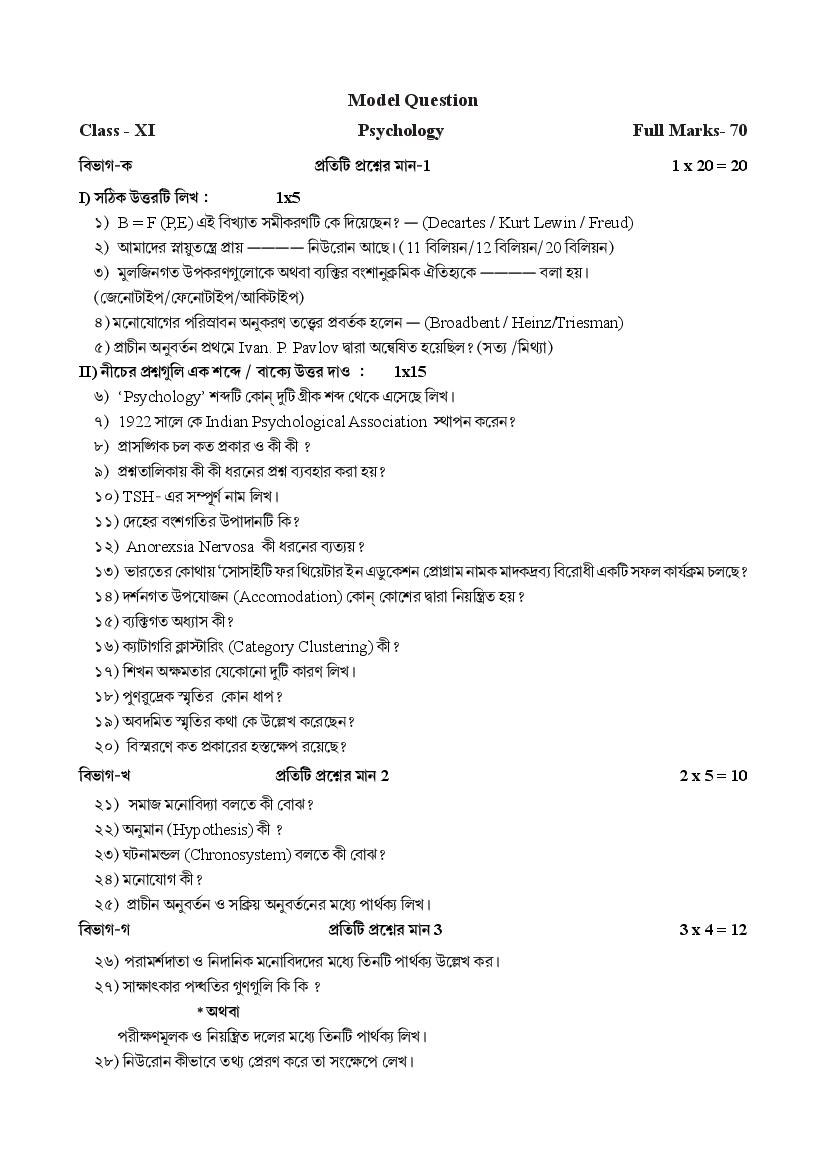
Group-A: Each Questions Carries 1 mark 1 x 20 = 20
a) Tick the correct answer : 1x5
1. B = F(P,E) who introduced this famous equation – (Decartes/Kurt Lewin/Freud)
2. Nearly _____ neurons are found in human vervous system.
(11 Billion / 12 Billions / 20 Billions)
3. The actual genetic material or a person’s genetic heritage is known as _____ .
(genotype / phenotype / arehetype).
4. Filter theory of attention was developed by (Broadbent / Heinz / Triesman).
5. Classical conditioning was first investigated by Ivan P.Pavlov. (True/False)
b) Answer the following in one word : 1x15
6. From which two greek words the word Psychology has been derived ?
7. Who established Indian Psychological Association in the year 1922 ?
8. How many Relevant variables are there ? Name them.
9. What type of questions are used in questionaries ?
10. Write the full form of TSH ?
11. What is the hereditary element of the body ?
12. What kind of disorder is Anorex sia Nervosa ?
13. Where in India a successful anti-drug programme named ‘Society of Theatre in Education
Programme” is going on ?
14. By which cell optical Accomodation is controlled ?
15. What is Personal Illusion ?
16. What is category clustering ?
17. Write any two causes of learning disability ?
18. Which stage of memory is retrieval ?
19. Who mentioned about the repressive memory ?
20. How many types of interference are there in forgetting ?
Group-B Each Question Carries 2 Marks : 2 x 5 = 10
21. What is meant by Social Psychology ?
22. What is Hypothesis ?
23. What do you understand by Chronosystem ?
24. What is attention ?
25. Write two differences between classical conditioning and operant conditioning.
Group-C Each Questions Carries 3 Marks : 3 x 4 = 12
26. Write three differences between acounselor and a Clinical Psychologist ?
27. What are the merits of Interview method ?
Write three differences between experimental and controlled group.
28. Write in brief how neuronstransmit information.
Page 4
29. How is information processed through sensory, short term and long term memory system ?
Explain the process of forgetting due to trace decay.
Group-D Each Question Carries 4 Marks : 4 x 4 = 16
30. Elucidate the functions of the four lobes of cerebral cortex.
31. What cognitive changes occur in a developing child ?
32. Define attention and write down its features.
33. Suggest a plan to improve your own memory.
Group-E Each Question Carries 6 Marks : 6 x 2 = 12
34. Discuss the role of binocular cues in perception of depth.
OR
Explain the functional limitations of sense organs.
38. What is learning ? What are the characteristics of learning ?
OR
Describe different forms of cognitive learning.
* Extra Questions.