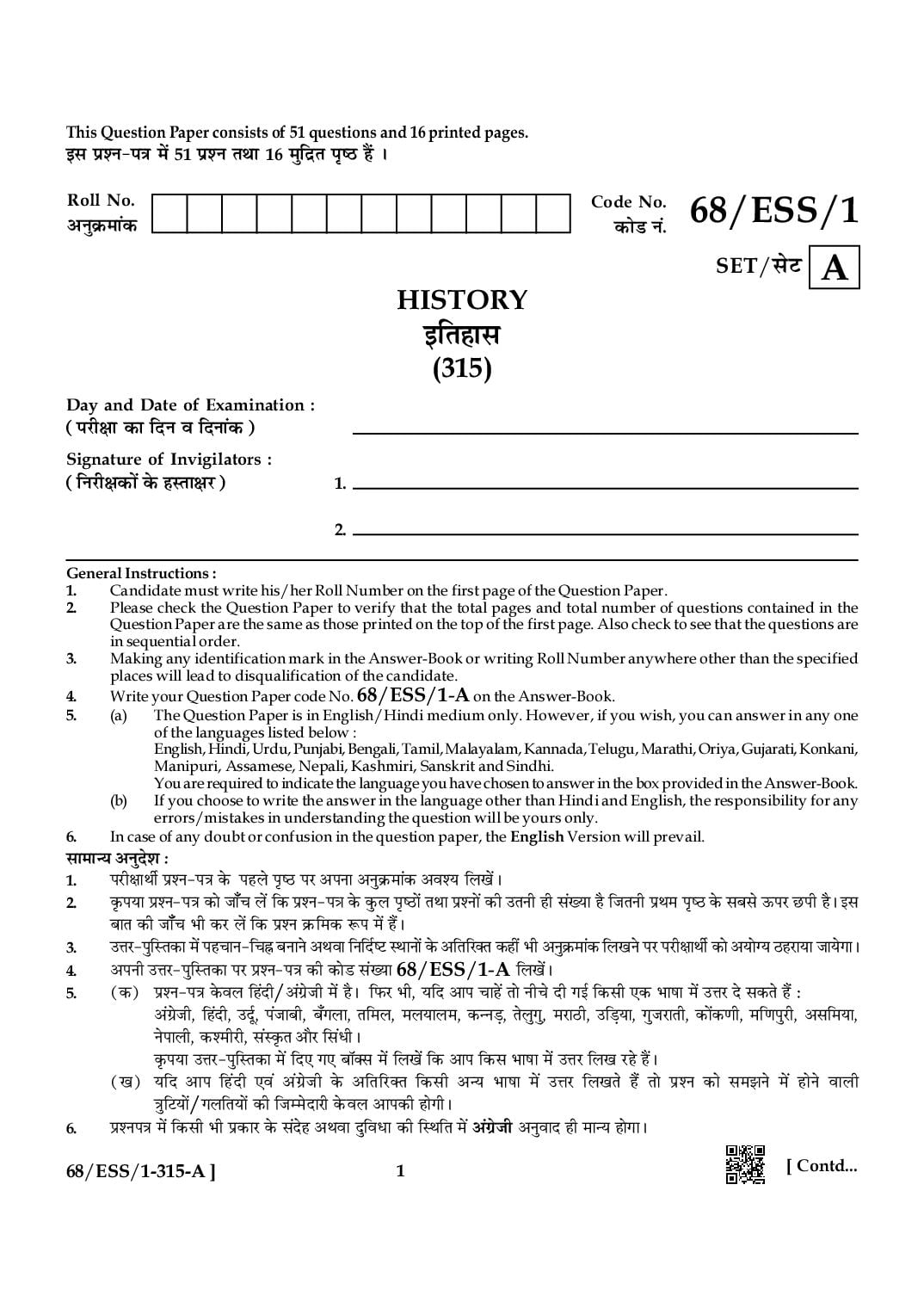
NIOS Class 12 October 2024 Question Paper History
Finished viewing? Save it for later —
Download NIOS Class 12 October 2024 Question Paper History (PDF · 16 pages)About NIOS Class 12 October 2024 Question Paper History
NIOS Class 12 October 2024 Question Paper History is available here for free download. Published by NIOS for National Institute of Open Schooling Class 12, this question paper can be viewed online or downloaded as a PDF (16 pages). Candidates preparing for National Institute of Open Schooling Class 12 can use NIOS Class 12 October 2024 Question Paper History to understand the exam pattern, the type of questions asked, and the overall difficulty level.
Frequently Asked Questions
How can I download NIOS Class 12 October 2024 Question Paper History?
Open this page and click the Download button to save NIOS Class 12 October 2024 Question Paper History as a PDF. It is completely free on AglaSem Docs.
Is NIOS Class 12 October 2024 Question Paper History free to download?
Yes. NIOS Class 12 October 2024 Question Paper History can be viewed online and downloaded as a PDF free of cost on AglaSem Docs.
How many pages does NIOS Class 12 October 2024 Question Paper History have?
NIOS Class 12 October 2024 Question Paper History contains 16 pages, which you can read online or download together as a single PDF.
Where can I find more National Institute of Open Schooling Class 12 study material?
You can find more National Institute of Open Schooling Class 12 question papers, sample papers, syllabus, and answer keys on AglaSem Docs.
NIOS Class 12 October 2024 Question Paper History – Text
Read the full text of this question paper below — useful to quickly search, copy and reference the content online without downloading the PDF.
📄 View text version (16 pages)
Page 1
ß‚ ¬˝‡Ÿ-¬òÊ ◊¥ 51 ¬˝‡Ÿ ÃÕÊ 16 ◊ÈÁŒ˝Ã ¬Îc∆U „Ò¥ –
Roll No. Code No.
•ŸÈ∑˝§◊Ê¥∑§ ∑§Ê«U Ÿ¥.
68/ESS/1
SET/‚ ≈ A
HISTORY
ßÁÄʂ
(315)
Day and Date of Examination :
(¬⁄UˡÊÊ ∑§Ê ÁŒŸ fl ÁŒŸÊ¥∑§)
Signature of Invigilators :
(ÁŸ⁄UˡÊ∑§Ê¥ ∑§ „SÃÊˇÊ⁄U) 1.
2.
General Instructions :
1. Candidate must write his/her Roll Number on the first page of the Question Paper.
2. Please check the Question Paper to verify that the total pages and total number of questions contained in the
Question Paper are the same as those printed on the top of the first page. Also check to see that the questions are
in sequential order.
3. Making any identification mark in the Answer-Book or writing Roll Number anywhere other than the specified
places will lead to disqualification of the candidate.
4. Write your Question Paper code No. 68/ESS/1-A on the Answer-Book.
5. (a) The Question Paper is in English/Hindi medium only. However, if you wish, you can answer in any one
of the languages listed below :
English, Hindi, Urdu, Punjabi, Bengali, Tamil, Malayalam, Kannada, Telugu, Marathi, Oriya, Gujarati, Konkani,
Manipuri, Assamese, Nepali, Kashmiri, Sanskrit and Sindhi.
You are required to indicate the language you have chosen to answer in the box provided in the Answer-Book.
(b) If you choose to write the answer in the language other than Hindi and English, the responsibility for any
errors/mistakes in understanding the question will be yours only.
6. In case of any doubt or confusion in the question paper, the English Version will prevail.
‚Ê◊Êãÿ •ŸÈŒ‡Ê —
1. ¬⁄UˡÊÊÕ˸ ¬˝‡Ÿ-¬òÊ ∑§ §¬„‹ ¬Îc∆U ¬⁄U •¬ŸÊ •ŸÈ∑˝§◊Ê¥∑§ •fl‡ÿU Á‹π¥–
2. ∑Χ¬ÿÊ ¬˝‡Ÿ-¬òÊ ∑§Ê ¡ÊÚ°ø ‹¥ Á∑§ ¬˝‡Ÿ-¬òÊ ∑§ ∑ȧ‹ ¬Îc∆UÊ¥ ÃÕÊ ¬˝‡ŸÊ¥ ∑§Ë ©ÃŸË „Ë ‚¥ÅUÿÊ „Ò Á¡ÃŸË ¬˝Õ◊ ¬Îc∆ ∑ §‚’‚ ™§¬⁄U ¿U¬Ë „Ò– ß‚
’Êà ∑§Ë ¡ÊÚ°ø ÷Ë ∑§⁄U ‹¥ Á∑§ ¬˝‡Ÿ ∑˝ Á◊∑§ UM§¬ ◊¥ „Ò¥–
3. § ©ûÊ⁄U-¬ÈÁSUÃ∑§Ê ◊¥ ¬„øÊŸ-Áøq ’ŸÊŸ •ÕflÊ ÁŸÁŒ¸c≈U SÕÊŸÊ¥ ∑§§•ÁÃÁ⁄UÄà ∑§„Ë¥ ÷Ë •ŸÈ∑§˝ ◊Ê¥∑§ Á‹πŸ ¬⁄U ¬⁄UˡÊÊÕ˸ ∑§Ê •ÿÊÇÿ ∆U„⁄UÊÿÊ ¡ÊÿªÊ–
4. •¬ŸË ©ûÊ⁄U-¬ÈÁSUÃ∑§Ê ¬⁄U ¬˝‡Ÿ-¬òÊ ∑§Ë ∑§Ê«U ‚¥ÅÿÊ 68/ESS/1-A Á‹π¥–
5. (∑§) ¬˝‡Ÿ-¬òÊ ∑§fl‹ Á„¥ŒË/•¥ª˝¡Ë ◊¥ „Ò– Á»§⁄U ÷Ë, ÿÁŒ •Ê¬ øÊ„¥ ÃÊ ŸËø ŒË ªß¸ Á∑§‚Ë ∞∑§ ÷Ê·Ê ◊¥ ©ûÊ⁄ Œ ‚∑§Ã „Ò¥ —
•¥ª˝¡Ë, Á„¥ŒË, ©ŒÍ¸, ¬¥¡Ê’Ë, ’°ª‹Ê, ÃÁ◊‹, ◊‹ÿÊ‹◊, ∑§ãŸ«∏, ËȪÈ, ◊⁄UÊ∆UË, ©Á«∏ÿÊ, ªÈ¡⁄UÊÃË, ∑§Ê¥∑§áÊË, ◊ÁáʬÈ⁄UË, •‚Á◊ÿÊ,
Ÿ¬Ê‹Ë, ∑§‡◊Ë⁄UË, ‚¥S∑Χç•ÊÒ⁄U Á‚¥œË–
∑Χ¬ÿÊ ©ûÊ⁄U-¬ÈÁSÃ∑§Ê ◊¥ ÁŒ∞ ª∞ ’ÊÚÄ‚ ◊¥ Á‹π¥ Á∑§ •Ê¬ Á∑§‚ ÷Ê·Ê ◊¥ ©ûÊ⁄U Á‹π ⁄U„ „Ò¥–
(π) ÿÁŒ •Ê¬ Á„¥ŒË ∞fl¥ •¥ª˝¡Ë ∑§ •ÁÃÁ⁄UÄà Á∑§‚Ë •ãÿ ÷Ê·Ê ◊¥ ©ûÊ⁄U Á‹πà „Ò¥ ÃÊ ¬˝‡Ÿ ∑§Ê ‚◊¤ÊŸ ◊¥ „ÊŸ flÊ‹Ë
òÊÈÁ≈UÿÊ¥/ª‹ÁÃÿÊ¥ ∑§Ë Á¡ê◊UŒÊ⁄Ë ∑ fl‹ •Ê¬∑§Ë „ʪ˖
6. ¬˝‡Ÿ¬òÊ ◊¥ Á∑§‚Ë ÷Ë ¬˝∑§Ê⁄U ∑§ ‚¥Œ„ •ÕflÊ ŒÈÁflœÊ ∑§Ë ÁSÕÁà ◊¥ •¥ª˝¡Ë •ŸÈflÊŒ „Ë ◊Êãÿ „ʪʖ
68/ESS/1-315-A ] 1 [ Contd...
Page 2
ßÁÄʂ
(315)
Time : 3 Hours ] [ Maximum Marks : 100
‚◊ÿ — 3 ÉÊá≈U ] [ ¬ÍáÊÊZ∑§ — 100
Note : (i) This question paper consists of 51 questions in all.
(ii) All questions are compulsory.
(iii) Marks are given against each question.
(iv) Attempt all questions either from Optional Module-6A or Optional Module-6B in all
sections.
(v) Section A consists of
(a) Q. No. 1 to 20 - Multiple Choice type questions (MCQs) carrying 1 mark each.
Select and write the most appropriate option out of the four options given in each
of these questions.
(b) Q. No. 21 to 35 - Objective type questions. Carrying 2 marks each (with 2 sub-
Parts of 1 mark each). Attempt these questions as per the instructions given for
each question.
(vi) Section B consists of
(a) Q. No. 36 to 41 - Very Short Answer type questions carrying 2 marks each to be
answered in the range of 30 to 50 words.
(b) Q. No. 42 to 47 - Short Answer type questions carrying 3 marks each to be
answered in the range of 50 to 80 words.
(c) Q. No. 48 to 50 - Long Answer type questions carrying 5 marks each to be
answered in the range of 80 to 120 words.
(d) Q. No. 51 - Map based question carrying 5 marks each. (Alternative questions
are given in lieu of Map based Questions for Visually Impaired candidates)
ÁŸŒ¸‡Ê — (i) ß‚ ¬˝‡Ÿ¬òÊ ◊¥ ∑ȧ‹ 51 ¬˝‡Ÿ „Ò¥–
(ii) ‚÷Ë ¬˝‡Ÿ •ÁŸflÊÿ¸ „Ò¥–
(iii) ¬˝àÿ∑§ ¬˝‡Ÿ ∑§ ‚Ê◊Ÿ •¥∑§ ÁŒÿ ªÿ „Ò¥–
(iv) ‚÷Ë πá«UÊ¥ ◊¥ ÿÊ ÃÊ flÒ∑§ÁÀ¬∑§ ◊ÊÚ«KÍ‹-6A ÿÊ flÒ∑§ÁÀ¬∑§ ◊ÊÚ«KÍ‹-6B ∑§ ‚÷Ë ¬˝‡ŸÊ¥ ∑§Ê ©ûÊ⁄U Œ¥–
(v) πá«U A ◊¥
(a) ¬˝‡Ÿ ‚¥ÅÿÊ 1 ‚ 20 - ’„ÈÁfl∑§À¬Ëÿ ¬˝∑§Ê⁄U ∑§ ¬˝‡Ÿ „Ò¥, ¡Ê ¬˝àÿ∑§ 1 •¥∑§ ∑§Ê „Ò– ߟ ¬˝‡ŸÊ¥ ◊¥ ¬˝àÿ∑§ ◊¥
ÁŒÿ ªÿ øÊ⁄U Áfl∑§À¬Ê¥ ◊¥ ‚ ‚’‚ ©¬ÿÈÄà Áfl∑§À¬ øÈÁŸÿ •ÊÒ⁄U Á‹Áπ∞–
(b) ¬˝‡Ÿ ‚¥ÅÿÊ 21 ‚ 35 - flSÃÈÁŸc∆U ¬˝‡Ÿ „Ò¥– ¬˝‡Ÿ ‚¥ÅÿÊ 21 ‚ 35 Ã∑§ ¬˝àÿ∑§ ¬˝‡Ÿ 2 •¥∑§Ê¥ ∑§Ê „Ò (ŒÊ
©¬÷ʪ ∑§ ‚ÊÕ ¬˝àÿ∑§ ∑§Ê 1 •¥∑§)– ¬˝àÿ∑§ ¬˝‡Ÿ ◊¥ ŒË ªß¸ ‚ÍøŸÊ •ŸÈ‚Ê⁄U ¬˝‡ŸÊ¥ ∑§ ©ûÊ⁄U ŒËÁ¡∞–
(vi) πá«U B ◊¥ -
(a) ¬˝‡Ÿ ‚¥ÅÿÊ 36 ‚ 41 - •ÁËÉÊÈ ©ûÊ⁄UËÿ ¬˝∑§Ê⁄U ∑§ ¬˝‡Ÿ „Ò¥, ¬˝àÿ∑§ ∑§ 2 •¥∑§ „Ò¥ •ÊÒ⁄U ©ûÊ⁄U ∑§Ë ‚Ë◊Ê 30
‚ 50 ‡ÊéŒ „Ò–
(b) ¬˝‡Ÿ ‚¥ÅÿÊ 42 ‚ 47 - ‹ÉÊÈ ©ûÊ⁄UËÿ ¬˝∑§Ê⁄U ∑§ ¬˝‡Ÿ „Ò¥, ¬˝àÿ∑§ ∑§ 3 •¥∑§ „Ò¥ •ÊÒ⁄U ©ûÊ⁄U ∑§Ë ‚Ë◊Ê 50 ‚ 80
‡ÊéŒ „Ò–
(c) ¬˝‡Ÿ ‚¥ÅÿÊ 48 ‚ 50 - ŒËÉʸ ©ûÊ⁄UËÿ ¬˝∑§Ê⁄U ∑§ ¬˝‡Ÿ „Ò¥, ¬˝àÿ∑§ ∑§ 5 •¥∑§ „Ò¥ •ÊÒ⁄U ©ûÊ⁄U ∑§Ë ‚Ë◊Ê 80 ‚
120 ‡ÊéŒ „Ò–
(d) ¬˝‡Ÿ ‚¥ÅÿÊ 51 ŸÄ‡ÊÊ •ÊœÊÁ⁄Uà ¬˝‡Ÿ 5 •¥∑§ „Ò¥– (ŒÎÁc≈U’ÊÁœÃ •èÿÁÕ¸ÿÊ¥ ∑§ Á‹∞ ŸÄ‡ÊÊ •ÊœÊÁ⁄Uà ¬˝‡Ÿ ∑§
SÕÊŸ ¬⁄U flÒ∑§ÁÀ¬∑§ ¬˝‡Ÿ ÁŒÿ ªÿ „Ò¥)–
68/ESS/1-315-A ] 2 [ Contd...
Page 3
(1) Answers of all questions are to be given in the Answer-Book given to you.
‚÷Ë ¬˝‡ŸÊ¥ ∑§ ©ûÊ⁄U •Ê¬∑§Ê ŒË ªÿË ¬ÈÁSÃ∑§Ê ◊¥ „Ë Á‹π¥–
(2) 15 minutes time has been allotted to read this question paper. The question paper will be
distributed at 02.15 p.m. From 02.15 p.m. to 02.30 p.m., the students will read the question
paper only and will not write any answer on the answer-book during this period.
ß‚ ¬˝‡Ÿ-¬òÊ ∑§Ê ¬…∏Ÿ ∑§ Á‹∞ 15 Á◊Ÿ≈U ∑§Ê ‚◊ÿ ÁŒÿÊ ªÿÊ „Ò– ¬˝‡Ÿ-¬òÊ ∑§Ê ÁflÃ⁄UáÊ ŒÊ¬„⁄U ◊¥ 02.15 ’¡ Á∑§ÿÊ
¡Ê∞ªÊ– 02.15 ’¡ ‚ 02.30 ’¡ Ã∑§ ¿UÊòÊ ∑§fl‹ ¬˝‡Ÿ-¬òÊ ∑§Ê ¬…∏¥ª •ÊÒ⁄U ß‚ •flÁœ ∑§ ŒÊÒ⁄UÊŸ fl ©ûÊ⁄U-¬ÈÁSÃ∑§Ê ¬⁄U
∑§Ê߸ ©ûÊ⁄U Ÿ„Ë¥ Á‹π¥ª–
SECTION - A / πá«U - A
1. Who among of the following deities was known as the weather god in the Rigvedic period ? 1
(A) Agni (B) Varuna (C) Indra (D) Yama
´§ÇflÁŒ∑§ ∑§Ê‹ ◊¥ ÁŸêŸÁ‹Áπà ◊¥ ‚ Á∑§‚ ŒflÃÊ ∑§Ê ◊ÊÒ‚◊ ∑§Ê ŒflÃÊ ∑§„Ê ¡ÊÃÊ ÕÊ?
(A) •ÁÇŸ (B) flL§áÊÊ (C) ߥŒ˝ (D) ÿ◊
2. Which metal was mainly acquired by the Harappans from the Khetri mines in Rajasthan ? 1
(A) Gold (B) Silver (C) Copper (D) Lead
„«∏å¬ÊflÊÁ‚ÿÊ¥ Ÿ ◊ÈÅÿ M§¬ ‚ ∑§ÊÒŸ ‚Ë œÊÃÈ ⁄UÊ¡SÕÊŸ ∑§Ë πë∏Ë πŒÊŸÊ¥ ‚ ¬˝Êåà ∑§Ë ÕË?
(A) ‚ÊŸÊ (B) øÊ¥ŒË (C) ÃÊ¥’Ê (D) ‚Ë‚Ê
3. Who among the following succeeded Chandragupta I ? 1
(A) Shrigupta (B) Chandragupta II
(C) Samudragupta (D) Kumaragupta
ÁŸêŸÁ‹Áπà ◊¥ ‚ ∑§ÊÒŸ ø¥Œ˝ªÈåà ¬˝Õ◊ ∑§Ê ©ûÊ⁄UÊÁœ∑§Ê⁄UË ’ŸÊ?
(A) üÊ˪Èåà (B) ø¥Œ˝ªÈåà ÁmÃËÿ
(C) ‚◊ÈŒ˝ªÈåà (D) ∑ȧ◊Ê⁄UªÈåÃ
4. Which of the following titles did Bairam Khan hold as the wakil of the Mughal kingdom ? 1
(A) Nawab (B) Amir-ul-Umara
(C) Khan-i-Khanan (D) Vizier
’Ò⁄U◊ πÊŸ Ÿ ◊Ȫ‹ ‚Ê◊˝Êíÿ ∑§ fl∑§Ë‹ ∑§ M§¬ ◊¥ ÁŸêŸÁ‹Áπà ◊¥ ‚ ∑§ÊÒŸ ‚Ë ©¬ÊÁœ œÊ⁄UáÊ ∑§Ë ÕË?
(A) ŸflÊ’ (B) •◊Ë⁄U-©‹-©◊⁄UÊ
(C) πÊŸ-∞-πÊŸÊŸ (D) fl$¡Ë⁄U
5. What was the primary ideological conflict during the Cold War ? 1
(A) Democracy vs. Monarchy (B) Capitalism vs. Communism
(C) Fascism vs. Socialism (D) Nationalism vs. Imperialism
‡ÊËà ÿÈh ∑§ ŒÊÒ⁄UÊŸ ¬˝ÊÕÁ◊∑§ flÒøÊÁ⁄U∑§ ‚¥ÉÊ·¸ ÄÿÊ ÕÊ?
(A) ‹Ê∑§Ã¥òÊ ’ŸÊ◊ ⁄UÊ¡‡ÊÊ„Ë (B) ¬Í°¡ËflÊŒ ’ŸÊ◊ ‚ÊêÿflÊŒ
(C) »§Ê‚ËflÊŒ ’ŸÊ◊ ‚◊Ê¡flÊŒ (D) ⁄UÊc≈˛UflÊŒ ’ŸÊ◊ ‚Ê◊˝ÊíÿflÊŒ
68/ESS/1-315-A ] 3 [ Contd...
Page 4
(A) Southern India (B) Northwestern part of the Indian Subcontinent
(C) Eastern India (D) Central India
ÁŸêŸÁ‹Áπà ◊¥ ‚ ∑§ÊÒŸ ‚Ê ˇÊòÊ, ¡„Ê° ªÊ¥œÊ⁄U ∑§‹Ê ‡ÊÒ‹Ë Áfl∑§Á‚à „È߸?
(A) ŒÁˇÊáÊË ÷Ê⁄Uà (B) ÷Ê⁄UÃËÿ ©¬◊„ÊÁm¬ ∑§Ê ©ûÊ⁄U-¬Á‡ø◊Ë ÷ʪ
(C) ¬Ífl˸ ÷Ê⁄Uà (D) ◊äÿ ÷Ê⁄UÃ
7. What was the primary conflict between the USA and the USSR after World War II ? 1
(A) Territorial disputes (B) Ideological differences
(C) Economic trade (D) Cultural exchange
ÁmÃËÿ Áfl‡fl ÿÈh ∑§ ’ÊŒ ‚¥ÿÈÄà ⁄UÊíÿ •◊Á⁄U∑§Ê •ÊÒ⁄U ÿÍ∞‚∞‚•Ê⁄ ∑§ ’Ëø ¬˝ÊÕÁ◊∑§ ‚¥ÉÊ·¸ ÄÿÊ ÕÊ?
(A) ˇÊòÊËÿ ÁflflÊŒ (B) flÒøÊÁ⁄U∑§ ◊Ã÷Œ
(C) •ÊÁÕ¸∑§ √ÿʬÊ⁄U (D) ‚Ê¥S∑ΧÁÃ∑§ •ÊŒÊŸ-¬˝ŒÊŸ
8. Which one of the following company is known to have ruled India from 1600 to 1858 ? 1
(A) The Dutch East India Company
(B) The French East India Company
(C) The British East India Company
(D) The Portuguese East India Company
ÁŸêŸÁ‹Áπà ◊¥ ‚ Á∑§‚ ∑¥§¬ŸË ∑§Ê 1600 ‚ 1858 Ã∑§ ÷Ê⁄Uà ¬⁄U ‡ÊÊ‚Ÿ ∑§⁄UŸ ∑§ Á‹∞ ¡ÊŸÊ ¡ÊÃÊ „Ò?
(A) «Uø ߸S≈U ߥÁ«UÿÊ ∑¥§¬ŸË
(B) »˝¥§ø ߸S≈U ߥÁ«UÿÊ ∑¥§¬ŸË
(C) Á’˝Á≈U‡Ê ߸S≈U ߥÁ«UÿÊ ∑¥§¬ŸË
(D) ¬ÈøªÊ‹Ë ߸S≈U ߥÁ«UÿÊ ∑¥§¬ŸË
9. Who among the following was the founder of the Mughal Empire in India ? 1
(A) Babur (B) Akbar (C) Humayun (D) Shah Jahan
ÁŸêŸÁ‹Áπà ◊¥ ‚ ∑§ÊÒŸ ÷Ê⁄Uà ◊¥ ◊Ȫ‹ ‚Ê◊˝Êíÿ ∑§Ê ‚¥SÕʬ∑§ ÕÊ?
(A) ’Ê’⁄U (B) •∑§’⁄U (C) „È◊ÊÿÍ° (D) ‡ÊÊ„¡„Ê°
10. Homi J. Bhabha is known for his work in which scientific field ? 1
(A) Molecular biology (B) Nuclear science
(C) Genetic research (D) Space exploration
„Ê◊Ë ¡. ÷Ê÷Ê ∑§Ê Á∑§‚ flÒôÊÊÁŸ∑§ ˇÊòÊ ◊¥ ©Ÿ∑§ ∑§Ê◊ ∑§ Á‹∞ ¡ÊŸÊ ¡ÊÃÊ „Ò?
(A) •ÊÁáfl∑§ ¡Ëfl ÁflôÊÊŸ (B) ¬⁄U◊ÊáÊÈ ÁflôÊÊŸ
(C) •ÊŸÈfl¥Á‡Ê∑§ •ŸÈ‚¥œÊŸ (D) •¥ÃÁ⁄UˇÊ •ãfl·áÊ
11. Who was the Mughal emperor that devised the Mansabdari system ? 1
(A) Akbar (B) Babur (C) Jahangir (D) Aurangzeb
◊Ÿ‚’ŒÊ⁄UË √ÿflSÕÊ ∑§Ê •ÊÒ¬øÊÁ⁄U∑§ M§¬ ŒŸ flÊ‹Ê ◊Ȫ‹ ‚◊˝Ê≈U ∑§ÊÒŸ ÕÊ?
(A) •∑§’⁄U (B) ’Ê’⁄U (C) ¡„Ê°ªË⁄U (D) •ÊÒ⁄¥Uª¡’
68/ESS/1-315-A ] 4 [ Contd...
Page 5
(A) Lord Dalhousie (B) Lord Wellesley
(C) Lord Clive (D) Lord Curzon
ÁŸêŸÁ‹Áπà ◊¥ ‚ Á∑§‚Ÿ ÷Ê⁄Uà ◊¥ ‚„Êÿ∑§ ‚Á㜠√ÿflSÕÊ ∑§Ë ‡ÊÈL§•Êà ∑§Ë?
(A) ‹ÊÚ«¸U «U‹„ÊÒ¡Ë (B) ‹ÊÚ«¸U fl‹S‹Ë
(C) ‹ÊÚ«¸U Ä‹Êßfl (D) ‹ÊÚ«¸U ∑§¡¸Ÿ
13. Who amongst the following has produced finest literature in India around the early 20th 1
century ?
(A) Bhim sen Joshi (B) Rabindranath Tagore
(C) Mulk Raj Anand (D) Vikram Seth
ÁŸêŸÁ‹Áπà ◊¥ ‚ Á∑§‚Ÿ 20 flË¥ ‚ŒË ∑§Ë ‡ÊÈL§•Êà ◊¥ ÷Ê⁄Uà ◊¥ ©à∑Χc≈U ‚ÊÁ„àÿ ∑§Ê Áfl∑§Ê‚ Á∑§ÿÊ?
(A) ÷Ë◊ ‚Ÿ ¡Ê‡ÊË (B) ⁄UflËãŒ˝ŸÊÕ ≈ÒUªÊ⁄U
(C) ◊ÈÀ∑§ ⁄UÊ¡ •ÊŸ¥Œ (D) Áfl∑˝§◊ ‚∆U
14. Which of the following is the impact of globalization on communication ? 1
(A) It has slowed down communication.
(B) It has made communication more expensive.
(C) It has facilitated cheap and instant communication.
(D) It has isolated communication channels.
‚¥øÊ⁄U ¬⁄U flÒ‡flË∑§⁄UáÊ ∑§Ê ÁŸêŸÁ‹Áπà ◊¥ ‚ ∑§ÊÒŸ ‚Ê ¬˝÷Êfl „Ò?
(A) ß‚‚ ‚¥øÊ⁄U œË◊Ê „Ê ªÿÊ „Ò–
(B) ß‚Ÿ ‚¥øÊ⁄U ∑§Ê •ÊÒ⁄U •Áœ∑§ ◊„¥ªÊ ’ŸÊ ÁŒÿÊ „Ò–
(C) ß‚Ÿ ‚Sà •ÊÒ⁄U àflÁ⁄Uà ‚¥øÊ⁄U ∑§Ë ‚ÈÁflœÊ ¬˝ŒÊŸ ∑§Ë „Ò–
(D) ß‚Ÿ ‚¥øÊ⁄U øÒŸ‹Ê¥ ∑§Ê •‹ª-•‹ª ∑§⁄U ÁŒÿÊ „Ò¥–
15. In which novel did Bankim Chandra Chatterjee immortalize the Sanyasi Rebellion ? 1
(A) Anand Math (B) Chitralekha (C) Devdas (D) Gora
’¥Á∑§◊ ø¥Œ˝ ø≈U¡Ë¸ Ÿ Á∑§‚ ©¬ãÿÊ‚ ◊¥ ‚¥ãÿÊ‚Ë ÁflŒ˝Ê„ ∑§Ê •◊⁄U ’ŸÊ ÁŒÿÊ?
(A) •ÊŸ¥Œ ◊∆U (B) ÁøòÊ‹πÊ (C) ŒflŒÊ‚ (D) ªÊ⁄UÊ
16. Who amongst the following social reformer was known for attacking the practice of Sati in 1
the 19th century ?
(A) Jotiba Phule (B) Ishwarachandra Vidyasagar
(C) Raja Ram Mohan Roy (D) Dadabhai Naoroji
ÁŸêŸÁ‹Áπà ◊¥ ‚ Á∑§‚ ‚◊Ê¡ ‚ÈœÊ⁄U∑§ ∑§Ê 19 flË¥ ‡ÊÃÊéŒË ◊¥ ‚ÃË ¬˝ÕÊ ¬⁄U „◊‹Ê ∑§⁄UŸ ∑§ Á‹∞ ¡ÊŸÊ ¡ÊÃÊ ÕÊ?
(A) ¡ÊÁÃ’Ê »È§‹ (B) ߸‡fl⁄Uø¥Œ˝ Áfllʂʪ⁄U
(C) ⁄UÊ¡Ê ⁄UÊ◊◊Ê„Ÿ ⁄UÊÿ (D) ŒÊŒÊ÷Ê߸ ŸÊÒ⁄UÊ¡Ë
68/ESS/1-315-A ] 5 [ Contd...
Page 6
boycott of foreign goods to Bombay and Pune during the early 20th century in India ?
(A) Bipin Chandra Pal (B) Lokmanya Tilak
(C) Lala Lajpat Rai (D) Syed Haider Raza
ÁŸêŸÁ‹Áπà ŸÃÊ•Ê¥ ◊¥ ‚ Á∑§‚Ÿ ÷Ê⁄Uà ◊¥ 20flË¥ ‚ŒË ∑§Ë ‡ÊÈL§•Êà ◊¥ SflŒ‡ÊË flSÃÈ∞° •¬ŸÊŸ •ÊÒ⁄U ÁflŒ‡ÊË flSÃÈ•Ê¥ ∑§
’Á„c∑§Ê⁄U ∑§Ê ‚¥Œ‡Ê ’¥’߸ •ÊÒ⁄U ¬ÈáÊ Ã∑§ ‹ ∑§⁄U ª∞?
(A) Á’Á¬Ÿ ø¥Œ˝ ¬Ê‹ (B) ‹Ê∑§◊Êãÿ ÁË∑§
(C) ‹Ê‹Ê ‹Ê¡¬Ã ⁄UÊÿ (D) ‚ÒÿŒ „ÒŒ⁄U ⁄U$¡Ê
18. Which of the following countries were part of the Triple Entente ? 1
(A) Germany, Austria-Hungary, Italy
(B) Britain, France, Russia
(C) Japan, Italy, Germany
(D) USA, Britain, Italy
ÁŸêŸÁ‹Áπà ◊¥ ‚ ∑§ÊÒŸ ‚ Œ‡Ê ÁòʬˇÊËÿ ‚¥Áœ ∑§Ê Á„S‚Ê Õ?
(A) ¡◊¸ŸË, •ÊÚÁS≈˛UÿÊ-„¥ª⁄UË, ß≈U‹Ë
(B) Á’˝≈UŸ, »˝§Ê¥‚, M§‚
(C) ¡Ê¬ÊŸ, ß≈U‹Ë, ¡◊¸ŸË
(D) •◊Á⁄U∑§Ê, Á’˝≈UŸ, ß≈U‹Ë
19. Which one of the following countries did not join the League of Nations despite its leading 1
role in its formation ?
(A) United Kingdom (B) France
(C) Italy (D) United States
ÁŸêŸÁ‹Áπà ◊¥ ‚ ∑§ÊÒŸ ‚Ê Œ‡Ê ⁄UÊc≈˛U ‚¥ÉÊ ∑§ ª∆UŸ ◊¥ •ª˝áÊË ÷ÍÁ◊∑§Ê ∑§ ’Êfl¡ÍŒ ß‚◊¥ ‡ÊÊÁ◊‹ Ÿ„Ë¥ „È•Ê?
(A) ÿÍŸÊß≈U«U Á∑¥§ª«U◊ (B) »˝§Ê¥‚
(C) ß≈U‹Ë (D) ‚¥ÿÈÄà ⁄UÊíÿ •◊Á⁄U∑§Ê
20. Which international organization was founded to promote global peace and security after 1
World War II ?
(A) United Nations (B) League of Nations
(C) Munich Pact (D) Warsaw Pact
ÁmÃËÿ Áfl‡fl ÿÈh ∑§ ’ÊŒ flÒÁ‡fl∑§ ‡ÊÊ¥Áà •ÊÒ⁄U ‚È⁄UˇÊÊ ∑§Ê ’…∏ÊflÊ ŒŸ ∑§ Á‹∞ Á∑§‚ •¥Ã⁄Uʸc≈˛UËÿ ‚¥ª∆UŸ ∑§Ë SÕʬŸÊ ∑§Ë
ªß¸ ÕË?
(A) ‚¥ÿÈÄà ⁄UÊc≈˛U (B) ⁄UÊc≈˛U ‚¥ÉÊ
(C) êÿÍÁŸπ ‚◊¤ÊÊÒÃÊ (D) fl‚ʸÿ‚¥Áœ
21. Fill in the blank :
The Harappan script has not been __________ yet. It is believed that they used __________
i.e., a graphic symbol or character to convey the idea directly. 1x2=2
Á⁄UÄà SÕÊŸ ÷Á⁄Uÿ —
„«∏å¬Ê Á‹Á¬ •÷Ë Ã∑§ __________ Ÿ„Ë¥ ªß¸ „Ò– ∞‚Ê ◊ÊŸÊ ¡ÊÃÊ „Ò Á∑§ fl ÁfløÊ⁄U ∑§Ê ‚Ëœ √ÿÄà ∑§⁄UŸ ∑§ Á‹∞
__________ ÿÊŸË ∞∑§ ª˝ÊÁ»§∑§ ¬˝ÃË∑§ ÿÊ øÁ⁄UòÊ ∑§Ê ©¬ÿʪ ∑§⁄Uà Ֆ
68/ESS/1-315-A ] 6 [ Contd...
Page 7
(i) Brahmo Covenant was written by __________.
(ii) Atmiya Sabha was founded in __________.
Á⁄UÄà SÕÊŸ ÷Á⁄Uÿ —
(i) ’˝rÊÊ-¬˝áÊ ∑§Ë ⁄UøŸÊ __________ mÊ⁄UÊ ∑§Ë ªß¸ ÕË–
(ii) •Êà◊Ëÿ ‚÷Ê ∑§Ë SÕʬŸÊ __________ ◊¥ „È߸–
23. Fill in the blanks : 1x2=2
The Chinese pilgrim __________ came to India during the reign of Chandragupta II and the
pilgrim Hsuan Tsang came during the reign of __________.
Á⁄UÄà SÕÊŸ ÷Á⁄Uÿ —
øËŸË ÃËÕ¸ÿÊòÊË __________ øãŒ˝ªÈåà ÁmÃËÿ ∑§ ‡ÊÊ‚Ÿ∑§Ê‹ ∑§ ŒÊÒ⁄UÊŸ ÷Ê⁄Uà •Ê∞ Õ •ÊÒ⁄U ÃËÕ¸ÿÊòÊË uŸ à‚Ê¥ª
__________ ∑§ ‡ÊÊ‚Ÿ∑§Ê‹ ∑§ ŒÊÒ⁄UÊŸ •Ê∞ Õ–
24. Fill in the blanks : 1x2=2
In the Delhi Sultanate __________, The Khiljis ruled from AD 1290 to AD 1320, and they
were succeeded by the __________ who ruled from AD 1320 to AD 1412.
Á⁄UÄà SÕÊŸ ÷Á⁄Uÿ —
__________ ÁŒÀÀÊË ‚Àßà ◊¥, Áπ‹Á¡ÿÊ¥ Ÿ 1290 ߸. ‚ 1320 ߸. Ã∑§ ‡ÊÊ‚Ÿ Á∑§ÿÊ •ÊÒ⁄U ©Ÿ∑§ ’ÊŒ __________
•Ê∞ Á¡ã„Ê¥Ÿ 1320 ߸. ‚ 1412 ߸. Ã∑§ ‡ÊÊ‚Ÿ Á∑§ÿÊ–
25. Fill in the blanks : 1x2=2
(i) __________ the lady ruler fought with Mughals.
(ii) Akbar initiated a policy of __________ the chieftains into Mughal nobility.
Á⁄UÄà SÕÊŸ ÷Á⁄Uÿ —
(i) __________ ŸÊ◊∑§ ◊Á„‹Ê ‡ÊÊ‚∑§ Ÿ ◊Ȫ‹Ê¥ ∑§ ‚ÊÕ ÿÈh Á∑§ÿÊ–
(ii) •∑§’⁄U Ÿ __________ ∑§Ë ŸËÁà •¬ŸÊ߸ •ÊÒ⁄U ◊ÈÁπ•Ê¥ ∑§Ê ◊Ȫ‹ ∑ȧ‹ËŸ flª¸ ◊¥ ∑§⁄U Á‹ÿÊ–
26. Fill in the blanks : 1x2=2
(i) In 1905, Curzon announced the partition of __________ in (India).
(ii) This led to the rise of the __________ Movement in India.
Á⁄UÄà SÕÊŸ ÷Á⁄Uÿ —
(i) 1905 ◊¥ ∑§$¡¸Ÿ Ÿ ÷Ê⁄Uà ◊¥ __________ ∑§ Áfl÷Ê¡Ÿ ∑§Ë ÉÊÊ·áÊÊ ∑§Ë–
(ii) ß‚‚ ÷Ê⁄Uà ◊¥ __________ •Ê¥ŒÊ‹Ÿ ∑§Ê ©Œÿ „È•Ê–
68/ESS/1-315-A ] 7 [ Contd...
Page 8
(i) Bal Gangadhar Tilak introduced the __________ festivals in Maharashtra to create a
religious platform from where nationalist ideas could be preached and spread.
(ii) The Indian National Congress formally took up the __________ movement in its Benaras
Session of 1905 presided over by G.K. Gokhale.
ÁŸêŸÁ‹Áπà flÊÄÿÊ¥ ∑§Ê ¬Í⁄UÊ ∑§Á⁄Uÿ —
(i) ’Ê‹ ª¥ªÊœ⁄U ÁË∑§ Ÿ ∞∑§ œÊÁ◊¸∑§ ◊¥ø ’ŸÊŸ ∑§ Á‹∞ ◊„Ê⁄UÊc≈˛U ◊¥ __________ ©à‚flÊ¥ ∑§Ë ‡ÊÈL§•Êà ∑§Ë,
¡„Ê° ‚ ⁄UÊc≈˛UflÊŒË ÁfløÊ⁄UÊ¥ ∑§Ê ¬˝øÊ⁄U •ÊÒ⁄U ¬˝‚Ê⁄U Á∑§ÿÊ ¡Ê ‚∑§–
(ii) 1905 ∑§ ’ŸÊ⁄U‚ •Áœfl‡ÊŸ ◊¥ ÷Ê⁄UÃËÿ ŸÚ‡ÊŸ‹ ∑§Ê¥ª˝‚ Ÿ •ÊÒ¬øÊÁ⁄U∑§ M§¬ ‚ __________ ∑§Ê •ÊuÊŸ Á∑§ÿÊ,
Á¡‚∑§Ë •äÿˇÊÃÊ ¡Ë.∑§. ªÊπ‹ Ÿ ∑§Ë–
28. Complete the following sentences. 1x2=2
(i) India was largely an __________ economy during the rise of European nationalism.
(ii) Nationalism in India developed primarily as a response to __________ rule.
ÁŸêŸÁ‹Áπà flÊÄÿÊ¥ ∑§Ê ¬Í⁄UÊ ∑§Á⁄Uÿ —
(i) ÿÈ⁄UʬËÿ ⁄UÊc≈˛UflÊŒ ∑§ ©Œÿ ∑§ ŒÊÒ⁄UÊŸ ÷Ê⁄Uà ◊ÈÅÿ× __________ •Õ¸√ÿflSÕÊ ÕË–
(ii) ÷Ê⁄Uà ◊¥ ⁄UÊc≈˛UflÊŒ ◊ÈÅÿ M§¬ ‚ __________ ‡ÊÊ‚Ÿ ∑§Ë ¬˝ÁÃÁ∑˝§ÿÊ ∑§ M§¬ ◊¥ Áfl∑§Á‚à „È•Ê–
29. Complete the following sentence. 1x2=2
There was a rise of totalitarian regimes in several countries :__________ in Italy, __________
in Germany, and Military Fascism in Japan.
ÁŸêŸÁ‹Áπà flÊÄÿ ∑§Ê ¬Í⁄UÊ ∑§Á⁄Uÿ —
∑§ß¸ Œ‡ÊÊ¥ ◊¥ •ÁœŸÊÿ∑§flÊŒË ‡ÊÊ‚Ÿ ∑§Ê ©Œÿ „È•Ê — ß≈U‹Ë ◊¥ __________ , ¡◊¸ŸË ◊¥ __________ •ÊÒ⁄U ¡Ê¬ÊŸ
◊¥ ‚Òãÿ »§ÊÁ‚S≈UflÊŒ–
30. Complete the following sentence. 1x2=2
Mainly Sikhs began the __________ Movement in 1913 in the city of San Francisco,
in __________.
ÁŸêŸÁ‹Áπà flÊÄÿ ∑§Ê ¬Í⁄UÊ ∑§Á⁄Uÿ —
◊ÈÅÿ× Á‚πÊ¥ Ÿ __________ ∑§ ‚ÒŸ »˝§Ê¥Á‚S∑§Ê ‡Ê„⁄U ◊¥ 1913 ◊¥ __________ •Ê¥ŒÊ‹Ÿ ‡ÊÈM§ Á∑§ÿÊ–
31. Complete the following statement. 1x2=2
In the 7th Century AD, a new religion named __________ was born in Arabia. It was founded
and preached by Prophet __________ (AD 570-632).
ÁŸêŸÁ‹Áπà ∑§ÕŸ ∑§Ê ¬Í⁄UÊ ∑§Á⁄Uÿ —
7 flË¥ ‡ÊÃÊéŒË ߸. ◊¥ •⁄U’ ◊¥ ““__________”” ŸÊ◊∑§ ∞∑§ Ÿ∞ œ◊¸ ∑§Ê ©Œÿ „È•Ê– ß‚∑§Ë SÕʬŸÊ •ÊÒ⁄U ¬˝øÊ⁄U ¬Òª¥’⁄U
__________ (570-632 ߸.) Ÿ Á∑§ÿÊ ÕÊ–
68/ESS/1-315-A ] 8 [ Contd...
Page 9
flÒ∑§ÁÀ¬∑§ ◊ÊÚ«KÍ‹ 6 A
32. Complete the following sentences. 2
The __________ written by Kautilya and the Edicts of Ashoka are primary sources of written
records of the __________ times.
ÁŸêŸÁ‹Áπà flÊÄÿÊ¥ ∑§Ê ¬Í⁄UÊ ∑§Á⁄Uÿ —
∑§ÊÒÁ≈UÀÿ mÊ⁄UÊ Á‹Áπà __________ •ÊÒ⁄U •‡ÊÊ∑§ ∑§ Á‡Ê‹Ê‹π, __________ ∑§Ê‹ ∑§ Á‹Áπà •Á÷‹πÊ¥ ∑§
¬˝ÊÕÁ◊∑§ ‚˝Êà „Ò¥–
33. Complete the following sentences. 2
__________ was Jahangir’s grandson, ruled from 1658 to 1707 and is known for his military
campaigns that expanded the empire to its greatest extent. However, his reign is also marked
by religious intolerance and heavy taxation, which contributed to the eventual decline of the
__________ Empire.
ÁŸêŸÁ‹Áπà flÊÄÿÊ¥ ∑§Ê ¬Í⁄UÊ ∑§Á⁄Uÿ —
__________¡„Ê¥ªË⁄U ∑§Ê ¬ÊÃÊ ÕÊ, 1658 ‚ 1707 Ã∑§ ‡ÊÊ‚Ÿ Á∑§ÿÊ Á¡‚Ÿ ‚Òãÿ •Á÷ÿÊŸ ∑§⁄U ‚Ê◊˝Êíÿ ∑§Ê
•Áœ∑§Ã◊ ÁflSÃÊ⁄U Á∑§ÿÊ– ©‚∑§Ê ‡ÊÊ‚Ÿ œÊÁ◊¸∑§ •‚Á„cáÊÈÃÊ, •Áœ∑§ ∑§⁄U ∑§ ∑§Ê⁄UáÊ ¡ÊŸÊ ¡ÊÃÊ ⁄U„Ê, Á¡‚‚
__________ ‚Ê◊˝Êíÿ ¬ÃŸ ∑§Ë •Ê⁄U •ª˝‚⁄ U„Ê ªÿÊ–
34. Complete the following sentences. 2
(i) One of the most significant things the British did to Westernize India was to introduce
a modified version of __________ education.
(ii) Macaulay’s 1835 Minute on __________ had a decisive impact on British educational
policy and is a classic example of a Western rationalist approach to Indian civilization
(19th century).
ÁŸêŸÁ‹Áπà flÊÄÿÊ¥ ∑§Ê ¬Í⁄UÊ ∑§Á⁄Uÿ —
(i) ÷Ê⁄Uà ∑§Ê ¬Á‡ø◊Ë∑Χà ∑§⁄UŸ ∑§ Á‹∞ •¥ª˝¡Ê¥ mÊ⁄UÊ Á∑§ÿÊ ªÿÊ ‚’‚ ◊„àfl¬Íáʸ ∑§Ê◊ __________ Á‡ÊˇÊÊ ∑§Ê
∞∑§ ‚¥‡ÊÊÁœÃ ‚¥S∑§⁄UáÊ ¬‡Ê ∑§⁄UŸÊ ÕÊ–
(ii) 1835 ∑§ ◊Ò∑§Ê‹ ∑§ __________ ¬⁄U Á◊Ÿ≈U ∑§Ê Á’˝Á≈U‡Ê ‡ÊÒÁˇÊ∑§ ŸËÁà ¬⁄U ÁŸáÊʸÿ∑§ ¬˝÷Êfl ¬«∏Ê •ÊÒ⁄U ÿ„
÷Ê⁄UÃËÿ ‚èÿÃÊ (19flË¥ ‡ÊÃÊéŒË) ∑§ Á‹∞ ¬Á‡ø◊Ë Ã∑¸§flÊŒË ŒÎÁc≈U∑§ÊáÊ ∑§Ê ∞∑§ ©à∑Χc≈U ©ŒÊ„⁄UáÊ „Ò–
35. Complete the following sentences. 2
(i) The Delhi Sultanate was established during the victories by __________ Ghauri.
(ii) The dynasty of Ilbari Turks were collectively known as the __________ Sultanate.
ÁŸêŸÁ‹Áπà flÊÄÿÊ¥ ∑§Ê ¬Í⁄UÊ ∑§Á⁄Uÿ —
(i) ÁŒÀ‹Ë ‚Àßà ∑§Ë SÕʬŸÊ __________ ªÊÒ⁄UË ∑§Ë Áfl¡ÿÊ¥ mÊ⁄UÊ „È߸ ÕË–
(ii) ßÀ’Ê⁄UË ÃÈ∑§ÊZ ∑§ fl¥‡Ê ∑§Ê ‚Ê◊ÍÁ„∑§ M§¬ ‚ __________ ‚Àßà ∑§ M§¬ ◊¥ ¡ÊŸÊ ¡ÊÃÊ ÕÊ–
68/ESS/1-315-A ] 9 [ Contd...
Page 10
flÒ∑§ÁÀ¬∑§ ◊ÊÚ«KÍ‹ 6 B
32. Answer in one word : 2
(i) What is a way of life that varies from region to region ?
(ii) What does growing up in social and economic situation influence ?
∞∑§ ‡ÊéŒ ◊¥ ©ûÊ⁄U ŒËÁ¡ÿ —
(i) ¡ËflŸ ∑§Ê fl„ ∑§ÊÒŸ ‚Ê Ã⁄UË∑§Ê „Ò ¡Ê ∞∑§ ˇÊòÊ ‚ ŒÍ‚⁄U ˇÊòÊ ◊¥ Á÷㟠„ÊÃÊ „Ò?
(ii) ‚Ê◊ÊÁ¡∑§ ÃÕÊ •ÊÁÕ¸∑§ flÊÃÊfl⁄UáÊ ◊¥ ’«∏ „ÊŸ ‚ ÄÿÊ ¬˝÷ÊÁflà „ÊÃÊ „Ò¥?
33. Answer in one word : 2
(i) From where the earliest paintings created by hunting and gathering tribes are found ?
(ii) Themes in Ajanta paintings are drawn from which source ?
∞∑§ ‡ÊéŒ ◊¥ ©ûÊ⁄U ŒËÁ¡ÿ —
(i) Á‡Ê∑§Ê⁄U ∑§⁄UŸ •ÊÒ⁄U ÷Ê¡Ÿ ß∑§_Ê ∑§⁄UŸ flÊ‹Ë ¡Ÿ¡ÊÁÃÿÊ¥ mÊ⁄UÊ ’ŸÊ߸ ªß¸ ‚’‚ ¬È⁄UÊŸË ¬¥Á≈¥Uª ∑§„Ê¥ ¬Ê߸ ¡ÊÃË „Ò?
(ii) •¡¥ÃÊ ∑§Ë ¬¥Á≈¥Uª ∑§ ÄÿÊ ‚˝Êà „Ò¥?
34. Answer in one word : 2
(i) Who wrote the Ramcharitamanas ?
(ii) Who wrote the Ramayana in Tamil ?
∞∑§ ‡ÊéŒ ◊¥ ©ûÊ⁄U ŒËÁ¡ÿ —
(i) ⁄UÊ◊øÁ⁄UÃ◊ÊŸ‚ ∑§Ë ⁄UøŸÊ Á∑§‚Ÿ ∑§Ë?
(ii) ÃÁ◊‹ ◊¥ ⁄UÊ◊ÊÿáÊ Á∑§‚Ÿ Á‹πË?
35. Answer in one word : 2
(i) In which language was the first newspaper in India published in 1760 ?
(ii) Who was a key reformer of Bengal that used the press for social reform ?
∞∑§ ‡ÊéŒ ◊¥ ©ûÊ⁄U ŒËÁ¡ÿ —
(i) 1760 ◊¥ ÷Ê⁄Uà ◊¥ ¬„‹Ê ‚◊ÊøÊ⁄U ¬òÊ Á∑§‚ ÷Ê·Ê ◊¥ ¬˝∑§ÊÁ‡Êà „È•Ê ÕÊ?
(ii) ’¥ªÊ‹ ∑§Ê ¬˝◊Èπ ‚ÈœÊ⁄U∑§ ∑§ÊÒŸ ÕÊ Á¡‚Ÿ ‚Ê◊ÊÁ¡∑§ ‚ÈœÊ⁄U ∑§ Á‹∞ ¬˝‚ ∑§Ê ©¬ÿʪ Á∑§ÿÊ?
SECTION - B / πá«U - B
36. How did the primary economic activities of the Early Vedic Aryans differ from those of the 2
Later Vedic period ?
¬˝Ê⁄¥UÁ÷∑§ flÒÁŒ∑§ •ÊÿÊZ ∑§Ë ¬˝ÊÕÁ◊∑§ •ÊÁÕ¸∑§ ªÁÃÁflÁœÿÊ° ©ûÊ⁄U flÒÁŒ∑§ ∑§Ê‹ ∑§Ë ªÁÃÁflÁœÿÊ¥ ‚ Á∑§‚ ¬˝∑§Ê⁄U Á÷㟠ÕË¥?
37. Examine any two Market Regulations of Alauddin Khilji. 1x2=2
•‹Ê©gËŸ ÁπÀ¡Ë ∑§ Á∑§ã„Ë¥ ŒÊ ’Ê$¡Ê⁄U ÁŸÿ◊Ê¥ ∑§Ë ¬⁄Uπ ∑§ËÁ¡ÿ–
OR / •ÕflÊ
Examine the challenges faced by Raziya Sultan during her reign.
⁄UÁ¡ÿÊ ‚ÈÀÃÊŸ ∑§ ‡ÊÊ‚Ÿ∑§Ê‹ ∑§ ŒÊÒ⁄UÊŸ ©‚∑§ ‚Ê◊Ÿ •ÊŸ flÊ‹Ë øÈŸÊÒÁÃÿÊ¥ ∑§Ë ¬⁄Uπ ∑§ËÁ¡ÿ–
68/ESS/1-315-A ] 10 [ Contd...
Page 11
1858 ‚ ¬„‹ ÷Ê⁄Uà ◊¥ Á’˝Á≈U‡Ê ãÿÊÁÿ∑§ ‚¥ª∆UŸ ∑§Ê fláʸŸ ∑§ËÁ¡ÿ–
OR / •ÕflÊ
Describe the key factors leading to the British conquest of South India in the 18th century.
18flË¥ ‡ÊÃÊéŒË ◊¥ ŒÁˇÊáÊ ÷Ê⁄Uà ¬⁄U Á’˝Á≈U‡Ê Áfl¡ÿ ∑§ ¬˝◊Èπ ∑§Ê⁄U∑§Ê¥ ∑§Ê fláʸŸ ∑§ËÁ¡ÿ–
39. Mention any two aspects associated with the rise of economic nationalism in the 19 th 2
century ?
19flË¥ ‡ÊÃÊéŒË ◊¥ •ÊÁÕ¸∑§ ⁄UÊc≈˛UflÊŒ ∑§ ©Œÿ ‚ ¡È«∏ Á∑§ã„Ë¥ ŒÊ ¬„‹È•Ê¥ ∑§Ê ©À‹π ∑§ËÁ¡ÿ–
40. Analyze how the Russian Revolution influenced other countries. (Any two points) 2
““M§‚Ë ∑˝§Ê¥Áà Ÿ •ãÿ Œ‡ÊÊ¥ ∑§Ê ∑Ò§‚ ¬˝÷ÊÁflà Á∑§ÿÊ?”” Áfl‡‹·áÊ ∑§ËÁ¡ÿ– (Á∑§ã„Ë¥ ŒÊ Á’ãŒÈ•Ê¥ ◊¥)
OR / •ÕflÊ
Analyze the main outcomes of World War I. (Any two points)
¬˝Õ◊ Áfl‡fl ÿÈh ∑§ ◊ÈÅÿ ¬Á⁄UáÊÊ◊Ê¥ ∑§Ê Áfl‡‹·áÊ ∑§ËÁ¡ÿ– (∑§Ê߸ ŒÊ Á’ãŒÈ)
OPTIONAL MODULE 6 A
flÒ∑§ÁÀ¬∑§ ◊ÊÚ«KÍ‹ 6 A
41. Explain the role of Chiefs in the governance of the Palas. 2
¬Ê‹Ê¥ ∑§ ‡ÊÊ‚Ÿ ◊¥ ‚⁄UŒÊ⁄UÊ¥ ∑§Ë ÷ÍÁ◊∑§Ê S¬c≈U ∑§ËÁ¡∞–
OPTIONAL MODULE 6 B
flÒ∑§ÁÀ¬∑§ ◊ÊÚ«KÍ‹ 6 B
41. Explain any two features of the cave paintings found in Uttar Pradesh and Madhya Pradesh. 2
©ûÊ⁄U ¬˝Œ‡Ê •ÊÒ⁄U ◊äÿ ¬˝Œ‡Ê ◊¥ ¬Ê∞ ª∞ ªÈ»§Ê ÁøòÊÊ¥ ∑§Ë ∑§Ê߸ ŒÊ Áfl‡Ê·ÃÊ∞° S¬c≈U ∑§ËÁ¡ÿ–
42. Examine the main features of the Maratha administration. (Any three) 3
◊⁄UÊ∆UÊ ¬˝‡ÊÊ‚Ÿ ∑§Ë ◊ÈÅÿ Áfl‡Ê·ÃÊ•Ê¥ ∑§Ë ¬⁄Uπ ∑§ËÁ¡ÿ– (∑§Ê߸ ÃËŸ)
43. Explain why Akbar sought alliances with Rajput kingdoms. 3
•∑§’⁄U Ÿ ⁄UÊ¡¬Íà ⁄UÊíÿÊ¥ ∑§ ‚ÊÕ ª∆U’¥œŸ ÄÿÊ¥ øÊ„Ê? S¬c≈U ∑§ËÁ¡ÿ–
44. Explain the role of Raja Ram Mohan Roy in the social reform movement of 19th century 3
India.
19flË¥ ‚ŒË ∑§ ÷Ê⁄Uà ∑§ ‚Ê◊ÊÁ¡∑§ ‚ÈœÊ⁄U •Ê¥ŒÊ‹Ÿ ◊¥ ⁄UÊ¡Ê ⁄UÊ◊ ◊Ê„Ÿ ⁄UÊÿ ∑§Ë ÷ÍÁ◊∑§Ê S¬c≈U ∑§ËÁ¡ÿ–
OR / •ÕflÊ
Explain how Ishwar Chandra Vidyasagar contributed to women’s education in 19th century
India.
߸‡fl⁄U ø¥Œ˝ Áfllʂʪ⁄U Ÿ 19flË¥ ‚ŒË ∑§ ÷Ê⁄Uà ◊¥ ◊Á„‹Ê Á‡ÊˇÊÊ ◊¥ ∑Ò§‚ ÿʪŒÊŸ ÁŒÿÊ ? S¬c≈U ∑§ËÁ¡ÿ–
68/ESS/1-315-A ] 11 [ Contd...
Page 12
•„◊ŒÊ’ÊŒ Á◊‹ „«∏ÃÊ‹ ∑§Ê ªÊ¥œË¡Ë Ÿ ∑Ò§‚ „‹ Á∑§ÿÊ? S¬c≈U ∑§ËÁ¡ÿ–
OR / •ÕflÊ
Explain the main principles of Gandhiji’s Non-Cooperation Movement.
ªÊ¥œË¡Ë ∑§ “•‚„ÿʪ •Ê¥ŒÊ‹Ÿ” ∑§ ◊ÈÅÿ Á‚hÊ¥ÃÊ¥ ∑§Ë √ÿÊÅÿÊ ∑§ËÁ¡ÿ–
46. Analyse the impact of World War I on the global political scene. 3
flÒÁ‡fl∑§ ⁄UÊ¡ŸËÁÃ∑§ ¬Á⁄UŒÎ‡ÿ ¬⁄U ¬˝Õ◊ Áfl‡fl ÿÈh ∑§ ¬˝÷Êfl ∑§Ê Áfl‡‹·áÊ ∑§ËÁ¡ÿ–
OR / •ÕflÊ
Analyse the role of the League of Nations in maintaining world peace in the interwar period.
•¥Ã⁄UÿÈh ∑§Ê‹ ◊¥ Áfl‡fl ‡ÊÊ¥Áà ’ŸÊ∞ ⁄UπŸ ◊¥ ⁄UÊc≈˛U ‚¥ÉÊ ∑§Ë ÷ÍÁ◊∑§Ê ∑§Ê Áfl‡‹·áÊ ∑§ËÁ¡ÿ–
47. What are the main teachings of Guru Nanak ? Explain. 3
ªÈL§ ŸÊŸ∑§ ∑§Ë ◊ÈÅÿ Á‡ÊˇÊÊ∞° ÄÿÊ „Ò¥? S¬c≈U ∑§ËÁ¡ÿ–
48. Describe the major features of Harappan urban planning and architecture. 5
„«∏å¬Ê ‡Ê„⁄UË ÿÊ¡ŸÊ •ÊÒ⁄U flÊSÃÈ∑§‹Ê ∑§Ë ¬˝◊Èπ Áfl‡Ê·ÃÊ•Ê¥ ∑§Ê fláʸŸ ∑§ËÁ¡ÿ–
OR / •ÕflÊ
Describe those evidences which suggest trade and economic activities in the Harappan
Civilization.
„«∏å¬Ê ‚èÿÃÊ ◊¥ √ÿʬÊ⁄U •ÊÒ⁄U •ÊÁÕ¸∑§ ªÁÃÁflÁœÿÊ¥ ∑§Ê ‚ÊˇÿÊ¥ ∑§ •ÊœÊ⁄U ¬⁄U ∑Ò§‚ ‚◊¤ÊÊ ¡Ê ‚∑§ÃÊ „Ò ? fláʸŸ ∑§ËÁ¡ÿ–
49. Examine any five main causes of the Revolt of 1857. 5
1857 ∑§ ÁflŒ˝Ê„ ∑§ Á∑§ã„Ë¥ ¬Ê°ø ◊ÈÅÿ ∑§Ê⁄UáÊÊ¥ ∑§Ë ¬⁄Uπ ∑§ËÁ¡ÿ–
OR / •ÕflÊ
Examine the role of any five key leaders of the Revolt of 1857.
1857 ∑§ ÁflŒ˝Ê„ ∑§ Á∑§ã„Ë¥ ¬Ê°ø ¬˝◊Èπ ŸÃÊ•Ê¥ ∑§Ë ÷ÍÁ◊∑§Ê ∑§Ë ¬⁄Uπ ∑§ËÁ¡ÿ–
OPTIONAL MODULE 6 A
flÒ∑§ÁÀ¬∑§ ◊ÊÚ«KÍ‹ 6 A
50. Explain the colonial apparatus as developed by Britishers for India. 5
÷Ê⁄Uà ◊¥ Á’˝Á≈U‡Ê mÊ⁄UÊ Áfl∑§Á‚à •ÊÒ¬ÁŸflÁ‡Ê∑§ Ã¥òÊ ∑§Ë √ÿÊÅÿÊ ∑§ËÁ¡∞–
68/ESS/1-315-A ] 12 [ Contd...
Page 13
flÒ∑§ÁÀ¬∑§ ◊ÊÚ«KÍ‹ 6 B
50. Explain how classical culture is preserved and passed down through generations. 1x5=5
‡ÊÊSòÊËÿ ‚¥S∑ΧÁà Á∑§‚ ¬˝∑§Ê⁄U ‚¥⁄UÁˇÊà ⁄U„ÃË „Ò •ÊÒ⁄U ¬ËÁ…∏ÿÊ¥ Ã∑§ ø‹ÃË ⁄U„ÃË „Ò? S¬c≈U ∑§Á⁄Uÿ–
51. Mark the Harappan Civilization site on the map. 1x5=5
(A) Kalibangan
(B) Nageshwar
(C) Banawali
(D) Dholavira
(E) Lothal
◊ÊŸÁøòÊ ¬⁄U „«∏å¬Ê ‚èÿÃÊ SÕ‹ ∑§Ê ÁøÁqà ∑§Á⁄Uÿ–
(A) ∑§Ê‹Ë’¥ªŸ
(B) ŸÊª‡fl⁄U
(C) ’ŸÊfl‹Ë
(D) œÊ‹ÊflË⁄UÊ
(E) ‹ÊÕ‹
For Visually Impaired Candidates : 1x5=5
(A) Which Harappan site is in present-day Jammu ?
(B) In which state is Lothal located ?
(C) Which Harappan site features the Great Bath ?
(D) Which site is known for the discovery of black bangles ?
(E) In which state is Rakhigarhi located ?
ŒÎÁc≈U’ÊÁœÃ •èÿÁÕ¸ÿÊ¥ ∑§ Á‹∞ —
(A) ∑§ÊÒŸ ‚Ê „«∏å¬Ê SÕ‹ flø◊ÊŸ ◊¥ ¡ê◊Í ◊¥ ÁSÕà „Ò?
(B) ‹ÊÕ‹ Á∑§‚ ⁄UÊíÿ ◊¥ ÁSÕà „Ò?
(C) Á∑§‚ „«∏å¬Ê SÕ‹ ◊¥ Áfl‡ÊÊ‹ SŸÊŸÉÊ⁄U „Ò?
(D) ∑§ÊÒŸ ‚Ê SÕ‹ ∑§Ê‹Ë øÍÁ«∏ÿÊ¥ ∑§Ë πÊ¡ ∑§ Á‹∞ ¡ÊŸÊ ¡ÊÃÊ „Ò?
(E) ⁄UÊπ˪…∏Ë Á∑§‚ ⁄UÊíÿ ◊¥ ÁSÕà „Ò?
-o0o-
68/ESS/1-315-A ] 13 [ Contd...
Page 14
G
PA
K
AN
BL
68/ESS/1-315-A ] 14 [ Contd...
Page 15
•ŸÈ∑§˝ ◊Ê¥∑§
✄
.........
✄
68/ESS/1-315-A ] 15 [ Contd...
Page 16
G
PA
K
AN
BL
68/ESS/1-315-A ] 16 [ Contd...
Document Details
| Board / Org | NIOS |
| Exam | National Institute of Open Schooling Class 12 |
| Type | Question Paper |
| Pages | 16 |
| Language | english |
| Updated | 24 Sep 2026 |