NIOS Class 12 April 2024 Question Paper Introduction To Law
Finished viewing? Save it for later —
Download NIOS Class 12 April 2024 Question Paper Introduction To Law (PDF · 20 pages)About NIOS Class 12 April 2024 Question Paper Introduction To Law
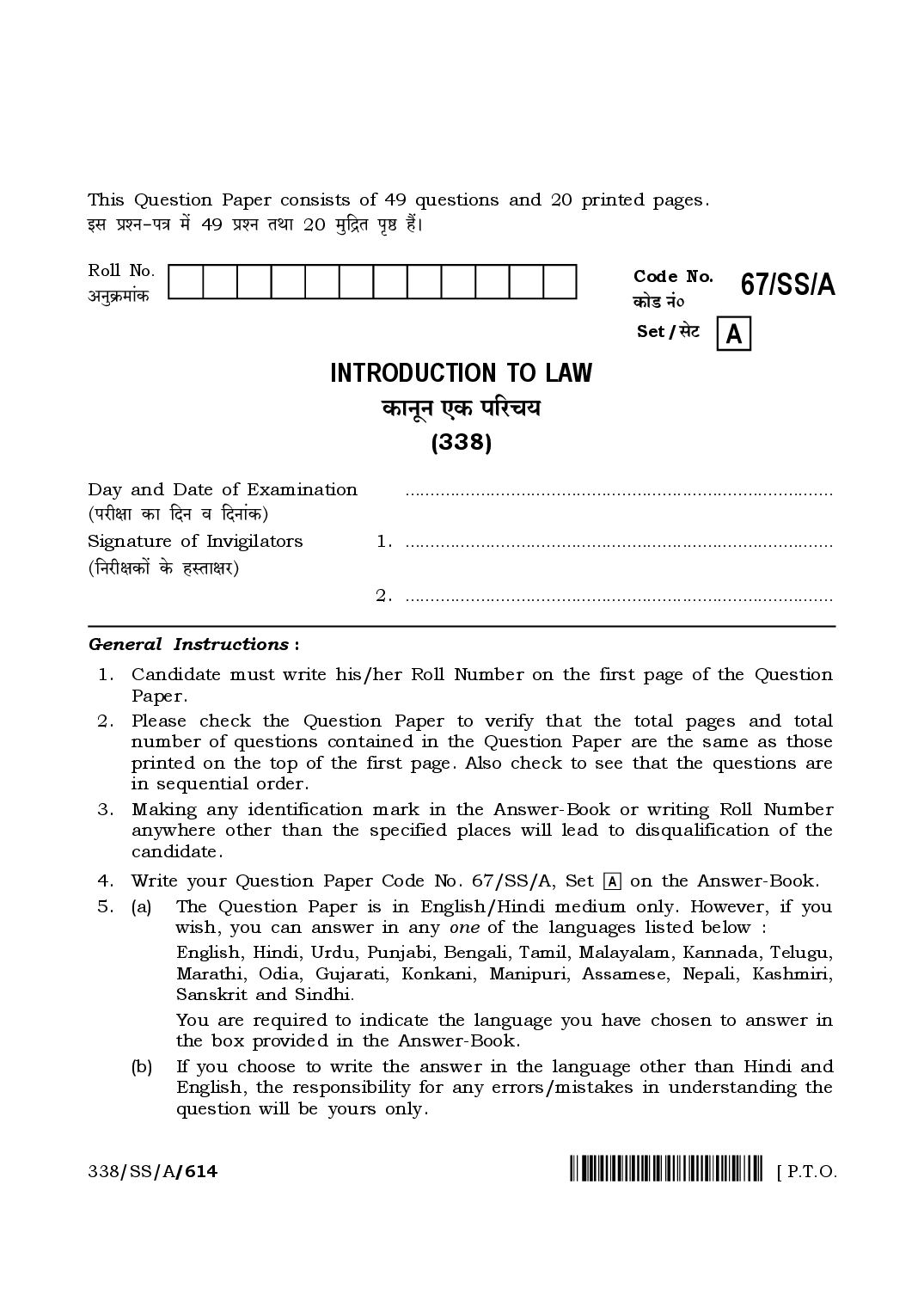
NIOS Class 12 April 2024 Question Paper Introduction To Law is available here for free download. Published by NIOS for National Institute of Open Schooling Class 12, this question paper can be viewed online or downloaded as a PDF (20 pages). Candidates preparing for National Institute of Open Schooling Class 12 can use NIOS Class 12 April 2024 Question Paper Introduction To Law to understand the exam pattern, the type of questions asked, and the overall difficulty level.
Frequently Asked Questions
How can I download NIOS Class 12 April 2024 Question Paper Introduction To Law?
Open this page and click the Download button to save NIOS Class 12 April 2024 Question Paper Introduction To Law as a PDF. It is completely free on AglaSem Docs.
Is NIOS Class 12 April 2024 Question Paper Introduction To Law free to download?
Yes. NIOS Class 12 April 2024 Question Paper Introduction To Law can be viewed online and downloaded as a PDF free of cost on AglaSem Docs.
How many pages does NIOS Class 12 April 2024 Question Paper Introduction To Law have?
NIOS Class 12 April 2024 Question Paper Introduction To Law contains 20 pages, which you can read online or download together as a single PDF.
Where can I find more National Institute of Open Schooling Class 12 study material?
You can find more National Institute of Open Schooling Class 12 question papers, sample papers, syllabus, and answer keys on AglaSem Docs.
NIOS Class 12 April 2024 Question Paper Introduction To Law – Text
Read the full text of this question paper below — useful to quickly search, copy and reference the content online without downloading the PDF.
📄 View text version (20 pages)
Page 1
Bg àíZ-nÌ ‘| 49 àíZ VWm 20 ‘w{ÐV n¥ð> h¢&
Roll No. Code No.
AZwH«$‘m§H$ 67/SS/A
u
H$moS> Z§0
Set / goQ>
INTRODUCTION TO LAW
H$mZyZ EH$ n[aM¶
(338)
Day and Date of Examination .....................................................................................
(narjm H$m {XZ d {XZm§H$)
Signature of Invigilators 1. .....................................................................................
({ZarjH$m| Ho$ hñVmja)
2. .....................................................................................
General Instructions :
1. Candidate must write his/her Roll Number on the first page of the Question
Paper.
2. Please check the Question Paper to verify that the total pages and total
number of questions contained in the Question Paper are the same as those
printed on the top of the first page. Also check to see that the questions are
in sequential order.
3. Making any identification mark in the Answer-Book or writing Roll Number
anywhere other than the specified places will lead to disqualification of the
candidate.
4. Write your Question Paper Code No. 67/SS/A, Set u on the Answer-Book.
5. (a) The Question Paper is in English/Hindi medium only. However, if you
wish, you can answer in any one of the languages listed below :
English, Hindi, Urdu, Punjabi, Bengali, Tamil, Malayalam, Kannada, Telugu,
Marathi, Odia, Gujarati, Konkani, Manipuri, Assamese, Nepali, Kashmiri,
Sanskrit and Sindhi.
You are required to indicate the language you have chosen to answer in
the box provided in the Answer-Book.
(b) If you choose to write the answer in the language other than Hindi and
English, the responsibility for any errors/mistakes in understanding the
question will be yours only.
338/SS/A/614 [ P.T.O.
Page 2
1. narjmWu àíZ-nÌ Ho$ nhbo n¥ð> na AnZm AZwH«$‘m§H$ Adí¶ {bI|&
2. H¥$n¶m àíZ-nÌ H$mo Om±M b| {H$ àíZ-nÌ Ho$ Hw$b n¥ð>m| VWm àíZm| H$s CVZr hr g§»¶m h¡ {OVZr àW‘ n¥ð> Ho$
g~go D$na N>nr h¡& Bg ~mV H$s Om±M ^r H$a b| {H$ àíZ H«${‘H$ ê$n ‘| h¢&
3. CÎma-nwpñVH$m ‘| nhMmZ-{M• ~ZmZo AWdm {Z{X©ï> ñWmZm| Ho$ A{V[aº$ H$ht ^r AZwH«$‘m§H$ {bIZo na narjmWu H$mo
A¶mo½¶ R>ham¶m Om¶oJm&
4. AnZr CÎma-nwpñVH$m na àíZ-nÌ H$s H$moS> Z0 67/SS/A, goQ u {bI|&
5. (H$) n«íZ-nÌ Ho$db A§J«oOr/{hÝXr ‘mܶ‘ ‘| h¡& {’$a ^r, ¶{X Amn Mmh| Vmo ZrMo Xr JB© {H$gr EH$ ^mfm ‘|
CÎma Xo gH$Vo h¢ …
A§J«oOr, {hÝXr, CXÿ©, n§Om~r, ~§Jbm, V{‘b, ‘b¶mb‘, H$Þ‹S>, VobwJy, ‘amR>r, C{‹S>¶m, JwOamVr, H$m|H$Ur,
‘{Unwar, Ag{‘¶m, Zonmbr, H$í‘rar, g§ñH¥$V Am¡a {gÝYr&
H¥$n¶m CÎma-nwpñVH$m ‘| {XE JE ~m°³g ‘| {bI| {H$ Amn {H$g ^mfm ‘| CÎma {bI aho h¢&
(I) ¶{X Amn {hÝXr Ed§ A§J«oOr Ho$ A{V[aº$ {H$gr Aݶ ^mfm ‘| CÎma {bIVo h¢, Vmo àíZm| H$mo g‘PZo ‘| hmoZo dmbr
Ìw{Q>¶m|/Jb{V¶m| H$s {Oå‘oXmar Ho$db AmnH$s hmoJr&
338/SS/A/614 2
Page 3
H$mZyZ EH$ n[aM¶
(338)
Time : 3 Hours ] [ Maximum Marks : 100
g‘¶ … 3 KÊQ>o ] [ nyUmªH$ … 100
Note : (i) This question paper consists of 49 questions in all.
(ii) All questions are compulsory.
(iii) Marks are given against each question.
(iv) Attempt all questions either from Optional Module–7A or Optional
Module–7B in all sections.
(v) Section—A consists of
Q. Nos. 1 to 20—Multiple-choice questions (MCQs) carry 1 mark each.
Select and write the most appropriate option out of the four options
given in each of these questions. An internal choice has been provided
in some of these questions. You have to attempt only one of the given
choices in such questions.
Q. Nos. 21 to 35—Objective type questions carry 2 marks (with 2 sub-
parts of 1 mark each) and attempt these questions as per the
instructions given for each of the questions 21 to 35.
(vi) Section—B consists of
Q. Nos. 36 to 41—Very short answer-type questions carrying 2 marks
each to be answered in the range of 30 to 50 words.
Q. Nos. 42 to 46—Short answer-type questions carrying 4 marks each
to be answered in the range of 50 to 80 words.
Q. Nos. 47 to 49—Long answer-type questions carrying 6 marks each to
be answered in the range of 80 to 120 words.
{ZX}e … (i) Bg àíZ-nÌ ‘| Hw$b 49 àíZ h¢&
(ii) g^r àíZ A{Zdm¶© h¢&
(iii) à˶oH$ àíZ Ho$ A§H$ CgHo$ gm‘Zo {XE JE h¢&
(iv) d¡H$pënH$ ‘m°S>²çyb-7A AWdm 7B Ho$ g^r àíZm| Ho$ CÎma X|&
(v) IÊS>-H$
à0 g§0 1 go 20 VH$ dhþ{dH$ënr¶ àíZ h¢& à˶oH$ H$m 1 A§H$ h¡& à˶oH$ àíZ ‘o§ {XE JE Mma
{dH$ënm|§ ‘o§ go g~go ghr {dH$ën MwZH$a {b{IE& Hw$N> àíZmo§ ‘o§ Am§V[aH$ {dH$ën {X¶m J¶m h¡&
Eogo àíZmo§ ‘| Ho$db EH$ H$m hr CÎma {bIo&
à0 g§0 21 go 35 VH$ dñVw{Zð> àíZ h¢& à˶oH$ Ho$ 2 A§H$ h¡§& (1 A§H$ dmbo 2 Cn^mJmo§ g{hV)&
{XE JE {ZX}emZwgma BZHo$ CÎma {bI|&
338/SS/A/614 3 [ P.T.O.
Page 4
à0 g§0 36 go 41 VH$ A{V bKw CÎmar¶ àíZ h¢, à˶oH$ Ho$ 2 A§H$ h¢, à˶oH$ H$m CÎma 30
go 50 eãXm| ‘| X|&
à0 g§0 42 go 46 VH$ bKw CÎmar¶ àíZ h¢, à˶oH$ Ho$ 4 A§H$ h¢, à˶oH$ H$m CÎma 50 go 80
eãXm| ‘| X|&
à0 g§0 47 go 49 VH$ XrK© CÎmar¶ àíZ h¢, à˶oH$ Ho$ 6 A§H$ h¢, à˶oH$ H$m CÎma 80 go
120 eãXm| ‘o§ X|&
(1) Answers of all questions are to be given in the Answer-Book given to you.
g^r àíZm| Ho$ CÎma AmnH$mo Xr JB© CÎma-nwpñVH$m ‘| hr {bI|&
(2) 15 minutes time has been allotted to read this question paper. The question
paper will be distributed at 2:15 p.m. From 2:15 p.m. to 2:30 p.m., the
students will read the question paper only and will not write any answer on
the Answer-Book during this period.
Bg àíZ-nÌ H$mo n‹T>Zo Ho$ {bE 15 {‘ZQ> H$m g‘¶ {X¶m J¶m h¡& àíZ-nÌ H$m {dVaU Xmonha ‘|
2:15 ~Oo {H$¶m OmEJm& Xmonha 2:15 ~Oo go 2:30 ~Oo VH$ N>mÌ Ho$db àíZ-nÌ H$mo n‹T>|Jo Am¡a
Bg Ad{Y Ho$ Xm¡amZ do CÎma-nwpñVH$m na H$moB© CÎma Zht {bI|Jo&
SECTION—A
IÊS>-H
Choose the correct option : 1×20=20
ghr {dH$ën Mw[ZE :
1. Child marriage is a form of marriage where the bride has not attained the
age of
(A) 15 years (B) 16 years
(C) 17 years (D) 18 years
~mb {ddmh EH$ àH$ma H$m Eogm {hÝXÿ {ddmh h¡ {Og‘| XþëhZ H$s Am¶w
(A) 15 df© Z hþB© hmo (B) 16 df© Z hþB© hmo
(C) 17 df© Z hþB© hmo (D) 18 df© Z hþB© hmo
Under the Muslim Law, what is the minimum age to enter into a contract
of marriage?
(A) 15 years (B) 16 years
(C) 17 years (D) 18 years
338/SS/A/614 4
Page 5
(A) 15 df© (B) 16 df©
(C) 17 df© (D) 18 df©
2. Which one of the following is not a source of the Muslim Law?
(A) The Quran (B) Sruti
(C) Sunna (D) Qiyas
{ZåZ{b{IV ‘| go H$m¡Z-gm {dH$ën ‘wpñb‘ H$mZyZ H$m òmoV Zht h¡?
(A) Hw$amZ (B) lw{V
(C) gwÞm (D) {H$¶mg
Under the Hindu Law, divorce is not permitted on the basis of
(A) adultery (B) insanity
(C) transfer (D) conversion
{hÝXÿ H$mZyZ Ho$ AÝVJ©V VbmH$ H$s {H$g AmYma na AZw‘{V Zht h¡?
(A) naórJ‘Z (B) nmJbnZ
(C) ñWmZmÝVaU (D) Y‘© n[adV©Z
3. Which one of the following is the correct expanded form of PIL?
(A) Public Interest Law (B) People Interest Law
(C) Public Information Law (D) Public Interest Litigation
{ZåZ{b{IV ‘| go H$m¡Z-gm {dH$ën nr0AmB©0Eb0 H$m ghr {dñV¥V ê$n h¡?
(A) npãbH$ BÝQ>aoñQ> bm° (B) nrnwb BÝQ>aoñQ> bm°
(C) npãbH$ BÝ’$m°‘}eZ bm° (D) npãbH$ BÝQ>aoñQ> {b{Q>JoeZ
Which one of the following is the correct expanded form of CPC?
(A) Civil Police Code (B) Civil Procedure Code
(C) Criminal Police Court (D) Criminal Procedure Code
{ZåZ{b{IV ‘| go H$m¡Z-gm {dH$ën gr0nr0gr0 H$m ghr {dñV¥V ê$n h¡?
(A) {g{db nw{bg H$moS> (B) {g{db àmogrOa H$moS>
(C) {H«${‘Zb nw{bg H$moQ>© (D) {H«${‘Zb àmogrOa H$moS>
4. Which one of the following is not a theory of punishment?
(A) Detterent theory (B) Persuation theory
(C) Preventive theory (D) Retributive theory
338/SS/A/614 5 [ P.T.O.
Page 6
(A) {ZdmaH$ {gÕmÝV (B) AZwZ¶ {gÕmÝV
(C) {ZamoYmË‘H$ {gÕmÝV (D) à{VH$mar {gÕmÝV
Which one of the following writs means ‘what is your authority’?
(A) Habeas corpus (B) Mandamus
(C) Prohibition (D) Quo warranto
{ZåZ{b{IV ‘| go {H$g [aQ> H$m AW© h¡ "AmnH$m A{YH$ma ³¶m h¡?'
(A) ~ÝXr à˶jrH$aU (B) na‘mXoe
(C) {ZfoYmXoe (D) A{YH$ma-n¥ÀN>m àmXoe
5. Which one of the following issues is not of public interest?
(A) Pollution (B) Terrorism
(C) Imprisonment (D) Road safety
{ZåZ{b{IV ‘| go H$m¡Z-gm {df¶/‘wX²Xm OZ{hV H$m Zht h¡?
(A) àXÿfU (B) AmV§H$dmX
(C) H$mamdmg (D) g‹S>H$ gwajm
6. In which year was the Right to Information Act enacted by the Government
of India?
(A) 2003 (B) 2004
(C) 2005 (D) 2006
^maV gaH$ma Ûmam gyMZm H$m A{YH$ma A{Y{Z¶‘ {H$g df© A{Y{Z¶{‘V {H$¶m J¶m Wm?
(A) 2003 (B) 2004
(C) 2005 (D) 2006
7. Which one of the following is a false statement about Public Law?
(A) It deals with issues that affect an individual or the State itself.
(B) In Public Law, State is not only arbiter, but is also one of the parties
interested.
(C) Public Law is concerned with the structure of the Government.
(D) In Public Law, the State is present only as arbiter of the rights and
duties.
338/SS/A/614 6
Page 7
(A) ¶h CZ ‘wX²Xm| Ho$ ~mao ‘| hmoVm h¡ Omo ì¶{º$ AWdm amÁ¶ H$mo à^m{dV H$aVo h¢&
(B) gmd©O{ZH$ H$mZyZ ‘| amÁ¶ Ho$db ‘ܶñW hr Zht hmoVm A{nVw EH$ nmQ>u (nj) ^r hmoVm h¡&
(C) gmd©O{ZH$ H$mZyZ gaH$ma Ho$ T>m±Mo go gå~pÝYV hmoVm h¡&
(D) gmd©O{ZH$ H$mZyZ ‘| amÁ¶ A{YH$mam| Am¡a H$V©ì¶m| Ho$ ‘ܶñW Ho$ ê$n ‘| CnpñWV ahVm h¡&
A substantive law deals with
(A) the legal relationship between subject and the State
(B) the legal relationship between two individuals
(C) the relationship between two States
(D) the relationship between the Constitution and the State
EH$ A{Yð>m¶r H$mZyZ H$m H$m¶©joÌ ³¶m hmoVm h¡?
(A) àOm Am¡a amÁ¶ Ho$ ~rM H$mZyZr g§~§Y
(B) Xmo ì¶{º$¶m| Ho$ ~rM H$mZyZr g§~§Y
(C) Xmo amÁ¶m| Ho$ ~rM H$mZyZr g§~§Y
(D) g§{dYmZ Am¡a amÁ¶ Ho$ ~rM g§~§Y
8. Which one of the following is not a substantive law?
(A) Penal Law (B) The Code of Civil Procedure
(C) Law of Contract (D) Law of Property
{ZåZ{b{IV ‘| go H$m¡Z-gm EH$ A{Yð>m¶r H$mZyZ Zht h¡?
(A) XÊS> {d{Y (B) à{H«$¶mË‘H$ {g{db H$mZyZ
(C) g§{dXm H$mZyZ (D) gån{Îm H$mZyZ
Which one of the following is not a procedural law?
(A) The Indian Evidence Act (B) The Court Fees Act
(C) The Suits Valuation Act (D) The Specific Relief Act
{ZåZ{b{IV ‘| go H$m¡Z-gm H$mZyZ à{H«$¶mË‘H$ H$mZyZ Zht h¡?
(A) ^maVr¶ gmú¶ A{Y{Z¶‘ (B) ݶm¶mb¶ ’$sg A{Y{Z¶‘
(C) dmX ‘yë¶m§H$Z A{Y{Z¶‘ (D) {deof amhV A{Y{Z¶‘
338/SS/A/614 7 [ P.T.O.
Page 8
(A) Advance Dispute Resolution
(B) Alternative Dispute Resolution
(C) Advance Direct Resolution
(D) Active Dispute Resolution
E0S>r0Ama0 H$m ghr {dñV¥V ê$n h¡
(A) ES>²dm§g {S>g²ß¶yQ> [aOmoë¶yeZ
(B) Am°ëQ>aZo{Q>d {S>g²ß¶yQ> [aOmoë¶yeZ
(C) ES>dm§g S>m¶ao³Q> [aOmoë¶yeZ
(D) Eop³Q>d {S>g²ß¶yQ> [aOmoë¶yeZ
How many States of India are under the jurisdiction of Guwahati High
Court?
(A) Seven (B) Five
(C) Three (D) One
JwdmhmQ>r Cƒ ݶm¶mb¶ Ho$ joÌm{YH$ma ‘| ^maV Ho$ {H$VZo amÁ¶ AmVo h¢?
(A) gmV (B) nm±M
(C) VrZ (D) EH$
10. Which one of the following is not a technique of ADR?
(A) Arbitration (B) Lok Adalat
(C) Trial (D) Conciliation
{ZåZ{b{IV ‘| go H$m¡Z-gr E0S>r0Ama0 H$s VH$ZrH$ Zht h¡?
(A) {ddmMZ (B) bmoH$ AXmbV
(C) ‘wH$X‘m (D) ‘ܶñW {ddmMZ
11. Who among the following assists to resolve a dispute in the process of
‘conciliation’?
(A) Lok Adalat (B) A third party
(C) Majistrate (D) Lawyer
‘ܶñW {ddmMZ H$s à{H«$¶m ‘| {ZåZ{b{IV ‘| go H$m¡Z {ddmX g‘mYmZ ‘| ghm¶Vm H$aVm h¡?
(A) bmoH$ AXmbV (B) H$moB© Vrgam ì¶{º$
(C) ‘{OñQ´>oQ> (D) dH$sb
338/SS/A/614 8
Page 9
‘mediation’?
(A) District Court (B) An independent third person
(C) District Majistrate (D) Lok Adalat
"‘ܶñWVm' H$s à{H«$¶m ‘| {ZåZ{b{IV ‘| go H$m¡Z {ddmX g‘mYmZ ‘| ghm¶Vm H$aVm h¡?
(A) {Obm ݶm¶mb¶ (B) H$moB© ñdV§Ì Vrgam ì¶{º$
(C) {Obm ‘{OñQ´>oQ> (D) bmoH$ AXmbV
12. Camps of Lok Adalat were initially started in
(A) Delhi (B) Punjab
(C) Bihar (D) Gujarat
àmaå^ ‘| bmoH$ AXmbV Ho$ H¡$ån {H$g amÁ¶ ‘| ewê$ {H$E JE Wo?
(A) {X„r (B) n§Om~
(C) {~hma (D) JwOamV
13. Which word from the following is not in the Preamble of the Indian
Constitution?
(A) Sovereign (B) National
(C) Secular (D) Republic
{ZåZ{b{IV ‘| go H$m¡Z-gm eãX ^maVr¶ g§{dYmZ H$s àñVmdZm ‘| Zht h¡?
(A) à^wËd gånÞ (B) amï´>r¶
(C) n§W{Zanoj (D) JUV§Ì
When was the Constitution of India adopted by the Constituent Assembly?
(A) 26 November, 1949 (B) 26 January, 1950
(C) 26 November, 1950 (D) 26 January, 1949
g§{dYmZ g{‘{V Zo g§{dYmZ H$mo H$~ A§JrH$ma {H$¶m Wm?
(A) 26 Zdå~a, 1949 (B) 26 OZdar, 1950
(C) 26 Zdå~a, 1950 (D) 26 OZdar, 1949
338/SS/A/614 9 [ P.T.O.
Page 10
(A) in the beginning of the Constitution
(B) in the end of the Constitution
(C) not given in the Constitution
(D) in the middle of the Constitution
^maVr¶ g§{dYmZ H$s àñVmdZm
(A) g§{dYmZ Ho$ àmaå^ ‘| h¡
(B) g§{dYmZ Ho$ AÝV ‘| h¡
(C) g§{dYmZ ‘| Zht X§r JB© h¡
(D) g§{dYmZ Ho$ ‘ܶ ‘| h¡
Who among the following was the President of the Constituent Assembly?
(A) Dr. Rajendra Prasad (B) Dr. B. R. Ambedkar
(C) Mahatma Gandhi (D) Jawaharlal Nehru
{ZåZ{b{IV ‘| go g§{dYmZ g{‘{V H$m Aܶj H$m¡Z Wm?
(A) S>m°0 amOoÝÐ àgmX (B) S>m°0 ~r0 Ama0 Aå~oS>H$a
(C) ‘hmË‘m J±mYr (D) Odmhabmb Zohê$
15. How many Fundamental Rights are there in the Constitution of India at
present?
(A) Four (B) Five
(C) Six (D) Seven
dV©‘mZ ‘| ^maV Ho$ g§{dYmZ ‘| {H$VZo ‘m¡{bH$ A{YH$ma h¢?
(A) Mma (B) nm±M
(C) N>… (D) gmV
16. How many freedoms have been granted under the Right to Freedom?
(A) Five (B) Six
(C) Seven (D) Eight
ñdV§ÌVm Ho$ ‘m¡{bH$ A{YH$ma Ho$ AÝVJ©V {H$VZr ñdV§ÌVmE± àXmZ H$s JB© h¢?
(A) nm±M (B) N>…
(C) gmV (D) AmR>
338/SS/A/614 10
Page 11
(A) 25 years (B) 28 years
(C) 30 years (D) 35 years
amÁ¶g^m H$m gXñ¶ ~ZZo Ho$ {bE ݶyZV‘ Am¶w {H$VZr hmoZr Mm{hE?
(A) 25 df© (B) 28 df©
(C) 30 df© (D) 35 df©
18. Which one of the following States has the largest number of Vidhan Sabha
Members?
(A) Uttar Pradesh (B) West Bengal
(C) Tamil Nadu (D) Andhra Pradesh
{ZåZ{b{IV ‘| go {H$g amÁ¶ H$s {dYmZ g^m Ho$ gXñ¶m| H$s g§»¶m g~go A{YH$ h¡?
(A) CÎma àXoe (B) npíM‘ ~§Jmb
(C) V{‘bZmSw> (D) AmÝY« àXoe
19. Which one of the following can be used by the Lok Sabha Members only?
(A) Adjournment Motion (B) Question Hour
(C) Calling Attention Motion (D) No Confidence Motion
{ZåZ{b{IV ‘| go {H$g EH$ H$m à¶moJ Ho$db bmoH$g^m Ho$ gXñ¶ hr H$a gH$Vo h¢?
(A) ñWJZ àñVmd (B) àíZ H$mb
(C) ܶmZmH$f©U àñVmd (D) A{dídmg àñVmd
20. How many judges including the chief justice are there in the Supreme Court
of India at present?
(A) 25 (B) 27
(C) 29 (D) 31
^maV Ho$ gdm}ƒ ݶm¶mb¶ ‘| dV©‘mZ ‘| ‘w»¶ ݶm¶mYre H$mo {‘bmH$a Hw$b {H$VZo ݶm¶mYre h¢?
(A) 25 (B) 27
(C) 29 (D) 31
21. Fill in the blanks correctly :
[aº$ ñWmZm| H$mo R>rH$ go ^[aE :
Under the Muslim Law, a husband may divorce his _____ by repudiating
the marriage without giving any _____. 1+1=2
‘wpñb‘ H$mZyZ Ho$ AÝVJ©V EH$ n{V AnZr _____ H$mo {~Zm H$moB© _____~VmE {ddmh H$m IÊS>Z H$aHo$
VbmH$ Xo gH$Vm h¡&
338/SS/A/614 11 [ P.T.O.
Page 12
two major enactments on the Hindu Law. 1+1=2
{hÝXÿ {ddmh A{Y{Z¶‘ _____ VWm {hÝXÿ CÎmam{YH$ma A{Y{Z¶‘ _____ {hÝXÿ H$mZyZ Ho$ Xmo à‘wI
A{Y{Z¶‘ h¢&
22. Match any two of the following correctly : 1×2=2
Column—A Column—B
(a) Indian Succession Act, 1925 (i) Hindu Marriage Act
(b) Sapinda (ii) Christians
(c) Qiyas (iii) Source of Muslim Law
(d) Intestate Succession (iv) Hindu Law
{ZåZ{b{IV ‘| go {H$Ýht Xmo H$m ghr {‘bmZ H$s{OE :
H$m°b‘—A H$m°b‘—B
(a) ^maVr¶ CÎmam{YH$ma A{Y{Z¶‘, 1925 (i) {hÝXy {ddmh A{Y{Z¶‘
(b) g{n§S (ii) B©gmB©
(c) {H$¶mg (iii) ‘wpñb‘ H$mZyZ H$m òmoV
(d) {Zd©gr¶V CÎmam{YH$ma (iv) {hÝXÿ H$mZyZ
23. Write True or False correctly (any two) : 1×2=2
(a) Judges can make any new law.
(b) Administration has been defined as the exercise of political powers.
(c) According to the Constitution, India is a capitalist State.
(d) Private law governs the relations of citizens with each other.
{H$Ýht Xmo H$WZm| Ho$ ~mao ‘| "g˶' AWdm "Ag˶' {b{IE :
(H$) ݶm¶mYre H$moB© Z¶m H$mZyZ ~Zm gH$Vo h¢&
(I) àemgZ H$mo amOZr{VH$ e{º$¶m| Ho$ à¶moJ Ho$ ê$n ‘| n[a^m{fV {H$¶m J¶m h¡&
(J) g§{dYmZ Ho$ AZwgma, ^maV EH$ ny±OrdmX Xoe h¡&
(K) {ZOr H$mZyZ, ZmJ[aH$m| Ho$ EH$-Xygao Ho$ gmW gå~ÝYm| H$mo em{gV H$aVm h¡&
24. Fill in the blanks correctly :
[aº$ ñWmZm| H$mo R>rH$ go ^[aE :
Criminal law is the body of _____ that relates to _____. 1+1=2
Amnam{YH$ H$mZyZ, _____ H$m dh {ZH$m¶ h¡ Omo _____ go gå~pÝYV h¡&
338/SS/A/614 12
Page 13
and _____. 1+1=2
àemg{ZH$ H$mZyZ H$mo _____ EOopÝg¶m| Zo {d{Z¶‘m| Am¡a _____ Ho$ ê$n ‘| {Z{‘©V {H$¶m h¡&
25. Write True or False correctly (any two) : 1×2=2
(a) A right of appeal is a substantive law.
(b) The substantial law lays down the rules which help to enforce laws.
(c) The law of procedure may be defined as that branch of law which
governs the process of litigation.
(d) Procedural law includes all legal proceedings, civil or criminal.
{ZåZ{b{IV H$WZm| Ho$ ~mao ‘§o "g˶' AWdm "Ag˶' {bI| (H$moB© Xmo) :
(H$) Anrb H$m A{YH$ma A{Yð>m¶r H$mZyZ h¡&
(I) A{Yð>m¶r H$mZyZ Eogo {Z¶‘ ~ZmVm h¡ {OgH$s ghm¶Vm go H$mZyZ bmJy {H$¶m OmVm h¡&
(J) à{H«$¶mË‘H$ H$mZyZ H$mo H$mZyZ H$s Cg emIm Ho$ ê$n ‘| n[a^m{fV {H$¶m Om gH$Vm h¡ Omo
_wH$X_o~mOr H$s à{H«$¶m H$mo {Z¶pÝÌV H$aVm h¡&
(K) à{H«$¶mË‘H$ H$mZyZ ‘| g^r H$mZyZr H$m¶©dm{h¶m±, {g{db AWdm Amnam{YH$, em{‘b hmoVr h¢&
26. Write True or False correctly : 1+1=2
(a) The distinction between substantial law and procedural law is real
and factual.
(b) Substantive law is a statutory law that defines the crime or wrong and
their remedies.
{ZåZ{b{IV H$WZm| Ho$ ~mao ‘| g˶ AWdm Ag˶ {b{IE :
(H$) A{Yð>m¶r Am¡a à{H«$¶mË‘H$ H$mZyZ Ho$ ~rM AÝVa V϶mË‘H$ Am¡a dmñV{dH$ hmoVm h¡&
(I) A{Yð>m¶r H$mZyZ gm§[dYm{ZH$ H$mZyZ h¡ Omo AnamY AWdm JbV H$m¶© Ed§ CgHo$ CnMma n[a^m{fV
H$aVm h¡&
27. Write True or False correctly (any two) : 1×2=2
(a) Lok Adalat is the most popular technique of ADR.
(b) Lok Adalats have no legal status.
(c) Decisions of the Lok Adalat cannot be challenged in any court.
(d) Lok Adalats provide quick and economic justice.
338/SS/A/614 13 [ P.T.O.
Page 14
(H$) bmoH$ AXmbV d¡H$pënH$ {ddmX g‘mYmZ (E0Sr>0Ama0) H$s g~go bmoH${චVH$ZrH$ h¡&
(I) bmoH$ AXmbV H$s H$moB© H$mZyZr h¡{g¶V Zht h¡&
(J) bmoH$ AXmbVm| Ho$ {ZU©¶m| H$mo {H$gr ^r AXmbV ‘| MwZm¡Vr Zht Xr Om gH$Vr h¡&
(K) bmoH$ AXmbV| Vrd« Am¡a gñVm ݶm¶ àXmZ H$aVr h¢&
28. Write True or False correctly (any two) : 1×2=2
(a) There is no difference between the Legal Rights and the Fundamental
Rights.
(b) The Supreme Court and the High Courts have been given power to
enforce the Fundamental Rights.
(c) The Parliament has the right to amend the Fundamental Rights as per
the Judgement of Keshvananda Bharati Case.
(d) The 42nd Amendment asserted the right of the Parliament to amend
the Fundamental Rights.
{ZåZ{b{IV ‘| {H$Ýht Xmo H$WZm| Ho$ ~mao ‘| "g˶' AWdm "Ag˶' {b{IE :
(H$) H$mZyZr A{YH$mam| Am¡a g§d¡Ym{ZH$ A{YH$mam| Ho$ ~rM H$moB© AÝVa Zht h¡&
(I) gdm}ƒ ݶm¶mb¶ Am¡a Cƒ ݶm¶mb¶ H$mo ‘m¡{bH$ A{YH$ma bmJy H$aZo H$s e{º$ Xr JB© h¡&
(J) Ho$edmZÝX ^maVr Ho$g Ho$ AZwgma g§gX H$mo ‘m¡{bH$ A{YH$mam| ‘| g§emoYZ H$aZo H$m A{YH$ma h¡&
(K) 42d| g§{dYmZ g§emoYZ Zo ‘m¡{bH$ A{YH$mam| H$mo g§emo{YV H$aZo Ho$ g§gX Ho$ A{YH$ma na Omoa
{X¶m h¡&
29. Fill in the blanks correctly (any one) : 2
(a) It is the duty of every citizen to abide by the _____ and respect its
_____.
(b) The Fundamental Rights have _____ force behind them and _____ have
sanction of public opinion.
[aº$ ñWmZm| H$mo R>rH$ go ^[a¶o (H$moB© EH$) :
(H$) à˶oH$ ZmJ[aH$ H$m ¶h H$V©ì¶ h¡ {H$ dh _____ H$m nmbZ H$ao Am¡a BgHo$ _____ H$m AmXa H$ao&
(I) ‘m¡{bH$ A{YH$mam| Ho$ nrN>o _____ H$s e{º$ hmoVr h¡ Am¡a _____ Ho$ nrN>o OZ‘V H$s e{º$ hmoVr h¡&
Fill in the blanks correctly : 1+1=2
[aº$ ñWmZm| H$mo R>rH$ go ^[aE …
30. Members of the Lok Sabha form a part of electoral _____ to elect the _____
of India.
^maV ‘| _____ Ho$ MwZmd Ho$ {bE bmoH$g^m Ho$ gXñ¶ MwZmd _____ H$m EH$ ^mJ hmoVo h¢&
338/SS/A/614 14
Page 15
Sabha for a term of 6 years. 1+1=2
{dYmZ _____ Ho$ gXñ¶m| H$mo {dYmZg^m Ho$ _____ N>… df© Ho$ {bE {Zdm©{MV H$aVo h¢&
31. The Judges of the Supreme Court of India can be _____ from office through
the process of _____. 1+1=2
^maVr¶ gdm}ƒ ݶm¶mb¶ Ho$ ݶm¶mYrem| H$mo CZHo$ nX go _____ H$s à{H«$¶m Ho$ ‘mܶ‘ go _____
Om gH$Vm h¡&
32. The _____ system adopted in India is based on _____ of the courts. 1+1=2
^maV ‘| AnZm¶r JB© _____ ì¶dñWm ݶm¶mb¶m| H$s _____ na AmYm[aV h¡&
33. ‘Judicial activism’ is a term for the role of _____ in initiating the policies
to dispense _____ on its own. 1+1=2
"ݶm{¶H$ g{H«$¶Vm' eãXmdbr H$m à¶moJ _____ Ûmam Zr{V¶m±± ewê$ H$aHo$ _____ àXmZ H$aZo H$s ^y{‘H$m
Ho$ {bE {H$¶m OmVm h¡&
OPTIONAL MODULE—7A
d¡H$pënH$ ‘m°S>²çyb—7A
34. Fill in the blanks correctly :
[aº$ ñWmZm| H$mo R>rH$ go ^[aE …
After _____ Gas Disaster in 1984, there was a growth of _____ activism,
which led to reinterpretation of existing laws and legislations. 1+1=2
1984 H$s _____ J¡g ÌmgXr Ho$ ~mX _____ g{H«$¶Vm ‘| d¥{Õ hþB© {OgZo dV©‘mZ H$mZyZm| H$s nwZì¶m©»¶m
H$m ‘mJ© àeñV {H$¶m&
The Electricity Act of 2003 has tried to ensure better development in the
_____ sector and also emphasize the use of _____ energy. 1+1=2
Bbop³Q´>{gQ>r ({~Obr) A{Y{Z¶‘, 2003 Zo _____ joÌ ‘| ~ohVa {dH$mg gw{ZpíMV H$aZo H$m à¶mg
{H$¶m Am¡a _____ D$Om© à¶moJ H$aZo na ~b {X¶m&
338/SS/A/614 15 [ P.T.O.
Page 16
Column—A Column—B
(a) Kyoto Protocol (i) Protection of ozone layer
(b) Vienna Convention (ii) 2010
(c) The Environment (iii) 1981
Protection Act
(d) The National Green (iv) Emission of greenhouse gases
Tribunal
{ZåZ{b{IV H$m ghr {‘bmZ H$s{OE (H$moB© Xmo) :
H$m°b‘—A H$m°b‘—B
(a) ³¶moQ>mo àmoQ>moH$mob (i) AmoOmoZ naV H$mo ~MmZm
(b) {d¶Zm gå‘obZ (ii) 2010
(c) n¶m©daU g§ajU A{Y{Z¶‘ (iii) 1981
(d) Z¡eZb J«rZ {Q´>ã¶yZb (iv) J«rZhmCg J¡gm| H$m CËgO©Z
OPTIONAL MODULE—7B
d¡H$pënH$ ‘m°S>²çyb—7B
34. Write the correct expansion of the following (any two) : 1×2=2
(a) CCI (b) MRTP
(c) NCDRC (d) CPA
{ZåZ{b{IV ‘| go {H$Ýht Xmo H$m ghr {dñV¥V ê$n {b{IE :
(H$) gr0gr0AmB©0 (I) E‘0Ama0Q>r0nr0
(J) EZ0gr0S>r0Ama0gr0 (K) gr0nr0E0
35. Write True or False correctly : 1+1=2
(a) The main aim of consumer activism is that State should protect the
interests of the consumers against unfair trade practices.
(b) Redressal means a remedy to a consumer.
338/SS/A/614 16
Page 17
(H$) Cn^moº$m g{H«$¶Vm H$m ‘w»¶ CÔoí¶ h¡ {H$ amÁ¶ H$mo AZw{MV H$mamo~mar ì¶dhmam| Ho$ {déÕ
Cn^moº$mAm| Ho$ {hVm| H$s ajm H$aZr Mm{hE&
(I) {ZdmaU H$m AW© h¡ Cn^moº$m Ho$ {bE CnMma àXmZ H$aZm&
SECTION—B
IÊS>-I
36. Explain the meaning of ‘personal law’. 2
"{ZOr H$mZyZ' H$m AW© ñnï> H$s{OE&
Explain the ‘hybrid legal system’.
"{‘{lV H$mZyZr ì¶dñWm' H$s ì¶m»¶m H$s{OE&
37. Explain the meaning of ‘drafting’. 2
"àmê$nU' H$m AW© ñnï> H$s{OE&
Explain the term ‘pleading’.
"A{^dmMZ' H$s ì¶m»¶m H$s{OE&
38. Explain the term ‘Actus Reus’. 2
"E³Q>g ar¶g' H$m AW© ñnï> H$s{OE&
Explain ‘intoxication’ as a defense in criminal law.
Amnam{YH$ H$mZyZ ‘| "Zem' H$mo à{Vajm Ho$ ê$n ‘| ñnï> H$s{OE&
39. Explain the meaning of ‘procedural law’. 2
"à{H«$¶mË‘H$ H$mZyZ' Ho$ AW© H$mo ñnï> H$s{OE&
Explain the meaning of ‘administrative law’.
"àemg{ZH$ H$mZyZ' Ho$ AW© H$mo ñnï> H$s{OE&
338/SS/A/614 17 [ P.T.O.
Page 18
"emofU Ho$ {déÕ A{YH$ma' ‘m¡{bH$ A{YH$ma H$s ì¶m»¶m H$s{OE&
Explain the purpose of the Directive Principles of State Policy.
amÁ¶ Ho$ Zr{V {ZX}eH$ {gÕmÝVm| H$m CÔoí¶ ñnï> H$s{OE&
OPTIONAL MODULE—7A
d¡H$pënH$ ‘m°S>²çyb—7A
41. Explain any two provisions of the Stockholm Declaration, 1972 2
ñQ>mH$hmo‘ CX²KmofUm, 1972 Ho$ {H$Ýht Xmo àmdYmZm| H$s ì¶m»¶m H$s{OE&
OPTIONAL MODULE—7B
d¡H$pënH$ ‘m°S>²çyb—7B
41. Explain the meaning of the term ‘Consumer Redressal’. 2
"Cn^moº$m {ZdmaU' nX H$m AW© ñnï> H$s{OE&
42. Describe any four essentials of a valid marriage under the Muslim Law. 4
‘wpñb‘ H$mZyZ Ho$ AÝVJ©V EH$ d¡Y {ddmh H$s {H$Ýht Mma A{Zdm¶©VmAm| H$m dU©Z H$s{OE&
Describe any four essentials of a valid marriage under the Hindu Laws.
{hÝXÿ H$mZyZ Ho$ AÝVJ©V EH$ d¡Y {ddmh H$s {H$Ýht Mma A{Zdm¶©VmAm| H$m dU©Z H$s{OE&
43. Analyze the ‘Reformative theory’ of punishment. 4
XÊS> Ho$ "gwYmamË‘H$ {gÕmÝV' H$m {díbofU H$s{OE&
Analyze the ‘Retributive theory’ of punishment.
XÊS> Ho$ "à{VH$mar {gÕmÝV' H$m {díbofU H$s{OE&
44. Evaluate the predominance of the Union Law and limitations of the State
Legislatures. 4
g§Kr¶ H$mZyZm| H$m Am{Yn˶ Am¡a amÁ¶ Ûmam {Z{‘©V gr‘m~ÕVmAm| H$m AmH$bZ H$s{OE&
338/SS/A/614 18
Page 19
XÊS> Ho$ {H$Ýht Xmo {gÕm§Vmo§ H$m {díbofU H$s{OE&
45. Analyze the Directive Principles of State Policy as an instrument to achieve
social and economic welfare of the people. 4
bmoJm| Ho$ gm‘m{OH$ Am¡a Am{W©H$ H$ë¶mU H$mo àmá H$aZo Ho$ EH$ gmYZ Ho$ ê$n ‘|, amÁ¶ Ho$ Zr{V {ZX}eH$
{gÕmÝVm| H$m {díbofU H$s{OE&
Analyze the importance of the Fundamental Duties added in the
Constitution of India in 1976.
1976 ‘| ^maV Ho$ g§{dYmZ ‘| Omo‹S>o JE ‘m¡{bH$ H$V©ì¶m| Ho$ ‘hÎd H$m {díbofU H$s{OE&
OPTIONAL MODULE—7A
d¡H$pënH$ ‘m°S>²çyb—7A
46. Highlight any four powers of the National Green Tribunal. 4
Z¡eZb J«rZ {Q´>ã¶yZb H$s {H$Ýht Mma e{º$¶m| H$mo COmJa H$s{OE&
OPTIONAL MODULE—7B
d¡H$pënH$ ‘m°S>²çyb—7B
46. Analyze any four unfair trade practices. 4
{H$Ýht Mma AZw{MV H$mamo~mar ì¶dhmam| H$m {díbofU H$s{OE&
47. Explain the meaning of ‘Plea Bargaining’ and any two types of it. 2+4=6
"ßbr ~mJ}qZJ' H$m AW© Ed§ BgHo$ H$moB© Xmo àH$ma ñnï> H$s{OE&
Explain any three main provisions of the Legal Services Authorities
(Amendment) Act, 1994. 2×3=6
{d{YH$ godmE± àm{YH$aU (g§emo{YV) A{Y{Z¶‘, 1994 Ho$ {H$Ýht VrZ à‘wI àmdYmZm| H$s ì¶m»¶m
H$s{OE&
338/SS/A/614 19 [ P.T.O.
Page 20
Constitution of India. 6
^maV Ho$ g§{dYmZ ‘| àXÎm ‘m¡{bH$ A{YH$mam| Ho$ ‘hÎd H$m AmH$bZ H$s{OE&
Assess the role of the Preamble in the working of the Constitution.
g§{dYmZ H$s H$m¶©àUmbr ‘| àñVmdZm H$s ^y{‘H$m H$m AmH$bZ H$s{OE&
OPTIONAL MODULE—7A
d¡H$pënH$ ‘m°S>²çyb—7A
49. Analyze any three reasons for the need of sustainable development. 2×3=6
YmaUr¶ {dH$mg H$s Amdí¶H$Vm Ho$ {H$Ýht VrZ H$maUm| H$m {díbofU H$s{OE&
Highlight any two examples of leading judgements to protect the
environment. 3×2=6
"n¶m©daU Ho$ g§ajU' Ho$ nj ‘| {H$Ýht Xmo ݶm{¶H$ {ZU©¶m| Ho$ CXmhaU COmJa H$s{OE&
OPTIONAL MODULE—7B
d¡H$pënH$ ‘m°S>²çyb—7B
49. Analyze any two redressal provisions against the unfair trade practices. 6
AZw{MV H$mamo~mar ì¶dhmam| Ho$ {déÕ {ZdmaU Ho$ {H$Ýht Xmo àmdYmZm| H$m {díbofU H$s{OE&
Assess the impact of consumer movement in India.
^maV ‘| Cn^moº$m Am§XmobZ Ho$ à^md H$m AmH$bZ H$s{OE&
338/SS/A/614 [24V—900] 20
Document Details
| Board / Org | NIOS |
| Exam | National Institute of Open Schooling Class 12 |
| Type | Question Paper |
| Pages | 20 |
| Language | english |
| Updated | 24 Sep 2026 |