KSET 2020 Question Paper Economics
Finished viewing? Save it for later —
Download KSET 2020 Question Paper Economics (PDF · 40 pages)About KSET 2020 Question Paper Economics
KSET 2020 Question Paper Economics is available here for free download. Published by Karnataka Exams for Karnataka State Eligibility Test, this question paper can be viewed online or downloaded as a PDF (40 pages). Candidates preparing for Karnataka State Eligibility Test can use KSET 2020 Question Paper Economics to understand the exam pattern, the type of questions asked, and the overall difficulty level.
Frequently Asked Questions
How can I download KSET 2020 Question Paper Economics?
Open this page and click the Download button to save KSET 2020 Question Paper Economics as a PDF. It is completely free on AglaSem Docs.
Is KSET 2020 Question Paper Economics free to download?
Yes. KSET 2020 Question Paper Economics can be viewed online and downloaded as a PDF free of cost on AglaSem Docs.
How many pages does KSET 2020 Question Paper Economics have?
KSET 2020 Question Paper Economics contains 40 pages, which you can read online or download together as a single PDF.
Where can I find more Karnataka State Eligibility Test study material?
You can find more Karnataka State Eligibility Test question papers, sample papers, syllabus, and answer keys on AglaSem Docs.
KSET 2020 Question Paper Economics – Text
Read the full text of this question paper below — useful to quickly search, copy and reference the content online without downloading the PDF.
📄 View text version (40 pages)
Page 1
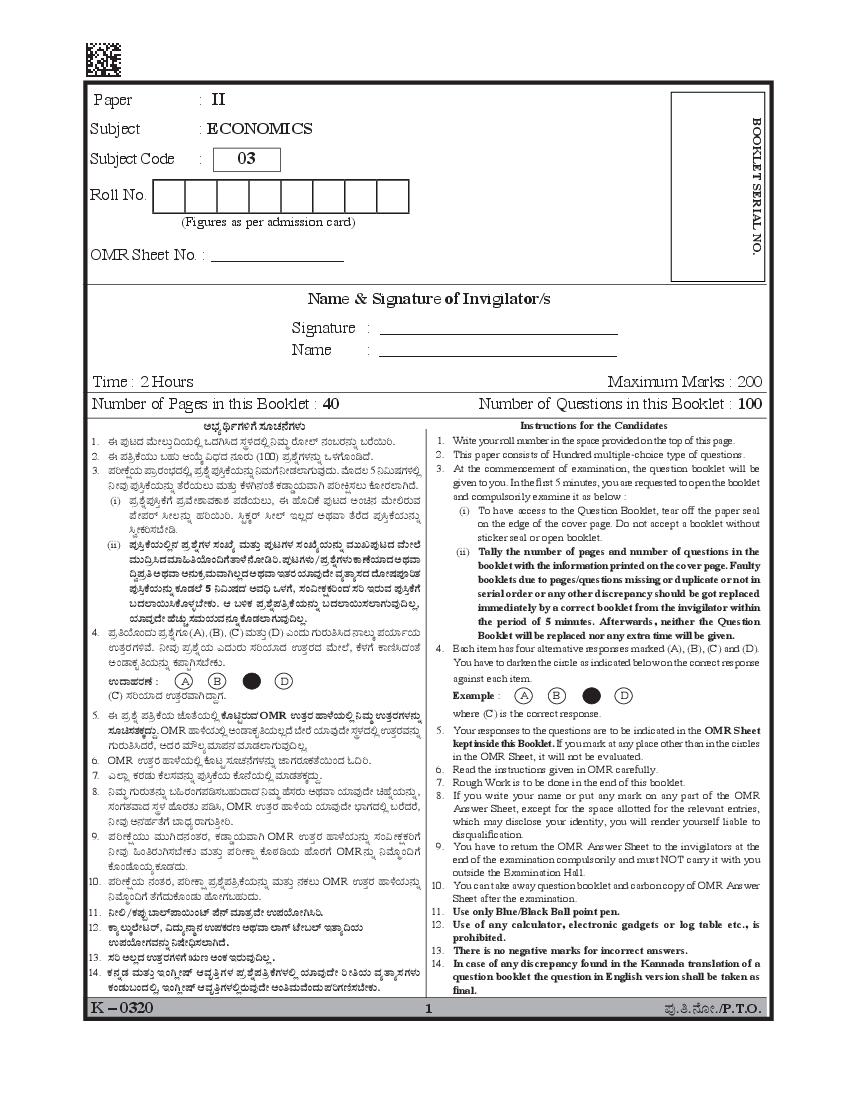
: Economics
Booklet SERIAL No.
Subject
Subject Code : 03
Roll No.
(Figures as per admission card)
OMR Sheet No. : ____________________
Name & Signature of Invigilator/s
Signature : _________________________________
Name : _________________________________
Time : 2 Hours Maximum Marks : 200
Number of Pages in this Booklet : 40 Number of Questions in this Booklet : 100
A»Ü¦ìWÜÚWæ ÓÜãaÜ®æWÜÙÜá Instructions for the Candidates
1. D ±Üâo¨Ü ÊæáàÆᤩ¿áÈÉ J¨ÜXst ÓܧÙܨÜÈÉ ¯ÊÜá¾ ÃæãàÇ… ®ÜíŸÃÜ®Üá° ŸÃæÀáÄ. 1. Write your roll number in the space provided on the top of this page.
2. D ±Ü£ÅPæ¿áá ŸÖÜá BÁáR Ë«Ü¨Ü ®ÜãÃÜá (100) ±ÜÅÍæ°WÜÙÜ®Üá° JÙÜWæãíw¨æ. 2. This paper consists of Hundred multiple-choice type of questions.
3. ±ÜÄàPæÒ¿á ±ÝÅÃÜí»Ü¨È
Ü É, ±ÜÅÍæ° ±ÜâÔ¤P¿
æ á®Üá° ¯ÊÜáWæ ¯àvÜÇÝWÜáÊÜâ¨Üá. Êæã¨ÜÆ 5 ¯ËáÐÜWÜÙÜÈÉ 3. At the commencement of examination, the question booklet will be
¯àÊÜâ ±ÜâÔ¤Pæ¿á®Üá° ñæÃæ¿áÆá ÊÜáñÜᤠPæÙÜX®Üíñæ PÜvÝx¿áÊÝX ±ÜÄàQÒÓÜÆá PæãàÃÜÇÝX¨æ. given to you. In the first 5 minutes, you are requested to open the booklet
(i) ±ÜÅÍæ°±ÜâÔ¤PæWæ ±ÜÅÊæàÍÝÊÜPÝÍÜ ±Üvæ¿áÆá, D Öæã©Pæ ±Üâo¨Ü Aíb®Ü ÊæáàÈÃÜáÊÜ and compulsorily examine it as below :
±æà±ÜÃ… ÔàÆ®Üá° ÖÜÄÀáÄ. ÔrPÜRÃ… ÔàÇ… CÆÉ¨Ü A¥ÜÊÝ ñæÃæ¨Ü ±ÜâÔ¤Pæ¿á®Üá° (i) To have access to the Question Booklet, tear off the paper seal
on the edge of the cover page. Do not accept a booklet without
ÔÌàPÜÄÓܸæàw.
sticker seal or open booklet.
(ii) ±ÜâÔ¤Pæ¿áÈÉ®Ü ±ÜÅÍæ°WÜÙÜ ÓÜíTæ ÊÜáñÜᤠ±ÜâoWÜÙÜ ÓÜíTæ¿á®Üá° ÊÜááS±Üâo¨Ü ÊæáàÇæ
(ii) Tally the number of pages and number of questions in the
ÊÜáá©Åst ÊÜÞ×£Áãí©Wæ ñÝÙæ ®æãàwÄ. ±ÜâoWÜÙÜá/±ÜÅÍæ°WÜÙÜá PÝOæ¿Þ¨Ü A¥ÜÊÝ
booklet with the information printed on the cover page. Faulty
©Ì±ÜÅ£ A¥ÜÊÝ A®ÜáPÜÅÊÜáÊÝXÆÉ¨Ü A¥ÜÊÝ CñÜÃÜ ¿ÞÊÜâ¨æà ÊÜÂñÝÂÓÜ¨Ü ¨æãàÐܱÜäÄñÜ booklets due to pages/questions missing or duplicate or not in
±ÜâÔ¤Pæ¿á®Üá° PÜãvÜÇæ 5 ¯ËáÐÜ¨Ü AÊܘ JÙÜWæ, ÓÜíËàPÜÒPÜÄí¨Ü ÓÜÄ CÃÜáÊÜ ±ÜâÔ¤PæWæ serial order or any other discrepancy should be got replaced
Ÿ¨ÜÇÝÀáÔPæãÙÜÛ¸æàPÜá. B ŸÚPÜ ±ÜÅÍ氱ܣÅPæ¿á®Üá° Ÿ¨ÜÇÝÀáÓÜÇÝWÜáÊÜâ©ÆÉ, immediately by a correct booklet from the invigilator within
¿ÞÊÜâ¨æà ÖæaÜác ÓÜÊÜá¿áÊÜ®Üã° PæãvÜÇÝWÜáÊÜâ©ÆÉ. the period of 5 minutes. Afterwards, neither the Question
4. ±ÜÅ£Áãí¨Üá ±ÜÅÍæ°WÜã (A), (B), (C) ÊÜáñÜᤠ(D) Gí¨Üá WÜáÃÜá£Ô¨Ü ®ÝÆáR ±Ü¿Þì¿á Booklet will be replaced nor any extra time will be given.
EñܤÃÜWÜÚÊæ. ¯àÊÜâ ±ÜÅÍæ°¿á G¨ÜáÃÜá ÓÜÄ¿Þ¨Ü EñܤÃÜ¨Ü ÊæáàÇæ, PæÙÜWæ PÝ~Ô¨Üíñæ 4. Each item has four alternative responses marked (A), (B), (C) and (D).
AívÝPÜꣿá®Üá° PܱݳXÓܸæàPÜá. You have to darken the circle as indicated below on the correct response
E¨ÝÖÜÃÜOæ : A B C D against each item.
(C) ÓÜÄ¿Þ¨Ü EñܤÃÜÊÝX¨ÝªWÜ. Example : A B C D
5. D ±ÜÅÍæ° ±Ü£ÅPæ¿á hæãñæ¿áÈÉ PæãqrÃÜáÊÜ OMR EñܤÃÜ ÖÝÙæ¿áÈÉ ¯ÊÜá¾ EñܤÃÜWÜÙÜ®Üá° where (C) is the correct response.
ÓÜãbÓÜñÜPÜR¨Üáª. OMR ÖÝÙæ¿áÈÉ AívÝPÜꣿáÆÉ¨æ ¸æàÃæ ¿ÞÊÜâ¨æà Óܧ٨
Ü È
Ü É EñܤÃÊ
Ü ®Ü áÜ ° 5. Your responses to the questions are to be indicated in the OMR Sheet
WÜáÃÜá£Ô¨ÜÃæ, A¨ÜÃÜ ÊÜåèÆÂÊÜÞ±Ü®Ü ÊÜÞvÜÇÝWÜáÊÜâ©ÆÉ. kept inside this Booklet. If you mark at any place other than in the circles
6. OMR EñܤÃÜ ÖÝÙæ¿áÈÉ Pæãor ÓÜãaÜ®æWÜÙÜ®Üá° hÝWÜÃÜãPÜñæÀáí¨Ü K©Ä. in the OMR Sheet, it will not be evaluated.
6. Read the instructions given in OMR carefully.
7. GÇÝÉ PÜÃÜvÜá PæÆÓÜÊÜ®Üá° ±ÜâÔ¤Pæ¿á Pæã®æ¿áÈÉ ÊÜÞvÜñÜPÜR¨Üáª.
7. Rough Work is to be done in the end of this booklet.
8. ¯ÊÜá¾ WÜáÃÜáñÜ®Üá° Ÿ×ÃÜíWܱÜwÓÜŸÖÜá¨Ý¨Ü ¯ÊÜá¾ ÖæÓÜÃÜá A¥ÜÊÝ ¿ÞÊÜâ¨æà bÖæ°¿á®Üá°, 8. If you write your name or put any mark on any part of the OMR
ÓÜíWÜñÜÊÝ¨Ü ÓܧÙÜ ÖæãÃÜñÜá ±ÜwÔ, OMR EñܤÃÜ ÖÝÙæ¿á ¿ÞÊÜâ¨æà »ÝWܨÜÈÉ ŸÃæ¨ÜÃæ, Answer Sheet, except for the space allotted for the relevant entries,
¯àÊÜâ A®ÜÖÜìñæWæ ¸Ý«ÜÂÃÝWÜᣤàÄ. which may disclose your identity, you will render yourself liable to
9. ±ÜÄàPæÒ¿áá ÊÜááX¨Ü®ÜíñÜÃÜ, PÜvÝx¿áÊÝX OMR EñܤÃÜ ÖÝÙæ¿á®Üá° ÓÜíËàPÜÒPÜÄWæ disqualification.
¯àÊÜâ ×í£ÃÜáXÓܸæàPÜá ÊÜáñÜᤠ±ÜÄàPÝÒ PæãsÜw¿á ÖæãÃÜWæ OMR®Üá° ¯Êæã¾í©Wæ 9. You have to return the OMR Answer Sheet to the invigilators at the
end of the examination compulsorily and must not carry it with you
Pæãívæã¿áÂPÜãvܨÜá. outside the Examination Hall.
10. ±ÜÄàPæÒ¿á ®ÜíñÜÃÜ, ±ÜÄàPÝÒ ±ÜÅÍ氱ܣÅPæ¿á®Üá° ÊÜáñÜᤠ®ÜPÜÆá OMR EñܤÃÜ ÖÝÙæ¿á®Üá° 10. You can take away question booklet and carbon copy of OMR Answer
¯Êæã¾í©Wæ ñæWæ¨ÜáPæãívÜá ÖæãàWÜŸÖÜá¨Üá. Sheet after the examination.
11. ¯àÈ/PܱÜâ³ ¸ÝÇ…±ÝÀáíp… ±æ®… ÊÜÞñÜÅÊæà E±ÜÁãàXÔÄ. 11. Use only Blue/Black Ball point pen.
12. PÝÂÆáRÇæàoÃ…, ˨Üá®ݾ®Ü E±ÜPÜÃÜ| A¥ÜÊÝ ÇÝW… pæàŸÇ… CñÝ©¿á 12. Use of any calculator, electronic gadgets or log table etc., is
E±ÜÁãàWÜÊÜ®Üá° ¯Ðæà˜ÓÜÇÝX¨æ. prohibited.
13. There is no negative marks for incorrect answers.
13. ÓÜÄ AÆÉ¨Ü EñܤÃÜWÜÚWæ Má| AíPÜ CÃÜáÊÜâ©ÆÉ .
14. In case of any discrepancy found in the Kannada translation of a
14. PܮܰvÜ ÊÜáñÜᤠCíXÉàÐ… BÊÜ꣤WÜÙÜ ±ÜÅÍ氱ܣÅPæWÜÙÜÈÉ ¿ÞÊÜâ¨æà Äࣿá ÊÜÂñÝÂÓÜWÜÙÜá question booklet the question in English version shall be taken as
PÜívÜáŸí¨ÜÈÉ, CíXÉàÐ… BÊÜ꣤WÜÙÜÈÉÃÜáÊÜâ¨æà Aí£ÊÜáÊæí¨Üá ±ÜÄWÜ~ÓܸæàPÜá. final.
K – 0320 1 ±Üâ.£.®æãà./P.T.O.
Page 2
±æà±ÜÃ… – II
WÜÊÜá¯Ô : D ±Ü£ÅPæ¿áá ®ÜãÃÜá (100) ÊÜÓÜ᤯ÐÜuÊÜÞ¨ÜÄ¿á ±ÜÅÍæ°WÜÙÜ®æã°ÙÜWæãíw¨Ü᪠, ±ÜÅ£Áãí¨Üá ±ÜÅÍæ°¿áã
GÃÜvÜá (2) AíPÜWÜÙÜ®Üá° Öæãí©¨æ. GÇÝÉ ±ÜÅÍæ°WÜÙÜ®Üã° PÜvÝx¿áÊÝX EñܤÄÓܸæàPÜá.
1. Jí¨Üá ÊݱÝÃÜ ÓÜíÓ槿á ÓÜÊÜáÔ§£¿á ÐÜÃÜñÜá¤WÜÙÜá 4. ¨æãàÐܱÜäÄñÜ Óܳ«ÝìñܾPÜ ÊÜÞÃÝo ÊÜÞvÜáÊÜÊÜ®Ü
(A) AC = MC C¨ÜÃã
æ í©Wæ MC ¿á MáOÝñÜP¾ Ü ÓÜíÓæ§¿á ¨ÜáwÊæá¿á ¸æàwPæ¿áá
CÚhÝÃÜá (A) ¨æãàÐÜÃÜ×ñÜ Óܳ«ÝìñܾPÜ ÊÜÞÃÝo
(B) AR = MC C¨ÜÃæãí©Wæ MC ¿á WÜáOÝñܾPÜ ÊÜÞvÜáÊÜÊܯXíñÜ ÖæaÝcXÃÜáñܤ¨æ
CÚhÝÃÜá (B) ¨æãàÐÜÃÜ×ñÜ Óܳ«ÝìñܾPÜ ÊÜÞÃÝo
(C) MR = MC C¨ÜÃã
æ í©Wæ MC ¿á WÜáOÝñÜP¾ Ü ÊÜÞvÜáÊÜÊ¯Ü Wæ ÓÜÄÓÜÊÞ
Ü ®ÜÊÝXÃÜáñܤ¨æ
CÚhÝÃÜá (C) ¨æãàÐÜÃÜ×ñÜ Óܳ«ÝìñܾPÜ ÊÜÞÃÝo
(D) MR = MC C¨ÜÃã
æ í©Wæ MC ¿á MáOÝñÜP¾ Ü ÊÜÞvÜáÊÜÊܯXíñÜ ÖæaÜác Ô§£Óݧ±ÜPÜñÜÌÊÜ®Üá°
CÚhÝÃÜá Öæãí©ÃÜáñܤ¨æ
(D) ¨æãàÐÜÃÜ×ñÜ Óܳ«ÝìñܾPÜ ÊÜÞÃÝo
2. PÜÈPæ¿á ÊÜPÜÅÃæàTæ¿áá ¿ÞÊæÃÜvÜÃÜ ®ÜvÜáË®Ü
ÊÜÞvÜáÊÜÊܯXíñÜ PÜwÊæá Ô§£Óݧ±ÜPÜñÜÌÊÜ®Üá°
ÓÜíŸí«ÜÊÜ®Üá° ñæãàÄÓÜáñܤ¨æ ?
Öæãí©ÃÜáñܤ¨æ
(A) ÎPÜÒ| ÊÜáñÜᤠCÙÜáÊÜÄWÝX ÊÜÞw¨Ü ÊæaÜc
(B) JÙÜÓæàÄPæWÜÙÜá ÊÜáñÜᤠPÜãvÜáÊÜ CÙÜáÊÜÄ 5. GÃÜvÜá ±ÜPÜÒWÜÙÜ ®ÜvÜáË®ÜÈÉ ÓÜÊÜáÓÜãñÜÅñæ CÆɨÜ
(C) AÔ§ÃÜÊÝ¨Ü ¸æÇæ ÊÜáñÜᤠCÙÜáÊÜÄ ÊÜÞ×£¿á A¥ÜìÊæà®Üá ?
(D) ÓÜÊÜáWÜÅ Ô§ÃÜ ¸æÇæ ÊÜáñÜᤠCÙÜáÊÜÄ (A) GÃÜvÜã ±ÜPÜÒWÜÙÜá ÓÜÄ¿Þ¨Ü ÊÜÞ×£¿á®Üá°
Öæãí©ÃÜáÊÜâ©ÆÉ
3. Jí¨Üá HPÜÓÝÌÊÜá ÓÜíÓæ¿
§ á ÓÜÃÝÓÜÄ B¨Ý¿á (AR)
(B) GÃÜvÜã ±ÜPÜÒWÜÙÜá ÓÜÊÜÞ®ÜÊÝX
(A) Aíb®ÜÈÉ¿á B¨Ý¿á (MR) XíñÜ Gí©WÜã
ÊÜÞ×£ÊÜâÙÜÛÊÜÃÜá BX¨ÝªÃæ
ÖæaÜác CÃÜáñܤ¨æ
(C) Jí¨Üá ±ÜPÜÒÊÜâ C®æã°í¨Üá ±ÜPÜÒQRíñÜ EñܤÊÜá
(B) MR XíñÜ Gí©WÜã PÜwÊæá¿ÞXÃÜáñܤ¨æ
ÊÜÞ×£¿á®Üá° Öæãí©ÃÜáñܤ¨æ
(C) MR Wæ ÓÜÄÓÜÊÜÞ®ÜÊÝXÃÜáñܤ¨æ
(D) ÓÜ Ã Ü P ÝÃÜ Ê Ü â GÃÜ v Ü ã ±Ü P Ü Ò W Ü Ú XíñÜ EñÜ ¤ Ê Ü á
(D) MR XíñÜ PæÆÊæäÊæá¾ ÖæaÜác ÊÜáñÜᤠPæÆÊæäÊæá¾
ÊÜÞ×£¿á®Üá° Öæãí©ÃÜáñܤ¨æ
PÜwÊæá¿ÞXÃÜáñܤ¨æ
Paper II 2 K – 0320
Page 3
Paper – II
Note : This paper contains hundred (100) objective type questions. Each question
carries two (2) marks. All questions are compulsory.
1. The conditions of equilibrium of a 4. The demand for labour from a firm in
firm are imperfectly competitive seller is
(A) AC=MC with negative slope of MC (A) greater than that of a perfectly
(B) AR=MC with positive slope of MC competitive seller
(C) MR=MC with positive slope of MC (B) the same as that of a perfectly
(D) MR=MC with negative slope of MC competitive seller
(C) more elastic than that of a
2. Learning curve shows the relation between
perfectly competitive seller
(A) Expenditure on education and output
(D) less elastic than that of a perfectly
(B) Inputs and cumulative output
competitive seller
(C) Variable cost and output
(D) Total fixed cost and output 5. Asymmetric information between two
parties means
3. The Average Revenue (AR) of a monopoly
firm is (A) neither party is well informed
(A) always more than the Marginal (B) both parties are equally well
Revenue (MR) informed
(B) always less than the MR (C) one party is better informed than the
(C) equal to the MR other party
(D) some times more and some times (D) the government is better informed
lesser than the MR than both the parties
K – 0320 3 Paper II
Page 4
(A) ÊÜ£ÄPܤ BÁáR¿áá WÜá±Ü¤ÊÝ¨Ü PÝ¿áìWÜÚí¨Ü HÄPæ¿áá H®Ü®Üá° Eíoá ÊÜÞvÜáñܤ¨æ ?
ÊæáàÇæàÃÜáÊÜíñÜÖÜ ÓÜÊÜáÓæ¿ÞX¨æ (A) LM ÊÜPÜÅÃæàTæ¿áÈÉ ÊæáàÆá¾S¨Ü PܨÜÈPæ
(B) ÊÜ Â £ÄPÜ ¤ BÁáR¿áá ±Ü Å ÊÜ á áS®Ü á ÊÜ á ñÜ á ¤ (B) LM ÊÜPÜÅÃæàTæ¿áÈÉ CÚÊÜááS¨Ü PܨÜÈPæ
±ÜÅ£¯—WÜÙÜ®Üá° JÙÜWæãívÜ ÓÜÊÜáÓæ¿ÞX¨æ (C) IS ÊÜPÜÅÃæàTæ¿áÈÉ ÊæáàÆá¾S¨Ü PܨÜÈPæ
(C) ®æç£PÜ Öݯ¿áá WÜá±Ü¤ WÜá|WÜÚí¨Ü EípÝWÜáÊÜ (D) IS ÊÜPÜÅÃæàTæ¿áÈÉ CÚÊÜááS¨Ü PܨÜÈPæ
ÓÜÊÜáÓæ¿ÞX¨æ
(D) ®æç£PÜ Öݯ¿áá WÜá±Ü¤ÊÝ¨Ü PÝ¿áìWÜÙÜ®Üá° 11. ¸æÅor®… ÊÜâv…Õ ÊÜÂÊÜÓæ§ ¿ÞÊÜâ¨Ü®Üá° B«ÜÄÔñÜᤠ?
JÙÜWæãívÜ ÓÜÊÜáÓæ¿ÞX¨æ (A) b®Ü°¨Ü WÜá|ÊÜáor
(B) b®Ü°¨Ü ˯ÊÜá¿á¨Ü WÜá|ÊÜáor
7. A¼ÊÜê©¿
œ á®Üá° Öæãí¨ÜᣤÃáÜ ÊÜ ÃÝÐÜó¨ÜÈÉ®Ü B¦ìPÜ
¯à£¿á E¨æªàÍÜÊÜâ D PæÙÜX®ÜÊÜâWÜÙÜÈÉ ¿ÞÊÜâ¨Üá (C) ®ÜÊÜá ˯ÊÜá¿á¨Ü ¸æÇæ ÊÜÂÊÜÓæ§
BXÆÉ ? (D) aÜÃÜ Ë¯¿áÊÜá ¸æÇæ ÊÜÂÊÜÓæ§
(A) ÖÜ|¨Ü៺ÃÜËÆɨÜíñæÁáà ÊÜáãÆ«Ü®Ü
12. Jí¨Ü á PÝÇæ à i®Ü JŸº ˨ݦì¿áá ñÜ ® Ü °
PÝ¿áì¨Ü ÊÜáorÊÜ®Üá° ÊæàWÜÊÝXÓÜáÊÜâ¨Üá
ÊæãàoÃ…ÓæçPÜÇ…®Üá° ñܮܰ ÊÜá®æÀáí¨Ü PÝÇæàiWæ
(B) ŸívÜÊÝÙÜÊÜ®Üá° ÊæàWÜÊÝXÓÜáÊÜâ¨Üá
ÓÜÃÝÓÜÄ 30 Q.Ëáà. ±ÜÅ£ WÜípæ¿á ÊæàWܨÜÈÉ
(C) ÓÜí±Üä|ì E¨æãÂàWÝÊÜÓ槿á®Üá°
aÜÈÓÜáñݤ®æ. ÊÜá®æWæ ×í©ÃÜáÊÝWÜ AÊÜ®Ü ÓÜÃÝÓÜÄ
¯ÊÜì×ÓÜáÊÜâ¨Üá
ÊæàWÜÊÜâ 20 Q.Ëáà. ±ÜÅ£ WÜípæ¿ÞXÃÜáñܤ¨.æ ÓÜÊÜáWÜÅ
(D) ¸æÇæ¿á Ô§ÃÜñæ
±ÜÅ¿Þ|¨Ü AÊÜ®Ü ÓÜÃÝÓÜÄ ÊæàWÜ GÐÜár ?
8. ÊÜ á ãÆ«Ü ® Ü ¨ Ü ÓÜ Ã Ü P Ü á Öæ b c ¨ Ü í ñæ , ÊÜ á ãÆ«Ü ® Ü ¨ Ü (A) 25 Q.Ëáà. ±ÜÅ£ WÜípæ
Aíb®Ü PÝ¿áì±ÜoáñÜÌÊÜâ (MEC) (B) 24 Q.Ëáà. ±ÜÅ£ WÜípæ
(A) HÄPæ¿ÞWÜáñܤ¨æ
(C) 20 Q.Ëáà. ±ÜÅ£ WÜípæ
(B) CÚPæ¿ÞWÜáñܤ¨æ
(D) CÊÜâWÜÙÜÈÉ ¿ÞÊÜâ¨Üã AÆÉ
(C) BÃÜí»Ü¨ÜÈÉ HÄPæ¿ÞWÜáñܤ¨æ ÊÜáñÜá¤
®ÜíñÜÃܨÜÈÉ CÚPæ¿ÞWÜáñܤ¨æ 13. £àÊÜÞì¯ÓÜáËPæ¿á ÓÜíTÝÂÍÝÓÜ÷ ¿ÞÊÜâ¨ÜÃã
æ í©Wæ
(D) ¯ÃÜíñÜÃÜÊÝX EÚ¿ááñܤ¨æ ÊÜÂÊÜÖÜÄÓÜáñܤ¨æ ?
9. µÈ±…ÃÜ Êæàh… C®æ– $ÉàÍÜ®… Bív… A®…Gí±ÝÉ¿å…- (A) ÊÜÞ¨ÜÄ ´ÜÈñÝíÍÜWÜÙÜ®Üá° B«ÜÄÔPæãívÜá
-&Êæáíp… pæÅàv…&B´… ¿ÞÊÜâ¨Ü®áÜ ° B«ÜÄÔ¨æ ? g®ÜÓÜíTæ¿á PÜáÄñÜá £àÊÜÞì®Ü
(A) Ÿ×WÜì|®Ý ¯ÄàPÜÒOæ¿á PÜȳñÜ Ô¨ÝœíñÜ (B) g®ÜÓíÜ TæÂ¿á ´ÜÈñÝíÍÜWÙ Ü ®Ü áÜ ° B«ÜÄÔPæãívÜá
(B) gvÜ ¯ÄàPÜÒOæ¿á PÜȳñÜ Ô¨ÝœíñÜ ÊÜÞ¨ÜÄ¿á PÜáÄñÜá £àÊÜÞì®Ü
(C) Öæãí¨Ý~Pæ ¯ÄàPÜÒOæWÜÙÜ PÜȳñÜ Ô¨ÝœíñÜ (C) ÊÜÞ¨ÜÄàPÜÃÜ|¨Ü Ë«Ý®Ü
(D) CÊÜâWÜÙÜÈÉ ¿ÞÊÜâ¨Üã AÆÉ (D) Êæáà騆 ¿ÞÊÜâ¨Üã AÆÉ
Paper II 4 K – 0320
Page 5
correct ? leads to
(A) Adverse selection is a problem that (A) Upward shift in LM curve
arises due to hidden actions (B) Downward shift in LM curve
(B) Adverse selection is a problem
(C) Upward shift in IS curve
involving principals and agents
(D) Downward shift in IS curve
(C) Moral hazard is a problem that arises
due to hidden qualities 11. The Bretton Woods System was based on
(D) Moral hazard is a problem involving (A) Gold Standard
hidden actions
(B) Gold Exchange Standard
7. Which of the following is not an (C) Flexible Exchange Rate System
objective of fiscal policy in a developing (D) Floating Exchange Rate System
country ?
(A) Accelerating the rate of capital 12. A college student drives his motor cycle
function without inflation from his home to college at an average
(B) Accelerating investment speed of 30 km per hour. While returning
(C) Maintain full employment to home he drives at an average speed
(D) Price stability of 20 km per hour. What is his average
speed over the entire journey ?
8. As capital stock increases, the Marginal
Efficiency of Capital (MEC) (A) 25 km per hour
(A) Increases (B) 24 km per hour
(B) Decreases (C) 20 km per hour
(C) Increase in the beginning later start (D) None of these
decreasing
(D) Remains constant 13. Inferential Statistics deals with the
(A) Inference about population based on
9. Phillip’s wage inflation and sample results
unemployment trade-off is based on
(B) Inference about sample based on
(A) Extrapolative expectation hypothesis
population results
(B) Static expectation hypothesis
(C) Sampling method
(C) Adaptive expectations hypothesis
(D) None of the above
(D) None of these
K – 0320 5 Paper II
Page 6
Ÿ¨Ü Ç ÝÊÜ O æ ¿ á ±Ü Å »ÝÊÜ Ê Ü ® Ü á ° AÄ¿áÆá D 18. A =
x 8 D ÔíWÜáÂÆÃ… ÊÜÞÂqÅP…Õ®ÜÈÉ
PæÙÜX®ÜÊÜâWÜÙÜÈÉ ÓÜíTÝÂÍÝÓÜ÷¨Ü ¿ÞÊÜ
PÝ¿áìË«Ý®ÜÊÜ®Üá° ŸÙÜÓÜŸÖÜá¨Üá ? ‘x’ ®Ü ÊÜåèÆÂ
(A) A®æãÂà®ÝÂÊÜÆíŸ®Ü¨Ü WÜáOÝíPÜ/ (A) 3 (B) 4
PæãàÄÇæàÍÜ®… PæãGµàÎÁáíp… (C) 5 (D) 6
(B) ÊÜÞ®ÜPÜ ÊÜÞWÝìíñÜÃÜ/ÓÝrívÜv…ì
19. Jí¨Üá PÜ®…Õpæùíp… EÙÜÛ ´ÜíPÜÒ®…®Ü B²rÊæáçÓæàÍÜ®…
wàËÁáàÍÜ®…
®Ü®Üá° D PæÙÜX®ÜÊÜâWÜÙÜÈÉ ¿ÞÊÜâ¨ÜÃÜ ÊÜáãÆPÜ
(C) ÊÜÞ±Ýìoá WÜáOÝíPÜ/PæãàGµàÎÁáíp…
B´… ÊæàÄÁáàÍÜ®… ±ÜÄÖÜÄÓÜŸÖÜá¨Üá ?
(D) ¯ÊÜñÜì®Ü/ÄWæÅÍÜ®… (A) ÃæàUà¿á ±æäÅàWÝÅËáíW…
(B) CípæWæÅàÍÜ®… Ë«Ý®Ü
15. ®ÝÆáR ÓÜ Ì ñÜ í ñÜ Å ÊÝ¨Ü Êæ à ÄÁáàŸÇ…WÜ Ù Ü á ÙÜ Û
(C) C®Üá³p…&Lp…±Üâp… Ë«Ý®Ü
Jí¨Üá ÄWæÅÍÜ®… ´ÜíPÜÒ®…®Ü®Üá° 25 ËàPÜÒOæWÜÚWæ
Çæ P Ü R ÖÝPÜ Ç ÝX¨æ . F- ±Ü Ä àPæ Ò ¿ á ±Ü Å QÅÁá¿áÈÉ (D) ÆWÝÅíX¿á®… Ë«Ý®Ü
®Ü ã ÂÊÜ á Ãæ à oÃ… ÊÜ á ñÜ á ¤ w®ÝËá®æ à oÃ…WÜ Ù Ü
20. P = 5 BXÃÜáÊÝWÜ Q = 50 + 4P – 2P2
ÓÝÌñÜíñÜÅ$嬆 wXÅWÜÙÜá GÐÜár ?
D wÊÜÞív… ´ÜíPÜÒ¯°®Ü CÇÝÔrÔq wÊÜÞív…
(A) PÜÅÊÜá ±ÜÅPÝÃÜ 4 ÊÜáñÜᤠ21
GÐÜár ?
(B) PÜÅÊÜá ±ÜÅPÝÃÜ 4 ÊÜáñÜᤠ20
(A) 3
(C) PÜÅÊÜá ±ÜÅPÝÃÜ 3 ÊÜáñÜᤠ20
(B) – 2
(D) CÊÜâWÜÙÜÈÉ ¿ÞÊÜâ¨Üã AÆÉ (C) – 4
16. ÖæpæÃæãÓævÝÔrÔq¿á AÔ¤ñŲ̈ÜÈÉ™, ñÝÃÜñÜÊÜá ÃÜ×ñÜ (D) CÊÜâWÜÙÜÈÉ ¿ÞÊÜâ¨Üã AÆÉ
EñܤÊÜáÊÝ¨Ü ÃæàTÝñܾPÜ Aí¨ÝgáWÜÙÜ®Üá° ¿ÞÊÜ
Ë«Ý®Ü¨Ü ÊÜáãÆPÜ ¯àvÜŸÖÜá¨Üá ? 21. y = x2 + x5, BXÃÜáÊÝWÜ
dy
C¨ÜÃÜ ÊÜåèÆÂÊÜ®Üá°
(A) WÜÄÐÜu ÓÜí»ÝÊÜÂñæ¿á GÔrÊæáàoÃ… PÜívÜá×wÀáÄ. dx
(B) OLS (A) 2x2 + 5x5 (B) 2x + 5x4
(C) C®æx$çÃæP…r ÈàÓ…r ÓæR$ÌàÃ… (C) x7 (D) x2+7
(D) Êæçpæv… ÈàÓ…r ÓæR$ÌàÃ…
22. B¦ìPÜñæ¿á ¯¿áÊÜá¨Ü AWÜÅ E¨æªàÍÜ
17. ¸ÝÖÜ ¨æàÍÜ¨Ü ÊݱÝÃÜ©í¨Ü GÃÜvÜá ÃÝÐÜóWÜÙÜá
(A) ÖÜ|ÊÜ®Üá° J¨ÜXÓÜáÊÜâ¨Üá
¿ÞÊÝWÜ ÇÝ»Ü ±Üvæ¿áŸÖÜá¨Üá Gí¨ÜÃæ
(A) ÊÜåèÆ嬆 ±ÜÅÊÜÞ|WÜÙÜá ¼®Ü°ÊÝX¨ÝªWÜ (B) ÖÜ|¨Ü ¸æàwPæ¿á®Üá° ¯¿áí£ÅÓÜáÊÜâ¨Üá
(B) ñæÄWæ ÊæãñܤWÜÙÜá ¼®Ü°ÊÝX¨ÝªWÜ (C) ÊÜåèÆÂ¨Ü Ô§ÃÜñæ¿á®Üá° ÓÝ—ÓÜáÊÜâ¨Üá
(C) PÜÅ¿á¨Ü ±ÜÅÊÜÞ|WÜÙÜá ¼®Ü°ÊÝX¨ÝªWÜ (D) ÖæãÃܨæàÍܨæãí©Wæ ÊÝ~hæãÂà¨ÜÂÊÜáÊÜ®Üá°
(D) (A) ÊÜáñÜᤠ(C) GÃÜvÜã ±ÜÅ£±Ý©ÓÜáÊÜâ¨Üá
Paper II 6 K – 0320
Page 7
technique could be used to assess the
impact of change in input use on crop 3 4
A= is
yield ? x 8
(A) Correlation coefficient (A) 3 (B) 4
(B) Standard deviation (C) 5 (D) 6
(C) Coefficient of variation
19. Optimization of a function with one
(D) Regression
constraint can be solved through
15. A Regression function with four (A) Linear programming
independent variables has been computed (B) Integration method
for 25 observations. What are the
(C) Input-output model
degrees of freedom for numerator and
denominator in F test process ? (D) Lagrangian method
(A) 4 and 21 respectively
20. The elasticity of demand for the demand
(B) 4 and 20 respectively
function, Q = 50 + 4P – 2P2 at P = 5 is
(C) 3 and 20 respectively
(A) 3
(D) None of these
(B) – 2
16. In the presence of heteroscedasticity, (C) – 4
the best linear unbiased estimators are
(D) None of these
provided by the method of
(A) Maximum likelihood estimator dy
21. If y = x2 + x5, find the
(B) OLS dx
(C) Indirect least square (A) 2x2 + 5x5 (B) 2x + 5x4
(D) Weighted least square (C) x7 (D) x2+7
17. Two countries can gain from foreign 22. The dominant objective of Monetary
trade if Policy is
(A) Price Ratios are different (A) Money Supply
(B) Tariff Rates are different
(B) Controlling Demand for Money
(C) Cost Ratios are different
(C) Achieving Price Stability
(D) Both (A) and (C)
(D) Promoting Foreign Trade
K – 0320 7 Paper II
Page 8
(A) ñæÄWæ ÓܧÙÝíñÜÄÓÜáÊÜâ¨Üá ÊÜÂÊÜÓæ§ (PPBS) PÜáÄñÜá PæÙÜXÃÜáÊÜ ÊÝPÜÂWÜÙÜÈÉ
(B) ÊæaÜcÊÜ®Üá° ÓܧÙÝíñÜÄÓÜáÊÜâ¨Üá ÓÜĿިܨܪ®Üá° WÜáÃÜá£Ô.
(C) BÁáR¿á®Üá° ÓܧÙÝíñÜÄÓÜáÊÜâ¨Üá (A) C¨Üá PæàÊÜÆ Eñܳ®Ü°PæR JñÜᤠ¯àvÜáñܤ¨æ
(D) ÊÜáñÜ¨Ü ÊݱÝÃæãà¨ÜÂÊÜá (B) C¨Üá PæàÊÜÆ ÊæaÜc¨Ü ËíWÜvÜ®æWæ JñÜá¤
¯àvÜáñܤ¨æ
24. Jí¨Üá EñÜ®
³ ¨
°Ü Ü ¸æàwPæ¿á ÊÜåèÆÂ¨Ü Ô§£Óݧ±PÜ ñÜ ÌÜ ÊÜâ
(C) C¨Üá Eñܳ®Ü°PæR PÜwÊæá JñÜᤠ¯àvÜáñܤ¨æ ÊÜáñÜá¤
¯©ìÐÜ r Ê ÝX Ô§£Óݧ±Ü PÜ ñÜ Ì ÊÜ ® Ü á° Öæ ãí©¨Üª Ãæ,
ÓÜ Ê Ü á WÜ Å ÊÝ¨Ü ñæ Ä Wæ ¿ á ±Ü Ä OÝÊÜ á ÊÜ â ¿ÞÃÜ ÊæaÜc¨Ü ËíWÜvÜ®æWæ ÖæaÜác JñÜᤠ¯àvÜáñܤ¨æ
ÊæáàÇÝWÜáñܤ¨æ ? (D) C¨Üá Eñܳ®Ü°PæR ÖæaÜác JñÜᤠ¯àvÜáñܤ¨æ ÊÜáñÜá¤
(A) SÄà©ÓÜáÊÜÊÜÃÜá ÊæaÜc¨Ü ËíWÜvÜ®æWæ PÜwÊæá JñÜᤠ¯àvÜáñܤ¨æ
(B) ÊÜÞÃÝo ÊÜÞvÜáÊÜÊÜÃÜá 28. g®ÜÓÜíTæÂ¿á ®ÜvÜáÊÜ| ÊÜ¿áÔÕ®ÜÈÉ HÄPæ¿á®Üá°
(C) SÄà©ÓÜáÊÜÊÃ Ü áÜ ÊÜáñÜᤠÊÜÞÃÝo ÊÜÞvÜáÊÜÊÃÜ Ü H®æí¨Üá PÜÃæ¿ááñݤÃæ ?
®ÜvÜáÊæ ÖÜíbÖæãàWÜáñܤ¨æ
(A) g®ÜÓÜíTÝ A«Ü¿á®Ü¨Ü Ÿ¨ÜÇÝÊÜOæ
(D) ÓÜÃÜPÝÃÜ
(B) g®ÜÓÜíTÝ A«Ü¿á®Ü¨Ü ÊÜ¿áÓÝÕWÜáËPæ
25. WÜáí±ÜâWÜãvÜáÊÜ QÅÁá¿á ±ÜÄOÝÊÜáÊÜâ ¿ÞÊÝWÜ (C) g®ÜÓÜíTÝ A«Ü¿á®Ü¨Ü AÔ§ÃÜñæ
ŸÈÐÜuÊÝXÃÜáñܤ¨æ Gí¨ÜÃæ (D) g®ÜÓÜíTÝ A«Ü¿á®Ü¨Ü aÜÆ®ÜWÜ£
(A) ÖÜ|ÖÜãwPæ¿á Ÿwx¿á Ô§£Óݧ±ÜPÜñÜÌÊÜâ
ÖæaÝcX¨ÝªWÜ 29. ÊÜáPÜRÙÜ ÈíWÜ»æà¨Ü¨Ü ±ÜÅÊÜÞ|ÊÜ®Üá° ÇæPÜR
(B) ÖÜ|ÖÜãwPæ¿á Ÿwx¿á Ô§ñÜÓݧ±ÜPÜñÜÌÊÜâ ÖÝPÜáÊÝWÜ ¿ÞÊÜ ÊÜ¿áÔÕ®Ü ÊÜáPÜRÙÜ®Üá°
PÜwÊæá¿ÞX¨ÝªWÜ ÓæàÄÔPæãÙÜÛÇÝWÜáñܤ¨æ ?
(C) ÖÜ|ÖÜãwPæ¿á Ÿwx¿á Ô§£Óݧ±ÜPÜñÜÌ (A) 0 – 3 ÊÜÐÜìWÜÙÜá
CÆɨæà C¨ÝªWÜ (B) 0 – 5 ÊÜÐÜìWÜÙÜá
(D) ÍÜã®Ü ÖÜ|ÖÜãwPæ¿á Ÿwx¿á Ô§£Óݧ±ÜPÜñÜÌ (C) 0 – 10 ÊÜÐÜìWÜÙÜá
ÊÝX¨ÝªWÜ
(D) 0 – 6 ÊÜÐÜìWÜÙÜá
26. ñæÄWæ¿á®Üá° Ë—ÓÜ¨Ü A¥ÜÊÝ A£à PÜwÊæá
30. g®ÜÓÜíTæ¿á Jí¨Üá ²ÃÜËáv…®ÜÈÉ™ ,
ñæÄWæ¿á®Üá° ÖæãÄÓÜáÊÜ ¨æàÍÜWÜÙÜ®Üá° H®æí¨Üá
PÜÃæ¿ááñݤÃæ ? ±ÜÅ£Áãí¨Üá ÖÜíñÜÊÜâ ÊÜ¿áÔÕ®Ü ¿ÞÊÜ
ÍæÅà~¿á®Üá° ±ÜÅ£¯—ÓÜáñܤ¨æ ?
(A) ñæÄWæ¿á®Üá° Ë®ÝÀᣠÊÜÞvÜáÊÜ ¨æàÍÜWÜÙÜá
(A) 5 ÊÜÐÜìWÜÙÜá
(B) ñæÄWæ¿á ËÐÜ¿á¨ÜÈÉ ®ÜvÜá®æÇæ¿á
¨æàÍÜWÜÙÜá (B) 10 ÊÜÐÜìWÜÙÜá
(C) ñæÄWæÀáí¨Ü ±ÝÃÝWÜáÊÜ ¨æàÍÜWÜÙÜá (C) 15 ÊÜÐÜìWÜÙÜá
(D) ñæÄWæ ËÍÝÅí£ «ÝÊÜáWÜÙÜá (D) 20 ÊÜÐÜìWÜÙÜá
Paper II 8 K – 0320
Page 9
(A) tax shifting correct with respect to Performance and
Programme Budgeting System (PPBS) ?
(B) expenditure shifting
(A) It stresses on outcome only
(C) preference shifting
(B) It stresses on expenditure allocation
(D) vote trading only
(C) It stresses less on outcome and more
24. If the price elasticity of demand for a
on expenditure allocation
product is perfectly inelastic, the entire (D) It stresses more on outcome and less
tax incidence will be on on expenditure allocation
(A) The buyers
28. A rise in the median age of population
(B) The sellers is known as
(C) Shared between the buyers and (A) Demographic Transition
sellers (B) Demographic Ageing
(D) The government (C) Demographic Instability
(D) Demographic Momentum
25. Crowding act effect is stronger if
29. Which age group is included to calculate
(A) investment is more interest elastic child sex ratio ?
(B) investment is less interest elastic (A) 0 – 3 years
(C) investment is interest inelastic (B) 0 – 5 years
(D) investment is zero interest elastic (C) 0 – 10 years
(D) 0 – 6 years
26. Countries that impose no tax or very low
30. In a population pyramid, each bar
tax are called as
represents age range of
(A) Tax exempting countries (A) 5 years
(B) Tax neutral countries (B) 10 years
(C) Tax evading countries (C) 15 years
(D) Tax havens (D) 20 years
K – 0320 9 Paper II
Page 10
Íæ Å à~¿á R BX¨Ýª W Ü ; ®Ü Ë àPÜ Ä ÓÜ Ÿ ÖÜ á ¨Ý¨Ü ±ÝÆá GÐÝrXñÜᤠ?
ÓÜí±Ü®Üã¾ÆWÜÙÜ AñÜáÂñܤÊÜá ŸÙÜPæ¿á ¥Üí¸… ÃÜãÇ… (A) 52% (B) 54%
¿ÞÊÜâ¨Üá ?
(C) 56% (D) 58%
(A) H < R
(B) H = R 36. 15 ®æ¿á B¦ìPÜ BÁãàWÜ¨Ü AÊÜÓÜÃÜ|PæR
(C) H > R ±ÜÄWÜ|®æ¿Þ¨Ü g®ÜÓÜíTÝ ÊÜáãÆÊÜâ
(D) ÊÜÞÃÜáPÜpær¿á AWÜñÜÂñæ¿á A®ÜáÓÝÃÜ (A) 1981 (B) 1991
32. HPæçPÜ Ëáà®ÜáWÝÃÜ®æ㟺®Üá ¿ÞÊÜâ¨æà (C) 2001 (D) 2011
ÍÜáÆRÊÜ®Üá° »ÜÄÓܨæÁáà Jí¨Üá ¨æãà~ ÊÜáñÜá¤
Jí¨Üá ŸÇæÁãí©Wæ ÓÜÊÜáá¨ÜŨÜÈÉ Ëáà®Ü®Üá° 37. 2019–20 ÃÜ B¦ìPÜ ÓÜ Ë áàPæ Ò ¿ á®Ü á ÓÝÃÜ D
×w¿áᣤ¨Ýª®æ. D ±ÜÄÔ§£¿áÈÉ™, AÊܯí¨Ü PæÙÜX®ÜÊÜâWÜÙÜÈÉ 2018–19 ÃÜ AÊÜ—¿áÈÉ WÜÄÐÜu
×w¿áƳor Ëáà®Üá D PæÙÜX®Ü ¿ÞÊÜ FDI ¨ÜÊÜᠯࣿá JÙÜÖÜÄÊÜ®Üá° ±Üvæ¨Ü ÓæàÊÝ
±ÜÄÔ§£¿á®Üá° Öæãí©ÃÜáñܤ¨æ ? ÊÜÆ¿á ¿ÞÊÜâ¨Üá ?
(A) Eñݳ¨Ü®æ¿á B¦ìPÜ ÊæaÜc ÍÜã®Ü (A) PÜí±ÜäÂoÃ… ÓÝ´…rÊæàÃ… ÊÜáñÜá¤
(B) MáOÝñܾPÜ B¦ìPÜ ÊæaÜc¨Ü Eñݳ¨Ü®æ ÖÝv…ìÊæàÃ…
(C) WÜáOÝñܾPÜ ÊæaÜc¨Ü Eñݳ¨Ü®æ (B) ÖæãàpæÇ… ÊÜáñÜᤠ±ÜÅÊÝÓæãà¨ÜÂÊÜá
(D) A®ÜíñÜ ÊæaÜc¨Ü Eñݳ¨Ü®æ
(C) B¦ìPÜ ÊݱÝÃæ ã à¨Ü  ÊÜ á , Öæ ã ÃÜ W Ü á £¤ W æ ,
33. "ÖÝqÌìP… ¯¿áÊÜá' H®Ü®Üá° ÖæàÙÜáñܤ¨æ ? R ÊÜáñÜᤠD, PæãàÄ¿áÃ…, pæP… ±ÜÄÎàÆ®æ
(A) »è£PÜ ÊÜ á ñÜ á ¤ ±ÝÅPÜ ê £PÜ ŸívÜ Ê ÝÙÜ W Ü Ù Ü á ÊÜáñÜᤠËÍæÉàÐÜOæ
Ÿ¨ÜÈÓÜŸÆÉÊÜâWÜÙÝXÊæ (D) ÓÜÆÖÝPÝÃÜ®Ü ÓæàÊæWÜÙÜá
(B) »è£PÜ ÊÜáñÜᤠ±ÝÅPÜê£PÜ ŸívÜÊÝÙÜWÜÙÜá
±ÜäÃÜPÜÊÝXÃÜáñܤÊæ 38. ŸívÜÊÝÙÜ ×íñæWæñÜ¨Ü Ë»ÝWÜÊÜ®Üá° ¿ÞÊÜ
(C) A¼ÊÜê©œWÝX ±ÝÅPÜê£PÜ ŸívÜÊÝÙÜÊÜâ CÓÜË¿áÈÉ ŸívÜÊÝÙÜ ÊÜáñÜᤠÓÝÊÜìg¯PÜ BÔ¤
AWÜñÜÂÊݨܨݪX¨æ ¯ÊÜìÖÜOÝ Ë»ÝWÜÊæí¨Üá ±Üâ®Ü®ÝìÊÜáPÜÃÜ|
(D) »è£PÜ ŸívÜÊÝÙÜÊÜâ ±Üâ®ÜÃÝÃÜí»Ü®æWæ ÊÜÞvÜÇÝÀáñÜá ?
ÓÝ«ÜÂñæÊÜâÙÜۨݪX¨æ (A) 2014 (B) 2016
34. »ÝÃÜñ¨
Ü È
Ü É ÖÝÂÃÝv…&væãàÊÜÞÃ… ÊÜÞ¨ÜÄ¿á®Üá° (C) 1991 (D) 2011
D PæÙÜX®Ü ¿ÞÊÜ I¨Üá ÊÜÐÜì¨Ü Áãàg®æ¿áÈÉ
AÙÜÊÜwÓÜÇÝXñÜᤠ? 39. ÖÜ©®æç¨Ü®æ¿á »ÝÃÜ£à¿á B¦ìPÜ ÓÜË᣿áá
(A) JíŸñܤ®æà¿á I¨Üá ÊÜÐÜì¨Ü Áãàg®æ δÝÃÜÓÜá ÊÜÞw¨Ü I¨Üá ÊÜÐÜì¨Ü AÊÜ—¿áá
(B) ÊÜáãÃÜ®æà¿á I¨Üá ÊÜÐÜì¨Ü Áãàg®æ Gí¨Üá BÃÜí»ÜWæãÙÜáÛñܤ¨æ ?
(C) GÃÜvÜ®æà¿á I¨Üá ÊÜÐÜì¨Ü Áãàg®æ (A) H²ÅÇ…, 2019 (B) H²ÅÇ…, 2020
(D) ±ÜÅ¥ÜÊÜá I¨Üá ÊÜÐÜì¨Ü Áãàg®æ (C) H²ÅÇ…, 2021 (D) H²ÅÇ…, 2022
Paper II 10 K – 0320
Page 11
rate as R; the thumb rule for the optimum the Union Budget 2019 – 20 was
use of renewable resources is (A) 52% (B) 54%
(A) H < R (C) 56% (D) 58%
(B) H = R
(C) H > R 36. The population base considered for the
(D) as per market requirement 15th Finance Commission Devolutions is
(A) 1981 (B) 1991
32. Alone fisherman is fishing in the sea
(C) 2001 (D) 2011
with one boat and a net without having
to pay any kind of fees. In that situation, 37. According to the Economic Survey
the fish caught by him will have which 2019–20, which of the following service
of the following ? sectors received highest FDI equity
(A) Zero economic cost of production inflows during 2018–19 ?
(B) Negative economic cost of production (A) Computer Software and Hardware
(C) Positive cost of production
(B) Hotel and Tourism
(D) Infinite cost of production
(C) Financial Business, Outsourcing,
33. ‘Hartwick Rule’ states that R and D, courier, Tech Testing and
(A) Physical and natural capital are Analysis
substitutable (D) Consultancy Services
(B) Physical and natural capital are
38. Which year Department of
complementary
Disinvestment has been renamed as
(C) Natural capital is essential for
Department of Investment and Public
development
Asset Management ?
(D) Physical capital is renewable
(A) 2014 (B) 2016
34. Harrod-Domar Model was adopted in (C) 1991 (D) 2011
which Five Year Plan of the following
in India ? 39. The Fifteenth Finance Commission of
(A) Ninth Five Year Plan India makes recommendations for the
(B) Third Five Year Plan five year period starting from
(C) Second Five Year Plan (A) April, 2019 (B) April, 2020
(D) First Five Year Plan (C) April, 2021 (D) April, 2022
K – 0320 11 Paper II
Page 12
(A) ÍæàÃ… ¸æÇæWÜÙÜá AÓÜÊÜá¥ÜìÊÝXÃÜáñܤÊæ ?
I. JÙÜÓæàÄPæ ÊÜáñÜᤠEñܳ®Ü°WÜÙÜ ÊÜÞÃÜáPÜpær¿á
(B) ÊÜáãÂaÜáÊÜÇ… ´Üív… ¸æÇæWÜÙÜá
PæçWÜÙÜÈÉ ÊÜÞÃÜáPÜpær¿á ÓÝÊÜá¥ÜÂì¨Ü
(C) Eñܳ®Ü°¨Ü ¸æÇæWÜÙÜá AÔ¤ñÜÌ˨ݪWÜ
(D) WÜêÖÜ¨Ü ¸æÇæWÜÙÜá II. ŸÙÜPæ¨ÝÃÜÃÜá A¥ÜÊÝ Eñݳ¨ÜPÜÃÜá A±Üä|ì
ÊÜÞ×£¿ááÙÜÛÊÜÃÜá BX¨ÝªWÜ
41. D PæÙÜX®ÜÊÜâWÜÙÜÈÉ WæàÊÜå… Ô¨ÝœíñܨÜÈÉ III. GP…Õo®ÝìÈq¿á AÔ¤ñÜÌ˨ݪWÜ
ŸÙÜPæ¿ÞWÜáÊÜ ñÜíñÜÅ ¿ÞÊÜâ¨Üá ? IV. Eñܳ®Ü°¨Ü w´æÃæ®…ÎÁáàÍÜ®…
PæÙXÜ ®Ü ÓÜíPæàñÜWÚÜ í¨Ü ÓÜÄ¿Þ¨Ü EñܤÃÊ Ü ®Ü áÜ ° BÁáR
I. B²rÊæáçÓæàÍÜ®…
ÊÜÞw.
II. vÝËá®æíp… ÓÜíPæàñÜWÜÙÜá :
III. ÊÜÞÂQÕËá®… (A) I, II, III ÊÜáñÜᤠIV
IV. Ëá¯ÊÜÞÂP…Õ (B) I, II ÊÜáñÜᤠIV
(C) I, II ÊÜáñÜᤠIII
PæÙÜX®Ü ÓÜíPæàñÜWÜÚí¨Ü ÓÜĿިܨܪ®Üá° BÁáR (D) II ÊÜáñÜᤠIV
ÊÜÞw.
(A) PæàÊÜÆ I, II ÊÜáñÜᤠIII 44. D PæÙÜX®ÜÊÜâWÜÙÜÈÉ LM ÊÜPÜÅÃæàTæ¿á ÍæÅà~WÜÙÜá
¿ÞÊÜâÊÜâ ?
(B) PæàÊÜÆ II, III ÊÜáñÜᤠIV I. PÝÉÔPÜÇ… ÍæÅà~
(C) PæàÊÜÆ I, III ÊÜáñÜᤠIV II. Pæç®æàοᮅ ÍæÅà~
(D) I, II, III ÊÜáñÜᤠIV III. Êæã®æpÝÄÓ…r ÍæÅà~
IV. CíoËáàìwÁáàp… ÍæÅà~
42. C®…w´æÃæ®…Õ ÊÜPÜÅÃæàTæWÜÙÜá ¿ÞÊÜ ÓÜí¨Ü»Üì¨ÜÈÉ ÓÜíPæàñÜWÜÙÜá :
®æor Pæãà®Ü BPÝÃܨݪXÃÜáñܤÊæ ? (A) I, II ÊÜáñÜᤠIII (B) II, III ÊÜáñÜᤠIV
I. ¯SÃÜ ±ÜıÜäÃÜPÜ Eñܳ®Ü°WÜÙÜ ÓÜí¨Ü»Üì¨ÜÈÉ (C) I, III ÊÜáñÜᤠIV (D) I, II ÊÜáñÜᤠIV
II. MRS ÍÜã®ÜÂÊÝX¨ÝªWÜ 45. Pæà®…ÕÃÜ ±ÜÅPÝÃÜ ÖÜ|¨Ü ¸æàwPæ ¿ÞÊÜâ¨ÜPæR
III. MRS A®ÜíñÜÊÝX¨ÝªWÜ WÜáOÝñܾPÜÊÝX ÓÜíŸí—Ô¨æ ?
IV. ¸æÇæWÜÙÜá CÚPæ¿ÞWÜᣤ¨ÝªWÜ I. B¨Ý¿á¨Ü ÊÜáor
II. Ÿwx¿á ÊÜáor
ÓÜíPæàñÜWÜÙÜá :
III. ¸æÇæ¿á ÊÜáor
(A) PæàÊÜÆ IV IV. ÖÜ|ÖÜãwPæ¿á ÊÜáor
(B) I ÊÜáñÜᤠII ÓÜíPæàñÜWÜÙÜá :
(C) I, II ÊÜáñÜᤠIII (A) I ÊÜáñÜᤠII (B) II ÊÜáñÜᤠIII
(D) I, II, III ÊÜáñÜᤠIV (C) I ÊÜÞñÜÅ (D) II ÊÜáñÜᤠIV
Paper II 12 K – 0320
Page 13
(A) Share prices due to
I. The presence of market power in
(B) Mutual fund prices
input and output markets
(C) Product prices II. Incomplete knowledge to the
(D) House prices consumers or producers
III. The presence of externalities
41. Which among the below are the strategies
IV. Product differentiation
used in game theory ?
Select the correct answer from the
I. Optimization codes.
II. Dominant Codes :
III. Maximin (A) I, II, III and IV
(B) I, II and IV
IV. Minimax
(C) I, II and III
Choose among the codes below : (D) II and IV
(A) I, II and III only
44. Which of the following are the ranges
(B) II, III and IV only of LM curve ?
(C) I, III and IV only I. Classical Range
(D) I, II, III and IV II. Keynesian Range
III. Monetarist Range
42. When indifference curves are shaped as
right angles ? IV. Intermediate Range
Codes :
I. In the case of perfect complementary
(A) I, II and III (B) II, III and IV
products
(C) I, III and IV (D) I, II and IV
II. When MRS is zero
45. According to Keynes the demand for
III. When MRS is infinite
money is positively related to
IV. When prices are declining I. Income level
Codes : II. Interest level
(A) IV only III. Price level
(B) I and II IV. Investment level
Codes :
(C) I, II and III
(A) I and II (B) II and III
(D) I, II, III and IV (C) I only (D) II and IV
K – 0320 13 Paper II
Page 14
CÊæ ? ¿ÞÊÜâ¨ÝX¨æ ?
I. ÓÝÊÜìg¯PÜÃæãí©Wæ ®Ý| ±Ü¨Üœ£ 1. GÇÝÉ g®ÜÃÜ iàÊÜ®Ü¨Ü WÜá|ÊÜáor¨ÜÈÉ
II. ¸ÝÂíP…WÜÙæãí©Wæ ¸æàwPæ ÍæàSÃÜOæ ÊÜááí¨ÜáÊÜÄÓÜŸÆÉ ÓÜá«ÝÃÜOæ
III. ¸ÝÂíP…WÜÙæãí©Wæ PÝÆ ÍæàSÃÜOæ 2. iàÊÜ®Ü¨Ü WÜá|ÊÜáorÊÜ®Üá° ÖæbcÓÜáÊÜâ¨Üá
IV. Pæ à í©Åà¿á ¸ÝÂíQ®æ ã í©Wæ ¸ÝÂíQ®Ü Ê Ü Ã Ü 3. ŸêÖÜñ… ±ÜÅÊÜÞ|¨ÜÈÉ PæçWÝÄàPÜÃÜ|
ËáàÓÜÆáWÜÙÜá 4. ÓÜí±Ü®Üã¾ÆWÜÙÜ ŸÄ¨ÝXPæ
ÓÜíPæàñÜWÜÙÜá : ÓÜíPæàñÜWÜÙÜá :
(A) I ÊÜáñÜᤠII (B) II ÊÜáñÜᤠIII (A) 3 ÊÜáñÜᤠ1 (B) 2 ÊÜáñÜᤠ3
(C) I ÊÜáñÜᤠIV (D) III ÊÜáñÜᤠIV (C) 4 ÊÜáñÜᤠ3 (D) 1 ÊÜáñÜᤠ2
47. ñÜ P Ü ì ÓÜ Ê Ü á ¾ ñ Ü A±æ à Pæ Ò W Ü Ù Ü Ô¨Ýœ í ñÜ ¨ Ü ±Ü Å PÝÃÜ , 50. »ÝÃÜ ñ Ü ¨ Ü È É ×vÜ á ÊÜ Ú WÜ Ù Ü ÓÜ Ã ÝÓÜ Ä WÝñÜ Å ¨Ü È É
ÖÜ|¨Ü៺ÃÜ A±æàPæÒWÜÙÜá PæÆÊÜÃæãí©Wæ ÓÜí»ÜËst ¯ÃÜ í ñÜ Ã Ü Ê Ý¨Ü CÚPæ W æ PÝÃÜ | WÜ Ù Ü ÓÜ í ÁãàWÜ
¿ÞÊÜ ËÐÜ¿áWÜÚWæ ÓÜÊÜÞ®ÜÊÝX¨ÜªÊÜâ ? ¿ÞÊÜâ¨ÝX¨æ ?
I. ÓÜãPÜÒ$¾ ¨æãàÐÜWÜÙÜá I. ²ñÝÅiìñÜ¨Ü PÝ®Üã®Üá
II. ŸêÖÜñ… ¨æãàÐÜWÜÙÜá II. »Üã ÓÜá«ÝÃÜOæ
III. ñÝñÝRÈPÜ ¨æãàÐÜWÜÙÜá III. PÜêÑ »ÜãËá¿á ¿Þí£ÅàPÜÃÜ|
IV. ÍÝÍÜÌñÜ ¨æãàÐÜWÜÙÜá IV. »ÜãËá¿á ¿ágÊÜÞ¯Pæ¿á BÓæ
PæÙXÜ ®Ü ¯àw¨Ü ÓÜíPæàñÜWÚÜ í¨Ü BÁáR ÊÜÞw :
ÓÜíPæàñÜWÜÙÜá :
(A) I ÊÜáñÜᤠII ÊÜÞñÜÅ (B) I ÊÜáñÜᤠIV ÊÜÞñÜÅ
(A) I ÊÜáñÜᤠII (B) II ÊÜáñÜᤠIII
(C) III ÊÜáñÜᤠIV ÊÜÞñÜÅ (D) II ÊÜáñÜᤠIII ÊÜÞñÜÅ
(C) III ÊÜáñÜᤠIV (D) I ÊÜáñÜᤠIII
51. »ÝÃÜñܨÜÈÉ »Üã ÓÜá«ÝÃÜOæ AÊÜPÝÍÜÊÜâ H®Ü®Üá°
48. ÇæãàÃæ®…j ÖæaÝcX ¿ÞÊÜâ¨ÜPRæ ÓÜíŸí—ԨݪX¨æ ? JÙÜWæãíw¨æ ?
1. AÓÜÊÜÞ®Üñæ¿á ÊÜÞ±Ü®Ü I. ÊÜá«ÜÂÔ§Pæ¿á ¯ÊÜáãìÆ®æ
2. B¨Ý¿á ÊÜáñÜᤠÊÜ¿á¨Ü ÊÜÞ±Ü®Ü II. JPÜRÆáñܮܨÜÈÉ ÓÜá«ÝÃÜOæWÜÙÜá
3. E¨æãÂàWÜ ÊÜáñÜᤠÖÜ|¨Ü៺ÃÜ¨Ü ÊÜÞ±Ü®Ü III. »Üã ÊÜÞÈàPÜñÜÌ¨Ü ÊæáàÇæ ÊÜáábcWæ
4. ÓÜí¨Ý¿áWÜÙÜ ÓÜÊÜáñæãàÆ®Ü ÊÜÞ±Ü®Ü IV. ÊÜÞÈàPÜñÜÌ¨Ü PæãÅàwàPÜÃÜ|
ÓÜíPæàñÜWÜÙÜá : ÓÜíPæàñÜWÜÙÜá :
(A) PæàÊÜÆ 1 (B) 1 ÊÜáñÜᤠ2 ÊÜÞñÜÅ (A) I ÊÜáñÜᤠII (B) II ÊÜáñÜᤠIII
(C) 2 ÊÜáñÜᤠ3 ÊÜÞñÜÅ (D) 2 ÊÜáñÜᤠ4 ÊÜÞñÜÅ (C) I, II ÊÜáñÜᤠIII (D) I, II, III ÊÜáñÜᤠIV
Paper II 14 K – 0320
Page 15
includes 1. Sustainable improvements in quality
I. Currency with the Public of life for all people
II. Demand Deposits with Banks 2. Raising the standard of living
III. Time Deposits with Banks 3. Large scale industrialisation
IV. Bankers’ Reserves with Central 4. Resource Depletion
Bank
Codes :
Codes :
(A) 3 and 1 (B) 2 and 3
(A) I and II (B) II and III
(C) 4 and 3 (D) 1 and 2
(C) I and IV (D) III and IV
50. The combination of reasons for a continuous
47. According to Rational Expectations
decline in the average size of holdings
theory, the expectations of inflation were
in India is
equal to what actually happened with
some I. Law of Inheritance
I. Minor errors II. Land Reforms
II. Major errors III. Farm Mechanization
III. Temporary errors IV. Desire to own land
IV. Permanent errors
Select from the codes below :
Codes : (A) I and II only (B) I and IV only
(A) I and II (B) II and III (C) III and IV only (D) II and III only
(C) III and IV (D) I and III
51. The scope of Land Reforms in India
48. Lorenz is more related to includes.
1. Inequality measurement I. Abolition of intermediaries
2. Income and expenditure measurement II. Tenancy reforms
3. Employment and Inflation Measurement III. Ceiling on land holdings
4. Measurement of Balance of Payments IV. Consolidation of holdings
Codes : Codes :
(A) 1 only (B) 1 and 2 only (A) I and II (B) II and III
(C) 2 and 3 only (D) 2 and 4 only (C) I, II and III (D) I, II, III and IV
K – 0320 15 Paper II
Page 16
1. ÖæãÃܨæàÍÜ¨Ü ÊÝ~g ¸æàwPæ ÊÜáñÜᤠËñÜÃÜOæ¿á PÜÅÊÜÞ®ÜáWÜñÜÊݨÜ
2. ÖæãÃܨæàÍÜ¨Ü ÊÝ~g¨ÜÈÉ ¿ÞÊÜ ÓÜÃÜPÜáWÜÙÜ ±ÜÅPÝ¿áìWÜÙÝXÊæ. ÊÜÞÃÜáPÜpær¿áá
SÄà© ÊÜáñÜᤠÊÜÞÃÝo ®Üvæ¿ááñܤ¨æ ÓÜÊÜáñÜpÝrXÃÜáÊÝWÜ D PæÙÜX®ÜÊÜâWÜÙÜÈÉ
3. ÊÜá®æŸÙÜPæ¿á ÊÝ~gÂ
ÓÜĿިܨÜ᪠¿ÞÊÜâ¨Üá ?
4. ¨æàÍÜ¨Ü GDP
ÓÜíPæàñÜWÜÙÜá : I. ÓÜÊÜáñÜoár ¸æÇæ 2.5 BX¨æ
(A) 1 ÊÜáñÜᤠ2 (B) 2 ÊÜáñÜᤠ3 II. ÓÜÊÜáñÜoár ±ÜÅÊÜÞ|ÊÜâ 14 BX¨æ
(C) 3 ÊÜáñÜᤠ4 (D) 1 ÊÜáñÜᤠ4 III. ÓÜÊÜáñÜoár ¸æÇæ¿áá 7 BX¨æ
53. AíñÜ Ã Ü Ã ÝÑóà¿á ÊÝ~g嬆 AÊÜ P ÝÍÜ Êæ a Ü c IV. ÓÜÊÜáñÜoár ±ÜÅÊÜÞ|ÊÜâ 11 BX¨æ
ԨݜíñܨܮÜáÓÝÃÜ PPC Jí¨Üá ®æàÃÜ ÃæàTæ
BXÃÜ á ñÜ ¤ ¨ æ ÊÜ á ñÜ á ¤ ÊÜ á ãÆPæ R ÓÜ Ä ¿ÞX PPC ÓÜíPæàñÜWÜÙÜá :
JÙܸÝX¨ÜªÈÉ C¨Üá H®Ü®Üá° ÓÜãbÓÜáñܤ¨æ ? (A) I ÊÜáñÜᤠII
1. Ô§ÃÜ AÊÜPÝÍÜ ÊæaÜc
(B) I ÊÜáñÜᤠIV
2. HÃÜᣤÃÜáÊÜ AÊÜPÝÍÜ ÊæaÜc
3. PÜáWÜáY £¤ÃÜáÊÜ AÊÜPÝÍÜ ÊæaÜc (C) II ÊÜáñÜᤠIII
4. HÃÜᣤÃáÜ ÊÜ ÖÝWÜã PÜáWÜáY £¤ÃáÜ ÊÜ AÊÜPÝÍÜ (D) III ÊÜáñÜᤠIV
ÊæacÜ.
ÓÜíPæàñÜWÜÙÜá : 56. Jí¨Üá ÍæÅà~¿á AíPÜWÜ~ñÜ¨Ü ÓÜÃÝÓÜÄ ÊÜáñÜá¤
(A) 2 ÊÜáñÜᤠ3 (B) 1 ÊÜáñÜᤠ2 Êæ à ÄÁá®…Õ W Ü Ù Ü á PÜ Å ÊÜ á ¨Ü È É 200 ÊÜ á ñÜ á ¤ 256
(C) 2 ÊÜáñÜᤠ4 (D) 4 ÊÜáñÜᤠ1 Gí¨Ü á ÊÜ Ã Ü © ÓÜ Ç ÝX¨Ü á ª ™ , D ÊÜ å èÆÂWÜ Ù Ü ® Ü á °
54. ÎÍÜá PæçWÝÄPæ¿á aÜaæì¿áá ÓÝÊÜÞ®ÜÂÊÝX
¯àw¨ÜªÈÉ , D PæÙÜX®ÜÊÜâWÜÙÜÈÉ ¿ÞÊÜâ¨Üá ÓÜÄ ?
LDC WÜÚWæ A®ÜÌ¿áÊÝWÜáñܤ¨æ HPæí¨ÜÃæ (σ = ÓÝrívÜv…ì wàËÁáàÍÜ®…,
1. ¯©ìÐÜrÊÝ¨Ü ÓÜÃÜQ®ÜÈÉ ÖæãàÈPæ¿á ÇÝ»Ü¨Ü cv = ÊæàÄÁáàÍÜ®… WÜáOÝíPÜ)
ÓÝÊÜá¥ÜÂìÊÜâ LDCWÜÙÜÈÉ CÃÜáÊÜâ¨ÜÄí¨Ü I. σ = 65536
2. LDCWÜÙÜ PæçWÝÄPæ¿á BÃÜí¼PÜ Eñݳ¨Ü®æ¿á
II. cv = 32768
ÊæacWÜ ÙÜ áÜ ŸÖÜÙÜ ÖæaáÜ c CÃÜáñܤÊæ HPæí¨ÜÃæ BÃÜí¼PÜ
Eñݳ¨®Ü ¿ æ áá AƳ ±ÜÅÊÞ Ü |¨ÝªXÃÜáÊÜâ¨ÜÄí¨Ü III. σ = 16
ÊÜáñÜᤠ£ÚÊÜÚPæ¿á PæãÃÜñæÀáí¨ÝX
IV. cv = 8
3. PæàÊÜÆ LDCWÜÙÜÈÉ ÎÍÜá PæçWÝÄPæWÜÙÜá ¨æãvÜx
ÓÜíTæ¿áÈÉÊæ ÓÜíPæàñÜWÜÙÜá :
4. A¼ÊÜê©œ ¨æàÍÜWÜÙÜÈÉ PæàÊÜÆ ÎÍÜá
(A) PæàÊÜÆ I
PæçWÝÄPæWÜÚÊæ
ÓÜíPæàñÜWÜÙÜá : (B) I ÊÜáñÜᤠII ÊÜÞñÜÅ
(A) 1 ÊÜáñÜᤠ2 (B) 2 ÊÜáñÜᤠ3 (C) PæàÊÜÆ III
(C) 3 ÊÜáñÜᤠ1 (D) 1 ÊÜáñÜᤠ4 (D) III ÊÜáñÜᤠIV ÊÜÞñÜÅ
Paper II 16 K – 0320
Page 17
1. The Foreign trade the demand and supply functions
2. What commodities will be bought respectively. At market equilibrium,
and sold in Foreign trade
which of the following are correct ?
3. The domestic trade
4. The GDP of the country I. Equilibrium price is 2.5
II. Equilibrium quantity is 14
Codes :
(A) 1 and 2 (B) 2 and 3 III. Equilibrium price is 7
(C) 3 and 4 (D) 1 and 4
IV. Equilibrium quantity is 11
53. According to the opportunity cost theory
of International Trade the PPC will be a Codes :
straight line and the PPC being concave (A) I and II
to the origin indicates
1. Constant opportunity cost (B) I and IV
2. Increasing opportunity cost (C) II and III
3. Decreasing opportunity cost (D) III and IV
4. Both increasing and decreasing
opportunity cost 56. Arithmetic mean and variance of a
Codes : series reported to be 200 and 256
(A) 2 and 3 (B) 1 and 2 respectively, given these values
(C) 2 and 4 (D) 4 and 1 which of the following are correct ?
(σ = Standard deviation, cv = Coefficient
54. Infant Industry Argument is generally
applicable to LDCs because of Variation)
1. LDCs have potential comparative I. σ = 65536
advantage in particular commodity
2. In LDCs initial production costs of II. cv = 32768
the industry are very high due to III. σ = 16
small initial level of production and
lack of knowledge IV. cv = 8
3. Only the LDCs have infant industries
in large number Codes :
4. Developed countries have only infant (A) I only
industries
(B) I and II only
Codes : (C) III only
(A) 1 and 2 (B) 2 and 3
(C) 3 and 1 (D) 1 and 4 (D) III and IV only
K – 0320 17 Paper II
Page 18
¿ÞÊÜ ÐÜÃÜñÜá¤WÜÙÜá DvæàÃÜáñܤÊæ ? ÖæàXÃܸæàPÜá ?
I. Ëáà®…, Ëáàw¿á®… ÊÜ á ñÜ á ¤ Êæ ã àv…WÜ Ù Ü I. ñæÄWæ ÖÝPÜáÊÜâ¨Ü®Üá° ÖæbcÓܸæàPÜá
ÊÜåèÆÂÊÜâ Jí¨ÝWÜáñܤÊæ
II. Ëáà®…, Ëáàw¿á®… ÊÜ á ñÜ á ¤ Êæ ã àv…WÜ Ù Ü II. ÓÝÊÜìg¯PÜÊÝX SaÜáìWÜÙÜ®Üá° CÚÓܸæàPÜá
ÊÜåèÆÂÊÜâ Jí¨ÝWÜáÊÜâ©ÆÉ III. BíñÜÄPÜÊÝX GÃÜÊÆ Ü á ±Üv¿æ ááÊÜâ¨Ü®áÜ ° PÜwÊæá
III. WÝÅ´… ÊæáàÇæ WÜáÃÜá£Ô¨Ü ÊÜÞ×£¿áá WÜípæ ÊÜÞvܸæàPÜá
BPÜꣿá ÊÜPÜÅÃæàTæ¿á®Üá° ¯àvÜáñܤ¨æ ÓÜíPæàñÜWÜÙÜá :
IV. PÝÌpæçìÇ…WÜÙÜá Ëáàw¿á®…¯í¨Ü ÓÜÊÜÞ®Ü
(A) PæàÊÜÆ I (B) I ÊÜáñÜᤠII ÊÜÞñÜÅ
¨ÜãÃܨÜÈÉÊæ
ÓÜíPæàñÜWÜÙÜá : (C) I, II ÊÜáñÜᤠIII (D) PæàÊÜÆ III
(A) PæàÊÜÆ I 61. ÓÝÊÜìg¯PÜ ÓÜÃÜPÜáWÜÙÜ J¨ÜXÓÜáËPæ¿áá WÜí¼àÃÜ
(B) I ÊÜáñÜᤠII ÊÜÞñÜÅ ÓÜÊÜáÓæÂWÜÙÜ®Üá° ÊÜááí©vÜáñܤÊæ HPæí¨ÜÃæ
(C) I, III ÊÜáñÜᤠIV ÊÜÞñÜÅ
I. ŸÙÜPæ¿áÈÉ CÊÜâ ËÃæãà«ÜËÆɨÜ᪠B¨ÜªÄí¨Ü
(D) I, II, III ÊÜáñÜᤠIV
II. EbñÜÊÝ¨Ü ÓÜÊÝÄ ÓÜÊáÜ ÓæÂWæ CÊÜâ WÜáÄ¿ÞXÊæ
2
58. R ÊÜáñÜᤠR2WÜÙÜ ®ÜváÜ Ë®Ü ÓÜíŸí«Ü¨Ü ËÐÜ¿á¨ÜÈÉ III. CíñÜÖÜ ÓÜÃÜPÜáWÜÙÜ ÊÜÞÃÜáPÜpær ¿Þí£ÅPÜñæ¿áá
D PæÙÜX®ÜÊÜâWÜÙÜÈÉ ¿ÞÊÜâ¨Üá ÓÜÄ¿ÞX¨æ ? ¨ÜáŸìÆÊÝX¨æ
2
I. R > R2 PæÙÜWæ ¯àw¨Ü ÓÜíPæàñÜWÜÚí¨Ü BÁáR ÊÜÞw :
2
II. R < R2
2 (A) I ÊÜáñÜᤠII ÊÜÞñÜÅ
III. R = R2
(B) I ÊÜáñÜᤠIII ÊÜÞñÜÅ
ÓÜíPæàñÜWÜÙÜá :
(A) PæàÊÜÆ I (B) PæàÊÜÆ II (C) II ÊÜáñÜᤠIII ÊÜÞñÜÅ
(C) PæàÊÜÆ III (D) II A¥ÜÊÝ III (D) I, II ÊÜáñÜᤠIII
59. µÅàv…ÊÜÞ®…ÃÜÊÜÃÜ ±ÜÅPÝÃÜ ÓÜÊÜá¿á¨Ü ¿ÞÊÜâ¨æà 62. PæÙÜX®Ü ñæÄWæWÜÙÜ®Üá° AÊÜâWÜÙÜ ±ÜÅWÜ£¿á AÊܮܣWæ
WÜÚPæ¿áÈÉ ÖÜ|¨Ü J¨ÜXÓÜáËPæ¿áá A®ÜáWÜá|ÊÝX Ԩܜ±ÜwÔ.
1. g®ÜÃÜá ñÜÊÜá¾ hæ๮ÜÈÉ Öæ㣤ÃÜáÊÜ vÝÆÃ…WÜÙÜ I. Êæç¿áQ¤PÜ B¨Ý¿á ñæÄWæ
ÓÜíTæ II. ÊæàñÜ®Ü¨Ü ñæÄWæ
2. ¸ÝÂíP…WÜÙÜÈÉ sæàÊÜ~¿á ÃÜã±Ü¨ÜÈÉ CÃÜáÊÜ III. ÊÜÞÃÝo ñæÄWæ
g®ÜÃÜ vÝÆÃ…WÜÙÜá
IV. PݱæäìÃæàp… ñæÄWæ
3. Pæàí©Åà¿á ¸ÝÂíP… ÖæãÃÜwst vÝÆÃ…WÜÙÜá
PæÙÜWæ ¯àw¨Ü ÓÜíPæàñÜWÜÚí¨Ü BÁáR ÊÜÞw :
4. Pæàí©Åà¿á ¸ÝÂíP…®Ü TÝñæ¿áÈÉÃáÜ ÊÜ vÝÆÃ…WÜÙáÜ
(A) I, II, III, IV
ÓÜíPæàñÜWÜÙÜá : (B) IV, III, II, I
(A) 1 ÊÜáñÜᤠ2 (B) 1 ÊÜáñÜᤠ3 (C) I, IV, III, II
(C) 1 ÊÜáñÜᤠ4 (D) 3 ÊÜáñÜᤠ4 (D) IV, I, III, II
Paper II 18 K – 0320
Page 19
are satisfied in case of a symmetrical conditions should
distribution ?
I. Increase taxation
I. The value of mean, median and mode
coincide II. Decrease public expenditure
II. The value of mean, median and III. Reduce internal borrowing
mode do not coincide
III. Data plotted on graph gives bell- Codes :
shaped curve (A) I only (B) I and II only
IV. Quartiles are equidistant from the (C) I, II and III (D) III only
median
Codes : 61. Provisioning of public goods poses
(A) I only serious problems because
(B) I and II only I. they are non-rival in consumption
(C) I, III and IV only II. they are subject to free riding
(D) I, II, III and IV problem
58. Which of the following are true 2with III. market mechanism for such goods
respect to relationship between R and is weak
R2?
2
I. R > R2 Select from codes below :
2
II. R < R2 (A) I and II only
2
III. R = R2 (B) I and III only
Codes : (C) II and III only
(A) I only (B) II only (D) I, II and III
(C) III only (D) II or III
62. Arrange the following taxes based on
59. According to Friedman money supply their declining progressivity.
at any moment of time is I. Personal income tax
1. The number of dollars people
carrying in their pockets II. Pay-roll tax
2. The dollars people have in the form III. Sales tax
of bank deposits IV. Corporate tax
3. The dollars issued by the Central
Bank Choose from the codes below :
4. The dollars in the account of (A) I, II, III, IV
Central Bank (B) IV, III, II, I
Codes : (C) I, IV, III, II
(A) 1 and 2 (B) 1 and 3 (D) IV, I, III, II
(C) 1 and 4 (D) 3 and 4
K – 0320 19 Paper II
Page 20
(±ÜÄPÜƳ®æ) hæãàwÔ ÊÜáñÜᤠPæÙÜWæ ¯àw¨Ü ±ÜqrWÜÙÜ
(w´æÃæ¯ÏÁáàÍÜ®… ¯¿áÊÜáWÜÙÜá) hæãàwÔ :
ÓÜíPæàñÜWÜÙÜÈÉ ÓÜĿިܨܪ®Üá° WÜáÃÜá£Ô :
±Üqr – I ±Üqr – II ±Üqr – I ±Üqr – II
(A¥ÜìÍÝÓÜ÷gn ) (±ÜÄPÜƳ®æ )
1. PÝÇæãxàÃ… a. ñÝí£ÅPÜ Ÿ¨ÜÇÝÊÜOæ (´ÜíPÜÒ®…WÜÙÜá) (w´æÃæ¯ÏÁáàÍÜ®…
2. ®ÝÂÍ… b. ¸ÝÖÜÂñæWÜÙÜá
¯¿áÊÜáWÜÙÜá)
3. ²WÜã c. vÜá±æäÈ ±ÜÄÖÝÃÜ
4. ×P…Õ d. ±ÜÄÖÝÃÜ «Ü®Ü ÊÜޮܨÜívÜ a. Y = 2x2 + 3x8 1. GPæãÕ$³®æ¯Ï¿áÇ…
ÓÜíPæàñÜWÜÙÜá : ´ÜíPÜÒ®… ¯¿áÊÜá
1 2 3 4
2
(A) d c b a b. Y = ex 2. ±æäÅvÜP…r ¯¿áÊÜá
(B) d a c b
(C) a c b d c. Y = (x3 + 3) (2x2 – 3x3) 3. PæãàÍÜíp… ¯¿áÊÜá
(D) b c d a
d. Y = x − 1 4. GwÍÜ®… ¯¿áÊÜá
64. ±Üqr – I ®Üá° (A¥ÜìÍÝÓÜ÷gnÃÜá) ±Üqr – II Ãæãí©Wæ x +1
(±ÜÄPÜƳ®æWÜÙÜá) hæãàwÔ :
±Üqr – I ±Üqr – II ÓÜíPæàñÜWÜÙÜá :
(A¥ÜìÍÝÓÜ÷gn ÃÜá) (±ÜÄPÜƳ®æWÜÙÜá)
a. G´…. ÊæãàwXÉ¿Þ¯ 1. Ô§ÃÜ B¨Ý¿á a b c d
b. hæ. GÊÜå…. Pæà®…Õ 2. ±ÜÅÓÜPܤ B¨Ý¿á
(A) 4 1 3 2
c. ËáÆr®… µÅàv…ÊÜÞ®… 3. iàÊÜ®Ü aÜPÜŨÜ
B¨Ý¿á
(B) 4 1 2 3
d. hæ. vÜáÂÁáÓæ®…¸æÄ 4. ÓÜí±Üä|ì B¨Ý¿á
ÓÜíPæàñÜWÜÙÜá : (C) 3 2 1 4
a b c d
(A) 1 2 3 4 (D) 2 3 4 1
(B) 2 3 4 1
(C) 4 3 2 1
(D) 3 4 1 2
Paper II 20 K – 0320
Page 21
(Concept) and indicate the correct code
given below the lists : Rules of differentiation in List – II :
List – I List – II
(Economist) (Concept) List – I List – II
1. Kaldor a. Technical change
2. Nash b. Externalities
(Functions) (Rules of
3. Pigou c. Duopoly solution
4. Hicks d. Compensation differentiation)
criterion
Codes : a. Y = 2x2 + 3x8 1. Exponential
1 2 3 4 function rule
(A) d c b a
(B) d a c b 2
b. Y = ex 2. Product rule
(C) a c b d
(D) b c d a
c. Y = (x3 + 3) (2x2 – 3x3) 3. Quotient rule
64. Match the Economists in List – I with
the Concepts in List – II :
d. Y = x − 1 4. Addition rule
List – I List – II x +1
(Economists) (Concepts)
a. F. Modigliani 1. Permanent Codes :
Income
b. J.M. Keynes 2. Relative a b c d
Income
c. Milton Friedman 3. Life Cycle
(A) 4 1 3 2
Income
d. J. Duesenberry 4. Absolute
Income (B) 4 1 2 3
Codes :
a b c d (C) 3 2 1 4
(A) 1 2 3 4
(B) 2 3 4 1
(D) 2 3 4 1
(C) 4 3 2 1
(D) 3 4 1 2
K – 0320 21 Paper II
Page 22
±Üqr –II Ãæãí©Wæ (±ÜÄPÜƳ®æWÜÙÜá) hæãàwÔ. (±ÜÄPÜƳ®æWÜÙÜá) hæãàwÔ, PæÙÜWæ ¯àw¨Ü ±ÜqrWÜÙÜ
ÓÜíPæàñÜWÜÙÜÈÉ ÓÜĿިܨܪ®Üá° WÜáÃÜá£Ô :
±Üqr – I ±Üqr – II
±Üqr – I ±Üqr – II
(ÊÜÞ¨ÜÄÓÜáËPæ¿á (±ÜÄPÜƳ®æWÜÙÜá)
(A¥ÜìÍÝÓÜ÷gnÃÜá) (±ÜÄPÜƳ®æWÜÙÜá)
Ë«Ý®Ü)
a. GvÝÇ…– ÊÝÂWÜ°Ã… 1. ÓÝÊÜìg¯PÜ ÊÜ¿á¨ÜÈÉ
a. A¯ÎcñÜ ÊÜÞ¨ÜÄÓÜáËPæ 1. ËÓÜõñÜ »èWæãàÚPÜ ÖæaÜcÙÜÊÜâ
±ÜŨæàÍÜ ÖÜíñÝ®ÜáPÜÅÊÜá¨ÜÈÉ
b. E¨æªàÍܱÜäÊÜìPÜÊÝ¨Ü 2. AaÜÆ ËÃÝÊÜáWÜÙáÜ ÓÝWÜáñܤ¨æ
b. ²àPÝP… BÂív… 2. ÓÝÊÜìg¯PÜ ÊÜ¿á¨Ü
ÊÜÞ¨ÜÄÓÜáËPæ
ÊæçÓ…Êæá®… ±Ý騆 ¯OÝì¿áPÜ
c. PÜÅÊÜ៨ܜÊÝ¨Ü 3. ÇÝoÄ ÊÜÂÊÜÓæ§
Ë᣿áá 25%ÊÝX¨æ
ÊÜÞ¨ÜÄÓÜáËPæ
c. PÝÈ®… PÝÉP…ì 3. ÓÜÌ¿áí±æÅàÄñÜ
d. ÖÜÆÊÜâ&ÖÜíñÜ¨Ü 4. ¯©ìÐÜr E¨æªàÍÜ
˯ÊÜá¿á ԨݜíñÜ
ÊÜÞ¨ÜÄÓÜáËPæ d. È®…xÖÝÇ… 4. ÓÝÊÜìg¯PÜ ÊæaÜcÊÜâ
ÓÜíPæàñÜWÜÙÜá : B¦ìPÜñæ¿á
¸æÙÜÊÜ~WæÁãí©Wæ
a b c d
HÃÜáñܤ¨æ
(A) 1 2 3 4 ÓÜíPæàñÜWÜÙÜá :
(B) 2 1 4 3 a b c d
(A) 2 3 4 1
(C) 3 4 2 1
(B) 1 2 4 3
(D) 4 3 1 2 (C) 3 2 1 4
(D) 4 1 2 3
Paper II 22 K – 0320
Page 23
with concepts in List – II :
List – II (Concepts) and indicate the
List – I List – II correct code given below the lists :
(Sampling method) (Concepts) List – I List – II
(Economists) (Concepts)
a. Random sampling 1. Large
a. Adolph Wagner 1. Increase in public
Geographical
Area expenditure follows
step-wise manner
b. Deliberate sampling 2. Fixed intervals
b. Peacock and 2. Critical limit for
Wisemen the share of public
c. Systematic sampling 3. Lottery system
expenditure is 25%
d. Multi-stage sampling 4. Specific purpose
c. Colin Clark 3. Voluntary exchange
theory
Codes :
d. Lindahl 4. Public expenditure
a b c d increases with the
growth of the
(A) 1 2 3 4
economy
(B) 2 1 4 3
Codes :
a b c d
(C) 3 4 2 1
(A) 2 3 4 1
(D) 4 3 1 2 (B) 1 2 4 3
(C) 3 2 1 4
(D) 4 1 2 3
K – 0320 23 Paper II
Page 24
±Üqr – II ÃÜÈÉ CÃÜáÊÜ ¯ÃÜá¨æãÂàWÜñ¿
æ á ±ÜÅÊÞ
Ü |WÜÙÜ ÊÜ á or Ê Ü ® Ü á ° B«Ü Ä Ô¨Ü ¸æ Ç æ ¿ á ÊÜ P Ü Å Ãæ à Tæ W Ü Ù Ü
PLFS ÊÜÃÜ© 2017–18 ÃÜíñæ hæãñæ hæãàwÔ. ÓÜÄ¿Þ¨Ü PÜÅÊÜáÊÜ®Üá° ÓÜãbÔ.
±Üqr – I ±Üqr – II 1. ÓÜÃÝÓÜÄ AÔ§ÃÜ ¸æÇæ¿á (AVC) ÊÜPÜÅÃæàTæ
(g®ÜÓÜíTæ¿á (¯ÃÜá¨æãÂàWÜñæ¿á
2. ÓÜÃÝÓÜÄ Joár ¸æÇæ¿á (ATC) ÊÜPÜÅÃæàTæ
Ë»ÝWÜ) ±ÜÅÊÜÞ|)
3. Aíb®Ü ¸æÇæ¿á (MC) ÊÜPÜÅÃæàTæ
a. WÝÅËáà| WÜívÜá 1. 10.8
b. WÝÅËáà| Öæ|á¡ 2. 5.8 PæÙÜX®Ü ÓÜíPæàñÜWÜÚí¨Ü BÁáR ÊÜÞw :
c. ®ÜWÜÃÜ ±ÜŨæàÍÜ¨Ü WÜívÜá 3. 7.1 (A) 3, 2, 1 (B) 2, 1, 3
d. ®ÜWÜÃÜ ±ÜŨæàÍÜ¨Ü Öæ|á¡ 4. 3.8 (C) 1, 2, 3 (D) 3, 1, 2
ÓÜíPæàñÜWÜÙÜá : 71. PæÙW
Ü æ ¯àw¨Ü ¸æÙÊ
Ü ~
Ü Wæ¿á ÊÜÞ¨ÜÄWÜÙ®Ü áÜ ° AÊÜâWÜÙáÜ
a b c d ÊÜáãw¨Ü PÝÇÝ®ÜáPÜÅÊÜá¨ÜÈÉ ÊÜÂÊÜÓݧ²Ô.
(A) 1 2 3 4
I. ÖÝÂÃæãàv… ÊÜÞ¨ÜÄ
(B) 2 4 3 1
II. ÊÜáÖÝÆ®æãà¹Ó… ÊÜÞ¨ÜÄ
(C) 3 2 1 4
III. ÃÝŸp…ì ÓæãÇæãà ÊÜÞ¨ÜÄ
(D) 4 3 2 1
IV. PÝÇæãxàÃ… ÊÜÞ¨ÜÄ
69. ±Üqr – I ®Üá° ±Üqr –II Ãæãí©Wæ hæãàwÔ, PæÙÜWæ ÓÜíPæàñÜWÜÙÜá :
¯àw¨Ü ±ÜqrWÜÙÜ ÓÜíPæàñÜWÜÙÜÈÉ ÓÜĿިܨܪ®Üá°
(A) I II IV III
WÜáÃÜá£Ô.
(B) I III II IV
±Üqr – I ±Üqr – II
(C) I II III IV
1. »Üã ÓÜÊæñÜ a. ÊÝ¿áá ÊÜÞÈ®ÜÂ
(D) II I III IV
2. ¿áãpæãÅàµPæàÍÜ®… b. gÆ ÊÜÞÈ®ÜÂ
3. ÓÜÊÜáá¨ÜÅ ÊÜáor¨Ü HÄPæ c. AÃÜ|®ÝÍÜ 72. PæÙÜX®ÜÊÜâWÜÙÜ®Üá° PÝÇÝ®ÜáPÜÅÊÜá¨ÜÈÉ ÊÜÂÊÜÓݧ²Ô.
4. ÓݾÃÜPÜWÜÚWæ Öݯ d. hÝWÜ£PÜ I. ÊÝ~g aÜPÜÅ¨Ü PÜáÄñÜá ×P…ÕÃÜ Ô¨ÝœíñÜ
ñݱÜÊÜÞ®Ü¨Ü II. ÊÝ~g aÜPÜÅ¨Ü PÜáÄñÜá Pæà®…ÕÃÜ Ô¨ÝœíñÜ
HÄPæ III. ÊÝ~g aÜPÜÅ¨Ü PÜáÄñÜá PÝÇæãxàÃ…ÃÜ Ô¨ÝœíñÜ
ÓÜíPæàñÜWÜÙÜá :
1 2 3 4 ÓÜíPæàñÜWÜÙÜá :
(A) d c b a (A) I, II, III
(B) b d a c (B) II, III, I
(C) c b d a (C) III, I, II
(D) a c d b (D) I, III, II
Paper II 24 K – 0320
Page 25
with the unemployment rates in List – II cost curves based on the level of output
as per PLFS Report for 2017–18. at which they attain minimum level ?
List – I List – II 1. Average Variable Cost (AVC)
(Category of (Unemployment Curve
population) Rate) 2. Average Total Cost (ATC) Curve
a. Rural male 1. 10.8 3. Marginal Cost (MC) Curve
b. Rural female 2. 5.8 Choose among the codes below :
c. Urban male 3. 7.1 (A) 3, 2, 1 (B) 2, 1, 3
d. Urban female 4. 3.8 (C) 1, 2, 3 (D) 3, 1, 2
Codes : 71. Arrange the following Growth Models in
a b c d chronological order as they appeared.
(A) 1 2 3 4 I. Harrod Model
(B) 2 4 3 1 II. Mahalanobis Model
(C) 3 2 1 4 III. Robert Solow Model
(D) 4 3 2 1 IV. Kaldor Model
Codes :
69. Match the two lists given below and
(A) I II IV III
indicate the correct option from given
codes. (B) I III II IV
List – I List – II (C) I II III IV
(D) II I III IV
1. Soil erosion a. air pollution
2. Eutrophication b. water pollution 72. Arrange the following in a chronological
3. Sea level rise c. deforestation order.
4. Damage to d. global warming I. Hicks’ theory of Trade Cycle
monuments II. Keynes’ theory of Trade Cycle
Codes : III. Kaldor’s theory of Trade Cycle
1 2 3 4 Codes :
(A) d c b a (A) I, II, III
(B) b d a c (B) II, III, I
(C) c b d a (C) III, I, II
(D) a c d b (D) I, III, II
K – 0320 25 Paper II
Page 26
ËPÜÓÜ®ÜWæãívÜ PÜÅÊÜá¨ÜÈÉ ÊÜÂÊÜÓݧ²Ô. ±ÜÅÊÜÞ|¨Ü®ÜáÓÝÃÜ BÃæãàÖÜ|¨Ü ÓÜÄ¿Þ¨Ü
I. ÃÝÑóà¿á B¨Ý¿á PÜÅÊÜá¨ÜÈÉ ŸÃæÀáÄ :
II. »ÝÃÜñܨÜÈÉ ÊÜÞ®ÜÊÜ A¼ÊÜê©œ
I. CO2 II. CH4
III. ñÜÇÝ Jí¨ÜÃÜíñæ B¨Ý¿á
IV. iàÊÜ®Ü ÓÜãb¿á »è£PÜ WÜá|ÆPÜÒ| III. CFCs IV. N2O
ÓÜíPæàñÜWÜÙÜá : PæÙÜX®Ü ÓÜíPæàñÜWÜÚí¨Ü BÁáR ÊÜÞw :
(A) I III IV II (A) I, II, III, IV (B) IV, III, II, I
(B) I II III IV (C) I, IV, II, III (D) IV, III, I, II
(C) IV III II I
77. »ÝÃÜ ñ Ü ¨ Ü È É D Pæ Ù Ü X ®Ü PÝÁ᪠W Ü Ù Ü ® Ü á ° AÊÜ â WÜ Ù Ü
(D) I III II IV
AíXàPÝÃÜ ¨ Ü ÓÜ Ä ¿Þ¨Ü PÜ Å ÊÜ Þ ®Ü á WÜ ñ Ü Ê Ü ® Ü á °
74. PæÙÜWæ ÓÜãbst Zo®æWÜÙÜ®Üá° PÜÅÊÜÞ®ÜáWÜñÜÊÝX ÓÜãbÔ.
ÊÜÂÊÜÓݧ²Ô, ±ÝÅÃíÜ ¼PÜ ÖÜíñÜ©í¨Ü Pæã®æ¿áÊÜÃWæ .æ PæÙÜX®Ü ÓÜíPæàñÜWÜÚí¨Ü BÁáR ÊÜÞw :
I. PæçWÝÄPæWÜÙÜ PÝÁᪿá ÓÝWÜáÊÜÚ
I. ÊÜ®ÜÂiàË ÓÜíÃÜPÜÒOÝ PÝÁáª
II. MRTP PÝÁᪿá ÓÝWÜáÊÜÚ
III. Pæ ç WÝÄPæ ¿ á A¼ÊÜ ê ©œ ÊÜ á ñÜ á ¤ ¯¿áÊÜ á ¨Ü II. ÊÝ¿áá (±ÜÅ£Ÿí«Ü ÊÜáñÜᤠÊÜÞȮܠñÜvæ)
PÝÁᪿá ÓÝWÜáÊÜÚ PÝÁáª
IV. MSMED PÝÁᪿá ÓÝWÜáÊÜÚ III. ±ÜÄÓÜÃÜ ÃÜPÜÒOæ¿á PÝÁáª
ÓÜíPæàñÜWÜÚí¨Ü BÁáR ÊÜÞw : IV. gÆ (±ÜÅ£Ÿí«Ü ÊÜáñÜᤠÊÜÞȮܠñÜvæ) PÝÁáª
(A) I, II, III, IV
(B) I, III, II, IV ÓÜíPæàñÜWÜÙÜá :
(C) IV, II, III, I (A) I, IV, II, III (B) IV, II, III, I
(D) II, I, IV, III (C) III, I, IV, II (D) II, III, I, IV
75. Óݧ±Ü®æ¿á ÊÜÐÜì¨Ü PÜÅÊÜá¨ÜÈÉ PæÙÜX®ÜÊÜâWÜÙÜ®Üá° 78. PæÙÜX®ÜÊÜâWÜÙÜ®Üá° PÜÅÊÜÞ®ÜáWÜñÜÊÝX ŸÃæÀáÄ.
PÜÅÊÜ៨ܜÊÝX ÊÜÂÊÜÓݧ²Ô.
I. ÃÝÑóà¿á ÊÜ꣤ ÓæàÊÝ Áãàg®æ
I. NABARD
II. MGNREGA
II. RBI
III. RRB III. ÊæàñÜ®Ü¨Ü PÝÁᪿá PÜáÄñÜá ÓÜíPæàñÜ
IV. Cí²àÄ¿áÇ… ¸ÝÂíP… B´… Cíw¿Þ ÓÜíPæàñÜWÜÙÜá :
ÓÜíPæàñÜWÜÙÜá : (A) I, II, III
(A) I II III IV (B) II, I, III
(B) IV II III I (C) III, I, II
(C) IV III II I (D) II, III, I
(D) IV I III II
Paper II 26 K – 0320
Page 27
indicators as evolved in order. following greenhouses gases by their
I. National Income respective magnitude is.
II. Human Development India I. CO2 II. CH4
III. Per Capita Income III. CFCs IV. N2O
IV. Physical Quality of Life Index
Select from the codes below :
Codes :
(A) I III IV II (A) I, II, III, IV (B) IV, III, II, I
(B) I II III IV (C) I, IV, II, III (D) IV, III, I, II
(C) IV III II I
77. Indicate the correct chronological sequence
(D) I III II IV
of the passage of the following Acts in
74. Arrange the following events in a India.
chronological order, starting from the Choose from the codes given below :
earliest to the latest.
I. Wildlife Conservation Act
I. Passage of Factories Act
II. Air (Prevention and Control of
II. Passage of MRTP Act
Pollution) Act
III. Passage of Industrial Development
and Regulation Act III. Environmental Protection Act
IV. Passage of MSMED Act IV. Water (Prevention and Control of
Pollution) Act
Select from the Codes :
(A) I, II, III, IV Codes :
(B) I, III, II, IV (A) I, IV, II, III (B) IV, II, III, I
(C) IV, II, III, I (C) III, I, IV, II (D) II, III, I, IV
(D) II, I, IV, III
78. Arrange the following in a chronological
75. Arrange the following in sequential
order.
order of their year of establishment.
I. NABARD I. National Career Service Project
II. RBI II. MGNREGA
III. RRB III. Code on Wages Act.
IV. Imperial Bank of India
Codes :
Codes : (A) I, II, III
(A) I II III IV (B) II, I, III
(B) IV II III I
(C) III, I, II
(C) IV III II I
(D) II, III, I
(D) IV I III II
K – 0320 27 Paper II
Page 28
Ü æ ¯àwÃÜáÊÜ GÃÜváÜ ÊÝPÜÂWÜÙÈ
Ü É Jí¨Ü®áÜ ° ÖæàÚPæ
ÓÜãbst ñÜvWæ ÙÜ ®Ü áÜ ° PÜÅÊÞ
Ü ®ÜáWÜñÊ
Ü ÝX ŸÃæÀáÄ. (A) ÊÜáñÜᤠC®æã°í¨Ü®Üá° PÝÃÜ| (R) Gí¨Üá
I. WÜáÃÜá£ÓÜáËPæ ñÜvæ ÓÜãbÓÜÇÝX¨æ.
II. hÝÄWæãÚÓÜáËPæ ñÜvæ ÖæàÚPæ (A) : x, C¨ÜÃÜ ¸æÇæ Öæbc¨Üíñæ, ¸æàwPæ¿á
III. ±ÜÅ»ÝÊÜ ñÜvæ ±ÜÅÊÜÞ| y PÜwÊæá¿ÞWÜáñܤ¨æ.
ÓÜíPæàñÜWÜÙÜá : PÝÃÜ| (R) : x ÊÜáñÜᤠy CÊæÃÜvÜá Ÿ¨ÜÈ
(A) II, I, III (B) I, II, III ÊÜÓÜá¤WÜÙÜá.
(C) III, I, II (D) II, III, I Êæáà騆 ÊÝPÜÂWÜÙÜ ÓÜí¨Ü»Üì¨ÜÈÉ PæÙÜX®ÜÊÜâWÜÙÜÈÉ
ÓÜĿިܨܪ®Üá° WÜáÃÜá£Ô.
80. 2011 ÃÜ g®ÜWÜ|£¿á®ÜáÓÝÃÜ ¨ÜQÒ|¨Ü ÃÝgÂWÜÙÜ ÓÜíPæàñÜWÜÙÜá :
ÈíWÜ A®Üá±ÝñÜÊÜ®Üá° AÊÜÃæãàÖÜ| PÜÅÊÜá¨ÜÈÉ (A) (A) ÊÜáñÜᤠ(R) GÃÜvÜã ÓÜÄ¿ÞXÊæ ÊÜáñÜá¤
ÊÜÂÊÜÓݧ²Ô. (A) PÜáÄñÝX ËÊÜÃÜOæ (R) ÓÜÄ¿ÞX¨æ
I. Bí«ÜÅ ±ÜŨæàÍÜ (B) (A) ÊÜáñÜᤠ(R) GÃÜvÜã ÓÜÄ¿ÞXÊæ, B¨ÜÃæ
II. PÜ®ÝìoPÜ (A) PÜáÄñÝX ËÊÜÃÜOæ (R) ñܱÜâ³
III. PæàÃÜÙÜ (C) (A) ÓÜÄ¿ÞX¨æ, B¨ÜÃæ (R) ñܱݳX¨æ
IV. ñÜËáÙÜá®ÝvÜá (D) (R) ÓÜÄ¿ÞX¨æ, B¨ÜÃæ (A) ñܱݳX¨æ
ÓÜíPæàñÜWÜÙÜá :
83. PæÙW
Ü æ ¯àwÃÜáÊÜ GÃÜváÜ ÊÝPÜÂWÜÙÈ
Ü É Jí¨Ü®áÜ ° ÖæàÚPæ
(A) II, III, IV, I
(A) ÊÜáñÜᤠC®æã°í¨Ü®Üá° PÝÃÜ| (R) Gí¨Üá
(B) II, IV, I, III
(C) III, IV, I, II
ÓÜãbÓÜÇÝX¨æ.
(D) III, I, IV, II ÖæàÚPæ (A) : Öæ|»ÝÃÜ ®ÜÐÜrÊæí¨ÜÃæ ŸÙÜPæ¨ÝÃÜ
ÊÜáñÜᤠEñݳ¨ÜPÜ®Ü ÖæaÜácÊÜÄ¿á ¯ÊÜÌÙÜ ®ÜÐÜr
81. Pæ Ù Ü X ®Ü Ԩݜ í ñÜ W Ü Ù Ü ® Ü á ° AÊÜ â WÜ Ù Ü ±Ü Å PÜ o Wæ ã ívÜ PÝÃÜ| (R) : Öæ|»ÝÃÜ ®ÜÐÜr¨ÜÈÉ ¸æÇæ¿áá
A®ÜáPÜÅÊÜá¨ÜÈÉ ÊÜÂÊÜÓݧ²Ô. ´ÜÈñÝíÍÜÊÜ®Üá° ¯¿áí£ÅÓÜáñܤ¨æ.
1. È¿Þíq´… ±ÝÃÝvÝP…Õ Êæáà騆 ÊÝPÜÂWÜÙÜ ÓÜí¨Ü»Üì¨ÜÈÉ PæÙÜX®ÜÊÜâWÜÙÜÈÉ
2. ÓÜí±Üä|ì ¸æÇæ ÓèPÜ¿áì¨Ü ԨݜíñÜ ÓÜĿިܨܪ®Üá° WÜáÃÜá£Ô.
3. ÓÜí¨Ü»Üì¨Ü ÊÜáágÃÝÀá ԨݜíñÜ ÓÜíPæàñÜWÜÙÜá :
4. ¸æÇæ ÓèPÜ¿áì¨Ü ÖæãàÈPæ¿á ԨݜíñÜ (A) (A) ÊÜáñÜᤠ(R) GÃÜvÜã ÓÜÄ¿ÞXÊæ ÊÜáñÜá¤
ÓÜíPæàñÜWÜÙÜá : (A) PÜáÄñÝX ËÊÜÃÜOæ (R) ÓÜÄ¿ÞX¨æ
(A) 1, 3, 2, 4 (B) (A) ÊÜáñÜᤠ(R) GÃÜvÜã ÓÜÄ¿ÞXÊæ,B¨ÜÃæ
(B) 2, 3, 4, 1 (A) PÜáÄñÝX ËÊÜÃÜOæ (R) ñܱÜâ³
(C) 2, 4, 3, 1 (C) (A) ÓÜÄ¿ÞX¨æ, B¨ÜÃæ (R) ñܱݳX¨æ
(D) 1, 4, 2, 3 (D) (A) ñܱݳX¨æ, B¨ÜÃæ (R) ÓÜÄ¿ÞX¨æ
Paper II 28 K – 0320
Page 29
of Macroeconomic policy in a sequential labelled as Assertion (A) and the other
order. labelled as Reason (R).
I. Recognition lag
Assertion (A) : When price of x rises,
II. Implementation lag
the quantity demanded of y decreases.
III. Impact lag
Reason (R) : x and y are substitutes.
Codes :
In the context of the above statements
(A) II, I, III (B) I, II, III
which of the following is true ?
(C) III, I, II (D) II, III, I
Codes :
80. Arrange the following Southern States (A) Both (A) and (R) are correct and
in the decreasing order of sex ratio (R) is the right explanation of (A)
according to 2011 census. (B) Both (A) and (R) are correct, but (R)
I. Andhra Pradesh is not the correct explanation of (A)
II. Karnataka (C) (A) is correct, but (R) is not
III. Kerala correct
(D) (R) is correct, but (A) is not
IV. Tamil Nadu
correct
Codes
83. Given below are two statements, one
(A) II, III, IV, I labeled as Assertion (A) and the other
(B) II, IV, I, III as Reason (R).
(C) III, IV, I, II
Assertion (A) : Dead weight loss is
(D) III, I, IV, II
the net loss of consumer and producer
81. Arrange the following theories in order surplus.
in which they appeared. Reason (R): Price controls result in
1. Leontief Paradox Dead weight loss.
2. Absolute Cost Advantage Theory In the context of the two statements,
3. Factor Endowment Theory which one of the following is correct ?
4. Comparative Cost Advantage Theory Codes :
(A) Both (A) and (R) are true and (R) is
Codes : the correct explanation of (A)
(A) 1, 3, 2, 4 (B) Both (A) and (R) are true and (R) is
(B) 2, 3, 4, 1 not the correct explanation of (A)
(C) 2, 4, 3, 1 (C) (A) is true, but (R) is false
(D) 1, 4, 2, 3 (D) (A) is false, but (R) is true
K – 0320 29 Paper II
Page 30
ÖæàÚPæ (A) ÊÜáñÜᤠC®æã°í¨Ü®Üá° PÝÃÜ| (R) Gí¨Üá ÖæàÚPæ (A) ÊÜáñÜᤠC®æã°í¨Ü®Üá° PÝÃÜ| (R) Gí¨Üá
ÓÜãbÓÜÇÝX¨æ. ÓÜãbÓÜÇÝX¨æ.
ÖæàÚPæ (A) : B¦ìPÜ ÊÜááWÜYqr®Ü ÖæàÚPæ (A) : ¿áãÃæã&®Ý| ±Ü¨Üœ£
±ÜÄOÝÊÜáWÜÚí¨Ü ÖæãÃÜŸÃÜÆá ÓÝÊÜìg¯PÜ ÊÜÞÃÜáPÜpær¿áá AíñÝÃÝÑóà¿á B¦ìPÜ
ÊÜ¿áÊÜ®Üá° PÜwÊæá ÊÜÞvÜáÊÜ ÊÜáãÆPÜ Joár ÊÜÂÊÜÓæ§¿á ±ÜÄOÝÊÜáPÝÄ PÝ¿áì¯ÊÜìÖÜOæWæ
±ÜÄOÝÊÜáPÝÄ ¸æàwPæ¿á®Üá° ÖæbcÓܸæàPÜá. PæãvÜáWæ¿á®Üá° ¯àw¨æ.
PÝÃÜ| (R) : TÝÓÜX ÊÜ¿á¨ÜÈÉ CÚPæ¿áá PÝÃÜ| (R) : ¿áãÃæã&®Ý| ±Ü¨Üœ£¿á
Joár ±ÜÄOÝÊÜáPÝÄ ¸æàwPæ¿á PæãÃÜñæWæ ÊÜáãÆ ÊÜÞÃÜáPÜpær¿áá AWÜñÜÂ˨ݪWÜ ÎàZÅWÜ£¿áÈÉ
ŸívÜÊÝÙÜ¨Ü aÜÆ®æ¿á®Üá° ÓÝ«ÜÂÊÝXÓÜáÊÜâ©ÆÉ .
PÝÃÜ|ÊÝX¨æ.
Êæáà騆 ÊÝPÜÂWÜÙÜ ÓÜí¨Ü»Üì¨ÜÈÉ PæÙÜX®ÜÊÜâWÜÙÜÈÉ
Êæáà騆 ÊÝPÜÂWÜÙÜ ÓÜí¨Ü»Üì¨ÜÈÉ PæÙÜX®ÜÊÜâWÜÙÜÈÉ
ÓÜĿިܨܪ®Üá° WÜáÃÜá£Ô.
ÓÜĿިܨܪ®Üá° WÜáÃÜá£Ô.
ÓÜíPæàñÜWÜÙÜá :
ÓÜíPæàñÜWÜÙÜá : (A) (A) ÊÜáñÜᤠ(R) GÃÜvÜã ÓÜÄ¿ÞXÊæ ÊÜáñÜá¤
(A) (A) ÊÜáñÜᤠ(R) GÃÜvÜã ÓÜÄ¿ÞXÊæ ÊÜáñÜᤠ(A) PÜáÄñÝX ËÊÜÃÜOæ (R) ÓÜÄ¿ÞX¨æ
(A) PÜáÄñÝX ËÊÜÃÜOæ (R) ÓÜÄ¿ÞX¨æ (B) (A) ÓÜÄ¿ÞX¨æ B¨ÜÃæ (A) PÜáÄñÝX ËÊÜÃO Ü æ
(B) (A) ÊÜáñÜᤠ(R) GÃÜvÜã ÓÜÄ¿ÞXÊæ, B¨ÜÃæ (R) ñܱÜâ³
(A) PÜáÄñÝX ËÊÜÃÜOæ (R) ñܱÜâ³ (C) (A) ÓÜÄ¿ÞX¨æ B¨ÜÃæ (R) ñܱݳX¨æ
(C) (A) ÓÜÄ¿ÞX¨æ, B¨ÜÃæ (R) ñܱݳX¨æ (D) (A) ñܱݳX¨æ B¨ÜÃæ (R) ÓÜÄ¿ÞX¨æ
(D) (A) ñܱݳX¨æ, B¨ÜÃæ (R) ÓÜÄ¿ÞX¨æ
87. PæÙÜWæ ¯àwÃÜáÊÜ GÃÜvÜá ÊÝPÜÂWÜÙÜÈÉ Jí¨Ü®Üá°
85. PæÙÜWæ ¯àwÃÜáÊÜ GÃÜvÜá ÊÝPÜÂWÜÙÜÈÉ Jí¨Ü®Üá° ÖæàÚPæ (A) ÊÜáñÜᤠC®æã°í¨Ü®Üá° PÝÃÜ| (R) Gí¨Üá
ÖæàÚPæ (A) ÊÜáñÜᤠC®æãí° ¨Ü®áÜ ° PÝÃÜ| (R) Gí¨Üá ÓÜãbÓÜÇÝX¨æ.
ÓÜãbÓÜÇÝX¨æ. ÖæàÚPæ (A) : GÃÜvÜá ÃÝÐÜóWÜÙÜ ®ÜvÜáÊæ
ÖæàÚPæ (A) : ŸívÜÊÝÙÜ¨Ü AƳ ¨ÜPÜÒñæ¿á ÊÝ~gÂÊÜ®Üá° ñæÃæ¿ááÊÜâ¨ÜÄí¨Ü GÃÜvÜã
ÊÜPÜÅÃæàTæ¿áá (MEC) ˼®Ü° Ÿwx¨ÜÃÜWÜÙÜÈÉ ÃÝÐÜóWÜÙÜá ÇÝ»ÜÊÜ®Üá° ±Üvæ¿ááñܤÊæ.
ÖÜãwPæ¿á ÊÜáorÊÜ®Üá° ñæãàÄÓÜáñܤ¨æ. PÝÃÜ| (R) : Eñݳ¨Ü®æ¿á ËÐÜ¿áWÜÙÜ
PÝÃÜ| (R) : ŸívÜÊÝÙÜ¨Ü Eñݳ¨Ü®æ¿á®Üá°
A®æãÂà®Ü ÓÝÊÜá¥ÜÂì©í¨Ü Óݧ²ÓÜƳor ¨æàÎà¿á
˯ÊÜá¿á¨Ü ±ÜÅÊÜÞ|WÜÙÜá ÊÝ~g嬆 ÓÜí»ÝÊÜÂ
ÖæbcÓÜáÊÜ ñÝí£ÅPÜ ÖæãÓÜñÜ®ÜÊÜâ MEC ÊÜÓÜᤠ˯ÊÜá¿áWÜÙÜ®ÜᰠԨܜ ÊÜÞwÊæ.
ÊÜPÜÅÃæàTæ¿á®Üá° GvÜPæR ÓܧÙÝíñÜÄÓÜáñܤ¨æ.
Êæáà騆 ÊÝPÜÂWÜÙÜ ÓÜí¨Ü»Üì¨ÜÈÉ PæÙÜX®ÜÊÜâWÜÙÜÈÉ
Êæáà騆 ÊÝPÜÂWÜÙÜ ÓÜí¨Ü»Üì¨ÜÈÉ PæÙÜX®ÜÊÜâWÜÙÜÈÉ
ÓÜĿިܨܪ®Üá° WÜáÃÜá£Ô.
ÓÜĿިܨܪ®Üá° WÜáÃÜá£Ô.
ÓÜíPæàñÜWÜÙÜá :
ÓÜíPæàñÜWÜÙÜá :
(A) (A) ÊÜáñÜᤠ(R) ±ÜÅñæÂàPÜÊÝX GÃÜvÜã
(A) (A) ÊÜáñÜᤠ(R) GÃÜvÜã ÓÜÄ¿ÞXÊæ ÊÜáñÜᤠÓÜÄ¿ÞXÊæ ÊÜáñÜᤠ(A) PÜáÄñÝX ËÊÜÃÜOæ
(A) PÜáÄñÝX ËÊÜÃÜOæ (R) ÓÜÄ¿ÞX¨æ (R) ÓÜÄ¿ÞX¨æ
(B) (A) ÊÜáñÜᤠ(R) GÃÜvÜã ÓÜÄ¿ÞXÊæ, B¨ÜÃæ (B) (A) ÓÜÄ¿ÞX¨æ B¨ÜÃæ (A) PÜáÄñÝX ËÊÜÃO Ü æ
(A) PÜáÄñÝX ËÊÜÃÜOæ (R) ñܱÜâ³ (R) ñܱÜâ³
(C) (A) ÓÜÄ¿ÞX¨æ, B¨ÜÃæ (R) ñܱݳX¨æ (C) (A) ÓÜÄ¿ÞX¨æ, B¨ÜÃæ (R) ñܱݳX¨æ
(D) (A) ñܱݳX¨æ, B¨ÜÃæ (R) ÓÜÄ¿ÞX¨æ (D) (A) ñܱݳX¨æ, B¨ÜÃæ (R) ÓÜÄ¿ÞX¨æ
Paper II 30 K – 0320
Page 31
labeled as Assertion (A) and the other labeled as Assertion (A) and the other
as Reason (R). labeled as Reason (R).
Assertion (A) : Aggregate effective Assertion (A) : The Euro-Currency Market
demand must be increased through has contributed to the effective functioning
reducing Public expenditure to of international economy.
overcome the effects of depression. Reason (R) : The Euro-Currency Market
Reason (R) : Decline in the private doesnot enable movement of capital
expenditure is the basic cause for quickly and easily when needed.
deficiency in Aggregate effective In the context of the above statements,
demand. which of the following is true ?
In the context of the above statements, Codes :
which of the following is true ? (A) Both (A) and (R) are correct and
Codes : (R) is the right explanation of (A)
(A) Both (A) and (R) are correct and (R) (B) (A) is correct, (R) is not the right
is the correct explanation for (A) explanation of (A)
(B) Both (A) and (R) are correct, but (R) is (C) (A) is correct, but (R) is not correct
not the correct explanation for (A) (D) (A) is not correct, but (R) is
(C) (A) is correct, but (R) is not correct correct
(D) (A) is not correct, but (R) is 87. Given below are two sentences, one
correct labeled as Assertion (A) and the other
labeled as Reason (R).
85. Given below are two statements, one
labeled as Assertion (A) and the other Assertion (A) : The opening up of trade
as Reason (R). between the two countries will benefit
the both.
Assertion (A) : Marginal Efficiency of
Capital (MEC) curve shows investment Reason (R) : The possible barter terms
of trade are set by the domestic exchange
level at different rates of interest.
ratios established by the relative efficiency
Reason (R) : Technological innovation, of the factors of production.
which increase the productivity of Capital
Shift the MEC curve to the left. In the context of the above statements,
which of the following is true ?
In the context of the above statements,
which of the following is true ? Codes :
(A) Both (A) and (R) are individually
Codes :
true and (R) is the correct explanation
(A) Both (A) and (R) are correct, and of (A)
(R) is the correct explanation of (A)
(B) (A) is correct, (R) is not the right
(B) Both (A) and (R) are correct, but (R)
explanation of (A)
is not correct explanation of (A)
(C) (A) is correct, but (R) is not correct (C) (A) is correct, but (R) is not correct
(D) (A) is not correct, but (R) is correct (D) (A) is not correct, but (R) is correct
K – 0320 31 Paper II
Page 32
ÖæàÚPæ (A) ÊÜáñÜᤠC®æã°í¨Ü®Üá° PÝÃÜ| (R) Gí¨Üá
ÓÜãbÓÜÇÝX¨æ. ÖæàÚPæ (A) ÊÜáñÜᤠC®æã°í¨Ü®Üá° PÝÃÜ| (R) Gí¨Üá
ÖæàÚPæ (A) : WÜÈàì ÊÜáñÜᤠÍÝÃÜÊÜÃÜ ±ÜÅPÝÃÜ, ÓÜãbÓÜÇÝX¨æ.
±ÝÅ¥ÜËáPÜ »Ü¨ÜÅñæWÜÙÜ®Üá° SÄà©ÓÜáÊÜÈÉ NBFI
WÜÙÜá ÊÜá«ÜÂÔ§Pæ¿á ±ÝñÜÅÊÜ®Üá° ¯»ÝÀáÓÜáñܤÊæ.
PÝÃÜ| (R) : NBFI WÜÙÜ EÚñÝ¿áWÜÙÜá ÖæàÚPæ (A) : PÝÇ…ì ÊÜÞP…ÕìÃÜ ±ÜÅPÝÃÜ
ÊÜáñÜᤠsæàÊÜ~WÜÙÜá ÊÝ~g ¸ÝÂíPÜáWÜÙÜ ¸æàwPæ ÖæãÓÜ ñÜíñÜÅhÝn®Ü¨Ü ±ÜÄaÜÀáÓÜáËPæ¿áá
ÍæàSÃÜOæWÜÙÜ®Üá° ÖæãàÆáñܤÊæ.
Êæáà騆 ÊÝPÜÂWÜÙÜ ÓÜí¨Ü»Üì¨ÜÈÉ PæÙÜX®ÜÊÜâWÜÙÜÈÉ ¨ÜáwÊæá&EÚñÝ¿á¨Ü ÊÜááSÂÊÝ¨Ü Jí¨Üá
ÓÜĿިܨܪ®Üá° WÜáÃÜá£Ô. Áãàg®æ¿ÞX¨Ü᪠ÖæbcWæ g®ÜŸÆ¨Ü ÓÜêÑrWæ
ÓÜíPæàñÜWÜÙÜá :
(A) (A) ÊÜáñÜᤠ(R) GÃÜvÜã ÓÜÄ¿ÞXÊæ ÊÜáñÜᤠC¨Üá PÝÃÜ|ÊÝX¨æ.
(A) PÜáÄñÝX ËÊÜÃÜOæ (R) ÓÜÄ¿ÞX¨æ
(B) (A) ÓÜÄ¿ÞX¨æ, (A) PÜáÄñÝX ËÊÜÃÜOæ (R) PÝÃÜ| (R) : ñÝí£ÅPÜ PÝÅí£¿áá ÖæãÓÜ
ñܱÜâ³
(C) (A) ÓÜÄ¿ÞX¨æ,B¨ÜÃæ (R) ñܱݳX¨æ ñÜíñÜÅhÝn®ÜÊÜ®Üá° ±ÜÄ|ËáÓÜáñܤ¨æ.
(D) (A) ñܱݳX¨æ,B¨ÜÃæ (R) ÓÜÄ¿ÞX¨æ
Êæáà騆 ÊÝPÜÂWÜÙÜ ÓÜí¨Ü»Üì¨ÜÈÉ PæÙÜX®ÜÊÜâWÜÙÜÈÉ
89. PæÙÜWæ ¯àwÃÜáÊÜ GÃÜvÜá ÊÝPÜÂWÜÙÜÈÉ Jí¨Ü®Üá°
ÖæàÚPæ (A) ÊÜáñÜᤠC®æã°í¨Ü®Üá° PÝÃÜ| (R) Gí¨Üá ÓÜĿިܨܪ®Üá° WÜáÃÜá£Ô.
ÓÜãbÓÜÇÝX¨æ.
ÖæàÚPæ (A) : ÓÜí±Üä|ì ŸvÜñÜ®ÜÊæí¨ÜÃæ ÓÜíPæàñÜWÜÙÜá :
ÊÜáãÆ»ÜãñÜ AWÜñÜÂñæWÜÙÜ®Üá° ±ÜäÃæçÓÜÆá
¸æàPÝWÜáÊÜÐÜár B¨Ý¿áËÆÉ¨Ü g®ÜWÜÙÜ ÓÜíTæ™. (A) (A) ÊÜáñÜᤠ(R) ±ÜÅñæÂàPÜÊÝX GÃÜvÜã
PÝÃÜ| (R) : ŸvÜñ® Ü ¨Ü Ü AÔ¤ñÌÜ PæR A®ÜPÒÜÃñÜ Á
æ ãí¨æà ÓÜÄ¿ÞXÊæ ÊÜáñÜᤠ(A) PÜáÄñÝX ËÊÜÃÜOæ
PÝÃÜ|.
Êæáà騆 ÊÝPÜÂWÜÙÜ ÓÜí¨Ü»Üì¨ÜÈÉ PæÙÜX®ÜÊÜâWÜÙÜÈÉ (R) ÓÜÄ¿ÞX¨æ
ÓÜĿިܨܪ®Üá° WÜáÃÜá£Ô.
(B) (A) ÊÜáñÜᤠ(R) ±ÜÅñæÂàPÜÊÝX GÃÜvÜã
ÓÜíPæàñÜWÜÙÜá :
(A) (A) ÊÜáñÜᤠ(R) GÃÜvÜã ÓÜÄ¿ÞXÊæ ÊÜáñÜᤠÓÜÄ¿ÞXÊæ, B¨ÜÃæ (A) PÜáÄñÝX ËÊÜÃÜOæ
(A) PÜáÄñÝX ËÊÜÃÜOæ (R) ÓÜÄ¿ÞX¨æ (R) ñܱÜâ³
(B) (A) ÓÜÄ¿ÞX¨æ, (A) PÜáÄñÝX ËÊÜÃÜOæ
(R) ñܱÜâ³ (C) (A) ÓÜÄ¿ÞX¨æ, B¨ÜÃæ (R) ñܱݳX¨æ
(C) (A) ÓÜÄ¿ÞX¨æ, B¨ÜÃæ (R) ñܱݳX¨æ
(D) (A) ñܱݳX¨æ, B¨ÜÃæ (R) ÓÜÄ¿ÞX¨æ (D) (A) ñܱݳX¨æ, B¨ÜÃæ (R) ÓÜÄ¿ÞX¨æ
Paper II 32 K – 0320
Page 33
labeled as Assertion (A) and the other
labeled as Reason (R). labeled as Assertion (A) and the other
Assertion (A) : According to Gurley and
Shaw, NBFIs perform the intermediary labeled as Reason (R).
role of purchasing primary securities.
Reason (R) : The savings, deposits of
NBFI’s resemble the Demand Deposits Assertion (A) : According to Karl Marx
of Commercial Banks.
In the context of the above statements, introduction of new technology is mainly
which of the following is true ?
Codes : a labour-saving device resulting in the
(A) Both (A) and (R) are correct and (R)
is the right explanation of (A) creation of surplus man power.
(B) (A) is correct, (R) is not the right
explanation of (A)
(C) (A) is correct, but (R) is not Reason (R) : Industrial Revolution results
correct
(D) (A) is not correct, but (R) is in new technology.
correct
89. Given below are two statements, one In the context of the above statements,
labeled as Assertion (A) and the other
labeled as Reason (R). which of the following is true ?
Assertion (A) : Absolute poverty is
the number of people who do not have Codes :
income enough to satisfy their basic
needs.
(A) Both (A) and (R) are individually true,
Reason (R) : Poverty exists because of
illiteracy only.
and (R) is the correct explanation of (A)
In the context of the above statements,
which of the following is true ?
(B) Both (A) and (R) are individually
Codes :
(A) Both (A) and (R) are correct and (R) true, but (R) is not the correct
is the right explanation of (A)
(B) (A) is correct, (R) is not the right explanation of (A)
explanation of (A)
(C) (A) is correct, but (R) is not (C) (A) is true, (R) is false
correct
(D) (A) is not correct, but (R) correct (D) (A) is false (R) is true
K – 0320 33 Paper II
Page 34
ÖæàÚPæ (A) ÊÜáñÜᤠC®æã°í¨Ü®Üá° PÝÃÜ| (R) Gí¨Üá ÖæàÚPæ (A) ÊÜáñÜᤠC®æã°í¨Ü®Üá° PÝÃÜ| (R) Gí¨Üá
ÓÜãbÓÜÇÝX¨æ. ÓÜãbÓÜÇÝX¨æ.
ÖæàÚPæ (A) : A¼ÊÜê©œ¿á ±ÜÅQÅÁá¿áÈÉ TÝÓÜX Öæ à ÚPæ (A) : LM ÊÜ P Ü Å Ãæ à Tæ ¿ á CÚhÝÃÜ á
±ÝÇæãYÙÜáÛËPæWæ ±æäÅàñÝÕÖÜÊÜâ »ÝÃÜñÜ ÓÜÃÜPÝÃÜ¨Ü GvÜ©í¨Ü ŸÆPæR ÊæáàÆá¾SÊÝX¨æ.
±ÜÅÓݤÊÜ®æ¿ÞX¨æ. PÝÃÜ| (R) : Jí¨Üá ¯©ìÐÜr ±ÜÅÊÜÞ|¨Ü
PÝÃÜ| (R) : Pæàí©Åà¿á ÓÝÊÜìg¯PÜ ÖÜ|ËÃÜáÊÜ Ô§£¿áÈÉ™, B¨Ý¿á¨Ü
Ë»ÝWÜ¨Ü ÊÜÂÊÜÖÝÃÜWÜÙÜÈÉ ñæãvÜWܨæà CÃÜáÊÜâ¨Üá
ÊÜáor¨ÜÈÉ HÄPæ¿áá ¨Üáwx®Ü ¸æàwPæ¿á®Üá°
A¼ÊÜê©œ¿á ±ÜÅQÅÁá¿áÈÉ TÝÓÜX Ë»ÝWÜWÜÙÜ
±ÝÇæãYÙÜáÛËPæ¿á®Üá° ÖæbcÓÜÆá ±æäÅàñÝÕ×ÓÜáñܤ¨æ. ÖæbcÓÜáÊÜâ¨ÜÃæãí©Wæ Ÿwx¨ÜÃܨÜÈÉ¿áã
HÄPæ¿á®Üá°íoá ÊÜÞvÜáñܤ¨æ.
Êæáà騆 ÊÝPÜÂWÜÙÜ ÓÜí¨Ü»Üì¨ÜÈÉ PæÙÜX®ÜÊÜâWÜÙÜÈÉ
Êæáà騆 ÊÝPÜÂWÜÙÜ ÓÜí¨Ü»Üì¨ÜÈÉ PæÙÜX®ÜÊÜâWÜÙÜÈÉ
ÓÜĿިܨܪ®Üá° WÜáÃÜá£Ô.
ÓÜíPæàñÜWÜÙÜá : ÓÜĿިܨܪ®Üá° WÜáÃÜá£Ô.
(A) (A) ÊÜáñÜᤠ(R) GÃÜvÜã ÓÜÄ¿ÞXÊæ ÊÜáñÜᤠÓÜíPæàñÜWÜÙÜá :
(A) PÜáÄñÝX ËÊÜÃÜOæ (R) ÓÜÄ¿ÞX¨æ (A) (A) ÊÜáñÜᤠ(R) GÃÜvÜã ÓÜÄ¿ÞXÊæ ÊÜáñÜá¤
(B) (A) ÊÜáñÜᤠ(R) GÃÜvÜã ÓÜÄ¿ÞXÊæ B¨ÜÃæ (A) PÜáÄñÝX ËÊÜÃÜOæ (R) ÓÜÄ¿ÞX¨æ
(A) PÜáÄñÝX ËÊÜÃÜOæ (R) ñܱÜâ³ (B) (A) ÓÜÄ¿ÞX¨æ B¨ÜÃæ (A) PÜáÄñÝX ËÊÜÃO Ü æ
(C) (A) ÓÜÄ¿ÞX¨æ, B¨ÜÃæ (R) ñܱݳX¨æ (R) ñܱÜâ³
(D) (A) ñܱݳX¨æ,B¨ÜÃæ (R) ÓÜÄ¿ÞX¨æ (C) (A) ÓÜÄ¿ÞX¨æ B¨ÜÃæ (R) ñܱݳX¨æ
(D) (A) ñܱݳX¨æ B¨ÜÃæ (R) ÓÜÄ¿ÞX¨æ
92. PæÙÜWæ ¯àwÃÜáÊÜ GÃÜvÜá ÊÝPÜÂWÜÙÜÈÉ Jí¨Ü®Üá°
ÖæàÚPæ (A) ÊÜáñÜᤠC®æã°í¨Ü®Üá° PÝÃÜ| (R) Gí¨Üá 94. PæÙÜWæ ¯àwÃÜáÊÜ GÃÜvÜá ÊÝPÜÂWÜÙÜÈÉ Jí¨Ü®Üá°
ÓÜãbÓÜÇÝX¨æ. ÖæàÚPæ (A) ÊÜáñÜᤠC®æã°í¨Ü®Üá° PÝÃÜ| (R) Gí¨Üá
ÖæàÚPæ (A) : »Üã ÊÜÞÈàPÜñÜÌ¨Ü ÊÜáábcWæ¿á®Üá° ÓÜãbÓÜÇÝX¨æ.
»ÝÃÜñܨÜÈÉ ¿ÞÊÜñÜ㤠ÓÜÄ¿ÞX ÖæàÚPæ (A) : ±ÜÄÓÜÃÜ Eñܳ®Ü°WÜÙÜá ÊÜáñÜᤠÓæàÊæWÜÙÜá
AÙÜÊÜwÔPæãÙÜÛÇÝWÜÈÆÉ .
A—PÜÊÝX ŸÙÜP¿ æ ÞWÜᣤÊæ ÊÜáñÜᤠPÜwÊæá ¸æÇ¿
æ á®Üá°
PÝÃÜ| (R) :»ÝÃÜñ¨ Ü Ü ÃÝg ÓÜÃPÜ ÝÃÜWÙÜ áÜ ÊÜáábcW¿
æ á ±Üvæ¿áᣤÊæ.
PÝ¿áìPÜÅÊáÜ WÜÙ®Ü áÜ ° L±ÜaÝÄPÜÊÝX ÔÌàPÜÄÔÊæ B¨ÜÃæ
PÝÃÜ| (R) : ±ÜÄÓÜÃÜÊÜâ ÓÝÊÜìg¯PÜ ÊÜÓÜᤙ.
A¨Ü®áÜ ° ÊÜÂÊÜÖÝÃÜ¨È Ü É £ÃÜÓRÜ ÄÔÊæ.
Êæáà騆 ÊÝPÜÂWÜÙÜ ÓÜí¨Ü»Üì¨ÜÈÉ PæÙÜX®ÜÊÜâWÜÙÜÈÉ Êæáà騆 ÊÝPÜÂWÜÙÜ ÓÜí¨Ü»Üì¨ÜÈÉ PæÙÜX®ÜÊÜâWÜÙÜÈÉ
ÓÜĿިܨܪ®Üá° WÜáÃÜá£Ô. ÓÜĿިܨܪ®Üá° WÜáÃÜá£Ô.
ÓÜíPæàñÜWÜÙÜá : ÓÜíPæàñÜWÜÙÜá :
(A) (A) ÊÜáñÜᤠ(R) GÃÜvÜã ÓÜÄ¿ÞXÊæ ÊÜáñÜᤠ(A) (A) ÊÜáñÜᤠ(R) GÃÜvÜã ÓÜÄ¿ÞXÊæ ÊÜáñÜá¤
(A) PÜáÄñÝX ËÊÜÃÜOæ (R) ÓÜÄ¿ÞX¨æ (A) PÜáÄñÝX ËÊÜÃÜOæ (R) ÓÜÄ¿ÞX¨æ
(B) (A) ÊÜáñÜᤠ(R) GÃÜvÜã ÓÜÄ¿ÞXÊæ, B¨ÜÃæ (B) (A) ÊÜáñÜᤠ(R) GÃÜvÜã ÓÜÄ¿ÞXÊæ,B¨ÜÃæ
(A) PÜáÄñÝX ËÊÜÃÜOæ (R) ñܱÜâ³ (A) PÜáÄñÝX ËÊÜÃÜOæ (R) ñܱÜâ³
(C) (A) ÓÜÄ¿ÞX¨æ,B¨ÜÃæ (R) ñܱݳX¨æ (C) (A) ÓÜÄ¿ÞX¨æ,B¨ÜÃæ (R) ñܱݳX¨æ
(D) (A) ñܱݳX¨æ, B¨ÜÃæ (R) ÓÜÄ¿ÞX¨æ (D) (A) ñܱݳX¨æ, B¨ÜÃæ (R) ÓÜÄ¿ÞX¨æ
Paper II 34 K – 0320
Page 35
labeled as Assertion (A) and the other labeled as Assertion (A) and the other
labeled as Reason (R).
labeled as Reason (R).
Assertion (A) : Encouragement to private
participation in development process is Assertion (A) : The slope of the LM
the approach of the Government of curve is upward from left to right.
India. Reason (R) : Foragivensupplyofmoney, an
Reason (R) : Disinvestment of Central increase in the level of income, increases
Public Sector Enterprises encourages
greater participation of private sector in demand for money leading to high rate of
the development process. interest.
In the context of the above statements, In the context of the above statements,
which of the following is true ? which of the following is true ?
Codes : Codes :
(A) Both (A) and (R) are true and (R) is (A) Both (A) and (R) are correct and (R)
the correct explanation of (A) is the right explanation of (A)
(B) Both (A) and (R) are true, but (R) is (B) (A) is correct, (R) is not the right
not the correct explanation to (A) explanation of (A)
(C) (A) is true, but (R) is false (C) (A) is correct, but (R) is not
correct
(D) (A) is false, but (R) is true (D) (A) is not correct, but (R) is correct
92. Given below are two statements, one
labeled as Assertion (A) and the other 94. Given below are two statements, one
as Reason (R). labeled as Assertion (A) and the other
Assertion (A) : The ceiling of land holdings labeled as Reason (R).
was never implemented properly in Assertion (A) : Environmental goods and
India. services are over used and underpriced.
Reason (R) : The State Governments
in India have accepted the ceiling Reason (R) : Environment is a public
programmes officially, but they have good.
rejected them in practice. In the context of the above statements,
In the context of the above statements, which of the following is true ?
which of the following is true ?
Codes :
Codes :
(A) Both (A) and (R) are correct and (R) (A) Both (A) and (R) are true and (R) is
is the correct explanation for (A) the correct explanation of (A)
(B) Both (A) and (R) are correct, but (R) (B) Both (A) and (R) are true, but (R) is
is not the correct explanation for (A) not the correct explanation of (A)
(C) (A) is correct, but (R) is not (C) (A) is true, but (R) is false
correct (D) (A) is false, but (R) is true
(D) (A) is not correct, but (R) is correct
K – 0320 35 Paper II
Page 36
ÖæàÚPæ (A) ÊÜáñÜᤠC®æã°í¨Ü®Üá° PÝÃÜ| (R) Gí¨Üá ÖÜÓܤPæÒà±Ü ®ÜvæÔ¨ÜÃæ B¦ìPÜ ÓÝÌñÜíñÜÅ$嬆 ÊæáàÇæ
ÓÜãbÓÜÇÝX¨æ. ±ÜÅ£PÜãÆPÜÃÜ ±ÜÅ»ÝÊÜ EípÝWÜáñܤ¨æ.
ÖæàÚPæ (A) : ±ÜÃã
æ àPÜÒ ñæÄWæWÙÜ áÜ B¨Ý¿á¨Ü SÄà©ÓÜáÊÜÊÜ®Üá ÊÜáñÜᤠÓÜÃÜPÜá ÖÝWÜã ÓæàÊæWÜÙÜ
ÖÜíbPæ¿áÈÉ AÓÜÊÞ Ü ®Üñ¿ æ á®Üá° ±ÜÅ£±Ý©ÓÜáñܤ¨.æ ÊÜÞÃÝo ÊÜÞvÜáÊÜÊÜ®ÝX ÓÜÃÜPÝÃÜÊÜâ ®æàÃÜÊÝX
PÝÃÜ| (R) : ŸvÜÊÜÃÜá ±ÜÃæãàPÜÒ ñæÄWæ¿á Öæbc®Ü ±ÝÇæ ã Y Ù Ü Û ŸÖÜ á ¨Ü á A¥Ü Ê Ý ¯¿áÊÜ á WÜ Ù Ü á ,
»ÝÃÜÊÜ®Üá° ÖæãÃÜáñݤÃæ. ñæÄWæ ÖÝPÜáÊÜâ¨Üá, ÓÜÖÝ¿á«Ü®Ü A¥ÜÊÝ CñÜÃÜ
Êæáà騆 ÊÝPÜÂWÜÙÜ ÓÜí¨Ü»Üì¨ÜÈÉ PæÙÜX®ÜÊÜâWÜÙÜÈÉ ÊÜÞ«ÜÂÊÜáWÜÙÜ ÊÜáãÆPÜ ±ÜÃæãàPÜÒÊÝX ÓÜÃÜPÝÃÜÊÜâ
ÓÜĿިܨܪ®Üá° WÜáÃÜá£Ô. ±ÝÇæãYívÜá ÊÜÞÃÜáPÜpær¿á ÊæáàÇæ ±ÜÅ»ÝÊÜÊÜ®Üá°
ÓÜíPæàñÜWÜÙÜá : ¹àÃÜ Ÿ ÖÜ á ¨Ü á . ¿ÞÊÜ â ¨æ à Ë«Ü ¨ Ü ®æ à ÃÜ Ê Ý¨Ü
ÖÜ Ó Ü ¤ P æ Ò à ±Ü Ê Ü â ÊÜ Þ ÃÜ á PÜ p æ r ¿ áÈÉ J¨Ü X ÓÜ á ËPæ
(A) (A) ÊÜáñÜᤠ(R) GÃÜvÜã ÓÜÄ¿ÞXÊæ ÊÜáñÜá¤
ÊÜáñÜᤠ¸æàwPæ¿á QÅ¿ÞÎàÆ Öæãí©PæWÜÙÜ®Üá°
(A) PÜáÄñÝX ËÊÜÃÜOæ (R) ÓÜÄ¿ÞX¨æ
±ÜÅ»ÝËÓÜáñܤ¨æ ÊÜáñÜᤠC¨ÜÄí¨ÝX ÊÜÞÃÜáPÜpær
(B) (A) ÊÜáñÜᤠ(R) GÃÜvÜã ÓÜÄ¿ÞXÊæ,B¨ÜÃæ ¸æÇæ¿á ÓÜÊÜáñæãàÆ®ÜÊÜâ ±ÜÅ»ÝÊÜPæR JÙÜWÝWÜáñܤ¨æ.
(A) PÜáÄñÝX ËÊÜÃÜOæ (R) ñܱÜâ³ E¨ÝÖÜÃÜOæWæ. ¸æÇæ¿áá A£à ÖæaÜác BXÃÜáÊÝWÜ,
(C) (A) ÓÜÄ¿ÞX¨æ, B¨ÜÃæ (R) ñܱݳX¨æ g®ÜÃÜ AWÜñÜÂQRíñÜ ÖæaÝcX ˱ÜÄàñÜ ±ÜÅÊÜÞ|¨ÜÈÉ
(D) (A) ñܱݳX¨æ, B¨ÜÃæ (R) ÓÜÄ¿ÞX¨æ B Eñܳ®Ü°ÊÜâ ÊÜÞÃÝoPæRí¨Üá CÃÜáñܤ¨æ. ¸æÇæ¿áá
A£à PÜ w Êæ á ¿ÞXÃÜ á ÊÝWÜ , Eñݳ ¨ Ü P Ü Ã Ü È É
PæÙÜWæ ¯àwÃÜáÊÜ »ÝWÜÊÜ®Üá° ÓÜÄ¿ÞX K©PæãívÜá CÃÜáÊÜâ¨ÜQRíñÜ Öæbc®Ü ±ÜÅÊÜÞ|¨ÜÈÉ Eñܳ®Ü°ÊÜ®Üá°
96 – 100 ±ÜÅÍæ°WÜÙÜ®Üá° EñܤÄÔ : WÝÅÖÜPÜÃÜá A±æàQÒÓÜáÊÜíñæ BWÜáñܤ¨æ. D GÃÜvÜã
E¨ÜÂÊÜáÎàÆ ÓÜí±Ü®Üã¾ÆWÜÙÜá ÊÜáñÜᤠ±ÜÅPÜÃÜ|WÜÙÜÈÉ™ , Eñܳ®Ü°ÊÜâ ÓÝPÜÐÜár ±ÜÅÊÜÞ|¨ÜÈÉ
±ÜÅÁãàg®ÜPÝÄ aÜoáÊÜqPæWÜÙÜ ¨ÜPÜÒ ÖÜíbPæ¿á®Üá° ÊÜÞÃÝoÊÝWܨæà CÃÜáÊÜ PÝÃÜ|©í¨Ü WÜí¼àÃÜ
ÓÝ«ÜÂÊÝXÓÜáÊÜ ÊÜáãÆPÜ B¦ìPÜ ÓÝÌñÜíñÜÅ$ÂÊÜâ «Ü ® Ü Ö Ý¯ ±Ü Ä |ËáÓÜ á ñÜ ¤ ¨ æ . Eñݳ ¨ Ü P Ü ÖÝWÜ ã
ÓÜí±Ü£¤®Ü ÓÜêÑr¿á®Üá° Eñæ¤àiÓÜáÊÜâ¨ÜÃæãí©Wæ WÝÅÖPÜ ®Ü Ü ÁãàWÜPÒæàÊÜáPÝRX ÓÜí±Üñ¤Ü®áÜ ° Eñݳ©ÓÜáÊÜ
B¦ìPÜ aÜÆ®ÜÎàÆñæ¿á®Üá° ±ÜÅ£±Ý©ÓÜáñܤ¨.æ ÖæãÓÜ AÊÜPÝÍÜÊÜâ ÊÜÂ¥ÜìÊÝX CíñÜÖÜ ÊÜÞÃÝoWÜÚí¨Ü
ÊÜÂÊÜÖÝÃÜ¨Ü ®æãàí¨Ü~¿á ÓÝí¨ÜÅñæÁãí©Wæ "ÍÜÊÜ»ÝÃܨÜÐÜár ®ÜÐÜr ' EípÝX B¨Ý¿áÊÜâ
B¦ìPÜ ÓÝÌñÜíñÜÅ$嬆 ÊÜÞ±ÜPÜ¨Ü G¨ÜáÃÜá ¨æàÍÜWÜÙÜ ÍÝÍÜÌñÜÊÝX ®ÜÐÜrÊÝWÜáñܤ¨æ. ÍÜÊÜ»ÝÃÜ ®ÜÐÜrÊÜ®Üá°
JvÜ®Üíoá, ÖÜPæãRàÇæWÝX ÖÝQ¨Ü ÊÜá®ÜËWÜÙÜ ÓÜíTæ EíoáÊÜÞvÜáÊÜâ¨ÜÃæãí©Wæ, PÜêñÜPÜÊÝ¨Ü E®Ü°ñÜ
ÊÜáñÜᤠ±ÜäÃæçPæ¿Þ¨Ü ÖÜPæãRàÇæWÜÙÜ ÓÜíTæ ÊÜáñÜᤠ¸æÇæWÜÙÜá ÇÝ»ÜWÜÙÜ®Üá° WÝÅÖÜPÜÄí¨Ü Eñݳ¨ÜPÜÄWæ
®ÝËà®ÜÂñæ¿á ÊÜÞ±ÜPÜÊÜâ ñæãàÄÓÜáÊÜâ¨æà®Ü®Üá° ÖÜ Ó Ý¤ í ñÜ Ã Ü W æ ã ÙÜ á ÛÊÜ ÊÜ á ãÆPÜ ¸ÝwWæ ÖÜ |
Gí¨ÜÃæ B¦ìPÜ ÓÝÌñÜíñÜÅ$ÂÊÜâ ÓÜí±Ü£¤®Ü ÓÜêÑr¿á ±Üvæ¿ááËPæ¿á®Üá° Eíoá ÊÜÞvÜáñܤ¨æ ÊÜáñÜá¤
ÖÜÆÊÝÃÜá ËÐÜ¿áWÜÙÜ®Üá° ËÍæàÐÜÊÝX PÜêñPÜ Ê
Ü Ý¨Ü PÜwÊæá ¸æÇ¿ æ áá Eñݳ¨PÜ ÄÜ í¨Ü WÝÅÖPÜ ÄÜ Wæ
±ÜÅ»ÝËÓÜáñܤ¨æ Gí¨Üá. ÊÜÞÃÜáPÜpærWÜÙÜá ÓÜÄ¿ÞX ÇÝ»ÜWÙÜ ®Ü áÜ ° ÖÜÓݤíñÜÄÓÜáñܤ¨æ ÊÜáñÜᤠÖæbc®Ü ÖÜãwPæWæ
PÝ¿áì¯ÊÜì×ÓÜᣤÃÜáÊÝWÜ ÓÜÃÜPÝÃÜ¨Ü ÖÜÓܤPæÒà±Ü¨Ü Eñæ¤àg®æ¿á®Üá° PÜwÊæá¿ÞXÓÜáÊÜâ¨ÜÃæãí©Wæ
AWÜñÂÜ ËÆÉÊíæ ¨Üá aÜbìÓÜÇÝWÜáñܤ¨.æ ÊÜÞÃÜáPÜpWræ ÙÜ áÜ Eñܳ®Ü°¨Ü PæãÃÜñæ¿á®Üá° Eƺ|WæãÚÓÜáñܤ¨æ.
Paper II 36 K – 0320
Page 37
labelled as Assertion (A) and the other When markets are functioning well,
labelled as Reason (R). government intervention leads to adverse
Assertion (A) : Indirect taxes promote impact on economic freedom.
inequality in the distribution of income.
Government can affect markets either
Reason (R) : Poor bear more burden of through direct participation as buyer and
indirect taxes. seller of goods and services or indirectly
In the context of the above statements, through regulation, taxation, subsidy
which of the following is true ? or other ways. Any direct intervention
Codes : influences the dynamic interaction of
supply and demand in the market and
(A) Both (A) and (R) are correct and
(R) is the correct explanation of (A) thereby the equilibrium market price.
(B) Both (A) and (R) are correct, but (R) For example when the price is too
is not the correct explanation of (A) high, there is an excessive amount of
(C) (A) is correct, but (R) is not correct the product for sale compared to what
(D) (A) is not correct, but (R) is correct people want. When the price is too low,
it causes consumers to want more of the
Read the following paragraph product than producers have available.
carefully and answer the questions from
In both cases, serious wealth loss results
96 to 100.
because not enough of the good is sold.
Economic freedom enhances wealth The wasted chance to create wealth
creation by enabling efficient allocation both producer and consumer welfare
of entrepreneurial resources and energy to from such sales leads to ‘deadweight
productive activities, thereby promoting loss’ income that is lost forever. In
economic dynamism. The cross country addition to creating deadweight loss, an
correlation of the index of economic artificially high price transfers profits
freedom with the density of new business from consumers to producers and creates
registration, number of patents applied opportunity for rent seeking and an
and patents granted and innovation artificially low price leads to transfer
index shows that the economic freedom of profits from producers to consumers
affects several aspects of wealth creation and leads to low incentive to invest
significantly. It is argued that there is further and aggravates the scarcity of
no need for government intervention the product.
K – 0320 37 Paper II
Page 38
ÊÝPÜÂWÜÙÜá ¿ÞÊÜâÊÜâ ?
(A) B¦ìPÜ ¸æÙÜÊÜ~Wæ¿á ñÜíñÜÅWÜÙÜá I. ÓÜÃÜPÝÃÜ¨Ü ÖÜÓܤPæÒà±ÜÊÜâ ÖæaÝcWÜáÊÜâ¨ÜÃÜ
±ÜÄOÝÊÜáÊÝX ÁãàWÜPæÒàÊÜáÊÜâ
(B) B¦ìPÜ ÓÝÌñÜíñÜÅ$ ÊÜáñÜᤠÁãàWÜPæÒàÊÜáWÜÙÜ ®ÜÐÜrÊÝWÜáñܤ¨æ HPæí¨ÜÃæ ÓÝPÜÐÜár ÓÜÃÜPÜá
ÊÜÞÃÝoÊÝWÜáÊÜâ©ÆÉ
®ÜvÜá訆 JvÜ®Ýo II. Öæbc¨Ü ÖÜÓ¤ÜPÒæà±ÜÊâÜ ÍÜÊ»
Ü ÝÃܨÐ
Ü áÜ r ®ÜÐÊ
rÜ ®Ü áÜ í° oá
ÊÜÞvÜáñܤ¨æ
(C) ±ÝÈÔ ¿áíñæãÅà±ÜPÜÃÜ|WÜÙÜ ËÍæÉàÐÜOæ
III. Öæbc¨Ü ¸æÇæWÜÚí¨ÝX ÇÝ»ÜÊÜâ WÝÅÖÜPÜÄí¨Ü
(D) B¦ìPÜ ÓÝÌñÜíñÜÅ$嬆 ±ÜÅ»ÝÊÜÊÜ®Üá° ÊÜÞ±Ü®Ü Eñݳ¨ÜPÜÃÜ PÜvæWæ ÖÜÓݤíñÜÃÜWæãÙÜáÛñܤÊæ
IV. ¨ÜáŸìÆ Ë»ÝWܨÜÊÜÃÜ ÁãàWÜPæÒàÊÜáPÝRX
ÊÜÞvÜáÊÜâ¨Üá ÓÜÃÜPÝÃÜ ÖÜÓܤPæÒà±Ü ÊÜÞvÜáÊÜâ¨Üá AWÜñÜÂÊÝX¨æ
ÓÜíPæàñÜWÜÙÜá :
97. Êæáà騆 »ÝWÜÊÜ®Üá° B«ÜÄÔPæãívÜá ÓÜÃÜPÝÃÜÊÜâ (A) I, II, III ÊÜáñÜᤠIV
(B) I, II ÊÜáñÜᤠIV
ÊÜÞÃÜáPÜpWræ ÙÜ ®Ü áÜ ° ÖæàWæ ±ÜÅ»ÝËÓÜáñܤ¨æ GíŸáÊÜâ¨Ü®áÜ ° (C) I, II ÊÜáñÜᤠIII
WÜáÃÜá£Ô. (D) I, III ÊÜáñÜᤠIV
99. Êæáà騆 »ÝWܨÈ
Ü É ±ÜÅÓáÜ ¤ñÜ ±Üwst aÜaì
æ ¿á®ÜáÓÝÃÜ,
I. SÄà©ÓÜáÊÜÊÜ®ÝX ±ÝÇæãYÙÜáÛÊÜ ÊÜáãÆPÜ ÓÜÃÜPÜáWÜÙÜ PæãÃÜñæ ¿ÞÊÜâ¨ÜÄí¨ÝX¨æ ?
(A) ŸívÜÊÝÙÜ ÖÜãvÜÆá PÜwÊæá Eñæ¤àg®æ
II. ÊÜÞÃÜáÊÜÊÜ®ÝX ±ÝÇæãYÙÜáÛÊÜ ÊÜáãÆPÜ (B) ÓÜí±Ü®Üã¾ÆWÜÙÜ PæãÃÜñæ
(C) ¸ÝÖÜ AíÍÜWÜÚí¨Ü B¦ìPÜñæ¿áÈÉ
III. ¯Ÿí«Ü®æ¿á ÊÜáãÆPÜ WÜÆ»æWÜÙÜá
(D) ±ÝÅPÜê£PÜ ËPæãà±ÜWÜÙÜá
IV. ±ÝÆáWÝÄPæ¿á ÊÜáãÆPÜ
100. ÊæáàÇæ ±ÜÅÓÜá¤ñÜ ±Üwst »ÝWÜ¨Ü ±ÜÅPÝÃÜ D
PæÙÜX®ÜÊÜâWÜÙÜÈÉ ¿ÞÊÜâ¨Üá ÓÜÄ¿ÞXÆÉ ?
ÓÜíPæàñÜWÜÙÜá : (A) B¦ìPÜ ÓÝÌñÜ í ñÜ Å $ ÊÜ á ñÜ á ¤ ®ÝËà®Ü  ñæ ¿ á
ÓÜãaÜPÜWÜÙÜá WÜáOÝñܾPÜÊÝX ÓÜíŸí—ÔÊæ
(A) I, II ÊÜáñÜᤠIV (B) ÊÜÞÃÜáPÜpær Ë´ÜÆñæ¿á ÓÜí¨Ü»Üì¨ÜÈÉ
ÓÜÃÜPÝÃÜ¨Ü ÖÜÓܤPæÒà±ÜÊÜ®Üá° ÓÜãbÓÜÇÝWÜáñܤ¨æ
(B) II, III ÊÜáñÜᤠIV (C) B¦ìPÜ ÓÝÌñÜíñÜÅ$ ÊÜáñÜᤠÃÝgQà¿á
ÓÝÌñÜíñÜÅ$ÂWÜÙÜá ÓÜíŸí«ÜÊÜâÙÜÛÊÜâ BXÊæ
(C) I, II ÊÜáñÜᤠIII (D) ÓÜ Ã Ü P ÝÃÜ ¨ Ü ÖÜ Ó Ü ¤ P æ Ò à ±Ü Ê Ü â ¸ÝwWæ ¿ á®Ü á °
¿ÞbÓÜ á ÊÜ ®Ü v Ü Ê Ü Ú Pæ W æ AÊÜ P ÝÍÜ W Ü Ù Ü ® Ü á °
(D) I, III ÊÜáñÜᤠIV
ÓÜêÑrÓÜáÊÜ ÓÝ«ÜÂñæ C¨æ
Paper II 38 K – 0320
Page 39
to the paragraph ?
the above paragraph ? I. With excess government intervention
welfare loss results as not enough
(A) Strategies for Economic Development goods are sold
II. Excess intervention leads to ‘deadweight
(B) Association between Economic loss’
III. Higher prices transfer profits from
Freedom and Welfare consumers to producers
IV. Govt. intervention is necessary for
(C) Analysis of Policy Instruments the welfare of the weaker sections
(D) Measuring the impact of Economic Codes :
(A) I, II, III and IV
Freedom (B) I, II and IV
(C) I, II and III
(D) I, III and IV
97. Based on the above paragraph identify
99. As per the argument presented in the
how government can affect markets above paragraph, scarcity of goods is
due to
I. Participating as buyer (A) Low incentive to invest
(B) Scarcity of resources
II. Participating as seller (C) Disturbances in the economic due to
external factors
III. Through regulation (D) Natural calamities
IV. Through partnership 100. As per the paragraph presented above
which of the following is not true ?
Codes : (A) Economic freedom and index of
Innovation are positively associated
(A) I, II and IV (B) Government intervention is
recommended under market failure
(B) II, III and IV (C) Economic freedom and political
freedom are associated
(C) I, II, and III (D) Government intervention is likely to
create opportunities for rent seeking
(D) I, III and IV behaviour
K – 0320 39 Paper II
Page 40
Space for Rough Work
Paper II 40 K – 0320
Document Details
| Board / Org | Karnataka Exams |
| Exam | Karnataka State Eligibility Test |
| Type | Question Paper |
| Pages | 40 |
| Updated | 24 Sep 2026 |