KSET 2020 Question Paper Political Science
Finished viewing? Save it for later —
Download KSET 2020 Question Paper Political Science (PDF · 32 pages)About KSET 2020 Question Paper Political Science
KSET 2020 Question Paper Political Science is available here for free download. Published by Karnataka Exams for Karnataka State Eligibility Test, this question paper can be viewed online or downloaded as a PDF (32 pages). Candidates preparing for Karnataka State Eligibility Test can use KSET 2020 Question Paper Political Science to understand the exam pattern, the type of questions asked, and the overall difficulty level.
Frequently Asked Questions
How can I download KSET 2020 Question Paper Political Science?
Open this page and click the Download button to save KSET 2020 Question Paper Political Science as a PDF. It is completely free on AglaSem Docs.
Is KSET 2020 Question Paper Political Science free to download?
Yes. KSET 2020 Question Paper Political Science can be viewed online and downloaded as a PDF free of cost on AglaSem Docs.
How many pages does KSET 2020 Question Paper Political Science have?
KSET 2020 Question Paper Political Science contains 32 pages, which you can read online or download together as a single PDF.
Where can I find more Karnataka State Eligibility Test study material?
You can find more Karnataka State Eligibility Test question papers, sample papers, syllabus, and answer keys on AglaSem Docs.
KSET 2020 Question Paper Political Science – Text
Read the full text of this question paper below — useful to quickly search, copy and reference the content online without downloading the PDF.
📄 View text version (32 pages)
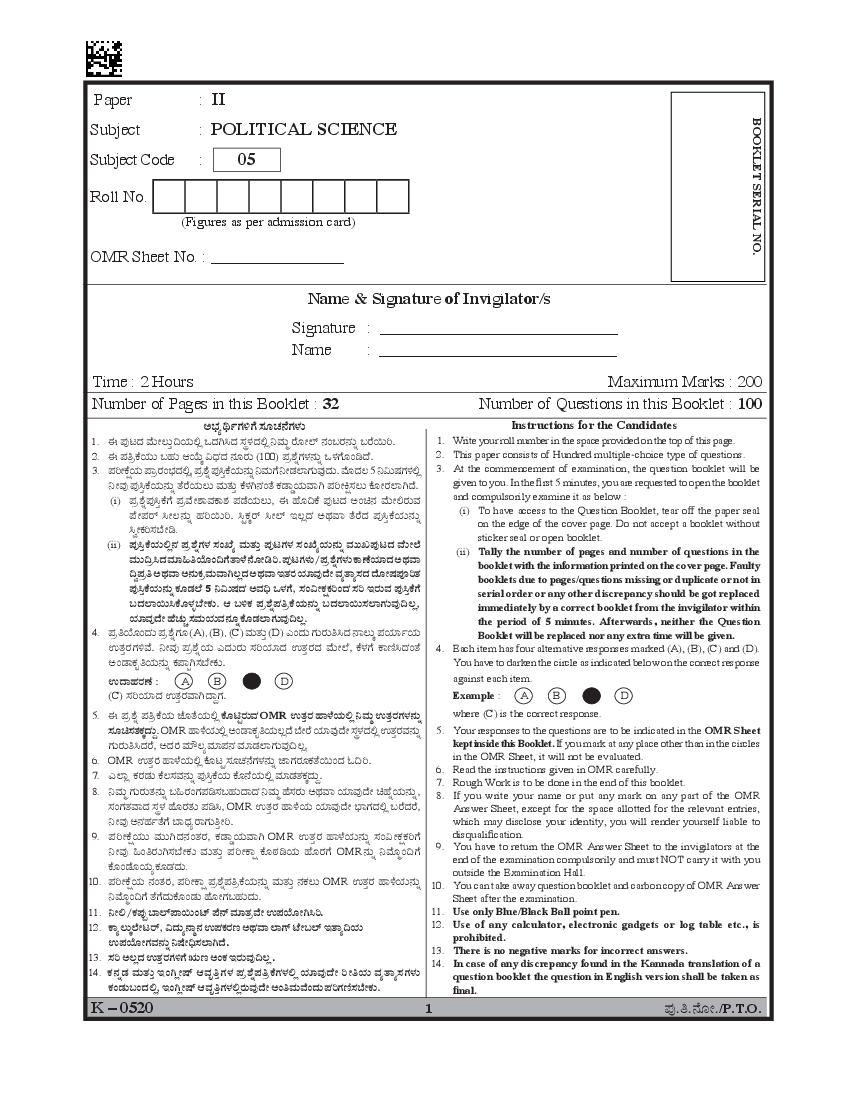
Page 1
Booklet SERIAL No.
Subject : Political Science
Subject Code : 05
Roll No.
(Figures as per admission card)
OMR Sheet No. : ____________________
Name & Signature of Invigilator/s
Signature : _________________________________
Name : _________________________________
Time : 2 Hours Maximum Marks : 200
Number of Pages in this Booklet : 32 Number of Questions in this Booklet : 100
A»Ü¦ìWÜÚWæ ÓÜãaÜ®æWÜÙÜá Instructions for the Candidates
1. D ±Üâo¨Ü ÊæáàÆᤩ¿áÈÉ J¨ÜXst ÓܧÙܨÜÈÉ ¯ÊÜá¾ ÃæãàÇ… ®ÜíŸÃÜ®Üá° ŸÃæÀáÄ. 1. Write your roll number in the space provided on the top of this page.
2. D ±Ü£ÅPæ¿áá ŸÖÜá BÁáR Ë«Ü¨Ü ®ÜãÃÜá (100) ±ÜÅÍæ°WÜÙÜ®Üá° JÙÜWæãíw¨æ. 2. This paper consists of Hundred multiple-choice type of questions.
3. ±ÜÄàPæÒ¿á ±ÝÅÃÜí»Ü¨È
Ü É, ±ÜÅÍæ° ±ÜâÔ¤P¿
æ á®Üá° ¯ÊÜáWæ ¯àvÜÇÝWÜáÊÜâ¨Üá. Êæã¨ÜÆ 5 ¯ËáÐÜWÜÙÜÈÉ 3. At the commencement of examination, the question booklet will be
¯àÊÜâ ±ÜâÔ¤Pæ¿á®Üá° ñæÃæ¿áÆá ÊÜáñÜᤠPæÙÜX®Üíñæ PÜvÝx¿áÊÝX ±ÜÄàQÒÓÜÆá PæãàÃÜÇÝX¨æ. given to you. In the first 5 minutes, you are requested to open the booklet
(i) ±ÜÅÍæ°±ÜâÔ¤PæWæ ±ÜÅÊæàÍÝÊÜPÝÍÜ ±Üvæ¿áÆá, D Öæã©Pæ ±Üâo¨Ü Aíb®Ü ÊæáàÈÃÜáÊÜ and compulsorily examine it as below :
±æà±ÜÃ… ÔàÆ®Üá° ÖÜÄÀáÄ. ÔrPÜRÃ… ÔàÇ… CÆÉ¨Ü A¥ÜÊÝ ñæÃæ¨Ü ±ÜâÔ¤Pæ¿á®Üá° (i) To have access to the Question Booklet, tear off the paper seal
on the edge of the cover page. Do not accept a booklet without
ÔÌàPÜÄÓܸæàw.
sticker seal or open booklet.
(ii) ±ÜâÔ¤Pæ¿áÈÉ®Ü ±ÜÅÍæ°WÜÙÜ ÓÜíTæ ÊÜáñÜᤠ±ÜâoWÜÙÜ ÓÜíTæ¿á®Üá° ÊÜááS±Üâo¨Ü ÊæáàÇæ
(ii) Tally the number of pages and number of questions in the
ÊÜáá©Åst ÊÜÞ×£Áãí©Wæ ñÝÙæ ®æãàwÄ. ±ÜâoWÜÙÜá/±ÜÅÍæ°WÜÙÜá PÝOæ¿Þ¨Ü A¥ÜÊÝ
booklet with the information printed on the cover page. Faulty
©Ì±ÜÅ£ A¥ÜÊÝ A®ÜáPÜÅÊÜáÊÝXÆÉ¨Ü A¥ÜÊÝ CñÜÃÜ ¿ÞÊÜâ¨æà ÊÜÂñÝÂÓÜ¨Ü ¨æãàÐܱÜäÄñÜ booklets due to pages/questions missing or duplicate or not in
±ÜâÔ¤Pæ¿á®Üá° PÜãvÜÇæ 5 ¯ËáÐÜ¨Ü AÊܘ JÙÜWæ, ÓÜíËàPÜÒPÜÄí¨Ü ÓÜÄ CÃÜáÊÜ ±ÜâÔ¤PæWæ serial order or any other discrepancy should be got replaced
Ÿ¨ÜÇÝÀáÔPæãÙÜÛ¸æàPÜá. B ŸÚPÜ ±ÜÅÍ氱ܣÅPæ¿á®Üá° Ÿ¨ÜÇÝÀáÓÜÇÝWÜáÊÜâ©ÆÉ, immediately by a correct booklet from the invigilator within
¿ÞÊÜâ¨æà ÖæaÜác ÓÜÊÜá¿áÊÜ®Üã° PæãvÜÇÝWÜáÊÜâ©ÆÉ. the period of 5 minutes. Afterwards, neither the Question
4. ±ÜÅ£Áãí¨Üá ±ÜÅÍæ°WÜã (A), (B), (C) ÊÜáñÜᤠ(D) Gí¨Üá WÜáÃÜá£Ô¨Ü ®ÝÆáR ±Ü¿Þì¿á Booklet will be replaced nor any extra time will be given.
EñܤÃÜWÜÚÊæ. ¯àÊÜâ ±ÜÅÍæ°¿á G¨ÜáÃÜá ÓÜÄ¿Þ¨Ü EñܤÃÜ¨Ü ÊæáàÇæ, PæÙÜWæ PÝ~Ô¨Üíñæ 4. Each item has four alternative responses marked (A), (B), (C) and (D).
AívÝPÜꣿá®Üá° PܱݳXÓܸæàPÜá. You have to darken the circle as indicated below on the correct response
E¨ÝÖÜÃÜOæ : A B C D against each item.
(C) ÓÜÄ¿Þ¨Ü EñܤÃÜÊÝX¨ÝªWÜ. Example : A B C D
5. D ±ÜÅÍæ° ±Ü£ÅPæ¿á hæãñæ¿áÈÉ PæãqrÃÜáÊÜ OMR EñܤÃÜ ÖÝÙæ¿áÈÉ ¯ÊÜá¾ EñܤÃÜWÜÙÜ®Üá° where (C) is the correct response.
ÓÜãbÓÜñÜPÜR¨Üáª. OMR ÖÝÙæ¿áÈÉ AívÝPÜꣿáÆÉ¨æ ¸æàÃæ ¿ÞÊÜâ¨æà Óܧ٨
Ü È
Ü É EñܤÃÊ
Ü ®Ü áÜ ° 5. Your responses to the questions are to be indicated in the OMR Sheet
WÜáÃÜá£Ô¨ÜÃæ, A¨ÜÃÜ ÊÜåèÆÂÊÜÞ±Ü®Ü ÊÜÞvÜÇÝWÜáÊÜâ©ÆÉ. kept inside this Booklet. If you mark at any place other than in the circles
6. OMR EñܤÃÜ ÖÝÙæ¿áÈÉ Pæãor ÓÜãaÜ®æWÜÙÜ®Üá° hÝWÜÃÜãPÜñæÀáí¨Ü K©Ä. in the OMR Sheet, it will not be evaluated.
6. Read the instructions given in OMR carefully.
7. GÇÝÉ PÜÃÜvÜá PæÆÓÜÊÜ®Üá° ±ÜâÔ¤Pæ¿á Pæã®æ¿áÈÉ ÊÜÞvÜñÜPÜR¨Üáª.
7. Rough Work is to be done in the end of this booklet.
8. ¯ÊÜá¾ WÜáÃÜáñÜ®Üá° Ÿ×ÃÜíWܱÜwÓÜŸÖÜá¨Ý¨Ü ¯ÊÜá¾ ÖæÓÜÃÜá A¥ÜÊÝ ¿ÞÊÜâ¨æà bÖæ°¿á®Üá°, 8. If you write your name or put any mark on any part of the OMR
ÓÜíWÜñÜÊÝ¨Ü ÓܧÙÜ ÖæãÃÜñÜá ±ÜwÔ, OMR EñܤÃÜ ÖÝÙæ¿á ¿ÞÊÜâ¨æà »ÝWܨÜÈÉ ŸÃæ¨ÜÃæ, Answer Sheet, except for the space allotted for the relevant entries,
¯àÊÜâ A®ÜÖÜìñæWæ ¸Ý«ÜÂÃÝWÜᣤàÄ. which may disclose your identity, you will render yourself liable to
9. ±ÜÄàPæÒ¿áá ÊÜááX¨Ü®ÜíñÜÃÜ, PÜvÝx¿áÊÝX OMR EñܤÃÜ ÖÝÙæ¿á®Üá° ÓÜíËàPÜÒPÜÄWæ disqualification.
¯àÊÜâ ×í£ÃÜáXÓܸæàPÜá ÊÜáñÜᤠ±ÜÄàPÝÒ PæãsÜw¿á ÖæãÃÜWæ OMR®Üá° ¯Êæã¾í©Wæ 9. You have to return the OMR Answer Sheet to the invigilators at the
end of the examination compulsorily and must not carry it with you
Pæãívæã¿áÂPÜãvܨÜá. outside the Examination Hall.
10. ±ÜÄàPæÒ¿á ®ÜíñÜÃÜ, ±ÜÄàPÝÒ ±ÜÅÍ氱ܣÅPæ¿á®Üá° ÊÜáñÜᤠ®ÜPÜÆá OMR EñܤÃÜ ÖÝÙæ¿á®Üá° 10. You can take away question booklet and carbon copy of OMR Answer
¯Êæã¾í©Wæ ñæWæ¨ÜáPæãívÜá ÖæãàWÜŸÖÜá¨Üá. Sheet after the examination.
11. ¯àÈ/PܱÜâ³ ¸ÝÇ…±ÝÀáíp… ±æ®… ÊÜÞñÜÅÊæà E±ÜÁãàXÔÄ. 11. Use only Blue/Black Ball point pen.
12. PÝÂÆáRÇæàoÃ…, ˨Üá®ݾ®Ü E±ÜPÜÃÜ| A¥ÜÊÝ ÇÝW… pæàŸÇ… CñÝ©¿á 12. Use of any calculator, electronic gadgets or log table etc., is
E±ÜÁãàWÜÊÜ®Üá° ¯Ðæà˜ÓÜÇÝX¨æ. prohibited.
13. There is no negative marks for incorrect answers.
13. ÓÜÄ AÆÉ¨Ü EñܤÃÜWÜÚWæ Má| AíPÜ CÃÜáÊÜâ©ÆÉ .
14. In case of any discrepancy found in the Kannada translation of a
14. PܮܰvÜ ÊÜáñÜᤠCíXÉàÐ… BÊÜ꣤WÜÙÜ ±ÜÅÍ氱ܣÅPæWÜÙÜÈÉ ¿ÞÊÜâ¨æà Äࣿá ÊÜÂñÝÂÓÜWÜÙÜá question booklet the question in English version shall be taken as
PÜívÜáŸí¨ÜÈÉ, CíXÉàÐ… BÊÜ꣤WÜÙÜÈÉÃÜáÊÜâ¨æà Aí£ÊÜáÊæí¨Üá ±ÜÄWÜ~ÓܸæàPÜá. final.
K – 0520 1 ±Üâ.£.®æãà./P.T.O.
Page 2
±æà±ÜÃ… – II
WÜÊÜá¯Ô : D ±Ü£ÅPæ¿áá ®ÜãÃÜá (100) ÊÜÓÜ᤯ÐÜu ÊÜÞ¨ÜÄ¿á ±ÜÅÍæ°WÜÙÜ®æã°ÙÜWæãíw¨Üáª, ±ÜÅ£Áãí¨Üá ±ÜÅÍæ°¿áã
GÃÜvÜá (2) AíPÜWÜÙÜ®Üá° Öæãí©¨æ. GÇÝÉ ±ÜÅÍæ°WÜÙÜ®Üã° PÜvÝx¿áÊÝX EñܤÄÓܸæàPÜá.
1. D PæÙÜX®ÜÊÜâWÜÙÜÈÉ ¿ÞÊÜâ¨Üá Jí¨Üá Pæàí¨ÜÅ 5. »ÝÃÜñÜ¨Ü ÃÝÐÝó«ÜÂPÜÒÄWæ ÇæãàPܱÝÆÃÜ ÖÜá¨æª¿á
ÓÜÃÜPÝÃÜ ÊÜáor¨ÜÈÉ »ÜÅÐÝraÝÃÜÊÜ®Üá° ¯WÜÅ×ÓÜáÊÜ ÖæÓÜÃÜ®ÜᰠζÝÃÜÓÜáÕ ÊÜÞvÜáÊÜ ÓÜË᣿áá CÊÜÃÜ®Üá°
JÙÜWæãíw¨æ.
±ÜÅÊÜááS AíWÜÊÝX¨æ ? (A) ±ÜÅ«Ý®ÜÊÜáí£Å, Pæàí¨ÜÅ PÝ®Üã®Üá ÊÜáí£Å ÊÜáñÜá¤
(A) Pæàí¨ÜÅ ñܯTÝ ¨ÜÙÜ (CBI) »ÝÃÜñÜ¨Ü ÊÜááS ®Ý¿ޘàÍÜ
(B) »ÝÃÜñ¨ Ü Ü ÊÜááS ®Ý¿ޘàÍÜ, ÇæãàPÜÓ» Ü ¿
æ á
(B) Pæàí¨ÜÅ ËaÜPÜÒPÜ BÁãàWÜ (CVC)
ÓܻݫÜÂPÜÒÃáÜ ÊÜáñÜᤠPæàí¨ÜÅ PÝ®Üã®Üá ÊÜáí£ÅWÙÜ áÜ
(C) WÜá±Ü¤aÜÃÜ ¨ÜÙÜ (IB) (C) ±ÜÅ«Ý®ÜÊáÜ í£Å, »ÝÃÜñ¨ Ü Ü ÊÜááS ®Ý¿ޘàÍÜ
(D) ÓÜíÍæãà«Ü®æ ÊÜáñÜᤠËÍæÉàÐÜOÝ ËíW… (RAW) ÊÜáñÜᤠÇæãàPÜÓÜ»Ý ÓܻݫÜÂPÜÒÃÜá
(D) ±ÜÅ«Ý®ÜÊáÜ í£Å, ÇæãàPÜÓ» Ü Ý ÓܻݫÜÂPÜÒÃáÜ ÊÜáñÜá¤
2. 8®æà ÇæãàPÜÓ»
Ü ¿
æ áÈÉ ¿ÞÊÜ ±ÝŨàæ ÎPÜ ÃÝgQà¿á ÃÝgÂÓÜ»æ¿á A«ÜÂPÜÒÃÜá
±ÜPÒÊ
Ü âÜ ±ÜÅÊáÜ áS ËÃæãà«Ü ±ÜPÒ¨
Ü Ü ±ÝñÜÅ樆 áÜ ° ÊÜ×ÔñÜᤠ? 6. CÊÜ â WÜ Ù Ü È É ¿ÞÊÜ â ¨Ü ® Ü á ° 73 ®æ à ÓÜ í ˫ݯPÜ
£¨Ü á ª ± Ü w ¿á PÝÁ᪠¿ á ÊÜ á ãÆPÜ »ÝÃÜ ñ Ü ¨ Ü
(A) APÝÈ ¨ÜÙÜ (B) ñæÆWÜá ¨æàÍÜí ÓÜí˫ݮܨÜÈÉ ÓæàÄÓÜÇÝX¨æ ?
(C) wGÊÜå…Pæ (D) GIGwGÊÜå…Pæ (A) »ÝWÜ X ÊÜáñÜᤠ11 A®ÜáÓÜãb
(B) »ÝWÜ IX ÊÜáñÜᤠ10 A®ÜáÓÜãb
3. ®ÝWÜÄàPÜ Óܮܰ¨ÜáWÜÙÜ ±ÜÅÓݤÊÜ®æ¿áá ±ÜÅ¥ÜÊÜáÊÝX (C) »ÝWÜ IX ÊÜáñÜᤠ11 A®ÜáÓÜãb
CÊÜÄí¨Ü A®ÝÊÜÃÜ|WæãíwñÜá¤. (D) »ÝWÜ X ÊÜáñÜᤠ9 A®ÜáÓÜãb
7. ±Ü q r – I ®Ü á ° ±Ü q r – II Ãæ ã í©Wæ Öæ ã àÈÔ
(A) ´ÜÅíPÝÀáÓ… ËápÝÅív…
ÊÜáñÜᤠPæÙÜWæ PæãqrÃÜáÊÜ ÓÜíPæàñÜWÜÚí¨Ü ÓÜÄ¿Þ¨Ü
(B) iËá¾ PÝoìÃ… EñܤÃÜÊÜ®Üá° BÁáR ÊÜÞw.
(C) ÊÜÞWÜìÃæp… ¥ÝÂaÜÃ… ±Üqr – I ±Üqr – II
(PÝÁáªWÜÙÜá) (ÊÜÐÜì)
(D) hÝ®… ÊæáàgÃ…
a. ÎPÜÒ| ÖÜPÜáR PÝÁ᪠1. 1992
4. C&BvÜ Ú ñÜ ÓÜ Ã Ü P ÝÃÜ ¨ Ü È É D Pæ Ù Ü X ®Ü Ê Ü â WÜ Ù Ü È É b. ÊÜÞ×£ ÖÜPÜáR A˜¯¿áÊÜá 2. 2009
c. WÝÅÖÜPÜÃÜ ÃÜPÜÒOÝ PÝÁ᪠3. 2005
¿ÞÊÜâ¨Üá Jí¨Üá ÓÜÃÜPÝÃÜ¨Ü ±ÜÅÓݤÊÜ®æ AÆÉ ?
d. 73®æà ÓÜíË«Ý®Ü £¨Üá± ª w
Ü PÝÁ᪠4. 1986
(A) ÓÜÃÜPÝÃÜ©í¨Ü ®ÝWÜÄPÜÃÜÊÜÃæWæ (G to C) ÓÜíPæàñÜWÜÙÜá :
(B) ÓÜÃÜPÝÃÜ©í¨Ü ÊÜá×ÙæÊÜÃæWæ (G to W) a b c d
(A) 3 1 4 2
(C) ÓÜÃÜPÝÃÜ©í¨Ü ÊÜÂÊÜÖÝÃܨÜÊÜÃæWæ (G to B) (B) 4 1 2 3
(C) 3 4 2 1
(D) ÓÜÃÜPÝÃÜ©í¨Ü E¨æãÂàXWÜÙÜÊÜÃæWæ (G to E) (D) 2 3 4 1
Paper II 2 K – 0520
Page 3
Paper – II
Note : This paper contains hundred (100) objective type questions. Each question carries
two (2) marks. All questions are compulsory.
1. At the Union Government level, which 5. The committee to recommend the name
one of the following is the principal of Lokpal to the President of India
consists of
agency for preventing corruption ?
(A) Prime Minister, Union Law Minister
(A) Central Bureau of Investigation and Chief Justice of India
(CBI) (B) Chief Justice of India, Speaker of
(B) Central vigilance Commission (CVC) Lok sabha and Union Law minister
(C) Prime Minister, Chief justice of
(C) Intelligence Bureau (IB) India and speaker of Lok sabha
(D) Research and Analysis Wing (RAW) (D) Prime minister, speaker of Lok sabha
and chairman of Rajya sabha
2. Which regional political party played
6. Which one of the following was added
the role of main opposition party in the to Indian Constitution through 73 rd
8th Lok sabha ? constitutional amendment ?
(A) Akali Dal (B) Telugu Desam (A) Part X and Eleventh schedule
(C) DMK (D) AIADMK (B) Part IX and Tenth schedule
(C) Part IX and Eleventh schedule
3. Citizen charters initiative was first (D) Part X and Ninth schedule
launched by 7. Match List – I with List – II and select
the correct answer using the codes given
(A) Francois Mitterrand below.
(B) Jimmy Carter List – I List – II
(C) Margaret Thatcher (Acts) (Year)
a. Right to Education Act 1. 1992
(D) John Major
b. Right to Information Act 2. 2009
c. Consumer Protection Act 3. 2005
4. Which one among the following is not
d. 73rd Constitutional
a type of Government initiatives in Amendment Act 4. 1986
E-Governance ? Codes :
(A) Government to Citizen (G to C) a b c d
(B) Government to Women (G to W) (A) 3 1 4 2
(B) 4 1 2 3
(C) Government to Business (G to B) (C) 3 4 2 1
(D) Government to Employees (G to E) (D) 2 3 4 1
K – 0520 3 Paper II
Page 4
±ÜÅ£±Ý¨Ü®æ (A) Gí¨Üã C®æã°í¨Ü®Üá° PÝÃÜ| (R) ±ÜÅ£±Ý¨Ü®æ (A) Gí¨Üã C®æã°í¨Ü®Üá° PÝÃÜ| (R)
Gí¨Üã ÇæàŸÇ… ÊÜÞvÜÇÝX¨æ.
Gí¨Üã ÇæàŸÇ… ÊÜÞvÜÇÝX¨æ.
±ÜÅ£±Ý¨Ü®æ (A) : »ÝÃÜ ñ Ü ¨ Ü Öæ ã ÓÜ B¦ìPÜ
±ÜÅ£±Ý¨Ü®æ (A) : ±ÜíaÝ¿áñ… ÃÝh… ¯à£¿áá B¦ìPÜñ¿ æ á E¨ÝÄàPÜÃ| Ü , ¯¿áíñÜÅPWÜ ÙÜ Ü
ÓÜíÓæ§WÜÙÜá WÝÅËáà| ÊÜáor¨ÜÈÉ Áãàg®æ¿á ÓÜÃÚÜ àPÜÃ|
Ü , TÝÓÜXà ÊÜÆ¿áWÜÚWæ ÖæaáÜ c ±ÝñÜÅ樆 áÜ °
ÊÜ×ÓÜÆá AÊÜPÝÍÜ PÜȳÓÜáËPæ ÖÝWÜã Óܳ«æìWÝX
ËPæàí©ÅàPÜÃÜ|ÊÜ®Üá° ±ÝÅÃÜí¼Ô¨ÜÊÜâ. B¦ìPÜñæ¿á®Üá° ñæÃæ©vÜáËPæ¿áÈÉ ¶ÜÈÔ¨æ.
PÝÃÜ| (R) : ñÜÊÜá¾ A¼ÊÜê©œWæ ¸æàPݨÜÐÜár PÝÃÜ| (R) : ˨æ à Î ®æàÃÜ ŸívÜ Ê ÝÙÜ
AÊÜÍÜÂPÜñæWÜÙÜ®Üá° Öæãí¨ÜáÊÜ ÊÜáãÆPÜ ÖÜãwPæWÜÙÜÈÉ ¹ÃÜáÓÜáñÜ®ÜÊÜâ ®ÜÊÜ E¨ÝÃÜÊÝ©
¯à£WÜÙÜ ¶ÜÆÊÝX¨æ.
WÝÅÊÜá±ÜíaÝÀá£WÜÙÜá EñܤÊÜáÔ§£¿áÈÉÊæ.
D Êæ á à騆 ÓÜ í ¨Ü » Ü ì ¨Ü È É D Pæ Ù Ü X ®Ü ¿ÞÊÜ
D Êæ á à騆 ÓÜ í ¨Ü » Ü ì ¨Ü È É D Pæ Ù Ü X ®Ü ¿ÞÊÜ ÖæàÚPæ¿áá ÓÜñÜÂÊݨÜá¨Üá ?
ÖæàÚPæ¿áá ÓÜñÜÂÊݨÜá¨Üá ? (A) (A) ÊÜáñÜᤠ(R) GÃÜvÜã ÓÜÄ¿ÞXÊæ ÖÝWÜã
(R), (A) Wæ ÓÜÄ¿Þ¨Ü ËÊÜÃÜOæ¿ÞX¨æ
(A) (A) ÊÜáñÜᤠ(R) GÃÜvÜã ÓÜÄ¿ÞXÊæ ÖÝWÜã (B) (A) ÊÜáñÜᤠ(R) GÃÜvÜã ÓÜÄ¿ÞXÊæ, B¨ÜÃæ
(R) (A)Wæ ÓÜÄ¿Þ¨Ü ËÊÜÃÜOæ¿ÞX¨æ (R), (A) ¿á ÓÜÄ¿Þ¨Ü ËÊÜÃÜOæ¿áÆÉ
(B) (A) ÊÜáñÜᤠ(R) GÃÜvÜã ÓÜÄ¿ÞXÊæ, B¨ÜÃæ (C) (A) ÓÜÄ¿ÞX¨æ, B¨ÜÃæ (R) ñܱݳX¨æ
(R) (A)¿á ÓÜÄ¿Þ¨Ü ËÊÜÃÜOæ¿áÆÉ (D) (A) ñܱݳX¨æ, B¨ÜÃæ (R) ÓÜÄ¿ÞX¨æ
(C) (A) ÓÜÄ¿ÞX¨æ, B¨ÜÃæ (R) ñܱݳX¨æ 12. D PæÙÜWæ ¯àvÜÇÝ¨Ü GÃÜvÜá ÖæàÚPæWÜÙÜÈÉ Jí¨Ü®Üá°
±ÜÅ£±Ý¨Ü®æ (A) Gí¨Üã C®æã°í¨Ü®Üá° PÝÃÜ| (R)
(D) (A) ñܱÜâ³ , B¨ÜÃæ (R) ÓÜÄ¿ÞX¨æ Gí¨Üã ÇæàŸÇ… ÊÜÞvÜÇÝX¨æ.
9. CÊÜ â WÜ Ù Ü È É ¿ÞÊÜ â ¨Ü á ÓÝÊÜ ì g¯PÜ ¯à£¿á ±ÜÅ£±Ý¨Ü®æ (A) : »ÝÃÜñÜÊÜâ ñÝÃÜñÜÊÜá©í¨Ü
PÜãw¨Ü A|ÌÓÜŒ ±ÜÅÓÜÃÜOÝ J±Ü³í¨ÜPæR ÓÜ× ÊÜÞvÜÆá
ÓÝ«Ü®ÜÊÝX¨æ ?
£ÃÜÓÜRÄÓÜᣤ¨æ.
(A) «ÜÊÜáì
PÝÃÜ| (R) : D ¯ÆáÊÜâ ÍÝí£¿ááñÜ A|ÌÓÜŒ
(B) ÍÝÓÜPÝíWÜ Óæã#ào ÊÜááí¨ÜáÊÜÄÓÜáÊÜâ¨ÜPæR »ÝÃÜñÜPæR
(C) PÝ®Üã®Üá ®Ý¿៨ܜñæ J¨ÜXÔ¨æ.
(D) ÊÜááPܤ ÊÝP… ÓÝÌñÜíñÜÅé D Êæáà騆 ÓÜí¨Ü»Üì¨ÜÈÉ D PæÙÜX®Ü ¿ÞÊÜ
ÖæàÚPæ¿áá ÓÜñÜÂÊݨÜá¨Üá ?
10. EñÜ ¤ Ê Ü á BÚÌPæ W æ ÓÜ í Ÿí˜Ô¨Ü ‘ ±Ü Ä PÜ Æ ³ ® ÝñÜ ¾ P Ü (A) (A) ÊÜáñÜᤠ(R) GÃÜvÜã ÓÜÄ¿ÞXÊæ ÖÝWÜã
JÙæÛ¿áñÜ®¨
Ü Ü ÊÜޮܨíÜ vÜ’, ±ÜÄPÜÆ®³ ¿
æ áá CÊÜÄí¨Ü (R), (A)Wæ ÓÜÄ¿Þ¨Ü ËÊÜÃÜOæ¿ÞX¨æ
±ÜÅ£±Ý©ÓÜƳqr¨æ. (B) (A) ÊÜáñÜᤠ(R) GÃÜvÜã ÓÜÄ¿ÞXÊæ, B¨ÜÃæ
(R), (A)¿á ÓÜÄ¿Þ¨Ü ËÊÜÃÜOæ¿áÆÉ
(A) hÝ®… Qàp…Õ (B) hÝ®… ÇÝP…
(C) (A) ÓÜÄ¿ÞX¨æ, B¨ÜÃæ (R) ñܱݳX¨æ
(C) hÝ®… WæÄÅíW… (D) hæ.hæ. ÃÜãÓæãà (D) (A) ñܱݳX¨æ, B¨ÜÃæ (R) ÓÜÄ¿ÞX¨æ
Paper II 4 K – 0520
Page 5
labeled as Assertion (A) and the other labeled as Assertion (A) and the other
labeled as Reason (R).
labeled as Reason (R).
Assertion (A) : The new economic
Assertion (A) : Panchayat Raj policies of India resulted liberalisation of
Institutions were set up to decentralise economy, simplifying regulations, giving
planning to village level. more role to private sector and opening
up of the economy to competition.
Reason (R) : Village Panchayats are Reason (R) : The spurt in foreign
in a better position to have a proper direct Investments (FDI) are result of
appreciation of their development neo-liberal policies.
needs. In the context of the above statements,
which of the following is true ?
In the context of the above statements, (A) Both (A) and (R) are true and (R) is
which of the following is true ? the correct explanation of (A)
(A) Both (A) and (R) are correct and (R) (B) Both (A) and (R) are true, but (R) is
not the correct explanation to (A)
is the correct explanation of (A)
(C) (A) is true, but (R) is false
(B) Both (A) and (R) are correct, but (R) (D) (A) is false, but (R) is true
is not the correct explanation of (A)
12. Given below are two statements, one
(C) (A) is correct, but (R) is not correct labeled as Assertion (A) and the other
(D) (R) is correct, but (A) is not correct labeled as Reason (R).
Assertion (A) : India consistently
9. Which of the following is an instrument refused to sign discriminatory non-
of public policy ? proliferation treaty.
(A) Religion Reason (R) : This stand provided
legitimacy for India to go for peaceful
(B) Legislature
nuclear explosion.
(C) Law In the context of the above statements,
(D) Free speech which of the following is true ?
(A) Both (A) and (R) are true and (R) is
10. ‘Criteria of conceptual goodness’ is a the correct explanation of (A)
concept referred to good governance
(B) Both (A) and (R) are true, but (R) is
propounded by not the correct explanation to (A)
(A) John Keats (B) John Locke (C) (A) is true, but (R) is a false
(C) John Gerring (D) J. J. Rousseau (D) (A) is false, but (R) is true
K – 0520 5 Paper II
Page 6
±ÜÅ£±Ý¨Ü®æ (A) Gí¨Üã C®æã°í¨Ü®Üá° PÝÃÜ| (R) ÓÜíŸí«Ü¨ÜÈÉ D PæÙÜX®Ü ÖæàÚPæWÜÙÜ®Üá° ±ÜÄWÜ~Ô.
Gí¨Üã ÇæàŸÇ… ÊÜÞvÜÇÝX¨æ. 1. ±Ü Å ¥Ü Ê Ü á ÃÝÑóà¿á ×í¨Ü á Ú¨Ü ÊÜ W Ü ì WÜ Ù Ü
±ÜÅ£±Ý¨Ü®æ (A) : ÇæãàPÜÓÜ»æ ÊÜáñÜᤠÃÝgÂÍÝÓÜ®Ü BÁãàWÜÊÜâ ÓÜíÓÜ£¤®Ü PÝÁᪿá ÊÜáãÆPÜ
ÓÜ»æWÜÙÜÈÉ ÊÜá×ÙÝ ËáàÓÜÇÝ£ ÊÜáÓÜã¨æ¿áá PÜÙæ¨Ü Óݧ±Ü®æ¿ÞÀáñÜá.
2½ ¨ÜÍÜPÜWÜÚí¨Ü ®æ®ÜWÜá©Wæ ¹©ª¨æ. 2. »ÝÃÜñÜ ÓÜíË«Ý®Ü¨Ü 340 ®æà ˘¿áá
PÝÃÜ| (R) : ²ñÜê ±ÜÅ«Ý®ÜÂñæ¿áá ±ÝÅŸÆÂñæ¿á®Üá° ×í¨ÜáÚ¨Ü ÊÜWÜìWÜÙÜ BÁãàWÜ¨Ü Óݧ±Ü®æWæ
Öæ ã í©¨æ ÖÝWÜ ã »ÝÃÜ £ à¿á ÃÝgQà¿á AÊÜPÝÍÜ PÜȳԨæ.
±ÜÅQÅÁá¿á®Üá° ¯¨æàìÎÓÜáñܤ¨æ. 3. 103 ®æà ÓÜí˫ݯPÜ £¨Ü᪱w Ü ¿áá ÃÝÑóà¿á
D Êæ á à騆 ÓÜ í ¨Ü » Ü ì ¨Ü È É D Pæ Ù Ü X ®Ü ¿ÞÊÜ ×í¨ÜáÚ¨Ü ÊÜWÜìWÜÙÜ BÁãàWÜPæR ÓÜí˫ݯPÜ
ÖæàÚPæ¿áá ÓÜñÜÂÊݨÜá¨Üá ? Óݧ®ÜÊÜÞ®Ü ¯àw¨æ.
(A) (A) ÊÜáñÜᤠ(R) GÃÜvÜã ÓÜÄ¿ÞXÊæ ÖÝWÜã 4. »ÜWÊ Ü Ý®…ÇÝÇ…ÓÜÖ¯Ü CÊÜÃáÜ ÃÝÑóà¿á×í¨ÜáÚ¨Ü
(R), (A)Wæ ÓÜÄ¿Þ¨Ü ËÊÜÃÜOæ¿ÞX¨æ ÊÜWì Ü WÜÙÜ BÁãàWÜPRæ A«ÜÂPÜÒÃÝX¨ÝªÃ.æ
(B) (A) ÊÜáñÜᤠ(R) GÃÜvÜã ÓÜÄ¿ÞXÊæ, B¨ÜÃæ ÓÜÄ¿Þ¨Ü EñܤÃÜÊÜ®Üá° BÁáR ÊÜÞw.
(R), (A)¿á ÓÜÄ¿Þ¨Ü ËÊÜÃÜOæ¿áÆÉ (A) 2 ÊÜáñÜᤠ4 (B) 1, 3 ÊÜáñÜᤠ4
(C) (A) ÓÜÄ¿ÞX¨æ, B¨ÜÃæ (R) ñܱݳX¨æ (C) 1, 2 ÊÜáñÜᤠ4 (D) 4 ÊÜÞñÜÅ
(D) (A) ñܱݳX¨æ, B¨ÜÃæ (R) ÓÜÄ¿ÞX¨æ 17. WæãàTÝìÇÝÂív… aÜÙÜáÊÜÚ¿á ÓÜíŸí«Ü¨ÜÈÉ D
14. ±ÜíaÝ¿áñ… ÃÝh… ÓÜíÓæ§WÜÙÜÈÉ ÔŒà¿áÄWæ Íæà. 50 PæÙÜX®Ü ÖæàÚPæWÜÙÜ®Üá° ±ÜÄWÜ~Ô.
ÃÜÐáÜ r ËáàÓÜÇÝ£¿á®Üá° D PæÙXÜ ®Ü ¿ÞÊÜ ÃÝg¨ÜÈÉ 1. WæãàTÝìÇÝÂív…®Ü ±ÜÅñÂæ àPÜ ÃÝgÂPÝRX
Êæã¨ÜÆá A®ÜáÐÝu®ÜWæãÚÓÜÇÝÀáñÜá ? aÜÙÜáÊÜÚ¿áá WæãàTÝì g®Ü ÊÜááQ¤
ÊæãàaÝì©í¨Ü BÃÜí¼ÓÜƳqrñÜá.
(A) Bí«ÜÅ ±ÜŨæàÍÜ (B) ±Üíhݸ…
2. WæãàTÝì ÃÝÑóà¿á ËÊæãàaÜ®Ý ¶ÜÅío®Üá°
(C) PÜ®ÝìoPÜ (D) ¹ÖÝÃÜ
ÓÜá»ÝÓ… [æç ÔíW… ÊÜáá®Ü°væÔ¨ÜÃÜá.
15. »ÝÃÜñÜ ÓÜíË«Ý®Ü¨Ü ¿ÞÊÜ A®Üáaæfà¨ÜPRæ 103 ®æà
3. vÝiìÈíW… WæãàTÝì ×Ç… Pè¯ÕÇ…
£¨Ü᪱Üw ÊÜáãÆPÜ ÖæãÓÜ ¯Ÿí«Ü®æWÜÙÜ®Üá° 1988ÃÜÈÉ Óݧ²ÓÜƳqrñÜá.
ÓæàÄÓÜÇÝÀáñÜá ? 4. WæãàTÝì ±ÝŨàæ ÎPÜ BvÜÚñÜPRæ aÜá®ÝÊÜOW æ ÙÜ áÜ
(A) 14 ÊÜáñÜᤠ15 A®Üáaæfà¨ÜWÜÙÜá 2012ÃÜÈÉ gÃÜáX¨ÜÊÜâ.
(B) 15 ÊÜáñÜᤠ16 A®Üáaæfà¨ÜWÜÙÜá ÓÜÄ¿Þ¨Ü EñܤÃÜÊÜ®Üá° BÁáR ÊÜÞw.
(C) 16 ÊÜáñÜᤠ17 A®Üáaæfà¨ÜWÜÙÜá (A) 1, 2 ÊÜáñÜᤠ4 (B) 1 ÊÜáñÜᤠ4
(D) 17 ÊÜáñÜᤠ18 A®Üáaæfà¨ÜWÜÙÜá (C) 1 ÊÜáñÜᤠ3 (D) 2, 3 ÊÜáñÜᤠ4
Paper II 6 K – 0520
Page 7
labeled as Assertion (A) and the other regard to National Commission for
labeled as Reason (R). backward classes ?
Assertion (A) : The bill for reservation 1. First National backward classes
commission was established by an
for women in Lok sabha and state
act of parliament.
legislative assemblies is pending since
last two and half decades. 2. Article 340 of Indian Constitution
facilitates the establishment of
Reason (R) : Patriarchy dominates and backward classes commission.
dictates Indian political process. 3. 103 constitutional amendment
In the context of the above statements, gave constitutional status national
which of the following is true ? commission for backward classes.
(A) Both (A) and (R) are true and (R) is 4. Bhagwan lal sahni is the chairman of
the correct explanation of (A) National Commission for backward
(B) Both (A) and (R) are true, but (R) is classes.
not the correct explanation to (A) Choose the correct answer.
(C) (A) is true, but (R) is false (A) 2 and 4 (B) 1, 3 and 4
(D) (A) is false, but (R) is true (C) 1, 2 and 4 (D) 4 only
14. Which one of the following state is the 17. Consider the following statements with
first state to implement the fifty percent regard to Gorkhaland movement.
reservation for women in panchayat raj 1. The movement for a separate state
institutions ? of Gorkhaland was started Gorkha
(A) Andhra Pradesh (B) Punjab Janmukti Morcha.
(C) Karnataka (D) Bihar 2. Gorkha National Liberation front
was led by Subhash Ghi singh.
15. In which articles of Indian Constitution
3. Darjiling Gorkha hill council was
new clauses have been added under 103
established in 1988.
to constitutional amendment ?
4. Elections to Gorkha territorial
(A) Articles 14 and 15 administration were held in 2012.
(B) Articles 15 and 16 Choose the correct answer.
(C) Articles 16 and 17 (A) 1, 2 and 4 (B) 1 and 4
(D) Articles 17 and 18 (C) 1 and 3 (D) 2, 3 and 4
K – 0520 7 Paper II
Page 8
ÊÜáñÜᤠPæÙÜWæ PæãqrÃÜáÊÜ ÓÜíPæàñÜWÜÚí¨Ü ÓÜÄ¿Þ¨Ü J±Ü³í¨Ü” WÜÙÜá D PæÙÜPÜívÜ ¿ÞÊÜ ¨æàÍÜWÜÚWæ
EñܤÃÜÊÜ®Üá° BÁáR ÊÜÞw. ÓÜíŸí˜Ô¨æ ?
(A) »ÝÃÜñÜ ÖÝWÜã ®æà±ÝÆ
±Üqr – I ±Üqr – II (B) »ÝÃÜñÜ ÖÝWÜã ÊÜá¿á®Ý¾Ã…
(ÃÝgQà¿á ±ÜPÜÒWÜÙÜá) (Óݧ²ñÜ ÊÜÐìÜ ) (C) »ÝÃÜñÜ ÖÝWÜã ¸ÝíWÝɨæàÍÜ
a. g®ÜñÝ ¨ÜÙÜ (hÝñÜ£àñÜ) 1. 2000 (D) »ÝÃÜñÜ ÖÝWÜã »ÜãñÝ®…
b. ÇæãàPÜ g®Ü ÍÜQ¤ ±ÜPÜÒ 2. 1999 23. D PæÙÜX®ÜÊÜâWÜÙÜÈÉ ¿ÞÊÜâ¨Üá »ÝÃÜñܨÜÈÉ®Ü ŸêÖÜñ…
c. ÓÜÊÜÞgÊÝ© ±ÜPÜÒ 3. 2001 A|áÍÜQ¤ Pæàí¨ÜÅÊÝX¨æ ?
d. ñæÆíWÝ| ÃÝÐÜó ÓÜËᣠ4. 1992 (A) PæçWÝ (B) PÜáívÜ®…PÜáÆÊÜå…
(C) ñÝÃݱÜâÃÜ (D) PÜPÜűÜâÃÜ
ÓÜíPæàñÜWÜÙÜá :
24. »ÝÃÜ£à¿á ÍÝí£ ±ÝÆ®Ý ±Üvæ¿áá ÎÅàÆíPÝPæR
a b c d D PæÙÜX®Ü J±Ü³í¨Ü¨Ü PÜÃÝÄWæ A®ÜáWÜá|ÊÝX
(A) 2 4 3 1 PÜÚÓÜÇÝXñÜá¤.
(B) 2 1 4 3 (A) ±ÜÅ«Ý®ÜÊÜáí£Å ².Ë. ®ÜÃÜÔíÖÜÃÝÊ…
ÊÜáñÜᤠÃÝÐÝó«ÜÂPÜÒ aÜí©ÅPÝ PÜáÊÜÞÃÜ
(C) 3 1 2 4 ñÜáíWÜÃÜÊÜÄí¨Ü ÓÜ׿ÞX¨Üª
(D) 3 4 2 1 »ÝÃÜñÜ&ÎÅàÆíPÝ ÓÜÖÜPÝÃÜ J±Ü³í¨Ü
(B) ±ÜÅ«Ý®ÜÊáÜ í£Å Cí©ÃÝWÝí˜ ÊÜáñÜᤠ±ÜÅ«Ý®ÜÊáÜ í£Å
19. D PæÙÜX®ÜÊÜâWÜÙÜÈÉ ¿ÞÊÜâ¨Ü®Üá° ÃÝÑóà¿á ŸÆ¨Ü
ÔÄÊÜÞÊæäà ŸívÝÃÜ ®ÝÀáPæ¿áÊÜÄí¨Ü
AíÍÜÊæí¨Üá ±ÜÄWÜ~ÔÆÉ ? ÓÜ׿ÞX¨Üª »ÝÃÜñ&Ü ÎÅàÆíPÝ ÍÝí£ J±Üí³ ¨Ü
(A) ®Ý¿áPÜñÜÌ (C) ±ÜÅ«Ý®ÜÊÜáí£Å ÃÝiàÊ…WÝí˜ ÊÜáñÜᤠA«ÜÂPÜÒ
(B) ÃÝÑóà¿á ÓÜí±Ü®Üã¾Æ hæ.BÃ…. g¿áÊÜ«Üì®æ AÊÜÄí¨Ü ÓÜ× BX¨Üª
(C) ±ÜPÜÒ ±Ü¨Üœ£ »ÝÃÜñÜ&ÎÅàÆíPÝ ÍÝí£ PÜÃÝÃÜá
(D) ±ÜÅ«Ý®ÜÊÜáí£Å ÃÝiàÊ…WÝí˜ ÊÜáñÜᤠA«ÜÂPÜÒ
(D) ÃÝÑóà¿á ÆPÜÒ|
ÊÜ á ×í¨Ý ÃÝg±Ü P Ü Ò Ã Ü Ê Ü Ä í¨Ü ÓÜ × BX¨Ü ª
20. D Pæ Ù Ü X ®Ü Ê Ü â WÜ Ù Ü È É ¿ÞÊÜ â ¨Ü á BÔ¿á®… »ÝÃÜñÜ&ÎÅàÆíPÝ Óæç¯PÜ J±Ü³í¨Ü
(ASEAN) JPÜãRo¨Ü ÊÜáãÆ ÓܨÜÓÜÂÃÜÆÉ ? 25. D PæÙÜPÜívÜÊÜâWÜÙÜÈÉ ¿ÞÊÜâ¨Üá »ÝÃÜñÜ&®æà±ÝƨÜ
(A) ¥æçÇÝÂív… (B) ÊÜáÇæàÎ¿Þ »Ü¨ÜÅñæ¿á ÓÜíŸí«Ü¨ÜÈÉ ±ÜÅÊÜááSÊÝ¨Ü PÝÙÜi.
I. bà¯à¿á AíÍÜ/ËÐÜ¿á.
(C) µÈ¶æç®…Õ (D) Ë¿ápÝ°í
II. ÊÜ Þ ¨Ü P Ü ÊÜ Ó Ü á ¤ PÜ Ù Ü Û ÓÝWÝ~Pæ ÖÝWÜ ã
21. D PæÙÜX®ÜÊÜâWÜÙÜÈÉ ¿ÞÊÜâ¨Üá Jí¨Üá »ÝÃÜñÜ¨Ü »ÜÁãàñݳ¨Ü®æ.
˨æ à ÍÝíWÜ ¯à£¿á »èWæ ã àÚPÜ ¯«ÝìÃÜ P Ü III. WæãàTÝìÇÝÂív… AíÍÜ/ËÐÜ¿á.
IV. GÃÜvÜã ¨æàÍÜWÜÙÜ ®ÜvÜá訆 ÓÜá˜àZìPÝƨÜ
AíÍÜÊÜÆÉ ? ÊÜááPܤ WÜw.
(A) ×í¨Üã ÊÜáÖÝÓÝWÜÃÜ ÓÜÄ¿Þ¨Ü EñܤÃÜÊÜ®Üá° BÁáR ÊÜÞw ŸÃæÀáÄ :
(B) »ÝÃÜñÜ&±ÝQÓݤ®Ü WÜw (A) I ÊÜáñÜᤠII ÓÜÄ¿Þ¨Ü EñܤÃÜ
(C) PÝÃÝPæãÃÜÊÜå… ¸æorWÜÙÜá (B) I, II ÊÜáñÜᤠIII ÓÜÄ¿Þ¨Ü EñܤÃÜ
(C) I, II ÊÜáñÜᤠIV ÓÜÄ¿Þ¨Ü EñܤÃÜ
(D) A|á ÍÜÓÝŒÓÜŒWÜÙÜá (D) II, III ÊÜáñÜᤠIV ÓÜÄ¿Þ¨Ü EñܤÃÜ
Paper II 8 K – 0520
Page 9
the correct answer using the codes given accord” are related to the following
below. countries
(A) India and Nepal
List – I List – II (B) India and Myanmar
(Political Party) (Year of (C) India and Bangladesh
Establishment) (D) India and Bhutan
a. Janata Dal (secular) 1. 2000 23. Which one of the following is the largest
b. Lok Jan Shakti party 2. 1999 nuclear power station in India ?
(A) Kaiga (B) Kundankulam
c. Samajwadi party 3. 2001
(C) Tarapur (D) Kakrapur
d. Telangana Rashtra
24. Indian Peace Keeping Force (IPKF)
Samithi 4. 1992 was sent to Sri Lanka as the pact of the
Codes : following accord
a b c d (A) India-Sri Lanka co-operation
agreement signed by prime
(A) 2 4 3 1 Minister P.V. Narsimha Rao and
(B) 2 1 4 3 President Chandrika Kumaratunga
(C) 3 1 2 4 (B) India-Sri Lanka peace treaty
signed by Prime Minister Indira
(D) 3 4 2 1 Gandhi and Prime Minister
Sirimao Bandarnaike
19. Which of the following is not considered
(C) India-Sri Lanka peace accord signed
as an element of National power ? by Prime Minister Rajiv Gandhi and
(A) Leadership President J. R. Jayawardene
(B) National resources (D) India-Sri Lanka military agreement
(C) Party system signed by Prime Minister Rajiv
Gandhi and President Mahinda
(D) National character Rajapaksa
20. One of the following is not a founder 25. Which of the following are the most
member of the ASEAN important concerns of India-Nepal
security relations ?
(A) Thailand (B) Malaysia I. The China factor.
(C) Philippines (D) Vietnam II. Drug trafficking and terrorism.
III. The Gorkhaland factor.
21. One of the following is not a geographical IV. The long open border between the
determinant of India’s foreign policy two countries.
(A) Indian Ocean Select the correct answer :
(A) I and II are correct
(B) India-Pakistan border
(B) I, II and III are correct
(C) Karakoram mountains (C) I, II and IV are correct
(D) Nuclear weapons (D) II, III and IV are correct
K – 0520 9 Paper II
Page 10
ÊÜáñÜᤠPæÙÜWæ ¯àwÃÜáÊÜ ÓÜíPæàñÜWÜÚí¨Ü ÓÜÄ¿Þ¨Ü »ÝÃÜ ñ Ü ÃÝÐÜ ó ¨Ü ËÊæ ã àaÜ ® æ W ÝX “ ¯Ñðà¿á
EñܤÃÜÊÜ®Üá° BÁáR ÊÜÞw. ±ÜÅ£»Üo®æ”¿á®Üá° ±ÜÅ£±Ý©Ô¨ÜÃÜá ?
±Üqr – I ±Üqr – II (A) ¸ÝÆ WÜíWÝ«ÜÃÜ £ÆP…
(ÃÝÐÜóÍÜQ¤¿á AíÍÜWÙÜ áÜ ) (E¨ÝÖÜÃÜOæWÜÙÜá) (B) AÃܹí¨æãà NãàÐ…
a. ®æçÓÜXìPÜ AíÍÜWÜÙÜá 1. ®èPÜÃÜÍÝ× ÓÜíZo®æ (C) ÓÝÌËá ËÊæàPÝ®Üí¨Ü
b. ÃÝgQà¿á AíÍÜWÜÙÜá 2. g®ÜÓÜíTæ (D) Ë. w. ÓÝÊÜPÜìÃ…
c. ÓÝÊÜÞiPÜ ÊÜáñÜᤠ29. CÊÜÃÜáWÜÙÜÈÉ ¿ÞÃÜá ±ÜPÜÒÃÜ×ñÜ ±ÜÅhݱÜÅ»ÜáñÜÌÊÜ®Üá°
ñÝ£ÌPÜ AíÍÜWÜÙÜá 3. ˨æàÎ ÓÜÖÝ¿á
±ÜÅ£±Ý©Ô¨ÜÃÜá ?
(A) Gí.G®…. ÃÝ¿å…
d. ¸ÝÖÜ AíÍÜWÜÙÜá 4. ÃÝÑóà¿á ®æç£PÜñæ (B) Gí.BÃ…. ÊÜáÓܯ
ÓÜíPæàñÜWÜÙÜá : (C) gÊÝÖÜÃÜÇÝÇ… ®æÖÜÃÜã
a b c d (D) vÝ.¹.BÃ…. Aí¸æàvÜRÃ…
(A) 2 1 4 3 30. CÊÜâWÜÙÜÈÉ WÝí˜ài¿á ¿ÞÊÜ ñÜñÜÌÊÜâ
(B) 4 3 2 1 ŸívÜÊÝÙÜÍÝ× ÓÜÊÜÞg¨Ü PÜÅÊÜáÊÜ®Üá°
(C) 3 1 2 4
ÓÜÊÜÞ®ÜñÝÊÝ©¿á®Ý°X ÊÜÞ±ÜìwÓÜáÊÜ
WÜáÄ¿á®Üá° Öæãí©¨æ ?
(D) 2 3 4 1
(A) ÓÜÌÃÝh…
27. D PæÙÜWæ ¯àvÜÇÝ¨Ü GÃÜvÜá ÖæàÚPæWÜÙÜÈÉ Jí¨Ü®Üá° (B) oÅÔràα…
±ÜÅ£±Ý¨Ü®æ (A) Gí¨Üã C®æã°í¨Ü®Üá° PÝÃÜ| (R) (C) ®ÝWÜÄàPÜ PÝ®Üã®Üá EÆÉíZ®æ
Gí¨Üã ÇæàŸÇ… ÊÜÞvÜÇÝX¨æ. (D) ÓÜñÝÂWÜÅÖÜ
±ÜÅ£±Ý¨Ü®æ (A) : PèqÆÂÃÜá «ÜÊÜáì 31. D PæÙÜX®Ü ÖæàÚPæWÜÙÜ®Üá° ±ÜÄWÜ~Ô.
ÊÜáñÜᤠPÝÊÜáÊÜâ £ÅÊÜWÜì A¥ÜìÊÜ®Üá° 1. PèqÆ ÃÝgÂÊÜâ Jí¨Üá AÊÜ¿áÊÜ GíŸá¨ÜPæR
AÊÜÆí¹ÔÃÜáÊÜâ¨ÜÄí¨Ü, £ÅÊÜWÜì A¥ÜìÊÜâ ŸÖÜÙÜ ±ÝÅÍÜÓÜö ¯àw¨ÝªÃæ.
ÊÜááSÂÊæí¨Üá ±ÜÄWÜ~ԨݪÃæ. 2. Gí.G®…. ÃÝ¿å…ÃÜÊÜÃÜ ±ÜÅPÝÃÜ ÓÜíZqñÜ
PÝÃÜ| (R) : ÃÝgÂÊÜâ A¥Üì¨Ü ÊÜáãÆÊÝX¨æ ±ÜÅhݱÜÅ»ÜáñÜÌÊÜâ Pæàí©ÅàPÜêñÜ ñÜñÜÌ¨Ü B«ÝÃܨÜ
B PÝÃÜ|©í¨Ü ÃÝg¯Wæ «ÜÊÜáì ÊÜáñÜᤠPÝÊÜáQRíñÜ ÊæáàÇæ C¨æ.
A¥ÜìÊÜâ ÊÜááSÂÊÝXÃܸæàPÜá. 3. ‘±ÜÅhݱÜÅ»ÜáñÜÌÊÜâ ÓÜÊÜÞ®Üñæ¿á C®æã°í¨Üá
D Êæáà騆 ÓÜí¨Ü»Üì¨ÜÈÉ D PæÙÜX®Ü ¿ÞÊÜ Öæ Ó Ü Ã ÝX¨æ ’ Gí¨Ü á WÝí˜ài¿áÊÜ Ä í¨Ü
ÖæàÚPæ¿áá ÓÜñÜÂÊݨÜá¨Üá ? ÖæàÙÜƳqr¨æ.
(A) (A) ÊÜáñÜᤠ(R) GÃÜvÜã ÓÜÄ¿ÞXÊæ ÖÝWÜã 4. AÃܹí¨æãàÃÜÊÃ Ü Ü ÃÝgÂԨݜíñÜ¨Ü ±ÜÄPÜÆ®³ ¿
æ áá
(R), (A)Wæ ÓÜÄ¿Þ¨Ü ËÊÜÃÜOæ¿ÞX¨æ ÊÜÞ®ÜÊ®Ü Ü ÓÝÊÜÞiPÜ&ÃÝgQà¿á¨Ü ËPÝÓÜPRæ
ÊæçaÝÄPÜñÁ æ áà PÝÃÜ~à»ÜãñÜÊÝ¨Ü AíÍÜÊÝX¨æ.
(B) (A) ÊÜáñÜᤠ(R) GÃÜvÜã ÓÜÄ¿ÞXÊæ, B¨ÜÃæ
(R), (A)¿á ÓÜÄ¿Þ¨Ü ËÊÜÃÜOæ¿áÆÉ ÓÜÄ¿Þ¨Ü EñܤÃÜÊÜ®Üá° BÁáR ÊÜÞwÄ.
(C) (A) ÓÜÄ¿ÞX¨æ, B¨ÜÃæ (R) ñܱݳX¨æ (A) 4 ÊÜÞñÜÅ (B) 3 ÊÜáñÜᤠ4
(D) (A) ñܱݳX¨æ, B¨ÜÃæ (R) ÓÜÄ¿ÞX¨æ (C) 2, 3 ÊÜáñÜᤠ4 (D) 1, 2 ÊÜáñÜᤠ4
Paper II 10 K – 0520
Page 11
the correct answer using the codes given “passive Resistance” for the emancipation
below. of Indian nation from the British
List – I List – II colonialism ?
(Elements of (Examples) (A) Bala Gangadhar Tilak
National Power) (B) Aurobindo Ghosh
a. Natural elements 1. Bureaucratic (C) Swami Vivekananda
organisation (D) V. D. Savarkar
b. Political elements 2. Population
c. Social and 29. Which among the following advocated
ideological elements 3. Foreign support a partyless democracy ?
d. External elements 4. National Morale (A) M. N. Roy
Codes : (B) M. R. Masani
a b c d (C) Jawaharlal Nehru
(D) Dr. B. R. Ambedkar
(A) 2 1 4 3
(B) 4 3 2 1 30. The following doctrine of Gandhi aimed
(C) 3 1 2 4 at transforming capitalist order of society
(D) 2 3 4 1 into an equalitarian one
(A) Swaraj
27. Given below are two statements, one (B) Trusteeship
labeled as Assertion (A) and the other (C) Civil disobedience
labeled as Reason (R).
(D) Satyagraha
Assertion (A) : Kautilya considers that,
in Trivarga Artha is the most important, 31. Consider the following statements.
since both Dharma and Kama depended 1. Kautilya emphasised that the state
upon it. is an organicism.
Reason (R) : State is the root of Artha 2. According to M. N. Roy the organised
and for the king Artha should be more democracy is based on the principle
important than Dharma and Kama. of centralization.
3. ‘Democracy is another name for
In the context of the above statements,
equality’, said by Gandhi.
which of the following is true ?
4. Aurobindo’s conception of theory
(A) Both (A) and (R) are true and (R) is
of state accounts for ‘reason’ as
the correct explanation of (A)
the cause for the socio political
(B) Both (A) and (R) are true, but (R) is evolution of man.
not the correct explanation to (A)
Choose the correct answer.
(C) (A) is true, but (R) is false (A) 4 only (B) 3 and 4
(D) (A) is false, but (R) is true (C) 2, 3 and 4 (D) 1, 2 and 4
K – 0520 11 Paper II
Page 12
ÊÜáñÜᤠPæÙÜWæ ¯àwÃÜáÊÜ ÓÜíPæàñÜWÜÚí¨Ü ÓÜÄ¿Þ¨Ü ±ÜÅ£±Ý¨Ü®æ (A) Gí¨Üã C®æã°í¨Ü®Üá° PÝÃÜ| (R)
EñܤÃÜÊÜ®Üá° BÁáR ÊÜÞw. Gí¨Üã ÇæàŸÇ… ÊÜÞvÜÇÝX¨æ.
±Üqr – I ±Üqr – II ±ÜÅ£±Ý¨Ü®æ (A) : ±æÉàpæãàÃÜÊÃ Ü áÜ ÃÝg嬆 Aí£ÊÜá
(ÇæàSPÜÃÜá) (WÜÅí¥ÜWÜÙÜá) E¨æªàÍÜÊÜâ ‘®Ý¿ᒠÊÜ®Üá° J¨ÜXÓÜáÊÜâ¨ÝX¨æ
a. Ë.w. ÓÝÊÜPÜìÃ… 1. © ÖÜãÂÊÜá®… ÓæçPÜÇ… Gí¨Üá ÊÝ©ÓÜáñݤÃæ.
b. ÃÝÊÜá ÊÜá®æãàÖÜÃÜ 2. ²ÅÓÜ®… væçÄ PÝÃÜ| (R) : ®Ý¿á¨Ü ñÜñÜÌWÜÙÜ A®ÜÌÀáÓÜáËPæ
Çæãà×¿Þ ±æÉàpæãàË®Ü Ä±Ü¹ÉP…®Ü ÊÜááS ÓÜÊÜáÓæ BXñÜá¤.
c. AÃܹí¨æãà NãàÐ… 3. © Cíw¿á®… D Êæáà騆 ÓÜí¨Ü»Üì¨ÜÈÉ D PæÙÜX®Ü ¿ÞÊÜ
ÊÝÃ… B¶… ÖæàÚPæ¿áá ÓÜñÜÂÊݨÜá¨Üá ?
Cíw±æívæ®…Õ (A) (A) ÊÜáñÜᤠ(R) GÃÜvÜã ÓÜÄ¿ÞXÊæ ÖÝWÜã
(R), (A)Wæ ÓÜÄ¿Þ¨Ü ËÊÜÃÜOæ¿ÞX¨æ
d. g¿á±ÜÅPÝÍ… ®ÝÃÝ¿á| 4. ËàÇ… B¶… ×ÓÜrÄ
(B) (A) ÊÜáñÜᤠ(R) GÃÜvÜã ÓÜÄ¿ÞXÊæ, B¨ÜÃæ
ÓÜíPæàñÜWÜÙÜá : (R), (A)¿á ÓÜÄ¿Þ¨Ü ËÊÜÃÜOæ¿áÆÉ
a b c d (C) (A) ÓÜÄ¿ÞX¨æ, B¨ÜÃæ (R) ñܱݳX¨æ
(A) 4 1 2 3 (D) (A) ñܱݳX¨æ, B¨ÜÃæ (R) ÓÜÄ¿ÞX¨æ
(B) 3 4 1 2
(C) 2 1 3 4 37. ±Ü q r – I ®Ü á ° ±Ü q r – II Ãæ ã í©Wæ Öæ ã àÈÔ
(D) 2 3 4 1 ÊÜáñÜᤠPæÙÜWæ ¯àwÃÜáÊÜ ÓÜíPæàñÜWÜÚí¨Ü ÓÜÄ¿Þ¨Ü
33. D PæÙÜX®ÜÊÜÃÜÈÉ ¿ÞÃÜá ÃÝÑóà¿á EñܤÃÜÊÜ®Üá° BÁáR ÊÜÞw.
Bí¨æãàÆ®ÜÊÜ®Üá° ŸÈÐÜuÊÝ¨Ü ÓÝíÓÜ¢£PÜ ±Üqr – I ±Üqr – II
ÊÜáñÜᤠ«ÝËáìPÜ ±Üâ®ÜÃÜáijàÊÜ®ÜÊݨܩí¨Ü a. GÇ….PÜÆÓæãRÊÜÔR 1. © ÓæPæív… ÓæP…Õ
BWÜŸÖÜá¨æí¨Üá ±ÜÅ£±Ý©Ô¨ÜÃÜá ? b. ÃÝÂaæÇ… PÝÓÜì®… 2. Êæáç®… PÜÃæíp…Õ B¶…
(A) ÓÜá»ÝÐ… aÜí¨ÜÅ ¸æãàÓ… ÊÜÞQÕìÓÜí
(B) vÝ.¹.BÃ…. Aí¸æàvÜRÃ… c. ÔÊæãà w ¹àÊÜÃ… 3. ÓæçÇæíp… ÔøíW…
(C) ¸ÝÆ WÜíWÝ«ÜÃÜ £ÆP…
d. ËÇ… QËáÉPÝ 4. ÊÜáÈrPÜÆcÃÜÇ…
(D) hæ.GÇ…. ®æÖÜÃÜã
Ôqg®…α…‑
34. D Pæ Ù Ü X ®Ü Ê Ü Ã Ü á WÜ Ù Ü È É ¿ÞÃÜ á ‘ B«Ý£¾ P Ü
AÃÝgPÜñÝÊÝ©’ Gí¨Üá ±ÜÄWÜ~ñÜÊÝX¨ÝªÃæ ? ÓÜíPæàñÜWÜÙÜá :
(A) ÃÝh… WÜáÃÜá a b c d
(B) »ÜWÜñ… ÔíW… (A) 2 1 3 4
(C) ÎÅà AÃܹí¨æãà (B) 3 4 2 1
(D) ÇÝÇÝ Æg±Üñ…ÃÝ¿å… (C) 2 3 1 4
35. “ £àÊÜ Å ÊÜ Þ ®Ü Ê Ü ñ Ý ” ÊÝ¨Ü ¨ Ü ñÜ ñ Ü Ì ÊÜ â CÊÜ Ä Wæ (D) 1 4 2 3
ÓÜíŸí˜Ô¨ÝªX¨æ. 38. ±ÜÅÓÜá¤ñÜ ÇæãàPÜÓÜ»æ¿áÈÉ ±ÜÄÎÐÜr hÝ£Wæ GÐÜár
(A) Bíñæãà¯Áãà WÝÅÊÜå…ÔR ÔàoáWÜÙÜ®Üá° ËáàÓÜÈvÜÇÝX¨æ ?
(B) Gí.G®….ÃÝ¿å…
(A) 84 (B) 79
(C) ÃÝhÝ ÃÝÊÜå… ÊæãàÖÜ®… ÃÝ¿å…
(D) ÖæàŸÃ…ÊÜÞÓ… (C) 85 (D) 82
Paper II 12 K – 0520
Page 13
the correct answer using the codes given labeled as Assertion (A) and the other
below. labeled as Reason (R).
List – I List – II Assertion (A) : Plato argues that
(Authors) (Books) ‘justice’ is the ultimate purpose of the
a. V. D. Savarkar 1. The Human state.
cycle Reason (R) : Discovering the principles
b. Ram Manohar Lohia 2. Prison Diary of justice was the central problem of
Plato’s Republic.
c. Aurobindo Ghosh 3. The Indian war
of independence In the context of the above statements,
which of the following is true ?
d. Jayaprakash Narayan 4. Wheel of history
(A) Both (A) and (R) are true and (R) is
Codes : the correct explanation of (A)
a b c d (B) Both (A) and (R) are true, but (R) is
(A) 4 1 2 3 not the correct explanation to (A)
(B) 3 4 1 2 (C) (A) is true, but (R) is false
(C) 2 1 3 4 (D) (A) is false, but (R) is true
(D) 2 3 4 1
37. Match List – I with List – II and select
33. Who among the following advocated the correct answer using the codes given
national movement through strong below.
cultural and religious revivalism ? List – I List – II
(A) Subash Chandra Bose a. L. Kolaskowski 1. The second sex
(B) Dr. B. R. Ambedkar b. Rachel Carson 2. Main currents of
(C) Bala Gangadhar Tilak Marxism
(D) J. L. Nehru c. Simoe de Beauvoir 3. Silent Spring
d. Will Kymlicka 4. Multicultural
34. Who among the following is considered citizenship
as ‘spiritual anarchist’ ?
Codes :
(A) Raj Guru a b c d
(B) Bhagat Singh (A) 2 1 3 4
(C) Sri Aurobindo (B) 3 4 2 1
(D) Lala Lajpat Rai (C) 2 3 1 4
(D) 1 4 2 3
35. The philosophy of “radical humanism”
is associated with 38. How many seats are reserved for
(A) Antonio Gramsci scheduled caste members in the present
(B) M. N. Roy Lok sabha ?
(C) Raja Rammohan Roy (A) 84 (B) 79
(D) Hebarmass (C) 85 (D) 82
K – 0520 13 Paper II
Page 14
AíÍÜWÜÚÆɨæà PÝ¿ÞìaÜÃÜOæWæãÙÜáÛÊÜâ©ÆÉ ? ±ÜÅ£±Ý¨Ü®æ (A) Gí¨Üã C®æã°í¨Ü®Üá° PÝÃÜ| (R)
Gí¨Üã ÇæàŸÇ… ÊÜÞvÜÇÝX¨æ.
(A) ÓÜÌñÜíñÜÅ ®Ý¿ÞíWÜ ÊÜÂÊÜÓæ§ ±ÜÅ£±Ý¨Ü®æ (A) : ËÓÜà ¤O
Ü ÝÊÝ© ÃÝÑóà¿áñæ¿áá
(B) ÈUñÜ ÓÜíË«Ý®Ü ÓÝÊÜÞÅgÂÍÝ×ÁávæWæ ÖæãàWÜÆá Ÿ¿áÓÜáñܤ¨æ.
(C) A®ÜÊÜá ÓÜíË«Ý®Ü PÝÃÜ| (R) : C¨Üá BPÜÅÊÜá|Êæà
(D) ÃÝgQà¿á ±ÜPÜÒWÜÙÜá ÃÜã±ÜÊæñÜ¤í£¨æ.
D Êæáà騆 ÓÜí¨Ü»Üì¨ÜÈÉ D PæÙÜX®Ü ¿ÞÊÜ
40. ÓÜíÓÜ©à¿á ±Ü¨Üœ£ ÓÜPÝìÃÜWÜÙÜÈÉ ÓÜbÊÜ ÓÜí±Üâo¨Ü ÖæàÚPæ¿áá ÓÜñÜÂÊݨÜá¨Üá ?
ÓÜ»æWÜÙÜá ¿ÞÃÜ A«ÜÂPÜÒñæ¿áÈÉ ®Üvæ¿ááñܤÊæ ? (A) (A) ÊÜáñÜᤠ(R) GÃÜvÜã ÓÜÄ¿ÞXÊæ ÖÝWÜã
(R), (A)Wæ ÓÜÄ¿Þ¨Ü ËÊÜÃÜOæ¿ÞX¨æ
(A) AñÜÂíñÜ ×Ä¿á ÓÜbÊÜÃÜá
(B) (A) ÊÜáñÜᤠ(R) GÃÜvÜã ÓÜÄ¿ÞXÊæ, B¨ÜÃæ
(B) ÓܻݫÜÂPÜÒÃÜá (R), (A)¿á ÓÜÄ¿Þ¨Ü ËÊÜÃÜOæ¿áÆÉ
(C) ÃÝÐÜó±Ü£WÜÙÜá (C) (A) ÓÜÄ¿ÞX¨æ, B¨ÜÃæ (R) ñܱݳX¨æ
(D) (A) ñܱÜâ³ , B¨ÜÃæ (R) ÓÜÄ¿ÞX¨æ
(D) ±ÜÅ«Ý®Ü ÊÜáí£ÅWÜÙÜá
43. ÃÝgQà¿á ÓÝÊÜÞiàPÜÃÜ| ±ÜÅQÅÁáWæ ¿ÞÊÜ
41. ±Üqr – I ®Üá° ±Üqr – II ÃÜ hæãñæWæ Öæãí©Ô ±ÜÅ»ÜáñÜÌÊÜâ AñÜÂíñÜ ÖæaÜác ±ÝÅÊÜááSÂñæ¿á®Üá°
ÊÜáñÜᤠPæÙÜWæ PæãqrÃÜáÊÜ ÓÜíPæàñÜWÜÚí¨Ü ÓÜÄ¿Þ¨Ü ¯àvÜáñܤ¨æ ?
(A) ŸívÜÊÝÙÜÍÝ× ±ÜÅ»ÜáñÜÌ
EñܤÃÜÊÜ®Üá° BÁáR ÊÜÞw.
(B) ÓÜÊÜáñÝÊÝ© ±ÜÅ»ÜáñÜÌ
±Üqr – I ±Üqr – II (C) ÓÜÊÝì˜PÝÄ ±ÜÅ»ÜáñÜÌ
a. ÊÜÞípæÓæãR$Âà 1. ÓÜí¿ááPܤ (D) AÃÝgQà¿á ±ÜÅ»ÜáñÜÌ
ÓÜPÝìÃÜ 44. D PæÙÜX®ÜÊÜâWÜÙÜÈÉ ¿ÞÊÜâ¨Üá B«Üá¯PÜ ñèƯPÜ
ÃÝgQà¿á¨Ü ÆPÜÒ|ÊÝX¨æ ?
b. ¥ÝÊÜáÓ… ÖæàÃ… 2. A˜PÝÃÜ Ë»Üg®Ý
(A) AíñÜÃ… ÎÔ¤à¿á ¨ÜêÑPr ã æ à®Ü¨Ü Êæáà騆 JñÜá¤
ԨݜíñÜ (B) A¼ÊÜê©œ Öæãí©¨Ü ¨æàÍÜWÜÙÜ A«Ü¿á®ÜPæR
c. ÖÝÂËáÆr®… 3. PÝ®Üã¯®Ü BÚÌPæ ±ÝÅÊÜááSÂñæ
d. G.Ë.væçÔ 4. ±ÜÅÊÜÞOÝ®ÜáWÜá| (C) ÓÜÃÜPÝÃÜ¨Ü L±ÜaÝÄPÜ ÃÜaÜ®æWÜÙÜ®Üá° ÊÜÞñÜÅ
A«Ü¿á®Ü ÊÜÞvÜáÊÜâ¨Üá
±ÝÅ£¯«ÜÂ
(D) ÊÜåèÇÝ«ÝÄñÜ PÜÙÜPÜÚWÜÙÜ A«Ü¿á®Ü
ÓÜíPæàñÜ :
45. D PæÙÜX®ÜÊÜâWÜÙÜÈÉ ¿ÞÊÜâ¨Ü®Üá° CíWæÉíw®ÜÈÉÃÜáÊÜ
a b c d ÃÝgQà¿á ÓÜíÓÜ¢£WÜÙÜ®Üá° Bƾív… ÊÜáñÜᤠÔw°
(A) 2 4 1 3 ÊܸÝì ±ÜÅ£±Ý©Ô¨ÝªÃæ ?
(A) ŸÖÜáÃÜã±Üñæ, aÜaæì, ËÃæãà«Ü
(B) 1 4 2 3
(B) ŸÖÜáÃÜã±Üñæ, ±ÝÃܨÜÍÜìPÜñæ, ËÃæãà«Ü
(C) 2 4 3 1 (C) ÊÜÞ®ÜÂñæ, JÊÜá¾ñÜ ÊÜáñÜᤠHPÜÃÜã±Üñæ
(D) 3 1 4 2 (D) JÊÜá¾ñÜ, HPÜÃÜã±Üñæ ÊÜáñÜᤠËÃæãà«Ü
Paper II 14 K – 0520
Page 15
operate without labeled as Assertion (A) and the other
labeled as Reason (R).
(A) An independent judiciary Assertion (A) : Expansionist nationalism
(B) A written constitution seeks to go for all imperialisation.
(C) A rigid constitution Reason (R) : It is aggression
personified.
(D) Political parties In the context of the above statements,
which of the following is true ?
40. The meetings of the cabinet under (A) Both (A) and (R) are correct and (R)
parliamentary form of Government are is the correct explanation of (A)
(B) Both (A) and (R) are correct, but (R)
presided over by
is not the correct explanation of (A)
(A) The senior most minister (C) (A) is correct, but (R) is not correct
(B) The speaker (D) (R) is correct, but (A) is not correct
(C) The president 43. Which state gives most importance to
the process of political socialisation ?
(D) The prime minister
(A) Capitalist state
(B) Communist state
41. Match List – I with List – II and select (C) Totalitarian state
the correct answer using the codes given (D) Anarchist state
below. 44. Which one of the following is a feature
List – I List – II of modern comparative politics ?
(A) Focus on interdisciplinary
a. Montesquieu 1. Federal approach
Government (B) Emphasis on studying developed
countries
b. Thomas Hare 2. Separation of
(C) Study of formal structures of
powers Government only
c. Hamilton 3. Rule of law (D) Study of normative concerns
d. A.V. Dicey 4. Proportional 45. Which among the following are the
features of political culture in UK as
representation argued by Almond and Sidney Verba ?
Codes : (A) Heterogeneity, discussion, dissent
a b c d (B) Heterogeneity, Transparency,
Dissent
(A) 2 4 1 3
(C) Deference, Consensus and
(B) 1 4 2 3 homogeneity
(C) 2 4 3 1 (D) Consensus, Homogeneity and
(D) 3 1 4 2 Dissent
K – 0520 15 Paper II
Page 16
Ü ÓÜáËPæ¿á AñÜÂíñÜ QÅ¿ÞÎàÆ 49. ±Ü q r – I ®Ü á ° ±Ü q r – II Ãæ ã í©Wæ Öæ ã àÈÔ
Ë«Ý®ÜÊÜâ _______ ®Üá° JÙÜWæãíwÃÜáñܤ¨æ. ÊÜáñÜᤠPæÙÜWæ ¯àwÃÜáÊÜ ÓÜíPæàñÜWÜÚí¨Ü ÓÜÄ¿Þ¨Ü
1. ÃÝgQà¿á ±ÜPÜÒ¨Ü ÓܨÜÓÜ®ÝX EñܤÃÜÊÜ®Üá° BÁáR ÊÜÞw.
L±ÜaÝÄPÜÊÝX ®æãí¨ÝÀáÓÜáÊÜâ¨Üá ±Üqr – I ±Üqr – II
2. ±ÜÅaÝÃÜ ÊÜÞvÜáÊÜâ¨Üá ÊÜáñÜᤠÊÜáñÜ (WÜáÄ) (ñÜÃܸæà£)
aÜÇÝÀáÓÜáÊÜâ¨Üá a. BvÜÚñÜ¨Ü PèÍÜÆÂÊÜ®Üá° 1. ÓæàÊæ¿áÈÉÁáà
3. ÊÜáñÜWÜpærWÜÙÜ ÊÜÍܱÜwÓÜáËPæ¿á ÊÜÂÊÜÓæ§ A»ÝÂÓÜ¨Ü ÊÜáãÆPÜ ñÜÃܸæà£
4. ¯|ì¿á PæçWæãÙÜáÛÊÜ ±ÜÅQÅÁá¿áÈÉ ÓÜí±Ý©ÓÜáÊÜâ¨Üá
»ÝWÜÊÜ×ÓÜáÊÜâ¨Üá b. ®æàÊÜáPÝ£ Öæãí©¨ÜÊÜÄWæ 2. A®è±ÜaÝÄPÜ
5. aÜá®ÝÊÜOÝ ±ÜÅaÝÃܨÜÈÉ »ÝWÜÊÜ×ÓÜáÊÜâ¨Üá PæÆÓÜ, PæÆÓÜ¨Ü ®ÜÊÜ ±ÜÄÓÜÃÜ ñÜÃܸæà£
ÓÜíPæàñÜWÜÙÜá : ÓÜíZo®æ ÖÝWÜã A¨ÜÃÜ WÜáÄWÜÙÜ
(A) 2 ÊÜáñÜᤠ4 (B) 1, 2, 4 ÊÜáñÜᤠ5 ÊÜáãÆ ±ÜÄPÜƳ®æ¿á®Üá°
(C) 2, 3, 4 ÊÜáñÜᤠ5 (D) 1, 2, 3 ÊÜáñÜᤠ4 ±ÜÄaÜÀáÓÜáÊÜâ¨Üá
c. »ÜËÐÜ嬆 E¨æãÂàX¿á®Üá° 3. ±ÜäÊÝì¼ÊÜááS
47. ÃÝgQà¿á ÓÜíÓÜ¢£Wæ ÓÜíŸí˜Ô¨Üíñæ D PæÙÜX®Ü ÓÝÊÜìg¯PÜ ÓæàÊæWæ ñÜ¿ÞÃÜá WæãÚÓÜáÊÜ
ÖæàÚPæWÜÙÜ®Üá° ±ÜÄWÜ~Ô. ÊÜÞvÜáÊÜâ¨Üá ñÜÃܸæà£
(A) ÃÝgQà¿á ÓÜíÓÜ¢£¿áá ÃÝgPÝÃÜ|¨Ü d. E¨æãÂàX¿á®Üá° ¨ÜPÜÒWæãÚÓÜÆá 4. ÓæàÊÝ ±ÜäÊÜì
PÜvæX®Ü ÊÜÂQ¤WÜÙÜ ÊÜá®æãàÊÜ꣤ ÊÜáñÜᤠEñæ¤àiÓÜáÊÜâ¨Üá ñÜÃܸæà£
¨ÜêÑrPæãà®ÜWÜÙÜ ÊÜÞ¨ÜÄ¿ÞX¨æ
ÓÜíPæàñÜWÜÙÜá :
(B) ÃÝgQà¿á ÓÜ í ÓÜ ¢ £¿áá Jí¨Ü á ¨æ à ÍÜ ¨ Ü
a b c d
ÓÝÊÜޮܠI£ÖÝÔPÜ A®Üá»ÜÊÜ AíñæÁá ÊÜÂQ¤WÙÜ Ü (A) 4 1 2 3
TÝÓÜX ÊÜáñÜᤠÊæç¿áQ¤PÜ A®Üá»ÜÊÜWÜÚí¨Ü (B) 2 3 4 1
ÃÜã±ÜâWæãíwÃÜáñܤ¨æ (C) 4 3 2 1
(C) ÃÝgQà¿á ÓÜíÓÜ¢£¿áá ¨æàÍܨÜÈÉ gÃÜáWÜáÊÜ (D) 2 1 4 3
ÃÝgQà¿á QÅÁá¿á Óܯ°ÊæàÍÜ¨Ü ×®æ°Çæ¿áÈÉ 50. “®ÝWÜÄàPÜ ÓæàÊæ¿áá ÊÜ꣤±ÜÃÜ, ÍÝÍÜÌñÜ, PèÍÜÆÂ
ÓÜÑ
³ àr PÜÄÓÜáÊÜ ±ÝÅÁãàXPÜ ®Üí¹PæWÙÜ áÜ , A¼ÊÜÂQ¤ Öæ ã í©¨Ü ¯©ìÐÜ r ÓÜ í »ÝÊÜ ® æ ±Ü v æ ¿ ááÊÜ
ÓÜíPæàñÜWÜÙÜá ÊÜáñÜᤠÊÜåèÆÂWÜÙÜ ±Ü¨Üœ£WÜÙÜ®Üá° A—PÝÄWÜÙÜ AíWÜÊÝX¨æ”. C¨Ü®Üá° ÖæàÚ¨ÜÊÜÃÜá
JÙÜWæãíw¨æ ¿ÞÃÜá ?
(D) Jí¨Üá ŸWæ¿á ÓÜíÓÜ¢£¿ÞXÃÜáÊÜ A¨Üá WÜ| (A) ²¶…®ÜÃ… (B) ÊÜÞÂP…Õ ÊæŸÃ…
ÃÝgQà¿á ÓÜíÓÜ¢£Ááí¨Üá Wæ㣤ÃÜáÊÜíñÜ (C) ¶æç®ÜÃ… (D) WÝÉ évÜ®…
ÃÝgQà¿á ±Ü ¨ Ü œ £ ¿á ÃÜ a Ü ® æ ÊÜ á ñÜ á ¤
±ÜÅQÅÁá¿á®Üá° GÇÝÉ ÊÜÂQ¤WÙÜ áÜ ÓÜí±Üä|ìÊÝX 51. ÓÝí±ÜŨÝÀáPÜ Ô¨ÝœíñÜÊÜâ ÓÜíZo®æ¿á®Üá° D
aæ®Ý°X £Ú¨ÜáPæãíwÃÜáñݤÃæ ÄࣿÞX ±ÜÄWÜ~ÓÜáñܤ¨æ.
48. D Pæ Ù Ü P Ü í vÜ ÃÝÐÜ ó WÜ Ù Ü È É ¿ÞÊÜ â ¨Ü á ¹ÅP…Õ W æ (A) Jí¨Üá ÊÜáábc¨Ü ÊÜÂÊÜÓ槿ÞX
Óæà±Üìvæ¿ÞÀáñÜá ? (B) Jí¨Üá ÊÜááPܤ ÊÜÂÊÜÓ槿ÞX
(A) ¸æÅiÇ… (B) ¨ÜQÒ| BµÅPÝ (C) ÊÜáábc¨Ü ÊÜáñÜᤠÊÜááPܤ GÃÜvÜã ÊÜÂÊÜÓæ§WÜÙÝX
(C) aæç®Ý (D) »ÝÃÜñÜ (D) ÓÜãÃæ ±Ü¨Üœ£
Paper II 16 K – 0520
Page 17
participation include the correct answer using the codes given
1. Formal enrolment in a political below.
party List – I List – II
2. Canvassing and casting votes (Objectives) (Training)
3. Arrangements of booth capturing a. To acquire administrative 1. In-service
4. Participation in decision making skills through practice
process. b. To introduce an 2. Informal
5. Working in election campaign. appointee to the
Codes : basic concepts,
organisation and
(A) 2 and 4 (B) 1, 2, 4 and 5
its goal
(C) 2, 3, 4 and 5 (D) 1, 2, 3 and 4 c. To prepare a prospective 3. Orientation
47. Consider the following statements about employee for public
political culture. service
(A) Political culture is the pattern d. To stimulate the employees 4. Pre-entry
of individual attitudes and to make them efficient
orientations towards politics Codes :
(B) Political culture is shaped by the
a b c d
general historical experience of
a country as also by the private (A) 4 1 2 3
and personal experiences of the (B) 2 3 4 1
individuals (C) 4 3 2 1
(C) Political culture consists of the system (D) 2 1 4 3
of empirical beliefs, expressive
symbols and values which define the 50. ___________ said that civil service is
situation in which political action a “professional body of officials,
takes place permanent, paid and skilled”.
(D) The type of culture in which all (A) Pfiffner (B) Max Weber
individuals are fully well aware (C) Finer (D) Gladden
of the structures and processes of
51. The classical theory treats the organisation
political system is known as elite
as
political culture
(A) A closed system
48. Which among the following countries
(B) An open system
joined BRICS last ?
(C) Both open and closed system
(A) Brazil (B) South Africa
(C) China (D) India (D) Spoils system
K – 0520 17 Paper II
Page 18
WÜáÃÜá£ÓÜƳqr¨æ. ÓÜÄ¿Þ¨Ü ÓÜíPæàñÜÊÜ®Üá° ŸÙÜÔ EñܤÃÜÊÜ®Üá° BÁáR
(A) AÊæç¿áQ¤PÜñæ, ËÎÑràPÜÃÜ|, ¨ÜPÜÒñæ ÊÜáñÜᤠÊÜÞw.
±ÝÃܨÜÍÜìPÜñæ ±Üqr – I ±Üqr – II
(ÇæàSPÜÃÜá) (PÜê£WÜÙÜá)
(B) AÊæç¿áQ¤PÜñæ,ËÎÑràPÜÃÜ|, ¨ÜPÜÒñæ ÊÜáñÜá¤
a. ÖÜŸìp…ì G. ÓæçÊáÜ ®… 1. © ±æà±ÜÃ…Õ B®… ©
ÍæÅà~àPÜÃÜ| Óæç®…Õ B´… ±Ü¹ÉP…
(C) ±ÝÅ—PÝÃÜ, ÎÓÜᤙ, ËÎÑràPÜÃÜ| ÊÜáñÜᤠ¨ÜPÜÒñæ Aw¾¯ÓæóàÍÜ®…
(D) A—à®Üñæ, ËÎÑràPÜÃÜ|, PÝ¿áì Ë»Üg®æ b. WÜáÈP… ÊÜáñÜᤠEÄÌP… 2. ŸãÂÃæãàPæÅÔ
ÊÜáñÜᤠ¨ÜPÜÒñæ c. ÊÜÞqì®… AÇæ㺆 3. ±Ü¹ÉP…
Aw¾¯ÓæóàÍÜ®…
53. D PæÙÜPÜívÜ ¿ÞÊÜ Ô¨ÝœíñÜÊÜâ "ÓÝÊÜÞ®ÜÂ
BÂív… ±Ü¹ÉP…
ÓÜÊÜáñæãàÆ®ÜÊÜ®Üá° ' ±ÜÅ£±Ý©ÓÜáñܤ¨æ ?
±ÝÈÔ
(A) E¨ÝÃÜÊÝ© ԨݜíñÜ
d. Öæ¯Å ¯PæãàÆÓ… 4. Aw¾¯ÓæóàqÊ…
(B) ÊÝÆÃÜÓ… ԨݜíñÜ
¹ÖæàË¿áÃ…
(C) B¦ìPÜ ±ÜıÜPÜÌñæ¿á ԨݜíñÜ
ÓÜíPæàñÜWÜÙÜá :
(D) ®ÜÊÜ&ÍÝÔ÷à¿á ԨݜíñÜ a b c d
(A) 4 3 2 1
54. PæÙÜX®ÜÊÜâWÜÙÜÈÉ ¿ÞÊÜâ¨Üá ÓÝÊÜìg¯PÜ BvÜÚñÜ (B) 4 1 2 3
A«Ü¿á®Ü¨Ü ñÝ£ÌPÜ ¨ÜêÑrPæãà®ÜÊÝXÆÉ ? (C) 1 3 4 2
(A) »ÜWÜÊÜ©Yàñæ¿á A«Ü¿á®Ü (D) 2 4 1 3
(B) Öݸ…ÕÃÜ Çæ˿ޥݮ… 57. D PæÙÜWæ ¯àvÜÇÝ¨Ü GÃÜvÜá ÖæàÚPæWÜÙÜÈÉ Jí¨Ü®Üá°
(C) ±æÉàpæã AÊÜÃÜ Ä±Ü¹ÉP… ±ÜÅ£±Ý¨Ü®æ (A) Gí¨Üã C®æã°í¨Ü®Üá° PÝÃÜ| (R)
(D) ÇÝP…®Ü © oá qÅàpæçoÓ…B®… ÔËÇ…
Gí¨Üã ÇæàŸÇ… ÊÜÞvÜÇÝX¨æ.
±ÜÅ£±Ý¨Ü®æ (A) : ÃÜaÜ®ÝÊÝ©WÜÙÜá ÃÝÐÜó
WÜÊÜ®…ìÊæáíp… ÊÜáñÜᤠAíñÜÃÜÃÝÐÜó¨Ü ®ÜvÜáÊæ ÊÜÂñÝÂÓÜÊÜ®Üá°
55. D Pæ Ù Ü X ®Ü Ê Ü â WÜ Ù Ü È É ¿ÞÊÜ hæ ã àw ÓÜ Ä ¿Þ¨Ü ÊÜÞvÜáÊÜâ©ÆÉ .
Öæãí©Pæ BX¨æ ? PÝÃÜ| (R) : hÝWÜ£PÜ ŸívÜÊÝÙÜ
ÊÜÂÊÜÓæ§Àáí¨Ü ÃÝg ±Ü¨Üœ£¿áá
1. ÓÝÂÊÜáã¿áÇ… ÖÜíqíW…o®… : ¯«ÜìÄÓÜƳvÜáñܤ¨æ.
ÃÝgQà¿á PæãÙæ¿ááËPæ D Êæáà騆 ÓÜí¨Ü»Üì¨ÜÈÉ D PæÙÜX®Ü ¿ÞÊÜ
2. ´æÅv… ÄW…Õ : ²ÅÓ…ÊÜÞÂqP… ÓÜÊÜÞg ÖæàÚPæ¿áá ÓÜñÜÂÊݨÜá¨Üá ?
3. væàËv… DÓÜr®… : ®ÝWÜÄPÜ ÓÜíÓÜ¢£ (A) (A) ÊÜáñÜᤠ(R) GÃÜvÜã ÓÜÄ¿ÞXÊæ ÖÝWÜã
(R), (A) Wæ ÓÜÄ¿Þ¨Ü ËÊÜÃÜOæ¿ÞX¨æ
4. væàËv… B±ÜrÃ… : ÃÝgQà¿á B«Üá¯àPÜÃÜ|
(B) (A) ÊÜáñÜᤠ(R) GÃÜvÜã ÓÜÄ¿ÞXÊæ, B¨ÜÃæ
ÓÜíPæàñÜWÜÙÜá : (R), (A) ¿á ÓÜÄ¿Þ¨Ü ËÊÜÃÜOæ¿áÆÉ
(A) 1, 2, 3 ÊÜáñÜᤠ4 (B) 3 ÊÜáñÜᤠ4 (C) (A) ÓÜÄ¿ÞX¨æ, B¨ÜÃæ (R) ñܱݳX¨æ
(C) 1, 2 ÊÜáñÜᤠ4 (D) 1, 2 ÊÜáñÜᤠ3 (D) (A) ñܱݳX¨æ, B¨ÜÃæ (R) ÓÜÄ¿ÞX¨æ
Paper II 18 K – 0520
Page 19
features the correct answer using the codes given
(A) Impersonality, Specialisation, below.
Efficiency and transparency List – I List – II
(Authors) (Books)
(B) Impersonality, Specialisation,
Efficiency and Hierarchy a. Herbert A. Simon 1. The papers on
the science of
(C) Authority, Discipline, Specialisation public
and efficiency administration
(D) Subordination, Specialisation, b. Gullick and Urwick 2. Bureaucracy
Division of Work and Efficiency c. Martin Albrow 3. Public
53. Which of the following theory advocated Administration
General equilibrium ? and public
policy
(A) Liberal theory d. Henry Nicholas 4. Administrative
(B) Walras theory Behaviour
(C) Theory of economic Maturity Codes :
a b c d
(D) Neo-classical theory (A) 4 3 2 1
54. Which of the following is not a (B) 4 1 2 3
philosophical approach to the study of (C) 1 3 4 2
public administration ? (D) 2 4 1 3
(A) The method of work of Bhagvad 57. Given below are two statements, one
Geetha labeled as Assertion (A) and the other
labeled as Reason (R).
(B) Leviathan of Hobbes
Assertion (A) : Structuralists make no
(C) The Republic of Plato distinction between the national and the
(D) The two treatises on civil international.
Government of locke Reason (R) : The state system is
determined by the global capitalist
55. Which of the following pairs are system.
correctly matched ? In the context of the above statements,
1. Samuel Hunginton : Political decay which of the following is true ?
2. Fred Riggs : Prismatic society (A) Both (A) and (R) are true and (R) is
3. David Easton : Civic culture the correct explanation of (A)
4. David Apter : Political modernisation (B) Both (A) and (R) are true, but (R) is
Codes : not the correct explanation to (A)
(A) 1, 2, 3 and 4 (B) 3 and 4 (C) (A) is true, but (R) is false
(C) 1, 2 and 4 (D) 1, 2 and 3 (D) (A) is false, but (R) is true
K – 0520 19 Paper II
Page 20
J±Üí³ ¨ÜWÚÜ Wæ ÓÜ× ÖÝQñÜᤙ. AÊÜâWÜÙÈ Ü É CÊÜâ ÓæàÄÊæ. (A) 10 gã®…Äí¨Ü 21 gã®…, 1992
I. ¸ÝÖÝÂPÝÍÜ ±ÜÄÍæãà«Ü®Ý ÓÜÖÜPÝÃÜ J±Ü³í¨Ü (B) 3 gã®…Äí¨Ü 14 gã®…, 1992
II. ÓèÃÜ »èñÜÍÝÓÜ÷ ÓÜíŸí—ñÜ PæÒàñÜŨÜÈÉ ÓÜÖÜPÝÃÜ (C) 3 gã®…Äí¨Ü 14 gã®…, 1995
J±Ü³í¨Ü (D) 3 gáÇæçÄí¨Ü 14 gáÇæç, 1995
III. A|áÍÜ Ó Ü ÷ ÓÜ í Íæ ã à«Ü ® æ ÖÝWÜ ã Eñݳ ¨ Ü ® æ 63. AíñÜÃÃÜ ÝÑóà¿á ԨݜíñÜWÙÜ Ü ±Üqr – I ®Üá° ±Üqr – II ÃÜ
PæÒàñÜŨÜÈÉ ÓÜÖÜPÝÃÜ J±Ü³í¨Ü hæãñæWæ Öæãí©Ô PæÙÜWæ ¯àwÃÜáÊÜ A¨ÜÃÜ ±ÜÅÊÜááS
IV. Óæà®æ ÖÝWÜã ñÝí£ÅPÜ ÓÜÖÜPÝÃÜ PÝÃÜÂPÜÅÊÜáWÜÙÜ ÖÜ Ä PÝÃÜ Ã Ü ÓÜ í Pæ à ñÜ W Ü Ú í¨Ü ÓÜ Ä ¿Þ¨Ü EñÜ ¤ à Ü
J±Ü³í¨Ü ÖÝWÜã A®ÜáÐÝu®Ü BÁáRÊÜÞw.
ÓÜÄ¿Þ¨Ü EñܤÃÜÊÜ®Üá° BÁáR ÊÜÞw. ±Üqr – I ±Üqr – II
(A) I ÊÜáñÜᤠIII ÓÜÄ¿ÞXÊæ (ԨݜíñÜWÜÙÜá) (ÖÜÄPÝÃÜÃÜá)
(B) III ÊÜáñÜᤠIV ÓÜÄ¿ÞXÊæ a. ÊÝÓܤÊÜÊÝ¨Ü 1. ÃÝŸp…ì PÝP…Õ
b. ®ÜÊÜ ÊÝÓܤÊÜÊÝ¨Ü 2. QÅÔr®… ÓæÇ…ËÓÜrÃ…
(C) I, III ÊÜáñÜᤠIV ÓÜÄ¿ÞXÊæ
c. Ô÷àÊÝ¨Ü 3. ÖÝ®…Õ ÊÜÞWæìí¥æã
(D) I, II ÊÜáñÜᤠIV ÓÜÄ¿ÞXÊæ
d. ËÊÜáÍÝìñܾPÜ 4. Pæ®æ¥… ÊÝÆrh…
59. ËÍÜÌ¨Ü Ë¼®Ü° ±ÜŨæàÍÜWÜÙÜ ®ÜvÜá訆 ÓÜíŸí«ÜWÜÙÜá ԨݜíñÜ
ÓÜíÓÜ¢£Àáí¨Ü & A±ÜÃÝ«Ü, ÖÜ|PÝÔ¯í¨Ü &±ÜÄÓÜÃÜ ÓÜíPæàñÜWÜÙÜá :
ÖÝWÜã CÊÜâWÜÙÜá PÝÇÝ®ÜáPÜÅÊÜá¨ÜÈÉ Ÿ¨ÜÇÝWÜáÊÜ a b c d
ÊÜáñÜᤠÊÜê©œ¿ÞWÜáÊÜ Äà£WÜÙÜ®Üá° ______ Gí¨Üá (A) 2 3 4 1
PÜÃæ¿ááñݤÃæ. (B) 3 4 2 1
(A) ËÍÜÌ ±Ü¨Üœ£¿á ËÍæÉàÐÜOæ (C) 4 1 3 2
(D) 4 2 1 3
(B) AíñÜÃÜÃÝÑóà¿á ±Ü¨Üœ£
64. D PæÙÜWæ ¯àvÜÇÝ¨Ü GÃÜvÜá ÖæàÚPæWÜÙÜÈÉ Jí¨Ü®Üá°
(C) hÝWÜ£àPÜÃÜ|
(D) ËÍÜÌ ÃÝgPÝÃÜ|
±ÜÅ£±Ý¨Ü®æ (A) Gí¨Üã C®æã°í¨Ü®Üá° PÝÃÜ| (R)
Gí¨Üã ÇæàŸÇ… ÊÜÞvÜÇÝX¨æ.
60. D PæÙX Ü ®ÜÊâÜ WÜÙÈ
Ü É ¿ÞÊÜâ¨Üá "ÍÜQ¤ ÓÜÊáÜ ñæãàÆ®Ü' ¨Ü ±ÜÅ£±Ý¨Ü®æ (A) : hÝWÜ£àPÜÃÜ|ÊÜâ
ÓÜÄ¿Þ¨Ü Ë«Ý®ÜÊÜÆÉ ? ÃÝÐÜó & ÃÝg嬆 ±ÜÅÓÜá¤ñÜñæ¿á®Üá° Wè|WæãÚÔ¨æ.
(A) Jvæ¨Üá BÙÜáÊÜâ¨Üá
PÝÃÜ| (R) : GÈÉ¿áÊÜÃæWæ ÃÝÐÜóÊݨÜÊÜâ
(B) JvÜíŸwPæ
±ÜÅŸÆ ÍÜQ¤¿ÞX ÊÜááí¨ÜáÊÜÃæ¿ááñܤ¨æÁã
(C) ±ÜÄÖÝÃÜWÜÙÜá
AÈÉ¿áÊÜÃæWæ ¿ÞÊÜ ÃÝÐÜó&ÃÝgÂWÜÙÜá
(D) ÍÜÓÝ÷ÓÜ÷WÜÙÜá
±ÜÅÓÜá¤ñÜñæ¿á®Üá° ±Üvæ¿ááÊÜâ©ÆÉ.
61. "¯OÝì¿áPÜ ÓÜí¨Ü»ÜìWÜÙÜÈÉ ±ÜÅ»ÜáñÜÌWÜÙÜ Aí£ÊÜá D Êæáà騆 GÃÜvÜá ÖæàÚPæWÜÙÜÈÉ ¿ÞÊÜ
PÝÙÜi¿áá A—PÝÃÜPÝRX CÃܨàæ »Ü¨ÅÜ ñWæ ÝX C¨æ '. ÖæàÚPæ¿áá ÓÜÄ¿ÞX¨æ ?
Gí¨Üá ÖæàÚ¨ÜÊÜÃÜá ¿ÞÃÜá ? (A) (A) ÊÜáñÜᤠ(R) GÃÜvÜã ÓÜÄ¿ÞXÊæ ÖÝWÜã
(A) ¥ÝÊÜáÓ… ÍæÈÉíW… (R) (A) Wæ ÓÜÄ¿Þ¨Ü ËÊÜÃÜOæ¿ÞX¨æ
(B) ²àoÃ… G´…. vÜÅPÜÃ… (B) (A) ÊÜáñÜᤠ(R) GÃÜvÜã ÓÜÄ¿ÞXÊæ, B¨ÜÃæ
(R) (A) ¿á ÓÜÄ¿Þ¨Ü ËÊÜÃÜOæ¿áÆÉ
(C) ÖÝ®…Õ hæ. ÊÜÞWæìí¥æã
(C) (A) ÓÜÄ¿ÞX¨æ, B¨ÜÃæ (R) ñܱݳX¨æ
(D) Pæ®æ¥… ÊÝÆrh…
(D) (A) ñܱÜâ³ , B¨ÜÃæ (R) ÓÜÄ¿ÞX¨æ
Paper II 20 K – 0520
Page 21
agreements in the year 2005. These held from
include (A) 10 June to 21 June, 1992
I. Space exploration cooperation (B) 3 June to 14 June, 1992
agreement. (C) 3 June to 14 June, 1995
II. Agreement on cooperation in the (D) 3 July to 14 July, 1995
field of solar physics.
III. Agreement on cooperation in the 63. Match the international theories (List – I)
field of nuclear weapons research and their important proponents (List – II )
and production. and select the correct answer from the
IV. Agreement on implementation codes given below.
of programme for military and List – I List – II
technical cooperation. (Theories) (Proponents)
Select the correct answer : a. Realism 1. Robert Cox
(A) I and III are correct b. Neo-Realism 2. Christine Sylvester
(B) III and IV are correct c. Feminism 3. Hans Morgenthau
(C) I, III and IV are correct d. Critical theory 4. Kenneth Waltz
(D) I, II and IV are correct
Codes :
59. The connection between different a b c d
regions of the world, from the cultural to (A) 2 3 4 1
criminal, the financial to environmental (B) 3 4 2 1
and ways in which they change and (C) 4 1 3 2
increase over time is termed as (D) 4 2 1 3
(A) World system analyses
(B) International system 64. Given below are two statements, one
(C) Globalisation labeled as Assertion (A) and the other
labeled as Reason (R).
(D) World politics
Assertion (A) : Globalisation has
60. Which one of the following is not a undermined the relevance of nation-
method of ‘Balance of power” ? state.
(A) Divide and rule Reason (R) : No nation-state is still
(B) Conventions relevant as nationalism continuous to
(C) Compensations be a potent force.
(D) Armaments
In the context of the above two statements
61. Who said, “In crucial situations, however which one of the following is correct ?
the ultimate concern of states is not for (A) Both (A) and (R) are true and (R) is
power but for security” ? the correct explanation of (A)
(A) Thomas schelling (B) Both (A) and (R) are true, but (R) is
(B) Peter F. Drucker not the correct explanation of (A)
(C) Hans J. Morgenthau (C) (A) is true, but (R) is false
(D) Kenneth Waltz (D) (A) is false, but (R) is true
K – 0520 21 Paper II
Page 22
B«ÝÃÜ¨Ü ÊæáàÇæ Öæãí©Ô. ±ÜÅPÜÃÜ|ÊÜâ ________ÃÜÈÉ ®ÜvæÀáñÜá.
I. UNCTAD II. WTO (A) 1964 (B) 1966
III. IBRD IV. GATT (C) 1967 (D) 1965
ÓÜÄ¿Þ¨Ü EñܤÃÜÊÜ®Üá° BÁáR ÊÜÞw. 69. »ÝÃÜñÜ¨Ü aÜá®ÝÊÜOÝ BÁãàWÜ¨Ü ±ÜÅPÝÃÜ Jí¨Üá
±ÜPÜÒÊÜ®Üá° ÃÝÑóà¿á ±ÜPÜÒÊæí¨Üá WÜáÃÜá£ÓܸæàPݨÜÃæ
(A) III, I, IV ÊÜáñÜᤠII
A¨Üá ÇæãàPÜÓ» Ü æ A¥ÜÊÝ Ë«Ý®ÜÓ» Ü æ aÜá®ÝÊÜO¿
æ áÈÉ
(B) III, IV, I ÊÜáñÜᤠII PܯÐÜr Íæà. 6 ÃÜÐáÜ r PÜÅÊáÜ Ÿ¨Üœ ÊÜáñÜWÙÜ ®Ü áÜ ° _______
(C) I, III, IV ÊÜáñÜᤠII ÃÝgÂWÜÙÜÈÉ ±Üvæ©ÃܸæàPÜá.
(D) IV, III, I ÊÜáñÜᤠII (A) ®ÝÆáR A¥ÜÊÝ ÖæaÜác ÃÝgÂWÜÙÜÈÉ
(B) ÊÜáñÜ aÜÇÝÀást Joár 8% ÃÜÐÜár
66. PæÙPÜ íÜ vÜ usA«ÜÂQÒà¿á ԨݜíñÜWÙÜ ®
Ü áÜ ° PÝÆÓÜãb¿á (C) GÃÜvÜá A¥ÜÊÝ ÊÜáãÃÜá ÃÝgÂWÜÙÜÈÉ
B«ÝÃÜ¨Ü ÊæáàÇæ Öæãí©Ô. (D) ÊÜáãÃÜá ÃÝgÂWÜÙÜÈÉ
I. ÃæàWÜ®… ԨݜíñÜ 70. »ÝÃÜñܨÜÈÉ ®Ý¿ÞíXà¿á ±Üâ®ÜÃ…ËÊÜáÍæì¿áá
II. oãÅÊÜÞ®… ԨݜíñÜ ______ ÊæáàÇæ B«ÜÄÔ¨æ.
III. ŸáÐ… ԨݜíñÜ (A) PÝ®Ü㯯í¨Ü Óݧ²ÓÜÆq ³ Ãr áÜ ÊÜ PÝ¿áìË«Ý®Ü
IV. PÝoìÃ… ԨݜíñÜ (B) PÝ®Üã¯®Ü PÝÃÜ| ±ÜÅQÅÁá
ÓÜÄ¿Þ¨Ü EñܤÃÜÊÜ®Üá° BÁáR ÊÜÞw. (C) PÝ®Üã¯®Ü BÚÌPæ
(A) IV, I, III ÊÜáñÜᤠII (D) ±Ü¨Üœ£WÜÙÜá ÊÜáñÜᤠÓÜí±ÜŨݿáWÜÙÜá
(B) II, I, III ÊÜáñÜᤠIV 71. »ÝÃÜ ñ Ü ÓÜ í Ë«Ý®Ü ¨ Ü ¿ÞÊÜ Ë—¿á ±Ü Å PÝÃÜ
(C) I, II, IVÊÜáñÜᤠIII ±ÜÅ«Ý®ÜÊáÜ í£Å¿áá ÃÝÐÜó±Ü£ ÊÜáñÜᤠÊÜáí£ÅÊáÜ ívÜÙ¨ Ü Ü
(D) II, IV, I ÊÜáñÜᤠIII ÓÜíÊÜÖÜ®Ü ®ÝÇæ¿ÞX ÊÜ£ìÓÜáñݤÃæ ?
(A) 70 ®æà Ë— (B) 73 ®æà Ë—
67. ÃÜa®
Ü ÝñÜP¾ Ü Öæãí¨Ý~Pæ¿áá D ¯à£Wæ ÓÜíŸí—Ô¨æ. (C) 78 ®æà Ë— (D) 75 ®æà Ë—
(A) PæçWÝÄPÝ ¯à£¿á ÓÜá«ÝÃÜOæ, ¸æÇæ 72. 16 ®æà ÃÝÑóà¿á »ÝÊæçPÜÂñÝ ÊÜáívÜÚ¿á
E¨ÝÄàPÜÃÜ|, ÖÜ|PÝ暴 ÊÜÞÃÜáPÜpær PÝ¿áìÓÜãb¿áá _____ C¨ÝXñÜᤙ.
ÓÜá«ÝÃÜOæ, ÓÜÖÝ¿á«Ü®ÜWÜÙÜ PÜwñÜ ÊÜáñÜᤠ(A) PæãàÊÜáá WÜÆ»æ
ñæWæ¨ÜáÖÝPÜáÊÜâ¨Üá (B) »ÜÅÐÝraÝÃÜ
(B) ÃÜ´Üâ¤WÜÙÜ®Üá° BÊÜá¨ÜáWÜÙæãí©Wæ ÓÜÊÜáñæãàÆ®Ü (C) ±ÜÄÓÜÃÜ ÓÜÊáÜ ÓæÂWÜÙáÜ
WæãÚÓÜáÊÜâ¨Üá (D) Ÿ¨Üœ A—PÝÃÜÍÝ×
(C) A¼ÊÜê©œ Öæãí©¨Ü ¨æàÍÜ¨Ü Joár ÃÝÑóà¿á 73. »ÝÃÜñÜ¨Ü ÓÜíÓÜñÜᤠB¿áÊÜÂ¿á ±ÜñÜŨÜ
EñÜ®³ ¨ °Ü Ü Íæà. 1 ÃÜЮrÜ áÜ ° A¼ÊÜê©Îœ àÆ ¨æàÍÜWÚÜ Wæ ÇæPRÜ ±ÄÜ Íæãà«Ü®¿ æ á ÊæáàÇæ ¯¿áíñÜÅ|ÊÜ®áÜ ° ÊÜÞvÜáÊÜ
ÊÜWÝìÀáÓÜáËPæ ÓÜËá£Ááí¨ÜÃæ
(D) A¼ÊÜê©œ Öæãí©¨Ü ÃÝÐÜó&±ÜÅ»áÜ ñÜÌWÜÙÜ ÊÜáñÜᤠ(A) Aí¨Ýgá ÓÜËá£
(B) ÓÜÊÜÆñÜᤠÓÜËá£
A¼ÊÜê©Îœ àÆ ÃÝÐÜó&±ÜÅ»áÜ ñÜÌWÜÙÜ ®ÜváÜ Êæ Eñݳ¨®Ü æ
(C) ÓÝÊÜìg¯PÜ ÇæPÜR±ÜñÜÅ ÓÜËá£
ÊÜáñÜᤠËñÜÃO Ü Wæ ÙÜ ®Ü áÜ ° ÓÜÊáÜ ñæãàÆ®ÜWã
æ ÚÓÜáÊÜâ¨Üá (D) ÇæPÜR±ÜÄÍæãà«Ü®æ¿á ±ÜÃÝÊÜáÍæì¿á ÓÜËá£
Paper II 22 K – 0520
Page 23
based on their years of establishment. fundamental rights took place in
I. UNCTAD II. WTO (A) 1964 (B) 1966
(C) 1967 (D) 1965
III. IBRD IV. GATT
Select the correct answer : 69. According to election commission of
India, a national party to be recognised
(A) III, I, IV and II must get minimum of 6% of valid votes
(B) III, IV, I and II registered in any _______ during
(C) I, III, IV and II Lok Sabha/Assembly elections.
(D) IV, III, I and II (A) Four or more states
(B) 8% of the total valid votes
66. Arrange the following us presidential (C) Two or three states
doctrines in the chronological order (D) Three states
I. Regan doctrine
70. Judicial review in India is based on
II. Trueman doctrine
(A) Procedure established by law
III. Bush doctrine (B) Due process of law
IV. Carter doctrine (C) Rule of law
Select the correct answer : (D) Precedents and conventions
(A) IV, I, III and II 71. Prime Minister acts as a channel of
(B) II, I, III and IV communication between the President
of India and the council of ministers is
(C) I, II, IV and III provided by which article ?
(D) II, IV, I and III (A) Art. 70 (B) Art. 73
(C) Art. 78 (D) Art. 75
67. Structural adjustment refers to a policy of
72. The agenda of 16th National Integration
(A) Industrial policy reforms, price council was
liberalisation, financial market (A) Communal violence
reforms, reduction and removal of (B) Corruption
subsidies (C) Environmental problems
(B) Balancing of exports with imports (D) Committed bureaucracy
(C) Transfer if 1% of the GNP 73. The Indian Parliament exercises control
of developed nations to the on the audit of the budget through
developing countries (A) Estimate committee
(D) Balancing production and distribution (B) Privilege committee
between developed nation-states and (C) Public accounts committee
developing nation-states (D) Audit review committee
K – 0520 23 Paper II
Page 24
ÓÜPÝìÃÜ¨Ü £ÃÜáÙÝX¨æ '' Gí¨Üá ÖæàÚ¨æ ? ±ÜÅ£±Ý¨Ü®æ (A) Gí¨Üã C®æã°í¨Ü®Üá° PÝÃÜ| (R)
(A) BÃ…. GÓ…. ÓÜPÝìÄ¿Þ BÁãàWÜ Gí¨Üã ÇæàŸÇ… ÊÜÞvÜÇÝX¨æ.
(B) GÇ…. Gí. Ôí\Ì BÁãàWÜ ±ÜÅ£±Ý¨Ü®æ (A) : »ÝÃÜñÜ ÓÜíË«Ý®ÜÊÜâ
(C) Èà BÁãàWÜ
®Ý¿ÞíWÜ¨Ü ÓÜÊæäàìaÜfñæ¿á®Üá° WÜáÃÜá£ÓÜáñܤ¨æ.
(D) ÖÜãÊÜÃ… BÁãàWÜ
PÝÃÜ| (R) : ÊÜáãÆ»ÜãñÜ ÖÜPáÜ RWÙ Ü Ü
75. ±Üqr – I ®Üá° ±Üqr – II ÃÜ hæãñæWæ Öæãí©Ô PæÙÜWæ
ÊæáàÇæ ÓÜãPܤ ¯Ÿìí«ÜWÜÙÜ®Üá° ¿ÞÊÜâ¨Üá
¯àwÃÜáÊÜ ÓÜíPæàñÜWÜÚí¨Ü ÓÜÄ¿Þ¨Ü EñܤÃÜÊÜ®Üá°
BÁáR ÊÜÞw. ¯|ìÀáÓÜáñܤ¨æ G®Üá°ÊÜ ±ÜÅÍæ°¿á®Üá°
®Ý¿ÞíWÜÊÜâ ¯«ÜìÄÓÜáñܤ¨æ.
±Üqr – I ±Üqr – II
a. «ÝËáìPÜ ÓÝÌñÜíñÜÅ$ 1. 280 ®æà Ë— D Êæáà騆 GÃÜvÜá ÖæàÚPæWÜÙÜÈÉ ¿ÞÊÜ
b. Pæàí¨ÜÅ ÊÜáñÜᤠÃÝgÂWÜÙÜ 2. 246 ®æà Ë— ÖæàÚPæ¿áá ÓÜÄ¿ÞX¨æ ?
®ÜvÜáÊæ ÍÝÓܯà¿á (A) (A) ÊÜáñÜᤠ(R) GÃÜvÜã ÓÜÄ¿ÞXÊæ ÖÝWÜã
A—PÝÃÜWÜÙÜ Ë»Üg®æ (R), (A) Wæ ÓÜÄ¿Þ¨Ü ËÊÜÃÜOæ¿ÞX¨æ
c. ÇæãàPÜÓÜ»æWæ ÓÝÊÜáã×PÜ 3. 75(3) ®æà Ë— (B) (A) ÊÜáñÜᤠ(R) GÃÜvÜã ÓÜÄ¿ÞXÊæ, B¨ÜÃæ
gÊÝ¸ÝªÄ (R), (A) ¿á ÓÜÄ¿Þ¨Ü ËÊÜÃÜOæ¿áÆÉ
d. ÖÜ|PÝÓÜá BÁãàWÜ¨Ü 4. 25 ®æà Ë— (C) (A) ÓÜÄ¿ÞX¨æ, B¨ÜÃæ (R) ñܱݳX¨æ
ÃÜaÜ®æ (D) (A) ñܱݳX¨æ, B¨ÜÃæ (R) ÓÜÄ¿ÞX¨æ
ÓÜíPæàñÜWÜÙÜá : 78. CÊÜâWÜÙÜÈÉ ¿ÞÊÜâ¨Üá ÓÜí±ÜŨݿáÊÝ¨Ü¨Ü ÊÜááSÂ
a b c d ®Üí¹Pæ BXÃÜáÊÜâ©ÆÉ ?
(A) 4 2 3 1 (A) ÓÜí±ÜŨݿá ÊÜáñÜᤠA—PÝÃÜ
(B) 1 2 3 4 (B) ÊÜÞ®ÜÊÜ ±ÜıÜä|ìñæ ÊÜáñÜᤠBÔ¤
(C) 3 2 1 4 (C) AÊÜ¿áÊÜ (BWÝÂì¯P…) ÓÜÊÞ Ü g ÊÜáñÜᤠÍæÅà~
(D) 4 1 2 3 (D) ÊÜÞ®ÜÊÜ A±ÜıÜä|ìñæ ÊÜáñÜᤠAÊÜ¿áÊÜ
76. ÓܧÚà¿á ÓÜíÓæ§WÜÙÜ ÊæáàÇæ ±ÜÅ»ÜáñÜÌ¨Ü ¯¿áíñÜÅ| ÓÜÊÜÞg
A¥ÜÊÝ ÊæáàÈÌaÝÃÜOæ¿á ÓÜÊÜá¥Üì®æ¿ÞX, D 79. “±ÜÃÊ Ü Þ Ü —PÝÃÜ樆 áÜ ° aÜÇÝÀáÓÜáÊÜ A—PÝÃÜ樆 áÜ °
PæÙXÜ ®ÜÊâÜ WÜÙÈ
Ü É ¿ÞÊÜâ¨Üá ÓÜÄ¿Þ¨Ü ÖæàÚPæ¿áÆÉ ? ÖÜíbPæãÙÜáÛÊÜ ÖÜPRÜ®áÜ ° Öæãí©ÃÜáÊÜ g®ÜÓÊÜ áÜ á¨Ý¿á¨Ü
(A) ÊÜáá¯Ô±ÜÇ… ÓæàÊæWÜÙÜ ¨ÜPÜÒñæ¿á®Üá° ÖæbcÓÜÆá ÓÜPÝìÃÜÊàæ ±ÜÅhݱÜÅ»áÜ ñÜÌÊÝX¨æ ” Gí¨Üá ÖæàÚ¨ÜÊÃÜ áÜ
¯¿áíñÜÅ|ÊÜâ PÝÃÜ|ÊÝX¨æ ¿ÞÃÜá ?
(B) ÓÝÊÜޮܠ×ñÝÓÜQ¤WÜÙÜ ËÃÜá¨ÜœÊÝXÃÜáÊÜ (A) WæpæÇ… (B) ÊæãàÓÝR
±ÜÅŸÆ ÓܧÚà¿á ×ñÝÓÜQ¤WÜÙÜ®Üá° A¨Üá (C) ÈívæÕ D) ÇÝv…ì ¸æùÓ…
¯Ÿìí—ÓÜáñܤ¨æ
80. “Jí¨Üá ¿áÍÜÔÌ ¨ÜíWæ¿áá Jí¨Üá PÝÅí£¿ÞX¨æ;
(C) g®Ü PÜÇÝÂ| ÓæàÊæWÚ Ü Wæ A®ÜáÊÜâ ÊÜÞwPæãvÜÆá
×í¨ÜáÚ¨Ü PæÒàñÜÅWÜÚWæ AWÜñÜÂÊÝ¨Ü ÖÜ|PÝÓÜ®Üá° Jí¨Üá Ë´ÜÆÊÝ¨Ü PÝÅí£¿áá Jí¨Üá ¨ÜíWæ¿ÞX¨æ ”.
A¨Üá J¨ÜXÓÜáñܤ¨æ C¨Ü®áÜ ° ÖæàÚ¨ÜÊÃÜ áÜ ¿ÞÃÜá ?
(D) ÊÜáá¯Ô±ÜÇ… ÓæàÊæWÜÙÜ ÊæçË«ÜÂñæWæ C¨Üá (A) Ç毮… (B) ÓÝrÈ®…
PÝÃÜ|ÊÝX¨æ (C) PÝÇ…ìÊÜÞP…Õì (D) AÄÓÝroÇ…
Paper II 24 K – 0520
Page 25
Administration is at the core of the labeled as Assertion (A) and the other
modern Government” ? labeled as Reason (R).
(A) R. S. Sarkaria Commission Assertion (A) : The Indian Constitution
(B) L. M. Singhvi Commission recognises the supremacy of Judiciary.
(C) Lee Commission Reason (R) : The question as to what
(D) Hoover Commission constitutes a reasonable restriction on
75. Match List – I with List – II and choose fundamental rights is to be determined
the correct answer from the code given by the courts of law.
below. In the context of the above two statements
List – I List – II which one of the following is correct ?
a. Freedom of 1. Article 280 (A) Both (A) and (R) are true and (R) is
religion the correct explanation of (A)
b. Distribution of 2. Article 246 (B) Both (A) and (R) are true, but (R) is
legislative powers not the correct explanation of (A)
between union
and the states (C) (A) is true, but (R) is false
(D) (A) is false, but (R) is true
c. Collective 3. Article 75(3)
responsibility to 78. Which one of the following is not a
Lok Sabha central belief of conservatism ?
d. Formation of 4. Article 25 (A) Tradition and authority
Finance Commission (B) Human perfection and property
Code :
(C) Organic society and hierarchy
a b c d
(A) 4 2 3 1 (D) Human imperfection and organic
(B) 1 2 3 4 society
(C) 3 2 1 4
79. Who said “Democracy is that form
(D) 4 1 2 3
of government which the mass of
76. Which one of the following has been population possess the right to share the
wrongly listed as a justification for state
control or supervision over local bodies ? exercise of the sovereign power” ?
(A) Control ensures greater efficiency (A) Gettel (B) Mosca
in municipal services (C) Lindsay (D) Lord Bryce
(B) It keeps a check on powerful
local interests which may operate 80. “A successful revolt is a revolution ; a
against the common interests failed revolution is a revolt”. Who said
(C) It provides necessary finances to this ?
the backward areas for provisions
of welfare services (A) Lenin (B) Stalin
(D) It ensures diversity in municipal
services (C) Karl Marx (D) Aristotle
K – 0520 25 Paper II
Page 26
ÃÝŸp…ì GvÜÌv…ìÃÜÊÜÄí¨Ü ±ÜqrÊÜÞvÜƳqrÆÉ ? Pæ Ù Ü X ®Ü ¿ÞÊÜ A—PÝÃÜ Í Ý× ÊÜ Â ÊÜ Ó æ § PÜ á ÄñÜ á
(A) A¨Üá Jí¨Üá B«Üá¯PÜ ÓÜÊÜÞgÊÜ®Üá° ÊݩԨݪÃæ ?
Óݧ²ÓÜáÊÜ WÜáÄ¿á®Üá° CoárPæãíw¨æ 1. PÝËáìPÜ ÊÜWÜì¨Ü A—PÝÃÜÍÝ×
(B) A¨Üá ÃÝgQà¿á ÓÜíÓÜ¢£¿á®Üá° 2. E¨ÝÃÜÊÝ© A—PÝÃÜÍÝ×
ÓÜí±Üä|ìÊÝX ±ÜÄÊÜ£ìÓÜáÊÜÈÉ ñæãvÜX¨æ 3. EñܤÃÜ ŸívÜÊÝÙÜÍÝ× A—PÝÃÜÍÝ×
(C) B«Üá¯àPÜÃÜ| ÊÜáñÜᤠÓÝí±ÜŨÝÀáPÜñæ hæãñæ 4. ´ÝÂÔÓ…r A—PÝÃÜÍÝ×
hæãñæ¿áÈÉ ÖæãàWÜáñܤÊæ
ÓÜíPæàñÜWÜÙÜá :
(D) C¨Üá ÓÜí±Ü®Üã¾ÆWÜÙÜ ÊæçaÝÄPÜ ÖÜíbPæ¿á
(A) 1 ÊÜáñÜᤠ3 ÓÜÄ¿ÞXÊæ
B«ÝÃÜ¨Ü ÊæáàȨæ
(B) 1 ÊÜáñÜᤠ2 ÓÜÄ¿ÞXÊæ
82. D PæÙPÜ íÜ vÜÊÃ
Ü È
Ü É ¿ÞÃÜá ±ÜÃÊ
Ü Þ
Ü —PÝÃÜ¨Ü ËÐÜ¿á
(C) 2 ÊÜáñÜᤠ3 ÓÜÄ¿ÞXÊæ
PÜáÄñÜá ±ÜÅÓݤ²Ô¨ÝªÃæ ?
(A) ÊÜåèp…ÇÝÂív… (B) BÔr®… (D) 3 ÊÜáñÜᤠ4 ÓÜÄ¿ÞXÊæ
(C) µW…Õ (D) XàQì 86. D PæÙÜWæ ¯àvÜÇÝ¨Ü GÃÜvÜá ÖæàÚPæWÜÙÜÈÉ Jí¨Ü®Üá°
83. PæÙÜX®ÜÊÜâWÜÙÜÈÉ ÓÜÄ¿Þ¨Ü ÖæàÚPæ ¿ÞÊÜâ¨Üá ? ±ÜÅ£±Ý¨Ü®æ (A) Gí¨Üã C®æã°í¨Ü®Üá° PÝÃÜ| (R)
(A) PÝ®Üã®ÝñܾPÜ ±ÜÃÜÊÜÞ—PÝÄ¿áá ÃÝgQà¿á Gí¨Üã ÇæàŸÇ… ÊÜÞvÜÇÝX¨æ.
±ÜÃÜÊÜÞ—PÝÄXíñÜ EaÜc ÓܤÃܨÜÈÉÃÜáñݤ®æ ±ÜÅ£±Ý¨Ü®æ (A) : ÊÜÂQ¤¿á MáOÝñܾPÜ ÓÝÌñÜíñÜÅ$ÂÊÜâ
(B) PÝ®Üã®ÝñܾPÜ ±ÜÃÜÊÜÞ—PÝÄ¿áá ÃÝgQà¿á CñÜÃÜÃÜá AÊÜ®Üá ÊÜÞvÜáÊÜ ÓÝ«Ü®æWæ Awx¿ÞWܨÜ
±ÜÃÜÊÜÞ—PÝÄXíñÜ PæÙÜÓܤÃܨÜÈɨæ AíÍÜWÜÙÜ®Üá° JÙÜWæãíw¨æ.
(C) PÝ®Üã®ÝñܾPÜ ±ÜÃÜÊÜÞ—PÝÄ¿áá ÃÝgQà¿á PÝÃÜ| (R) : ¯Ÿìí«ÜWÜÙÜ WæçÃÜá ÖÝgÄÁáà
±ÜÃÜÊÜÞ—PÝÄWæ ÓÜÊÜÞ®ÜÊÝX¨æ ÓÝÌñÜíñÜÅ$ÂÊÝX¨æ.
(D) ÃÝgQà¿á ÖÝWÜã PÝ®Üã®ÝñܾPÜ D Êæáà騆 GÃÜvÜá ÖæàÚPæWÜÙÜÈÉ ¿ÞÊÜ
±ÜÃÜÊÜÞ—PÝÄWÜÙÜ ®ÜvÜáÊæ ¿ÞÊÜâ¨æà ÖæàÚPæ¿áá ÓÜÄ¿ÞX¨æ ?
ْdž讃
ÓÜíPæàñÜWÜÙÜá :
84. D PæÙÜPÜívÜÊÜâWÜÙÜÈÉ ¿ÞÊÜâ¨Üá AÊÜÆíŸ®Ü (A) (A) ÊÜáñÜᤠ(R) GÃÜvÜã ÓÜÄ¿ÞXÊæ ÖÝWÜã
ԨݜíñÜPæR ÓÜíŸí—Ô¨æ ? (R) (A)Wæ ÓÜÄ¿Þ¨Ü ËÊÜÃÜOæ¿ÞX¨æ
(A) C¨Üá ÃÜaÜ®ÝñܾPÜ ÊÜÞP…ÕìÊÝ© ԨݜíñÜ (B) (A) ÊÜáñÜᤠ(R) GÃÜvÜã ÓÜÄ¿ÞXÊæ, B¨ÜÃæ
(B) C¨Üá ÊÜÞP…ÕìÊݨÜÊÜÆÉ¨Ü Ô¨ÝœíñÜ (R) (A)¿á ÓÜÄ¿Þ¨Ü ËÊÜÃÜOæ¿áÆÉ
(C) C¨Üá B«Üá¯PÜÊÝ¨Ü Ô¨ÝœíñÜ (C) (A) ÓÜÄ¿ÞX¨æ, B¨ÜÃæ (R) ñܱݳX¨æ
(D) C¨Üá ÓÜí±ÜŨÝÀáPÜ ÊÜÞP…ÕìÊÝ¨Ü Ô¨ÝœíñÜ (D) (A) ñܱÜâ³ , B¨ÜÃæ (R) ÓÜÄ¿ÞX¨æ
Paper II 26 K – 0520
Page 27
modernisation has not been listed by one of who argued about _________
Robert Edward ? bureaucracy.
(A) It aims at establishing a modern 1. Working class
society
2. Libertarian
(B) It involves complete transformation
3. Post capitalist
of political culture
4. Fascist
(C) Modernisation and traditionality go
hand in hand Codes :
(D) It is based on rational distribution of (A) 1 and 3 are correct
resources (B) 1 and 2 are correct
(C) 2 and 3 are correct
82. Who among the following has raised the (D) 3 and 4 are correct
issues of Sovereignty ?
(A) Moutland (B) Austin 86. Given below are the two statements, one
(C) Figgs (D) Gurichy labeled as Assertion (A) and the other
labeled as Reason (R).
83. Which one of the following statements
Assertion (A) : Negative liberty of
is correct ?
the individual consists in not being
(A) The legal sovereign is superior to
political sovereign prevented from attaining his goal by
other human beings.
(B) The legal sovereign is inferior to
political sovereign Reason (R) : Freedom is absence of
(C) The legal sovereign is equal to restraints.
political sovereign In the context of the two statements,
(D) No relationship exists between which one of the following is correct
political and legal sovereign answer ?
(A) Both (A) and (R) are true (R) is the
84. Which of the following is attributed to
dependency theory ? correct explanation of (A)
(A) It is structural Marxist theory (B) Both (A) and (R) are true, but (R) is
(B) It is non-Marxian theory not the correct explanation of (A)
(C) It is modernization theory (C) (A) is true, but (R) is false
(D) It is classical Marxist theory (D) (A) is false, but (R) is true
K – 0520 27 Paper II
Page 28
ÖæàÚPæWÜÙÜ®Üá° ±ÜÄWÜ~Ô ŸÃÜÖÜ¨Ü ÎàÑìPæ ‘wÔàÊ…’ _____________ ÃÜÈÉ
1. ÊÜWÜì ÃÜaÜ®æ¿áá FÚWÜÊÜޮܠÓÜÊÜÞg¨Ü
ÖæãÃÜŸí©ñÜá.
ÊÜáãÆ ÓÜÌÃÜã±ÜÊÝX¨æ.
2. ±Ü¨Ý¥ÜìÊÜâ (Matter) ËÍÜÌ¨Ü ÊÜáãÆ (A) 1644 (B) 1641
£ÃÜáÙÝX¨æ. (C) 1642 (D) 1743
3. aÝÄ£ÅPÜ (I£ÖÝÔPÜ) »è£PÜÊݨÜÊâÜ ÊæçhÝn¯PÜ
91. ±æÉàpæãàÃÜÊÃ
Ü Ü bíñÜ®Wæ ÙÜ áÜ ±ÜÅÊáÜ áSÊÝX D PæÙXÜ ®Ü
Ÿá®Ý©¿á®Üá° ±ÜÅ£¯—ÓÜáñܤ¨æ.
4. ¨ÜÌí¨ÝÌñܾPÜ »è£PÜÊݨÜÊÜâ ñÝ£ÌPÜ ®æÇæ¿á®Üá° ¿ÞÄí¨Ü ±ÜÅ»ÝËñÜWæãíw¨Ü᪠?
±ÜÅ£¯—ÓÜáñܤ¨æ. (A) AÄÓÝroÇ… (B) ±æÄPÜÉÓ…
ÓÜÄ¿Þ¨Ü EñܤÃÜÊÜ®Üá° BÁáR ÊÜÞw. (C) ÓÝPæÅàqÓ… (D) ±æç¥ÝWæãàÃÜÓ…
(A) 1, 2 ÊÜáñÜᤠ3 (B) 2, 3 ÊÜáñÜᤠ4
(C) 3 ÊÜáñÜᤠ4 (D) 1 ÊÜáñÜᤠ2 92. AÄÓÝroÇ…ÃÜÊÜÃÜ ÃÝgQà¿á ñÜñÜÌԨݜíñÜÊÜâ
(A) ÊÜåèÈPÜ ÖÝWÜã B¨ÜÍÝìñܾPÜÊݨܨÜá
88. ±Üqr – I ®Üá° ±Üqr – II ÃÜ hæãñæWæ Öæãí©Ô PæÙÜWæ
¯àwÃÜáÊÜ ÓÜíPæàñÜWÜÚí¨Ü ÓÜÄ¿Þ¨Ü EñܤÃÜÊÜ®Üá° (B) ÊæçhÝn¯PÜ ÖÝWÜã ËÊÜáÍÝìñܾPÜÊݨܨÜá
BÁáR ÊÜÞw. (C) ±ÝÅÁãàXPÜ ÖÝWÜã ËÊÜÃÜOÝñܾPÜÊݨܨÜá
±Üqr – I ±Üqr – II (D) PÝƳ¯PÜ ÖÝWÜã Ë«Ý®ÜÊÝ©
(ԨݜíñÜWÜÙÜá) (ÇæàSPÜÃÜá)
a. A¼ÊÜê©œ ÍÝÔ÷à¿á 1. AÈÌ®… ÖÜ®æÕ®… 93. hÝ®… ÇÝP…ÃÜ ±ÜÅPÝÃÜ ÊÜÞ®ÜÊ®
Ü Ü GÇÝÉ aÜoáÊÜqPæWÙÜ Ü
ԨݜíñÜ WÜáÄ¿áá
b. ÊÜÞP…ÕìÃÜ A¼ÊÜê©œ 2. ÍÜãí²àoÃ… (A) ÓÜíñæãàÐÜÊÜ®Üá° Êæà¨Ü®æ¿á
ԨݜíñÜ A—à®ÜWæãÚÓÜáÊÜâ¨Üá
c. B¦ìPÜ ±ÜıÜPÜÌñÝ 3. PÝÇ…ì ÊÜÞP…Õì (B) ÓÜíñæãàÐÜ ÊÜáñÜᤠÊæà¨Ü®æWÜÙÜ®Üá°
ԨݜíñÜ
ÓÜÊÜÞ®ÜÊÝXÓÜáÊÜâ¨Üá
d. E¨ÜÂËá ԨݜíñÜ 4. BÂvÜí Ô¾ñ…
(C) Öæbc®Ü ÓÜí¨Ü»Üì¨ÜÈÉ ÓÜíñæãàÐÜÊÜ®Üá°
ÓÜíPæàñÜWÜÙÜá :
a b c d EÚÔPæãÙÜáÛÊÜâ¨Üá
(A) 4 3 1 2 (D) Êæà¨Ü®¿
æ á®Üá° ÓÜíñæãàÐÜ¨Ü A—à®ÜWã æ ÚÓÜáÊÜâ¨Üá
(B) 4 2 1 3
(C) 3 2 4 1 94. D PæÙÜPÜívÜÊÜÃÜÈÉ ¿ÞÃÜá “ÃÝg GíŸá¨Üá
(D) 1 2 4 3 »ÜãËá¿á ÊæáàÇæ ¨æàÊÜÃÜ ®ÜwWæ¿ÞX¨æ”
89. AÄÓÝroÇ… g¯Ô¨Ü᪠GíŸá¨Ü®Üá° ÖæàڨݪÃæ ?
(A) ÓÝr$ÂXÃÝ (B) ÊæáçÔ¿Þ (A) ±æÉàpæãà (B) ÖæWÜÇ…
(C) AÇæWÝÕíwÅ¿Þ (D) ÊÜÞÂÔvæãà¯¿Þ (C) q. Öæa…. XÅà®… (D) ÊÜÞP…Õì
Paper II 28 K – 0520
Page 29
regard to Marxism. entitled ‘Decive’ appeared in
1. Class structure is inherent to
feudal society. (A) 1644 (B) 1641
2. Matter is the essence of the
universe. (C) 1642 (D) 1743
3. Historical materialism represents the
scientific basis. 91. Plato’s thoughts were chiefly inspired by
4. Dialectical materialism represents
the philosophical basis. (A) Aristotle (B) Pericles
Select the correct answer.
(C) Socrates (D) Pythagoras
Codes :
(A) 1, 2 and 3 (B) 2, 3 and 4
(C) 3 and 4 (D) 1 and 2 92. The political philosophy of Aristotle is
88. Match the List – I with List – II and (A) Normative and ideal
choose the correct answer from the codes (B) Scientific and critical
given below.
List – I List – II (C) Empirical and descriptive
(Theories) (Authors)
(D) Imaginary and methodist
a. Classical theory of 1. Alvin
Development Hansen
93. According to John Locke the object of
b. Marxist theory of 2. Schumpeter
Development all human action is to
c. Theory of economic 3. Karl Marx (A) To subordinate pleasure for pain
maturity
d. The theory of 4. Adam Smith (B) Keep pleasure and pain equal
Entrepreneur
Codes : (C) To keep pleasure most of the time
a b c d
(D) To subordinate pain for pleasure
(A) 4 3 1 2
(B) 4 2 1 3
(C) 3 2 4 1 94. Who among the following observed that
(D) 1 2 4 3 “state is the March of god on earth” ?
89. Aristotle was born at (A) Plato (B) Hegel
(A) Stagira (B) Mycia
(C) Alexandria (D) Macedonia (C) T. H. Green (D) Marx
K – 0520 29 Paper II
Page 30
Ü Ü ñÜñÌÜ ÍÝÓÜ÷PRæ ÓÜíŸí—Ô¨Üíñæ D PæÙXÜ ®Ü Öæbc®Ü ÊÜáor¨Ü ÓÝÌ¿áñܤñæ¿á®Üá° J²³ÓÜÇÝXÃÜáñܤ¨æÁãà
ÖæàÚPæWÜÙÜ®Üá° ±ÜÄWÜ~Ô. AÊÜâWÜÙÜá ÓܳÐÜrÊÝ¨Ü WÜáÄ¿á®Üá° ñÜÆá±ÜâÊÜ ÓÝ«ÜÂñæWÜÙÜá
1. ÃÝgQà¿á ÓÜÊÜáá¨Ý¿á¨ÜÈÉ®Ü GÇÝÉ ÖæaÝcXÃÜáñܤ¨æ. C¨ÜPÝRX ËÆÕ®…ÃÜÊÜÃÜá, ®èPÜÃÜÍÝ׿á
ÊÜÂQ¤WÜÙÜá PÝ®Üã®Üá ÃÜaÜ®æ A¥ÜÊÝ PÝ®Üã®Üá ±Üâ®ÜÃ…ÃÜaÜ®æ¿á®Üá° A¯¿áíñÜÅ|¨Ü ÊÜáãÆPÜ ÓÝ—ÓÜÆá
ÃÜã²ÓÜáËPæ¿áÈÉ ñæãvÜXÔPæãÙÜÛñÜPÜR¨Üáª. δÝÃÜÓÜáÕ ÊÜÞvÜáñݤÃæ. D ±ÜÅPÝÃÜ ÃÜaÜ®Ý ±ÜÅQÅÁá¿áá
2. g®ÜÃÜá ñÝÊæà ÓÜÌñÜ@ ±ÜÃÜÊÜÞ—PÝÄ ¿ÞÊÜâ¨æà ÓÜÃÜPÝÄ ÓÜíZo®æ¿áÈÉ AÈÉ®Ü ÃÝgQà¿á
BXÃÜáñݤÃæ. ±ÜÅQÅÁá¿á ¯ÃÜíñÜÃÜ ÆPÜÒ|ÊÝWܸàæ Pæí¨Üá £ÚԨݪÃ.æ B¨ÜÃ,æ
3. AÈÉ ÃÝg ÊÜáñÜᤠÓÜÊÜáá¨Ý¿áWÜÙÜ ®ÜvÜáÊæ C¨Üá ÓÝÊÜìg¯PÜ PÝÃÜÂPÜÇݱܨÜÈÉ Jí¨Üá ¸æàwPæ¿ÞX
ÊÜÂñÝÂÓÜ˨æ. ÊÜÞ±Üìqr¨ªÜÃã Ü ¿ÞÊÝWÜÆã ¯¿áËáñÜ B«ÝÃÜ¨Ü ÊæáàÇæ
4. AÈÉ ÓÜPÝìÃÜ ÊÜáñÜᤠg®Üñæ ®ÜváÜ Êæ ÊÜÂñÝÂÓÜ˨æ. C¨Üá ®Üvæ¿ááÊÜâ©ÆÉ. C¨ÜPæR ±ÜÅÊÜááS PÝÃÜ|Êæí¨ÜÃæ
ÓÜÄ¿Þ¨Ü EñܤÃÜÊÜ®Üá° BÁáRÊÜÞw : ÃÝgPÝÃÜ|&BvÜÚñÜWÝÃÜÃÜ ®ÜvÜá訆 ¨ÜÌí¨ÜÌ™. ÖÝWÝX,
(A) 1 ÊÜáñÜᤠ2 (B) 1, 3 ÊÜáñÜᤠ4 Öæbc®Ü ÓÜí¨Ü»ÜìWÜÙÜÈÉ D ±Üâ®ÜÃ…ÃÜaÜ®æ¿áá ÃÝgQà¿á
(C) 3 ÊÜáñÜᤠ4 (D) 2 ÊÜáñÜᤠ4 AvÜaÜOæWÜÚí¨Ü ¿áÍÜÓÜÕ®Üá° ±Üvæ¿áÇÝXÆÉ™.
96. D PæÙÜWæ ¯àvÜÇÝ¨Ü GÃÜvÜá ÖæàÚPæWÜÙÜÈÉ Jí¨Ü®Üá° 97. JŸº ¿áÍÜÔÌà PÝÃܯÊÝìÖÜPÜ Öæãí©Ãܸàæ PݨܨáÜ ª
±ÜÅ£±Ý¨Ü®æ (A) Gí¨Üã C®æã°í¨Ü®Üá° PÝÃÜ| (R) (A) EñܤÊÜá ñÜÃܸæà£
Gí¨Üã ÇæàŸÇ… ÊÜÞvÜÇÝX¨æ. (B) Jí¨Üá ¯«ÜìÄñÜ WÜáÄ
±ÜÅ£±Ý¨Ü®æ (A) : ±æÉàpæãà JŸº B¨ÜÍÜì (C) Ÿ¨Üœñæ
ñÜñÜÌhÝn¯¿ÞX¨ÝªÃæ. (D) ËÐÜ¿á ÓÜíŸí—ñÜ hÝn®Ü
PÝÃÜ| (R) : C¨Üá AÄÓÝroÇ…ÃÜÊÜÃÜ ñÜñÜÌÍÝÓÜ÷¨Ü 98. Jí¨Üá ¯ÁãàWÜÊÜâ ñܮܰ WÜáÄ¿á®Üá° ÓÝ—ÓÜáÊÜÈÉ
ÊÜáãÆPÜ ÓݹàñÝX¨æ. D PæÙÜX®ÜÊÜâWÜÙÜÈÉ ¿ÞÊÜâ¨Üá AÊÜÍÜÂPÜ ?
D Êæáà騆 ÓÜí¨Ü»Üì¨ÜÈÉ D PæÙÜX®Ü ¿ÞÊÜ (A) Pæàí©ÅàPÜêñÜ A—PÝÃÜ
ÖæàÚPæ¿áá ÓÜñÜÂÊݨÜá¨Üá ? (B) Ÿ¨Üœñæ CÃÜáÊÜ ÃÝgQà¿á Caæf
(A) (A) ÊÜáñÜᤠ(R) GÃÜvÜã ÓÜÄ¿ÞXÊæ ÖÝWÜã (C) Öæbc®Ü ±ÜÅÊÜÞ|¨Ü ÓÝÌ¿áñܤñæ
(R) (A)Wæ ÓÜÄ¿Þ¨Ü ËÊÜÃÜOæ¿ÞX¨æ (D) Öæbc®Ü AÖÜìñæ¿ááÙÜÛ ®Ý¿áPÜñÜÌ
(B) (A) ÊÜáñÜᤠ(R) GÃÜvÜã ÓÜÄ¿ÞXÊæ, B¨ÜÃæ 99. ËÆÕ®…ÃÜÊÜÃÜ ±ÜÅPÝÃÜ ÓÜÃÜPÝÄ ÓÜíZo®æ¿áá
(R) (A)¿á ÓÜÄ¿Þ¨Ü ËÊÜÃÜOæ¿áÆÉ (A) ¯ÃÜíñÜÃÜÊÝX ±Üâ®ÜÃ… ÓÜíZqÔPæãÙÜÛ¸æàPÜá
(C) (A) ÓÜÄ¿ÞX¨æ, B¨ÜÃæ (R) ñܱݳX¨æ (B) PÜÅÊæáà|ÊÝX Pæàí©ÅàPÜêñÜWæãÙÜÛ¸æàPÜá
(D) (A) ñܱÜâ³ , B¨ÜÃæ (R) ÓÜÄ¿ÞX¨æ (C) ŸÖÜáPÝÆ EÚ¿ááÊÜíñܨݪXÃܸæàPÜá
D ÊÝPÜ ÊÜêí¨ÜÊÜ®Üá° ÆPÜÒ$ÂPæãoár K©, PæÙÜWæ PæãqrÃÜáÊÜ (D) ÃÝgQà¿áÊÝX ÓÜíZqÔPæãÙÜÛ¸æàPÜá
±ÜÅÍæ° (97 – 100)WÜÚWæ EñܤÄÔ : 100. ®èPÜÃÜÍÝ׿áÈÉ ¯ÃÜíñÜÃÜÊÝ¨Ü ÓÜá«ÝÃÜOæ¿áá
ÊÜ â væ ã Å ËÆÕ ® …ÃÜ Ê Ü Ã Ü ±Ü Å PÝÃÜ , ¿áÍÜ Ô Ìà ®èPÜ Ã Ü Í Ý× CÆÉ©ÃÜÆá PÝÃÜ|
Gí¨Ü à æ AÈÉ ® Ü PÝÃÜ Â ¯ÊÝìÖÜ P Ü Ã Ü á Jí¨Ü á ¯«Ü ì ÄñÜ (A) ÓÜñÜñÜÊÝ¨Ü ñÜÃܸæ࣠»Ü¿á
WÜáÄ¿á®Üá° Öæãí©¨Ü᪙, ¯ÎcñÜ PÝÃÜÂWÜÙÜ®Üá° WÜáÄ ÓÝ—ÓÜÆá (B) ÓÝÊÜìg¯PÜÄí¨Ü ¸æàwPæ CÆÉ©ÃÜáÊÜâ¨Üá
Öæãí©ÃÜáÊÜâ¨Üá Gí©¨ÝªÃæ. AÊÜÃÜá ÓÜãbÓÜáÊÜíñæ, (C) ÓÝPÜÐÜár ÔŸºí© CÆÉ©ÃÜáÊÜâ¨Üá
¿ÞÊÜ ¯ÁãàWÜWÜÙÜá, ¯«ÜìÄñÜ E¨æªàÍÜWÜÙÜá ÖÝWÜã (D) ÃÝgQà¿á AvæñÜvæWÜÙÜá
Paper II 30 K – 0520
Page 31
regard to Rousseous’s philosophy. entrusted with clear objectives and high levels
1. All individuals is the political of autonomy have more chances to meet the
community should be involved in stated goals. For this, Wilson recommends
the law making. reorganisation of bureaucracy through
2. People themselves would be the deregulation. This process of reorganisation
sovereign authority. in any governmental organisation has to be a
3. There is a distinction between the continuous feature political process. But this
state and the community. never happens on regular basis, dispute the
4. There is a distinction between the demands for it get manifested in the public
Government and the people. agendas. The reason central to this issue is
‘politics-administration’ dichotomy. Thus, in
Select the correct answer :
several cases, the efforts at reorganisation have
Codes : not succeeded due to political difficulties.
(A) 1 and 2 (B) 1, 3 and 4
97. A successful executive should have
(C) 3 and 4 (D) 2 and 4
(A) Good training
96. Given below are two statements, one (B) A clear mission
labeled as Assertion (A) and the other (C) Commitment
labeled as Reason (R). (D) Domain knowledge
Assertion (A) : Plato is an ideal
98. An agency would succeed in achieving
philosopher.
its goals provided it has
Reason (R) : This is proved through (A) A centralised authority
Aristotle’s philosophy.
(B) A committed political will
In the context of the above statements, (C) High levels of autonomy
which of the following is true ? (D) Highly qualified leadership
(A) Both (A) and (R) are correct and (R) 99. According to Wilson, a government
is the correct explanation of (A) organisation should be
(B) Both (A) and (R) are correct, but (R) (A) Continuously reorganised
is not the correct explanation of (A) (B) Increasingly centralised
(C) (A) is correct, but (R) is not correct (C) A long lasting one
(D) (R) is correct, but (A) is not correct (D) Politically organised
(97 – 100) Read the passage carefully and 100. Absence of regular reforms bureaucracy
answer to the below given questions. are due to
(A) Fear of continuous training
Woodrow Wilson says that successful (B) No demands from public
bureaucracies are those in which executives
(C) Lack of adequate personnel
have a clear mission with identified tasks to
(D) Political difficulties
K – 0520 31 Paper II
Page 32
Space for Rough Work
Paper II 32 K – 0520
Document Details
| Board / Org | Karnataka Exams |
| Exam | Karnataka State Eligibility Test |
| Type | Question Paper |
| Pages | 32 |
| Updated | 24 Sep 2026 |