NIOS Class 12 April 2024 Question Paper Psychology
Finished viewing? Save it for later —
Download NIOS Class 12 April 2024 Question Paper Psychology (PDF · 39 pages)About NIOS Class 12 April 2024 Question Paper Psychology
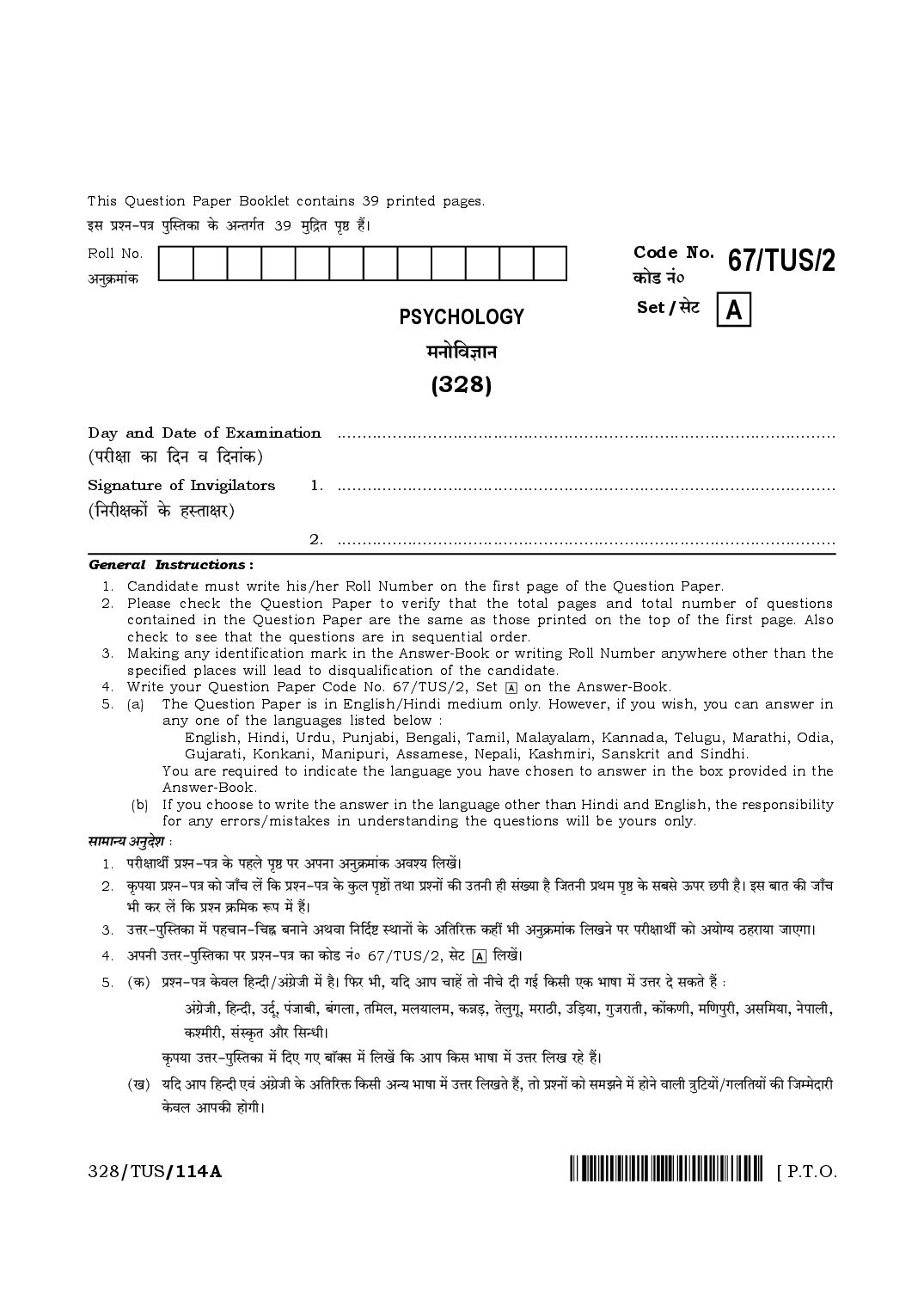
NIOS Class 12 April 2024 Question Paper Psychology is available here for free download. Published by NIOS for National Institute of Open Schooling Class 12, this question paper can be viewed online or downloaded as a PDF (39 pages). Candidates preparing for National Institute of Open Schooling Class 12 can use NIOS Class 12 April 2024 Question Paper Psychology to understand the exam pattern, the type of questions asked, and the overall difficulty level.
Frequently Asked Questions
How can I download NIOS Class 12 April 2024 Question Paper Psychology?
Open this page and click the Download button to save NIOS Class 12 April 2024 Question Paper Psychology as a PDF. It is completely free on AglaSem Docs.
Is NIOS Class 12 April 2024 Question Paper Psychology free to download?
Yes. NIOS Class 12 April 2024 Question Paper Psychology can be viewed online and downloaded as a PDF free of cost on AglaSem Docs.
How many pages does NIOS Class 12 April 2024 Question Paper Psychology have?
NIOS Class 12 April 2024 Question Paper Psychology contains 39 pages, which you can read online or download together as a single PDF.
Where can I find more National Institute of Open Schooling Class 12 study material?
You can find more National Institute of Open Schooling Class 12 question papers, sample papers, syllabus, and answer keys on AglaSem Docs.
NIOS Class 12 April 2024 Question Paper Psychology – Text
Read the full text of this question paper below — useful to quickly search, copy and reference the content online without downloading the PDF.
📄 View text version (39 pages)
Page 1
Bg àíZ-nÌ nwpñVH$m Ho$ AÝVJ©V 39 ‘w{ÐV n¥ð> h¢&
Roll No. Code No.
67/TUS/2
u
AZwH$« ‘m§H$ H$moS> Z§0
Set / goQ>
PSYCHOLOGY
‘Zmo{dkmZ
(328)
Day and Date of Examination ...................................................................................................
(narjm H$m {XZ d {XZm§H$)
Signature of Invigilators 1. ...................................................................................................
({ZarjH$m| Ho$ hñVmja)
2. ...................................................................................................
General Instructions :
1. Candidate must write his/her Roll Number on the first page of the Question Paper.
2. Please check the Question Paper to verify that the total pages and total number of questions
contained in the Question Paper are the same as those printed on the top of the first page. Also
check to see that the questions are in sequential order.
3. Making any identification mark in the Answer-Book or writing Roll Number anywhere other than the
specified places will lead to disqualification of the candidate.
4. Write your Question Paper Code No. 67/TUS/2, Set u on the Answer-Book.
5. (a) The Question Paper is in English/Hindi medium only. However, if you wish, you can answer in
any one of the languages listed below :
English, Hindi, Urdu, Punjabi, Bengali, Tamil, Malayalam, Kannada, Telugu, Marathi, Odia,
Gujarati, Konkani, Manipuri, Assamese, Nepali, Kashmiri, Sanskrit and Sindhi.
You are required to indicate the language you have chosen to answer in the box provided in the
Answer-Book.
(b) If you choose to write the answer in the language other than Hindi and English, the responsibility
for any errors/mistakes in understanding the questions will be yours only.
gm‘mݶ AZwXe
o …
1. narjmWu àíZ-nÌ Ho$ nhbo n¥ð> na AnZm AZwH«$‘m§H$ Adí¶ {bI|&
2. H¥$n¶m àíZ-nÌ H$mo Om±M b| {H$ àíZ-nÌ Ho$ Hw$b n¥ð>m| VWm àíZm| H$s CVZr hr g§»¶m h¡ {OVZr àW‘ n¥ð> Ho$ g~go D$na N>nr h¡& Bg ~mV H$s Om±M
^r H$a b| {H$ àíZ H«${‘H$ ê$n ‘| h¢&
3. CÎma-nwpñVH$m ‘| nhMmZ-{M• ~ZmZo AWdm {Z{X©ï> ñWmZm| Ho$ A{V[aº$ H$ht ^r AZwH$« ‘m§H$ {bIZo na narjmWu H$mo A¶mo½¶ R>ham¶m OmEJm&
4. AnZr CÎma-nwpñVH$m na àíZ-nÌ H$m H$moS> Z§0 67/TUS/2, goQ u {bI|&
5. (H$) n«íZ-nÌ Ho$db {hÝXr/A§Jo«Or ‘| h¡& {’$a ^r, ¶{X Amn Mmh| Vmo ZrMo Xr JB© {H$gr EH$ ^mfm ‘| CÎma Xo gH$Vo h¢ …
A§Jo«Or, {hÝXr, CXÿ,© n§Om~r, ~§Jbm, V{‘b, ‘b¶mb‘, H$Þ‹S>, VobJw ,y ‘amR>r, C{‹S>¶m, JwOamVr, H$m|H$Ur, ‘{Unwar, Ag{‘¶m, Zonmbr,
H$í‘rar, g§ñH¥$V Am¡a {gÝYr&
H¥$n¶m CÎma-nwpñVH$m ‘| {XE JE ~m°³g ‘| {bI| {H$ Amn {H$g ^mfm ‘| CÎma {bI aho h¢&
(I) ¶{X Amn {hÝXr Ed§ A§Jo«Or Ho$ A{V[aº$ {H$gr Aݶ ^mfm ‘| CÎma {bIVo h¢, Vmo àíZm| H$mo g‘PZo ‘| hmoZo dmbr Ìw{Q>¶m|/Jb{V¶m| H$s {Oå‘oXmar
Ho$db AmnH$s hmoJr&
328/TUS/114A [ P.T.O.
Page 2
1. This Question Paper Booklet contains two Question Papers—one based
on revised study material marked as NEW SYLLABUS and the other based
on pre-revised study materials marked as OLD SYLLABUS.
2. NEW SYLLABUS is for those candidates who have registered for 2023–2024
(Stream–I and Block–I) admission and are appearing in April–2024
Examinations.
3. OLD SYLLABUS is for those candidates who had registered before
2023–2024 (Stream–I and Block–I) admission.
4. Candidates are to answer only one Question Paper from the given two
Question Papers.
5. Candidates are not allowed to mix questions from the given two
Question Papers.
‘hÎdnU
y © {ZXe
}
1. Bg àíZ-nÌ nwpñVH$m ‘| Xmo àíZ-nÌ h¢—EH$ g§emo{YV Aܶ¶Z gm‘J«r na AmYm[aV h¡ {Og
na Z¶m nmR>çH«$‘ A§{H$V h¡ VWm Xÿgam g§emoYZ go nyd© H$s Aܶ¶Z gm‘J«r na AmYm[aV h¡
{Og na nwamZm nmR>çH«$‘ A§{H$V h¡&
2. Z¶m nmR>çH«$‘ CZ narjm{W©¶m| Ho$ {bE h¡ {OZH$m Zm‘m§H$Z 2023–2024 (ñQ´>r‘–I Am¡a
ãbm°H$–I) EoS²>{‘eZ ‘| hþAm h¡ VWm Omo Aà¡b–2024 narjm ‘| ~¡R>Zo Om aho h¢&
3. nwamZm nmR>çH«$‘ CZ narjm{W©¶m| Ho$ {bE h¡ {OZH$m Zm‘m§H$Z 2023–2024 (ñQ´>r‘–I Am¡a
ãbm°H$–I) EoS²>{‘eZ Ho$ nhbo hþAm h¡&
4. narjmWu {XE JE Xmo àíZ-nÌm| ‘| go Ho$db EH$ àíZ-nÌ go hr CÎma {bI|&
5. narjmWu H$mo Xmo àíZ-nÌm| Ho$ àíZm| H$mo {‘bmH$a CÎma XoZo H$s AZw‘{V Zht h¡&
328/TUS/114A 2
Page 3
This Question Paper contains 45 questions.
Bg àíZ-nÌ Ho$ AÝVJ©V 45 àíZ h¢&
PSYCHOLOGY
‘Zmo{dkmZ
(328)
Time : 3 Hours ] [ Maximum Marks : 100
g‘¶ … 3 KÊQ>o ] [ nyUmªH$ … 100
Note : (i) This question paper consists of 45 questions in all.
(ii) All questions are compulsory.
(iii) Marks are given against each question.
(iv) Section–A consists of :
(a) Question Nos. 1 to 20 Multiple Choice-type Questions (MCQs)
carrying 1 mark each. Select and write the most appropriate option
out of the four options given in each of these questions. An internal
choice has been provided in some of these questions. You have to
attempt only one of the given choices in such questions.
(b) Question Nos. 21 to 29 Objective-type questions. Question Nos. 21
to 23 carry 2 marks each (with 2 subparts of 1 mark each) and
Question Nos. 24 to 29 carry 4 marks each (with 4 subparts of
1 mark each).
(v) Section–B consists of :
(a) Question Nos. 30 to 35—Very Short Answer-type Questions carrying
2 marks each to be answered in the range of 30 to 50 words.
(b) Question Nos. 36 to 41—Short Answer-type Questions carrying
3 marks each to be answered in the range of 50 to 80 words.
(c) Question Nos. 42 to 45—Long Answer-type Questions carrying
5 marks each to be answered in the range of 80 to 120 words.
328/TUS/114A 3 [ P.T.O.
Page 4
(ii) g^r àíZ A{Zdm¶© h¢&
(iii) à˶oH$ àíZ Ho$ gm‘Zo A§H$ {XE JE h¢&
(iv) IÊS>–A ‘| gpå‘{bV h¢ :
(H$) à0 g§0 1 go 20 VH$ ~hþ{dH$ënr¶ àíZ, à˶oH$ 1 A§H$ H$m hmoJm& BZ‘| go à˶oH$ àíZ
‘| {XE JE Mma {dH$ënm| ‘| g~go Cn¶wº$ {dH$ën H$m M¶Z H$a| Am¡a {bI|& BZ‘| go Hw$N>
àíZm| ‘| Am§V[aH$ {dH$ën ^r {XE JE h¢& AmnH$mo CZ‘| go {H$gr EH$ H$m hr CÎma XoZm h¡&
(I) à0 g§0 21 go 29 VH$ dñVw{Zð> àíZ h¢& à0 g§0 21 go 23 VH$ à˶oH$ Ho$ {bE 2 A§H$
h¢ (à˶oH$ 1 A§H$ Ho$ 2 Cn^mJm| g{hV) Am¡a à0 g§0 24 go 29 VH$ 4 A§H$ Ho$ h¢ (à˶oH$
1 A§H$ Ho$ 4 Cn^mJm| g{hV)&
(v) IÊS>–~ ‘| gpå‘{bV h¢ :
(H$) à0 g§0 30 go 35 VH$, 2 A§H$m| dmbo A{V bKw àíZm| Ho$ CÎma 30 go 50 eãXm| ‘| {X¶m
OmZm h¡&
(I) à0 g§0 36 go 41 VH$, 3 A§H$m| dmbo bKw àíZm| Ho$ CÎma 50 go 80 eãXm| ‘| {X¶m
OmZm h¡&
(J) à0 g§0 42 go 45 VH$, 5 A§H$m| dmbo XrK© àíZm| Ho$ CÎma 80 go 120 eãXm| ‘| {X¶m
OmZm h¡&
(1) Answers of all questions are to be given in the Answer-Book given to you.
g^r àíZm| Ho$ CÎma AmnH$mo Xr JB© CÎma-nwpñVH$m ‘| hr {bI|&
(2) 15 minutes time has been allotted to read this question paper. The question
paper will be distributed at 2:15 p.m. From 2:15 p.m. to 2:30 p.m., the
students will read the question paper only and will not write any answer on
the Answer-Book during this period.
Bg àíZ-nÌ H$mo n‹T>Zo Ho$ {bE 15 {‘ZQ> H$m g‘¶ {X¶m J¶m h¡& àíZ-nÌ H$m {dVaU Xmonha ‘|
2:15 ~Oo {H$¶m OmEJm& Xmonha 2:15 ~Oo go 2:30 ~Oo VH$ N>mÌ Ho$db àíZ-nÌ H$mo n‹T>|Jo Am¡a
Bg Ad{Y Ho$ Xm¡amZ do CÎma-nwpñVH$m na H$moB© CÎma Zht {bI|Jo&
SECTION–A
IÊS>–A
1. Identify the branch of psychology that deals with the study of relationship
between people and physical environment. 1
(A) Environmental psychology (B) Community psychology
(C) Developmental psychology (D) Educational psychology
328/TUS/114A 4
Page 5
g§~§{YV h¡&
(A) n¶m©daU ‘Zmo{dkmZ (B) gm‘wXm{¶H$ ‘Zmo{dkmZ
(C) {dH$mgmË‘H$ ‘Zmo{dkmZ (D) e¡j{UH$ ‘Zmo{dkmZ
2. (i) Psychology is a science because its approach is
I. intuition and observation based
II. tangible and evidence based
III. organized and systematic based
IV. introspection and experience based
Select the correct answer using the codes given below. 1
(A) I and II (B) II and III
(C) III and IV (D) I and IV
‘Zmo{dkmZ H$mo {dkmZ ‘mZm OmVm h¡, ³¶m|{H$ BgH$m Ñ{ï>H$moU h¡
I. A§Vkm©Z Am¡a AdbmoH$Z AmYm[aV
II. ‘yV© Ed§ gmú¶ AmYm[aV
III. gwì¶dpñWV Am¡a H«$‘~ÕVm AmYm[aV
IV. AmË‘{ZarjU Ed§ AZw^d AmYm[aV
ZrMo {XE JE Hy$Q> go ghr CÎma H$m M¶Z H$s{OE :
(A) I VWm II (B) II VWm III
(C) III VWm IV (D) I VWm IV
Or / AWdm
(ii) One of the goals of psychological research is to speculate what will
happen in the future based on what and why of behaviour. This basic
goal is
(A) to describe (B) to explain
(C) to predict (D) to control
‘Zmod¡km{ZH$ AZwg§YmZ H$m EH$ bú¶ ¶h AZw‘mZ bJmZm h¡ {H$ ì¶dhma H$m ³¶m Am¡a ³¶m| Ho$
AmYma na ^{dî¶ ‘| ³¶m hmoJm& BgH$m ‘yb bú¶ h¡
(A) dU©Z H$aZm (B) ì¶m»¶m H$aZm
(C) ^{dî¶dmUr H$aZm (D) {Z¶§ÌU H$aZm
328/TUS/114A 5 [ P.T.O.
Page 6
sciences. How will the psychologist help in this field? 1
(A) By regulating human behaviour
(B) By helping the computer scientist to identify his potential
(C) By applying research conducted in human cognition
(D) By empowering people to learn from others
EH$ H§$߶yQ>a d¡km{ZH$ g§kmZmË‘H$ {dkmZ H$s g‘P H$mo ~‹T>mZm MmhVm h¡& ‘Zmod¡km{ZH$ Bg joÌ ‘| CgH$s
H¡$go ‘XX H$aoJm?
(A) ‘mZd ì¶dhma H$mo {d{Z¶{‘V H$aHo$
(B) H§$߶yQ>a d¡km{ZH$ H$mo CgH$s j‘Vm nhMmZZo ‘| ‘XX H$aHo$
(C) ‘mZd g§kmZ ‘o§ {H$E JE AZwg§YmZ H$mo bmJy H$aHo$
(D) bmoJm| H$mo Xÿgao go grIZo Ho$ {bE geº$ ~ZmH$a
4. (i) The figure given below is incomplete, yet we perceive it as a whole. On
which school of thought it is based? 1
(A) Structuralism (B) Gestalt perspective
(C) Humanistic perspective (D) Functionalism
ZrMo {X¶m J¶m {MÌ AYyam h¡, {’$a ^r h‘ Bgo g‘J« ê$n ‘| XoIVo h¢& ¶h {H$g {dMmaYmam na
AmYm[aV h¡?
(A) g§aMZmdmX (B) JoñQ>mëQ>dmXr n[aàoú¶
(C) ‘mZdVmdmXr n[aàoú¶ (D) àH$m¶©dmX
328/TUS/114A 6
Page 7
(ii) An experimenter wishes to study the impact of viewing violent films on
the aggressive behaviour displayed by adolescents. Identify the
dependent variable.
(A) Violent films (B) Aggressive behaviour
(C) Adolescents (D) Nature of experimenter
EH$ à¶moJH$Îmm© {H$emoam| Ûmam àX{e©V AmH«$m‘H$ ì¶dhma na qhgH$ {’$ë‘| XoIZo Ho$ à^md H$m
Aܶ¶Z H$aZm MmhVm h¡& Am{lV Ma H$mo nhMm{ZE&
(A) qhgH$ {’$ë‘| (B) AmH«$m‘H$ ì¶dhma
(C) {H$emoamdñWm (D) à¶moJH$Vm© H$m ñd^md
5. (i) During a plantation drive, the number of trees planted by 5 students
is as follows :
5, 2, 6, 1, 2
Such a type of raw data is an example of
(A) discrete series (B) mixed series
(C) frequency series (D) individual series 1
EH$ d¥jmamonU A{^¶mZ Ho$ Xm¡amZ, 5 N>mÌm| Ûmam bJmE JE d¥jm| H$s g§»¶m Bg àH$ma h¡ :
5, 2, 6, 1, 2
Bg àH$ma H$m Ag§gm{YÌ Am±H$‹S>m CXmhaU h¡
(A) n¥WH²$ ûm¥§Ibm H$m (B) {‘{lV ûm¥§Ibm H$m
(C) Amd¥{Îm ûm¥§Ibm H$m (D) ì¶{º$JV ûm¥§Ibm H$m
Or / AWdm
(ii) A particular dress has become very popular in the West. Which
measure of central tendency will be used to determine its popularity?
(A) Mean (B) Median
(C) Mode (D) Correlation
npíM‘ ‘| EH$ {deof nmoemH$ ~hþV bmoH${චhþB©& BgH$s bmoH${à¶Vm {ZYm©[aV H$aZo Ho$ {bE H|$Ðr¶
àd¥{Îm Ho$ {H$g ‘mn H$m Cn¶moJ {H$¶m OmEJm?
(A) ‘mܶ (B) ‘mpܶH$m
(C) ~hþbH (D) ghg§~§Y
328/TUS/114A 7 [ P.T.O.
Page 8
the following is an internal factor? 1
(A) Novelty (B) Size
(C) Movement (D) Need
M¶ZmË‘H$ AdYmZ H$mo à^m{dV H$aZo dmbo AZoH$ H$maH$ h¢& {ZåZ{b{IV ‘| go H$m¡Z-gm EH$
H$maH$ Am§V[aH$ h¡?
(A) ZdrZVm (B) AmH$ma
(C) J{V (D) Oê$aV
Or / AWdm
(ii) Which one of the following is not a type of extrasensory perception?
(A) Telepathy (B) Clairvoyance
(C) Precognition (D) Astrology
{ZåZ{b{IV ‘| go H$m¡Z-gm A{Vg§doXZmË‘H$ AZw^d H$m àH$ma Zht h¡?
(A) Q>obrn¡Wr (B) ³boadm°¶Ýg
(C) àrH$m°{¾eZ (D) Á¶mo{Vfemó
7. (i) Certain stationary, flickering, electrical lights give the illusion of
movement. This is due to
(A) apparent movement illusion (B) Müller-Lyer illusion
(C) Ponzo illusion (D) Zöllner illusion 1
Hw$N> pñWa, {Q>‘{Q>‘mVr {~Obr H$s amoe{Z¶m± J{V H$m ^«‘ n¡Xm H$aVr h¢& BgH$m H$maU h¡
(A) à˶j MbZ ^«‘ (B) ‘yba-bm¶a ^«‘
(C) nm|µOmo ^«‘ (D) µOm°ëZa ^«‘
Or / AWdm
(ii) On looking at an object very close to the eye, our eyes turn inward or
converge, informing us about depth. Identify this cue which helps us
in depth perception.
(A) Accommodation (B) Binocular disparity
(C) Retinal disparity (D) Convergence
328/TUS/114A 8
Page 9
hmo OmVr h¢, {Oggo h‘| JhamB© H$m nVm MbVm h¡& JhamB© goo g‘PZo ‘| ghm¶H$ g§Ho$V h¡
(A) AZwHy$bZ (B) {ÛZoÌr¶ Ag‘mZVm
(C) ao{Q>Zb Ag‘mZVm (D) AmgÞH$Uu
8. Minnie was in a situation where there was no screwdriver, there were other
objects which can be used as a substitute of screwdriver but she could not
use it. This is an example of
(A) mental set (B) brainstorming
(C) functional fixedness (D) analogy 1
{‘Þr EH$ Eogr pñW{V ‘| ’±$gr Wr, Ohm± CgHo$ nmg H$moB© noMH$g Zht Wm& dhm± na noMH$g H$r OJh
d¡H$pënH$ Cn¶moJ H$aZo bm¶H$ Aݶ dñVwE± ‘m¡OyX Wt na dh CZ‘| go {H$gr H$m à¶moJ Zht H$a nm¶r&
¶h CXmhaU h¡
(A) ‘mZ{gH$ pñW{V H$m (B) ~w{ÕerbVm H$m
(C) H$m¶m©Ë‘H$ pñWaVm H$m (D) gmÑí¶Vm/g‘mZVm H$m
9. Rehman is facing a lot of pressure at work. How would Yerkes-Dodson law
explain the relationship between anxiety and his performance? 1
(A) If the anxiety is too high, performance will increase
(B) If the anxiety is too low, performance will increase
(C) If the anxiety is too high, performance will decrease
(D) Any amount of anxiety will not impact performance
ah‘mZ H$mo H$m‘ ‘| H$m’$s X~md H$m gm‘Zm H$aZm n‹S> ahm h¡& ¶³g©-S>m°S²>gZ {Z¶‘ XwpíM§Vm Am¡a CgHo$
àXe©Z Ho$ ~rM g§~§Y H$mo H¡$go g‘PmEJm?
(A) ¶{X qMVm ~hþV A{YH$ h¡, Vmo àXe©Z ~‹T>oJm
(B) ¶{X qMVm ~hþV H$‘ h¡, Vmo àXe©Z ~‹T>oJm
(C) ¶{X qMVm ~hþV A{YH$ h¡, Vmo àXe©Z H$‘ hmoJm
(D) qMVm H$s H$moB© ^r ‘mÌm àXe©Z na Aga Zht S>mboJr
328/TUS/114A 9 [ P.T.O.
Page 10
on her tenth birthday. Under which stage of memory this is stored? 1
(A) Short-term (B) Sensory
(C) Long-term (D) Desktop
haq‘Xa, Omo A~ EH$ ¶wdm d¶ñH$ h¡, H$mo A^r ^r ¶mX h¡ {H$ CgHo$ Xgd| OÝ‘{XZ na CgHo$ XmoñVm|
Zo ³¶m {X¶m Wm& ¶h ~mV ¶mXXmíV (‘o‘moar) Ho$ {H$g MaU Ho$ A§VJ©V g§J«{hV {H$¶m OmVm h¡?
(A) bKwH$m{bH$ (B) g§doXr
(C) XrK©H$m{bH$ (D) S>oñH$Q>m°n
11. Annie has got a new phone with a touchscreen. So now every time she
uses her old phone, she keeps touching the screen. This is due to
(A) retroactive interference
(B) proactive interference
(C) forgetting
(D) poor recall 1
EoZr H$mo Q>M ñH«$sZ dmbm EH$ Z¶m ’$moZ {‘bm h¡& Bg{bE A~ O~ ^r dh AnZm nwamZm ’$moZ BñVo‘mb
H$aVr h¡, Vmo ñH«$sZ N>y Vr ahVr h¡& BgH$s dOh h¡
(A) nyd©bjr hñVjon
(B) AJ«bjr hñVjon
(C) {dñ‘aU
(D) Iam~ ñ‘aU
12. (i) What are the characteristics of applied research?
I. It is concerned with finding solutions to practical problems.
II. It is carried out in field settings.
III. It focuses on different aspects of problem solving, memory, etc.
IV. It is mostly carried out in laboratory settings.
Select the correct answer using the codes given below. 1
(A) I and II (B) II and III
(C) I and IV (D) II and IV
328/TUS/114A 10
Page 11
I. BgH$m g§~§Y ì¶mdhm[aH$ g‘ñ¶mAm| Ho$ g‘mYmZ ImoOZo go h¡&
II. Bgo ’$sëS> goqQ>J ‘| à¶moJ {H$¶m OmVm h¡&
III. ¶h g‘ñ¶m g‘mYmZ, ñ‘¥{V Am{X Ho$ {d{^Þ nhbwAm| na ܶmZ H|${ÐV H$aVm h¡&
IV. BgH$m A{YH$Va à¶moJembm g|{Q>J ‘| à¶moJ {H$¶m OmVm h¡&
ZrMo {XE JE Hy$Q> go ghr CÎma H$m M¶Z H$s{OE :
(A) I VWm II (B) II VWm III
(C) I VWm IV (D) II VWm IV
Or / AWdm
(ii) Identify the statement that is true for mean as a measure for central
tendency.
(A) It is simple average for all items in a series.
(B) It is the score that divides the distribution into half.
(C) It is the highest frequency in the distribution.
(D) It is the grand total of all items in a series.
Cg H$WZ H$s nhMmZ H$s{OE, Omo H|$Ðr¶ àd¥{Îm Ho$ ‘mn Ho$ ê$n ‘| ‘mܶ Ho$ {bE g˶ h¡&
(A) {H$gr ûm¥§Ibm Ho$ g^r EH$m§em| Ho$ {bE ¶h EH$ gab Am¡gV h¡&$
(B) ¶h dh g§»¶m h¡, Omo {dVaU H$mo AmYo ‘| {d^m{OV H$aVr h¡&
(C) ¶h {dVaU ‘| CƒV‘ Amd¥{Îm h¡&
(D) ¶h EH$ ûm¥§Ibm Ho$ g^r EH$m§em| H$m Hw$b ¶moJ h¡&
13. (i) What is the most frequent expression of an infant’s fear? 1
(A) Parent anxiety (B) Stranger anxiety
(C) Fear of falling (D) Sibling anxiety
EH$ {eew Ho$ S>a H$s g~go Am‘ A{^ì¶{º$ ³¶m h¡?
(A) A{^^mdH$ H$s qMVm (B) AOZ~r qMVm
(C) {JaZo H$m S>a (D) ^mB©-~hZ H$s qMVm
328/TUS/114A 11 [ P.T.O.
Page 12
(ii) What is the crisis that young adulthood goes through during
psychosocial development according to Erikson?
(A) Trust vs. Mistrust (B) Initiative vs. Guilt
(C) Intimacy vs. Isolation (D) Identity vs. Confusion
E[a³gZ Ho$ AZwgma, ‘Zmogm‘m{OH$ {dH$mg Ho$ Xm¡amZ ¶wdm d¶ñH$ {H$g g§H$Q> go JwOaVm h¡?
(A) {dídmg ~Zm‘ A{dídmg (B) nhb ~Zm‘ AnamY~moY
(C) A§Va§JVm ~Zm‘ AbJmd (D) nhMmZ ~Zm‘ ^«‘
14. (i) What is the role of early stimulation during infancy? 1
(A) Accelerating the speed of development
(B) Forcing the child to achieve goals
(C) To prevent them from experimenting with their environment
(D) Optimizing development in different domains
e¡edmdñWm Ho$ Xm¡amZ àma§{^H$ CÎmoOZm H$s ³¶m ^y{‘H$m h¡?
(A) ¶h {dH$mg H$s J{V H$mo VoO H$aVr h¡
(B) ¶h ~ƒo H$mo bú¶ àmá H$aZo Ho$ {bE ~mܶ H$aVr h¡
(C) ¶h CÝh| AnZo n¶m©daU Ho$ gmW à¶moJ H$aZo go amoH$Vr h¡
(D) ¶h {d{^Þ joÌm| ‘| {dH$mg H$mo AZwHy${bV H$aVr h¡
Or / AWdm
(ii) Select the striking physical feature of adolescents from the options
given below.
(A) Physical maturation (B) Object permanence
(C) Attitude formation (D) Emotional strength
ZrMo {XE JE {dH$ënm| ‘| go {H$emoam| H$s AmH$f©H$ emar[aH$ {deofVm H$m M¶Z H$s{OE :
(A) emar[aH$ n[an¹$Vm (B) dñVw ñWm{¶Ëd
(C) ‘Zmod¥{Îm {Z‘m©U (D) ^mdZmË‘H$ ~b
328/TUS/114A 12
Page 13
(A) Toilet training (B) School readiness
(C) Autonomy vs. Initiative (D) Industry vs. Inferiority
{ZåZ{b{IV ‘| go H$m¡Z-gm àma§{^H$ ~më¶mdñWm Ho$ Xm¡amZ qMVm H$m {df¶ Zht h¡?
(A) em¡M à{ejU (B) ñHy$b VËnaVm
(C) ñdm¶ÎmVm ~Zm‘ nhb (D) CÚmoJ ~Zm‘ hrZVm
16. Adolescents compare themselves with their role models and try to be like
them. This is due to
(A) propositional thought (B) deductive reasoning
(C) idealistic thinking (D) egocentrism 1
{H$emoa ñd¶§ H$s VwbZm AnZo amob ‘m°S>bm| go H$aVo h¢ Am¡a CZHo$ O¡gm ~ZZo H$m à¶mg H$aVo h¢& BgH$m
H$maU h¡
(A) àñVmdmË‘H$ {dMma (B) {ZJ‘ZmË‘H$ VH©$
(C) AmXe©dmXr gmoM (D) Ah§H|${ÐVm
17. (i) Children during the early process of cognitive development call all
moving cars, a truck, as they have an existing schema for a car.
According to Piaget, this is due to
(A) assimilation (B) accommodation
(C) organization (D) equilibration 1
g§kmZmË‘H$ {dH$mg H$s àma§{^H$ à{H«$¶m Ho$ Xm¡amZ ~ƒo g^r MbVr H$mam| H$mo Q´>H$ H$hVo h¢ ³¶m|{H$
CZHo$ nmg H$ma Ho$ {bE EH$ ‘m¡OyXm ê$naoIm (ñH$s‘m) hmoVr h¡& {n¶mOo Ho$ AZwgma BgH$m H$maU
h¡
(A) AmË‘gmËH$aU (B) g‘m¶moOZ
(C) g§JR>Z (D) g§VwbZ
Or / AWdm
(ii) Mani, an adolescent, believes he is the only person in the world who
feels certain emotions and that no one else could ever understand the
difficulties he is facing. This feeling is due to
(A) idealistic thinking (B) personal fables
(C) imaginary audience (D) propositional thought
328/TUS/114A 13 [ P.T.O.
Page 14
H$aVm h¡ VWm H$moB© ^r CZ H${R>ZmB¶m| H$mo Zht g‘P gH$Vm {OZH$m gm‘Zm dh H$a ahm h¡& CgH$s
Bg ^mdZm H$s dOh h¡
(A) AmXe©dmXr gmoM (B) ì¶{º$JV H$Wm/H$hmZr
(C) H$mën{ZH$ Xe©H$ (D) àñVmdmË‘H$ {dMma
18. Manish, in order to remain thin, starves himself. What is this disorder
called? 1
(A) Anorexia nervosa (B) Binge eating
(C) Dieting (D) Bulimia
‘Zrf nVbm ahZo Ho$ {bE IwX H$mo ^yIm aIVm h¡& Bg {dH$ma H$mo ³¶m H$hVo h¢?
(A) EZmoaop³g¶m Zdm}gm (B) q~O B©qQ>J
(C) S>mBqQ>J (D) A˶{YH$ ImZo H$m {dH$ma (~wbr{‘¶m)
19. A young child is unable to distinguish between what he can see and what
others can see from their angle. This is due to
(A) centration (B) lack of conservation
(C) animism (D) egocentrism 1
EH$ N>moQ>m-gm ~ƒm ¶h ^oX H$aZo ‘| Ag‘W© hmoVm h¡ {H$ dh ³¶m XoI ahm h¡ Am¡a Xÿgao AnZo Ñ{ï>H$moU
go ³¶m XoI aho h¢& BgH$m H$maU h¡
(A) Ho$ÝÐrH$aU (B) g§ajU H$m A^md
(C) OrddmX (D) Ah§H$ma-H|$Ðr¶Vm
20. (i) Artists create depth in their two-dimensional paintings. What are
these cues called? 1
(A) Non-visual cues (B) Monocular cues
(C) Binocular cues (D) Good form cues
H$bmH$ma AnZr {Û-Am¶m‘r n|qQ>J ‘| JhamB© n¡Xm H$aVo h¢& BZ g§Ho$Vm| H$mo ³¶m H$hVo h¢?
(A) J¡a-Ñí¶ g§Ho$V (B) EH$-Am¶m‘r g§Ho$V
(C) {ÛZoÌr g§Ho$V (D) AÀN>o ’$m°‘© Ho$ g§Ho$V
328/TUS/114A 14
Page 15
(ii) Aaliya gets very distracted by the loud music playing outside. She is
unable to concentrate on her studies. Which component of emotion is
this?
(A) Physiological (B) Cognitive
(C) Behavioural (D) Psychological
Am{b¶m ~mha ~O aho VoµO g§JrV go ~hþV {dM{bV hmo OmVr h¡& dh AnZr n‹T>mB© ‘| ܶmZ H|${ÐV
Zht H$a nm ahr h¡& ¶h g§doJ H$m H$m¡Z-gm KQ>H$ h¡?
(A) emar[aH$ (B) g§kmZmË‘H$
(C) ì¶mdhm[aH (D) ‘Zmod¡km{ZH$
21. Answer any two of the following : 1×2=2
(a) Identify the view that says language determines the content of
thought.
(b) What and how individuals think is determined by the linguistic
categories they use. This is known as what?
(c) Identify that period when learning must occur according to Chomsky.
(d) Who said that language and thought develop separately until two
years of age and merge later?
{ZåZ{b{IV ‘| go {H$Ýht Xmo Ho$ CÎma Xr{OE :
(H$) ^mfm H$mo {dMma H$s gm‘J«r {ZYm©[aV H$aZo Ho$ {bE CÎmaXm¶r ñdrH$ma H$aZo dmbo Ñ{ï>H$moU H$mo
³¶m H$hVo h¢?
(I) EH$ ì¶{º$ ³¶m Am¡a H¡$go gmoMVm h¡ ¶h CgHo$ Ûmam à¶wº$ ^mfm¶r lo{U¶m| go {ZYm©[aV hmoVm h¡&
¶h {H$g Zm‘ go OmZm OmVm h¡?
(J) Cg Ad{Y H$s nhMmZ H$a| O~ Mm°‘²ñH$s Ho$ AZwgma, grIZm Adí¶ hmoZm Mm{hE&
(K) {H$gZo H$hm {H$ ^mfm Am¡a {dMma Xmo df© H$s Am¶w VH$ AbJ-AbJ {dH${gV hmo OmVo h¢ Am¡a
~mX ‘| EH$-Xÿgao ‘| {dbrZ hmo OmVo h¢?
328/TUS/114A 15 [ P.T.O.
Page 16
(any two) : 1×2=2
Level IQ
(a) Mild (i) 35–49
(b) Moderate (ii) Below 20
(c) Severe (iii) 20–34
(d) Profound (iv) 50–70
{ZåZ{b{IV ~m¡{ÕH$ H$‘r Ho$ ñVa H$mo CgHo$ AmB0 ³¶y0 Ho$ gmW gw‘o{bV H$s{OE (H$moB© Xmo) :
ñVa AmB0 ³¶y0
(H$) hëH$m (i) 35–49
(I) ‘ܶ‘ (ii) 20 go H$‘ (ZrMo)
(J) J§^ra (iii) 20–34
(K) Jham (iv) 50–70
23. Fill in the blanks with the leadership styles that you have studied
(any two) : 1×2=2
(a) A leader who inspires his people to achieve their goals and leads an
exemplary life is said to be a _____ leader.
(b) _____ leaders perform the act of planning, organizing, controlling and
meets the set target of the group.
(c) _____ kind of a leader assumes absolute power, imposes goals and
resists change.
(d) Leaders participate, involve people in decision making. Such a leader
follows _____ style of leadership.
AmnZo {OZ ZoV¥Ëd e¡{b¶m| H$m Aܶ¶Z {H$¶m h¡, CZHo$ AmYma na [aº$ ñWmZm| H$s ny{V©
H$s{OE (H$moB© Xmo) :
(H$) EH$ ZoVm, Omo AnZo bmoJm| H$mo AnZo bú¶ àmá H$aZo Ho$ {bE ào[aV H$aVm h¡ Am¡a EH$ AZwH$aUr¶
OrdZ OrVm h¡, _____ ZoVm H$hbmVm h¡&
(I) _____ ZoVm g‘yh Ho$ {Z¶moOZ, g§JR>Z, {Z¶§ÌU Am¡a {ZYm©[aV bú¶ H$mo nyam H$aZo H$m H$m¶©
H$aVm h¡&
(J) _____ àH$ma H$m ZoVm nyU© e{º$ aIVm h¡, bú¶ WmonVm h¡ Am¡a n[adV©Z H$m {damoY H$aVm h¡&
(K) Bg Vah Ho$ ZoVm {ZU©¶ boZo ‘| ^mJ boVo h¢, bmoJm| H$mo em{‘b H$aVo h¢& Eogo ZoVm _____ ZoV¥Ëd
e¡br H$m AZwgaU H$aVo h¢&
328/TUS/114A 16
Page 17
Attempt any four : 1×4=4
(a) Psychology is the study of the structure of mind and consciousness.
(b) The focus was not on the structure of mind but on its functions.
(c) Our perception and understanding of objects are more meaningful
than its smaller parts.
(d) Psychology should focus on observable behaviour that can be
observed and measured in a scientific manner.
(e) Human behaviour is a manifestation of the unconscious motives,
needs and desires of which a person is not aware.
(f) Here the emphasis is on the person’s sense of self.
{ZåZ{b{IV {dMmaYmamAm| go ‘Zmo{dkmZ H$s H$m¡Z-gr {dMmaYmam H$s N>{d C^aVr h¡? {H$Ýht Mma H$m
CÎma Xr{OE :
(H$) ‘Zmo{dkmZ ‘Z Am¡a MoVZm H$s g§aMZm H$m Aܶ¶Z h¡&
(I) ~b (’$moH$g), ‘Z H$s g§aMZm na Zht ~pëH$ CgHo$ H$m¶m] na Wm&
(J) dñVwAm| Ho$ à{V h‘mam à˶jU Am¡a g‘P CgHo$ N>moQ>o A§Jm| H$s VwbZm ‘| A{YH$ gmW©H$
hmoVm h¡&
(K) ‘Zmo{dkmZ H$mo AdbmoH$Z¶mo½¶ ì¶dhma na ܶmZ H|${ÐV H$aZm Mm{hE {Ogo d¡km{ZH$ VarHo$ go XoIm
Am¡a ‘mnm Om gHo$&
(L>) ‘mZd ì¶dhma Eogo AMoVZ CÔoí¶m|, BÀN>mAm| Am¡a Amdí¶H$VmAm| H$s A{^ì¶{º$ h¡ {OgHo$ ~mao
‘| ì¶{º$ H$mo OmZH$mar Zht hmoVr h¡&
(M) ¶hm± ì¶{º$ H$s ñd¶§ H$s ^mdZm na Omoa {X¶m J¶m h¡&
328/TUS/114A 17 [ P.T.O.
Page 18
(a) People substitute simpler but related questions in place of more
complex and difficult questions.
(b) If you are thinking of flying and suddenly think of a number of recent
airline accidents, you might feel like air travel is too dangerous and
decide to travel by car instead.
(c) A soft-spoken older woman might remind you of your grandmother, so
you might immediately assume that she is kind, gentle and trust-
worthy.
(d) The tendency to be overly influenced by the first bit of information we
hear or learn, can make it more difficult to consider other factors and
lead to poor choices.
{ZåZ{b{IV H$WZm| ‘| {H$g àH$ma H$s emoY àUmbr/AZw^d-AmYm[aV àUmbr H$m à¶moJ {H$¶m Om
ahm h¡?
(H$) bmoJ A{YH$ O{Q>b Am¡a H${R>Z àíZm| Ho$ ñWmZ na gab na§Vw g§~§{YV àíZ aIVo h¢&
(I) AJa Amn hdmB© ¶mÌm Ho$ {df¶ ‘| gmoM aho h¢ Am¡a AMmZH$ hmb H$s H$B© hdmB© XþK©Q>ZmAm| Ho$
~mao ‘| gmoM Ho$ AmnH$mo Eogm bJVm h¡ {H$ hdmB© ¶mÌm ~hþV IVaZmH$ h¡ Am¡a BgHo$ ~Om¶ H$ma
go ¶mÌm H$aZo H$m {ZU©¶ boVo h¢&
(J) EH$ ‘¥Xþ-^mfr d¥Õ ‘{hbm AmnH$mo AmnH$s XmXr H$s ¶mX {Xbm gH$Vr h¡, Bg{bE Amn Cgo Vwa§V
X¶mbw, gm¡å¶ Am¡a ^amogo‘§X ‘mZ boVo h¢&
(K) h‘mao Ûmam nhbo gwZr ¶m grIr JB© OmZH$mar go à^m{dV hmoZo H$s àd¥{Îm Ho$ H$maU CZ H$maH$m|
na {dMma H$aZm H${R>Z hmo gH$Vm h¡ Am¡a Iam~ {dH$ën gm‘Zo Am gH$Vo h¢&
26. Fill in the blanks with the kind of intelligence it defines (any four) : 1×4=4
(a) _____ intelligence is involved in the analysis of information to solve
problems.
(b) _____ intelligence is involved in using past experiences creatively to
solve novel or new problems.
328/TUS/114A 18
Page 19
demands encountered on a daily basis.
(d) _____ involves complete awareness of our relationship with the natural
world.
(e) _____ refers to the knowledge of one’s internal strengths and
limitations, and using that knowledge to effectively relate to others.
(f) _____ intelligence is the feeling side of intelligence.
{d{^Þ àH$ma H$s ~w{Õ‘Îmm/~w{Õ-narjU H$mo n[a^m{fV H$aZo dmbo eãXm|/^oXm| go [aº$ ñWmZ H$s ny{V©
H$s{OE (H$moB© Mma) :
(H$) g‘ñ¶mAm| H$mo hb H$aZo Ho$ {bE gyMZm Ho$ {díbofU ‘| _____ ~w{Õ‘Îmm em{‘b h¡&
(I) ZdrZ ¶m ZB© g‘ñ¶mAm| H$mo hb H$aZo Ho$ {bE {nN>bo AZw^dm| H$m aMZmË‘H$ Cn¶moJ H$aZo ‘|
_____ ~w{Õ‘Îmm em{‘b h¡&
(J) X¡{ZH$ AmYma na AmZo dmbr n¶m©daUr¶ ‘m±Jm| go {ZnQ>Zo Ho$ {bE ¶mo½¶Vm _____ ~w{Õ‘Îmm ‘|
em{‘b h¡&
(K) àmH¥${VH$ Xþ{Z¶m Ho$ gmW h‘mao g§~§Ym| Ho$ ~mao ‘| nyar OmJê$H$Vm bmZo ‘| _____ ~w{Õ‘Îmm em{‘b
h¡&
(L>) {H$gr H$s Am§V[aH$ e{º$¶m| Am¡a gr‘mAm| H$m kmZ VWm Cg kmZ H$m Cn¶moJ Xÿgam| na à^mdr
T>§J go H$aZo H$m VmËn¶© h¡ _____&
(M) _____ ~w{Õ‘Îmm, ~w{Õ‘Îmm H$m AZw^y{V nj h¡&
27. As a psychologist, you have been given the task to assess intelligence of
the following people. Which type of intelligence test would be the most
suitable? Attempt any four : 1×4=4
(a) An illiterate person who is not familiar with the language
(b) A test administered only to literate people
(c) Persons from different cultures
328/TUS/114A 19 [ P.T.O.
Page 20
(e) One which can be administered to one person at a time
(f) One that does not discriminate against individuals belonging to
different cultures
EH$ ‘Zmod¡km{ZH$ Ho$ ê$n ‘| AmnH$mo {ZåZ{b{IV bmoJm| H$s ~w{Õ‘Îmm H$m AmH$bZ H$aZo H$m H$m¶©
{X¶m J¶m h¡& Bg H$m¶© Ho$ {bE {H$g àH$ma H$m ~w{Õ narjU A{YH$ Cn¶wº$ hmoJm? {H$Ýht Mma H$m
CÎma Xr{OE :
(H$) EH$ AZn‹T> ì¶{º$ Ho$ {bE Omo ^mfm go n[a{MV Zht h¡
(I) Ho$db gmja bmoJm| Ho$ {bE àem{gV {H$¶m J¶m narjU
(J) {d{^Þ g§ñH¥${V¶m| Ho$ ì¶{º$¶m| Ho$ {bE
(K) EH$ gmW H$B© gmja ì¶{º$¶m| Ho$ {bE EH$ narjU H$m à~§Y H$aZm
(L>) {Oggo EH$ g‘¶ ‘| EH$ hr ì¶{º$ H$mo àem{gV {H$¶m Om gH$Vm h¡
(M) Omo {d{^Þ g§ñH¥${V¶m| go g§~§{YV ì¶{º$¶m| Ho$ gmW ^oX^md Zht H$aVm
28. In the formation of a group, there are different stages that it goes through.
Identify these stages (any four) : 1×4=4
(a) In this stage with growing familiarity, conflicts might arise due to
disagreements, frustration or annoyance with each other.
(b) Here the group members unitedly work towards the attainment of the
targets of the group.
(c) In this stage, people are just getting to know one another and
discovering the ideas and opinions of one another.
(d) In this stage, the group after achieving the target for which it was set
up is dissolved.
(e) At this stage, norms are developed regarding the behaviour of its
members and also the possibilities and expectations from each
member.
328/TUS/114A 20
Page 21
(H$moB© Mma) :
(H$) Bg MaU ‘| ~‹T>Vr OmZ-nhMmZ Ho$ gmW, EH$-Xÿgao go Agh‘{V, hVmem ¶m Pw§PbmhQ> Ho$ H$maU
g§Kf©/‘V^oX CËnÞ hmo gH$Vo h¢&
(I) Bg MaU ‘| g‘yh Ho$ gXñ¶ EH$OwQ> hmoH$a g‘yh Ho$ bú¶m| H$s àm{á Ho$ {bE à¶mg H$aVo h¢&
(J) Bg MaU ‘| bmoJ ~g EH$-Xÿgao H$mo OmZ aho h¢ Am¡a EH$-Xÿgao Ho$ {dMmam| Am¡a am¶ H$mo ImoO
aho h¢&
(K) Bg MaU ‘o§ {Og bú¶ Ho$ {bE g‘yh H$m JR>Z {H$¶m J¶m Wm, Cgo àmá H$aZo Ho$ ~mX ^§J H$a
{X¶m OmVm h¡&
(L>) Bg MaU ‘| g‘yh Ho$ gXñ¶m| Ho$ ì¶dhma Am¡a à˶oH$ gXñ¶ H$s g§^mdZmAm| Am¡a AnojmAm| Ho$
g§~§Y ‘| ‘mZX§S> {dH${gV {H$E OmVo h¢&
29. Attitudes can be learned or acquired through various sources. Fill in the
blanks identifying the primary sources of attitude formation as seen in
the following examples : 1×4=4
(a) Panna loves a particular song as it brings back memories of his good
times with his friends in the village. Here attitude formation is due
to _____.
(b) A child regularly eats well and finishes the food due to the
appreciation that he receives from his mother. Here attitude formation
is due to _____.
(c) A child may watch his/her grandparents being respected and taken
care of by everyone in the family. He has a positive attitude towards
the elderly. Here attitude formation is due to _____.
(d) Young children adopt a positive attitude towards waste management
by gaining information from social media about its benefits. Here
attitude formation is due to _____.
328/TUS/114A 21 [ P.T.O.
Page 22
Ho$ àmW{‘H$ òmoVm| H$s nhMmZ H$a [aº$ ñWmZm| H$s ny{V© H$s{OE :
(H$) nÞm H$mo EH$ {deof JmZm ~hþV ng§X h¡ ³¶m|{H$ ¶h Jm±d ‘| CgHo$ XmoñVm| Ho$ gmW {~VmE AÀN>o
nbm| H$s ¶mX| VmOm H$a XoVm h¡& ¶hm± _____ Ho$ H$maU ‘Zmod¥{Îm H$m {Z‘m©U hþAm h¡&
(I) EH$ ~ƒm AnZr ‘m± go {‘bZo dmbr gamhZm Ho$ H$maU {Z¶{‘V ê$n go AÀN>o go ImZm ImVm
h¡ Am¡a Cgo nyam g‘má H$aVm h¡& ¶hm± _____ Ho$ H$maU ‘Zmod¥{Îm H$m {Z‘m©U hþAm h¡&
(J) EH$ ~ƒm AnZo XmXm-XmXr H$s n[adma ‘| g^r Ho$ Ûmam gå‘mZ Am¡a XoI^mb H$aVo hþE XoIVm
h¡& ~wOwJm] Ho$ à{V CgH$m Ñ{ï>H$moU gH$mamË‘H$ h¡& ¶hm± _____ Ho$ H$maU ‘Zmod¥{Îm H$m {Z‘m©U
hmoVm h¡&
(K) N>moQ>o ~ƒo gmoeb ‘r{S>¶m go An{eï> nXmWm] Ho$ à~§YZ Ho$ {df¶ ‘| bm^Xm¶H$ OmZH$mar
boVo h¢ Am¡a gH$mamË‘H$ Ñ{ï>H$moU AnZmVo h¢& ¶hm± _____ Ho$ H$maU ‘Zmod¥{Îm H$m {Z‘m©U
hmoVm h¡&
SECTION–B
IÊS>–~
30. How is the sympathetic nervous system different from the parasympathetic
nervous system? 2
AZwH§$nr V§{ÌH$m V§Ì, namAZwH§$nr V§{ÌH$m V§Ì go {H$g àH$ma {^Þ h¡?
31. What is the importance of a hypothesis in an experiment? 2
{H$gr à¶moJ ‘| n[aH$ënZm H$m ³¶m ‘hÎd h¡?
32. Discuss the various stages of infancy and childhood development. 2
e¡edmdñWm Am¡a ~më¶mdñWm {dH$mg Ho$ {d{^Þ MaUm| H$m C„oI H$s{OE&
33. Some people are academically very successful but have problems in their
family life and in interpersonal relationships. What do they lack? Explain.
1+1=2
328/TUS/114A 22
Page 23
g‘ñ¶mE± hmoVr h¢& CZ‘| ³¶m H$‘r hmoVr h¢? dU©Z H$s{OE&
34. Jasmine is going through a period of intense sadness, loss of interest or
pleasure in most activities. Identify the disorder and its other symptoms.
1+1=2
O¡ñ‘rZ Jhar (Vrd«) CXmgr, A{YH$m§e J{V{d{Y¶m| ‘| é{M ¶m AmZ§X H$s H$‘r Ho$ Xm¡a go JwOa ahr
h¡& O¡ñ‘rZ Ho$ ì¶{º$Ëd ‘| H$m¡Z-gm {dH$ma h¡ Am¡a CgHo$ Aݶ ³¶m bjU h¢?
35. Differentiate between bipolar disorder and mixed disorder. 1+1=2
{ÛY«wdr {dH$ma VWm {‘{lV {dH$ma Ho$ ~rM H$m A§Va ~VmBE&
36. (a) What are the three different types of experiments used in experimental
research? 1+1+1=3
Or
(b) Explain the three different types of correlations. 1+1+1=3
(H$) àm¶mo{JH$ AZwg§YmZ ‘| Cn¶moJ {H$E OmZo dmbo VrZ AbJ-AbJ à¶moJ H$m¡Z-go h¢?
AWdm
(I) ghg§~§Y Ho$ VrZ {d{^Þ àH$mam| H$s ì¶m»¶m H$s{OE&
37. (a) The passengers who daily board a bus to go to the railway station are
as follows :
Area No. Number of people
Women 10
Office goers 20
Labourers 30
Adolescents 15
Shopkeepers 25
Construct a pie chart with the data given showing the proportions and
show the steps. 1+1+1=3
328/TUS/114A 23 [ P.T.O.
Page 24
(b) A psychologist wishes to conduct a research on the role of Facebook
in fighting misinformation online. Which research design will she use?
Explain. 3
(H$) à{V{XZ aobdo ñQ>oeZ OmZo Ho$ {bE ~g ‘| M‹T>Zo dmbo ¶m{̶m| H$s g§»¶m Bg àH$ma h¡ :
jÌo g»§¶m bmoJm§o / ¶m{̶mo§ H$s g§»¶m
‘{hbmE± $ 10
Am{°’$g OmZo dmbo 20
‘OXÿa 30
{H$emoa 15
XHþ$mZXma 25
AZwnmV {XImVo hþE {XE JE S>mQ>m Ho$ AmYma na EH$ nmB© MmQ>© ~ZmBE Am¡a {d{^Þ MaUm| H$m
C„oI H$s{OE&
AWdm
(I) EH$ ‘Zmod¡km{ZH$ Am°ZbmBZ JbV gyMZmAm| go b‹S>Zo ‘| ’o$g~wH$ H$s ^y{‘H$m na emoY H$aZm MmhVr
h¡& dh {H$g emoY {S>OmBZ H$m Cn¶moJ H$aoJr? ì¶m»¶m H$s{OE&
38. How does one get to know that the child is in the concrete operational
stage? 3
¶h H¡$go kmV hmoJm {H$ ~ƒo H$m {dH$mg ‘yV© g§{H«$¶mË‘H$ AdñWm ‘| h¡?
39. How does assessment of intelligence take place? 3
~w{Õ H$m ‘yë¶m§H$Z H¡$go hmoVm h¡?
40. How do we know that a person is showing signs of poor mental health? List
any three characteristics. 1+1+1=3
h‘| H¡$go nVm MboJm {H$ {H$gr ì¶{º$ ‘| Iam~ ‘mZ{gH$ ñdmñ϶ Ho$ bjU {XImB© Xo aho h¢? {H$Ýht
VrZ bjUm| H$m C„oI H$s{OE&
328/TUS/114A 24
Page 25
therapist has prepared his case study. What are the other steps that
would follow? 3
Or
(b) Mr. Y has been diagnosed with obsessive-compulsive disorder because
someone in his family also has it. What are the biological factors that
might lead to disorders? 3
(H$) amOm AnZo Iam~ ‘mZ{gH$ ñdmñ϶ Ho$ {bE EH$ ‘Zmo{M{H$ËgH$ Ho$ nmg J¶m& CgHo$ {M{H$ËgH$>
Zo CgH$s Ho$g ñQ>S>r V¡¶ma H$s& BgHo$ ~mX Am¡a H$m¡Z-go H$X‘ CR>mE OmE±Jo?
AWdm
(I) {‘ñQ>a Y H$mo ‘ZmoJ«ñVmË‘H$-~mܶVm{dH$ma H$m {ZXmZ hþAm h¡ ³¶m|{H$ CgHo$ n[adma Ho$ {H$gr gXñ¶
‘| ¶h nhbo go hr h¡& do H$m¡Z-go O¡{dH$ H$maH$ h¢, Omo {dH$mam| H$m H$maU ~Z gH$Vo h¢?
42. (a) How does decision making take place? Discuss the process/stages of
decision making. 1+4=5
Or
(b) Differentiate among the three major theories of emotions. 5
(H$) {ZU©¶ H¡$go {b¶m OmVm h¡? {ZU©¶ boZo H$s à{H«$¶m/MaUmo| H$m dU©Z H$s{OE&
AWdm
(I) g§doJm| Ho$ VrZ ‘w»¶ {gÕmÝVmo| Ho$ ~rM Ho$ A§Va H$mo ñnï> H$s{OE&
43. (a) As you watch the Republic Day parade or remember your physical
training sessions at school, the first thing you are taught to respond
to is ‘attention’. Explain attention and its functions. 1+4=5
Or
(b) While talking to a group of people at a party, if someone in the far
corner of the room utters your name in a conversation, you are still
able to attend to it even though you are not engaged in that
conversation. Identify this effect and explain the other factors
affecting selective attention. 1+4=5
(H$) O¡go hr Amn JUV§Ì {Xdg H$s naoS> XoIVo h¢ ¶m ñHy$b ‘| AnZo emar[aH$ à{ejU gÌ H$mo ¶mX
H$aVo h¢, Vmo g~go nhbr MrµO {Og na AmnH$mo à{V{H«$¶m XoZm {gIm¶m OmVm h¡, dh h¡ "ܶmZ'&
ܶmZ Am¡a CgHo$ H$m¶m] H$s ì¶m»¶m H$s{OE&
328/TUS/114A 25 [ P.T.O.
Page 26
(I) {H$gr nmQ>u ‘| bmoJm| Ho$ EH$ g‘yh go ~mV H$aVo g‘¶, ¶{X H$‘ao Ho$ Xÿa H$moZo ‘| H$moB© ì¶{º$
~mVMrV ‘| AmnH$mo Zm‘ go nwH$maVm h¡, Vmo Cg ~mVMrV na ܶmZ XoZo ‘| gj‘ hmoVo h¢, ^bo
hr Amn Cg ~mVMrV ‘| em{‘b Z hm|& Bg à^md H$mo nhMmZ| Am¡a M¶ZmË‘H$ AdYmZ H$mo à^m{dV
H$aZo dmbo Aݶ H$maH$m| H$s ì¶m»¶m H$s{OE&
44. Explain the psychological factors that could lead to poor mental health. 5
CZ ‘Zmod¡km{ZH$ H$maH$m| H$s ì¶m»¶m H$s{OE, Omo Iam~ ‘mZ{gH$ ñdmñ϶ H$m H$maU ~Z gH$Vo h¢&
45. As we look around us, we see that prejudice and stereotypes are acquired
through learning and exposure to various sources of information such
as social media, newspapers, advertisements, movies, etc. Suggest some
strategies to reduce these stereotypes and prejudices. 5
O~ h‘ AnZo Mmam| Amoa Ñ{ï>nmV H$aVo h¢, Vmo nmVo h¢ {H$ nydm©J«h Am¡a ê${‹T>¶m± gyMZm Ho$ {d{^Þ òmoVm|
O¡go gmoeb ‘r{S>¶m, g‘mMmanÌ, {dkmnZ, {’$ë‘m| Am{X Ho$ g§nH©$ ‘| AmZo go grIVo h¢ Ed§ A{O©V
H$aVo h¢& BZ ê${‹T> ¶m| Am¡a nydm©J«hm| H$mo H$‘ H$aZo Ho$ {bE Hw$N> aUZr{V¶m| H$m gwPmd Xr{OE&
328/TUS/114A 26
Page 27
This Question Paper contains 41 questions.
Bg àíZ-nÌ Ho$ AÝVJ©V 41 àíZ h¢&
PSYCHOLOGY
‘Zmo{dkmZ
(328)
Time : 3 Hours ] [ Maximum Marks : 100
g‘¶ … 3 KÊQ>o ] [ nyUmªH$ … 100
Note : (i) This question paper consists of 41 questions in all.
(ii) All questions are compulsory.
(iii) Marks are given against each question.
(iv) Section–A consists of :
(a) Question Nos. 1 to 12 Multiple Choice-type Questions (MCQs)
carrying 1 mark each. Select and write the most appropriate option
out of the four options given in each of these questions. An internal
choice has been provided in some of these questions. You have to
attempt only one of the given choices in such questions.
(b) Question Nos. 13 to 25 Objective-type questions. Question Nos. 13
to 19 carry 2 marks each and Question Nos. 20 to 25 carry 4 marks
each (with 4 subparts of 1 mark each). Attempt these questions as
per the instruction given for each of the questions 13–25.
(v) Section–B consists of :
(a) Question Nos. 26 to 31—Very Short Answer-type Questions carrying
2 marks each to be answered in the range of 30 to 50 words.
(b) Question Nos. 32 to 37—Short Answer-type Questions carrying
3 marks each to be answered in the range of 50 to 80 words.
(c) Question Nos. 38 to 41—Long Answer-type Questions carrying
5 marks each to be answered in the range of 80 to 120 words.
(vi) Attempt all the questions either from Optional Module A or Optional
Module B in all Sections.
328/TUS/114A 27 [ P.T.O.
Page 28
(ii) g^r àíZ A{Zdm¶© h¢&
(iii) à˶oH$ àíZ Ho$ gm‘Zo A§H$ {XE JE h¢&
(iv) I§S>–A ‘| gpå‘{bV h¢ :
(a) à0 g§0 1 go 12 VH$ ~hþ{dH$ënr¶ àíZ, à˶oH$ 1 A§H$ H$m hmoJm& BZ‘| go à˶oH$ àíZ
‘| {XE JE Mma {dH$ënm| ‘| g~go Cn¶wº$ {dH$ën H$m M¶Z H$a| Am¡a {bI|& BZ‘| go Hw$N>
àíZm| ‘| Am§V[aH$ {dH$ën ^r {XE JE h¢& AmnH$mo CZ‘| go {H$gr EH$ H$m hr CÎma XoZm h¡&
(b) à0 g§0 13 go 25 VH$ dñVw{Zð> àíZ h¢& à0 g§0 13 go 19 VH$ à˶oH$ Ho$ {bE 2 A§H$
h¢ Am¡a à0 g§0 20 go 25 VH$ 4 A§H$ Ho$ h¢ (à˶oH$ 1 A§H$ Ho$ 4 Cn^mJm| g{hV)&
(v) I§S>–~ ‘| gpå‘{bV h¢ :
(a) à0 g§0 26 go 31 VH$, 2 A§H$m| dmbo A{V bKw àíZm| Ho$ CÎma 30 go 50 eãXm| ‘| {X¶m
OmZm h¡&
(b) à0 g§0 32 go 37 VH$, 3 A§H$m| dmbo bKw àíZm| Ho$ CÎma 50 go 80 eãXm| H$s gr‘m ‘|
XoZo h¢&
(c) à0 g§0 38 go 41 VH$, 5 A§H$m| dmbo XrK© àíZm| Ho$ CÎma 80 go 120 eãXm| H$s gr‘m
‘| XoZo h¢&
(vi) g^r IÊS>m| ‘| d¡H$pënH$ ‘m°S>çyb A ¶m d¡H$pënH$ ‘m°S>çyb ~ go g^r àíZm| Ho$ CÎma X|&
(1) Answers of all questions are to be given in the Answer-Book given to you.
g^r àíZm| Ho$ CÎma AmnH$mo Xr JB© CÎma-nwpñVH$m ‘| hr {bI|&
(2) 15 minutes time has been allotted to read this question paper. The question
paper will be distributed at 2:15 p.m. From 2:15 p.m. to 2:30 p.m., the
students will read the question paper only and will not write any answer on
the Answer-Book during this period.
Bg àíZ-nÌ H$mo n‹T>Zo Ho$ {bE 15 {‘ZQ> H$m g‘¶ {X¶m J¶m h¡& àíZ-nÌ H$m {dVaU Xmonha ‘|
2:15 ~Oo {H$¶m OmEJm& Xmonha 2:15 ~Oo go 2:30 ~Oo VH$ N>mÌ Ho$db àíZ-nÌ H$mo n‹T>|Jo Am¡a
Bg Ad{Y Ho$ Xm¡amZ do CÎma-nwpñVH$m na H$moB© CÎma Zht {bI|Jo&
SECTION–A
IÊS>–A
1. (i) Which is the technique not related to control the unwanted
extraneous variable? 1
(A) Matching (B) Manipulation
(C) Elimination (D) Constancy
328/TUS/114A 28
Page 29
Zht h¡?
(A) {‘bmZ (B) Omo‹S>-Vmo‹S> (hoa-’o$a)
(C) CÝ‘ybZ (D) pñWaVm
Or / AWdm
(ii) How many billion nerve cells a human brain contains?
(A) 10 (B) 15
(C) 20 (D) 25
‘mZd ‘pñVîH$ ‘| {H$VZr Aa~ V§{ÌH$m H$mo{eH$mE± hmoVr h¢?
(A) 10 (B) 15
(C) 20 (D) 25
2. (i) Which is not a primary need? 1
(A) Food (B) Water
(C) Sleep (D) Love
{ZåZ{b{IV ‘| go H$m¡Z-gr àmW{‘H$ Amdí¶H$Vm Zht h¡?
(A) ^moOZ (B) nmZr
(C) ZtX (D) ߶ma
Or / AWdm
(ii) What is the stage of uncertainty and self-doubt?
(A) Pre-school (B) Mature adult
(C) Adolescence (D) Aging adult
A{ZpíMVVm Am¡a AmË‘g§Xoh H$s AdñWm ³¶m h¡?
(A) àrñHy$b (B) n[an¹$ d¶ñH$
(C) {H$emoamdñWm (D) Am¶wJV d¶ñH$
3. The smallest unit in a human body is called
(A) cell (B) synapse
(C) soma (D) brain 1
‘mZd eara H$s g~go N>moQ>r BH$mB© H$hbmVr h¡
(A) H$mo{eH$m (B) ݶyam°Zg§{Y
(C) gmo‘m (H$mo{eH$m eara) (D) ‘pñVîH$
328/TUS/114A 29 [ P.T.O.
Page 30
(A) Vision (B) Audition
(C) Smell (D) Vestibular
H$m¡Z-gm ~mø {díd gyMZm g§J«mhH$ Zht h¡?
(A) Ñ{ï> (B) ldU
(C) J§Y (D) àKmU
Or / AWdm
(ii) Who demonstrated perceptions of contours?
(A) Werner (B) Kohler
(C) Kafka (D) Wertheimer
AmH¥${V H$s YmaUmAm| H$m àXe©Z {H$gZo {H$¶m?
(A) doZ©a (B) H$mohb
² a
(C) H$mâH$m (D) dW©‘oa (daXmB‘a)
5. (i) Who first found the link between body states and emotion? 1
(A) Kluver and Bucy (B) Cannon and Bard
(C) James and Lange (D) Karl Lashley
emar[aH$ AdñWmAm| Am¡a ^mdZmAm| Ho$ ~rM g§~§Y g~go nhbo {H$gZo nm¶m?
(A) ³bwda Am¡a ã¶ygr$ (B) Ho$ZZ Am¡a ~mS>©
(C) Ooåg Am¡a b¢J (D) H$mb© b¡íbr
Or / AWdm
(ii) Who is the author of the first intelligence test?
(A) Binet (B) Terman
(C) Spearman (D) Wechsler
àW‘ ~w{Õ narjU Ho$ boIH$ H$m¡Z h¢?
(A) {~Zo (B) Q>‘£Z
(C) ñnr¶a‘¡Z (D) do³ñba
6. Which one is a psychological disorder? 1
(A) Cancer (B) AIDS
(C) Phobia (D) COVID-19
328/TUS/114A 30
Page 31
(A) H¢$ga (B) ES²>g
(C) ’$mo{~¶m (dh‘) (D) H$mo{dS>-19
7. What is the representation of ‘ Think Locally, Act Globally’ ? 1
(A) Positive emotion (B) Negative emotion
(C) Zero emotion (D) Promotion
"ñWmZr¶ ñVa na gmoM|, d¡pídH$ (^y‘§S>br¶) ñVa na H$m¶© H$a|' H$m à{V{Z{YËd ³¶m h¡?
(A) gH$mamˑH$ ^mdZm (B) ZH$mamˑH$ ^mdZm
(C) eyݶ ^mdZm (D) nXmoÞ{V
8. Who can best understand the child? 1
(A) Teachers (B) Caregivers
(C) Siblings (D) Parents
~ƒo H$mo g~go AÀN>r Vah H$m¡Z g‘P gH$Vm h¡?
(A) {ejH$ (B) XoI^mb H$aZo dmbo
(C) ^mB©-~hZ (D) ‘mVm-{nVm
9. When a test yields similar results on different occassions, it is known as
what? 1
(A) Validity (B) Quality
(C) Reliability (D) Quantity
Cg narjU H$mo, Omo {d{^Þ Adgam| na g‘mZ n[aUm‘ XoVo h¢, ³¶m H$hm OmVm h¡?
(A) d¡YVm (B) JwUdÎmm
(C) {dídgZr¶Vm (D) ‘mÌm
10. (i) The regions where impulses cross from one neuron to the other are
called
(A) axons (B) synapses
(C) dendrites (D) somas 1
Cg joÌ H$mo, Ohm± Bånëg EH$ VpÝÌH$m H$mo{eH$m go Xÿgar VpÝÌH$m H$mo{eH$m ‘| OmVm h¡, H$hm
OmVm h¡
(A) AjVÝVw (B) ݶam°ZgpÝY
(C) d¥{jH$m (D) gmo‘m
328/TUS/114A 31 [ P.T.O.
Page 32
(ii) Who is the proponent of operant conditioning theory?
(A) Watson (B) Skinner
(C) Ivan Pavlov (D) William James
{Z{‘{ÎmH$/g{H«$¶ (Am°na|Q>) AZwHy$bZ {gÕm§V Ho$ à{VnmXH$ H$m¡Z h¢?
(A) dm°Q²>gZ (B) pñH$Za
(C) BdmZ nmdbmod (D) {d{b¶‘ Ooåg
11. What is the rapid growth rate stage? 1
(A) Infancy (B) Early childhood
(C) Middle childhood (D) Adulthood
Vrd« {dH$mg Xa H$s AdñWm H$m¡Z-gr h¡?
(A) e¡edmdñWm (B) àma§{^H$ e¡edmdñWm
(C) ‘ܶ e¡edmdñWm (D) d¶ñH$Vm
Optional Module—A
d¡H$pënH$ ‘m°S>çyb—A
12. (i) What is vocational education? 1
(A) Primary (B) Secondary
(C) Higher Secondary (D) Polytechnic
ì¶mdgm{¶H$ {ejm ³¶m h¡?
(A) àmW{‘H$ (B) ‘mܶ{‘H$ (goH|$S>ar)
(C) Cƒ ‘mܶ{‘H$ (hm¶a goH|$S>ar) (D) nm°{bQ>oH${ZH$
Or / AWdm
Optional Module—B
d¡H$pënH$ ‘m°S>çyb—~
(ii) Who are the first socializing agents for the child? 1
(A) Siblings (B) Friends
(C) Parents (D) Teachers
~ƒm| Ho$ {bE nhbm gm‘mOrH$aU EO|Q> H$m¡Z h¡?
(A) ^mB©-~hZ (B) {‘Ì
(C) ‘mVm-{nVm (D) {ejH$
328/TUS/114A 32
Page 33
(a) Ego operates on the _____ principle.
( Fill in the blank )
(b) Superego incorporates the _____ of society.
( Fill in the blank )
(c) The id is not present at birth.
( Write True or False )
(d) The ego develops after birth.
( Write True or False )
{ZåZ{b{IV ‘| go {H$Ýht Xmo Ho$ {ZX}emZwgma CÎma Xr{OE :
(H$) Ah§ _____ {gÕm§V na H$m¶© H$aVm h¡&
( [aº$ ñWmZ H$s ny{V© H$s{OE )
(I) gwnaB©Jmo g‘mO Ho$ _____ H$mo em{‘b H$aVm h¡&
( [aº$ ñWmZ H$s ny{V© H$s{OE )
(J) BX (id) OÝ‘ Ho$ g‘¶ ‘m¡OyX Zht hmoVr h¡&
( ghr AWdm JbV {b{IE )
(K) OÝ‘ Ho$ ~mX Ah§ {dH${gV hmoVm h¡&
( ghr AWdm JbV {b{IE )
14. Answer the following questions : 1×2=2
(a) Describe classical conditioning.
(b) Give an example of secondary reinforcer in classical conditioning.
{ZåZ{b{IV àíZm| Ho$ CÎma Xr{OE :
(H$) emór¶ AZwHy$bZ H$m dU©Z H$s{OE&
(I) emór¶ AZwHy$bZ ‘| {ÛVr¶H$ gwÑ‹T>rH$aU H$m EH$ CXmhaU Xr{OE&
15. Write notes on the following : ½×4=2
(a) Functions of pituitary gland
(b) Functions of adrenal gland
(c) Functions of pancreas
(d) Functions of gonads
{ZåZ{b{IV na {Q>ßn{U¶m± {b{IE :
(H$) {nQ>çyQ>ar J«pÝW Ho$ H$m¶©
(I) A{Yd¥¸$ J«pÝW Ho$ H$m¶©
(J) A½Ý¶me¶ J«pÝW Ho$ H$m¶©
(K) ¶mo{ZJ«pÝW Ho$ H$m¶©
328/TUS/114A 33 [ P.T.O.
Page 34
(a) Describe learning curve.
(b) Describe the nature of learning.
{ZåZ{b{IV àíZm| Ho$ CÎma Xr{OE :
(H$) grIZo H$s dH«$aoIm H$m dU©Z H$s{OE&
(I) grIZo H$s àH¥${V H$m dU©Z H$s{OE&
Optional Module—A
d¡H$pënH$ ‘m°S>çyb—A
17. (a) Enlist some special training institutions to enter into the occupation. 2
ì¶dgm¶ ‘| àdoe Ho$ {bE Hw$N> {deof à{ejU g§ñWmZm| H$mo gyMr~Õ H$s{OE&
Or / AWdm
Optional Module—B
d¡H$pënH$ ‘m°S>çyb—~
(b) What is the need of the play center? 2
Iob H|$Ð H$s ³¶m Amdí¶H$Vm h¡?
Optional Module—A
d¡H$pënH$ ‘m°S>çyb—A
18. (a) Explain work motivation. 2
~VmBE {H$ H$m¶© àoaUm ³¶m h¡&
Or / AWdm
Optional Module—B
d¡H$pënH$ ‘m°S>çyb—~
(b) What are the design characteristics of good play equipment? 2
AÀN>o Iob CnH$aU H$s {S>OmBZ {deofVmE± ³¶m h¢?
Optional Module—A
d¡H$pënH$ ‘m°S>çyb—A
19. (a) Explain realistic personality and job relations. 2
¶WmW©dmXr ì¶{º$Ëd Am¡a Zm¡H$ar g§~§Ym| H$s ì¶m»¶m H$s{OE&
328/TUS/114A 34
Page 35
Optional Module—B
d¡H$pënH$ ‘m°S>çyb—~
(b) Write down some names of the indoor play equipment in the play
center. 2
Iob Ho$ÝÐ ‘| Hw$N> BZS>moa Iob CnH$aUm| Ho$ Zm‘ {b{IE&
20. Answer the following as directed : 1×4=4
(a) Monocular and binocular cues help in _____ perception.
( Fill in the blank )
(b) Retinal disparity is monocular cue.
( Write True or False )
(c) Write about the law of Prägnanz.
(d) Write about the law of closure.
{ZåZ{b{IV àíZm| Ho$ CÎma {ZX}emZwgma Xr{OE :
(H$) EH$-ZoÌr¶ g§Ho$V Am¡a {ÛZoÌr¶ g§Ho$V _____ YmaUm ‘| ‘XX H$aVo h¢&
( [aº$ ñWmZ H$s ny{V© H$s{OE )
(I) ao{Q>Zb Ag‘mZVm EH$H$mo{eH$s¶ g§Ho$V h¡&
( ghr AWdm JbV {b{IE )
(J) àoJZmÝO H$s {d{Y Ho$ ~mao ‘| {b{IE&
(K) ~ÝX AmH¥${V H$s {d{Y Ho$ ~mao ‘| {b{IE&
21. Write notes on any four out of the following factors influencing learning : 1×4=4
(a) Reinforcement
(b) Knowledge of results
(c) Distribution of practice
(d) Whole and part learning
(e) Meaningfulness
{ZåZ{b{IV ‘| go {H$Ýht Mma "grIZo H$mo à^m{dV H$aZo dmbo H$maH$mo|' na {Q>ßn{U¶m± {b{IE :
(H$) nwZ~©bZ
(I) n[aUm‘ H$m kmZ
(J) Aä¶mg H$m {dVaU
(K) g§nyU© Ed§ Am§{eH$ grIZm
(L>) AW©nyU©Vm
328/TUS/114A 35 [ P.T.O.
Page 36
(a) What are different types of conflicts?
(b) Describe any two sets of values provided in the framework of Dharma.
(c) What do you mean by self-efficacy?
(d) What is achievement motivation?
{ZåZ{b{IV àíZm| Ho$ CÎma Xr{OE :
(H$) Û§Û Ho$ {d{^Þ àH$ma ³¶m h¢?
(I) Y‘© Ho$ T>m±Mo ‘| àXmZ {H$E JE ‘yë¶m| Ho$ {H$Ýht Xmo goQ>m| H$m dU©Z H$s{OE&
(J) AmË‘~b go Amn ³¶m g‘PVo h¢?
(K) CnbpãY àm{á H$s àoaUm ³¶m h¡?
23. Write about any four of the following in the context of cognitive
development : 1×4=4
(a) Schema
(b) Organization
(c) Adaptation
(d) Assimilation
(e) Accommodation
(f) Piaget
g§kmZmË‘H$ {dH$mg Ho$ g§X^© ‘|, {H$Ýht Mma Ho$ ~mao ‘| {b{IE :
(H$) pñH$‘m
(I) ì¶dñWmnZ
(J) AZwHy$bZ
(K) AmË‘gmËH$aU
(L>) g‘m¶moOZ
(M>) {n¶mOo
24. Answer the following questions : 1×4=4
(a) Discuss any two problems faced in old age.
(b) What are the roles of family therapy for the intervention in old age?
(c) Enlist the changes which take place in the sensory capacities of old-
age people.
(d) Describe the developmental tasks in early adulthood as per Havighurst.
328/TUS/114A 36
Page 37
(H$) d¥ÕmdñWm ‘| AmZo dmbr {H$Ýht Xmo g‘ñ¶mAm| H$m dU©Z H$s{OE&
(I) d¥ÕmdñWm ‘| hñVjon Ho$ {bE nm[adm[aH$ {M{H$Ëgm H$s ³¶m ^y{‘H$mE± h¢?
(J) d¥Õ bmoJm| H$s g§do{XH$ j‘VmAm| ‘| hmoZo dmbo n[adV©Zm| H$s gyMr ~ZmBE&
(K) h¡{dKñQ>© Ho$ AZwgma àma§{^H$ àm¡‹T>mdñWm ‘| {dH$mgmË‘H$ H$m¶m] H$m dU©Z H$s{OE&
25. Answer any four of the following questions : 1×4=4
(a) Discuss any four criteria of abnormality.
(b) What are the symptoms of Generalised Anxiety Disorder (GAD)?
(c) Mention any two symptoms of schizophrenia.
(d) Describe the symptoms of catatonic schizophrenia.
(e) What do you mean by somatoform disorder?
(f) What are the substance-related disorders?
{ZåZ{b{IV ‘| go {H$Ýht Mma àíZm| Ho$ CÎma Xr{OE :
(H$) Agm‘mݶVm Ho$ {H$Ýht Mma ‘mZX§S>m| na MMm© H$s{OE&
(I) gm‘mݶrH¥$V qMVm {dH$ma (GAD) Ho$ bjU ³¶m h¢?
(J) ‘Zmo{dXbZ {dH$ma Ho$ H$moB© Xmo bjU ~VmBE&
(K) H¡$Q>mQ>mo{Z¶m ‘Zmo{dXbZ Ho$ bjUm| H$m dU©Z H$s{OE&
(L>) H$m¶Oݶ qMVm {dH$ma go Amn ³¶m g‘PVo h¢?
(M) Ðì¶ g§~§Yr {dH$ma ³¶m h¢?
SECTION–B
IÊS>–~
26. What are the laws of perceptual organization? 2
AdYmaUmË‘H$ g§JR>Z Ho$ {Z¶‘ ³¶m h¢?
27. What is arousal? 2
H$m‘moÎmoOZm ³¶m h¡?
28. How do moral developments take place in adolescence stage? 2
{H$emoamdñWm ‘| Z¡{VH$ {dH$mg H¡$go hmoVm h¡?
29. What are the major psychological disorders? 2
à‘wI ‘Zmod¡km{ZH$ {dH$ma ³¶m h¢?
328/TUS/114A 37 [ P.T.O.
Page 38
g‘yh Ho$ JR>Z Ho$ MaUm| H$s gyMr ~ZmBE&
31. How is reliability differing from validity? 2
{dídgZr¶Vm, d¡YVm go {H$g àH$ma {^Þ h¡?
32. (a) What are the steps in controlling the self ? 3
AmË‘ H$mo {Z¶§{ÌV H$aZo Ho$ ³¶m H$X‘ h¢?
Or / AWdm
(b) Why do people join groups?
bmoJ g‘yhm| ‘| ³¶m| em{‘b hmoVo h¢?
33. (a) Explain two factors that influence the interpersonal attraction. 3
nmañn[aH$ (A§Vd£¶{º$H$) AmH$f©U H$mo à^m{dV H$aZo dmbo Xmo H$maH$m| H$s ì¶m»¶m H$s{OE&
Or / AWdm
(b) Explain two somatic therapies.
Xmo X¡{hH$ CnMmam| H$s ì¶m»¶m H$s{OE&
34. How is psychodynamic perspective useful to understand human
behaviour? 3
‘mZdr¶ ì¶dhma H$mo g‘PZo Ho$ {bE ‘ZmoJ{VH$ n[aàoú¶ {H$g àH$ma Cn¶moJr h¡?
35. (a) What are the ways to measure memory? Explain. 3
ñ‘¥{V H$mo ‘mnZo Ho$ VarHo$ ³¶m h¢? ì¶m»¶m H$s{OE&
Or / AWdm
(b) How will you identify emotions expressed by friend?
Amn {‘Ì Ûmam 춺$ H$s JB© ^mdZmAm| H$mo H¡$go nhMmZ|Jo?
36. How is growth differing from development? 3
d¥{Õ, {dH$mg go {H$g àH$ma {^Þ h¡?
Optional Module—A
d¡H$pënH$ ‘m°S>çyb—A
37. (a) Explain biofeedback. 3
"~m¶mo’$sS>~¡H$' Ho$ ~mao ‘| ~VmBE&
328/TUS/114A 38
Page 39
Optional Module—B
d¡H$pënH$ ‘m°S>çyb—~
(b) What are the principles of growth and development? 3
d¥{Õ Am¡a {dH$mg Ho$ {gÕm§V ³¶m h¢?
38. (a) What are the cutaneous senses? Discuss. 5
ËdMr¶ B§{жm± ³¶m h¢? MMm© H$s{OE&
Or / AWdm
(b) What are the important components of the thought process? Explain.
qMVZ à{H«$¶m Ho$ ‘hÎdnyU© KQ>H$ ³¶m h¢? ì¶m»¶m H$s{OE&
39. (a) What are the uses of intelligence tests? 5
~w{Õ narjU Ho$ ³¶m Cn¶moJ h¢?
Or / AWdm
(b) Write an essay on disorders.
{dH$mam| na EH$ {Z~§Y {b{IE&
40. What are behavioural models of therapy? Discuss. 5
{M{H$Ëgm Ho$ ì¶mdhm[aH$ ‘m°S>b ³¶m h¢? MMm© H$s{OE&
Optional Module—A
d¡H$pënH$ ‘m°S>çyb—A
41. (a) What are the key steps in career planning? Discuss. 5
AmOr{dH$m (H$[a¶a) {Z¶moOZ ‘| H$m¡Z-go à‘wI MaU h¢? MMm© H$s{OE&
Or / AWdm
Optional Module—B
d¡H$pënH$ ‘m°S>çyb—~
(b) What are the steps involved in planning the menu for the feeding
program? 5
^moOZ H$m¶©H«$‘ Ho$ {bE ^moOZ gyMr (‘oݶy) H$s ¶moOZm ~ZmZo ‘| H$m¡Z-go H$X‘ em{‘b h¢?
328/TUS/114A [24V—300×3] 39
Document Details
| Board / Org | NIOS |
| Exam | National Institute of Open Schooling Class 12 |
| Type | Question Paper |
| Pages | 39 |
| Language | english |
| Updated | 24 Sep 2026 |