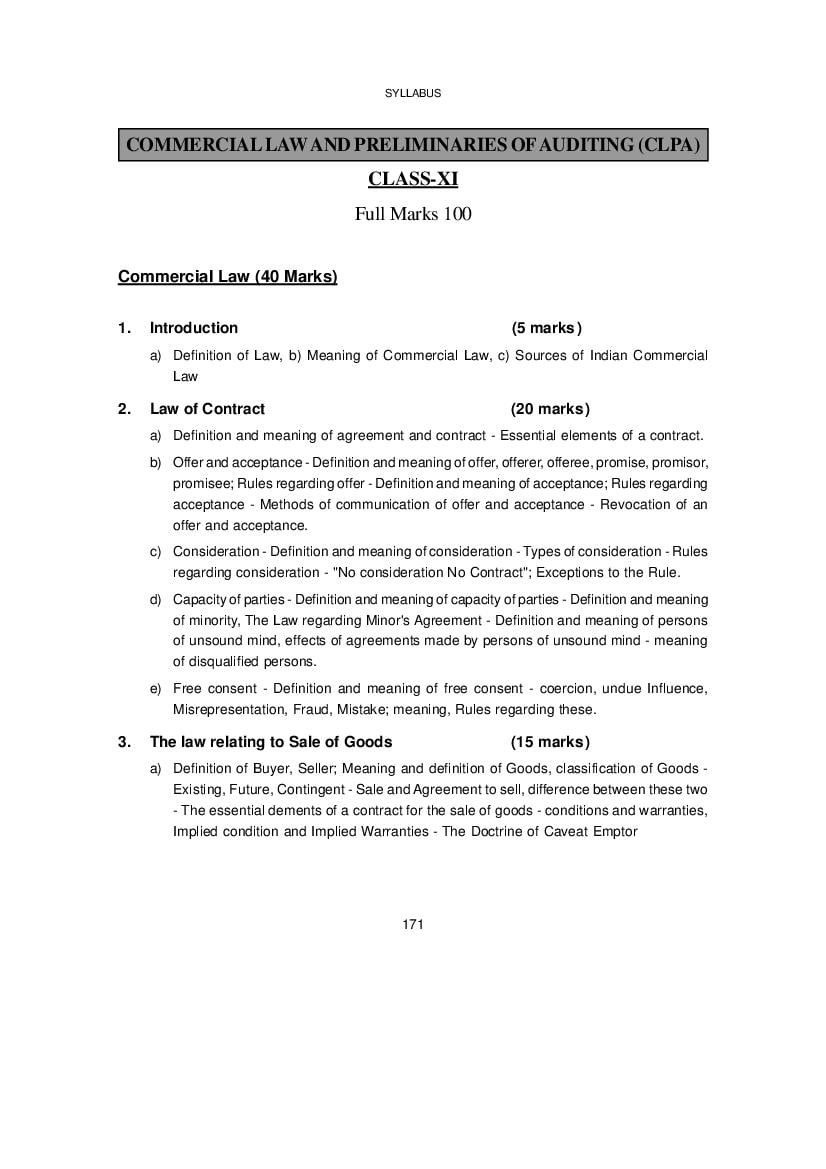
WBCHSE Class 11 Syllabus for Commercial Law and Preliminaries Of Auditing
Finished viewing? Save it for later —
Download WBCHSE Class 11 Syllabus for Commercial Law and Preliminaries Of Auditing (PDF · 2 pages)About WBCHSE Class 11 Syllabus for Commercial Law and Preliminaries Of Auditing
WBCHSE Class 11 Syllabus for Commercial Law and Preliminaries Of Auditing is available here for free download. Published by West Bengal Board for Class 11, this syllabus can be viewed online or downloaded as a PDF (2 pages). Candidates preparing for Class 11 can use WBCHSE Class 11 Syllabus for Commercial Law and Preliminaries Of Auditing to understand the exam pattern, the type of questions asked, and the overall difficulty level.
Frequently Asked Questions
How can I download WBCHSE Class 11 Syllabus for Commercial Law and Preliminaries Of Auditing?
Open this page and click the Download button to save WBCHSE Class 11 Syllabus for Commercial Law and Preliminaries Of Auditing as a PDF. It is completely free on AglaSem Docs.
Is WBCHSE Class 11 Syllabus for Commercial Law and Preliminaries Of Auditing free to download?
Yes. WBCHSE Class 11 Syllabus for Commercial Law and Preliminaries Of Auditing can be viewed online and downloaded as a PDF free of cost on AglaSem Docs.
How many pages does WBCHSE Class 11 Syllabus for Commercial Law and Preliminaries Of Auditing have?
WBCHSE Class 11 Syllabus for Commercial Law and Preliminaries Of Auditing contains 2 pages, which you can read online or download together as a single PDF.
Where can I find more Class 11 study material?
You can find more Class 11 question papers, sample papers, syllabus, and answer keys on AglaSem Docs.
WBCHSE Class 11 Syllabus for Commercial Law and Preliminaries Of Auditing – Text
Read the full text of this syllabus below — useful to quickly search, copy and reference the content online without downloading the PDF.
📄 View text version (2 pages)
Page 1
Page 2
Document Details
| Board / Org | West Bengal Board |
| Exam | Class 11 |
| Type | Syllabus |
| Pages | 2 |
| Updated | 30 Apr 2026 |