Karnataka 2nd PUC Question Paper 2026 Answer Key Economics
Finished viewing? Save it for later —
Download Karnataka 2nd PUC Question Paper 2026 Answer Key Economics (PDF · 21 pages)About Karnataka 2nd PUC Question Paper 2026 Answer Key Economics
Karnataka 2nd PUC Question Paper 2026 Answer Key Economics is available here for free download. Published by Karnataka Board for Class 12, this question paper can be viewed online or downloaded as a PDF (21 pages). Candidates preparing for Class 12 can use Karnataka 2nd PUC Question Paper 2026 Answer Key Economics to understand the exam pattern, the type of questions asked, and the overall difficulty level.
Frequently Asked Questions
How can I download Karnataka 2nd PUC Question Paper 2026 Answer Key Economics?
Open this page and click the Download button to save Karnataka 2nd PUC Question Paper 2026 Answer Key Economics as a PDF. It is completely free on AglaSem Docs.
Is Karnataka 2nd PUC Question Paper 2026 Answer Key Economics free to download?
Yes. Karnataka 2nd PUC Question Paper 2026 Answer Key Economics can be viewed online and downloaded as a PDF free of cost on AglaSem Docs.
How many pages does Karnataka 2nd PUC Question Paper 2026 Answer Key Economics have?
Karnataka 2nd PUC Question Paper 2026 Answer Key Economics contains 21 pages, which you can read online or download together as a single PDF.
Where can I find more Class 12 study material?
You can find more Class 12 question papers, sample papers, syllabus, and answer keys on AglaSem Docs.
Karnataka 2nd PUC Question Paper 2026 Answer Key Economics – Text
Read the full text of this question paper below — useful to quickly search, copy and reference the content online without downloading the PDF.
📄 View text version (21 pages)
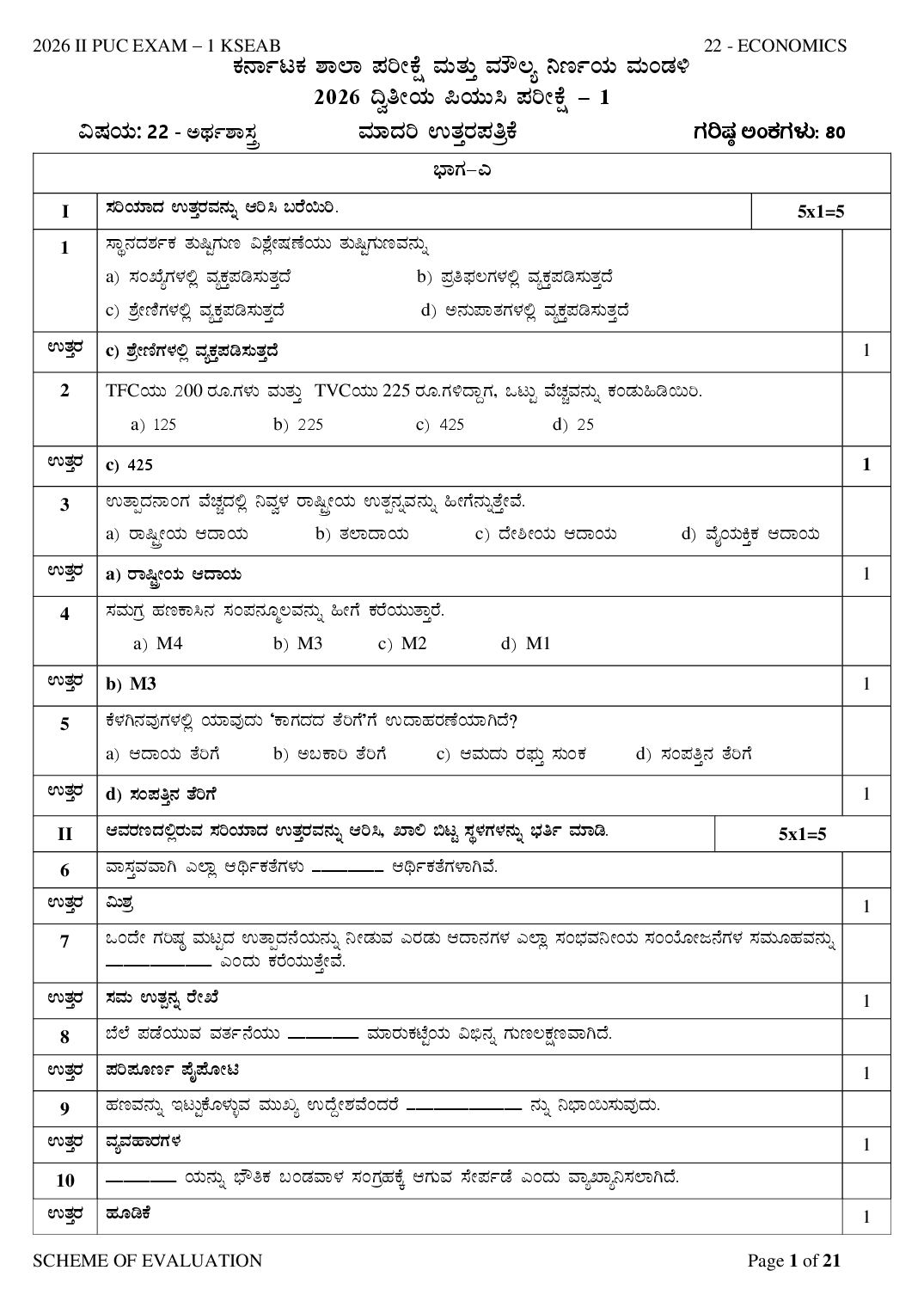
Page 1
PÀ£ÁðlPÀ ±Á¯Á ¥ÀjÃPÉë ªÀÄvÀÄÛ ªÀiË®å ¤tðAiÀÄ ªÀÄAqÀ½
2026 ¢éwÃAiÀÄ ¦AiÀÄĹ ¥ÀjÃPÉë - 1
«µÀAiÀÄ: 22 - CxÀð±Á¸ÀÛç ªÀiÁzÀj GvÀÛgÀ¥ÀwæPÉ ಗರಿಷ್ಠ ಅಂಕಗಳು: 80
¨sÁUÀ-J
I ¸ÀjAiÀiÁzÀ GvÀg
Û Àª£
À ÀÄß Dj¹ §gɬÄj. 5x1=5
1 ¸ÁÜ£Àz±
À ÀðPÀ vÀĶÖUÄÀ t «±ÉèõÀuÉAiÀÄÄ vÀĶÖUÄÀ tªÀ£ÀÄß
a) ¸ÀASÉåUÀ¼°
À è ªÀåPÀÛ¥Àr¸ÀÄvÀÛzÉ b) ¥Àæw¥sÀ®UÀ¼À°è ªÀåPÀÛ¥Àr¸ÀÄvÀÛzÉ
c) ±ÉæÃtÂUÀ¼°
À è ªÀåPÀÛ¥Àr¸ÀÄvÀÛzÉ d) C£ÀÄ¥ÁvÀU¼
À À°è ªÀåPÀÛ¥Àr¸ÀÄvÀÛzÉ
GvÀg
Û À c) ±ÉæÃtÂUÀ¼À°è ªÀåPÀÛ¥r
À ¸ÀÄvÀz
Û É 1
2 TFCAiÀÄÄ 200 gÀÆ.UÀ¼ÄÀ ªÀÄvÀÄÛ TVCAiÀÄÄ 225 gÀÆ.UÀ½zÁÝUÀ, MlÄÖ ªÉZª
ÀÑ À£ÀÄß PÀAqÀÄ»r¬Äj.
a) 125 b) 225 c) 425 d) 25
GvÀg
Û À c) 425 1
3 GvÁàzÀ£ÁAUÀ ªÉZÑÀz°
À è ¤ªÀé¼À gÁ¶ÖçÃAiÀÄ GvÀà£ÀߪÀ£ÀÄß »ÃUÉ£ÀÄßvÉÛêÉ.
a) gÁ¶ÖçÃAiÀÄ DzÁAiÀÄ b) vÀ¯ÁzÁAiÀÄ c) zÉòÃAiÀÄ DzÁAiÀÄ d) ªÉÊAiÀÄQÛPÀ DzÁAiÀÄ
GvÀg
Û À a) gÁ¶ÖçÃAiÀÄ DzÁAiÀÄ 1
4 ¸ÀªÄÀ UÀæ ºÀtPÁ¹£À ¸ÀA¥À£ÀÆ䮪À£ÄÀ ß »ÃUÉ PÀgÉAiÀÄÄvÁÛgÉ.
a) M4 b) M3 c) M2 d) M1
GvÀg
Û À b) M3 1
5 PɼÀV£ÀªÀÅUÀ¼À°è AiÀiÁªÀÅzÀÄ ‘PÁUÀzz
À À vÉjUÉ’UÉ GzÁºÀgu
À ÉAiÀiÁVzÉ?
a) DzÁAiÀÄ vÉjUÉ b) C§PÁj vÉjUÉ c) DªÀÄzÀÄ gÀ¥ÄsÀ Û ¸ÀÄAPÀ d) ¸ÀA¥ÀwÛ£À vÉjUÉ
GvÀg
Û À d) ¸ÀA¥Àw£
Û À vÉjUÉ 1
II DªÀgÀtzÀ°g
è ÀĪÀ ¸ÀjAiÀiÁzÀ GvÀg
Û Àª£
À ÀÄß Dj¹, SÁ° ©lÖ ¸ÀܼÀUÀ¼£
À ÀÄß ¨sÀwð ªÀiÁr. 5x1=5
6 ªÁ¸ÀÛªÀªÁV J¯Áè DyðPÀvÉUÀ¼ÀÄ ________ DyðPÀvÉU¼
À ÁVªÉ.
GvÀg
Û À «Ä±Àæ 1
7 MAzÉà UÀjµÀ× ªÀÄlÖzÀ GvÁàzÀ£ÉAiÀÄ£ÀÄß ¤ÃqÀĪÀ JgÀqÀÄ DzÁ£ÀU¼
À À J¯Áè ¸ÀA¨sÀª¤
À ÃAiÀÄ ¸ÀAAiÉÆÃd£ÉU¼
À À ¸ÀªÄÀ ƺÀª£
À ÀÄß
____________ JAzÀÄ PÀgÉAiÀÄÄvÉÛêÉ.
GvÀg
Û À ¸ÀªÀÄ GvÀà£Àß gÉÃSÉ 1
8 ¨É¯É ¥ÀqA
É iÀÄĪÀ ªÀvÀð£ÉAiÀÄÄ ________ ªÀiÁgÀÄPÀmÉÖAiÀÄ «©ü£Àß UÀÄt®PÀëtªÁVzÉ.
GvÀg
Û À ¥Àj¥ÀÆtð ¥ÉÊ¥ÉÆÃn 1
9 ºÀtªÀ£ÀÄß ElÄÖPÉƼÀÄîªÀ ªÀÄÄRå GzÉÝñÀªÉAzÀgÉ _____________ £ÀÄß ¤¨sÁ¬Ä¸ÀĪÀÅzÀÄ.
GvÀg
Û À ªÀåªÀºÁgÀUÀ¼À 1
10 ________ AiÀÄ£ÀÄß ¨sËwPÀ §AqÀªÁ¼À ¸ÀAUÀæºÀPÉÌ DUÀĪÀ ¸ÉÃ¥ÀðqÉ JAzÀÄ ªÁåSÁ夸À¯ÁVzÉ.
GvÀg
Û À ºÀÆrPÉ 1
SCHEME OF EVALUATION Page 1 of 21
Page 2
III ºÉÆA¢¹ §gɬÄj. 5x1=5
11 A B
a) ¸Àg¼
À À ¨ÉÃrPÉ gÉÃSÉ iv) d(p)=a-bp 1
b) π = i) TR-TC 1
c) DqÀA ¹ävï v) PÁtzÀ PÉÊ PÁAiÀiÁðZÀgÀuÉ 1
d) vÀ¥À²Ã®Ä ¥ÀnÖ iii) zÁ¸ÁÛ£ÀÄ ZÀ®PÀ 1
e) ¤ªÀðºÀuÁ ºÉÆAzÁtÂPÉ ii) qÀnð ºÉÆAzÁtÂPÉ 1
IV F PɼÀV£À ¥Àæ±ßÉ UÀ½UÉ MAzÀÄ ªÁPÀå CxÀªÁ ¥Àzz
À À°è GvÀj
Û ¹j. 5x1=5
12 ¹ÃªÀiÁAvÀ §zÀ°PÉAiÀÄ zÀgÀ or ¹ÃªÀiÁAvÀ ¥Àæw¤zsÁ£À zÀgÀ or MARGINAL RATE OF SUBSTITUTION
GvÀg
Û À ¹ÃªÀiÁAvÀ §zÀ°PÉAiÀÄ zÀgÀ, MARGINAL RATE OF SUBSTITUTION 1
13 ¥ÀÆgÉÊPÉ JAzÀgÃÉ £ÀÄ?
GvÀg
Û À MAzÀÄ GzÀåªÀÄWÀlPÀzÀ ¥ÀÆgÉÊPÉAiÀÄÄ ¤ÃrzÀ ¨É¯É, ¤ÃrzÀ vÀAvÀæeÁÕ£À ªÀÄvÀÄÛ ¤ÃrzÀ GvÁàzÀ£ÁAUÀUÀ¼À ¨É¯ÉU¼
À À°è GzÀåªÀÄ 1
WÀlPÀUÀ¼ÀÄ ªÀiÁgÁl ªÀiÁqÀ®Ä §AiÀĸÀĪÀ ¸ÀgQÀ £À ¥ÀæªiÀ ÁtªÁVzÉ.
14 gÀ¥ÄsÀ ÛUÀ¼À CxÀð ¤Ãr.
GvÀg
Û À ¸ÀézÉñÀªÅÀ dUÀw£
Û À EvÀgÉ gÁµÀÖçUÀ½UÉ ¸ÀgPÀ ÀÄ ªÀÄvÀÄÛ ¸ÉêÉUÀ¼À£ÄÀ ß ªÀiÁgÀ§ºÀÄzÀÄ. EªÀÅUÀ¼À£ÄÀ ß gÀ¥ÀsÄÛUÀ¼ÄÀ J£ÀÄßvÁÛgÉ. 1
15 ¸ÀªÄÀ UÀæ ¨ÉÃrPÉAiÀÄ ªÉÄÃ¯É ¥À¨
æ sÁªÀ ©ÃgÀĪÀ AiÀiÁªÀÅzÁzÀgÀÆ MAzÀÄ PÉÆòÃAiÀÄ ZÀ®PÀªÀ£ÀÄß ºÉ¸j
À ¹.
GvÀg
Û À vÉjUÉ (T), ¸ÀPÁðgÀzÀ ªÉZÀÑ (G), ªÀUÁðªÀuÉ ¥ÁªÀwUÀ¼ÀÄ, ¸ÀºÁAiÀÄzsÀ£À ªÀÄÄAvÁzÀĪÀÅ CxÀªÁ AiÀiÁªÀÅzÁzÀgÀÆ MAzÀÄ 1
PÉÆòÃAiÀÄ ZÀ®PÀ
16 ¸ÀézÉò ºÀtzÀ ªÀiË®å KjPÉ JAzÀgÃÉ £ÀÄ?
GvÀg
Û À §zÀ¯ÁUÀĪÀ «¤ªÀÄAiÀÄ zÀgÀzÀ ¥ÀzÞÀ w EgÀĪÀ gÁμÀÖçzÀ°è ¸ÀézÉò ºÀtzÀ ¨É¯ÉAiÀÄÄ «zÉò ºÀtzÀ JzÀÄgÀÄ KjPÉAiÀiÁzÁUÀ 1
CzÀ£ÀÄß ¸ÀézÉò ºÀtzÀ ªÀiË®å KjPÉ J£ÀÄßvÁÛgÉ.
¨sÁUÀ-©
V F PɼÀV£À AiÀiÁªÀÅzÁzÀgÀÆ DgÀÄ ¥Àæ±ßÉ UÀ½UÉ ¥ÀæwAiÉÆAzÀPÀÆÌ 4 ªÁPÀåUÀ¼À°è GvÀj
Û ¹. 6x2=12
17 ªÀÄÆ® DyðPÀ ZÀlĪÀnPÉUÀ¼£
À ÀÄß ¥ÀnÖ ªÀiÁr.
GvÀg
Û À J) ¸ÀgÀPÀÄ ªÀÄvÀÄÛ ¸ÉêÉUÀ¼À GvÁàzÀ£É ©) «¤ªÀÄAiÀÄ ¹) C£ÀĨsÆ
É ÃUÀ 2
18 ¨ÉÃrPÀAiÀÄ ¤zsÁðgÀPÀUÀ¼À£ÄÀ ß ¥ÀnÖ ªÀiÁr.
GvÀg
Û À J) ¸ÀgÀQ£À ¨É¯É ©) EvÀgÉ ¸ÀgPÀ ÄÀ UÀ¼À ¨É¯É
¹) C£ÀĨsÉÆÃVAiÀÄ DzÁAiÀÄ r) C£ÀĨsÉÆÃVAiÀÄ C©ügÀÄa ºÁUÀÆ DzÀåvÉU¼
À ÀÄ 2
19 ¢ÃWÁðªÀ¢ü ªÉZÀÑUÀ¼ÁªÀŪÀÅ?
GvÀg
Û À (J) ¢ÃWÁðªÀ¢ü ¸ÀgÁ¸Àj ªÉZÑÀ [LAC or LRAC] (©) ¢ÃWÁðªÀ¢ü ¹ÃªÀiÁAvÀ ªÉZÑÀ [LMC or LRMC] 1+1
20 ¥Àj¥ÀÆtð ¥ÉÊ¥ÉÆÃn ªÀiÁgÀÄPÀmÉÖAiÀÄ°è GzÀåªÀÄ WÀlPÀªÉÇAzÀÄ ¯Á¨sÀªÀ£ÀÄß UÀjµÀ×UÉƽ¸ÀÄ«PÉUÉ CUÀvÀå«gÀĪÀ µÀgÀvÀÄÛUÀ¼À£ÀÄß w½¹.
GvÀg
Û À 1. ¨É¯É P, ¹ÃªÀiÁAvÀ ªÉZÑÀ MC UÉ ¸ÀªÄÀ £ÁVgÀ¨ÃÉ PÀÄ (P = MC)
2. ¹ÃªÀiÁAvÀ ªÉZª
ÀÑ ÀÅ q0 zÀ°è E½PÉAiÀiÁUÀÄwÛgÀĪÀÅ¢®è. 2
3. C¯ÁàªÀ¢üAiÀÄ°è ¨É¯ÉAiÀÄÄ ¸ÀgÁ¸Àj §zÀ¯ÁUÀĪÀ ªÉZÑÀQÌAvÀ ºÉZÀÄÑ CxÀªÁ ¸ÀªÄÀ £ÁVgÀ¨ÃÉ PÀÄ (P AVC)
ªÀÄvÀÄÛ ¢ÃWÁðªÀ¢üAiÀÄ°è ¨É¯ÉAiÀÄÄ ¸ÀgÁ¸Àj ªÉZQÀÑ ÌAvÀ ºÉZÀÄÑ CxÀªÁ ¸ÀªÄÀ £ÁVgÀ¨ÃÉ PÀÄ (PAC)
SCHEME OF EVALUATION Page 2 of 21
Page 3
21 ¸ÀÜVvÀvÉAiÀÄ ©AzÀÄ«£À CxÀðªÀ£ÀÄß ¤Ãr.
GvÀg
Û À C¯ÁàªÀ¢üAiÀÄ°è AVC AiÀÄ PÀ¤µÀ× ©AzÀĪÀÅ PÉÆ£ÉAiÀÄ ¨É¯É ªÀÄvÀÄÛ GvÀà£Àß ¸ÀAAiÉÆÃd£ÉAiÀiÁVzÀÄÝ, SMC gÉÃSÉAiÀÄÄ AVC
gÉÃSÉAiÀÄ£ÀÄß F PÀ¤µÀ× ©AzÀÄ«£À°è bÉâ¸ÀÄvÀÛzÉ. ¢ÃWÁªÀ¢üAiÀÄ°è LRMC gÉÃSÉAiÀÄÄ LRAC gÉÃSÉAiÀÄ£ÀÄß PÀ¤µÀ× 2
©AzÀÄ«£À°è bÉâ¸ÀÄvÀÛzÉ. F ©AzÀÄ«£À PɼÀUÉ AiÀiÁªÀÅzÉà GvÁàzÀ£É E®è¢gÀĪÀ PÁgÀt EzÀ£ÀÄß ¸ÀÜVvÀvÉAiÀÄ ©AzÀÄ
(ªÀÄÄZÀĪ
Ñ À ©AzÀÄ) J£ÀÄßvÁÛgÉ.
22 ªÀÄzsÀåAvÀgÀ ¸ÀgPÀ ÀÄUÀ¼À CxÀðªÀ£ÀÄß MAzÀÄ GzÁºÀgÀuÉAiÉÆA¢UÉ ¤Ãr.
GvÀg
Û À DyðPÀvÉAiÀÄ°è GvÁàzÀ£ÉAiÀiÁzÀ ºÀ®ªÀÅ GvÀà£ÀßUÀ¼°
À è CAwªÀÄ C£ÀĨsÆ É ÃUÀzÀ°è CAvÀåUÉƼÀîzÀ, §AqÀªÁ¼À ¸ÀgÀPÀÄUÀ¼ÀÆ
C®èzÀ, EvÀgÀ ªÀ¸ÀÄÛ«£À vÀAiÀiÁjPÉUÁV DzÁ£ÀU¼À ÁV §¼À¸À®àqÀĪÀ ¸ÀgÀPÀÄUÀ¼£
À ÀÄß ªÀÄzsÀåAvÀgÀ ¸ÀgÀPÀÄUÀ¼ÀÄ J£ÀÄßvÁÛgÉ. 2
GzÁ:ªÁºÀ£ÀUÀ¼À vÀAiÀiÁjPÉAiÀÄ°è §¼À¸ÀĪÀ GQÌ£À ºÁ¼ÉUÀ¼ÀÄ ªÀÄvÀÄÛ ¥ÁvÉæUÀ¼£
À ÀÄß GvÁࢸÀ®Ä §¼À¸À¯ÁUÀĪÀ vÁªÀÄæ EvÁå¢.
23 ¨ÁåºÀåvÉU¼
À ÉAzÀgÉ K£ÉAzÀÄ CxÉÊð¸ÀÄ«j? EzÀgÀ JgÀqÀÄ «zsÀUÀ¼À£ÀÄß ºÉ¸j
À ¹.
GvÀg
Û À MAzÀÄ GzÀåªÀÄ WÀlPÀªÅÀ E£ÉÆßAzÀÄ GzÀåªÀÄ WÀlPÀPÉÌ CxÀªÁ M§â ªÀåQÛ E£ÉÆߧ⠪ÀåQÛUÉ GzÉÝñÀg»À vÀªÁV ªÀiÁqÀĪÀ
¥ÀæAiÉÆÃd£À CxÀªÁ ºÁ¤UÀ½UÉ ¨ÁºÀåvÉUÀ¼ÀÄ J£ÀÄßvÁÛgÉ. EzÀPÁÌV CªÀgÀÄ K£À£ÀÆß ¥ÁªÀw¸ÀĪÀÅ¢®è. 2
zsÀ£ÁvÀäPÀ ¨ÁºÀåvÉU¼
À ÀÄ ªÀÄvÀÄÛ IÄuÁvÀäPÀ ¨ÁºÀåvÉU¼
À ÉA§ JgÀqÀÄ «zsÀU½
À ªÉ.
24 MPCAiÀÄ ªÀiË®åªÀÅ 0.60 DzÁUÀ, MPS£ÀÀ ªÀiË®å ªÀÄvÀÄÛ ºÀÆrPÉ UÀÄtPÀzÀ ªÀiË®åªÀ£ÀÄß ¯ÉPÀÌ ºÁQ.
GvÀg
Û À
1) MPC+MPS=1 Y 1
2) ºÀÆrPÉAiÀÄ UÀÄtPÀ = 1+1
A
̅ 1−c
0.60+MPS=1 1
=
MPS=1- 0.60 1−0.60
1
MPS= 0.40 =
0.40
ºÀÆrPÉAiÀÄ UÀÄtPÀ = 2.5
25 ¸ÁªÀðd¤PÀ ¸ÀgPÀ ÀÄ ªÀÄvÀÄÛ SÁ¸ÀV ¸ÀgPÀ ÀÄUÀ¼À £ÀqÀÄ«£À ªÀåvÁå¸À w½¹.
GvÀg
Û À ¸ÁªÀðd¤PÀ ¸ÀgÀPÀÄUÀ¼ÀÄ SÁ¸ÀV ¸ÀgPÀ ÀÄUÀ¼ÀÄ
¸ÀPÁðgÀªÅÀ ¥ÀÆgÉʸÀĪÀ ¸ÀgÀPÀÄUÀ¼À£ÀÄß ¸ÁªÀðd¤PÀ §mÉÖ, PÁgÀÄ, DºÁgÀ ¥ÀzÁxÀðUÀ¼A À vÀºÀ ¸ÀgÀPÀÄUÀ¼ÀÄ SÁ¸ÀV 2
¸ÀgPÀ ÄÀ UÀ¼ÀÄ J£ÀÄßvÁÛgÉ. F ¸ÀgPÀ ÄÀ UÀ¼À ¥ÀæAiÉÆÃd£ÀªÅÀ ¸ÀgPÀ ÄÀ UÀ¼ÁVªÉ. SÁ¸ÀV ¸ÀgÀPÀÄUÀ½UÉ ¸ÀA§A¢ü¹zÀAvÉ
J®èjUÀÆ ®¨sÀåªÁUÀÄvÀÛzÉ. ¸ÁªÀðd¤PÀ ¸ÀgPÀ ÀÄUÀ¼À AiÀiÁgÉà DUÀ° ºÀt ¥ÁªÀw¸ÀzÉà EzÀÝgÉ CªÀg£ À ÀÄß SÁ¸ÀV
§¼ÀPÉzÁgÀgÄÀ ºÀt ¥ÁªÀw¸ÀzÉà EªÀÅUÀ¼À£ÀÄß ¸ÀgPÀ ÄÀ UÀ¼À ¯Á¨sª
À À£ÀÄß C£ÀĨsÀ«¸ÀĪÀÅzÀjAzÀ
§¼À¸À§ºÀÄzÀÄ. ºÉÆgÀVqÀ¯ÁUÀÄvÀÛzÉ.
26 ¥ÀæªÀiÁuÁ£ÀÄUÀÄt DzÁAiÀÄ vÉjUÉAiÀÄÄ ¸ÀéAiÀÄAZÁ°vÀ PÀA¥À£ÀUÁæºÀPÀªÁV KPÉ PÉ®¸À ªÀiÁqÀÄvÀÛz?É
GvÀg
Û À KPÉAzÀg,É EzÀÄ ªÉZÀÑ ªÀiÁqÀ§ºÀÄzÁzÀ DzÁAiÀÄ ªÀÄvÀÄÛ C£ÀĨÉÆÃVUÀ¼À ªÉZª ÀÑ À£ÀÄß GDPAiÀÄ°è£À Kj½vÀU½ À UÉ PÀrªÉÄ
¸ÀAªÉÃzÀ£Á²Ã®ªÁV¸ÀÄvÀÛzÉ. GDPAiÀÄ KjPɬÄAzÀ ªÉZÀÑ ªÀiÁqÀ§ºÀÄzÁzÀ DzÁAiÀÄ ºÉZÄÀ v Ñ ÀÛzÉAiÀiÁzÀgÆ
À , DzÁAiÀÄzÀ 2
MAzÀÄ ¨sÁUÀªÅÀ vÉjUÉAiÀiÁV ºÉÆÃUÀĪÀÅzÀjAzÀ PÀrªÉÄ ¥ÀæªÀiÁtzÀ°è ºÉZÁÑUÀÄvÀÛzÉ. DyðPÀ »AdjvÀzÀ CªÀ¢üAiÀÄ°è
GDPAiÀÄÄ PÀrªÉÄAiÀiÁzÁUÀ ªÉZÀÑ ªÀiÁqÀ§ºÀÄzÁzÀ DzÁAiÀĪÀÅ CzÀQÌAvÀ PÀrªÉÄ ªÉÃUÀzÀ°è E½AiÀÄÄvÀÛzÉ ªÀÄvÀÄÛ vÉjUÉ
ºÉÆuÉUÁjPÉAiÀÄ£ÀÄß ¤UÀ¢¥Àr¹zÁUÀ E½PÉAiÀiÁUÀĪÀµÀÄÖ ¥ÀæªÀiÁtzÀ°è C£ÀĨsÉÆÃUÀ PÀrªÉÄAiÀiÁUÀĪÀÅ¢®è. EzÀÄ ¸ÀªÄÀ UÀæ
¨ÉÃrPÉAiÀÄ°è£À E½PÉAiÀÄ£ÀÄß PÀrªÉÄ ªÀiÁqÀĪÀÅzÀgÀ eÉÆvÉUÉ DyðPÀvÉAiÀÄ£ÀÄß ¹ÜgÀvAÉ iÀÄ°è EqÀÄvÀÛzÉ.
SCHEME OF EVALUATION Page 3 of 21
Page 4
¨sÁUÀ-¹
VI F PɼÀV£À AiÀiÁªÀÅzÁzÀgÀÆ LzÀÄ ¥Àæ±ßÉ UÀ½UÉ ¥ÀæwAiÉÆAzÀPÀÆÌ 12 ªÁPÀåUÀ¼À°è GvÀj
Û ¹. 5x4=20
27 ªÀiÁgÀÄPÀmÖÉ CxÀðªÀåªÀ¸ÉÜAiÀÄÄ ºÉÃUÉ PÁAiÀÄ𠤪Àð»¸ÀÄvÀz
Û É? «ªÀj¹.
GvÀg
Û À DyðPÀvÉAiÀÄ J¯Áè ZÀlĪÀnPÉUÀ¼£ À ÀÄß ¸ÀPÁðgÀzÀ §zÀ°UÉ ªÀiÁgÀÄPÀmÉÖAiÀÄ°è£À DyðPÀ ¥Àæw¤¢üUÀ¼ÁzÀ PÉƼÀÄîªÀªg
À ÀÄ ªÀÄvÀÄÛ
ªÀiÁgÁlUÁgÀgÄÀ ¤ªÀð»¸ÀĪÀÅzÀ£ÀÄß ªÀiÁgÀÄPÀmÉÖ CxÀðªÀåªÀ¸ÉÜ J£ÀÄßvÁÛgÉ. ªÀiÁgÀÄPÀmÉÖAiÀÄ°è ªÀiÁgÁlUÁgÀgÄÀ ªÀÄvÀÄÛ 4
UÁæºPÀ g
À ÀÄ UÁæªÀÄzÀ ZËPÀzÀ°è CxÀªÁ £ÀUg À ÀzÀ ¸ÀÆ¥Àgï §eÁgÀ£À°è CxÀªÁ zÀÆgÀªÁt CxÀªÁ CAvÀðeÁ®zÀ°è ¥Àg¸ À ÀàgÀ
¸ÀAªÀºÀ£ÀzÀ ªÀÄÆ®PÀ ¸ÀgÀPÄÀ UÀ¼À£ÀÄß «¤ªÀÄAiÀÄ ªÀiÁrPÉƼÀÀÄzÀÄ.
- »ÃUÉ ªÀiÁgÀÄPÀmÉÖ ªÀåªÀ¸ÜÉ AiÀÄ°è ¨É¯É ¸ÀAPÉÃvÀUÀ¼ÀÄ DyðPÀ ZÀlĪÀnPÉU¼
À À°è ¸ÀªÄÀ £ÀéAiÀÄvÉAiÀÄ£ÀÄß vÀgÄÀ ªÀ ªÀÄÆ®PÀ K£À£ÀÄß
GvÁࢸÀ¨ÃÉ PÀÄ, ºÉÃUÉ GvÁࢸÀ¨ÃÉ PÀÄ ªÀÄvÀÄÛ AiÀiÁjUÁV GvÁࢸÀ¨ÉÃPÀÄ JA§ PÉÃA¢æÃAiÀÄ ¸ÀªÄÀ ¸ÉåUÀ¼£ À ÀÄß ¥ÀjºÀj¸ÀÄvÀÛªÉ.
(¸ÀAQë¥ÀÛ «ªÀgÀuÉ CUÀvÀå)
28 M§â C£ÀĨsÉÆÃVAiÀÄÄ MAzÀÄ ¸Éé£À ¨É¯É 10 gÀÆ.UÀ½zÁÝUÀ 25 ¸ÉçÄUÀ¼À£ÀÄß Rjâ¸ÀÄvÁÛ¼É ªÀÄvÀÄÛ ¥Àæw ¸Éé£À ¨É¯É 15
gÀÆ. UÀ½UÉ KjPÉAiÀiÁzÁUÀ CªÀ¼ÀÄ ¸Éé£À ¨ÉÃrPÉAiÀÄ£ÀÄß 18 PÉÌ PÀrªÉÄ ªÀiÁqÀÄvÁÛ¼É. ¨É¯É ¨ÉÃrPÉ ¹Üw¸ÁÜ¥ÀPÀvéÀªÀ£ÀÄß
PÀAqÀÄ»r¬Äj.
GvÀg
Û À
ವಿಧಾನ-1 ವಿಧಾನ-2
4
¨ÉÃrPÉAiÀÄ°è£À ±ÉÃPÀqÀªÁgÀÄ §zÀ¯ÁªÀuÉ ºÉƸÀ ¥ÀæªiÀ Át (CAwªÀÄ ¨ÉÃrPÉ) Q2 = 18,
eD = ¨É¯ÉAiÀÄ°è£À ±ÉÃPÀqÀªÁgÀÄ §zÀ¯ÁªÀuÉ
ºÀ¼ÉAiÀÄ ¥ÀæªiÀ Át (ªÉÆzÀ® ¨ÉÃrPÉ) Q1= 25
ºÉƸÀ ¨É¯É (CAwªÀÄ ¨É¯É) P2= 15,
ºÀ¼ÉAiÀÄ ¨É¯É (ªÉÆzÀ® ¨É¯É) P1= 10
Q P
eD = X Q = CAwªÀÄ ¨ÉÃrPÉ - ªÉÆzÀ® ¨ÉÃrPÉ = Q2 - Q1 = 18-25= -7
P Q
P = CAwªÀÄ ¨É¯É - ªÉÆzÀ® ¨É¯É = P2- P1 = 15-10= 5
18 – 25 10
Q -7
eD = X ¨ÉÃrPÉAiÀÄ°è£À
=
15 - 10 25 ±ÉÃPÀqª
À ÁgÀÄ §zÀ¯ÁªÀuÉ
X 100 = X 100 = - 28
Q1 25
-7 10
eD = X
5 25 P 5
¨É¯ÉAiÀÄ°è£À ±ÉÃPÀqª
À ÁgÀÄ
= X 100 = X 100 = 50
-70 §zÀ¯ÁªÀuÉ
= = - 0.56 P1 10
eD 125
eD = - 0.56 CxÀªÁ ¨ÉÃrPÉAiÀÄ°è£À ±ÉÃPÀqª
À ÁgÀÄ §zÀ¯ÁªÀuÉ - 28
eD = = = - 0.56
¨É¯ÉAiÀÄ°è£À ±ÉÃPÀqª
À ÁgÀÄ §zÀ¯ÁªÀuÉ 50
|eD| = 0.56
eD = - 0.56 CxÀªÁ
|eD| = 0.56
(AiÀiÁªÀÅzÁzÀgÀÆ MAzÀÄ «zsÁ£ÀzÀ°è GvÀj
Û ¸ÀĪÀÅzÀÄ CUÀvÀå)
29 GzÀåªÀÄ WÀlPÀzÀ ¥ÀÆgÉÊPÉ gÉÃSÉAiÀÄ ¤zsÁðgÀPÀUÀ¼À£ÄÀ ß «ªÀj¹.
GvÀg
Û À GzÀåªÀÄWÀlPÀzÀ ¥ÀÆgÉÊPÉ gÉÃSÉAiÀÄÄ MC gÉÃSÉAiÀÄ ¨sÁUÀªÁVgÀĪÀÅzÀjAzÀ MC gÉÃSÉAiÀÄ ªÉÄÃ¯É ¥Àæ¨sÁªÀ ©ÃgÀĪÀ
CA±ÀªÀÅ ¥ÀÆgÉÊPÉ gÉÃSÉAiÀÄ ¤zsÁðgÀPÀªÁUÀÄvÀÛzÉ. E°è CAvÀºÀ JgÀqÄÀ CA±ÀU¼ À À£ÀÄß ZÀað¸À¯ÁVzÉ. 2+
(a) vÀAvÀæeÁÕ£ÀzÀ ¥ÀæUÀw: MAzÀÄ GzÀåªÀÄWÀlPÀªÅÀ ºÉƸÀ vÀAvÀæeÁÕ£ÀzÀ ªÀÄÆ®PÀ CzÉà ªÀÄlÖzÀ §AqÀªÁ¼À ªÀÄvÀÄÛ 2
±ÀæªÄÀ UÀ¼ÉÆA¢UÉ ºÉaÑ£À WÀlPÀUÀ¼À£ÀÄß GvÁࢸÀÄvÀÛzÉ. - EzÀjAzÀ GzÀåªÀÄ WÀlPÀzÀ ¹ÃªÀiÁAvÀ ªÉZª ÀÑ ÀÅ PÀrªÉÄAiÀiÁUÀÄvÀÛzÉ.
- vÀAvÀæeÁÕ£ÀzÀ ¥ÀæUw
À AiÀÄÄ GzÀåªÀÄ WÀlPÀzÀ ¥ÀÆgÉÊPÉ gÉÃSÉAiÀÄ£ÀÄß §®PÉÌ ¥À®èlUÉƽ¸ÀÄvÀÛzÉ.
SCHEME OF EVALUATION Page 4 of 21
Page 5
(b) DzÁ£ÀzÀ ¨É¯ÉUÀ¼ÀÄ: MAzÀÄ DzÁ£ÀzÀ ¨É¯É (GzÁ: PÁ«ÄðPÀgÀ PÀÆ° zÀgÀ) ºÉZÁÑzÀg,É GvÁàzÀ£Á ªÉZª ÀÑ ÀÇ
ºÉZÁÑUÀÄvÀÛzÉ. - EzÀjAzÁV GzÀåªÀÄWÀlPÀzÀ AiÀiÁªÀÅzÉà GvÀà£ÀßzÀ ªÀÄlÖz° À è ¸ÀgÁ¸Àj ªÉZª ÀÑ ÀÅ ºÉZÁÑUÀĪÀÅzÀgÆ
É A¢UÉ
¹ÃªÀiÁAvÀ ªÉZÑÀªÇÀ ºÉZÁÑUÀÄvÀÛzÉ. - CAzÀgÉ GzÀåªÀÄ WÀlPÀzÀ ¥ÀÆgÉÊPÉ gÉÃSÉAiÀÄÄ JqÀPÉÌ ¥À®èlUÉƼÀîvÀÛzÉ.
(¸ÀAQë¥ÀÛ «ªÀgÀuÉ CUÀvÀå)
30 ¨ÉÃrPÉ ªÀÄvÀÄÛ ¥ÀÆgÉÊPÉAiÀÄ KPÀPÁ°PÀ ¥À®l
è UÀ½AzÀ ¸ÀªÀÄvÉÆî£ÀzÀ ªÉÄð£À ¥ÀjuÁªÀĪÀ£ÀÄß vÉÆÃj¸ÀĪÀ PÉÆõÀÖPÀªÀ£ÀÄß
§gɬÄj.
GvÀg
Û À ¨ÉÃrPÉAiÀÄ°è ¥ÀÆgÉÊPÉAiÀÄ°è
¥ÀæªÀiÁt ¨É¯É
¥À®èl ¥À®èl 4
▪ ºÉZÁÑUÀ§ºÀÄzÀÄ
JqÀUÀqU
É É JqÀUÀqU
É É PÀrªÉÄAiÀiÁUÀÄvÀÛzÉ ▪ PÀrªÉÄAiÀiÁUÀ§ºÀÄzÀÄ
▪ §zÀ¯ÁUÀzÃÉ G½AiÀħºÀÄzÀÄ
▪ ºÉZÁÑUÀ§ºÀÄzÀÄ
§®UÀqÉUÉ §®UÀqÉUÉ ºÉZÁÑUÀÄvÀÛzÉ ▪ PÀrªÉÄAiÀiÁUÀ§ºÀÄzÀÄ
▪ §zÀ¯ÁUÀzÃÉ G½AiÀħºÀÄzÀÄ
▪ ºÉZÁÑUÀ§ºÀÄzÀÄ
JqÀUÀqU
É É §®UÀqÉUÉ ▪ PÀrªÉÄAiÀiÁUÀ§ºÀÄzÀÄ PÀrªÉÄAiÀiÁUÀÄvÀÛzÉ
▪ §zÀ¯ÁUÀzÃÉ G½AiÀħºÀÄzÀÄ
▪ ºÉZÁÑUÀ§ºÀÄzÀÄ
§®UÀqÉUÉ JqÀUÀqU
É É ▪§zÀPÀ¯rÁUÀªÉzÄAiÀ
ÃÉ iG½AiÀ
ÁUÀ§ºÀÄħºÀ
zÀÄ ÄzÀÄ ºÉZÁÑUÀÄvÀÛzÉ
▪ §zÀ¯ÁUÀzÃÉ G½AiÀħºÀÄzÀÄ
31 C©üªÀÈ¢Þ ºÉÆA¢zÀ ªÀÄvÀÄÛ C©üªÀȢ޲î zÉñÀUÀ¼ÉgÀqg
À À°è ¸ÀPÁðgÀzÀ (gÁdå) ªÀÄvÀÄÛ PÀÄlÄA§ ªÀ®AiÀÄUÀ¼À ¥ÁvÀ檣
À ÀÄß PÀÄjvÀÄ
§gɬÄj.
GvÀg
Û À ¸ÀPÁðgÀzÀ (gÁdå) ¥ÁvÀæ:
▪ gÁdåzÀ ¥ÁvÀæªÅÀ ±Á¸À£ÀU¼ À À£ÀÄß gÀƦ¹ eÁjUÉ vÀgÄÀ ªÀÅzÀÄ 2+2
▪ £ÁåAiÀÄzÁ£À ªÀiÁqÀĪÀÅzÀÄ
▪ vÉjUÉ «¢ü¹ ¸ÀAUÀ滸ÀĪÀÅzÀÄ
▪ ¸ÁªÀðd¤PÀ ªÀÄÆ®¸ËPÀAiÀÄðUÀ¼À ¤ªÀiÁðt- ±Á¯Á-PÁ¯ÉÃdÄ, DgÉÆÃUÀå ¸ÉêÉUÀ¼ÄÀ EvÁå¢ MzÀV¸ÀĪÀÅzÀÄ
PÀÄlÄA§ ªÀ®AiÀÄzÀ ¥ÁvÀæ:
▪ PÀÄlÄA§ JAzÀgÉ CªÀgÀ ¸ÀéAvÀ C£ÀĨsÉÆÃUÀPÉÌ ¸ÀA§A¢ü¹zÀ wêÀiÁð£ÀU¼ À À£ÀÄß vÉUz
É ÀÄPÉƼÀÄîªÀ M§â ªÀåQÛ CxÀªÁ
C£ÀĨsÉÆÃUÀPÉÌ ¸ÀA§A¢ü¹zÀ wêÀiÁð£ÀU¼ À À£ÀÄß dAnAiÀiÁV ¤zsÀðj¸ÀĪÀ ªÀåQÛUÀ¼À ¸ÀªÄÀ ƺÀ.
▪ G½vÁAiÀÄ ªÀiÁqÀĪÀÅzÀÄ ªÀÄvÀÄÛ vÉjUÉ ¥ÁªÀw¸ÀĪÀÅzÀÄ.
▪ PÉ®¸À ªÀiÁr PÀÆ°AiÀÄ£ÀÄß ¸ÀA¥Á¢¸ÀĪÀÅzÀÄ.
▪ GzÀåªÀÄUÀ¼À ªÀiÁ°ÃPÀgÁV ¯Á¨sU À À½¸ÀĪÀÅzÀÄ EvÁå¢. (¸ÀAQë¥ÀÛ «ªÀgÀuÉ CUÀvÀå)
32 ‘ºÀtªÀÅ ¯ÉPÀÌzÀ CvÀåAvÀ C£ÀÄPÀÆ®PÀgÀ WÀlPÀªÁV PÁAiÀÄð¤ªÀð»¸ÀÄvÀz
Û É’. F ºÉýPÉAiÀÄ£ÀÄß GzÁºÀgÀuÉAiÉÆA¢UÉ «ªÀj¹.
GvÀg
Û À ºÀtªÀÅ ¯ÉPÌÀ zÀ CvÀåAvÀ C£ÀÄPÀÆ®PÀgÀ WÀlPÀªÁV PÁAiÀÄ𠤪Àð»¸ÀÄvÀÛzÉ. J¯Áè ¸ÀgPÀ ÄÀ ªÀÄvÀÄÛ ¸ÉêÉUÀ¼À ªÀiË®åªÀ£ÀÄß
ºÀtzÀ WÀlPÀUÀ¼À°è ªÀåPÀÛ¥Àr¸ÀĪÀÅzÀ£ÀÄß ¨É¯É J£ÀÄßvÁÛgÉ. 4
- E°è MAzÀÄ gÀÆ¥Á¬Ä ºÀtzÀ MAzÀÄ WÀlPÀªÁVzÉ. GzÁºÀgu À ÉUÉ MAzÀÄ ¥É¤ì¯ï£À ¨É¯É 2 gÀÆ. ªÀÄvÀÄÛ MAzÀÄ
¥É¤ß£À ¨É¯É 10 gÀÆ. DzÀg,É ¥É¤ß£À ¨É¯A
É iÀÄÄ 5 ¥É¤ì¯ïUÀ¼ÁUÀÄvÀÛªÉ.
- ªÉÄð£À GzÁºÀgu À ÉAiÀÄ°è MAzÀÄ gÀÆ¥Á¬ÄAiÀÄ ¨É¯É 1/2= 0.5 ¥É¤ì¯ï CxÀªÁ 1/10=0.1 ¥É£ï DUÀÄvÀÛzÉ. F
jÃwAiÀÄ°è ºÀtzÀ ¯ÉPÌÀ zÀ°è J¯Áè ¸ÀgPÀ ÄÀ UÀ¼À ¨É¯UÉ À¼ÄÀ ºÉZÁÑUÀĪÀÅzÁzÀgÉ ¨É¯UÉ À¼À ªÀÄlÖz°
À è ¸ÁªÀiÁ£Àå KjPÉAiÀiÁUÀÄvÀÛzÉ.
- EzÀjAzÁV AiÀiÁªÀÅzÉà ¸ÀgQÀ £À gÀÆ¥ÀzÀ°è ºÀtzÀ ªÀiË®åªÀÅ PÀrªÉÄAiÀiÁUÀÄvÀÛzÉ. CAzÀgÉ ºÀtzÀ MAzÀÄ WÀlPÀªÅÀ
AiÀiÁªÀÅzÉà ¸ÀgÀPÀ£ÀÄß PÀrªÉÄ ¥ÀæªÀiÁtzÀ°è PÉƼÀÄîvÀÛzÉ. EzÀ£Éßà ºÀtzÀ ±ÀQÛAiÀÄ°è£À PÀĹvÀ J£ÀÄßvÁÛgÉ.
(¸ÀAQë¥ÀÛ «ªÀgÀuÉ CUÀvÀå)
SCHEME OF EVALUATION Page 5 of 21
Page 6
33 C£ÀĨsÉÆÃUÀ ©A§PÀªÀ£ÀÄß gÉÃSÁavÀz
æ ÉÆA¢UÉ «ªÀj¹.
GvÀg
Û À C£ÀĨsÉÆÃUÀ ªÀÄvÀÄÛ DzÁAiÀÄzÀ £ÀqÄÀ «£À ¸ÀA§AzsÀªÀ£ÀÄß C£ÀĨsÆ
É ÃUÀ ©A§PÀ(C) J£ÀÄßvÁÛgÉ. DzÁAiÀÄ §zÀ¯ÁzÀAvÉ 4
C£ÀĨsÉÆÃUÀªÀÅ ¹ÜgÀ zÀgÀz°
À è §zÀ¯ÁUÀÄvÀÛzÉ. DzÀgÉ DzÁAiÀÄ ±ÀÆ£ÀåªÁzÀgÆ À ¸Àé®à ªÀÄlÖzÀ C£ÀĨsÉÆÃUÀ £ÀqÉAiÀÄÄwÛgÀÄvÀÛzÉ.
DzÁAiÀĪÀ£ÀÄß CªÀ®A©¸ÀzÉà DzÁAiÀÄ¢AzÀ ¸ÀévÀAvÀæªÁzÀ C£ÀĨsÉÆÃUÀªÀ£ÀÄß ¸ÁéAiÀÄvÀÛ C£ÀĨsÉÆÃUÀ (C̅) J£ÀÄßvÁÛgÉ.
DzÁAiÀÄ §zÀ¯ÁzÀAvÉ §zÀ¯ÁUÀĪÀ C£ÀĨsÉÆÃUÀPÉÌ ¥ÉæÃjvÀ C£ÀĨsÉÆÃUÀ (cY) J£ÀÄßvÁÛgÉ. cY DzÁAiÀÄzÀ ªÉÄð£À
C£ÀĨsÉÆÃUÀzÀ CªÀ®A§£ÉAiÀÄ£ÀÄß vÉÆÃj¸ÀÄvÀÛzÉ.
C£ÀĨsÉÆÃUÀ ©A©PÀ C = C̅ + cY
(¸ÀAQë¥ÀÛ «ªÀgÀuÉ CUÀvåÀ )
34 ¸ÀPÁðgÀzÀ ªÀÄÄAUÀqÀ ¥Àvæz
À À ¥ÀlªÀ£ÀÄß §gɬÄj.
GvÀg
Û À
4
35 ªÀÄÄPÀÛ DyðPÀvÉAiÀÄ ªÀÄÆgÀÄ PÉÆArUÀ¼À£ÄÀ ß «ªÀj¹.
GvÀg
Û À MAzÀÄ gÁμÀÖçªÀÅ ««zsÀ ªÀiÁUÀðUÀ½AzÀ EvÀgÀ gÁμÀÖçUÀ¼À eÉÆvÉ ªÀåªÀºÀj¸ÀĪÀÅzÀ£ÀÄß ªÀÄÄPÀÛ DyðPÀvÉ J£ÀÄßvÁÛgÉ. ªÁ¸ÀÛªÀªÁV
EAzÀÄ ºÉa£ Ñ À DzsÄÀ ¤PÀ DyðPÀvÉU¼
À ÀÄ ªÀÄÄPÀÛ DyðPÀvÉU¼
À ÁVzÀÄÝ, F PÉÆArUÀ¼£ À ÀÄß gÀa¹PÉƼÀî®Ä ªÀÄÆgÀÄ ªÀiÁUÀðUÀ½ªÉ. 4
CªÀÅUÀ¼ÉAzÀgÉ,
1) GvÀà£Àß ªÀiÁgÀÄPÀmÖÉ: MAzÀÄ zÉñÀªÅÀ (CyðPÀvÉAiÀÄÄ) EvÀgÀ zÉñÀU¼
À ÉÆA¢UÉ ¸ÀgÀPÀÄ & ¸ÉêÉUÀ¼À ªÀåªÀºÁgÀ
ªÀiÁqÀ§ºÀÄzÀÄ.
2) ºÀtPÁ¸ÀÄ ªÀiÁgÀÄPÀmÖÉ: MAzÀÄ gÁµÀÖçªÀÅ (CyðPÀvÉAiÀÄÄ) EvÀgÀ gÁμÀÖçUÀ½AzÀ ºÀtPÁ¹£À D¹ÛAiÀÄ£ÀÄß Rjâ
ªÀiÁqÀ§ºÀÄzÀÄ.
3) ±ÀæªÄÀ ªÀiÁgÀÄPÀmÖÉ: GzÀåªÀÄ WÀlPÀU¼
À ÀÄ J°è GvÁࢸÀ¨ÃÉ PÀÄ ªÀÄvÀÄÛ ±Àæ«ÄPÀgÀÄ J°è PÉ®¸À ªÀiÁqÀ¨ÃÉ PÉA§ DAiÉÄÌ
ªÀiÁrPÉƼÀÀÄzÀÄ.
(¸ÀAQë¥ÀÛ «ªÀgÀuÉ CUÀvÀå)
SCHEME OF EVALUATION Page 6 of 21
Page 7
¨sÁUÀ-r
VII F PɼÀV£À AiÀiÁªÀÅzÁzÀgÀÆ ªÀÄÆgÀÄ ¥Àæ±ßÉ UÀ½UÉ ¥ÀæwAiÉÆAzÀPÀÆÌ 20 ªÁPÀåUÀ¼À°è GvÀj
Û ¹. 3x6=18
36 E½ªÀÄÄR ¹ÃªÀiÁAvÀ vÀĶÖUÀÄt ¤AiÀĪÀĪÀ£ÄÀ ß PÉÆõÀÖPÀ ªÀÄvÀÄÛ gÉÃSÁavÀz
æ À ¸ÀºÁAiÀÄ¢AzÀ «ªÀj¹.
GvÀg
Û À E½ªÀÄÄR ¹ÃªÀiÁAvÀ vÀĶÖUÀÄt ¤AiÀĪÀÄ: C£ÀĨsÉÆÃVAiÉƧâ£ÄÀ EvÀgÉ ¸ÀgPÀ ÀÄUÀ¼À C£ÀĨsÉÆÃUÀªÀ£ÀÄß ¹ÜgÀªÁVlÄÖ, MAzÀÄ
¸ÀgQÀ £À C£ÀĨsÉÆÃUÀªÀ£ÀÄß ºÉa¹ Ñ zÀAvÉ, D ¸ÀgQÀ £À ¥Àæw ºÉZÀĪ Ñ Àj WÀlPÀ¢AzÀ ¥ÀqÉAiÀÄĪÀ ¹ÃªÀiÁAvÀ vÀĶÖUÄÀ t 6
PÀrªÉÄAiÀiÁUÀÄvÀÛzÉ. ¸ÀºÀdªÁV MAzÀÄ ¸ÀgQÀ £À C£ÀĨsÆ É ÃUÀzÀ ºÉZ¼
ÀÑ ÀzÆÉ A¢UÉ ¹ÃªÀiÁAvÀ vÀĶÖUÄÀ t E½ªÀÄÄRªÁUÀÄvÀÛzÉ.
KPÉAzÀgÉ ¸ÀgPÀ À£ÀÄß ¥ÀqzÉ ÀAvɯÁè CzÀ£ÀÄß ªÀÄvÀÛµÀÄÖ ºÉÆAzÀĪÀ C¥ÉÃPÉë PÀrªÉÄAiÀiÁUÀÄvÁÛ ºÉÆÃUÀÄvÀÛzÉ. EzÀ£ÀÄß PɼÀV£À
PÉÆõÀÖPÀ ªÀÄvÀÄÛ gÉÃSÁ£ÀPÉë¬ÄAzÀ w½AiÀħºÀÄzÀÄ.
PÉÆõÀPÖ À 30
WÀlPÀUÀ¼ÀÄ TU MU 25
TU
1 12 12 20
2 18 6
vÀĶÖUÀÄt
15
3 22 4
10
4 24 2
5
5 24 0
0
6 22 -2 1 2 3 4 5 MU
6
-5
¸ÀgÀQ£À ¥ÀæªÀiÁt
(«ªÀgÀuÉ CUÀvÀå)
37 MlÄÖ GvÀà£Àß (TP), ¸ÀgÁ¸Àj GvÀà£ßÀ (AP) ªÀÄvÀÄÛ ¹ÃªÀiÁAvÀ GvÀà£ßÀ (MP) gÉÃSÉUÀ¼À DPÁgÀU¼
À À£ÀÄß «ªÀj¹.
GvÀg
Û À §zÀ¯ÁUÀĪÀ ¥ÀjªÀiÁtUÀ¼À ¤AiÀĪÀÄzÀ ¥ÀæPÁgÀ ¸ÁªÀiÁ£ÀåªÁV
G½zÀ J¯Áè DzÁ£ÀU¼ À À£ÀÄß ¹ÜgÀªÁVlÄÖ, MAzÀÄ DzÁ£ÀzÀ
¥ÀæªiÀ ÁtªÀ£ÀÄß ºÉaѹzÀAvÉ MlÄÖ GvÀà£ÀߪÀÅ ºÉZÀѼÀªÁUÀÄvÀÛzÉ.
gÉÃSÁavÀæzÀ°ègÀĪÀAvÉ MlÄÖ GvÀà£Àß gÉÃSÉ TP AiÀÄÄ zsÀ£ÁvÀäPÀ 6
E½eÁj£À gÉÃSÉAiÀiÁVgÀÄvÀÛzÉ.
- DzÁ£ÀzÀ ¥ÀæªiÀ Át ºÉaѸÀÄvÁÛ ºÉÆÃzÀAvÉ ¹ÃªÀiÁAvÀ GvÀà£Àß
MP AiÀÄÄ DgÀA¨sz À À°è ºÉZ¼ÀÑ ÀªÁUÀÄvÀÛzÉ. ªÀÄvÀÄÛ ¤¢ðµÀÖ ªÀÄlÖzÀ
DzÁ£ÀzÀ §¼ÀPA É iÀÄ £ÀAvÀgÀ MP AiÀÄÄ PÀrªÉÄAiÀiÁUÀ®Ä
¥ÁægÀA©ü¸ÀÄvÀÛzÉ.
- ºÁUÉAiÉÄà ¸ÀgÁ¸Àj GvÀà£Àß AP AiÀÄÄ MP AiÀÄ
¸ÀgÁ¸ÀjAiÀÄAwzÀÄÝ, CzÀÆ ¸ÀºÀ ºÉZÀÄv Ñ ÀÛzÉ. DzÀgÉ MP VAvÀ PÀrªÉÄ
zÀgzÀ À°è ºÉZÀĪ Ñ ÀÅzÀjAzÁV MP gÉÃSÉAiÀÄ PɼÀ¨sÁUÀzÀ°è AP
gÉÃSɬÄgÀÄvÀÛzÉ. ¤¢ðµÀÖ ºÀAvÀzÀ £ÀAvÀgÀ MP
E½AiÀįÁgÀA©ü¹zÁUÀ AP AiÀÄÄ MP VAvÀ PÀrªÉÄ zÀgÀz° À è
E½AiÀįÁgÀA©ü¸ÄÀ vÀÛzÉ.
- MP ªÀPÀægÉÃSÉAiÀÄÄ AP gÉÃSÉAiÀÄ£ÀÄß CzÀgÀ UÀjµÀ× ©AzÀÄ«£À°è
ªÉÄð¤AzÀ bÉâ¸ÀÄvÀÛzÉ. F jÃwAiÀiÁV MP ªÀÄvÀÄÛ AP gÉÃSÉUÀ¼ÄÀ
vÀ¯ÉPɼUÀ ÁzÀ ‘U’ DPÁgÀªÀ£ÀÄß ºÉÆA¢gÀÄvÀÛªÉ.
(«ªÀgÀuÉ CUÀvÀå)
SCHEME OF EVALUATION Page 7 of 21
Page 8
38 ¤¢ðµÀÖ ªÀµÀðzÀ°è MAzÀÄ zÉñÀzÀ GDPMPAiÀÄÄ gÀÆ. 4000 PÉÆÃn EzÉ JAzÀÄPÉƼÉÆîÃt. «zÉñÀUÀ½AzÀ ¤ªÀé¼À
GvÁàzÀ£ÁAUÀ DzÁAiÀÄ (NFIA) gÀÆ.600 PÉÆÃn EzÉ. ¸ÀªÀPÀ½ ªÉZÀÑ gÀÆ. 500 PÉÆÃn ªÀÄvÀÄÛ ¤ªÀé¼À ¥ÀgÉÆÃPÀë vÉjUÉU¼
À À
ªÀiË®å (NIT) gÀÆ. 400 PÉÆÃn EzÉ. F PɼV À £À PÉÆõÀÖPÀªÀ£ÀÄß ¥ÀÆtðUÉƽ¹.
C£À£ÀåvÉU¼À ÀÄ ªÀiË®åUÀ¼ÄÀ (PÉÆÃn gÀÆ.UÀ¼À°è)
GDPMP 4000
GDPFC
NDPMP
NDPFC
GNPMP
GNPFC
NNPMP
GvÀg
Û À C£À£ÀåvÉU¼
À ÀÄ ªÀiË®åUÀ¼ÄÀ (PÉÆÃn gÀÆ.UÀ¼À°è)
GDPMP 4000 6
GDPFC = GDPMP – NIT = 4000 – 400 = 3600
NDPMP = GDPMP – Dep = 4000 – 500 = 3500
NDPFC = NDPMP – NIT = 3500 – 400 = 3100
GNPMP = GDPMP + NFIA = 4000+600 = 4600
GNPFC = GNPMP – NIT = 4600 – 400 = 4200
NNPMP = GNPMP – Dep = 4600 – 500 = 4100
(¥Àæw ºÀAvÀzÀ ¯ÉPÁÌZÁgÀPÉÌ 1 CAPÀ)
39 ªÁtÂdå ¨ÁåAPÀÄUÀ¼À oÉêÀt ªÀÄvÀÄÛ ¸Á® (¥ÀvÄÀ Û) ¤ªÀiÁðt ¥ÀæQæAiÉÄAiÀÄ ªÉÄÃ¯É CPÀ̸Á°UÀ ¯Á¯Á£À PÀxÉAiÀÄ£ÀÄß §gɬÄj.
GvÀg
Û À MAzÀÄ ºÀ½îAiÀÄ°è ¯Á¯Á JA§ M§â CPÀ̸Á°UÀ¤zÀÝ. - ºÀ½îAiÀÄ d£À §AUÁgÀª£ À ÀÄß ¸ÀÄgÀQëvÀªÁV ¯Á¯Á£À §½
EqÀ®Ä ¥ÁægÀA©ü¹zÀgÀÄ. EzÀPÉÌ ¥ÀæwAiÀiÁV ¯Á¯Á PÁUÀzz À À gÀ²Ã¢UÀ¼À£ÀÄß d£ÀjUÉ ¤ÃqÀÄwÛzÀÝ ªÀÄvÀÄÛ CzÀPÉÌ ¸ÀtÚ ªÉÆvÀÛzÀ 6
±ÀĮ̪£À ÀÄß ¥ÀqA É iÀÄÄwÛzÀÝ. - ¸ÀgPÀ ÄÀ UÀ¼À£ÀÄß Rjâ¸À®Ä ¯Á¯Á£À F PÁUÀzz À À gÀ²Ã¢UÀ¼ÃÉ «¤ªÀÄAiÀÄ ªÀiÁzsÀåªÀĪÁV
J®ègÀÆ M¦àPÆ É AqÀÄ ºÀtªÁV PÁAiÀÄ𠤪Àð»¸À®Ä ¥ÁægÀA¨sÀªÁ¬ÄvÀÄ.
- F ¸ÀªÄÀ AiÀÄzÀ°è gÁªÀÄÄ ¯Á¯Á£À §½ 25 PÉ.f §AUÁgÀªÀ£ÀÄß ¸Á®ªÁV PÉüÀÄvÁÛ£É. - gÁªÀÄÄ«UÉ §AUÁgÀª£ À ÀÄß
¸Á® ¤Ãr CzÀPÉÌ zÀgª À À£ÀÄß «¢ü¸ÄÀ vÁÛ£É. gÁªÀÄÄ D°UÉ F 25 PÉ.f §AUÁgÀª£ À ÀÄß ¥ÁªÀw¸À§ºÀÄzÀÄ. D°AiÀÄÄ F
§AUÁgÀª£ À ÀÄß ¯Á¯Á£À §½AiÉÄà ElÄÖ ¥ÀæwAiÀiÁV gÀ²Ã¢AiÀÄ£ÀÄß ¥ÀqA É iÀħºÀÄzÀÄ. EzÀgÀ ¥ÀjuÁªÀĪÁV ºÀtªÁV
PÁAiÀÄ𠤪Àð»¸ÀĪÀ PÁUÀzÀzÀ gÀ²Ã¢UÀ¼À ¸ÀASÉå 125 PÉ.f UÀ½UÉ KgÀÄvÀÛzÉ.
- ¯Á¯Á£À PÀxÉAiÀÄAvÉ, d£ÀgÄÀ oÉêÀt¬ÄnÖgÀĪÀ J¯Áè oÉêÀtÂzÁzÁgÀgÆ À KPÀPÁ®zÀ°è vÀªÄÀ ä oÉêÀtÂAiÀÄ£ÀÄß
ªÁ¥Á¸ÀÄ ¥ÀqA É iÀÄĪÀÅ¢®è JA§ ¤jÃPÉëAiÉÆA¢UÉ ºÀtzÀ CªÀ±åÀ PÀvɬÄgÀĪÀªj À UÉ UÀȺÀ ¸Á®, ¨É¼É¸Á® EvÁå¢UÀ¼À
gÀÆ¥ÀzÀ°è ¨ÁåAPï ¸Á® ¤ÃqÀÄvÀÛzÉ. - »ÃUÉ ºÀ¼A É iÀÄ oÉêÀtÂUÉ ºÉƸÀ oÉêÀt ¸ÉÃjPÉÆAqÀÄ ºÀtzÀ ¥ÀÆgÉÊPÉ ºÉZÄÀ ª Ñ À
ªÀÄÆ®PÀ ¨ÁåAPÀÄUÀ¼ÄÀ ºÀtzÀ ¤ªÀiÁðt ªÀiÁqÀÄvÀÛªÉ. («ªÀgÀuÉ CUÀvÀå)
40 ¸ÀAzÁAiÀÄ ¨ÁQAiÀÄ SÁvÉUÀ¼£
À ÀÄß PÀÄjvÀÄ §gɬÄj.
GvÀg
Û À ¸ÀAzÁAiÀÄ ¨ÁQ (¥ÁªÀw ¨ÁQ): MAzÀÄ ªÀμÀðzÀ°è MAzÀÄ zÉò ªÁ¹UÀ¼ÀÄ Erà dUÀwÛ£À EvÀgÀ zÉñÀU¼ À ÉÆA¢UÉ
£Àq¹É zÀ ¸ÀgPÀ ÄÀ , ¸ÉêÉU¼
À ÀÄ ªÀÄvÀÄÛ D¹ÛUÀ¼À ªÀåªÀºÁgÀUÀ¼À zÁR¯ÉAiÀÄ£ÀÄß ¸ÀAzÁAiÀĨÁQ J£ÀÄߪÀgÀÄ. EzÀgÀ°è ZÁ°Û SÁvÉ 6
ªÀÄvÀÄÛ §AqÀªÁ¼À SÁvÉ JA§ 2 ªÀÄÄRå SÁvÉUÀ½ªÉ.
ZÁ°Û SÁvÉ: ¸ÀgPÀ ÀÄ ªÀÄvÀÄÛ ¸ÉêÉUÀ¼À ªÁå¥ÁgÀ ªÀÄvÀÄÛ ªÀUÁðªÀuÉ ¥ÁªÀwUÀ¼À ªÀåªÀºÁgÀzÀ zÁR¯ÉAiÀÄÄ ZÁ°Û SÁvÉ
DVzÉ.
• ¸ÀgPÀ ÄÀ UÀ¼À ªÁå¥ÁgÀ CxÀªÁ ªÁå¥ÁgÀ ¨ÁQ (BOT)
• ¸ÉêÉUÀ¼À ªÁå¥ÁgÀ
• ªÀUÁðªÀuÁ ¥ÁªÀwUÀ¼ÀÄ
§AqÀªÁ¼À SÁvÉ: §AqÀªÁ¼À SÁvÉAiÀÄÄ D¹ÛUÀ¼À J¯Áè CAvÀgg
À Á¶ÖçÃAiÀÄ ªÀåªÀºÁgÀUÀ¼£
À ÀÄß zÁR°¸ÀÄvÀÛzÉ.
• ºÀÆrPÉUÀ¼ÄÀ
• ¨ÁºÀå ¸Á®UÀ¼ÀÄ
• ¨ÁºÀå £ÉgÀªÅÀ («ªÀgÀuÉ CUÀvÀå)
SCHEME OF EVALUATION Page 8 of 21
Page 9
¨sÁUÀ-E
VIII F PɼÀV£À AiÀiÁªÀÅzÁzÀgÀÆ JgÀqÀÄ PÁAiÀÄð¨sÁgÀ ªÀÄvÀÄÛ ¤AiÉÆÃd£É DzsÁjvÀ ¥Àæ±ßÉ UÀ½UÉ GvÀÛj¹. 2x5=10
41 M§â C£ÀĨsÉÆÃVAiÀÄÄ JgÀqÀÄ ¸ÀgPÀ ÀÄUÀ¼À£ÄÀ ß C£ÀĨsÉÆÃV¸À®Ä §AiÀĹzÀÄÝ, X1 ¸ÀgÀQ£À ¨É¯É gÀÆ.15 ªÀÄvÀÄÛ X2 ¸ÀgÀQ£À ¨É¯É
gÀÆ. 25 DVzÉ. C£ÀĨsÉÆÃVAiÀÄ DzÁAiÀÄ gÀÆ. 300 DVzÁÝUÀ F PɼÀV£ÀªÀÅUÀ½UÉ GvÀj Û ¹.
(a) C£ÀĨsÆ
É ÃVAiÀÄÄ vÀ£ßÀ ¸ÀA¥ÀÆtð DzÁAiÀĪÀ£ÀÄß RZÀÄð ªÀiÁr JµÀÄÖ ¥ÀæªiÀ ÁtzÀ X1 ¸ÀgPÀ À£ÀÄß C£ÀĨsÉÆÃV¸À§ºÀÄzÀÄ?
(b) C£ÀĨsÉÆÃVAiÀÄÄ vÀ£ßÀ ¸ÀA¥ÀÆtð DzÁAiÀĪÀ£ÀÄß RZÀÄð ªÀiÁr JµÀÄÖ ¥ÀæªiÀ ÁtzÀ X2 ¸ÀgÀPÀ£ÄÀ ß C£ÀĨsÉÆÃV¸À§ºÀzÀÄ?
(c) §eÉmï gÉÃSÉAiÀÄ E½eÁgÀÄ Pɼª À ÀÄÄR CxÀªÁ ªÉÄîÄäRªÁVgÀÄvÀz Û ÉAiÉÄÃ?
(d) §eÉmï gÉÃSÉAiÀÄ ªÉÄð£À J¯Áè ¸ÀAAiÉÆÃd£ÉUÀ¼ÄÀ C£ÀĨsÉÆÃVAiÀÄ DzÁAiÀÄPÉÌ ¸ÀªÀÄ£ÁVgÀÄvÀÛªÉAiÉÄà CxÀªÁ E®èªÉÃ?
(e) C£ÀĨsÆ
É ÃVAiÀÄÄ X1 ¸ÀgÀQ£À ºÉZÀÄѪÀj WÀlPÀª£
À ÀÄß ¥ÀqÉAiÀÄ®Ä §AiÀĹzÀgÉ X2 ¸ÀgPÀ À£ÀÄß ©lÄÖPÉÆqÀ¨ÉÃPÁUÀÄvÀÛzÉ. EzÀÄ
¸ÀjAiÉÄÃ?
GvÀg
Û À (a) C£À¨ÉÆ
300
s ÃVAiÀÄÄ vÀ£Àß ¸ÀA¥ÀÆtð DzÁAiÀĪÀ£ÀÄß RZÀÄð ªÀiÁr ( 15 ) 20 X1 ¸ÀgPÀ £
À ÀÄß C£ÀĨsÉÆÃV¸À§ºÀÄzÀÄ.
300 5
(b) C£ÀĨsÉÆÃVAiÀÄÄ vÀ£Àß ¸ÀA¥ÀÆtð DzÁAiÀĪÀ£ÀÄß RZÀÄð ªÀiÁr ( 25 ) 12 X2 ¸ÀgPÀ £ À ÀÄß C£ÀĨsÉÆÃV¸À§ºÀzÄÀ .
(c) §eÉmï gÉÃSÉAiÀÄ E½eÁgÀÄ Pɼª À ÀÄÄRªÁVgÀÄvÀÛzÉ.
(d) §eÉmï gÉÃSÉAiÀÄ ªÉÄð£À J¯Áè ¸ÀAAiÉÆÃd£ÉU¼ À ÀÄ C£ÀĨsÆ
É ÃVAiÀÄ DzÁAiÀÄPÉÌ ¸ÀªÄÀ £ÁVgÀÄvÀÛzÉ.
(e) ºËzÀÄ EzÀÄ ¸Àj. MAzÀÄ X1 ¸ÀgPÀ £ À ÀÄß ºÉZÄÀ ª
Ñ ÀjAiÀiÁV ¥ÀqA É iÀÄ®Ä X2 ¸ÀgPÀ £
À ÀÄß ©lÄÖPÆ
É qÀ¨ÃÉ PÁUÀÄvÀÛzÉ.
42 F PɼÀV£À PÉÆõÀÖPÀPÉÌ MAzÀÄ gÉÃSÁavÀª
æ À£ÀÄß gÀa¹ ªÀÄvÀÄÛ gÉÃSÁavÀz
æ À°è ¸ÀªÀÄvÉÆî£À ©AzÀÄ, ¸ÀªÀÄvÉÆî£À ¨É¯É,
¸ÀªÀÄvÉÆî£À ¥ÀæªÀiÁt, C¢üPÀ ¨ÉÃrPÉ ºÁUÀÆ C¢üPÀ ¥ÀÆgÉÊPÉUÀ¼£
À ÀÄß UÀÄgÀÄw¹.
P QD QS
10 25 5
20 20 10
30 15 15
40 10 20
50 5 25
GvÀg
Û À
60
5
ಬೆಲೆ
DD SS
50
ಅಧಿಕ ಪೂರ ೈಕ
40
ಸಮತ ೇಲನ ಬ ಲ 30 ಸಮತ ೇಲನ ಬಿಂದು
20
10 SS ಅಧಿಕ ಬ ೇಡಿಕ DD
0
0 5 10 15 20 25 30
ಪ್ರಮಾಣ
ಸಮತ ೇಲನ ಪರಮಾಣ
SCHEME OF EVALUATION Page 9 of 21
Page 10
43 F PɼÀPÀAqÀ PÉÆõÀÖPÀzÀ°è PÁuÉAiÀiÁzÀ ªÀiË®åUÀ¼À£ÀÄß PÀAqÀÄ»r¬Äj.
GvÁàzÀ£Á ºÀAvÀUÀ¼ÀÄ MlÄÖ GvÁàzÀ£É ªÀÄzsÀåAvÀgÀ ¸ÀgPÀ ÀÄUÀ¼À §¼ÀPÉ ªÀiË®å ªÀzÀð
s £É
UÉÆâü (gÉÊvÀ) 800 0 ---
»lÄÖ (VgÀtÂAiÀĪÀ£ÀÄ) --- 800 200
¨Éæqï (¨ÉÃPÀjAiÀĪÀ£ÄÀ ) 1200 --- 200
a®ègÉ CAUÀr (ªÀiÁgÁlUÁgÀ) --- 1200 300
MlÄÖ ªÀiË®å ªÀzÀð
s £É (GVA) ---
GvÀg
Û À MlÄÖ GvÁàzÀ£É ªÀÄzsÀåAvÀgÀ ¸ÀgPÀ ÀÄUÀ¼À §¼ÀPÉ ªÀiË®åªÀzÀsð£É
GvÁàzÀ£Á ºÀAvÀUÀ¼ÀÄ (ªÀÄzsÀåAvÀgÀ ¸ÀgÀPÄÀ + (MlÄÖ GvÁàzÀ£É - ªÀiË®åªÀzsÀð£É) (MlÄÖ GvÁàzÀ£É - ªÀÄzsÀåAvÀgÀ ¸ÀgÀPÄÀ ) 5
ªÀiË®åªÀzsÀð£É)
UÉÆâü (gÉÊvÀ) 800 0 800
»lÄÖ (VgÀtÂAiÀĪÀ£ÀÄ) 1000 800 200
¨Éq
æ ï (¨ÉÃPÀjAiÀĪÀ£ÀÄ) 1200 1000 200
a®ègÉ CAUÀr (ªÀiÁgÁlUÁgÀ) 1500 1200 300
MlÄÖ ªÀiË®å ªÀzð
sÀ £É (GVA) 1500
¨sÁUÀ-J¥sï [zÀ馅 «PÀ®ZÉÃvÀ£À «zÁåyðUÀ½UÉ ªÀiÁvÀæ]
42 ªÀiÁgÀÄPÀmÖÉ ¸ÀªÀÄvÉÆî£À, ¸ÀªÀÄvÉÆî£À ¨É¯É, ¸ÀªÀÄvÉÆî£À ¥ÀæªÀiÁt, C¢üPÀ ¨ÉÃrPÉ ºÁUÀÆ C¢üPÀ ¥ÀÆgÉÊPÉUÀ¼À CxÀðªÀ£ÀÄß
¤Ãr.
GvÀg
Û À 1) ªÀiÁgÀÄPÀmÖÉAiÀÄ°è ¸ÀªÀÄvÉÆî£À: ªÀiÁgÀÄPÀmÉÖAiÀÄ°è£À J¯Áè C£ÀĨsÉÆÃVUÀ¼ÄÀ ªÀÄvÀÄÛ J¯Áè GzÀåªÀÄWÀlPÀU¼
À À AiÉÆÃd£ÉU¼
À ÀÄ
ºÉÆAzÁtÂPÉAiÀiÁUÀĪÀ MAzÀÄ ¸À¤ßªÉñÀªÀ£ÀÄß ªÀiÁgÀÄPÀmÉÖ ¸ÀªÄÀ vÉÆî£À J£ÀÄßvÁÛgÉ. 5
2) ¸ÀªÀÄvÉÆî£À ¨É¯É: AiÀiÁªÀ ¨É¯A
É iÀÄ°è ¸ÀªÄÀ vÉÆî£ÀªÀ£ÀÄß vÀ®Ä¥À¯ÁUÀÄvÀÛzÉAiÉÆà D ¨É¯U
É É ¸ÀªÄÀ vÉÆî£À ¨É¯É
J£ÀÄßvÁÛgÉ.
3) ¸ÀªÀÄvÉÆî£À ¥ÀæªÀiÁt: ¸ÀªÀÄvÉÆî£À ¨É¯A
É iÀÄ°è Rjâ¹zÀ ªÀÄvÀÄÛ ªÀiÁgÁl ªÀiÁqÀ¯ÁzÀ ¥ÀæªiÀ ÁtªÀ£ÀÄß ¸ÀªÄÀ vÉÆî£À
¥ÀæªiÀ Át J£ÀÄßvÁÛgÉ.
4) C¢üPÀ ¥ÀÆgÉÊPÉ: AiÀiÁªÀ MAzÀÄ ¨É¯A É iÀÄ°è ªÀiÁgÀÄPÀmÉÖ ¥ÀÆgÉÊPÉAiÀÄÄ ªÀiÁgÀÄPÀmÉÖ ¨ÉÃrPÉVAvÀ C¢üPÀªÁVgÀÄvÀÛzÉAiÉÆÃ
CzÀ£ÀÄß C¢üPÀ ¥ÀÆgÉÊPÉ J£ÀÄßvÁÛgÉ.
5) C¢üPÀ ¨ÉÃrPÉ: AiÀiÁªÀ ¨É¯ÉAiÀÄ°è ªÀiÁgÀÄPÀmÉÖ ¨ÉÃrPÉAiÀÄÄ ªÀiÁgÀÄPÀmÉÖ ¥ÀÆgÉÊPÉAiÀÄ£ÀÄß «ÄÃgÀÄvÀÛzÉAiÉÆà CzÀ£ÀÄß C¢üPÀ
¨ÉÃrPÉ J£ÀÄßvÁÛgÉ.
43 GDPMP, NDPMP, GNPFC, NNPMP, ªÀÄvÀÄÛ NNPFC UÀ¼À£ÄÀ ß «¸ÀÛj¹.
GvÀg
Û À 1) GDPMP – ªÀiÁgÀÄPÀmÉÖ ¨É¯ÉUÀ¼°
À è MlÄÖ zÉòAiÀÄ GvÀà£Àß
2) NDPMP – ªÀiÁgÀÄPÀmÉÖ ¨É¯ÉUÀ¼°
À è ¤ªÀé¼À zÉòAiÀÄ GvÀà£Àß 5
3) GNPFC – GvÁàzÀ£ÁAUÀ ªÉZÑÀz°
À è MlÄÖ gÁ¶ÖçÃAiÀÄ GvÀà£Àß
4) NNPMP – ªÀiÁgÀÄPÀmÉÖ ¨É¯ÉUÀ¼°
À è ¤ªÀé¼À gÁ¶ÖçÃAiÀÄ GvÀà£Àß
5) NNPFC – GvÁàzÀ£ÁAUÀ ªÉZz
ÀÑ À°è ¤ªÀé¼À gÁ¶ÖçÃAiÀÄ GvÀà£Àß
SCHEME OF EVALUATION Page 10 of 21
Page 11
KARNATAKA SCHOOL EXAMINATION AND ASSESSMENT BOARD
2026 II PUC ANUUAL EXAM - 1
SUBJECT: 22 ECONOMICS SCHEME OF EVALUATION MAX MARKS: 80
Sl. No PART A Marks
I Choose the correct answer. 5x1=5
1 Ordinal utility analysis expresses utility in
a) Numbers b) Returns c) Ranks d) Ratios
Ans c) Ranks 1
2 Find the Total Cost, where TFC is 200 and TVC is 225.
a) 125 b) 225 c) 425 d) 25
Ans c) 425 1
3 Net National Product at factor cost is also known as
a) National Income b) Per capita Income
c) Domestic Income d) Personal Income
Ans a) National Income 1
4 Aggregate monetary resources are also known as
a) M4 b) M3 c) M2 d) M1
Ans b) M3 1
5 Which of the following is an example for ‘Paper tax’?
a) Income tax b) Excise tax c) Customs duty d) Wealth tax
Ans d) Wealth tax 1
II Fill in the blanks by choosing correct answers from the bracket. 5x1=5
6 In reality, all economies are _____________economies.
Ans Mixed 1
7 ___________is the set of all possible combinations of the two inputs that yield the same
maximum possible level of output.
Ans Isoquant 1
8 Price taking behaviour is the distinguishing characteristic of market.
Ans Perfect competition 1
9 The principal motive for holding money is to carry out ____________.
Ans Transactions 1
10 ____________ is defined as addition to the stock of physical capital.
Ans Investment 1
III Match the Following 5x1=5
11 A B
a) Linear demand curve iv) d(p)= a – bp 1
b) π = i) TR – TC 1
c) Adam Smith v) Operation of invisible hand 1
d) Inventory iii) Stock Variable 1
e) Managed floating ii) Dirty floating 1
SCHEME OF EVALUATION Page 11 of 21
Page 12
IV Answer the following questions in a sentence or word. 5x1=5
12 MRS – Expand.
Ans Marginal Rate of Substitution. 1
13 What is Supply?
Ans A firm’s supply is the quantity that it chooses to sell at a given price, given technology 1
and given the prices of factors of production.
14 Give the meaning of Exports.
Ans The domestic country may sell goods and services to the rest of the world. These are 1
called exports.
15 Mention any one fiscal variable which influence aggregate demand.
Ans Tax (T), Government Expenditure (G), Transfer Payments, Subsides etc. or any one 1
fiscal variable
16 What is appreciation of domestic currency?
Ans In a flexible exchange rate regime, when the price of domestic currency in terms of
1
foreign currency increases, it is called appreciation of the domestic currency.
PART B
V Answer any six of the following questions in 4 sentences each. 6x2=12
17 List out the basic economic activities.
Ans a. Production of goods and services
b. Exchange
2
c. Consumption
18 List out the determinants of demand.
Ans A. Price of the goods B. Price of other goods
C. Income of the consumer D. Tastes and preferences of the consumer 2
19 What are long run costs?
Ans (a) Long-run Average Cost [LAC or LRAC]
(b) Long-run Marginal Cost [LMC or LRMC] 1+1
20 State the conditions needed for profit maximization by a firm under perfect competition.
Ans 1. The Price P must be equal to MC (P = MC)
2
2. Marginal cost must be non-decreasing at q0
3. In the short run, price must be greater than or equal to the average variable cost (P AVC)
and In the long run, price must be greater than or equal to the average cost (PAC)
21 Give the meaning of shut down point.
Ans In the short run, the minimum point of the AVC is the last price and output combination, where
the SMC curve cuts the AVC curve at this minimum point. In the long run, the LRMC curve
2
cuts the LRAC curve at its minimum point. This is called the shut down point because there is
no production below this point.
22 Give the meaning of Intermediate goods with an example.
Ans Among the many products produced in the economy, goods that do not end up in final
consumption, nor are they capital goods, but are used as inputs for the production of other 2
goods are called intermediate goods.
Ex: Steel sheets used in the manufacture of vehicles and
Copper used to produce containers etc.
SCHEME OF EVALUATION Page 12 of 21
Page 13
23 What do you mean by externalities? Mention its two types.
Ans Externalities refer to the benefits or harms a firm or an individual causes to another unintentionally,
for which they are not paid or penalized. The two types of externalities are Positive Externalities 2
and Negative Externalities.
24 If the value of MPC is 0.60, calculate the value of MPS and Investment Multiplier.
Ans
1) MPC+MPS=1 Y 1 1+1
2) Investment Multiplier =
A
̅ 1−c
0.60+MPS=1
1
MPS=1- 0.60 =
1−0.60
MPS= 0.40 1
=
0.40
Investment Multiplier = 2.5
25 State the difference between public goods and private goods.
Ans
Public goods Private goods
Goods provided by the Government are Goods such as clothes, cars, and food are private
2
called public goods. The benefits of these goods. If anyone associated with private goods
goods are available to everyone. Users of does not pay for them, they are excluded from
Public goods can use them without paying. enjoying the benefits of private goods.
26 Why the proportional income tax acts as automatic stabilizer?
Ans This is because it makes disposable income and consumer spending less sensitive to fluctuations
2
in GDP. Although disposable income increases with a rise in GDP, it increases by a smaller
amount because a portion of the income goes to taxes. During a recession, when GDP falls,
disposable income falls less sharply and consumption does not drop as much as it would when
tax liability is fixed. This reduces the fall in aggregate demand and stabilizes the economy.
PART C
VI Answer any five of the following questions in 12 sentences each. 5x4=20
27 How does the Market economy work? Explain.
Ans A market economy is one in which all economic activities are conducted by economic agents in
the market, such as buyers and sellers instead of the government. In a market, sellers and buyers 4
can exchange goods in a village square or in a city supermarket, or through communication with
each other over the telephone or the Internet.
- Thus, in a market system, price signals coordinate economic activity, resolving the central
problems of what to produce, how to produce and for whom to produce.
[Brief explanation needed]
28 Suppose an individual buys 25 apples at the price Rs.10 per apple, and if the price increases
to Rs.15 per apple, she reduces her demand to 18 apples. Find out the price elasticity of
demand.
SCHEME OF EVALUATION Page 13 of 21
Page 14
Ans
Method-1 Method-2
Old Quantity Q2 = 18, New Quantity Q1= 25 4
Percentage change in
Old Price P2= 15, New Price P1= 10
eD = demand
Q = Old Quantity - New Quantity = Q2 - Q1 = 18-25= -7
Percentage change in price P = Old Price - New Price = P2- P1 = 15-10= 5
Q P Percentage Q -7
eD = X change in = X 100 = X 100 = - 28
P Q
demand Q1 25
18 – 25 10
eD = X
Percentage P 5
15 - 10 25 = X 100 = X 100 = 50
-7 10 change in price P1 10
eD = X
5 25 Percentage change in
-70 - 28
= = - 0.56 eD = demand = = - 0.56
eD 125 Percentage change in price 50
eD = - 0.56 OR
eD = -056 OR
|eD| = 0.56
|eD| = 0.56
(In any one Method answer is needed)
29 Explain the determinants of a firm’s supply curve.
Ans Since the supply curve of a firm is a part of the MC curve, the factor affecting the MC curve
becomes the determinant of the supply curve. Two such factors are discussed here. 2+2
a) Technological progress: A firm produces more units with the same level of capital and
labour through new technology. - This reduces the marginal cost of the firm. -
Technological progress shifts the supply curve of the firm to the right.
b) Input prices: If the price of an input (e.g., the wage rate of labour) increases, the cost of
production also increases. - This causes the average cost at any level of output of the firm
to increase and the marginal cost to increase. - This means that the firm's supply curve
shifts to the left. [Brief explanation needed]
30 Write a table to show the impact of simultaneous shifts in demand and supply on
equilibrium.
Ans Shift in demand Shift in supply Quantity Price
4
▪ May increase
Leftwards Leftwards Decreases ▪ May decrease
▪ May remain constant
▪ May increase
Rightwards Rightwards Increases ▪ May decrease
▪ May remain constant
▪ May increase
Leftwards Rightwards ▪ May decrease Decreases
▪ May remain constant
▪ May increase
Rightwards Leftwards ▪ May decrease Increases
▪ May remain constant
SCHEME OF EVALUATION Page 14 of 21
Page 15
31 Write about the role of the Government (state) and Household sectors in both developed
and developing countries.
Ans Role of Government (state):
1. Framing and enforcing laws 2+2
2. Delivering justice
3. Imposing taxes and collection
4. Building infrastructures – Providing School, colleges, Health services etc...
Role of Households:
1. A household is a person who makes decisions about their own well-being or a group of people
who jointly make decisions about well-being.
2. Savings and paying taxes
3. Working and earning wages
4. Making profits as owners of businesses, etc.
[Brief explanation needed]
32 ‘Money acts as a convenient unit of account’. Explain this statement with example.
Ans Money acts as the most convenient unit of account. The value of all goods and services
expressed in monetary units is called price.
4
- Here, one rupee is a unit of money. For example, the price of a pencil is Rs. 2 and the price
of a pen is Rs. 10. However, the price of a pen is 5 pencils.
- In the above example, the price of one rupee becomes 1/2= 0.5 pencil or 1/10=0.1 pen. In
this way, if the prices of all goods increase in monetary terms, there will be a general rise in
the price level.
- This causes the value of money in the form of any commodity to decrease. That is, a unit of
money buys less of any commodity. This is called a fall in the power of money.
[Brief explanation needed]
33 Explain the consumption function with diagram.
Ans The relationship between consumption and income is called the consumption function (C). As
income changes, consumption changes at a constant rate. However, even if income is zero, 4
some level of consumption continues. The consumption that is independent of income and does
not depend on income is called autonomous consumption (C̅). The consumption that changes as
income changes is called induced consumption (cY). cY shows the dependence of consumption
on income.
Consumption function C = C̅ + cY
[Brief explanation needed]
SCHEME OF EVALUATION Page 15 of 21
Page 16
34 Write the chart of the Government budget.
Ans
4
35 Explain the three linkages of Open Economy.
Ans An open economy is one in which a country interacts with other countries in various channels.
In reality, most modern economies today are open economies, and there are three ways in 4
which these linkages are established. They are:
1) Output Market: A country (An economy) can trade goods & services with other countries.
2) Financial Market: A country (An economy) can buy financial assets from other countries.
3) Labour Market: Firms can choose where to produce and workers choose where to work.
[Brief explanation needed]
PART D
VII Answer any three of the following questions in 20 sentences each. 3x6=18
36 Explain the law of Diminishing Marginal Utility with the help of table and diagram.
Ans Law of Diminishing Marginal Utility: Law of Diminishing Marginal Utility states that
marginal utility from consuming each additional unit of a commodity declines as its 6
consumption increases, while keeping consumption of other commodities constant. Usually,
the marginal utility diminishes with increase in consumption of the commodity. This happens
because having obtained some amount of the commodity, the desire of the consumer to have
still more of it becomes weaker. The same is shown in the table and graph.
Table 30
Units TU MU 25
TU
1 12 12 20
2 18 6 15
Utility
3 22 4 10
4 24 2 5
5 24 0 0
1 2 3 4 5 MU
6
6 22 -2 -5
Quantity of the commodity
[Need explanation in detail]
SCHEME OF EVALUATION Page 16 of 21
Page 17
37 Explain the shapes of Total Product (TP), Average Product (AP) and Marginal Product
(MP) curves.
Ans According to the law of variable
proportions, an increase in the amount of
one of the inputs keeping all other inputs 6
constant results in an increase in total
output. As shown in the diagram the total
product TP curve is a positively sloped
curve.
- Marginal product MP of an input initially
rises and then after a certain level of
employment of input, it starts falling.
- AP being the average of MP, also rises,
But since it increases at a lesser rate than
MP, the AP curve lies below the MP curve.
After a certain point, when MP starts to
decrease, AP also starts decrease at lesser
rate than MP.
- MP curve cuts AP curve from above at its
maximum. In this way MP and AP curves
are in inverse ‘U’-shape.
[Need explanation in detail]
38 Suppose the GDPMP of a country in a particular year is Rs.4000 crores. Net Factor Income
from Abroad [NFIA] is Rs.600 crores. The depreciation is Rs. 500 crores and the value
of Net Indirect Taxes [NIT] is Rs. 400 crores. Complete the following table.
Identities Values (in Rs. Crores)
GDPMP 4000
GDPFC
NDPMP
NDPFC
GNPMP
GNPFC
NNPMP
Ans Identities Values (in Rs. Crores) 6
GDPMP 4000
GDPFC = GDPMP – NIT = 4000 – 400 = 3600
NDPMP = GDPMP – Dep = 4000 – 500 = 3500
NDPFC = NDPMP – NIT = 3500 – 400 = 3100
GNPMP = GDPMP + NFIA = 4000+600 = 4600
GNPFC = GNPMP – NIT = 4600 – 400 = 4200
NNPMP = GNPMP – Dep = 4600 – 500 = 4100
(1 Mark for each level of calculation)
SCHEME OF EVALUATION Page 17 of 21
Page 18
39 Write the story of Goldsmith Lala on the process of deposit and loan (credit) creation
by Commercial banks.
Ans Once there was a goldsmith named Lala in a village. - People in the village started keeping
their gold with Lala for safe-keeping. In return for keeping their gold, Lala issued paper 6
receipts to people of the village and charged a small fee from them. Slowly, over time, the
paper receipts issued by Lala began to circulate as money.
- At this time Ramu comes to Lala and asks for a loan of 25 kgs of gold. Lala gives the loan
to Ramu and charges him for it. Ramu pays Ali with these 25 kgs of gold and Ali could keep
the 25 kgs of gold with Lala in return for a paper receipt. In effect, the paper receipts have
risen to 125 kgs now.
- As the story of Lala, Banks can lend simply because they do not expect all the depositors to
withdraw what they have deposited at the same time. So Commercial banks lend to those who
need funds in the form of home loans, crop loans, etc. Thus money supply increases to old
deposits plus new deposit by the banks. [Need explanation in detail]
40 Write about the Balance of payments accounts.
Ans The balance of payments: The balance of payments is the record of the transactions in
goods, services and assets between residents of a country with the rest of the world for a 6
specified time period i.e., a year. The balance of payments consists of two accounts,
Current Account: It is the record of trade in goods and services and transfer payments.
• Trade in goods
• Trade in services and
• Transfer payments
Capital Account: It is the record of all international transactions of assets.
• Investments
• External borrowings and
• External assistance [Need explanation in detail]
PART E
VIII Answer any two of the following projects and assignment-oriented questions. 5x2=10
41 A consumer wants to consume two goods, the price of X1 is Rs15 and the price of X2 is
Rs.25. the consumer’s income is Rs.300. Answer the following:
a) How many X1 goods a consumer can consume if the entire income is spent on that good?
b) How many X2 goods a consumer can consume if the entire income is spent on that good?
c) Is the slope of budget line down ward or upward?
d) Are the bundles on the budget line equal to the consumer income or not?
e) If the consumer wants to have more of X1, good X2 good has to be given up. Is it true?
Ans 300
a) A consumer can consume ( 15 ) 20 X1 goods by spending entire income on X1 goods.
5
300
b) A consumer can consume ( 25 ) 12 X2 goods by spending entire income on X2 goods.
c) Slope of the budget line is downward.
d) Yes, the bundles on the budget line are equal to the consumer’s income.
e) True. If the consumer wants to have more of X1 he has to give up X2.
SCHEME OF EVALUATION Page 18 of 21
Page 19
42 Draw a diagram for the following table and identify the equilibrium point, equilibrium
price, equilibrium quantity, excess demand and excess supply in diagram.
P QD QS
10 25 5
20 20 10
30 15 15
40 10 20
50 5 25
Ans 60
5
PRICE
50 DD SS
EXCESS SUPPLY
40
EQUILIBRIUM PRICE 30 EQUILIBRIUM POINT
20
10 SS DD
EXCESS DEMAND
0
0 5 10 15 20 25 30
QUANTITY
EQUILIBRIUM QUANTITY
43 Find out the missing values in the following table.
Production Levels Total Production Intermediate Goods used Value Added
Wheat (Farmer) 800 0 ---
Flour (A Miller) --- 800 200
Bread (Baker)) 1200 --- 200
Retail Shop (Seller) --- 1200 300
Gross Value Added (GVA) ---
Ans Total Intermediate Value Added
Production Levels Production Goods used 5
Wheat (Farmer) 800 0 800
Flour (A Miller) 1000 800 200
Bread (Baker)) 1200 1000 200
Retail Shop (Seller) 1500 1200 300
Gross Value Added (GVA) 1500
SCHEME OF EVALUATION Page 19 of 21
Page 20
PART F
[For Visually Challenged Students Only]
42 Give the meaning of Market Equilibrium, Equilibrium Price, Equilibrium quantity,
Excess demand and Excess supply.
Ans 1. Market Equilibrium is a situation where the plans of all consumers and firms in the
markets match. Or the situation where the market demand equals market supply. 5
2. Equilibrium Price is the price at which the market demand equals market supply.
3. Equilibrium quantity is the quantity bought and sold at equilibrium price.
4. Excess Demand is the situation where market demand exceeds market supply.
5. Excess Supply is the situation where market supply exceeds market demand.
43 Expand GDPMP, NDPMP, GNPFC, NNPMP and NNPFC.
Ans 1) GDPMP – Gross Domestic Product at Market Price.
2) NDPMP – Net Domestic Product at Market Price 5
3) GNPFC – Gross National Product at Factor Cost
4) NNPMP – Net National Product at Market Price
5) NNPFC – Net National Product at Factor Cost
SCHEME OF EVALUATION Page 20 of 21
Page 21
SCHEME OF EVALUATION Page 21 of 21
Document Details
| Board / Org | Karnataka Board |
| Exam | Class 12 |
| Type | Question Paper |
| Pages | 21 |
| Language | english |
| Updated | 24 Sep 2026 |