AHSEC HS 2nd Year Syllabus 2026 Sattriya Dance
Finished viewing? Save it for later —
Download AHSEC HS 2nd Year Syllabus 2026 Sattriya Dance (PDF · 6 pages)About AHSEC HS 2nd Year Syllabus 2026 Sattriya Dance
AHSEC HS 2nd Year Syllabus 2026 Sattriya Dance is available here for free download. Published by Assam Board for Class 12, this syllabus can be viewed online or downloaded as a PDF (6 pages). Candidates preparing for Class 12 can use AHSEC HS 2nd Year Syllabus 2026 Sattriya Dance to understand the exam pattern, the type of questions asked, and the overall difficulty level.
Frequently Asked Questions
How can I download AHSEC HS 2nd Year Syllabus 2026 Sattriya Dance?
Open this page and click the Download button to save AHSEC HS 2nd Year Syllabus 2026 Sattriya Dance as a PDF. It is completely free on AglaSem Docs.
Is AHSEC HS 2nd Year Syllabus 2026 Sattriya Dance free to download?
Yes. AHSEC HS 2nd Year Syllabus 2026 Sattriya Dance can be viewed online and downloaded as a PDF free of cost on AglaSem Docs.
How many pages does AHSEC HS 2nd Year Syllabus 2026 Sattriya Dance have?
AHSEC HS 2nd Year Syllabus 2026 Sattriya Dance contains 6 pages, which you can read online or download together as a single PDF.
Where can I find more Class 12 study material?
You can find more Class 12 question papers, sample papers, syllabus, and answer keys on AglaSem Docs.
AHSEC HS 2nd Year Syllabus 2026 Sattriya Dance – Text
Read the full text of this syllabus below — useful to quickly search, copy and reference the content online without downloading the PDF.
📄 View text version (6 pages)
Page 1
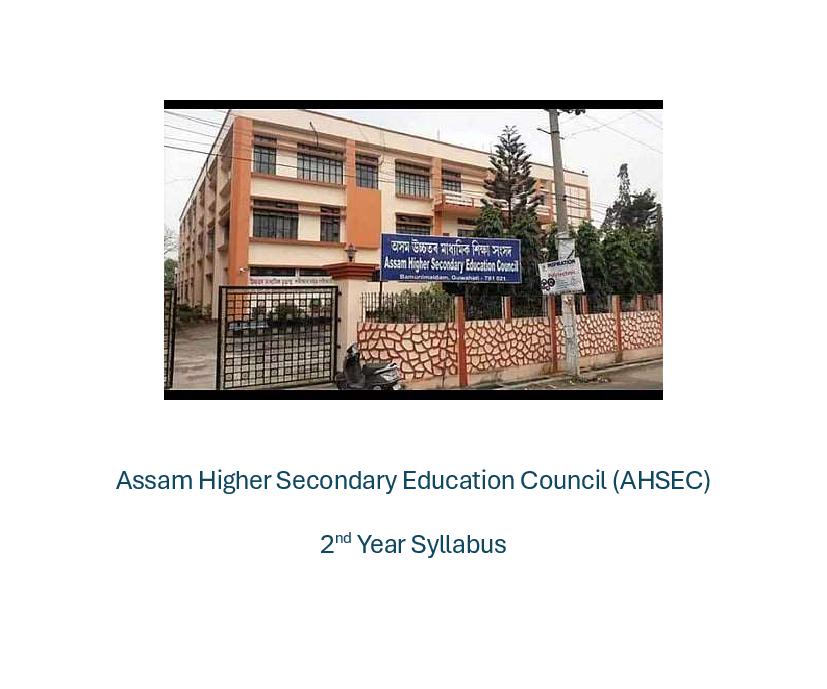
2nd Year Syllabus
Page 2
SYLLABUS FOR HIGHER SECONDARY COURSE
Objectives:
To acquire knowledge of cultural heritage of Assam with special reference to Sattriya
Dance-a major component of Assamese culture.
To take interest and develop proper attitude towards study of Sattriya Dance which,
Inter-alia, would provide Job opportunity to the learner practitioner.
To provide facility for those students who might not opt for other general or
vocational subjects.
To acquire proficiency in this lesser known art form of Assam with a view to providing
facility for broader exposure of Sattriya Dance.
To attract the younger generation to keep themselves engaged in the pursuit of finer
art forms like Dance and music so as to avert their attention from being a strayed in
the social set up.
To introduce as one of the subjects to serve the purpose of extracurricular activities.
One Paper Time : Three Hours Total Marks : 100
Unitwise Distribution of Marks and Periods : (Theory)
Unit No. Title Marks Periods
Unit-1 Tradition of dances in Assam
Origin and development of Sattriya Dance 6 3
Unit-2 Life and contribution of Sankardeva and
Madhavdeva to the Society and Culture of Assam. 5 3
Unit-3 Cncept of Nritta, Nritya, Natya, Anga, Pratyanga,
Upanga, Hasta, Taal, Laya, Gaaman, Ghat,
Bhangima, Chok and Matiakhara. 10 9
Unit-4 Introduction to the following: Natya-Sastra,
Abhinaya-darpana, Sangit ratnakara and
Hastamuktawali. 4 6
Unit-5 Bhatkhande notation syatem for writing of
the following taals.
Thukoni-taal, Suta-taal, Ek-taal, Dharamjauti-taal 5 9
and Chutkala taal.
Total 30 30
Page 3
Unit-1: Dance tradition of Assam will mean different forms of Dances like:
Oja-pali Devadasi or Nati. Putala nac and some major folk dances of Assam. These are
to be studied from the historical point of view only. The origin at Sattriya Dance will
include the knowledge of its originator i.e. Mahapursa Sankardeva, his first show
“Chihna-yatra” and his other dramatic works as a seed-bed of Sattriya Dance.
In the part of the development of Sattriya Dance, following topics are to be studied:
(a) Dances of Angkiya-bhaona.
(b) Independent dance number introduced by Madhavadeva and other Gurus, number
of different dance forms under different independent Sattriya Dances introduced
by Sri Madhabdeva and subsequent Gurus.
(c) Contribution of Satras towards its efflorescence of Fine Arts.
(d) Justification of the name “Sattriya Dance”
(e) Introduction of new repertoire is to be given.
Unit-2: Prime importance should be on the life sketch of Sankardeva as fountain head of
Sattriya Dance, his Dramatic writings, his compositions including Borgeets and plays,
his other activities for Socio-Cultural upliftment in the context of forming greater
Assamese society.
Madhavadeva as a chief apostle of Sankardeva play wright, poet, composter, lyricist
and initiator of independent dance number.
Unit-3: Definition with proper example is essential.
Unit-4: Name of author, period of composition and major topics dealt in these works.
Unit-5: Competency in Bhatkhande system of writings of the given taals.
SYLLABUS FOR SATTRIYA DANCE PRACTICAL
Total Marks : 70
Unitwise Distribution of Marks and Periods :
Unit No. Title Marks
Periods
Unit-1: Mati-akhara 15 15
Unit-2: Dance 40 35
Unit-3: Hasta-karana 5 2
Unit-4: Pada-karana 5 3
Unit-5: Taal 5 5
Total 70 60
Page 4
Marks Periods
Unit No. Mati-akhara : 15 15
Kacha-bandha কাছ-বান্ধ
Kacha-bandh-di-khacaka কাছ-বান্ধ-দি-খছকা
Ora (purus-ora and prakriti-ora) ওৰা (পুৰুষ-ওৰা আৰু প্ৰকৃদি-ওৰা)
Har-bhanga হাড়-ভঙ্গা
Pacala-tola পছলা-তিালা
Pani-hicha পানী-দ িঁচা
Hat-salowa হাি- ললাৱা
Hat-pakowa হাি-পলকাৱা
Pada-calana পি-চালনা
Citika দছটিকা
Chata (ora-baha-,kati-, utha-samukhalai) ছিা (ওৰা-বহা,
কাটি, উঠা, ন্মুখলল)Jalak জলক
Muruka (Thiya, baha) মুৰুকা (দিয়, বহা)
Pak (purus, prakriti, sari, akal, tukura, pithi) পাক
(পুৰুষ, প্ৰকৃদি, শাৰী, আকল, িুকুৰা, দপটঠ)
Bagh-jap বাঘ-জাপ
Gerowa-chowa তেৰুৱা-তচাৱা
Athuwa আিঁঠুৱা
Chatrawali চত্ৰাৱলী
Sinha-jalak দ িংহ-জলক
Hat-bhari-calana হাি-ভদৰ-চালনা
Lan (athu-thiya, kati, udha) লন্ (আিঁঠু, দিয় কাটি, উধা)
Buku-chowa বুকু-চুৱা
Unit-2: Dance: 40 35
Krishna-nac(Lawanucuri) কৃষ্ণ নাচ (লৱনুচুৰী)
Gosai-nac তো ািঁই নাচ
Gopi-nac তোপী নাচ
Jhumura-nac (Ram-dani and gitar nac) ঝুমুৰা নাচ
(ৰাম-িানী আৰু েীিৰ নাচ)
Nadu-bhangi (Ram-dani) নািু-ভঙ্গী (ৰাম-িানী)
Unit-3 Hasta-karana: 5 2
Avestita Udvestita, Vyavartita and Parivartita
Page 5
Sama,Ancita, Kuncita, Agratala-sancara, Udghatita
ম, অঞ্চিিা, কৃঞ্চষ্ণিা, অগ্ৰিল- িাৰ, উিঘটিিা
Unit-5: Tall:
Thukani, Cuta, Ek, Dharamjyoti
ঠুকদন, চুিী, এক, ধৰমযদি
REFERENCE BOOK
1. Tradition and Style, Maheswar Neog
2. Sattriya Nritya Aru Sattriya Nrityar Taal: Maheswar Neog and Keshab
Changkakati
3. Guru –carit-katha (Adi-bhag) : Keshavananda Deva Goswami.
4. Sattriya Nrityar-Abhas : Ghanakanta Borah
5. Sattriya Nrityar Katha : Dr. Jagannath Mahanta.
Edited by Pradip Jyoti Mahanta.
6. Sattriya Nrityar Prarambhik Gyan : Jatin Goswami.
7. Satriya Nrityar Rup Darsan : Karuna Bora
8. Sattriya Nrityar Hasta : Dr. Jagannath Mahanta.
9. Khol Bigyan : Dilip Ranjan Borthakur
Page 6
Notes
Model Papers Class 6 Notes
Sample Papers Class 7 Notes
Half Yearly Sample Papers Class 8 Notes
Class 9 Notes
Important Resources
Class 10 Notes
Periodic Table
Class 11 Notes
Writing Skills / Formats
Maps of India / World Class 12 Notes
Books and Solutions
NCERT Books
NCERT Book Solutions
HC Verma Chapter Wise Solutions
RD Sharma Solutions
CGBSE Solutions
Document Details
| Board / Org | Assam Board |
| Exam | Class 12 |
| Type | Syllabus |
| Pages | 6 |
| Updated | 24 Sep 2026 |