Finished viewing? Save it for later —
Download ICSE Class 10 Syllabus 2022 Cookery (PDF · 6 pages)About ICSE Class 10 Syllabus 2022 Cookery
ICSE Class 10 Syllabus 2022 Cookery is available here for free download. Published by CISCE for Class 10, this syllabus can be viewed online or downloaded as a PDF (6 pages). Candidates preparing for Class 10 can use ICSE Class 10 Syllabus 2022 Cookery to understand the exam pattern, the type of questions asked, and the overall difficulty level.
Frequently Asked Questions
How can I download ICSE Class 10 Syllabus 2022 Cookery?
Open this page and click the Download button to save ICSE Class 10 Syllabus 2022 Cookery as a PDF. It is completely free on AglaSem Docs.
Is ICSE Class 10 Syllabus 2022 Cookery free to download?
Yes. ICSE Class 10 Syllabus 2022 Cookery can be viewed online and downloaded as a PDF free of cost on AglaSem Docs.
How many pages does ICSE Class 10 Syllabus 2022 Cookery have?
ICSE Class 10 Syllabus 2022 Cookery contains 6 pages, which you can read online or download together as a single PDF.
Where can I find more Class 10 study material?
You can find more Class 10 question papers, sample papers, syllabus, and answer keys on AglaSem Docs.
ICSE Class 10 Syllabus 2022 Cookery – Text
Read the full text of this syllabus below — useful to quickly search, copy and reference the content online without downloading the PDF.
📄 View text version (6 pages)
Page 1
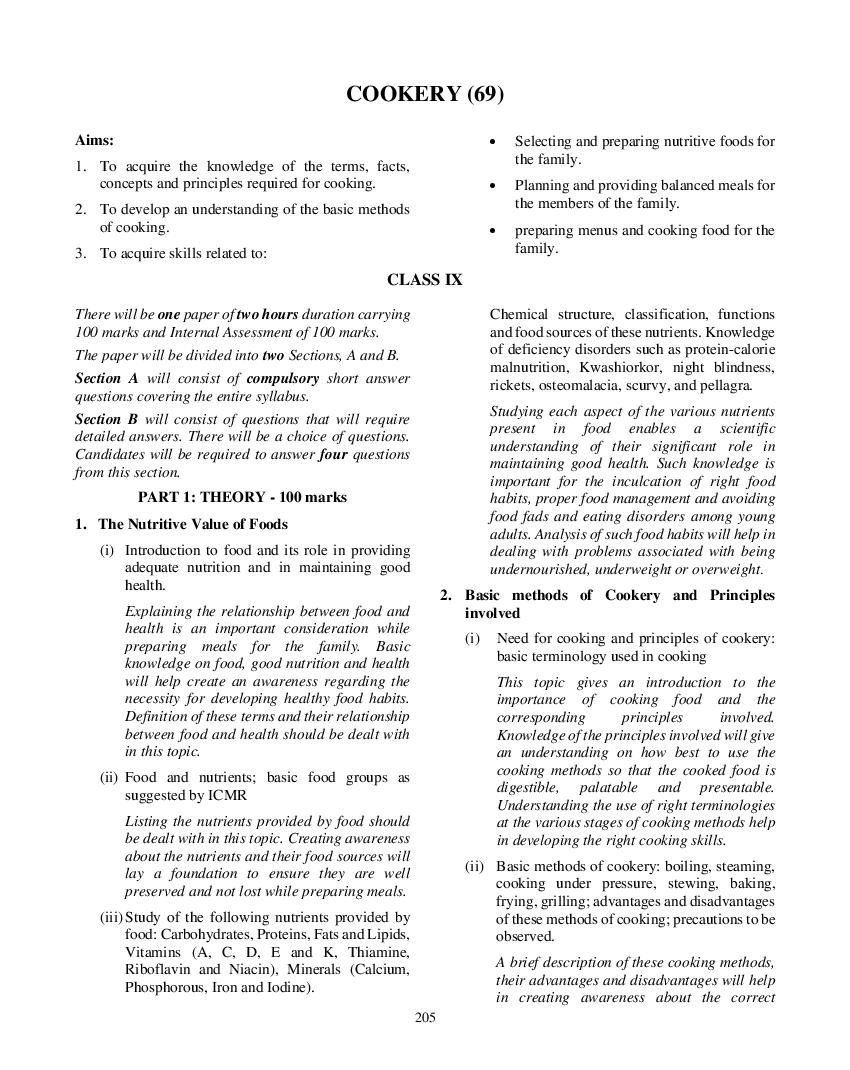
Aims: • Selecting and preparing nutritive foods for
1. To acquire the knowledge of the terms, facts, the family.
concepts and principles required for cooking. • Planning and providing balanced meals for
2. To develop an understanding of the basic methods the members of the family.
of cooking. • preparing menus and cooking food for the
3. To acquire skills related to: family.
CLASS IX
There will be one paper of two hours duration carrying Chemical structure, classification, functions
100 marks and Internal Assessment of 100 marks. and food sources of these nutrients. Knowledge
The paper will be divided into two Sections, A and B. of deficiency disorders such as protein-calorie
malnutrition, Kwashiorkor, night blindness,
Section A will consist of compulsory short answer rickets, osteomalacia, scurvy, and pellagra.
questions covering the entire syllabus.
Studying each aspect of the various nutrients
Section B will consist of questions that will require
present in food enables a scientific
detailed answers. There will be a choice of questions.
understanding of their significant role in
Candidates will be required to answer four questions
maintaining good health. Such knowledge is
from this section.
important for the inculcation of right food
PART 1: THEORY - 100 marks habits, proper food management and avoiding
1. The Nutritive Value of Foods food fads and eating disorders among young
adults. Analysis of such food habits will help in
(i) Introduction to food and its role in providing dealing with problems associated with being
adequate nutrition and in maintaining good undernourished, underweight or overweight.
health.
2. Basic methods of Cookery and Principles
Explaining the relationship between food and involved
health is an important consideration while
preparing meals for the family. Basic (i) Need for cooking and principles of cookery:
knowledge on food, good nutrition and health basic terminology used in cooking
will help create an awareness regarding the This topic gives an introduction to the
necessity for developing healthy food habits. importance of cooking food and the
Definition of these terms and their relationship corresponding principles involved.
between food and health should be dealt with Knowledge of the principles involved will give
in this topic. an understanding on how best to use the
(ii) Food and nutrients; basic food groups as cooking methods so that the cooked food is
suggested by ICMR digestible, palatable and presentable.
Understanding the use of right terminologies
Listing the nutrients provided by food should at the various stages of cooking methods help
be dealt with in this topic. Creating awareness in developing the right cooking skills.
about the nutrients and their food sources will
lay a foundation to ensure they are well (ii) Basic methods of cookery: boiling, steaming,
preserved and not lost while preparing meals. cooking under pressure, stewing, baking,
frying, grilling; advantages and disadvantages
(iii) Study of the following nutrients provided by of these methods of cooking; precautions to be
food: Carbohydrates, Proteins, Fats and Lipids, observed.
Vitamins (A, C, D, E and K, Thiamine,
Riboflavin and Niacin), Minerals (Calcium, A brief description of these cooking methods,
Phosphorous, Iron and Iodine). their advantages and disadvantages will help
in creating awareness about the correct
205
Page 2
food item. Understanding the correct food consistency, texture and flavour to
procedure is important for getting the ideal improve food acceptability and absorption of
final product, preserving their nutritive value. nutrients.
The various methods of preparation of food
and their suitability for various food items and 4. Physical changes in food during cooking
the precautions to be taken to avoid over or (i) Food components and major constituents:
under cooking are to be emphasised. The carbohydrates, protein, fats and inorganic
topic should also cover the need for safety in mineral components.
food handling procedures.
An understanding of the properties of the
3. Methods of preparing and cooking food to major food components and the changes that
preserve nutritive properties and to improve occur during the handling, processing and
flavour cooking processes is an important factor in
making the right choice of a cooking method
(i) Guidelines to be followed while cooking food: for each type of food. A brief discussion on
to preserve the nutritive values, make them these will enable a student to understand and
available to the person consuming it and carry out the appropriate cooking method to
improve the flavour. obtain an acceptable final product while
A brief account of the do’s and don’ts during preserving the nutritive contents.
the process of handling and cooking food (ii) Effect of cooking (heat) on cereal foods (rice
enables a learner to adopt correct eating and wheat), meat, egg, milk, pulses, sugar,
habits. The relationship between the way the fruits and vegetables; role of acids and
food is cooked, and its consumption is an enzymes.
important consideration and needs to be drawn
out for creating right food habits. Understanding the properties of these food
items and the changes that occur during
(ii) Methods of enhancing food values: sprouting
cooking process is necessary to adopt healthy
and germinating, malting, fortification,
cooking practices and the care to be taken to
combination, fermentation, and par- boiling.
preserve their consistency, texture, colour
Explanation on how the nutritive values of food (pigments), flavour and nutritive values. Role
can be enhanced through various methods of acids and enzymes in modifying the texture,
need to be generated specially during flavour and nutrient contents of food items
situations like food scarcity and non-seasonal need to be emphasised.
unavailability. Also, it can help in providing
the knowledge on the special needs of people Note: Existing terms and conditions on the conduct of
whose requirements with respect to specific exams and internal assessments can remain as such.
nutrient contents in their diets vary.
PART 2: INTERNAL ASSESSMENT
(iii) Use of spices, leavening agents, tendering
agents, thickening agents: importance of To be assessed internally by the school - 100 Marks
garnishing and use of herbs. Please note the guidelines for internal assessment as
given for Class X.
206
Page 3
There will be one paper of two hours duration carrying 2. Meal planning and balanced diets: use of five
100 marks and Internal Assessment of 100 marks. food groups as suggested by ICMR
The paper will be divided into two Sections, A and B. (i) Objectives of meal planning
Section A (compulsory) will consist of short answer
Importance of factors like balanced diet (age,
questions covering the entire syllabus.
gender, occupation and health status), climatic
Section B will consist of questions that will require conditions, choosing nutritionally rich but
detailed answers. There will be a choice of questions. economical foods within the five food groups,
Candidates will be required to answer four questions storage space, seasonal variations in the diets,
from this section. etc.
PART 1: THEORY - 100 marks (ii) Psychological aspects of food planning
1. Choice and cost of seasonal foods: merits and Likes and dislikes, state of mind due to stress,
intelligent use of convenience foods food fads, traditional and cultural influences
(i) Choice and cost of seasonal foods on meal planning. Planning meals for festivals,
special occasions and unexpected visitors.
Detailed study of food guides for proper
selection and the use of seasonal foods to (iii) Planning meals for various age groups
ensure good nutrition. Advantages of seasonal Planning balanced meals according to ICMR
foods - during season, foods are rich in nutrient allowances for pre-school, school
nutrients and of low cost. Is the cost of foods going children, special needs of adolescents
related to their nutritional values? Suggestion and the elderly, pregnant and lactating women.
of cheaper substitutes for expensive food items,
e.g. green leafy vegetables, amla, guava etc. 3. Therapeutic diets and planning meals
(ii) Choice and purchase of perishables, semi- (i) Definition of diet therapy, reasons for using
perishables and non-perishables and their therapeutic diets, and types of therapeutic
hygienic storage diets.
Economical shopping: shopping at Brief foundation on dietetics and diet therapy;
supermarkets, wholesale outlets, retail shops, types of diets – liquid, semi-liquid, solid and
street vendors – merits and demerits. Provision soft; treating illnesses through diets at home
for hygienic storage of perishables, semi- under the proper guidance of a medical
perishables and non-perishables and use of practitioner /nutritionist. Efforts are to be
minimum resources for maximum benefit in made to incorporate variety and ingenuity
limited food budgets. through a discussion on various sample diets.
(iii) Use of convenient foods, such as tinned, (ii) Obesity: causes and diet therapy
packed, frozen and processed foods
Factors leading to obesity, role of proper
Merits and demerits of using convenience dieting habits, right choice of food, exercise
foods in diets; factors for selection of foods – and proper meal pattern. Significance of diet
variety and labour and time saving. Reading counselling.
labels of packed convenient foods for brand
name, trademark, shelf life, dates of (iii) Planning meals for the invalids and
manufacture and expiry, food standard/quality convalescents
marks such as ISI, FPO and Agmark for right Role of diets in treating illnesses such as fever,
choice of foods. Encouraging the use of anaemia, diarrhea, hypertension and diabetes.
convenience foods sparingly and use more of Suggestions for modification in diets for
fresh seasonal foods for obtaining good invalids and convalescents, keeping in mind
nutrient values and avoiding preservatives in the health status, likes and dislikes and cultural
diets. habits.
207
Page 4
instruments like knives.
(i) Causes of food spoilage, advantage of food
preservation, principles of food preservation 6. Kitchen hygiene
Factors for food spoilage: internal and (i) Food hygiene, food handlers and the food
environmental factors (micro-organisms, stuffs
enzymes and insects); prevention or delay of
Rules for maintaining hygienic conditions in
self-decomposition of food and of microbial
the kitchen and importance of personal
decomposition; advantages of food
hygiene of food handlers for providing clean
preservation. Principles involved in food
food to the family members.
preservation.
(ii) Food sanitation
(ii) Long term and short term preservation
methods at home – milk and milk products, Importance of food sanitation; related diseases
egg, meat, fish, vegetables and fruits such as diarrhoea, cholera and dysentery. Role
of proper/uncontaminated water supply.
Methods for preserving foods at home –
refrigeration, deep freezing, dehydration, (iii) General cleanliness of kitchen
pickling, salting, preparing squashes, juices Regular (daily, weekly, monthly,
and jams using chemical preservatives; storing yearly/seasonal) cleaning, ways and the
garden produce. materials to be used for maintaining kitchen
(iii) Commercial methods for preserving foods – hygiene, especially on the floors and the
canning, pasteurisation and cold storage storage places.
Hygienic and proper storage of various food (iv) Disposal of kitchen waste
items at commercial levels for future use,
Proper procedure to be adopted for the
reducing costs and providing variety in the disposal of solid and liquid waste; care of bins,
diets. sink and drains, importance of good
5. Kitchen planning ventilation.
(i) Types of kitchen and work centres (v) Household pests
Types of kitchen layouts: one wall, two wall, U- Care of food from food polluters such as
shaped, broken U-shaped and L-shaped cockroaches, ants, lizards and rodents, careful
kitchens; modular kitchen; detailed study on use of insecticide and pesticides at home. The
the four main work centres – preparation, topic creates an awareness of cleanliness
cooking, washing, and serving. Knowledge of within the kitchen and outside, aiming for a
the basic requirements of the planned kitchen cleaner and safer environment during food
layouts, fixtures, equipments and inter-space preparations and storage.
relationship to provide efficient utilisation of
7. Kitchen equipment
space and to avoid fatigue.
(i) Basic equipment for food preparation and
(ii) Factors to be considered while planning a cooking
kitchen
Detailed study of materials used in cooking
Contribution of proper lighting, water supply, utensils, cutting devices, and stirring
ventilation, ceiling, floor, walls, storage
equipments – selection and care of pressure
fixtures and other necessary cooking items for cookers and pans, microwave oven, non-stick
convenient, comfortable and labour saving cookware, plastic-ware, microwave-proof
kitchen features, use of work simplification cookware. Precautions to be followed while
techniques. using them to maintain cleanliness and
(iii) Safety in kitchen maximum safety in the kitchen.
Use of proper materials for floors and walls,
avoiding sharp edges on counters and proper
208
Page 5
puddings, sweets, biscuits, etc.
Features to be kept in mind while choosing
them: cost, easy to handle, safety, durability, 6. Mixing and making chapatis, nans, etc.
utility, size, design and aesthetics. Care,
7. Practice in preparation of squash, jam, etc.
cleaning and storage of these equipments.
8. Nutritive and healthy cooking.
(iii) Table setting and table service
Final Test
Detailed study of the various table services,
such as formal, informal, and buffet. In addition to the practical work, the candidates will be
tested in the planning and preparation of a meal by the
External Examiner.
PART 2: INTERNAL ASSESSMENT
EVALUATION
To be assessed internally by the school - 100 Marks
The assignments/project work are to be evaluated by
Practical Work in Cookery the subject teacher and by an External Examiner. The
External Examiner may be a teacher nominated by the
Candidates will be required to do practical work in one
Head of the school, who could be from the faculty, but
or more aspects of cookery. The teacher is free to assess
not teaching the subject in the section/class. For
the practical work either on the basis of continuous
example, a Home Science teacher of Class VIII may be
assessment or on the basis of periodical tests.
deputed to be an External Examiner for Class X
The minimum number of assignments for each projects.
academic year
The Internal Examiner and the External Examiner will
Class IX - Five practical oriented assignments as assess the assignments independently.
prescribed by the teacher.
Award of Marks (100 Marks)
Class X - Five practical oriented assignments as
Subject Teacher (Internal Examiner) 50 marks
prescribed by the teacher.
External Examiner 50 marks
Suggested Assignments
The total marks obtained out of 100 are to be sent to the
1. The merits, use and care of various types of kitchen
Council by the Head of the school.
equipment and utensils.
The Head of the school will be responsible for the
2. Cooking processes: boiling, frying, steaming,
online entry of marks on the Council’s CAREERS
baking, grilling, and stewing.
portal by the due date.
3. Planning and preparation of meals for different
types of people on different occasions.
4. Mixing and baking bread, cakes, patties, etc.
209
Page 6
Criteria Planning Efficiency Working to time plan Manipulation Quality produced Appearance/Arrangement
Grade I Follows the question set Is successful in Excellent display of With a special insight A fine aesthetic sense and artistic
(4 marks) and systematically handling parts of the manipulative skills - can into the question, the ability has been conveyed in the
organises the work question set and fits deal with a laboratory quality developed is of a complete arrangement.
process. them within required situation efficiently. high standard.
time.
Grade II Follows the question set Is successful in Good control of The insight into the The display of colour and equipment
(3 marks) except that the step-by-step handling parts of the manipulative skills, has requirements of the used gives an impression of sound
work shows slow question, but the been able to deal with question has been organisation.
operational skill. smooth work appears to each situation with ease. achieved and the quality
slow down. is good.
Grade III Follows the question. Is successful in Has been successful The quality has been The arrangement appears complete
(2 marks) Order of work process handling the question, with the manipulative developed well in part but some special details are missing.
shows lack of co- however the time link skills in parts then but the overall effect
ordination. seems to break in some gradually slows down. lacks some achievement.
area.
Grade IV Follows a part of the Is able to work only a Begins with a control of Only a few areas have Part of the arrangement is
(1 mark) question, work sequence part of the question the skills and is unable to been well developed, represented but the total appearance
appears disorganised. within the time stated. sustain the effort. which affect the total lacks finish and composition.
result produced.
Grade V Has not been able to Time and work Is unable to control and No standard of quality There has been no achievement in
(0 marks) interpret the question into sequence is most manipulate the required has been achieved due to either the appearance or
proper laboratory disorganised. skills. poor understanding. arrangement.
organisation.
210
Document Details
| Board / Org | CISCE |
| Exam | Class 10 |
| Type | Syllabus |
| Pages | 6 |
| Language | english |
| Updated | 09 Jun 2026 |