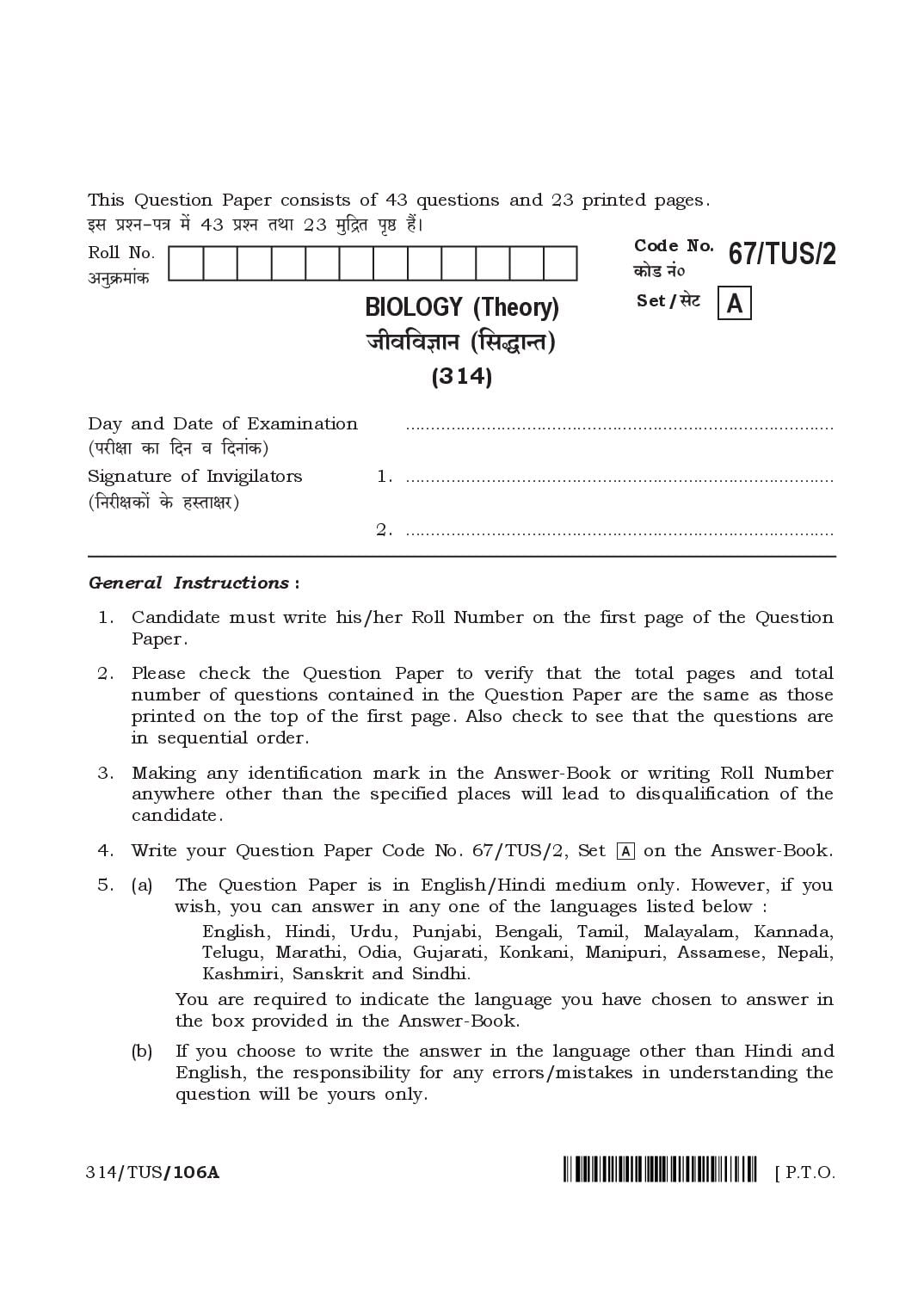
NIOS Class 12 April 2024 Question Paper Biology
Finished viewing? Save it for later —
Download NIOS Class 12 April 2024 Question Paper Biology (PDF · 23 pages)About NIOS Class 12 April 2024 Question Paper Biology
NIOS Class 12 April 2024 Question Paper Biology is available here for free download. Published by NIOS for National Institute of Open Schooling Class 12, this question paper can be viewed online or downloaded as a PDF (23 pages). Candidates preparing for National Institute of Open Schooling Class 12 can use NIOS Class 12 April 2024 Question Paper Biology to understand the exam pattern, the type of questions asked, and the overall difficulty level.
Frequently Asked Questions
How can I download NIOS Class 12 April 2024 Question Paper Biology?
Open this page and click the Download button to save NIOS Class 12 April 2024 Question Paper Biology as a PDF. It is completely free on AglaSem Docs.
Is NIOS Class 12 April 2024 Question Paper Biology free to download?
Yes. NIOS Class 12 April 2024 Question Paper Biology can be viewed online and downloaded as a PDF free of cost on AglaSem Docs.
How many pages does NIOS Class 12 April 2024 Question Paper Biology have?
NIOS Class 12 April 2024 Question Paper Biology contains 23 pages, which you can read online or download together as a single PDF.
Where can I find more National Institute of Open Schooling Class 12 study material?
You can find more National Institute of Open Schooling Class 12 question papers, sample papers, syllabus, and answer keys on AglaSem Docs.
NIOS Class 12 April 2024 Question Paper Biology – Text
Read the full text of this question paper below — useful to quickly search, copy and reference the content online without downloading the PDF.
📄 View text version (23 pages)
Page 1
Bg àíZ-nÌ ‘| 43 àíZ VWm 23 ‘w{ÐV n¥ð> h¢&
Code No.
Roll No.
H$moS> Z§0
67/TUS/2
AZwH«$‘m§H$
BIOLOGY (Theory) Set / goQ> u
Ord{dkmZ ({gÕmÝV)
(314)
Day and Date of Examination .....................................................................................
(narjm H$m {XZ d {XZm§H$)
Signature of Invigilators 1. .....................................................................................
({ZarjH$m| Ho$ hñVmja)
2. .....................................................................................
General Instructions :
1. Candidate must write his/her Roll Number on the first page of the Question
Paper.
2. Please check the Question Paper to verify that the total pages and total
number of questions contained in the Question Paper are the same as those
printed on the top of the first page. Also check to see that the questions are
in sequential order.
3. Making any identification mark in the Answer-Book or writing Roll Number
anywhere other than the specified places will lead to disqualification of the
candidate.
4. Write your Question Paper Code No. 67/TUS/2, Set u on the Answer-Book.
5. (a) The Question Paper is in English/Hindi medium only. However, if you
wish, you can answer in any one of the languages listed below :
English, Hindi, Urdu, Punjabi, Bengali, Tamil, Malayalam, Kannada,
Telugu, Marathi, Odia, Gujarati, Konkani, Manipuri, Assamese, Nepali,
Kashmiri, Sanskrit and Sindhi.
You are required to indicate the language you have chosen to answer in
the box provided in the Answer-Book.
(b) If you choose to write the answer in the language other than Hindi and
English, the responsibility for any errors/mistakes in understanding the
question will be yours only.
314/TUS/106A [ P.T.O.
Page 2
1. narjmWu àíZ-nÌ Ho$ nhbo n¥ð> na AnZm AZwH«$‘m§H$ Adí¶ {bI|&
2. H¥$n¶m àíZ-nÌ H$mo Om±M b| {H$ àíZ-nÌ Ho$ Hw$b n¥ð>m| VWm àíZm| H$s CVZr hr g§»¶m h¡ {OVZr àW‘ n¥ð> Ho$ g~go
D$na N>nr h¡& Bg ~mV H$s Om±M ^r H$a b| {H$ àíZ H«${‘H$ ê$n ‘| h¢&
3. CÎma-nwpñVH$m ‘| nhMmZ-{M• ~ZmZo AWdm {Z{X©ï> ñWmZm| Ho$ A{V[aº$ H$ht ^r AZwH«$‘m§H$ {bIZo na narjmWu H$mo
A¶mo½¶ R>ham¶m Om¶oJm&
4. AnZr CÎma-nwpñVH$m na àíZ-nÌ H$m H$moS> Z§0 67/TUS/2, goQ u {bI|&
5. (H$) n«íZ-nÌ Ho$db {hÝXr/A§J«oOr ‘mܶ‘ ‘| h¡& {’$a ^r, ¶{X Amn Mmh| Vmo ZrMo Xr JB© {H$gr EH$ ^mfm ‘| CÎma
Xo gH$Vo h¢ …
A§J«oOr, {hÝXr, CXÿ©, n§Om~r, ~§Jbm, V{‘b, ‘b¶mb‘, H$Þ‹S>, VobwJy, ‘amR>r, C{‹S>¶m, JwOamVr, H$m|H$Ur,
‘{Unwar, Ag{‘¶m, Zonmbr, H$í‘rar, g§ñH¥$V Am¡a {gÝYr&
H¥$n¶m CÎma-nwpñVH$m ‘| {XE JE ~m°³g ‘| {bI| {H$ Amn {H$g ^mfm ‘| CÎma {bI aho h¢&
(I) ¶{X Amn {hÝXr Ed§ A§J«oOr Ho$ A{V[aº$ {H$gr Aݶ ^mfm ‘| CÎma {bIVo h¢, Vmo àíZm| H$mo g‘PZo ‘| hmoZo dmbr
Ìw{Q>¶m|/Jb{V¶m| H$s {Oå‘oXmar Ho$db AmnH$s hmoJr&
314/TUS/106A 2
Page 3
Ord{dkmZ ({gÕmÝV)
(314)
Time : 3 Hours ] [ Maximum Marks : 80
g‘¶ … 3 KÊQ>o ] [ nyUmªH$ … 80
Note : (i) This Question Paper consists of 43 questions.
(ii) All questions are compulsory. Write your answers in Answer-Book.
(iii) Marks are given against each question.
Section–A consists of Question Nos. 1 to 16—Multiple-choice type
questions (MCQs) carrying 1 mark each. Select and write the most
appropriate option out of the four options given in each of these questions.
Internal choices have been provided in some of these questions. You have
to attempt only one of the given choices in such questions.
Section–B consists of Question Nos. 17 to 28—Objective-type questions
carring 2 marks (with 2 sub-parts of 1 mark each). Attempt these
questions as per the instructions given for each of the questions.
Section–C consists of Question Nos. 29 to 37—Very short answer-type
questions carrying 2 marks each to be answered in the range of 30 to 50
words. Internal choices have been provided in some of these questions.
You have to attempt only one of the given choices in such questions.
Section–D consists of Question Nos. 38 to 41—Short answer-type
questions carrying 3 marks each to be answered in the range of 50 to 80
words. Internal choices have been provided in some of these questions.
You have to attempt only one of the given choices in such questions.
Section–E consists of Question Nos. 42 and 43—Long answer-type
questions carrying 5 marks each to be answered in the range of 80 to 120
words. Internal choices have been provided in some of these questions.
You have to attempt only one of the given choices in such questions.
{ZX}e … (i) Bg àíZ-nÌ ‘| Hw$b 43 àíZ h¢&
(ii) g^r àíZ A{Zdm¶© h¢& CZHo$ CÎma CÎma-nwpñVH$m ‘| {b{IE&
(iii) à˶oH$ àíZ Ho$ A§H$ CgHo$ gm‘Zo Xem©E JE h¢&
IÊS>-H$ àíZ g§»¶m 1 go 16 VH$ ~hþ-{dH$ënr àH$ma (MCQ) Ho$ àíZ h¢& à˶oH$ àíZ 1 A§H$ H$m
h¡& {XE JE Mma {dH$ënm| ‘| go gd© g‘w{MV {dH$ën H$mo CÎma Ho$ ê$n ‘| {b{IE& Hw$N> àíZm| ‘| Am§V[aH$
{dH$ën {XE JE h¢& AmnH$mo CZ‘| go Ho$db EH$ àíZ H$m CÎma {bIZm h¡&
IÊS>-I àíZ g§»¶m 17 go 28 dñVw{Zð> àH$ma Ho$ àíZ h¢& à˶oH$ àíZ 2 A§H$m| H$m h¡ (à˶oH$ àíZ ‘|
1 A§H$ Ho$ Xmo Cn^mJ h¢)& {XE JE AZwXoemZwgma àíZm| Ho$ CÎma {b{IE&
IÊS>-J àíZ g§»¶m 29 go 37 VH$ Ho$ àíZ A{V g§{já-CÎmar¶ àíZ h¢& à˶oH$ àíZ 2 A§H$m| H$m h¡,
{OgH$m CÎma bJ^J 30 go 50 eãXm| H$m hmo gH$Vm h¡& Hw$N> àíZm| ‘| Am§V[aH$ {dH$ën {XE JE h¢&
AmnH$mo CZ‘| go Ho$db EH$ àíZ H$m CÎma {bIZm h¡&
IÊS>-K àíZ g§»¶m 38 go 41 VH$ bKw-CÎmar¶ àíZ h¢& à˶oH$ àíZ 3 A§H$m| H$m h¡, {OgH$m CÎma
bJ^J 50 go 80 eãXm| H$m hmo gH$Vm h¡& Hw$N> àíZm| ‘| Am§V[aH$ {dH$ën {XE JE h¢& AmnH$mo CZ‘| go
Ho$db EH$ àíZ H$m CÎma {bIZm h¡&
314/TUS/106A 3 [ P.T.O.
Page 4
eãXm| H$m hmo gH$Vm h¡& Hw$N> àíZm| ‘| Am§V[aH$ {dH$ën {XE JE h¢& AmnH$mo CZ‘| go Ho$db EH$ àíZ H$m
CÎma {bIZm h¡&
Section–A : (Question Nos. 1 to 16) 8 questions with internal choice–
means 16+8 questions
Section–B : (Question Nos. 17 to 28) no internal choice–
means 12 questions
Section–C : (Question Nos. 29 to 37) 4 questions with internal choice–
means 9+4 questions
Section–D : (Question Nos. 38 to 41) 2 questions with internal choice–
means 4+2 questions
Section–E : (Question Nos. 42 and 43) 2 questions with internal choice–
means 2+2 questions
Total No. of Internal choice = 16
(1) Answers of all questions are to be given in the Answer-Book given to you.
g^r àíZm| Ho$ CÎma AmnH$mo Xr JB© CÎma-nwpñVH$m ‘| hr {bI|&
(2) 15 minutes time has been allotted to read this question paper. The question
paper will be distributed at 2:15 p.m. From 2:15 p.m. to 2:30 p.m., the
students will read the question paper only and will not write any answer on
the Answer-Book during this period.
Bg àíZ-nÌ H$mo n‹T>Zo Ho$ {bE 15 {‘ZQ> H$m g‘¶ {X¶m J¶m h¡& àíZ-nÌ H$m {dVaU Xmonha ‘|
2:15 ~Oo {H$¶m OmEJm& Xmonha 2:15 ~Oo go 2:30 ~Oo VH$ N>mÌ Ho$db àíZ-nÌ H$mo n‹T>|Jo Am¡a
Bg Ad{Y Ho$ Xm¡amZ do CÎma-nwpñVH$m na H$moB© CÎma Zht {bI|Jo&
SECTION–A
IÊS>–H$
Note : Question Nos. 1 to 16 consist of multiple-choice type questions (MCQs)
carrying 1 mark each.
{ZX}e : àíZ g§0 1 go 16 VH$ ~hþ-{dH$ënr àíZ (MCQ) h¢& à˶oH$ àíZ 1 A§H$ H$m h¡&
1. Name of the technique used for detecting genetic disorders in a foetus is
(A) amniocentesis (B) ultrasound
(C) X-ray (D) MRI 1
^«yUmdñWm ‘| AmZwd§{eH$ {dH$mam| H$s nhMmZ H$aZodmbr VH$ZrH$ H$m Zm‘ h¡
(A) CëddoYZ (EpåZAmogoÝQ>o{gg) (B) AëQ´>mgmCÊS>
(C) X-{H$aU (D) E‘0 Ama0 AmB0
314/TUS/106A 4
Page 5
(A) Parasite (B) Producer
(C) Decomposer (D) Carnivore
{ZåZ{b{IV ‘| go H$m¡Z-gm {H$gr ^r ImÚ ûm¥§Ibm Ho$ A§{V‘ nmofU ñVa H$m {Z‘m©U H$aVm h¡?
(A) naOrdr (B) CËnmXH$
(C) AnKQ>H$ (D) ‘m§gmhmar
What does the following sequence represent?
Blue-green algae → Crustose lichens → Foliose lichens
↓
Dicotyledonous trees ← Shrubs ← Mosses
(A) Genetic drift (B) Ecological succession
(C) A food pyramid (D) Phylogenetic trend
{ZåZ{b{IV AZwH«$‘ ³¶m {Zê${nV H$aVm h¡?
Zrb h[aV e¡dmb → nn©Q>r‘¶ e¡H$ (bmBHo$Z) → n{U©b (e¡H$)
↓
{Û~rOnÌr d¥j ← Pm{‹S>¶m± ← ‘m°g
(A) AmZwd§{eH$ {dMbZ ({OZo{Q>H$ {S´>âQ>) (B) nm[apñW{VH$ AZwH«$‘U
(C) EH$ ImÚ {nam{‘S> (D) Om{Vd¥Îmr¶ àd¥{Îm
3. The largest lymphoid organ in the human body is
(A) bone marrow (B) thymus
(C) adrenal (D) spleen 1
‘mZd eara H$m g~go ~‹S>m bgrH$m^ A§J h¡
(A) ApñW ‘‚mm (B) WmB‘g
(C) A{Yd¥¸$ (EoS´>rZb) (D) ßbrhm
The condition caused due to oversecretion of thyroxine is
(A) goitre (B) hyperthyroidism
(C) cretenism (D) myxoedema
Wm¶am°p³gZ Ho$ A{VòdU Ho$ H$maU hmoZodmbr Xem h¡
(A) JbJÊS> (B) AdQw> A{V{H«$¶Vm
(C) AdQw>dm‘ZVm (D) {‘p³gS>r‘m
314/TUS/106A 5 [ P.T.O.
Page 6
(A) Echinodermata (B) Mollusca
(C) Arthropoda (D) Annelida 1
{eamodj A{^bjU {H$g ’$mBb‘ ‘| nm¶m OmVm h¡?
(A) EH$mBZmoS>‘m©Q>m (B) ‘mobñH$m
(C) AmWm}nmoS>m (D) EoZo{bS>m
Heart is three-chambered in reptiles. But a partially divided ventricle
(i.e., four-chambered heart) is present in
(A) salamander (B) frog
(C) snake (D) crocodile
garg¥nm| ‘| öX¶ VrZ-H$jr¶ hmoVm h¡ {H$ÝVw Am§{eH$ ê$n go {d^m{OV {Zb¶ (Mma-H$jr¶ öX¶) hmoVm
h¡
(A) g¡bm‘|S>a ‘| (B) _|T>H$ ‘|
(C) gn© ‘| (D) ‘Ja‘ÀN> ‘|
5. When both male and female flowers are present on the same plant, the plant
is said to be
(A) unisexual (B) monoecious
(C) dioecious (D) bisexual 1
O~ Za nwîn VWm ‘mXm nwîn EH$ hr nm¡Yo na nmE OmVo h¢, Vmo Eogo nm¡Ym| H$mo H$hVo h¢
(A) EH$qbJr (B) EH$qbJml¶r
(C) {ÛqbJml¶r (D) {ÛqbJr
6. Excessive intake of iron in diet causes
(A) scurvy (B) hypervitaminosis
(C) anaemia (D) hemosiderosis 1
Amhma ‘| bm¡h (Am¶aZ) Ho$ A˶{YH$ godZ Ho$ n[aUm‘ñdê$n hmoVm h¡
(A) ñH$du (B) A{V{dQ>m{‘ZVm
(C) aº$mënVm (AZr{‘¶m) (D) ¶H¥$V² ‘| bm¡h VÎd H$m O‘md
314/TUS/106A 6
Page 7
(A) penicillin (B) paracetamol
(C) erythromycin (D) streptomycin 1
amoJH$maH$ (amoJOZH$) OrdmUw Ho$ {déÕ Cn¶moJ {H$¶m OmZo dmbm ì¶mnH$ ñno³Q´>‘ à{VO¡{dH$
(E|Q>r~m¶mo{Q>H$) h¡
(A) no{Z{g{bZ (B) noam{gQ>m‘m°b
(C) E[aW«mo‘mB{gZ (D) ñQ´>oßQ>mo‘mB{gZ
8. A cross between the F1 progeny and the homozygous recessive parent is
known as
(A) test cross (B) dihybrid cross
(C) reciprocal cross (D) monohybrid cross 1
F1 nr‹T>r g§V{V VWm Aà^mdr JwU dmbo g‘¶w½‘Or n¡ÌH$ (OZH$) nm¡Yo Ho$ ~rM g§H$aU (H«$m°g) H$mo
H$hVo h¢
(A) narjU H«$m°g (B) {Ûg§H$a H«$m°g
(C) ì¶wËH«$‘ H«$m°g (D) EH$g§H$a H«$m°g
The phenotypic ratio, in case of incomplete dominance in Mirabilis jalapa, is
(A) 9 : 3 : 3 : 1 (B) 3 : 1
(C) 1 : 4 : 6 : 4 : 1 (D) 1 : 2 : 1
{‘am{~{bg Obmnm (Mirabilis jalapa) ‘| AnyU© à^m{dVm Ho$ H$maU àmá hmoZodmbm bjUàê$nr
(’$sZmoQ>mB{nH$) AZwnmV h¡
(A) 9 : 3 : 3 : 1 (B) 3 : 1
(C) 1 : 4 : 6 : 4 : 1 (D) 1 : 2 : 1
9. Pick the odd one out. 1
(A) UGA (B) AUG
(C) UAG (D) UAA
Ag§JV ({dg§JV) {dH$ën H$mo Mw{ZE&
(A) UGA (B) AUG
(C) UAG (D) UAA
314/TUS/106A 7 [ P.T.O.
Page 8
(A) GAU (B) AGU
(C) AUG (D) TGT
Cg mRNA H$moS>m°Z H$mo Mw{ZE, Omo tRNA Ho$ UCA E|Q>rH$moS>m°Z (à{VH$moS>mZ) Ho$ gmW ¶w½‘ ~ZmEJm&
(A) GAU (B) AGU
(C) AUG (D) TGT
10. Which of the following bacteria helps to set milk into yoghurt? 1
(A) Mycobacterium (B) Lactobacillus
(C) Azotobacter (D) Pneumococcus
{ZåZ{b{IV ‘| go H$m¡Z-gm OrdmUw XÿY H$mo Xhr ‘| ñH§${XV H$aZo ‘| ghm¶H$ h¡?
(A) ‘mBH$mo~¡³Q>r[a¶‘ (B) b¡³Q>mo~¡grbg
(C) EoOmoQ>mo~o³Q>a (D) ݶy‘moH$m°H$g
Which of the following is not a product of fermentation?
(A) Bread (B) Acetic acid
(C) Butanol (D) Ligase
{ZåZ{b{IV ‘| go H$m¡Z-gm nXmW© {H$ÊdZ Ûmam àmá CËnmX Zht h¡?
(A) S>~bamoQ>r (~«oS>) (B) Egr{Q>H$ Aåb
(C) ã¶yQ>mZm°b (D) bmBJoO
11. The special protein present in the root nodules of legume which helps in
nitrogen fixation is
(A) leghaemoglobin (B) nitrogenase
(C) chlorophyll (D) haemoglobin 1
XbhZr nm¡Ymo§ (bo½¶yåg) H$s O‹S>m| H$s J«§{WH$mAm| ‘| nm¶m OmZodmbm {d{eï> àmoQ>rZ, Omo ZmBQ´>moOZ
pñWarH$aU ‘| ghm¶H$ h¡, h¡
(A) boJhr‘mo½bmo{~Z (B) ZmBQ´>mo{OZoO
(C) ³bmoamo{’$b (D) hr‘mo½bmo{~Z
314/TUS/106A 8
Page 9
(A) Kangaroo (B) Duck-billed platypus
(C) Whale (D) Bat
{ZåZ{b{IV ‘| go H$m¡Z-gm OÝVw A§S>àOH$ ñVZYmar h¡?
(A) H§$Jmê$ (B) S>H${~ëS> ßb¡Q>rng
(C) ˆob (D) M‘JmX‹S>
Endoparasitic flatworm found in the human intestine of an infected person
is
(A) millipede (B) ascaris
(C) tapeworm (D) liver fluke
EH$ g§H«${‘V ì¶{º$ H$s AmÝÌ ‘| nm¶m OmZodmbm A§V…naOrdr MnQ>mH¥${‘ h¡
(A) ghònmXr ({‘brnrS>) (B) EoñHo$[ag
(C) ’$sVmH¥${‘ (Q>ond‘©) (D) brda âbyH$
13. Which of the following is a contractile protein? 1
(A) Keratin (B) Collagen
(C) Trypsin (D) Myosin
{ZåZ{b{IV ‘| go H$m¡Z-gm g§Hw$MZerb àmoQ>rZ h¡?
(A) {H$aoQ>rZ (B) H$moboOZ
(C) {Q´>pßgZ (D) ‘m¶mo{gZ
14. In C4 plants, the initial acceptor of CO2 is
(A) Ribulose bisphosphate (RuBP)
(B) Phosphoenolpyruvic acid (PEP)
(C) Oxaloacetic acid (OAA)
(D) Phosphoglyceric acid (PGA) 1
314/TUS/106A 9 [ P.T.O.
Page 10
(A) amB~wbmoO {~g’$m°ñ’o$Q> (RuBP) (B) ’$m°ñ’$moBZm°bnmBé{dH$ Aåb (PEP)
(C) Am°³gobmoE{g{Q>H$ Aåb (OAA) (D) ’$m°ñ’$mo½bmBgo[aH$ Aåb (PGA)
15. The disease for which bio-engineered vaccine has already been developed is
(A) smallpox (B) tetanus
(C) hepatitis B (D) pertussis 1
dh amoJ, {OgHo$ {bE O¡d A{^¶m§{ÌH$s Q>rH$m H$mo {dH${gV {H$¶m Om MwH$m h¡, h¡
(A) MoMH$ (B) {Q>Q>oZg
(C) ¶H¥$V²emoW (honoQ>mB{Q>g-~r) (D) H$mbr Im±gr (nQw>©{gg)
16. The edible part of the coconut is
(A) fleshy thalamus (B) mesocarp
(C) pericarp (D) endosperm 1
Zm[a¶b H$m ImÚ ^mJ h¡
(A) JyXoXma nwînmgZ (B) ‘ܶ ’$b {^{Îm
(C) ’$b{^{Îm (D) ^«yUnmof
The example of hypanthodium is
(A) Tulsi (B) Peepal
(C) Sunflower (D) Euphorbia
hmBn¡ÝWmo{S>¶‘ H$m CXmhaU h¡
(A) Vwbgr (B) nrnb
(C) gyaO‘wIr (D) ¶y’$mo{~©¶m
314/TUS/106A 10
Page 11
IÊS>–I
Note : Question Nos. 17 to 28 are objective-type questions carrying 2 marks
each.
{ZX}e : àíZ g§0 17 go 28 VH$ dñVwnaH$ àíZ h¢& à˶oH$ àíZ 2 A§H$m| H$m h¡&
17. Fill in the blanks (attempt any two from A to D) : 2
The flowchart given below is a diagrammatic representation of trophic levels
in a A in an ecosystem :
Fourth trophic level
D
↑
Third trophic level
(Carnivore)
↑
Second trophic level
C
↑
First trophic level
B
[aº$ ñWmZ ^[aE (A go D ‘| go {H$Ýht Xmo Ho$ CÎma Xr{OE) :
ZrMo {X¶m J¶m àdmh AmaoI (MmQ>©) EH$ nm[aV§Ì H$s A Ho$ nmofU ñVam| H$m AmaoIr¶
{Zê$nU h¡ :
MVwW© nmofU ñVa
D
↑
V¥Vr¶ nmofU ñVa
(‘m§gmhmar)
↑
{ÛVr¶ nmofU ñVa
C
↑
àW‘ nmofU ñVa
B
314/TUS/106A 11 [ P.T.O.
Page 12
(attempt any two from A to D) : 2
V§{ÌH$m V§Ì Ho$ ‘yb g§KQ>H$m| Ho$ gmW àdmh MmQ>© H$mo nyam H$s{OE (A go D ‘| go {H$Ýht Xmo Ho$ CÎma
Xr{OE) :
19. Choose the odd one in each of the following : 2
(a) Ovary → Fallopian tube → Ureter → Vagina
(b) Graafian follicle → Leydig cells → Corpus luteum
{ZåZ{b{IV ^mJm| ‘| go à˶oH$ ‘| {df‘/Ag§JV g§aMZm H$m M¶Z H$a CÎma {b{IE :
(H$) A§S>me¶ → ’¡$bmonr Z{bH$mE± → ‘yÌ‘mJ© → ¶mo{Z
(I) J«m’$s nwQ>H$ → br{S>J H$mo{eH$mE± → H$m°n©g ë¶w{Q>¶‘
20. Draw the diagram as given below in your answer-book and label the parts
marked A and B in the following diagram : 2
314/TUS/106A 12
Page 13
21. Match the items in Column–I with the suitable items in Column–II : 2
Column–I Column–II
(a) Brush bordered epithelium (i) Lining of air sacs in lungs
(b) Squamous epithelium (ii) Lining of trachea
(iii) Lining of stomach
(iv) Lining of intestine
H$m°b‘–I ‘| Xr JB© ‘Xm| H$m g‘w{MV {‘bmZ H$m°b‘–II H$s ‘Xm| Ho$ gmW H$s{OE :
H$m°b‘–I H$m°b‘–II
(a) ~«we ~mS>©a EnrWr{b¶‘ (i) ’o$’$‹S>m| Ho$ dm¶w-H$moem| H$m AñVa
(b) eëH$s CnH$bm (ñ¹¡$‘g EnrWr{b¶‘) (ii) ídmgZbr H$m AñVa
(iii) Am‘me¶ H$m AñVa
(iv) AmÝÌ H$m AñVa
22. Fill in the blanks (attempt any two from A to D) : 2
A and B are two adaptations to promote cross-pollination in
flowers; while C and D are two devices to ensure self-pollination.
[aº$ ñWmZ ^[aE (A go D ‘| go {H$Ýht Xmo Ho$ CÎma Xr{OE) :
nwînm| ‘| na-namJU H$mo àmoËgm{hV H$aZo dmbo Xmo AZwHy$bZ A VWm B h¢, O~{H$ C
VWm D Xmo ¶w{º$¶m± ñdnamJU H$mo gw{ZpíMV H$aVr h¢&
314/TUS/106A 13 [ P.T.O.
Page 14
Column–I Column–II
(a) Stilt root (i) Turnip
(b) Fusiform root (ii) Banyan
(iii) Sugarcane
(iv) Radish
H$m°b‘–I ‘| Xr JB© ‘Xm| H$m g‘w{MV {‘bmZ H$m°b‘–II ‘| Xr JB© ‘Xm| Ho$ gmW H$s{OE :
H$m°b‘–I H$m°b‘–II
(a) AdñV§^ (pñQ>ëQ) O‹S> (i) ebJ‘
(b) VHw©$ê$nr O‹S> (ii) ~aJX
(iii) JÞm
(iv) ‘ybr
24. Many organisms with separate sexes have a pair of specific type of
chromosomes called sex chromosomes. In humans, A are responsible
for homogametic female, and B are responsible for heterogametic
male.
In birds, it is C for females and D for male chromosomes.
(Attempt any two from the above blanks A to D). 2
AZoH$ EH$qbJr ({dbJ qbJ) Ordm| ‘| EH$ {d{eï> àH$ma Ho$ JwUgyÌm| Ho$ Omo‹S>m| H$s qbJ-{ZYm©aU ‘|
{deof ^y{‘H$m hmoVr h¡ {OÝh| qbJ JwUgyÌ (go³g H«$mo‘mogmo‘) H$hVo h¢& ‘mZd ‘|, A g‘¶w½‘Or
‘mXm Ho$ {bE CÎmaXm¶r h¢, VWm B {df‘¶w½‘Or Za Ho$ {bE CÎmaXm¶r h¢&
n{j¶m| ‘|, C qbJ JwUgyÌ ‘mXm Ho$ {ZYm©aU VWm D qbJ JwUgyÌ Za Ho$ {ZYm©aU Ho$ {bE
CÎmaXm¶r h¡& (Cnamoº$ [aº$ ñWmZm| A go D ‘| go {H$Ýht Xmo Ho$ CÎma Xr{OE)&
25. Fill in the blanks with suitable words (attempt any two from A to D) : 2
The secretion of milk from the mammary glands is called A . The first
secretion that comes from the mammary glands of the mother is called
B . The synthesis of milk from the mammary glands is stimulated by
the hormone C which is secreted by the anterior lobe of the pituitary
gland. Another hormone D is secreted by the posterior lobe of the
pituitary gland, which stimulates the release of milk from the mammary
glands.
314/TUS/106A 14
Page 15
ñVZ J«§{W¶m| go XyY H$m {ZH$bZm A H$hbmVm h¡& ‘m± H$s ñVZ J«§{W¶m| go {ZH$bZo dmbm nhbm
XÿY B H$hbmVm h¡& ñVZ J«§{W¶m| go XÿY H$m g§íbofU C Zm‘H$ hm‘m}Z Ûmam CX²Xr{nV hmoVm
h¡, {OgH$m òdU nr¶yf ({nQ>çyQ>ar) J«§{W H$s AJ«nmbr Ûmam hmoVm h¡& EH$ Aݶ hm‘m}Z, D H$m
òdU {nQ>çyQ>ar H$s níMnmbr go hmoVm h¡ Omo ñVZ J«§{W¶m| go XÿY {ZH$bZo H$s à{H«$¶m H$mo CX²Xr{nV
H$aVm h¡&
26. In the Column–I of the following table, recipient blood groups are given. For
safe transfusion, fill in the boxes of Column–II with the correct
donor in each case (attempt any two from (a) to (d) ) : 2
Column –I Column –II
( Those who can ( Donor )
safely receive blood
of donor )
(i) B; AB (a) ______
(ii) AB; A (b) ______
(iii) AB (c) ______
(iv) O; A; B; AB (d) ______
ZrMo Xr JB© Vm{bH$m Ho$ H$m°b‘–I ‘| XmVm go aº$ àmá H$aZo dmbo aº$ dJ© {XE JE h¢& H$m°b‘–II
‘| XmVm H$m gwa{jV aº$ dJ© {b{IE& ((a) go (d) ‘| go {H$Ýht Xmo Ho$ CÎma Xr{OE) :
H$m°b‘ –I H$m°b‘ –II
( do Omo gaw{jV ê$n go ( XmVm H$m
Xygao H$m aº àmá H$a gwa{jV aº $ dJ© )
gH$Vo h¢¡ )
(i) B; AB (a) ______
(ii) AB; A (b) ______
(iii) AB (c) ______
(iv) O; A; B; AB (d) ______
314/TUS/106A 15 [ P.T.O.
Page 16
wrong statements for interactions from the following : 2
(a) Both the species cannot survive without the other is called mutualism.
(b) Penicillium secretes antibiotics which inhibit the growth of bacteria.
This interaction is known as predation.
(c) When one species is benefitted and the other is harmed, is known as
parasitism.
(d) One species is benefitted and the other is unharmed or neutral. This
interaction is known as commensalism.
Xmo Om{V¶m| Ho$ ~rM O¡{dH$ Aݶmoݶ{H«$¶mE± ZrMo Xr JB© h¢& {ZåZ{b{IV H$WZm| ‘| go Xmo JbV H$WZm|
H$mo nhMmZH$a {b{IE, Omo ghr àH$ma H$m g§~§Y Zht Xem©Vo h¢ :
(H$) XmoZm| Om{V¶m± EH$-Xÿgao Ho$ {~Zm Or{dV Zht ah gH$Vt, Bgo ghmonH$m[aVm (å¶yÀ¶yA{bÁ‘) H$hVo
h¢&
(I) no{Z{g{b¶‘ à{VO¡{dH$ òm{dV H$aVm h¡, Omo OrdmUwAm| H$s d¥{Õ H$mo g§X{‘V H$aVm h¡& ¶h
Aݶmoݶ{H«$¶m na^jU H$hbmVr h¡&
(J) O~ EH$ Om{V bm^mpÝdV hmoVr h¡ VWm Xygao H$mo hm{Z hmoVr h¡, Vmo Cgo naOr{dVm H$hVo h¢&
(K) O~ EH$ Om{V H$mo bm^ hmoVm h¡ VWm Xygar Aà^m{dV ¶m VQ>ñW ahVr h¡, Vmo Cgo gh^mo{OVm
H$hVo h¢&
28. Identify the type of inflorescence of the diagram given below : 2
A _____ B _____
314/TUS/106A 16
Page 17
A _____ B _____
SECTION–C
IÊS>–J
Note : Question Nos. 29 to 37 are very short answer-type questions carrying
2 marks each.
{ZX}e : àíZ g§0 29 go 37 VH$ A{V g§{já-CÎmar¶ àíZ h¢& à˶oH$ àíZ 2 A§H$m| H$m h¡&
29. Write the main functions of B-cells and T-cells in the immune system. 2
à{Vajm V§Ì ‘| B-H$mo{eH$mAm| VWm T-H$mo{eH$mAm|§ Ho$ ‘w»¶ àH$m¶© {b{IE&
Differentiate actively acquired immunity from passively acquired immunity.
g{H«$¶ ê$n go (g{H«$¶V…) Cnm{O©V à{Vajm VWm {ZpîH«$¶ ê$n go ({ZpîH«$¶V…) Cnm{O©V à{Vajm ‘| {d^oX
H$s{OE&
30. Name the two diseases caused by the deficiency of protein or carbohydrate or
both in the diet of a child. Also list any two characteristic symptoms of
any one deficiency disease. 2
{eewAm| (~ƒm|) Ho$ Amhma ‘| àmoQ>rZ AWdm H$m~m}hmBS´>oQ> ¶m XmoZm| Ho$ A^md go hmoZo dmbo Xmo
Hw$nmofUOݶ amoJm| Ho$ Zm‘ {b{IE& BZ‘| go {H$gr EH$ amoJ Ho$ Xmo A{^bjUm| H$s gyMr ^r ~ZmBE&
314/TUS/106A 17 [ P.T.O.
Page 18
plant : 2
(a) Apical meristem
(b) Lateral meristem
{d^Á¶moVH$ ³¶m h¢? nm¡Yo ‘| {ZåZ{b{IV {d^Á¶moVH$m| H$s AdpñW{V {b{IE :
(H$) erf©ñW {d^Á¶moVH$
(I) nmíd© {d^Á¶moVH$
What are the main functions of the muscular tissue? Where are the following
muscles located?
(a) Striated muscles
(b) Unstriated muscles
noer¶ D$VH$m| Ho$ à‘wI H$m¶© ³¶m h¢? {ZåZ{b{IV noer¶ D$VH$ H$hm± AdpñWV hmoVo h¢?
(H$) ao{IV no{e¶m±
(I) Aao{IV no{e¶m±
32. Draw a diagrammatic structure of an antibody, and label the specific
antigen-binding site. 2
EH$ à{VqnS> H$s g§aMZm H$m Amao{IV {MÌ ~ZmBE VWm {d{eï> E|Q>rOZ-~§Ymd ñWb H$mo Zm‘m§{H$V
H$s{OE&
33. Write any four functions of proteins in our body. 2
h‘mao eara ‘| àmoQ>rZ Ho$ H$moB© Mma àH$m¶© {b{IE&
What are vitamins? Vitamins are grouped into two classes. Name them and
give one example of each.
{dQ>m{‘Z ³¶m h¢? {dQ>m{‘Zm| H$mo Xmo dJm] ‘| ~m±Q>m J¶m h¡& CZHo$ Zm‘ {bIH$a à˶oH$ H$m EH$-EH$
CXmhaU {b{IE&
314/TUS/106A 18
Page 19
(b) Write the name of the tissue present in the aerial roots of epiphytes,
which help in the absorption of moisture from the atmosphere. 2
(H$) AmЩ ^y{‘ ‘| CJZo dmbo nm¡Ym| H$s O‹S>| {H$g àH$ma H$s hmoVr h¢?
(I) A{YnmXn H$s dm¶dr¶ O‹S>m| ‘| nmE OmZo dmbo D$VH$ H$m Zm‘ {b{IE, Omo dm¶w‘§S>b go Z‘r
Ho$ AdemofU ‘| ghm¶H$ h¡&
How will you distinguish between the vascular bundles of a dicot root and
a dicot stem?
{H$gr {Û~rOnÌr nm¡Yo H$s O‹S> Ho$ g§dhZr nwb (g§dhZ ~§S>b) VWm {Û~rOnÌr VZo Ho$ g§dhZr nwb Ho$
~rM Amn H¡$go {d^oX H$a|Jo?
35. Draw a neat and labelled diagram of a mushroom. 2
Hw$Hw$a‘wÎmm H$m ñdÀN> VWm Zm‘m§{H$V {MÌ ~ZmBE&
36. With the help of a suitable example, explain the alternation of generations
in bryophytes. 2
g‘w{MV CXmhaU H$s ghm¶Vm go ~«m¶mo’$mBQ> ‘| nr‹T>r EH$m§VaU H$s ì¶m»¶m H$s{OE&
37. Define the following terms : 2
(a) Population
(b) Adaptation
{ZåZ{b{IV nXm| H$s n[a^mfm {b{IE :
(H$) g‘{ï>
(I) AZwHy$bZ
314/TUS/106A 19 [ P.T.O.
Page 20
IÊS>–K
Note : Question Nos. 38 to 41 are short answer-type questions carrying 3 marks
each.
{ZX}e : àíZ g§0 38 go 41 bKw CÎmar¶ àíZ h¢ VWm à˶oH$ àíZ 3 A§H$m| H$m h¡&
38. With the help of diagrams, briefly explain the following types of
placentations found in the angiosperms. Give one suitable example in each
case : 3
(a) Marginal
(b) Axile
(c) Parietal
AmaoI H$s ghm¶Vm go Amd¥V~rOr ‘| nmE OmZo dmbo {ZåZ{b{IV àH$ma Ho$ ~rOm§S>ݶmg H$s g§{já
ì¶m»¶m H$s{OE VWm à˶oH$ H$m EH$ g‘w{MV CXmhaU ^r Xr{OE :
(H$) gr‘m§V
(I) Ajr¶
(J) {^Îmr¶
With the help of diagrams, briefly explain the three types of cymose
inflorescence, with one suitable example in each case.
AmaoIm| H$s ghm¶Vm go VrZ àH$ma Ho$ ggr‘mjr nwînH«$‘m| H$s g§{já ì¶m»¶m, à˶oH$ Ho$ EH$ g‘w{MV
CXmhaU Ho$ gmW H$s{OE&
39. What do you understand by the term ‘double fertilization’? Briefly explain
the process and the end products formed. 3
"Xmoham {ZfoMZ ({Û{ZfoMZ)' eãX go Amn ³¶m g‘PVo h¢? Bg àH«$‘ H$s g§{já ì¶m»¶m H$s{OE VWm
~ZZo dmbo A§Ë¶moËnmXm| H$s gyMr ~ZmBE&
314/TUS/106A 20
Page 21
dwarf pea plant with white flowers (ttrr). Work out the cross up to
F2 generation. Write the phenotypic ratio of F2 generation. 3
b§~o VWm bmb ’y$b (TTRR) dmbo ‘Q>a Ho$ EH$ nm¡Yo H$m ~m¡Zo VWm g’o$X nwîn (ttrr) dmbo nm¡Yo Ho$
gmW g§H$aU H$am¶m J¶m& H«$m°g H$mo F2 nr‹T>r VH$ ~ZmBE VWm F2 nr‹T>r H$m bjUàê$n (’$sZmoQ>mBn)
AZwnmV {b{IE&
41. (a) Write the differences between blood and lymph.
(b) With the help of flowchart, only show the route of blood flow and
lymph flow in the human body. 3
(H$) aº$ VWm bgrH$m Ho$ ~rM A§Va {b{IE&
(I) àdmh MmQ>© H$s ghm¶Vm go ‘Zwî¶ Ho$ eara ‘| Ho$db é{Ya VWm bgrH$m H$m àdmh ‘mJ© àX{e©V
H$s{OE&
(a) Write the names of any two immunodeficiency disorders and give the
cause of the disease.
(b) Name the two major types of lymphocytes. State where they develop
and mature.
(H$) {H$Ýht Xmo à{VajmݶyZVm (Bå¶yZmoS>o{’${eE§gr) {dH$mam| Ho$ Zm‘ {bIH$a CZHo$ {dH$ma Ho$ H$maU ^r
{b{IE&
(I) Xmo à‘wI àH$ma H$s bgrH$mUw H$mo{eH$mAm| Ho$ Zm‘ {b{IE& g‘PmBE {H$ do H$hm± {dH${gV Ed§
n[an¹$ hmoVr h¢&
SECTION–E
IÊS>–L>
Note : Question Nos. 42 and 43 are long answer-type questions carrying 5 marks
each.
{ZX}e : àíZ g§0 42 VWm 43 XrK©-CÎmar¶ àíZ h¢ VWm à˶oH$ àíZ 5 A§H$m| H$m h¡&
42. (a) Draw a neat diagram of a double-helical structure of DNA and label
the main components.
314/TUS/106A 21 [ P.T.O.
Page 22
(H$) S>r0EZ0E0 (DNA) H$s Xmohar Hw$ÊS>br g§aMZm H$m {MÌ ~ZmH$a BgHo$ ‘w»¶ Ad¶dm| H$mo Zm‘m§{H$V
H$s{OE&
(I) ݶyp³b¶mogmBS> VWm ݶyp³b¶moQ>mBS> ‘| A§Va ñnï> H$s{OE&
(a) Fertilization, ovulation and implantation are the technical terms
used to describe the reproductive events in a human female.
(i) Place them in correct sequence.
(ii) Define each of them.
(b) Describe the surgical methods of birth control in human males and
females.
(H$) {ZfoMZ, AÊS>moËgJ© VWm AÊS>amonU ‘mZd ‘mXm (ór) ‘| OZZ n[aKQ>ZmAm| Ho$ dU©Z H$aZo ‘| à¶wº$
hmoZo dmbo VH$ZrH$s eãX h¢&
(i) BÝh| ghr AZwH«$‘ ‘| a{IE&
(ii) à˶oH$ H$s n[a^mfm {b{IE&
(I) ‘mZd Za (nwéf) VWm ‘mXm (ór) ‘o§ J^©{ZamoYH$ eë¶{d{Y¶m| H$m dU©Z H$s{OE&
43. (a) Mention the end products of the light reaction in photosynthesis.
(b) Draw the diagrammatic representation of the Calvin cycle.
(c) What is photorespiration? 5
(H$) àH$me-g§íbofU H$s àH$me (Xrá) A{^{H«$¶m Ho$ A§Ë¶moËnmXm| Ho$ Zm‘ {b{IE&
(I) Ho$pëdZ MH«$ H$m AmaoIr¶ {Zê$nU H$s{OE&
(J) àH$me-ídgZ (photorespiration) ³¶m h¡?
314/TUS/106A 22
Page 23
(b) Write one suitable example of each of the following :
(i) Simple reflex action
(ii) Conditioned reflex action
(c) With the help of a neat and labelled diagram, show the nerve
pathways involved in a simple reflex action.
(H$) à{VdV© {H«$¶m ³¶m h¡?
(I) {ZåZ{b{IV ‘| go à˶oH$ H$m EH$ g‘w{MV CXmhaU {b{IE :
(i) gab à{VdV© {H«$¶m
(ii) àmZwHy$br à{VdV© {H«$¶m
(J) EH$ ñdÀN> VWm Zm‘m§{H$V {MÌ H$s ghm¶Vm go {H$gr gab à{VdV© {H«$¶m ‘| V§{ÌH$m nW H$m
{Zê$nU H$s{OE&
HHH
314/TUS/106A [24V—800×3] 23
Document Details
| Board / Org | NIOS |
| Exam | National Institute of Open Schooling Class 12 |
| Type | Question Paper |
| Pages | 23 |
| Language | english |
| Updated | 24 Sep 2026 |