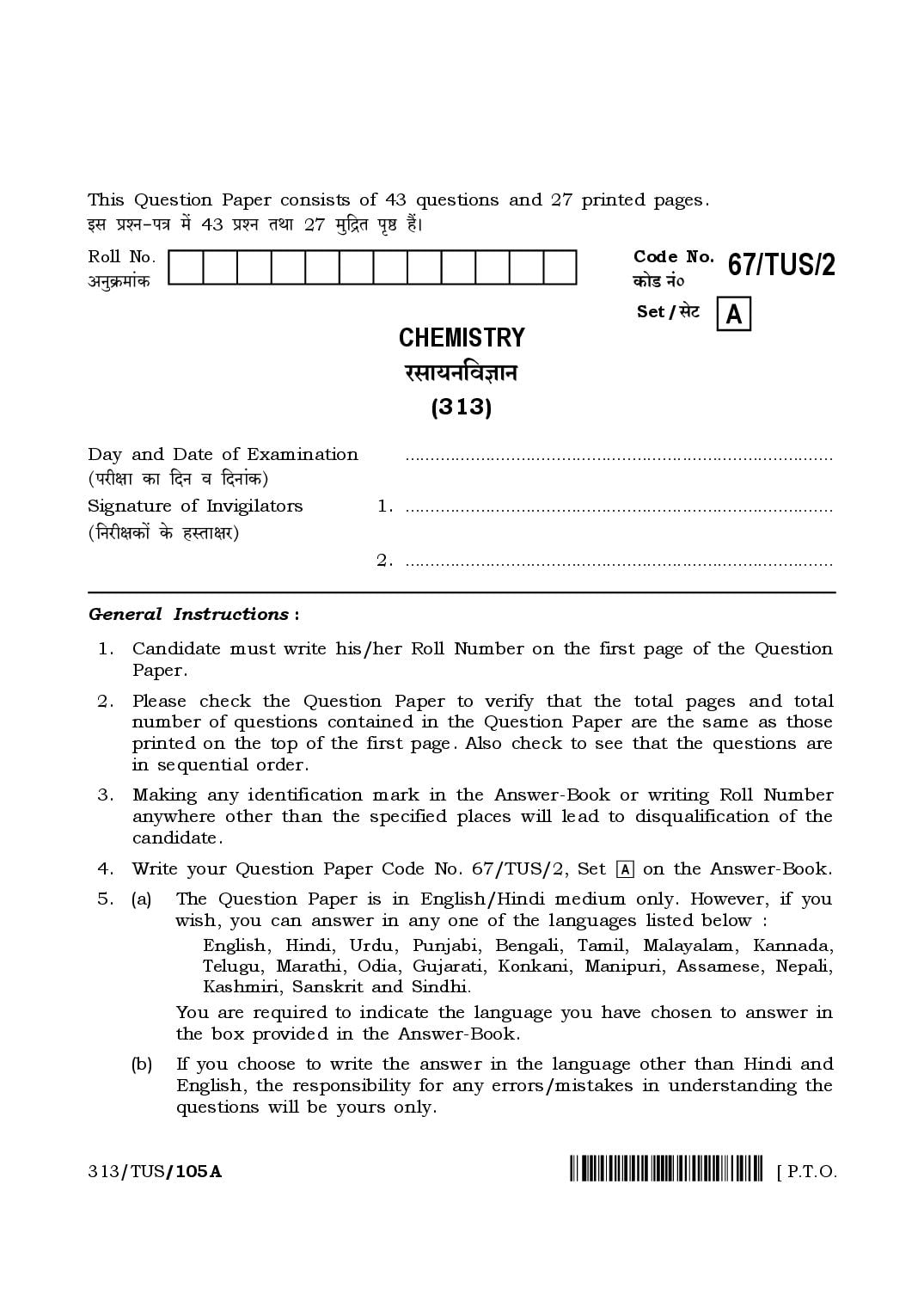
NIOS Class 12 April 2024 Question Paper Chemistry
Finished viewing? Save it for later —
Download NIOS Class 12 April 2024 Question Paper Chemistry (PDF · 27 pages)About NIOS Class 12 April 2024 Question Paper Chemistry
NIOS Class 12 April 2024 Question Paper Chemistry is available here for free download. Published by NIOS for National Institute of Open Schooling Class 12, this question paper can be viewed online or downloaded as a PDF (27 pages). Candidates preparing for National Institute of Open Schooling Class 12 can use NIOS Class 12 April 2024 Question Paper Chemistry to understand the exam pattern, the type of questions asked, and the overall difficulty level.
Frequently Asked Questions
How can I download NIOS Class 12 April 2024 Question Paper Chemistry?
Open this page and click the Download button to save NIOS Class 12 April 2024 Question Paper Chemistry as a PDF. It is completely free on AglaSem Docs.
Is NIOS Class 12 April 2024 Question Paper Chemistry free to download?
Yes. NIOS Class 12 April 2024 Question Paper Chemistry can be viewed online and downloaded as a PDF free of cost on AglaSem Docs.
How many pages does NIOS Class 12 April 2024 Question Paper Chemistry have?
NIOS Class 12 April 2024 Question Paper Chemistry contains 27 pages, which you can read online or download together as a single PDF.
Where can I find more National Institute of Open Schooling Class 12 study material?
You can find more National Institute of Open Schooling Class 12 question papers, sample papers, syllabus, and answer keys on AglaSem Docs.
NIOS Class 12 April 2024 Question Paper Chemistry – Text
Read the full text of this question paper below — useful to quickly search, copy and reference the content online without downloading the PDF.
📄 View text version (27 pages)
Page 1
Bg àíZ-nÌ ‘| 43 àíZ VWm 27 ‘w{ÐV n¥ð> h¢&
Roll No. Code No.
67/TUS/2
u
AZwH«$‘m§H$ H$moS> Z§0
Set / goQ>
CHEMISTRY
agm¶Z{dkmZ
(313)
Day and Date of Examination .....................................................................................
(narjm H$m {XZ d {XZm§H$)
Signature of Invigilators 1. .....................................................................................
({ZarjH$m| Ho$ hñVmja)
2. .....................................................................................
General Instructions :
1. Candidate must write his/her Roll Number on the first page of the Question
Paper.
2. Please check the Question Paper to verify that the total pages and total
number of questions contained in the Question Paper are the same as those
printed on the top of the first page. Also check to see that the questions are
in sequential order.
3. Making any identification mark in the Answer-Book or writing Roll Number
anywhere other than the specified places will lead to disqualification of the
candidate.
4. Write your Question Paper Code No. 67/TUS/2, Set u on the Answer-Book.
5. (a) The Question Paper is in English/Hindi medium only. However, if you
wish, you can answer in any one of the languages listed below :
English, Hindi, Urdu, Punjabi, Bengali, Tamil, Malayalam, Kannada,
Telugu, Marathi, Odia, Gujarati, Konkani, Manipuri, Assamese, Nepali,
Kashmiri, Sanskrit and Sindhi.
You are required to indicate the language you have chosen to answer in
the box provided in the Answer-Book.
(b) If you choose to write the answer in the language other than Hindi and
English, the responsibility for any errors/mistakes in understanding the
questions will be yours only.
313/TUS/105A [ P.T.O.
Page 2
1. narjmWu àíZ-nÌ Ho$ nhbo n¥ð> na AnZm AZwH«$‘m§H$ Adí¶ {bI|&
2. H¥$n¶m àíZ-nÌ H$mo Om±M b| {H$ àíZ-nÌ Ho$ Hw$b n¥ð>m| VWm àíZm| H$s CVZr hr g§»¶m h¡ {OVZr àW‘ n¥ð> Ho$ g~go
D$na N>nr h¡& Bg ~mV H$s Om±M ^r H$a b| {H$ àíZ H«${‘H$ ê$n ‘| h¢&
3. CÎma-nwpñVH$m ‘| nhMmZ-{M• ~ZmZo AWdm {Z{X©ï> ñWmZm| Ho$ A{V[aº$ H$ht ^r AZwH«$‘m§H$ {bIZo na narjmWu H$mo
A¶mo½¶ R>ham¶m OmEJm&
4. AnZr CÎma-nwpñVH$m na àíZ-nÌ H$m H$moS> Z§0 67/TUS/2, goQ u {bI|&
5. (H$) n«íZ-nÌ Ho$db {hÝXr/A§J«oOr ‘| h¡& {’$a ^r, ¶{X Amn Mmh| Vmo ZrMo Xr JB© {H$gr EH$ ^mfm ‘| CÎma Xo
gH$Vo h¢ …
A§J«oOr, {hÝXr, CXÿ©, n§Om~r, ~§Jbm, V{‘b, ‘b¶mb‘, H$Þ‹S>, VobwJy, ‘amR>r, C{‹S>¶m, JwOamVr, H$m|H$Ur,
‘{Unwar, Ag{‘¶m, Zonmbr, H$í‘rar, g§ñH¥$V Am¡a {gÝYr&
H¥$n¶m CÎma-nwpñVH$m ‘| {XE JE ~m°³g ‘| {bI| {H$ Amn {H$g ^mfm ‘| CÎma {bI aho h¢&
(I) ¶{X Amn {hÝXr Ed§ A§J«oOr Ho$ A{V[aº$ {H$gr Aݶ ^mfm ‘| CÎma {bIVo h¢, Vmo àíZm| H$mo g‘PZo ‘| hmoZo dmbr
Ìw{Q>¶m|/Jb{V¶m| H$s {Oå‘oXmar Ho$db AmnH$s hmoJr&
313/TUS/105A 2
Page 3
agm¶Z{dkmZ
(313)
Time : 3 Hours ] [ Maximum Marks : 80
g‘¶ … 3 KÊQ>o ] [ nyUmªH$ … 80
Note : (i) This Question Paper consists of 43 questions in all.
(ii) All questions are compulsory.
(iii) Marks are given against each question.
(iv) Use log tables if necessary.
(v) Section—A consists of
(a) Question Nos. 1 to 16—multiple choice type questions (MCQs)
carrying 1 mark each. Select and write the most appropriate option
out of the four options given in each of these questions. An internal
choice has been provided in some of these questions. You have to
attempt only one of the given choices in such questions.
(b) Question Nos. 17 to 28—objective type questions carrying 2 marks
each. Attempt these questions as per the instructions given for each.
(vi) Section—B consists of
(a) Question Nos. 29 to 37—very short answer type questions carrying
2 marks each and to be answered in the range of 30 to 50 words.
(b) Question Nos. 38 to 41—short answer type questions carrying
3 marks each and to be answered in the range of 50 to 80 words.
(c) Question Nos. 42 and 43—long answer type questions carrying
5 marks each and to be answered in the range of 80 to 120 words.
313/TUS/105A 3 [ P.T.O.
Page 4
(ii) g^r àíZ A{Zdm¶© h¢&
(iii) à˶oH$ àíZ Ho$ A§H$ CgHo$ gm‘Zo {XE JE h¢&
(iv) ¶{X Amdí¶H$ hmo, Vmo bm°J Q>o~b H$m à¶moJ H$a|&
(v) IÊS>—A ‘| gpå‘{bV h¡
(a) à0 g§0 1 go 16—~hþ{dH$ënr àH$ma Ho$ àíZ (MCQs), à˶oH$ 1 A§H$ H$m& BZ‘| go à˶oH$
Ho$ {bE {XE JE Mma {dH$ënm| ‘| go g~go ghr {dH$ën H$mo MwZ| Am¡a {bI|& BZ‘| go Hw$N>
àíZm| ‘| Am§V[aH$ {dH$ën {X¶m J¶m h¡& Eogo àíZm| ‘| AmnH$mo {XE JE {dH$ënm| ‘| go Ho$db
EH$ H$m CÎma XoZm h¡&
(b) à0 g§0 17 go 28—dñVw{Zð> àH$ma Ho$ àíZ, à˶oH$ 2 A§H$ H$m& {ZX}emZwgma àíZm| H$mo hb
H$a|&
(vi) IÊS>—~ ‘| gpå‘{bV h¡
(a) à0 g§0 29 go 37—A{V bKyÎmar¶ àíZ, à˶oH$ 2 A§H$ H$m Ed§ à˶oH$ H$m CÎma 30 go
50 eãXm| ‘| X|&
(b) à0 g§0 38 go 41—bKyÎmar¶ àíZ, à˶oH$ 3 A§H$ H$m Ed§ à˶oH$ H$m CÎma 50 go 80
eãXm| ‘| X|&
(c) à0 g§0 42 Am¡a 43—XrK©-CÎmar¶ àíZ, à˶oH$ 5 A§H$ H$m Ed§ à˶oH$ H$m CÎma 80 go
120 eãXm| ‘| X|&
(1) Answers of all questions are to be given in the Answer-Book given to you.
g^r àíZm| Ho$ CÎma AmnH$mo Xr JB© CÎma-nwpñVH$m ‘| hr {bI|&
(2) 15 minutes time has been allotted to read this Question Paper. The Question
Paper will be distributed at 2:15 p.m. From 2:15 p.m. to 2:30 p.m., the
students will read the Question Paper only and will not write any answer on
the Answer-Book during this period.
Bg àíZ-nÌ H$mo n‹T>Zo Ho$ {bE 15 {‘ZQ> H$m g‘¶ {X¶m J¶m h¡& àíZ-nÌ H$m {dVaU Xmonha ‘|
2:15 ~Oo {H$¶m OmEJm& Xmonha 2:15 ~Oo go 2:30 ~Oo VH$ N>mÌ Ho$db àíZ-nÌ H$mo n‹T>|Jo Am¡a
Bg Ad{Y Ho$ Xm¡amZ do CÎma-nwpñVH$m na H$moB© CÎma Zht {bI|Jo&
SECTION—A
IÊS>—A
Note : Question Nos. 1 to 16 are multiple choice type questions of 1 mark
each. An internal choice has been provided in some of these questions.
You have to attempt only one of the given choices in such questions.
{ZX}e : à0 g§0 1 go 16 VH$ ~hþ{dH$ënr àíZ h¢ VWm à˶oH$ 1 A§H$ H$m h¡& Hw$N> àíZm| ‘| Am§V[aH$
{dH$ën {X¶m J¶m h¡& Eogo àíZm| ‘| Ho$db EH$ {dH$ën MwZZm h¡&
1. The linear molecule, which has net dipole moment zero, is
(A) HCl (B) CO2
(C) H2O (D) N2O 1
313/TUS/105A 4
Page 5
(A) HCl (B) CO2
(C) H2O (D) N2O
2. Which of the following colligative properties can be used to determine
molar mass of proteins with maximum precision? 1
(A) Depression in freezing point
(B) Osmotic pressure
(C) Relative lowering of vapour pressure
(D) Elevation of boiling point
{ZåZ{b{IV ‘| go H$m¡Z-gm AUwg§»¶ JwUY‘© A{YH$ gQ>rH$Vm go àmoQ>rZm| H$m ‘moba Ð춑mZ kmV H$aZo
Ho$ {bE à¶wº$ {H$¶m Om gH$Vm h¡?
(A) {h‘m§H$ AdZ‘Z
(B) namgaU Xm~
(C) dmîn Xm~ H$m Amno{jH$ AdZ‘Z
(D) ¹$WZm§H$ CÞ¶Z
3. (a) Which of the following is an extensive property? 1
(A) Temperature (B) Pressure
(C) Density (D) Volume
{ZåZ{b{IV ‘| go H$m¡Z-gm {dñVmar JwUY‘© h¡?
(A) Vmn (B) Xm~
(C) KZËd (D) Am¶VZ
Or / AWdm
(b) Bond dissociation enthalpy is applicable only for the
(A) gaseous molecules
(B) molecules in liquid state
(C) molecules in solid state
(D) gaseous atoms
Am~§Y {d¶moOZ EÝW¡ënr bmJy hmoVr h¡ Ho$db
(A) J¡gr¶ AUwAm| Ho$ {bE
(B) Ðd AdñWm ‘| AUwAm| Ho$ {bE
(C) R>mog AdñWm ‘| AUwAm| Ho$ {bE
(D) J¡gr¶ na‘mUwAm| Ho$ {bE
313/TUS/105A 5 [ P.T.O.
Page 6
(A) NH4 (B) NH2OH
(C) NH3 (D) N2H4 1
NH2 H$m g§¶w½‘r Aåb h¡
(A) NH4 (B) NH2OH
(C) NH3 (D) N2H4
Or / AWdm
(b) Which of the following has the highest pH value?
(A) 1 M HCl (B) 1 M NaOH
(C) 1 M Na2CO3 (D) 1 M C2H5OH
{ZåZ{b{IV ‘| go {H$gH$m pH ‘mZ A{YH$V‘ h¡?
(A) 1 M HCl (B) 1 M NaOH
(C) 1 M Na2CO3 (D) 1 M C2H5OH
5. (a) The H—O—H bond angle in H2O is
(A) 106° (B) 109·28°
(C) 120° (D) 104·5° 1
H2O ‘| H—O—H Am~§Y H$moU h¡
(A) 106° (B) 109·28°
(C) 120° (D) 104·5°
Or / AWdm
(b) The thermal stability of the following alkaline earth metal carbonates
follows the order
(A) BeCO3 > BaCO3 > CaCO3 > MgCO3
(B) MgCO3 > CaCO3 > BaCO3 > BeCO3
(C) CaCO3 > BaCO3 > MgCO3 > BeCO3
(D) BaCO3 > CaCO3 > MgCO3 > BeCO3
313/TUS/105A 6
Page 7
(A) BeCO3 > BaCO3 > CaCO3 > MgCO3
(B) MgCO3 > CaCO3 > BaCO3 > BeCO3
(C) CaCO3 > BaCO3 > MgCO3 > BeCO3
(D) BaCO3 > CaCO3 > MgCO3 > BeCO3
6. (a) Which of the following properties is not exhibited by sulphur dioxide? 1
(A) Acidic nature (B) Oxidizing properties
(C) Dehydrating agent (D) Reducing properties
{ZåZ{b{IV ‘| go H$m¡Z-gm JwUY‘© gë’$a S>mBAm°³gmBS> àX{e©V Zht H$aVm?
(A) Aåbr¶ àH¥${V (B) Am°³grH$maH$ JwUY‘©
(C) {ZO©brH$aU H$maH$ (D) AnMm¶H$ JwUY‘©
Or / AWdm
(b) The gas produced by oxyacetylene flame, which prevents the oxidation
of metals during welding and cutting, is
(A) hydrogen (B) oxygen
(C) ethene (D) carbon dioxide
Am°³grEogr{Q>brZ Ádmbm {ZåZ{b{IV ‘| go H$m¡Z-gr J¡g CËnÞ H$aVr h¡, Omo {H$ dopëS§ J Am¡a
H$mQ>Zo Ho$ g‘¶ YmVwAm| Ho$ Am°³grH$aU H$mo amoH$Vr h¡?
(A) hmBS´>moOZ (B) Am°³grOZ
(C) EWrZ (D) H$m~©Z S>mBAm°³gmBS>
7. (a) Lanthanoids and actinoids resemble in their
(A) electronic configuration
(B) prominent oxidation state
(C) ionization energy
(D) formation of complexes 1
313/TUS/105A 7 [ P.T.O.
Page 8
(A) CZHo$ Bbo³Q´>m°{ZH$ {dݶmg ‘|
(B) CZH$s ‘w»¶ Am°³grH$aU AdñWm ‘|
(C) CZH$s Am¶ZZ D$Om© ‘|
(D) CZHo$ g§Hw$bm| Ho$ {Z‘m©U ‘|
Or / AWdm
(b) The aqueous solution of which of the following ions will be colourless?
(A) Fe2+ (B) Mn3+
(C) Ti3+ (D) Sc3+
[Atomic number : Sc = 21, Fe = 26, Ti = 22, Mn = 25]
{ZåZ{b{IV ‘| go {H$g Am¶Z H$m Obr¶ {db¶Z a§JhrZ hmoJm?
(A) Fe2+ (B) Mn3+
(C) Ti3+ (D) Sc3+
[na‘mUw g§»¶m : Sc = 21, Fe = 26, Ti = 22, Mn = 25]
8. The temporary electron displacement which takes place in compounds
containing multiple covalent bonds developing +ve and –ve charges within
the molecule is known as
(A) resonance (B) electromeric effect
(C) inductive effect (D) hyperconjugation 1
~hþ ghg§¶moOr Am~§Ym| dmbo ¶m¡{JH$m| ‘| Bbo³Q´>m°Z Ho$ AñWm¶r {dñWmnZ, {Oggo AUw ‘| +ve Am¡a
–ve Amdoe CËnÞ hmoVo h¢, H$hbmVm h¡
(A) AZwZmX (B) Bbo³Q´>mo‘ar à^md
(C) àoa{UH$ à^md (D) A{Vg§¶w½‘Z
9. (a) Reddish brown colour of bromine dissolved in carbon tetrachloride
and purple colour of alkaline potassium permanganate solution are
discharged by
(A) alkenes only
(B) alkynes only
(C) both alkenes and alkynes
(D) both alkanes and alkenes 1
313/TUS/105A 8
Page 9
H$m ~¢JZr a§J {ZåZ{b{IV ‘| go {H$gH$s CnpñW{V Ûmam g‘má hmo OmVo h¢?
(A) Ho$db EoëH$sZ
(B) Ho$db EoëH$mBZ
(C) EoëH$sZ Am¡a EoëH$mBZ XmoZm|
(D) EoëHo$Z Am¡a EoëH$sZ XmoZm|
Or / AWdm
(b) Sulphonation of benzene is carried out with
(A) dil. H2SO4 (B) conc. H2SO4
(C) oleum (D) sulphur trioxide
~|OrZ H$m gë’$moZoQ>rH$aU {H$¶m OmVm h¡
(A) VZw H2SO4 Ûmam (B) gm§Ð H2SO4 Ûmam
(C) Amo{b¶‘ Ûmam (D) gë’$a Q´>mBAm°³gmBS> Ûmam
10. The melting and boiling points of haloalkanes and haloarenes are higher
than those of their parent hydrocarbons due to
(A) lower molecular masses
(B) lower magnitude of van der Waals forces of attraction
(C) the existence of intermolecular dipole-dipole interaction
(D) their capability to form intermolecular hydrogen bonds 1
h¡bmoEoëHo$Zm| Am¡a h¡bmoEoarZm| Ho$ JbZm§H$ Ed§ ¹$WZm§H$ AnZo OZH$ hmBS´>moH$m~©Zm| go Cƒ hmoVo h¢
(A) {ZåZ AmpÊdH$ Ð춑mZm| Ho$ H$maU
(B) d¡Z S>a dmëg AmH$f©U ~bm| Ho$ {ZåZ n[a‘mU Ho$ H$maU
(C) A§Va-AmpÊdH$ {ÛY«wd-{ÛY«wd Aݶmoݶ{H«$¶m H$s CnpñW{V Ho$ H$maU
(D) A§Va-AmpÊdH$ hmBS´>moOZ Am~§Y ~ZmZo H$s CZH$s j‘Vm Ho$ H$maU
11. (a) When phenol is treated with CHCl3 and NaOH followed by
acidification, the product formed is
(A) benzaldehyde (B) salicylaldehyde
(C) salicylic acid (D) benzoic acid 1
313/TUS/105A 9 [ P.T.O.
Page 10
h¡, V~ {Z{‘©V CËnmX h¡
(A) ~|O¡pëS>hmBS> (B) g¡{b{gb¡pëS>hmBS>
(C) g¡{b{g{bH$ Aåb (D) ~|OmoBH$ Aåb
Or / AWdm
(b) Which of the following enzymes converts glucose into ethyl alcohol?
(A) Diastase (B) Invertase
(C) Maltase (D) Zymase
{ZåZ{b{IV ‘| go H$m¡Z-gm E§OmB‘ ½byH$moµO H$mo E{Wb EoëH$mohm°b ‘| n[ad{V©V H$a XoVm h¡?
(A) S>m¶ñQ>og (B) BZdQ>}g
(C) ‘mëQ>og (D) OmB‘og
12. Hemiacetals are chemically
(A) alkoxy alcohols (B) alkyl alcohols
(C) gem-dialkoxy compounds (D) ethylene glycol 1
ho‘rEogrQ>¡b amgm¶{ZH$ ê$n go hmoVo h¢
(A) EoëH$m°³gr EoëH$mohm°b (B) EopëH$b EoëH$mohm°b
(C) Oo‘-S>mBEoëH$m°³gr ¶m¡{JH$ (D) E{WbrZ ½bmBH$m°b
13. (a) Which of the following forms a stable diazonium salt at 273–278 K? 1
(A) Ethylamine (B) Aniline
(C) Dimethylamine (D) Benzylamine
{ZåZ{b{IV ‘| go H$m¡Z-gm 273–278 K na EH$ ñWm¶r S>m¶Omo{Z¶‘ bdU ~ZmVm h¡?
(A) E{WbEo‘rZ (B) Eo{ZbrZ
(C) S>mB‘o{WbEo‘rZ (D) ~|{ObEo‘rZ
313/TUS/105A 10
Page 11
(b) Sulphonation of aniline at 455–475 K produces
(A) sulphonic acid
(B) benzenediazonium sulphate
(C) anilinium hydrogen sulphate
(D) sulphanilic acid
Eo{ZbrZ H$m 455–475 K na gë’$moZoQ>rH$aU CËnÞ H$aVm h¡
(A) gë’$mo{ZH$ Aåb
(B) ~|OrZS>m¶Omo{Z¶‘ gë’o$Q>
(C) Eo{Z{b{Z¶‘ hmBS´>moOZ gë’o$Q>
(D) gë’$m{Z{bH$ Aåb
14. Chemically enzymes are
(A) polysaccharides (B) polypeptides
(C) polynucleotides (D) globular proteins 1
amgm¶{ZH$ ê$n go E§OmB‘ hmoVo h¢
(A) nm°{bg¡Ho$amBS> (B) nm°{bnoßQ>mBS>
(C) nm°{bݶyp³b¶moQ>mBS> (D) JmobmH$ma àmoQ>rZ
15. The polymer which becomes soft on heating or becomes rigid on cooling
is known as
(A) elastomer (B) fibre
(C) thermosetting (D) thermoplastic 1
Omo ~hþbH$ J‘© H$aZo na Za‘ ¶m R>§S>m H$aZo na Ñ‹T> hmo OmVo h¢, H$hbmVo h¢
(A) BbmñQ>mo‘a (B) ’$mB~a
(C) W‘m}goqQ>J (D) W‘m}ßbmpñQ>H$
313/TUS/105A 11 [ P.T.O.
Page 12
carboxylate ion is
(A) soap
(B) branched alkyl benzene sulphonate
(C) linear alkyl benzene sulphonate
(D) lauryl alcohol 1
YmoZo H$s dh gm‘J«r, Omo 100% O¡d {ZåZrH$aUr¶ h¡ Am¡a {Og‘| H$m~m}p³gboQ> Am¶Z h¡, h¡
(A) gm~wZ
(B) em{IV EopëH$b ~|OrZ gë’$moZoQ>
(C) aoIr¶ EopëH$b ~|OrZ gë’$moZoQ>
(D) bm°[ab EoëH$mohm°b
Note : Question Nos. 17 to 28 are objective type questions of 2 marks each.
In some of these questions, four sub-parts are given. You have to
attempt only two sub-parts out of them in such questions.
{ZX}e : à0 g§0 17 go 28 VH$ dñVw{Zð> àH$ma Ho$ àíZ h¢ VWm à˶oH$ 2 A§H$ H$m h¡& BZ‘| go Hw$N>
àíZm| ‘| Mma Cn^mJ {XE JE h¢& AmnH$mo Eogo àíZm| ‘| {H$Ýht Xmo Cn^mJm| Ho$ CÎma XoZo h¢&
17. Complete the following by the options given below : 2
atomic mass; formula mass; molar mass; C-6; C-12; C-14; 0·01;
0·001; 0·0001; integral; fractional
(a) 58·5 g mol–1 is the _____ of NaCl.
(b) A mole is the amount of a substance that contains as many entities
(atoms, molecules or other particles) as in exactly 12 g of _____
isotope.
(c) 1 mm is equal to _____ m.
(d) Molecular formula is always _____ multiple of the empirical formula.
ZrMo {XE JE {dH$ënm| go {ZåZ{b{IV H$mo nyU© H$s{OE :
na‘mUw Ð춑mZ; gyÌ Ð춑mZ; ‘moba Ð춑mZ; C-6; C-12; C-14; 0·01; 0·001;
0·0001; nyU© gm§p»¶H$; {^ÞmË‘H$
(H$) 58·5 g mol–1, NaCl H$m _____ h¡&
(I) EH$ ‘mob {H$gr nXmW© H$s dh ‘mÌm h¡ {Og‘| Cg nXmW© Ho$ ‘yb H$Um| (O¡go na‘mUw, AUw ¶m
Aݶ H$U) H$s CVZr hr g§»¶m hmoVr h¡ {OVZr {H$ _____ g‘ñWm{ZH$ Ho$ R>rH$ 12 g ‘|&
(J) 1 mm ~am~a h¡ _____ m Ho$&
(K) AmpÊdH$ gyÌ gd©Xm ‘ybmZwnmVr gyÌ H$m _____ JwUH$ hmoVm h¡&
313/TUS/105A 12
Page 13
(out of four attempt any two) : 1×2=2
According to VSEPR theory, the electron pairs around the central atom in
a molecule arrange themselves in space in such a way that they minimize
their mutual repulsion. The lone pair repulsion is much greater than the
bond pair repulsion.
(a) Name the electron pairs around the central atom in a molecule who
arrange themselves in space in such a way that they minimize their
mutual repulsion.
(b) Which parameter of the molecule is linked to mutual repulsion of
electron pairs?
(c) When the number of electron pairs around the central atom is five,
which geometry is predicted for the molecule?
(d) Which electron pair is known as the lone pair of electrons in a
molecule?
ZrMo {XE JE n[aÀN>oX H$mo n{‹T>E Am¡a {ZåZ{b{IV àíZm| Ho$ CÎma Xr{OE (Mma ‘| go H$moB© Xmo) :
dr0 Eg0 B©0 nr0 Ama0 {gÕm§V Ho$ AZwgma {H$gr AUw Ho$ H|$Ðr¶ na‘mUw Ho$ Mmam| Amoa CnpñWV Bbo³Q´>m°Z
¶w½‘ AnZo Amn H$mo Bg àH$ma ì¶dpñWV H$aVo h¢ {H$ CZHo$ ~rM ݶyZV‘ à{VH$f©U hmo& EH$H$ ¶w½‘m|
H$m à{VH$f©U Am~§Y ¶w½‘m| Ho$ à{VH$f©U go H$ht A{YH$ hmoVm h¡&
(H$) AUw Ho$ Ho$ÝÐr¶ na‘mUw Ho$ Mmam| Amoa CnpñWV CZ Bbo³Q´>m°Z ¶w½‘m| Ho$ Zm‘ {b{IE Omo AnZo Amn
H$mo Eogo ì¶dpñWV H$aVo h¢ {H$ CZH$m EH$-Xÿgao Ho$ gmW à{VH$f©U ݶyZV‘ hmo&
(I) AUw H$m H$m¡Z-gm àmMb Bbo³Q´>m°Z ¶w½‘m| ‘| EH$-Xÿgao Ho$ à{V à{VH$f©U go g§~§{YV h¡?
(J) O~ H|$Ðr¶ na‘mUw Ho$ Mmam| Amoa Ho$ Bbo³Q´>m°Z ¶w½‘m| H$s g§»¶m nm±M hmo, V~ AUw H$s AZw‘m{ZV
Á¶m{‘{V ³¶m hmoJr?
(K) H$m¡Z-go Bbo³Q´>m°Z ¶w½‘m| H$mo AUw ‘| EH$H$ ¶w½‘ H$hm OmVm h¡?
313/TUS/105A 13 [ P.T.O.
Page 14
(out of four attempt any two) : 1×2=2
(a) Benzene-chloroform mixture exhibits positive deviation from Raoult’s
law.
(b) Boiling point is a colligative property.
(c) Vapour pressure of a liquid is the pressure exerted by the vapour of
the liquid in any condition/situation.
(d) Two liquids are miscible when they dissolve in each other in all
proportions.
ghr H$WZ Ho$ {bE g˶ (T) Am¡a JbV H$WZ Ho$ {bE Ag˶ (F) {b{IE (Mma ‘| go H$moB© Xmo) :
(H$) ~|OrZ-³bmoamo’$m°‘© {‘lU amCëQ> Ho$ {Z¶‘ go YZmË‘H$ {dMbZ Xem©Vm h¡&
(I) ¹$WZm§H$ EH$ AUwg§»¶ JwUY‘© h¡&
(J) {H$gr Ðd H$m dmîn Xm~ {H$gr ^r pñW{V/n[apñW{V ‘| Ðd Ho$ dmîn Ûmam S>mbm J¶m Xm~ h¡&
(K) Xmo Ðd {‘lUr¶ h¢ O~ do g^r AZwnmVm| ‘| EH$-Xÿgao ‘| {db¶erb h¢&
20. Write True (T) for correct statement and False (F) for incorrect statement
(out of four attempt any two) : 1×2=2
(a) In a galvanic cell, electrons always flow from cathode to anode.
(b) Salt bridge is a contact between two half-cells without any mixing of
electrolytes.
(c) Higher the valency of the ion, greater is its conducting power.
(d) Conductivity of a cell is the product of conductance and cell constant.
ghr H$WZ Ho$ {bE g˶ (T) Am¡a JbV H$WZ Ho$ {bE Ag˶ (F) {b{IE (Mma ‘| go H$moB© Xmo) :
(H$) {H$gr J¡ëdo{ZH$ gob ‘| Bbo³Q´>m°Z gd©Xm H¡$WmoS> go EoZmoS> H$s Amoa OmVo h¢&
(I) gm°ëQ> {~«O Xmo AY©-gobm| Ho$ ~rM ‘| EH$ Eogm g§nH©$ h¡ {Og‘| AnKQ>ç {‘{lV Zht hmo nmVo&
(J) {OVZr A{YH$ {H$gr Am¶Z H$s g§¶moOH$Vm hmoVr h¡, CVZr hr A{YH$ CgH$s MmbH$ j‘Vm
hmoVr h¡&
(K) {H$gr gob H$s MmbH$Vm, MmbH$Ëd Am¡a gob pñWam§H$ H$m JwUZ’$b h¡&
313/TUS/105A 14
Page 15
(out of four attempt any two) : 1×2=2
(a) The reaction of lithium with water is less vigorous than that of
sodium.
(b) The melting and boiling points of alkali metals increase down the
group due to increasing size and weak intermetallic bond.
(c) Calcium imparts brick red colour to the flame.
(d) Chlorophyll is a complex compound of magnesium.
ghr H$WZ Ho$ {bE g˶ (T) Am¡a JbV H$WZ Ho$ {bE Ag˶ (F) {b{IE (Mma ‘| go H$moB© Xmo) :
(H$) br{W¶‘ H$s Ob go A{^{H«$¶m, gmo{S>¶‘ H$s A{^{H«$¶m H$s Anojm H$‘ Vrd« J{V go hmoVr h¡&
(I) jmaH$s¶ YmVwAm| Ho$ JbZm§H$ Ed§ ¹$WZm§H$ {H$gr dJ© ‘| D$na go ZrMo OmZo na ~‹T>Vo h¢, ³¶m|{H$
CZH$m AmH$ma ~‹T>Vm h¡ Am¡a CZ‘| A§Va-YmpËdH$ Am~§Y {Z~©b hmoVo h¢&
(J) H¡$pëg¶‘, Ádmbm ‘| BªQ> O¡gm bmb a§J CËnÞ H$aVm h¡&
(K) ³bmoamo{’$b, ‘¡¾r{e¶‘ H$m EH$ g§Hw$b ¶m¡{JH$ h¡&
22. Write True (T) for correct statement and False (F) for incorrect statement
(out of four attempt any two) : 1×2=2
(a) Sulphur shows two, four and six valencies in its compounds.
(b) Fluorine is prepared by electrolysis of hydrogen fluoride.
(c) Chlorofluorocarbons have very high capacity to retain heat.
(d) The oxidation state of chlorine in chlorous acid is +1.
ghr H$WZ Ho$ {bE g˶ (T) Am¡a JbV H$WZ Ho$ {bE Ag˶ (F) {b{IE (Mma ‘| go H$moB© Xmo) :
(H$) gë’$a, AnZo ¶m¡{JH$m| ‘| Xmo, Mma Am¡a N>… g§¶moOH$Vm Xem©Vm h¡&
(I) âbwAmoarZ, hmBS´>moOZ âbwAmoamBS> Ho$ d¡ÚwV-AnKQ>Z go {Z{‘©V hmoVr h¡&
(J) ³bmoamoâbwAmoamoH$m~©Z H$s D$î‘m H$mo YmaU H$aZo H$s j‘Vm A˶{YH$ Cƒ h¡&
(K) ³bmoag Aåb ‘| ³bmoarZ H$s Am°³grH$aU AdñWm +1 h¡&
313/TUS/105A 15 [ P.T.O.
Page 16
(out of four attempt any two) : 1×2=2
(a) Copper(I) compounds are white and diamagnetic while copper(II)
compounds are coloured and paramagnetic.
(b) The common oxidation state of Cu, Ag and Au is +2.
(c) Scandium does not exhibit variable oxidation state in its compounds.
(d) Among Al, Zn, Mg and Fe, the densest element is Fe.
ghr H$WZ Ho$ {bE g˶ (T) Am¡a JbV H$WZ Ho$ {bE Ag˶ (F) {b{IE (Mma ‘| go H$moB© Xmo) :
(H$) H$m°na(I) ¶m¡{JH$ ídoV Am¡a à{VMwå~H$s¶ hmoVo h¢ O~{H$ H$m°na(II) ¶m¡{JH$ a§JrZ Am¡a AZwMwå~H$s¶
hmoVo h¢&
(I) Cu, Ag Am¡a Au H$s gd©{Zð> Am°³grH$aU AdñWm +2 h¡&
(J) ñH¡$pÝS>¶‘ AnZo ¶m¡{JH$m| ‘| n[adVu Am°³grH$aU AdñWm Zht Xem©Vm&
(K) Al, Zn, Mg Am¡a Fe ‘| go A{YH$V‘ KZËd Fe H$m h¡&
24. Read the passage given below and answer the following questions
(out of four attempt any two) : 1×2=2
Coordination compounds are the compounds in which a central metal ion
is attached to a group of surrounding ligands by coordinate covalent bond.
Ligands can be monodentate or polydentate. Polydentate ligands are also
called chelating ligands. The geometries of coordination compounds are
linear, tetrahedral, square planar and octahedral.
3
(a) [Co(CN)6 ]3 and [CoF6 ] both are octahedral complexes. Then what is
the difference between the two?
(b) Give a chemical test to distinguish between [Co(NH3 )5 Br]SO4 and
[Co(NH3 )5 SO4 ]Br .
313/TUS/105A 16
Page 17
(d) Identify and name the bidentate ligand in [Co(en)2(H2O)(CN)]– complex
ion.
ZrMo {XE JE n[aÀN>oX H$mo n{‹T>E Am¡a {ZåZ{b{IV àíZm| Ho$ CÎma Xr{OE (Mma ‘| go H$moB© Xmo) :
Cnghg§¶moOH$ ¶m¡{JH$ do ¶m¡{JH$ h¢ {OZ‘| H|$Ðr¶ YmVw Am¶Z Cnghg§¶moOr ghg§¶moOH$ Am~ÝYm| Ûmam
Amgnmg Ho$ g§b¾r g‘yhm| go Ow‹S>m hmoVm h¡& g§b¾r EH$X§Vr ¶m ~hþX§Vr hmo gH$Vo h¢& ~hþX§Vr g§b{¾¶m|
H$mo H$sboQ>r g§b¾r ^r H$hm OmVm h¡& Cnghg§¶moOH$ ¶m¡{JH$m| H$s Á¶m{‘Vr¶ AmH¥${V¶m± aoIr¶,
MVwî’$bH$s¶, dJ© g‘Vbr¶ Am¡a Aï>’$bH$s¶ hmoVr h¢&
(H$) [Co(CN)6 ]3 Am¡a [CoF6 ]3 XmoZm| hr Aï>’$bH$s¶ g§Hw$b h¢& {’$a XmoZm| ‘| ³¶m A§Va h¡?
(I) [Co(NH3 )5 Br]SO4 Am¡a [Co(NH3 )5 SO4 ]Br Ho$ ‘ܶ {d^oX H$aZo Ho$ {bE EH$
amgm¶{ZH$ narjU {b{IE&
(J) EH$ H$sboQ>r H$maH$ H$m Zm‘ {b{IE&
(K) [Co(en)2(H2O)(CN)]– g§Hw$b Am¶Z ‘| {ÛX§Vr g§b¾r H$s nhMmZ H$s{OE Am¡a Zm‘ {b{IE&
25. Read the passage given below and answer the following questions
(out of four attempt any two) : 1×2=2
Ethers are organic compounds in which an oxygen atom is bonded to two
alkyl groups or aryl groups. Ethers have geometry similar to water and
alcohols.
(a) Draw the geometry of an ether molecule.
(b) Illustrate the basic nature of ethers with the help of a suitable
reaction.
(c) What is the IUPAC name of methyl propyl ether?
(d) How can ethers be prepared by Williamson’s synthesis? Illustrate with
an example.
313/TUS/105A 17 [ P.T.O.
Page 18
B©Wa do H$m~©{ZH$ ¶m¡{JH$ hmoVo h¢ {OZ‘| EH$ Am°³grOZ na‘mUw Xmo EopëH$b ¶m Eo[ab g‘yhm| go Am~§{YV
hmoVm h¡& B©Wam| H$s Á¶m{‘{V Ob Am¡a EoëH$mohm°b go {‘bVr-OwbVr h¡&
(H$) B©Wa Ho$ AUw H$s Á¶m{‘{V ~ZmBE&
(I) EH$ Cn¶wº$ A{^{H«$¶m H$s ghm¶Vm go B©Wam| H$s ‘yb àH¥${V ñnï> H$s{OE&
(J) ‘o{Wb àmo{nb B©Wa H$m AmB0 ¶y0 nr0 E0 gr0 Zm‘ ³¶m h¡?
(K) B©Wam| H$mo {d{b¶ågZ g§íbofU Ûmam {H$g àH$ma ~Zm¶m Om gH$Vm h¡? EH$ CXmhaU H$s ghm¶Vm
go Xem©BE&
26. Read the passage given below and answer the following questions
(out of four attempt any two) : 1×2=2
Nitro compounds are those derivatives of hydrocarbons in which a
hydrogen atom is replaced by a nitro group. These may be aliphatic or
aromatic. Nitroalkanes are divided into primary, secondary or tertiary
depending upon the attachment of nitro group to primary, secondary or
tertiary carbon atom respectively.
(a) Name the following compound according to the IUPAC nomenclature :
CH3 —CH—CH—CH2 —CH3
| |
NO2 CH3
(b) What happens when propane reacts with nitric acid at 680 K? Give
the chemical equation.
(c) Write the reduction of nitrobenzene in alkaline medium.
(d) Compare the boiling points of nitro compounds with the
corresponding alkanes. Justify your answer.
313/TUS/105A 18
Page 19
ZmBQ´>mo ¶m¡{JH$ hmBS´>moH$m~©Zm| Ho$ do ì¶wËnÞ hmoVo h¢ {OZ‘| EH$ hmBS´>moOZ na‘mUw ZmBQ´>mo g‘yh Ûmam
à{VñWm{nV hmoVm h¡& do Eo{b’¡${Q>H$ ¶m Eoamo‘¡{Q>H$ hmo gH$Vo h¢& ZmBQ´>moEoëHo$Zm| H$mo àmW{‘H$, {ÛVr¶H$
AWdm V¥Vr¶H$ ZmBQ´>moEoëHo$Zmo§ ‘| dJuH¥$V {H$¶m Om gH$Vm h¡ Omo Bg ~mV na {Z^©a H$aVm h¡ {H$ ZmBQ´>mo
g‘yh H«$‘e… àmW{‘H$, {ÛVr¶H$ ¶m V¥Vr¶H$ H$m~©Z na‘mUw go Ow‹S>m h¡&
(H$) AmB0 ¶y0 nr0 E0 gr0 Zm‘nÕ{V Ho$ AZwgma {ZåZ{b{IV ¶m¡{JH$ H$m Zm‘ {b{IE :
CH3 —CH—CH—CH2 —CH3
| |
NO2 CH3
(I) ³¶m hmoVm h¡ O~ 680 K na àmonoZ, ZmB{Q´>H$ Aåb go A{^{H«$¶m H$aVm h¡? amgm¶{ZH$ g‘rH$aU
{b{IE&
(J) jmaH$s¶ ‘mܶ‘ ‘| ZmBQ´>mo~|OrZ H$m AnM¶Z {b{IE&
(K) ZmBQ´>mo ¶m¡{JH$m| Ho$ ¹$WZm§H$m| H$s VwbZm CZHo$ g‘ê$n EoëHo$Zm| go H$s{OE& AnZo CÎma H$m Am¡{M˶
Xr{OE&
27. Read the passage given below and answer the following questions
(out of four attempt any two) : 1×2=2
Hormones are chemical messengers which are secreted by endocrine
glands. They are carried through the blood stream to the target tissues.
Vitamins are small organic molecules which are taken in diet and these
are required in trace amounts for proper-growth.
(a) Name a female sex hormone and state its function.
(b) Which disease is caused by the deficiency of insulin in humans?
Which gland secretes it?
(c) Which water-soluble vitamin’s deficiency causes a disease with
symptoms of (i) cracked lips, scaly skin and (ii) anaemia, irritability?
(d) Name any two vitamins which are fat-soluble.
313/TUS/105A 19 [ P.T.O.
Page 20
hm°‘m}Z amgm¶{ZH$ g§àofH$ hmoVo h¢ Omo {H$ EÝS>moH«$mBZ J«§{W¶m| go òm{dV hmoVo h¢& BÝh| aº$ Ymam Ho$ gmW
b{jV D$VH$m| H$s Amoa bo Om¶m OmVm h¡& {dQ>m{‘Z N>moQ>o H$m~©{ZH$ AUw hmoVo h¢ {OÝh| Amhma Ho$ gmW
boVo h¢ Am¡a do C{MV d¥{Õ Ho$ {bE gyú‘ ‘mÌm ‘| Amdí¶H$ hmoVo h¢&
(H$) EH$ ‘mXm go³g hm°‘m}Z H$m Zm‘ {b{IE Am¡a CgH$m àH$m¶© 춺$ H$s{OE&
(I) ‘mZdm| ‘| B§gw{bZ H$s H$‘r/Ho$ A^md go H$m¡Z-gm amoJ hmoVm h¡? Bgo H$m¡Z-gr J«§{W òm{dV
H$aVr h¡?
(J) Ob ‘| KwbZerb {H$g {dQ>m{‘Z H$s H$‘r go dh amoJ hmoVm h¡ {OgHo$ bjU h¢ (i) hmoR>m| H$m
’$Q>Zm, Ymardmbr ËdMm VWm (ii) aº$-AënVm, ~oM¡Zr?
(K) dgm ‘| KwbZerb {H$Ýht Xmo {dQ>m{‘Zm| Ho$ Zm‘ {b{IE&
28. Read the passage given below and answer the following questions
(out of four attempt any two) : 1×2=2
A polymer is a giant molecule formed by intermolecular linkage between
same or different types of smaller molecules called monomers. The process
by which the monomers get linked up is called polymerization. The
polymers can be classified on the basis of origin, structure, method of
polymerization and molecular forces.
(a) What are the monomers of Terylene?
(b) Among Buna-S and Neoprene, which one is a copolymer and why?
(c) In which process of polymerization are by-products obtained?
(d) In which categories are polymers classified based on their structure?
ZrMo {XE JE n[aÀN>oX H$mo n{‹T>E Am¡a {ZåZ{b{IV àíZm| Ho$ CÎma Xr{OE (Mma ‘| go H$moB© Xmo) :
~hþbH$ do {demb AUw h¢ Omo {H$ g‘mZ ¶m {^Þ àH$ma Ho$ N>moQ>o AUwAm|, {OÝh| EH$bH$ H$hVo h¢, Ho$
~rM A§Va-AmpÊdH$ ~§YZ go ~Zo hmoVo h¢& {Og àH«$‘ Ûmam EH$bH$ Ow‹S>Vo h¢ dh ~hþbH$sH$aU H$hbmVm
h¡& ~hþbH$m| H$m dJuH$aU CZH$s CËn{Îm, g§aMZm, ~hþbH$sH$aU à{H«$¶m Am¡a AmpÊdH$ ~bmo| Ho$ AmYma
na {H$¶m Om gH$Vm h¡&
(H$) Q>oarbrZ Ho$ EH$bH$ H$m¡Z-go h¢?
313/TUS/105A 20
Page 21
(J) ~hþbH$sH$aU Ho$ {H$g àH«$‘ ‘| gh-CËnmX àmá hmoVo h¢?
(K) g§aMZm Ho$ AmYma na ~hþbH$mo| H$mo {H$Z dJm] ‘| dJuH¥$V {H$¶m Om gH$Vm h¡?
SECTION—B
IÊS>—~
Note : Question Nos. 29 to 43 are subjective type questions. An internal choice
has been provided in some of these questions. You have to attempt only
one of the given choices in such questions.
{ZX}e : à0 g§0 29 go 43 {df¶{Zð> àíZ h¢& BZ‘| go Hw$N> àíZm| ‘| Am§V[aH$ {dH$ën {X¶m J¶m h¡& Eogo
àíZm| ‘| Ho$db EH$ {dH$ën MwZZm h¡&
29. (a) Find the mass of 0·252 mol of sodium phosphate, Na3PO4 (atomic
mass : Na = 23·0 amu, P = 31·0 amu, O = 16·0 amu). 2
Or
(b) A compound is composed of atoms of only two elements, carbon and
oxygen. If the compound contains 51·3% carbon, what is its empirical
formula?
(H$) 0·252 ‘mob gmo{S>¶‘ ’$m°ñ’o$Q>, Na3PO4, H$m Ð춑mZ kmV H$s{OE (na‘mUw Ð춑mZ :
Na = 23·0 amu, P = 31·0 amu, O = 16·0 amu).
AWdm
(I) EH$ ¶m¡{JH$ Ho$db Xmo VÎdmo|, H$m~©Z Am¡a Am°³grOZ, Ho$ na‘mUwAm| go {‘bH$a ~Zm h¡& ¶{X ¶m¡{JH$
‘| 51·3% H$m~©Z h¡, Vmo CgH$m ‘ybmZwnmVr gyÌ ³¶m hmoJm?
30. Draw the shapes of d-orbitals. 2
d-H$jH$m| H$s AmH¥${V¶m± ~ZmBE&
31. (a) What is meant by a coordinate covalent bond? Give an example. 2
Or
(b) Define a bond angle. What is the bond angle in the following?
(i) N—H bonds in NH3
(ii) C—H bonds in CH4
313/TUS/105A 21 [ P.T.O.
Page 22
AWdm
(I) Am~§Y H$moU H$s n[a^mfm Xr{OE& {ZåZ{b{IV ‘| Am~§Y H$moU {H$VZm h¡?
(i) NH3 ‘| N—H Am~§Y
(ii) CH4 ‘| C—H Am~§Y
32. What are exothermic reactions? Give one example of an exothermic
reaction. 2
D$î‘mjonr A{^{H«$¶mE± {H$Ýh| H$hVo h¢? D$î‘mjonr A{^{H«$¶m H$m EH$ CXmhaU Xr{OE&
33. What is meant by ionic product constant of water? Write its mathematical
expression. 2
Ob Ho$ Am¶{ZH$ CËnmX pñWam§H$ H$m ³¶m AW© h¡? CgH$m J{UVr¶ 춧OH$ {b{IE&
34. Explain the electrolysis of aqueous copper sulphate using platinum
electrodes. 2
ßb¡{Q>Z‘ Bbo³Q´>moS>m| H$m Cn¶moJ H$aHo$ Obr¶ H$m°na gë’o$Q> H$m d¡ÚwV-AnKQ>Z g‘PmBE&
35. How are xenon oxofluorides obtained? Write the chemical equations
involved. 2
OrZm°Z Am°³gmoâbwAmoamBS> H¡$go àmá {H$E OmVo h¢? g§~Õ amgm¶{ZH$ g‘rH$aUm| H$mo {b{IE&
36. How is potassium dichromate obtained from sodium chromate? Write
the chemical equations involved. 2
gmo{S>¶‘ H«$mo‘oQ> go nmoQ>¡{e¶‘ S>mBH«$mo‘oQ> {H$g àH$ma àmá {H$¶m OmVm h¡? g§~Õ amgm¶{ZH$ g‘rH$aUm|
H$mo {b{IE&
313/TUS/105A 22
Page 23
g¡Q²>µOo’$ H$m {Z¶‘ 춺$ H$s{OE& EH$ Cn¶wº$ CXmhaU Xr{OE&
38. Predict the shape of methane molecule on the basis of VSEPR theory,
specifying the underlying postulate of the theory. 3
dr0 Eg0 B©0 nr0 Ama0 {gÕm§V Ho$ AmYma na ‘oWoZ AUw H$s AmH¥${V H$m AZw‘mZ bJmBE& Cg‘|
{gÕm§V H$s {Z{hV A{^YmaUm {b{IE&
39. Calculate the internal energy change in each of the following cases : 3
(a) A system absorbs 15 kJ of heat and does 5 kJ of work.
(b) 5 kJ of work is done on the system and 15 kJ of heat is given out by
the system.
{ZåZ{b{IV ‘| go à˶oH$ àH$aU ‘| Am§V[aH$ D$Om© n[adV©Z n[aH${bV H$s{OE :
(H$) EH$ {ZH$m¶ 15 kJ D$î‘m Ademo{fV H$aVm h¡ Am¡a 5 kJ H$m¶© H$aVm h¡&
(I) {ZH$m¶ na 5 kJ H$m¶© {H$¶m J¶m Am¡a {ZH$m¶ Ûmam 15 kJ D$î‘m CËg{O©V H$s JB©&
40. (a) (i) Write down the formula of hexaaquacobalt(III) chloride.
(ii) What is meant by inner orbital complex? Explain with the help of
an example. 3
Or
(b) Account for the different magnetic behaviour of hexacyanoferrate(III)
ion and hexafluoroferrate(III) ion.
(H$) (i) ho³gmEo¹$mH$mo~mëQ>(III) ³bmoamBS> H$m gyÌ {b{IE&
(ii) Am§V[aH$ H$jH$ g§Hw$b H$m ³¶m AW© h¡? EH$ CXmhaU H$s ghm¶Vm go ì¶m»¶m H$s{OE&
313/TUS/105A 23 [ P.T.O.
Page 24
(I) ho³gmgm¶Zmo’o$aoQ>(III) Am¶Z Am¡a ho³gmâbwAmoamo’o$aoQ>(III) Am¶Z Ho$ {^Þ Mwå~H$s¶ ì¶dhma H$m
ñnï>rH$aU Xr{OE&
41. (a) (i) Why are aldehydes more reactive than ketones towards
nucleophilic addition reactions?
(ii) How do ketones react with Grignard reagent? Write the chemical
equation involved.
(iii) Write the chemical equation for Hell-Volhard-Zelinsky reaction. 3
Or
(b) (i) Which one of the following will be the most acidic and why?
Butanoic acid, 2-chlorobutanoic acid, 3-chlorobutanoic acid,
4-chlorobutanoic acid
(ii) What is Tollens’ test? Write its chemical equation.
(iii) How can you convert group into group?
(H$) (i) Zm{^H$ñZohr g§H$bZ A{^{H«$¶mAm| Ho$ à{V EopëS>hmBS>, H$sQ>moZm| H$s Anojm A{YH$
A{^{H«$¶merb ³¶m| hmoVo h¢?
(ii) H$sQ>moZ, {J«JZmS>© A{^H$‘©H$ go {H$g àH$ma A{^{H«$¶m H$aVo h¢? gpå‘{bV amgm¶{ZH$
g‘rH$aU {b{IE&
(iii) hob-dmobmS>©-OoqbñH$s A{^{H«$¶m H$m amgm¶{ZH$ g‘rH$aU {b{IE&
AWdm
(I) (i) {ZåZ{b{IV ‘| go H$m¡Z-gm gdm©{YH$ Aåbr¶ h¡ Am¡a ³¶m|?
ã¶yQ>oZmoBH$ Aåb, 2-³bmoamoã¶yQ>oZmoBH$ Aåb, 3-³bmoamoã¶yQ>oZmoBH$ Aåb,
4-³bmoamoã¶yQ>oZmoBH$ Aåb
(ii) Q>m°boÝg narjU ³¶m h¡? BgH$m amgm¶{ZH$ g‘rH$aU {b{IE&
(iii) Amn g‘yh H$mo g‘yh ‘| {H$g àH$ma n[ad{V©V H$a gH$Vo h¢?
313/TUS/105A 24
Page 25
expressed?
(ii) Find the freezing point of the solution containing 0·520 g of
glucose (C6H12O6) dissolved in 80·2 g of water (Kf = 1·86 K/m). 5
Or
(b) (i) What are abnormal molecular masses? How are they determined?
(ii) Determine the amount of CaCl2 (i = 2·47) dissolved in 2·5 litres of
water such that its osmotic pressure is 0·75 atm at 27 °C.
[R = 0·0821 L atm K–1 mol–1]
(H$) (i) {H$gr {dbm¶H$ Ho$ {bE ‘mobb AdZ‘Z pñWam§H$ H$s n[a^mfm Xr{OE& Bgo {H$g àH$ma 춺$
{H$¶m OmVm h¡?
(ii) ¶{X 0·520 g ½byH$mog (C6H12O6), 80·2 g nmZr ‘| Kwbm hmo, Vmo àmá {db¶Z H$m
{h‘m§H$ kmV H$s{OE (Kf = 1·86 K/m).
AWdm
(I) (i) Agm‘mݶ AmpÊdH$ Ð춑mZ ³¶m h¢? ¶o {H$g àH$ma kmV {H$E OmVo h¢?
(ii) 2·5 brQ>a Ob ‘| Kwbo hþE CaCl2 (i = 2·47) H$s ‘mÌm kmV H$s{OE O~{H$ CgH$m
namgaU Xm~ 27 °C na 0·75 atm h¡& [R = 0·0821 L atm K–1 mol–1]
43. (a) (i) Arrange the following in the increasing order of their covalent
character :
SiCl4, CCl4, SnCl4, GeCl4
(ii) How do the bond angles vary among the following hydrides?
NH3, PH3, AsH3, SbH3
(iii) How does the covalent character of halides of an element change
with oxidation state of the element?
313/TUS/105A 25 [ P.T.O.
Page 26
elements :
1. Al2O3
2. CCl4 5
Or
(b) (i) How does the magnitude of ionization energy of an atom vary
along the period in the periodic table? Explain.
(ii) Discuss the trends in the chemistry of p-block elements with
respect to the following :
1. Acidic and basic nature of the oxides
2. Ionic and covalent nature of the hydrides
(iii) Arrange the following atoms in the order of their increasing
ionization enthalpy :
2He, 4Be, 7N, 11Na
(H$) (i) {ZåZ{b{IV H$mo CZH$s ghg§¶moOr àH¥${V Ho$ ~‹T>Vo H«$‘ ‘| ì¶dpñWV H$s{OE :
SiCl4, CCl4, SnCl4, GeCl4
(ii) {ZåZ{b{IV hmBS´>mBS>mo| ‘| Am~§Y H$moUm| ‘| {H$g àH$ma n[adV©Z hmoVm h¡?
NH3, PH3, AsH3, SbH3
(iii) {H$gr VÎd Ho$ h¡bmBS>mo| H$s ghg§¶moOr àH¥${V CgH$s Am°³grH$aU AdñWm Ho$ gmW {H$g àH$ma
~XbVr h¡?
(iv) {ZåZ{b{IV Ho$ CgHo$ VÎdmo| go {Z‘m©U H$m g‘rH$aU Xr{OE :
1. Al2O3
2. CCl4
313/TUS/105A 26
Page 27
(I) (i) AmdV© gmaUr ‘| {H$gr AmdV© ‘| ~mE± go XmE± OmZo na {H$gr na‘mUw H$s Am¶ZZ D$Om© Ho$
n[a‘mU ‘| {H$g àH$ma n[adV©Z hmoVm h¡? g‘PmBE&
(ii) {ZåZ{b{IV Ho$ g§X^© ‘| p-ãbm°H$ Ho$ VÎdm| H$s amgm¶{ZH$ àd¥{Îm H$s MMm© H$s{OE :
1. Am°³gmBS>mo| H$s Aåbr¶ Am¡a jmar¶ àH¥${V
2. hmBS´>mBS>m| H$s Am¶{ZH$ Am¡a ghg§¶moOr àH¥${V
(iii) {ZåZ{b{IV na‘mUwAm| H$mo CZH$s ~‹T>Vr Am¶ZZ EÝW¡ënr Ho$ H«$‘ ‘| ì¶dpñWV H$s{OE :
2He, 4Be, 7N, 11Na
313/TUS/105A [24V—1500×3] 27
Document Details
| Board / Org | NIOS |
| Exam | National Institute of Open Schooling Class 12 |
| Type | Question Paper |
| Pages | 27 |
| Language | english |
| Updated | 24 Sep 2026 |