WBCHSE Class 11 Syllabus 2024 journalism and Mass Communication
Finished viewing? Save it for later —
Download WBCHSE Class 11 Syllabus 2024 journalism and Mass Communication (PDF · 14 pages)About WBCHSE Class 11 Syllabus 2024 journalism and Mass Communication
WBCHSE Class 11 Syllabus 2024 journalism and Mass Communication is available here for free download. Published by West Bengal Board for Class 11, this syllabus can be viewed online or downloaded as a PDF (14 pages). Candidates preparing for Class 11 can use WBCHSE Class 11 Syllabus 2024 journalism and Mass Communication to understand the exam pattern, the type of questions asked, and the overall difficulty level.
Frequently Asked Questions
How can I download WBCHSE Class 11 Syllabus 2024 journalism and Mass Communication?
Open this page and click the Download button to save WBCHSE Class 11 Syllabus 2024 journalism and Mass Communication as a PDF. It is completely free on AglaSem Docs.
Is WBCHSE Class 11 Syllabus 2024 journalism and Mass Communication free to download?
Yes. WBCHSE Class 11 Syllabus 2024 journalism and Mass Communication can be viewed online and downloaded as a PDF free of cost on AglaSem Docs.
How many pages does WBCHSE Class 11 Syllabus 2024 journalism and Mass Communication have?
WBCHSE Class 11 Syllabus 2024 journalism and Mass Communication contains 14 pages, which you can read online or download together as a single PDF.
Where can I find more Class 11 study material?
You can find more Class 11 question papers, sample papers, syllabus, and answer keys on AglaSem Docs.
WBCHSE Class 11 Syllabus 2024 journalism and Mass Communication – Text
Read the full text of this syllabus below — useful to quickly search, copy and reference the content online without downloading the PDF.
📄 View text version (14 pages)
Page 1
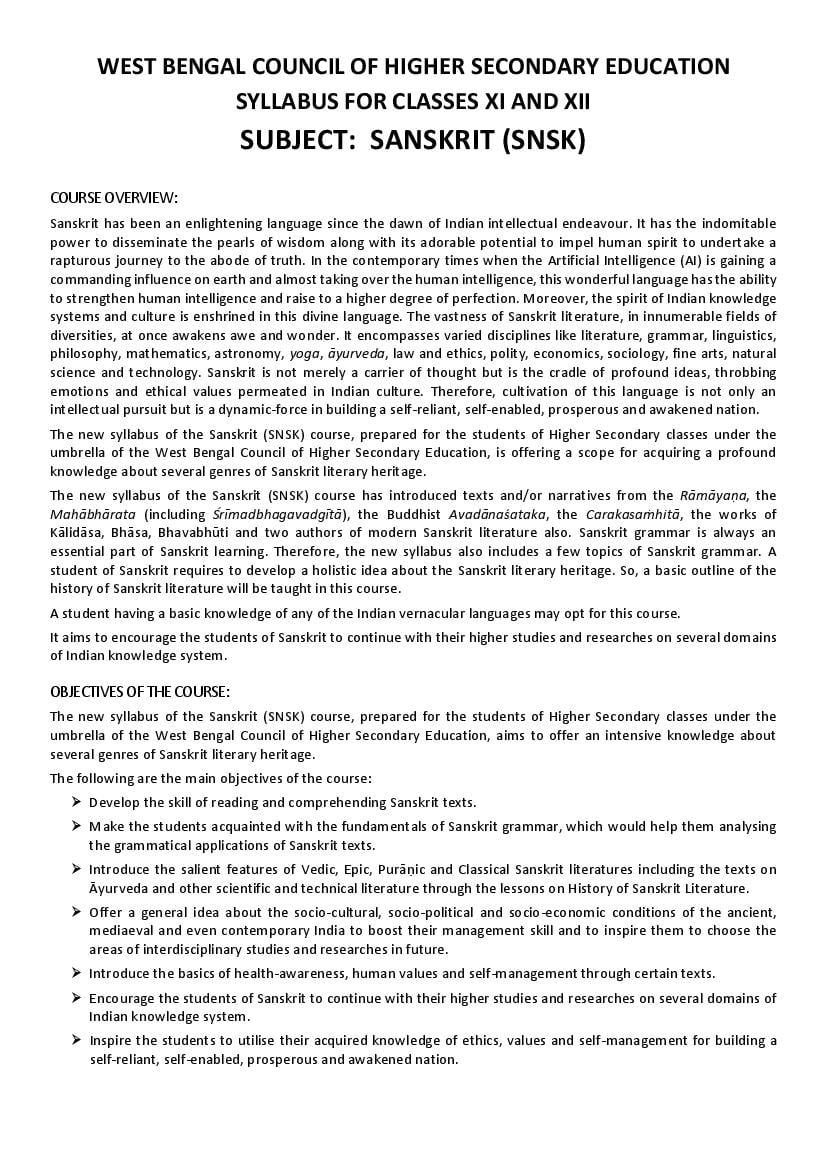
SYLLABUS FOR CLASSES XI AND XII
SUBJECT: SANSKRIT (SNSK)
COURSE OVERVIEW:
Sanskrit has been an enlightening language since the dawn of Indian intellectual endeavour. It has the indomitable
power to disseminate the pearls of wisdom along with its adorable potential to impel human spirit to undertake a
rapturous journey to the abode of truth. In the contemporary times when the Artificial Intelligence (AI) is gaining a
commanding influence on earth and almost taking over the human intelligence, this wonderful language has the ability
to strengthen human intelligence and raise to a higher degree of perfection. Moreover, the spirit of Indian knowledge
systems and culture is enshrined in this divine language. The vastness of Sanskrit literature, in innumerable fields of
diversities, at once awakens awe and wonder. It encompasses varied disciplines like literature, grammar, linguistics,
philosophy, mathematics, astronomy, yoga, āyurveda, law and ethics, polity, economics, sociology, fine arts, natural
science and technology. Sanskrit is not merely a carrier of thought but is the cradle of profound ideas, throbbing
emotions and ethical values permeated in Indian culture. Therefore, cultivation of this language is not only an
intellectual pursuit but is a dynamic-force in building a self-reliant, self-enabled, prosperous and awakened nation.
The new syllabus of the Sanskrit (SNSK) course, prepared for the students of Higher Secondary classes under the
umbrella of the West Bengal Council of Higher Secondary Education, is offering a scope for acquiring a profound
knowledge about several genres of Sanskrit literary heritage.
The new syllabus of the Sanskrit (SNSK) course has introduced texts and/or narratives from the Rāmāyaṇa, the
Mahābhārata (including Śrīmadbhagavadgītā), the Buddhist Avadānaśataka, the Carakasaṁhitā, the works of
Kālidāsa, Bhāsa, Bhavabhūti and two authors of modern Sanskrit literature also. Sanskrit grammar is always an
essential part of Sanskrit learning. Therefore, the new syllabus also includes a few topics of Sanskrit grammar. A
student of Sanskrit requires to develop a holistic idea about the Sanskrit literary heritage. So, a basic outline of the
history of Sanskrit literature will be taught in this course.
A student having a basic knowledge of any of the Indian vernacular languages may opt for this course.
It aims to encourage the students of Sanskrit to continue with their higher studies and researches on several domains
of Indian knowledge system.
OBJECTIVES OF THE COURSE:
The new syllabus of the Sanskrit (SNSK) course, prepared for the students of Higher Secondary classes under the
umbrella of the West Bengal Council of Higher Secondary Education, aims to offer an intensive knowledge about
several genres of Sanskrit literary heritage.
The following are the main objectives of the course:
➢ Develop the skill of reading and comprehending Sanskrit texts.
➢ Make the students acquainted with the fundamentals of Sanskrit grammar, which would help them analysing
the grammatical applications of Sanskrit texts.
➢ Introduce the salient features of Vedic, Epic, Purāṇic and Classical Sanskrit literatures including the texts on
Āyurveda and other scientific and technical literature through the lessons on History of Sanskrit Literature.
➢ Offer a general idea about the socio-cultural, socio-political and socio-economic conditions of the ancient,
mediaeval and even contemporary India to boost their management skill and to inspire them to choose the
areas of interdisciplinary studies and researches in future.
➢ Introduce the basics of health-awareness, human values and self-management through certain texts.
➢ Encourage the students of Sanskrit to continue with their higher studies and researches on several domains of
Indian knowledge system.
➢ Inspire the students to utilise their acquired knowledge of ethics, values and self-management for building a
self-reliant, self-enabled, prosperous and awakened nation.
Page 2
SEMESTER – I
SUBJECT: SANSKRIT ( SNSK )
FULL MARKS : 40 CONTACT HOURS : 100 Hours
COURSE CODE: THEORY
UNIT TOPICS CONTACT MARKS
NO. HOURS [QUESTION TYPE: MCQ]
Part I সংস্কৃত সাহিতয (Sanskrit Literature) 40 15
Unit – I গদ্য (Prose): 05
[1 × 5=5]
উপমন্য যকথা (বৈয়াহসক-মিাভারততর
আহদ্পতৈের হন্ৈোহিত অংশ অৈলম্বতন্)
[Upamanyukathā (narrative based on
select portion from Ādiparvan of
Vaiyāsika-Mahābhāratam]
Unit – II পদ্য (Poetry/Verse): 05
[1 × 5=5]
ৈর্োৈর্েন্ম্(ৈাল্মীহক-রামায়তর্র হকহিন্ধ্যাকাতের
অংশহৈতশর্)
[Varṣāvarṇanam (select portion from
Kiṣkindhyākāṇḍam of Vālmīki-
Rāmāyaṇam)]
Unit – III দ্ৃ শযকাৈয (Drama): 05
[1 × 5=5]
কৃপর্ঃ কপালী (শ্রীজীৈ ন্যায়তীথে-কৃত
‘হিহপটকিৈের্ম্’-এর হন্ৈোহিত অংশ)
[Kṛpaṇaḥ Kapālī (select portion from
Cipiṭakacarvaṇam of Srijeeb
Nyayatirtha)]
Part II সংস্কৃত ৈযাকরর্ ও সংস্কৃত সাহিততযর 60 (40+20) 25
ইহতিাস (Sanskrit Grammar &
History of Sanskrit Literature)
Unit – IV ৈযাকরর্ (Grammar): 40 15
1. সহন্ধ্ [Sandhi] -
➢ স্বরসহন্ধ্ [Vowel sandhi] - [1 × 3=3]
সৈর্েদ্ীর্ে, গুর্ ও ৈৃ হি
(savarṇadīrgha, guṇa and
vṛddhi)
[1 × 3=3]
➢ ৈযঞ্জন্সহন্ধ্ [Consonant
sandhi] - শ্চযত্ব, ষ্টযত্ব ও জশ্ত্ব
(ścutva, ṣṭutva and jaśtva)
Page 3
➢ অজন্ত শব্দ - ৈালক, লতা, ফল,
কহৈ, মহত, ৈাহর, ন্দ্ী [এৈং
এইগুহলর সমতযল অন্যান্য শব্দ]
(Words ending with
vowel: bālaka, latā, phala,
kavi, mati, vāri, nadī and
similar words)
➢ সংখ্যাৈািক শব্দ - এক, হি
(হতন্ হলতে)
(Numerals: eka, dvi in
three genders)
➢ সৈেন্াম শব্দ - অস্মদ্, যয ষ্মদ্
(Pronouns: asmad,
yuṣmad)
3. ধাতযরূপ [Conjugation] - লট্, লঙ্ও [1 × 3=3]
লৃ ট-্ এই হতন্ লকাতর (in three tenses:
present, past, future)
➢ পরস্মস্মপদ্ী - √ভূ , √গম্, √কৃ,
√পূ জ্
(Parasmaipadī - √bhū,
√gam, √kṛ, √pūj)
4. প্রতযয় [Suffix] - [1 × 3=3]
➢ ক্ত, ক্তৈতয, ক্ত্বা, লযপ্, হক্তন্
(kta, ktavatu, ktvā, lyap,
ktin)
Unit – V বৈহদ্ক, জাতীয় মিাকাৈয ও ললৌহকক সংস্কৃত 20 10
সাহিততযর ইহতিাস (History of Vedic,
Epic & Classical Sanskrit
Literature):
1. বৈহদ্ক সাহিতয (সংহিপ্ত পহরিয়) [1 × 4=4]
[Brief Introduction to Vedic
Literature] -
➢ ঋতেদ্, সামতৈদ্ (Ṛgveda,
Sāmaveda)
2. ৈাল্মীহক-রামায়র্ (রিহয়তা ও হৈর্য়ৈস্তুর [1 × 3=3]
সংহিপ্ত পহরিয়)
[Brief Introduction to the author
and subject-matter of Valmīki-
Rāmāyaṇa]
3. সংস্কৃত গল্প সাহিতয (রিহয়তা ও [1 × 3=3]
হৈর্য়ৈস্তুর সংহিপ্ত পহরিয়)
[Brief Introduction to the author
and subject-matter of Sanskrit
Narrative Literature] -
Page 4
কথাসহরৎসাগর
(Pañcatantra, Hitopadeśa,
Kathāsaritsāgara)
Page 5
SEMESTER – II
SUBJECT: SANSKRIT ( SNSK )
FULL MARKS : 40 CONTACT HOURS : 80 HOURS
COURSE CODE: THEORY
UNIT TOPICS CONTACT MARKS
NO. HOURS [QUESTION TYPE: SAQ INCLUDING
DQ]
Part I সংস্কৃত সাহিতয (Sanskrit Literature) 40 20
Unit – I গদ্য (Prose): 20
• SAQ: 06 Marks
প্রহতজ্ঞাসাধন্ম্(পহেত অহম্বকাদ্ত্ত ৈযাস রহিত
3 questions out of 4 (covering all the given
‘হশৈরাজহৈজয়ম্’্এর অংশহৈতশর্) texts of this part) each containing 2 marks
to be answered in Sanskrit
[Pratijñāsādhanam (select portion
from Śivarājavijayam of Ambikadatta [সংহিপ্ত উত্ততরর প্রশ্ন: িারহট (এই অংতশ প্রদ্ত্ত
Vyasa] সকল গ্রন্থ অৈলম্বতন্) ২ ন্ং-এর প্রতশ্নর মতধয
Unit – II পদ্য (Poetry/Verse): লযতকাতন্া হতন্হটর সংস্কৃত-লত উত্তর করতত িতৈ].
ঋতযিযো (‘িরকসংহিতা’র হন্ৈোহিত অংশ) [2×3=6]
[Ṛtucaryā (select portion from • SAQ: 04 Marks
Carakasaṁhitā)] 2 questions out of 3 (1+1+1) each
containing 2 marks to be answered in
Unit – III দ্ৃ শযকাৈয (Drama): Sanskrit/Bengali/ English/ Hindi
দ্ান্ৈীরঃ কর্েঃ (মিাকহৈ-ভাস-রহিত
[সংহিপ্ত উত্ততরর প্রশ্ন: হতন্হট (১+১+১) ২ ন্ং-এর
‘কর্েভারম্’্রূপতকর অংশ)
প্রতশ্নর মতধয লযতকাতন্া দ্য ’হটর
[Dānavīraḥ Karṇaḥ (select portion সংস্কৃত/ৈাংলা/ইংরাহজ/ হিহি-লত উত্তর করতত
from Bhāsa’s Karṇabhāram]
িতৈ].
[2×2=4]
• DQ: 10 Marks
2 questions out of 3 (1+1+1) each
containing 5 marks to be answered in
Sanskrit/Bengali/ English/ Hindi
[ৈযাখ্যামূ লক উত্ততরর প্রশ্ন: হতন্হট (১+১+১) ৫ ন্ং-
এর প্রতশ্নর মতধয লযতকাতন্া দ্য ’হটর
সংস্কৃত/ৈাংলা/ইংরাহজ/ হিহি-লত উত্তর করতত
িতৈ].
[5×2=10]
Part II সংস্কৃত ৈযাকরর্ ও সংস্কৃত সাহিততযর ইহতিাস 40 (20+20) 20
(Sanskrit Grammar & History of
Sanskrit Literature)
Unit – IV ৈযাকরর্ (Grammar): 20 10
SAQ: 10 Marks
1. সহন্ধ্ [Sandhi] -
Page 6
topics of this unit) each containing 2 marks
যণ্, অয়াহদ্ to be answered as per given instructions
(yaṇ, ay etcetera)
[সংহিপ্ত উত্ততরর প্রশ্ন: (এই অংতশর সকল হৈর্য়
➢ ৈযঞ্জন্সহন্ধ্ [Consonant
অৈলম্বতন্ প্রদ্ত্ত) ছয়/সাতহট ২ ন্ং-এর প্রতশ্নর
sandhi] - অন্য স্বার, পরসৈর্ে
মতধয লযতকাতন্া পাাঁিহটর প্রদ্ত্ত হন্তদ্েশান্য সাতর উত্তর
(anusvāra, parasavarṇa)
করতত িতৈ].
➢ হৈসগেসহন্ধ্ [Visarga-sandhi] -
[2×5=10]
উত্ব, রুত্ব, ললাপ, হৈসগেস্থাতন্ স্,
শ্, ষ্
(utva, rutva, deletion, and
replacement of visarga by
s, ś, ṣ)
2. শব্দরূপ [Declension] -
➢ অজন্ত শব্দ - হশশু, লধন্য , মধয ,
মাতৃ, হপতৃ ও সমতযল অন্যান্য
শব্দ
(Words ending with vowel:
śiśu, dhenu, madhu, mātṛ,
pitṛ and similar words)
➢ িলন্ত শব্দ - রাজন্, ভৈৎ,
কমেন,্ পহথন্, গুহর্ন্, হদ্শ্,
আত্মন্[এৈং এইগুহলর সমতযল
অন্যান্য শব্দ]
(Words ending with
consonant: rājan, bhavat,
karman, pathin, guṇin, diś,
ātman and similar words)
➢ সংখ্যাৈািক শব্দ - হি, িতযঃ
(হতন্ হলতে)
(Numerals: tri, catuḥ in
three genders)
➢ সৈেন্াম শব্দ - সৈে, তদ্, ইদ্ম্,
হকম্(হতন্ হলতে)
(Pronouns: sarva, tat,
idam, kim in three genders)
3. ধাতযরূপ [Conjugation] - লট্, লঙ্ও
লৃ ট-্ এই হতন্ লকাতর (in three tenses:
present, past, future)
➢ পরস্মস্মপদ্ী - √দ্া, √স্থা, √শ্রু,
√দ্ৃ শ্
(Parasmaipadī - √dā,
√sthā, √śru, √dṛś)
4. প্রতযয় [Suffix] -
➢ তযমযন,্ শতৃ, শান্চ্, কৃতয প্রতযয়
(tumun, śatṛ, śānac, kṛtya
suffixes)
Page 7
• SAQ: 6 Marks
সাহিততযর ইহতিাস (History of Vedic,
3 questions out of 4 (covering all the topics
Epic & Classical Sanskrit of this unit) each containing 2 marks to be
Literature): answered in Sanskrit/Bengali/ English/
Hindi
1. বৈহদ্ক সাহিতয (সংহিপ্ত পহরিয়)
[Brief Introduction to Vedic [সংহিপ্ত উত্ততরর প্রশ্ন: (এই অংতশর সকল হৈর্য়
Literature] - অৈলম্বতন্ প্রদ্ত্ত) িারহট ২ ন্ং-এর প্রতশ্নর মতধয
➢ যজযতৈেদ্, অথৈেতৈদ্ ও লৈদ্াে লযতকাতন্া হতন্হটর সংস্কৃত/ৈাংলা/ইংরাহজ/ হিহি-
[Yajurveda, Atharvaveda লত উত্তর করতত িতৈ].
and Vedāṅgas]
[2×3=6]
2. বৈয়াহসক-মিাভারত (রিহয়তা ও
• DQ: 4 Marks
হৈর্য়ৈস্তুর সংহিপ্ত পহরিয়) 1 question out of 2 each containing 4
[Brief Introduction to the author marks to be answered in Sanskrit/Bengali/
and subject-matter of Vaiyāsika- English/ Hindi
Mahābhārata] [ৈযাখ্যামূ লক উত্ততরর প্রশ্ন: দ্য হট ৪ ন্ং-এর প্রতশ্নর
3. সংস্কৃত গীহতকাৈয (রিহয়তা ও হৈর্য়ৈস্তুর মতধয লযতকাতন্া একহটর সংস্কৃত/ৈাংলা/ইংরাহজ/
সংহিপ্ত পহরিয়) হিহি-লত উত্তর করতত িতৈ].
[Brief Introduction to the authors [4×1=4]
and subject-matters of Sanskrit
lyrical poetries] -
➢ গীততগাহৈি ও লমর্দ্ূ ত
(Gītagovinda and
Meghadūta)
CLASS: XI
SUBJECT: SANSKRIT ( SNSK )
COURSE CODE: PRACTICAL/PROJECT
FULL MARKS : 20 CONTACT HOURS : 20
TOPICS (PROJECT) CONTACT MARKS
HOURS
1. প্রািীন্ ভারততর জন্পদ্, পািাড়, ন্দ্-ন্দ্ী 20 20
Pictorial and Informative Project work in
লথতক একহট হৈর্য় Sanskrit language with Devanāgarī script on
[Provinces, Mountains and Rivers of any two topics
ancient India – any one topic] [ছবি ও তথ্য সহ সংস্কৃত ভাষায় দেিনাগরীহলহপতত
প্রথম ও হিতীয় লসতমস্টার-এর পাঠ্যান্তগেত দে দ াননা েু বি বিষয় অৈলম্বতন্ প্রকল্প-কমে]
2.
[10 + 10 = 20]
হৈর্য়সমূ ি (সংস্কৃত সাহিতয ও সাহিততযর
ইহতিাস) লথতক একহট হৈর্য়
[Any one topic from the syllabus of
Semester I or II (Sanskrit Literature
and History of Sanskrit Literature)]
Page 8
হৈর্য়ক, ন্ীহত/হশিা-হৈর্য়ক) – একহট
[Paragraph writing (Nature,
Biography, Ethics/Morality/Education)
– any one topic]
Page 9
SEMESTER – III
SUBJECT: SANSKRIT ( SNSK )
FULL MARKS : 40 CONTACT HOURS : 100 Hours
COURSE CODE: THEORY
UNIT TOPICS CONTACT MARKS
NO. HOURS [QUESTION TYPE: MCQ]
Part I সংস্কৃত সাহিতয (Sanskrit Literature) 40 15
Unit – I গদ্য (Prose): 05
[1 × 5=5]
শ্রীমতী (‘অৈদ্ান্শতকম্’-এর অংশহৈতশর্)
[Śrīmatī (select portion of
Avadānaśatakam)]
Unit – II পদ্য (Poetry/Verse): 05
[1 × 5=5]
অভযাসৈশগং মন্ঃ (‘শ্রীমদ্ভগৈদ্গীতা’-র
হন্ৈোহিত অংশ)
[Abhyāsavaśagaṁ manaḥ (select
portion from Śrīmadbhagavadgītā)]
Unit – III দ্ৃ শযকাৈয (Drama): 05
[1 × 5=5]
ৈীরঃ সৈেদ্মন্ঃ (মিাকহৈ-কাহলদ্াস-রহিত
‘অহভজ্ঞান্-শাকযন্তলম্’্ন্াটতকর অংশহৈতশর্)
[Vīraḥ Sarvadamanaḥ (select portion
from Kālidāsa’s Abhijñāna-
Śākuntalam)]
Part II সংস্কৃত ৈযাকরর্ ও সংস্কৃত সাহিততযর ইহতিাস 60 (40+20) 25
(Sanskrit Grammar & History of
Sanskrit Literature)
Unit – IV ৈযাকরর্ (Grammar): 40 15
1. প্রতযয় [Suffix] -
[1 × 5=5]
➢ তহিত - অণ্, মতযপ্, তরপ্,
ঈয়সয ন্, তমপ্, ইষ্ঠন্
(taddhita: aṇ, matup,
tarap, īyasun, tamap,
iṣṭhan)
➢ ন্ামধাতয-প্রতযয় - কামযচ্, কযচ্,
কযঙ্
(suffix for nāmadhātu:
kāmyac, kyac, kyaṅ)
Page 10
and Compound]-
[1 × 5=5]
➢ কারক-হৈভহক্ত - কতৃে, কমে,
করর্
[1 × 5=5]
(Case-endings: kartṛ,
karma, karaṇa)
➢ সমাস - অৈযয়ীভাৈ, তৎপযরুর্
(Compounds:
avyayībhāva, tatpuruṣa)
Unit – V লপৌরাহর্ক ও ললৌহকক সংস্কৃত সাহিততযর 20 10
ইহতিাস (History of Purāṇic and
Classical Sanskrit Literature):
1. পযরাতর্র সংহিপ্ত পহরিয় [1 × 3=3]
[Brief Introduction to the Purāṇas]
2. ভাস, কাহলদ্াস ও ভৈভূ হতর সাহিতযকৃহতর [1 × 4=4]
সংহিপ্ত পহরিয়
[Brief Introduction to the literary
works of Bhāsa, Kālidāsa and
Bhavabhūti]
3. আযেভট ও ৈরািহমহির [গ্রন্থকার ও গ্রতন্থর [1 × 3=3]
সংহিপ্ত পহরিয়]
[Brief Introduction to Āryabhaṭa
and Varāhamihira and their works]
Page 11
SEMESTER – IV
SUBJECT: SANSKRIT ( SNSK )
FULL MARKS : 40 CONTACT HOURS : 80 Hours
COURSE CODE: THEORY
UNIT NO. TOPICS CONTACT MARKS
HOURS [QUESTION TYPE: SAQ INCLUDING
DQ]
Part I সংস্কৃত সাহিতয (Sanskrit Literature) 40 20
Unit – I গদ্য (Prose): 20
• SAQ: 06 Marks
িাসহৈদ্যকথা (কহৈ-হৈদ্যাপহত-কৃত
3 questions out of 4 (covering all the
‘পযরুর্পরীিা’র অংশহৈতশর্) given texts of this part) each containing
2 marks to be answered in Sanskrit
[Hāsavidyakathā (select portion from
Puruṣaparīkṣā of Vidyāpati)] [সংহিপ্ত উত্ততরর প্রশ্ন: িারহট (এই অংতশ প্রদ্ত্ত
সকল গ্রন্থ অৈলম্বতন্) ২ ন্ং-এর প্রতশ্নর মতধয
Unit – II পদ্য (Verse):
লযতকাতন্া হতন্হটর সংস্কৃত-লত উত্তর করতত
ৈতন্িরভার্র্ম্(ভারহৈ-রহিত ‘হকরাতাজযন্
ে ীয়ম্’্
িতৈ].
মিাকাতৈযর প্রথম সতগের হন্ৈোহিত অংশ)
[2×3=6]
[Vanecarabhāṣaṇam (select portion
from the 1st canto of Kirātārjunīyam of • SAQ: 04 Marks
Bhāravi)] 2 questions out of 3 (1+1+1) each
containing 2 marks to be answered in
Unit – III দ্ৃ শযকাৈয (Drama): Sanskrit/Bengali/ English/ Hindi
আতিয়ী-ৈন্তদ্ৈতা-সংৈাদ্ঃ (মিাকহৈ-ভৈভূ হত-
[সংহিপ্ত উত্ততরর প্রশ্ন: হতন্হট (১+১+১) ২ ন্ং-
রহিত ‘উত্তররামিহরতম্’্এর হিতীয় অতের
এর প্রতশ্নর মতধয লযতকাতন্া দ্য ’হটর
প্রারতে হৈিেতকর হন্ৈোহিত অংশ)
সংস্কৃত/ৈাংলা/ইংরাহজ/ হিহি-লত উত্তর করতত
[Ātreyī-vanadevatā-saṁvādaḥ (select িতৈ].
portion from the Viṣkambhaka part of
2nd act of Uttararāmacarita of [2×2=4]
Bhavabhūti)] • DQ: 10 Marks
2 questions out of 3 (1+1+1) each
containing 5 marks to be answered in
Sanskrit/Bengali/ English/ Hindi
[ৈযাখ্যামূ লক উত্ততরর প্রশ্ন: হতন্হট (১+১+১) ৫
ন্ং-এর প্রতশ্নর মতধয লযতকাতন্া দ্য ’হটর
সংস্কৃত/ৈাংলা/ইংরাহজ/ হিহি-লত উত্তর করতত
িতৈ].
[5×2=10]
Part II সংস্কৃত ৈযাকরর্ ও সংস্কৃত সাহিততযর ইহতিাস 40 (20+20) 20
(Sanskrit Grammar & History of
Sanskrit Literature)
Page 12
SAQ: 10 Marks
1. প্রতযয় [Suffix]- 5 questions out of 6/7 (covering all the
➢ সন্াহদ্ - সন্, যঙ্, হর্চ্ topics of this unit) each containing 2
(san, yaṅ, ṇic) marks to be answered as per given
instructions
➢ স্ত্রী - টাপ্, ঙীপ্
(strī: ṭāp, ṅīp) [সংহিপ্ত উত্ততরর প্রশ্ন: (এই অংতশর সকল
হৈর্য় অৈলম্বতন্ প্রদ্ত্ত) ছয়/সাতহট ২ ন্ং-এর
2. কারক-হৈভহক্ত ও সমাস [Case-ending
প্রতশ্নর মতধয লযতকাতন্া পাাঁিহটর প্রদ্ত্ত
and Compound] -
হন্তদ্েশান্য সাতর উত্তর করতত িতৈ].
➢ কারক-হৈভহক্ত - সম্প্রদ্ান্,
অপাদ্ান্, অহধকরর্ ও সম্বন্ধ্ পদ্ [2×5=10]
(Case-endings: sampradāna,
apādāna and sambandha
pada)
➢ সমাস – সাধারর্-কমেধারয়, হিগু
(সমািার), িন্দ্ব, ৈহুব্রীহি
(সমান্াহধকরর্, ৈযহধকরর্, ন্ঞ্)
(Compounds: sādhāraṇa-
karmadhāraya, samāhāra-
dvigu, dvandva, bahuvrihi -
samānādhikaraṇa,
vyadhikaraṇa, nañ)
Unit – V ললৌহকক ও আধয হন্ক সংস্কৃত সাহিততযর ইহতিাস 20 10
• SAQ: 6 Marks
(History of Classical and Modern
3 questions out of 4 (covering all the
Sanskrit Literature): topics of this unit) each containing 2
1. গদ্য - দ্েী ও ৈার্ভতের সাহিতযকৃহত marks to be answered in
Sanskrit/Bengali/ English/ Hindi
(সংহিপ্ত পহরিয়)
[Brief Introduction to Daṇḍī and [সংহিপ্ত উত্ততরর প্রশ্ন: (এই অংতশর সকল
Bāṇabhaṭṭa and their literary works] হৈর্য় অৈলম্বতন্ প্রদ্ত্ত) িারহট ২ ন্ং-এর প্রতশ্নর
2. িম্পূ - ন্লিম্পূ ও ভারতিম্পূ (সংহিপ্ত মতধয লযতকাতন্া হতন্হটর
ধারর্া) সংস্কৃত/ৈাংলা/ইংরাহজ/ হিহি-লত উত্তর করতত
[Brief Introduction to Nalacampū িতৈ].
and Bhāratacampū]
[2×3=6]
3. আয়য তৈেদ্ - িরক ও সয শ্রুত (গ্রন্থকার ও
• DQ: 4 Marks
গ্রতন্থর সংহিপ্ত পহরিয়) 1 question out of 2 each containing 4
[Brief Introduction to Caraka and marks to be answered in
Suśruta and their works] Sanskrit/Bengali/ English/ Hindi
4. আধয হন্ক ৈাঙাহল সংস্কৃত সাধক ও [ৈযাখ্যামূ লক উত্ততরর প্রশ্ন: দ্য হট ৪ ন্ং-এর
সাহিতযকৃহত (সংহিপ্ত পহরিয়) [Bengalee প্রতশ্নর মতধয লযতকাতন্া একহটর
authors of Modern Sanskrit literary সংস্কৃত/ৈাংলা/ইংরাহজ/ হিহি-লত উত্তর করতত
works: a brief Introduction] -
িতৈ].
➢ হসতিশ্বর িতোপাধযায়, সীতান্াথ [4×1=4]
আিাযে, তারাপদ্ ভোিাযে,
ৈীতরন্দ্রকযমার ভোিাযে ও শ্রীজীৈ
ন্যায়তীথে
(Siddheswar Chattopadhyay,
Sitanath Acharya, Tarapada
Page 13
Birendrakumar
Bhattacharya, Srijeeb
Nyayatirtha)
CLASS: XII
SUBJECT: SANSKRIT ( SNSK )
COURSE CODE : PRACTICAL/PROJECT
FULL MARKS : 20 CONTACT HOURS : 20 HOURS
TOPICS (PROJECT) CONTACT MARKS
HOURS
1. সংস্কৃত মন্ীর্ায় হৈজ্ঞান্তিতন্া 20 20
1. Pictorial and Informative Project work
[Scientific thoughts in Sanskritic in Sanskrit language with Devanāgarī
intellectual tradition] script on any one from first two topics
&
2. তৃতীয় ও িতযথে লসতমস্টার-এর পাঠ্যান্তগেত 2. Dialogue/Debate in Sanskrit in any
হৈর্য়সমূ ি (সংস্কৃত সাহিতয ও সাহিততযর relevant topic
ইহতিাস) লথতক একহট হৈর্য় [১. ছবি ও তথ্য সহ সংস্কৃত ভাষায়
[Any one topic from the syllabus of দেিনাগরীহলহপতত প্রথম দ্য হট হৈর্তয়র মতধয
Semester III or IV (Sanskrit Literature
দে দ াননা একহট বিষয় অৈলম্বতন্ প্রকল্প-কমে
and History of Sanskrit Literature)]
এৈং
3. ৈাতোলাপ/হৈতকে – লযতকাতন্া প্রাসহেক হৈর্তয়
২. সংস্কৃত ৈাতোলাপ/হৈতকে – লযতকাতন্া
[Dialogue/Debate in any relevant প্রাসহেক হৈর্তয়]
topic]
[10 + 10 = 20]
SUGGESTED READING:
1. Helps to the Study of Sanskrit, Janakinatha Sastri, Kolkata: Sanskrit Book Depot.
2. সংস্কৃত সাহিততযর ইহতিাস ও সংস্কৃত হিধারা, শ্রীকৃষ্ণতগাপাল লগাস্বামী ও আলপন্া লগাস্বামী। কলকাতা: লগাস্বামী প্রকাশন্ী।
3. সমগ্র ৈযাকরর্ লকৌমযদ্ী, ঈশ্বরিন্দ্র হৈদ্যাসাগর, লিমিন্দ্র ভোিাযেয হৈদ্যাহৈতন্াদ্ সম্পাহদ্ত। কলকাতা: িলহন্তকা প্রকাশক।
4. সমগ্র ৈযাকরর্ লকৌমযদ্ী, ঈশ্বরিন্দ্র হৈদ্যাসাগর, দ্য গোিরর্ সাংখ্য-লৈদ্ান্ততীথে সম্পাহদ্ত। কলকাতা: লদ্ৈ সাহিতয কযটীর
প্রাইতভট হলহমতটড।
5. ন্ৈরূতপ ৈযাকরর্ লকৌমযদ্ী, শ্রীকৃষ্ণতগাপাল লগাস্বামী ও আলপন্া লগাস্বামী। কলকাতা: লগাস্বামী প্রকাশন্ী।
Page 14
7. লৈতদ্র পহরিয়। লযাগীরাজ ৈসয । কলকাতা: ফামো লকএলএম প্রাইতভট হলহমতটড।
8. বৈহদ্ক সাহিততযর রূপতরখ্া। শাহন্ত ৈতিযাপাধায়। কলকাতা: সংস্কৃত পযস্তক ভাোর।
9. সংস্কৃত সাহিততযর ইহতিাস (বৈহদ্ক ও ললৌহকক), জাহ্নৈীিরর্ লভৌহমক। কলকাতা: সংস্কৃত পযস্তক ভাোর।
Document Details
| Board / Org | West Bengal Board |
| Exam | Class 11 |
| Type | Syllabus |
| Pages | 14 |
| Updated | 22 Jul 2026 |