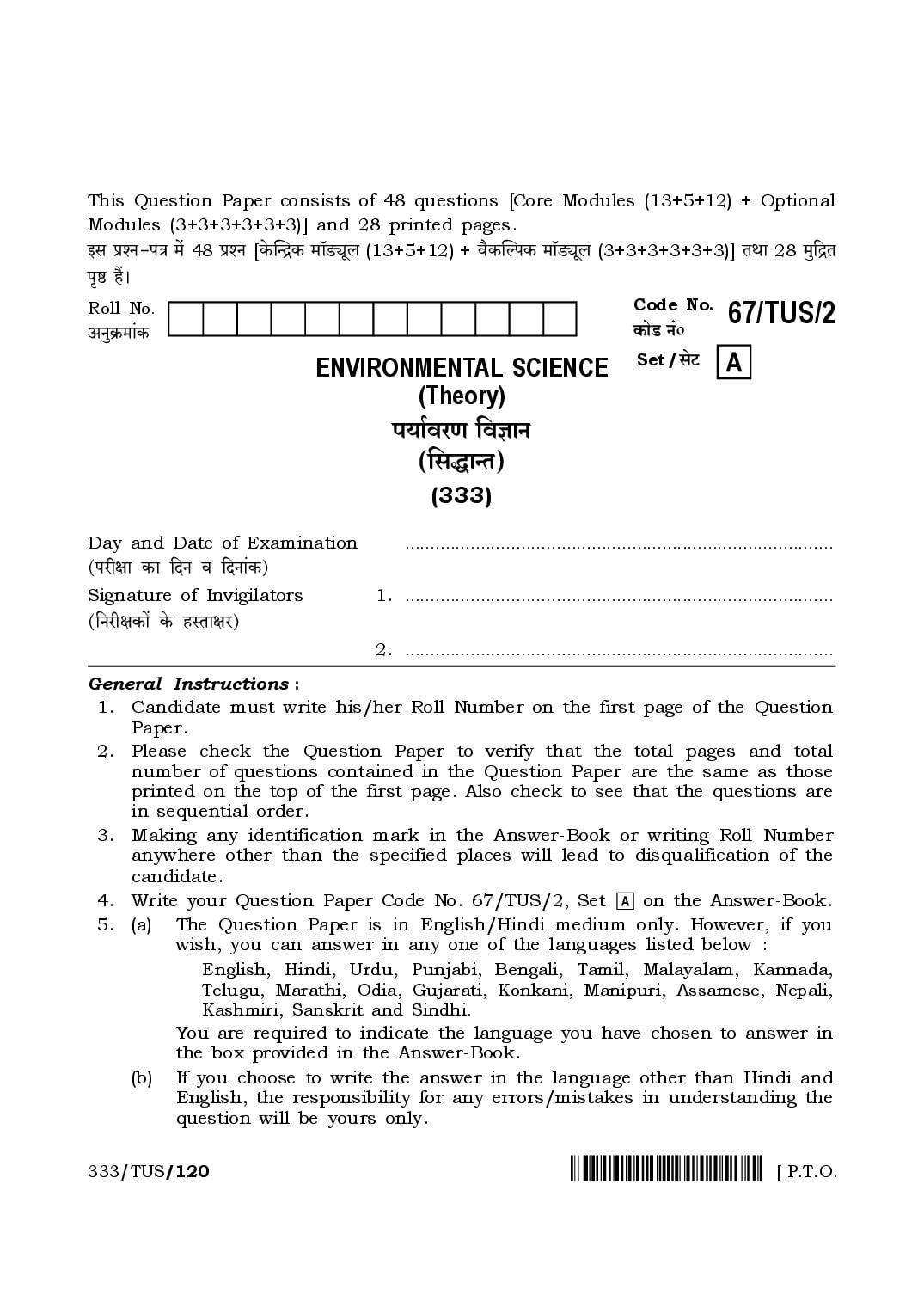
NIOS Class 12 April 2024 Question Paper Environmental Science
Finished viewing? Save it for later —
Download NIOS Class 12 April 2024 Question Paper Environmental Science (PDF · 28 pages)About NIOS Class 12 April 2024 Question Paper Environmental Science
NIOS Class 12 April 2024 Question Paper Environmental Science is available here for free download. Published by NIOS for National Institute of Open Schooling Class 12, this question paper can be viewed online or downloaded as a PDF (28 pages). Candidates preparing for National Institute of Open Schooling Class 12 can use NIOS Class 12 April 2024 Question Paper Environmental Science to understand the exam pattern, the type of questions asked, and the overall difficulty level.
Frequently Asked Questions
How can I download NIOS Class 12 April 2024 Question Paper Environmental Science?
Open this page and click the Download button to save NIOS Class 12 April 2024 Question Paper Environmental Science as a PDF. It is completely free on AglaSem Docs.
Is NIOS Class 12 April 2024 Question Paper Environmental Science free to download?
Yes. NIOS Class 12 April 2024 Question Paper Environmental Science can be viewed online and downloaded as a PDF free of cost on AglaSem Docs.
How many pages does NIOS Class 12 April 2024 Question Paper Environmental Science have?
NIOS Class 12 April 2024 Question Paper Environmental Science contains 28 pages, which you can read online or download together as a single PDF.
Where can I find more National Institute of Open Schooling Class 12 study material?
You can find more National Institute of Open Schooling Class 12 question papers, sample papers, syllabus, and answer keys on AglaSem Docs.
NIOS Class 12 April 2024 Question Paper Environmental Science – Text
Read the full text of this question paper below — useful to quickly search, copy and reference the content online without downloading the PDF.
📄 View text version (28 pages)
Page 1
Modules (3+3+3+3+3+3)] and 28 printed pages.
Bg àíZ-nÌ ‘| 48 àíZ [ Ho$pÝÐH$ ‘m°S>çyb (13+5+12) + d¡H$pënH$ ‘m°S>çyb (3+3+3+3+3+3)] VWm 28 ‘w{ÐV
n¥ð> h¢&
Code No.
Roll No.
67/TUS/2
u
AZwH«$‘m§H$ H$moS> Z§0
Set / goQ>
ENVIRONMENTAL SCIENCE
(Theory)
n¶m©daU {dkmZ
({gÕmÝV)
(333)
Day and Date of Examination .....................................................................................
(narjm H$m {XZ d {XZm§H$)
Signature of Invigilators 1. .....................................................................................
({ZarjH$m| Ho$ hñVmja)
2. .....................................................................................
General Instructions :
1. Candidate must write his/her Roll Number on the first page of the Question
Paper.
2. Please check the Question Paper to verify that the total pages and total
number of questions contained in the Question Paper are the same as those
printed on the top of the first page. Also check to see that the questions are
in sequential order.
3. Making any identification mark in the Answer-Book or writing Roll Number
anywhere other than the specified places will lead to disqualification of the
candidate.
4. Write your Question Paper Code No. 67/TUS/2, Set u on the Answer-Book.
5. (a) The Question Paper is in English/Hindi medium only. However, if you
wish, you can answer in any one of the languages listed below :
English, Hindi, Urdu, Punjabi, Bengali, Tamil, Malayalam, Kannada,
Telugu, Marathi, Odia, Gujarati, Konkani, Manipuri, Assamese, Nepali,
Kashmiri, Sanskrit and Sindhi.
You are required to indicate the language you have chosen to answer in
the box provided in the Answer-Book.
(b) If you choose to write the answer in the language other than Hindi and
English, the responsibility for any errors/mistakes in understanding the
question will be yours only.
333/TUS/120 [ P.T.O.
Page 2
1. narjmWu àíZ-nÌ Ho$ nhbo n¥ð> na AnZm AZwH«$‘m§H$ Adí¶ {bI|&
2. H¥$n¶m àíZ-nÌ H$mo Om±M b| {H$ àíZ-nÌ Ho$ Hw$b n¥ð>m| VWm àíZm| H$s CVZr hr g§»¶m h¡ {OVZr àW‘ n¥ð> Ho$ g~go
D$na N>nr h¡& Bg ~mV H$s Om±M ^r H$a b| {H$ àíZ H«${‘H$ ê$n ‘| h¢&
3. CÎma-nwpñVH$m ‘| nhMmZ-{M• ~ZmZo AWdm {Z{X©ï> ñWmZm| Ho$ A{V[aº$ H$ht ^r AZwH«$‘m§H$ {bIZo na narjmWu H$mo
A¶mo½¶ R>ham¶m Om¶oJm&
4. AnZr CÎma-nwpñVH$m na àíZ-nÌ H$m H$moS> Z§0 67/TUS/2, goQ u, {bI|&
5. (H$) n«íZ-nÌ Ho$db {hÝXr/A§J«oOr ‘| h¡& {’$a ^r, ¶{X Amn Mmh| Vmo ZrMo Xr JB© {H$gr EH$ ^mfm ‘| CÎma Xo
gH$Vo h¢ …
A§J«oOr, {hÝXr, CXÿ©, n§Om~r, ~§Jbm, V{‘b, ‘b¶mb‘, H$Þ‹S>, VobwJy, ‘amR>r, C{‹S>¶m, JwOamVr, H$m|H$Ur,
‘{Unwar, Ag{‘¶m, Zonmbr, H$í‘rar, g§ñH¥$V Am¡a {gÝYr&
H¥$n¶m CÎma-nwpñVH$m ‘| {XE JE ~m°³g ‘| {bI| {H$ Amn {H$g ^mfm ‘| CÎma {bI aho h¢&
(I) ¶{X Amn {hÝXr Ed§ A§J«oOr Ho$ A{V[aº$ {H$gr Aݶ ^mfm ‘| CÎma {bIVo h¢, Vmo àíZm| H$mo g‘PZo ‘| hmoZo dmbr
Ìw{Q>¶m|/Jb{V¶m| H$s {Oå‘oXmar Ho$db AmnH$s hmoJr&
333/TUS/120 2
Page 3
( Theory )
n¶m©daU {dkmZ
( {gÕmÝV )
(333)
Time : 3 Hours ] [ Maximum Marks : 80
g‘¶ … 3 KÊQ>o ] [ nyUmªH$ … 80
Note : (i) All 39 questions are compulsory. Maximum mark of each question has
been indicated against it.
(ii) There will be internal choice in some questions for core and optional
modules related questions. Attempt only one part of these questions
having internal choice.
(iii) Answer the questions from either Optional Module—8A or Optional
Module—8B only.
(iv) Questions from 1 to 16 (13 Core Modules and 3 Optional Modules) are
Objective Question Type—I questions (MCQs) carrying 1 mark each.
(v) Questions from 17 to 24 (5 Core Modules and 3 Optional Modules) are
Objective Question Type—II questions (comprehensive questions with
two subparts, VSA, 1 word, fill in the blanks and True/False) carrying
1 mark each.
(vi) Questions from 25 to 32 are Short Answer-type Questions from Core
Modules carrying 2 marks each with 40–50 words.
(vii) Questions from 33 and 34 are Long Answer Type—I questions from Core
Modules carrying 4 marks each with 80–100 words.
(viii) Questions from 35 and 36 are Long Answer Type—II questions from
Core Modules carrying 5 marks each with 100–150 words.
(ix) Questions from 37 to 39 are Short Answer-Type questions from Optional
Modules carrying 2 marks each with 40–50 words.
333/TUS/120 3 [ P.T.O.
Page 4
(ii) Ho$pÝÐH$ d d¡H$pënH$ ‘m°S>çyb Ho$ Hw$N> àíZm| ‘| Am§V[aH$ {dH$ën {XE JE h¢& CZ‘| H$moB© EH$ àíZ
hr H$a|&
(iii) d¡H$pënH$ ‘m°S>çyb—8A Am¡a d¡H$pënH$ ‘m°S>çyb—8B ‘| go {H$gr EH$ Ho$ àíZ hr H$a|&
(iv) àíZ 1 go 16 (13 Ho$pÝÐH$ ‘m°S>çyb Am¡a 3 d¡H$pënH$ ‘m°S>çyb) dñVw{Zð> àíZ àH$ma—I (MCQ)
àíZ h¢ Am¡a 1 A§H$ Ho$ h¢&
(v) àíZ 17 go 24 (5 Ho$pÝÐH$ ‘m°S>çyb Am¡a 3 d¡H$pënH$ ‘m°S>çyb) dñVw{Zð> àíZ àH$ma—II àíZ
({dñV¥V àíZ Xmo Cn^mJ g{hV, A{V bKw CÎma, EH$ eãX, [aº$ ñWmZ ^amo Am¡a ghr/JbV) 1
A§H$ Ho$ h¢&
(vi) àíZ 25 go 32 bKw CÎma àíZ h¢ Omo Ho$pÝÐH$ ‘m°S>çyb go {bE JE h¢& ¶o 2 A§H$ Ho$ h¢ Am¡a
BZHo$ CÎma 40 go 50 eãXm| ‘| X|&
(vii) àíZ 33 Am¡a 34 XrK© CÎma àH$ma—I àíZ h¢ Omo Ho$pÝÐH$ ‘m°S>çyb go {bE JE h¢& ¶o 4 A§H$
Ho$ h¢ Am¡a BZHo$ CÎma 80 go 100 eãXmo§ ‘| Xo§&
(viii) àíZ 35 Am¡a 36 XrK© CÎma àH$ma—II àíZ h¢ Omo Ho$pÝÐH$ ‘m°S>çyb go {bE JE h¢& ¶o 5 A§H$
Ho$ h¢ Am¡a BZHo$ CÎma 100 go 150 eãXmo§ ‘| X§o&
(ix) àíZ 37 go 39 bKw CÎma àíZ h¢ Omo d¡H$pënH$ ‘m°S>çyb go {bE JE h¢& ¶o 2 A§H$ Ho$ h¢ Am¡a
BZHo$ CÎma 40 go 50 eãXmo§ ‘| Xo§&
(1) Answers of all questions are to be given in the Answer-Book given to you.
g^r àíZm| Ho$ CÎma AmnH$mo Xr JB© CÎma-nwpñVH$m ‘| hr {bI|&
(2) 15 minutes time has been allotted to read this question paper. The question
paper will be distributed at 2:15 p.m. From 2:15 p.m. to 2:30 p.m., the
students will read the question paper only and will not write any answer on
the Answer-Book during this period.
Bg àíZ-nÌ H$mo n‹T>Zo Ho$ {bE 15 {‘ZQ> H$m g‘¶ {X¶m J¶m h¡& àíZ-nÌ H$m {dVaU Xmonha ‘|
2:15 ~Oo {H$¶m OmEJm& 2:15 ~Oo go 2:30 ~Oo VH$ N>mÌ Ho$db àíZ-nÌ H$mo n‹T>|Jo Am¡a Bg Ad{Y
Ho$ Xm¡amZ do CÎma-nwpñVH$m na H$moB© CÎma Zht {bI|Jo&
CORE MODULES
Ho$pÝÐH$ ‘m°S>çyb
OBJECTIVE QUESTIONS TYPE–I
dñVw{Zð> àíZ àH$ma–I
1. (i) According to an archeological study, foragers lived in/under
(A) huge canopies of trees
(B) temporary oval hut like shelters
(C) large houses made of mud
(D) permanent built-in houses 1
333/TUS/120 4
Page 5
(A) d¥jm| H$s ~‹S>r {dVmZ Ho$ ZrMo
(B) AñWm¶r A§S>mH$ma Pmo§n‹S>r O¡go Aml¶ ‘|
(C) {‘Å>r go ~Zo ~‹S>o Kam| ‘|
(D) n¸o$ ~Zo ‘H$mZm§o ‘|
(ii) Draught animals are
(A) animals living in wild
(B) animals used to carry goods
(C) animals that provide food
(D) animals that provide safety and security
^madmhH$ new hmoVo h¢
(A) Omo O§Jb ‘| ahVo h¢
(B) Omo ~moPm CR>mVo h¢
(C) Omo ImZm XoVo h¢
(D) Omo gwajm àXmZ H$aVo h¢
2. The correct order of evolutionary stages of human species is
(A) Homo habilis, Homo sapiens, Homo erectus
(B) Homo sapiens, Homo erectus, Homo habilis
(C) Homo habilis, Homo erectus, Homo sapiens
(D) Homo erectus, Homo Habilis, Homo sapiens 1
‘mZd Om{V H$s {dH$mgr¶ AdñWmAm| H$m ghr H«$‘ h¡
(A) hmo‘mo h¡{~{bg, hmo‘mo go{n¶Ýg, hmo‘mo Bao³Q>g
(B) hmo‘mo go{n¶Ýg, hmo‘mo Bao³Q>g, hmo‘mo h¡{~{bg
(C) hmo‘mo h¡{~{bg, hmo‘mo Bao³Q>g, hmo‘mo go{n¶Ýg
(D) hmo‘mo Bao³Q>g, hmo‘mo h¡{~{bg, hmo‘mo go{n¶Ýg
333/TUS/120 5 [ P.T.O.
Page 6
I. increase in food production
II. treatment of diseases
III. pollution of natural bodies
IV. depleting natural resources
Select the correct answer :
(A) I and II (B) II and III
(C) I and IV (D) II and IV 1
OZg§»¶m ~‹T>Zo Ho$ H$maH$ h¢
I. ImÚ nXmWm] Ho$ CËnmXZ ‘| d¥{Õ
II. amoJm| H$m BbmO
III. àmH¥${VH$ òmoVm| H$m àXÿfU
IV. àmH¥${VH$ g§gmYZm| H$m õmg
ghr CÎma H$mo Mw{ZE :
(A) I Am¡a II (B) II Am¡a III
(C) I Am¡a IV (D) II Am¡a IV
(ii) The impact of population growth on environment is
(A) conservation of water resources
(B) decreased fossil fuel consumption
(C) pollution of rivers and other water bodies
(D) decreased soil pollution
OZg§»¶m d¥{Õ H$m n¶m©daU na n‹S>Zo dmbm à^md h¡
(A) Ob g§gmYZm| H$m g§ajU
(B) Ordmí‘ B§YZm| H$s KQ>Vr ‘m±J
(C) Z{X¶m| Ed§ Aݶ Obme¶m| H$m àXÿfU
(D) ‘¥Xm H$m KQ>Vm àXÿfU
333/TUS/120 6
Page 7
(A) adaptation of species occurs
(B) new species are formed
(C) variation of species takes place
(D) dying out of species occurs 1
àOm{V CØdZ EH$ à{H«$¶m h¡ {OgHo$ Ûmam
(A) ñnrerO H$m AZwHy$bZ hmoVm h¡
(B) Z¶r ñnrerO ~ZVr h¢
(C) ñnrerO ‘| {d{dYVm AmVr h¡
(D) ñnrerO H$s ‘¥Ë¶w hmo OmVr h¡
5. (i) Steppes is a
(A) tropical forest (B) desert
(C) grassland (D) temperate forest 1
ñQ>onrO h¡
(A) CîUH${Q>~§Yr¶ dZ (B) ‘éñWb
(C) Kmg H$m ‘¡XmZ (D) erVmoîU dZ
(ii) Animal found in tundra region is
(A) rabbit (B) reindeer
(C) goat (D) bear
Qw>§S´>m joÌ ‘| nm¶m OmZo dmbm OÝVw h¡
(A) IaJmoe (B) ~mahqgJm
(C) ~H$ar (D) ^mby
333/TUS/120 7 [ P.T.O.
Page 8
(A) mangroves (B) islands
(C) estuaries (D) deltas 1
VQ>dVu dݶ n[aVÝÌ H$m EH$ CXmhaU h¡
(A) ‘¢J«mod (B) Ûrn
(C) ÁdmaZX‘wI (D) S>oëQ>m
(ii) Which one of the following is not an example of ecotone?
(A) Grassland (B) Estuary
(C) Riverbank (D) Pond
{ZåZ ‘| go ³¶m BH$moQ>moZ H$m CXmhaU Zht h¡?
(A) Kmg H$m ‘¡XmZ (B) ÁdmaZX‘wI
(C) ZXr VQ> (D) Obme¶
7. Primitive humans decided to lead a settled life as they
(A) felt the need for shelter and security
(B) were increased in numbers
(C) found that the food was insufficient through agriculture
(D) were tired of moving around 1
Am{X ‘mZd Zo ñWm¶r OrdZ {~VmZo H$s gmoMr, ³¶m|{H$
(A) CÝh| Aml¶ Am¡a gwajm H$s Amdí¶H$Vm ‘hgyg hþB©
(B) do g§»¶m ‘| ~‹T> JE Wo
(C) IoVr go àmá ImZm Oê$aV go H$‘ Wm
(D) do Ky‘Vo hþE WH$ JE Wo
333/TUS/120 8
Page 9
(A) planned part of villages
(B) planned area of cities
(C) clusters of huts or homes in parts of cities
(D) clusters of huts or homes in villages 1
JÝXr ~pñV¶m± h¢
(A) Jm±d Ho$ {Z¶mo{OV joÌ
(B) eha Ho$ {Z¶mo{OV joÌ
(C) eha ‘| Pm|n‹S>mo§ ¶m Kam| H$m EH$ Pw§S>
(D) Jm±d ‘| Pm|n‹S>m| ¶m Kam| H$m EH$ Pw§S>
(ii) Difficulty faced by migrants in urban life is
(A) inadequate hygiene and sanitation conditions
(B) poor means of transport and communication
(C) poor educational facilities for children
(D) lack of job opportunities
ehar OrdZ ‘| àdm{g¶m| H$s H${R>ZmB© h¡
(A) An¶m©á ñdÀN>Vm Am¡a ñdmñ϶ {dkmZ H$s pñW{V¶m±
(B) n[adhZ VWm g§Mma Ho$ {ZåZ gmYZ
(C) ~ƒm| Ho$ {bE {ZåZ ñVa H$s {ejm gw{dYmE±
(D) amoOJma Ho$ Adgam| H$s H$‘r
333/TUS/120 9 [ P.T.O.
Page 10
(A) productive function of forests
(B) protective function of forests
(C) regulative function of forests
(D) both productive and regulative functions of forests 1
{d{^Þ Ordm| H$mo n¶m©dmg XoZm h¡
(A) dZm| H$m CËnmXH$ H$m¶©
(B) dZmo| H$m ajmË‘H$ H$m¶©
(C) dZmo| H$m {Z¶m‘H$ H$m¶©
(D) dZm| H$m CËnmXH$ Ed§ {Z¶m‘H$ XmoZm| H$m¶©
10. Hereditary diseases are due to
(A) only genetic influences on health
(B) only behavioural influences on health
(C) only environmental influences on health
(D) both behavioural as well as environmental influences on health 1
AmZwd§{eH$ ~r‘mar/amoJ hmoVr h¡
(A) Ho$db OrZ Ho$ ñdmñ϶ na à^md Ho$ H$maU
(B) Ho$db ñdmñ϶ na ì¶mdhm[aH$ à^md Ho$ H$maU
(C) Ho$db ñdmñ϶ na n¶m©daUr¶ à^md Ho$ H$maU
(D) ñdmñ϶ na ì¶mdhm[aH$ Am¡a n¶m©daUr¶ XmoZm| à^mdm| Ho$ H$maU
11. Global warming is due to
(A) depletion of ozone layer
(B) loss of biodiversity
(C) greenhouse effect
(D) dumping of hazardous waste 1
333/TUS/120 10
Page 11
(A) AmoOmoZ naV H$s H$‘r
(B) O¡d {d{dYVm H$m ZwH$gmZ
(C) h[aV J¥h à^md
(D) IVaZmH$ An{eï>m| H$m {ZnQ>mZ
12. Which of the following is not a non-conventional source of energy? 1
(A) Geothermal power (B) Compressed natural gas
(C) Energy from biomass (D) Hydel power
{ZåZ ‘| go H$m¡Z-gm nmaån[aH$ D$Om© H$m òmoV Zht h¡?
(A) ^yVmnr¶ D$Om© (B) g§nr{S>V àmH¥${VH$ J¡g
(C) ~m¶mo‘mg go àmá D$Om© (D) Ob D$Om©
13. (i) The cropping practice in which different plants maturing at different
times are planted together, is known as
(A) polyculture (B) crop rotation
(C) multicropping (D) polyvarietal cultivation 1
dh H¥${f àUmbr {Og‘| {d{^Þ g‘¶ H$mbm| ‘| n[an¹$ hmoZo dmbo {d{^Þ àH$ma Ho$ nm¡Ym| H$s
EH$gmW ~wAmB© H$s OmVr h¡, H$hbmVr h¡
(A) ~hþeñ¶Z (B) ’$gbm| H$m MH«$sH$aU
(C) {‘{lV ’$gb CJmZm (D) nm°brd¡amBQ>b H¥${f
(ii) Sustainable agriculture is one that
(A) supports loss of production
(B) uses natural resources in an inefficient manner
(C) protects environmental imbalance
(D) will last for generations to come
333/TUS/120 11 [ P.T.O.
Page 12
(A) hm{ZH$maH$ CËnmXH$Vm H$m g‘W©Z H$aVr h¡
(B) àmH¥${VH$ g§nXm H$m AHw$ebVmnyd©H$ à¶moJ H$aVr h¡
(C) n¶m©daU Ag§VwbZ H$m g§ajU H$aVr h¡
(D) Omo ^mdr nr{‹T>¶m| Ho$ AmZo na ^r ahoJr
OPTIONAL MODULE—8A
d¡H$pënH$ ‘m°S>çyb>—8A
( Water Resource Management )
( Ob g§gmYZ à~§YZ )
14. (i) In large cities and towns, groundwater is not fit for drinking, because
(A) it contains microbes
(B) it contains high concentration of dissolved minerals
(C) it contains large amount of suspended particles
(D) it is coloured 1
~‹S>o eham| Am¡a ZJamo§ ‘| ^yOb nrZo ¶mo½¶ Zht hmoVm h¡, ³¶m|{H$
(A) Cg‘| OrdmUw hmoVo h¢
(B) Bg‘| A{YH$ ‘mÌm ‘| KwbZerb I{ZO hmoVo h¢
(C) Bg‘| A{YH$ ‘mÌm ‘| {Zb§{~V R>mog hmoVo h¢
(D) ¶h a§JrZ hmoVm h¡
(ii) The easiest method to remove large suspended impurities from water
is
(A) sedimentation (B) coagulation
(C) microstraining (D) chlorination
333/TUS/120 12
Page 13
(A) AdgmXZ (B) ñH§$XZ
(C) ‘mBH«$moñQ´>oqZJ (D) ³bmoarZZ
15. (i) Some parts of India suffer from severe water scarcity due to
(A) lack of sufficient rainfall in the country
(B) uneven distribution of rainfall in the country
(C) poor agricultural practices in the country
(D) droughts in the country 1
^maV Ho$ Hw$N> ^mJm| ‘| Ob H$s ^rfU H$‘r h¡, BgH$m H$maU h¡
(A) Xoe ‘| n¶m©á dfm© H$s H$‘r
(B) Xoe ‘| dfm© H$m Ag‘mZ {dVaU
(C) Xoe ‘| {ZåZ H¥${f nÕ{V¶m±
(D) Xoe ‘| gyIm
(ii) Tanks, ponds, check dams are structures used to
(A) store rainwater (B) recharge groundwater
(C) treat surface water (D) disinfect surface water
Q>¢H$, Obme¶, MoH$ S>¡‘ T>m±Mo h¢
(A) dfm©-Ob Ho$ g§M¶Z Ho$ {bE (B) ^yOb Ho$ nwZ…^aU Ho$ {bE
(C) gVhr Ob H$s g’$mB© Ho$ {bE (D) gVhr Ob Ho$ H$sQ>mUwemoYZ Ho$ {bE
333/TUS/120 13 [ P.T.O.
Page 14
I. it is sustainable
II. it is easily contaminated
III. it is less polluted
IV. it has a low vulnerability to drought
Select the correct answer :
(A) I, II and III (B) I, III and IV
(C) II, III and IV (D) I, II and IV 1
^y{‘Ob H$s {deofVmE± h¢
I. ¶h XrKm}n¶moJr h¡
II. ¶h AmgmZr go g§H«${‘V hmo OmVm h¡
III. ¶h H$‘ àXÿ{fV h¡
IV. Bgo gyIo go H$‘ IVam h¡
ghr CÎma H$mo Mw{ZE :
(A) I, II Am¡a III (B) I, III Am¡a IV
(C) II, III Am¡a IV (D) I, II Am¡a IV
(ii) Some techniques of groundwater management and conservation are
I. artificial recharge
II. percolation tank construction
III. catchment area protection
IV. check bund construction
Select the correct answer :
(A) I and II (B) II and III
(C) III and IV (D) I and IV
333/TUS/120 14
Page 15
I. H¥${Ì‘ nwZ^©aU
II. Q>nH$Z Q>¢H$ H$m {Z‘m©U
III. ObJ«hU joÌ g§ajU
IV. MoH$ ~ÝY H$m {Z‘m©U
ghr CÎma H$mo Mw{ZE :
(A) I Am¡a II (B) II Am¡a III
(C) III Am¡a IV (D) I Am¡a IV
OPTIONAL MODULE—8B
d¡H$pënH$ ‘m°S>çyb>—8B
( Energy and Environment )
( D$Om© VWm n¶m©daU )
14. (i) Direct use of solar energy is in
(A) wind mills (B) photosynthesis in plants
(C) photovoltaic cells (D) tidal power plants 1
à˶j gm¡a D$Om© H$m Cn¶moJ {H$¶m Om gH$Vm h¡
(A) ndZ M{¸$¶m| ‘| (B) nm¡Ym| Ho$ àH$me-g§íbofU ‘|
(C) ’$moQ>modmoëQ>mBH$ gobm| ‘| (D) Ádmar¶ D$Om© g§¶§Ìm| ‘|
(ii) Alternative source of energy is
(A) non-renewable source of energy
(B) inexhaustible source of energy
(C) harnessed without depletion
(D) non-conventional source of energy
333/TUS/120 15 [ P.T.O.
Page 16
(A) AZdrH$aUr¶ D$Om© òmoV
(B) Aj¶ D$Om© òmoV
(C) {~Zm g‘má hþE BñVo‘mb hmoZo dmbo òmoV
(D) J¡a-na§namJV D$Om© òmoV
15. (i) An example of gaseous biofuel is
(A) methane (B) gasohol
(C) carbon dioxide (D) sulphur dioxide 1
J¡gr¶ ~m¶moB§YZ H$m CXmhaU h¡
(A) ‘rWoZ (B) J¡gmohmob
(C) H$m~©Z S>mBAm°³gmBS> (D) gë’$a S>mBAm°³gmBS>
(ii) Biomass is used as/in
(A) a source of construction material
(B) a source of heat and power generation
(C) a household waste material
(D) treatment of water
~m¶mo‘mg H$m BñVo‘mb hmoVm h¡
(A) {Z‘m©U gm‘J«r Ho$ òmoV Ho$ ê$n ‘|
(B) Vmn Ed§ {dÚwV² n¡Xm H$aZo Ho$ òmoV Ho$ ê$n ‘o§
(C) Kaoby An{eï> nXmW© Ho$ ê$n ‘|
(D) Ob H$s g’$mB© ‘|
333/TUS/120 16
Page 17
(A) use less electricity
(B) are cheaper than ordinary bulbs
(C) are easily available
(D) are available in a standard shape 1
gmYmaU ~ë~ Ho$ ñWmZ na CFL H$m BñVo‘mb H$aZm Mm{hE, ³¶m|{H$ do
(A) H$‘ {~Obr H$s InV H$aVo h¢
(B) gmYmaU ~ë~m| H$s Anojm gñVo hmoVo h¢
(C) AmgmZr go {‘b OmVo h¢
(D) EH$ ‘mZH$ AmH$ma ‘| CnbãY h¢
(ii) An energy conservation plant should be developed for every household
as
(A) it is an environment friendly and economically sound action
(B) it will make use of appliances easy and convenient
(C) it will make an appliance last longer
(D) it will deplete the energy resource
à˶oH$ Ka Ho$ {bE EH$ D$Om© g§ajU ¶moOZm {dH${gV H$s OmZr Mm{hE, ³¶m|{H$
(A) ¶h n¶m©daU AZwHy$b Am¡a Am{W©H$ ê$n go g’$b à{H«$¶m h¡
(B) ¶h CnH$aUmo| H$m à¶moJ gab d gwMmé H$a XoJr
(C) ¶h CnH$aUm| H$mo b§~o g‘¶ VH$ R>rH$ aIoJr
(D) ¶h D$Om© Ho$ g§gmYZ H$mo KQ>m XoJr
333/TUS/120 17 [ P.T.O.
Page 18
Ho$pÝÐH$ ‘m°S>çyb
OBJECTIVE QUESTIONS TYPE–II
dñVw{Zð> àíZ àH$ma–II
17. (a) Expand EIA.
(b) Name two important aspects of EIA. 1+1=2
(H$) B©0 AmB0 E0 H$m nyam Zm‘ {b{IE&
(I) B©0 AmB0 E0 Ho$ Xmo ‘hÎdnyU© nhby {b{IE&
(a) What is meant by environmental clearance?
(b) Name any two projects requiring environmental clearance.
(H$) n¶m©daUr¶ AZw‘{V H$m ³¶m ‘Vb~ h¡?
(I) Eogr Xmo ¶moOZmAm| Ho$ Zm‘ {b{IE {OZ‘| n¶m©daUr¶ AZw‘{V Amdí¶H$ hmoVr h¡&
18. Answer any six questions of the following : 1×6=6
(a) “Evaluation of EIA is possible only if EIA report is reliable.” What does
this statement mean?
(b) What are village forests?
(c) What is the aim of IPM?
(d) Mention two important agriculture inputs that are avoided in organic
farming.
(e) How do exotic species often wipe out the native species?
(f) How does acid rain affect leaves of plants?
(g) Why should water be conserved for life?
(h) Fossil fuels are called non-renewable fuels. Why?
333/TUS/120 18
Page 19
(H$) ""B©0 AmB0 E0 H$m ‘yë¶m§H$Z V^r g§^d h¡ O~ B©0 AmB0 E0 [anmoQ>© {dídgZr¶ hmo&'' Bg H$WZ
H$m ³¶m ‘Vb~ h¡?
(I) J«m‘ dZ ³¶m h¢?
(J) IPM H$m ³¶m CÔoí¶ h¡?
(K) Xmo ‘hÎdnyU© H¥${f {Zdoem| Ho$ ~mao ‘| ~VmBE {OÝh| O¡d H¥${f ‘| à¶moJ Zht {H$¶m OmVm&
(L>) {dXoer àOm{V¶m± A³ga ñWmZr¶ àOm{V¶m| H$m H¡$go g’$m¶m H$a XoVr h¢?
(M) Aåbr¶ dfm© nm¡Ym| H$s n{Îm¶m| H$mo H¡$go à^m{dV H$aVr h¡?
(N>) OrdZ Ho$ {bE Ob H$m g§ajU ³¶m| {H$¶m OmZm Mm{hE?
(O) Ordmí‘ B§YZm| H$mo AZdrH$aUr¶ B§YZ H$hm OmVm h¡& ³¶m|?
19. Answer any six questions of the following : 1×6=6
(a) Name a country that had a Forest Policy since 1984.
(b) Expand the abbreviation of IPR.
(c) Which is the most dangerous consequence of population explosion?
(d) Name a chemical compound which is obtained by anaerobic digestion
of manure.
(e) Name the most abundant group of animals recorded in India.
(f) What is the thinning of stratospheric ozone layer over the Antarctic
region known as?
(g) Name the major pollutant released from oil refineries.
(h) What is the name given to tropical deciduous forests found in the
State of Kerala in India?
333/TUS/120 19 [ P.T.O.
Page 20
(H$) EH$ Xoe H$m Zm‘ ~VmBE Ohm± dZ Zr{V 1984 go bmJy h¡&
(I) IPR H$m nyam Zm‘ {b{IE&
(J) OZg§»¶m {dñ’$moQ> H$m g~go J§^ra à^md H$m¡Z-gm h¡?
(K) EH$ amgm¶{ZH$ nXmW© H$m Zm‘ {b{IE {Ogo ImX H$s Adm¶dr¶ à{H«$¶m Ûmam àmá {H$¶m Om gH$Vm
h¡&
(L>) ^maV ‘| gdm©{YH$ [aH$m°S>© {H$E JE àm{U¶m| Ho$ g‘yh H$m Zm‘ {b{IE&
(M) EoÝQ>mH©${Q>H$ joÌ Ho$ D$na g‘Vmn‘§S>br¶ AmoOmoZ naV Ho$ nVbm hmoZo H$mo ³¶m H$hVo h¢?
(N>) Vob [a’$mBZ[a¶m| go {ZH$bZo dmbo à‘wI àXÿfH$ H$m Zm‘ ~VmBE&
(O) ^maV ‘| Ho$ab amÁ¶ ‘| nmE OmZo dmbo CîUH${Q>~§Yr¶ nU©nmVr dZm| H$m ³¶m Zm‘ h¡?
20. Fill in the blanks by using the appropriate words given below (any four) :
1×4=4
(planktons, ex-situ, carcinogenic, carrying capacity, biofuel, work)
(a) Maximum pressure that the environment can withstand on account of
human activities is known as _____.
(b) Energy may be defined as capacity to do _____.
(c) Organic waste can be converted by bacteria into _____.
(d) Conservation of plants and animals outside their natural habitat is
known as _____ conservation.
(e) The cancer-causing agents are known as _____.
(f) Microscopic floating organisms such as algae and protozoans are
called _____.
333/TUS/120 20
Page 21
(ßbdH$, nañWm{ZH$, H$ma{gZmoOo{ZH$, dhZ j‘Vm, O¡d B§YZ, H$m¶©)
(H$) ‘mZd {H«$¶mH$bmnm| go n¶m©daU H$s A{YH$V‘ X~md PobZo H$s j‘Vm H$mo _____ H$hVo h¢&
(I) _____ H$aZo H$s j‘Vm H$mo D$Om© H$hVo h¢&
(J) OrdmUwAm| Ûmam O¡{dH$ An{eï> _____ ‘| ~Xbo Om gH$Vo h¢&
(K) nmXnm| Ed§ àm{U¶m| Ho$ CZHo$ n¶m©dmg Ho$ ~mha g§ajU H$mo _____ g§ajU H$hVo h¢&
(L>) H¢$ga H$m H$maU ~ZZo dmbo EOoÝQ>m| H$mo _____ H$hVo h¢&
(M) V¡aZo dmbo gyú‘ Ord O¡go EoëJr d àmoQ>moOmoAZ _____ H$hbmVo h¢&
21. Write True or False (any three) : 1×3=3
(a) A protocol is an international agreement that stands on its own but
is linked to an existing convention.
(b) Sustainable development is the development that meets the needs of
the present compromising the ability of the future generations to meet
their own needs.
(c) Overexploitation is one major cause of environmental degradations.
(d) Nag champa tree can be used to produce biodiesel.
(e) Kinetic energy of wind is converted into electrical energy and used.
ghr ¶m JbV {bI| (H$moB© VrZ) :
(H$) àmoQ>moH$m°b EH$ Eogr AÝVam©ï´>r¶ gh‘{V h¡ Omo IwX AnZo ~b na I‹S>r hmoVr h¡ naÝVw BgH$m ‘m¡OyXm
g‘Pm¡Vo Ho$ gmW Jham gå~ÝY ^r h¡&
(I) XrKmo©n¶moJr {dH$mg EH$ Eogm {dH$mg h¡ {Oggo dV©‘mZ H$s Amdí¶H$VmE± nyar hmoVr h¢ Am¡a AmJm‘r
nr{‹T>¶m| H$s Amdí¶H$VmAm| H$s ny{V© H$s j‘Vm Zht ~Zr ahVr h¡&
(J) A˶{YH$ XmohZ n¶m©daU Ho$ õmg H$m ‘w»¶ H$maU h¡&
(K) ZmJ Månm Ho$ no‹S> H$mo ~m¶moS>rOb ~ZmZo Ho$ {bE Cn¶moJ H$a gH$Vo h¢&
(L>) ndZ H$s J{VO D$Om© {dÚwV² D$Om© ‘| n[ad{V©V hmoH$a à¶moJ ‘| bmB© OmVr h¡&
333/TUS/120 21 [ P.T.O.
Page 22
d¡H$pënH$ ‘m°S>çyb>—8A
( Water Resource Management )
( Ob g§gmYZ à~§YZ )
22. Water covers about three-quarters of the earth’s surface but how much of
it is freshwater? 1
n¥Ïdr H$s gVh H$m H$ar~ VrZ-Mm¡WmB© Ob AmÀN>m{XV h¡ {H$ÝVw BgH$m {H$VZm ^mJ AbdU Ob h¡?
Name two sources of freshwater.
AbdU Ob Ho$ Xmo òmoVm| Ho$ Zm‘ {b{IE&
23. Mention two main techniques of rainwater harvesting. 1
dfm©-Ob Ho$ g§M¶Z H$s Xmo ‘w»¶ VH$ZrH|$ ~VmBE&
Mention how in ancient times houses in Western Rajasthan conserved
water.
~VmBE {H$ àmMrZ g‘¶ ‘| amOñWmZ Ho$ Kam| ‘| {H$g àH$ma Ob g§ajU hmoVm Wm&
24. What is gray water? 1
J«o dmQ>a ³¶m h¡?
Mention two ways by which wastewater can be reused.
An{eï> Ob Ho$ nwZ… à¶moJ Ho$ Xmo VarHo$ ~VmBE&
OPTIONAL MODULE—8B
d¡H$pënH$ ‘m°S>çyb>—8B
( Energy and Environment )
( D$Om© VWm n¶m©daU )
22. When growth of economy can withstand global competitiveness in terms of
energy? 1
H$~ D$Om© H$mo AW©ì¶dñWm H$s d¥{Õ Ho$ {bE d¡pídH$ à{VñnYm© H$m gm‘Zm H$aZo ¶mo½¶ ‘mZm OmEJm?
333/TUS/120 22
Page 23
D$Om© Cn^moJ Ho$ n¶m©daU na n‹S>Zo dmbo EH$ ‘hÎdnyU© à^md H$m C„oI H$s{OE&
23. What is bagasse? 1
ImoB© ³¶m h¡?
Define methanogenesis.
‘rWoZmoOoZo{gg H$s n[a^mfm Xr{OE&
24. What is the cause of air becoming wind? 1
dm¶w H$m ndZ ‘| n[ad{V©V hmoZo H$m ³¶m H$maU h¡?
Why is wind energy called indirect solar energy?
ndZ D$Om© H$mo Aà˶j gm¡a D$Om© ³¶m| H$hm OmVm h¡?
CORE MODULES
Ho$pÝÐH$ ‘m°S>çyb
SUBJECTIVE PART
{df¶{Zð> àíZ
25. What all is assessed in EIA? 2
B©0 AmB0 E0 ‘| {H$g-{H$g MrO H$m ‘yë¶m§H$Z hmoVm h¡?
26. How are forests getting denuded? 2
dZ {H$g àH$ma d¥j a{hV hmo aho h¢?
Why is extinction of wildlife species on the rise?
dݶOrdm| H$s àOm{V¶m| H$m {dbwá hmoZm ³¶mo§ ~‹T>Vm Om ahm h¡?
333/TUS/120 23 [ P.T.O.
Page 24
following factors : 2
(a) Occupation
(b) Population density
{ZåZ{b{IV H$maH$m| Ho$ AmYma na J«m‘rU Am¡a ZJar ~pñV¶m| ‘| A§Va ~VmBE :
(H$) ì¶dgm¶ (YÝYm)
(I) OZg§»¶m KZËd
28. This is an extensive, sandy region in North-West India and Eastern
Pakistan. Identify this region and name one plant species, one animal
species and one bird species found in this region. 2
¶h CÎma-npíM‘r ^maV Am¡a nydu nm{H$ñVmZ ‘| EH$ {dñV¥V aoV H$m joÌ h¡& Bgo nhMm{ZE Am¡a Bg
joÌ ‘| nmE OmZo dmbo EH$ nmXn ñnrerµO, EH$ àmUr ñnrerµO Am¡a EH$ njr ñnrerµO H$m Zm‘ ~VmBE&
29. Give two reasons to show the importance of conservation of biodiversity. 2
O¡d {d{dYVm Ho$ g§ajU H$m ‘hÎd ~VmZo Ho$ {bE Xmo H$maU Xr{OE&
30. What are two strategies for effective management and conservation of
water? 2
nmZr Ho$ Hw$eb à~§YZ d g§ajU H$s Xmo ¶w{º$¶m± ³¶m h¢?
31. Explain the following terms : 2
(a) Mutualism
(b) Commensalism
{ZåZ{b{IV eãXm| H$mo g‘PmBE :
(H$) ghOr{dVm
(I) gh¶mo{OVm
What is ecological succession? Name different types of ecological
successions.
nm[apñW{VH$s¶ AZwH«$‘ ³¶m h¡? BgHo$ {d{^Þ àH$mam| Ho$ Zm‘ ~VmBE&
333/TUS/120 24
Page 25
(a) Rhizobium
(b) Azospirillum
{ZåZ{b{IV O¡{dH$ Cd©aH$m| H$m H¥${f ‘| Cn¶moJ ~VmBE :
(H$) amBOmo{~¶‘
(I) EµOmopñn[ab‘
In the context of soil management, give two objectives of varietal
improvement of crops.
‘¥Xm à~ÝYZ Ho$ g§X^© ‘| ’$gbm| H$s {H$ñ‘m| ‘| {dH$mg bmZo Ho$ Xmo CÔoí¶ ³¶m h¢?
33. Define population. Why is it important to study population? Explain any
one point. List four major periods of human population growth. 4
OZg§»¶m H$s n[a^mfm Xr{OE& OZg§»¶m-Aܶ¶Z ³¶m| Amdí¶H$ h¡? {H$gr EH$ q~Xþ H$mo g‘PmBE&
‘mZd OZg§»¶m d¥{Õ Ho$ Mma ‘w»¶ AmdVm] H$s gyMr ~ZmBE&
What happens when cities grow? Explain the harmful effects of
urbanization on the following :
(a) Forests
(b) Socio-economic factors
(c) Availability of water
³¶m hmoVm h¡ O~ eha ~‹T>Vo h¢? {ZåZ{b{IV na eharH$aU Ho$ hm{ZH$maH$ à^md ~VmBE :
(H$) dZm| na
(I) gm‘m{OH$-Am{W©H$ H$maH$m| na
(J) Ob H$s CnbãYVm na
34. What is meant by a biosphere reserve? What are its various zones? Give
the main functions of a biosphere reserve. 4
O¡d‘§S>b Ama{jV joÌ H$m ³¶m AW© h¡? BgHo$ {d{^Þ joÌ H$m¡Z-go h¢? O¡d‘§S>b Ama{jV joÌ Ho$
‘w»¶ H$m¶© ³¶m h¢?
333/TUS/120 25 [ P.T.O.
Page 26
energy decrease at each subsequent trophic level? If autotrophs produce
100 cal of energy, how much energy will be available to herbivores and
carnivores? How can ecological efficiency be expressed? 5
nm[apñW{VH$ XjVm go Amn ³¶m g‘PVo h¢? H«$‘dVu nmofU Ho$ ñVa ‘| D$Om© H$m õmg ³¶m| hmoVm h¡?
¶{X ñdnmofr 100 H¡$bmoar H$m CËnmXZ H$aVo h¢, Vmo emH$mhmar Ord VWm ‘m§gmhmar Ord H$mo {H$VZr
D$Om© CnbãY hmoJr? nm[apñW{VH$ XjVm H$mo {H$g àH$ma 춺$ {H$¶m Om gH$Vm h¡?
36. What is noise pollution? What are its sources? Give two effects of noise
pollution on humans. In which ways it can be controlled? 5
Üd{Z àXÿfU ³¶m hmoVm h¡? BgHo$ òmoV ³¶m h¢? ‘mZdm| na Üd{Z àXÿfU Ho$ Xmo à^md Xr{OE& BgH$mo
{H$g àH$ma {Z¶§{ÌV {H$¶m Om gH$Vm h¡?
With reference to water pollution, explain the following terms :
(a) Point source pollution
(b) Thermal pollution
(c) Eutrophication
(d) Sewage
(e) Non-point source pollution
Ob àXÿfU Ho$ g§X^© ‘| {ZåZ{b{IV H$mo g‘PmBE :
(H$) {~ÝXþ òmoV àXÿfU
(I) Vmnr¶ àXÿfU
(J) gwnmofU
(K) grdoO
(L>) J¡a-{~ÝXþ òmoV àXÿfU
333/TUS/120 26
Page 27
d¡H$pënH$ ‘m°S>çyb>—8A
( Water Resource Management )
( Ob g§gmYZ à~§YZ )
37. Give two abstractive uses of water. 2
Ob H$mo {ZH$mbH$a à¶moJ H$aZo Ho$ Xmo CXmhaU Xr{OE&
38. List any four reasons for growing water shortage problem in the world. 2
{díd ‘| Ob H$s H$‘r H$s ~‹T>Vr g‘ñ¶m Ho$ H$moB© Mma H$maU ~VmBE&
List four benefits of rainwater harvesting.
dfm©-Ob Ho$ g§M¶Z Ho$ Mma bm^ ~VmBE&
39. What is watershed? Why is the water passing through the forests
relatively pure? 2
Obg§^a joÌ ³¶m hmoVm h¡? dZmo| ‘| go ~hZo/JwOaZo dmbm Ob AnojmH¥$V ewÕ ³¶m| hmoVm h¡?
What do you understand by artificial recharge to groundwater? Mention
any two methods of artificial recharge in urban areas.
^y{‘Ob Ho$ H¥${Ì‘ nwZ^©aU go Amn ³¶m g‘PVo h¢? ehar joÌm| ‘| H¥${Ì‘ nwZ^©aU Ho$ H$moB© Xmo VarHo$
~VmBE&
OPTIONAL MODULE—8B
d¡H$pënH$ ‘m°S>çyb>—8B
( Energy and Environment )
( D$Om© VWm n¶m©daU )
37. What are photovoltaic cells? Give their two uses. 2
’$moQ>modmoëQ>mBH$ gob ³¶m hmoVo h¢? BZHo$ Xmo à¶moJ ~VmBE&
333/TUS/120 27 [ P.T.O.
Page 28
be trapped in India. 2
^yVmnr¶ D$Om© H$mo n[a^m{fV H$s{OE& Xmo CXmhaU Xr{OE Ohm± go ^maV ‘| ¶h D$Om© àmá H$s Om gH$Vr
h¡&
What is a fuel cell? What is the impact of use of fuel cells on environment?
B§YZ gob ³¶m h¡? B§YZ gob Ho$ à¶moJ H$m n¶m©daU na ³¶m à^md n‹S>Vm h¡?
39. What do you understand by energy audit? What is the role of energy
auditing? 2
D$Om© Om±M go Amn ³¶m g‘PVo h¢? D$Om© Om±M H$s ³¶m ^y{‘H$m h¡?
What do you understand by energy efficient new towns? How can such
towns be created?
D$Om© Hw$eb ZE eham| go Amn ³¶m g‘PVo h¢? Eogo eha {H$g àH$ma {Z{‘©V {H$E Om gH$Vo h¢?
333/TUS/120 [24V—450] 28
Document Details
| Board / Org | NIOS |
| Exam | National Institute of Open Schooling Class 12 |
| Type | Question Paper |
| Pages | 28 |
| Language | english |
| Updated | 24 Sep 2026 |