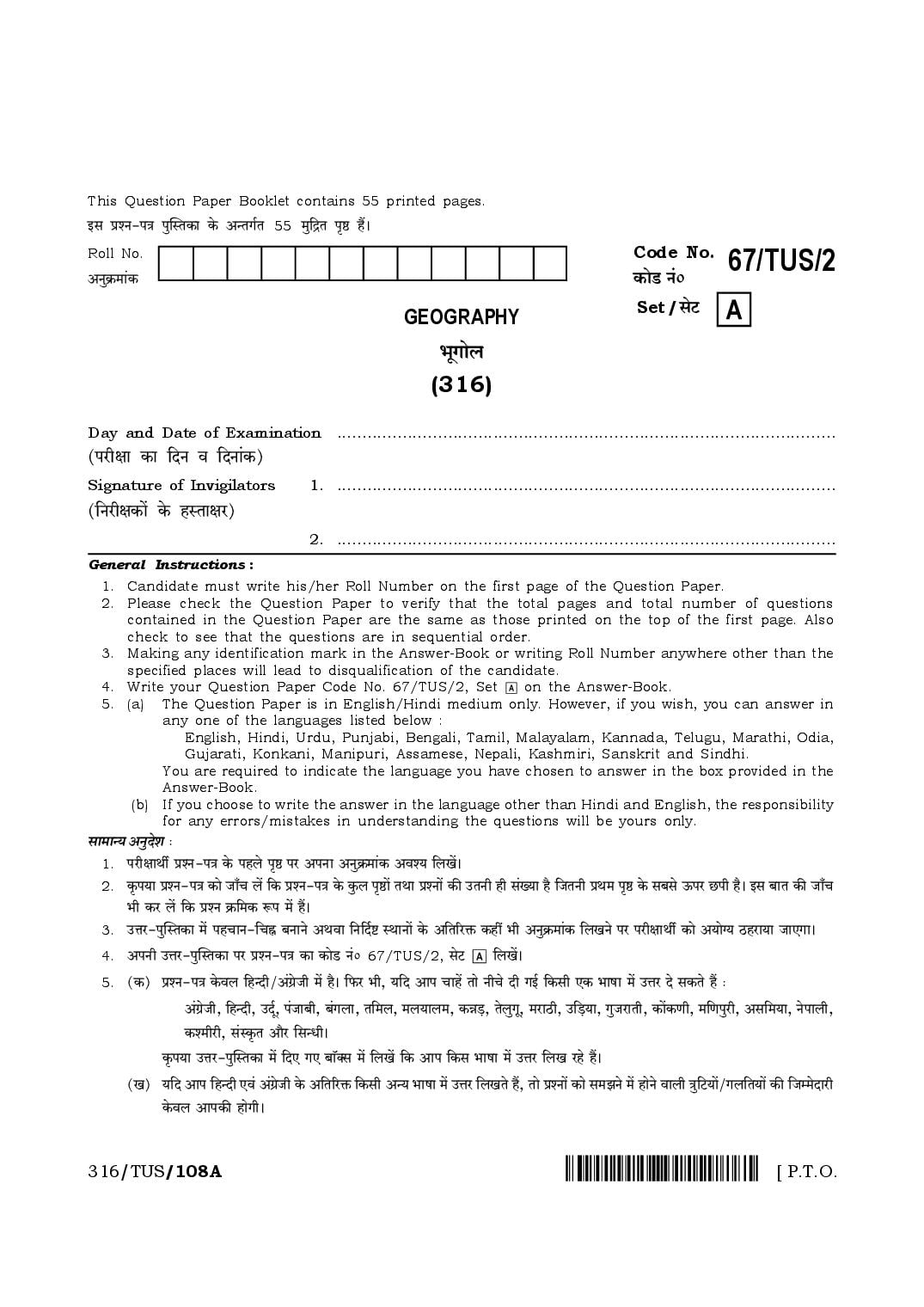
NIOS Class 12 April 2024 Question Paper Geography
Finished viewing? Save it for later —
Download NIOS Class 12 April 2024 Question Paper Geography (PDF · 55 pages)About NIOS Class 12 April 2024 Question Paper Geography
NIOS Class 12 April 2024 Question Paper Geography is available here for free download. Published by NIOS for National Institute of Open Schooling Class 12, this question paper can be viewed online or downloaded as a PDF (55 pages). Candidates preparing for National Institute of Open Schooling Class 12 can use NIOS Class 12 April 2024 Question Paper Geography to understand the exam pattern, the type of questions asked, and the overall difficulty level.
Frequently Asked Questions
How can I download NIOS Class 12 April 2024 Question Paper Geography?
Open this page and click the Download button to save NIOS Class 12 April 2024 Question Paper Geography as a PDF. It is completely free on AglaSem Docs.
Is NIOS Class 12 April 2024 Question Paper Geography free to download?
Yes. NIOS Class 12 April 2024 Question Paper Geography can be viewed online and downloaded as a PDF free of cost on AglaSem Docs.
How many pages does NIOS Class 12 April 2024 Question Paper Geography have?
NIOS Class 12 April 2024 Question Paper Geography contains 55 pages, which you can read online or download together as a single PDF.
Where can I find more National Institute of Open Schooling Class 12 study material?
You can find more National Institute of Open Schooling Class 12 question papers, sample papers, syllabus, and answer keys on AglaSem Docs.
NIOS Class 12 April 2024 Question Paper Geography – Text
Read the full text of this question paper below — useful to quickly search, copy and reference the content online without downloading the PDF.
📄 View text version (55 pages)
Page 1
Bg àíZ-nÌ nwpñVH$m Ho$ AÝVJ©V 55 ‘w{ÐV n¥ð> h¢&
Roll No. Code No.
67/TUS/2
u
AZwH$« ‘m§H$ H$moS> Z§0
Set / goQ>
GEOGRAPHY
^yJmob
(316)
Day and Date of Examination ...................................................................................................
(narjm H$m {XZ d {XZm§H$)
Signature of Invigilators 1. ...................................................................................................
({ZarjH$m| Ho$ hñVmja)
2. ...................................................................................................
General Instructions :
1. Candidate must write his/her Roll Number on the first page of the Question Paper.
2. Please check the Question Paper to verify that the total pages and total number of questions
contained in the Question Paper are the same as those printed on the top of the first page. Also
check to see that the questions are in sequential order.
3. Making any identification mark in the Answer-Book or writing Roll Number anywhere other than the
specified places will lead to disqualification of the candidate.
4. Write your Question Paper Code No. 67/TUS/2, Set u on the Answer-Book.
5. (a) The Question Paper is in English/Hindi medium only. However, if you wish, you can answer in
any one of the languages listed below :
English, Hindi, Urdu, Punjabi, Bengali, Tamil, Malayalam, Kannada, Telugu, Marathi, Odia,
Gujarati, Konkani, Manipuri, Assamese, Nepali, Kashmiri, Sanskrit and Sindhi.
You are required to indicate the language you have chosen to answer in the box provided in the
Answer-Book.
(b) If you choose to write the answer in the language other than Hindi and English, the responsibility
for any errors/mistakes in understanding the questions will be yours only.
gm‘mݶ AZwXe
o …
1. narjmWu àíZ-nÌ Ho$ nhbo n¥ð> na AnZm AZwH«$‘m§H$ Adí¶ {bI|&
2. H¥$n¶m àíZ-nÌ H$mo Om±M b| {H$ àíZ-nÌ Ho$ Hw$b n¥ð>m| VWm àíZm| H$s CVZr hr g§»¶m h¡ {OVZr àW‘ n¥ð> Ho$ g~go D$na N>nr h¡& Bg ~mV H$s Om±M
^r H$a b| {H$ àíZ H«${‘H$ ê$n ‘| h¢&
3. CÎma-nwpñVH$m ‘| nhMmZ-{M• ~ZmZo AWdm {Z{X©ï> ñWmZm| Ho$ A{V[aº$ H$ht ^r AZwH$« ‘m§H$ {bIZo na narjmWu H$mo A¶mo½¶ R>ham¶m OmEJm&
4. AnZr CÎma-nwpñVH$m na àíZ-nÌ H$m H$moS> Z§0 67/TUS/2, goQ u {bI|&
5. (H$) n«íZ-nÌ Ho$db {hÝXr/A§Jo«Or ‘| h¡& {’$a ^r, ¶{X Amn Mmh| Vmo ZrMo Xr JB© {H$gr EH$ ^mfm ‘| CÎma Xo gH$Vo h¢ …
A§Jo«Or, {hÝXr, CXÿ,© n§Om~r, ~§Jbm, V{‘b, ‘b¶mb‘, H$Þ‹S>, VobJw ,y ‘amR>r, C{‹S>¶m, JwOamVr, H$m|H$Ur, ‘{Unwar, Ag{‘¶m, Zonmbr,
H$í‘rar, g§ñH¥$V Am¡a {gÝYr&
H¥$n¶m CÎma-nwpñVH$m ‘| {XE JE ~m°³g ‘| {bI| {H$ Amn {H$g ^mfm ‘| CÎma {bI aho h¢&
(I) ¶{X Amn {hÝXr Ed§ A§Jo«Or Ho$ A{V[aº$ {H$gr Aݶ ^mfm ‘| CÎma {bIVo h¢, Vmo àíZm| H$mo g‘PZo ‘| hmoZo dmbr Ìw{Q>¶m|/Jb{V¶m| H$s {Oå‘oXmar
Ho$db AmnH$s hmoJr&
316/TUS/108A [ P.T.O.
Page 2
1. This Question Paper Booklet contains two Question Papers—one based
on revised study material marked as NEW SYLLABUS and the other based
on pre-revised study material marked as OLD SYLLABUS.
2. NEW SYLLABUS is for those candidates who have registered for 2023–2024
(Stream–I and Block–I) admission and are appearing in April–2024
Examinations.
3. OLD SYLLABUS is for those candidates who had registered before
2023–2024 (Stream–I and Block–I) admission.
4. Candidates are to answer only one Question Paper from the given two
Question Papers.
5. Candidates are not allowed to mix questions from the given two
Question Papers.
‘hÎdnU
y © {ZXe
}
1. Bg àíZ-nÌ nwpñVH$m ‘| Xmo àíZ-nÌ h¢—EH$ g§emo{YV Aܶ¶Z gm‘J«r na AmYm[aV h¡ {Og
na Z¶m nmR>çH«$‘ A§{H$V h¡ VWm Xÿgam g§emoYZ go nyd© H$s Aܶ¶Z gm‘J«r na AmYm[aV h¡
{Og na nwamZm nmR>çH«$‘ A§{H$V h¡&
2. Z¶m nmR>çH«$‘ CZ narjm{W©¶m| Ho$ {bE h¡ {OZH$m Zm‘m§H$Z 2023–2024 (ñQ´>r‘–I Am¡a
ãbm°H$–I) EoS²>{‘eZ ‘| hþAm h¡ VWm Omo Aà¡b–2024 narjm ‘| ~¡R>Zo Om aho h¢&
3. nwamZm nmR>çH«$‘ CZ narjm{W©¶m| Ho$ {bE h¡ {OZH$m Zm‘m§H$Z 2023–2024 (ñQ´>r‘–I Am¡a
ãbm°H$–I) EoS²>{‘eZ Ho$ nhbo hþAm h¡&
4. narjmWu {XE JE Xmo àíZ-nÌm| ‘| go Ho$db EH$ àíZ-nÌ go hr CÎma {bI|&
5. narjmWu H$mo Xmo àíZ-nÌm| Ho$ àíZm| H$mo {‘bmH$a CÎma XoZo H$s AZw‘{V Zht h¡&
316/TUS/108A 2
Page 3
This Question Paper contains 46 questions.
Bg àíZ-nÌ Ho$ AÝVJ©V 46 àíZ h¢&
GEOGRAPHY
^yJmob
(316)
Time : 3 Hours ] [ Maximum Marks : 80
g‘¶ … 3 KÊQ>o ] [ nyUmªH$ … 80
Note : (i) This question paper consists of 46 questions in all.
(ii) All questions are compulsory.
(iii) Marks are given against each question.
(iv) (a) Question Nos. 1 to 16 are Multiple choice-type questions (MCQs)
carrying 1 mark each. Select and write the most appropriate option
out of the four options given in each of these questions. An internal
choice has been provided in some of these questions.
(b) Question Nos. 17 to 20 are Objective-type map-based questions
carrying 1 mark each. Questions for Visually Impaired Candidates
in lieu of Question Nos. 17–20 have been given. You have to attempt
only one of the given choices in such questions. Question Nos. 21
to 30 are Objective-type questions carry 2 marks each (with
2/4 sub-parts of 1 mark each). Attempt these questions as per the
instructions given for each of the questions 21–30.
(c) Question Nos. 31 to 40 are Very short answer-type questions
carrying 2 marks each to be answered in the range of 30 to
50 words. Question Nos. 36, 37 and 40 are map-based questions.
Questions for Visually Impaired Candidates in lieu of Question
Nos. 36, 37 and 40 have been given.
(d) Question Nos. 41 to 45 are Short answer-type questions carrying
3 marks each to be answered in the range of 50 to 80 words.
(e) Question No. 46 is Long answer-type question carrying 5 marks to
be answered in the range of 80 to 120 words.
316/TUS/108A 3 [ P.T.O.
Page 4
(ii) g^r àíZ A{Zdm¶© h¢&
(iii) à˶oH$ àíZ Ho$ gm‘Zo CgHo$ {ZYm©[aV A§H$ {XE JE h¢&
(iv) (a) àíZ g§»¶m 1 go 16—~hþ{dH$ënr¶ àH$ma Ho$ àíZ (MCQs), Omo à˶oH$ 1 A§H$ H$m h¡&
à˶oH$ àíZ ‘| {XE JE Mma {dH$ënmo| ‘| go g~go Cn¶wº$ {dH$ën H$m M¶Z H$a| Am¡a {bI|&
BZ‘| go Hw$N> àíZm| ‘| Am§V[aH$ {dH$ën {X¶m J¶m h¡&
(b) àíZ g§»¶m 17 go 20—dñVw{Zð> àH$ma Ho$ ‘mZ{MÌ na AmYm[aV àíZ, Omo à˶oH$ 1 A§H$
H$m h¡& Ñ{ï>~m{YV narjm{W©¶m| Ho$ {bE àíZ g§»¶m 17 go 20 Ho$ ñWmZ na àíZ {XE JE
h¢& AmnH$mo Eogo àíZm| ‘| {XE JE {dH$ënm| ‘| go Ho$db EH$ H$m hr CÎma XoZm h¡& àíZ g§»¶m
21 go 30—dñVw{Zð> àH$ma Ho$ àíZ, Omo à˶oH$ 2 A§H$ H$m h¡ (1 A§H$ Ho$ 2/4 Cn^mJm|
Ho$ gmW)& à˶oH$ àíZ Ho$ {bE {XE JE {ZX}em| Ho$ AZwgma BZ àíZm| (21 go 30) Ho$
CÎma X|&
(c) àíZ g§»¶m 31 go 40—2 A§H$ Ho$ A{V bKyÎmar¶ àH$ma Ho$ àíZ, {OZHo$ CÎma 30 go
50 eãXm| ‘| XoZo h¢& àíZ g§»¶m 36, 37 Ed§ 40 ‘mZ{MÌ na AmYm[aV àíZ h¢& Ñ{ï>~m{YV
narjm{W©¶m| Ho$ {bE àíZ g§»¶m 36, 37 Ed§ 40 Ho$ ñWmZ na àíZ {XE JE h¢&
(d) àíZ g§»¶m 41 go 45—3 A§H$ Ho$ bKyÎmar¶ àH$ma Ho$ àíZ, {OZHo$ CÎma 50 go 80 eãXm|
‘| XoZo h¢&
(e) àíZ g§»¶m 46—5 A§H$ H$m XrK©-CÎmar¶ àH$ma H$m àíZ, {OgH$m CÎma 80 go 120 eãXm|
‘| XoZm h¡&
(1) Answers of all questions are to be given in the Answer-Book given to you.
g^r àíZm| Ho$ CÎma AmnH$mo Xr JB© CÎma-nwpñVH$m ‘| hr {bI|&
(2) 15 minutes time has been allotted to read this Question Paper. The Question
Paper will be distributed at 2:15 p.m. From 2:15 p.m. to 2:30 p.m., the
students will read the Question Paper only and will not write any answer on
the Answer-Book during this period.
Bg àíZ-nÌ H$mo n‹T>Zo Ho$ {bE 15 {‘ZQ> H$m g‘¶ {X¶m J¶m h¡& àíZ-nÌ H$m {dVaU Xmonha ‘|
2:15 ~Oo {H$¶m OmEJm& Xmonha 2:15 ~Oo go 2:30 ~Oo VH$ N>mÌ Ho$db àíZ-nÌ H$mo n‹T>|Jo Am¡a
Bg Ad{Y Ho$ Xm¡amZ do CÎma-nwpñVH$m na H$moB© CÎma Zht {bI|Jo&
1. Which river flows through a rift valley? 1
(A) Chambal (B) Yamuna
(C) Godavari (D) Narmada
316/TUS/108A 4
Page 5
(A) M§~b (B) ¶‘wZm
(C) JmoXmdar (D) Z‘©Xm
Or / AWdm
Which one is an example of periodic wind?
(A) Land and sea breezes (B) Westerlies
(C) Monsoon (D) Fohn
{ZåZ{b{IV ‘| go H$m¡Z-gm ndZ gm‘{¶H$ (Amd{YH$) ndZ H$m EH$ CXmhaU h¡?
(A) ñWbr¶ Am¡a g‘wÐr g‘ra (B) nNw>Am ndZ
(C) ‘mZgyZ (D) ’$m°Z
2. Which one of the following factors affects the salinity of the ocean? 1
(A) Denudation (B) Deposition
(C) Evaporation (D) Erosion
{ZåZ{b{IV ‘| go H$m¡Z-gm H$maH$ g‘wÐ H$s bdUVm H$mo à^m{dV H$aVm h¡?
(A) AZmÀN>mXZ (B) {ZjonU
(C) dmînrH$aU (D) AnaXZ
Or / AWdm
Which one of the following is an ocean zone divided on the basis of vertical
distribution of temperature?
(A) High latitude (B) Medium latitude
(C) Mediterranean (D) Thermocline
{ZåZ{b{IV ‘| go H$m¡Z-gm EH$ ‘hmgmJar¶ joÌ h¡, Omo Vmn‘mZ Ho$ D$Üdm©Ya {dVaU Ho$ AmYma na
{d^m{OV h¡?
(A) Cƒ Ajm§e (B) ‘ܶ‘ Ajm§e
(C) ^y‘ܶgmJar¶ (D) VmnàdUñVa (W‘m}³bmBZ)
3. Which one of the following is an example of local winds? 1
(A) Trade winds (B) Westerlies
(C) Fohn (D) Monsoon
316/TUS/108A 5 [ P.T.O.
Page 6
(A) ì¶mnm[aH$ ndZ (B) nNw>dm ndZ
(C) ’$m°Z (D) ‘mZgyZ
4. ‘Major climate group A’ refers to which one of the following? 1
(A) Polar climate (B) Tropical humid climate
(C) Dry climate (D) Warm temperate climate
"à‘wI Obdm¶w g‘yh A’ {ZåZ{b{IV ‘| go {H$gH$mo g§X{^©V H$aVm h¡?
(A) Y«wdr¶ Obdm¶w (B) CîUH${Q>~§Yr¶ AmЩ Obdm¶w
(C) ewîH$ Obdm¶w (D) J‘© erVmoîU Obdm¶w
5. The Tropic of Cancer passes through which one of the following States? 1
(A) Assam (B) Bihar
(C) Nagaland (D) Rajasthan
H$H©$aoIm {ZåZ{b{IV ‘| go {H$g amÁ¶ go hmoH$a JwOaVr h¡?
(A) Ag‘ (B) {~hma
(C) ZmJmb¢S> (D) amOñWmZ
Or / AWdm
Which one of the following rivers is included in the Ganga basin?
(A) Brahmaputra (B) Sutlej
(C) Yamuna (D) Godavari
{ZåZ{b{IV ‘| go H$m¡Z-gr ZXr J§Jm ~o{gZ ‘| em{‘b h¡?
(A) ~«÷nwÌ (B) gVbwO
(C) ¶‘wZm (D) JmoXmdar
6. Two statements Assertion (A) and Reason (R) are given below. Read both
the statements and choose the correct option. 1
Assertion (A) : The main source of surface water is precipitation.
Reason (R) : About 20% of the precipitation evaporates and becomes
atmospheric water.
(A) Both (A) and (R) are true and (R) is the correct explanation of (A)
(B) Both (A) and (R) are true but (R) is not the correct explanation of (A)
(C) (A) is true but (R) is false
(D) (A) is false but (R) is true
316/TUS/108A 6
Page 7
H$m M¶Z H$s{OE&
A{^H$WZ (A) : YamVbr¶ Ob H$m à‘wI òmoV dfm© h¡&
H$maU (R) : bJ^J 20 à{VeV dfm© H$m dmînrH$aU hmoVm h¡ Am¡a dm¶w‘§S>br¶ Ob ~Z OmVm h¡&
(A) XmoZm| (A) Am¡a (R) ghr h¢ Am¡a (R), (A) H$s ghr ì¶m»¶m h¡
(B) XmoZm| (A) Am¡a (R) ghr h¢ bo{H$Z (R), (A) H$s ghr ì¶m»¶m Zht h¡
(C) (A) ghr h¡ bo{H$Z (R) JbV h¡
(D) (A) JbV h¡ bo{H$Z (R) ghr h¡
7. The Government of India observes the ‘National Forest Martyrs Day’ on
which of the following dates? 1
(A) 12th September (B) 11th September
(C) 10th September (D) 9th September
^maV gaH$ma {ZåZ{b{IV ‘| go {H$g VmarI H$mo "amï´>r¶ dZ ehrX {Xdg' ‘ZmVr h¡?
(A) 12 {gVå~a (B) 11 {gVå~a
(C) 10 {gVå~a (D) 9 {gVå~a
8. Arabari Reserve Forest Range is located in which of the following? 1
(A) Haldia (B) West Medinipur
(C) Kolkata (D) Darjeeling
Aa~mar Ama{jV dZ joÌ {ZåZ{b{IV ‘| go {H$g‘| pñWV h¡?
(A) hpëX¶m (B) npíM‘ {‘XZmnwa
(C) H$mobH$mVm (D) Xm{O©qbJ
9. Choose the correct statement regarding the significance of Operation Flood. 1
(A) Operation Flood empowered the jute farmers.
(B) Operation Flood empowered the millet farmers.
(C) Operation Flood empowered the tea farmers.
(D) Operation Flood empowered the dairy farmers.
316/TUS/108A 7 [ P.T.O.
Page 8
(A) "Am°naoeZ âbS>' Zo OyQ> {H$gmZm| H$mo geº$ ~Zm¶m&
(B) "Am°naoeZ âbS>' Zo ~mOao Ho$ {H$gmZm| H$mo geº$ ~Zm¶m&
(C) "Am°naoeZ âbS>' Zo Mm¶ Ho$ {H$gmZm| H$mo geº$ ~Zm¶m&
(D) "Am°naoeZ âbS>' Zo S>o¶ar Ho$ {H$gmZm| H$mo geº$ ~Zm¶m&
10. Match Column—I with Column—II and choose the correct option : 1
Column—I Column—II
( Crops ) ( Leading Producer State )
(a) Wheat (i) West Bengal
(b) Rice (ii) Uttar Pradesh
(c) Tea (iii) Karnataka
(d) Coffee (iv) Assam
Options :
(A) (a)–(ii) (b)–(i) (c)–(iii) (d)–(iv)
(B) (a)–(ii) (b)–(i) (c)–(iv) (d)–(iii)
(C) (a)–(i) (b)–(ii) (c)–(iv) (d)–(iii)
(D) (a)–(i) (b)–(ii) (c)–(iii) (d)–(iv)
H$m°b‘—I H$m {‘bmZ H$m°b‘—II go H$s{OE Am¡a ghr {dH$ën H$m M¶Z H$s{OE :
H$m°b‘—I H$m°b‘—II
(’$gb) (AJ«Ur CËnmXH$ amÁ¶)
(a) Johy± (i) npíM‘ ~§Jmb
(b) Mmdb (ii) CÎma àXoe
(c) Mm¶ (iii) H$Zm©Q>H$
(d) H$m°’$s (iv) Ag‘
{dH$ën :
(A) (a)–(ii) (b)–(i) (c)–(iii) (d)–(iv)
(B) (a)–(ii) (b)–(i) (c)–(iv) (d)–(iii)
(C) (a)–(i) (b)–(ii) (c)–(iv) (d)–(iii)
(D) (a)–(i) (b)–(ii) (c)–(iii) (d)–(iv)
316/TUS/108A 8
Page 9
Match Column—I with Column—II and choose the correct option :
Column—I Column—II
( Minerals ) ( Mines )
(a) Bauxite (i) Neyveli
(b) Petroleum (ii) Katni
(c) Coal (iii) Ratnagiri
(d) Iron (iv) Digboi
Options :
(A) (a)–(i) (b)–(ii) (c)–(iii) (d)–(iv)
(B) (a)–(ii) (b)–(iv) (c)–(i) (d)–(iii)
(C) (a)–(iv) (b)–(iii) (c)–(ii) (d)–(i)
(D) (a)–(iii) (b)–(iv) (c)–(i) (d)–(ii)
H$m°b‘—I H$m {‘bmZ H$m°b‘—II go H$s{OE Am¡a ghr {dH$ën H$m M¶Z H$s{OE :
H$m°b‘—I H$m°b‘—II
(I{ZO) (ImZ)
(a) ~m°³gmBQ> (i) Zodobr
(b) noQ´>mo{b¶‘ (ii) H$Q>Zr
(c) H$mo¶bm (iii) aËZm{J[a
(d) bmohm (iv) {S>½~moB©
{dH$ën :
(A) (a)–(i) (b)–(ii) (c)–(iii) (d)–(iv)
(B) (a)–(ii) (b)–(iv) (c)–(i) (d)–(iii)
(C) (a)–(iv) (b)–(iii) (c)–(ii) (d)–(i)
(D) (a)–(iii) (b)–(iv) (c)–(i) (d)–(ii)
316/TUS/108A 9 [ P.T.O.
Page 10
was highest in India? 1
(A) 2011 (B) 2001
(C) 1991 (D) 1981
{ZåZ{b{IV ‘| go {H$g OZg§»¶m df© ‘o§ ^maV ‘| ZJar¶ OZg§»¶m H$m à{VeV g~go A{YH$ Wm?
(A) 2011 (B) 2001
(C) 1991 (D) 1981
Or / AWdm
Which one of the following States has the highest sex ratio in the country?
(A) Maharashtra (B) West Bengal
(C) Kerala (D) Gujarat
{ZåZ{b{IV ‘| go {H$g amÁ¶ ‘| Xoe ‘| g~go A{YH$ qbJmZwnmV h¡?
(A) ‘hmamï´> (B) npíM‘ ~§Jmb
(C) Ho$ab (D) JwOamV
12. Who among the following has started Sarva Shiksha Abhiyan in the
country? 1
(A) State Government of Uttar Pradesh
(B) State Government of Haryana
(C) Government of India
(D) Government of Delhi
{ZåZ{b{IV ‘| go {H$gZo Xoe ‘| gd© {ejm A{^¶mZ ewê$ {H$¶m h¡?
(A) CÎma àXoe amÁ¶ gaH$ma
(B) h[a¶mUm amÁ¶ gaH$ma
(C) ^maV gaH$ma
(D) {X„r gaH$ma
13. Which one of the following States has the highest rank in the Human
Development Index? 1
(A) Goa (B) Gujarat
(C) Kerala (D) Tamil Nadu
316/TUS/108A 10
Page 11
(A) Jmodm (B) JwOamV
(C) Ho$ab (D) V{‘bZmSw>
Or / AWdm
Which one of the following is a pillar of human development?
(A) Equity (B) Justice
(C) Democracy (D) Religion
{ZåZ{b{IV ‘| go H$m¡Z-gm ‘mZd {dH$mg H$m EH$ ñV§^ h¡?
(A) g‘Vm (B) ݶm¶
(C) bmoH$V§Ì (D) Y‘©
14. Which one of the following comes under the Millennium Development
Goals? 1
(A) Achieve universal higher education (B) Eradicate extreme poverty
(C) Promote democracy (D) Promote equality
{ZåZ{b{IV ‘| go H$m¡Z ghòmpãX {dH$mg bú¶m| (Millennium Development Goals) Ho$ A§VJ©V
AmVm h¡?
(A) gmd©^m¡‘ Cƒ {ejm H$mo àmá H$aZm (B) A˶{YH$ Jar~r H$mo {‘Q>mZm
(C) bmoH$V§Ì H$mo ~‹T>mdm XoZm (D) g‘mZVm H$mo ~‹T>mdm XoZm
Or / AWdm
Agenda-21 regarding the future environment was prepared in which of the
following conferences?
(A) Special Conference of General Assembly (New York)
(B) United Nations Millennium Summit
(C) Earth Summit (Rio)
(D) Rio + 10 (WSSD)
{ZåZ{b{IV ‘| go {H$g gå‘obZ ‘| ^{dî¶ Ho$ n¶m©daU Ho$ g§~§Y ‘| "EO|S>m-21' V¡¶ma {H$¶m J¶m Wm?
(A) ‘hmg^m H$m {deof gå‘obZ (ݶy¶m°H©$)
(B) g§¶wº$ amï´> ghòmpãX {eIa gå‘obZ
(C) n¥Ïdr {eIa gå‘obZ ([a¶mo)
(D) [a¶mo + 10 (gVV {dH$mg na {eIa gå‘obZ)
316/TUS/108A 11 [ P.T.O.
Page 12
(A) 13 (B) 11
(C) 15 (D) 17 1
Hw$b gVV {dH$mg bú¶ h¢
(A) 13 (B) 11
(C) 15 (D) 17
Or / AWdm
Which of the following UTs has achieved the highest score in the
Sustainable Development Goals index?
(A) Delhi (B) Lakshadweep
(C) Puducherry (D) Chandigarh
{ZåZ{b{IV {H$g H|$Ð-em{gV àXoe Zo gVV {dH$mg bú¶ gyMH$m§H$ ‘| CƒV‘ ñH$moa hm{gb
{H$¶m h¡?
(A) {X„r (B) bjÛrn
(C) nwXþƒao r (D) M§S>rJ‹T>
16. Which one of the following is cold wind? 1
(A) Bora (B) Fohn
(C) Chinook (D) Sirocco
{ZåZ{b{IV ‘| go H$m¡Z-gm R>§S>m ndZ h¡?
(A) ~moam (B) ’$m°Z
(C) {MZyH$ (D) {gamoH$mo
Or / AWdm
Buran cold wind is related to which one of the following regions?
(A) Central Asia and Russia (B) Rocky Mountain
(C) Alps Mountain (D) Plains of North India
~wamZ R>§S>o ndZ {ZåZ{b{IV ‘| go {H$g joÌ go g§~§{YV h¢?
(A) ‘ܶ E{e¶m Am¡a ê$g (B) am°H$s nd©V
(C) Amëßg nd©V (D) CÎma ^maV H$m ‘¡XmZr joÌ
316/TUS/108A 12
Page 13
Nos. 17, 18, 19 and 20.
{ZX}e : {XE JE ‘mZ{MÌ H$m ܶmZnyd©H$ Aܶ¶Z H$s{OE Am¡a ‘mZ{MÌ na AmYm[aV àíZ g§»¶m 17, 18,
19 Am¡a 20 Ho$ CÎma Xr{OE&
17. Identify the mountain marked as ‘A’ on the map and choose the correct
option. 1
(A) Appalachian (B) Alps
(C) Rocky (D) Andes
316/TUS/108A 13 [ P.T.O.
Page 14
(A) Eonbo{e¶Z (B) Amëßg
(C) am°H$s (D) E§S>rµO
18. Identify the plate marked ‘B’ on the map and choose the correct option. 1
(A) Caribbean plate (B) Scotia plate
(C) Nazca plate (D) Philippine plate
‘mZ{MÌ na A§{H$V ‘B’ ßboQ H$s nhMmZ H$s{OE Am¡a ghr {dH$ën H$m M¶Z H$s{OE>&
(A) H¡$[a{~¶mB© ßboQ> (B) ñH$mo{e¶m ßboQ>
(C) ZmµÁH$m ßboQ> (D) {’$brnrZ ßboQ>
19. Identify the current marked ‘C’ on the map and choose the correct option. 1
(A) California (B) Equatorial
(C) Benguela (D) Peru
‘mZ{MÌ na A§{H$V ‘C’ g‘wÐr Ymam H$s nhMmZ H$s{OE Am¡a ghr {dH$ën H$m M¶Z H$s{OE&
(A) H¡${b’$mo{Z©¶m (B) {dfwdVr¶
(C) ~|JwEbm (D) noê$
20. Identify the grassland marked ‘D’ on the map and choose the correct
option. 1
(A) Prairies (B) Pampas
(C) Canterbury (D) Downs
‘mZ{MÌ na A§{H$V ‘D’ Kmg^y{‘ H$s nhMmZ H$s{OE Am¡a ghr {dH$ën H$m M¶Z H$s{OE&
(A) ào¶arO (B) n§nmg
(C) H¢$Q>a~ar (D) S>mC§g
316/TUS/108A 14
Page 15
Question Nos. 17–20.
{ZX}e : {ZåZ{b{IV àíZ Ho$db Ñ{ï>~m{YV narjm{W©¶m| Ho$ {bE àíZ g§»¶m 17 go 20 Ho$ ñWmZ
na h¢>&
17. Which one of the following mountains is located on the eastern part of
North America? 1
(A) Appalachian (B) Alps
(C) Rocky (D) Andes
{ZåZ{b{IV nd©Vm| ‘| go H$m¡Z-gm CÎma A‘o[aH$m Ho$ nydu ^mJ na pñWV h¡?
(A) Eonbo{e¶Z (B) Amëßg
(C) am°H$s (D) E§S>rµO
18. Which one of the following plates is located in the western part of South
America? 1
(A) Caribbean plate (B) Scotia plate
(C) Nazca plate (D) Philippine plate
{ZåZ{b{IV ßboQ>m| ‘| go H$m¡Z-gr X{jU A‘o[aH$m Ho$ npíM‘r ^mJ na AdpñWV h¡?
(A) H¡$ar{~¶mB© ßboQ> (B) ñH$mo{e¶m ßboQ>
(C) ZmµOH$m ßboQ> (D) {’$brnrZ ßboQ>
19. Which one of the following currents is found in the western part of the
North American continent?
(A) California (B) Equatorial
(C) Benguela (D) Peru 1
{ZåZ{b{IV ‘| go H$m¡Z-gr ObYmam CÎma A‘o[aH$m ‘hmÛrn Ho$ npíM‘r ^mJ ‘| nmB© OmVr h¡?
(A) H¡${b’$mo{Z©¶m (B) {dfwdVr¶
(C) ~|JwEbm (D) noê$
20. Which one of the following grasslands is located in New Zealand? 1
(A) Prairies (B) Pampas
(C) Canterbury (D) Downs
{ZåZ{b{IV ‘| go H$m¡Z-gr Kmg^y{‘ ݶyOrb¢S> ‘| pñWV h¡?
(A) ào¶arO (B) n§nmg
(C) H¢$Q>a~ar (D) S>mC§g
316/TUS/108A 15 [ P.T.O.
Page 16
(a) Name the volcanic mountain of Japan.
(b) The Malwa plateau is an example of which type of plateau?
(c) The Mexican plateau is an example of which type of plateau?
(d) The Colorado plateau is an example of which type of plateau?
{ZåZ{b{IV ‘| go {H$Ýht Xmo àíZm| Ho$ CÎma EH$ ¶m Xmo eãXm| ‘| Xr{OE :
(H$) OmnmZ Ho$ Ádmbm‘wIr nd©V H$m Zm‘ {b{IE&
(I) ‘mbdm nR>ma {H$g àH$ma Ho$ nR>ma H$m CXmhaU h¡?
(J) ‘op³gH$Z nR>ma {H$g àH$ma Ho$ nR>ma H$m CXmhaU h¡?
(K) H$mobmoamS>mo nR>ma {H$g àH$ma Ho$ nR>ma H$m CXmhaU h¡?
22. Read the given paragraph carefully and answer any two of the following
questions in one or two words each : 1×2=2
Human Sustainability
Human development is a core of SDGs and most of the goals are directly
and indirectly related to this. To maintain human sustainability need to
improve human capital. Therefore to end poverty and remove hunger need
to invest in poverty eradication. Apart from this, investment is also
required in the health and education sector, access to services, nutrition,
and knowledge and skill enhancement for improvement of health and
completing economic wellbeing for all. For maintaining good health and
wellbeing have to end preventable death of newborns and children of age
below 5 years in all countries, ends the epidemics of Aids, tuberculosis,
malaria, water-borne diseases and other communicable diseases, etc.
Through development of skills and capacity building, we can promote the
wellbeing of communities and society.
(a) Identify the core of sustainable development goals (SDGs).
(b) Mention the need to maintain human sustainability.
(c) What is required to end poverty and remove hunger?
(d) How can we promote the wellbeing of communities and society?
{XE JE AZwÀN>oX H$mo ܶmZnyd©H$ n{‹T>E Am¡a {ZåZ{b{IV ‘| go {H$Ýht Xmo àíZmo| Ho$ EH$ ¶m Xmo eãXm|
‘| CÎma Xr{OE :
‘mZd gVV nmofUr¶Vm
‘mZd {dH$mg gVV {dH$mg bú¶m| H$m ‘yb h¡ Am¡a A{YH$m§e bú¶ à˶j ¶m Aà˶j ê$n go Bggo
g§~§{YV h¢& ‘mZd gVV nmofUr¶Vm H$mo ~ZmE aIZo Ho$ {bE ‘mZd ny±Or ‘| gwYma H$s Amdí¶H$Vm h¡&
Bg{bE Jar~r g‘má H$aZo Am¡a ^wI‘ar Xÿa H$aZo Ho$ {bE Jar~r CÝ‘ybZ ‘| {Zdoe H$aZo H$s Amdí¶H$Vm
316/TUS/108A 16
Page 17
Am¡a {ejm joÌ, godmAm| VH$ nh±þM, nmofU Am¡a kmZ d H$m¡eb d¥{Õ ‘| ^r {Zdoe H$s Amdí¶H$Vm
h¡& AÀN>o ñdmñ϶ Am¡a H$ë¶mU H$mo ~ZmE aIZo Ho$ {bE h‘| g^r Xoem| ‘| ZdOmV {eewAm| Am¡a
5 df© go H$‘ C‘« Ho$ ~ƒm| H$s ‘¥Ë¶w H$mo g‘má H$aZm hmoJm; ES²>g, Vno{XH$, ‘bo[a¶m, Ob-O{ZV
~r‘m[a¶m± Am¡a Aݶ g§Mmar amoJ Am{X H$s ‘hm‘mar H$mo g‘má H$aZm hmoJm& H$m¡eb Am¡a j‘Vm Ho$ {dH$mg
Ho$ ‘mܶ‘ go h‘ g‘wXm¶m| Am¡a g‘mO H$s ^bmB© H$mo ~‹T>mdm Xo gH$Vo h¢&
(H$) gVV nmofUr¶ {dH$mg bú¶m| (SDGs) Ho$ ‘yb bú¶ H$s nhMmZ H$s{OE&
(I) ‘mZdr¶ nmofUr¶Vm H$mo ~ZmE aIZo H$s Amdí¶H$Vm H$m C„oI H$s{OE&
(J) Jar~r g‘má H$aZo Am¡a ^wI‘ar Xÿa H$aZo Ho$ {bE ³¶m Amdí¶H$ h¡?
(K) h‘ g‘wXm¶mo§ Am¡a g‘mO H$s ^bmB© H$mo H¡$go ~‹T>mdm Xo gH$Vo h¢?
23. Match any two correct combinations from Column—A with Column—B : 1×2=2
Column—A Column—B
(Crops) (Leading producer)
(a) Sugarcane (i) West Bengal
(b) Floriculture (ii) Jharkhand
(c) Cotton (iii) Bihar
(d) Paddy (iv) Karnataka
(v) Uttar Pradesh
(vi) Kerala
(vii) Gujarat
H$m°b‘—A Am¡a H$m°b‘—B go {H$Ýht Xmo ghr Omo‹S>m| H$m {‘bmZ H$s{OE :
H$m°b‘—A H$m°b‘—B
(’$gb|) (AJ«Ur CËnmXH$)
(a) JÞm (i) npíM‘ ~§Jmb
(b) ’y$bm| H$s IoVr (ii) PmaI§S>
(c) H$nmg (iii) {~hma
(d) Mmdb (iv) H$Zm©Q>H$
(v) CÎma àXoe
(vi) Ho$ab
(vii) JwOamV
316/TUS/108A 17 [ P.T.O.
Page 18
(a) Name any two main sub-branches of regional geography.
(b) The study and practice of making maps and diagrams is known
as what?
(c) Name any two branches of physical geography.
(d) Name any two branches of human geography.
{ZåZ{b{IV ‘| go {H$Ýht Xmo àíZm| Ho$ CÎma EH$ ¶m Xmo eãXm| ‘| Xr{OE :
(H$) joÌr¶ ^yJmob H$s {H$Ýht Xmo ‘w»¶ CnemImAm| Ho$ Zm‘ {b{IE&
(I) ‘mZ{MÌ Ed§ AmaoI ~ZmZo Ho$ Aܶ¶Z Ed§ Aä¶mg H$mo ³¶m H$hm OmVm h¡?
(J) ^m¡{VH$ ^yJmob H$s {H$Ýht Xmo emImAm| Ho$ Zm‘ {b{IE&
(K) ‘mZd ^yJmob H$s {H$Ýht Xmo emImAm| Ho$ Zm‘ {b{IE&
25. Match any two correct combinations from Column—A with Column—B : 1×2=2
Column—A Column—B
(a) Thermal power plant (i) Katni
(b) Hydro power plant (ii) Khetri
(c) Thorium (iii) Bellary
(d) Nuclear power plant (iv) Hirakund
(v) Visakhapatnam
(vi) Kaiga
(vii) Singrauli
H$m°b‘—A Am¡a H$m°b‘—B go {H$Ýht Xmo ghr Omo‹S>m| H$m {‘bmZ H$s{OE :
H$m°b‘—A H$m°b‘—B
(a) Vmn {dÚwV² g§¶§Ì (i) H$Q>Zr
(b) Ob {dÚwV g§¶§Ì (ii) IoV‹S>r
(c) Wmo[a¶‘ (iii) ~o„mar
(d) na‘mUw e{º$ g§¶§Ì (iv) hramH§w$S>
(v) {demImnQ>Z‘
(vi) H¡$Jm
(vii) qgJam¡br
316/TUS/108A 18
Page 19
words : 1×2=2
(a) _____ is the continental margin which starts from the shoreline and
extended up to the continental edge.
(b) The flat-topped mountains (seamounts) are known as _____.
(c) The surface temperature of the oceans declines from the equator
towards _____.
(d) The Northern Hemisphere has more _____ area than that of the
Southern Hemisphere.
{ZåZ{b{IV ‘| go {H$Ýht Xmo Ho$ CÎma [aº$ ñWmZ ‘| Cn¶wº$ eãX ^aH$a Xr{OE :
(H$) _____ ‘hmÛrnr¶ ‘¾VQ> h¡ Omo VQ>aoIm go ewê$ hmoVm h¡ Am¡a ‘hmÛrnr¶ {H$Zmao VH$ ’¡$bm h¡&
(I) g‘Vb erf© dmbo nd©Vm| (g‘wÐr Q>rbm|) H$mo _____ H$hm OmVm h¡&
(J) ‘hmgmJam| H$s gVh H$m Vmn‘mZ ^y‘ܶaoIm go _____ H$s Amoa H$‘ hmo OmVm h¡&
(K) X{jU JmobmÕ© H$s VwbZm ‘| CÎmar JmobmÕ© ‘| _____ joÌ A{YH$ h¡&
27. Read the given paragraph carefully and answer the following questions
in one or two words : 1×2=2
Difference Between Weather and Climate
Weather and climate are sometimes used as synonyms but they are not
the same. The state of general atmospheric conditions with respect to
temperature and pressure is called weather. An important characteristic
of weather is it changes everyday and can be erratic. That is why we get
daily weather updates and alerts. The meteorological agencies like Indian
Meteorological Department (IMD) provide weather forecasts. On the other
hand, climate refers to the long-term averaged weather conditions of a
particular area or region.
(a) Who provides the weather forecast for India?
(b) Mention the main factor that differentiates climate from weather.
{XE JE AZwÀN>oX H$mo ܶmZnyd©H$ n{‹T>E Am¡a {ZåZ{b{IV àíZm| Ho$ CÎma EH$ ¶m Xmo eãXm| ‘| Xr{OE :
‘m¡g‘ Am¡a Obdm¶w ‘| A§Va
‘m¡g‘ Am¡a Obdm¶w H$mo H$^r-H$^r n¶m©¶dmMr Ho$ ê$n ‘| Cn¶moJ {H$¶m OmVm h¡ bo{H$Z do g‘mZ Zht
h¡§& Vmn‘mZ Am¡a X~md Ho$ g§~§Y ‘| gm‘mݶ dm¶w‘§S>br¶ XemAm| H$s pñW{V H$mo ‘m¡g‘ H$hm OmVm h¡&
‘m¡g‘ H$s EH$ ‘hÎdnyU© {deofVm ¶h h¡ {H$ ¶h ha {XZ ~XbVm h¡ Am¡a A{Z¶{‘V hmo gH$Vm h¡& ¶hr
H$maU h¡ {H$ h‘| X¡{ZH$ ‘m¡g‘ H$s AÚVZ gyMZm d gVH©$Vm {‘bVr h¡& ^maVr¶ ‘m¡g‘ {d^mJ
(AmB0 E‘0 S>r0) O¡gr ‘oQ´>mobmo{OH$b EO|{g¶m± ‘m¡g‘r nydm©Zw‘mZ àXmZ H$aVr h¢& Xÿgar Amoa Obdm¶w
{H$gr {deof joÌ ¶m àXoe H$s XrK©H$m{bH$ Am¡gV ‘m¡g‘ H$s XemAm| H$mo g§X{^©V H$aVm h¡&
(H$) ^maV Ho$ {bE ‘m¡g‘ H$m nydm©Zw‘mZ H$m¡Z CnbãY H$aVm h¡?
(I) Cg ‘w»¶ H$maH$ H$m C„oI H$s{OE Omo Obdm¶w H$mo ‘m¡g‘ go AbJ H$aVm h¡&
316/TUS/108A 19 [ P.T.O.
Page 20
(a) Who builts the coral reefs?
(b) The low islands found in the tropical oceans consisting coral reefs
surrounding a central depression is known as what?
{ZåZ{b{IV àíZm| H$m CÎma EH$ ¶m Xmo eãXm| ‘| Xr{OE :
(H$) ‘y±Jm MÅ>mZmo§ H$m {Z‘m©U H$m¡Z H$aVm h¡?
(I) CîUH${Q>~§Yr¶ ‘hmgmJam| ‘| nmE OmZo dmbo {ZMbo H|$Ðr¶ AdgmX Ho$ Amgnmg àdmb {^{Îm¶m|
go ¶wº$ {ZMbo Ûrnm| H$mo ³¶m H$hm OmVm h¡?
29. Answer of the following questions in one or two words each : 1×2=2
(a) Name the two major sources of energy which empower the various
exogenic processes.
(b) Mention an example of Intermontane plateau.
{ZåZ{b{IV àíZm| Ho$ CÎma EH$ ¶m Xmo eãXm| ‘| Xr{OE :
(H$) D$Om© Ho$ Xmo à‘wI òmoVm| Ho$ Zm‘ ~VmBE Omo {d{^Þ ~{hO©{ZH$ à{H«$¶mAm| H$mo geº$ ~ZmVo h¢&
(I) A§Vamnd©Vr¶ nR>ma H$m EH$ CXmhaU Xr{OE&
30. Answer the following questions in one or two words each : 1×2=2
(a) Name any two continents where the low pressures exist in the month
of January.
(b) What is the other name for inter tropical convergence zone?
{ZåZ{b{IV àíZm| Ho$ CÎma EH$ ¶m Xmo eãXm| ‘| Xr{OE :
(H$) {H$Ýht Xmo ‘hmÛrnm| Ho$ Zm‘ {b{IE Ohm± OZdar ‘mh ‘| {ZåZ dm¶wXm~ hmoVo h¢&
(I) A§Va-CîUH${Q>~§Yr¶ A{^gaU joÌ H$m Aݶ Zm‘ ³¶m h¡?
31. Explain two main features of the Western Ghats in India. 2
^maV ‘| npíM‘r KmQ> H$s Xmo à‘wI {deofVmAm| H$s ì¶m»¶m H$s{OE&
32. Explain any two negative impacts of green revolution on Indian agriculture. 2
^maVr¶ H¥${f na h[aV H«$m§{V Ho$ {H$Ýht Xmo ZH$mamË‘H$ à^mdm| H$mo ñnï> H$s{OE&
33. “Sun is the most vital, abundant and direct source of energy.” Explain the
statement in the context of India. 2
""gy¶©, D$Om© H$m g~go ‘hÎdnyU©, àMwa Am¡a à˶j òmoV h¡&'' ^maV Ho$ g§X^© ‘| Bg H$WZ H$s ì¶m»¶m
H$s{OE&
34. Explain the role of NITI (National Institute for Transforming India) Aayog
to achieve the objectives of sustainable development goals. 2
gVV {dH$mg bú¶m| Ho$ CÔoí¶m| H$mo àmá H$aZo Ho$ {bE Zr{V Am¶moJ H$s ^y{‘H$m H$mo ñnï> H$s{OE&
316/TUS/108A 20
Page 21
any two ways. 2
‘Zwî¶, n¶m©daU Am¡a CgH$s JwUdÎmm H$mo {H$g àH$ma à^m{dV H$a aho h¢? {H$Ýht Xmo VarH$m| H$s ì¶m»¶m
H$s{OE&
36. On the given Political Map of India (shown in Page No. 49), mark and
label the following : 2
^maV Ho$ {XE JE (n¥ð> g§»¶m 49 ‘| {XImE JE) amOZr{VH$ aoIm‘mZ{MÌ ‘| {ZåZ{b{IV H$mo A§{H$V H$s{OE
Am¡a CZHo$ Zm‘ {b{IE :
(a) Eastern State having 18 wildlife sanctuaries
18 dݶOrd A^¶maʶm| dmbm nydu amÁ¶
(b) Western State having 25 wildlife sanctuaries
25 dݶOrd A^¶maʶm| dmbm npíM‘r amÁ¶
Note : The following questions are for Visually Impaired Candidates only in
lieu of Question No. 36.
(a) Name the Eastern State having 18 wildlife sanctuaries.
(b) Name the Western State having 25 wildlife sanctuaries.
{ZX}e : {ZåZ{b{IV àíZ Ho$db Ñ{ï>~m{YV narjm{W©¶m| Ho$ {bE àíZ g§»¶m 36 Ho$ ñWmZ na h¢&
(H$) 18 dݶOrd A^¶maʶm| dmbo nydu amÁ¶ H$m Zm‘ {b{IE&
(I) 25 dݶOrd A^¶maʶm| dmbo npíM‘r amÁ¶ H$m Zm‘ {b{IE&
37. On the given Outline Map of India (shown in Page No. 51), mark and
label the following : 2
^maV Ho$ {XE JE (n¥ð> g§»¶m 51 ‘| {XImE JE) aoIm‘mZ{MÌ ‘| {ZåZ{b{IV H$mo A§{H$V H$s{OE Am¡a
CZHo$ Zm‘ {b{IE :
(a) The southern-most place on the mainland of India
^maV H$s ‘w»¶^y{‘ na X{jUV‘ ñWmZ
(b) The highest peak of Eastern Ghats
nydu KmQ> H$s g~go D±$Mr MmoQ>r
Note : The following questions are for Visually Impaired Candidates in lieu of
Question No. 37.
(a) Name the southern-most place on the mainland of India.
(b) Name the highest peak of Eastern Ghats.
316/TUS/108A 21 [ P.T.O.
Page 22
(H$) ^maV H$s ‘w»¶^y{‘ na X{jUV‘ ñWmZ H$m Zm‘ {b{IE&
(I) nydu KmQ> H$s g~go D±$Mr MmoQ>r H$m Zm‘ {b{IE&
38. Describe the different meanings of development for different people. 2
{d{^Þ bmoJm| Ho$ {bE {dH$mg Ho$ {d{^Þ AWm] H$m dU©Z H$s{OE&
39. Describe any two characteristics of the dry deciduous forests in India. 2
^maV ‘| ewîH$ nU©nmVr dZm| H$s {H$Ýht Xmo {deofVmAm| H$m dU©Z H$s{OE&
40. Answer the following questions on the basis of the given map : 2
(a) Name the State where the Gir Hills are located.
(b) Name the Island located in the Bay of Bengal.
316/TUS/108A 22
Page 23
(H$) Cg amÁ¶ H$m Zm‘ {b{IE Ohm± {Ja nhm{‹S>¶m± pñWV h¢&
(I) ~§Jmb H$s Im‹S>r ‘| pñWV Ûrn H$m Zm‘ {b{IE&
Note : The following questions are for Visually Impaired Candidates in lieu of
Question No. 40.
(a) Name the State where the Gir Hills are located.
(b) Name the Island located in the Bay of Bengal.
316/TUS/108A 23 [ P.T.O.
Page 24
(H$) Cg amÁ¶ H$m Zm‘ {b{IE Ohm± {Ja nhm{‹S>¶m± pñWV h¢&
(I) ~§Jmb H$s Im‹S>r ‘| pñWV Ûrn H$m Zm‘ {b{IE&
41. Describe three main features of the ‘Block Mountains’. 3
"ãbm°H$ nd©Vm|' H$s VrZ à‘wI {deofVmAm| H$m dU©Z H$s{OE&
42. Explain any three features of temperate grassland biome. 3
g‘erVmoîU Kmg-‘¡XmZ ~m¶mo‘ H$s {H$Ýht VrZ {deofVmAm| H$s ì¶m»¶m H$s{OE&
43. Analyze any three factors affecting the atmospheric pressure. 3
dm¶w‘§S>br¶ Xm~ H$mo à^m{dV H$aZo dmbo {H$Ýht VrZ H$maH$m| H$m {díbofU H$s{OE&
Or / AWdm
Analyze any three features of equatorial low-pressure belt.
^y‘ܶaoIr¶ {ZåZXm~ noQ>r H$s {H$Ýht VrZ {deofVmAm| H$m {díbofU H$s{OE&
44. Explain any three significances of the monsoon in the Indian economy. 3
^maVr¶ AW©ì¶dñWm ‘| ‘mZgyZ Ho$ {H$Ýht VrZ ‘hÎdm| H$s ì¶m»¶m H$s{OE&
45. “There is a great variation in the availability of water resources in India.”
Explain the statement with examples. 3
""^maV ‘| Ob g§gmYZm| H$s CnbãYVm ‘| H$m’$s {^ÞVm h¡&'' CXmhaUm| g{hV Bg H$WZ H$s ì¶m»¶m
H$s{OE&
Or / AWdm
“Water is an important constituent of the ecosystem.” Explain the
statement with examples.
""Ob nm[apñW{VH$s V§Ì H$m EH$ ‘hÎdnyU© KQ>H$ h¡&'' CXmhaUm| g{hV Bg H$WZ H$s ì¶m»¶m H$s{OE&
46. Define the term ‘sex ratio’. Explain any four reasons for the declining sex
ratio in India. 5
"qbJmZwnmV' eãX H$mo n[a^m{fV H$s{OE& ^maV ‘| qbJmZwnmV ‘| {JamdQ> Ho$ {H$Ýht Mma H$maUm| H$s ì¶m»¶m
H$s{OE&
Or / AWdm
Explain any five characteristics of Human Development Report
(2021–2022) of India.
^maV Ho$ ‘mZd {dH$mg à{VdoXZ (2021–2022) H$s {H$Ýht nm±M {deofVmAm| H$s ì¶m»¶m H$s{OE&
316/TUS/108A 24
Page 25
This Question Paper contains 46 questions.
Bg àíZ-nÌ Ho$ AÝVJ©V 46 àíZ h¢&
GEOGRAPHY
^yJmob
(316)
Time : 3 Hours ] [ Maximum Marks : 80
g‘¶ … 3 KÊQ>o ] [ nyUmªH$ … 80
Note : (i) This question paper consists of 46 questions in all.
(ii) All questions are compulsory.
(iii) Marks are given against each question.
(iv) For Optional Module, attempt all questions either from Option I or
Option II.
(v) (a) Question Nos. 1 to 16 are Multiple choice-type questions (MCQs)
carrying 1 mark each. Select and write the most appropriate option
out of the four options given in each of these questions. An internal
choice has been provided in some of these questions.
(b) Question Nos. 17 to 20 are Objective-type map-based questions
carrying 1 mark each. Questions for Visually Impaired Candidates
in lieu of Question Nos. 17–20 have been given. You have to attempt
only one of the given choices in such questions. Question Nos. 21
to 30 are Objective-type questions carrying 2 marks each (with
2/4 sub-parts of 1 mark each). Attempt these questions as per the
instructions given for each of the questions 21–30.
(c) Question Nos. 31 to 40 are Very short answer-type questions
carrying 2 marks each to be answered in the range of 30 to 50
words. Question Nos. 35 and 36 are map-based questions.
Questions for Visually Impaired Candidates in lieu of Question
Nos. 35 and 36 have been given.
(d) Question Nos. 41 to 45 are Short answer-type questions carrying
3 marks each to be answered in the range of 50 to 80 words.
(e) Question No. 46 is Long answer-type question carrying 5 marks to
be answered in the range of 80 to 120 words.
316/TUS/108A 25 [ P.T.O.
Page 26
(ii) g^r àíZ A{Zdm¶© h¢&
(iii) à˶oH$ àíZ Ho$ gm‘Zo CgHo$ {ZYm©[aV A§H$ {XE JE h¢&
(iv) d¡H$pënH$ ‘m°S>çyb Ho$ {bE, {dH$ën–I AWdm {dH$ën–II Ho$ g^r àíZm| Ho$ CÎma X|&
(v) (a) àíZ g§»¶m 1 go 16—~hþ{dH$ënr¶ àH$ma Ho$ àíZ (MCQs), Omo à˶oH$ 1 A§H$ H$m h¡&
à˶oH$ àíZ ‘| {XE JE Mma {dH$ënm| ‘| go g~go Cn¶wº$ {dH$ën H$m M¶Z H$a| Am¡a {bI|&
BZ‘| go Hw$N> àíZm| ‘| Am§V[aH$ {dH$ën {X¶m J¶m h¡&
(b) àíZ g§»¶m 17 go 20—dñVw{Zð> àH$ma Ho$ ‘mZ{MÌ na AmYm[aV àíZ Omo à˶oH$ 1 A§H$
H$m h¡& Ñ{ï>~m{YV narjm{W©¶m| Ho$ {bE àíZ g§»¶m 17 go 20 Ho$ ñWmZ na àíZ {XE JE
h¢& AmnH$mo Eogo àíZm| ‘| {XE JE {dH$ënm| ‘| go Ho$db EH$ H$m hr CÎma XoZm h¡& àíZ g§»¶m
21 go 30—dñVw{Zð> àH$ma Ho$ àíZ, Omo à˶oH$ 2 A§H$ H$m h¡ (1 A§H$ Ho$ 2/4 Cn^mJm|
Ho$ gmW)& à˶oH$ àíZ Ho$ {bE {XE JE {ZX}em| Ho$ AZwgma BZ àíZm| (21 go 30) Ho$
CÎma X|&
(c) àíZ g§»¶m 31 go 40—2 A§H$ Ho$ A{V bKyÎmar¶ àH$ma Ho$ àíZ, {OZHo$ CÎma 30 go
50 eãXm| ‘| XoZo h¢& àíZ g§»¶m 35 Ed§ 36 ‘mZ{MÌ na AmYm[aV àíZ h¢& Ñ{ï>~m{YV
narjm{W©¶m| Ho$ {bE àíZ g§»¶m 35 Ed§ 36 Ho$ ñWmZ na àíZ {XE JE h¢&
(d) àíZ g§»¶m 41 go 45—3 A§H$ Ho$ bKyÎmar¶ àH$ma Ho$ àíZ, {OZHo$ CÎma 50 go 80 eãXm|
‘| XoZo h¢&
(e) àíZ g§»¶m 46—5 A§H$ H$m XrK©-CÎmar¶ àH$ma H$m àíZ, {OgH$m CÎma 80 go 120 eãXm|
‘| XoZm h¡&
(1) Answers of all questions are to be given in the Answer-Book given to you.
g^r àíZm| Ho$ CÎma AmnH$mo Xr JB© CÎma-nwpñVH$m ‘| hr {bI|&
(2) 15 minutes time has been allotted to read this Question Paper. The Question
Paper will be distributed at 2:15 p.m. From 2:15 p.m. to 2:30 p.m., the
students will read the Question Paper only and will not write any answer on
the Answer-Book during this period.
Bg àíZ-nÌ H$mo n‹T>Zo Ho$ {bE 15 {‘ZQ> H$m g‘¶ {X¶m J¶m h¡& àíZ-nÌ H$m {dVaU Xmonha ‘|
2:15 ~Oo {H$¶m OmEJm& Xmonha 2:15 ~Oo go 2:30 ~Oo VH$ N>mÌ Ho$db àíZ-nÌ H$mo n‹T>|Jo Am¡a
Bg Ad{Y Ho$ Xm¡amZ do CÎma-nwpñVH$m na H$moB© CÎma Zht {bI|Jo&
1. Which country’s scholar first used the word ‘geography’ ? 1
(A) France (B) Greece
(C) England (D) Germany
316/TUS/108A 26
Page 27
(A) ’«$m§g (B) ¶yZmZ
(C) B§½b¢S> (D) O‘©Zr
2. Which of the following is not a part of the ocean basin? 1
(A) Continental shelf (B) Abyssal plains
(C) Ocean deep (D) Continental drift
{ZåZ{b{IV ‘| go H$m¡Z-gm ‘hmgmJa Ho$ ~o{gZ H$m ^mJ Zht h¡?
(A) ‘hmÛrnr¶ {Z‘¾ VQ> (B) {dVb ‘¡XmZ
(C) ‘hmgmJar¶ J§^ra (D) ‘hmÛrnr¶ {dñWmnZ
Or / AWdm
Which of the following has the least salinity?
(A) Dead Sea (B) Caspian Sea
(C) Baltic Sea (D) Red Sea
{ZåZ{b{IV ‘| go {H$g‘| bdUVm H$s ‘mÌm g~go H$‘ h¡?
(A) ‘¥V gmJa (B) H¡$pñn¶Z gmJa
(C) ~mpëQ>H$ gmJa (D) bmb gmJa
3. Which one of the following factors does not affect insolation? 1
(A) Angle of incidence of sun rays
(B) Transparency of atmosphere
(C) Length of the day
(D) Earth’s rotation speed
gy¶m©Vn H$mo à^m{dV H$aZo dmbm {ZåZ{b{IV ‘| go H$m¡Z-gm EH$ H$maH$ Zht h¡?
(A) gy¶© H$s {H$aUm| H$m AmnVZ H$moU
(B) dm¶w‘§S>b H$s nmaX{e©Vm
(C) {XZ H$s Ad{Y
(D) n¥Ïdr H$s n[aH«$‘ J{V
316/TUS/108A 27 [ P.T.O.
Page 28
Which of the following is not a process of direct heating of the
atmosphere?
(A) Conduction (B) Radiation
(C) Convection (D) Precipitation
{ZåZ{b{IV ‘| go H$m¡Z-gr dm¶w‘ÊS>b H$mo grYo J‘© H$aZo H$s à{H«$¶m Zht h¡?
(A) MmbZ (B) {d{H$aU
(C) g§dhZ (D) df©U
4. Which of the following is not a factor affecting climate? 1
(A) Latitudinal range (B) Longitudinal range
(C) Height above the sea level (D) Distance from sea
{ZåZ{b{IV ‘| go H$m¡Z-gm Obdm¶w H$mo à^m{dV H$aZo dmbm H$maH$ Zht h¡?
(A) Ajm§er¶ {dñVma (B) Xoem§Var¶ {dñVma
(C) g‘wÐ Vb go D±$MmB© (D) g‘wÐ go Xÿar
5. Which of the following is a second-order biome? 1
(A) Tropical biome (B) Temperate biome
(C) Tundra (D) Desert biome
{ZåZ{b{IV ‘| go H$m¡Z-gm EH$ {ÛVr¶ H«$‘ H$m Ordmo‘ h¡?
(A) CîUH${Q>~§Yr¶ Ordmo‘ (B) erVmoîUH${Q>~§Yr¶ Ordmo‘
(C) Qw>ÊS´>m (D) ‘éñWbr¶ Ordmo‘
Or / AWdm
Which of the following is not a subtropical grassland biome?
(A) Prairie (B) Savanna
(C) Steppe (D) Pampas
{ZåZ{b{IV ‘| go H$m¡Z-gm CnmoîUH${Q>~§Yr¶ Kmg^y{‘ Ordmo‘ Zht h¡?
(A) ào¶ar (B) gdmZm
(C) ñQ>onr (D) n§nm
316/TUS/108A 28
Page 29
mainland of India. 1
(A) 68 7 to 97 25 W longitude
(B) 68 7 E longitude to 97 25 W longitude
(C) 68 7 to 97 25 E longitude
(D) 68 7 W longitude to 97 25 E longitude
^maV H$s ‘w»¶^y{‘ Ho$ XoemÝVar¶ {dñVma go g§~§{YV ghr {dH$ën H$m M¶Z H$s{OE&
(A) 68 7 go 97 25 npíM‘r Xoem§Va
(B) 68 7 nydu Xoem§Va go 97 25 npíM‘r Xoem§Va
(C) 68 7 go 97 25 nydu Xoem§Va
(D) 68 7 npíM‘r Xoem§Va go 97 25 nydu Xoem§Va
7. Which of the following mountain peaks is the highest? 1
(A) Nanga Parbat (B) Namcha Barwa
(C) Kanchenjunga (D) Patkai Bum
{ZåZ{b{IV ‘| go {H$g nd©V {eIa H$s D±$MmB© gdm©{YH$ h¡?
(A) Z§Jm nd©V (B) Zm‘Mm ~adm
(C) H§$MZO§Jm (D) nQ>H$mB© ~‘
Or / AWdm
Which of the following is not located in the Eastern Hills?
(A) Garo (B) Khasi
(C) Jaintia (D) K2
{ZåZ{b{IV ‘| go H$m¡Z-gr nydmªMb nhm{‹S>¶m| ‘| pñWV Zht h¡?
(A) Jmamo (B) Imgr
(C) O¶pÝV¶m (D) K2
316/TUS/108A 29 [ P.T.O.
Page 30
(A) Height above the sea level (B) Distance from sea
(C) El-Niño (D) Precipitation
‘w§~B© H$s Obdm¶w {X„r H$s VwbZm ‘| g‘ ³¶m| h¡?
(A) g‘wÐ Vb go D±$MmB© (B) g‘wÐ go Xÿar
(C) Eb-ZrZmo (D) df©U
9. Which is not a characteristic of summer season? 1
(A) Generally hot and dry weather throughout India
(B) Rain on Coromandel Coast due to eastern monsoon
(C) Change of wind direction
(D) Heat wave prevails in the northern plains
J«rî‘ ‘m¡g‘ H$s H$m¡Z-gr {deofVm Zht h¡?
(A) gm‘mݶV… nyao ^maV ‘| J‘© Am¡a ewîH$ ‘m¡g‘
(B) nydu ‘mZgyZ go H$moamo‘§S>b VQ> na dfm©
(C) ndZm| H$s {Xem ‘| n[adV©Z
(D) CÎmar ‘¡XmZm| ‘| J‘© hdmE± MbVr h¢
10. Which of the following countries has lower land-man ratio than India? 1
(A) United States of America (B) Netherlands
(C) United Kingdom (D) China
{ZåZ{b{IV ‘| go {H$g Xoe H$m ^y{‘-‘mZd AZwnmV ^maV H$s VwbZm ‘| H$‘ h¡?
(A) g§¶wº$ amÁ¶ A‘o[aH$m (B) ZrXab¢S²>g
(C) ¶yZmBQ>oS> qH$JS>‘ (D) MrZ
316/TUS/108A 30
Page 31
Which is not the reason for degradation of agricultural land in India?
(A) Erosion (B) Salinization
(C) Mining (D) Landform
^maV ‘| H¥${f ^y{‘ Ho$ õmg H$m H$maU H$m¡Z-gm Zht h¡?
(A) AnaXZ (B) bdUrH$aU
(C) IZZ (D) ^y-AmH¥${V
11. Bhakra-Nangal Project is on which of the following rivers? 1
(A) Satluj (B) Damodar
(C) Mahanadi (D) Tungabhadra
^mI‹S>m-Zm§Jb n[a¶moOZm {ZåZ{b{IV ‘| go {H$g ZXr na h¡?
(A) gVbwO (B) Xm‘moXa
(C) ‘hmZXr (D) Vw§J^Ðm
Or / AWdm
Nagarjuna Sagar Project is located on which of the following rivers?
(A) Mahanadi (B) Satluj
(C) Narmada (D) Krishna
ZmJmOw©Z gmJa n[a¶moOZm {ZåZ{b{IV ‘| go {H$g ZXr na pñWV h¡?
(A) ‘hmZXr (B) gVbwO
(C) Z‘©Xm (D) H¥$îUm
12. Read the following features of plantation agriculture carefully and choose
the correct option : 1
I. Well-organised and managed cultivation
II. A single crop is planted on a large scale
III. Wheat and rice are its main crops
IV. It requires large-scale investment
Options :
(A) I, II and III are correct (B) II, III and IV are correct
(C) I, II and IV are correct (D) I, III and IV are correct
316/TUS/108A 31 [ P.T.O.
Page 32
I. gwì¶dpñWV Ed§ à~§{YV gw{dYmAm| go ¶wº$ H¥${f
II. {H$gr EH$ ’$gb H$mo ~‹S>o n¡‘mZo na bJm¶m OmVm h¡
III. Johÿ± Am¡a Mmdb BgH$s à‘wI ’$gb| h¢
IV. BgHo$ {bE ~‹S>o n¡‘mZo na {Zdoe H$s Amdí¶H$Vm hmoVr h¡
{dH$ën :
(A) I, II Am¡a III ghr h¢ (B) II, III Am¡a IV ghr h¢
(C) I, II Am¡a IV ghr h¢ (D) I, III Am¡a IV ghr h¢
13. The leading sugarcane producing State is
(A) Punjab (B) Uttar Pradesh
(C) Bihar (D) Madhya Pradesh 1
JÞm CËnmXH$ AJ«Ur amÁ¶ h¡
(A) n§Om~ (B) CÎma àXoe
(C) {~hma (D) ‘ܶ àXoe
Or / AWdm
The leading rice producing State is
(A) Haryana (B) Jharkhand
(C) West Bengal (D) Bihar
Mmdb CËnmXH$ AJ«Ur amÁ¶ h¡
(A) h[a¶mUm (B) PmaI§S>
(C) npíM‘ ~§Jmb (D) {~hma
14. India falls in which of the following categories of Human Development
Index? 1
(A) Very high (B) High
(C) Medium (D) Low
316/TUS/108A 32
Page 33
(A) A{V Cƒ (B) Cƒ
(C) ‘ܶ‘ (D) {ZåZ
Or / AWdm
Which of the following is not a basic dimension of the Human
Development Index?
(A) Long and healthy life
(B) To acquire knowledge
(C) Living a polite and decent life
(D) Human international relations
{ZåZ{b{IV ‘| go H$m¡Z-gm ‘mZd {dH$mg gyMH$m§H$ H$m AmYma^yV Am¶m‘ Zht h¡?
(A) XrK© Ed§ ñdñW OrdZ (B) kmZ àmá H$aZm
(C) {eï> Am¡a embrZ OrdZ OrZm (D) ‘mZd Ho$ A§Vam©ï´>r¶ g§~§Y
Attempt any one part as per your optional module
AnZo d¡H$pënH$ ‘m°S²>¶yb Ho$ AZwgma {H$gr EH$ ^mJ H$m CÎma X|
OPTION–I
{dH$ën>–I
( Local Area Planning )
( ñWmZr¶ joÌ ¶moOZm )
15. Data available in records or already collected by others is called
(A) primary (B) secondary
(C) tertiary (D) business related 1
A{^boI ‘| A§{H$V Am±H$‹S>m| ¶m nhbo go hr Xÿgam| Ho$ Ûmam EH${ÌV Am±H$‹S>mo| H$mo H$hm OmVm h¡
(A) àmW{‘H$ (B) {ÛVr¶H$
(C) V¥Vr¶H$ (D) ì¶dgm¶ g§~§Yr
316/TUS/108A 33 [ P.T.O.
Page 34
(A) Provision of basic social amenities
(B) Arrangement for economic businesses
(C) Environmental quality control
(D) Landscape control
‘{bZ ~ñVr Ho$ gwYma Ho$ {bE H$m¡Z-gm Cn¶wº$ gwPmd Zht h¡?
(A) ‘yb^yV gm‘m{OH$ gwI-gmYZm| H$s ì¶dñWm
(B) Am{W©H$ Y§Ym| Ho$ {bE ì¶dñWm
(C) n¶m©daUr¶ JwUdÎmm {Z¶§ÌU
(D) ^y-AmH¥${V {Z¶§ÌU
OPTION–II
{dH$ën>–II
( Geography of Tourism in India )
( ^maV ‘| n¶©Q>Z H$m ^yJmob )
15. The west terminal station of the East-West Corridor is
(A) Ahmedabad (B) Gandhinagar
(C) Porbandar (D) Dandi 1
nyd©-npíM‘ H$m°[aS>moa H$m npíM‘ Q>{‘©Zb ñQ>oeZ h¡
(A) Ah‘Xm~mX (B) Jm±YrZJa
(C) nmoa~§Xa (D) S>m§S>r
16. Which of the following is an innovative tourism? 1
(A) Memorial tourism (B) Medical tourism
(C) Religious tourism (D) Archaeological tourism
{ZåZ{b{IV ‘| go H$m¡Z-gm EH$ ZdàdV©Zr¶ n¶©Q>Z h¡?
(A) ñ‘maH$ n¶©Q>Z (B) {M{H$Ëgm n¶©Q>Z
(C) Ym{‘©H$ n¶©Q>Z (D) nwamVËd n¶©Q>Z
316/TUS/108A 34
Page 35
Nos. 17, 18, 19 and 20.
{ZX}e : {XE JE ‘mZ{MÌ H$m ܶmZnyd©H$ Aܶ¶Z H$s{OE Am¡a ‘mZ{MÌ na AmYm[aV àíZ g§»¶m 17, 18,
19 Am¡a 20 Ho$ CÎma Xr{OE&
17. Identify the plateau marked ‘A’ on the map.
(A) Deccan Plateau (B) Paraná Plateau
(C) Kimberley Plateau (D) Cotopaxi Plateau 1
316/TUS/108A 35 [ P.T.O.
Page 36
(A) X¸$Z nR>ma (B) namZm nR>ma
(C) qH$~abr nR>ma (D) H$moQ>mon¡³gr nR>ma
18. Identify the plateau marked ‘B’ on the map. 1
(A) Drakensberg Plateau (B) Siberian Plateau
(C) Mongolian Plateau (D) Tibet Plateau
‘mZ{MÌ na A§{H$V ‘B’ nR>ma H$s nhMmZ H$s{OE&
(A) S´>oHo$Ýg~J© nR>ma (B) gmB~o[a¶mB© nR>ma
(C) ‘§Jmo{b¶mB© nR>ma (D) {Vã~V nR>ma
19. Identify the volcano marked ‘C’ on the map. 1
(A) Fujiyama (B) Etna
(C) Krakatoa (D) Kilimanjaro
‘mZ{MÌ na A§{H$V ‘C’ Ádmbm‘wIr H$s nhMmZ H$s{OE&
(A) ’y$Or¶m‘m (B) EQ>Zm
(C) H«$mH$mQ>moAm (D) {H${b‘§Omamo
20. Identify the ‘D’ plate marked on the map. 1
(A) Caribbean Plate (B) Najka Plate
(C) Caroline Plate (D) Arabian Plate
‘mZ{MÌ na A§{H$V ‘D’ ßboQ> H$s nhMmZ H$s{OE&
(A) H¡$[a{~¶Z ßboQ> (B) ZmµÁH$m ßboQ>
(C) H¡$amo{bZ ßboQ> (D) Aao{~¶m ßboQ>
316/TUS/108A 36
Page 37
Nos. 17, 18, 19 and 20.
{ZX}e : {ZåZ{b{IV àíZ Ho$db Ñ{ï>~m{YV Aä¶{W©¶m| Ho$ {bE àíZ g§»¶m$ 17, 18, 19 Ed§ 20 Ho$
ñWmZ na h¢&
17. Which of the following plateaus is located in Australia? 1
(A) Deccan Plateau (B) Paraná Plateau
(C) Kimberley Plateau (D) Cotopaxi Plateau
{ZåZ{b{IV ‘| go H$m¡Z-gm nR>ma Am°ñQ´>o{b¶m ‘| pñWV h¡?
(A) X¸$Z nR>ma (B) namZm nR>ma
(C) qH$~abr nR>ma (D) H$moQ>mon¡³gr nR>ma
18. Which of the following plateaus is located in the southern part of Africa? 1
(A) Drakensberg Plateau (B) Siberian Plateau
(C) Mongolian Plateau (D) Tibet Plateau
{ZåZ{b{IV ‘| go H$m¡Z-gm nR>ma A’«$sH$m Ho$ X{jUr ^mJ ‘| pñWV h¡?
(A) S´>oHo$Ýg~J© nR>ma (B) gmB~o[a¶mB© nR>ma
(C) ‘§Jmo{b¶mB© nR>ma (D) {Vã~V nR>ma
19. Which of the following volcanoes is located between the islands of Java
and Sumatra? 1
(A) Fujiyama (B) Etna
(C) Krakatoa (D) Kilimanjaro
{ZåZ{b{IV ‘| go H$m¡Z-gm Ádmbm‘wIr Omdm Am¡a gw‘mÌm Ûrnm| Ho$ ~rM pñWV h¡?
(A) ’y$Or¶m‘m (B) EQ>Zm
(C) H«$mH$mQ>moAm (D) {H${b‘§Omamo
20. Which of the following plates is located in the west coast of South America? 1
(A) Caribbean Plate (B) Najka Plate
(C) Caroline Plate (D) Arabian Plate
{ZåZ{b{IV ‘| go H$m¡Z-gr ßboQ> X{jU A‘o[aH$m Ho$ npíM‘ VQ> na pñWV h¡?
(A) H¡$[a{~¶Z ßboQ> (B) ZmµÁH$m ßboQ>
(C) H¡$amo{bZ ßboQ> (D) Aao{~¶m ßboQ>
316/TUS/108A 37 [ P.T.O.
Page 38
(a) Name those two conditions due to which the load of the river starts
getting deposited.
(b) V-shaped valley is formed at which stage of the river?
(c) In which part of its course does the river form alluvial fans?
(d) At what stage does a river form a delta?
{ZåZ{b{IV àíZm| ‘| go {H$Ýht Xmo Ho$ CÎma 1 ¶m 2 eãXmo| ‘| Xr{OE :
(H$) CZ Xmo XemAm| Ho$ Zm‘ ~VmBE {OZHo$ H$maU ZXr H$m ^ma {Zjo{nV hmoZo bJVm h¡&
(I) V AmH$ma H$s KmQ>r H$m {Z‘m©U ZXr H$s {H$g AdñWm ‘| hmoVm h¡?
(J) Obmo‹T> n§I ZXr AnZo ‘mJ© ‘| {H$g ^mJ ‘| ~ZmVr h¡?
(K) S>oëQ>m H$m {Z‘m©U ZXr {H$g AdñWm ‘| H$aVr h¡?
22. Answer any two of the following by filling the blanks with appropriate
words : 1×2=2
(a) The major source of energy on the earth’s surface is _____.
(b) Solar radiation coming towards the earth in the form of short waves
is called _____.
(c) When heat from a heat source directly reaches an object through
waves, then that process is called _____.
(d) Horizontal transport of heat by winds is called _____.
{ZåZ{b{IV ‘| go {H$Ýht Xmo Ho$ CÎma [aº$ ñWmZ ‘| Cn¶wº$ eãX ^aH$a Xr{OE :
(H$) n¥Ïdr H$s gVh na D$Om© H$m à‘wI òmoV _____ h¡&
(I) bKw Va§Jm| Ho$ ê$n ‘| n¥Ïdr H$s Amoa AmZo dmbr gm¡a {d{H$aU H$mo _____ H$hVo h¢&
(J) O~ {H$gr Vmn òmoV go Vmn Va§Jm| Ûmam {H$gr dñVw VH$ grYo nhþ±MVm h¡, Vmo Cg à{H«$¶m H$mo
_____ H$hVo h¢&
(K) ndZm| Ûmam Vmn H$m j¡{VO ñWmZm§VaU _____ H$hbmVm h¡&
316/TUS/108A 38
Page 39
1×2=2
(a) Invariance of temperature is local and temporal.
(b) The situation of inversion of temperature is found more in the plains.
{ZåZ{b{IV H$WZm| ‘| go H$m¡Z-gm ghr h¡ Am¡a H$m¡Z-gm JbV ~VmBE :
(H$) Vmn H$s {dbmo‘Vm ñWmZr¶ Ed§ H$‘ g‘¶ Ho$ {bE hmoVr h¡&
(I) Vmn H$s {dbmo‘Vm H$s pñW{V ‘¡XmZm| ‘| A{YH$ nmB© OmVr h¡&
24. Make any two correct pairs from Column—A and Column—B : 1×2=2
Column—A Column—B
( Climate group ) ( Climate type )
(a) A (i) Desert climate
(b) B (ii) Mediterranean climate
(c) C (iii) Taiga climate
(d) D (iv) Tropical rainforest
(v) Tundra climate
(vi) Climate of snow covered region
H$m°b‘—A Am¡a H$m°b‘—B ‘| go H$moB© Xmo ghr Omo‹S>o ~ZmBE :
H$m°b‘—A H$m°b‘—B
( Obdm¶w dJ© ) ( Obdm¶w àH$ma )
(a) A (i) ‘éñWbr¶ Obdm¶w
(b) B (ii) ^y‘ܶgmJar¶ Obdm¶w
(c) C (iii) Q>¡Jm Obdm¶w
(d) D (iv) CîUH${Q>~§Yr¶ dfm©dZ
(v) Qw>ÊS´>m Obdm¶w
(vi) {h‘mÀN>m{XV àXoe H$s Obdm¶w
316/TUS/108A 39 [ P.T.O.
Page 40
(a) Write the latitudinal extension of the northern temperate zone.
(b) Write the latitudinal extension of the southern cold temperate zone.
(c) In which thermal zone does the south polar region fall?
(d) Mention the latitudinal expansion of the tropical region.
{ZåZ{b{IV àíZm| ‘| go {H$Ýht Xmo Ho$ CÎma 1 ¶m 2 eãXm| ‘| Xr{OE :
(H$) CÎmar erVmoîU H${Q>~§Y H$m Ajm§er¶ {dñVma {b{IE&
(I) X{jUr erV erVmoîU H${Q>~§Y H$m Ajm§er¶ {dñVma {b{IE&
(J) X{jU Y«wdr¶ joÌ {H$g Vmn H${Q>~§Y ‘| AmVm h¡?
(K) CîUH${Q>~§Yr¶ àXoe Ho$ Ajm§er¶ {dñVma H$m C„oI H$s{OE&
26. Answer the following questions in 1 or 2 words each : 1×2=2
(a) By what name are grasslands known in Eurasia?
(b) Mention the name of the grassland located in the continent of South
America.
{ZåZ{b{IV àíZm| Ho$ 1 ¶m 2 eãXm| ‘| CÎma Xr{OE :
(H$) ¶yao{e¶m ‘| Kmg^y{‘ H$mo {H$g Zm‘ go OmZm OmVm h¡?
(I) X{jU A‘o[aH$m ‘hmÛrn ‘| pñWV Kmg^y{‘ Ho$ Zm‘ H$m C„oI H$s{OE&
27. Read the given paragraph carefully and answer the following questions in
1 or 2 words each : 1×2=2
Solution of Land Problems
To deal with these problems, the country has adopted a two-fold approach;
physical and social. Physical reclamation of land is achieved through
chemical treatment of water-logged soils and is followed with scientific
rotation of crops. Similarly, land rendered useless by river action and river
floods are also reclaimed after necessary treatment to restore their fertility
and texture. Physical reclamation of desert lands calls for more sustained
efforts. It requires introduction of suitable natural vegetation and canal or
well irrigation or even both.
(a) Mention two methods for land reform.
(b) Mention any two problems of land.
316/TUS/108A 40
Page 41
^y{‘ H$s g‘ñ¶mAm| H$m g‘mYmZ
^y{‘ H$s g‘ñ¶mAm| Ho$ g‘mYmZ Ho$ {bE Xoe ‘| ^m¡{VH$ Am¡a gm‘m{OH$ Xmo Ñ{ï>H$moU AnZmE JE h¢&
ObmH«$mÝV ‘¥Xm H$s amgm¶{ZH$ à{H«$¶m Ûmam ^y{‘ H$m ^m¡{VH$ CÕma {H$¶m Om ahm h¡& BgHo$ ~mX Bg
^y{‘ na d¡km{ZH$ T>§J go eñ¶mdV©Z AnZm¶m OmVm h¡& Bgr àH$ma dh ^y{‘ Omo ZXr-{H«$¶mAm| Am¡a ZXr
H$s ~m‹T>m| Ûmam ~oH$ma hmo JB© h¡, BgH$m CÕma Amdí¶H$ {H«$¶mAm| Ûmam H$aHo$ CgH$s Cd©aVm d ~ZmdQ>
dm{ng bmB© OmVr h¡& ‘éñWbr ^y{‘ Ho$ ^m¡{VH$ CÕma Ho$ {bE gVV à¶mg {H$E OmVo h¢& BgHo$ {bE
Cn¶wº$ àmH¥${VH$ dZñn{V CJmZm Am¡a Zha ¶m Hy$n qgMmB© H$s gw{dYmE± àXmZ H$aZm Oê$ar h¡&
(H$) ^y{‘ gwYma Ho$ {bE Xmo VarH$m| H$m C„oI H$s{OE&
(I) ^y{‘ H$s {H$Ýht Xmo g‘ñ¶mAm| H$m C„oI H$s{OE&
28. Read the given paragraph carefully and answer any two of the following
questions in 1 or 2 words each : 1×2=2
Surface Water
The main source of surface water is precipitation. About 20 percent part
of the precipitation evaporates and mixes with the environment. A part of
the running water goes underground. The large part of surface water is
found in rivers, riverlets, ponds and lakes. Remaining water flows into the
seas, oceans. Water found on the surface is called surface water.
About two-third of the total surface water flows into three major rivers of
the country—Indus, Ganges and Brahmaputra. The water storage capacity
of reservoirs constructed in India so far is about 174 billion cubic metres.
At the time of independence, the water storage capacity was only 18 billion
cubic metres. Hence water storage capacity has increased about ten times.
(a) Define surface water.
(b) Mention the main sources of surface water.
(c) Mention the difference in the storage capacity of water resources at
present and at the time of independence.
(d) What percentage of precipitation evaporates?
316/TUS/108A 41 [ P.T.O.
Page 42
‘| Xr{OE :
n¥ð>r¶ Ob
YamVb na n¥ð>r¶ Ob H$m ‘yb òmoV df©U h¡& df©U H$m bJ^J 20 à{VeV ^mJ dmpînV hmoH$a
dm¶w‘§S>b ‘| {dbrZ hmo OmVm h¡& àdm{hV Ob H$m Hw$N> A§e ^y{‘JV hmo OmVm h¡& n¥ð>r¶ Ob H$m
EH$ ~‹S>m ^mJ YamVb na Z{X¶m|-Zmbm|, Vmbm~m| VWm Prbm| ‘| {‘bVm h¡& eof Ob ~hH$a
gmJa-‘hmgmJam| ‘| Om {‘bVm h¡& ^y-n¥ð> na nm¶o OmZo dmbo Ob H$mo n¥ð>r¶ ¶m YamVbr¶ Ob
H$hVo h¢&
Hw$b n¥ð>r¶ Ob H$m bJ^J Xmo-{VhmB© ^mJ Xoe H$s VrZm| ~‹S>r Z{X¶m|—qgYw, J§Jm Am¡a ~«÷nwÌ go hmoH$a
~hVm h¡& AmO ^maV ‘| {Z{‘©V Obme¶m| Ho$ Ob ^§S>maU H$s j‘Vm bJ^J 174 {~{b¶Z KZ ‘rQ>a
h¡& ñdV§ÌVm Ho$ g‘¶ Obme¶m| Ho$ ^§S>maU H$s j‘Vm ‘mÌ 18 {~{b¶Z KZ ‘rQ>a Wr& Bg àH$ma Ob
^ÊS>maU H$s j‘Vm bJ^J Xg JwZr ~‹T>mB© Om MwH$s h¡&
(H$) n¥ð>r¶ Ob H$mo n[a^m{fV H$s{OE&
(I) YamVb na n¥ð>r¶ Ob Ho$ à‘wI òmoVm| H$m C„oI H$s{OE&
(J) dV©‘mZ Am¡a ñdV§ÌVm Ho$ g‘¶ Obme¶m| H$s ^§S>ma j‘Vm Ho$ A§Va H$m C„oI H$s{OE&
(K) df©U H$m {H$VZm à{VeV ^mJ dmpînV hmo OmVm h¡?
Attempt any one part as per your optional module
AnZo d¡H$pënH$ ‘m°S²>¶yb Ho$ AZwgma {H$gr EH$ ^mJ H$m CÎma X|
OPTION–I
{dH$ën>–I
( Local Area Planning )
( ñWmZr¶ joÌ ¶moOZm )
29. Answer the following questions in 1 or 2 words each : 1×2=2
(a) Mention two advantages of mean.
(b) Write the formula for arithmetic mean for grouped data.
{ZåZ{b{IV à˶oH$ àíZ H$m 1 ¶m 2 eãXm| ‘| CÎma {b{IE :
(H$) ‘mܶ Ho$ Xmo bm^m| H$m C„oI H$s{OE&
(I) dJuH¥$V Am±H$‹S>m| Ho$ {bE A§H$J{UVr¶ ‘mܶ Ho$ gyÌ H$mo {b{IE&
316/TUS/108A 42
Page 43
(a) Mention two characteristics of slum.
(b) Mention the main objectives of planning for tribal area development.
{ZåZ{b{IV à˶oH$ àíZ H$m 1 ¶m 2 eãXm| ‘| CÎma {b{IE :
(H$) ‘{bZ ~ñVr Ho$ Xmo bjUm| H$m C„oI H$s{OE&
(I) OZOm{V joÌ {dH$mg Ho$ {bE {Z¶moOZ Ho$ ‘w»¶ CÔoí¶m| H$m C„oI H$s{OE&
OPTION–II
{dH$ën>–II
( Geography of Tourism in India )
( ^maV ‘| n¶©Q>Z H$m ^yJmob )
29. Answer the following questions in 1 or 2 words each : 1×2=2
(a) Mention the term used for travel for economic benefits.
(b) The Manas National Park is located in which State?
{ZåZ{b{IV à˶oH$ àíZ H$m 1 ¶m 2 eãXm| ‘| CÎma {b{IE :
(H$) Am{W©H$ bm^m| Ho$ {bE ^«‘U Ho$ {bE à¶wº$ eãX H$m C„oI H$s{OE&
(I) ‘mZg amï´>r¶ CÚmZ {H$g amÁ¶ ‘| pñWV h¡?
30. Answer the following questions in 1 or 2 words each : 1×2=2
(a) Mention one major component of ecotourism.
(b) Which oil refinery is threatening the beauty of the Taj Mahal?
{ZåZ{b{IV à˶oH$ àíZ H$m 1 ¶m 2 eãXm| ‘| CÎma {b{IE :
(H$) nm[apñW{VH$ n¶©Q>Z Ho$ EH$ à‘wI KQ>H$ H$m C„oI H$s{OE&
(I) {H$g Vob emoYZ H$maImZo go VmO‘hb H$s gw§XaVm H$mo IVam h¡?
316/TUS/108A 43 [ P.T.O.
Page 44
continental displacement. 1×2=2
‘hmÛrnr¶ {dñWmnZ Ho$ g§X^© ‘| nwamMw§~H$Ëd Ho$ à‘mU H$s Xmo q~XþAm| ‘| ì¶m»¶m H$s{OE&
32. Explain the deposition related work of the river in two points. 1×2=2
ZXr Ho$ {ZjonU g§~§Yr H$m¶© H$s Xmo q~XþAm| ‘| ì¶m»¶m H$s{OE&
33. Explain two characteristics of the Lesser Himalayas. 1×2=2
bKw {h‘mb¶ H$s Xmo {deofVmAm| H$s ì¶m»¶m H$s{OE&
34. How do the northern mountain ranges affect the climate of India? Analyze
in two points. 1×2=2
CÎmar nd©V lo{U¶m± {H$g àH$ma ^maV H$s Obdm¶w H$mo à^m{dV H$aVr h¢? Xmo q~XþAm| ‘| {díbofU
H$s{OE&
35. In the given Political Map of India (shown in Page No. 53), mark the
following with appropriate symbols and write their names : 1×2=2
{XE JE (n¥ð> g§»¶m 53 ‘| {XImE JE) ^maV Ho$ amOZr{VH$ ‘mZ{MÌ ‘| {ZåZ{b{IV H$mo Cn¶wº$ {M•
go A§{H$V H$s{OE Am¡a CZHo$ Zm‘ {b{IE :
(a) Major iron ore mine located in Tamil Nadu
V{‘bZmSw> ‘| pñWV bm¡h A¶ñH$ H$s à‘wI ImZ
(b) Major manganese mine located in Chhattisgarh
N>ÎmrgJ‹T> ‘| pñWV ‘¢JZrO H$s à‘wI ImZ
Note : The following questions are in place of Question No. 35 only for
Visually Impaired candidates.
(a) Write the name of the place where major iron ore mines are located
in Tamil Nadu.
(b) Write the name of the place where major manganese mines are located
in Chhattisgarh.
316/TUS/108A 44
Page 45
(H$) Cg ñWmZ H$m Zm‘ {b{IE Ohm± V{‘bZmSw> ‘| bm¡h A¶ñH$ H$s à‘wI ImZ| pñWV h¢&
(I) Cg ñWmZ H$m Zm‘ {b{IE Ohm± N>ÎmrgJ‹T> ‘| ‘¢JZrO H$s à‘wI ImZo§ pñWV h¢&
36. In the given map of India (shown in Page No. 55), mark the following with
appropriate symbols and write their names : 1×2=2
{XE JE (n¥ð> g§»¶m 55 ‘| {XImE JE) ^maV Ho$ ‘mZ{MÌ ‘| {ZåZ{b{IV H$mo Cn¶wº$ {M• go A§{H$V
H$s{OE Am¡a CZHo$ Zm‘ {b{IE :
(a) A major cotton textile industry centre located in Kerala
Ho$ab ‘| pñWV EH$ à‘wI gyVr dó CÚmoJ H|$Ð
(b) A major iron and steel plant located in Tamil Nadu
V{‘bZmSw> ‘| pñWV EH$ à‘wI bm¡h Ed§ BñnmV g§¶§Ì
Note : The following questions are in place of Question No. 36 only for
Visually Impaired candidates.
(a) Write the name of the place where the main centre of cotton textile
industry is located in Kerala.
(b) Name the place where iron and steel plant is located in Tamil Nadu.
{ZX}e : {ZåZ{b{IV àíZ Ho$db Ñ{ï>~m{YV narjm{W©¶m| Ho$ {bE àíZ g§»¶m 36 Ho$ ñWmZ na h¢&
(H$) Cg ñWmZ H$m Zm‘ {b{IE Ohm± Ho$ab ‘| gyVr dó CÚmoJ H$m à‘wI H|$Ð pñWV h¡&
(I) Cg ñWmZ H$m Zm‘ {b{IE Ohm± V{‘bZmSw> ‘| bm¡h Ed§ BñnmV g§¶§Ì pñWV h¡&
37. Explain two major features of rural-urban population composition
in India. 1×2=2
^maV ‘| J«m‘rU-ehar OZg§»¶m Ho$ g§KQ>Z H$s Xmo à‘wI {deofVmAm| H$s ì¶m»¶m H$s{OE&
316/TUS/108A 45 [ P.T.O.
Page 46
AnZo d¡H$pënH$ ‘m°S²>¶yb Ho$ AZwgma {H$gr EH$ ^mJ H$m CÎma X|
OPTION–I
{dH$ën>–I
( Local Area Planning )
( ñWmZr¶ joÌ ¶moOZm )
38. Describe the two main steps in collecting secondary data. 1×2=2
{ÛVr¶H$ Am±H$‹S>m| Ho$ EH$ÌrH$aU Ho$ Xmo à‘wI gmonmZm| H$m dU©Z H$s{OE&
39. “Questionnaires serve two purposes.” Explain both the purposes in
two points. 1×2=2
""àíZmd{b¶m± Xmo CÔoí¶m| H$mo nyam H$aVr h¢&'' XmoZm| CÔoí¶m| H$s ì¶m»¶m Xmo {~ÝXþAm| ‘| H$s{OE&
40. Describe the residential structure of a slum in two points. 1×2=2
‘{bZ ~ñVr Ho$ Amdmgr¶ T>m±Mo H$m Xmo q~XþAm| ‘| dU©Z H$s{OE&
OPTION–II
{dH$ën>–II
( Geography of Tourism in India )
( ^maV ‘| n¶©Q>Z H$m ^yJmob )
38. Explain the relationship between transport and tourism origin and
destination in two points. 1×2=2
n[adhZ Am¡a n¶©Q>Z CÒ‘ Ed§ J§Vì¶ Ho$ ~rM g§~§Y H$mo Xmo q~XþAm| ‘| ñnï> H$s{OE&
39. Explain the role of tour operator in conducting tourism. 2
n¶©Q>Z Ho$ g§MmbZ Ho$ Qy>a Am°naoQ>a H$s ^y{‘H$m H$mo ñnï> H$s{OE&
316/TUS/108A 46
Page 47
n¶©Q>Z Ho$ Ûmam AÑí¶ {Z¶m©V Ho$ Xmo àH$mam| H$m C„oI H$s{OE&
41. Mention the names of three branches of human geography. 1×3=3
‘mZd ^yJmob H$s VrZ emImAm| Ho$ Zm‘m| H$m C„oI H$s{OE&
42. Explain the main characteristics of ocean deep. 3
‘hmgmJar¶ J§^ra H$s à‘wI {deofVmAm| H$s ì¶m»¶m H$s{OE&
43. “There are many factors that influence the size, location and
characteristics of a biome.” Explain three factors in support of the
statement. 1×3=3
""~hþV-go H$maH$ h¢ Omo Ordmo‘ Ho$ AmH$ma, pñW{V Am¡a CgH$s {deofVmAm| H$mo à^m{dV H$aVo h¢&'' H$WZ
H$s nw{ï> ‘| VrZ H$maH$m| H$s ì¶m»¶m H$s{OE&
44. (a) Describe the three main means of irrigation in India. 1×3=3
^maV ‘| {g>§M
> mB© Ho$ VrZ à‘wI gmYZm| H$m dU©Z H$s{OE&
Or / AWdm
(b) Describe the importance of river valley projects in India in three
points.
^maV ‘| ZXr KmQ>r n[a¶moOZmAm| Ho$ ‘hÎd H$m VrZ q~XþAm| ‘| dU©Z H$s{OE&
45. (a) Explain the difference between wet agriculture and irrigated
agriculture in India in three points. 1×3=3
^maV ‘| AmЩ H¥${f Ed§ qg{MV H¥${f Ho$ A§Va H$mo VrZ q~XþAm| ‘| ñnï> H$s{OE&
Or / AWdm
(b) Explain the difference between commercial farming and contract
farming in India in three points.
^maV ‘| dm{UpÁ¶H$ H¥${f Am¡a AZw~§Y H¥${f Ho$ A§Va H$mo VrZ q~XþAm| ‘| ñnï> H$s{OE&
316/TUS/108A 47 [ P.T.O.
Page 48
density of population in India. 1+4=5
OZg§»¶m KZËd H$mo n[a^m{fV H$s{OE& ^maV ‘| OZg§»¶m Ho$ KZËd H$mo à^m{dV H$aZo dmbo {H$Ýht
Mma H$maH$m| H$s ì¶m»¶m H$s{OE&
Or / AWdm
(b) Explain the meaning of population growth. Explain the four categories
of population growth in India. 1+4=5
OZg§»¶m d¥{Õ H$m AW© ñnï> H$s{OE& ^maV ‘| OZg§»¶m d¥{Õ Ho$ Mma dJm] H$s ì¶m»¶m H$s{OE&
316/TUS/108A 48
Page 49
Roll No.
AZwH«$‘m§H$
Attach this map with your answer-book
Bg ‘mZ{MÌ H$mo AnZr CÎma-nwpñVH$m Ho$ gmW ZËWr H$a|
NEW
OUTLINE MAP OF INDIA (POLITICAL)
^maV H$m aoIm‘mZ{MÌ (amOZr{VH$)
316/TUS/108A 49 [ P.T.O.
Page 50
G
PA
NK
A
BL
316/TUS/108A 50
Page 51
Roll No.
AZwH«$‘m§H$
Attach this map with your answer-book
Bg ‘mZ{MÌ H$mo AnZr CÎma-nwpñVH$m Ho$ gmW ZËWr H$a|
NEW
OUTLINE MAP OF INDIA
^maV H$m aoIm‘mZ{MÌ
316/TUS/108A 51 [ P.T.O.
Page 52
G
PA
NK
A
BL
316/TUS/108A 52
Page 53
Roll No.
AZwH«$‘m§H$
Attach this map with your answer-book
Bg ‘mZ{MÌ H$mo AnZr CÎma-nwpñVH$m Ho$ gmW ZËWr H$a|
OLD
OUTLINE MAP OF INDIA (POLITICAL)
^maV H$m aoIm‘mZ{MÌ (amOZr{VH$)
316/TUS/108A 53 [ P.T.O.
Page 54
G
PA
NK
A
BL
316/TUS/108A 54
Page 55
Roll No.
AZwH«$‘m§H$
Attach this map with your answer-book
Bg ‘mZ{MÌ H$mo AnZr CÎma-nwpñVH$m Ho$ gmW ZËWr H$a|
OLD
OUTLINE MAP OF INDIA (POLITICAL)
^maV H$m aoIm‘mZ{MÌ (amOZr{VH$)
316/TUS/108A [24V—600×3] 55
Document Details
| Board / Org | NIOS |
| Exam | National Institute of Open Schooling Class 12 |
| Type | Question Paper |
| Pages | 55 |
| Language | english |
| Updated | 24 Sep 2026 |