HBSE Class 12 Sample Paper 2027 Political Science Marking Scheme
Finished viewing? Save it for later —
Download HBSE Class 12 Sample Paper 2027 Political Science Marking Scheme (PDF · 16 pages)About HBSE Class 12 Sample Paper 2027 Political Science Marking Scheme
HBSE Class 12 Sample Paper 2027 Political Science Marking Scheme is available here for free download. Published by Haryana Board for Class 12, this answer key can be viewed online or downloaded as a PDF (16 pages). Candidates preparing for Class 12 can use HBSE Class 12 Sample Paper 2027 Political Science Marking Scheme to understand the exam pattern, the type of questions asked, and the overall difficulty level.
Frequently Asked Questions
How can I download HBSE Class 12 Sample Paper 2027 Political Science Marking Scheme?
Open this page and click the Download button to save HBSE Class 12 Sample Paper 2027 Political Science Marking Scheme as a PDF. It is completely free on AglaSem Docs.
Is HBSE Class 12 Sample Paper 2027 Political Science Marking Scheme free to download?
Yes. HBSE Class 12 Sample Paper 2027 Political Science Marking Scheme can be viewed online and downloaded as a PDF free of cost on AglaSem Docs.
How many pages does HBSE Class 12 Sample Paper 2027 Political Science Marking Scheme have?
HBSE Class 12 Sample Paper 2027 Political Science Marking Scheme contains 16 pages, which you can read online or download together as a single PDF.
Where can I find more Class 12 study material?
You can find more Class 12 question papers, sample papers, syllabus, and answer keys on AglaSem Docs.
HBSE Class 12 Sample Paper 2027 Political Science Marking Scheme – Text
Read the full text of this answer key below — useful to quickly search, copy and reference the content online without downloading the PDF.
📄 View text version (17 pages)
Page 1
HBSE Class 12 Sample
Paper 2027 Political
Science Marking
Scheme
EXAM YEAR TYPE SUBJECT
Haryana Class 12 2027 Answer Key Political Science
Notes · Sample Papers · Previous Year Papers · Mock Tests
Page 2
m .co
m .co s e m
se g l a
a
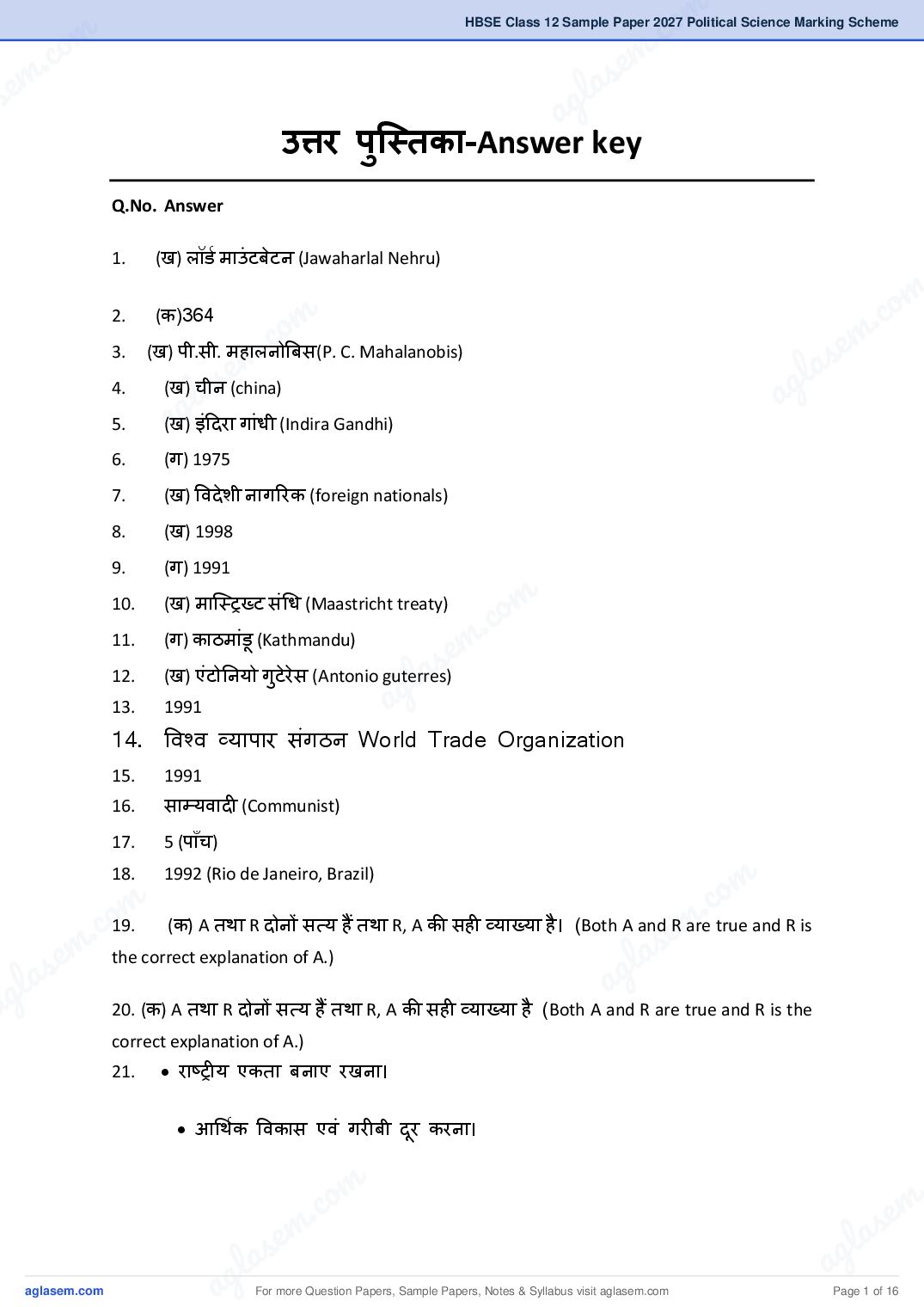
उ्ቈर पस्ु तिका-Answer key
Q.No. Answer
1. (ख) लॉर्ड माउं टबेटन (Jawaharlal Nehru)
m
2. (क)364
c o m m .co
.
3. (ख) पी.सी. महालनोबबस(P.
m s e
a
C. Mahalanobis)
s e l
4.
g l a
(ख) चीन (china)
ag
5. a इंदिरा गांधी (Indira Gandhi)
(ख)
6. (ग) 1975
7. (ख) वििे शी नागररक (foreign nationals)
8. (ख) 1998
9. (ग) 1991
(ख) माि्रिख्ट संधध (Maastricht treaty) m
.co
10.
11. (ग) काठमांर्ू (Kathmandu)
e m
(ख) एंटोननयो गट
ु े रे स la s
g
12. (Antonio guterres)
13. 1991 a
14. विश्ि व्यापार संगठन World Trade Organization
15. 1991
16. साम्यिािी (Communist)
17. 5 (पााँच)
18. 1992 (Rio de Janeiro, Brazil)
m
m
c. o19. (क) A तथा R िोनों सत्य हैं तथा R, A की सही व्याख्या है। (Both A andseRmare true and R is .co
s em the correct explanation of A.) g l a
la a
ag 20. (क) A तथा R िोनों सत्य हैं तथा R, A की सही व्याख्या है (Both A and R are true and R is the
correct explanation of A.)
21. राि्िीय एकता बनाए रखना।
आधथडक विकास एिं गरीबी िरू करना।
m .
.co s e m
s em l a
g la ag
a For more Question Papers, Sample Papers, Notes & Syllabus visit Page 1 of 16
Page 3
2. Economic development and removal of poverty.
22. चन
ु ाि आयोग का गठन 25 जनिरी 1950 को हुआ। ्ቚथम मुख्य चन
ु ाि आयुक्त
सुकुमार सेन थे।
The Election Commission was established on 25 January 1950. Sukumar Sen was the first
Chief Election Commissioner.
23. सीमा वििाि।
नतब्बत का ्ቚश्न।
Border dispute.
Tibet issue.
24. यरू ोपीय संघ की रथापना 1993 में माि्रिख्ट संधध द्िारा हुई।(The European Union was
established in 1993 through the Maastricht Treaty.)
अथिा / or
1. सिरय िे शों के बीच आर्थिक सहयोग और विकास को बढािा िे ना।
2. यरू ोप में शाांति, स्तथरिा और एकिा बनाए रखना।
To promote economic cooperation and development among member
countries.
To maintain peace, stability, and unity in Europe.
25. साकड ि्ቌिण एशशयाई िे शों का िे्ቔीय संगठन है ि्जसकी रथापना 1985 में हुई।
SAARC is a regional organization of South Asian countries established in 1985.
अथिा / or
ि्ቌिण एशशयाई िे शों के बीच ्ቌे्ቔीय सहयोग और मै्ቔी को बढािा िे ना।
सिरय िे शों के आर्थिक, सामास्िक एिां साांतकृतिक विकास को ्ቚोत्सादहत करना।
To promote regional cooperation and friendship among South Asian
countries.
For more Question Papers, Sample Papers, Notes & Syllabus visit Page 2 of 16
Page 4
m .co
m .co s em
se g la
a development of
To encourage economic, social, and cultural
member countries.
26.
1. बाहरी आ्ቅमण का खतरा।
m
2. आंतररक अि्रथरता।
m .co
.co s e m
s em l a
ag
1. Threat of external aggression.
g la instability.
a
2. Internal
27.
पथ्
ृ िी सम्मेलन 1992 में ररयो र्ी जेनेररयो (्ቜाजील) में आयोि्जत हुआ। इसका उद्िे श्य
पयाडिरण संरिण एिं सतत विकास को बढािा िे ना था।
The Earth Summit was held in Rio de Janeiro, Brazil, in 1992. Its objective
m
.co
was to promote environmental protection and sustainable development.
s em
la
28. ि्जस अथडव्यिरथा में सािडजननक और ननजी िोनों िे्ቔ कायड करते हैं , उसे शमधित
g
अथडव्यिरथा कहते हैं। (An economy a
in which both public and private sectors operate is
called a mixed economy.)
अथिा / or
कृवि उत्पािन में िद्
ृ धध करना।
शसंचाई एिं बबजली सुविधाओं का विकास करना।
m
m
c. o To increase agricultural production. m.co
m s e
s e g l a
la
To develop irrigation and power facilities.
g a
a .29
शसंडर्केट कां्ቇेस पाटी के िररि्ठ एिं ्ቚभािशाली नेताओं का एक समूह था। 1960 के िशक में इस
समूह का कां्ቇेस संगठन पर काफी ्ቚभाि था। यह ्ቚधानमं्ቔी के चयन, पाटी की नीनतयों के ननधाडरण
तथा संगठनात्मक ननणडयों में महत्िपण
ू ड भशू मका ननभाता था। इंदिरा गांधी और शसंडर्केट के बीच
मतभेिों के कारण कां्ቇेस में विभाजन भी हुआ।
m .
.co s e m
s em l a
g la ag
a For more Question Papers, Sample Papers, Notes & Syllabus visit Page 3 of 16
Page 5
Party. It played an important role in selecting the Prime Minister, making
party policies, and organizational decisions. Differences between Indira
Gandhi and the Syndicate later led to the split in the Congress Party.
30. 1975 में आपातकाल घोवित करने के ्ቚमुख कारण थे—
1. इलाहाबाि उच्च न्यायालय द्िारा इंदिरा गांधी के चन
ु ाि को अिैध घोवित करना।
2. जय्ቚकाश नारायण के नेतत्ृ ि में विपिी आंिोलनों का तेज होना।
3. िे श में राजनीनतक अि्रथरता और कानून-व्यिरथा की ि्रथनत बबगड़ना।
इन पररि्रथनतयों के कारण 25 जून 1975 को आपातकाल लागू ककया गया।
The main reasons for the Emergency in 1975 were:
1. Allahabad High Court judgment against Indira Gandhi.
2. Opposition movements led by Jayaprakash Narayan.
3. Political instability and law-and-order problems in the country.
अथिा / or
1975–77 के आपातकाल का भारतीय लोकतं्ቔ पर ननम्नशलखखत ्ቚभाि पड़ा—
1. मौलिक अर्िकारों पर ्ቚतिबांि लगाया गया और नागररक रितं्ቔताएाँ सीशमत कर िी
गईं।
2. ्ቚेस की तििां्ቔिा पर सेंसरलशप लागू की गई, ि्जससे समाचार प्ቔों की रितं्ቔता
्ቚभावित हुई।
3. रािनीतिक विरोर्ियों की र्गरफ्िारी हुई और लोकतांब्ቔक संरथाओं की कायड्ቚणाली पर
्ቚभाि पड़ा।
The Emergency (1975–77) had the following effects on Indian democracy:
1. Fundamental Rights were restricted and civil liberties were curtailed.
2. Press censorship was imposed, affecting freedom of the media.
For more Question Papers, Sample Papers, Notes & Syllabus visit Page 4 of 16
Page 6
m .co
m .co s em
se g la
a functioning of democratic
3. Political opponents were arrested, which affected the
institutions.
31. सांिुलिि आर्थिक विकास: वपछड़े िे्ቔों में भारी ननिेश और उद्योग धंधे लगाकर िे्ቔीय
असमानता को िरू करना।
साांतकृतिक समन्िय: विशभन्न राज्यों की भािा, कला और संरकृनत का सम्मान करके राि्िीय
m
एकता को बढािा िे ना।
c o m m .co
. s e
em
मिबूि बुतनयादी
s
ढाां चा (Infrastructure): िे श के सभी कोनों को पररिहन और सं च ार
g l a
व्यिरथा सेla
आपस में जोड़ना। a
ag
Balanced Economic Development: Reducing regional disparity by heavily
investing and setting up industries in backward areas.
Cultural Integration: Promoting national unity by respecting the diverse languages,
arts, and cultures of different states.
o m
c
. of the country through proper
Strong Infrastructure: Connecting all corners
transport and communication networks. e m
l as
a g
32. एक दिीय ्ቚभुत्ि का अांि: कां्ቇेस पाटी के राि्िीय एकाधधकार और िचडरि का धीरे -
धीरे कमजोर होना।
्ቌे्ቔीय दिों का उभार: विशभन्न राज्यों में रथानीय और िे्ቔीय आकांिाओं के कारण िे्ቔीय
राजनीनतक िलों की ताकत बढना।
िाति और समुदाय आिाररि रािनीति: समाज के विशभन्न िगों और जानतयों का अपनी
m
m
c. oराजनीनतक पहचान के आधार पर ्िु ीकरण होना। m .co
s e
s em1. End of One-Party Dominance: The gradual decline and weakening g l a of the Congress
g la a
a party's national monopoly.
2. Rise of Regional Parties: The growth of regional political parties driven by local
state aspirations.
3. Caste and Community Politics: The polarization of different social groups and
castes based on their identity.
33.
m .
.co s e m
s em l a
g la ag
a For more Question Papers, Sample Papers, Notes & Syllabus visit Page 5 of 16
Page 7
होड़ और सैन्य खचड के कारण पूरी तरह खोखली हो गई थी।
े के सुिार: शमखाइल गोबाडचि
2. गोबािचि े की नीनतयां (ग्लासनोरत और पेरेर्ቔोइका) व्यिरथा को
सध
ु ारने में नाकाम रहीं और इससे कम्यनु नरट शासन पर से ननयं्ቔण हट गया।
3. बलििन की दीिार का र्गरना और राि्रिाद: 1989 में बशलडन की िीिार का धगरना और पि
ू ी
यूरोपीय िे शों में साम्यिाि के खखलाफ फूटा जन-आ्ቅोश इसका तात्काशलक कारण बना।
Soviet Economic Crisis: The USSR's economy collapsed due to excessive
military spending and a prolonged arms race with the US.
Gorbachev's Reforms: Mikhail Gorbachev’s policies (Glasnost and Perestroika)
failed to reform the system and caused a loss of central control.
Fall of the Berlin Wall and Nationalism: The fall of the Berlin Wall in 1989 and
rising nationalist protests in Eastern Europe triggered the final collapse.
34. आलसयान शैिी (Meaning): यह आशसयान (ASEAN) सिरयों के बीच अनौपचाररक,
टकराि-रदहत, िोरताना और सहयोगात्मक बातचीत करने की एक विशेि शैली (तरीका) है ।
इसमें सभी िे श एक-िस
ू रे की राि्िीय सं्ቚभुता (Sovereignty) का सम्मान करते हैं।
दो उद्दे श्य (Two Objectives):
1. आर्थिक विकास िेि करना: सिरय िे शों के बीच व्यापार को बढािा िे कर सामाि्जक और
सांरकृनतक विकास की गनत को तेज करना।
2. ्ቌे्ቔीय शाांति और स्तथरिा: संयुक्त राि्ि (UN) के ननयमों के आधार पर कानून के शासन और
िे्ቔीय शांनत को बनाए रखना।
ASEAN Way (Meaning): It is a unique form of interaction among ASEAN
members that is informal, non-confrontational, and relies on consensus and
cooperation while respecting national sovereignty.
Two Objectives:
1. Accelerate Economic Growth: To speed up economic growth, social progress, and
cultural development through mutual cooperation.
2. Regional Peace and Stability: To promote regional peace and stability by abiding
by justice and the rule of law based on the UN Charter.
अथिा / or
मुक्ि व्यापार ्ቌे्ቔ (FTA) का तनमािण: आशसयान ने सिरय िे शों और अन्य ्ቚमुख िे शों (जैसे
भारत, चीन) के साथ मुक्त व्यापार समझौतों पर हरतािर ककए, ि्जससे आधथडक व्यापार और
ननिेश में भारी िद्
ृ धध हुई।
For more Question Papers, Sample Papers, Notes & Syllabus visit Page 6 of 16
Page 8
m .co
m .co s em
se g la
्ቌे्ቔीय शाांति और कूटनीतिक सफििा: इसने वियतनाम युद्धa के बाि कंबोडर्या संकट को
सुलझाने और पूिी नतमोर के संकट को संभालने में महत्िपूणड कूटनीनतक भूशमका ननभाई,
ि्जससे पूरे िे्ቔ में शांनत बनी रही।
Creation of Free Trade Area (FTA): ASEAN successfully signed free trade
agreements among members and with dialogue partners (like India and China),
heavily boosting regional trade and investment.
m
Regional Peace and Diplomatic Success: It played a key diplomatic role in
m .co
.co
resolving the Cambodian conflict and managing the East Timor crisis, ensuring long-
s e m
em
term peace and stability in Southeast Asia
s l a
g la ag
35. िa
ृ ारोपण को बढािा: बड़े पैमाने पर नए पेड़ लगाना और िनों की कटाई पर पूरी तरह
्ቌ
रोक लगाना।
निीकरणीय ऊिाि का उपयोग: कोयला और पेिोल के बजाय सौर ऊजाड (Solar Energy)
और पिन ऊजाड का अधधक उपयोग करना।
प्िास्तटक पर ्ቚतिबांि और पुनचि्ቅण (Recycling): एकल-उपयोग प्लाि्रटक (Single-use
m
plastic) को बंि करना और कचरे का सही ्ቚबंधन ि पुनचड्ቅण करना।
m .co
s e
1. Afforestation: Planting more trees on a large scale and strictly halting deforestation.
la
2. Use of Renewable Energy: Transitioning from coal and petrol to clean energy
g
sources like solar and wind power.
a
3. Plastic Ban and Recycling: Banning single-use plastics and ensuring proper waste
management and recycling.
अथिा / or
सिि विकास (Sustainable Development) का अथड एक ऐसे विकास से है जो ितडमान
पीढी की जरूरतों को पूरा करता है , लेककन भविि्य की पीदढयों की आिश्यकताओं से समझौता
m
नहीं करता।
m .co
.co s e m
s em आधथडक िद्
ृ धध और पयाडिरण सरु िा के बीच संतल
ु न बनाना।
g l a
g la a
a ू ण को कम करना और ्ቚकृनत को नुकसान पहुाँचाए बबना विकास करना।
्ቚिि
It means developing society in a way that meets the needs of the present generation
without compromising the ability of future generations to meet their own needs
1. Creating a balance between economic growth and environmental protection.
m .
.co s e m
s em l a
g la ag
a For more Question Papers, Sample Papers, Notes & Syllabus visit Page 7 of 16
Page 9
36 िैश्िीकरण के सांरकृनतक पि (Cultural Dimensions of Globalization) की व्याख्या
बेहि संिेप में ननम्नशलखखत है :
साांतकृतिक समरूपिा (Cultural Homogenization): इसके कारण पूरी िनु नया में
पि्श्चमी संरकृनत का ्ቚसार हो रहा है , ि्जससे खान-पान (जैसे बगडर, वपज्जा), पहनािा (जैसे
जींस) और जीिनशैली एक जैसी होती जा रही है । इसे 'मैकर्ोनाल्र्ीकरण' भी कहा जाता
है ।
साांतकृतिक विषमरूपिा (Cultural Heterogenization): िैश्िीकरण से संरकृनतयााँ
खत्म नहीं हो रही हैं, बि्ल्क िे आपस में शमलकर और अनूठी बन रही हैं। जैसे- भारतीय
संगीत के साथ िेरटनड बीट्स का शमलना (फ्यूजन) या खािी के कुते के साथ जींस
पहनना।
Cultural Homogenization: It leads to the rise of a uniform global culture driven by
Western values, lifestyle, food habits (like burgers/pizza), and clothing (like blue
jeans). This is often called 'McDonaldization'.
Cultural Heterogenization: Instead of destroying local traditions, globalization
often leads to a blending of cultures, making them more unique. Examples include
music fusions or wearing traditional Indian kurtas with Western jeans.
अथिा / or
िैश्िीकरण के आधथडक ्ቚभािों (Economic Impacts of Globalization) का िणडन बेहि संिेप में
ननम्नशलखखत है :
ृ र्ि: विशभन्न िे शों के बीच िरतुओं, सेिाओं और वििे शी ्ቚत्यि
व्यापार और तनिेश में िद्
ननिेश (FDI) का ्ቚिाह बहुत तेजी से बढा है ।
बहुराि्रीय कांपतनयों (MNCs) का उभार: बड़ी िैि्श्िक कंपननयों ने विकासशील िे शों में अपने
कारखाने और कायाडलय खोले हैं, ि्जससे रोजगार के नए अिसर पैिा हुए हैं।
For more Question Papers, Sample Papers, Notes & Syllabus visit Page 8 of 16
Page 10
m .co
m .co s em
se g la
a विकशसत िेशों को शमला है,
असमान आर्थिक िाभ: इसका सबसे ़ቩयािा फायिा अमीर और
जबकक गरीब िे शों में आधथडक असमानता (गरीब और अमीर के बीच की िरू ी) बढी है ।
1. Increase in Trade and Investment: There has been a rapid surge in the flow of
goods, services, and Foreign Direct Investment (FDI) across international borders.
2. Rise of Multinational Corporations (MNCs): Large global companies have set up
m
m
factories and offices in developing nations, creating new employment opportunities.
.co
.co
3. Unequal Economic Gains: The maximum benefits have gone to rich and developed
m s e m
e
nations, which has sometimes worsened economic disparity in poorer countries.
s l a
g l a ag
a Section-d
37. 1947 में रितं्ቔता ्ቚाि्प्त के बाि भारत के सामने अनेक चन
ु ौनतयााँ थीं। सबसे बड़ी
चन
ु ौती राि्िीय एकीकरण की थी क्योंकक िे श में अनेक ररयासतें थीं। िस
ू री चन
ु ौती
लोकतांब्ቔक व्यिरथा को सफल बनाना था। आधथडक विकास, गरीबी उन्मूलन, बेरोजगारी तथा
सामाि्जक असमानता को िरू करना भी आिश्यक था। भािाई और िे्ቔीय विविधताओं के
m
.co
बािजि
ू राि्िीय एकता बनाए रखना एक महत्िपण
ू ड कायड था। भारत ने संविधान, लोकतं्ቔ
और योजनाबद्ध विकास के माध्यम से इन चन
em
ु ौनतयों का सफलतापूिक
s
ड सामना ककया।
After independence in 1947, Indiala
ag faced many challenges. National
integration was a major task due to the existence of princely states.
Establishing democracy, achieving economic development, reducing poverty
and unemployment, and ensuring social equality were also important
challenges. Despite linguistic and regional diversity, India maintained unity
through constitutional democracy and planned development.
m
m .co
.co अथिा / or
s e m
s em भारत एक विविधताओं से भरा िेश है, कफर भी अनेक आधार इसे एकglaसशक्त राि्ि बनाते
g la a
a हैं।
1. सांवििान – भारतीय संविधान सभी नागररकों को समान अधधकार ्ቚिान करता है और
राि्िीय एकता को मजबूत करता है ।
2. िोकिाां्ऴ्ቔक व्यितथा – भारत विश्ि का सबसे बड़ा लोकतं्ቔ है , जहााँ सभी नागररकों
को मतिान का अधधकार ्ቚाप्त है ।
m .
.co s e m
s em l a
g la ag
a For more Question Papers, Sample Papers, Notes & Syllabus visit Page 9 of 16
Page 11
संरकृनत में एकता दिखाई िे ती है ।
4. राि्रीय आांदोिन की विरासि – रितं्ቔता सं्ቇाम ने िे शिाशसयों में राि्िीयता और
एकता की भािना विकशसत की।
तनि्कषि:
संविधान, लोकतं्ቔ, सांरकृनतक एकता, रितं्ቔता सं्ቇाम की विरासत तथा संघीय व्यिरथा भारत
को एक मजबूत और अखंर् राि्ि बनाते हैं।
India is a country of great diversity, yet several factors have helped in
building it as a strong nation.
1. Constitution – The Indian Constitution provides equal rights to all
citizens and strengthens national unity.
2. Democratic System – India is the world's largest democracy, where
every citizen has the right to vote.
3. Cultural Unity – Despite differences in language, religion, and
traditions, there is a sense of cultural unity among Indians.
4. Legacy of the National Movement – The freedom struggle developed
a strong feeling of nationalism and unity among people.
5. Conclusion:
The Constitution, democracy, cultural unity, legacy of the freedom
movement, and federal system are the major foundations that have
helped India emerge as a strong nation.
38. गुटननरपेिता का अथड है ककसी शि्क्त गुट में शाशमल हुए बबना रितं्ቔ वििे श नीनत
अपनाना। भारत ने शीत युद्ध के िौरान इसी नीनत का पालन ककया। इसकी ्ቚमुख विशेिताएाँ
रितं्ቔ ननणडय लेना, विश्ि शांनत को बढािा िे ना, उपननिेशिाि और सा्ाज्यिाि का विरोध
करना तथा सभी िे शों के साथ मै्ቔीपूणड संबंध बनाए रखना हैं। गुटननरपेि आंिोलन ने
विकासशील िे शों को अंतरराि्िीय मंच पर अपनी आिाज उठाने का अिसर ्ቚिान ककया।
For more Question Papers, Sample Papers, Notes & Syllabus visit Page 10 of 16
Page 12
m .co
m .co s em
se g la
a policy without joining
Non-Alignment means following an independent foreign
any power bloc. India adopted this policy during the Cold War. Its main
features include independent decision-making, support for world peace,
opposition to colonialism and imperialism, and friendly relations with all
countries. The movement gave developing countries a stronger voice in
m
international affairs.
m .co
.co s e m
s em अथिा / or
l a
g la ag
a परमाणु नीति:
भारि की
भारत की परमाणु नीनत का मख्
ु य उद्िे श्य राि्िीय सरु िा बनाए रखना और परमाणु हधथयारों
का ि्जम्मेिारीपूिक
ड उपयोग करना है । भारत "पहिे ्ቚयोग न करने" (No First Use) की
नीनत का पालन करता है तथा विश्ि में परमाणु ननरर्ቔीकरण का समथडन करता है ।
पांचशीि के लसद्िाांि:
m
.co
1954 में भारत और चीन के बीच पंचशील शसद्धांत अपनाए गए। इसके पााँच शसद्धांत हैं —
s em
ू रे की िे्ቔीय अखंर्ता औरla
1. एक-िस सं्ቚभत
ु ा का सम्मान।
ag
2. पररपर अना्ቅमण।
3. एक-िस
ू रे के आंतररक मामलों में हरतिेप न करना।
4. समानता और पाररपररक लाभ।
5. शांनतपूणड सह-अि्रतत्ि।
India's Nuclear Policy:
o m
m c
. use of
c. oIndia's nuclear policy aims to ensure national security and responsible
m
sesupports global
e m nuclear weapons. India follows the "No First Use" policy land a
l as ag
ag
nuclear disarmament.
Principles of Panchsheel:
1. Mutual respect for territorial integrity and sovereignty.
2. Mutual non-aggression.
3. Non-interference in internal affairs.
m .
.co
4. Equality and mutual benefit.
e m
em l as
las ag
ag For more Question Papers, Sample Papers, Notes & Syllabus visit Page 11 of 16
Page 13
39. भारत संयुक्त राि्ि सुरिा पररिि की रथायी सिरयता का मजबूत िािेिार है । भारत
विश्ि का सबसे बड़ा लोकतांब्ቔक िे श है और इसकी जनसंख्या विश्ि में सबसे अधधक है ।
भारत संयक्
ु त राि्ि के शांनत अशभयानों (Peacekeeping Missions) में लगातार महत्िपण
ू ड
योगिान िे ता रहा है । भारत एक उभरती हुई आधथडक शि्क्त है तथा िैि्श्िक राजनीनत और
अथडव्यिरथा में महत्िपूणड भूशमका ननभाता है ।
इसके अलािा, भारत विकासशील िे शों के दहतों का ्ቚभािी ्ቚनतननधधत्ि करता है और विश्ि
शांनत, सुरिा तथा अंतरराि्िीय सहयोग को बढािा िे ने के शलए कायड करता है । ितडमान
सुरिा पररिि की संरचना आज की िैि्श्िक पररि्रथनतयों को पूरी तरह ्ቚनतबबंबबत नहीं
करती, इसशलए भारत को रथायी सिरयता िे कर इसे अधधक ्ቚनतननधधक और ्ቚभािी बनाया
जा सकता है ।
तनि्कषि:
इन सभी कारणों से भारत संयुक्त राि्ि सुरिा पररिि की रथायी सिरयता का पूणड अधधकार
रखता है ।
India is a strong candidate for permanent membership in the United Nations
Security Council. It is the world's largest democracy and one of the most
populous countries. India has consistently contributed to UN Peacekeeping
Missions and has played an active role in maintaining international peace
and security.
India is also an emerging economic power and has significant influence in
global affairs. It represents the interests of developing countries and supports
international cooperation. The present structure of the Security Council does
not fully reflect today's global realities. Therefore, granting permanent
membership to India would make the Security Council more representative
and effective.
For more Question Papers, Sample Papers, Notes & Syllabus visit Page 12 of 16
Page 14
m .co
m .co s e m
se g l a
Conclusion: a
For these reasons, India deserves permanent membership in the United
Nations Security Council.
अथिा / or
m
c o m
संयुक्त राि्ि संघ (UNO) की रथापना 24 अक्टूबर 1945 को विश्ि शांनत और अंतरराि्िीय
m .co
सहयोग को बढािा िे.ने के शलए की गई थी। e
em l as
s
la संघ के उद्िेश्य: ag
ु तag
संयक् राि्ि
1. विश्ि में शाांति और सुर्ቌा बनाए रखना।
2. िे शों के बीच मै्ቔीपण
ू ि सांबांिों को बढािा दे ना।
3. आधथडक, सामाि्जक, सांरकृनतक और मानिीय समरयाओं के समाधान में सहयोग
करना।
m
4. मानि अधधकारों और मौशलक रितं्ቔताओं का संरिण करना।
m .co
s e
संयक्
ु त राि्ि संघ के शसद्धांत:
g la
a
1. सभी सिरय िे शों की सां्ቚभु समानिा।
2. अंतरराि्िीय वििािों का शाांतिपूणि समािान।
3. ककसी भी िे श की ्ቌे्ቔीय अखांडिा और रािनीतिक तििां्ቔिा का सम्मान।
4. अन्य िे शों के आांिररक मामिों में हति्ቌेप न करना।
m
m
ननि्किड: .co
.co s e m
s em संयक्ु त राि्ि संघ विश्ि शांनत, सरु िा, सहयोग और मानि कल्याण gकोlaबढािा िेने िाला
g la a
a सबसे महत्िपूणड अंतरराि्िीय संगठन है ।
The United Nations (UNO) was established on 24 October 1945 to promote
world peace and international cooperation.
m .
.co s e m
s em l a
g la ag
a For more Question Papers, Sample Papers, Notes & Syllabus visit Page 13 of 16
Page 15
1. To maintain international peace and security.
2. To develop friendly relations among nations.
3. To promote cooperation in solving economic, social, cultural, and humanitarian
problems.
4. To protect human rights and fundamental freedoms.
Principles of the United Nations:
1. Sovereign equality of all member states.
2. Peaceful settlement of international disputes.
3. Respect for territorial integrity and political independence of states.
4. Non-interference in the internal affairs of other countries.
Conclusion:
The United Nations is the most important international organization working
for peace, security, cooperation, and human welfare across the world.
40. िैश्िीकरण िह ्ቚक्ቅया है ि्जसके द्िारा विशभन्न िे शों के बीच आधथडक, सामाि्जक और
सांरकृनतक संबंधों का विरतार होता है । इसका विश्ि पर सकारात्मक तथा नकारात्मक िोनों
्ቚकार का ्ቚभाि पड़ा है ।
सकारात्मक ्ቚभाि:
1. अंतरराि्िीय व्यापार और ननिेश में िद्
ृ धध हुई।
2. नई तकनीकों और आधनु नक ्ञान का ्ቚसार हुआ।
3. रोजगार के अिसर बढे तथा आधथडक विकास को गनत शमली।
नकारात्मक ्ቚभाि:
1. आधथडक असमानता में िद्
ृ धध हुई।
2. छोटे और रथानीय उद्योगों को कड़ी ्ቚनतरपधाड का सामना करना पड़ा।
3. रथानीय संरकृनत और परं पराओं पर वििे शी संरकृनत का ्ቚभाि बढा।
For more Question Papers, Sample Papers, Notes & Syllabus visit Page 14 of 16
Page 16
m .co
m .co s e m
se g l a
ननि्किड:
a
िैश्िीकरण ने विकास और ्ቚगनत के नए अिसर ्ቚिान ककए हैं, लेककन इसके िि्ु ्ቚभािों को
ननयंब्ቔत करना भी आिश्यक है ताकक सभी िगों को इसका लाभ शमल सके।
Globalisation is the process through which economic, social, and cultural
m
m .co
.co m
relations among countries expand. It has both positive and negative impacts.
s e
s em l a
la
Positive Impacts:
g ag
a
1. Increase in international trade and investment.
2. Spread of modern technology and knowledge.
3. More employment opportunities and economic growth.
Negative Impacts:
m
.co
1. Increase in economic inequality.
m
2. Local and small industries face tough competition.
s e
3. Greater influence of foreign culture on local traditions.
g la
Conclusion: a
Globalisation has created new opportunities for growth and development, but
its negative effects must also be managed so that its benefits reach all
sections of society.
m
m अथिा / or
.co
.co s e m
s em िैश्िीकरण (Globalisation) िह ्ቚक्ቅया है ि्जसके द्िारा विश्ि के gविशभन्न
l a िेशों के बीच
g la आधथडक, सामाि्जक, सांरकृनतक तथा राजनीनतक संबंधों का विरतारa और पररपर ननभडरता
a बढती है ।
m .
.co s e m
s em l a
g la ag
a For more Question Papers, Sample Papers, Notes & Syllabus visit Page 15 of 16
Page 17
ु कारण:
ू ना ्ቚौद्योर्गकी का विकास – इंटरनेट, मोबाइल और कंप्यट
1. सांचार और सच ू र के कारण
िे शों के बीच संपकड बढा।
2. पररिहन के सािनों का विकास – तेज और सरते पररिहन ने व्यापार को बढािा दिया।
3. उदारीकरण और तनिीकरण की नीतियााँ – िे शों ने व्यापाररक ्ቚनतबंधों को कम ककया।
4. बहुराि्रीय कांपतनयों का वितिार – MNCs ने विश्ि रतर पर ननिेश और व्यापार को
बढाया।
5. विश्ि व्यापार सांगठन (WTO) की तथापना – अंतरराि्िीय व्यापार को ्ቚोत्साहन शमला।
ननि्किड:
िैश्िीकरण ने िनु नया को आधथडक और सामाि्जक रूप से एक-िस
ू रे के अधधक ननकट ला दिया
है तथा अंतरराि्िीय सहयोग को बढािा दिया है ।
Globalisation is the process through which economic, social, cultural, and
political relations among countries expand and become more interconnected.
Major Causes of the Rise of Globalisation:
1. Development of communication and information technology such as the Internet
and mobile networks.
2. Improvement in transport systems, making trade faster and cheaper.
3. Liberalisation and privatisation policies adopted by many countries.
4. Expansion of multinational companies (MNCs) across the world.
5. Establishment of the World Trade Organization (WTO) to promote international
trade.
Conclusion:
Globalisation has brought countries closer together and increased
international cooperation in various fields.
For more Question Papers, Sample Papers, Notes & Syllabus visit Page 16 of 16
Document Details
| Board / Org | Haryana Board |
| Exam | Class 12 |
| Type | Answer Key |
| Pages | 16 |
| Updated | 03 Nov 2026 |