CBSE Class 12 Graphics Theory Question Paper 2020
Finished viewing? Save it for later —
Download CBSE Class 12 Graphics Theory Question Paper 2020 (PDF · 7 pages)About CBSE Class 12 Graphics Theory Question Paper 2020
CBSE Class 12 Graphics Theory Question Paper 2020 is available here for free download. Published by CBSE for Class 12, this question paper can be viewed online or downloaded as a PDF (7 pages). Candidates preparing for Class 12 can use CBSE Class 12 Graphics Theory Question Paper 2020 to understand the exam pattern, the type of questions asked, and the overall difficulty level.
Frequently Asked Questions
How can I download CBSE Class 12 Graphics Theory Question Paper 2020?
Open this page and click the Download button to save CBSE Class 12 Graphics Theory Question Paper 2020 as a PDF. It is completely free on AglaSem Docs.
Is CBSE Class 12 Graphics Theory Question Paper 2020 free to download?
Yes. CBSE Class 12 Graphics Theory Question Paper 2020 can be viewed online and downloaded as a PDF free of cost on AglaSem Docs.
How many pages does CBSE Class 12 Graphics Theory Question Paper 2020 have?
CBSE Class 12 Graphics Theory Question Paper 2020 contains 7 pages, which you can read online or download together as a single PDF.
Where can I find more Class 12 study material?
You can find more Class 12 question papers, sample papers, syllabus, and answer keys on AglaSem Docs.
CBSE Class 12 Graphics Theory Question Paper 2020 – Text
Read the full text of this question paper below — useful to quickly search, copy and reference the content online without downloading the PDF.
📄 View text version (7 pages)
Page 1
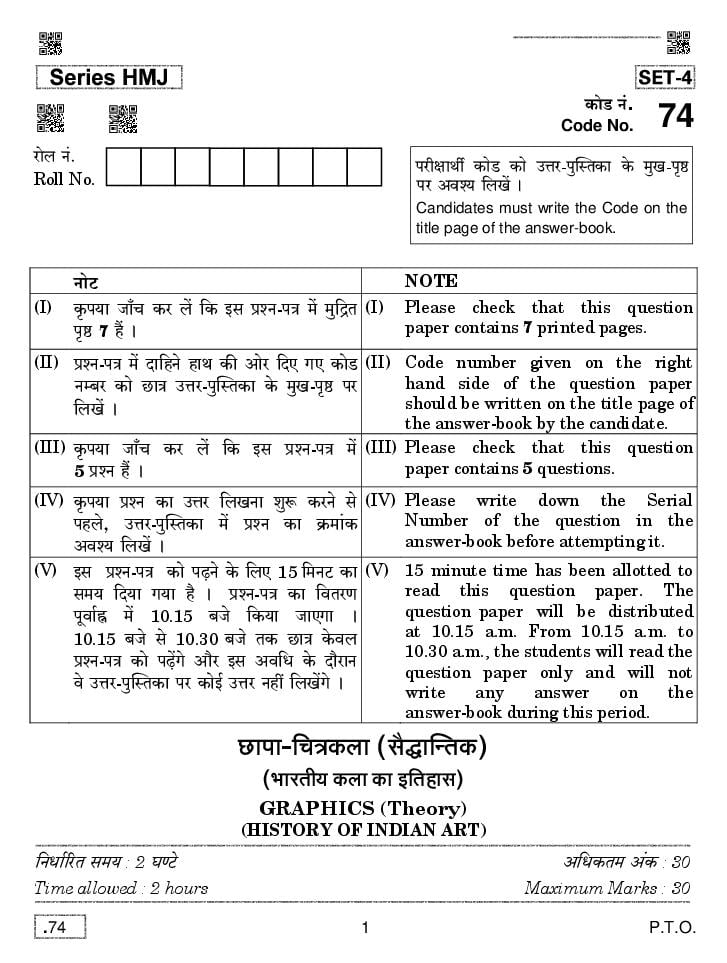
Code No. 74
amob Z§. narjmWu H$moS >H$mo CÎma-nwpñVH$m Ho$ _wI-n¥ð
Roll No. >na Adí` {bIo§ &
Candidates must write the Code on the
title page of the answer-book.
ZmoQ> NOTE
(I) H¥$n`m Om±M H$a b| {H$ Bg àíZ-nÌ _o§ _w{ÐV (I) Please check that this question
n¥ð> 7 h¢ & paper contains 7 printed pages.
(II) àíZ-nÌ _| Xm{hZo hmW H$s Amoa {XE JE H$moS (II) Code number given on the right
>Zå~a H$mo N>mÌ CÎma-nwpñVH$m Ho$ _wI-n¥ð> na hand side of the question paper
{bI| & should be written on the title page of
the answer-book by the candidate.
(III) H¥$n`m Om±M H$a b| {H$ Bg àíZ-nÌ _| (III) Please check that this question
>5 àíZ h¢ & paper contains 5 questions.
(IV) H¥$n`m àíZ H$m CÎma {bIZm ewê$ H$aZo go (IV) Please write down the Serial
nhbo, CÎma-nwpñVH$m _| àíZ H$m H«$_m§H$ Number of the question in the
Adí` {bI| & answer-book before attempting it.
(V) Bg àíZ-nÌ H$mo n‹T>Zo Ho$ {bE 15 {_ZQ >H$m (V) 15 minute time has been allotted to
g_` {X`m J`m h¡ & àíZ-nÌ H$m {dVaU read this question paper. The
nydm©• _| 10.15 ~Oo {H$`m OmEJm & question paper will be distributed
10.15 ~Oo go 10.30 ~Oo VH$ N>mÌ Ho$db at 10.15 a.m. From 10.15 a.m. to
10.30 a.m., the students will read the
àíZ-nÌ H$mo n‹T>|Jo Am¡a Bg Ad{Y Ho$ Xm¡amZ question paper only and will not
do CÎma-nwpñVH$m na H$moB© CÎma Zht {bI|Jo & write any answer on the
answer-book during this period.
N>mnm-{MÌH$bm (g¡ÕmpÝVH$)
(^maVr` H$bm H$m B{Vhmg)
GRAPHICS (Theory)
(HISTORY OF INDIAN ART)
{ZYm©[aV g_` : 2 KÊQ>o A{YH$V_ A§H$ : 30
Time allowed : 2 hours Maximum Marks : 30
.74 1 P.T.O.
Page 2
IÊS> H$ 16=6
{ZX}e : àíZ Ho$ g^r N>… ^mJm| Ho$ CÎma {b{IE &
1. àíZ Ho$ ZrMo {XE JE {dH$ënm| go [aº$ ñWmZm| H$s ny{V© H$s{OE &
(i) AnZo nmR>çH«$‘ ‘| gpå‘{bV (AmYw{ZH$) ^maVr` N>mnm-{MÌm| _| go __________
N>mnm-{MÌ _| jrUH$m` (Xþ~br-nVbr) _mZdmH¥${V`m| H$m A§H$Z hþAm h¡ &
(A) Xodr
(B) Xrdmam| go gamoH$ma
(C) ~ƒo
(D) AmX_r, Am¡aV Am¡a no‹S>
(ii) à{gÕ g_H$mbrZ (AmYw{ZH$) ^maVr` N>mnm-{MÌ ‘Xodr’ ___________ VH$ZrH$ go
~Zm`m J`m h¡ &
(A) C^maXma ZŠH$mer
(B) Vm_«nÌ na Aåbm§H$Z (CËH$sU©)
(C) {ebm _wÐU
(D) AmdaU _wÐU (ñH«$sZ qàqQ>>J)
(iii) ^maVr` amîQ´>r` ÜdO _| à`wº$ ^maV Ho$g[a`m a§J __________ H$m àVrH$ h¡ &
(A) IVam Am¡a e§H$m
(B) gmhg Am¡a ~{bXmZ
(C) `wÕ Am¡a {ddmX
(D) CîUVm Am¡a CÁÁdbVm
(iv) g_H$mbrZ (AmYw{ZH$) ^maVr` _y{V©H$ma EŠH$m `mXm{J[a amd Zo AnZo à{gÕ
_y{V©-{eën ‘MVw_w©Ir’ H$s aMZm _________ _mÜ`_ _| H$s &
(A) H$m±ñ`
(B) nrVb
(C) nËWa
(D) H$mîR>
(v) amOñWmZr e¡br H$m à{gÕ bKw-{MÌ ‘^aV H$m {MÌHy$Q> _| am_ go {_bmn’ ^maVr`
nm¡am{UH$ _hmH$mì` ___________ na AmYm[aV h¡ &
(A) JrV Jmo{dÝX
(B) ^JdX²JrVm
(C) am_M[aV_mZg (am_m`U)
(D) XþJm© gßVeVr
.74 2
Page 3
against each Section.
SECTION A 16=6
Instruction : Write answers for all six parts of the question.
1. Fill in the blanks out of the options given below the following questions.
(i) In Contemporary (modern) Indian graphic-prints included in your
course of study, graphic-print __________ depicts emaciated human
figures.
(A) Devi
(B) Of Walls
(C) Children
(D) Man, Woman and Tree
(ii) The famous Contemporary (modern) Indian graphic-print ‘Devi’ is
made with ____________ technique.
(A) Intaglio
(B) Etching
(C) Lithography
(D) Screen printing
(iii) India saffron colour used in the Indian National Flag symbolizes
____________ .
(A) Danger and Fear
(B) Courage and Sacrifice
(C) War and Dispute
(D) Heat and Light
(iv) Contemporary (modern) Indian sculptor Aekka Yadagiri Rao has
made his famous sculpture ‘Chatturmukhi’ in __________ medium.
(A) Bronze
(B) Brass
(C) Stone
(D) Wood
(v) The famous miniature painting of Rajasthani School ‘Bharat Meets
Rama at Chitrakuta’ is based on __________, an Indian
mythological epic.
(A) Geet Govinda
(B) Bhagwad Gita
(C) Ramcharitmanas (Ramayana)
(D) Durga Saptashati
.74 3 P.T.O.
Page 4
e¡br H$s ___________ Cne¡br _| ~Zm`m J`m h¡ &
(A) Må~m
(B) H$m±J‹S>m
(C) ~gmohbr
(D) Jwboa
IÊS> I$ 23=6
{ZX}e : àíZ Ho$ {H$Ýht VrZ ^mJm| _| go àË`oH$ H$m CÎma bJ^J 30 eãXm| _|, {b{IE &
2. (a) amOñWmZr e¡br Ho$ {MÌH$ma CËH$b am_ Ûmam a{MV à{gÕ bKw-{MÌ ‘amOm A{ZéÕ
qgh hm‹S>m’ AmnH$s am` _| Š`m| EH$ gamhZr` H$bmH¥${V h¡ ? AnZm CÎma g§jon _|
Xr{OE &
(b) _wµJb e¡br Ho$ {ZåZ{b{IV {MÌH$mam| _| go {H$gr EH$ H$s gamhZm Amn Š`m| H$aVo
h¢ ? AnZo nmR>çH«$_ _| gpå_{bV CgHo$ {MÌ-{deof Ho$ g§X^© _| CgH$s H$m`©-e¡br,
_mÜ`_ VWm {df`-dñVw Ho$ g§`moOZ na EH$ g§{jßV {Q>ßnUr {b{IE :
(i) CñVmX \$H$sê$ëbmh Im±
AWdm
(ii) {_ñH$sZ
(c) AnZo nmR>çH«$‘ ‘| gpå‘{bV {ZåZ{b{IV bKw-{MÌm| _| go {H$gr EH$ H$m
gm¢X¶©-{ddoMZ `Wm{d{Y gm¢X¶©-‘mnXÊS>m| Ho$ AmYma na g§jon _| H$s{OE :
(i) Mm±X ~r~r nmobmo (Mm¡JmZ) IobVo hþE
AWdm
(ii) am{JZr nQ>-h§{gH$m
IÊS> J$ 32=6
{ZX}e : àíZ Ho$ XmoZm| ^mJm| _| go àË`oH$ H$m CÎma bJ^J 100 eãXm| _| {b{IE &
3. {ZåZ{b{IV bKw-{MÌH$mam| _| go {H$Ýht Xmo H$s H$bmË_H$ CnbpãY`m| H$m _yë`m§H$Z
`Wm{d{Y gm¢X`©-_mnXÊS>m| Ho$ AmYma na AnZo nmR>çH«$‘ ‘| gpå‘{bV CZHo$ {MÌ-{deof Ho$
g§X^© _| H$s{OE :
(a) XmZm (amOñWmZr {MÌH$ma)
(b) gm{h~XrZ (amOñWmZr {MÌH$ma)
(c) Jw_mZ (amOñWmZr {MÌH$ma)
(d) ‘mZHy$ (nhm‹S>r {MÌH$ma)
.74 4
Page 5
Kinsmen Going to Vrindavan’ has been made in ___________
sub-school of the Pahari School.
(A) Chamba
(B) Kangra
(C) Basohli
(D) Guler
SECTION B 23=6
Instruction : Write answers for each of the three parts of the question in about 30
words.
2. (a) Why, in your opinion, is the miniature-painting ‘Raja Aniruddha
Singh Hara’ done by Utkal Ram of Rajasthani School appreciable ?
Give your answer in short.
(b) Why do you appreciate any of the following painters of the Mughal
School ? Write a short note on his technique, medium and
compositional-arrangement of the subject-matter with reference to
his particular painting included in your course of study.
(i) Ustad Faquirullah Khan
OR
(ii) Miskin
(c) Appreciate any of the following miniature-paintings included in
your course of study duly based on the aesthetic parameters in
short :
(i) Chand Bibi Playing Polo (Chaugan)
OR
(ii) Ragini Pat-hamsika
SECTION C 32=6
Instruction : Write answers for each of the two parts of the question
in about 100 words.
3. Evaluate the artistic achievements of any two of the following painters
duly based on the aesthetic-parameters with reference to their particular
paintings included in your course of study :
(a) Dana (Rajasthani Painter)
(b) Sahibdin (Rajasthani Painter)
(c) Guman (Rajasthani Painter)
(d) Manaku (Pahari Painter)
.74 5 P.T.O.
Page 6
{ZX}e : {XE JE àíZ H$m CÎma bJ^J 200 eãXm| _| {b{IE &
4. AnZo nmR>çH«$_ _| gpå_{bV ‘wµJb AWdm Xp³IZr e¡br Ho$ {H$gr EH$ g§~Õ {MÌ H$s
nhMmZ H$s{OE, {Og_| {ZåZ{b{IV {deofVmE± g_m{dîQ> hm| Am¡a CÝh| Cg {MÌ _| VXZwgma
g_PmBE :
(a) _wµJb bKw-{MÌe¡br Y_©-{Zanoj Wr, {Og_| qhXÿ Xodr-XodVmAm| VWm g§Vm| H$m ^r
{Zê$nU {H$`m J`m h¡ &
AWdm
(b) XpŠIZr bKw-{MÌe¡br _| H$_Zr` (N>ahar/nVbr) Zmar AmH¥${V`m| H$m _hrZ VWm
b`mË_H$ aoImAm| _| A§H$Z &
IÊS> L>$ 61=6
{ZX}e : {XE JE àíZ H$m CÎma bJ^J 200 eãXm| _| {b{IE &
5. AnZo nmR>çH«$‘ ‘| gpå‘{bV {ZåZ{b{IV g‘H$mbrZ (AmYw{ZH$) ^maVr¶ N>mnm -{MÌm|/~§Jmb
e¡br Ho$ {MÌm| ‘| go {H$gr EH$ H$mo Amn Š`m| gdm©{YH$ ngÝX AWdm ZmngÝX H$aVo h¢ ?
AnZo CÎma H$m Am¡{MË` gm¢X¶©-‘mnXÊS>m| Ho$ AmYma na Cn¶w³V CXmhaUm|/H$maUm| g{hV
{dñVmanyd©H$ {gÕ H$s{OE :
(a) ~ƒo (EH$ N>mnm-{MÌ)
(b) Xrdmam| go gamoH$ma (EH$ N>mnm-{MÌ)
(c) AmX_r, Am¡aV Am¡a no‹S> (EH$ N>mnm-{MÌ)
(d) amg-brbm (~§Jmb e¡br H$m EH$ {MÌ)
(e) `mÌm H$m AÝV (~§Jmb e¡br H$m EH$ {MÌ)
.74 6
Page 7
Instruction : Write the answer for the given question in about 200 words.
4. Identify any relevant painting of the Mughal or Deccan School in your
course of study comprising of the following features and explain them in
that painting accordingly :
(a) The Mughal School of Miniature-Painting was secular, in which
Hindu Gods-Goddesses and saints were also depicted.
OR
(b) The rendering of tall and slender female figures in fine and
rhythmic lines in the Deccan School of Miniature-Painting.
SECTION E 61=6
Instruction : Write the answer for the given question in about 200 words.
5. Which one do you like or dislike from the following Contemporary
(modern) Indian graphic-prints/paintings of the Bengal School included
in your course of study ? Justify your answer on the basis of the
aesthetic-parameters in detail with suitable examples/reasons :
(a) Children (A graphic-print)
(b) Of Walls (A graphic-print)
(c) Man, Woman and Tree (A graphic-print)
(d) Rasa-Lila (A painting of the Bengal School)
(e) Journey’s End (A painting of the Bengal School)
.74 7 P.T.O.
Document Details
| Board / Org | CBSE |
| Exam | Class 12 |
| Type | Question Paper |
| Pages | 7 |
| Updated | 22 Jul 2026 |