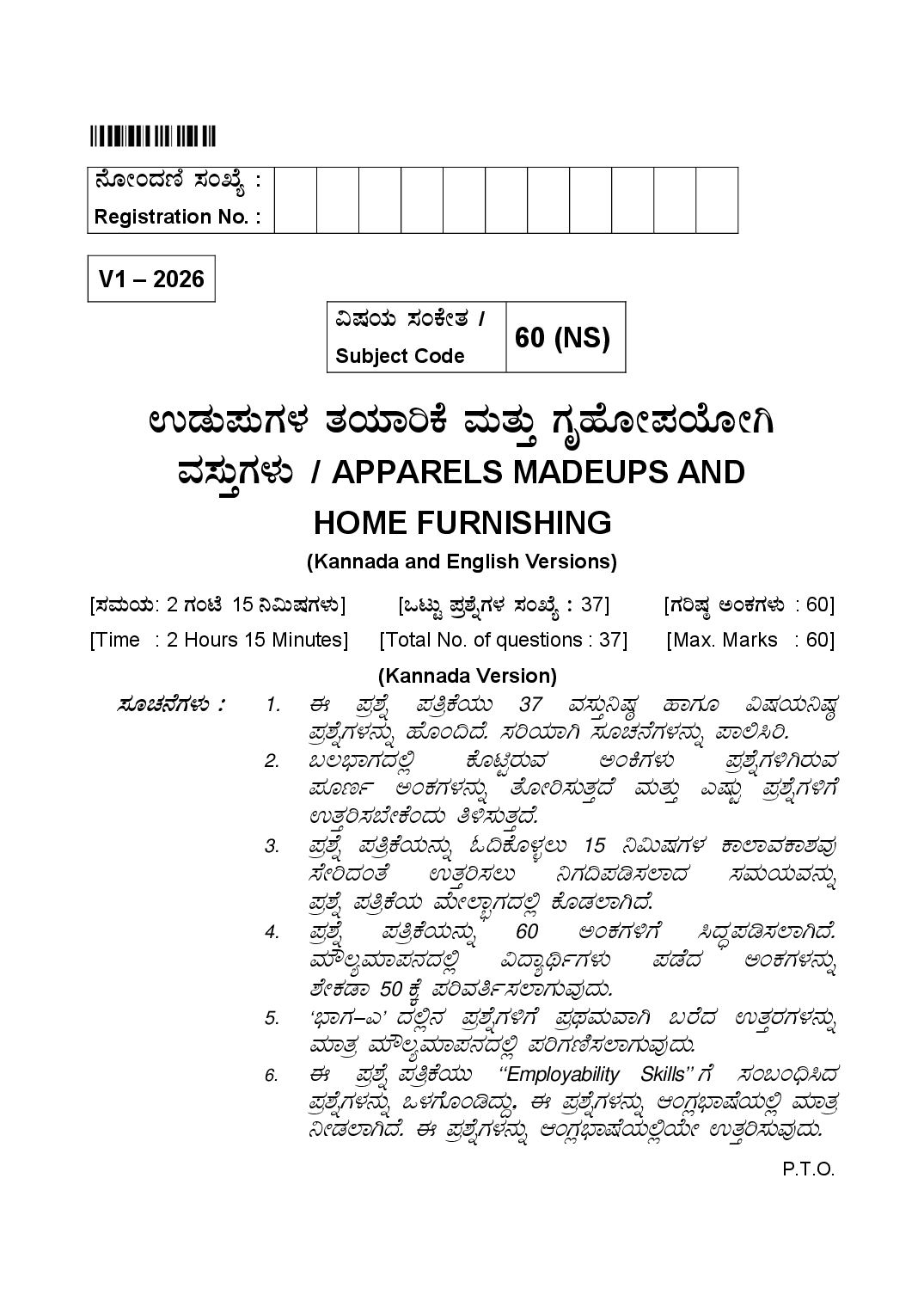
Karnataka 2nd PUC Question Paper 2026 Apparel Made-ups and Home Furnishing
Finished viewing? Save it for later —
Download Karnataka 2nd PUC Question Paper 2026 Apparel Made-ups and Home Furnishing (PDF · 12 pages)About Karnataka 2nd PUC Question Paper 2026 Apparel Made-ups and Home Furnishing
Karnataka 2nd PUC Question Paper 2026 Apparel Made-ups and Home Furnishing is available here for free download. Published by Karnataka Board for Class 12, this question paper can be viewed online or downloaded as a PDF (12 pages). Candidates preparing for Class 12 can use Karnataka 2nd PUC Question Paper 2026 Apparel Made-ups and Home Furnishing to understand the exam pattern, the type of questions asked, and the overall difficulty level.
Frequently Asked Questions
How can I download Karnataka 2nd PUC Question Paper 2026 Apparel Made-ups and Home Furnishing?
Open this page and click the Download button to save Karnataka 2nd PUC Question Paper 2026 Apparel Made-ups and Home Furnishing as a PDF. It is completely free on AglaSem Docs.
Is Karnataka 2nd PUC Question Paper 2026 Apparel Made-ups and Home Furnishing free to download?
Yes. Karnataka 2nd PUC Question Paper 2026 Apparel Made-ups and Home Furnishing can be viewed online and downloaded as a PDF free of cost on AglaSem Docs.
How many pages does Karnataka 2nd PUC Question Paper 2026 Apparel Made-ups and Home Furnishing have?
Karnataka 2nd PUC Question Paper 2026 Apparel Made-ups and Home Furnishing contains 12 pages, which you can read online or download together as a single PDF.
Where can I find more Class 12 study material?
You can find more Class 12 question papers, sample papers, syllabus, and answer keys on AglaSem Docs.
Karnataka 2nd PUC Question Paper 2026 Apparel Made-ups and Home Furnishing – Text
Read the full text of this question paper below — useful to quickly search, copy and reference the content online without downloading the PDF.
📄 View text version (12 pages)
Page 1
Registration No. :
V1 – 2026
«µÀAiÀÄ ¸ÀAPÉÃvÀ /
60 (NS)
Subject Code
GqÀÄ¥ÀÄUÀ¼À vÀAiÀiÁjPÉ ªÀÄvÀÄÛ UÀȺÉÆÃ¥ÀAiÉÆÃV
ªÀ¸ÀÄÛUÀ¼ÀÄ / APPARELS MADEUPS AND
HOME FURNISHING
(Kannada and English Versions)
[¸ÀªÀÄAiÀÄ: 2 UÀAmÉ 15 ¤«ÄµÀUÀ¼ÀÄ] [MlÄÖ ¥Àæ±ÉßUÀ¼À ¸ÀASÉå : 37] [UÀjµÀ× CAPÀUÀ¼ÀÄ : 60]
[Time : 2 Hours 15 Minutes] [Total No. of questions : 37] [Max. Marks : 60]
(Kannada Version)
¸ÀÆZÀ£ÉUÀ¼ÀÄ : 1. F ¥Àæ±Éß ¥ÀwæPÉAiÀÄÄ 37 ªÀ¸ÀÄÛ¤µÀ× ºÁUÀÆ «µÀAiÀĤµÀ×
¥Àæ±ÉßUÀ¼À£ÀÄß ºÉÆA¢zÉ. ¸ÀjAiÀiÁV ¸ÀÆZÀ£ÉUÀ¼À£ÀÄß ¥Á°¹j.
2. §®¨sÁUÀzÀ°è PÉÆnÖgÀĪÀ CAQUÀ¼ÀÄ ¥Àæ±ÉßUÀ½VgÀĪÀ
¥ÀÆtð CAPÀUÀ¼À£ÀÄß vÉÆÃj¸ÀÄvÀÛzÉ ªÀÄvÀÄÛ JµÀÄÖ ¥Àæ±ÉßUÀ½UÉ
GvÀÛj¸À¨ÉÃPÉAzÀÄ w½¸ÀÄvÀÛzÉ.
3. ¥Àæ±Éß ¥ÀwæPÉAiÀÄ£ÀÄß N¢PÉƼÀî®Ä 15 ¤«ÄµÀUÀ¼À PÁ¯ÁªÀPÁ±ÀªÀÅ
¸ÉÃjzÀAvÉ GvÀÛj¸À®Ä ¤UÀ¢¥Àr¸À¯ÁzÀ ¸ÀªÀÄAiÀĪÀ£ÀÄß
¥Àæ±Éß ¥ÀwæPÉAiÀÄ ªÉÄïÁãUÀzÀ°è PÉÆqÀ¯ÁVzÉ.
4. ¥Àæ±Éß ¥ÀwæPÉAiÀÄ£ÀÄß 60 CAPÀUÀ½UÉ ¹zÀÞ¥Àr¸À¯ÁVzÉ.
ªÀiË®åªÀiÁ¥À£ÀzÀ°è «zÁåyðUÀ¼ÀÄ ¥ÀqÉzÀ CAPÀUÀ¼À£ÀÄß
±ÉÃPÀqÁ 50 PÉÌ ¥ÀjªÀwð¸À¯ÁUÀĪÀÅzÀÄ.
5. ‘¨sÁUÀ-J’ zÀ°è£À ¥Àæ±ÉßUÀ½UÉ ¥ÀæxÀªÀĪÁV §gÉzÀ GvÀÛgÀUÀ¼À£ÀÄß
ªÀiÁvÀæ ªÀiË®åªÀiÁ¥À£ÀzÀ°è ¥ÀjUÀt¸À¯ÁUÀĪÀÅzÀÄ.
6. F ¥Àæ±Éß ¥ÀwæPÉAiÀÄÄ ‘‘Employability Skills’’ UÉ ¸ÀA§A¢ü¹zÀ
¥Àæ±ÉßUÀ¼À£ÀÄß M¼ÀUÉÆArzÀÄÝ, F ¥Àæ±ÉßUÀ¼£ À ÄÀ ß DAUÀè¨Ás µÉAiÀÄ°è ªÀiÁvÀæ
¤ÃqÀ¯ÁVzÉ. F ¥Àæ±ÉßUÀ¼£ À ÄÀ ß DAUÀè¨Ás µÉAiÀÄ°èAiÉÄà GvÀÛj¸ÀĪÀÅzÀÄ.
P.T.O.
Page 2
¨sÁUÀ - J
I. ¸ÀjAiÀiÁzÀ GvÀÛgÀªÀ£ÀÄß Dj¹ §gɬÄj : (10 × 1 = 10)
1) The default alignment of number in cell is
a) Left aligned b) Center aligned
c) Randomly aligned d) Right aligned
2) The number of basic punctuation marks used in English is
a) 10 b) 12
c) 15 d) 14
3) ¸ÁªÀiÁ£ÀåªÁV ¥ÀÄgÀĵÀgÀ ±ÀmïðUÀ¼À°è §¼À¸ÀĪÀ ¥ÁPÉmï£À «zsÀ
a) E£ï-¹ÃªÀiï ¥ÁPÉmï b) ¥ÁåZï ¥ÁPÉmï
c) PÁAUÀgÀÆ ¥ÁPÉmï d) ¸À¥sÁj ¥ÁPÉmï
4) PÁæ¥ï mÁ¥ï ªÀÄvÀÄÛ mÁåAPï mÁ¥ïUÀ¼À£ÀÄß zsÀj¸À®Ä ¸ÀÆPÀÛªÁzÀ PÁ®ªÀÅ
a) CmÉÆêÀÄ£ï PÁ® b) ZÀ½UÁ®
c) ªÀ¸ÀAvÀ / ¨ÉùUÉPÁ® d) ªÀļÉUÁ®
5) ¦ümï ¸ÁåA¥À¯ïìUÀ¼À£ÀÄß ¥Àj²Ã°¸ÀĪÀÅzÀÄ
a) GqÀÄ¥ÀÄUÀ¼À ªÉZÀÑ
b) ºÉÆ°UÉ, ¤RgÀvÉ ªÀÄvÀÄÛ C¼ÀvÉUÀ¼ÀÄ
c) ¯Éç¯ï£À «£Áå¸À
d) GvÁàzÀ£ÉAiÀÄ ªÉÃUÀ
Page 3
6) ªÀiÁqÀÄå®gï GvÁàzÀ£Á ªÀåªÀ¸ÉÜAiÀÄ DzsÁgÀªÀÅ
a) MAzÀÄ GqÀĦUÉ M§â vÀAiÀiÁgÀPÀgÀÄ
b) ªÀiÁå£ÀĪÀ¯ï ¦ü¤¶AUï
c) ««zsÀ jÃwAiÀÄ P˱À®åUÀ½gÀĪÀ vÀAqÀ PÉ®¸ÀUÁgÀgÀÄ
d) P˱À®åUÀ½®èzÀ vÀAqÀzÀ PÉ®¸ÀUÁgÀgÀÄ
7) §mÉÖAiÀÄ zÉÆõÀUÀ¼À£ÀÄß ¥Àj²Ã°¸ÀĪÀ 2 «zsÁ£ÀUÀ¼ÀÄ ____________
a) ¥ÉèöÊ eÉÆÃqÀuÉ ªÀÄvÀÄÛ ¸Éà÷èöʹAUï
b) 4 ¥Á¬ÄAmï «zsÁ£À ªÀÄvÀÄÛ 10 ¥Á¬ÄAmï «zsÁ£À
c) eÉÆÃr¸ÀĪÀÅzÀÄ, ºÀgÀqÀĪÀÅzÀÄ
d) ªÀÄÆ®¨sÀÆvÀ ¥Àj²Ã®£É ªÀÄvÀÄÛ «±ÉõÀ ¥Àj²Ã®£É
8) CAD £À MAzÀÄ ªÀÄÄRå C£ÀÄPÀÆ®ªÀÅ
a) ¸ÀÈd£À²Ã®vÉ ªÀÄvÀÄÛ ¸ÁªÀÄxÀåðªÀÅ ºÉZÁÑUÀÄvÀÛzÉ
b) vÀAvÀæeÕÁ£ÀªÀ£ÀÄß vÉUÉzÀĺÁPÀĪÀÅzÀÄ
c) ºÉaÑ£À PÉ®¸ÀUÁgÀgÀ£ÀÄß £ÉëĹPÉƼÀÄîªÀÅzÀÄ
d) GvÁàzÀ£Á ªÀåªÀ¸ÉÜAiÀÄÄ ¤zsÁ£ÀªÁUÀĪÀÅzÀÄ
9) PɼÀUÉ ¤ÃrgÀĪÀ ºÉýPÉUÀ¼À°è AiÀiÁªÀÅzÀÄ rfl¯ï
¥ÉÆÃmïð¥sÉÆðAiÉÆÃUÉ ¸ÀA§A¢ü¸ÀĪÀÅ¢®è?
a) PÉÆÃgÀ¯ï qÁæ b) ¥sÉÆÃmÉÆñÁ¥ï
c) PÁå£Àé d) M.S. ªÀqïð
10) ¤ªÀÄä «£Áå¸ÀzÀ G¥ÀAiÉÆÃUÀUÀ¼À£ÀÄß ¸ÀAªÀºÀ£ÀUÉƽ¸ÀĪÀÅzÀÄ __________.
a) PÀ£ï¸É¥ïÖ ¨ÉÆÃqïð¤AzÀ b) PÀ£ï¸É¥ïÖ qɪÀ®¥ïªÉÄAmï¤AzÀ
c) ªÀÄÆqï ¨ÉÆÃqïð¤AzÀ d) §tÚUÀ¼À ¸ÉÆÖÃj¬ÄAzÀ
Page 4
¨sÁUÀ – ©
II. F PɼÀV£À AiÀiÁªÀÅzÁzÀgÀÆ ºÀvÀÄÛ ¥Àæ±ÉßUÀ½UÉ GvÀÛj¹ : (10 × 2 = 20)
11) Write the characteristics of an entrepreneurship.
12) Difference between worksheet and workbook.
13) ªÀAiÀĹì£À DzsÁgÀzÀ ªÉÄÃ¯É ªÀÄPÀ̼À GqÀÄ¥ÀÄUÀ¼À£ÀÄß ¤ÃªÀÅ ºÉÃUÉ
«AUÀr¸ÀÄwÛÃj?
14) C¸ÉA©è-¯ÉÊ£ï ªÀåªÀ¸ÉÜAiÀÄ JgÀqÀÄ «zsÀUÀ¼À£ÀÄß ºÉ¸Àj¹.
15) ¦ümï ªÀiÁzÀjAiÀÄ «zsÀUÀ¼À£ÀÄß ¥ÀnÖ ªÀiÁr.
16) r¸ÉÊ£ïìUÀ¼À£ÀÄß G£ÀßvÀ ªÀÄlÖzÀ°è vÀAiÀiÁj¸À®Ä ¥sÁå±À£ï
¥ÉÆÃmïð¥sÉÆðAiÉÆêÀÅ ¤ªÀÄUÉ ºÉÃUÉ ¸ÀºÁAiÀĪÁUÀÄvÀÛzÉ?
17) ªÀÄÆqï ¨ÉÆÃqïð£À PÁAiÀÄðªÉãÀÄ?
18) ¥ÉÆÃmïð¥sÉÆðAiÉÆà «zsÀUÀ¼À£ÀÄß §gɬÄj.
19) vÀÄvÀÄð ¸ÀASÉåUÀ¼À£ÀÄß ªÀÄÄRåªÁV AiÀiÁªÀ AiÀiÁªÀ E¯ÁSÉAiÀÄ°è
§¼À¸ÀÄvÁÛgÉ?
20) vÀÄvÀÄð ¥Àj¹Üw JAzÀgÉãÀÄ?
Page 5
21) GqÀÄ¥ÀÄ WÀlPÀUÀ¼À°è PÉ®¸À ªÀiÁqÀĪÁUÀ DUÀĪÀ zÉÊ»PÀ C¥ÁAiÀÄUÀ¼À£ÀÄß
§gɬÄj.
22) GqÀÄ¥ÀÄ GvÁàzÀ£Á ªÀåªÀ¸ÉÜAiÀÄ°è GqÀÄ¥À£ÀÄß ªÀÄÄPÁÛAiÀÄUÉƽ¸ÀĪÀ ªÀÄÄ£Àß
GqÀÄ¥ÀÄ vÉƼÉAiÀÄĪÀÅzÀÄ CªÀ±ÀåPÀ. KPÉ?
23) UÀÄtªÀÄlÖzÀ ¥Àj«ÃPÀëuÉAiÀÄ ¥sÉÆèÃ-ZÁmïð ©r¹.
¨sÁUÀ - ¹
III. F PɼÀV£À AiÀiÁªÀÅzÁzÀgÀÆ DgÀÄ ¥Àæ±ÉßUÀ½UÉ GvÀÛj¹ : (6 × 3 = 18)
24) How to minimize the waste and pollution?
25) Explain the qualities of successful entrepreneur.
26) gÉrªÉÄÃqï ªÀÄvÀÄÛ mÉÊ®gï ªÀiÁrzÀ GqÀÄ¥ÀÄUÀ¼À ªÀåvÁå¸À w½¹.
27) mÉPï ¥ÁåPï£À°è ¤RgÀvÉAiÀÄÄ ªÀÄÄRå. KPÉ?
28) PÉ®¸ÀzÀ ¥ÀæzÉñÀzÀ°è C£ÀĸÀj¸À¨ÉÃPÁzÀ ¸ÀÄgÀPÀëvÁ ªÀÄÄ£ÉßZÀÑjPÉ PÀæªÀÄUÀ¼ÀÄ
K£ÀÄ?
29) lÄPÁmÉPï (TUKATECH) ªÀÄvÀÄÛ ¹-r¸ÉÊ£ï £ÀqÀÄ«£À ªÀåvÁå¸ÀUÀ¼À£ÀÄß
§gɬÄj.
Page 6
30) GqÀÄ¥ÀÄ «£Áå¸ÀªÀ£ÀÄß C©üªÀÈ¢Þ¥Àr¸ÀĪÁUÀ §¼À¸ÀĪÀ ¸Á¥sïÖªÉÃgïUÀ¼À£ÀÄß
¥ÀnÖ ªÀiÁr.
31) ¥sÁå±À£ï ¥ÉÆÃmïð¥sÉÆðAiÉÆÃzÀ ¥ÁæªÀÄÄRåvÉAiÀÄ£ÀÄß «ªÀj¹.
32) vÀÄvÀÄð ¥Àj¹ÜwAiÀÄ°è ªÉÃUÀªÁV vÉUÉzÀÄPÉƼÀî¨ÉÃPÁzÀ PÀæªÀÄUÀ¼ÀÄ AiÀiÁªÀŪÀÅ?
33) vÀÄvÀÄð ¥Àj¹ÜwAiÀÄ°è ¥ÀæxÀªÀÄ aQvÁì ¥ÉnÖUÉAiÀÄ£ÀÄß §¼À¸À¯ÁUÀÄvÀÛzÉ. KPÉ?
¨sÁUÀ - r
IV. F PɼÀV£À AiÀiÁªÀÅzÁzÀgÀÆ JgÀqÀÄ ¥Àæ±ÉßUÀ½UÉ GvÀÛj¹ : (2 × 6 = 12)
34) GqÀÄ¥ÀÄ ªÀVÃðPÀgÀtzÀ ««zsÀ ªÀUÀðUÀ¼À£ÀÄß «ªÀj¹.
35) ¥ÉÆæÃmÉÆà ªÀÄvÀÄÛ ¦ümï ªÀiÁzÀj C©üªÀÈ¢ÞAiÀÄ°è GqÀÄ¥ÀÄ GvÁàzÀ£ÉAiÀÄ
UÀÄtªÀÄlÖ ¥Àj²Ã®£ÉAiÀÄ ºÀAvÀUÀ¼À£ÀÄß «ªÀj¹.
36) ªÀiÁ£ÀªÀ£À PÉÆÃgÀ¯ï gÉÃSÁavÀæªÀ£ÀÄß ©r¹.
37) ¤ÃªÀÅ PÉ®¸À ªÀiÁqÀĪÀ ¸ÀܼÀzÀ°è ±ÀÄzÀÞ PÀÄrAiÀÄĪÀ ¤ÃgÀÄ ªÀÄvÀÄÛ £ÉʪÀÄð®å
¸Ë®¨sÀåªÀÅ CªÀ±ÀåPÀ. KPÉ? «ªÀj¹.
———————————
Page 7
(English Version)
Instructions : 1. This question paper consists of 37 objectives and
subjective types of questions and follow the instructions.
2. Figures in the right hand margin indicate maximum
marks for the question and the number of questions to be
attended.
3. The maximum time to answer the paper is given at the
top of the question paper. It includes 15 minutes for reading
the question paper.
4. The question paper is prepared for 60 marks during
evaluation marks obtained by the students will be
converted into 50%.
5. For 'PART-A’ questions, only the first written answer will be
considered for evaluation.
6. This question paper consists of questions related to
“Employability Skills”. These questions are given in English
version and answer those questions in English only.
PART – A
I. Choose the correct answer : (10 × 1 = 10)
1) The default alignment of number in cell is
a) Left aligned b) Center aligned
c) Randomly aligned d) Right aligned
Page 8
2) The number of basic punctuation marks used in English is
a) 10 b) 12
c) 15 d) 14
3) The types of pocket are most commonly used in men-shirt
a) In-seam pocket b) Patch pocket
c) Kangaroo pocket d) Safari pocket
4) The suitable season for wearing crop top and tank top
a) Autumn wear b) Winter wear
c) Spring / Summer d) Rain wear
5) Fit samples are checked for
a) Garment cost
b) Construction, accuracy and measurements
c) Label design
d) Production speed
6) The modular production system is based on
a) One operator for garment
b) Manual finishing
c) Team work of multi skilled operators
d) Team work of un-skilled operators
7) 2 methods of defects checking in fabric is ______________.
a) play alignment and splicing
b) 4 point method and 10 point method
c) spreading and laying
d) basic check and specialized check
Page 9
8) One major advantages of CAD
a) Increases creativity and efficiency
b) Eliminates technology
c) Increases manual labour
d) Slows production
9) In the given statement which is not related to digital portfolio
a) Corel draw b) Photoshop
c) Canva d) M.S. Word
10) ______________ that communicates your design ideas.
a) Concept Board b) Concept development
c) Mood Board d) Colour story
PART – B
II. Answer any ten of the following questions : (10 × 2 = 20)
11) Write the characteristics of an entrepreneurship.
12) Difference between worksheet and workbook.
13) Based on the age group of children wear how will you categorized
garments?
14) Name the two types of assembly line system.
15) List the types of fit sample.
Page 10
16) How fashion portfolio helps to you create better designs?
17) Write the functions of mood board.
18) Write the types of portfolio.
19) Emergency numbers are mainly using in which departments?
20) What is an emergency situations?
21) What are the physical hazards happen while working in garment industry?
Explain it.
22) The fabric washing is required in before the garment finishing. Why?
23) Draw the flow chart of quality inspection.
PART – C
III. Answer any six of the following questions : (6 × 3 = 18)
24) How to minimize the waste and pollution?
25) Explain the qualities of successful entrepreneur.
26) Write the difference between Readymade and tailored garments.
27) Why accuracy is important in tech pack?
Page 11
28) What are the safety precautions can be follows in working area?
29) Differentiate between TUKATECH and C-designs fashion.
30) List out the softwares used in while creating designs in apparel design.
31) Explain the importants of fashion portfolio.
32) Which are the immediate action has to be taken if emergency situation
happen in working area?
33) Why first aid kits are used in emergency situations?
PART – D
IV. Answer any two of the following questions : (2 × 6 = 12)
34) Write about the different types of classification of garments and explain it.
35) Explain the quality testing steps in proto and fit sample development.
36) Draw the Human Coral geometric sketches.
37) Pure drinking water and sanitary safety is important in working area.
Why? Explain.
———————
Page 12
Document Details
| Board / Org | Karnataka Board |
| Exam | Class 12 |
| Type | Question Paper |
| Pages | 12 |
| Language | english |
| Updated | 24 Sep 2026 |