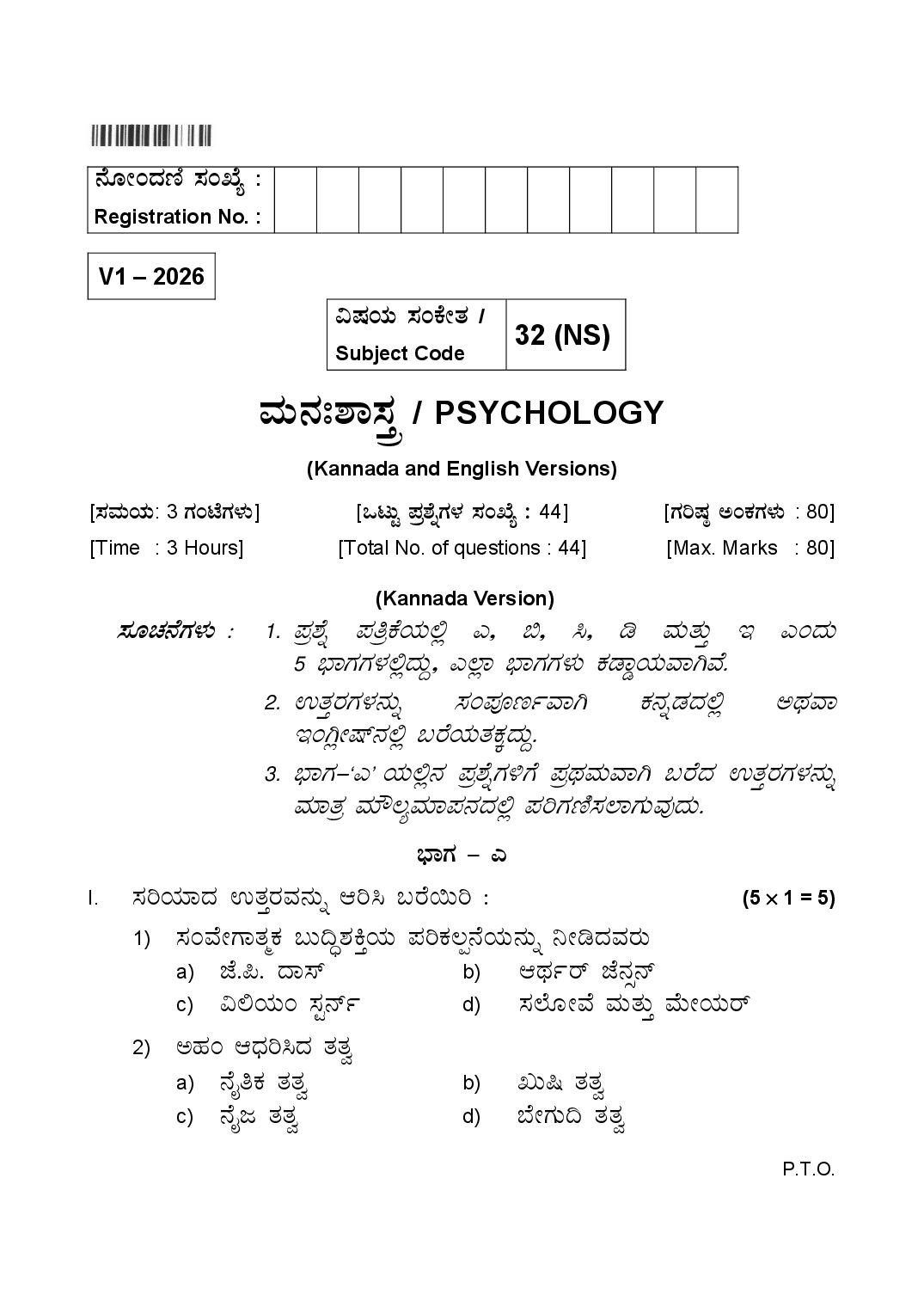
Karnataka 2nd PUC Question Paper 2026 Psychology
Finished viewing? Save it for later —
Download Karnataka 2nd PUC Question Paper 2026 Psychology (PDF · 12 pages)About Karnataka 2nd PUC Question Paper 2026 Psychology
Karnataka 2nd PUC Question Paper 2026 Psychology is available here for free download. Published by Karnataka Board for Class 12, this question paper can be viewed online or downloaded as a PDF (12 pages). Candidates preparing for Class 12 can use Karnataka 2nd PUC Question Paper 2026 Psychology to understand the exam pattern, the type of questions asked, and the overall difficulty level.
Frequently Asked Questions
How can I download Karnataka 2nd PUC Question Paper 2026 Psychology?
Open this page and click the Download button to save Karnataka 2nd PUC Question Paper 2026 Psychology as a PDF. It is completely free on AglaSem Docs.
Is Karnataka 2nd PUC Question Paper 2026 Psychology free to download?
Yes. Karnataka 2nd PUC Question Paper 2026 Psychology can be viewed online and downloaded as a PDF free of cost on AglaSem Docs.
How many pages does Karnataka 2nd PUC Question Paper 2026 Psychology have?
Karnataka 2nd PUC Question Paper 2026 Psychology contains 12 pages, which you can read online or download together as a single PDF.
Where can I find more Class 12 study material?
You can find more Class 12 question papers, sample papers, syllabus, and answer keys on AglaSem Docs.
Karnataka 2nd PUC Question Paper 2026 Psychology – Text
Read the full text of this question paper below — useful to quickly search, copy and reference the content online without downloading the PDF.
📄 View text version (12 pages)
Page 1
Registration No. :
V1 – 2026
«µÀAiÀÄ ¸ÀAPÉÃvÀ /
32 (NS)
Subject Code
ªÀÄ£ÀB±Á¸ÀÛç / PSYCHOLOGY
(Kannada and English Versions)
[¸ÀªÀÄAiÀÄ: 3 UÀAmÉUÀ¼ÀÄ] [MlÄÖ ¥Àæ±ÉßUÀ¼À ¸ÀASÉå : 44] [UÀjµÀ× CAPÀUÀ¼ÀÄ : 80]
[Time : 3 Hours] [Total No. of questions : 44] [Max. Marks : 80]
(Kannada Version)
¸ÀÆZÀ£ÉUÀ¼ÀÄ : 1. ¥Àæ±Éß ¥ÀwæPÉAiÀÄ°è J, ©, ¹, r ªÀÄvÀÄÛ E JAzÀÄ
5 ¨sÁUÀUÀ¼À°èzÀÄÝ, J¯èÁ ¨sÁUÀUÀ¼ÀÄ PÀqÁØAiÀĪÁVªÉ.
2. GvÀÛgÀUÀ¼À£ÀÄß ¸ÀA¥ÀÇtðªÁV PÀ£ÀßqÀzÀ°è CxÀªÁ
EAVèõï£À°è §gÉAiÀÄvÀPÀÌzÀÄÝ.
3. ¨sÁUÀ-‘J’ AiÀÄ°è£À ¥Àæ±ÉßUÀ½UÉ ¥ÀæxÀªÀĪÁV §gÉzÀ GvÀÛgÀUÀ¼À£ÀÄß
ªÀiÁvÀæ ªÀiË®åªÀiÁ¥À£ÀzÀ°è ¥ÀjUÀt¸À¯ÁUÀĪÀÅzÀÄ.
¨sÁUÀ - J
I. ¸ÀjAiÀiÁzÀ GvÀÛgÀªÀ£ÀÄß Dj¹ §gɬÄj : (5 × 1 = 5)
1) ¸ÀAªÉÃUÁvÀäPÀ §Ä¢Þ±ÀQÛAiÀÄ ¥ÀjPÀ®à£ÉAiÀÄ£ÀÄß ¤ÃrzÀªÀgÀÄ
a) eÉ.¦. zÁ¸ï b) DxÀðgï eÉ£Àì£ï
c) «°AiÀÄA ¸ÀÖ£ïð d) ¸À¯ÉÆÃªÉ ªÀÄvÀÄÛ ªÉÄÃAiÀÄgï
2) CºÀA DzsÀj¹zÀ vÀvÀé
a) £ÉÊwPÀ vÀvÀé b) RĶ vÀvÀé
c) £ÉÊd vÀvÀé d) ¨ÉÃUÀÄ¢ vÀvÀé
P.T.O.
Page 2
3) F vÀAvÀæzÀ ªÀÄÆ®PÀ ªÉÊAiÀÄQÛPÀ C£ÀĨsÀªÀªÀ£ÀÄß ªÀÄ£À¹ì£À°è PÀ°à¹PÉÆAqÀÄ
CzÀgÀ ¤ªÁgÀuÉUÉ ªÀÄ£À¹ì£À¯èÉà vÀAvÀæUÀ¼À£ÀÄß gÀƦ¸ÀĪÀÅzÀÄ.
a) eÉÊ«PÀ ¥ÀæwQæAiÉÄ b) ¸ÀÈd£ÁvÀäPÀ PÀ®à£É
c) «±ÁæAw vÀAvÀæUÀ¼ÀÄ d) ¸ÀAeÕÁ£ÁvÀäPÀ-ªÀvÀð£Á vÀAvÀæUÀ¼ÀÄ
4) ªÀåQÛAiÀÄ°è £É¯É¹gÀĪÀ zÀĵÀÖ±ÀQÛUÀ¼À£ÀÄß «gÀÄzÁÞvÀäPÀ ªÀiÁAwæPÀvÉ ºÁUÀÆ
¥ÁæxÀð£ÉAiÀÄ ªÀÄÆ®PÀ vÉUÉzÀĺÁPÀĪÀÅzÀÄ.
a) ¸ÀªÀÄ¥ÀðPÀªÁV ºÉÆA¢PÉƼÀî¯ÁUÀzÀ
b) AiÉÆÃUÀPÉëêÀÄ
c) CwÃA¢æAiÀÄ
d) ¨sÀÆvÉÆÃZÁÒl£É
5) ªÀÄ£ÉÆèsÁªÀzÀ MAzÀÄ ®PëÀtzÀ wêÀævÉAiÀÄÄ JµÀÄÖ zsÀ£ÁvÀäPÀ CxÀªÁ
IÄuÁvÀäPÀªÁVzÉ JA§ÄzÀ£ÀÄß ¸ÀÆa¸ÀÄvÀÛzÉ.
a) ªÉÊ¥ÀjÃvÀåvÉ
b) ¸ÀgÀ¼ÀvÉ
c) ¸ÀAQÃtðvÉ
d) ªÀÄ£ÉÆùÜw
Page 3
II. DªÀgÀtzÀ°è PÉÆnÖgÀĪÀ ¥ÀzÀUÀ½AzÀ ¸ÀÆPÀÛªÁzÀ ¥ÀzÀUÀ¼À£ÀÄß Dj¸ÀĪÀ ªÀÄÆ®PÀ
SÁ° eÁUÀUÀ¼À£ÀÄß ¨sÀwð ªÀiÁr. (5 × 1 = 5)
[¸ÀA¥ÀÇtð, vÀAqÀUÀ¼ÀÄ, ¥ÀæzsÁ£À, ¸ÁªÀÄxÀåð, Cw©üÃw, UÀÄA¥ÀÅUÀ¼ÀÄ]
6) _________ vÀgÀ¨ÉÃwAiÉÆA¢UÉ PÉ®ªÀÅ ¤¢ðµÀÖ P˱À®åUÀ¼À£ÀÄß ¥ÀqÉAiÀÄĪÀ
¸ÁzsÀåvÉUÀ¼À£ÀÄß ¸ÀÆa¸ÀĪÀ UÀÄt®PëÀtUÀ¼À ¸ÀAAiÉÆÃd£É.
7) _________ ªÀåQÛAiÀÄ UÀÄtUÀ¼ÀÄ ¸ÀA¥ÀÇtð fêÀ£ÀzÀ UÀÄjAiÀÄ£ÀÄß
¸ÀÆa¸ÀÄvÀÛªÉ.
8) __________ AiÀÄ£ÀÄß ºÉÆA¢gÀĪÀ d£ÀgÀÄ ¤¢ðµÀÖ ªÀ¸ÀÄÛUÀ¼ÀÄ, d£ÀgÀÄ
CxÀªÁ ¸À¤ßªÉñÀUÀ½UÉ ¸ÀA§A¢ü¹zÀ ¨sÀAiÀĪÀ£ÀÄß ºÉÆA¢gÀÄvÁÛgÉ.
9) UɸÁÖ¯ïÖ JA§ dªÀÄð£ï ¥ÀzÀzÀ CxÀð___________.
10) __________ JAzÀgÉ «±ÉõÀ jÃwAiÀÄ UÀÄA¥ÀÅUÀ¼À ¸ÀzÀ¸ÀågÀÄ ¸ÁªÀiÁ£ÀåªÁV
¥ÀÇgÀPÀ P˱À®åUÀ¼À£ÀÄß ºÉÆA¢gÀÄvÁÛgÉ ªÀÄvÀÄÛ ¸ÁªÀiÁ£Àå GzÉÝñÀ CxÀªÁ
UÀÄjUÉ §zÀÞgÁVgÀÄvÁÛgÉ.
III. ºÉÆA¢¹ §gɬÄj. (5 × 1 = 5)
11) J ©
a) ªÀiÁ£À¹PÀ ªÀAiÀĸÀÄì i) eÉÆvÉAiÀiÁVgÀĪÀÅzÀÄ
b) ªÀvÀð£Á «zsÁ£À ii) PÀÆzÀ®Ä J¼ÉAiÀÄĪÀ C¸Àé¸ÀÜvÉ
c) mÉæ ÊPÉÆn¯ÉƪÉÄäAiÀiÁ iii) °AiÀiÁ£ï-¥sɹÖAdgï
d) JgÀqÀÄ-ºÀAvÀzÀ ¥ÀjPÀ®à£É iv) D¯Éáçqï ©Ã£É
e) MUÀÎlÄÖ v) ¥Áªï¯ÉÆêï
vi) J¸ï.JA. ªÉÆùì£ï
Page 4
IV. F PɼÀV£À ¥Àæ±ÉßUÀ½UÉ MAzÀÄ ¥ÀzÀ CxÀªÁ MAzÀÄ ªÁPÀåzÀ°è GvÀÛj¹ :
(5 × 1 = 5)
12) ‘¥Àæw¨sÁ¤évÀgÀÄ’ JAzÀgÉ AiÀiÁgÀÄ?
13) ‘¥À¸ÉÆÃð£À’ ¥ÀzÀzÀ CxÀðªÉãÀÄ?
14) ¸ÀªÀiÁd«gÉÆâü ªÀvÀð£ÉUÉ MAzÀÄ GzÁºÀgÀuÉ ¤Ãr.
15) ¸ÀºÁ£ÀĨsÀÆw JAzÀgÉãÀÄ?
16) ºÀvÁ±É JAzÀgÉãÀÄ?
¨sÁUÀ - ©
V. F PɼÀV£À AiÀiÁªÀÅzÁzÀgÀÆ K¼ÀÄ ¥Àæ±ÉßUÀ½UÉ ¥ÀæwAiÉÆAzÀPÀÆÌ 2 jAzÀ 3 ªÁPÀåUÀ¼À°è
GvÀÛj¹ : (7 × 2 = 14)
17) ªÉµÀègïgÀªg
À À ¥ÀæPÁgÀ §Ä¢Þ±ÀQÛAiÀÄ£ÀÄß ªÁåSÁ夹.
18) ªÀåQÛ CzsÀåAiÀÄ£À JAzÀgÉãÀÄ?
19) ZÉÃvÀ£ÀzÀ AiÀiÁªÀÅzÁzÀgÀÆ JgÀqÀÄ ºÀAvÀUÀ¼À£ÀÄß §gɬÄj.
20) AiÀiÁªÀÅzÁzÀgÀÆ JgÀqÀÄ ¸ÀéAiÀÄA-ªÀiÁ»w ªÀiÁ¥À£ÀUÀ¼À£ÀÄß ºÉ¸Àj¹.
21) DWÁvÀPÁj WÀl£ÉUÀ¼ÀÄ JAzÀgÉãÀÄ?
22) ªÁåAiÀiÁªÀÄ ªÀiÁqÀĪÀÅzÀjAzÀ ¥Àæw§®£ÀªÀ£ÀÄß ºÉÃUÉ ¤¨sÁ¬Ä¸À§ºÀÄzÀÄ?
23) G£ÁäzÀ-«µÁzÀ C¸Àé¸ÀÜvÉ JAzÀgÉãÀÄ?
24) ªÀÄ£ÉÆÃgÉÆÃUÀ aQvÉìAiÀÄ AiÀiÁªÀÅzÁzÀgÀÆ JgÀqÀÄ UÀÄjUÀ¼À£ÀÄß §gɬÄj.
25) KPÀgÀÆ¥ÀPÀUÀ¼ÀÄ JAzÀgÉãÀÄ?
26) ¸ÀéAiÀÄA-¥ÀÇgÉÊPÉAiÀÄ ¨s«
À µÀåªÁt JAzÀgÉãÀÄ?
27) C£ÀĵÀAVPÀ UÀÄA¥ÀÅUÀ¼ÀÄ JAzÀgÉãÀÄ? GzÁºÀgÀuÉ PÉÆr.
Page 5
¨sÁUÀ - ¹
VI. F PɼÀV£À AiÀiÁªÀÅzÁzÀgÀÆ DgÀÄ ¥Àæ±ÉßUÀ½UÉ ¥ÀæwAiÉÆAzÀPÀÆÌ 10 jAzÀ 12
ªÁPÀåUÀ¼À°è GvÀÛj¹ : (6 × 4 = 24)
28) ®Æ¬Ä¸ï xÀ¸ð
ÀÖ £ïgÀªÀgÀ §Ä¢Þ±ÀQÛAiÀÄ ¹zÁÞAvÀªÀ£ÀÄß «ªÀj¹.
29) ¨sÁgÀvÀzÀ°è C©üªÀÈ¢Þ¥Àr¸À¯ÁzÀ AiÀiÁªÀÅzÁzÀgÀÆ £Á®ÄÌ §Ä¢Þ±ÀQÛ
¥ÀjÃPÉëU¼
À £
À ÄÀ ß §gɬÄj.
30) gÉÆõÁðPïgÀªg
À À ªÀĹ-ªÀÄZÉÑ ¥ÀjÃPÉëAiÀÄ£ÀÄß «ªÀj¹.
31) wæUÀÄt ¹zÁÞAvÀzÀ DzsÁgÀzÀ°è ªÀåQÛvÀéªÀ£ÀÄß «ªÀj¹.
32) ‘f.J.J¸ï.’ £ÀÄß GzÁºÀgÀuÉAiÉÆA¢UÉ «ªÀj¹.
33) AiÀiÁªÀÅzÁzÀgÀÆ JgÀqÀÄ C¥À¸ÁªÀiÁ£Àå ªÀvÀð£ÉUÉ PÁgÀtªÁUÀĪÀ CA±ÀUÀ¼À£ÀÄß
¸ÀAQë¥ÀÛªÁV «ªÀj¹.
34) Dn¸ÀA ¸ÉàPÀÖçªÀiï C¸Àé¸ÀÜvÉAiÀÄ §UÉÎ «ªÀj¹.
35) eÉÃqÀzÀ §UÉÎ ¨sÀAiÀĪÀ£ÀÄß ºÉÆA¢gÀĪÀ ¤ªÀÄä ¸ÉßûvÀ¤UÉ ¨sÀAiÀÄ¢AzÀ
ºÉÆgÀ§gÀ®Ä ºÉÃUÉ ¸ÀºÁAiÀÄ ªÀiÁqÀÄ«j?
36) UÀÄA¥ÀÅ gÀZÀ£Á ºÀAvÀUÀ¼À£ÀÄß «ªÀj¹.
37) ¸ÁªÀiÁfPÀ ¸ÉÆêÀiÁjvÀ£À ªÀÄvÀÄÛ ¸ÁªÀiÁfPÀ ¸ÀÄUÀªÀÄvÉUÀ¼À£ÀÄß ªÀåvÁå¹ÃPÀj¹.
Page 6
¨sÁUÀ - r
VII. F PɼÀV£À AiÀiÁªÀÅzÁzÀgÀÆ JgÀqÀÄ ¥Àæ±ßÉ UÀ½UÉ ¥ÀæwAiÉÆAzÀPÀÆÌ 20 jAzÀ 25
ªÁPÀåUÀ¼À°è GvÀÛj¹ : (2 × 6 = 12)
38) ¸ÁªÀiÁ£Àå ªÀPÀægÉÃSÉAiÉÄAzÀgÉãÀÄ? §ÄzÀÞöåAPÀzÀ DzsÁgÀzÀ ªÉÄïÉ
ªÀÄ£ÉÆëeÕÁ¤UÀ¼ÀÄ d£ÀgÀ£ÀÄß ºÉÃUÉ ªÀVÃðPÀgÀtªÀ£ÀÄß ªÀiÁrzÝÁgÉ
JA§ÄzÀ£ÀÄß «ªÀj¹.
39) AiÀiÁªÀÅzÁzÀgÀÆ JgÀqÀÄ CºÀA gÀPëÀuÁ vÀAvÀæUÀ¼À£ÀÄß GzÁºÀgÀuÉUÀ¼ÉÆA¢UÉ
«ªÀj¹.
40) «WÀluÁ «¸ÀägÀuÉUÀ¼À£ÀÄß «ªÀj¹.
41) zÉúÀzÀ ¥ÀæwgÀÆ¥ÀzÀ §UÉUÉ ¤ªÀÄä ¸ÀºÀ¥ÁpUÉ C£À¥ÉÃQëvÀ D¯ÉÆÃZÀ£ÉUÀ½AzÀ
ºÉÃUÉ ºÉÆgÀ§gÀ®Ä ¸ÀºÁAiÀÄ ªÀiÁqÀÄwÛÃj?
¨sÁUÀ - E
[¥ÁæAiÉÆÃVPÀ «¨sÁUÀ]
VIII. F PɼÀV£À AiÀiÁªÀÅzÁzÀgÀÆ JgÀqÀÄ ¥Àæ±ÉßUÀ½UÉ GvÀÛj¹ : (2 × 5 = 10)
42) d¯ÉÆÃlgÀªÀgÀ ¸ÁªÀiÁ£Àå §Ä¢Þ ¸ÁªÀÄxÀåð ¥ÀjÃPÉë §¼À¹, §Ä¢Þ±ÀQÛAiÀÄ£ÀÄß
ªÀiÁ¥À£À ªÀiÁqÀĪÀ «zsÁ£ÀzÀ°è ¤ÃªÀÅ C£ÀĸÀj¹zÀ AiÉÆÃd£É ªÀÄvÀÄÛ
¥ÀæAiÉÆÃUÀ «zsÁ£ÀªÀ£ÀÄß §gɬÄj.
43) ¥ÀæAiÉÆÃUÁyðAiÀÄ ¸ÀªÀiÁAiÉÆÃd£ÉAiÀÄ ºÀAvÀªÀ£ÀÄß ¨É¯ïgÀªÀgÀ ¸ÀªÀiÁAiÉÆÃd£É
¥ÀæuÁ½PɬÄAzÀ ¤zsÀðj¸ÀĪÀ ¥ÀæAiÉÆÃUÀz° À è ¤ÃªÀÅ C£ÀĸÀj¹zÀ AiÉÆÃd£É
ªÀÄvÀÄÛ ¥ÀæAiÉÆÃUÀ «zsÁ£ÀªÀ£ÀÄß §gɬÄj.
44) ªÁPÀå¥ÀÇtð ¥ÀjÃPÉëAiÀÄ£ÀÄß §¼À¹ ¥ÀæAiÉÆÃUÁyðAiÀÄ ªÀåQÛvÀéªÀ£ÀÄß ¤zsÀðj¸ÀĪÀ
¥ÀæAiÉÆÃUÀz°
À è ¤ÃªÀÅ C£ÀĸÀj¹zÀ AiÉÆÃd£É ªÀÄvÀÄÛ ¥ÀæAiÉÆÃUÀ «zsÁ£ÀªÀ£ÀÄß
§gɬÄj.
––––––––––––––––––
Page 7
(English Version)
Instructions : 1. The question paper contains 5 parts A, B, C, D and E,
all the parts are compulsory.
2. The answer should be written completely either in
Kannada or in English.
3. For PART – ‘A’ questions, only the first written answers
will be considered for evaluation.
PART – A
I. Choose the correct answer : (5 × 1 = 5)
1) The concept of emotional intelligence was given by
a) J.P. Das b) Arthur Jensen
c) William Stern d) Salovey and Mayer
2) Ego works by
a) Morality principle b) Pleasure principle
c) Reality principle d) Distress principle
3) This technique is a subjective experience that uses imagery and
imagination
a) Bio feedback
b) Creative visualization
c) Relaxation techniques
d) Cognitive behavioral techniques
Page 8
4) Removing the evil that resides in the individual through counter magic
and prayer
a) Maladaptive
b) Well-being
c) Super natural
d) Exorcism
5) A feature of an attitude which indicates how positive or negative an
alternative is
a) Extremeness b) Simplicity
c) Complexity d) Valence
II. Fill in the blanks by choosing the appropriate words from those given in the
brackets : (5 × 1 = 5)
[Whole, Teams, Cardinal, Aptitude, Phobias, Groups]
6) ____________ is an individuals potential to acquire some specific skills
with training.
7) ____________ traits indicate the goal around which a person’s entire life
seems to revolve.
8) ____________ have irrational fears related to specific objects, people or
situations.
9) The German word ‘Gestalt’ means ____________.
10) In ____________ members often have complementary skills and are
committed to a common goal or purpose.
Page 9
III. Match the following. (5 × 1 = 5)
11) A B
a) Mental age i) Togetherness
b) Behavioral approach ii) Hair pulling disorder
c) Trichotillomania iii) Leon-Festinger
d) Two-step concept iv) Alfred Binet
e) Cohesiveness v) Pavlov
vi) S.M. Mohsin
IV. Answer the following questions in a word or a sentence : (5 × 1 = 5)
12) Who are ‘Prodigies’?
13) What is the meaning of the word ‘Persona’?
14) Give an example for anti-social behavior.
15) What is Empathy?
16) What is Frustration?
PART – B
V. Answer any seven of the following questions in 2 to 3 sentences each :
(7× 2 = 14)
17) Define Intelligence according to Wechsler.
18) What is a Case study?
19) Write any two levels of consciousness.
Page 10
20) Name any two self-report measures.
21) What are traumatic events?
22) How can exercise help in coping with stress?
23) What is bi-polar disorder?
24) Write any two goals of psychotherapy.
25) What are stereotypes?
26) What is self-fulfilling prophecy?
27) What are secondary groups? Give an example.
PART – C
VI. Answer any six of the following questions in 10 to 12 sentences each :
(6 × 4 = 24)
28) Explain Louis Thurstone’s theory of intelligence.
29) Write any four intelligence tests developed in India.
30) Explain Rorschach Inkblot test.
31) Explain typology of personality based on ‘Trigunas’.
32) Explain ‘GAS’ with example.
33) Briefly explain any two causes of abnormal behavior.
34) Explain Autism spectrum disorder.
35) How will you help your friend overcome fear of spider?
Page 11
36) Explain the stages of group formation.
37) Differentiate between social loafing and social facilitation.
PART – D
VII. Answer any two of the following questions in 20 to 25 sentences each :
(2 × 6 = 12)
38) What is a normal curve? Explain how psychologists classify people on the
basis of the IQ scores.
39) Explain any two ego defense mechanisms with examples.
40) Explain dissociative disorders.
41) How will you help your classmate overcome irrational thoughts about their
body image?
PART – E
[PRACTICAL PART]
VIII. Answer any two of the following : (2 × 5 = 10)
42) Write the plan and procedure you have followed to determine the
intellectual capacity of a subject using Jalota’s general mental ability test.
43) Write the plan and procedure that you have adopted to assess the degree
of adjustment in the subject using Bell’s adjustment inventory.
44) Write the plan and procedure you have followed to study the personality
of a subject using sentence completion test.
———————
Page 12
Document Details
| Board / Org | Karnataka Board |
| Exam | Class 12 |
| Type | Question Paper |
| Pages | 12 |
| Language | english |
| Updated | 24 Sep 2026 |